Xi Niu: In Search of New Routes at the Rhinoceros Gallery, September 11, 2026 to January 6, 2027
In short. Xi Niu: In Search of New Routes, the group show curated by Claire Shiying Li with seven artistic practices from China, is on at rhinoceros from September 11, 2026 to January 6, 2027, in the gallery at Via del Velabro 9, between the…
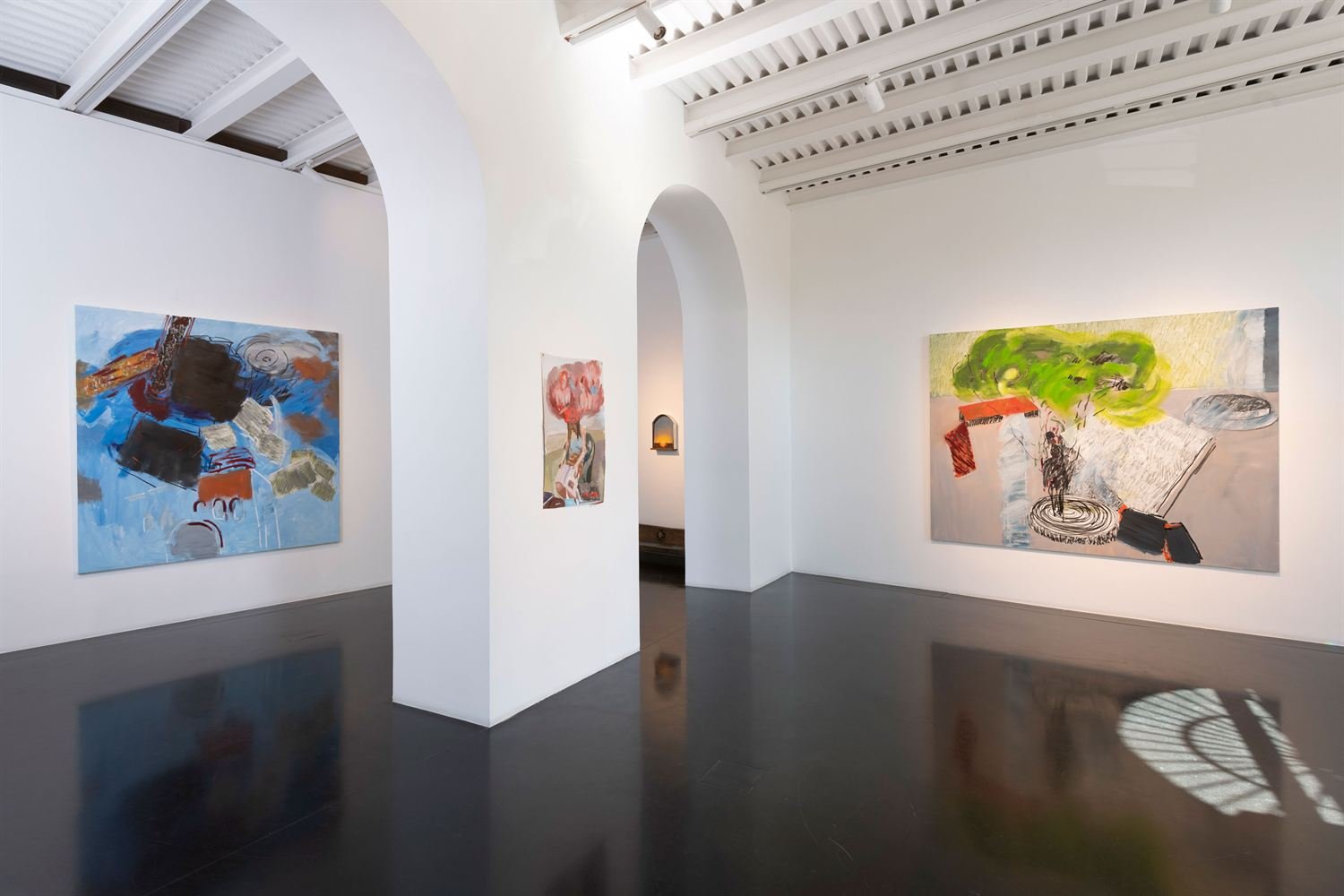
Xi Niu: In Search of New Routes, the group show curated by Claire Shiying Li with seven artistic practices from China, is on at rhinoceros from September 11, 2026 to January 6, 2027, in the gallery at Via del Velabro 9, between the Capitoline Hill, the Palatine and the Mouth of Truth. The gallery and the Fondazione Alda Fendi Esperimenti list free entry every day from 11:00 to 19:00. To get there by public transit the nearest reference is subway Line B, Circo Massimo stop, or tram 3 at the stop of the same name, then a short walk. For the exact route from your starting point, the ATAC route planner is best. No tickets are needed: you walk in during opening hours, and for information the gallery answers at the contacts published on its official website.
Xi Niu at rhinoceros: the essential information
Xi Niu is the first exhibition project conceived and produced entirely by rhinoceros, the space created by Alda Fendi in the Velabro. The exhibition is open for almost four months, until Epiphany, and brings together artists of different generations.
Dates and hours
The exhibition opened to the public on Friday, September 11, 2026, with an opening from 18:00 to 20:00, and closes on Wednesday, January 6, 2027. The gallery is open every day from 11:00 to 19:00, weekends included: a rarity among Roman galleries, which makes it easy to fit into any day.
Admission
Admission is free. The Rome city tourism portal confirms the opening every day for the whole duration of the exhibition. The program, it warns, may change.
The artists
Seven distinct practices: the duo Cao Minghao and Chen Jianjun, Hao Liang, Han Mengyun, Xie Fan, Xie Nanxing, Zhao Gang and Zhou Yilun. Painting, sculptural installation, film, research on materials and collaboration between different disciplines.
What Xi Niu is about: the Silk Road as a network of encounters
Xi Niu rereads the Silk Road as a space in continuous transformation, crossed by exchanges, relationships and processes of identity building. The official press release says it goes beyond the conventional representation of the Road as a network for the circulation of goods.
A mobile infrastructure
The exhibition considers the Silk Road a mobile infrastructure through which, for centuries, natural resources, technologies, knowledge, beliefs and diplomatic relations circulated. The project's website says it in one sentence: the Silk Road is not a line, it is a moving field of encounters, a palimpsest of routes, voices, materials and memories.
Against a monolithic China
The second aim is to challenge a reductive perception of Chinese culture as monolithic, ahistorical or defined only by technological progress. In its place the exhibition proposes the aesthetic possibilities born from informal networks, trade routes and individual trajectories. The declared themes are nomadism, exile, travel, the encounter between two or more cultures within each single work.
Rome and China
The press release insists on a point that makes the exhibition Roman and not only international: the project highlights the innovations born from material, cultural and social encounters between Rome and China. Several artists worked in residence at rhinoceros and produced new works starting from the city: the Roman sunset, aerial views of archaeological sites, used materials collected on the street.
Why a rhinoceros
The title Xi Niu means rhinoceros in Chinese, and naturally refers to the name of the gallery. The press release defines it as an imaginary totem of the project, evoking travel, resilience and openness to encounter.
The artists of Xi Niu and the works on view
The entries that follow take up the biographies and descriptions of the works published by rhinoceros with the exhibition's official press release.
The generational range is wide: from Zhao Gang's 1961 to Han Mengyun's 1989. The cities of origin and work in turn draw a map: Chengdu, Beijing, Wuhan, Hangzhou, Chongqing, Jiangyou, and then London and New York. It is already, in miniature, a contemporary Silk Road.
Xie Fan
Born in 1983 in Jiangyou, in Sichuan, Xie Fan re-examines the material essence of painting: he applies mineral pigments and oxides on surfaces of clay and terracotta, and understands painting as a rite of sensory experience that reconnects people to celestial phenomena and earthly life. During the residency at rhinoceros he made new terracotta works inspired by the Roman sunset, framed by a Buddhist niche he designed: the series Celestial Signs, 2026. He has exhibited, among other places, at the Bangkok Kunsthalle in 2025 and at the Sifang Art Museum in Shanghai in 2022.
Hao Liang
Born in Chengdu in 1983, he lives in Beijing. His work filters techniques, themes and conventions of traditional Chinese ink painting, guohua, through a contemporary sensibility: in his painting the oblique poetry of Li Shangyin meets the recursive logic of postmodern intertextuality. He had solo shows at the UCCA in Beijing and at the Bonnefantenmuseum in Maastricht in 2016, took part in the Venice Biennale of 2017, and his works are in the British Museum, the Centre Pompidou, the Metropolitan Museum and M+ in Hong Kong. Two paintings are on view, from 2023 and 2024.
Han Mengyun
Born in Wuhan in 1989, she lives between London and China. Her practice is articulated in two modes she calls Day and Night: the first rereads the connections between regions of the premodern world, the second explores personal and psychological experiences, including those of a woman and mother. In the new works she places side by side framing systems and printing traditions of China, India, Persia and Japan within the format of the painted scroll, with at the center a Zen-inspired still life crossed by vanitas, a tribute to the European paintings reinterpreted at the court of the emperor Qianlong. She studied at Bard College, also Sanskrit at Kyoto University, and has an MFA from Oxford. ArtAsiaPacific named her among the artists of the year in 2026.
Zhao Gang
Born in Beijing in 1961, he lives between New York and Beijing and is one of the protagonists of the first Chinese avant-garde. For rhinoceros he made new series of abstract paintings that transform aerial views of Rome's architecture and archaeological sites into neo-expressionist fields of color. On view is the series Triumph of Slaves, 2026. He has exhibited at the Long Museum, the Pérez Art Museum in Miami, the UCCA and, in a group show, at the Guggenheim in New York in 2017.
Zhou Yilun
Born in Hangzhou in 1983, where he lives. Influenced by American street art and popular culture, he reworks everyday objects found online and offline, often in the register of parody. In residence at rhinoceros he made works conceived for the place, reinterpreting the Chinese tradition of painted folding screens starting from used materials collected in Rome: the series The Lost Youth, 2026, shown with several installation views.
Xie Nanxing
Born in Chongqing in 1970, he lives between Beijing and Chengdu. Starting from Gerhard Richter and Sigmar Polke, he approaches the photographic image with a constant distrust of its truth, in everyday scenes crossed by the boredom and humor of the streets of Chongqing. On view are three oil sketches that keep the story before the canvas distorts it. He took part in Documenta in Kassel in 2007 and in the Venice Biennale of 1999, and in 2010 he was at Palazzo Strozzi in Florence.
Cao Minghao and Chen Jianjun
Born in 1982 and in 1981, the duo works in Chengdu with long-term projects built together with villagers, indigenous communities, environmentalists, scientists and anthropologists. The film on view, Water Source, The Palace of Lu, and Glacier Extraction, focuses on glacier melting and on the knowledge of the communities of the Qinghai-Tibetan Plateau, essential to protecting water. They took part in documenta 15 in Kassel in 2022, in the Shanghai Biennale and in the exhibition Rethinking Nature at the Madre in Naples.
The curator: Claire Shiying Li
Xi Niu is curated by Claire Shiying Li, an independent curator, as the rhinoceros press release states. Her choice was to bring together artists of very distant generations, from Zhao Gang's 1961 to Han Mengyun's 1989, and to ask several of them to work in Rome. The project credits also list Pietro Pantalani as executive producer and Veronica Siciliani Fendi as project director. The result is a group show that does not illustrate a thesis with works chosen from a catalog, but builds the thesis with works partly born here.
A curiosity about Xi Niu: In Search of New Routes at the Rhinoceros Gallery, September 11, 2026 to January 6, 2027
The curiosity lies in the place, even before the works. The gallery is in the Velabro, the flat area of ancient Rome between the Tiber and the Roman Forum, between the Capitoline and the Palatine. According to legend, the basket with Romulus and Remus is said to have run aground here. Here, in ancient times, shops tied to the food trade prospered, while along the nearby vicus Tuscus the cloth merchants worked. An exhibition on the Silk Road, that is, on the routes of silk and goods, a few meters from the street of the cloth merchants of ancient Rome, has a coherence that no curator could have invented.
The name of the place also has to do with travel. Plutarch and Varro derived Velabrum from the verb meaning to carry, or from ferrying: when the Tiber overflowed, this area was crossed by boat. Plutarch also reports another etymology, tied to the sails that covered the triumphal procession. A gallery that exhibits works on nomadism and routes is, in short, in a place whose name speaks of crossings.
Third curiosity: the exhibition's title, Xi Niu, means rhinoceros, and the gallery is called rhinoceros. The play is declared and serves, in the words of the press release, as the project's imaginary totem.
rhinoceros: Alda Fendi's gallery in the Velabro
rhinoceros defines itself as an objet culturel habitable in the center of Rome. At Via del Velabro 9, inside a building imagined by Alda Fendi and designed by Jean Nouvel, it brings together contemporary art, architecture and hospitality.
Gallery, restaurant, apartments
The official website presents three souls: the gallery, the gallery's restaurant and the apartments. The gallery also hosts the Fondazione Alda Fendi Esperimenti. It is a rare model in Rome, where contemporary art and hospitality live in the same building.
A new course
The press release presents Xi Niu as a new chapter of the programming and as the first exhibition project conceived and produced within it. On the Rome city tourism portal the exhibition is described as the start of a new artistic course. Those who know the earlier initiatives of the Fondazione Alda Fendi will find a different tone: an international group show, with residencies and new productions.
One thing nobody tells you about Xi Niu: In Search of New Routes at the Rhinoceros Gallery, September 11, 2026 to January 6, 2027
What nobody says is that this exhibition is free, open every day until 19:00 and a few minutes' walk from some of the most visited places in Rome. Those who queue at the Mouth of Truth or stroll between the Circus Maximus and the Capitoline can walk into an international group show of contemporary Chinese art, without booking. Few tourists know it, and even many Romans walk past the Velabro without thinking about it.
The second thing is that several works were born in Rome. Xie Fan worked on the terracottas inspired by the Roman sunset, Zhao Gang painted starting from aerial views of archaeological sites, Zhou Yilun used used materials collected in the city. It is not an exhibition that arrived in a crate from Beijing: it is in part an exhibition made here.
Third thing: the exhibition runs until January 6. Those passing through Rome during the Christmas holidays will find it still open, at a time when many galleries close.
The advice I give you for visiting Xi Niu: In Search of New Routes at the Rhinoceros Gallery, September 11, 2026 to January 6, 2027
My advice is to fit Xi Niu into a walk through the Velabro, not to make it a visit of its own. Start from the Arch of Janus and the basilica of San Giorgio in Velabro, go into the gallery, then head out toward Santa Maria in Cosmedin and the Forum Boarium. In an hour and a half you will have seen ancient Rome, medieval Rome and contemporary China, with a thread that ties them: the routes of trade and travel.
In the gallery begin with Cao Minghao and Chen Jianjun's film on glaciers, which sets the ecological and political tone of the exhibition, and finish with Xie Fan's terracottas, which instead look at the sky of Rome. In between, give time to Zhao Gang's paintings: try to recognize in the fields of color the plan of an archaeological site. It's a small exercise that makes the visit more active.
The best time is late afternoon, after 17:00: the Velabro empties of groups, and as you leave the gallery the light on the temples of the Forum Boarium has something of the sunset that Xie Fan wanted to fix in terracotta.
The Velabro: history of the neighborhood around the gallery
The Velabro was a flat area of ancient Rome, between the Tiber and the Roman Forum, between the Capitoline and the Palatine, adjoining the Forum Boarium and the vicus Tuscus, the road that ran from the Forum along the Palatine toward the Circus Maximus.
From swamp to the Cloaca Maxima
Originally the area was marshy and subject to Tiber floods. The waterlogged ground had already almost disappeared by the time of the Tarquins, after the construction of the Cloaca Maxima, of which in the area there remain a conduit of the 1st century AD and an older stretch, of the 4th century BC.
Trade and floods
Commercial activities settled there, tied above all to the food sector, and the area kept this function until the 6th century, when a disastrous Tiber flood, recorded in 589, raised the ground level. Then came the ecclesiastical and welfare institutions: San Teodoro and San Giorgio in Velabro.
Velum Aureum
In the Middle Ages the place name turned into Velum Aureum, golden veil. In late antiquity, at the edge toward the Forum Boarium, the Arch of Janus had risen, identified with the arch of the divine Constantine cited in the Regionary Catalogues. It is the same arch that can be seen today a few steps from the gallery.
Another well-known fact, yet rarely mentioned
It's well known that the Silk Road connected China to Europe and that Rome was one of its ideal destinations. It is less often mentioned, and the exhibition recalls it, that those routes were not only commercial: natural resources, technologies, knowledge, beliefs and diplomatic relations circulated on them. And that for those who traveled them they meant loneliness, danger, a temporary detachment from obligations to family and society. The press release recalls that the travelers were relatively few, but that their journeys transformed identities and visual cultures for generations.
Also rarely cited is an episode that the exhibition evokes through Han Mengyun: the reinterpretation of European pictorial traditions at the court of the emperor Qianlong. It is one of the moments when the route worked in reverse, bringing Europe to China.
Finally, little known to the general public is the fact that several artists in this exhibition have already entered the great Western museums: Hao Liang is in the collections of the British Museum and the Metropolitan, Xie Nanxing took part in Documenta, Zhao Gang exhibited at the Guggenheim. At rhinoceros you see them free, a stone's throw from the Circus Maximus.
The right photo to take at Xi Niu: In Search of New Routes at the Rhinoceros Gallery, September 11, 2026 to January 6, 2027
The right photo is the one that puts the two worlds together. Coming out of the gallery, look for a frame that holds in the same shot the sign or entrance of rhinoceros and the Arch of Janus or the bell tower of San Giorgio in Velabro. It is the image that tells the exhibition better than any detail: contemporary Chinese art inside a landscape of ancient stone.
Inside, before photographing, ask the staff for the gallery's rules. If it's allowed, Xie Fan's terracottas in their niche are the most photogenic subject: the color of the mineral pigments changes a lot with the light, and the detail of the surface tells the work better than the overall view.
The third photo is for the evening: sunset over the Forum Boarium, with the Temple of Hercules Victor. It is the Roman sunset from which Xie Fan says he started.
How to get to rhinoceros on Via del Velabro
The gallery is at Via del Velabro 9, between the Circus Maximus, the Palatine and the Tiber, in an area that is largely pedestrian and limited-traffic.
By subway and tram
Subway Line B, Circo Massimo stop, and tram 3, Circo Massimo stop, are the nearest references. From there you reach the Velabro on foot. For other bus combinations, the ATAC route planner is best.
On foot
From the Capitoline, the Theater of Marcellus or the Circus Maximus the Velabro is reached in a few minutes. It is the best way to arrive, because the road itself is part of the visit.
By car
The historic center is in the ZTL: better to leave the car and use public transit or a taxi.
How to organize the visit to Xi Niu
Xi Niu is visited without a reservation, in a wide window of hours, and this lets you build the visit around your day and not the other way around.
How much time you need
To see the works of the seven artists and the film by Cao Minghao and Chen Jianjun you need 40 minutes to an hour. Those who want to watch the film in full should allow a few more minutes: it is the work that asks for the most attention.
When to go
The gallery is open every day from 11:00 to 19:00. Early morning and late afternoon are the quietest times for the neighborhood. At midday the Mouth of Truth area is very busy with groups.
Before going in
On the project's website, xiniu.rhinocerosroma.com, you find the images of the works divided by artist and the press release in four languages, Italian included. Reading it beforehand helps you recognize in the room the works produced in Rome during the residencies.
After the visit
The Velabro is the ideal starting point for a walk: toward the Capitoline going up, toward the Circus Maximus and the Aventine, toward the Tiber and the Tiber Island. In every direction, in 10 minutes, you reach another symbolic place of the city.
Some important events that happened here in history
Archaic age: according to legend, at the foot of the Palatine, in the Velabro, the basket with the twins Romulus and Remus runs aground.
Age of the Tarquins: with the construction of the Cloaca Maxima the marshy area is reclaimed. In the Velabro there remain a stretch of the 4th century BC and a conduit of the 1st century AD.
Republican and imperial age: the Velabro hosts commercial activities tied to food, while on the vicus Tuscus the cloth merchants work.
Late antiquity: the Arch of Janus rises, identified with the arch of the divine Constantine.
589: a disastrous Tiber flood raises the ground level and ends the commercial season of the Velabro.
Early Middle Ages: the churches of San Teodoro and San Giorgio in Velabro settle in. The place name becomes Velum Aureum.
September 3, 2026: rhinoceros announces Xi Niu: In Search of New Routes, the first exhibition project conceived and produced within it.
September 11, 2026: the exhibition opens to the public with an opening from 18:00 to 20:00. It will stay open until January 6, 2027.
Who has passed through Xi Niu: In Search of New Routes at the Rhinoceros Gallery, September 11, 2026 to January 6, 2027
Through the Velabro, according to legend, passed the history of Rome itself, with the basket of Romulus and Remus run aground at the foot of the Palatine. The triumphal processions passed through, which according to one of the etymologies reported by Plutarch were covered with sails right here. For centuries the merchants passed through, of food in the Velabro and of cloth on the vicus Tuscus. And Varro, Festus and Plutarch passed through, at least with the pen, to explain where this name came from.
In the present, the artists of Xi Niu have passed through rhinoceros. Some in residence: Xie Fan, who worked on the terracottas inspired by the Roman sunset. Zhou Yilun, who collected in the city the materials for his folding screens. Zhao Gang, who turned aerial views of archaeological sites into painting. With them the curator Claire Shiying Li, and the people who produced the project, from Pietro Pantalani to Veronica Siciliani Fendi.
And behind it all there is Alda Fendi, who imagined the building, and Jean Nouvel, who designed it. A world-famous architect and a Roman patron, on a street that bears the name of an ancient ferry.
What to see around the Velabro
Few galleries in Rome have around them a concentration of monuments like rhinoceros.
Arch of Janus and San Giorgio
A few steps away are the Arch of Janus and the basilica of San Giorgio in Velabro, born as a diaconia in the early Middle Ages.
Mouth of Truth and Forum Boarium
Toward the Tiber are Santa Maria in Cosmedin with the Mouth of Truth, and the Forum Boarium with the Temple of Hercules Victor.
Palatine, Circus Maximus, Capitoline
Behind are the Palatine and the Circus Maximus. Going up, the Capitoline Hill. Toward the Ghetto, the Theater of Marcellus and the Tiber Island.
Where to eat near the Velabro
The gallery's restaurant
rhinoceros has its own restaurant, presented on the website as the gallery's restaurant: the most immediate solution for those who want to combine the exhibition with lunch or dinner. For hours and reservations, refer to the official website.
Toward the Ghetto
On foot you reach in a few minutes the area of Portico d'Ottavia and the Ghetto, where restaurants are plentiful. The streets immediately around the monuments are instead the most touristy and the most expensive: it's best to move a few streets away.
Accessibility and visiting with children
Accessibility
The gallery's official sources do not give detailed information on accessibility. Those with specific needs can write to the gallery before the visit, at the address published on the website.
With children
Free entry and daily opening make Xi Niu an easy visit even with children. The film on glaciers and the yaks of the Tibetan plateau, the colorful terracottas, the folding screens made with salvaged objects can capture even the youngest, especially if the visit is part of a walk that includes the Mouth of Truth, which remains an attraction for children.
Rome between autumn and Christmas: the period of the exhibition
Xi Niu covers the whole Roman autumn and the end-of-year holidays, until Epiphany. It is a wide window that lets you choose: the warm days of October for the walk in the Velabro, the short afternoons of November for an indoor visit, the Christmas holidays for those arriving from out of town. Daily opening is a concrete advantage precisely in the holiday period, when the galleries' calendar thins out.
Frequently asked questions about Xi Niu at rhinoceros
Until when is the Xi Niu exhibition open in Rome?
The exhibition Xi Niu: In Search of New Routes is on at rhinoceros, at Via del Velabro 9, from September 11, 2026 to January 6, 2027. The gallery lists daily opening from 11:00 to 19:00.
How much does admission to the Xi Niu exhibition cost?
Admission to the Xi Niu exhibition at rhinoceros is free: the gallery and the Fondazione Alda Fendi Esperimenti list free entry every day from 11:00 to 19:00, with no ticket.
Where is the rhinoceros gallery in Rome?
The rhinoceros gallery is at Via del Velabro 9, 00186 Rome, between the Capitoline, the Palatine and the Mouth of Truth, in a building imagined by Alda Fendi and designed by Jean Nouvel. The nearest references are subway Line B and tram 3 at Circo Massimo.
Which artists exhibit in the Xi Niu exhibition?
In the Xi Niu exhibition seven artistic practices from China are shown: the duo Cao Minghao and Chen Jianjun, Hao Liang, Han Mengyun, Xie Fan, Xie Nanxing, Zhao Gang and Zhou Yilun, with painting, installation, film and research on materials.
Who curated the Xi Niu exhibition?
The exhibition Xi Niu: In Search of New Routes is curated by Claire Shiying Li, an independent curator. It is produced and presented by rhinoceros, with Pietro Pantalani as executive producer and Veronica Siciliani Fendi as project director.
What does Xi Niu mean?
Xi Niu means rhinoceros in Chinese, the same animal that gives the rhinoceros gallery its name. The exhibition's press release defines it as the project's imaginary totem, a symbol of travel, resilience and openness to encounter.
Is the Xi Niu exhibition suitable for children?
The Xi Niu exhibition at rhinoceros is an easy visit even with children, because it is free, open every day and takes less than an hour. The film on Tibetan glaciers and the colorful works work well if included in a walk to the Mouth of Truth.
The final advice on Xi Niu
My advice is to go in: the exhibition is free, open every day and a hundred steps from monuments you would visit anyway. Xi Niu is one of those exhibitions that do the city good, because they bring to Rome a China different from the clichés and put it in the right place, where for centuries goods, ideas and people have arrived from afar. It's best to come out at sunset and look at the sky over the Forum Boarium, where Xie Fan started from.
Article written by the editorial team of Tour Leader Pro, contact them for Private/Corporate/V.I.P. Tours and Experiences.
Planning a trip to Rome? The English-language guides to visiting the city are on ItalyPlanner.com.