Vorrei una voce by Tindaro Granata at Teatro India, February 9 to 14, 2027
In short. Vorrei una voce, the monologue written and performed by Tindaro Granata with songs by Mina, plays at Teatro India in Rome from Tuesday, February 9 to Sunday, February 14, 2027, at Lungotevere Vittorio Gassman 1, on the corner with Via…
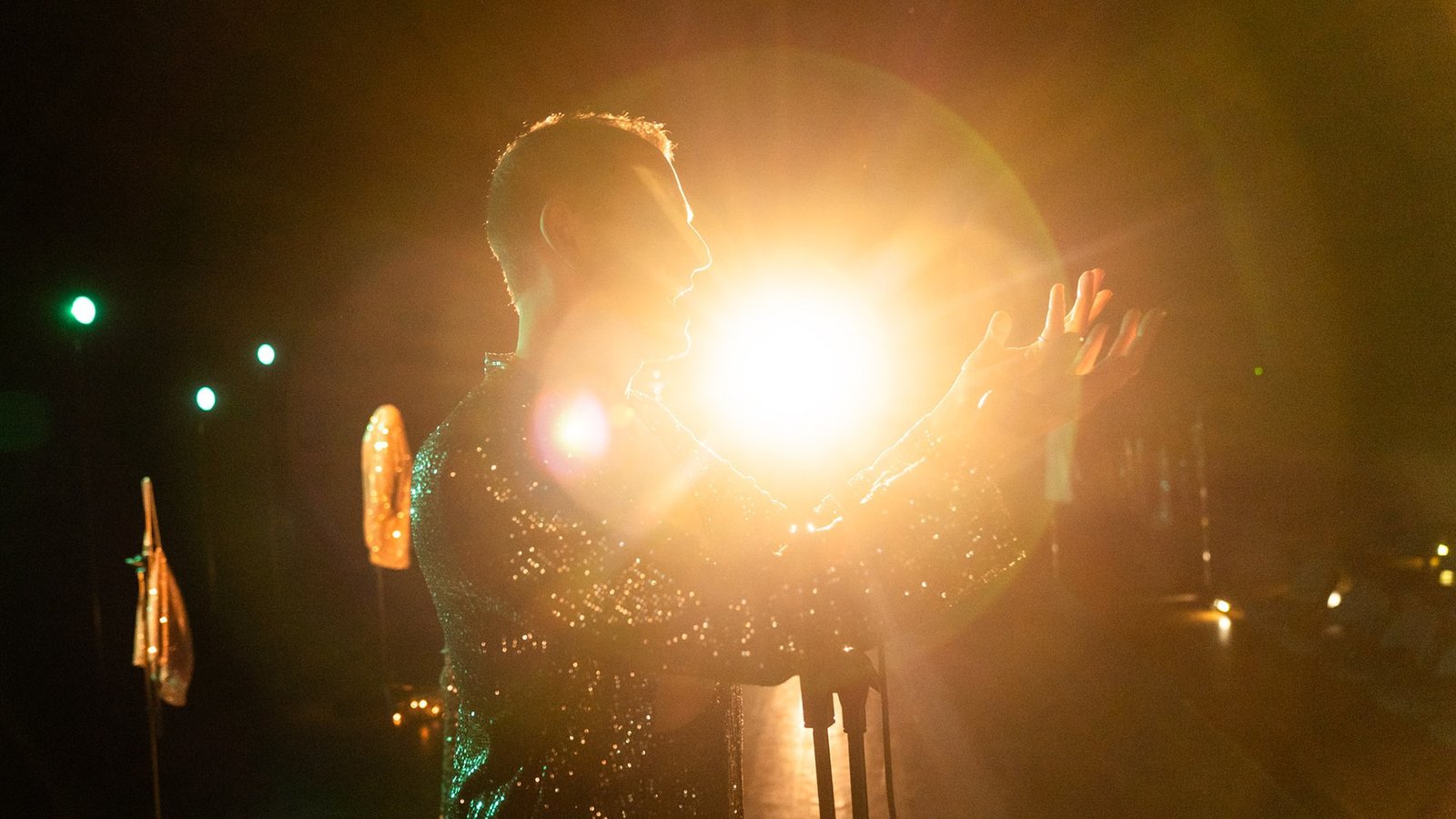
Vorrei una voce, the monologue written and performed by Tindaro Granata with songs by Mina, plays at Teatro India in Rome from Tuesday, February 9 to Sunday, February 14, 2027, at Lungotevere Vittorio Gassman 1, on the corner with Via Luigi Pierantoni, between Testaccio, Ostiense and Marconi. There are six performances, one a day from Tuesday to Sunday, and the start times are published by Teatro di Roma on the show's page and on the foundation's ticketing circuit. The production is by LAC Lugano Arte e Cultura, in collaboration with Proxima Res, and the show is part of the 2026/2027 season of Teatro di Roma, Il teatro è vita. To get to Teatro India, take metro line B to Garbatella and then walk about one kilometer across the Industria Bridge, take the train to Roma Trastevere station, about 700 meters away, or take buses 170, 766, 775, 780 and 781, which stop in Piazza della Radio. Prices are published on the official Teatro di Roma website, and tickets are sold on the foundation's official website or at its box offices. All the information is on the official page of the show.
Language: performed in Italian. No English version or English surtitles are announced.
Vorrei una voce comes out of a specific experience: Granata's work with the inmate actresses of the Piccolo Shakespeare theater, inside Messina district prison. At its center is the dream, the ability to imagine a future, and the voice of Mina, used in playback as a theatrical space. Below you'll find the dates, what the show is about, the biography of its author and performer, the history of Teatro India, how to get there, what's nearby, where to eat and the most frequently asked questions.
Vorrei una voce at Teatro India: dates and essential information
Vorrei una voce has six performances at Teatro India, from Tuesday, February 9 to Sunday, February 14, 2027. The schedule published by Teatro di Roma lists one performance a day.
The dates
Tuesday, February 9, Wednesday, February 10, Thursday, February 11, Friday, February 12, Saturday, February 13 and Sunday, February 14, 2027. It's a single week of performances, which is best not left to the last minute.
The times
Start times are listed by Teatro di Roma on its own ticketing circuit. Check the one for the date you choose when you buy.
Who is behind the show
Text and performance are by Tindaro Granata, the assistant director is Alessandro Bandini, and the production photos are by Masiar Pasquali. It is produced by LAC Lugano Arte e Cultura, in collaboration with Proxima Res, with Gruppo Ospedaliero Moncucco as production partner.
The original project
The show is inspired by the encounter with the inmate actresses of the Piccolo Shakespeare theater at Messina district prison, as part of the project Il Teatro per Sognare by D'aRteventi, directed by Daniela Ursino.
What Vorrei una voce is about
Vorrei una voce is a monologue that weaves theater and music through the songs of Mina, performed in playback, and puts the theme of the dream at its center. This is how Teatro di Roma presents it.
The dream as a part of yourself
The starting point is a simple, hard idea: losing the ability to dream means losing an essential part of yourself. It's a condition Granata met in his work with the high-security inmates of the Messina prison, and one he also recognizes from a period of his own life when he had stopped believing in the future.
Inner freedom and redemption
From these two experiences comes a story that reflects on inner freedom, on identity and on the desire for redemption. Theater becomes the place where freedom is exercised even when physical freedom is missing.
Playback as a theatrical space
Mina's songs are not sung live: Granata performs them in playback. It's a deliberate choice. The voice stays Mina's, recognizable to everyone, and the actor's body inhabits it, borrows it, builds memories, imagination and desires on top of it.
A story dedicated to someone
Teatro di Roma speaks of a story dedicated to those who try to find again the possibility of dreaming. In our view it is the key to understanding the title: the voice you wish for is the one that lets you say who you are.
Il Teatro per Sognare: the project in Messina prison
Vorrei una voce comes from the project Il Teatro per Sognare, carried out by D'aRteventi with the high-security inmates of Messina district prison, inside the Piccolo Shakespeare theater.
A theater inside the prison
The Piccolo Shakespeare is the theater space of the district prison where the project takes place. The name already says a lot: the greatest theater in the world, evoked in a place that by definition limits movement.
The inmate actresses
Teatro di Roma speaks of inmate actresses: women who in the project are not spectators but performers. The encounter with them is the seed of the show, which however does not bring them on stage: on stage there is only Granata.
Daniela Ursino
The project is directed by Daniela Ursino for D'aRteventi. The show's official playbill cites her explicitly, acknowledging the monologue's debt to that work.
Mina's songs in the show
Mina, stage name of Mina Anna Mazzini, born in Busto Arsizio on March 25, 1940, is considered one of the most talented voices in the history of Italian song, active since 1958. Her voice is the second protagonist of Vorrei una voce.
The Tiger of Cremona
Also known as the Tiger of Cremona, Mina has a voice of great breadth and range, with power, flexibility and a very solid technique, and an eclecticism that has led her to take on very different genres.
The numbers
With an estimated more than 150 million records sold, she is the best-selling Italian music artist in the world, a record shared with Adriano Celentano. She has released more than 1,500 songs, and 25 of her albums have reached number one in Italy.
Television
In the 1960s and 1970s she hosted Rai programs such as Studio Uno, Canzonissima, Senza Rete and Milleluci. She has received a Targa Tenco and the honor of Grand Officer of the Order of Merit of the Republic.
Why Mina
A voice recognizable to everyone, able to cross different genres, lends itself naturally to playback: the audience already knows it, and can focus on what the actor's body makes it say. For a show about people who cannot move freely, borrowing such a free voice is a very coherent choice.
Who is Tindaro Granata: biography of the actor and playwright
Tindaro Granata, born in Tindari, a hamlet of Patti, in the province of Messina, on September 5, 1978, is an actor, playwright and director, winner of the Premio Ubu and the Maschere del Teatro Italiano.
A self-taught debut
He trained as a self-taught actor and made his debut in 2002 in Pulcinella by Manlio Santanelli, directed by Maurizio Scaparro.
The years with Rifici
In the following years he acted in several shows directed by Carmelo Rifici: Il nemico by Julien Green in 2007, La testa del profeta by Elena Bono in 2009, Buio by Sonia Antinori in 2010, Sanguinare inchiostro by Andrea Castelli in 2014.
The author
In 2011 he staged his first text, Antropolaroid. Then came Invidiatemi come io ho invidiato voi in 2013, Geppetto e Geppetto in 2016, Dedalo e Icaro in 2019, directed by Giacomo Ferraù and Francesco Frongia, and Vorrei una voce in 2024.
The prizes
In the 2012/2013 season he received the Mariangela Melato prize for best emerging actor at the Maschere del Teatro Italiano, and in the 2015/2016 season the Premio Ubu for best new Italian text with Geppetto e Geppetto, which also won the Premio Hystrio Twister in 2017.
Teacher and director
Since 2020 he has taught at the school of Piccolo Teatro di Milano. Since September 29, 2025 he has directed Teatro degli Animosi in Carrara. Among his most recent work as a performer are La bisbetica domata in 2019 and Il malato immaginario by Molière in 2026, both directed by Andrea Chiodi.
Teatro India: history of the home of Vorrei una voce
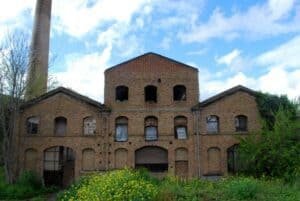
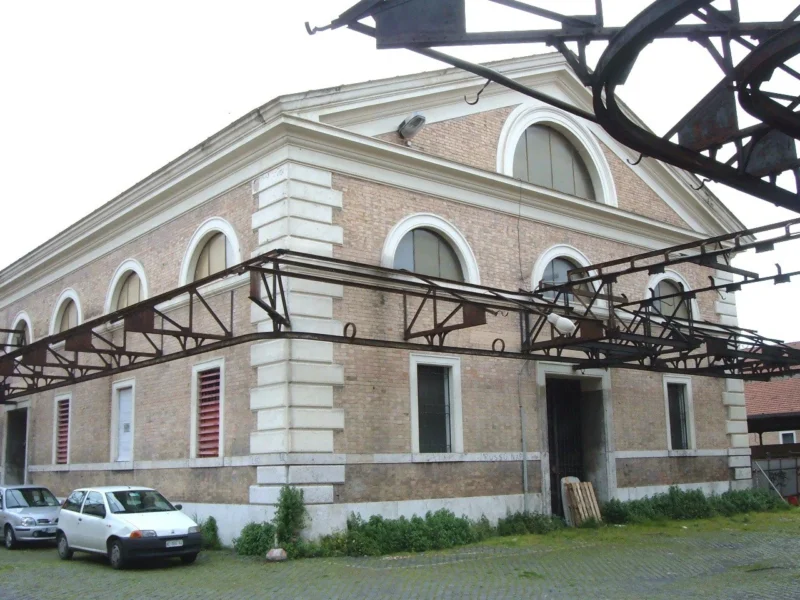
Teatro India is the second home of Fondazione Teatro di Roma, alongside Teatro Argentina and Teatro di Villa Torlonia, and was inaugurated on September 7, 1999 in the spaces of the former Mira Lanza factory, on the right bank of the Tiber. It is the last theater opened in Rome in the twentieth century.
From chemicals to soap
At the beginning of the twentieth century the Mira factory stood here, dedicated to chemical production, with the first brick buildings by the engineer Giulio Filippucci. In 1913 the plant passed to the Municipality of Rome and produced glycerin during the years of the First World War. Then, partly because of its closeness to Mattatoio di Testaccio, it switched to soap.
Mira Lanza
Competition with Piedmont's Unione Stearinerie Lanza and the arrival of Henkel and of Procter and Gamble pushed the two companies to join forces, and Mira Lanza was born. The decline began with the Second World War. The plant closed in 1952 and the sheds later housed the warehouses of the Rancati company, a maker of theater and film props.
The name
In the spring of 1999 the Municipality bought part of the area. The name was chosen by Mario Martone, then director of Teatro di Roma: India, like the name of a country on the model of Argentina, and as an evocation of travel.
What it looks like
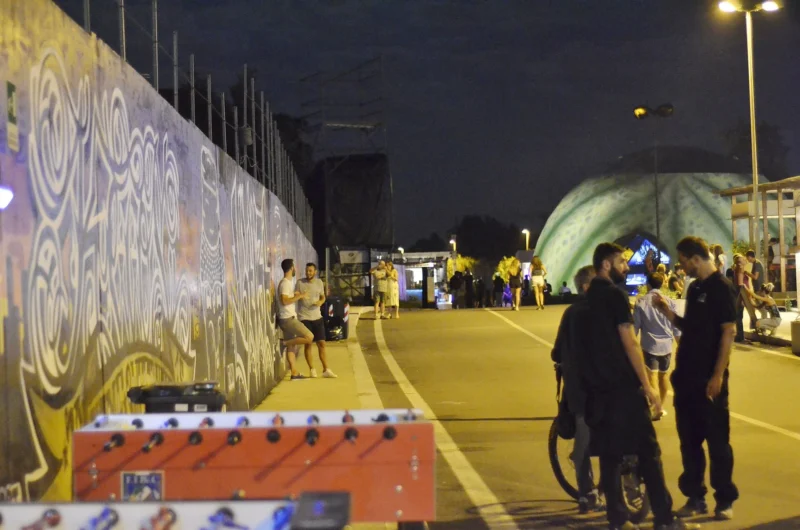
Three naves, dark exposed brick, pitched roofs, wood and iron beams and red velvet seats. The halls are modular. In summer the outdoor spaces host cinema and music arenas, as the page on India Città Aperta 2026 explains. For a monologue, the closeness between stage and audience typical of these halls is an advantage.
A curiosity about Vorrei una voce by Tindaro Granata at Teatro India, February 9 to 14, 2027
The most interesting curiosity is a crossing of calendars. In the same week in which Granata is at Teatro India, from February 9 to 14, 2027, Carmelo Rifici's Orestea plays at Teatro Vascello in Monteverde, with Part II Logos from the 9th to the 12th and the full version on Saturday 13 and Sunday 14. The two productions come from the same house, LAC Lugano Arte e Cultura, of which Rifici is artistic director, and they share the production partner. And the link between the two artists is a long one: Granata acted in four of Rifici's productions between 2007 and 2014, and with him worked on the translation, adaptation and dramaturgy of La pulce nell'orecchio. In Rome, then, a few kilometers apart, in the same week you can see the great choral fresco and the intimate monologue, two opposite ways of making theater born in the same artistic family. A second curiosity concerns the actor's birthplace. Tindari, a hamlet of Patti, is in the province of Messina, so the show comes from an encounter with a prison in his own province, a homecoming by unexpected paths. A third concerns the season at Teatro India: in the same hall, from February 20, The Body of an American by Jacopo Gassmann arrives, another LAC production.
One thing nobody tells you about Vorrei una voce by Tindaro Granata at Teatro India, February 9 to 14, 2027
What the presentations don't say is that Vorrei una voce is not a concert and not a tribute to Mina. Anyone who arrives expecting an evening of songs risks being thrown off: the songs are there, and they are those songs, with the original voice, but they serve to tell something else. Playback, which on television is often a synonym for pretense, here becomes the heart of the matter: an actor who lends his body to a voice that is not his own, the way someone living in a condition of deprivation lends their dreams to a song. My advice is to arrive with this key. The second thing nobody says concerns the theme. The show was born in a prison, but it is not a show about prison: it is about the dream and its loss, and it involves anyone who has gone through a period of lost confidence. It also suits those who usually avoid socially engaged theater. The third concerns the times: Teatro di Roma publishes them on its ticketing circuit. Check the time for your date before you leave, because the hall is not on anyone's way and arriving late means missing the beginning of a monologue, where every minute counts.
My advice for visiting Vorrei una voce by Tindaro Granata at Teatro India, February 9 to 14, 2027
My advice is to pick a weeknight, between Tuesday and Thursday, and walk to Teatro India from the Garbatella metro, crossing the Industria Bridge. It's a quarter-hour stroll along the river, with the Gasometer behind you and the sheds of the former Mira Lanza ahead: the best way to get into the mood of a show about closed spaces and the wish to get out. If you have the weekend free, you can instead build a double day: the full Orestea by Rifici at Vascello on Saturday the 13th at 19:00 and Vorrei una voce on Sunday the 14th, two productions from the same house one day apart. Before going, listening to a few Mina songs helps: not to recognize the songs, which will come anyway, but to have in your ear the voice that Granata will inhabit on stage. Finally, book in time: six performances are few, and an actor awarded the Ubu draws an audience of enthusiasts.
How to get to Teatro India for Vorrei una voce
Teatro India is at Lungotevere Vittorio Gassman 1, once Lungotevere dei Papareschi, at the intersection with Via Luigi Pierantoni, across from the Gasometer. It is not a theater of the historic center and needs a bit of planning to reach, especially in the evening.
Metro
The nearest stop on metro line B is Garbatella, about one kilometer away. You leave toward Via Ostiense, cross the Tiber on the Industria Bridge, the nineteenth-century iron bridge, and reach the theater along the river: 12 or 15 minutes at a normal pace.
Train
Roma Trastevere station, served by regional lines FL1, FL3 and FL5, is about 700 meters away. For those coming from Fiumicino or from the Ostiense area it is often the quickest way.
Bus and tram
Lines 170, 766, 775, 780 and 781 stop in Piazza della Radio, a few minutes on foot. Tram 8 serves the area of Trastevere station. Before leaving, check the routes with the Atac route planner.
By car
Teatro India is outside the limited traffic zone of the center. Between Viale Marconi and the Lungotevere parking is easier than in Trastevere, but on weekends it's best to arrive with a quarter of an hour to spare.
Another well-known fact, yet rarely cited
That Mina is one of the best-loved voices of Italian song, everyone knows. Less often cited is her commercial record: with an estimated more than 150 million records, she is the best-selling Italian music artist in the world, on a par with Adriano Celentano, and her 25 albums that reached number one in Italy are the best showing ever, ahead of Vasco Rossi's 24. Even less remembered is the list of international colleagues who have praised her voice, from Frank Sinatra to Louis Armstrong, from Sarah Vaughan to Luciano Pavarotti. It is this voice, known to different generations, that makes a show like Vorrei una voce possible: the audience recognizes it on the first note, and playback becomes a theatrical act, a body offering itself to a familiar voice. A second fact known to insiders and little told to the general public concerns Granata. He is self-taught: he did not attend an academy before making his debut, in 2002, with Maurizio Scaparro, and yet today he teaches at the school of Piccolo Teatro di Milano and runs a historic theater like the Animosi in Carrara. A rare path in Italian theater. A third fact concerns the path of the show: born from work done inside the walls of a Sicilian prison, Vorrei una voce was produced in Lugano and arrives in the season of Teatro Nazionale di Roma.
Around Teatro India: Ostiense, Testaccio and the Gasometer
Teatro India sits where Testaccio, Ostiense and Marconi meet, along the stretch of the Tiber that best tells the story of the industrial Rome of the twentieth century.
The Gasometer and Ostiense
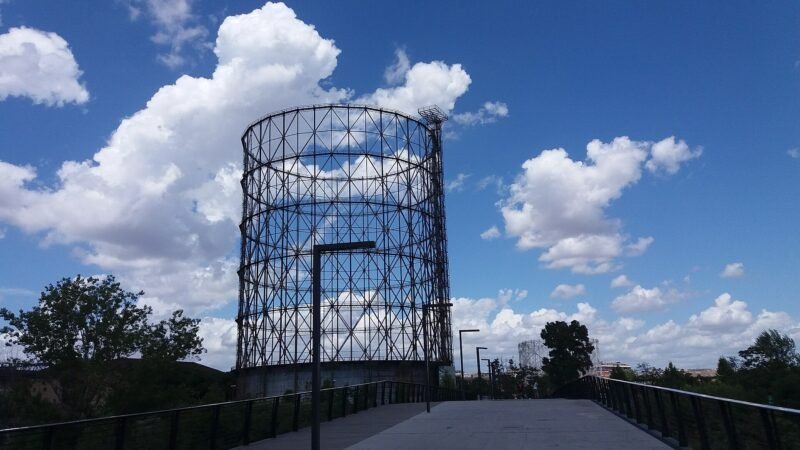
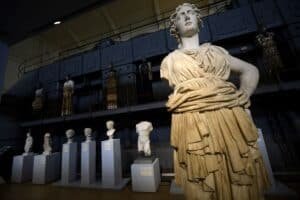
Across the river rises the Gasometer, the metal structure that has become a symbol of the neighborhood. Ostiense is also the neighborhood of street art and of Centrale Montemartini, where the ancient sculptures of the Capitoline Museums are displayed among turbines and boilers.
Testaccio
Toward the north you reach Testaccio, with Ex Mattatoio, Monte dei Cocci and the Pyramid of Cestius. The thread that links Mattatoio to the old Mira, which made soap partly thanks to its closeness to the slaughterhouse, is one of the most curious in this landscape.
San Paolo and Porta Portese
Farther south is the basilica of San Paolo fuori le Mura, one metro stop from Garbatella. Toward the north, along the right bank, you go up toward Porta Portese and Trastevere.
The right photo to take at Vorrei una voce by Tindaro Granata at Teatro India, February 9 to 14, 2027
During the show the phone stays off: in a monologue with music in playback, one lit screen is enough to break the illusion, and respect for the performer, alone on stage, counts double. The photo is taken outside, and Teatro India offers at least three. The first is the one with the Gasometer: Teatro di Roma itself writes that the Gasometer keeps watch over the theater, and from the outdoor space the metal structure stands out beyond the Tiber. In February, with darkness coming early, the right photo is the night one, with the Gasometer lit and the theater's bricks in the light of the streetlamps. The second is taken from the Industria Bridge, for those coming from Garbatella: the iron trusses in the foreground, the river, the sheds of the former Mira Lanza on the opposite bank. The third is a detail that ties in with the theme of the show: the tall windows of the old plant, with light filtering from inside. A building born for work and become a place of imagination is a fitting image for a show about the possibility of dreaming even inside four walls.
How to plan your evening at Vorrei una voce
Vorrei una voce is a monologue in a hall outside the historic center: the evening works best if you plan arrival, show and dinner as a single route.
Before the show
Those who arrive early can stop by Centrale Montemartini, across the river, or take a short walk among the murals of Ostiense. In winter the light goes early: the walk on the Industria Bridge is nicer at sunset.
After the show
A monologue this personal leaves you wanting to talk about it: dinner in Testaccio or Ostiense, a quarter of an hour on foot, is the natural follow-up.
On the weekend
On Saturday, February 13 and Sunday, February 14 in Rome you can also see the full Orestea by Carmelo Rifici at Teatro Vascello: a weekend of theater with two LAC productions, from the monologue to the choral tragedy.
Where to eat before or after Vorrei una voce
Around Teatro India the offer is split between the Ostiense bank and Testaccio, livelier, and the Marconi side, more of a neighborhood feel.
Ostiense
Across the bridge, along Via Ostiense and in the streets around the Gasometer and Garbatella, there are restaurants, pizzerias and places frequented by students and by people who work in the area. It's the livelier side in the evening.
Testaccio
Testaccio is the neighborhood of the Roman cooking of the fifth quarter, born around Mattatoio: coda alla vaccinara, tripe, rigatoni with pajata. The trattorias between Piazza Testaccio and Via Marmorata are a quarter of an hour on foot.
Marconi and Trastevere
On the theater's side, toward Viale Marconi and the station, you find neighborhood pizzerias and trattorias, not very touristy. If you prefer Trastevere, take tram 8 after the show.
Some important events that happened here in history
The history of the place falls into a few dates. At the beginning of the twentieth century, on the right bank of the Tiber, the Mira factory is born, with the first brick buildings by the engineer Giulio Filippucci. In 1913 the plant passes to the Municipality of Rome and produces glycerin for the years of the First World War. After the war, taking advantage of its closeness to Mattatoio di Testaccio, the factory converts to soap and grows. Then come the years of competition with Unione Stearinerie Lanza, up to the merger from which Mira Lanza is born, faced with the arrival of the multinationals. The Second World War marks the beginning of the decline, because of the lack of labor and the spread of synthetic detergents. In 1952 the plant closes, and the spaces become the warehouse of the Rancati company, specialized in theater and film props. In the spring of 1999 the Municipality buys part of the area, and on September 7 of the same year Teatro India is inaugurated, the second home of Teatro di Roma. Since then it has hosted seasons of contemporary theater, set design workshops, summer cinema and music arenas. In autumn 2026 the hall hosted Gli elefanti nella stanza by Francesca Astrei, and in February 2027 comes the voice of Mina lent to the body of Tindaro Granata.
Tickets, accessibility and practical tips
Tickets for Vorrei una voce are bought on the official Teatro di Roma website and at the foundation's box offices, and prices are published on the official website. The show is part of the 2026/2027 season, for which the subscription campaign is open.
Accessibility
Teatro di Roma devotes a section of its website to the accessibility of its halls. For seats reserved for wheelchair users or other needs, contact the box office before the performance.
Punctuality
Teatro India is not on anyone's way, and entry once the performance has started may not be allowed. Plan your timing carefully, especially if you arrive by metro and on foot.
With kids
The theme of the dream and Mina's music make the show accessible to teenagers too. For younger children, ask the box office of Teatro di Roma for guidance.
Who has come through Vorrei una voce by Tindaro Granata at Teatro India, February 9 to 14, 2027
The first name tied to this place is that of the engineer Giulio Filippucci, who designed the first brick buildings of the Mira factory. For decades the men and women workers of Mira Lanza passed through here, then the prop makers of the Rancati company, who supplied objects to theaters and film sets: a soap factory turned into a warehouse of fictions, before even becoming a theater. The name of the theater is Mario Martone's, director and then head of Teatro di Roma, who followed the birth of the new venue. In its years of activity Teatro India has been the foundation's place of experimentation, with Italian and foreign companies, workshops and summer festivals. From February 9 to 14, 2027, Tindaro Granata passes through Teatro India, a self-taught Sicilian actor, Ubu winner for Geppetto e Geppetto, teacher at Piccolo school and director of Teatro degli Animosi in Carrara, with the LAC team and the assistant director Alessandro Bandini. And with them, ideally, the inmate actresses of Piccolo Shakespeare in Messina, Daniela Ursino who directed their work, and the voice of Mina, the best-selling Italian singer in the world.
Frequently asked questions about Vorrei una voce
When is Vorrei una voce on in Rome?
Vorrei una voce by Tindaro Granata is at Teatro India from Tuesday, February 9 to Sunday, February 14, 2027, with one performance a day. Start times are published by Teatro di Roma on its own ticketing circuit.
Who wrote and who performs Vorrei una voce?
Vorrei una voce is written and performed by Tindaro Granata, a Sicilian actor and playwright and Ubu winner. The assistant director is Alessandro Bandini, and the production is by LAC Lugano Arte e Cultura with Proxima Res.
Does Mina sing live in the show?
No, in Vorrei una voce Mina's songs are performed in playback: the voice is the singer's original one and Tindaro Granata interprets it with his body. Playback is the theatrical form the show has chosen.
What is Vorrei una voce about?
Vorrei una voce is about the dream and its loss. It comes from Tindaro Granata's work with the inmate actresses of the Piccolo Shakespeare theater in Messina prison and reflects on inner freedom, identity and the desire for redemption.
Where is Teatro India?
Teatro India is at Lungotevere Vittorio Gassman 1, on the corner with Via Luigi Pierantoni, between Testaccio, Ostiense and Marconi. You reach it on foot from the Garbatella stop on metro line B, from Trastevere station, or by the buses that stop in Piazza della Radio.
Where do you buy tickets for Teatro India?
Tickets for Teatro India are bought on the official Teatro di Roma website and at the foundation's box offices. Prices and times for Vorrei una voce are published on the official Teatro di Roma channels.
Who is Tindaro Granata?
Tindaro Granata is an actor and playwright born in Tindari in 1978, winner of the Premio Ubu for best new Italian text with Geppetto e Geppetto. He teaches at the school of Piccolo Teatro di Milano and since 2025 has directed Teatro degli Animosi in Carrara.
Final advice on Vorrei una voce
Vorrei una voce is a show small in form and big in the question it asks: what remains of a person when they stop dreaming. In our view it's best to choose a weeknight, arrive on foot from the Industria Bridge, leave concert expectations outside and trust Granata. If you can, pair it with Rifici's Orestea in the same week: two shows from the same house, at opposite ends in size, with the same idea of theater as a place where we try to understand who we are.
Article written by the editorial team of Tour Leader Pro, contact them for Private/Corporate/V.I.P. Tours and Experiences.
Planning a trip to Rome? The English guides to visiting the city are on ItalyPlanner.com.
Contact Information
Nearby
 Teatro India100 m
- Ex Mira Lanza100 m
- Gasometro di Roma200 m
- Centrale Montemartini600 m
- Circolo degli Illuminati700 m
- Ex Mattatoio di Testaccio700 m
Upcoming events nearby
- The Body of an American by Jacopo Gassmann at Teatro India, February 20 to 28, 2027100 m
- La firma. Non ti fidare by Claudio Fava at Teatro India, from March 3 to 7, 2027100 m
- Lettera di una sconosciuta at Teatro India, by Davide Sacco, April 13 to 18, 2027100 m
- Crocodile by Martin Harriague at Teatro India, May 7 and 8, 2027100 m


You might also like
- Madri by Diego Pleuteri at Teatro India, March 17 to 21, 2027
- Flusso with Lino Guanciale and Gianmarco Saurino at Teatro India, March 6 to 14, 2027
- Resteremo per sempre qui buone ad aspettarti by Leonardo Lidi at Teatro India, May 19 to 23, 2027
- Viaggio a Hong Kong at Teatro India, from November 3 to 8, 2026
- Novecento with Ciro Masella at Spazio Rossellini, November 4, 2026
- La firma by Valerio Vestoso with Antonio Bannò at Teatro India, November 11 to 15, 2026