La firma. Non ti fidare by Claudio Fava at Teatro India, from March 3 to 7, 2027
In short. La firma. Non ti fidare, the show written and directed by Claudio Fava with Ninni Bruschetta and Federica De Benedittis, is on stage at Teatro India in Rome from Wednesday, March 3 to Sunday, March 7, 2027, at Lungotevere Vittorio…
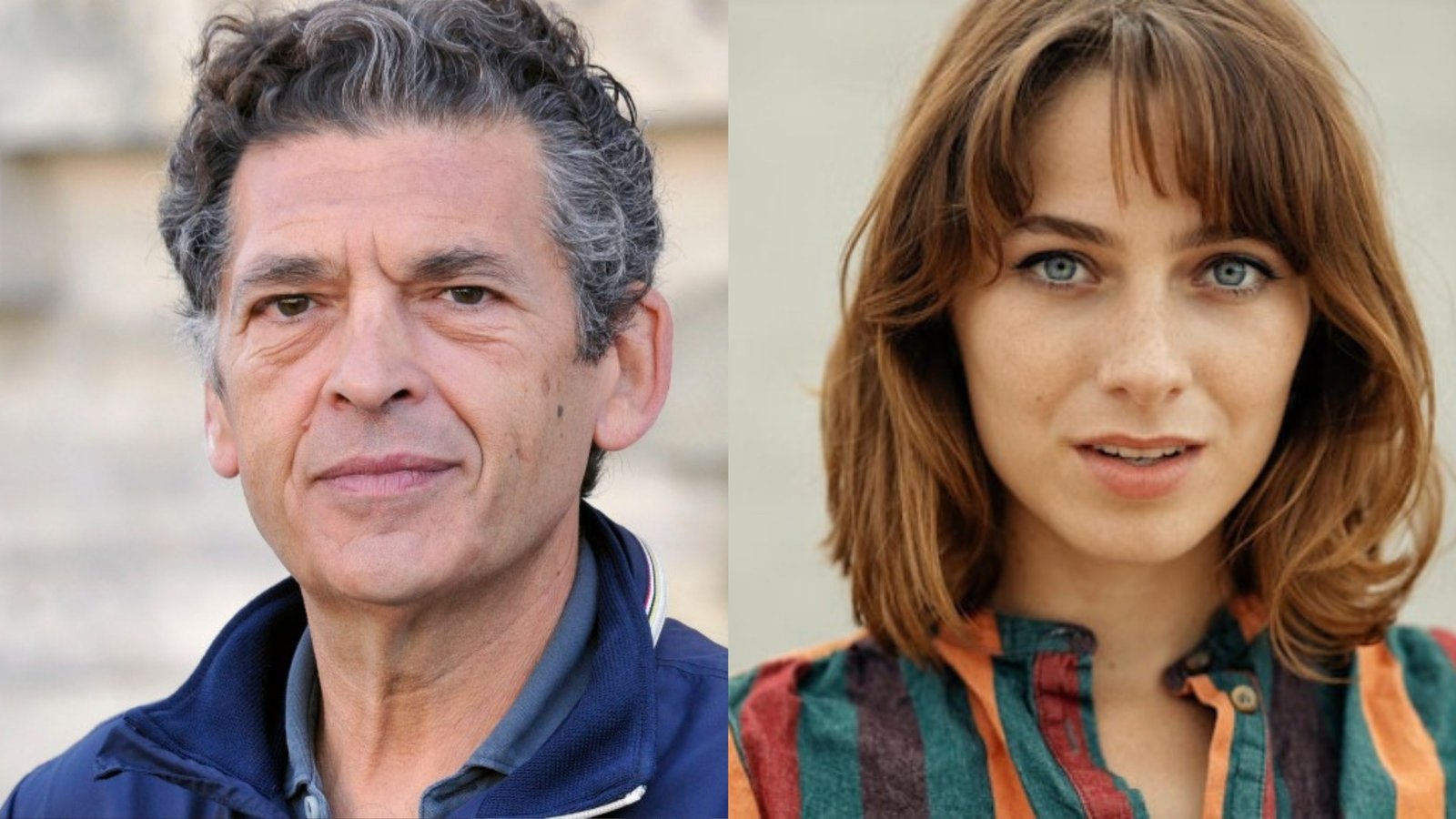
La firma. Non ti fidare, the show written and directed by Claudio Fava with Ninni Bruschetta and Federica De Benedittis, is on stage at Teatro India in Rome from Wednesday, March 3 to Sunday, March 7, 2027, at Lungotevere Vittorio Gassman 1, at the corner of Via Luigi Pierantoni, where Testaccio, Ostiense and Marconi meet. There are five performances, one a day from Wednesday to Sunday. The start times are published by Teatro di Roma on its own sales circuit. The text is based on the novel Non ti fidare by Fava himself. The production is by Teatro della città, Centro di Produzione Teatrale, with Marche Teatro, and the show is part of the 2026/2027 season of Teatro di Roma, Theater Is Life. You get to Teatro India by metro line B to Garbatella and then about a kilometer on foot past Ponte dell'Industria, by train to Roma Trastevere station, about 700 meters away, or by buses that stop in Piazza della Radio. Prices are published on the official website of Teatro di Roma, where tickets are bought along with the foundation's box offices. All the details are on the official page of the show.
Language: performed in Italian. No English version or English surtitles are announced.
La firma is a two-voice drama set in the visiting room of a prison: a man awaiting trial and the woman who always believed him to be her father, separated by a table and a secret. Below are the dates, the plot as Teatro di Roma presents it, the biographies of the author and the lead actor, the history of Teatro India, how to get there, the surroundings, where to eat and the most frequent questions.
La firma. Non ti fidare at Teatro India: dates and essential information
La firma. Non ti fidare has five performances at Teatro India, from Wednesday, March 3 to Sunday, March 7, 2027. The official calendar of Teatro di Roma lists one performance for each of the five evenings.
The dates
Wednesday, March 3, Thursday, March 4, Friday, March 5, Saturday, March 6 and Sunday, March 7, 2027. It is a single week of programming, with two performances on the weekend and three on weekdays.
The times
The start times do not appear on the show's page and are listed on the sales circuit of Teatro di Roma. It's best to check the one for the evening you choose when you buy.
Who is behind the show
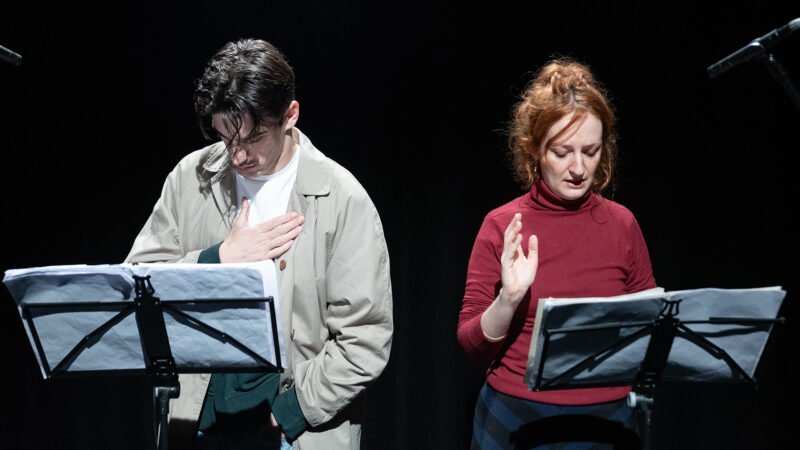
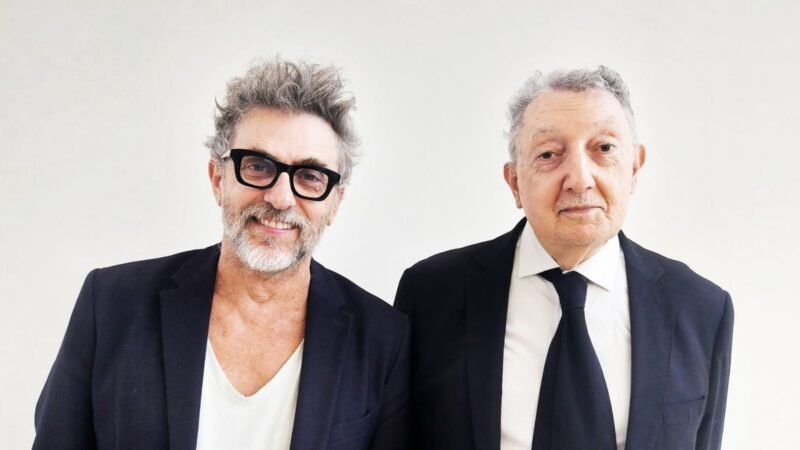
Text and direction are by Claudio Fava, who drew La firma from his own novel Non ti fidare. On stage are Ninni Bruschetta and Federica De Benedittis. The production is by Teatro della città, Centro di Produzione Teatrale, together with Marche Teatro.
The season
The show is part of the Teatro India program within the 2026/2027 season of Teatro di Roma, titled Theater Is Life, for which the subscription campaign is open.
What La firma. Non ti fidare is about
La firma tells of the meeting, in the visiting room of a prison, between a man accused of a crime from the past and the woman who all her life believed him to be her father. It is the synopsis released by Teatro di Roma, which deliberately stays spare on places and eras.
A table between two people
The scene is a single one: a table that separates a man and a woman and that seems destined to divide them forever. Between them is a bond that appears unbreakable, the one between a father and a daughter. Or at least that is what she has always believed.
The secret
A secret kept for years reveals another truth. The man, a career military officer, had taken the newborn girl in. The real mother had been arrested for political reasons, forced to give birth in captivity and then eliminated together with the other fellow prisoners.
The confrontation
Now he is the one in prison, awaiting trial, and she arrives for one last confrontation. In front of that table the past comes back to life and their relationship has to be entirely rewritten: accusation and defense blur, roles are reversed.
No simple answer
The certainty of guilt and that of innocence are continually called into question. The dialogue becomes a battlefield and at the same time a place of possible recognition, in which pain, memory and responsibility intertwine. In our view it is precisely this ambiguity, more than the revelation itself, that is the heart of the show.
From the novel Non ti fidare to the stage of Teatro India
La firma is based on Non ti fidare, a novel by Claudio Fava published by Fandango in 2026. The move from page to stage is signed by the author himself, who also directs.
An author who adapts himself
It is not the first time Fava has brought one of his own books to the theater. Among his works for the stage are Il mio nome è Caino and Il giuramento, titles that coincide with two of his novels published by Baldini e Castoldi in 1997 and by Add in 2019. With La firma the path repeats, and this time Fava is also the director.
A double title
The title of the show holds together two phrases. Non ti fidare is the source novel, a warning that may apply to both characters. La firma is a more concrete object: the mark with which one signs a document, acknowledges a responsibility, puts one's name to a truth. The synopsis does not explain which signature the title refers to, and it's best to let the show clarify it.
A theater of words
Two actors, a table, a visiting room. La firma belongs to that theater of words in which tension comes from dialogue and not from action. It is a genre that asks a lot of the performers and rewards intimate halls, where the audience hears every pause.
Who Claudio Fava is: biography of the author and director
Claudio Fava, born in Catania on April 15, 1957, is a journalist, screenwriter, writer and playwright, a former member of the Italian and European Parliaments, co-author of the screenplay of I cento passi, which won the David di Donatello.
Journalism and I Siciliani
With degrees in Law and in History, he has been a professional journalist since 1982. He worked at I Siciliani, the newspaper founded by his father Giuseppe Fava, murdered by the mafia in Catania on January 5, 1984. Until 1986 he took over its editorship. He was then a correspondent for Corriere della Sera, Il Mattino, L'Espresso, l'Europeo, Avvenimenti and Rai, in Italy and abroad, and received the Europa prize for his reports from Mogadishu on Siad Barre's flight from Somalia.
The books
Among the essays are La mafia comanda a Catania 1960/1991 with a preface by Nando dalla Chiesa, Cinque delitti imperfetti, I disarmati. Storia dell'antimafia and Comprati e venduti. Among the novels are Nel nome del padre, Teresa, Mar del Plata, Il giuramento, L'Isola with Michele Gambino, Centoventisei with Ezio Abate and, in 2026, Non ti fidare.
Film and television
With Monica Zapelli and Marco Tullio Giordana he wrote the screenplay of I cento passi, about the life and murder of Peppino Impastato, awarded in 2000 the Osella at the Venice Film Festival and in 2001 the David di Donatello and the Nastro d'Argento. For television he wrote, among others, the screenplays of Il capo dei capi, Enrico Mattei. L'uomo che guardava al futuro, Liberi sognatori and L'ora. Inchiostro contro piombo. For cinema he also wrote Prima che la notte by Daniele Vicari and Duisburg. Linea di sangue by Enzo Monteleone.
Theater
His theater work includes, among others, I fiori di Bogotá, Il mio nome è Caino, L'istruttoria. Studio drammatico sugli atti del processo in morte di Giuseppe Fava, Il volo, Novantadue, Il giuramento, L'ultima estate, Tina e Alfonsina and Centoventisei. He is author and director of La grande menzogna. Of Vangelo secondo Giuda, from his father's text, he did the adaptation and direction.
Politics
In 1991 he was among the founders of La Rete with Leoluca Orlando. He was a member of the Chamber of Deputies in 1992 and from 2013 to 2018, a member of the European Parliament from 1999 to 2009, vice president of the parliamentary Anti-Mafia Commission and then president of the Anti-Mafia Commission of the Sicilian Regional Assembly from 2018 to 2022. In 2009 the weekly European Voice named him MEP of the year for his work on the committee of inquiry into CIA extraordinary renditions. After the 2022 regional elections he left politics.
Who Ninni Bruschetta is: the lead actor of La firma
Ninni Bruschetta, born Antonino Bruschetta in Messina on January 6, 1962, is an actor, director and writer, known to the general public as Duccio Patanè in the series Boris.
Nutrimenti Terrestri and theater
In 1983 he founded the company Nutrimenti Terrestri, dedicated above all to themes of social value. Among his productions are I carabinieri by Beniamino Joppolo in 1993, Shakespeare's Julius Caesar in 1998, Corruzione al Palazzo di giustizia by Ugo Betti in 1999, Antony and Cleopatra and Grillparzer's Medea with Anna Maria Guarnieri in 2001. From 1996 to 1999 he was artistic director of Teatro Vittorio Emanuele II in Messina.
The most recent stages
In 2012 he staged L'ufficio by Giacomo Ciarrapico and Mattia Torre. In 2016 he debuted at Teatro Menotti in Milan with a Hamlet that gives the title role to Angelo Campolo. In 2022 and 2023 he is on stage with The Mysterious Flame of Queen Loana alongside Viola Graziosi, and in the 2023/2024 season in Orwell's 1984 directed by Giancarlo Nicoletti and Violante Placido.
Film
Recognizable by his Sicilian accent, he has worked with Paolo Sorrentino in L'uomo in più, with Daniele Luchetti in Mio fratello è figlio unico, with Alessandro Di Robilant in Il giudice ragazzino, with Woody Allen in To Rome with Love, with Pif in La mafia uccide solo d'estate, with Gennaro Nunziante in Quo vado? and with Franco Battiato in Perdutoamor.
Television
Since 2007 he has been Duccio Patanè, director of photography on Boris, a role reprised in the film and in the 2022 revival. On television he has also been in Paolo Borsellino, Il generale Dalla Chiesa, Squadra antimafia, Fuoriclasse, I bastardi di Pizzofalcone and Le indagini di Lolita Lobosco. In 2026 he plays Matteo Messina Denaro in the miniseries L'invisibile by Michele Soavi.
The books on the craft
He has published Sul mestiere dell'attore for Bompiani in 2010, with a preface by Franco Battiato, Manuale di sopravvivenza dell'attore non protagonista for Fazi in 2016 and L'officiante for Luni in 2023, dedicated to the craft and its social function.
Fava and Bruschetta: a long-standing partnership
La firma is not the first meeting between Claudio Fava and Ninni Bruschetta: the two have been working together for more than 20 years, on stage and on screen.
L'istruttoria
In 2006 Bruschetta directed L'istruttoria, the text in which Fava reconstructs the proceedings of the trial for the murder of his father Giuseppe, with Donatella Finocchiaro on stage. It is perhaps the most intimate point of their artistic relationship.
Cain and the oath
In 2003 Bruschetta brought Il mio nome è Caino to his Messina, as la Repubblica reported in January of that year. In 2017 he staged Fava's Il giuramento. La firma is therefore the third chapter of a collaboration that runs through the entire theater career of the two.
On screen
The bond also runs through film and television. Bruschetta is in the cast of I cento passi, written by Fava, and appears in titles for which Fava wrote the screenplay such as Le mani dentro la città and Liberi sognatori. In our view this long familiarity is the best guarantee for a text that lives entirely on dialogue.
Teatro India: the history of the venue of La firma
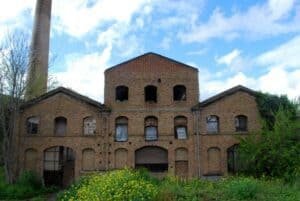
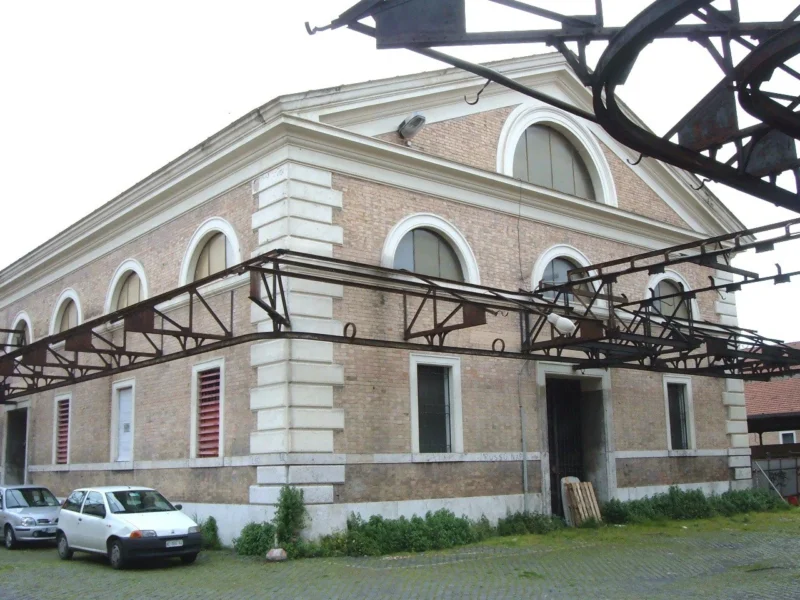
Teatro India, opened on September 7, 1999 in the sheds of the former Mira Lanza factory on the right bank of the Tiber, is the second venue of the Fondazione Teatro di Roma, together with Teatro Argentina and Teatro di Villa Torlonia. It is the last theater opened in Rome in the 20th century.
A chemical factory
At the beginning of the last century the Mira factory arose on this site, intended for chemical production, with the first brick buildings designed by the engineer Giulio Filippucci. In 1913 the plant became the property of the Municipality of Rome and during the First World War it produced glycerin.
Soap and Mira Lanza
After the war the factory converted to soap, helped by its closeness to Mattatoio di Testaccio. Competition from the Piedmontese Unione Stearinerie Lanza, and then the arrival of giants like Henkel and Procter and Gamble, led to an alliance between the two companies: that is how Mira Lanza was born. The Second World War opened the decline, amid labor shortages and the spread of synthetic detergents, and in 1952 the plant closed.
From warehouse to theater
For years the sheds housed the warehouses of the Rancati company, specialized in props for theater and film. In the spring of 1999 the Municipality bought part of the area, and Mario Martone, then director of Teatro di Roma, chose the name: India, like the name of a country on the model of Argentina, and as a reminder of travel.
What it looks like
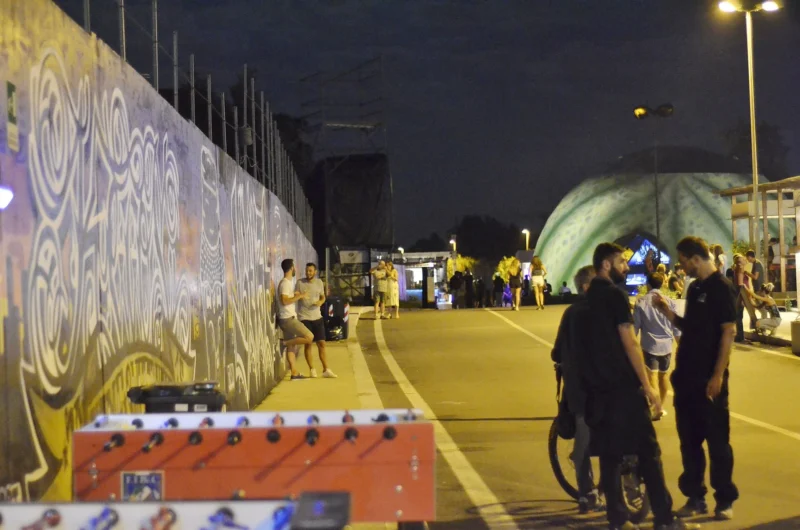
The building has three naves, dark bricks, pitched roofs, wood and iron beams and red velvet seats. The halls are modular and lend themselves to circular layouts, itinerant routes and shows on several levels. In summer the outdoor spaces host cinema and music arenas, as the listing dedicated to India Città Aperta 2026 tells. For a drama with two characters, the closeness between stage and seats is a clear advantage.
A curiosity about La firma. Non ti fidare by Claudio Fava at Teatro India, from March 3 to 7, 2027
The most interesting curiosity concerns a crossing of names. Teatro India owes its name to an idea of Mario Martone, who wanted a country's name for the new venue, on the model of Teatro Argentina, the historic venue of the same foundation. La firma, instead, tells a story of career military officers, political prisoners giving birth in prison and newborns taken from their mothers: a plot that in our view many spectators will connect to specific historical events, even though the official synopsis of Teatro di Roma names neither place nor era. Among Fava's titles, moreover, Latin American names are not lacking: in theater I fiori di Bogotá, in bookstores the novel Mar del Plata, published by Add in 2013. A second curiosity concerns the lead. TV audiences know Ninni Bruschetta above all as Duccio Patanè, the absent-minded and irresistible director of photography of Boris. In La firma they find him in the role of a military officer accused of very grave crimes. A third curiosity is biographical: author and performer are both Sicilian, Fava from Catania and Bruschetta from Messina, and their theater collaboration began precisely in the theaters of the island, before arriving in the Teatro di Roma season.
Something nobody tells you about La firma. Non ti fidare by Claudio Fava at Teatro India, from March 3 to 7, 2027
What the presentations don't say is that La firma is a show in which you know almost the whole plot before going in. The synopsis already reveals the secret: the father is not the father, the real mother was eliminated in prison. Anyone expecting a final twist risks getting the perspective wrong. Fava's theater, here, doesn't work on surprise but on confrontation: the point is not what happened, but what two people can still say to each other after knowing it. My advice is to arrive with this key, and to follow the show the way you follow an interrogation in which the parties constantly swap the roles of accuser and accused. The second thing nobody says concerns the hall. Teatro India is not on anyone's way, and with a drama of this kind arriving after the performance has started means missing the building of tension, which is played out in the first minutes. Allow plenty of time. The third concerns the actors. Bruschetta is popular for comedy, but his training is that of a man of the theater, a director and artistic director: those who know him only from television will get to discover a very different register.
The advice I give you for visiting La firma. Non ti fidare by Claudio Fava at Teatro India, from March 3 to 7, 2027
My advice is to choose one of the three weekday evenings, from Wednesday, March 3 to Friday, March 5, and to reach Teatro India on foot from Garbatella metro, crossing Ponte dell'Industria. In early March the light lasts longer than in the depths of winter, and those who leave work early can take the walk along the river still in daylight, with the Gazometro behind you and the sheds of the old Mira Lanza ahead. Before the show it's worth reading the whole official synopsis: knowing the secret helps you concentrate on what matters, which is the way the two characters react. If you have time, you can approach Fava's work by rewatching I cento passi, which he wrote with Giordana and Zapelli and in which Bruschetta also acts, or by reading the novel Non ti fidare from which the show is drawn. Finally, book in time: five performances are few, and a popular name like Bruschetta's also draws audiences who don't usually go to Teatro India.
How to get to Teatro India for La firma
Teatro India is at Lungotevere Vittorio Gassman 1, once Lungotevere dei Papareschi, at the intersection with Via Luigi Pierantoni and opposite the Gazometro. It is not a theater of the historic center, and in the evening the route has to be planned.
By metro
The most convenient stop on metro line B is Garbatella, about a kilometer away. Exiting toward Via Ostiense you cross the Tiber on Ponte dell'Industria, the old iron bridge, and reach the theater by walking along the river in just under 15 minutes.
By train
Roma Trastevere station, served by the regional lines FL1, FL3 and FL5, is about 700 meters away. For those arriving from Fiumicino or from neighborhoods served by regional railways it's often the fastest solution.
By bus and tram
Several bus lines stop in Piazza della Radio, a few minutes' walk away, and tram 8 serves the Trastevere station area. Before heading out it's best to check routes and evening schedules with the ATAC planner.
By car
The theater is outside the limited traffic zone. Between Viale Marconi and the Lungotevere, finding parking is easier than in Trastevere or Testaccio, but on weekends it's best to leave 15 minutes early.
Another well-known fact, yet rarely mentioned
Many people know that I cento passi is one of the most important films of Italian civic cinema. It is less often cited that its screenplay bears the signature of Claudio Fava alongside those of Monica Zapelli and Marco Tullio Giordana, and that this very screenplay won the Osella in Venice in 2000, the David di Donatello and the Nastro d'Argento in 2001. Even less remembered is that Ninni Bruschetta was in the cast of the film: the author and the lead of La firma were already together, one in the writing and the other in front of the camera, in a story about Peppino Impastato and the mafia of Cinisi. A second fact, known to those who follow the news and little told in theater, concerns the author's personal story: Fava is the son of Giuseppe Fava, a journalist and writer killed by the mafia in Catania on January 5, 1984, and after that death he led for two years the newspaper founded by his father, I Siciliani. The theme of denied truth and of the trial, so present in La firma, runs through all his work, starting with L'istruttoria, the stage text built on the proceedings of the trial for that murder and directed by Bruschetta in 2006. A third fact concerns Bruschetta: besides being an actor he is the author of three books on the craft, one of them with a preface by Franco Battiato.
Around Teatro India: Ostiense, Testaccio and the Gazometro
Teatro India sits along the stretch of the Tiber that best preserves the memory of industrial Rome in the 20th century, between Ostiense, Testaccio and Marconi.
The Gazometro and Ostiense
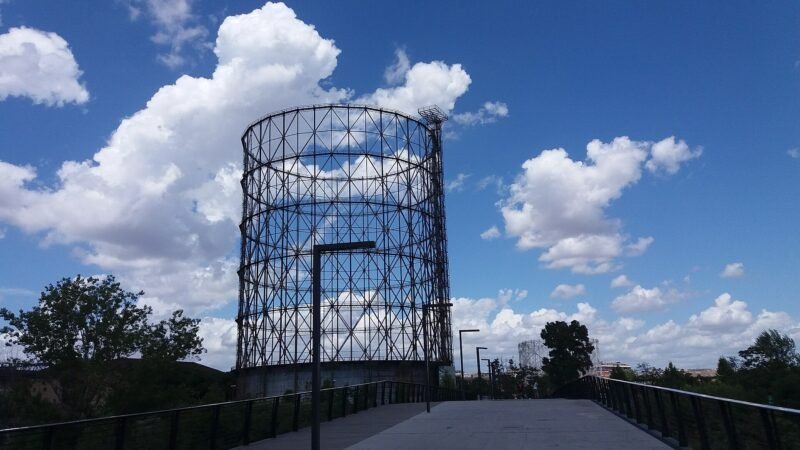
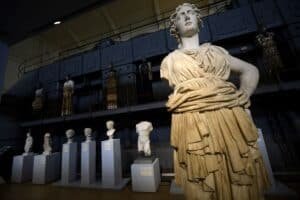
On the other bank rises the Gazometro, the great metal structure that has become a symbol of the neighborhood. Teatro di Roma writes that it watches over the theater. Ostiense is also the neighborhood of street art and of Centrale Montemartini, where ancient sculptures from the Capitoline Museums are displayed among the turbines and boilers of an old power plant.
Testaccio
Heading north you reach Testaccio, with Ex Mattatoio, Monte dei Cocci and the Pyramid of Cestius. Mattatoio is also tied to the history of the theater: its closeness pushed the old Mira to convert to soap production.
San Paolo and Porta Portese
To the south, one metro stop from Garbatella, is the Basilica of St. Paul Outside the Walls. Going up the right bank instead you reach Porta Portese and Trastevere.
The right photo to take at La firma. Non ti fidare by Claudio Fava at Teatro India, from March 3 to 7, 2027
During the show your phone stays off: in a two-voice drama a single lit screen in the stalls is enough to break the concentration of the actors and the audience, and the pauses, in a text like La firma, weigh as much as the lines. Photography is done outside, and Teatro India offers at least three shots. The first is the one with the Gazometro: from the theater's outdoor space the metal structure stands out beyond the Tiber, and in March, on leaving the evening performance, you find it lit against the dark sky, with the theater's bricks in the light of the streetlamps. The second is taken from Ponte dell'Industria, for those arriving from Garbatella: the iron girders in the foreground, the river below, the sheds of the former Mira Lanza on the opposite bank. The third is a detail that ties to the theme of the show: a door, a high window, a brick wall of the old plant. La firma tells of a meeting in a visiting room, between four walls. A building born as a factory and turned into a theater is the right image for a show that speaks of closed spaces and of truths that come to light.
How to organize your evening at La firma
La firma is an intense drama in a hall outside the historic center: the evening works best if arrival, show and dinner are planned as a single route.
Before the show
Those who arrive early can visit Centrale Montemartini, on the other bank, or stroll among the murals of Ostiense. In early March the days get longer, and a walk on Ponte dell'Industria at sunset is good preparation for the evening.
After the show
A text that questions guilt and innocence leaves you wanting to talk about it. Dinner in Testaccio or Ostiense, a 15-minute walk away, is the natural follow-up.
Who to go with
The show lends itself to an evening for two or among friends who love civic theater. Groups would do well to book together and in advance, given the small number of performances.
Where to eat before or after La firma
Around Teatro India the offer is split between Ostiense and Testaccio, livelier in the evening, and the Marconi side, more neighborhood-style.
Ostiense
Across the bridge, along Via Ostiense and in the streets between the Gazometro and Garbatella, you find restaurants, pizzerias and places frequented by students and by people who work in the area. It is the livelier side after dinner.
Testaccio
Testaccio is the neighborhood of Roman quinto quarto cooking, which grew up around Mattatoio: coda alla vaccinara, tripe, rigatoni with pajata. The trattorias between Piazza Testaccio and Via Marmorata are about a 15-minute walk away.
Marconi and Trastevere
On the theater's side, toward Viale Marconi and the station, there are neighborhood pizzerias and trattorias, not very touristy. If you prefer Trastevere, you can take tram 8 on leaving.
Some important events that happened here in history
The history of the place can be told in a few stages. At the beginning of the 20th century, on the right bank of the Tiber, the Mira factory arises, with the first brick buildings designed by the engineer Giulio Filippucci. In 1913 the plant passes to the Municipality of Rome and during the First World War it produces glycerin. After the war, thanks to its closeness to Mattatoio di Testaccio, it converts to soap and grows until it competes with Unione Stearinerie Lanza. Faced with the arrival of the big multinationals, the two companies join forces and Mira Lanza is born. The Second World War marks the start of the decline, because of the lack of labor and the advent of synthetic detergents, and in 1952 the plant closes. The sheds then become the warehouses of the Rancati company, which supplies props to theaters and film sets: fiction enters these spaces even before theater does. In the spring of 1999 the Municipality buys part of the area and on September 7 of the same year Teatro India opens, the second venue of Teatro di Roma, with the name chosen by Mario Martone. Since then its halls have hosted contemporary theater, set design workshops and, in summer, cinema and music arenas. In autumn 2026 the program offered Gli elefanti nella stanza. In March 2027 comes the visiting room imagined by Claudio Fava.
Tickets, accessibility and practical tips for La firma
Tickets for La firma. Non ti fidare are bought on the official website of Teatro di Roma and at the foundation's box offices. Prices are published on the official website. The show is part of the 2026/2027 season, with the subscription campaign open.
Accessibility
Teatro di Roma devotes a section of its website to the accessibility of its halls. For seats reserved for people in wheelchairs or other specific needs, it's best to contact the box office before the performance.
Punctuality
Entry after the show has started may not be allowed. If you arrive by metro and on foot, allow at least a quarter of an hour's walk from Garbatella station.
With teenagers
The plot touches on hard themes, from political imprisonment to the taking of a newborn. The show suits high school students interested in memory and rights. For younger ones, it's best to ask the Teatro di Roma box office for guidance.
Who has come through La firma. Non ti fidare by Claudio Fava at Teatro India, from March 3 to 7, 2027
The first name tied to this place is that of the engineer Giulio Filippucci, who designed the first brick buildings of the Mira factory. For decades the male and female workers of Mira Lanza came through here, working glycerin and soap a stone's throw from Mattatoio. After the closing in 1952, there were the prop makers of the Rancati company, who supplied theaters and film sets with stage props from the sheds. The theater's name is Mario Martone's, director and then head of Teatro di Roma, who followed the birth of the new venue in 1999. Since then Teatro India has been the foundation's space dedicated to research, with Italian and foreign companies, workshops and summer festivals. From March 3 to 7, 2027 there come through Teatro India Claudio Fava, a journalist from Catania, screenwriter of I cento passi, author of novels and stage texts, here in the double role of author and director. Ninni Bruschetta, an actor from Messina in theater, film and television, founder of the company Nutrimenti Terrestri and the face of Boris. Federica De Benedittis, who shares the visiting-room table with him. With them come to Rome the productions of Teatro della città and Marche Teatro, and ideally also the memory of Giuseppe Fava, which runs through all of his son's work.
Frequently asked questions about La firma. Non ti fidare
When is Claudio Fava's La firma on in Rome?
La firma. Non ti fidare is at Teatro India from Wednesday, March 3 to Sunday, March 7, 2027, with one performance a day for five evenings. The start times are published by Teatro di Roma on its own sales circuit.
Who is in La firma. Non ti fidare?
The cast of La firma. Non ti fidare is Ninni Bruschetta and Federica De Benedittis. Text and direction are by Claudio Fava. The production is by Teatro della città, Centro di Produzione Teatrale, with Marche Teatro.
What is La firma about?
La firma tells of the meeting in the visiting room of a prison between a career military officer awaiting trial and the woman who always believed him to be her father. A secret reveals that the real mother, a political prisoner, gave birth in captivity and was then eliminated.
Which book is the show based on?
La firma is based on Non ti fidare, a novel by Claudio Fava published by Fandango in 2026. Fava himself did the stage adaptation and also directs the show.
Where is Teatro India?
Teatro India is at Lungotevere Vittorio Gassman 1, at the corner of Via Luigi Pierantoni, between Testaccio, Ostiense and Marconi. You get there on foot from Garbatella metro line B, from Roma Trastevere station or by buses that stop in Piazza della Radio.
Where do you buy tickets for La firma at Teatro India?
Tickets for La firma at Teatro India are bought on the official website of Teatro di Roma and at the foundation's box offices. Prices and times are published on the official channels of Teatro di Roma.
Who is Ninni Bruschetta?
Ninni Bruschetta is an actor, director and writer born in Messina in 1962, founder of the company Nutrimenti Terrestri and known to the general public as Duccio Patanè in the series Boris. He has been working with Claudio Fava for more than 20 years.
Is the show suitable for teenagers?
La firma. Non ti fidare deals with hard themes such as political imprisonment and the taking of a newborn from its mother. It suits an adult audience and high school students interested in themes of memory. For the youngest, it's best to check with the box office.
Final advice on La firma. Non ti fidare
La firma is a show small in form, two actors and a table, and big in the questions it asks: what do we owe the person who raised us, if that same person destroyed our origin, and where does the line between guilt and innocence run. In our view it's best to choose a weekday evening, arrive on foot over Ponte dell'Industria, read the synopsis before going in and concentrate on the confrontation more than on the secret. It's the chance to see Ninni Bruschetta away from comedy, in a text by an author he has worked with for more than 20 years, inside an old factory turned theater.
Article written by the editorial team of Tour Leader Pro, contact them for Private/Corporate/V.I.P. Tours and Experiences.
Planning a trip to Rome? The English guides to visiting the city are on ItalyPlanner.com.
Contact Information
Nearby
 Teatro India100 m
- Ex Mira Lanza100 m
- Gasometro di Roma200 m
- Centrale Montemartini600 m
- Circolo degli Illuminati700 m
- Ex Mattatoio di Testaccio700 m
Upcoming events nearby
- Vorrei una voce by Tindaro Granata at Teatro India, February 9 to 14, 2027100 m
- The Body of an American by Jacopo Gassmann at Teatro India, February 20 to 28, 2027100 m
- Lettera di una sconosciuta at Teatro India, by Davide Sacco, April 13 to 18, 2027100 m
- Crocodile by Martin Harriague at Teatro India, May 7 and 8, 2027100 m

You might also like
- Madri by Diego Pleuteri at Teatro India, March 17 to 21, 2027
- Flusso with Lino Guanciale and Gianmarco Saurino at Teatro India, March 6 to 14, 2027
- Resteremo per sempre qui buone ad aspettarti by Leonardo Lidi at Teatro India, May 19 to 23, 2027
- Viaggio a Hong Kong at Teatro India, from November 3 to 8, 2026
- Novecento with Ciro Masella at Spazio Rossellini, November 4, 2026
- La firma by Valerio Vestoso with Antonio Bannò at Teatro India, November 11 to 15, 2026