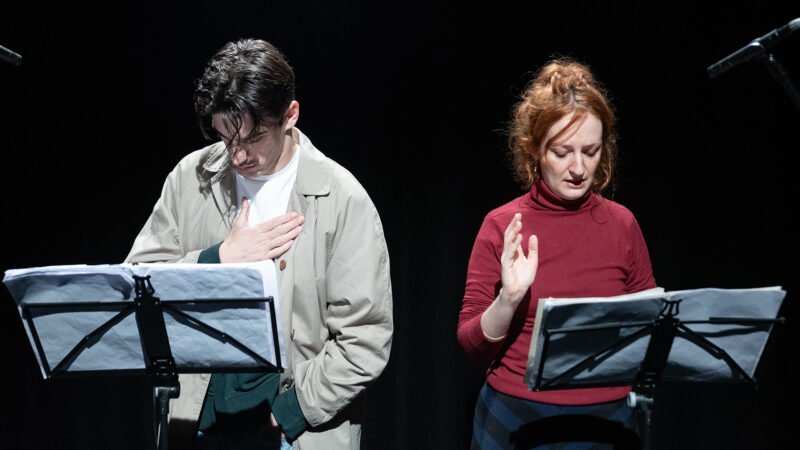
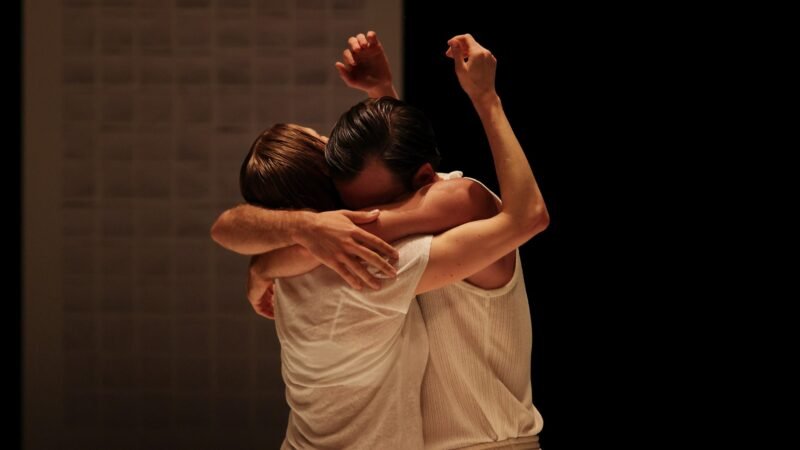
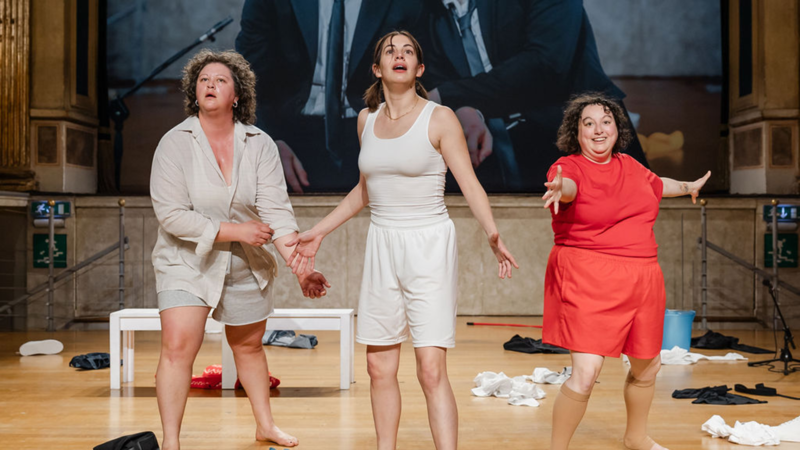
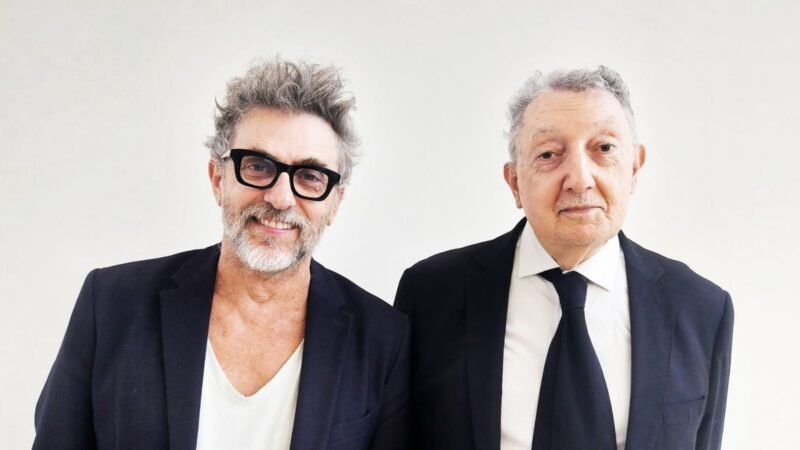
Flusso with Lino Guanciale and Gianmarco Saurino at Teatro India, March 6 to 14, 2027
In short. Flusso, the text by Christian di Furia directed by Lino Guanciale and performed by Guanciale himself together with Gianmarco Saurino, is on at Teatro India, on Lungotevere Vittorio Gassman 1 in Rome, from Saturday, March 6 to Sunday, March 14, 2027.
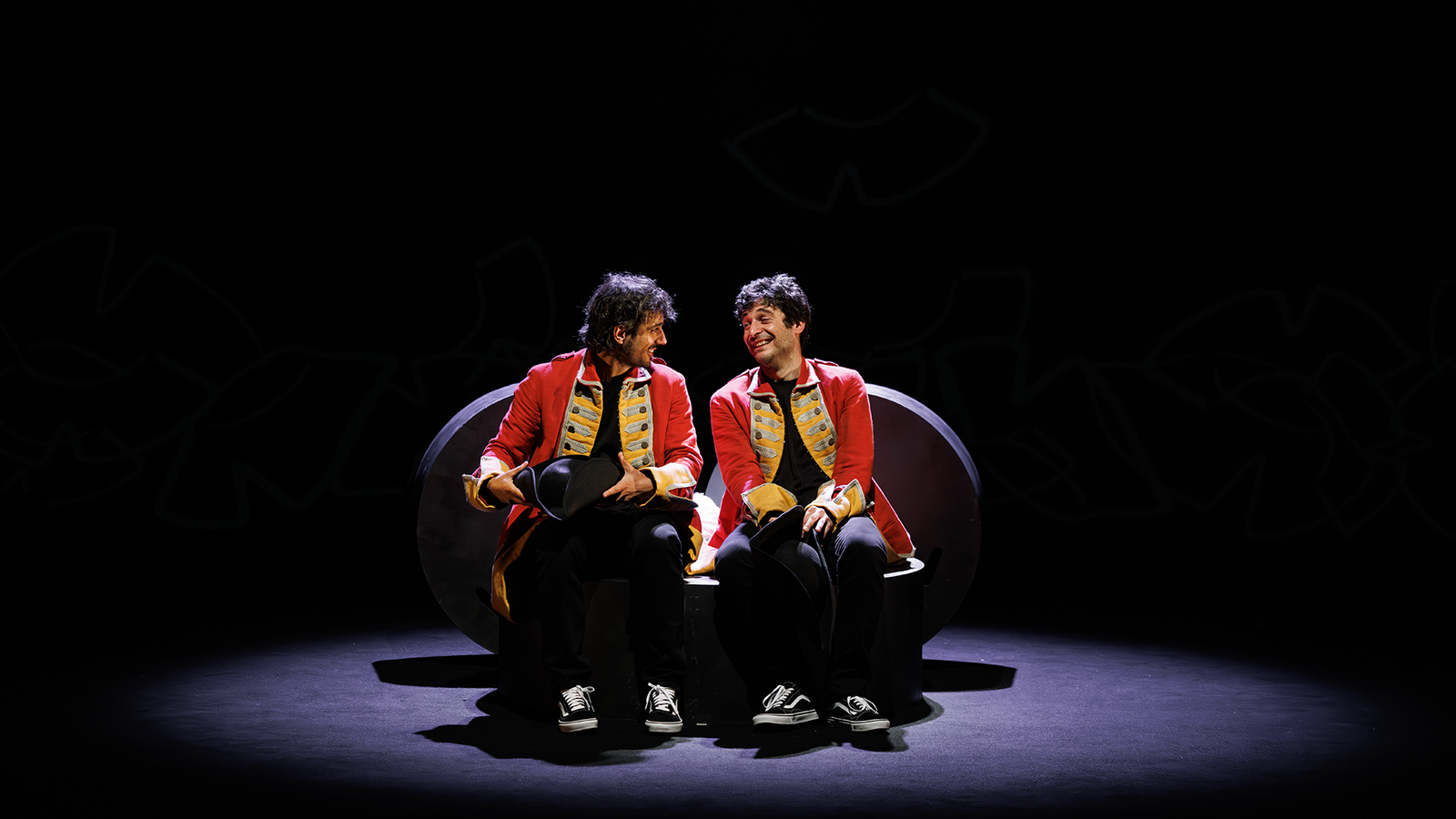
Flusso, the text by Christian di Furia directed by Lino Guanciale and performed by Guanciale himself together with Gianmarco Saurino, is on at Teatro India, on Lungotevere Vittorio Gassman 1 in Rome, from Saturday, March 6 to Sunday, March 14, 2027. The dates listed by Teatro di Roma are eight: Saturday, March 6 and Sunday, March 7, then from Tuesday, March 9 to Sunday, March 14, with Monday off. Teatro India stands across from the Gasometer, at the corner with Via Luigi Pierantoni. The nearest metro B stop is Garbatella, about a kilometer away across Ponte dell'Industria. Roma Trastevere station, served by regional lines FL1, FL3 and FL5, is about 700 meters away. Bus lines 170, 766, 775, 780 and 781 stop at Piazza della Radio. Start times and prices are published on the official website of Teatro di Roma, where tickets are bought together with the foundation's box offices and the authorized presale circuit listed on the show's page. The production is by Teatri di Bari, Wrong Child Production and Riccione Teatro. The text received the «Franco Quadri» special mention at the 56th Premio Riccione per il Teatro, in 2021.
Language: performed in Italian. No English version or English surtitles are announced.
Flusso is a monologue for two voices: a single character, two ages of life, today's man and the child he was. Below you'll find the dates, the content of the show, the history of the text, the two performers, the artistic team, Teatro India with its industrial history, how to get there and how to organize the evening between Ostiense and Testaccio.
Flusso at Teatro India: dates and essential details
Flusso stays on the bill at Teatro India for eight evenings between March 6 and 14, 2027, in the 2026/2027 season of Teatro di Roma, titled Il teatro è vita.
The calendar
It starts on Saturday, March 6 and continues on Sunday, March 7. After the Monday break the performances resume on Tuesday, March 9 and continue every day until Sunday, March 14. On the show's page Teatro di Roma doesn't give the start time of each performance. Before buying it's best to check it on the official website, because in the foundation's halls the Sunday matinees usually start at a different time from the evening ones.
The credits
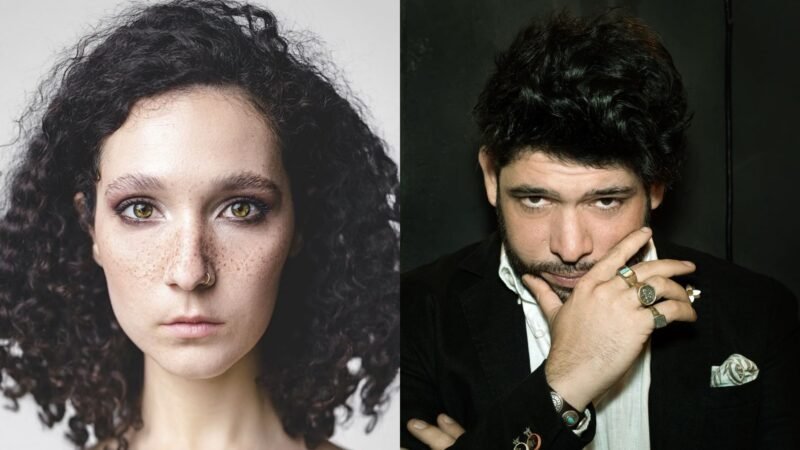
The text is by Christian di Furia, the direction by Lino Guanciale, on stage Lino Guanciale and Gianmarco Saurino. Video and animation are by Iole Cilento and Cristina Zanoboni, set design by Iole Cilento, lighting by Alessandro Catacchio. Photos and video are by Peperonitto Film, Zerottantaproduzioni and Umberto Lopez.
The production
The show is produced by three entities: Teatri di Bari, Wrong Child Production, the company Guanciale founded in 2019, and Riccione Teatro, the body that organizes the playwriting prize the text came out of. It is a chain that joins an Apulian theater, an independent production house and a historic prize for theatrical writing.
What Flusso is about: a man and the child he was
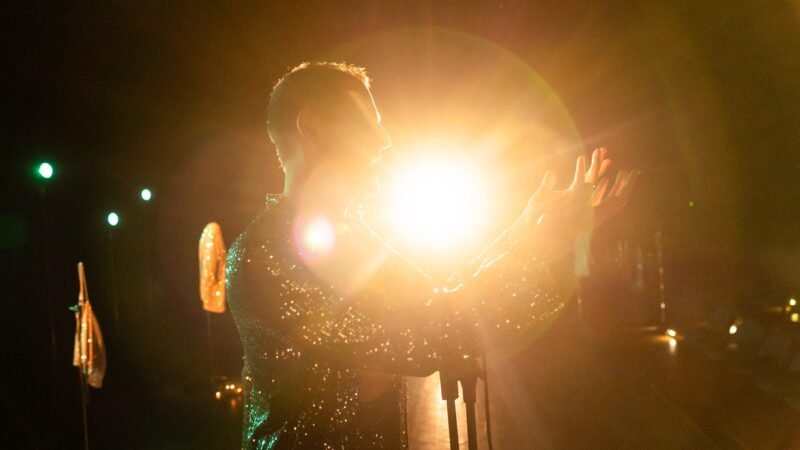
Flusso stages a single character at two ages of life: the adult man, entrusted to Lino Guanciale, and the child he was and who keeps living inside him, entrusted to Gianmarco Saurino.
A suspended room
According to Teatro di Roma's presentation, the story takes place in a room suspended in time and proceeds like a stream of consciousness. There is no plot in the traditional sense: there is a thought that flows freely, like the water of a river without banks, and runs through memories, visions and images. The title should be taken literally: a continuous movement, without pauses.
Moby Dick and Pinocchio
Into the flow come the great myths of literature, from Moby Dick to Pinocchio: two books that almost everyone met as kids, two stories of sea, chases and transformations. The language turns, says the presentation, into an intimate navigation.
Storm, confession, game
Di Furia's words keep changing register: they become storm, then confession, then game. The declared themes are identity, memory and the mystery of existence, in a journey in which the border between reality and imagination dissolves and lets a space suspended between dream, memory and poetry emerge.
Two bodies for one voice
The choice of splitting a monologue between two actors is the key to the show. The adult and the child don't talk as two distinct characters: they are the same person looking at and listening to himself. The audience sees on stage what usually stays invisible, that is, the child everyone carries inside.
Christian di Furia's text and the Premio Riccione
The text of Flusso received the special mention named after Franco Quadri at the 56th edition of the Premio Riccione per il Teatro, in 2021.
The Premio Riccione
The Premio Riccione is one of the best-known Italian awards devoted to dramaturgy, that is, to writing for the stage before the show itself. The fact that Riccione Teatro appears among the producers of Flusso tells of a complete path: a text singled out by a jury, then brought on stage with the support of the same body that awarded it.
Franco Quadri
The mention bears the name of Franco Quadri, theater critic and publisher, a reference figure of Italian criticism in the second half of the 20th century. A mention in his name usually flags a text that looks for new paths in theatrical language, more than in the construction of the plot.
A poetic text
Teatro di Roma defines the text as poetic and visionary, and speaks of intense poetic force. For the spectator it means preparing for a theater of words more than of action, in which the images come from language and video projections more than from stage props.
Lino Guanciale, director and performer of Flusso
Lino Guanciale was born in Avezzano on May 21, 1979 and is an actor, director, playwright, theater producer and writer: the general public knows him for television, but his training and a large part of his career belong to the theater.
From rugby to the Academy
As a boy he played rugby at a high level, up to the national youth selections Under-16 and Under-19, and left the sport at 21, when he was admitted to the Silvio d'Amico National Academy of Dramatic Art. He graduated in 2003 and received the Premio Gassman as best student of the last 10 years. He had enrolled in Letters and Philosophy at Sapienza, after passing the entrance exam for Medicine.
Theater with Longhi, Ronconi, Popolizio
His debut after graduating came with Gigi Proietti, who directed him as Paris in Romeo and Juliet, the show that opened the Silvano Toti Globe Theatre in Rome. Years of work followed with Claudio Longhi, with whom he did a long series of shows, and then with Luca Ronconi, Franco Branciaroli, Walter Le Moli, Massimo Popolizio and Michele Placido. With Brecht's The Resistible Rise of Arturo Ui, directed by Longhi, he took part in a show awarded by the National Association of Theater Critics. In 2018 he won the Ubu prize and the prize of the National Association of Theater Critics for La classe operaia va in paradiso.
Television
His television success came in 2013 with the lawyer Guido Corsi in Che Dio ci aiuti. La dama velata, Non dirlo al mio capo, L'allieva, La porta rossa and Il commissario Ricciardi followed, for which he received the Nastro d'argento in 2021. In 2025 he acts in English in the series The Count of Monte Cristo by Bille August, in the role of the bandit Luigi Vampa.
Recent years in theater
In 2024 he was nominated for the Ubu for Ho paura torero, from Pedro Lemebel's novel, which earned him the Premio Le Maschere del Teatro Italiano in 2025. He is an associate artist of Piccolo Teatro di Milano, where in March 2026 he staged Miracolo a Milano from De Sica and Zavattini. For that show he received the Premio Franco Enriquez. Since 2017 he has been a UNHCR testimonial, and in May 2025 the agency named him Goodwill Ambassador.
Flusso in his career
In the list of his theater works Flusso appears with the dates 2024 to 2027: a show that has been part of his path as a director for some seasons, and that Wrong Child Production, born in 2019 mostly for short films, supports as a co-producer.
Gianmarco Saurino, the child in Flusso
Gianmarco Saurino was born in Foggia on December 12, 1992 and trained at the Centro Sperimentale di Cinematografia in Rome, a student of Giancarlo Giannini, after his first steps with the Teatro dei Limoni company in Foggia.
Theater and Divina Mania
Arrived in Rome at 18, he works with several figures of the Italian scene and founds the artistic and theatrical collective Divina Mania, of which he is artistic director with his colleague Mauro Lamanna. His shows include Moby Dick. La bestia dentro, from Melville, directed by Davide Sacco, staged between 2017 and 2019, L'importanza di leggere i classici at Teatro Vittoria in Rome and, between 2025 and 2026, Scandalo directed by Ivan Cotroneo.
Television and cinema
He debuts on television in 2017 as the lawyer Nicodemo Santopaolo in Che Dio ci aiuti. In 2018 he is among the leads of the second season of Non dirlo al mio capo, alongside Lino Guanciale and Vanessa Incontrada. Since 2020 he is Dr. Lorenzo Lazzarini in Doc. Nelle tue mani. In cinema he is the lead in Maschile singolare and its sequel Maschile plurale, in I viaggiatori and in L'estate più calda. On television he also played Gildo Claps in the miniseries Per Elisa. Il caso Claps, which earned him a special Nastro d'argento in 2024, and took part in La legge di Lidia Poët, Kabul and Call My Agent. Italia.
His commitment
He has been the face of campaigns for Amnesty International and Mediterranea Saving Humans, and has lent his voice to several audiobooks, including Martin Eden by Jack London.
Guanciale and Saurino: a couple already seen
Lino Guanciale and Gianmarco Saurino have already worked together on television, in the second season of Non dirlo al mio capo, in 2018, where Saurino was among the leads alongside Guanciale and Vanessa Incontrada.
From set to stage
TV audiences know them as colleagues in high-rated series. Flusso puts them in an entirely different relationship: not two characters facing each other, but two ages of the same person. It's a directing gamble that rests on trust between the two actors.
13 years apart
There are 13 years between the two. Not enough to make Saurino a child in a realistic sense: the choice is poetic, and asks the spectator to accept a theatrical convention, the one by which childhood is an inner presence more than an age on paper.
Video, lights and set: the artistic team
In Flusso the video and animation carry significant weight: they are by Iole Cilento and Cristina Zanoboni, with Iole Cilento also the author of the set design.
Moving images
A text that runs through Moby Dick and Pinocchio, memories and visions, finds in animated projections the way to make appear what the words evoke. That the same artist handles both set and animation suggests a space conceived as a single visual device.
The lights
The lights are by Alessandro Catacchio. In a room suspended in time, light is what marks the passages between present and memory, between the adult and the child.
Teatro India, the venue of Flusso
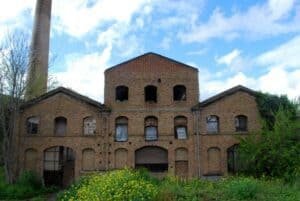
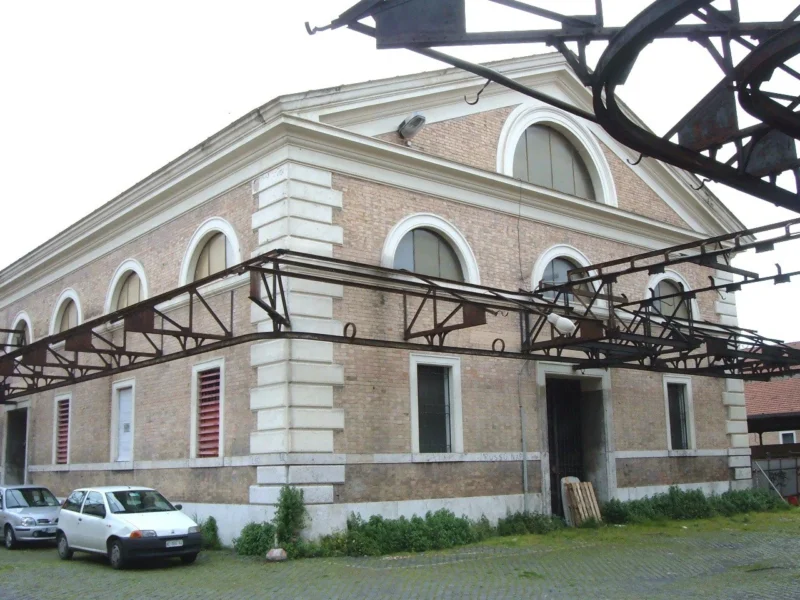
Teatro India is the second venue of the Fondazione Teatro di Roma after Teatro Argentina, carved out of the sheds of the former Mira Lanza factory on the right bank of the Tiber and inaugurated in 1999: it is the last theater opened in Rome in the 20th century.
A factory on the river
At the beginning of the 20th century the Mira factory, devoted to chemical production, rose on this bank, with the first brick buildings by the engineer Giulio Filippucci. In 1913 the plant passed to the City and produced glycerin during the First World War. After the war, also because of its proximity to the Mattatoio di Testaccio, it converted to soap. From the alliance with the Piedmontese Unione Stearinerie Lanza, Mira Lanza was born.
From warehouse to theater
The decline began during the Second World War. The plant closed in 1952 and the sheds became the warehouses of the Rancati firm, a theatrical and film prop house. In 1999 the City bought part of the area and, once the restorations were finished, opened the new theater there.
A name like a nation
The name was chosen by Mario Martone, then director of Teatro di Roma: India, the name of a nation on the model of Argentina, to evoke a place rich in history and the idea of travel.
What it's like
The building has three naves, dark exposed brick, pitched roofs, wood and iron beams and red velvet seats. The halls are modular and lend themselves to shows in the round or on several levels. For a show about a river of thoughts, a theater overlooking the Tiber is a coherent setting.
How to get to Teatro India for Flusso
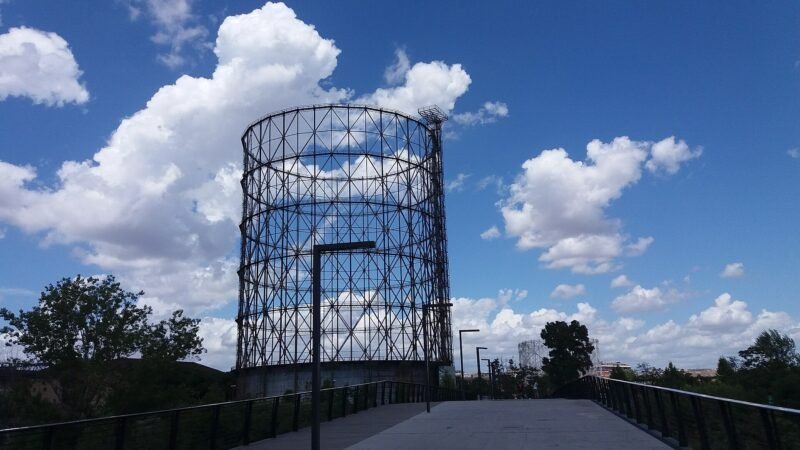
Teatro India is on Lungotevere Vittorio Gassman 1, once Lungotevere dei Papareschi, at the corner with Via Luigi Pierantoni and across from the Gasometer: it is not a theater of the historic center and the route needs planning.
By metro
The nearest metro B stop is Garbatella, about a kilometer away. You exit toward Via Ostiense, cross the Tiber on Ponte dell'Industria, the 19th-century iron bridge, and reach the theater walking along the river in 12 or 15 minutes.
By train
Roma Trastevere station, served by regional lines FL1, FL3 and FL5, is about 700 meters away. For those coming from Fiumicino or from the northwest quadrant it is often the quickest solution.
Buses and trams
Lines 170, 766, 775, 780 and 781 stop at Piazza della Radio, a few minutes' walk away. Tram 8 serves the Trastevere station area. Evening frequencies change: before heading out it's best to check the route on the Roman transport company's route planner.
By car
Teatro India is outside the limited traffic zone. Between Viale Marconi and the Lungotevere parking is easier than in Trastevere, but on weekend evenings it's best to arrive with a quarter of an hour to spare.
A curiosity about Flusso with Lino Guanciale and Gianmarco Saurino at Teatro India, March 6 to 14, 2027
The most surprising curiosity concerns the whale. Flusso runs through, among the great myths of literature, Herman Melville's Moby Dick, and Gianmarco Saurino, who in the show is the child, has already been through that novel on stage. Between 2017 and 2019 he performed Moby Dick. La bestia dentro, from Melville's novel, directed by Davide Sacco, a show born outside the big circuits and taken around for years. For the actor who in Flusso gives body to the protagonist's childhood, then, Melville's novel is territory already explored firsthand on stage, and the return of those pages inside a new text has the flavor of a circle closing. The second myth cited by the presentation, Pinocchio, is the story of a puppet who wants to become a boy: in a show that stages the adult and the child of the same person, the pairing sounds almost like a statement of poetics. Finally there is a geographic coincidence: Flusso is about a thought that flows like river water, and Teatro India is one of the few Roman theaters built literally on the banks of the Tiber, in the sheds of a factory that lived off the river. Anyone arriving on foot from Garbatella metro crosses Ponte dell'Industria and has the river under their feet a few minutes before the curtain rises.
Something nobody tells you about Flusso with Lino Guanciale and Gianmarco Saurino at Teatro India, March 6 to 14, 2027
What is rarely said is that Flusso is not a television show brought to the theater, even though the two names on the poster are among the best known in Italian TV drama. It is a text of contemporary dramaturgy, singled out by a specialist jury at the Premio Riccione, with a poetic language and a stream-of-consciousness structure: anyone arriving expecting the rhythm of a series might be thrown off. In our view that is exactly what makes it interesting. Guanciale has built his career on a double track, and his theater path counts for more than his television roles: the training at the Academy, the years with Claudio Longhi, the work with Luca Ronconi, the Ubu prize, the post of associate artist at Piccolo Teatro di Milano. Flusso belongs to this second track. Then there is a practical detail nobody remembers: you don't reach Teatro India by chance, and the trip from Garbatella metro, on foot across Ponte dell'Industria, takes at least a quarter of an hour. In Teatro di Roma's halls entry after the show has started may not be allowed, and in a show built as an uninterrupted flow, arriving late weighs more than elsewhere. Finally, Teatro India is Teatro di Roma's hall devoted to the contemporary: anyone who already has a ticket for Flusso may find in the same season, a few days later, other new-dramaturgy titles, such as Madri by Diego Pleuteri, on in the same venue from March 17.
My advice for seeing Flusso with Lino Guanciale and Gianmarco Saurino at Teatro India, March 6 to 14, 2027
My advice is to choose one of the midweek performances, from Tuesday, March 9 to Friday, March 12. With two performers this well known, the weekend evenings are the first to sell out, and Teatro India, with its intimate halls, makes closeness to the stage precious: in a monologue for two voices, sitting in the front rows means catching the glances between the adult and the child, which are the heart of the show. It's also best to arrive a bit early, maybe at dusk: the walk from Garbatella metro across Ponte dell'Industria, with the Gasometer behind you and the Tiber under your feet, prepares you well for a show about a river of thoughts. Before going in it's worth rereading a few pages of Moby Dick and Pinocchio: you don't need them to understand, but they help you recognize the images when they surface. Finally, a tip about the evening: Flusso is a show that stays with you, and after the applause it's best not to rush home. Testaccio is a quarter of an hour's walk away, Ostiense is over the bridge: dinner in a neighborhood trattoria is the right way to talk about what you've seen, and to decide which of the two, the man or the child, had the last word.
Around Teatro India: Ostiense, Testaccio and the Gasometer
Teatro India sits where Testaccio, Ostiense and Marconi meet, along the stretch of the Tiber that best tells the story of Rome's 20th-century industry.
The Gasometer and Ostiense
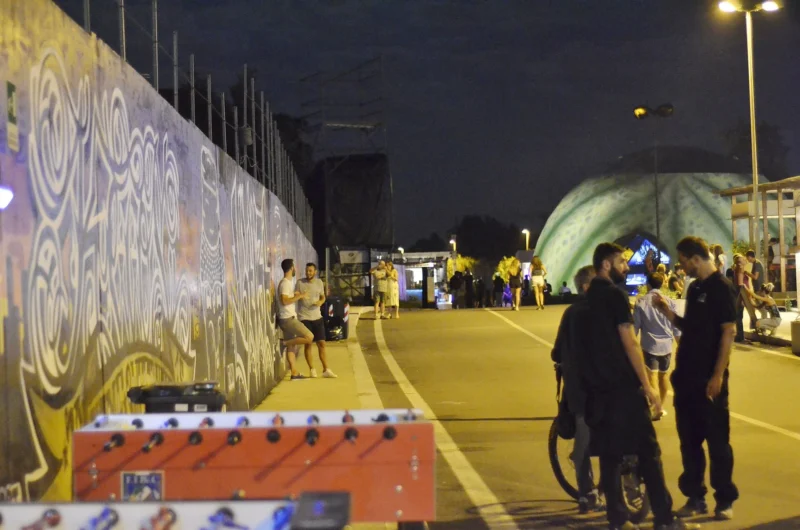
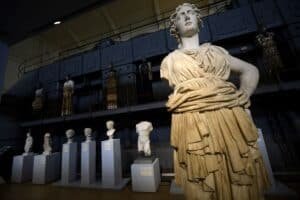
Across the river rises the Gasometer, the metal structure that has become the symbol of the neighborhood, which hosted Maker Faire Rome 2026. Ostiense is also the neighborhood of street art and of Centrale Montemartini, where the ancient statues of the Capitoline Museums are displayed among turbines and boilers.
Testaccio
To the north you reach Testaccio, with Ex Mattatoio, Monte dei Cocci and the Pyramid of Cestius. The thread that ties the Mattatoio to the old Mira, which made soap also with the slaughterhouse's waste, is one of the most curious in this landscape.
San Paolo
Farther south is the basilica of San Paolo fuori le Mura, one metro stop from Garbatella: an afternoon visit that combines well with an evening performance.
Another well-known fact, yet rarely mentioned
It's well known that Lino Guanciale is one of the most popular actors on Italian television: the commissario Ricciardi, the medical examiner Claudio Conforti in L'allieva, the lawyer Enrico Vinci in Non dirlo al mio capo. It's mentioned less often that his first professional job was Shakespearean and Roman. Just graduated from the Silvio d'Amico Academy, in 2003, he was chosen by Gigi Proietti for the role of Paris in Romeo and Juliet, the show that opened the Silvano Toti Globe Theatre, the Elizabethan wooden theater in Villa Borghese. From then on his theater path has been continuous and often far from the spotlight: the long collaboration with Claudio Longhi on authors such as Camus, Koltès, Sanguineti and Brecht, the shows directed by Luca Ronconi, the work as a teacher and theater popularizer in universities and schools, begun in 2005. A second little-cited fact concerns his production company: Wrong Child Production was born in 2019 mostly to make short films, and Flusso is one of the cases in which it enters theater production. The name, wrong child, sounds almost like an involuntary comment on a show in which an adult talks with the child he was. Gianmarco Saurino too has a little-remembered fact: before television he founded a theater collective, Divina Mania, with which he has been working on stage for years.
The right photo to take at Flusso with Lino Guanciale and Gianmarco Saurino at Teatro India, March 6 to 14, 2027
During the show the phone stays off: in a show made of projections, lights and whispered words, the glow of a screen interrupts a carefully built atmosphere. The photo is taken outside, and Teatro India offers at least three. The first is with the Gasometer: Teatro di Roma itself writes that the Gasometer watches over the theater, and from the outdoor space the metal structure stands out beyond the Tiber. In March, at the time of the evening performances, it's already dark, and the right photograph is the night one, with the Gasometer lit and the bricks of the old factory in the light of the street lamps. The second is taken from Ponte dell'Industria, for those arriving from Garbatella: the iron trusses in the foreground, the river flowing, the sheds of the former Mira Lanza on the opposite bank. For a show titled Flusso, an image of water moving under the bridge is the most fitting: with a slightly longer exposure time, the lights reflected in the Tiber become streaks. The third is a detail: the big windows of the old plant, behind which workers, men and women, labored for decades, and where for half a century the stage props of the Rancati firm were kept. A place that has preserved the memory of other shows, for a show about memory.
Some important events that happened here in history
The history of the place is marked by a few dates. At the beginning of the 20th century, on the right bank of the Tiber, the Mira factory is born, with the first brick buildings designed by the engineer Giulio Filippucci. In 1913 the plant passes to the City of Rome and produces glycerin, a precious material in the years of the First World War. After the war, taking advantage of the proximity to the Mattatoio di Testaccio, the factory converts to soap and grows. Then come the years of competition with Unione Stearinerie Lanza, up to the alliance from which Mira Lanza was born, faced with the arrival of the sector's multinationals. The Second World War marks the beginning of the decline, because of the lack of labor and the spread of synthetic detergents. The plant closes in 1952 and becomes the warehouse of the Rancati firm, specializing in theatrical and film props: for half a century, in the sheds that are now a theater, the props of theaters and sets are kept. In 1999 the City buys part of the area and opens Teatro India there, the second venue of Teatro di Roma, wanted by the then director Mario Martone. Since then seasons of contemporary theater, workshops and summer series such as India Città Aperta have followed one another here, outdoors with a view of the Gasometer. In March 2027 the theater hosts Flusso, a text born from a playwriting prize and turned into a show.
Who has passed through: Flusso with Lino Guanciale and Gianmarco Saurino at Teatro India, March 6 to 14, 2027
The first name linked to this place is that of the engineer Giulio Filippucci, who designed the first brick buildings of the Mira factory. For decades the workers of Mira Lanza passed through here, then the prop handlers of the Rancati firm, who supplied props to theaters and Italian film sets. The name of the theater was chosen by Mario Martone, director and then head of Teatro di Roma, who wanted the new venue. Since 1999 Teatro India has been the foundation's place of experimentation, with Italian and foreign companies, workshops and summer series. In this same season, among others, Francesca Astrei came through with Gli elefanti nella stanza. Lino Guanciale knows Teatro di Roma's halls well: in 2016 he was among the cast of Ragazzi di vita from Pasolini, directed by Massimo Popolizio, at Teatro Argentina, and in 2018 at Argentina he presented with Davide Cavuti I sognatori hanno i piedi poggiati sulle nuvole. In March 2027 he and Gianmarco Saurino pass through Teatro India, with the author Christian di Furia, Iole Cilento, Cristina Zanoboni and Alessandro Catacchio. And with them, ideally, Herman Melville and Carlo Collodi, Captain Ahab and Pinocchio, and all the children the adults in the audience have been.
Where to eat before or after Flusso
Around Teatro India the best choice for dinner is over the bridge, in Ostiense, or in Testaccio, the neighborhood of traditional Roman cooking.
Ostiense
Along Via Ostiense and in the streets around the Gasometer and Garbatella there are restaurants, pizzerias and places frequented by students and by people who work in the area. It's the livelier side in the evening, even on weekdays.
Testaccio
Testaccio is the neighborhood of quinto quarto cooking, born around the Mattatoio: coda alla vaccinara, tripe, rigatoni with pajata. The trattorias between Piazza Testaccio and Via Marmorata are a quarter of an hour's walk away. On Saturday it's best to reserve.
Marconi and Trastevere
On the theater's side, toward Viale Marconi and the station, there are neighborhood pizzerias and trattorias, not very touristy. Those who prefer Trastevere take tram 8 after the show.
Accessibility, age and practical tips
Teatro di Roma devotes a section of its website to the accessibility of its halls. For seats reserved for people in wheelchairs or other needs, it's best to contact the foundation's box office before the performance.
With teenagers
Flusso is a theater of poetic word, without a linear plot: it may interest high school students used to theater, also because of the presence of two actors they know from television, but it asks for attention and a willingness to listen. It isn't designed for children.
Punctuality
Teatro India is not on anyone's way, and entry after the performance has started may not be allowed. Plan your timing well, especially if you arrive by metro and on foot.
March in Rome
The first half of March is a good time for Rome: days getting longer, mild temperatures, fewer crowds than at Easter. For those coming from out of town, an evening at Teatro India combines well with a day among Testaccio, the Pyramid and Centrale Montemartini.
Frequently asked questions about Flusso at Teatro India
When is Flusso with Lino Guanciale on in Rome?
Flusso is on at Teatro India in Rome from Saturday, March 6 to Sunday, March 14, 2027, for eight performances: Saturday, March 6 and Sunday, March 7, then every day from Tuesday, March 9 to Sunday, March 14, with Monday off. Start times are published on the official Teatro di Roma website.
Who is on stage in Flusso?
Lino Guanciale, who also directs, and Gianmarco Saurino perform in Flusso. The two play a single character at two ages of life: today's man and the child he was. The text is by Christian di Furia, the video animations by Iole Cilento and Cristina Zanoboni.
What is Flusso about?
Flusso is a monologue for two voices in the form of a stream of consciousness: in a room suspended in time, a man and the child who lives inside him run through memories, visions and great myths of literature, from Moby Dick to Pinocchio, talking about identity, memory and the mystery of existence.
Did Flusso win an award?
The text of Flusso received the «Franco Quadri» special mention at the 56th edition of the Premio Riccione per il Teatro, in 2021. Riccione Teatro, the body that organizes the prize, is also among the producers of the show, together with Teatri di Bari and Wrong Child Production.
Where is Teatro India?
Teatro India is on Lungotevere Vittorio Gassman 1, across from the Gasometer, between Testaccio, Ostiense and Marconi. The nearest metro is Garbatella, on line B, about a kilometer away. Roma Trastevere station is about 700 meters away.
Where do you buy tickets for Flusso?
Tickets for Flusso at Teatro India are bought on the official Teatro di Roma website, at the foundation's box offices and on the authorized presale circuit listed on the show's page. Prices are published on the same official channels.
Is Flusso suitable for teenagers?
Flusso at Teatro India is suitable for an adult audience and for high school students used to theater of the word. It has no linear plot and proceeds through images and memories: it isn't designed for children, while for teenagers the presence of two television faces can be a good way in.
Final advice on Flusso
In our view Flusso is one of the most interesting shows of the spring at Teatro India: two popular actors who choose a text of contemporary dramaturgy, awarded and unconventional, and a theater born in a factory on the river that amplifies its theme. My advice is to book early, choose a midweek evening, arrive with the light from Ponte dell'Industria and let yourself be carried by the current. Anyone going to see Lino Guanciale and Gianmarco Saurino will also find Melville, Collodi and the child everyone carries inside.
Article written by the editorial team of Tour Leader Pro, contact them for Private/Corporate/V.I.P. Tours and Experiences.
Planning a trip to Rome? The English guides to visiting the city are on ItalyPlanner.com.
Contact Information
Nearby
 Teatro India100 m
- Ex Mira Lanza100 m
- Gasometro di Roma200 m
- Centrale Montemartini600 m
- Circolo degli Illuminati700 m
- Ex Mattatoio di Testaccio700 m
Upcoming events nearby
- Vorrei una voce by Tindaro Granata at Teatro India, February 9 to 14, 2027100 m
- The Body of an American by Jacopo Gassmann at Teatro India, February 20 to 28, 2027100 m
- La firma. Non ti fidare by Claudio Fava at Teatro India, from March 3 to 7, 2027100 m
- Lettera di una sconosciuta at Teatro India, by Davide Sacco, April 13 to 18, 2027100 m


You might also like
- Madri by Diego Pleuteri at Teatro India, March 17 to 21, 2027
- Crocodile by Martin Harriague at Teatro India, May 7 and 8, 2027
- Resteremo per sempre qui buone ad aspettarti by Leonardo Lidi at Teatro India, May 19 to 23, 2027
- Viaggio a Hong Kong at Teatro India, from November 3 to 8, 2026
- Novecento with Ciro Masella at Spazio Rossellini, November 4, 2026
- La firma by Valerio Vestoso with Antonio Bannò at Teatro India, November 11 to 15, 2026