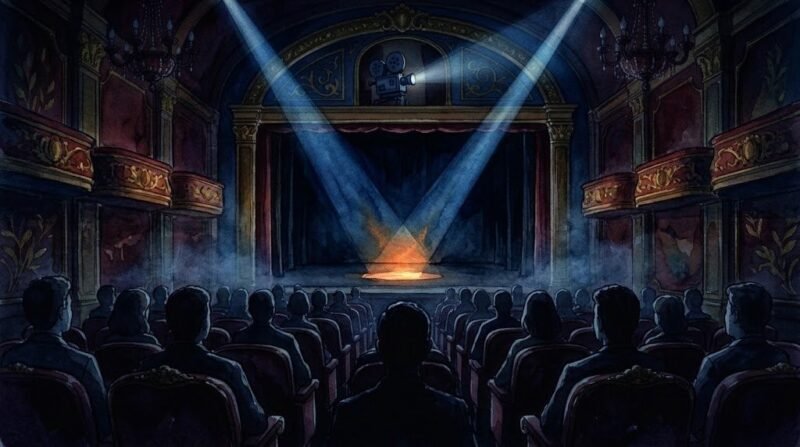
Resteremo per sempre qui buone ad aspettarti by Leonardo Lidi at Teatro India, May 19 to 23, 2027
In short. Resteremo per sempre qui buone ad aspettarti, a play by Diego Pleuteri directed by Leonardo Lidi, is on at Teatro India, Lungotevere Vittorio Gassman 1 in Rome, from Wednesday, May 19 to Sunday, May 23, 2027.
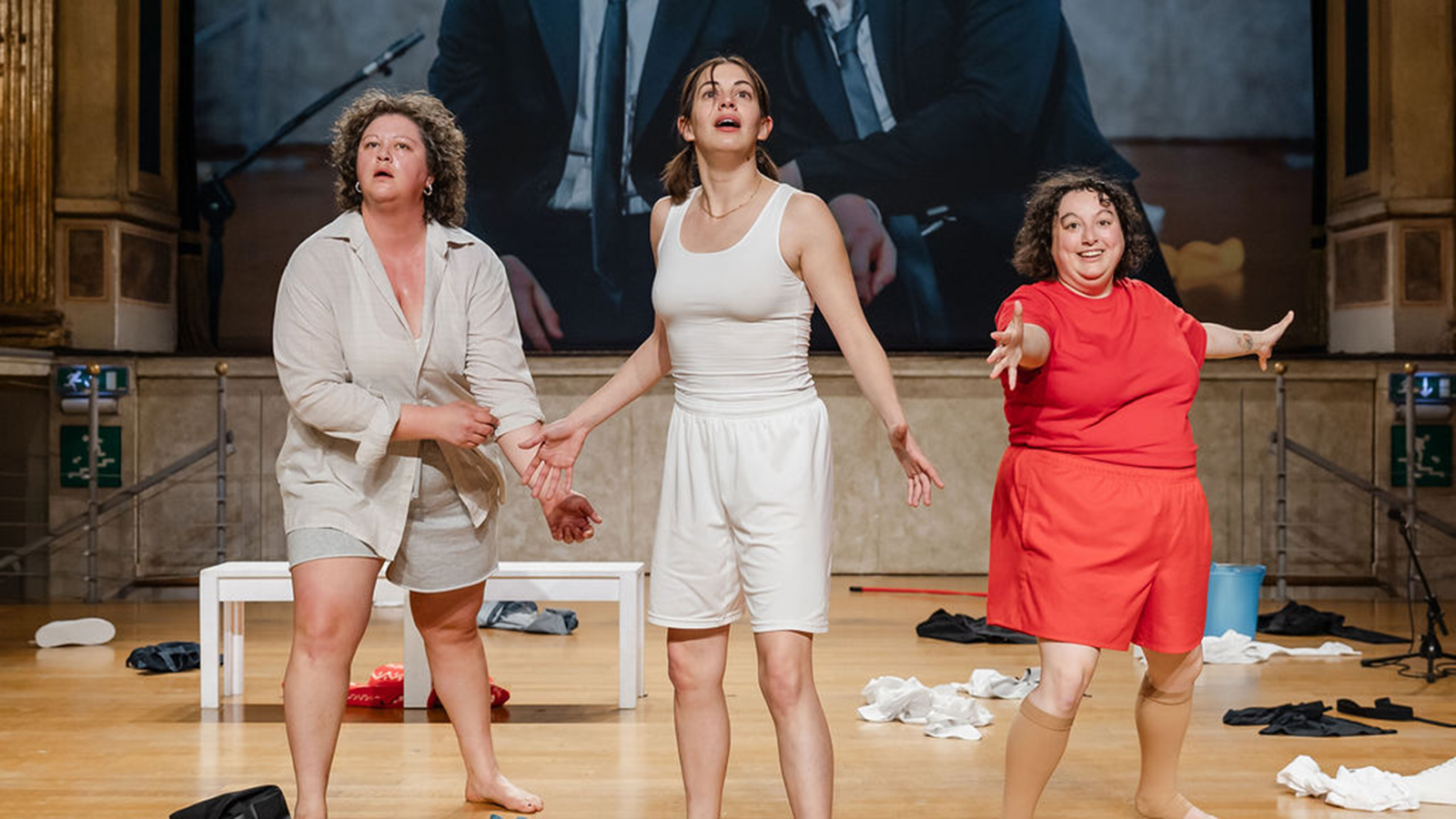
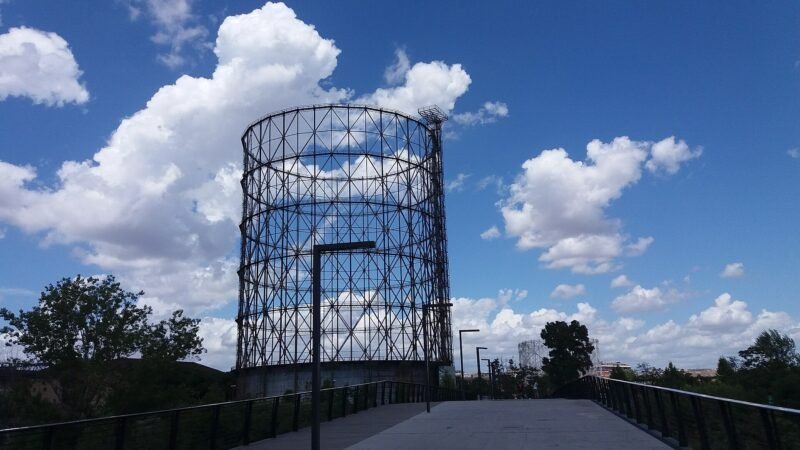
Resteremo per sempre qui buone ad aspettarti, a play by Diego Pleuteri directed by Leonardo Lidi, is on at Teatro India, Lungotevere Vittorio Gassman 1 in Rome, from Wednesday, May 19 to Sunday, May 23, 2027. On stage are Marta Malvestiti, Beatrice Verzotti, Teresa Castello and Hana Daneri. The show is produced by Teatro Stabile di Torino, Teatro Nazionale, and is part of the Teatro di Roma 2026 and 2027 season. The times of the five performances and the prices are published on the official Teatro di Roma website, where tickets are sold, or at the foundation's box offices. Teatro India stands opposite the Gazometro, where Testaccio, Ostiense and Marconi meet: Metro B Garbatella is about one kilometer away, and Roma Trastevere station about 700 meters.
Language: a performance based on dance, music or visual acts; no English version is announced, any spoken parts are in Italian.
Resteremo per sempre qui buone ad aspettarti at Teatro India: dates and tickets
Resteremo per sempre qui buone ad aspettarti, roughly We'll always stay here, good girls, waiting for you, is scheduled at Teatro India for five nights in a row, from Wednesday, May 19 to Sunday, May 23, 2027.
The dates
Teatro di Roma lists five performances: Wednesday the 19th, Thursday the 20th, Friday the 21st, Saturday the 22nd and Sunday, May 23.
The times
Start times aren't shown on the show's page: check them on the Teatro di Roma website when you buy, especially for the Sunday performance, which in Roman theaters is often in the afternoon.
Tickets
Prices and how to buy are published on the official website of Teatro di Roma, which runs the Teatro India box office. The foundation also offers subscriptions for the 2026 and 2027 season.
The production
The show is produced by Teatro Stabile di Torino, Teatro Nazionale, with the support of the Ministry of Culture and SIAE under the Per Chi Crea program.
The show: three animals waiting for their owner
Resteremo per sempre qui buone ad aspettarti tells of the wait of three pets, a little dog, a cat and a goldfish, whose owner goes out one evening and doesn't come back.
The wait
As every evening, the owner has gone out, but this time doesn't return. While they wait, according to the Teatro di Roma presentation, time stretches: the animals chase each other, quarrel, play, sleep and dream, while the absence becomes more and more real.
The changing home
The absence turns the home into a foreign space, suspended between refuge and prison. The most familiar place becomes the stage of a growing loneliness.
A tragicomedy
Diego Pleuteri builds a tragicomedy that, through the animals' eyes, questions the need to belong, emotional dependence and the fragility of bonds. The wait becomes the place where loneliness, the desire for the other and the need to find meaning even when every certainty seems to fail are revealed.
The title
The title is already a statement: the promise of loyalty of those who wait, in the feminine plural, addressed to someone who may never return. There are four performers, all women, and the feminine "buone", good girls, in the title suggests that the animals on stage are conceived as female. Who the fourth presence on stage is, and how she relates to the three waiting creatures, the audience discovers in the hall.
The cast and the artistic team
On stage are four actresses, Marta Malvestiti, Beatrice Verzotti, Teresa Castello and Hana Daneri. The foundation doesn't list who plays which role.
Sets
Sets are by Fabio Carpene: the space of the home, which in the story becomes refuge and prison, is the visual heart of the show.
Movement
Stage movement is by Riccardo Micheletti. In a show where the actresses play animals, the work on the body carries special weight.
Direction
The assistant director is Nicolò Tomassini. The director is Leonardo Lidi, who has worked with Pleuteri before.
Diego Pleuteri and the partnership with Lidi
Resteremo per sempre qui buone ad aspettarti is the second Diego Pleuteri play directed by Leonardo Lidi for Teatro Stabile di Torino, after Come nei giorni migliori in 2023.
Their first collaboration
In 2023 Lidi staged Pleuteri's Come nei giorni migliori for Stabile di Torino. Resteremo per sempre qui buone ad aspettarti, from 2026, continues that partnership between a director and a writer of the same generation.
Contemporary playwriting
In a directing career made mostly of classics, from Ibsen to Chekhov, from Strindberg to Tennessee Williams, Pleuteri's plays represent Lidi's side of new writing.
The theme of waiting
Waiting is a theme that runs through many of the plays Lidi has tackled: just think of the Chekhov characters of his Spoleto project, always poised between a past that won't come back and a future that won't arrive. In Resteremo per sempre qui buone ad aspettarti waiting becomes the very situation of the drama, stripped to the bone: a door that doesn't open, three creatures who don't know what to do except stay. In our opinion it's one of the points where Pleuteri's writing and the director's sensibility meet best.
Leonardo Lidi, director of Chekhov and Tennessee Williams
Leonardo Lidi, born in Piacenza on October 11, 1988, is an actor and stage director who graduated from the Teatro Stabile di Torino school and in a few years became a director of national standing thanks to his readings of the classics.
His debut at the Biennale
In summer 2018 Lidi debuted at the 46th International Theatre Festival of the Venice Biennale with Ghosts, after Henrik Ibsen, winner of the call for directors under 30. In 2020 he returned to the Biennale with Caroline Baglioni's Il lampadario and La città morta, after Gabriele D'Annunzio.
The classics
He directed Tennessee Williams's The Glass Menagerie for LAC Lugano in 2019, García Lorca's The House of Bernarda Alba, which opened the Teatro Carignano season in 2020, Strindberg's Miss Julie at the Festival dei Due Mondi in Spoleto in 2021, and Molière's The Misanthrope, Euripides's Medea, Cat on a Hot Tin Roof and Hamlet for Stabile di Torino.
The Chekhov project
Between 2022 and 2024 Lidi brought his three-part Chekhov project to the Festival dei Due Mondi in Spoleto: The Seagull, Uncle Vanya and The Cherry Orchard.
Opera, awards, roles
In 2020 he directed his first opera, Verdi's Falstaff with Luca Salsi. The same year he received the ANCT Critics' Award for his work as director and playwright. Since March 2022 he has been artistic director of Ginesio Fest in San Ginesio, and he directs the acting school of Teatro Stabile di Torino.
The actor
As an actor he has worked on stage with Valter Malosti, Antonio Latella, Konstantin Bogomolov, Ferdinando Bruni and Elio De Capitani, and on screen, among others, in Sydney Sibilia's Rose Island and Laura Bispuri's Il paradiso del pavone.
Why see Resteremo per sempre qui buone ad aspettarti
Resteremo per sempre qui buone ad aspettarti combines an almost fairy-tale premise with very adult themes, which is why it speaks to different audiences: lovers of contemporary theater, followers of Lidi, and anyone with a pet at home who knows that kind of waiting.
A strong theatrical idea
Telling the story of abandonment from the point of view of those who stay, and what's more of three animals, is an idea you grasp in one sentence and that on stage opens many possibilities: the comedy of quarrels and games, the tragedy of a growing absence.
A recognizable director
Lidi is one of the Italian directors of his generation most present in national theaters and festivals, from Spoleto to the Biennale. Seeing him take on a contemporary play lets you understand his work beyond the classics.
A fitting hall
The flexible halls of Teatro India suit shows that need closeness between stage and audience. A domestic interior with four actresses finds an intimate dimension here.
Teatro India, a former factory on the Tiber
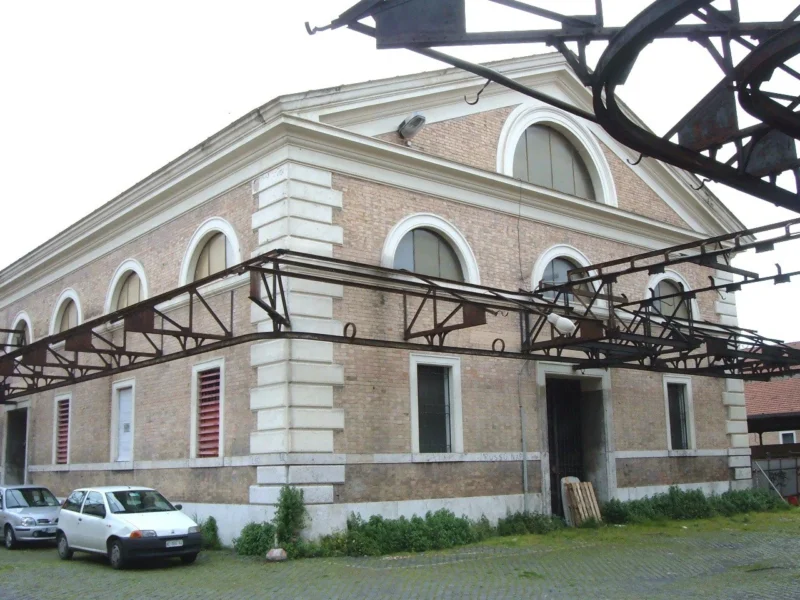
Teatro India, the second venue of Fondazione Teatro di Roma after Teatro Argentina, occupies the sheds of the former Mira Lanza factory on the right bank of the Tiber and was opened in 1999: it's the last theater opened in Rome in the 20th century.
Mira Lanza
The first brick buildings of the Mira factory, devoted to chemicals, were designed in the early 20th century by engineer Giulio Filippucci. The City took over the plant in 1913. During World War I it produced glycerin, then soap, taking advantage of its proximity to the Testaccio slaughterhouse, Mattatoio.
From warehouse to theater
After the factory closed in 1952, the sheds housed the warehouses of the Rancati firm, a theater and film props company. In 1999 the City bought part of the area and turned it into the new Teatro di Roma hall.
A travel name
It was Mario Martone, then artistic director, who chose the name: India, like a country, on the model of Argentina, to evoke history, memory and travel.
The architecture
Three naves, dark brick, sloping roofs, wood and iron beams, red velvet seats: the halls are flexible and change layout depending on the show. Outside, the view of the Gazometro.
How to get to Teatro India for Resteremo per sempre qui buone ad aspettarti
Teatro India's address is Lungotevere Vittorio Gassman 1, formerly Lungotevere dei Papareschi, at the corner of Via Luigi Pierantoni: it's far from the historic center and the route needs planning.
By Metro B
From the Garbatella stop, about one kilometer away, exit toward Via Ostiense, cross the Tiber on Ponte dell'Industria and walk along the river to the theater, in 12 to 15 minutes.
By train
Roma Trastevere station, served by regional lines FL1, FL3 and FL5, is about 700 meters away.
Bus and tram
Several bus lines stop in Piazza della Radio, a few minutes' walk away, and tram 8 reaches the area around Trastevere station. Updated routes and times are on the Rome transit company's journey planner. After evening performances service thins out: better to know beforehand.
By car
The theater is outside the limited traffic zone. Between Viale Marconi and the Lungotevere it's easier to park than in Trastevere, but on Fridays and Saturdays it's still best to leave with time to spare.
A curious fact about Resteremo per sempre qui buone ad aspettarti by Leonardo Lidi at Teatro India, May 19 to 23, 2027
The most obvious curious fact is the point of view. Resteremo per sempre qui buone ad aspettarti tells a human story, abandonment, waiting, emotional dependence, without the human at the center of the story appearing as the main character: the ones who speak, quarrel and dream are a little dog, a cat and a goldfish. It's a choice with a long literary tradition, from ancient fables to novels with animal narrators, but on stage it raises concrete problems: how do you play an animal without falling into imitation or caricature? The presence of Riccardo Micheletti in charge of stage movement shows that the work on the actresses' bodies is an essential part of the show. A second curious element concerns the director. Leonardo Lidi is known mainly for the classics: Ibsen, Strindberg, Tennessee Williams, Molière, Euripides, Shakespeare and an entire three-part Chekhov project at the Festival dei Due Mondi in Spoleto. His work on The Seagull, Uncle Vanya and The Cherry Orchard often revolves around characters waiting for something that doesn't come. Here the theme of waiting returns, but moved into a contemporary apartment and entrusted to three animals. In our opinion it's exactly this shift, from the great repertoire to a new and unsettling play, that makes the show interesting even if you know Lidi from the classics.
Something nobody tells you about Resteremo per sempre qui buone ad aspettarti by Leonardo Lidi at Teatro India, May 19 to 23, 2027
What's rarely said about a show like this is how much the tone can surprise. The presentation speaks of tragicomedy, and the combination of pets and abandonment might suggest a family show or, on the contrary, a bleak drama. Instead it's writing that holds both together: the games, the quarrels and the animals' chases live alongside an absence that becomes ever more real. If you go expecting only tenderness you may be thrown off, and if you expect only sadness you may find yourself laughing. Another rarely mentioned point concerns the production. The show was born at Teatro Stabile di Torino, where Lidi runs the acting school, and is supported by the Ministry of Culture and SIAE under the Per Chi Crea program. Seeing in Rome, in a five-night run at Teatro India, a production born in Turin is a chance to discover a work that would otherwise circulate mostly in the north. Finally, the play is by Diego Pleuteri, with whom Lidi had already worked in 2023 on Come nei giorni migliori: the partnership between an established director and a contemporary playwright is one of the most valuable things a national theater can support.
My tip for Resteremo per sempre qui buone ad aspettarti by Leonardo Lidi at Teatro India, May 19 to 23, 2027
My tip is to go without reading too much beforehand and discover the animals' point of view in the moment. The plot is simple, and the show's strength lies in how the waiting changes the characters and the space of the home: the fresher your eyes, the more you'll feel that change. With five performances in a row, from Wednesday the 19th to Sunday, May 23, there's room to choose. The midweek evenings, Wednesday and Thursday, are the quietest. Friday and Saturday are the busiest, good if you want to pair the show with dinner in Testaccio or Ostiense. Sunday is the choice if you'd rather not get home late, provided you check the time on the Teatro di Roma website, since it isn't shown on the show's page. Arrive before sunset to see the Gazometro in the late May light and take a short walk along the Tiber before going in. If you love Lidi's work on the classics, consider this show a complement: the same sensitivity to waiting and fragile bonds, applied to a new play.
Around Teatro India: between the Gazometro and Testaccio
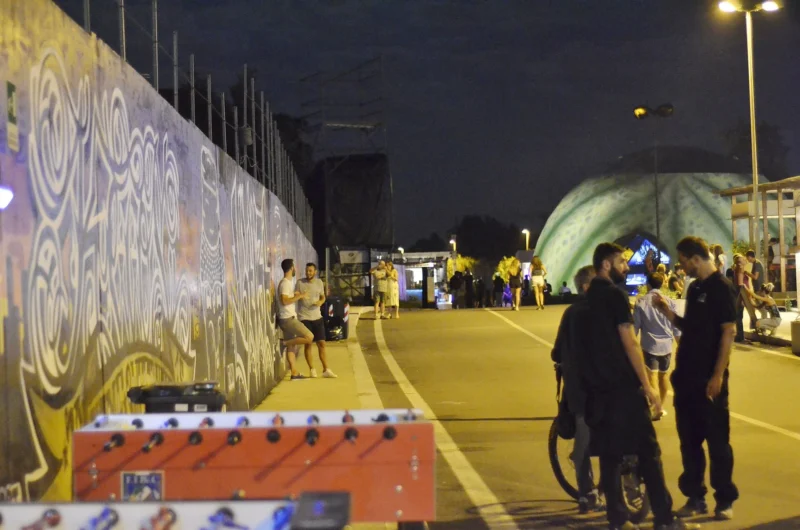
Teatro India overlooks the stretch of the Tiber where Testaccio, Ostiense and Marconi meet, the most industrial landscape of 20th-century Rome.
Ostiense and the Gazometro
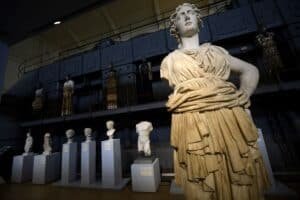
On the other bank rises the Gazometro, the metal structure that symbolizes the neighborhood. In Ostiense you'll find the street art on the facades and Centrale Montemartini, with ancient sculptures displayed among the machinery of the former power plant.
Testaccio
To the north are the Ex Mattatoio, Monte dei Cocci and the Pyramid of Cestius. The slaughterhouse was also an indirect supplier of the old Mira factory, which made soap from its byproducts.
The river in late May
In late May the Tiber embankments come alive: after the show, a walk along the river is a good way to end the evening.
Another well-known fact, yet one rarely mentioned
It's well known that Teatro India was born from the conversion of a factory, Mira Lanza. Less often remembered is the middle chapter, which tied the place to the theater long before 1999. After production stopped in 1952, the sheds became the warehouses of the Rancati firm, a theater and film props company: for about half a century, these naves stored the objects destined for the stages and film sets of Italian cinema. When Fondazione Teatro di Roma opened its second venue there, at the wish of Mario Martone, the place therefore already had a past in show business, if only behind the scenes. For a show like Resteremo per sempre qui buone ad aspettarti, set entirely in a home that slowly becomes foreign, the coincidence deserves a note: the apartment, with Fabio Carpene's sets, is staged in the same building that for decades kept the fake interiors of theater and film. Even the theater's name, chosen by Martone as a country's name on the model of Argentina, speaks of travel: the kind the three waiting animals, shut indoors, cannot take.
The right photo to take at Resteremo per sempre qui buone ad aspettarti by Leonardo Lidi at Teatro India, May 19 to 23, 2027
The right photo is taken outside the theater, before the performance, when the late May light still slants low over the Lungotevere. From the entrance of Teatro India, with the brick sheds of the former Mira Lanza in the foreground and the Gazometro on the other bank, you compose the image that best tells this place's story: industrial archaeology turned theater, facing the metal symbol of Ostiense. In late May the sun sets late, and if you arrive half an hour before the start you'll still find warm light. On the way out, with the Gazometro lit up, the same shot becomes a night scene, more dramatic. Filming isn't allowed during the show: in a work made of precise movements, silences and waiting, even the light of a screen breaks the atmosphere. My advice is to keep the images of the stage in your memory, the home turning into a prison, the actresses' bodies transformed into animals, and leave photography for before and after. For a wider image, Ponte dell'Industria, the iron bridge you cross coming from Garbatella metro, offers a view that takes in the river, the theater and the Gazometro in a single shot. In our opinion, it's the photo that best captures the evening.
Some important events that happened here in history
The history of the area where Teatro India stands begins in the early 20th century, when the Mira factory is built on the right bank of the Tiber, with the first brick buildings by engineer Giulio Filippucci. In 1913 the City of Rome takes over the plant, which during World War I produces glycerin. After the war the factory switches to soap, helped by its proximity to the Testaccio slaughterhouse, and goes through years of competition with Unione Stearinerie Lanza, until the alliance that gives birth to Mira Lanza. World War II starts the decline, with a shortage of workers and the arrival of synthetic detergents. In 1952 the plant closes and becomes the warehouse of the Rancati firm, a props company for theater and film. In 1999 the City buys part of the area and Fondazione Teatro di Roma opens Teatro India there, at the wish of then director Mario Martone: it's the last theater opened in the city in the 20th century. Since then seasons of contemporary theater, dance, workshops and summer series like India Città Aperta have followed. In May 2027 comes the new Stabile di Torino production directed by Leonardo Lidi.
Who has passed through Resteremo per sempre qui buone ad aspettarti by Leonardo Lidi at Teatro India, May 19 to 23, 2027
The story of the people who passed through this place begins with engineer Giulio Filippucci, designer of the first buildings of the Mira factory, and continues with generations of Mira Lanza workers. After the closure, for decades, the props makers of the Rancati firm worked here, supplying objects to theaters and film sets. The theater's name bears the signature of Mario Martone, director and then artistic director of Teatro di Roma, who oversaw the transformation of the sheds into halls. Since 1999 Teatro India has been the foundation's home for experimentation, with Italian and international companies. In the 2026 and 2027 season it has hosted, among others, Francesca Astrei's Gli elefanti nella stanza and Anche in casa si possono provare emozioni forti. From May 19 to 23, 2027 come Leonardo Lidi, director of the Spoleto Chekhov project and head of the Stabile di Torino acting school, playwright Diego Pleuteri and actresses Marta Malvestiti, Beatrice Verzotti, Teresa Castello and Hana Daneri, with set designer Fabio Carpene and Riccardo Micheletti. And with them, in spirit, a little dog, a cat and a goldfish waiting for someone.
How to plan your evening at Teatro India
Teatro India is outside the historic center, and a well-planned evening starts a few minutes ahead of the performance time.
Before the show
If you're coming by Metro B, get off at Garbatella a bit early and walk along the river, crossing Ponte dell'Industria. In late May, with long days, the walk still happens in daylight.
After the show
On the way out you have two choices: cross the river toward Ostiense, livelier in the evening, or head to Testaccio for dinner at a trattoria. If you're going home by public transit, check the evening times first.
A theater weekend
If you're in Rome for the weekend of May 22 and 23, you can pair the show with a visit to Centrale Montemartini or a walk between the Pyramid of Cestius and Monte dei Cocci, all a short distance from the theater.
Where to eat before or after the show
To eat near Teatro India, cross the river toward Ostiense or go as far as Testaccio, the neighborhood of traditional Roman cooking.
Ostiense
Between Via Ostiense, the Gazometro and Garbatella there are restaurants, pizzerias and bars popular with students and people who work in the area: it's the liveliest side in the evening.
Testaccio
Testaccio is the neighborhood of the quinto quarto, the offal cooking born around the slaughterhouse. The trattorias between Piazza Testaccio and Via Marmorata are a quarter of an hour away on foot.
Marconi and Trastevere
Toward Viale Marconi there are neighborhood pizzerias and trattorias, and for Trastevere tram 8 is all you need after the show.
Accessibility, age and practical tips
Teatro di Roma publishes an accessibility section for its halls on its website. For wheelchair spaces or other needs, contact the foundation's box office before the performance.
With teens
The animal main characters might suggest a children's show, but the themes are abandonment, emotional dependence and loneliness: it's suitable for adults and older teens.
Being on time
Teatro India isn't on the way to anywhere, and you may not be allowed in once the performance has started. Allow plenty of time, especially if you're walking from the metro.
May in Rome
Late May evenings are mild: a light jacket is enough, and the walk back along the Tiber is pleasant. It's also a busy tourist period downtown: a theater off the usual routes like India offers a quieter evening than the halls of the historic center.
Frequently asked questions about Resteremo per sempre qui buone ad aspettarti
When is Resteremo per sempre qui buone ad aspettarti on in Rome?
Resteremo per sempre qui buone ad aspettarti is on at Teatro India in Rome from Wednesday, May 19 to Sunday, May 23, 2027, with five performances. The times are published on the Teatro di Roma website.
Who wrote and directed Resteremo per sempre qui buone ad aspettarti?
Resteremo per sempre qui buone ad aspettarti is a play by Diego Pleuteri directed by Leonardo Lidi, produced by Teatro Stabile di Torino, Teatro Nazionale. Lidi had already directed Pleuteri's Come nei giorni migliori in 2023.
Who is in the cast?
Resteremo per sempre qui buone ad aspettarti stars Marta Malvestiti, Beatrice Verzotti, Teresa Castello and Hana Daneri. Sets are by Fabio Carpene, stage movement by Riccardo Micheletti.
What is Resteremo per sempre qui buone ad aspettarti about?
Resteremo per sempre qui buone ad aspettarti is about a little dog, a cat and a goldfish waiting for their owner, who went out one evening and never came back. It's a tragicomedy about belonging, emotional dependence and the fragility of bonds.
Who is Leonardo Lidi?
Leonardo Lidi is a director and actor born in Piacenza in 1988, a graduate of the Teatro Stabile di Torino school, whose acting school he now runs. He's known for his Chekhov project at the Festival dei Due Mondi in Spoleto and directs Ginesio Fest.
How do you get to Teatro India?
Teatro India is on Lungotevere Vittorio Gassman 1, opposite the Gazometro. Metro B Garbatella is about one kilometer away and Roma Trastevere station about 700 meters. Several bus lines stop in Piazza della Radio.
Is the show suitable for children?
Resteremo per sempre qui buone ad aspettarti has three pets as its main characters, but it deals with adult themes like abandonment and loneliness. It's meant for an adult audience and older teens.
Final tip on Resteremo per sempre qui buone ad aspettarti
Resteremo per sempre qui buone ad aspettarti is a small show in scale and a big one in themes: three animals in a home, an owner who doesn't return, and a wait that reveals loneliness, the need for love and the fear of being forgotten. Leonardo Lidi, a director who built his reputation on the classics, returns here to Diego Pleuteri's new writing, with four actresses and a Stabile di Torino production. In our opinion it's the right choice if you follow contemporary Italian theater, if you loved Lidi's Chekhov and want to see the same eye applied to a play of today, and if you're looking for an evening that's both funny and melancholy. My tip is to choose one of the midweek nights, check the time on the Teatro di Roma website, arrive before sunset to see the Gazometro and the Tiber in the May light, and then have dinner in Testaccio.
Article written by the editorial team of Tour Leader Pro, contact them for Private/Corporate/V.I.P. Tours and Experiences.
Planning a trip to Rome? The English-language guides for visiting the city are on ItalyPlanner.com.
Contact Information
Nearby
 Teatro India100 m
- Ex Mira Lanza100 m
- Gasometro di Roma200 m
- Centrale Montemartini600 m
- Circolo degli Illuminati700 m
- Ex Mattatoio di Testaccio700 m

Upcoming events nearby
- Vorrei una voce by Tindaro Granata at Teatro India, February 9 to 14, 2027100 m
- The Body of an American by Jacopo Gassmann at Teatro India, February 20 to 28, 2027100 m
- La firma. Non ti fidare by Claudio Fava at Teatro India, from March 3 to 7, 2027100 m
- Lettera di una sconosciuta at Teatro India, by Davide Sacco, April 13 to 18, 2027100 m


You might also like
- Madri by Diego Pleuteri at Teatro India, March 17 to 21, 2027
- Flusso with Lino Guanciale and Gianmarco Saurino at Teatro India, March 6 to 14, 2027
- Crocodile by Martin Harriague at Teatro India, May 7 and 8, 2027
- Viaggio a Hong Kong at Teatro India, from November 3 to 8, 2026
- Novecento with Ciro Masella at Spazio Rossellini, November 4, 2026
- La firma by Valerio Vestoso with Antonio Bannò at Teatro India, November 11 to 15, 2026