Crocodile by Martin Harriague at Teatro India, May 7 and 8, 2027
In short. Crocodile by Martin Harriague, a dance duet the French choreographer created with and for Émilie Leriche, is on at Teatro India, Lungotevere Vittorio Gassman 1 in Rome, on Friday, May 7 and Saturday, May 8, 2027, as part of Teatro di…

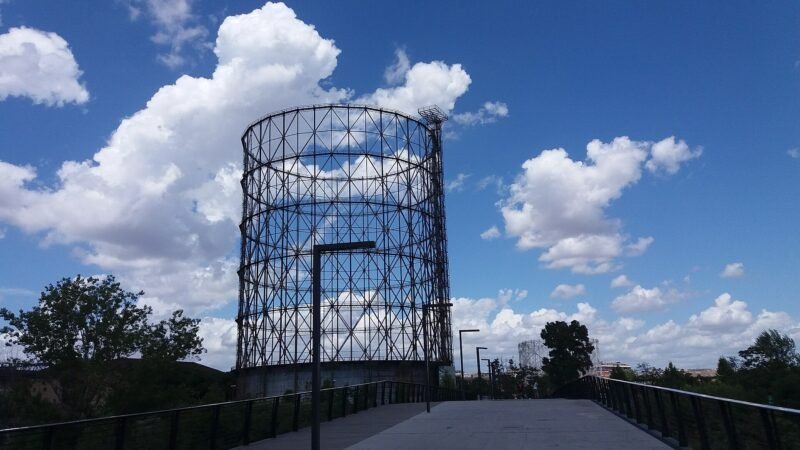
Crocodile by Martin Harriague, a dance duet the French choreographer created with and for Émilie Leriche, is on at Teatro India, Lungotevere Vittorio Gassman 1 in Rome, on Friday, May 7 and Saturday, May 8, 2027, as part of Teatro di Roma's Capitale Danza 2027 program. The show runs 60 minutes. Harriague himself and Émilie Leriche dance to Simeon 10 Holt's Canto Ostinato, played live on two marimbas by Julien and Stéphane Garin of Ensemble 0. Start time and prices are published on the official Teatro di Roma website, where tickets are sold, or at the foundation's box offices. Teatro India stands opposite the Gazometro, between Testaccio, Ostiense and Marconi: the nearest Metro B stop is Garbatella, about a kilometer away, while Roma Trastevere station is about 700 meters away.
Language: a performance based on dance, music or visual acts; no English version is announced, any spoken parts are in Italian.
Crocodile at Teatro India: dates, running time and tickets
Crocodile by Martin Harriague is scheduled at Teatro India for two nights, Friday, May 7 and Saturday, May 8, 2027, with a running time of 60 minutes.
The dates
Teatro di Roma lists two performances, Friday, May 7 and Saturday, May 8. The show is part of Capitale Danza 2027, the section of the foundation's season devoted to contemporary dance.
Start time
The start time isn't listed on the show's page: check it on the Teatro di Roma website when you buy.
Tickets
Prices and how to buy are published on the official Teatro di Roma website, which runs the Teatro India box office along with Teatro Argentina's. The foundation also offers subscriptions for the 2026 and 2027 season.
Running time
Exactly one hour, with no intermission: a compact length, suitable even for those approaching contemporary dance for the first time.
Crocodile: a duet about love and its fragility
Crocodile is, in Teatro di Roma's words, a choreographic inquiry into the complexity of human bonds: two bodies that seek each other, avoid each other, brush past and finally meet.
A silent conversation
Martin Harriague and Émilie Leriche trace in space a wordless conversation, made of approaches, distances, light touches and encounters. The choreography, spare and rigorous, explores the fragility of love and the search for a possible harmony, suspended between attraction and repulsion.
The author's account
On the choreographer's website the piece is presented as a physical dissection of the dialogues that arise during an encounter: how two bodies can attune, punctuate or question each other. The bodies approach, avoid, follow and brush past each other and then, finally, make contact, in a synchrony described as unpredictable and hypnotic.
A turn in his work
Four years after Fossile, a work inspired by the ecological emergency, Harriague returns to the duet form. Crocodile steps back from the social and environmental themes that mark many of his creations, to focus on the relationship between two people.
The title
There's no crocodile on stage. The title is left open to the viewer's interpretation: an ancient, patient and unpredictable animal, like the feelings the duet stages.
Simeon 10 Holt's Canto Ostinato, live on two marimbas
The music of Crocodile is Canto Ostinato by Dutch composer Simeon 10 Holt, played live by Julien and Stéphane Garin of Ensemble 0 in an arrangement for two marimbas by Petar Klanac.
The composer
Simeon 10 Holt was born in Bergen, in the Netherlands, on January 24, 1923 and died in Alkmaar on November 25, 2012. He trained with Dutch composer Jakob van Domselaer and also studied in France with Arthur Honegger and Darius Milhaud. In 1968 he founded his own contemporary music ensemble in Bergen.
The piece
Canto Ostinato, composed between 1976 and 1979, is his most famous work: written for an unspecified number of keyboards, it has a variable length, because it's built in sections the performers repeat and link with a certain freedom. Its structure, according to published profiles of the composer, recalls Terry Riley's In C.
A personal language
10 Holt developed a style he called diagonal, poised between tonality and atonality. In Canto Ostinato tonality is constantly manipulated, pulled away from its center, pushed toward chromaticism and then found again.
Music and dance together
According to Teatro di Roma's presentation, the score's hypnotic variations envelop the stage and stretch time, fusing dance and music into a single experience. The presence of the two musicians on stage, with their marimbas, is part of the set.
Martin Harriague, a Basque choreographer between Biarritz, Israel and Avignon
Martin Harriague, born in Bayonne in 1986, is a French choreographer and dancer, director of the Ballet de l'Opéra Grand Avignon since September 2024 and appointed director of the Centre Chorégraphique National Ballet Biarritz starting January 1, 2027.
A late calling
Harriague started dancing at 19, in 2005, an age when many dancers are already professionals. According to his official bio, it was a Nutcracker by Thierry Malandain seen in Biarritz that decided his calling: he wrote to the choreographer, who suggested he train in Bayonne with Jean-Marc and Michèle Marquerol.
The companies
From 2007 to 2008 he danced in Ballet Biarritz Junior, directed by Malandain, from 2008 to 2010 in Frédéric Flamand's Ballet National de Marseille, where he made his first choreography, from 2010 to 2013 in the Dutch company Noord Nederlandse Dans led by Stephen Shropshire, and from 2013 to 2018 in Rami Be'er's Kibbutz Contemporary Dance Company, in Israel.
Awards
Between 2014 and 2016 Harriague won prizes at international choreography competitions in Stuttgart, Hanover, Copenhagen and Biarritz, with pieces like You Man, Beauty and the Beast and Prince. In 2025 Crocodile won the Grand Prix of the French Union of Theater, Music and Dance Critics as best choreographic show of the year.
Associate artist in Biarritz
From 2018 to 2021 he was associate artist of the Centre Chorégraphique National Malandain Ballet Biarritz, for which he created Sirènes in 2018, a work on the ecological emergency like Fossile, produced by Korzo in 2019. For Leipzig Ballet he created America, with Donald Trump's voice as its soundtrack.
A multifaceted choreographer
His official bio describes him as set designer, dancer, performer, lighting designer, composer and singer. In Crocodile he signs the choreography, dramaturgy, set and, with Peïo Lamarque, the lighting.
Émilie Leriche and Ensemble 0
Émilie Leriche is the dancer with whom Harriague created and performs Crocodile: the choreography and dramaturgy are his, in collaboration with her.
The coauthor
French critics present Leriche as a French American dancer and choreographer based in Gothenburg, Sweden. The duet grew out of the meeting between the two artists and is built on their bodies.
The musicians
Julien and Stéphane Garin are the two Ensemble 0 percussionists who play the marimbas live. The two-marimba arrangement of Canto Ostinato is by Petar Klanac.
The team
Costumes are by Vanessa Ohl, lighting design by Peïo Lamarque, sound and technical direction by Alexandre Maillet, and dramaturgy assistance by Françoise Dubuc, according to Teatro di Roma's credits.
The production
Crocodile is produced by Scène Nationale Sud Aquitain, Scène 55 Mougins, Temps d'Aimer la Danse Biarritz and Malandain Ballet Biarritz, with support from the French Ministry of Culture and DRAC Nouvelle Aquitaine. It premiered in September 2024.
Capitale Danza 2027 at Teatro di Roma
Crocodile is part of Capitale Danza 2027, the section of Teatro di Roma's season devoted to dance, also hosted in the spaces of Teatro India.
Dance at Teatro India
Teatro India's halls are flexible and lend themselves to in-the-round or multilevel shows: a valuable feature for contemporary dance, which often calls for a different relationship between stage and audience.
A duet in a former factory
A spare piece, with two dancers, two marimbas and a set pared to the minimum, finds in the brick and beams of the former Mira Lanza factory a stern and fitting frame. The bare space, without decoration, leaves the audience only the essentials: the bodies, the light, the sound of the marimbas bouncing off the walls of a former factory. In our opinion it's one of those cases where hall and show speak to each other, and the place adds something to the experience instead of just containing it.
Teatro India, the home of Crocodile
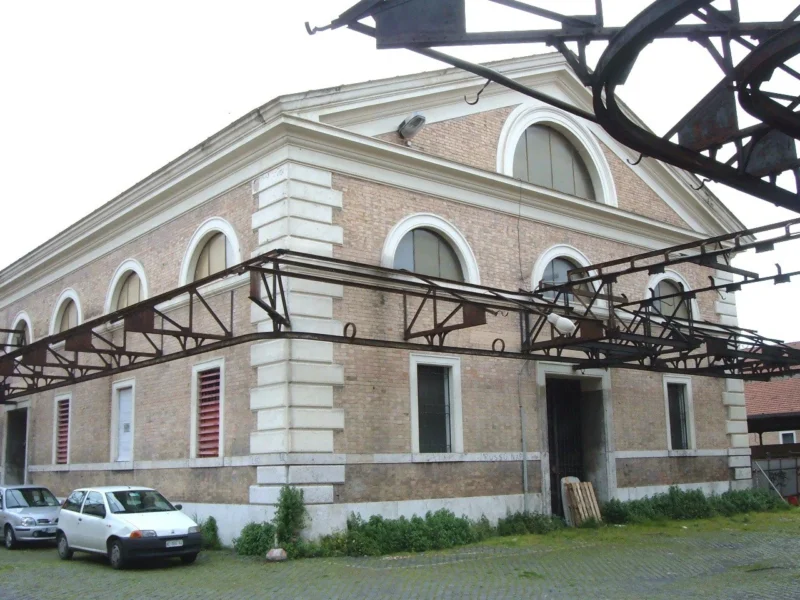
Teatro India is the Fondazione Teatro di Roma's second venue after Teatro Argentina, carved out of the sheds of the former Mira Lanza factory on the right bank of the Tiber and opened in 1999: it's the last theater opened in Rome in the 20th century.
From factory to theater
In the early 20th century the Mira factory stood here, devoted to chemical production, with its first brick buildings by engineer Giulio Filippucci. In 1913 the plant passed to the city and produced glycerin during World War I, and after the war, partly because of its proximity to the Testaccio slaughterhouse, it switched to soap.
Closure and rebirth
The decline began during World War II. The plant closed in 1952 and the sheds became the warehouses of the Rancati firm, a theater and film props supplier. In 1999 the city bought part of the area and opened the new theater there.
The name
The name was chosen by Mario Martone, then artistic director of Teatro di Roma: India, the name of a country on the model of Argentina, to evoke a place rich in history and a sense of travel.
What it's like
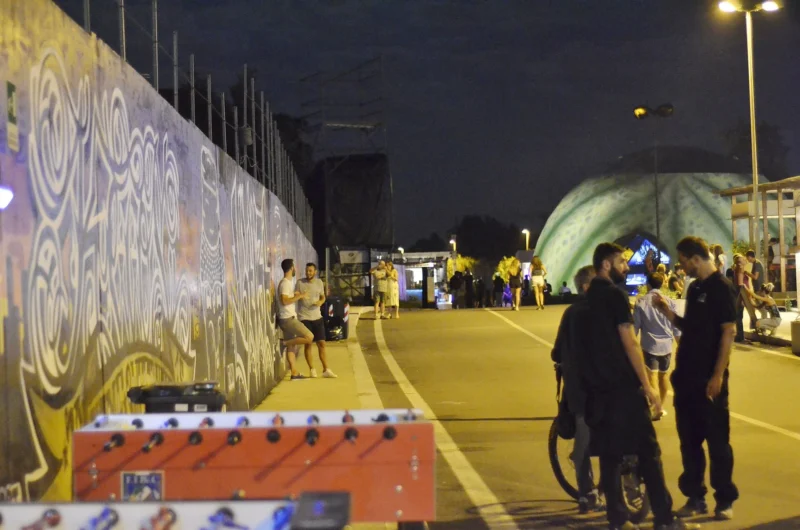
The building has three naves, exposed dark brick, pitched roofs, wood and iron beams and red velvet seats. In summer the outdoor spaces, looking out on the Gazometro, host open-air cinema and music.
How to get to Teatro India for Crocodile
Teatro India is at Lungotevere Vittorio Gassman 1, formerly Lungotevere dei Papareschi, at the corner of Via Luigi Pierantoni, opposite the Gazometro: it isn't a historic center theater, so plan your route.
By metro
The nearest Metro B stop is Garbatella, about a kilometer away. Head out toward Via Ostiense, cross the Tiber on Ponte dell'Industria and walk along the river to the theater in 12 to 15 minutes.
By train
Roma Trastevere station, served by regional lines FL1, FL3 and FL5, is about 700 meters away.
Bus and tram
Several bus lines stop in Piazza della Radio, a few minutes' walk away, and tram 8 serves the Trastevere station area. Before heading out, check routes and times on the Rome transit company's journey planner.
By car
Teatro India is outside the limited traffic zone. Between Viale Marconi and the Lungotevere parking is easier than in Trastevere, but on Saturday night allow an extra quarter of an hour.
A curious fact about Crocodile by Martin Harriague at Teatro India, May 7 and 8, 2027
The most surprising curious fact concerns the start of Martin Harriague's career. Until he was 19 he had never taken a dance class. His official bio says that, apart from a passion for Michael Jackson, born after a concert in Paris that made him wish he were in the singer's place, he had no connection to that world. Then, in Biarritz, he saw Thierry Malandain's The Nutcracker. Where others would have dreamed of becoming a prince or princess, he imagined he might one day create a world like the one he'd just seen. He wrote to Malandain, who replied and suggested he train in Bayonne with Jean-Marc Marquerol, a former Paris Opera dancer. From there, in a few years, the young Basque went through Marseille, the Netherlands and Israel, before returning to Biarritz as associate artist of Malandain's company. The circle closes in 2027: since January 1 Harriague has been the new director of the Centre Chorégraphique National Ballet Biarritz, the company that 20 years earlier revealed dance to him. The Rome performances of Crocodile thus come in the first months of his new post, and the Teatro India audience sees on stage, as a dancer, a choreographer who now runs one of France's most important companies. The duet's production tells this story too: among the coproducers is Malandain Ballet Biarritz, alongside the same city's Temps d'Aimer la Danse festival.
Something nobody tells you about Crocodile by Martin Harriague at Teatro India, May 7 and 8, 2027
What's rarely said about Crocodile is that the music isn't a background but half the show. Simeon 10 Holt's Canto Ostinato is a piece that can last a very long time: born for an unspecified number of keyboards, it's built in sections the performers repeat and link, and its length changes from one performance to the next. Staging it live, with two marimbas instead of pianos, means handing the musicians part of the evening's rhythm, and the dancers the task of breathing with them. It's a delicate relationship that makes each performance a little different from the others. A second little-known aspect concerns the choice of a duet. Harriague is known for works with large casts and political and ecological themes: Sirènes for Malandain Ballet Biarritz, Fossile for Korzo, America for Leipzig Ballet, with Donald Trump's voice as its soundtrack. Crocodile is a sidestep: no explicit message, two bodies and a relationship. The choreographer's website says so openly, speaking of a move away from his usual social and environmental imprint. In our opinion it's precisely this paring down to essentials that makes the piece accessible even to those who don't follow contemporary dance: there's no concept to decode, you just watch two people seeking each other. Finally, in 2025 Crocodile received the French critics' Grand Prix as best choreographic show of the year.
My tip for Crocodile by Martin Harriague at Teatro India, May 7 and 8, 2027
My tip is to come to Crocodile without narrative expectations. There's no story to follow, no named characters, no words: there's an encounter between two people told through the body, and hypnotic music flowing underneath. If you let yourself be carried by the repetition of Canto Ostinato, you'll find that time stretches, as Teatro di Roma's presentation promises, and that small changes in movement become events. That's why it's worth choosing a seat with a good view of both the dancers and the musicians: the two marimbas are part of the stage, and watching the percussionists' gestures adds another layer. Friday, May 7 is the choice for a quieter house, while Saturday, May 8 is the night to pair the show with dinner in Testaccio or Ostiense. Check the start time on the Teatro di Roma website when you buy. If you want to prepare, listen to a recording of Canto Ostinato beforehand: knowing the structure of the piece helps you recognize, on stage, the moment the music changes and the bodies respond. Finally, the show lasts an hour: it's a short evening that leaves time for the rest, and Teatro India, with the lit Gazometro on the other bank, deserves a few extra minutes on the way out.
Around Teatro India: Ostiense, Testaccio and the Gazometro
Teatro India stands where Testaccio, Ostiense and Marconi meet, along the stretch of the Tiber that best tells the story of 20th-century industrial Rome.
The Gazometro and Ostiense
Across the river rises the Gazometro, the metal structure that has become the neighborhood's symbol. Ostiense is also the district of street art and of Centrale Montemartini, the museum that displays ancient sculpture among the machinery of a former power plant.
Testaccio
To the north you reach Testaccio, with the Ex Mattatoio, Monte dei Cocci and the Pyramid of Cestius. The thread linking the slaughterhouse to the old Mira factory, which also made soap from slaughterhouse waste, is one of the most curious in this landscape.
The Lungotevere in May
In May the Tiber embankments start to come alive and evenings are mild: a stroll along the river after the show is a pleasure.
Another well-known fact, yet one rarely mentioned
It's well known that Teatro India was born in a factory: the exposed brick, the iron beams and the pitched roofs tell the building's industrial past on their own. Less often mentioned is the detail that links this factory to theater history even before the theater existed. After Mira Lanza closed in 1952, the sheds became the warehouses of the Rancati firm, specialized in theater and film props. For about half a century, then, the same naves where people dance today held props destined for the theaters and film sets of Italian cinema. When in 1999 the city bought part of the area and the Fondazione Teatro di Roma opened its second venue there, the place already had a long familiarity with show business, albeit behind the scenes. The name also has a rarely told story: it was Mario Martone, then director of Teatro di Roma, who chose it, thinking of a country's name on the model of Argentina, the foundation's historic theater, and of a place that would evoke travel and memory. For a show like Crocodile, produced in France, built on a Dutch score and performed by a dancer who lives in Sweden, the name of a faraway country seems chosen on purpose.
The right photo to take at Crocodile by Martin Harriague at Teatro India, May 7 and 8, 2027
The right photo at Teatro India is taken outside, from the Lungotevere, with the Gazometro on the other bank. In May, if you arrive before sunset, the metal structure stands out against the still-bright sky and the brick sheds of the former Mira Lanza take on a warm light: it's the image that best captures this theater born in a factory. After the show, with the Gazometro lit up, the same frame changes completely and becomes one of the most recognizable night views of postindustrial Rome. Filming isn't allowed during the performance, and in dance flash or screen light is especially disruptive, because the dancers work under lighting designed in detail by Peïo Lamarque and Harriague himself. My advice is to focus on the images memory keeps: the two bodies approaching and pulling apart, the lit marimbas, the percussionists' hands. If you want a photo of the event, stop by the Capitale Danza poster at the entrance. For a wider image, Ponte dell'Industria, the old iron bridge over the Tiber you cross coming from Garbatella metro, offers a view that takes in the river, the Gazometro and the neighborhood.
Some important events that happened here in history
The history of the place unfolds in a few dates. In the early 20th century, on the right bank of the Tiber, the Mira factory was born, with its first brick buildings designed by engineer Giulio Filippucci. In 1913 the plant passed to the City of Rome and produced glycerin, valuable during World War I. After the war, taking advantage of its proximity to the Testaccio slaughterhouse, the factory switched to soap and grew. Then came years of competition with Unione Stearinerie Lanza, until the alliance that created Mira Lanza. World War II marked the start of the decline, because of labor shortages and the spread of synthetic detergents. The plant closed in 1952 and became the warehouse of the Rancati firm, specialized in theater and film props. In 1999 the city bought part of the area and opened Teatro India there, Teatro di Roma's second venue, championed by then director Mario Martone: it's the last theater inaugurated in Rome in the 20th century. Since then seasons of contemporary theater, dance, workshops and summer arenas like India Città Aperta have followed one another. In May 2027, with Capitale Danza, the theater welcomes one of the most awarded duets in recent French dance.
Who has passed through Crocodile by Martin Harriague at Teatro India, May 7 and 8, 2027
The first name linked to this place is engineer Giulio Filippucci, who designed the first brick buildings of the Mira factory. For decades the men and women workers of Mira Lanza passed through here, then the prop makers of the Rancati firm, who supplied objects for the theaters and film sets of Italian cinema. The theater's name was chosen by Mario Martone, director and then artistic director of Teatro di Roma, who oversaw the birth of the new venue. Since 1999 Teatro India has been the foundation's place for experimentation, with Italian and foreign companies, workshops and summer festivals. In the 2026 and 2027 season it has seen, among others, Francesca Astrei with Gli elefanti nella stanza, and Anche in casa si possono provare emozioni forti was presented there. On May 7 and 8, 2027 come Martin Harriague and Émilie Leriche, with percussionists Julien and Stéphane Garin. And with them, in spirit, Simeon 10 Holt, the Dutch composer who studied with Honegger and Milhaud, and Thierry Malandain, the choreographer whose Nutcracker, seen in Biarritz, changed the life of a 19-year-old Basque.
Where to eat before or after Crocodile
Around Teatro India the best choice for dinner is across the bridge, in Ostiense, or in Testaccio, the neighborhood of traditional Roman cooking.
Ostiense
Along Via Ostiense and the streets around the Gazometro and Garbatella there are restaurants, pizzerias and spots frequented by students and people who work in the area. It's the liveliest side in the evening.
Testaccio
Testaccio is the neighborhood of quinto quarto, Roman offal cooking, born around the slaughterhouse. The trattorias between Piazza Testaccio and Via Marmorata are a quarter of an hour's walk away.
Marconi and Trastevere
On the theater's side, toward Viale Marconi and the station, there are neighborhood pizzerias and trattorias, hardly touristy. If you prefer Trastevere, take tram 8 after the show.
Accessibility, age and practical tips
Teatro di Roma devotes a section of its website to the accessibility of its halls. For seats reserved for wheelchair users or other needs, contact the foundation's box office before the performance.
With young people
Crocodile is a wordless, one-hour show with live music: a good chance to introduce kids and teens to contemporary dance. The theme is a love relationship, told in the abstract language of movement.
Punctuality
Teatro India isn't on anyone's way, and entry after the show has started may not be allowed. In a one-hour piece every minute counts: plan your timing carefully.
May in Rome
In May Roman evenings are mild, and the Tiber embankments start to fill up. A light jacket is enough for the walk along the river on the way out.
Frequently asked questions about Crocodile
When is Crocodile by Martin Harriague on in Rome?
Crocodile by Martin Harriague is on at Teatro India in Rome on Friday, May 7 and Saturday, May 8, 2027, as part of Teatro di Roma's Capitale Danza 2027 program. The start time is published on the foundation's website.
How long is Crocodile?
Crocodile runs 60 minutes, according to Teatro di Roma and the choreographer's website. It's a duet with no intermission, with live music played on two marimbas.
Who dances in Crocodile?
Martin Harriague and Émilie Leriche, who created the piece together, dance in Crocodile: the choreography and dramaturgy are Harriague's in collaboration with Leriche. The marimbas are played by Julien and Stéphane Garin of Ensemble 0.
What music do you hear in Crocodile?
The music of Crocodile is Canto Ostinato by Dutch composer Simeon 10 Holt, written between 1976 and 1979, played live in an arrangement for two marimbas by Petar Klanac.
Who is Martin Harriague?
Martin Harriague is a French choreographer born in Bayonne in 1986, a former dancer with the Kibbutz Contemporary Dance Company, director of the Ballet de l'Opéra Grand Avignon since 2024 and of the Centre Chorégraphique National Ballet Biarritz since 2027.
How do you get to Teatro India?
Teatro India is at Lungotevere Vittorio Gassman 1, opposite the Gazometro. Garbatella on Metro B is about a kilometer away, and Roma Trastevere station about 700 meters.
Has Crocodile won awards?
Crocodile by Martin Harriague won the 2025 Grand Prix of the French Union of Theater, Music and Dance Critics as best choreographic show of the year, according to the choreographer's official bio.
Final tip on Crocodile
Crocodile is an hour of spare, intense dance: two bodies, two marimbas, a hypnotic score and a love story told without words. Martin Harriague comes to Rome with a duet honored by French critics, at the peak of his career, just appointed director of Ballet Biarritz. In our opinion it's the ideal show if you want to approach contemporary dance without feeling shut out by a difficult language, and if you love minimalist music and want to hear Canto Ostinato live in a version for two marimbas. My tip is to book early, because there are only two performances, choose a seat with a view of both dancers and musicians, get to Teatro India before sunset to see the Gazometro in the May light, and end the evening in Testaccio or Ostiense.
Article written by the editorial team of Tour Leader Pro, contact them for Private/Corporate/V.I.P. Tours and Experiences.
Planning a trip to Rome? The English-language guides for visiting the city are on ItalyPlanner.com.
Contact Information
Nearby
 Teatro India100 m
- Ex Mira Lanza100 m
- Gasometro di Roma200 m
- Centrale Montemartini600 m
- Circolo degli Illuminati700 m
- Ex Mattatoio di Testaccio700 m
Upcoming events nearby
- Vorrei una voce by Tindaro Granata at Teatro India, February 9 to 14, 2027100 m
- The Body of an American by Jacopo Gassmann at Teatro India, February 20 to 28, 2027100 m
- La firma. Non ti fidare by Claudio Fava at Teatro India, from March 3 to 7, 2027100 m
- Lettera di una sconosciuta at Teatro India, by Davide Sacco, April 13 to 18, 2027100 m


You might also like
- Madri by Diego Pleuteri at Teatro India, March 17 to 21, 2027
- Flusso with Lino Guanciale and Gianmarco Saurino at Teatro India, March 6 to 14, 2027
- Resteremo per sempre qui buone ad aspettarti by Leonardo Lidi at Teatro India, May 19 to 23, 2027
- Viaggio a Hong Kong at Teatro India, from November 3 to 8, 2026
- La firma by Valerio Vestoso with Antonio Bannò at Teatro India, November 11 to 15, 2026
- Qualcuno nessuno centomila, Pirandello in Loop at Spazio Rossellini, November 6, 2026