Beethoven with Guggeis and Khachatryan at Auditorium Parco della Musica, January 14, 15 and 16, 2027
In short. Thomas Guggeis conducts the Orchestra of the Accademia Nazionale di Santa Cecilia with the violinist Sergey Khachatryan on Thursday, January 14, 2027 at 19:30, Friday, January 15 at 20:00 and Saturday, January 16 at 18:00, in Sala Santa…
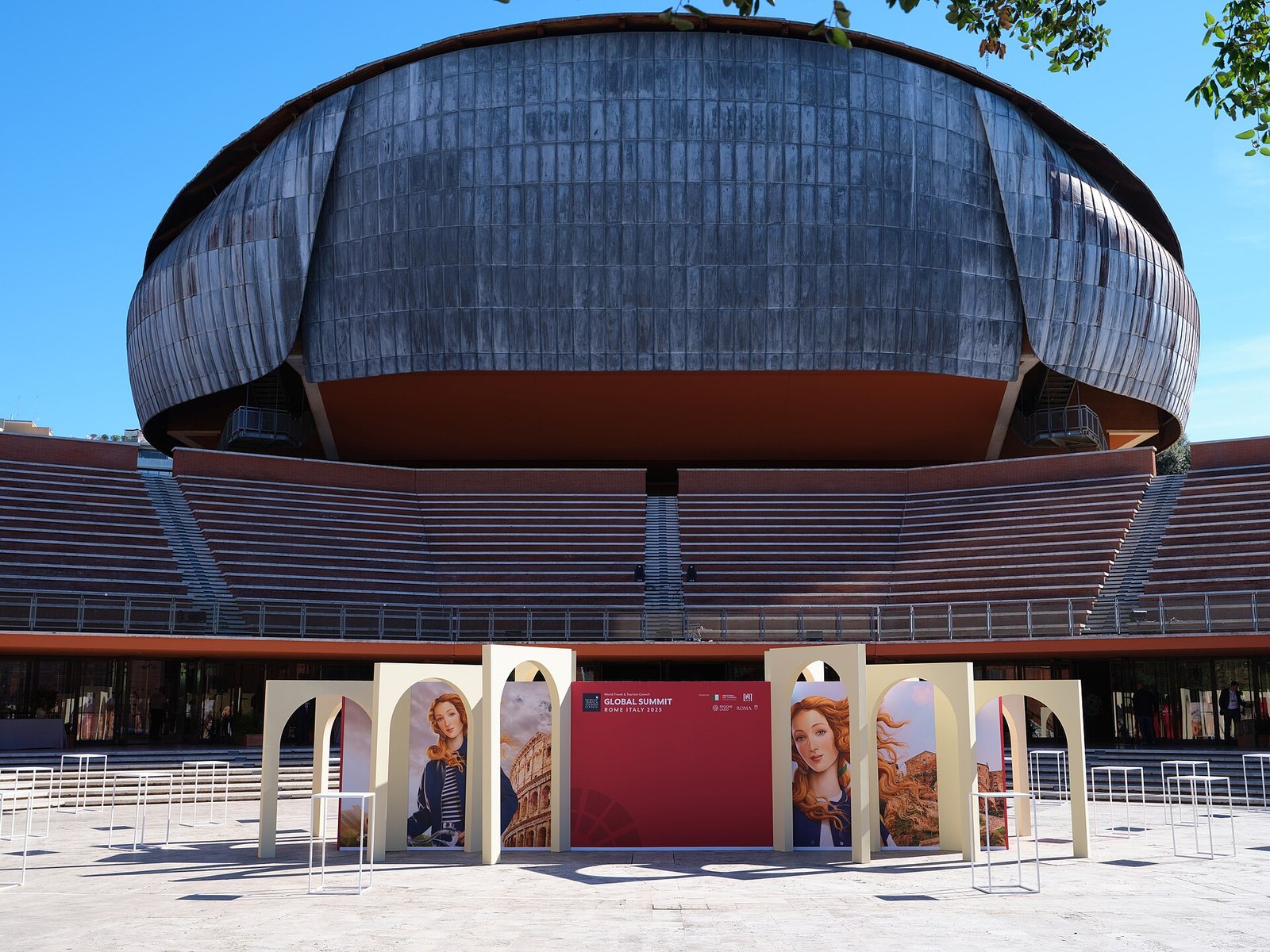
Thomas Guggeis conducts the Orchestra of the Accademia Nazionale di Santa Cecilia with the violinist Sergey Khachatryan on Thursday, January 14, 2027 at 19:30, Friday, January 15 at 20:00 and Saturday, January 16 at 18:00, in Sala Santa Cecilia of the Auditorium Parco della Musica Ennio Morricone, at Viale Pietro de Coubertin 30. The program is Beethoven's Violin Concerto and Symphony No. 7, with Unsuk Chin's Subito con forza in between. You get there by metro line A to Flaminio and then tram 2 to the Flaminia/Reni or Apollodoro stops, or by buses 910 from Termini, 53, 982 and 168. Tickets cost from 23 to 54 euros depending on the section and are bought at the Auditorium box office, at the box office at Via Vittoria 6 and on the presale network authorized by the Accademia, reachable from the official concert page. The doors close on time at the start time.
2027 is the year of the bicentenary of Beethoven's death, and the Accademia celebrates it with a second symphonic concert of the year devoted entirely to him. On the podium is one of the youngest and most awarded German conductors of the moment. On violin, a soloist who has already tied his name to important debuts with Beethoven's Concerto. For anyone in Rome looking for a symphonic concert in the best classical sense, January starts here.
Beethoven with Guggeis and Khachatryan: the three January evenings
The concert of Thomas Guggeis and Sergey Khachatryan is repeated three times, with the same program: Thursday, January 14, 2027 at 19:30 for series G, Friday the 15th at 20:00 for series V, Saturday the 16th at 18:00 for series S, always in Sala Santa Cecilia.
Which evening to choose
Thursday is the evening of the longtime subscribers, with the atmosphere of an opening night. Friday at 20:00 is the most convenient for those leaving work who want to have dinner afterward. Saturday at 18:00 suits those coming from outside Rome who have to catch a train, or those who prefer a concert followed by a dinner without watching the clock. In mid-January the real difference will be made by seat availability, because Beethoven anniversary concerts tend to fill the hall.
Presale
The Accademia has split the 2026/2027 season presale into two periods: from September 10, 2026, concerts from October 14, 2026 to February 27, 2027 are on sale, and so this one too. From January 12, 2027, sales open for the concerts from March to the end of the season. Those aiming at a specific section therefore already have all the time to choose.
An anniversary a year long
The official page places the concert within the celebration of the 200th anniversary of Beethoven's death, 1827 and 2027. It is a thread that runs through the whole Roman season: the IUC Season at the Aula Magna of the Sapienza too has chosen Beethoven as the guardian spirit of the year, with the complete sonatas for violin and piano.
The program: Beethoven, Unsuk Chin and Beethoven again
The program of the Guggeis and Khachatryan concert at Santa Cecilia includes Beethoven's Violin Concerto, Subito con forza by the Korean composer Unsuk Chin and Beethoven's Symphony No. 7. It is a program built as a tribute, with a contemporary piece that looks at Beethoven up close.
Unsuk Chin, Subito con forza
Subito con forza is a short piece, written in 2000. According to the Accademia's presentation, Unsuk Chin takes up in it a famous rhythmic fragment from the Coriolan Overture and draws from it a witty and irreverent homage to the genius of Bonn. It is the kind of piece that works very well live: a few minutes, a clear idea, and a different way of listening right after the real Beethoven.
The Violin Concerto
Beethoven's Violin Concerto is entrusted to the bow of Sergey Khachatryan. The Accademia presents it as a page where the soloist's cantabile dialogues continuously with the symphonic richness of the orchestra: the violin sings, the orchestra does not merely support it. For a soloist it is one of the most exposed concertos in the repertoire, because the difficulty is in the measure more than in the acrobatics.
The Seventh Symphony
The evening closes with Symphony No. 7, which Wagner renamed “the apotheosis of the dance,” as the concert page recalls, because it is dominated by the driving force of rhythm. It is the Beethoven symphony that the public recognizes most easily after the Fifth and the Ninth, and the one you hear in the hall with the body before the head.
The thread that ties the program
Rhythm is the keyword of the evening. Unsuk Chin starts from a rhythmic cell of Beethoven, the Concerto suspends it in song, the Seventh makes it explode. In our view it is a program built with intelligence: no filler, and a contemporary piece that prepares the ear instead of distracting it.
Who Thomas Guggeis is, the conductor
Thomas Guggeis is a German conductor and pianist born on August 16, 1993 in Dachau, Bavaria. Since the 2023/2024 season he has been Generalmusikdirektor of the Frankfurt Opera, one of the most appreciated opera houses in Germany.
Training, between Munich and Milan
Guggeis studied conducting at the Hochschule für Musik und Theater in Munich and at the Giuseppe Verdi Conservatory in Milan: a part of his training is therefore Italian. He also has a bachelor's degree in physics, with a focus on quantum mechanics, a detail that does not often turn up in conductors' biographies.
Berlin and Barenboim
His professional career began at the Staatsoper in Berlin as a repetiteur and assistant to Daniel Barenboim. International recognition came when, at very short notice, he replaced the scheduled conductor in a performance of Richard Strauss's Salome: the classic sudden debut that makes a career.
Stuttgart and Vienna
In 2014 he received the encouragement award of the Ritter Stiftung of Straubing, and in 2017 he was nominated for the Deutscher Dirigentenpreis. From the 2018/2019 season he was Kapellmeister at the Staatsoper in Stuttgart, where he conducted Puccini's La bohème and Madama Butterfly, Rossini's Il barbiere di Siviglia, Henze's Der Prinz von Homburg and Weber's Der Freischütz. In 2019 he debuted at the Theater an der Wien with a new production of Weber's Oberon.
The return to Berlin and Frankfurt
In 2020 he returned to the Staatskapelle in Berlin with the title of Staatskapellmeister, the youngest to receive it, conducting Ariadne auf Naxos, The Magic Flute and then Falstaff. At the Frankfurt Opera he debuted in June 2021, again with Ariadne auf Naxos. In October of the same year the theater named him general music director from 2023, with an initial five-year contract. In 2026 the magazine Opernwelt named him conductor of the year.
Who Sergey Khachatryan is, the violinist
Sergey Khachatryan is an Armenian violinist born in Yerevan on April 5, 1985, winner of the Sibelius Competition in Helsinki in 2000 and of the Queen Elisabeth Competition in Brussels in 2005. He has lived in Germany since 1993, where at nine he gave his first concert with orchestra, at the Kurhaus in Wiesbaden.
The competitions
In 2000, at 15, he won the Jean Sibelius International Competition, becoming the youngest winner in the history of the competition. In the same year he won the Louis Spohr Competition for young violinists and second prize at the Fritz Kreisler Competition. In 2002 he won second prize in Indianapolis. In 2005 he won first prize at the Queen Elisabeth, which earned him the loan for four years of the 1708 “Huggins” Stradivari.
Beethoven's Concerto, a calling card
Khachatryan's New York debut, on August 4, 2006 at Avery Fisher Hall, was with Beethoven's Violin Concerto, conducted by Osmo Vänskä. 20 years later the same concerto brings him back to Rome: for a soloist of 40 it is a piece with which he has long familiarity.
The orchestras
He has played with the Berliner Philharmoniker, the Royal Concertgebouw Orchestra, the London Symphony, the New York Philharmonic, the Boston Symphony, the Philadelphia Orchestra, the Orchestre de Paris, the RAI National Symphony Orchestra and many others. In the 2024/2025 season his engagements also included the Accademia Nazionale di Santa Cecilia, so the January concert is a return.
Awards and instruments
In 2010 he received the Beethoven Ring of Bonn, a recognition that ties his name to the composer's own city. In 2014 he received the Credit Suisse Young Artist Award. From 2010 to 2022 he played the 1740 Guarneri del Gesù “Ysaÿe,” on loan from the Nippon Music Foundation.
The records
He has recorded for EMI Classics and above all for Naïve: the Sibelius and Khachaturian concertos with Emmanuel Krivine, the two Shostakovich concertos with Kurt Masur, Bach's Sonatas and Partitas, Brahms's sonatas with his sister, the pianist Lusine Khachatryan. The album My Armenia, with his sister, won the Echo Klassik. Ysaÿe's six sonatas for solo violin, released in 2024, won the Preis der deutschen Schallplattenkritik.
The Orchestra of the Accademia Nazionale di Santa Cecilia
The Accademia Nazionale di Santa Cecilia, which organizes the concert, is one of the oldest musical institutions in the world. Born as a congregation of musicians, today it is a foundation with a symphony orchestra and chorus and an academic body, and its music director is Daniel Harding.
A Beethoven winter
Guggeis's concert falls in a January thick with Beethoven. On January 13, in Sala Sinopoli, the Quatuor Ebène continues the complete quartets with the fourth stop. On January 20, again in Sala Sinopoli, the chamber season offers Schubert's Die Winterreise. Those who stay in Rome a few days can build a musical week without changing address.
The museum and the library
The Auditorium is the Accademia's main home, which keeps there the Bibliomediateca and the Museum of Musical Instruments. The patron saint of music and of the Accademia is venerated in the Basilica of Santa Cecilia in Trastevere, worth a visit by day.
A curiosity about Beethoven with Guggeis and Khachatryan at Auditorium Parco della Musica, January 14, 15 and 16, 2027
The nicest curiosity of the evening is a circle that closes. In 2010 Sergey Khachatryan received in Bonn the Beethoven Ring, an award that bears the composer's name and is given in his native city. In 2006 he had debuted in New York with Beethoven's Violin Concerto itself. In January 2027, the bicentenary year, he plays it in Rome in a concert devoted entirely to Beethoven: few soloists have such a documented relationship with the piece they perform.
The second curiosity concerns the conductor. Thomas Guggeis also studied at the Giuseppe Verdi Conservatory in Milan, and before definitively choosing music he took a degree in physics with a focus on quantum mechanics. Anyone watching him on the podium as he marks the rhythm of the Seventh can enjoy thinking that he studied that rhythm with two different methods.
Third: Unsuk Chin's piece, Subito con forza, takes its title from a marking that sounds like a Beethovenian caption. The rhythmic fragment it grows from comes from the Coriolan Overture, and the composer treats it with irony: a way of celebrating an anniversary without the solemnity of monuments.
Sala Santa Cecilia, where the orchestra plays
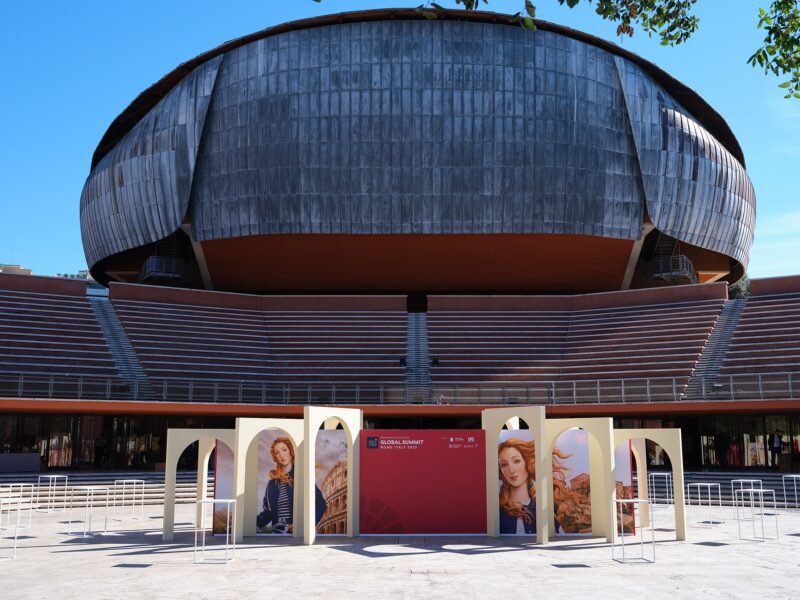
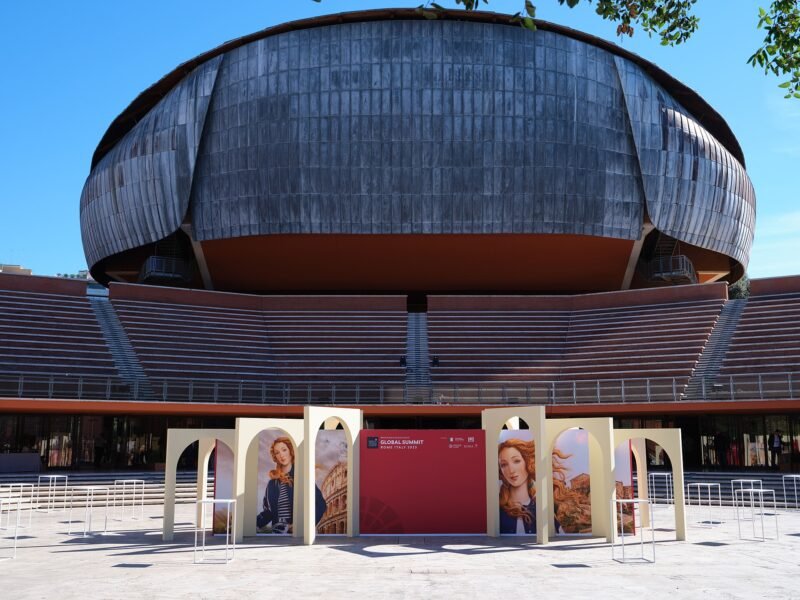
Sala Santa Cecilia is the largest of the three concert halls of Auditorium Parco della Musica Ennio Morricone: 2,756 seats, designed by Renzo Piano for symphonic music and inaugurated on December 21, 2002. Since 2003 it has hosted the Accademia's season permanently.
The cherry shells
The ceiling is made of 26 shells of American cherry wood, each with an average surface of about 180 square meters. The hall works as a large sound box, with a reverberation time of 2.2 seconds. For Beethoven's Concerto, where the violin must be heard above the orchestra without forcing, it is an ideal condition.
Where to sit
Those who frequent the hall know that sound intensity seems to drop until the tenth row and then stay constant: you don't need the orchestra level right under the stage. For the soloist, the central orchestra level or the front gallery is best, from which the sound of the violin arrives clean. For the conductor, the gallery behind the orchestra lets you see Guggeis's gesture from the front, as the musicians see it.
Renzo Piano's beetles
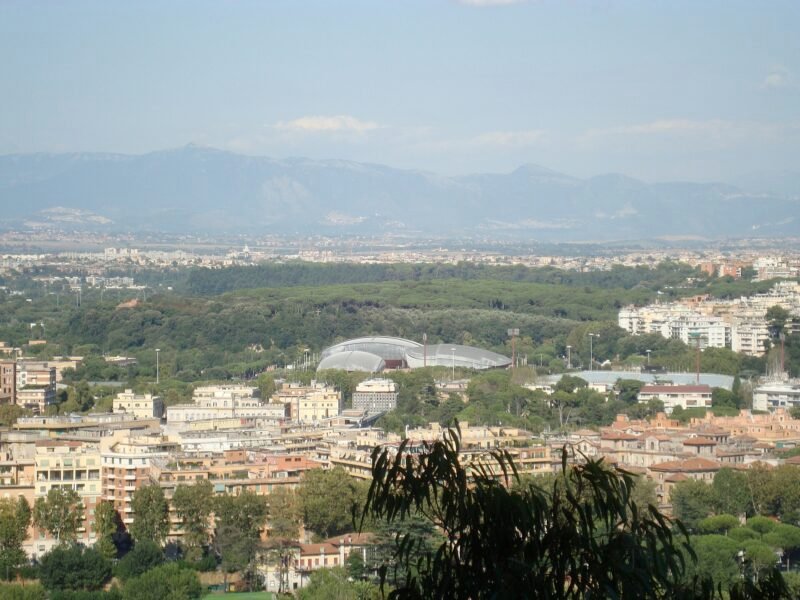
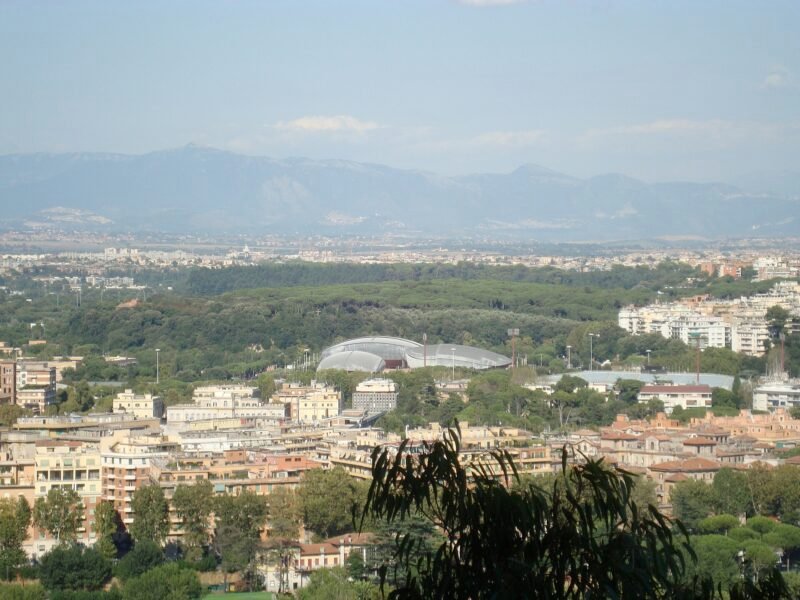
Seen from outside, the three halls are large volumes clad in lead on a brick base, arranged in a fan around the open-air cavea named after Luciano Berio. Piano won the 1993 competition and worked with the acoustician Jürgen Reinhold of the Müller BBM firm in Munich and with the landscape architect Franco Zagari.
Something nobody tells you about Beethoven with Guggeis and Khachatryan at Auditorium Parco della Musica, January 14, 15 and 16, 2027
The rule about the doors is applied to the letter. The Accademia warns that concerts start on time and that latecomers do not enter the hall. They can follow the concert in the listening rooms, while seats last. With Subito con forza as the opener, a piece of a few minutes, a quarter of an hour of traffic on Flaminio is enough to miss the first piece and find yourself in front of a screen during the Concerto. The advice is to keep a half-hour margin.
The second little-said thing: Sala Santa Cecilia is built on a raised floor above the ground, because remains of a Roman villa emerged in the subsoil and it was not possible to dig. For the galleries there are only two elevators. Those with mobility difficulties and a seat in the gallery must arrive early, out of necessity more than scruple.
Third: the hall has no pipe organ. The issue exploded in 2002 with an appeal by Italia Nostra, and the Accademia, then presided over by Luciano Berio, suspended the project. For a Beethoven program the organ is not needed, but it explains why the wall behind the orchestra looks so bare compared with other great European halls.
The advice I give you for visiting Beethoven with Guggeis and Khachatryan at Auditorium Parco della Musica, January 14, 15 and 16, 2027
My advice is to arrive in the hall knowing just one thing: the rhythmic fragment of the Coriolan Overture from which Unsuk Chin starts. A few minutes of listening at home are enough. Anyone who has it in their head recognizes the opening piece's game at once, and the evening gains a sense of complicity that the program notes alone do not give.
Second piece of advice: choose your seat according to what you want to hear. For Khachatryan's violin, central orchestra level beyond the tenth row or the front gallery. To see Guggeis's face, the gallery behind the orchestra. The Seventh is a symphony to watch as well as to hear, and from those seats you see the sections come in one after another.
Third: stay until the last applause. The finale of the Seventh closes the evening with a rhythmic drive that in a hall of 2,700 people almost always turns into an ovation. Tram 2 and the 910 run for another 10 minutes or more.
Finally, for those who must choose just one date, Saturday at 18:00 leaves the evening free to have a relaxed dinner and talk over the concert without watching the clock.
Tickets for Guggeis and Khachatryan at Santa Cecilia: prices and discounts
Tickets for the Guggeis and Khachatryan concert cost 54 euros in section I, 47 in II, 37 in III, 35 in IV, 30 in V and 23 in VI. They are sold only by the Accademia's authorized sellers: the box office of Auditorium Parco della Musica Ennio Morricone, the box office at Via Vittoria 6 and the points of sale of the authorized presale network.
Where to buy
The Auditorium box office, in the greenhouse space, is open every day from 11:00 to 20:00. The one at Via Vittoria 6, a few steps from Via del Corso and from Piazza del Popolo, is open Monday to Friday from 11:00 to 19:00 and Saturday from 11:00 to 14:00, with electronic payment only. Online, start from the purchase button under the chosen date on the official concert page.
Young people and teens
For the subscription-season concerts the Accademia offers under-26s a 30% discount on tickets, and children under 14 together with an adult get in at the symbolic price of 3 euros. The reduced fares are bought only at the box offices, while promotional seats last, and the discounts cannot be combined. All the updated conditions are on the youth page of the Accademia's website.
Unauthorized resellers
The Accademia warns that it is not responsible for any markups on tickets sold by unauthorized parties. For information there is the infoline 06 8082058, or the addresses info@santacecilia.it and biglietteria@santacecilia.it.
How to get to the Auditorium for Guggeis and Khachatryan
Auditorium Parco della Musica Ennio Morricone is reached by metro line A to Flaminio and then tram 2, stops Flaminia/Reni or Apollodoro, or by buses 910, 53, 982 and 168. The metro does not go all the way to the entrance.
Metro line A and tram 2
From Piazzale Flaminio tram 2 goes up Via Flaminia toward Piazza Mancini. You get off at Flaminia/Reni or Apollodoro and walk a few minutes toward Viale Pietro de Coubertin, through the Olympic Village. From the historic center it is the simplest solution.
The 910 from Termini
The 910 leaves from Piazza dei Cinquecento, in front of Termini station, and reaches the Auditorium with no transfers. For those staying near the station, or arriving by train for the Saturday concert, it is the line to choose.
The other lines
The 53 links Piazza Mancini and the center, the 982 comes from the area of Viale XVII Olimpiade, the 168 from Tiburtina station. Schedules and frequencies, especially on weekends, are on the route planner of the Roman transit company.
By car
The stretch of Viale Pietro de Coubertin in front of the Auditorium is closed to traffic. The complex has paid parking with limited spaces. On concert nights cars fill the streets of the Olympic Village. It is best to come by car only if there is no alternative, and early.
Another well-known fact, yet rarely mentioned
It is well known that Rome, until 2002, had no auditorium built for symphonic music. Less often cited is why: in 1936 the Augusteo, Rome's great concert hall, was demolished, and for more than 60 years the capital remained without a home for its orchestra. Administrations chased the project for decades. Only in 1992 did the city council choose the Olympic Village area, and in 1993 Renzo Piano won the competition.
Those who hear Beethoven's Seventh in Sala Santa Cecilia therefore sit in a hall born to make up for a lack two generations long. Many Accademia subscribers came to know the symphonic repertoire in makeshift halls. Today they hear it in a hall designed around the orchestra.
A second fact known to specialists, and little told to the public, concerns the hall itself. In its first months of life it was criticized: Wolfgang Sawallisch said he was puzzled by the stage and the acoustics, and corrective work followed. The hall where Guggeis and Khachatryan play is the corrected one, and the judgment of those who frequent it today is very different from that of then.
How to plan the evening of the concert
For the Guggeis and Khachatryan concert it is best to arrive at the Auditorium at least 40 minutes before the start. Ticket pickup, checks, the coat check and the climb to the hall take time, and in a hall of over 2,700 seats lines form early.
Before the concert
The foyer shared by the halls houses bars, a café and a large bookstore with records and music books. From the terrace that runs around the buildings, between Sala Santa Cecilia and Sala Sinopoli, you can see the remains of the Roman villa discovered during the works: 10 minutes well spent.
The length
The Accademia does not give on the concert page the total length or the position of the intermission. The program is that of a full symphonic concert, with a solo concerto and a symphony. Those with a train to catch after the Saturday concert should leave a wide margin.
After the concert
On the way out the cavea is the right place to let the crowd flow out. Those with a car in the Olympic Village should not be in a hurry: the first exits from the side streets are always the slowest.
The right photo to take at Beethoven with Guggeis and Khachatryan at Auditorium Parco della Musica, January 14, 15 and 16, 2027
During the concert the phone stays off: in such a sensitive hall every noise is heard, and a pianissimo of the violin in Beethoven's Concerto does not forgive. The photo is taken before and after.
In January it gets dark early, even for the Saturday concert at 18:00. From the top of the cavea you frame Renzo Piano's three beetles with the lead reflecting the lights, and the entrance of Sala Santa Cecilia with the audience going in. It is the image that tells the evening better than a portrait.
In the hall, before the lights go down and if staff allow it, the shot to take is upward, at the cherry shells of the ceiling, with the orchestra already in place below. For those seated in the gallery behind the stage, the right photo is the empty podium with the lit music stands, a moment before the conductor enters.
After the concert, during the final applause, without flash: Khachatryan called back onstage beside Guggeis. Outside, the volumes of the halls seen from below on the side facing Viale Pietro de Coubertin give an almost abstract image, the least obvious and in our view the most successful.
Some important events that took place here in history
The ground on which the Auditorium stands has a much older history than the complex. During the works the remains of a Roman villa of the 3rd century BC emerged, built on the site of a small archaic farm of the 6th century BC. The discovery forced Renzo Piano to modify the project, moving two of the three beetles westward, almost to the Corso di Francia viaduct. The finds are displayed in a small museum under the cavea.
The modern history begins with a demolition, that of the Augusteo in 1936, and restarts in 1992 with the choice of the Olympic Village area. On April 21, 2002, Sala Sinopoli opened, in the presence of Goffredo Petrassi, who heard the world premiere of his Ouverture da concerto written in 1931. On December 21, 2002, Sala Santa Cecilia was inaugurated, with the Accademia Orchestra conducted by Myung Whun Chung.
Since 2003 the Auditorium has been the permanent home of the Accademia's season, since 2006 it has hosted the Rome Film Festival, and in 2020 the city council approved naming it after Ennio Morricone. In January 2027 Sala Santa Cecilia celebrates Beethoven's bicentenary here.
Who has passed through Beethoven with Guggeis and Khachatryan at Auditorium Parco della Musica, January 14, 15 and 16, 2027
Sala Santa Cecilia has had heavyweight guests from the first day. The inaugural concert of December 21, 2002, was conducted by Myung Whun Chung. A few months earlier, at the opening of Sala Sinopoli, Goffredo Petrassi wanted to be present. The complex's smallest large hall now bears his name. Luciano Berio, then president of the Accademia, gave his name to the cavea.
Since then the hall has become the home of the Santa Cecilia Orchestra and its music directors, from Antonio Pappano to Daniel Harding. Among the house soloists is Evgeny Kissin, a guest of the Accademia since 1991, who in the 2026/2027 season returns in a duo with András Schiff, as the listing for the Kissin and Schiff concert tells.
In the same season Daniel Harding, who opened it in October with Wagner's Siegfried, and Kirill Petrenko, conductor of the Berliner Philharmoniker, protagonist in November of the concert with Benjamin Bernheim, pass through the podium of Sala Santa Cecilia. Sergey Khachatryan himself had been there in the 2024/2025 season. The January concert is his return, this time with the most Beethovenian of concertos.
Accessibility and children at the Guggeis and Khachatryan concert
For people with disabilities who can walk, holders of the Disability Card, the Accademia offers a 15% reduction on two tickets, to be bought directly at the box office. For people in wheelchairs admission costs 10 euros and the person assisting them gets in free, while available seats last.
Booking
For people who cannot walk, booking is mandatory, from 15 days before the concert until the day before, at 06 8082058 or at biglietteria@santacecilia.it. For the January 14 concert the window therefore opens on December 30.
Arriving early
The hall is raised above the ground and the galleries have only two elevators. Arriving with an hour of margin and asking staff for the route right away avoids the jam of the minutes before the start. The Accademia's Courtesy Service is present on subscription concert days from one hour before the start.
With teenagers
Beethoven's Seventh is one of the best-suited symphonies for a teenager approaching classical music: rhythm, energy, a rousing finale. With the 3-euro ticket for those under 14 at the box offices, the Accademia makes a first time in a large hall inexpensive. For a small child, however, a full symphonic evening remains demanding.
The district around the Auditorium
The Auditorium occupies an area of about 55,000 square meters between Villa Glori, the Olympic Village, the Corso di Francia viaduct and Viale Maresciallo Pilsudski: a piece of 20th-century Rome, where contemporary architecture coexists with greenery.
The MAXXI
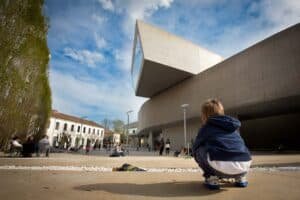
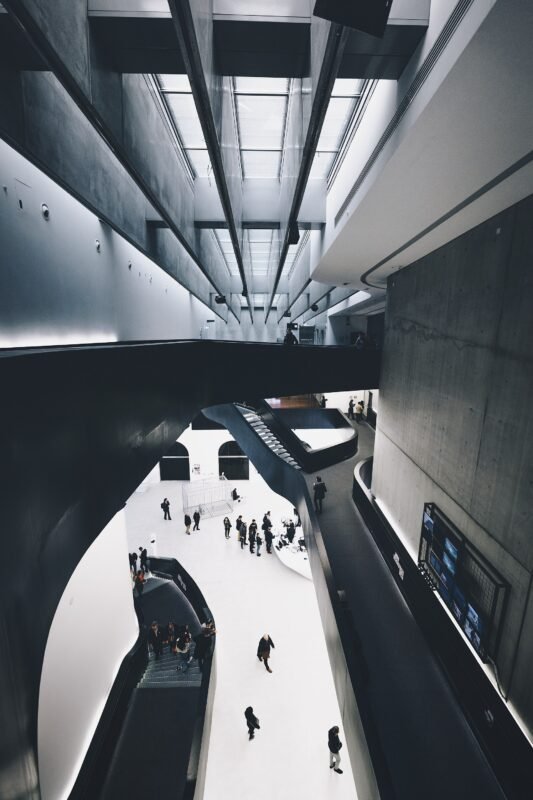
A few minutes' walk away, toward Via Guido Reni, is Zaha Hadid's MAXXI. With the Auditorium it forms the most important pair of contemporary architecture in the city. Those with a free afternoon before the Saturday concert can see an exhibition and walk to the hall.
Toward the Tiber
From the Auditorium you go down to the Ponte della Musica, the footbridge that links Flaminio to the Foro Italico. Farther north is Milvian Bridge, in the evening one of the most frequented meeting points of north Rome.
Toward the center
Tram 2 takes you back to Piazzale Flaminio, at the gates of Villa Borghese and the Tridente. A walk on the Pincio in the early afternoon and the tram toward the concert are the most restful way to arrive.
Where to eat before or after the concert
Inside the Auditorium are a bar and a café in the foyer and a bar-restaurant with access from the street as well: the most convenient solution for those coming from work on Thursday who don't want to risk the doors closing.
In the neighborhood
Between the Olympic Village, Via Flaminia and Piazza Mancini there are pizzerias, trattorias and neighborhood bars, frequented more by residents than by tourists. On Thursday and Friday it is best to book early and have a relaxed dinner beforehand.
Ponte Milvio and the center
For dinner after the Saturday concert the widest choice is in Ponte Milvio, a few minutes away, where the places stay open late. In the opposite direction, toward Piazzale Flaminio and Piazza del Popolo, the choice is that of the historic center, with historic-center prices.
January in Rome: the moment of the year
Mid-January is one of the quietest periods of the year in Rome: the holidays over, the city goes back to its rhythms, the museums are less crowded and the concert seasons get into full swing. For travelers it is a favorable moment, with lower prices and halls full of Roman audiences.
A week of music
Those who stay a few days can line up on January 13 the Quatuor Ebène with Beethoven in Sala Sinopoli, from the 14th to the 16th Guggeis and Khachatryan, on January 19 Mario Brunello at the Aula Magna of the Sapienza with the IUC, and on the 20th Die Winterreise at the Auditorium. The Beethoven bicentenary offers Rome an unusually rich winter.
The weather
January evenings are cold and sometimes rainy, and the Auditorium is an open complex, where you walk outdoors between one entrance and another. A coat to leave at the coat check and a folding umbrella avoid surprises.
Frequently asked questions about Guggeis and Khachatryan at Santa Cecilia
When does Khachatryan play with Guggeis at Santa Cecilia?
Sergey Khachatryan plays with Thomas Guggeis and the Santa Cecilia Orchestra on Thursday, January 14, 2027 at 19:30, Friday, January 15 at 20:00 and Saturday, January 16 at 18:00. The three evenings take place in Sala Santa Cecilia of Auditorium Parco della Musica Ennio Morricone, Viale Pietro de Coubertin 30, with the same program.
What is the program of the concert?
The Guggeis and Khachatryan concert includes Beethoven's Violin Concerto, Unsuk Chin's Subito con forza, a 2000 piece built on a rhythmic fragment of the Coriolan Overture, and Beethoven's Symphony No. 7. The concert is part of the celebrations for the bicentenary of the composer's death.
How much do tickets cost?
Tickets for Guggeis and Khachatryan at Santa Cecilia cost from 23 to 54 euros depending on the section: 54, 47, 37, 35, 30 and 23 euros from section I to VI. For subscription concerts under-26s get a 30% discount and children under 14 pay 3 euros, at the box offices and while promotional seats last.
Where do you buy tickets?
Tickets for the Guggeis and Khachatryan concert are sold at the box office of Auditorium Parco della Musica, open every day from 11:00 to 20:00, at the box office at Via Vittoria 6 and on the presale network authorized by the Accademia, reachable from the purchase button on the official concert page.
Who is Thomas Guggeis?
Thomas Guggeis, the conductor of the concert, is a German musician born in Dachau in 1993, trained in Munich and at the Conservatory of Milan, and a former assistant to Daniel Barenboim in Berlin. Since 2023 he has been general music director of the Frankfurt Opera, and in 2026 the magazine Opernwelt named him conductor of the year.
How do you get to Auditorium Parco della Musica?
You get to Auditorium Parco della Musica by metro line A to Flaminio and then tram 2, stops Flaminia/Reni or Apollodoro, or by buses 910 from Termini, 53, 982 and 168. The stretch of Viale Pietro de Coubertin in front of the entrance is closed to cars.
What happens if you arrive late?
At the concerts of the Accademia di Santa Cecilia the doors close on time at the start time. Latecomers do not enter the hall and can follow the concert in the listening rooms, while seats last. It is best to arrive at least 40 minutes early.
The final advice on Guggeis and Khachatryan at Santa Cecilia
A soloist who has made Beethoven's Concerto his calling card, a young conductor already established in the German opera houses, a symphony that sweeps along even those who don't frequent concert halls, and a contemporary piece that teases the guest of honor: in our view it is one of the most successful concerts of the Beethoven year. The advice is to buy early, choose a seat beyond the tenth row, listen to the Coriolan Overture first and arrive early, because at Santa Cecilia lateness cannot be made up.
Article written by the editorial team of Tour Leader Pro, contact them for Private/Corporate/V.I.P. Tours and Experiences.
Planning a trip to Rome? The English-language guides to visiting the city are on ItalyPlanner.com.
Contact Information
Nearby
 Museum of Musical Instruments (MUSA)100 m
- Auditorium Parco della Musica100 m
- Villa Glori500 m
- Fountain of Anna Perenna500 m
- MAXXI – National Museum of 21st Century Arts700 m
- Flaminio700 m
Upcoming events nearby
- Roma Jazz Festival 2026, November 1 to 24 at the Auditorium and Casa del Jazz100 m
- Evgeny Kissin and András Schiff at Santa Cecilia, November 9, 2026100 m
- Roma Gospel Festival 2026 at Auditorium Parco della Musica, December 13, 2026 to January 1, 2027100 m
- Santa Cecilia 2026/2027 Concert Season at Auditorium Parco della Musica, October 21, 2026 to June 5, 2027100 m



You might also like
- Nubras Ensemble at Auditorium Parco della Musica, February 27, 2027
- Fabio Luisi and Beethoven’s Missa Solemnis at Auditorium Parco della Musica, February 25 to 27, 2027
- Lorenzo Viotti and Lisa Batiashvili at Auditorium Parco della Musica, February 18, 19 and 20, 2027
- Antonio Pappano and Jan Lisiecki at Auditorium Parco della Musica, February 11, 12 and 13, 2027
- Tarmo Peltokoski and Bertrand Chamayou at Auditorium Parco della Musica, February 4, 5 and 6, 2027
- Riccardo Minasi conducts the Eroica at Auditorium Parco della Musica, January 7, 8 and 9, 2027