Prima Facie by Compagnia Finzi Pasca at Teatro Olimpico, December 14, 2026
In short. Prima Facie, the monologue by the Australian playwright Suzie Miller in the Italian version by Compagnia Finzi Pasca, with Melissa Vettore and directed by Daniele Finzi Pasca, is on Monday, December 14, 2026 at 20:30 at the Teatro…
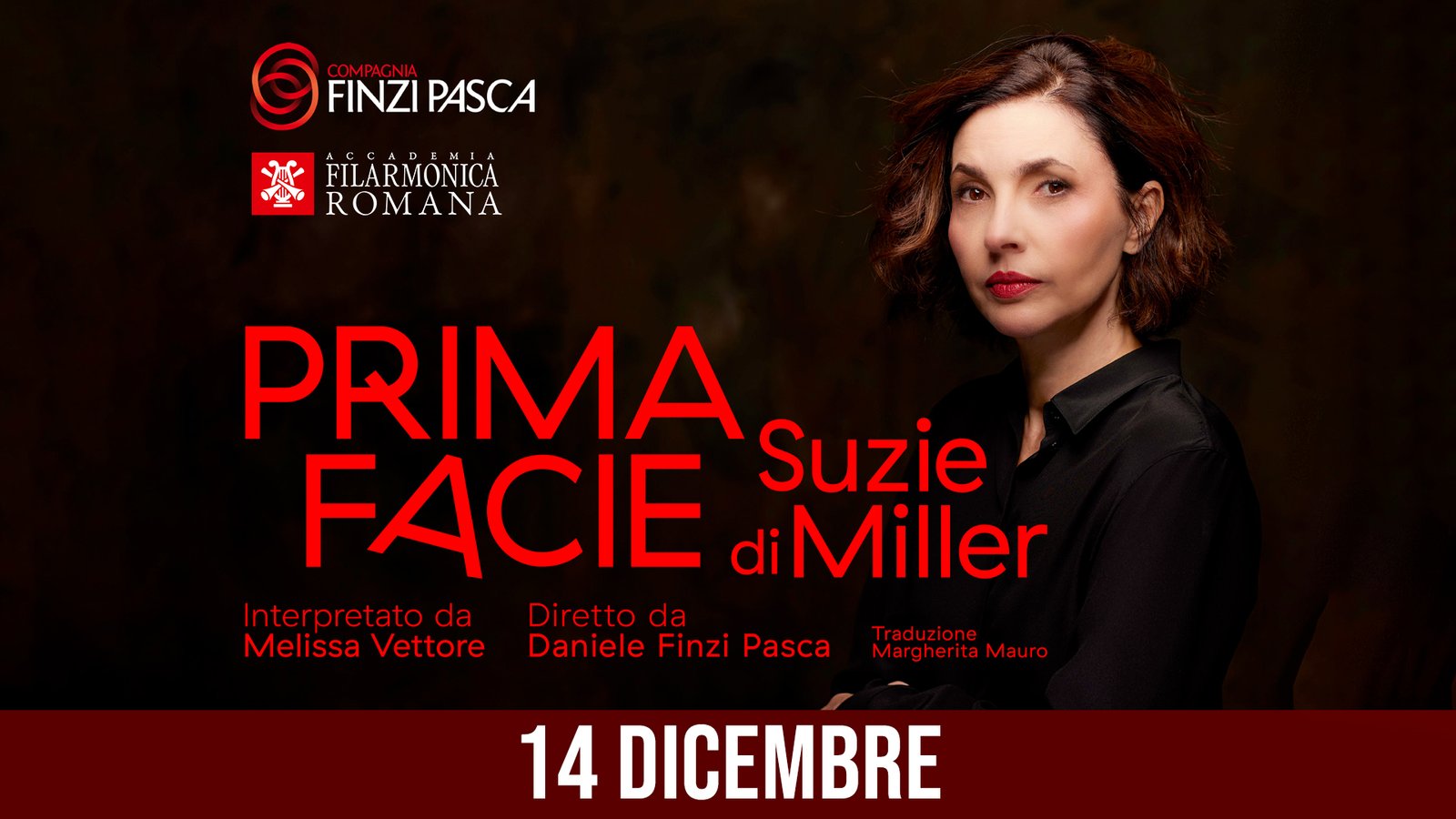
Prima Facie, the monologue by the Australian playwright Suzie Miller in the Italian version by Compagnia Finzi Pasca, with Melissa Vettore and directed by Daniele Finzi Pasca, is on Monday, December 14, 2026 at 20:30 at the Teatro Olimpico, at Piazza Gentile da Fabriano 17, in the Flaminio district. The theater gives the end as around 22:00. The evening is organized by the Accademia Filarmonica Romana. You reach the theater by metro A to Flaminio and then tram 2 to the terminus at Piazza Mancini, from which about 500 meters on foot remain along Viale del Pinturicchio. The prices published by Teatro Olimpico are 30 euros for the poltronissima gold, 25 euros for the poltronissima laterale and 22 euros for the poltrona, plus the presale fee (from 3:30 to 4.50 euros). Online a booking fee of 1.50 euros per ticket is added. Tickets are bought on the official site of Teatro Olimpico, through the authorized presale network indicated by the theater, and at the box office.
Language: opera sung in its original language; no English surtitles are announced, so check with the theater.
Prima Facie at Teatro Olimpico: date, time and prices
Prima Facie at Teatro Olimpico is a single evening, Monday, December 14, 2026, from 20:30 to around 22:00: an hour and a half of spoken theater with a single actress on stage.
The essentials
Title: Prima Facie, by Suzie Miller. Company: Compagnia Finzi Pasca. Performer: Melissa Vettore. Direction and lighting design: Daniele Finzi Pasca. Translation: Margherita Mauro. Date and time: Monday, December 14, 2026, 20:30. Venue: Teatro Olimpico, Piazza Gentile da Fabriano 17. Organization: Accademia Filarmonica Romana. Prices: from 22 to 30 euros plus presale fee.
A single performance
Teatro Olimpico's 2026 and 2027 program lists a single date for Prima Facie. Anyone who wants to see it in Rome this season therefore has one evening only: December 14. It's reason enough not to put off buying the ticket.
What to expect
Prima Facie is not a light show. It deals with sexual violence, consent, the way a court listens, or doesn't listen, to those who report. It does so with a tense text and a staging that, according to the company's presentation, stays faithful to Finzi Pasca's dreamlike poetics. Those who go to the theater to reflect will find one of the most intense evenings of the Roman season.
What Prima Facie is
Prima Facie is a play by Suzie Miller that tells the story of Tessa, a criminal defense lawyer often engaged in sexual violence cases, until a shattering event forces her to reflect on the very concept of justice.
Tessa's story
Tessa is good at her job, and her job often consists of defending men accused of sexual violence. She knows the rules of the trial, she knows how to cross-examine a witness, she knows how doubt is built. Then, as the company's presentation puts it, after defending men accused of violence she becomes a victim of it. From that moment the system she knew from the inside appears to her from another side: that of someone who must tell, prove, be believed.
The meaning of the title
Prima facie, in Latin, means at first sight. In legal language it indicates a fact considered true on the basis of a first impression, until proven otherwise. The title is already the theme: what happens when the first impression, in a trial, weighs more than the truth lived by someone who suffered a wrong.
The themes
The official presentation names the themes plainly: gender violence, consent and the language of power. More than explicit violence, the text puts at the center denied, misunderstood or manipulated consent, and the gap between formal justice and lived justice. The company presents it as a necessary work, an invitation to act as an active part of a change. I share that view: few recent texts have managed to shift the public debate like this one.
A monologue
Prima Facie is written for a single performer. Everything passes through Tessa's voice and body: the other characters, the colleagues, the defendant, the judge, exist through her account. It's a form that asks of the actress an uncommon endurance and of the spectator continuous attention.
The staging by Compagnia Finzi Pasca
Compagnia Finzi Pasca holds the exclusive rights for the Italian version of Prima Facie and offers a staging faithful to its own poetics, immersed, according to the official presentation, in dreamlike atmospheres.
Melissa Vettore as Tessa
Tessa is played by Melissa Vettore, an actress of Compagnia Finzi Pasca and life partner of Daniele Finzi Pasca, with whom she collaborates creatively. In the director's words reported by the company, the show was born from the intention to tell this story together with her, on tiptoe, without altering Miller's dramaturgical structure.
The creative team
The Italian translation is by Margherita Mauro. The costumes are by Giovanna Buzzi, the music by Maria Bonzanigo, co-founder of the company. The sets and props are by Matteo Verlicchi, the video design by Roberto Vitalini, the scenic consultancy by Hugo Gargiulo, also among the founders. Marco Finzi followed the work on the text as text performance guide. The production is by Antonio Vergamini. Among the credits is also a legal consultant in London, Matheus Monteiro: a detail that says how precise the company wanted to be about the world of courtrooms.
Direction and lights
Finzi Pasca signs the direction and lighting design. Anyone who knows his shows knows how much light is dramaturgical material for him: it doesn't illuminate the scene, it builds it. In a monologue, where there are no character changes to show, it will be the light that moves Tessa from the courtroom to memories, from the present to the past.
A dreamlike poetics for a hard theme
The pairing of the company's visionary language with so concrete a text is the show's gamble. The original English version was lean and frontal. The Italian one chooses another path. It's a legitimate and courageous choice, and the best reason to see this edition even for those who already know the text.
Suzie Miller: the lawyer who writes theater
Suzie Miller is an Australian playwright, librettist, screenwriter and lawyer, born in Melbourne, author of over 40 plays. Prima Facie is her best-known work.
From science to law
Miller grew up in a large Catholic family in Melbourne, in St Kilda, and studied immunology and microbiology at Monash University before choosing law at the University of New South Wales in Sydney. She worked for a large law firm, then for the Aboriginal Legal Service in Redfern and the Public Interest Advocacy Centre, and later for a legal aid center for homeless youth in Kings Cross, where she found herself following many sexual violence cases.
Beginnings in theater
While working as a lawyer, Miller studied theater at UNSW and at the playwriting school of the National Institute of Dramatic Art in Sydney. Her first play, Cross Sections, born from the experience with homeless youth in Kings Cross, debuted at the Old Fitz Theatre before moving to the Sydney Opera House. Reasonable Doubt, in 2008, debuted at the Edinburgh Fringe and was awarded at the New York Fringe for excellence in playwriting.
The choice of theater
In 2009 she was offered, almost at the same time, a position as a magistrate and a one-year residency at the National Theatre in London. She chose theater. Since then she has worked between Sydney and London, with residencies at the National Theatre, at the Griffin Theatre Company, at the National Theatre of Scotland and with Robert Lepage in Québec. In 2020 she completed a doctorate at the Queensland University of Technology with a thesis on the relationship between mathematics and theater.
After Prima Facie
After Prima Facie, Miller wrote RBG: Of Many, One, on Ruth Bader Ginsburg, Jailbaby, considered the spiritual heir of Prima Facie, and Inter Alia, with Rosamund Pike in the role of a judge, which debuted at the National Theatre in July 2025. She also turned Prima Facie into a novel, published in 2023. The Griffin Theatre Company of Sydney established in 2024 a prize in her name for mid-career playwrights.
Prima Facie from Sydney to Broadway
Prima Facie debuted in Sydney in 2019, reached London in April 2022 winning two Laurence Olivier Awards and debuted on Broadway in the spring of 2023.
The Sydney debut
The first production is by the Griffin Theatre Company of Sydney, in 2019, with Sheridan Harbridge directed by Lee Lewis. The text had won the Griffin Award in 2018, and in 2020 it received the main awards of the Australian Writers' Guild. The pandemic stopped theaters, but on reopening the show toured all over Australia.
London and Jodie Comer
In 2022 Prima Facie was staged at the Harold Pinter Theatre in the West End, with Jodie Comer directed by Justin Martin. In 2023 it won two Olivier Awards: best new play for Miller and best actress for Comer. The production was filmed by National Theatre Live and screened in cinemas around the world. In the spring of 2023 it reached Broadway.
A worldwide phenomenon
Compagnia Finzi Pasca writes that the text has been translated into 20 languages and staged in 38 countries. Beyond the numbers, Prima Facie has become one of those texts that leave the theater: a film adaptation has been announced, and according to the Australian press a judge wrote to Miller that he had changed his instructions to the jury in sexual violence cases by taking up some words from the text.
In Rome
The Compagnia Finzi Pasca version has already passed through Rome: the site of the Sala Umberto records it in the 2025 and 2026 season. The return to the Olimpico, in a hall of over 1,000 seats, says a lot about the audience response.
Daniele Finzi Pasca: the director's biography
Daniele Finzi Pasca is a Swiss director born in Lugano in 1964, founder of Teatro Sunil and co-founder of Compagnia Finzi Pasca, author of shows for Cirque du Soleil and of Olympic ceremonies.
Gymnastics, circus, Calcutta
Born into a family of photographers, Finzi Pasca began with artistic gymnastics at six and soon approached the circus. In 1983 he left for India as a volunteer and assisted the terminally ill in Calcutta. Back in Switzerland he founded with his brother Marco and with Maria Bonzanigo the Teatro Sunil, where he developed a vision of clowning, dance and theater that he calls the theater of the caress.
Icaro and the Sky Trilogy
In 1991 he wrote and performed Icaro, a monologue conceived for a single spectator at a time, performed over 800 times in six languages. Between 2002 and 2007 he created with Cirque Éloize of Montréal the Sky Trilogy: Nomade, Rain and Nebbia.
Cirque du Soleil and the Olympics
In 2005 he wrote and directed Corteo for Cirque du Soleil, and directed the closing ceremony of the Turin 2006 Winter Olympics. In 2014 he directed the closing of the Sochi Winter Games and the opening of the Paralympics. In 2016 he signed Luzia, again for Cirque du Soleil. In 2019 he directed the Fête des Vignerons in Vevey, inscribed by UNESCO in the intangible cultural heritage, and the opera Einstein on the Beach at the Grand Théâtre de Genève.
Compagnia Finzi Pasca
In 2011 Finzi Pasca founded in Lugano the Compagnia Finzi Pasca with Antonio Vergamini, Hugo Gargiulo, Julie Hamelin Finzi and Maria Bonzanigo. Among the shows of these years are Donka, una lettera a Čechov, La Verità, which debuted in Montréal in 2013 around a work by Salvador Dalí, Azul with Stefano Accorsi in 2022 and Titizé, the official show of the city of Venice since 2024.
Opera and awards
In recent years Finzi Pasca has directed a lot of opera: Les Contes d'Hoffmann, Piazzolla's María de Buenos Aires in Geneva in 2023, Zarqa Al Yamama in 2024, considered the first major opera in the Arabic language. He received the Hans Reinhart Ring in 2012 from the Swiss Society for Theatre Studies and in 2020 the Swiss Society Fellowship Prize in New York.
Teatro Olimpico: from the 1936 cinema to the Filarmonica's hall
Teatro Olimpico on Piazza Gentile da Fabriano was born as the Cine-Teatro Olimpico in 1936, has borne its current name since 1981 and is the main concert venue of the Accademia Filarmonica Romana, which organizes Prima Facie.
A building of the 1930s
The theater's block was built between 1935 and 1936 by the firm Garbarino, Sciaccaluga and Mezzacane for the Società Generale Immobiliare, in the years when the Flaminio district and the Foro Italico were taking shape. For two decades the hall was mainly a movie theater, with avanspettacolo numbers in the intermissions: for this reason it had dressing rooms and stage services from the start.
The Filarmonica and the subscription
In the postwar period the Accademia Filarmonica Romana rented the hall for its concerts. When, at the end of the 1970s, the building was put up for sale, the Academy's president, Adriana Panni, promoted a subscription drive that many citizens joined, gathered in the Teatro Olimpico spa that in 1980 bought the theater. It is one of the few large Roman halls born from a civic initiative.
A much frequented theater
In the 2009 and 2010 season, according to Agis rankings, the Olimpico was the second theater in Rome and the seventh in Italy by number of spectators. The artistic direction is by Lucia Bocca Montefoschi, a founding partner of the company.
What the Olimpico's hall is like
The hall of Teatro Olimpico has 1,410 seats: 966 in the stalls, arranged as a sloping amphitheater, and 444 in the gallery, horseshoe-shaped.
A monologue in a large hall
A monologue in a hall of over 1,000 seats is a challenge for the actress and for the audience. The slope of the stalls helps: from the back rows you see over the heads of those in front. But in a spoken show, where expression and voice count, closeness makes the difference. The central poltronissima is better, even if it costs a few euros more.
The stage
The stage measures about 12 meters wide by 10 deep, with a wooden floor and an orchestra pit. For a monologue it's a vast space: it will be Finzi Pasca's light that narrows or widens it, isolating Tessa in a cone or opening up the scene.
The building
The structure is reinforced concrete, with travertine in the base and the frames. A restoration gave back the original late rationalist look. Inside are a circular foyer and wide corridors. The theater reports a judgment attributed to Orson Welles, according to whom the Olimpico would be the only place in Rome able to evoke the atmosphere of Broadway theaters: curious, for a show that really did pass through Broadway.
How to get to Teatro Olimpico for Prima Facie
Teatro Olimpico gives as the main route the metro A to Flaminio and then tram 2 to the terminus at Piazza Mancini, from which you walk about 500 meters.
Metro A and tram 2
From Flaminio station, in Piazzale Flaminio, tram 2 takes you to the terminus at Piazza Mancini. From there you follow Viale del Pinturicchio to Piazza Gentile da Fabriano, five minutes on foot. From Termini the route is the same, with metro A.
Bus
The theater lists lines 220, 232, 233, 280, 301, 446, 48, 910 and 911. The 910 leaves from Termini toward Mancini: you get off at the Pannini stop, turn left onto Viale del Pinturicchio and walk about 300 meters. Piazza Mancini is also reached by the 200, the 201 and the 53.
Roma-Viterbo railway
Those arriving from the Roma Nord line get off at Flaminio and continue with tram 2 to Piazza Mancini.
By car
From the center you follow the Muro Torto to Piazzale Flaminio, then Via Luisa di Savoia, the Lungotevere Arnaldo da Brescia and the Lungotevere delle Navi to the Lungotevere Flaminio. From the north you follow the Lungotevere Maresciallo Diaz to the Foro Italico and cross the Ponte Duca d'Aosta. On a Monday evening parking around the theater is less difficult than on weekends, but public transport remains the calmest solution.
The return
The show ends around 22:00. At that hour metro A is still in service: check the times of tram 2 and the night lines anyway before leaving.
Tickets and prices for Prima Facie
Teatro Olimpico publishes three sections for Prima Facie: poltronissima gold at 30 euros plus 4.50 presale fee, poltronissima laterale at 25 euros plus 3.80, poltrona at 22 euros plus 3.30.
Where to buy
Tickets are bought on the official site of Teatro Olimpico, which links to the authorized presale network, or at the box office. For online purchases the theater gives a booking fee of 1.50 euros per ticket. The presale fee is always required at the time of issue.
Which section to choose
For a monologue the section counts more than for a concert. The poltronissima gold, in the center, lets you follow the actress's expression. The poltronissima laterale sees the stage at an angle, and in a show built on light it may lose something. For the same budget, I always prefer a farther back central seat to a closer side one.
Ambassadors
The theater's page lists a group of Prima Facie Ambassadors, people who have publicly joined the project to support its spread. It's a sign of the way the show is experienced: not as a simple title on a program, but as an occasion for public discussion.
The Flaminio around Teatro Olimpico
Teatro Olimpico is in the Flaminio district, north of Piazza del Popolo, in an area that gathers some of Rome's main cultural institutions.
The Ponte della Musica and the Foro Italico
In front of the theater the Ponte della Musica crosses the Tiber toward the Foro Italico, built in the same years as the Olimpico. In the evening the lit bridge is the most beautiful way to close the night.
Auditorium and MAXXI
A few minutes away are the Auditorium Parco della Musica and the MAXXI. Those arriving in the afternoon can visit an exhibition before the show.
Milvian Bridge
Going up the Tiber you reach Milvian Bridge, with the square full of venues: the most natural destination for dinner before or a drink after.
Toward the center
Along Via Flaminia you meet the National Etruscan Museum of Villa Giulia, on the edge of Villa Borghese, and then Piazza del Popolo, next to the tram 2 terminus.
How to organize the Prima Facie evening
With a start at 20:30 and an end around 22:00, Prima Facie leaves room for dinner before or after, as you prefer.
Before the show
Arriving at the Flaminio around 19:00 allows a light dinner in the area, or an aperitivo, and an entry into the hall without rushing. The box office is open from 10:00 to 19:00: those who need to collect tickets should keep this in mind.
After the show
Prima Facie leaves many questions. Leaving at 22:00 and sitting down to talk about it at Ponte Milvio, or on the way back, is part of the experience. It's one of those shows best seen in company, to be able to discuss it right away.
A Monday at the theater
December 14 is a Monday, an evening when many Roman theaters are closed. It's one more good reason to choose the Olimpico: the city is less crowded, traffic is lighter, and the hall welcomes an audience that chose that show and no other.
Accessibility at Teatro Olimpico
Those with reduced mobility who want to attend Prima Facie must contact the box office of Teatro Olimpico before purchase, writing to biglietti@teatroolimpico.it or calling 349 2378200, to learn the suitable seats and access arrangements.
The stalls slope and the gallery is on the upper floor: these are elements to consider when choosing a section. For those with hearing difficulties, in an entirely spoken show, a central and close position is preferable.
Who Prima Facie is for
Prima Facie is a show for adults and for older teenagers accompanied: it deals with sexual violence and consent without showing them, but without softening them.
For students
For law students, psychology students, for those who work in anti-violence centers or in the legal professions, the show is a rare lesson: it shows the trial from the point of view of the one who suffers it. Suzie Miller is a lawyer, and it shows.
For teenagers
For a teenager it can be an important occasion to reflect on consent, but it needs preparing: it's best to talk about it before and after. The theater gives no minimum age. The assessment is up to parents.
For those who have lived similar experiences
Those who have lived experiences of violence know that the story can be painful. The text was also written to give a voice back to those who were not heard, and many people have received it that way. But everyone knows their own limits, and it's right to respect them.
Mid-December in Rome and the Olimpico season
In mid-December Rome is already in the holiday mood: lights in the streets of the center, markets, cool and often clear evenings.
Teatro Olimpico's 2026 and 2027 season places Prima Facie among very different shows: in the nearby weeks the program announces a tribute to Lucio Dalla and, later on, guests such as Slava's Snowshow and Momix with Botanica. Prima Facie is the most demanding offering of the period, and for this reason too it deserves to be highlighted. For a picture of the holidays in the city there is the page Christmas in Rome.
A curiosity about Prima Facie by Compagnia Finzi Pasca at Teatro Olimpico, December 14, 2026
The most surprising curiosity about Prima Facie concerns its author. Suzie Miller, before becoming a full-time playwright, found herself in 2009 facing two offers that arrived almost together: a position as a magistrate and a one-year residency at the National Theatre in London. She chose theater. Had she chosen the bench, perhaps today she would be judging cases like Tessa's. She chose instead to tell them, and her story reached the courtroom by another road. According to the Australian press, in 2023 a judge wrote to her that he had reworded his instructions to the jury in sexual violence trials by taking up some phrases from the text on witness memory.
The second curiosity concerns the director. Daniele Finzi Pasca has signed Olympic ceremonies and Cirque du Soleil shows seen by millions, but one of his most celebrated works is Icaro, a monologue conceived for a single spectator at a time. Going from a hall for one person to a hall of 1,410 seats, with another monologue, is a leap only someone who knows the intimacy of theater deeply can afford.
The third curiosity is the text's working title: before being called Prima Facie, it was called On the Face of It, an English expression that means more or less the same thing.
Something nobody tells you about Prima Facie by Compagnia Finzi Pasca at Teatro Olimpico, December 14, 2026
What isn't said is that the Italian version of Prima Facie is very different from the one many saw in the cinema with Jodie Comer. The London staging was frontal, fast, almost athletic. That of Compagnia Finzi Pasca, by the company's own declaration, is immersed in dreamlike atmospheres. Those who arrive expecting a replica of the English version will be thrown. Those who arrive without expectations will discover another way of reading the same text. It's a good example of how theater, unlike cinema, never has a definitive version.
The second thing is that in the foyer and corridors of the Olimpico are kept sets signed by great artists of the 20th century for shows staged right here: Corrado Cagli's golden forms for Stravinsky's Mass of 1975, Giacomo Manzù's backdrop for the Histoire du soldat of 1966, Mirko's sculpture for a work by Niccolò Castiglioni of 1968. Almost nobody notices them. Arrive 20 minutes early and look at them: for a show in which the stage is entrusted to light and imagination, it's a fine prelude.
The third is practical: on a Monday evening leaving the theater is quicker than on the weekend, and the tram from Piazza Mancini is less crowded.
The advice I give you for visiting Prima Facie by Compagnia Finzi Pasca at Teatro Olimpico, December 14, 2026
The first piece of advice is to choose the seat with care. For a monologue in so large a hall, the central poltronissima gold is worth the difference in price: you see the actress's face, you perceive every pause. If the budget is limited, a farther back central poltrona is better than a poltronissima laterale.
The second is not to read too much beforehand. Tessa's story has a turn that is better discovered in the hall. It's enough to know who she is, what job she does, and what prima facie means.
The third: go with someone. Prima Facie doesn't end when the lights come on. It's best to have beside you a person to talk about it with, perhaps at a table in Ponte Milvio or on the Ponte della Musica, on the way out.
The last concerns tickets: there is only one date. Don't wait for the week before. In December the theater evenings fill up because of Christmas gifts, and a monologue so in demand, with a single performance, risks selling out the central seats first.
Another well-known fact, and yet rarely mentioned
It's well known that Teatro Olimpico is the home of the Accademia Filarmonica Romana. It's less often mentioned that the Filarmonica, an institution born for music, also brings spoken theater here: Prima Facie is organized by the Academy itself. It's a bond that goes back to the postwar period, when the Filarmonica rented the hall, and to 1980, when its president Adriana Panni promoted the citizens' subscription that saved the theater from sale.
Another well-known and little-cited fact: Prima Facie was, from the start, a text written by a lawyer. Suzie Miller worked for years in legal aid centers, and among her clients were many victims of sexual violence. The text isn't born from an idea, but from a professional experience. For this reason lawyers who see it recognize it, and for this reason, after London, the text has had a concrete effect outside the theater too.
And again: the Italian production has among its credits a legal consultant in London. The company didn't limit itself to translating the text, but checked the procedural language: a detail that counts, because the English judicial system in which Tessa moves does not coincide with the Italian one.
The right photo to take at Prima Facie by Compagnia Finzi Pasca at Teatro Olimpico, December 14, 2026
During the show you don't photograph: in a monologue, a lit screen in the stalls is a disturbance for the actress and for those seated behind. Photos are taken before and after.
The first is the lit facade of the theater, in the evening, with the square and the audience waiting: the travertine base, the late rationalist lines of the 1930s, the sign. About 20 minutes before the start is the best moment.
The second is taken inside, in the foyer: the sets by Manzù, Cagli and Mirko kept along the corridors are rare subjects, and tell the history of the hall better than a poster.
The third, the most beautiful, is taken on leaving, on the Ponte della Musica, in front of Piazza Gentile da Fabriano. At 22:00 on a December evening the bridge is lit, the Tiber dark, the Foro Italico on the other bank. From the middle of the bridge, turning toward the theater, you get the image of the evening. With a monologue like Prima Facie, a silent night photo is also the most fitting.
Some important events that happened here in history
On March 4, 1965 Pierre Boulez conducted at Teatro Olimpico a concert with the Italian premiere of Igor Stravinsky's Abraham and Isaac and the European premiere of his Elegy for J.F.K.: it is probably the most important date in the hall's musical history.
In the following years the Olimpico hosted stagings in which visual arts and music met: Stravinsky's Histoire du soldat in October 1966 with Giacomo Manzù's backdrop, Niccolò Castiglioni's Tre misteri in October 1968 with a sculpture by Mirko, Stravinsky's Mass in October 1975 with Corrado Cagli's golden forms. These were works that united stage, sound and image, exactly as Finzi Pasca's poetics does today.
1980 marks the civic turning point: the Teatro Olimpico spa, born from the citizens' subscription promoted by the Accademia Filarmonica, bought the building. From 1981 the hall changed its name and vocation, and dance entered the program: the Momix debuted in April 1982, the Lindsay Kemp Company arrived in 1989, Mikhail Baryshnikov in 1995, the Bolshoi in 1996, the Béjart Ballet Lausanne in 2004.
On December 14, 2026 to this history is added a text that changed the way many countries talk about consent, brought to the stage by the same institution, the Filarmonica, that saved the theater.
Who has passed through Prima Facie by Compagnia Finzi Pasca at Teatro Olimpico, December 14, 2026
Through the stage of Teatro Olimpico have passed musicians such as Arturo Benedetti Michelangeli, Jessye Norman, Zubin Mehta and Giuseppe Sinopoli, composers such as Luigi Dallapiccola and Pierre Boulez. Among the protagonists of its history the theater also recalls Dario Fo and Nicola Piovani.
For dance, Baryshnikov, Joaquín Cortés, Lindsay Kemp, Maurice Béjart, the Bolshoi, Antonio Gades, the Momix. For songwriter music, Lucio Dalla, Giorgio Gaber, the Pooh. For comedy, Gigi Proietti, Enrico Brignano, Vincenzo Salemme, Aldo, Giovanni and Giacomo.
Prima Facie brings with it another genealogy. The text has passed through the voices of Sheridan Harbridge in Sydney and Jodie Comer in London and on Broadway, directed by Lee Lewis and Justin Martin. The Italian version is signed by a director who directed the Olympic ceremonies of Turin and Sochi, and who for Cirque du Soleil created Corteo and Luzia. Beside him, on stage, Melissa Vettore. On December 14, therefore, a piece of recent international theater passes through the Olimpico, in a hall that has welcomed international theater for 90 years.
Frequently asked questions about Prima Facie at Teatro Olimpico
When is Prima Facie on at Teatro Olimpico?
Prima Facie by Compagnia Finzi Pasca is on at Teatro Olimpico in Rome on Monday, December 14, 2026 at 20:30, with the end expected around 22:00. The theater's program lists a single date. The evening is organized by the Accademia Filarmonica Romana.
How much are tickets for Prima Facie?
Tickets for Prima Facie at Teatro Olimpico cost 30 euros in poltronissima gold, 25 euros in poltronissima laterale and 22 euros in poltrona, plus a presale fee of 3.30 to 4.50 euros. For online purchases a booking fee of 1.50 euros per ticket is added.
Who stars in Prima Facie in Italy?
In the Italian version of Prima Facie, produced by Compagnia Finzi Pasca, the role of Tessa is played by Melissa Vettore. The direction and lighting design are by Daniele Finzi Pasca, the translation by Margherita Mauro, the music by Maria Bonzanigo and the costumes by Giovanna Buzzi.
What is Prima Facie about?
Suzie Miller's Prima Facie tells the story of Tessa, a criminal defense lawyer who often defends men accused of sexual violence and who, after a shattering event, finds herself reflecting on the concept of justice. The themes are gender violence, consent and the language of power.
How long is Prima Facie?
Teatro Olimpico gives for Prima Facie a time from 20:30 to 22:00, so about an hour and a half of show. It's a monologue, with a single actress on stage for the whole duration.
How do you get to Teatro Olimpico?
Teatro Olimpico, at Piazza Gentile da Fabriano 17, is reached by metro A to Flaminio and then tram 2 to Piazza Mancini, from which about 500 meters on foot remain. Alternatively the 910 from Termini, stop Pannini, and many other bus lines.
Is Prima Facie suitable for teenagers?
Prima Facie is a show for an adult audience: it deals with sexual violence and consent with intensity, though without showing the violence explicitly. Teatro Olimpico gives no minimum age. For teenagers it can be an important occasion for reflection, to prepare with an adult.
The final advice on Prima Facie
Rarely is a show recommended with this conviction. Prima Facie is a text that changed something, outside the halls too. Finzi Pasca's version reads it in a language that resembles no other. One evening only, a Monday in December, in a theater saved by citizens: take a central poltronissima, go with someone and leave yourself the time to talk about it afterward.
Article written by the editorial team of Tour Leader Pro, contact them for Private/Corporate/V.I.P. Tours and Experiences.
Planning a trip to Rome? The English guides for visiting the city are on ItalyPlanner.com.
Contact Information
Nearby
 Teatro Olimpico100 m
- Ponte della Musica – Armando Trovajoli200 m
- Flaminio400 m
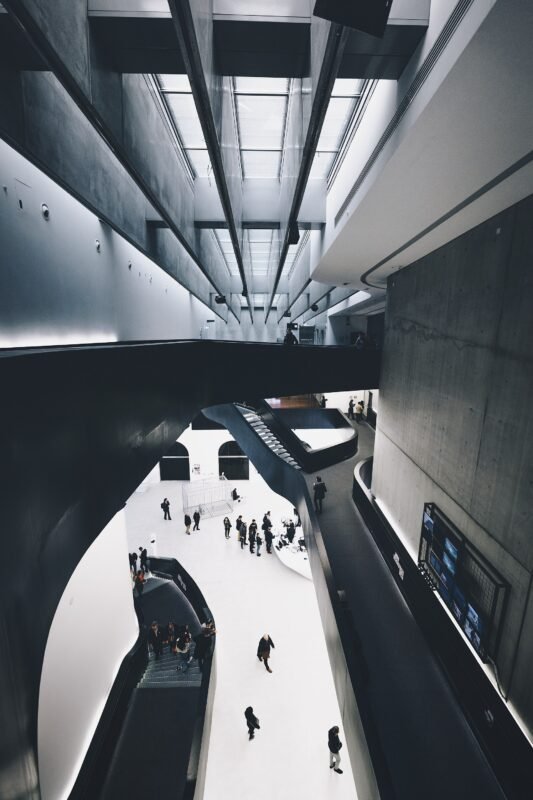
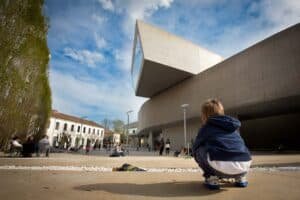
- MAXXI – National Museum of 21st Century Arts500 m
- Alberto Moravia House Museum700 m
- Villa Mazzanti700 m

Upcoming events nearby
- Maurizio Battista at Teatro Olimpico, Se non vinco… imparo, November 4 to 29, 2026100 m
- Angelo Pintus at Teatro Olimpico, Loro non sanno niente, January 14 to February 14, 2027100 m
- Slava’s SnowShow at Teatro Olimpico, January 27 to February 7, 2027100 m
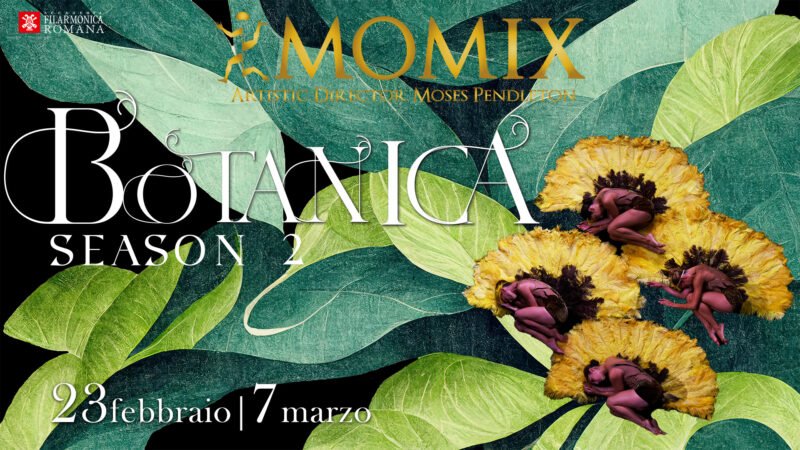
- MOMIX Botanica at Teatro Olimpico, February 23 to March 7, 2027100 m



You might also like
- Ghemon in La prima volta, l’ultima volta, l’unica volta at Auditorium Parco della Musica, April 19, 2027
- Alessandro Bergonzoni Arrivano i Dunque at Teatro Olimpico, February 20 and 21, 2027
- Back To Hawkins at Teatro Olimpico, February 17, 2027
- Selene Calloni Williams: Tu sei la Foresta at Teatro Olimpico in Rome, February 16, 2027
- Raul Cremona Bravissssssimo! at Teatro Olimpico, February 9, 2027
- Gianrico Carofiglio, Il mistero della stupidità at Teatro Olimpico, February 8, 2027