Paolo Jannacci, Jannacci arrenditi! La città ascolta at Auditorium Parco della Musica, November 3, 2026
In short. Paolo Jannacci, Jannacci arrenditi! La città ascolta, his new stage show about our relationship with the city, comes to Sala Petrassi at Auditorium Parco della Musica Ennio Morricone on Tuesday, November 3, 2026, at 20:00, with his…
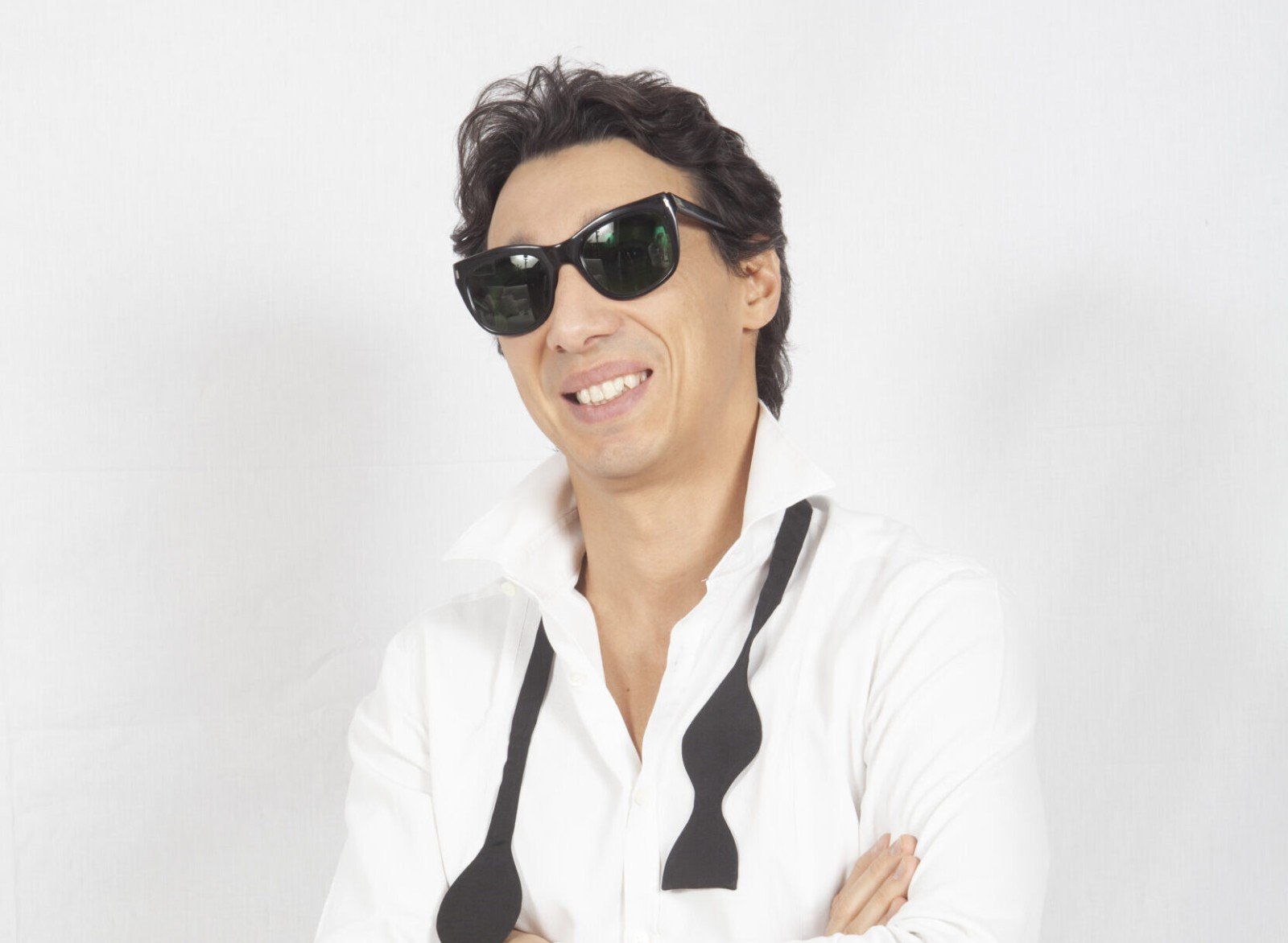
Paolo Jannacci, Jannacci arrenditi! La città ascolta, his new stage show about our relationship with the city, comes to Sala Petrassi at Auditorium Parco della Musica Ennio Morricone on Tuesday, November 3, 2026, at 20:00, with his longtime band: Stefano Bagnoli on drums and percussion, Marco Ricci on electric bass, Daniele Moretto on trumpet, flugelhorn and backing vocals. The dialogues and monologues are written with the author and friend Paolo Re. The Auditorium is at Viale Pietro de Coubertin 30, 00196 Rome. The official website lists tickets from €28.50, without publishing the other price bands. They're sold online through the channel listed on the event page and at the complex's box office, open according to the official FAQ every day from 11:00 to 20:00 and until 21:30 on show nights. For information, write to info@musicaperroma.it. The FAQ lists buses 910, 53, 982 and 168, tram 2 from Piazzale Flaminio and Piazza Mancini, Metro A to Flaminio and then the tram, and the Roma-Nord railway to Piazza Euclide, and there are two paid parking lots. For the exact route, use the ATAC route planner. The hall opens 30 minutes before and closes five minutes before the start. The running time isn't published.
Jannacci arrenditi! La città ascolta: what it's about
The official presentation describes a stage show about our relationship with the city. A city like many others, it says, tells us stories that in the end are always our own, constantly evolving. The theme isn't a specific city, Milan or Rome, but the urban experience in general: the streets, the encounters, the conflicts and the small joys of people living among others.
The songs are the backbone of the show. According to the official text they speak of loves, both foundational and at times surreal, of men at war, of reflections on the way we laugh, and of society and how we live alongside others. The city, the presentation concludes, holds all of this: women and men who live, love, suffer, laugh and try to be better. With an ironic last line, «o forse no», or maybe not, that already says a lot about the evening's tone.
Songs and words
The format is teatro-canzone, song theater: songs alternating with dialogues and monologues, written by Paolo Jannacci with Paolo Re. It's a form with a long tradition in Italy and deep roots in the Jannacci family story: Enzo Jannacci worked for years between cabaret, theater and song, with Dario Fo and Giorgio Gaber.
The repertoire
To tell the story of the city Paolo Jannacci uses original songs and songs by three writers: Paolo Conte, Luigi Tenco and, of course, Enzo Jannacci. The presentation doesn't publish the set list. The three names, though, draw a precise map: Paolo Conte, who wrote for Enzo Jannacci and sang with him, Luigi Tenco, a leading figure of the Genoa singer-songwriter scene in the early 1960s, and Enzo Jannacci himself, the Milanese singer-songwriter and doctor.
The band
On stage Paolo Jannacci, pianist and singer, is backed by his longtime band: Stefano Bagnoli on drums and percussion, Marco Ricci on electric bass, Daniele Moretto on trumpet, flugelhorn and backing vocals. Paolo Jannacci also has a long jazz career in trio, duo and quartet.
Paolo Jannacci, a musician before being a famous father's son
Paolo Jannacci was born in Milan on September 5, 1972. He began studying music at six with Lina Marzotto Pollini and Davide Tai, then instrument and harmony with his father Enzo, with Paolo Tomelleri and with Ilario Nicotra. He has been a professional musician since 1988. In 1990 he graduated from the international language high school in Milan, and from 2008 he took advanced courses at the Como Conservatory with Carlo Morena. He teaches ensemble music at CPM in Milan.
Alongside his father
From 1991 to 2010 he handled his father's record productions, including artistic direction. He worked on records such as I soliti accordi from 1994, Quando un musicista ride from 1998, Come gli aeroplani from 2001, L'uomo a metà from 2003, Milano 3.6.2005, The best from 2006 and L'artista from 2013. In 2023 he took part in the documentary Enzo Jannacci, Vengo anch'io. According to biographical profiles of Enzo Jannacci, his son played a substantial role in the phase when his father's voice became more harmonious and musical.
Sanremo and awards
In 2020 he took part in the Sanremo Festival for the first time with Voglio parlarti adesso, finishing 16th. In 2024 he returned as a guest on the third night with Stefano Massini, presenting the new song L'uomo nel lampo, devoted to deaths at work. He received the 2002 and 2003 Targhe Tenco for best song, with Lettera da lontano and L'uomo a metà, the 2005 Targa Tenco for best dialect album with Milano 3-6-2005 and the 2020 Targa Tenco for best debut with Canterò, as well as the 2012 Premio Lunezia and the 2024 Premio Nazionale Cultura della Pace.
Film, television and books
He has written scores for films and documentaries, earning Nastro d'Argento and David di Donatello nominations for original songs, and won the Onda/DiMeglio award at BAFF 2008 for the score of Voglio la Luna. He has acted in films and series, including South Kensington, La febbre and Io, noi e Gaber. He has published two books, Aspettando al semaforo with Mondadori in 2011 and Ecco tutto qui with Hoepli in 2023.
Enzo Jannacci, the legacy on stage
The show's title, with the surname up front, calls up a family story. Enzo Jannacci, born in Milan on June 3, 1935 and died on March 29, 2013, was a singer-songwriter, cabaret performer, pianist, actor, screenwriter and doctor. In 1969 he graduated in medicine, specialized in surgery, working among other things in Christiaan Barnard's team in South Africa, and throughout his life practiced as a cardiologist and family doctor alongside music.
From rock and roll to cabaret
He's remembered as one of the pioneers of Italian rock and roll along with Adriano Celentano, Luigi Tenco, Little Tony and Giorgio Gaber, with whom he formed the duo I Due Corsari at the end of the 1950s. As a jazz musician he played with Stan Getz, Gerry Mulligan, Chet Baker and Franco Cerri. At Milan's Derby Club he met Dario Fo and Cochi e Renato, and with Fo in the mid-1960s he created the recital 22 canzoni, which produced what is described as the first Italian live album.
The songs
His first album, La Milano di Enzo Jannacci, released in December 1964, included El portava i scarp del tennis, the portrait of a homeless man in Milan. Vengo anch'io. No, tu no reached number one in the hit parade, while Ho visto un re, sung with Fo, became one of the anthems of 1968. His album Quelli che... is 97th on Rolling Stone's list of the 100 best Italian albums, and he's one of the most honored artists of the Club Tenco.
Paolo Conte and Luigi Tenco in the story
The choice of Conte and Tenco isn't random: they're two friends and fellow travelers of Enzo Jannacci. Paolo Conte wrote Messico e nuvole for him, which stands out on one of the two albums Jannacci released between 1970 and 1972, and with him made Sudamerica and above all Bartali, the tribute to the cyclist. It was Conte who invited him back on stage at the end of the 1970s, at one of his evenings at Teatro Pier Lombardo in Milan. In 2006 Bartali was rerecorded as a duet by Jannacci and Conte, in a compilation produced by Paolo.
Tenco and the lemons
Luigi Tenco, who knew Jannacci personally, rerecorded one of his love songs, Passaggio a livello, in 1961, also showcasing him as a songwriter. In 1987, in the song Parlare con i limoni, Jannacci included a quotation of Tenco and his song Il tempo dei limoni. By bringing these songs back on stage, Paolo Jannacci rebuilds a musical world he knows from the inside.
Paolo Re, co-author
The dialogues and monologues are written with Paolo Re, whom the official presentation calls an author and a friend of Jannacci's. The sources read give no further information on his biography, and his name appears as co-author of the theatrical part of the show.
Song theater, a Milanese form
The show belongs to a form with a precise history in postwar Milanese culture, from the cabaret of the Derby Club to Jannacci's collaborations with Dario Fo and Giorgio Gaber. In 1962 the director Filippo Crivelli cast Enzo Jannacci in Milanin Milanon at Teatro Gerolamo, and in 1991 Jannacci performed Samuel Beckett's Waiting for Godot with Gaber, Felice Andreasi and Paolo Rossi.
Laughing at society
One of the threads the presentation mentions concerns reflections on the way we laugh. It's a central theme in Enzo Jannacci's work, which combined surreal comedy with attention to the marginalized: the critic Gianfranco Manfredi read Vengo anch'io. No, tu no as the portrait of someone excluded and mocked by the group. Paolo's show picks up this line in a contemporary key, with the presentation's ironic closing line, «o forse no», which seems written in the same spirit: looking at the city with affection, without illusions and without giving up laughter.
The city in Enzo Jannacci's songs
The theme Paolo chose for his show, the city, is also the theme of an important part of his father's work. In 1962, for the show Milanin Milanon, Enzo Jannacci wrote one of his first songs in Milanese dialect, Andava a Rogoredo, and his first album, La Milano di Enzo Jannacci, was made up entirely of songs in dialect. His songs often tell of poor, marginalized, pathetic individuals, a central theme throughout his career.
Work, the factory, friends
With the journalist Beppe Viola, who died on October 17, 1982, Jannacci wrote songs such as Rido, Secondo te... Che gusto c'è?, Saxophone and Vincenzina e la fabbrica. In 1991 the album Guarda la fotografia included Il gruista and La strana famiglia, sung with Gaber. They're city songs in the fullest sense: about work, the outskirts, difficult relationships. Paolo Jannacci, who in 2024 devoted a song to deaths at work, takes up this legacy.
Sanremo, father and son
The Jannacci family story passes through the Sanremo Festival several times. Enzo first took part in 1989 with Se me lo dicevi prima, devoted to the fight against drugs. In 1991 he returned with La fotografia, paired with Ute Lemper, winning the Critics' Award. In 1994 he presented I soliti accordi with Paolo Rossi, an unusually irreverent song arranged by Giorgio Cocilovo and Paolo Jannacci himself. In 1998 he again won the Critics' Award for best lyrics with Quando un musicista ride.
Paolo's debut
Paolo Jannacci reached the Ariston stage as a lead artist only in 2020, with Voglio parlarti adesso, finishing 16th, and the same year the Targa Tenco for best debut for Canterò recognized his path as an independent singer-songwriter. In 2024, as a guest on the third night with Stefano Massini, he presented L'uomo nel lampo. The Rome show therefore comes from an artist who has built a voice of his own alongside his father's.
The doctor who sang
One aspect of Enzo Jannacci's biography explains well the view of the city this show inherits. His choice of medicine was influenced by his father, who wanted his son to learn what suffering was and to stay close to people. Jannacci practiced as a cardiologist and family doctor until retirement, declared himself a supporter of public healthcare and always limited the number of his patients so he could follow them properly. Among the first were his friends Teo Teocoli, Massimo Boldi and Renato Pozzetto.
Film
Jannacci also wrote film scores, starting with Mario Monicelli's Romanzo popolare in 1974 and Lina Wertmüller's Seven Beauties in 1975, and acted in several films, from Carlo Lizzani's La vita agra to Monicelli's Le coppie. Paolo has continued along this path with scores for films and documentaries and with nominations for the Nastro d'Argento and the David di Donatello.
Gaber, I Due Corsari and a lifelong friendship
In the story of a city, alongside Conte and Tenco, there's another presence from the family history: Giorgio Gaber. At the end of 1958 Enzo Jannacci and Gaber formed the duo I Due Corsari, which debuted in 1959 with some singles for Dischi Ricordi, and their best-known titles include Birra, Fetta di limone and Tintarella di luna. In February 1961 Gaber brought a song written by Jannacci, Benzina e cerini, to the Sanremo Festival. In 1984 the two rerecorded four old songs together on the mini album Ja-Ga Brothers, released on July 21.
A portrait on film
Paolo Jannacci acted in Io, noi e Gaber, the 2023 film devoted to Giorgio Gaber: another thread linking the new generation to the network of Milanese artists this show's repertoire comes from. Gaber's songs aren't mentioned in the official presentation, but his figure is part of the same story.
Practical information
Tickets
The Auditorium website lists tickets from €28.50, without detailing the price bands. They're sold online through the channel listed on the event page at auditorium.com, at the complex's box office, open every day from 11:00 to 20:00 and until 21:30 on show nights, and by phone at a premium-rate number given in the FAQ. The box office rules are published on the website.
Transport and parking
The FAQ lists buses 910 (Termini/Piazza Mancini), 53 (Piazza Mancini/Largo Chigi), 982 (Viale XVII Olimpiade/Quattro Venti station) and 168 (Largo Maresciallo Diaz/Tiburtina station), tram 2 from Piazzale Flaminio and Piazza Mancini, Metro A to Flaminio and the Roma-Nord railway to Piazza Euclide. There are two paid parking lots, surface and multistory, with access from Viale Pietro de Coubertin and Viale Maresciallo Pilsudski.
Entry and accessibility
The hall opens 30 minutes before and closes five minutes before the start. Once the show has begun you can enter only if the organizer allows it, possibly in a different seat. For the limited wheelchair spaces, the FAQ gives the number 06 8024 1281, every day from 11:00 to 18:00. Reductions for people with disabilities and companions are collected at the central box office.
The Auditorium and Sala Petrassi
Auditorium Parco della Musica Ennio Morricone is the complex designed by Renzo Piano and opened in 2002, between the Olympic Village, Villa Glori and the Corso di Francia viaduct. The three concert halls have a brick base and an outer cladding of lead strips, and are arranged around the open-air cavea named after Luciano Berio, which holds about 3,000 spectators. Sala Petrassi, with 673 seats according to the official website, is the smallest and the best suited to musical theater.
A hall for song theater
Sala Petrassi is devoted mainly to opera, jazz, theater, dance and screenings, and has an orchestra pit and movable side walls for stage needs. For a show alternating songs with a band and monologues it's the natural choice: big enough for a concert, intimate enough for the spoken word.
A curious fact about Auditorium Parco della Musica
The Auditorium was included in the Census of Italian architecture from 1945 to the present, the national project promoted by the Ministry of Culture to document the most significant works of contemporary Italian architecture. The ministry's record attributes it to the Renzo Piano Building Workshop, for the period 1994-2002, and recognizes it as meeting all seven criteria of the Census methodology.
Two out of 79
In the category "Buildings for cultural promotion" the Census includes 79 works, and only two meet all seven criteria: Auditorium Parco della Musica and the renovation of the Lingotto in Turin, both by the Renzo Piano Building Workshop. It's not a ranking, but a match with all the survey's parameters.
Something nobody tells you about Auditorium Parco della Musica
For years the Auditorium had its own radio station. On March 16, 2010 Radio Parco della Musica was launched, the official web radio you could listen to from the website, broadcasting the complex's big concerts exclusively. On October 4, 2011 Auditorium TV debuted, the official video channel, with archive footage, artist interviews, behind-the-scenes visits and a format called «I Cinque Comandamenti».
An archive of concerts
These tools helped build an archive of images and recordings of concerts held at the Auditorium. If you want to get to know a show better before buying a ticket, the complex's official channels are a good starting point.
My tip for visiting Auditorium Parco della Musica
My tip is to arrive an hour early and take a walk in the Claudio Abbado Gardens, which the official website describes with an urban vegetable garden and a play area, and in the park that links the Auditorium with Villa Glori and Viale Tiziano. In early November it's already dark at 19:00, but the lit-up complex and the empty cavea have a special charm. Then a coffee or a quick dinner at the venues inside, and into the hall with half an hour to spare.
The tram, once again
For a 20:00 show on a Tuesday, with rush-hour traffic, tram 2 from Piazzale Flaminio is the most reliable choice. The inner parking is paid, and many drivers end up looking for a space in the nearby Olympic Village.
Another well-known fact, yet one rarely mentioned
Everyone knows the Auditorium hosts the Rome Film Fest: it has since 2006. Less often mentioned is that the complex is also the main home of the Accademia Nazionale di Santa Cecilia, one of the oldest musical institutions in the world, born as a congregation of musicians and turned into a foundation in 1998. Since 2003 the Auditorium has hosted its symphony season, its Bibliomediateca and its Museum of Musical Instruments.
A program without borders
Alongside the Accademia, the Fondazione Musica per Roma programs rock, pop, jazz, contemporary, opera, electronic and world music concerts, theater, dance, circus, literature and poetry series, exhibitions, science and book festivals, and the seasons of resident orchestras devoted to jazz, contemporary music and folk music. A song theater show like Paolo Jannacci's fits into this variety.
The right photo to take at Auditorium Parco della Musica
For a photo different from the classic overall view, get close to one of the halls and frame a detail of the cladding: the brick base and, above, the lead strips covering the curved surfaces. Up close you understand how Renzo Piano built such large volumes with a material that changes color with light and time. In the evening, under artificial light, the contrast between warm brick and gray lead is even sharper.
The cavea from above
The other image to take home is the Luciano Berio cavea seen from the terrace: an open-air amphitheater of about 3,000 seats, empty on a November evening, surrounded by the three halls. It reminds you that the Auditorium also lives outdoors in summer.
Some important events that happened here in history
The Olympic Village area was chosen by the city council in 1992, after a long debate. Not everyone considered it ideal, because of its size, the shape of the land and the distance from the metro, whose nearest station is at Piazzale Flaminio. The international competition was announced in 1993 and won by Renzo Piano on July 27, 1994. One of the parking lots was completed in the winter of 1998, and between 1999 and 2000 the city handed the works to new firms after problems with those from the first tender.
From the first hall to the naming
On April 21, 2002 the first halls opened, and on December 21 of the same year Sala Santa Cecilia, with a concert by the Accademia's orchestra conducted by Chung Myung-whun. By early 2003 the complex was complete and fully operational. In 2020, after the maestro's death, the city council approved naming the Auditorium after Ennio Morricone.
Who has passed through Auditorium Parco della Musica
Since it opened the Auditorium has hosted the season of the Accademia Nazionale di Santa Cecilia, its conductors and soloists, the resident orchestras, leading figures of Italian and international jazz, pop and rock, and the writers, directors and actors of the Rome Film Fest. Among the names linked to the complex's history are Renzo Piano, the composer Goffredo Petrassi, present at the opening, Giuseppe Sinopoli, who fought for the new hall, and Luciano Berio, after whom the cavea is named.
Singer-songwriters
The Auditorium's halls have for years been one of Rome's homes for singer-songwriter music. On November 3, 2026 it's Paolo Jannacci's turn, bringing his father's songs, Paolo Conte's and Luigi Tenco's together with his own to Sala Petrassi, in the same season in which our editors have listed concerts by other Italian singer-songwriters at the Auditorium.
Around the Auditorium
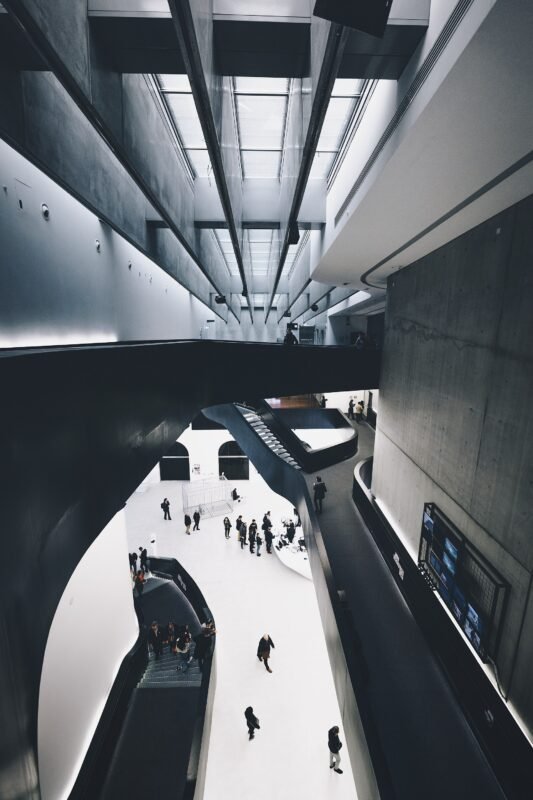
The venue is covered on the Auditorium Parco della Musica page. The neighborhood is described in the guide to Flaminio, home to Ponte Flaminio and the Flaminio obelisk, and MAXXI is a short distance away.
Other singer-songwriters at the Auditorium
For lovers of singer-songwriter music, our editors have also listed at the Auditorium Fabio Concato with Altro di me, Sergio Caputo, Luca Barbarossa with the Pepita Live Club and Simone Avincola.
Frequently asked questions about Paolo Jannacci's Jannacci arrenditi!
When is the show?
Tuesday, November 3, 2026 at 20:00, in Sala Petrassi at Auditorium Parco della Musica Ennio Morricone, Viale Pietro de Coubertin 30. The hall opens half an hour before and closes five minutes before the start. The running time isn't published. Arrive early, partly because of rush-hour traffic on Via Flaminia on a weekday.
How much are tickets?
The Auditorium website lists a price from €28.50, without listing the other bands. Tickets are sold online through the channel listed on the event page at auditorium.com and at the complex's box office, open every day from 11:00 to 20:00 and until 21:30 on show nights. The FAQ describes the reductions for people with disabilities and companions.
Is it a concert or a stage show?
Both. The presentation calls it Paolo Jannacci's new stage show: the songs are the backbone, but they alternate with dialogues and monologues written with the author Paolo Re. The theme is the relationship with the city, told through loves, wars, laughter and living together. Jannacci's full band is on stage.
What songs will you hear?
Original songs by Paolo Jannacci and songs by Paolo Conte, Luigi Tenco and Enzo Jannacci. The set list isn't published. Conte and Tenco were two fellow travelers of Enzo's: Conte wrote Messico e nuvole for him and co-wrote Bartali with him, and Tenco rerecorded his Passaggio a livello. The show rebuilds that network of musical friendships.
Who plays with Paolo Jannacci?
His longtime band: Stefano Bagnoli on drums and percussion, Marco Ricci on electric bass and Daniele Moretto on trumpet, flugelhorn and backing vocals. Paolo Jannacci, pianist and singer, has long jazz experience with trio, duo and quartet and handled his father's record productions for 20 years.
Do you need to know Enzo Jannacci to enjoy it?
No, but it helps. The show deals with universal themes, the city, love, the way we laugh, and uses songs many people know without knowing who wrote them. To prepare, listen again to Vengo anch'io. No, tu no, El portava i scarp del tennis, Ho visto un re and Messico e nuvole, as well as Voglio parlarti adesso, Paolo's song at Sanremo 2020.
How do you get to the Auditorium?
By buses 910, 53, 982 and 168, by tram 2 from Piazzale Flaminio or Piazza Mancini, by Metro A to Flaminio and then the tram, or by the Roma-Nord railway to Piazza Euclide, according to the official FAQ. The two paid parking lots are accessed from Viale Pietro de Coubertin and Viale Maresciallo Pilsudski. For a route from your address, use the ATAC route planner.
What does the title mean?
The official presentation doesn't explain the title «Jannacci arrenditi!», «Jannacci, surrender!», which puts the family name up front in an ironic, almost summons-like tone. The subtitle, «La città ascolta», the city listens, recalls the show's theme, the relationship between the singer and the city around him. Rather than looking for a precise meaning, let yourself be surprised by how the title takes on meaning on stage.
My final tip on Paolo Jannacci's Jannacci arrenditi!
Jannacci arrenditi! is an evening for anyone who loves singer-songwriter music told from the stage, with the irony and tenderness the Jannacci name carries. Buy your ticket in time, arrive by tram a little early to stroll among Renzo Piano's halls, and get ready for an evening in which the songs of Conte, Tenco and Enzo Jannacci become the story of an ordinary city, which in the end is always our own. If you leave humming «vengo anch'io», nobody will tell you no.
Article written by the editorial team of Tour Leader Pro, contact them for Private/Corporate/V.I.P. Tours and Experiences.
Planning a trip to Rome? The English-language guides for visiting the city are on ItalyPlanner.com.
Contact Information
Nearby
 Museum of Musical Instruments (MUSA)100 m
- Auditorium Parco della Musica100 m
- Villa Glori500 m
- Fountain of Anna Perenna500 m
- MAXXI – National Museum of 21st Century Arts700 m
- Flaminio700 m
Upcoming events nearby
- Roma Jazz Festival 2026, November 1 to 24 at the Auditorium and Casa del Jazz100 m
- Evgeny Kissin and András Schiff at Santa Cecilia, November 9, 2026100 m
- Roma Gospel Festival 2026 at Auditorium Parco della Musica, December 13, 2026 to January 1, 2027100 m
- Santa Cecilia 2026/2027 Concert Season at Auditorium Parco della Musica, October 21, 2026 to June 5, 2027100 m



You might also like
- Buenos Aires Tango with Daniel Binelli at Auditorium Parco della Musica, November 28, 2026
- Laudato sii at Auditorium Parco della Musica, November 17, 2026
- In memory of Mauro Bortolotti and Franco Evangelisti at Teatro Studio Borgna, November 6, 2026
- Voices by Henze at Auditorium Parco della Musica, November 4, 2026
- PMCE Huellas 2: new music from Spain at Teatro Studio Borgna, Auditorium, Nov 13, 2026
- Atlantico Reunion by Enzo Favata at the Roma Jazz Festival, Auditorium Sala Petrassi, Nov 16, 2026