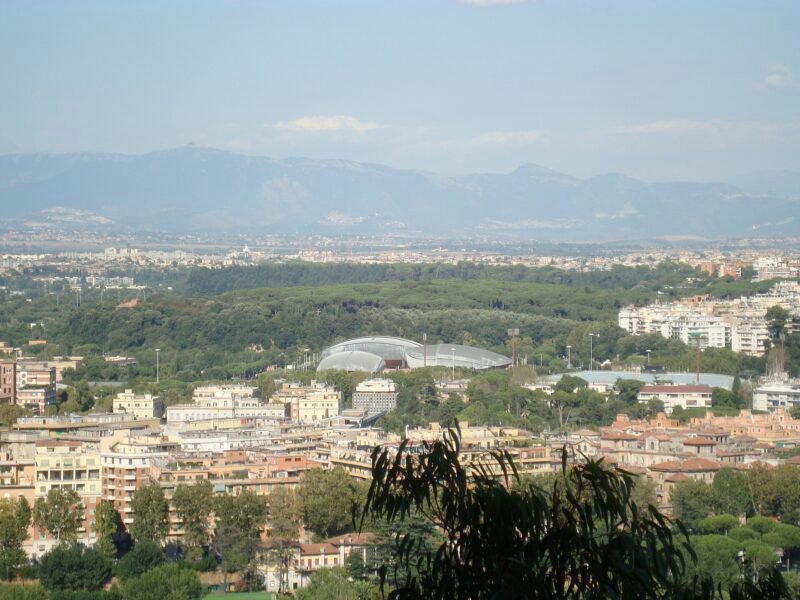
Luca Barbarossa, Pepita Live Club at Auditorium Parco della Musica, January 2 to 9, 2027
In short. Luca Barbarossa turns Teatro Studio Gianni Borgna of Auditorium Parco della Musica Ennio Morricone into the Pepita Live Club, where he plays every evening from January 2 to 9, 2027 at 20:00, at Viale Pietro de Coubertin 30 (00196 Rome).
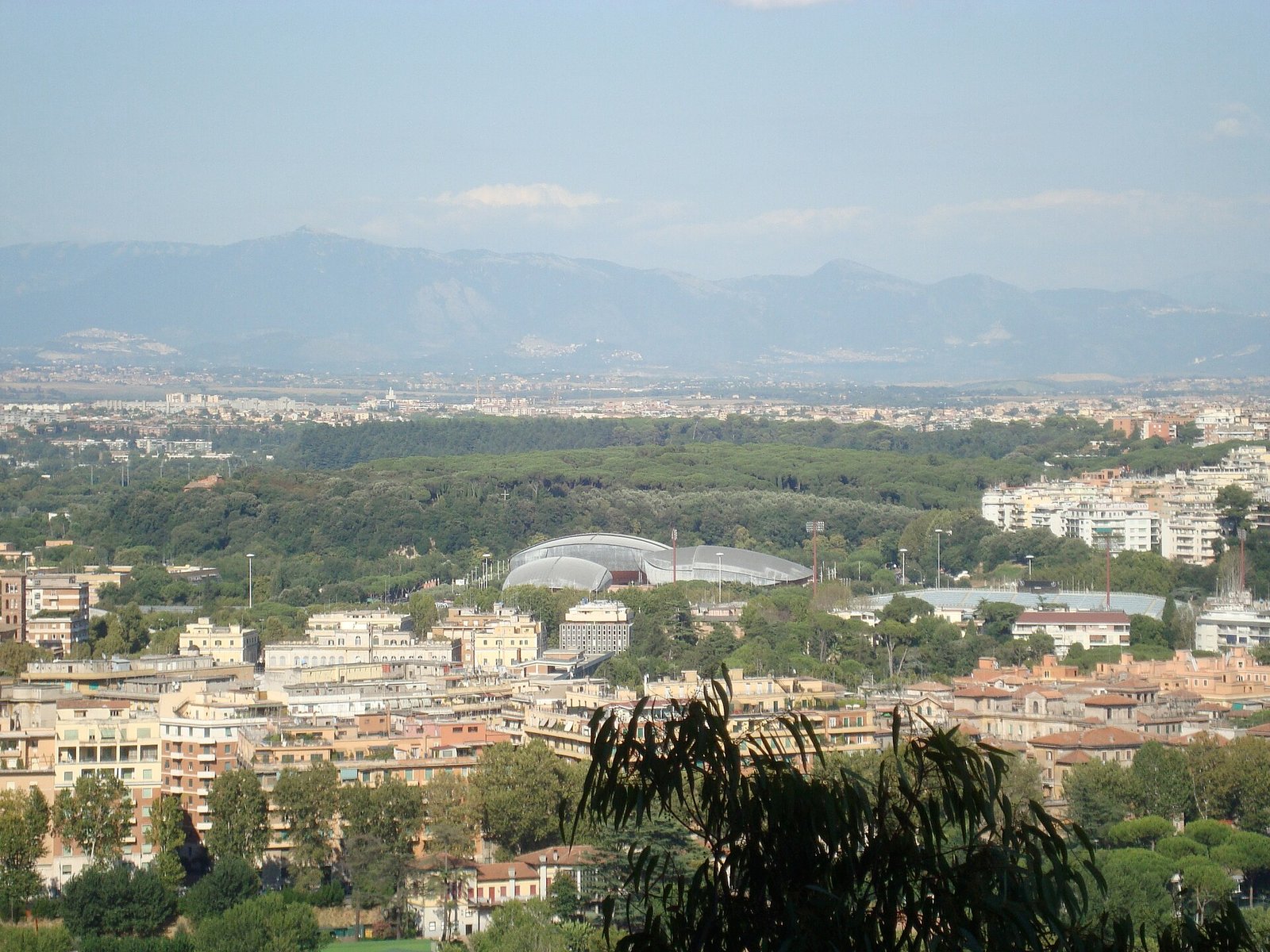
Luca Barbarossa turns Teatro Studio Gianni Borgna of Auditorium Parco della Musica Ennio Morricone into the Pepita Live Club, where he plays every evening from January 2 to 9, 2027 at 20:00, at Viale Pietro de Coubertin 30 (00196 Rome). The Roman singer-songwriter presents live Pepita e la rivoluzione, the new album of unreleased songs due out on November 27, 2026: 11 tracks recorded entirely in analog with leading musicians. You get there by metro A to Flaminio and then tram 2 (stops Flaminia/Reni or Apollodoro), or by bus 910 from Termini. Tickets start from 40 euros, according to the official event page, and are bought on the Auditorium's website, which links to the presale network authorized by the organization, or at the complex's box office.
The idea, the official presentation says, is to evoke the suspended time and smoky atmospheres of studio sessions by turning the Auditorium's smallest hall into a club. Eight evenings in a row, from Saturday, January 2 to Saturday, January 9, in a hall of about 300 seats. For an artist who began by playing on the street in Piazza Navona, a return to the most intimate dimension of live music.
Luca Barbarossa in Rome: dates, times and tickets
Luca Barbarossa's Pepita Live Club is scheduled at Auditorium Parco della Musica Ennio Morricone from January 2 to 9, 2027, every evening at 20:00, at Teatro Studio Gianni Borgna, in the D'autore section of the Fondazione Musica per Roma program.
The eight dates
The evenings are Saturday 2, Sunday 3, Monday 4, Tuesday 5, Wednesday 6, Thursday 7, Friday 8 and Saturday January 9, 2027, always at 20:00 according to the official presentation. The series therefore includes two weekends and the Epiphany holiday.
The price
The event page lists tickets from 40 euros. Teatro Studio has all its seats in the stalls, and the precise rates appear at the time of purchase for each evening.
Where to buy
From the purchase button on the official page you go to the presale network authorized by the organization, with a page for each date. The physical box office is inside the complex, at Viale Pietro de Coubertin 30: from October to March the website lists hours from 11:00 to 20:00, Sundays and holidays included. The Auditorium's regulations warn that tickets bought on unauthorized secondary platforms may not be valid.
Pepita e la rivoluzione: the new album
Pepita e la rivoluzione is Luca Barbarossa's new album of unreleased songs, due out on November 27, 2026: 11 tracks recorded completely in analog, played by musicians and artists among the most authoritative on the international scene, according to the presentation.
No virtual sounds
Barbarossa claims a precise choice: in the record, he explains, no virtual or simulated sounds were used, let alone artificial intelligence. The talent and passion of the musicians, he says, are the soul of the work. In an era of digital productions, an album recorded in analog and presented in a club of 300 seats is a statement of poetics.
The atmospheres
In the record, according to the presentation, different musical textures intertwine, born from the freedom and exchange of studio sessions: melancholy and nocturnal atmospheres, the sly irony of the Roman singer-songwriter, an affectionate look at the everyday and a more reflective one at the world. True or invented stories, loves lived or imagined.
The suspended time of the studio
The Pepita Live Club is born from here: bringing to the stage the climate of the recordings, the suspended time and the smoky atmospheres of the sessions. The club's name echoes that of the album, and the hall becomes for one week the place where the record comes to life before the audience.
The Pepita Live Club: a club for eight evenings
For the Pepita Live Club, Teatro Studio Gianni Borgna is transformed into a music club, with Luca Barbarossa on stage every evening from January 2 to 9, 2027.
Why Teatro Studio
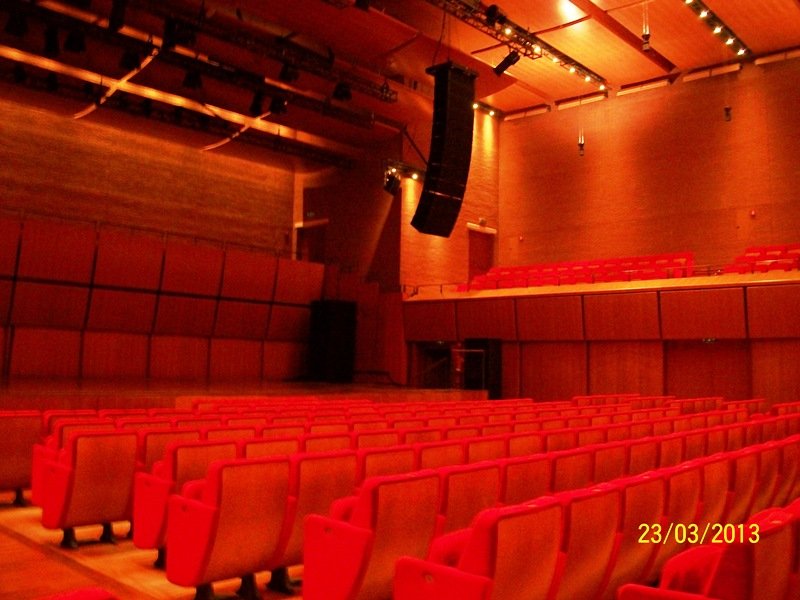
Teatro Studio is the Auditorium's smallest hall, with about 300 seats, a stage at stalls level and no curtain: the right hall for a club atmosphere, in which the artist sees the audience's faces and every word arrives.
A residency
Eight consecutive evenings in the same hall are a residency formula, closer to clubs than to tours. Each evening is a concert in itself, with the audience changing. The setlist is not published, and it is not certain it will stay identical from one evening to the next.
New songs and songs of always
The heart of the evenings is the presentation of the new album. It is reasonable to expect some titles from the historic repertoire too, but the official presentation does not say so. Those going to hear Portami a ballare or Roma spogliata should know.
Who Luca Barbarossa is: the biography
Luca Barbarossa was born in Rome on April 15, 1961 and is a singer-songwriter and radio host. He won the Sanremo Festival in 1992 with Portami a ballare and has hosted Radio2 Social Club since 2010.
From the street to Sanremo
He began as a street musician in Piazza Navona, playing American folk and the classics of Italian singer-songwriters. In 1980 Gianni Ravera invited him to the Castrocaro Festival, which he won with Sarà l'età. In 1981 he took part by right in Sanremo with Roma spogliata, written at his school desk, and came fourth, first among the newcomers. The first album, produced by Shel Shapiro, has Antonello Venditti among its guests.
The years of success
In 1988 he returned to Sanremo with L'amore rubato, a song about sexual violence that came third and earned him a congratulatory telegram from Franca Rame and Dario Fo. The same year he represented Italy at the Eurovision Song Contest with Ti scrivo, and the album Non tutti gli uomini sold 350,000 copies. In 1989 Al di là del muro came out, with a song dedicated to Nelson Mandela and Eros Ramazzotti on electric guitar on one track.
The 1992 victory
In 1992 he won the Sanremo Festival with Portami a ballare, dedicated to his mother Annamaria. Cuore d'acciaio followed, the live album Vivo, Le cose da salvare with Francesco De Gregori on guitar on one track, Sotto lo stesso cielo, Musica e parole with Tina Arena.
The author
Barbarossa has written for other performers: Il canto for Luciano Pavarotti, songs for Gianni Morandi, Fiorella Mannoia, Paola Turci, Tosca, Tina Arena, Alessandro Safina and the Extraliscio.
Radio, theater, books and film
Since January 2010 Luca Barbarossa has hosted Radio2 Social Club on Rai Radio 2, a program that received the Flaiano prize as best radio program in 2020.
Radio2 Social Club
The program is set in an imaginary venue where people chat, play and make music, and over the years has had alongside Barbarossa Virginia Raffaele, Paola Minaccioni, Lucia Ocone, Andrea Perroni and Ema Stokholma. From the program's live duets came in 2015 the album Radio Duets, Musica Libera, with Lucio Dalla, Francesco De Gregori, Giuliano Sangiorgi, Malika Ayane and Fiorella Mannoia. The Pepita Live Club, an imaginary venue too, has something of this spirit.
Theater
Between 2008 and 2010 he was on stage with Neri Marcorè in Attenti a quei due. In 2023 he toured with Stefano Massini La verità, vi prego, sull'amore, inspired by the poetry of Wystan Hugh Auden. Between 2024 and 2025 he turned his book Cento storie per cento canzoni into a show.
Books and film
In 2021, for his 60th birthday, he published with Mondadori the autobiographical novel Non perderti niente. In 2024, with La nave di Teseo, Cento storie per cento canzoni, anecdotes about 100 famous songs and their performers. In the same year he acted in Diamanti by Ferzan Özpetek.
Luca Barbarossa's discography
Before Pepita e la rivoluzione, Luca Barbarossa released 12 studio albums, three live ones and two compilations, from the 1981 debut to La verità sull'amore in 2023.
The 1980s and 1990s
After the 1981 debut album, Luca Barbarossa, came Come dentro un film in 1987, Non tutti gli uomini in 1988, Al di là del muro in 1989, Cuore d'acciaio in 1992, the year of the Sanremo victory, Le cose da salvare in 1994, Sotto lo stesso cielo in 1996 and Musica e parole in 1999, produced by Romano Musumarra.
From 2000 to today
In 2001 the first compilation came out, Viaggio di ritorno. In 2003 Fortuna, with Marco Conidi and Roy Paci. In 2008 Via delle storie infinite. In 2011 Barbarossa Social Club, for 30 years of career, with Max Gazzè, Roy Paci, Neri Marcorè, Fiorella Mannoia and Raquel del Rosario. In 2018 Roma è de tutti arrived, in Roman dialect, and in 2023 La verità sull'amore. In 2024 the live album Torino Mon Amour.
Television
Alongside radio, Barbarossa hosted on television Super Club on Rai 2 with Max Giusti in 2012, Il mondo a 45 giri on Rai 3 in 2015 and the Concerto del Primo Maggio in 2016. The same year he commented on the Partita del cuore next to Bruno Pizzul. He was a juror at Sanremo Giovani.
A curiosity about Luca Barbarossa, Pepita Live Club at Auditorium Parco della Musica, January 2 to 9, 2027
The sportiest curiosity concerns football. Luca Barbarossa is the top scorer of the Nazionale cantanti, with 221 goals in 259 matches. In the past he was also a tennis instructor, and in 2014 he hosted for SuperTennis the program Happy Hour during the Internazionali d'Italia at the Foro Italico, a few minutes from the Auditorium.
The second curiosity is an involuntary prophecy. Al di là del muro, the 1989 single, had a title that anticipated by a few months the fall of the Berlin Wall, although the song was about mental barriers. A case of timing that the history of Italian song remembers.
The third concerns a deliberately misspelled title. In 1994 Barbarossa had success with Cellai solo te, an ironic song about relationships, with the spelling deliberately wrong already in the title. On the same album, Le cose da salvare, there was a track titled Cercautore, with which he invited listeners to send in a lyric. The one chosen, Onda controvento by Paolo Audino, was later recorded.
Teatro Studio Gianni Borgna
Teatro Studio Gianni Borgna is the smallest hall of Auditorium Parco della Musica, with about 300 seats: regular shape, cherry wood walls, a stage at the same level as the stalls, no curtain.
The name
The hall is dedicated to Gianni Borgna, long-time city councillor for cultural policies of the Comune di Roma and president of Fondazione Musica per Roma, the body that runs the Auditorium.
How it is built
It is a space with no vertical architectural elements, entirely covered in cherry wood, with panels and mobile acoustic curtains that let the sound be adapted to the type of show. For a singer-songwriter with his musicians, in a club setup, it is the ideal size.
A hall for singer-songwriter music
Teatro Studio often hosts singer-songwriter music in the Fondazione Musica per Roma program. In the same season Mario Venuti and Tony Canto play there, among others, with Mai come ieri, on November 29. For a singer-songwriter who wants a direct relationship with the audience, it is the most suitable hall of the complex.
The complex
For the full history of Renzo Piano's complex, its halls and the cavea, there is the page on the Auditorium Parco della Musica.
Something nobody tells you about Luca Barbarossa, Pepita Live Club at Auditorium Parco della Musica, January 2 to 9, 2027
What few remember is that the Auditorium is almost a home for Barbarossa. In 2018, after the Roman-dialect album Roma è de tutti, the theater tour ended with a concert at the Cavea of the Auditorium, with guests Alessandro Mannarino, Fiorella Mannoia, Anna Foglietta and Ambrogio Sparagna. After that concert the Auditorium entrusted him with a Carta Bianca and the artistic direction of some events for the 2018 and 2019 season. The Pepita Live Club is therefore the return of an artist who also had a director's role here.
The second little-said thing is that eight consecutive evenings change the buying strategy. As a rule weekend and holiday dates are the most requested. Those in midweek, such as Monday the 4th and Tuesday the 5th, tend to sell out later. Those with flexibility should take advantage.
Third thing: on the evening of January 2, at the same time, the Fabrizio Bosso Quartet plays in Sala Sinopoli. Two audiences in the same foyers, so for the first evening it is best to arrive earlier than for the others.
The advice I give you for visiting Luca Barbarossa, Pepita Live Club at Auditorium Parco della Musica, January 2 to 9, 2027
My advice is to listen to Pepita e la rivoluzione in the weeks between its release, on November 27, and the evening you choose. It is a new record, and the Pepita Live Club is designed to present it. Recognizing the songs changes the experience, especially in a hall so close to the stage.
The second piece of advice concerns the date. Those who want the most relaxed atmosphere should choose a weeknight. Those seeking the energy of a full house should choose the first, Saturday 2, or the last, Saturday 9. Epiphany, Wednesday the 6th, is a good choice for those in Rome for the holidays who want to end them with a concert.
The third concerns the seat. At Teatro Studio all seats are in the stalls, a few meters from the stage. The central rows give the best balance between voice and instruments, the first rows the strongest closeness. Arriving early helps you choose.
How to get to the Auditorium for Luca Barbarossa
Auditorium Parco della Musica Ennio Morricone is reached by tram 2, stops Flaminia/Reni or Apollodoro, and by buses 910, 53, 982 and 168. The nearest metro station is Flaminio, on line A.
Metro A and tram 2
From Flaminio station you exit onto Piazzale Flaminio and take tram 2 along Via Flaminia, to Flaminia/Reni or Apollodoro, then a few minutes on foot through the Olympic Village.
The 910 from Termini
Bus 910 leaves from Piazza dei Cinquecento, in front of Termini station, and stops in front of the Auditorium with no changes. The 53 links Piazza Mancini with the center, the 982 arrives from Quattro Venti station, the 168 from Tiburtina station. On January 6, a holiday, the times should be checked on Atac's journey planner.
By car and the return
The complex has paid internal parking, with limited spaces. On weeknights finding a spot is easier. On Saturdays it is best to arrive early. After the concert tram 2 takes you back to Piazzale Flaminio.
Another well-known fact, yet rarely mentioned
It is well known that Luca Barbarossa is a deeply Roman singer-songwriter: Roma spogliata at his debut, Via Margutta in 1986, the Roman-dialect album Roma è de tutti in 2018, with Passame er sale at Sanremo, Lunezia prize. Less often remembered is that his career began right on the street, in Piazza Navona, with a repertoire of American folk: the boy with the guitar, like the title of the song he brought to Sanremo in 1996.
Another little-cited fact: Barbarossa wrote songs for one of the most famous tenors in the world. In 2003 he composed Il canto for Luciano Pavarotti, which the tenor included in the album Ti adoro. Few Italian pop singer-songwriters have a song in Pavarotti's repertoire.
And a fact about commitment. L'amore rubato, in 1988, tackled without reticence the theme of sexual violence on the Sanremo stage. In 1989 Al di là del muro contained a song for Nelson Mandela. In 1996 Sette candele recounted the persecution of Jews under Fascism. A civic thread that runs through his whole career, alongside irony.
The right photo to take at Luca Barbarossa, Pepita Live Club at Auditorium Parco della Musica, January 2 to 9, 2027
You do not take photos during the concert: in a club of 300 seats a lit screen is visible from the whole hall, and the smoky atmosphere Barbarossa wants to recreate lives on half-light. The right photo is taken before the start or outside.
Before the start, the subject is Teatro Studio transformed into a club: the low stage, the instruments waiting, the lights of the setup. It is a rare image, because the hall will change appearance after January 9.
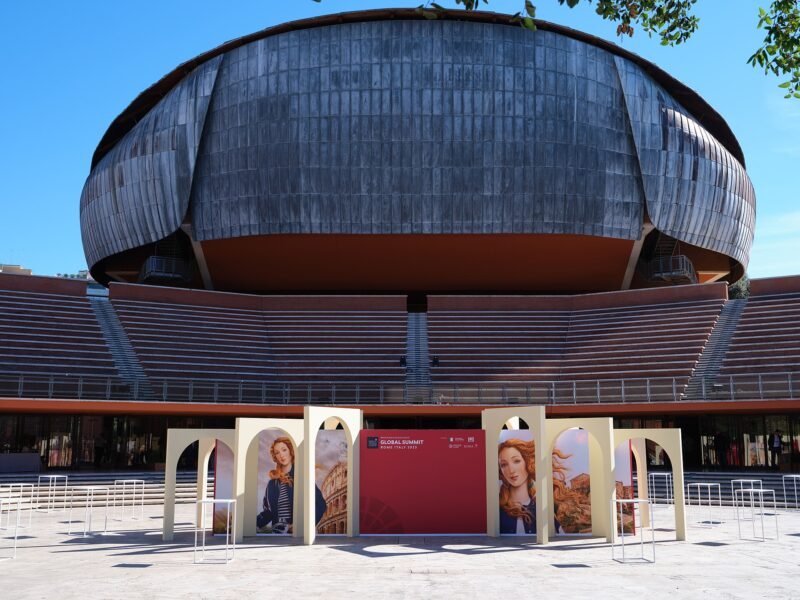
Outside, in January, at 19:00 it has been dark for a while. From the cavea, the stepped square at the center of the complex, the lit shells of the halls are the best backdrop for a photo before going in: the classic image of Renzo Piano's Auditorium on a winter evening.
Some important events that took place here in history
The history of this area begins more than 2,000 years ago. During excavations for the foundations the remains of a Roman villa of the 3rd century BC emerged, built on the site of an archaic farm of the 6th century BC. Renzo Piano changed the design to preserve them. The finds are displayed in a small museum under the cavea.
Modern history begins with a demolition: in 1936 the Augusteo, Rome's great concert hall, was torn down, and for over 60 years the city remained without an auditorium built for music. In 1992 the city council chose the area between the Olympic Village and Flaminio, and in 1993 Renzo Piano won the invitational competition.
On April 21, 2002, Rome's birthday, Sala Sinopoli and Sala Petrassi opened. On December 21 of the same year Sala Santa Cecilia. Since 2003 the Auditorium has been the home of the Accademia di Santa Cecilia season, since 2006 it has hosted the Film Festival, and in 2020 it was named after Ennio Morricone. For Barbarossa, the date to remember is 2018: the concert at the Cavea with Mannarino and Fiorella Mannoia and the Carta Bianca that followed.
Who has passed through Luca Barbarossa, Pepita Live Club at Auditorium Parco della Musica, January 2 to 9, 2027
Through Luca Barbarossa's career an important part of Italian song has passed: Antonello Venditti and Shel Shapiro at his debut, Riccardo Cocciante on his first tour, Paola Turci, Fiorella Mannoia, Eros Ramazzotti, Francesco De Gregori, Tina Arena, Claudio Baglioni, Max Gazzè, Roy Paci, Neri Marcorè, Alessandro Mannarino, Lucio Dalla, Giuliano Sangiorgi, Malika Ayane. And among the performers of his songs, Luciano Pavarotti and Gianni Morandi.
Through the Auditorium's Cavea, in the 2018 concert, passed with him Mannarino, Fiorella Mannoia, the actress Anna Foglietta and the musician Ambrogio Sparagna. Through Teatro Studio, in the same season as the Pepita Live Club, singer-songwriters such as Mario Venuti and Tony Canto pass, in November.
And through the Pepita Live Club, for eight evenings, will pass the musicians who play with Barbarossa. Their names are not given in the presentation, which speaks of artists among the most authoritative on the international scene for the recording of the album.
The neighborhood around the Auditorium
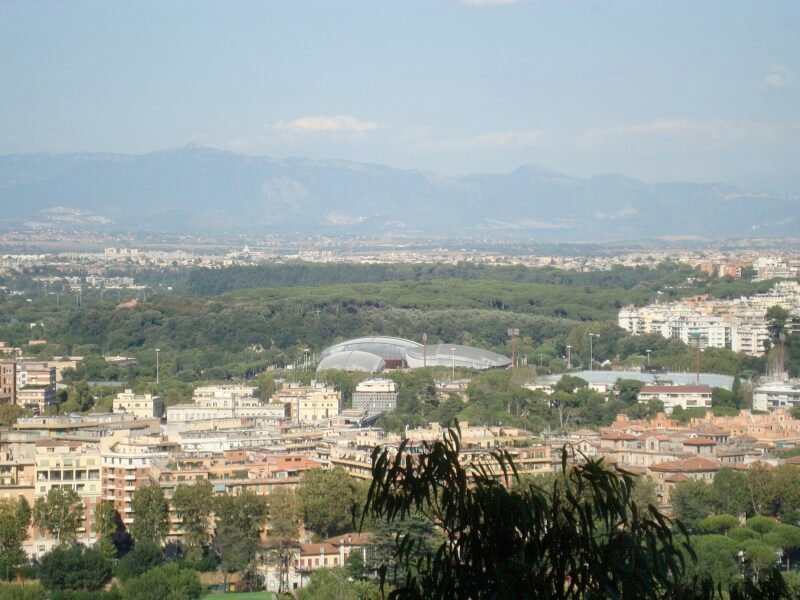
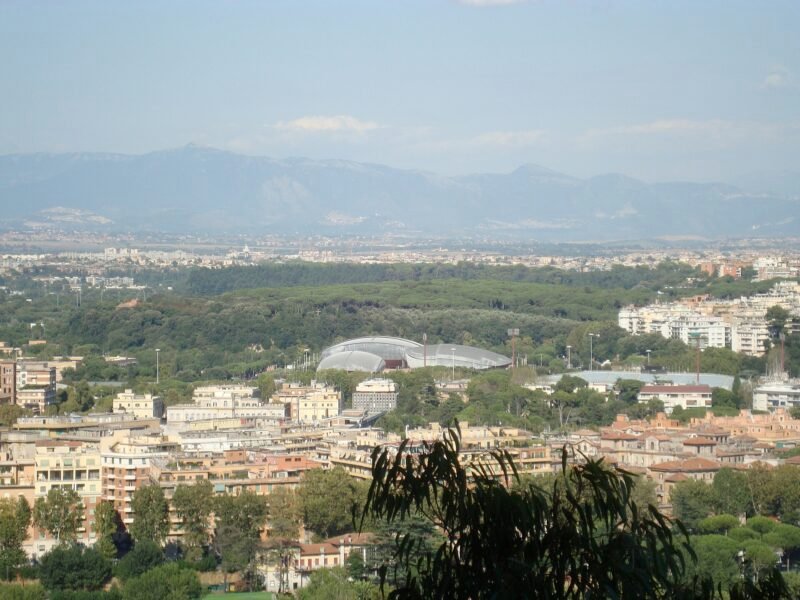
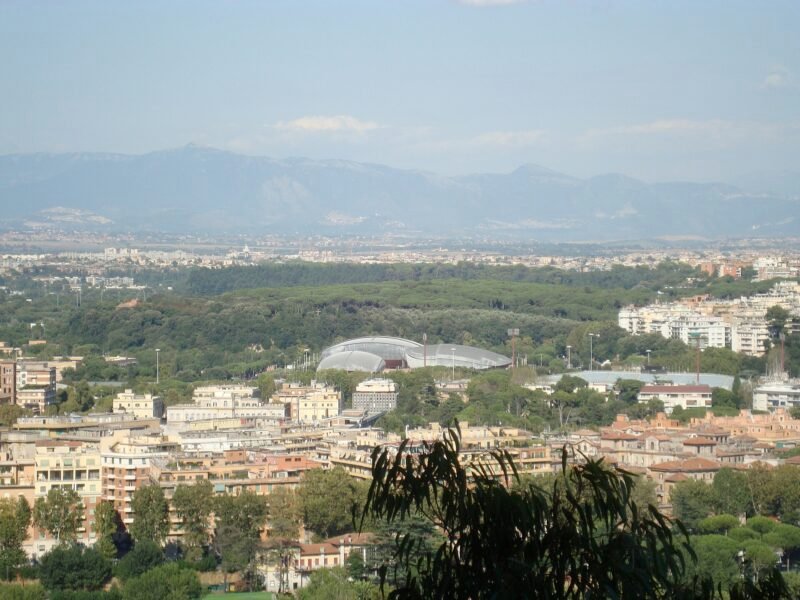
The Auditorium occupies an area of about 55,000 square meters between the hill of Villa Glori, the Olympic Village, the Corso di Francia viaduct and Viale Maresciallo Pilsudski.
The MAXXI and Teatro Olimpico
Near the Flaminia/Reni stop is the MAXXI, the national museum of 21st-century arts. A short distance away is the Teatro Olimpico. Inside the Auditorium is the Museum of Musical Instruments of the Accademia di Santa Cecilia.
Toward the Tiber
From the Auditorium you go down to the Ponte della Musica, the footbridge leading to the Foro Italico, where Barbarossa has commented on the Internazionali tennis tournament on TV. Farther north is Milvian Bridge, an evening meeting point of northern Rome.
The origins in the square
Those who want to retrace the singer-songwriter's debut can take a turn in Piazza Navona, where Barbarossa played as a boy. With tram 2 you reach Piazza del Popolo in a few minutes, and from there the center.
Accessibility, age and practical information
The Auditorium is a modern complex on several levels among terraces, foyers and halls. For accessibility needs at Teatro Studio it is best to write in advance to Fondazione Musica per Roma, at info@musicaperroma.it, to find out which entrance to use.
Parking
The Auditorium's paid parking, open-air and multistory, has spaces reserved for people with disabilities.
With young people
The evenings are designed for an adult audience, in a club atmosphere. For a teenager who listens to singer-songwriter music they can be a nice discovery. The rules for minors are those indicated by the Auditorium at the time of purchase.
How to organize the evening at the Pepita Live Club
With eight dates at the same time, the evening at the Pepita Live Club is organized above all by choosing the right day and arriving with some margin to take a seat in a hall without galleries.
Before the concert
Arriving at the Auditorium around 19:15 lets you leave your coat at the coat check, get something at the foyer bar and take a turn on the lit cavea. Those with time can look out from the terrace between Sala Santa Cecilia and Sala Sinopoli, from which you see the remains of the Roman villa discovered during the works.
After the concert
On the way out, Ponte Milvio is the nearest destination for a dinner or a drink. Those returning to the center take tram 2 to Piazzale Flaminio. Those who bought or booked the record can take advantage of the evening to take it home, if available at the Auditorium's counter.
A Christmas gift
The dates fall right after the holidays, and a ticket for the Pepita Live Club, perhaps together with the record out in November, is a Christmas gift suited to someone who grew up with Portami a ballare and listens every day to Radio2 Social Club.
Where to eat before or after the concert
Inside Auditorium Parco della Musica there are a bar and a cafeteria in the foyers and a restaurant bar with street access too. Between the Olympic Village, Via Flaminia and Piazza Mancini you find pizzerias, trattorias and neighborhood bars. For a concert at 20:00 it is best to dine early, around 18:30, with a booking. After the concert the widest choice is at Ponte Milvio. On January weeknights finding a table is easier than on weekends.
The start of January in Rome
The Pepita Live Club occupies the week that runs from the first Saturday of the year to Epiphany and beyond. On the evening of January 2, at the same hour, the Auditorium also hosts the Fabrizio Bosso Quartet in Sala Sinopoli. For those in the city during the holidays, ideas for the break are gathered in the pages on Christmas in Rome and New Year's Eve in Rome.
Weather and what to wear
In early January Roman evenings are cold and often damp, and the stretch from the tram to the entrance is outdoors. A coat to leave at the coat check and a folding umbrella are advisable. On rainy evenings the walk between the stop and the entrance is felt.
Frequently asked questions about Luca Barbarossa at the Auditorium
When does Luca Barbarossa play at Auditorium Parco della Musica?
Luca Barbarossa plays at Auditorium Parco della Musica Ennio Morricone every evening from January 2 to 9, 2027 at 20:00, at Teatro Studio Gianni Borgna transformed into the Pepita Live Club, to present the new album Pepita e la rivoluzione.
How much do tickets for the Pepita Live Club cost?
Tickets for Luca Barbarossa's Pepita Live Club at the Auditorium start from 40 euros, according to the official event page. They are bought on the Auditorium's website, which links to the authorized presale network, or at the complex's box office at Viale Pietro de Coubertin 30.
What is the Pepita Live Club?
The Pepita Live Club is the Teatro Studio of Auditorium Parco della Musica turned into a club by Luca Barbarossa for eight evenings, from January 2 to 9, 2027, to evoke the smoky atmospheres of the new album's studio sessions.
When does Luca Barbarossa's Pepita e la rivoluzione come out?
Pepita e la rivoluzione, Luca Barbarossa's new album of unreleased songs, comes out on November 27, 2026: 11 tracks recorded completely in analog, with no virtual sounds or artificial intelligence, according to the official presentation.
What is the best date for the Pepita Live Club?
The eight dates of the Pepita Live Club at the Auditorium all have the same time, 20:00. As a rule Saturdays January 2 and 9 and Epiphany, the 6th, are the most requested evenings. Monday the 4th and Tuesday the 5th are suggested for those seeking a calmer atmosphere.
How many seats does the Auditorium's Teatro Studio have?
Teatro Studio Gianni Borgna is the smallest hall of Auditorium Parco della Musica, with about 300 seats all in the stalls, cherry wood walls and a stage at audience level: the hall suited to a club atmosphere.
Has Luca Barbarossa already played at Auditorium Parco della Musica?
Yes, in 2018 Luca Barbarossa closed the Roma è de tutti tour with a concert at the Cavea of Auditorium Parco della Musica, with Mannarino, Fiorella Mannoia, Anna Foglietta and Ambrogio Sparagna. After that concert the Auditorium entrusted him with a Carta Bianca for the 2018 and 2019 season.
How do you get to Auditorium Parco della Musica by public transport?
Auditorium Parco della Musica is reached by metro A to Flaminio and then tram 2, stops Flaminia/Reni or Apollodoro. From Termini there is bus 910, with no changes. Lines 53, 982 and 168 also pass nearby.
The final advice on Luca Barbarossa and the Pepita Live Club
A Roman singer-songwriter who began in Piazza Navona, a new record recorded in analog, eight evenings in a hall of 300 seats turned into a club, in the Auditorium that has already entrusted him with a Carta Bianca: in our judgment the Pepita Live Club is the most intimate way to hear Barbarossa in years. The advice is to listen to Pepita e la rivoluzione after the November release, choose the date according to the atmosphere you seek, buy early for the Saturdays and Epiphany and arrive early to get a good seat in the stalls.
Article written by the editorial team of Tour Leader Pro, contact them for Private/Corporate/V.I.P. Tours and Experiences.
Planning a trip to Rome? The English-language guides to visiting the city are on ItalyPlanner.com.
Contact Information
Nearby
 Museum of Musical Instruments (MUSA)100 m
- Auditorium Parco della Musica100 m
- Villa Glori500 m
- Fountain of Anna Perenna500 m
- MAXXI – National Museum of 21st Century Arts700 m
- Flaminio700 m
Upcoming events nearby
- Roma Jazz Festival 2026, November 1 to 24 at the Auditorium and Casa del Jazz100 m
- Evgeny Kissin and András Schiff at Santa Cecilia, November 9, 2026100 m
- Roma Gospel Festival 2026 at Auditorium Parco della Musica, December 13, 2026 to January 1, 2027100 m
- Santa Cecilia 2026/2027 Concert Season at Auditorium Parco della Musica, October 21, 2026 to June 5, 2027100 m



You might also like
- Simone Avincola canta Carella at Auditorium Parco della Musica, February 26, 2027
- Mauro Di Maggio at Auditorium Parco della Musica, December 10, 2026
- Dominguinho at Auditorium Parco della Musica, February 20, 2027
- Eugenio Bennato at Auditorium Parco della Musica, January 16, 2027
- Chuck Ragan at Auditorium Parco della Musica, December 12, 2026
- Fabio Concato at Auditorium Parco della Musica, December 27, 2026