Mauro Di Maggio at Auditorium Parco della Musica, December 10, 2026
In short. Mauro Di Maggio celebrates 30 years of music with 1996-2026 Celebration on Thursday, December 10, 2026 at 20:00 at Teatro Studio Borgna in Auditorium Parco della Musica Ennio Morricone, at Viale Pietro de Coubertin 30 (00196 Rome).
Mauro Di Maggio celebrates 30 years of music with 1996-2026 Celebration on Thursday, December 10, 2026 at 20:00 at Teatro Studio Borgna in Auditorium Parco della Musica Ennio Morricone, at Viale Pietro de Coubertin 30 (00196 Rome). You get there on Metro A to Flaminio and then tram 2 (Flaminia/Reni or Apollodoro stops), or on bus 910 from Termini. Tickets start from 25 euros, according to the official event page, and they're bought from the Auditorium website, which links to the presale circuit authorized by the organizers, or at the complex's box office.
The Roman singer-songwriter, who debuted at Sanremo Giovani in 1996 with Non so, goes back over three decades of songs in a special concert, with an eye on the present and on the chapters still to be written. On the setlist are the most representative songs of his repertoire and the single Fuori tonalità, released on December 5, 2025 by ADA/Warner. The hall chosen is the most intimate in Renzo Piano's complex, about 300 seats: the right size for an artist who has always made personal songwriting his hallmark.
Mauro Di Maggio in Rome: date, time and tickets
Mauro Di Maggio's concert is scheduled for Thursday, December 10, 2026 at 20:00 at Teatro Studio Borgna, according to the official page of Auditorium Parco della Musica Ennio Morricone, which includes it in the Fondazione Musica per Roma's Pop/Rock program.
The price
The event page gives tickets starting from 25 euros. The seating map and any higher bands appear at the time of purchase. In a 300-seat hall the differences in view are minimal: even the back rows are close to the stage.
Where to buy them
The official Auditorium website links, from the purchase button, to the authorized presale circuit. The complex's box office is at Viale Pietro de Coubertin 30, and from October to March the website gives opening hours from 11:00 to 20:00, Sundays and holidays included. The box office rules are published on the Auditorium website: tickets bought on unauthorized secondary platforms may not be valid.
A hall that sells out
With about 300 seats and a loyal Roman audience, Teatro Studio can sell out. For an evening celebrating an anniversary, with friends and colleagues who will probably want to be there, it's best not to put off buying until the last few weeks.
1996-2026 Celebration: what you'll hear
1996-2026 Celebration is a special concert designed to go back over Mauro Di Maggio's artistic path through his most significant songs, with new songs, classic tracks and moments that have marked three decades of music, according to the official presentation.
The new single Fuori tonalità
On the setlist is Fuori tonalità, released on December 5, 2025 by ADA/Warner. The presentation describes it as the start of a new phase: a direct, intense song with a timeless style, which brings the strength of song structure and the word back to the center, with a contemporary sensibility. The concert comes almost exactly a year after its release.
The classic songs
The full setlist isn't published, but the repertoire to draw from is known: Non so, the song from Sanremo Giovani 1996, Il tempo va and Non ti voglio fermare, the singles from 2002 and 2003, Questo mai and Surf nelle vene, from 2004, and Amore di ogni mia avventura, from 2006, which gives its title to the third album. It's hard to imagine an anniversary evening without the debut song.
The songs of recent years
Since 2020 Di Maggio has regularly released new singles: Seconda vita, Martina oro e vitamina, Oceano senza fine, Senza stelle e senza luna, Davanti a me, Corri veloce Little Boy, Avvelenato, the new version of Surf nelle vene, Fuori tonalità and, since June 12, 2026, Il gallo fa miao. It's the chapter the presentation calls a look at the present, and which the concert places alongside the classic titles.
Mauro Di Maggio's songwriting
The official concert presentation describes Mauro Di Maggio's songwriting as direct, instinctive, ironic, at times raw, attentive to the search for unexpected images and perspectives: a language that tells of daily life and universal feelings through unusual pairings.
Between songwriting and the indie scene
The same presentation links this signature to some sensibilities of the contemporary indie scene, identifying in his songwriting elements found today in many authors of the new generation. Di Maggio is described as a bridge between classic Italian songwriting and some of today's auteur music. It's an interesting reading for those who knew him on the radio in the early 2000s and rediscover him today with different ears.
An ironic streak
The blend of songwriting, pop sounds and an ironic, direct streak is the trait the presentation indicates as constant. Just scroll through the titles to see it: Hai le mani che odorano di aglio, from 2006, Martina oro e vitamina, from 2021, Il gallo fa miao, from 2026. Alongside the romantic ballads, there has always been a songwriter able to smile at his own songs.
An independent path
The concert is presented as the celebration of a musical identity that has remained consistent, authentic and independent, and of an artistic search free from the logic of the ephemeral. After the years with the big record labels, Di Maggio has released music with independent labels, at his own pace and with chosen collaborations.
Who Mauro Di Maggio is: his biography
Mauro Di Maggio is an Italian singer-songwriter, born in Rome on January 21, 1977. He debuted in 1996 at Sanremo Giovani with Non so, released three albums between 1997 and 2006 and in the following years alternated music, theater and film as songwriter, composer and performer.
His beginnings and Sanremo Giovani
He began writing songs as a very young child, and his passion took him to the Santa Cecilia conservatory in Rome. In 1996 he took part in Sanremo Giovani with Non so, and the following year his first album came out, Mauro Di Maggio, produced by Giancarlo Lucariello and Roberta Cassani.
Radio and Inogniforma
In 2002 he co-hosted Musica Anarchica, Radio 2's late-night show, with Ambra Angiolini. In 2003 he moved from CGD to Ricordi and released the single Il tempo va, also promoted on Fiorello's show Viva Radio 2. On October 24, 2003 his second album, Inogniforma, came out, preceded by Non ti voglio fermare, which reached the top positions of the sales charts and radio airplay.
Britney Spears and the third album
On May 19, 2004 he opened Britney Spears's only Italian concert at the Forum di Assago. On May 26, 2006 he released his third album, Amore di ogni mia avventura, named after the first single.
Writing for others
In May 2007 he wrote L'amore è una bombola di gas for Ron. In 2008 he contributed to the soundtrack of Alessandro Valori's film Chi nasce tondo, with Valerio Mastandrea, and wrote the theme songs Voglia questa voglia and Tunga tunga sotto la doccia for Ambra Angiolini's show on MTV. In 2011 he worked with Zero Assoluto on the arrangements of Un giorno normale, and in 2012 Mara Maionchi commissioned him to write La lontananza for Antonino Spadaccino, winner of Amici.
Theater
Since 2018 he has composed, arranged and produced music for the theater: Piccoli crimini coniugali by and with Michele Placido, Stefano Massini's Balkan Burger with Ambra Angiolini, and Il nodo directed by Serena Sinigaglia, with Ambra Angiolini and Ludovica Modugno and then, the following season, with Arianna Scommegna. In 2024 he wrote the music for Arianna Mattioli's short film Nina, with Anna Ferzetti and Lorenzo Lavia, presented at Alice nella Città.
Renato Zero and the return to singles
In the fall of 2019 he played, as an actor, a young Renato Zero at the start of his career in the video Zero il folle. Since 2020 he has gone back to releasing music regularly: the cover of Roy Orbison's A Love So Beautiful, the new version of Non so, Seconda vita, included in the soundtrack of Nunzio and Paolo's film Due fantasmi di troppo, and then the singles up to Fuori tonalità and Il gallo fa miao.
Mauro Di Maggio's three albums
Mauro Di Maggio's discography includes three studio albums, released between 1997 and 2006 on labels such as CGD, BMG and Sony BMG, and since 2020 a series of singles released on independent labels.
Mauro Di Maggio, 1997
The debut came the year after Sanremo Giovani, produced by Giancarlo Lucariello and Roberta Cassani. It's the record of a 20-year-old singer-songwriter, bearing his own name as its title and containing the world his later songs start from.
Inogniforma, 2003
The second album came out on October 24, 2003, after the move to Ricordi, preceded by Non ti voglio fermare. It's the record of his radio success, the one many people remember, and the repertoire from which the concert will most likely draw the most familiar titles.
Amore di ogni mia avventura, 2006
The third album came out on May 26, 2006 and is named after the first single. It also contains Hai le mani che odorano di aglio, one of the titles that best convey his ironic streak. After this record his career widened to writing for others, film and theater.
A curious fact about Mauro Di Maggio at Auditorium Parco della Musica, December 10, 2026
The most surprising curious fact in Mauro Di Maggio's career concerns an evening in 2004. On May 19 of that year the Roman singer-songwriter took the stage at the Forum di Assago to open Britney Spears's only Italian concert, when she was at the height of her worldwide fame. A young writer of songs in Italian, with two albums behind him, in front of an audience that had come for the biggest pop star of the moment: a test few Italian artists of his generation can tell about.
The second curious fact concerns another Roman. In the fall of 2019 Di Maggio played, as an actor, the young Renato Zero at the start of his career in the video Zero il folle. The concert presentation mentions Renato Zero among the collaborations of his career, alongside Ron and Ambra Angiolini: for a singer-songwriter born in Rome, giving his face to the young Zero is a tribute to one of the most loved figures in the city's music.
The third concerns the titles. In Di Maggio's catalog, ballads like Amore di ogni mia avventura live alongside songs with disarming titles, from Hai le mani che odorano di aglio to L'amore è una bombola di gas, written for Ron, to Il gallo fa miao, released in June 2026. It's the ironic streak the official presentation indicates as a constant trait of his songwriting.
Teatro Studio Borgna, a 300-seat hall
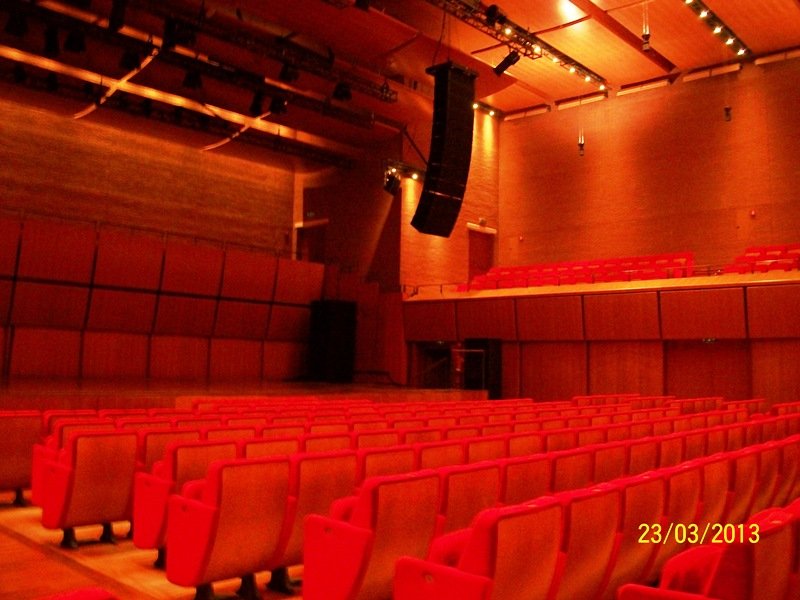
Teatro Studio Borgna is the smallest hall in Auditorium Parco della Musica Ennio Morricone: about 300 seats, no curtain, with the stage at the audience's level. It's the hall in the complex that comes closest to the size of a club.
Wood and movable panels
The walls are paneled in wood, and the movable acoustic panels let the hall be adapted to the type of show. For a singer-songwriter concert it means hearing the words, which in Di Maggio's songwriting count as much as the melody.
Close to the stage
At Teatro Studio even the back rows are close to the artist. There isn't the distance of the big halls: you listen to the concert almost as if in a living room, and it's the ideal condition for an anniversary evening, made of stories between one song and the next.
The hall's name
Teatro Studio bears the name of Gianni Borgna, Rome's longtime culture councillor and president of the Fondazione Musica per Roma, which runs the complex. It's a name tied to the period when the city built its great music venues.
Something nobody tells you about Mauro Di Maggio at Auditorium Parco della Musica, December 10, 2026
What few people know is how much of Mauro Di Maggio's music they've already heard without knowing it was his. If you've seen Il nodo in the theater, with Ambra Angiolini, or Stefano Massini's Balkan Burger, or Michele Placido's Piccoli crimini coniugali, you've heard his stage music. If you watched Ambra's show on MTV in 2008, you've heard his theme songs. If you followed Amici in 2012, you know La lontananza, written for Antonino Spadaccino. The December 10 concert also brings together this less visible side of his work.
Second thing rarely mentioned: at the Auditorium the halls are separate volumes, and Teatro Studio doesn't share Sala Santa Cecilia's entrance. If you arrive at the last minute and take the wrong route between the cavea and the foyers, you can easily lose five minutes. Check the signs as soon as you're inside, or ask the staff.
Third: December 10 is a Thursday in a period packed with concerts, and in the other halls of the complex there may be much bigger events, with audiences crossing paths in the foyers and at the bar. Arriving half an hour early makes the evening much calmer.
My advice for visiting Mauro Di Maggio at Auditorium Parco della Musica, December 10, 2026
The advice is to come to the concert knowing what's being celebrated. An anniversary evening lives on comparisons between before and after: listening again in the days before to Non so, in the 1996 version and the new 2020 one, then Non ti voglio fermare and Fuori tonalità, makes the 30-year path the concert wants to tell clear.
The second piece of advice concerns the seat. In a 300-seat hall everyone sees well, but the front rows give you something extra: at a singer-songwriter concert the stories between songs are part of the evening, and up close you catch them better. If you prefer to take in the whole sound, sit in the center, a little farther back.
The third concerns the evening. The concert is on Thursday at 20:00: leave work with some margin, arrive at the Auditorium around 19:15, have something at the foyer bar and go into the hall without rushing. After the concert, Ponte Milvio is a few minutes away if you want to end the evening with dinner.
How to get to the Auditorium for Mauro Di Maggio
Auditorium Parco della Musica Ennio Morricone is reached on tram 2, Flaminia/Reni or Apollodoro stops, and on buses 910, 982, 168 and 53. The metro doesn't come this far: the nearest station is Flaminio, on line A.
Metro A and tram 2
From Flaminio station you come out on Piazzale Flaminio and take tram 2 along Via Flaminia toward Piazza Mancini. Get off at Flaminia/Reni or Apollodoro and walk for a few minutes through the Villaggio Olimpico to Viale Pietro de Coubertin.
Bus 910 from Termini
The 910 leaves from Piazza dei Cinquecento, in front of Termini station, and takes you to the Auditorium without changes. If you're arriving by train, it's the most straightforward choice.
Lines 53, 982 and 168
The 53 links Piazza Mancini with the center, the 982 comes from Viale XVII Olimpiade area and Quattro Venti station, the 168 from Tiburtina station. For evening times, check ATAC's route planner before leaving.
By car and getting back
The complex has a paid parking lot inside, with limited spaces, and on concert evenings the streets of the Villaggio Olimpico fill up early. After the concert tram 2 takes you back to Piazzale Flaminio. Alternatively, a taxi booked a few minutes before the end.
Another well-known fact, yet rarely mentioned
It's well known, among those who listened to the radio in the early 2000s, that Non ti voglio fermare, in 2003, reached the top positions of the sales charts and airplay. It's less often remembered that the launch of that period also went through radio in another sense: in 2002 Mauro Di Maggio co-hosted Radio 2's late-night show with Ambra Angiolini, and the following year his single Il tempo va was promoted on Viva Radio 2, Fiorello's show. A singer-songwriter who made radio, as well as listening to it.
The second rarely mentioned fact concerns his training. Before Sanremo Giovani, his passion for songwriting took Di Maggio to the Santa Cecilia conservatory in Rome: a course of musical study that explains the care in his arrangements, and his later work as a composer of stage music. For a musician born and trained in Rome, an anniversary concert at the Auditorium feels like a homecoming.
The third concerns his partnership with Ambra Angiolini, which runs through his whole career: radio in 2002, the TV theme songs in 2008, the stage music for Balkan Burger in 2018 and for Il nodo from 2020, a show that also came back the following season. It's an artistic partnership that has lasted more than 20 years.
The right photo to take at Mauro Di Maggio at Auditorium Parco della Musica, December 10, 2026
In a 300-seat hall, with the stage at the audience's level, the glow of a screen can be seen from every spot. The right photo at Teatro Studio is just one, taken without flash during a sing-along moment, maybe on the debut song: the singer-songwriter on stage and the front rows of the audience in the foreground. Then the phone goes in your pocket, as the house rules ask.
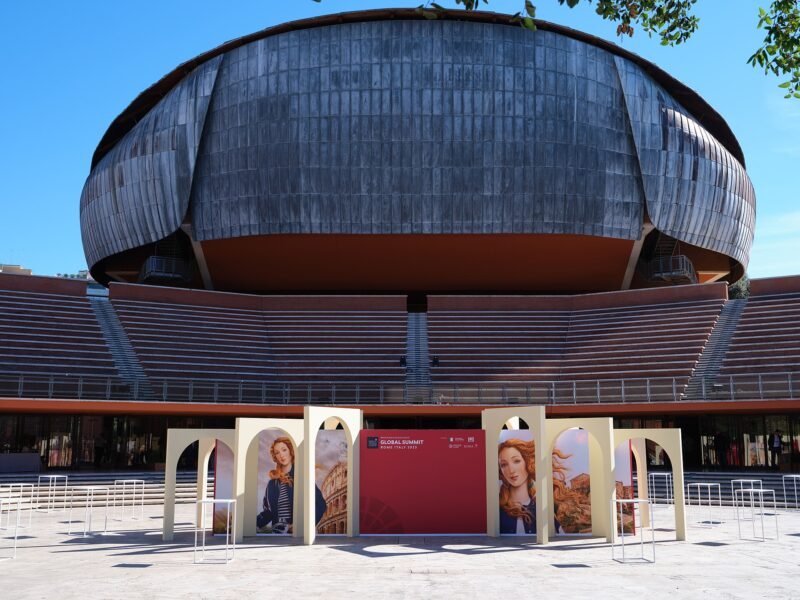
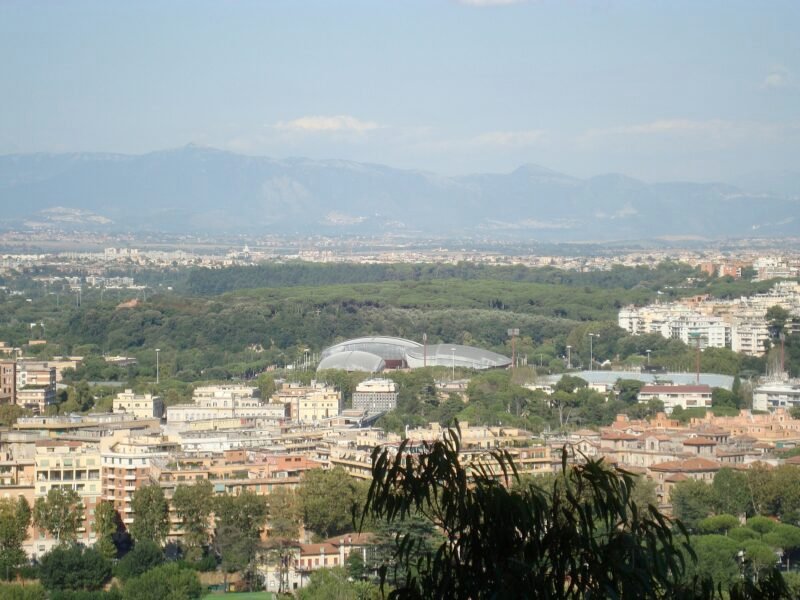
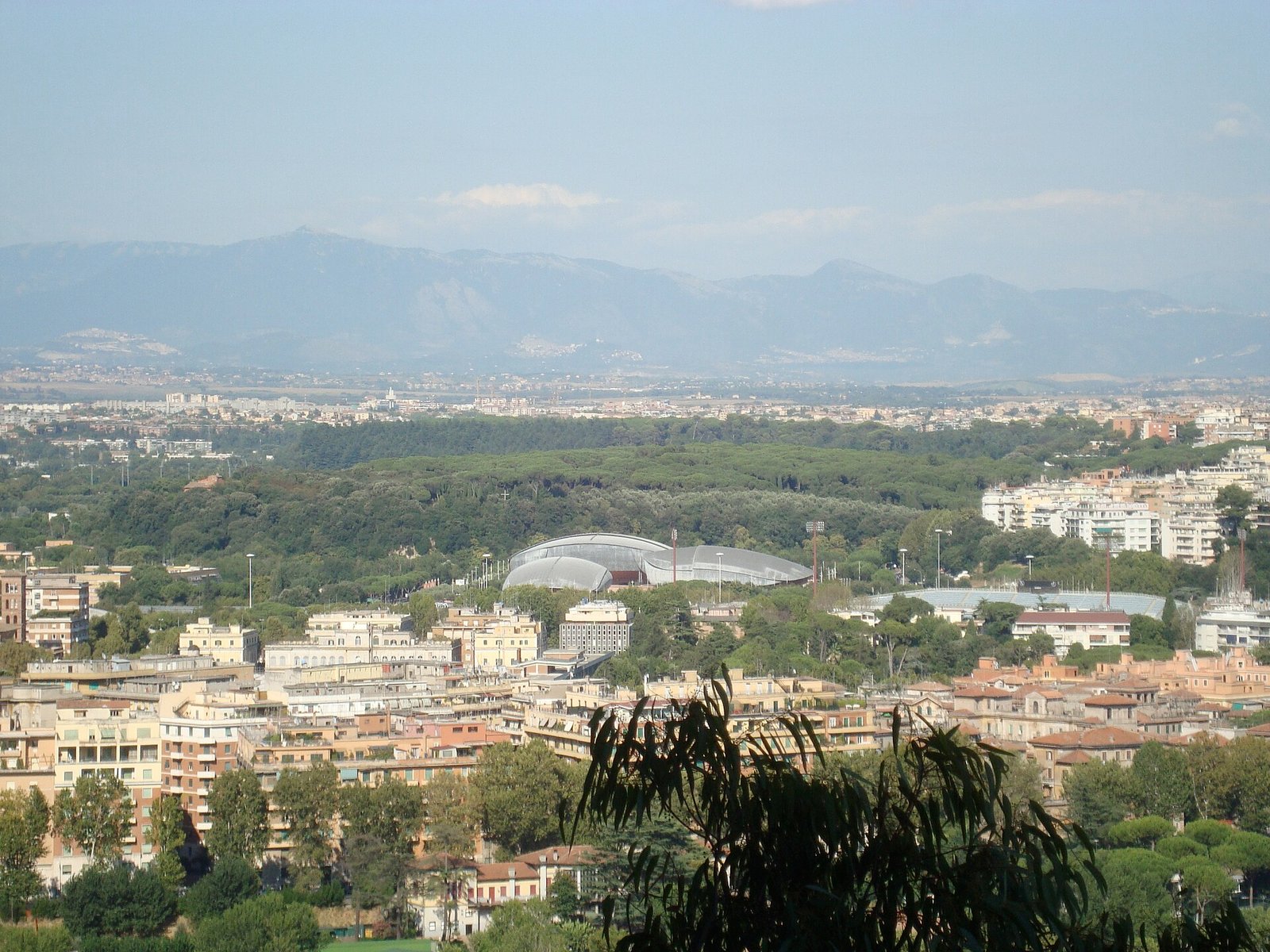
The second photo is taken outside, before going in. The subject is Renzo Piano's Auditorium, with the halls' great lead-clad shells around the cavea. The best spot is the cavea itself, the stepped square at the center of the complex: in December at 19:00 it's already dark, and the lit halls against the dark sky give the most recognizable image of arriving at a concert.
The third is a detail: the ticket or the poster of the concert, 1996-2026 Celebration, photographed at the hall entrance. An anniversary evening is remembered this way too, and in 30 years it will be a document.
Some important events that happened here in history
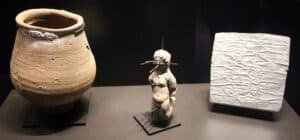
The land the Auditorium stands on has a history much longer than the complex. During construction, the remains of a 3rd-century BC Roman villa emerged, built on the site of a small archaic farm from the 6th century BC. The discovery forced Renzo Piano to change the design. The finds are displayed in a small museum under the cavea.
The modern story begins with a demolition. In 1936 the Augusteo, Rome's great concert hall, was torn down, and for more than 60 years the city was left without an auditorium built for music. Only in 1992 did the city council choose the Villaggio Olimpico area, and in 1993 Piano won the competition.
On April 21, 2002 the first halls opened, on December 21, 2002 Sala Santa Cecilia. Since 2003 the Auditorium has been home to the Accademia di Santa Cecilia's season, since 2006 it has hosted the Rome Film Fest, and in 2020 it was named after Ennio Morricone. For Mauro Di Maggio, 2002 is the year he reached national radio: his career and the life of the complex have run in parallel since then.
Who has passed through Mauro Di Maggio at Auditorium Parco della Musica, December 10, 2026
The great names of classical music have passed through the Auditorium since day one: the inaugural concert of Sala Santa Cecilia was conducted by Myung-Whun Chung, Goffredo Petrassi wanted to be present at the opening of the hall that bears his name, and Luciano Berio gave his name to the cavea. Alongside classical music, the Fondazione Musica per Roma has brought pop, rock, jazz and singer-songwriter music here. Teatro Studio is the hall for concerts that call for closeness: in the same fall, among others, Boosta with Pianorama, Radici nel Cemento and Gaia Banfi pass through.
Leading names in music and entertainment have passed through Mauro Di Maggio's career: Giancarlo Lucariello and Roberta Cassani, producers of his first album, Ambra Angiolini, his partner on radio and in the theater, Fiorello, who promoted one of his singles on Viva Radio 2, Britney Spears, whose concert he opened in Assago, Ron, for whom he wrote a song, Renato Zero, to whom he gave his face as a young man, Zero Assoluto, Mara Maionchi and Antonino Spadaccino, Michele Placido, Stefano Massini and Serena Sinigaglia in the theater, and Valerio Mastandrea in film.
On the evening of December 10, at Teatro Studio, 30 years of songs pass through: from Non so to Il gallo fa miao.
The neighborhood around the Auditorium
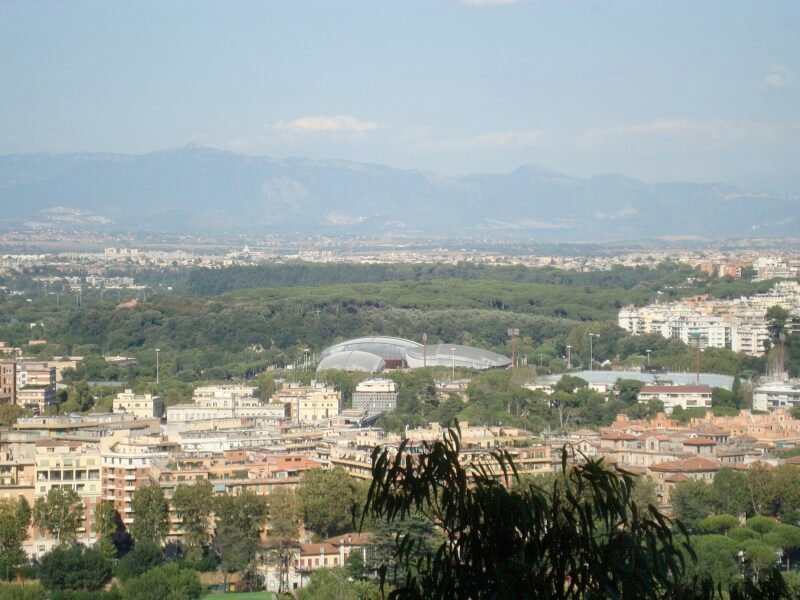
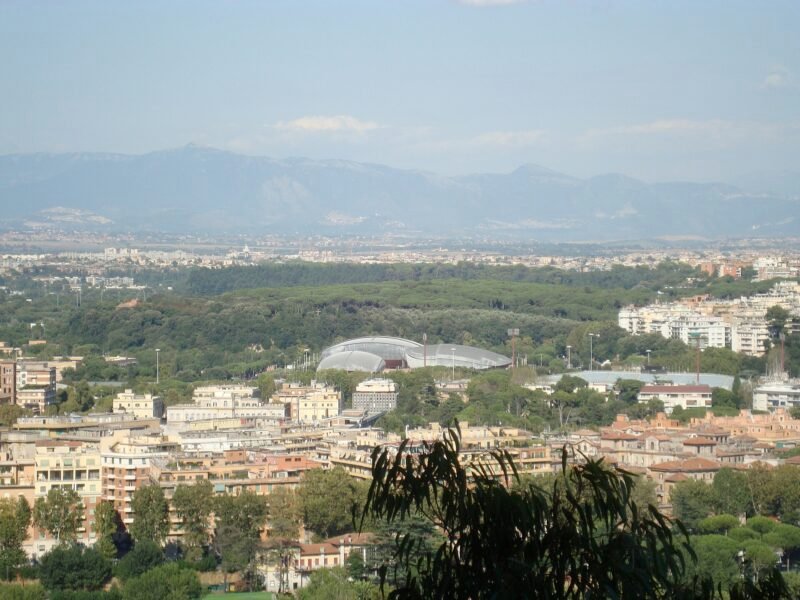
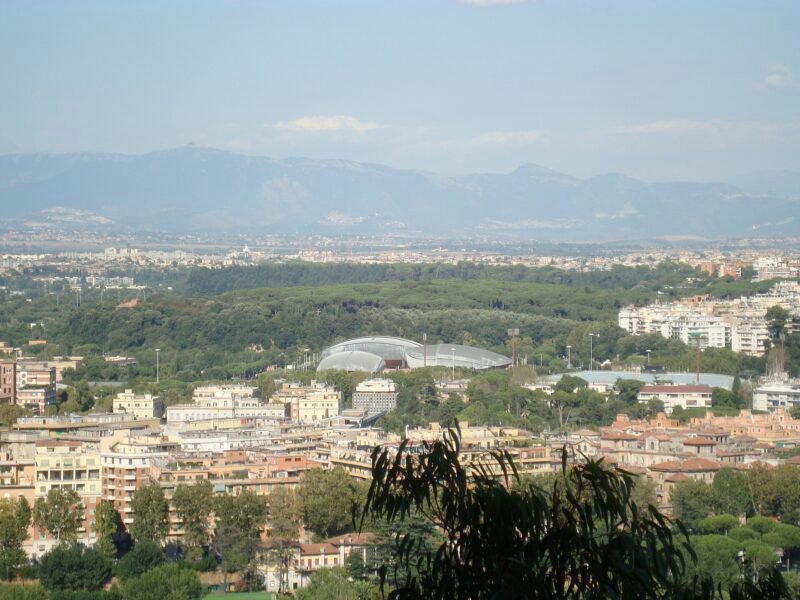
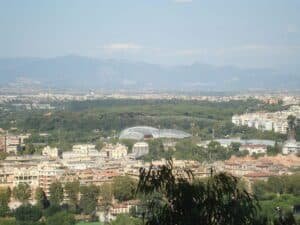
The Auditorium occupies an area of about 55,000 square meters between Villa Glori, the Villaggio Olimpico, the Corso di Francia viaduct and Viale Maresciallo Pilsudski: a piece of modern Rome where contemporary architecture and greenery alternate.
The Villaggio Olimpico and MAXXI
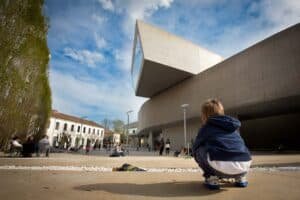
Near the Flaminia/Reni stop is MAXXI, the national museum of 21st-century arts. Not far away, toward the Tiber, is Teatro Olimpico. The general profile of the complex is on our page about Auditorium Parco della Musica.
Toward the Tiber and Ponte Milvio
From the Auditorium you head down toward the river and the Ponte della Musica, the footbridge that leads to the Foro Italico. Farther north, beyond Piazza Mancini, is Milvian Bridge, the ancient bridge that in the evening becomes one of the busiest meeting spots in north Rome.
Toward the center
Tram 2 takes you back to Piazzale Flaminio and Piazza del Popolo, where Villa Borghese and the Tridente begin.
Accessibility, age and practical information
The Auditorium is a modern complex with routes between the halls that are partly outdoors, on the terrace and around the cavea. For accessibility needs at Teatro Studio, it's best to contact the Fondazione Musica per Roma in advance at info@musicaperroma.it, to find out which entrance to use and which seats to choose.
Parking
The Auditorium's paid parking lots, surface and multistory, have spaces reserved for people with disabilities.
With teenagers
The concert is meant for the adult audience that has followed Di Maggio since the 1990s, but his repertoire also includes a song dedicated to children, Corri veloce Little Boy, from 2022. For a teenager who writes songs, an evening at Teatro Studio with a singer-songwriter telling about 30 years of the craft is a practical lesson.
Where to eat before or after the concert
Inside Auditorium Parco della Musica there's a bar and a café in the foyer and a bar-restaurant also accessible from the street: the most convenient option if you're rushing in from work.
In the neighborhood
Between the Villaggio Olimpico, Via Flaminia and Piazza Mancini there are neighborhood pizzerias, trattorias and cafés, frequented more by residents than by tourists. For a concert at 20:00, dinner before is only possible by booking early, around 18:30.
Ponte Milvio and Flaminio
If you'd rather have dinner after the concert, you'll find the widest choice at Ponte Milvio, a few minutes away, where places stay open until late. Toward Piazzale Flaminio and Piazza del Popolo the choice is that of the historic center.
A concert in mid-December
On December 10 Rome is already in the holiday season, with a calendar packed with indoor concerts. At the Auditorium, in the same week, events of different genres follow one another, from early music to jazz, and the audience changes night after night.
Weather and clothing
In December Roman evenings are cool and often damp, and the walk from the tram to the Auditorium is outdoors. A coat to leave at the cloakroom and a folding umbrella are a good idea.
An idea for the day
If you're coming from outside Rome, you can spend the afternoon at MAXXI or on a walk between Piazza del Popolo and the Pincio, and then take the tram down to the Auditorium. It's the most relaxing way to arrive at an evening concert.
Frequently asked questions about Mauro Di Maggio in Rome
When does Mauro Di Maggio play at Auditorium Parco della Musica?
Mauro Di Maggio plays at Auditorium Parco della Musica Ennio Morricone on Thursday, December 10, 2026 at 20:00, at Teatro Studio Borgna, with the special concert 1996-2026 Celebration. It's a single date, in the Fondazione Musica per Roma's Pop/Rock program.
How much are tickets for Mauro Di Maggio in Rome?
Tickets for Mauro Di Maggio's concert at the Auditorium start from 25 euros, according to the official event page. They're bought from the Auditorium website, which links to the authorized presale circuit, or at the complex's box office at Viale Pietro de Coubertin 30.
What does Mauro Di Maggio sing in 1996-2026 Celebration?
In the 1996-2026 Celebration concert, Mauro Di Maggio goes back over 30 years of his career with the most representative songs in his repertoire and the single Fuori tonalità, released on December 5, 2025 by ADA/Warner. The full setlist isn't published.
Who is Mauro Di Maggio?
Mauro Di Maggio is a Roman singer-songwriter, born in 1977, who debuted at Sanremo Giovani in 1996 with Non so. He has released the albums Mauro Di Maggio, Inogniforma and Amore di ogni mia avventura, written for Ron and composed music for theater productions by Stefano Massini and Michele Placido.
What is Mauro Di Maggio's most famous song?
Among Mauro Di Maggio's best-known songs are Non so, the Sanremo Giovani 1996 song, and Non ti voglio fermare, the 2003 single that preceded the album Inogniforma and reached the top positions of the sales charts and radio airplay.
How many seats does Teatro Studio Borgna have?
Teatro Studio Borgna is the smallest hall in Auditorium Parco della Musica, with about 300 seats, no curtain and the stage at the audience's level. It bears the name of Gianni Borgna, former culture councillor of Rome and president of the Fondazione Musica per Roma.
How do you get to Auditorium Parco della Musica by public transportation?
Auditorium Parco della Musica is reached on Metro A to Flaminio and then tram 2, Flaminia/Reni or Apollodoro stops. From Termini there's bus 910, with no changes. Lines 53, 982 and 168 also pass nearby.
Final advice on Mauro Di Maggio at the Auditorium
30 years of songs in a 300-seat hall, in the city where they were born: in our view 1996-2026 Celebration is the right concert for those who sang along to Non ti voglio fermare on the radio and for those who want to discover a songwriter who has also worked a lot behind the scenes, for the theater and for other performers. The advice is to listen again to Non so and Fuori tonalità in the days before, buy your ticket in good time, arrive at the Auditorium half an hour early and sit as close as possible to the stage: on an anniversary evening, the stories count as much as the songs.
Article written by the editorial team of Tour Leader Pro, contact them for Private/Corporate/V.I.P. Tours and Experiences.
Planning a trip to Rome? The English guides for visiting the city are on ItalyPlanner.com.
Contact Information
Nearby
 Museum of Musical Instruments (MUSA)100 m
- Auditorium Parco della Musica100 m
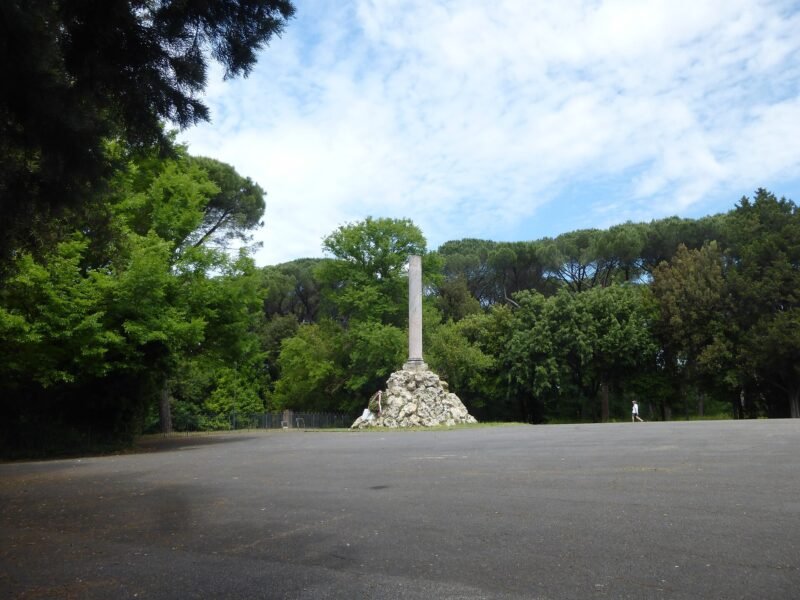
- Villa Glori500 m
- Fountain of Anna Perenna500 m
- MAXXI – National Museum of 21st Century Arts700 m
- Flaminio700 m
Upcoming events nearby
- Roma Jazz Festival 2026, November 1 to 24 at the Auditorium and Casa del Jazz100 m
- Evgeny Kissin and András Schiff at Santa Cecilia, November 9, 2026100 m
- Roma Gospel Festival 2026 at Auditorium Parco della Musica, December 13, 2026 to January 1, 2027100 m
- Santa Cecilia 2026/2027 Concert Season at Auditorium Parco della Musica, October 21, 2026 to June 5, 2027100 m



You might also like
- Simone Avincola canta Carella at Auditorium Parco della Musica, February 26, 2027
- Dominguinho at Auditorium Parco della Musica, February 20, 2027
- Eugenio Bennato at Auditorium Parco della Musica, January 16, 2027
- Chuck Ragan at Auditorium Parco della Musica, December 12, 2026
- Fabio Concato at Auditorium Parco della Musica, December 27, 2026
- Luca Barbarossa, Pepita Live Club at Auditorium Parco della Musica, January 2 to 9, 2027