Gaia Banfi, L’ultima Maccaia at Auditorium Parco della Musica, November 15, 2026
In short. Gaia Banfi brings L'ultima Maccaia to Rome on Sunday, November 15, 2026 at 20:00, in Teatro Studio Borgna at Auditorium Parco della Musica Ennio Morricone, Viale Pietro de Coubertin 30.
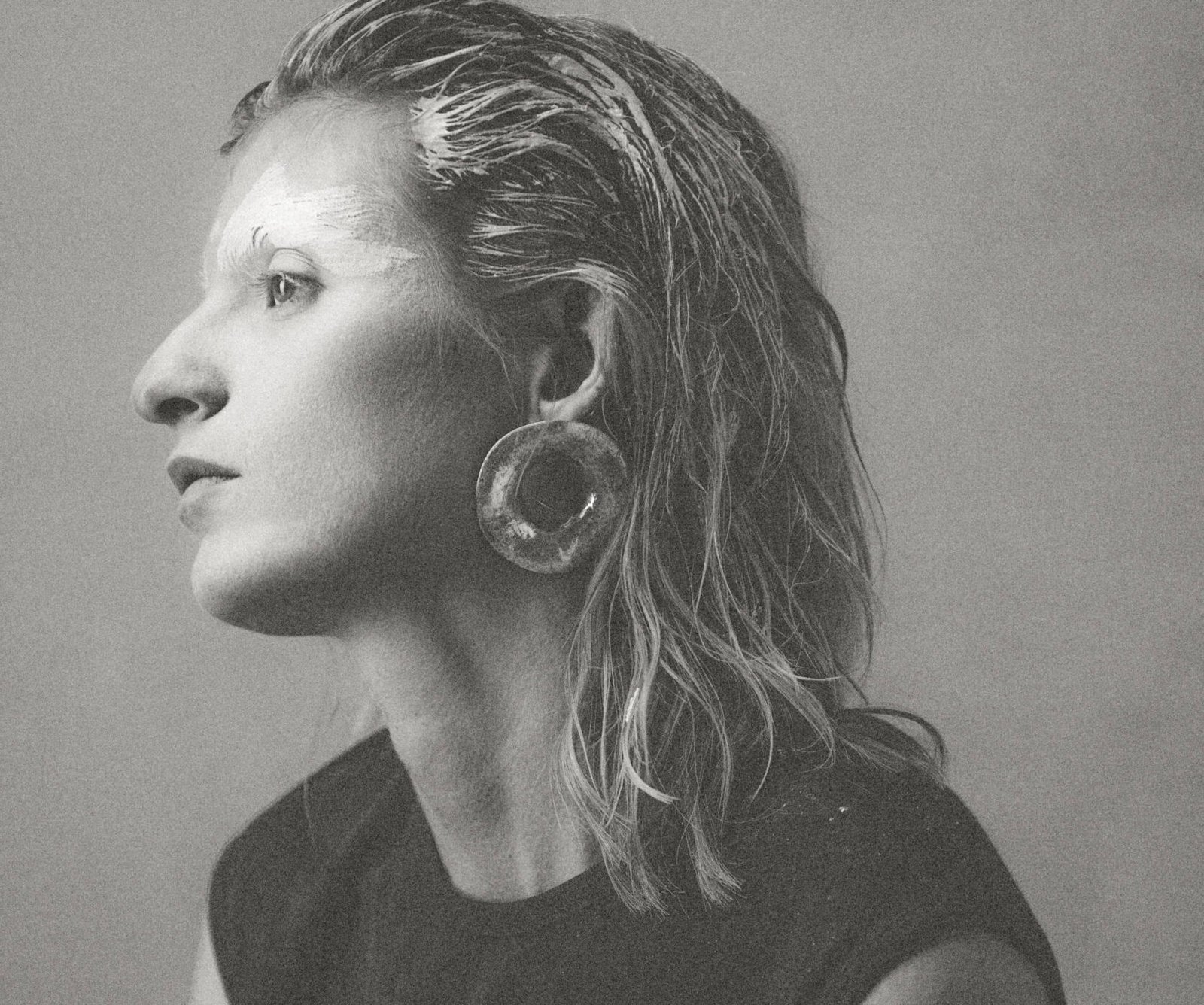
Gaia Banfi brings L'ultima Maccaia to Rome on Sunday, November 15, 2026 at 20:00, in Teatro Studio Borgna at Auditorium Parco della Musica Ennio Morricone, Viale Pietro de Coubertin 30. It's a piano and voice concert, one of the last dates before the break the singer-songwriter is taking to write and produce new music. You get there by metro A to Flaminio and then tram 2, Flaminia/Reni or Apollodoro stops, or by bus 910 from Termini, 53, 982 and 168. Tickets start from 17 euros and are sold on the authorized presale network, from the buy button on the official Auditorium page, or at the complex's box office.
Gaia Banfi is one of the most personal voices to come out in recent years from the Italian scene that mixes song and electronics. She comes to Rome without electronics, alone at the piano, in a hall of about 300 seats: the most exposed format for an artist, and the most revealing for the listener. If the writing holds up, you hear it right away. In her case it holds up.
L'ultima Maccaia in Rome: the night of November 15
Gaia Banfi's concert at the Auditorium is scheduled for Sunday, November 15, 2026 at 20:00, in Teatro Studio Borgna, the most intimate hall of the complex. The Auditorium includes it in its pop and rock program.
A tour in 11 cities
The Rome date is part of a piano and voice tour that reaches 11 cities between November and December, from Novara to Villach, in Austria, with stops also in Nantes and Barcelona. They are, by her own statement, the last dates before a break devoted to writing and producing new music.
Just piano and voice
On these dates the songs are stripped down and brought back to the essentials. Without the electronic arrangements that defined them on record, the writing remains, and that's exactly what the tour wants to put at the center. The artist explains it with a clear phrase: she wants to strip «La Maccaia of every excessive form to find its original essence again».
Why Sunday night is worth it
A Sunday night in November, in a small hall, with a piano and a voice: it's the opposite of the big event, and that's the reason to go. Those who have listened to La Maccaia on record will discover different songs. Those who don't know it have the chance to meet it unfiltered.
La Maccaia and Al suo riposo/In Luce: the records behind the tour
The L'ultima Maccaia tour closes the cycle of the record La Maccaia, released by Trovarobato in 2025, and comes after Al suo riposo/In Luce, released in February 2026, which is the closing chapter of that sonic and poetic world.
The record that made her name
La Maccaia established Gaia Banfi as one of the most personal voices of Italian art pop, suspended between electronics and songwriting. The record took her to international stages such as Eurosonic, Ment, Colors of Ostrava, Wro Sound and MMVV, and on a French tour of more than 20 dates that started from the Transmusicales in Rennes, one of the European festivals most attentive to new voices.
A Genoese word
Maccaia is a word in Genoese dialect for the gray, damp, heavy weather of sirocco days, when the sky over the sea stays overcast without deciding to rain. A title that is already an emotional climate: suspension, waiting, air that weighs. L'ultima Maccaia, then, sounds like a farewell to that sky.
From record to piano
On record the songs live on contrasts: airy vocals, distorted timbres, a use of the voice pushed to the limits of singability, treated as an element of the production. At the piano that layering work disappears. It's the most interesting test for an artist who comes from electronics, because it removes every safety net.
Who Gaia Banfi is
Gaia Banfi is an Italian singer, songwriter, musician and producer born on January 7, 1998. Her work moves between experimentation, song, tradition and electronics.
A musical family
She is the daughter of Baffo Banfi, longtime keyboardist of the Italian prog band Un Biglietto per l'Inferno, and grew up immersed in music. At six she began studying singing, then took up classical guitar and violin.
The Bologna Conservatory
She graduated in jazz singing with top marks at the Bologna Conservatory, under Diana Torto. During her academic years she developed a growing interest in composition and music production, which would become the heart of her work.
Lotus and electronics
In 2020 she released her debut album, Lotus. Since 2022 she has worked with producer and artist AKA5HA, with whom she has gone deeper into electronic and experimental music. In the same period the instrumental electronic project Non si può stare morti per sempre was born, presented on February 24, 2023 at the exhibition of the same name by artist Ilaria Demo De Lorenzi.
X Factor and Italian stages
In 2023 she took part in X Factor. The same year she played Reset Festival in Turin, Efesto House in Bologna, opening for Ceneri, and Colonne 28 in Parma. Between December 2023 and January 2024 she opened some of Daniela Pes's Italian concerts with a solo set.
Trovarobato and Europe
With Trovarobato, the independent label that releases La Maccaia, came the leap: the 2025 record, the European festivals, the tour in France. The tour passing through Rome closes this phase and announces another, still to be written.
A curious fact about Gaia Banfi, L'ultima Maccaia at Auditorium Parco della Musica, November 15, 2026
Gaia Banfi grew up with prog at home. Her father, Baffo Banfi, was the keyboardist of Un Biglietto per l'Inferno, a historic Italian progressive rock band of the 1970s. A generation later, his daughter takes the keyboards onto different ground: no longer the organ and synthesizers of a band, but a solo piano and a voice. The family thread runs through the keyboard, but the way it's used changes completely.
A second curious fact: Gaia Banfi's training is in jazz. Her diploma in jazz singing at the Bologna Conservatory, with Diana Torto, explains the freedom with which she uses her voice, pushed to the limit of singability: those listening up close, at Teatro Studio, will recognize a precise school in the improvisation and breath control.
A third: the Rome hall bears the name of Gianni Borgna, longtime culture councilor of Rome and president of Fondazione Musica per Roma. That a singer-songwriter with an independent path closes her cycle in a hall named after a man who built the city's music offering has a little logic of its own.
Teatro Studio Borgna, a 300-seat hall
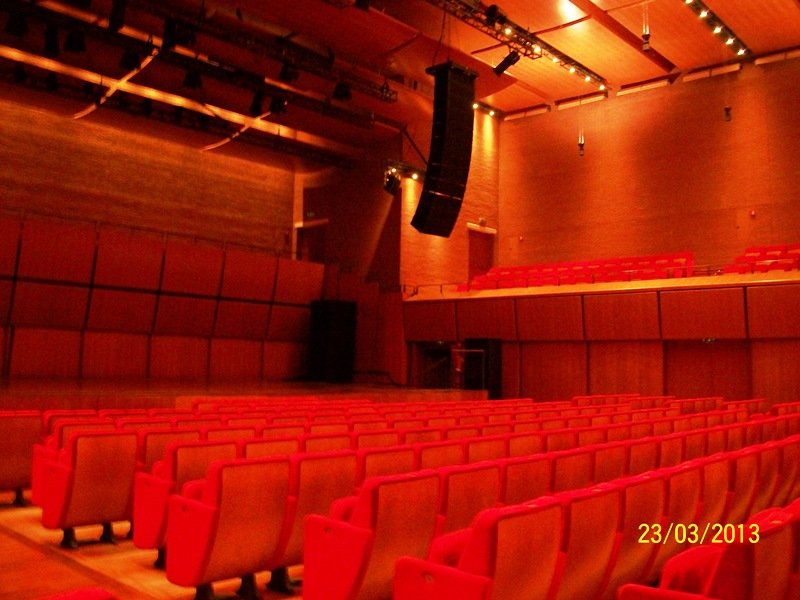
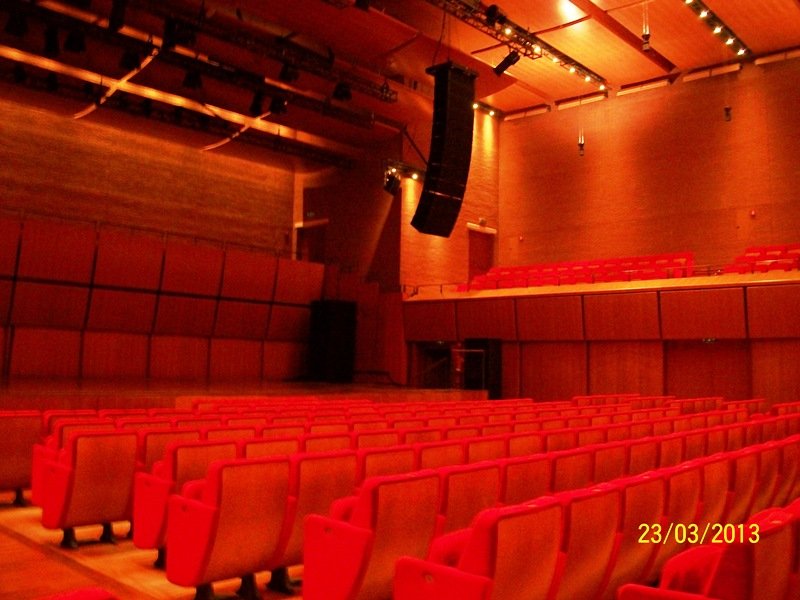
Teatro Studio Borgna is the smallest hall of Auditorium Parco della Musica Ennio Morricone: about 300 seats, no curtain, with the stage at audience level. It's the right hall for a piano and voice concert.
Wood and movable panels
The walls are paneled in wood and movable acoustic panels allow the hall to be adapted to the type of show. For a voice and a piano it means hearing every detail, from the breath to the pedal, without intrusive amplification.
Close to the stage
At Teatro Studio even the back rows are close to the artist. There isn't the distance of the large halls: the concert is heard almost as in a living room, and that's exactly the domestic, sheltered dimension the tour is looking for.
A hall that sells out
With 300 seats and an artist with a loyal, international audience, the hall can sell out. Those who have decided to go would do well not to put off buying until the last week.
Something nobody tells you about Gaia Banfi, L'ultima Maccaia at Auditorium Parco della Musica, November 15, 2026
The tour's title isn't an affectation. These are the last dates before a break, and after the break the music will be new. Those who loved La Maccaia have a short window to hear it live: once the tour is over, that repertoire will in all likelihood give way to something else. The Rome date is one of the tour's 11 in Europe.
A second little-mentioned thing: at the Auditorium the halls are separate volumes, and Teatro Studio doesn't share the entrance of Sala Santa Cecilia. Those who arrive at the last minute and take the wrong route between the cavea and the foyers easily lose five minutes. Look at the signs as soon as you enter, or ask the staff.
A third: on the same evening, in the complex's other halls, there may be much bigger events. The audience on a Sunday at the Auditorium is varied and large, and the bars and coat checks get crowded in the half hour before the shows. Arriving a bit early makes the night much calmer.
Auditorium Parco della Musica Ennio Morricone
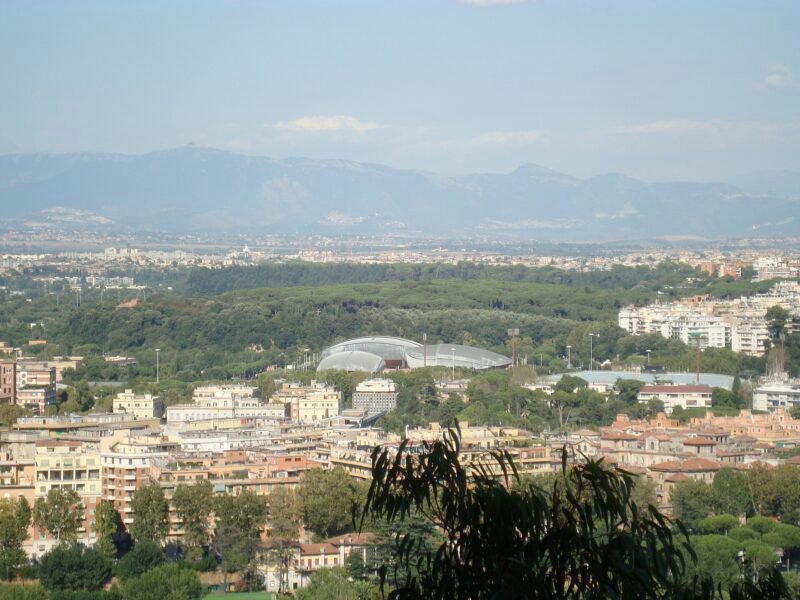
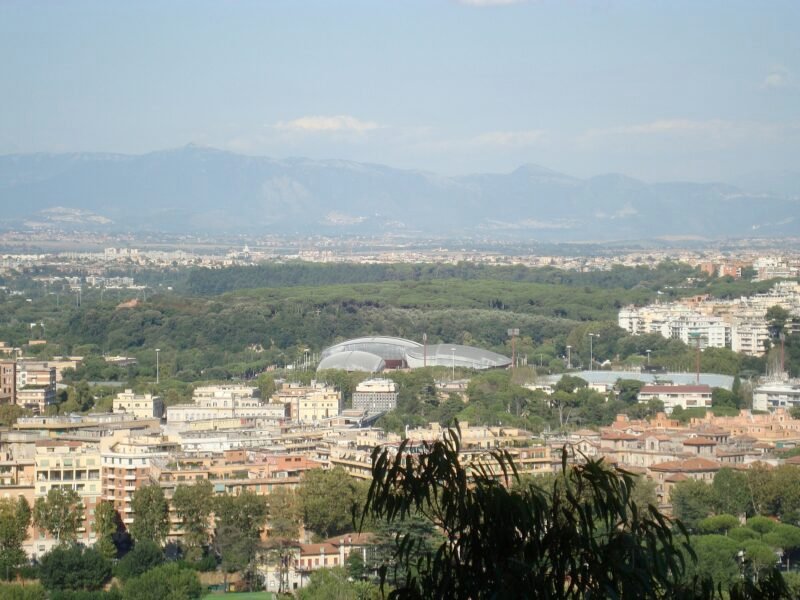
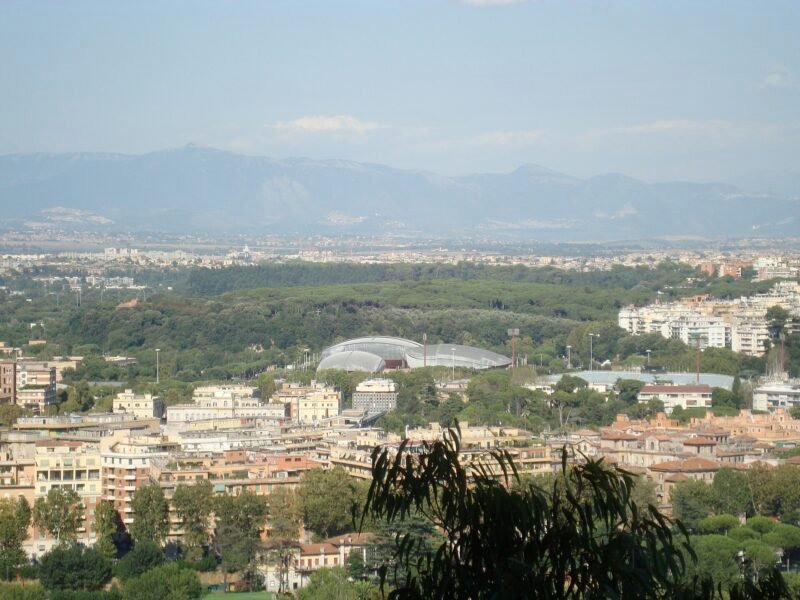
Auditorium Parco della Musica Ennio Morricone is the complex designed by Renzo Piano in the Flaminio district, opened in 2002, with Sala Santa Cecilia, Sala Sinopoli, Sala Petrassi and Teatro Studio Borgna arranged around the open-air cavea named after Luciano Berio.
Renzo Piano's beetles
The main halls are separate volumes, with a brick base and roofs of lead sheets, which from above look like large beetles. Piano won the 1993 invited competition and worked with acoustician Jürgen Reinhold of the Müller-BBM firm in Munich. Around them are the recording studios, the Accademia di Santa Cecilia's Museum of Musical Instruments and the roof gardens named after Claudio Abbado.
Who runs it
The complex is run by Fondazione Musica per Roma, which handles the pop, rock and jazz programs and the festivals, alongside resident foundations such as the Accademia di Santa Cecilia and Fondazione Cinema per Roma. The general profile of the complex is on the Auditorium Parco della Musica page.
Opening hours of the complex
From October to March the Auditorium is open from 11:00 to 20:00, including Sundays and holidays. On show nights it stays open for the concert audience.
My advice for Gaia Banfi, L'ultima Maccaia at Auditorium Parco della Musica, November 15, 2026
My advice is to listen to La Maccaia on record before the concert, at least two or three songs. Not to arrive prepared, but to measure the distance: at Teatro Studio you'll hear the same songs without electronics, and the comparison is the real show of the night. It's rare to be able to hear the bare version of such a produced record.
Second: sit in the middle, not too close. In a 300-seat hall even the central rows are a few meters from the piano, and from there the sound of the voice and the instrument arrives blended, as the artist conceived it.
Third: phone in your pocket. A piano and voice concert lives on silences, and a neighbor's lit screen in a small hall distracts everyone, the artist included.
Finally: after the concert don't rush for the tram. 10 minutes in the cavea, talking about the night, are as much a part of the concert as the encore.
Tickets for Gaia Banfi in Rome
Tickets for Gaia Banfi's concert at Teatro Studio Borgna start from 17 euros, according to the official Auditorium page. They're sold online from the buy button on the event page, which links to the authorized presale network, and at the complex's box office.
On the event page the buy button appears twice, at the top and next to the date and time summary: both lead to the same sales channel authorized by Fondazione Musica per Roma.
The ticketing rules
The conditions for purchase, exchange and refund are those of the ticketing rules published by the Auditorium on its website. For information, Fondazione Musica per Roma answers at info@musicaperroma.it.
Unauthorized sellers
For a small hall the risk of resale at a markup is real. My advice is to buy only from the channels indicated on the official event page.
How to get to the Auditorium for Gaia Banfi's concert
Auditorium Parco della Musica Ennio Morricone can be reached by metro A to Flaminio and tram 2, Flaminia/Reni or Apollodoro stops, or by buses 910, 53, 982 and 168. The metro doesn't go all the way to the entrance.
Metro A and tram 2
From Piazzale Flaminio, tram 2 goes up Via Flaminia toward Piazza Mancini. You get off at Flaminia/Reni or Apollodoro and walk a few minutes toward Viale Pietro de Coubertin, through the Villaggio Olimpico.
The 910 from Termini
The 910 leaves from Piazza dei Cinquecento, in front of Termini station, and reaches the Auditorium without changes: the simplest choice for those staying near the station.
Sunday evening
November 15 is a Sunday, and the 168 is a weekday line: don't count on it. The other lines also have sparser holiday frequencies, especially on the way back. It's best to check the times on the transport company's website before going out, or plan a taxi home.
By car
The stretch of Viale Pietro de Coubertin in front of the Auditorium is closed to traffic and the paid internal parking lots have limited spaces. On Sunday evening traffic is lighter, but on nights with several shows the streets of the Villaggio Olimpico fill up.
Autumn at Teatro Studio and the pop program
Gaia Banfi's concert is one of the events with which Fondazione Musica per Roma fills the Auditorium's autumn 2026 in the pop and rock section, and Teatro Studio Borgna is its hall for intimate concerts.
The piano in the spotlight
Two weeks earlier, on Sunday, November 1 at 18:00, the same Teatro Studio hosts Pianorama by Davide «Boosta» Di Leo, another musician coming from electronics and a band who measures himself against the piano. On Thursday, November 5, also at Teatro Studio, there's Radici nel Cemento. Those who follow this thread can build a small autumn cycle devoted to the keyboard, from the rhythm of pop to singer-songwriter writing.
The other halls in November
In the larger halls the month is just as packed: on Thursday, November 19 Sala Sinopoli hosts the music of Stranger Things performed live by Kyle Dixon and Michael Stein, and on Saturday, November 21 Sala Petrassi welcomes Steve Hackett telling the story of Genesis, in a special night for Emergency. For those who grew up with prog, like Gaia Banfi's family, moving from one hall to another has a logic of its own.
A European tour
The L'ultima Maccaia tour crosses Italy and the border: from Novara to Villach, in Carinthia, with stops in Nantes and Barcelona. Rome is the capital's date, a Sunday in mid-November. The tour then continues until December, before the announced break.
Another well-known fact, yet not often mentioned
Everyone knows X Factor is a showcase. Less often mentioned is that for many artists the talent show isn't the finish line but a side stop on a path already underway. Gaia Banfi came to it in 2023 with an album already released, a conservatory diploma and an electronic project behind her, and came out of it, according to the music press, with the esteem of music lovers more than with chart numbers. Her later path, with an independent label and a European tour, confirms it.
The second well-known but rarely mentioned fact concerns Europe. For Italian artists making experimental music, the most important stages are often outside Italy: festivals like Eurosonic, in the Netherlands, or the Transmusicales in Rennes, in France, are the showcases where international careers are built. That an Italian singer-songwriter played more than 20 dates in France before closing the cycle in Rome says a lot about how independent music moves today.
How to organize the night at the Auditorium
For a concert at Teatro Studio it's enough to arrive 20 or 30 minutes before 20:00: time to pick up your ticket, leave your coat at the coat check and find the hall.
Before the concert
The Auditorium foyer has a bar, a café and a large bookshop with records and music books. From the terrace that runs around the halls you can see the remains of the Roman villa discovered during construction.
Other events in November
In the same month the Auditorium is full of music: from November 12 to 14 Kirill Petrenko conducts the Santa Cecilia Orchestra, on November 9 Evgeny Kissin and András Schiff play, and in those weeks the complex hosts the Roma Jazz Festival. Those staying in Rome for a few days can put together a week of very different listening.
After the concert
On the way out, the lit cavea is the right place to wait for the audience from the other halls to thin out. A Sunday night in November in Flaminio is quiet: the tram ride back to the center is relaxed.
The right photo to take at Gaia Banfi, L'ultima Maccaia at Auditorium Parco della Musica, November 15, 2026
During a piano and voice concert photography disturbs more than elsewhere: in a small hall you hear the click, and you see the screen. The right photo is taken before and after.
Before, in the hall, with the lights still on: the solo piano on stage, in the center, with Teatro Studio's wooden walls around it. It's the image that sums up the tour better than any portrait: an instrument, a chair, nothing else.
Outside, in November, it's already dark at 19:30. From the top of the cavea you can frame Renzo Piano's beetles with the lead reflecting the lights: a photo that tells the story of the night and the place.
After the concert, during the applause, a shot without flash of the stage with the lit piano is the only acceptable exception. On such an intimate night, discretion makes the difference.
Some important events that happened here in history
The ground on which the Auditorium stands has a much longer history than the complex. During construction the remains of a Roman villa from the 3rd century BC emerged, built on the site of a small archaic farm from the 6th century BC. The discovery forced Renzo Piano to change the design, and the finds are on display in a small museum under the cavea.
The modern story begins with a demolition. In 1936 the Augusteo, Rome's great concert hall, was torn down, and for more than 60 years the city remained without an auditorium built for music. Only in 1992 did the city council choose the Villaggio Olimpico area, and in 1993 Piano won the competition.
On April 21, 2002 the first halls opened, and on December 21, 2002 Sala Santa Cecilia. Since 2003 the Auditorium has been home to the Accademia di Santa Cecilia's season, since 2006 it has hosted the Rome Film Fest, and in 2020 it was named after Ennio Morricone. Teatro Studio instead bears the name of Gianni Borgna, longtime culture councilor of Rome and president of Fondazione Musica per Roma, which runs the complex.
Who has passed through Gaia Banfi, L'ultima Maccaia at Auditorium Parco della Musica, November 15, 2026
From the very first day the great names of classical music have passed through the Auditorium: the opening concert of Sala Santa Cecilia, on December 21, 2002, was conducted by Myung-Whun Chung, Goffredo Petrassi wanted to be present at the opening of the hall that now bears his name, and Luciano Berio, then at the head of the Accademia, gave his name to the cavea.
Alongside classical music, over the years Fondazione Musica per Roma has brought pop, rock, jazz and singer-songwriter music here, Italian and international. Teatro Studio, with its 300 seats, is the hall for artists in small lineups, experimental projects and concerts that ask for closeness.
In Gaia Banfi's path there are other names worth noting: her father Baffo Banfi and Un Biglietto per l'Inferno, her teacher Diana Torto at the Bologna Conservatory, producer AKA5HA, Ceneri, for whom she opened a concert in Bologna, Daniela Pes, for whom she opened some Italian dates between late 2023 and early 2024, and artist Ilaria Demo De Lorenzi, for whose exhibition the project Non si può stare morti per sempre was born. On November 15 her name joins those who have passed through Teatro Studio.
Accessibility and children
The Auditorium is a modern complex with routes between the halls that are partly outdoors, on the terrace and around the cavea. For accessibility needs at Teatro Studio it's best to contact Fondazione Musica per Roma in advance at info@musicaperroma.it, to find out which entrance to use and which seats to choose.
Parking
The Auditorium's paid parking lots, ground-level and multistory, have spaces reserved for people with disabilities.
With children
A piano and voice concert by an art pop artist, at 20:00 on a Sunday, is designed for an adult audience. For a teenager studying singing or piano, on the other hand, it can be a valuable lesson in how to carry a song with only two elements.
The neighborhood around the Auditorium
The Auditorium is in Flaminio, between Villa Glori, the Villaggio Olimpico and the Corso di Francia viaduct: a piece of 20th-century Rome, where contemporary architecture lives alongside green space.
MAXXI
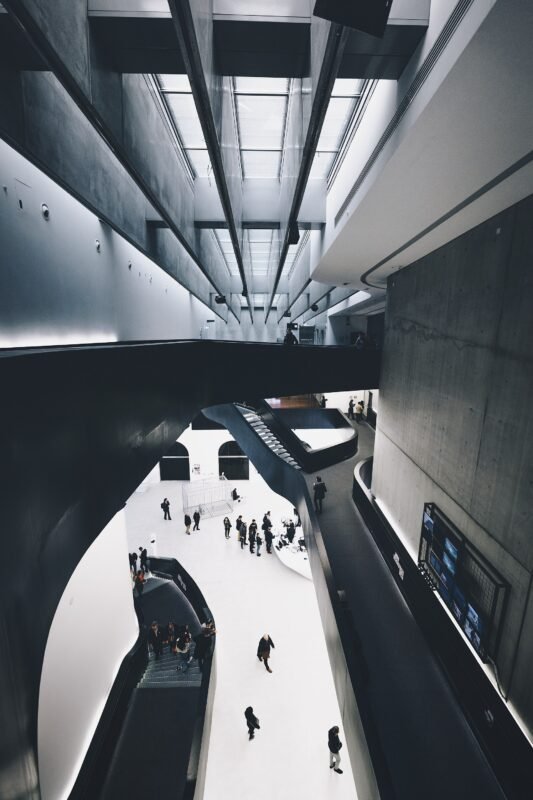
A few minutes' walk away is Zaha Hadid's MAXXI: together with the Auditorium it forms the most important pair of contemporary buildings in the city. A Sunday afternoon at the museum and a concert in the evening, without leaving the neighborhood, make a perfect plan.
Villa Glori
Behind the Auditorium rises the hill of Villa Glori, opened to the public in 1924 as the Parco della Rimembranza designed by Raffaele De Vico, with trees planted by Roman students in memory of those who died in World War I. Since 1997 the park has hosted installations by contemporary artists, including Kounellis and Staccioli. A walk on Sunday afternoon, before the concert, is the best way to arrive in the hall with a clear head.
Toward the Tiber
From the Auditorium you go down to the Ponte della Musica, for pedestrians and cyclists. Farther north is Milvian Bridge, in the evening one of the meeting spots of north Rome.
Toward the center
Tram 2 takes you back to Piazzale Flaminio, at the gates of Villa Borghese and Piazza del Popolo.
Where to eat before or after the concert
Inside the Auditorium there are a bar and café in the foyer and a bar-restaurant also accessible from the street: the most convenient option for an aperitivo before the concert.
In the neighborhood
Between the Villaggio Olimpico, Via Flaminia and Piazza Mancini there are pizzerias, trattorias and neighborhood bars. On Sunday evening some places close early or don't open: better to book and have dinner before 20:00.
Milvian Bridge
For dinner after the concert the widest choice is in Ponte Milvio, a few minutes away, where places stay open late even on Sunday.
November in Rome: the moment of the year
November is the month when Rome goes back to the Romans: the concert seasons get into full swing, evenings turn cool, museums are less crowded. For an intimate concert like this one it's the right season.
The weather
November evenings can be damp and rainy: a Roman maccaia, you might say. The Auditorium is an open complex, and between the entrance and the hall you walk outdoors. An umbrella and a jacket to leave at the coat check avoid surprises.
A different Sunday
The concert falls on a Sunday, the evening when Rome slows down. It's the ideal moment for those who live in the city and want to close the week with intimate listening, and for travelers who want an evening away from the tourist spots.
Frequently asked questions about Gaia Banfi in Rome
When does Gaia Banfi play in Rome?
Gaia Banfi plays in Rome on Sunday, November 15, 2026 at 20:00, in Teatro Studio Borgna at Auditorium Parco della Musica Ennio Morricone, Viale Pietro de Coubertin 30. It's a date of the piano and voice tour L'ultima Maccaia.
How much are tickets for Gaia Banfi at the Auditorium?
Tickets for Gaia Banfi at the Auditorium start from 17 euros, according to the official event page. They're sold online from the buy button on the Auditorium page, which links to the authorized presale network, and at the complex's box office.
What kind of concert is L'ultima Maccaia?
L'ultima Maccaia is a piano and voice concert: Gaia Banfi presents the songs of the record La Maccaia without the electronic arrangements, with just piano and voice. They're the last dates before a break devoted to writing and producing new music.
Who is Gaia Banfi?
Gaia Banfi is an Italian singer-songwriter, musician and producer born in 1998, with a diploma in jazz singing from the Bologna Conservatory. She debuted in 2020 with Lotus, took part in X Factor in 2023 and, with La Maccaia, released by Trovarobato in 2025, played European festivals and a long French tour.
How many seats does Teatro Studio Borgna have?
Teatro Studio Borgna at the Auditorium has about 300 seats and is the smallest hall of the complex, with no curtain and the stage at audience level. For a piano and voice concert like Gaia Banfi's it's the ideal size, but seats can sell out.
How do you get to the Auditorium on a Sunday evening?
You get to Auditorium Parco della Musica by metro A to Flaminio and tram 2, or by bus 910 from Termini, 53 and 982. On Sunday the 168 doesn't run and frequencies are sparser: for the way back it's best to check the times or plan a taxi.
My final advice on Gaia Banfi
The nights you remember aren't always the ones in big halls. A piano, a voice and 300 people in silence can be worth more than an arena. Gaia Banfi closes in Rome a cycle that has taken her across half of Europe, and does it in the most exposed way possible. Buy your ticket in good time, listen to the record first and then measure the difference live. Once the tour is over, these songs in this form will give way to new music.
Article written by the editorial team of Tour Leader Pro, contact them for Private/Corporate/V.I.P. Tours and Experiences.
Planning a trip to Rome? English guides for visiting the city are on ItalyPlanner.com.
Contact Information
Nearby
 Museum of Musical Instruments (MUSA)100 m
- Auditorium Parco della Musica100 m
- Villa Glori500 m
- Fountain of Anna Perenna500 m
- MAXXI – National Museum of 21st Century Arts700 m
- Flaminio700 m
Upcoming events nearby
- Roma Jazz Festival 2026, November 1 to 24 at the Auditorium and Casa del Jazz100 m
- Roma Gospel Festival 2026 at Auditorium Parco della Musica, December 13, 2026 to January 1, 2027100 m
- Santa Cecilia 2026/2027 Concert Season at Auditorium Parco della Musica, October 21, 2026 to June 5, 2027100 m
- Kyle Dixon and Michael Stein, The Music of Stranger Things at Auditorium Parco della Musica, November 19, 2026100 m




You might also like
- Sergio Caputo, Effetti personali at Auditorium Parco della Musica, April 1, 2027
- Chuck Ragan at Auditorium Parco della Musica, December 12, 2026
- Fabio Concato at Auditorium Parco della Musica, December 27, 2026
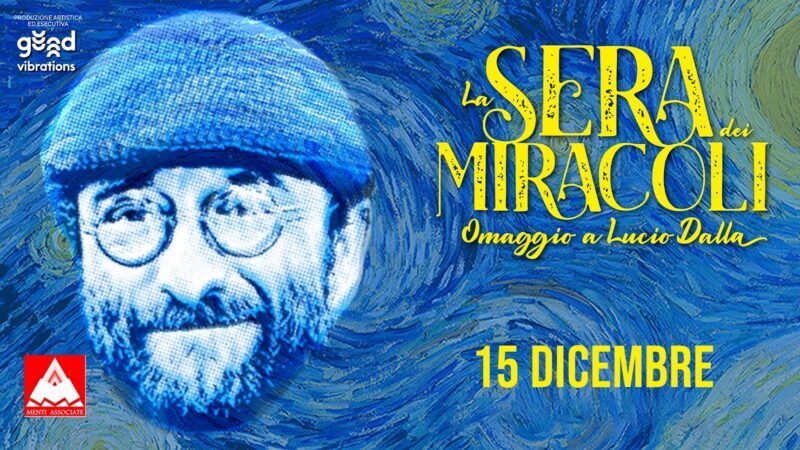
- La Sera dei Miracoli, Tribute to Lucio Dalla at Teatro Olimpico, December 15, 2026
- Rodrigo y Gabriela in Rome: Auditorium Parco della Musica, April 27, 2027
- Dire Straits Reload in Rome: Auditorium Parco della Musica, April 29, 2027