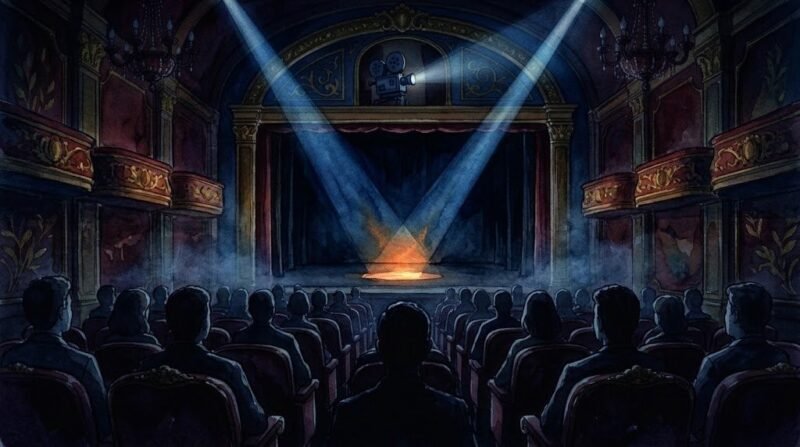
Buenos Aires Tango with Daniel Binelli at Auditorium Parco della Musica, November 28, 2026
In short. Buenos Aires Tango. Música y Danza en Concierto, an evening devoted to the music of the Río de la Plata under the direction of bandoneon player Daniel Binelli, is on at Auditorium Parco della Musica Ennio Morricone, in the Sala…
Buenos Aires Tango. Música y Danza en Concierto, an evening devoted to the music of the Río de la Plata under the direction of bandoneon player Daniel Binelli, is on at Auditorium Parco della Musica Ennio Morricone, in the Sala Sinopoli, at Viale Pietro de Coubertin 30, on Saturday, November 28, 2026, at 20:00. The concert is presented by the City of Buenos Aires as part of the cultural cooperation program Buenos Aires a Roma. Playing with Binelli are pianist Polly Ferman, as special guest, guitarist César Angeleri and singer Verónica Silva, with an orchestral ensemble and international guests. The dancing is by Suria Echeverría and Mauro Rodríguez. According to the official page tickets start at 15 euros. Prices by section aren't published. The length isn't given. Tickets are bought from the event page on the Auditorium's official website, which links to the associated sales circuit. For information Fondazione Musica per Roma gives the address info@musicaperroma.it. To get there by public transportation it's best to use ATAC's journey planner. The nearest stops to the Auditorium are Flaminia/Reni and Apollodoro.
The concert: a journey through the music of Buenos Aires
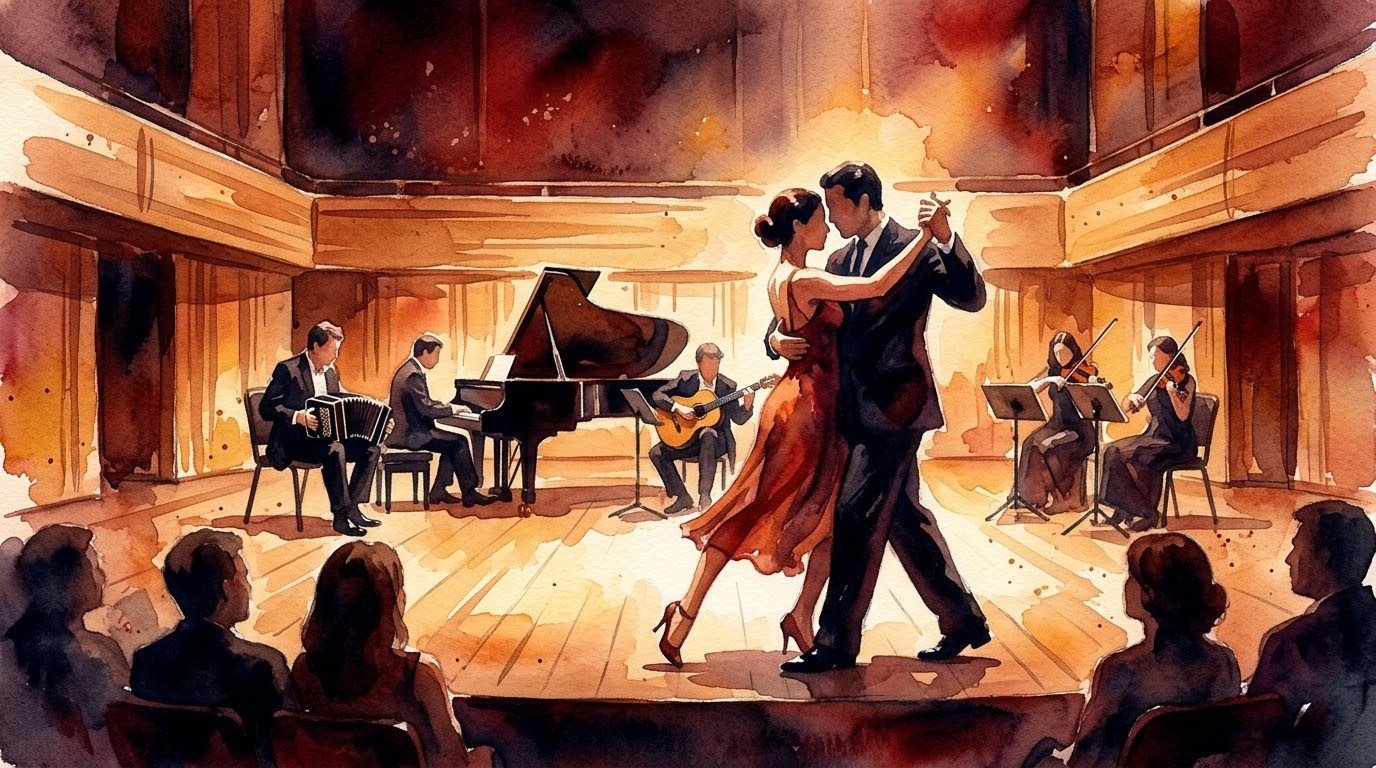
The official presentation describes the evening as a passionate journey through classic and contemporary compositions from the Argentine capital, devoted to the essence, elegance and passion of the music of the Río de la Plata. The Sala Sinopoli, the Auditorium writes, dresses up for the occasion to welcome some of the most important exponents of the genre.
The title, in Spanish, makes the format clear: music and dance in concert. It's not a theater show with a plot, nor a milonga where the audience dances, but a concert in which dance becomes part of the performance, with a couple of dancers on stage next to the musicians.
Classic and contemporary
The official page doesn't list the pieces on the program: the information isn't published. The mention of a repertoire including classic and contemporary compositions suggests a journey through the different eras of tango, from the historic orchestras to the most recent writing.
An orchestral ensemble
Besides the soloists, the concert includes an orchestral ensemble and international guests, whose names aren't given. The direction is entrusted to Daniel Binelli, who over his long career has conducted and arranged for ensembles of every size.
Buenos Aires in Rome
The evening is part of a cultural cooperation program promoted by the City of Buenos Aires. It's the Argentine capital itself, then, that presents its musical heritage to the Roman audience, with artists who represent its tradition.
Daniel Binelli, the maestro
Daniel José Binelli was born on May 20, 1946, in Quilmes, in the province of Buenos Aires. According to the biography published by the Todotango portal he started at nine, when his father gave him a bandoneon and was his first teacher. He then studied with Francisco Abatantuono and Abelardo Alfonsín, and harmony with Alberto Coronato and Pedro Aguilar.
Osvaldo Pugliese's orchestra
The decisive chapter of his training was joining the orchestra of Osvaldo Pugliese, one of the historic tango orchestras, as bandoneon player and arranger. The sources don't agree on how long that experience lasted: Todotango says 14 years, the Gulbenkian Foundation 10. With Pugliese he played in Latin America, Europe, the United States and Japan.
Astor Piazzolla's sextet
In 1989 Astor Piazzolla, whom Binelli had admired since he was 14, invited him to join the Sexteto Nuevo Tango, with which he played in the Americas and in Europe. Having played with both Pugliese and Piazzolla means having experienced from the inside two very different ways of understanding tango.
Tango x 2 and the great orchestras
From 1990 to 1997 Binelli was music director, arranger and solo bandoneon of Tango x 2, a music and dance show that was successful in the United States, Europe and Japan. He was also a soloist with Atilio Stampone's orchestra and with the Orquesta del Tango de Buenos Aires.
With Milva
Italian audiences may remember him alongside Milva, with whom he toured the Americas, Europe and Japan. The collaboration also produced the album Milva, el tango de Astor Piazzolla.
50 years of ensembles
The Todotango biography lists a long series of groups in which Binelli has played, starting in the 1970s: Quinteto Guardia Nueva in 1970, Hugo Baralis's quintet in 1973, Generación Cero in 1974, Grupo Alas in 1977, Osvaldo Requena's orchestra in the mid-1980s and Tango 7 in 1992. It's a path through ensembles of very different sizes and orientations.
The departure of the Pugliese orchestra musicians
Todotango also recalls the context of his entry into Pugliese's orchestra: the young bandoneon player arrived together with other musicians called in to replace the members who, in 1968, had left the orchestra to form the Sexteto Tango. It was a generational turnover that gave Binelli the chance to grow alongside one of the great masters of the genre.
A stage musician
From the tours with Pugliese to those with Milva, from the Tango x 2 shows to symphony concerts, Binelli's career has largely been played live, in front of audiences on different continents. It's the experience he brings to the Sala Sinopoli, leading the orchestral ensemble announced in the presentation, together with the invited soloists.
The quintet and the duos
Today Binelli leads the Daniel Binelli Quinteto, which has played in Japan, Europe and the Americas. With guitarist Hugo Romero he recorded two duo albums, released in Argentina and Japan. The duo format, with Polly Ferman's piano or with guitar, is one of his favorite settings.
A disputed date
The sources don't fully agree on the Konex Award: the Gulbenkian Foundation places it in 1995, while the Todotango biography gives, in different passages, both 1993 and 1995.
How to listen to a tango concert
A tango concert in a symphony hall is a particular experience. Music born in the clubs and dance halls of the Río de la Plata is heard in silence, seated, with the attention usually reserved for chamber music. Binelli's career, divided between tango orchestras and symphony orchestras, is concrete proof that the two worlds can share the same stage.
Listening to the dialogue between instruments
In an ensemble with bandoneon, piano, guitar, voice and orchestra, the pleasure of listening also lies in following the dialogue between the parts: who leads the melody, who answers, who accompanies. Binelli's direction, used as he is to working as an arranger, is the thread that holds the different voices together.
Dance as part of the music
When the dancers come on stage, the concert changes nature. Attention shifts from the musicians to the bodies, and the music reveals itself for what it also is: a rhythm to follow, a shared breath. It's one of the aspects that make the format of this evening different from a traditional concert.
Classics and new writing
The presentation speaks of classic and contemporary compositions. For the listener it means being able to compare different eras in the same evening, and to hear how the language of tango has transformed without losing its recognizability.
Buenos Aires in Rome: a city presenting itself
The concert is presented by the City of Buenos Aires, as part of a cultural cooperation program called Buenos Aires a Roma. It's a detail that deserves attention: this isn't a commercial tour, but an initiative with which the Argentine capital chooses to tell another capital about its heritage.
A tribute to Binelli
The choice to entrust the direction to Binelli is consistent with the recognition the city itself has given him: in 2010 the Legislature of Buenos Aires named him an Outstanding Personality of Culture. Conducting a concert bearing his city's name, in Rome, has the value of representing it.
A program to follow
The Auditorium's page doesn't list the other events of the Buenos Aires a Roma program: the information isn't published there. If you're interested you can keep an eye on Fondazione Musica per Roma's program in the following weeks, for any new initiatives linked to the Argentine capital.
A double audience
A concert of this kind speaks to two audiences: tango lovers, who know the names of the great masters and the steps of the milonga, and those coming to the genre for the first time, drawn by the hall and the occasion. The concert-with-dance format is designed for both.
Binelli and symphony orchestras
An important part of Binelli's career has taken place in concert halls. According to the Gulbenkian Foundation he has performed and recorded Piazzolla's works with several orchestras, including Argentina's Orquesta Sinfónica Nacional and the resident orchestra of Teatro Colón, as well as ensembles in the United States, Canada, Colombia and Australia.
Charles Dutoit and Gary Burton
Todotango recalls that in 2000 Charles Dutoit wanted him for a concert with the Montreal Symphony Orchestra, and that in 1995 he played with vibraphonist Gary Burton. These collaborations show the bandoneon's ability to converse with jazz and symphonic music.
The composer
Binelli is also a composer. His works include Grasa y cemento, Metrópolis, Imágenes de Buenos Aires, Balada nocturna and Tres movimientos concertantes para bandoneón y orquesta sinfónica.
Awards
He received the Konex Award for popular music, in the category of tango performers. The Gulbenkian Foundation dates it to 1995. On June 16, 2010, the Legislature of the Autonomous City of Buenos Aires named him an Outstanding Personality of Culture.
Polly Ferman on piano
Pianist Polly Ferman takes part in the concert as a special guest. According to Todotango she has formed a duo with Binelli since the mid-2000s, devoted to Latin American composers performed in their original versions. Together they released the album Imágenes, issued with the magazine Clásica.
A Latin American repertoire
The Binelli Ferman duo is devoted, according to Todotango, to Latin American composers performed in their original versions. It's a valuable clue to what to expect from their presence in the concert: philological attention to the writing, alongside freedom of interpretation, and a repertoire that looks beyond the borders of Argentine tango alone.
Orquestango
With the Montevideo Philharmonic the duo recorded Orquestango and Orquestango 2, two projects that take tango into the orchestral dimension.
The piano in tango
In the duo with Binelli the piano is the bandoneon's main partner, and the Latin American repertoire the two have played together for years makes it a well-tested dialogue. In a concert like this one, the duo between Binelli and Ferman promises one of the moments of greatest understanding.
César Angeleri and Verónica Silva
Guitarist César Angeleri is described in the presentation as a virtuoso of tango guitar. It's not the first time he's played with Binelli: Todotango lists him among the guitarists the bandoneon player has recorded with, along with Hugo Romero and Eduardo Isaac.
The guitar and tango
The presence of a guitarist specialized in the language of tango lets you hear the repertoire in its most intimate dimension too, alongside the pages for ensemble.
The voice
Verónica Silva is presented as a singer of strong expressiveness with a seductive voice. Sung tango is an essential part of the genre, with lyrics that tell of the city, love, nostalgia.
Dance in concert
The dancing is by Suria Echeverría and Mauro Rodríguez, whom the presentation describes as young talents. The presence of a couple of dancers next to the musicians is one of the features of the format, and lets you see the bond between sound and movement that audiences associate with tango.
Stage tango
In a concert the dance is designed to be seen from an auditorium, and it converses with the music played live. Binelli's experience with Tango x 2, a music and dance show, is a guarantee for this kind of balance.
A Sala Sinopoli dressed up
The Sala Sinopoli, with its 1,133 seats, is large enough to hold an orchestra and dancers and intimate enough to let the audience catch the details of the steps.
The bandoneon, the heart of tango
Binelli's instrument is the bandoneon, a bellows-and-button instrument whose sound, melancholy and powerful at once, many listeners immediately associate with Buenos Aires.
A difficult instrument
Binelli's story shows how much work this instrument takes: he started as a child, at nine, with his father as his first teacher, and continued with several teachers before joining a large orchestra.
Hearing it live
Hearing the bandoneon in an acoustically refined hall like the Sala Sinopoli, designed with acoustic consulting by the Müller-BBM firm, is a very different experience from the record: you perceive the breathing of the bellows, the changes in dynamics, the noise of the buttons.
Practical information
The concert is scheduled for one date only, Saturday, November 28, 2026, at 20:00. The official page gives prices starting at 15 euros, without the breakdown by section: the information isn't published.
The box office rules
The Auditorium's website publishes box office rules with the general conditions. It's best to check them before buying, especially for exchanges and refunds.
A date to double-check
In the related events section the Auditorium's page also shows the same title on dates in October 2026, linked to the Rome Film Fest. The date of the concert in the Sala Sinopoli is November 28, as given in the main listing, but it's wise to check it when buying.
A Saturday evening at the Auditorium
The concert falls on a Saturday, at 20:00. It's a time that lets you plan the evening in different ways: an aperitivo beforehand, in the neighborhood, or dinner afterward, in nearby areas like Flaminio or Ponte Milvio.
Getting home
The Auditorium is outside the historic center, and it's best to plan the trip home before going out, checking Saturday evening lines and times on ATAC's journey planner.
November weather
At the end of November Roman evenings can be cool, and the cavea is an open-air space: if you want to enjoy the walk before the concert, an extra jacket is a good idea.
The Sala Sinopoli
The Sala Sinopoli is named after conductor Giuseppe Sinopoli and is the Auditorium's medium-sized hall, with 1,133 seats. It was the first to open to the public, on April 21, 2002, a few months before the complete inauguration of the complex, on December 21 of the same year.
The other halls
The Auditorium also includes the Sala Santa Cecilia, the largest, with 2,756 seats, the Sala Petrassi with 673, the Teatro Studio Gianni Borgna with 308 and the open-air Cavea, with about 3,000 seats.
Carefully designed acoustics
The acoustics of the whole complex were designed by Jürgen Reinhold of the Müller-BBM firm, in collaboration with Renzo Piano. For an acoustic concert like this one, with delicate instruments like guitar and piano next to the bandoneon, the quality of the hall is essential.
Who runs the Auditorium
The Auditorium is run by Fondazione Musica per Roma, today chaired by Claudia Mazzola, with Daniele Pitteri as chief executive. The Fondazione programs concerts, festivals, talks and exhibitions, and hosts the seasons of Accademia Nazionale di Santa Cecilia in the complex.
The numbers of a year of activity
In 2016 the Fondazione organized 608 events and sold 287,109 tickets, with takings of more than 9.7 million euros. These figures describe a place that's busy almost every evening of the year.
An open complex
The Auditorium's website gives, from October to March, opening hours for the complex from 11:00 to 20:00, Sundays and holidays included. For the complex's archaeological museum, which preserves the remains of the Roman villa discovered during construction, hours should be checked on the website or at 06 80241281.
A curious fact about Auditorium Parco della Musica Ennio Morricone
The Sala Petrassi hasn't always had that name. It was known as Sala Settecento, and took the name of composer Goffredo Petrassi after his death, in 2003. It's a detail that shows how the Auditorium has built, hall by hall, a small pantheon of 20th-century Italian music.
Three names, three musicians
Sinopoli, Petrassi and Morricone: the Auditorium's dedications pay tribute to a conductor, a composer of classical music and a composer famous worldwide for film. Since 2020 it's precisely Ennio Morricone's name that identifies the whole complex.
Something nobody tells you about Auditorium Parco della Musica Ennio Morricone
Inside the complex is the Museum of Musical Instruments of Accademia Nazionale di Santa Cecilia, together with its Bibliomediateca. Many people who come here for a concert don't know that, a few steps from the halls, there's a collection linked to one of the city's great musical institutions.
Santa Cecilia at the Auditorium
Accademia di Santa Cecilia has its concert home at the Auditorium, with its symphony and chamber seasons. The inaugural concert in December 2002, conducted by Chung Myung-whun, was given precisely by the Santa Cecilia orchestra.
My advice for visiting Auditorium Parco della Musica Ennio Morricone
My advice is to arrive at least half an hour early and spend a few minutes in the cavea, the open space around which the halls are arranged, named after Luciano Berio. In the evening, in November, the lit complex is one of the most beautiful views of contemporary Rome.
Preparing to listen
If you want to arrive prepared you can listen to a few recordings of Osvaldo Pugliese's orchestra and of Piazzolla's 1989 sextet: they're the two worlds Binelli comes from, and recognizing them makes the concert even richer.
Another well-known fact, yet rarely mentioned
It's well known that the Auditorium hosts the Rome Film Fest. It's less often remembered that it has been held here since 2006, and that over the years the complex has also become a recording venue: live albums were recorded here by Ryuichi Sakamoto with Christian Fennesz in 2005, by Enrico Rava with Joe Lovano in 2014 and by The National in 2024.
The audience numbers
In 2014 the Auditorium passed 2 million visitors, making it the leading European cultural venue for attendance and the second in the world after Lincoln Center.
The right photo to take at Auditorium Parco della Musica Ennio Morricone
The right photo is taken from the cavea in the evening, with the lit roofs of the halls standing out against the sky. It's the image that best tells the story of Renzo Piano's architecture, with the large volumes opening around the central space.
The Sinopoli foyer
Before the concert you can photograph the hall's foyer, with the audience waiting. During the performance it's good practice to keep your phone off.
Some important events that happened here in history
Archaic and Republican age: the villa
The area was first home to an Archaic farm and then a patrician villa, whose remains, discovered during construction, are now displayed in a small museum under the cavea.
1992-1993: the choice and the competition
The site is chosen and Renzo Piano wins the invited competition for the new auditorium.
April 21, 2002: the Sala Sinopoli opens
The hall hosting Binelli's concert is the first in the complex to open to the public.
December 21, 2002: the inauguration
Chung Myung-whun conducts the Santa Cecilia orchestra in the inaugural concert.
2003: the Sala Petrassi
After the death of Goffredo Petrassi, the Sala Settecento takes his name.
2006: the Rome Film Fest
The long history of the Rome Film Fest at the Auditorium begins.
2020: Morricone's name
The city council approves naming the complex after Ennio Morricone.
Who has passed through Auditorium Parco della Musica Ennio Morricone
In more than 20 years the Auditorium has hosted artists of every genre, from symphonic music to jazz, from rock to singer-songwriters. Among the names linked to its history are Chung Myung-whun, who conducted its inaugural concert, and the musicians who have recorded live albums here.
The conductors of the season
In the 2026-2027 season Accademia di Santa Cecilia brings great conductors and soloists to the hall, as in the concert by Charles Dutoit and Martha Argerich. Dutoit himself, Todotango recalls, had wanted Binelli as soloist in Montreal in 2000. The full program is in the Santa Cecilia season.
Tango in Rome
With Buenos Aires Tango the Sala Sinopoli welcomes for one evening some performers of the Argentine tradition, presented directly by their city.
Before or after the concert: the surroundings
The Auditorium is in the northern part of the city, between Flaminio and Parioli, next to Villa Glori and the Villaggio Olimpico.
MAXXI and Ponte della Musica
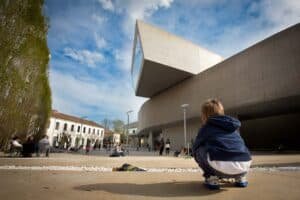
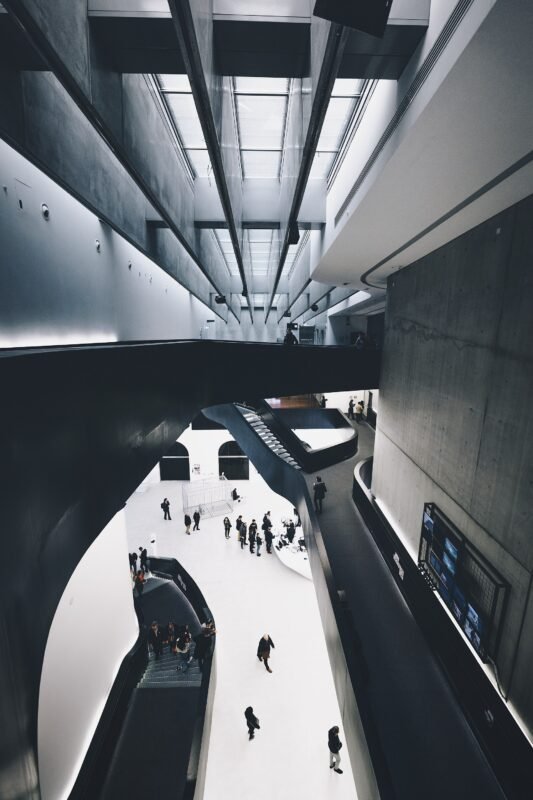
A short distance away are MAXXI, the national museum of 21st-century arts, and Ponte della Musica, which connects the two banks of the Tiber.
Milvian Bridge
Continuing north you reach Milvian Bridge, one of the liveliest areas of the Roman evening, good for dinner after the concert.
Frequently asked questions about Buenos Aires Tango
When is the Buenos Aires Tango concert at the Auditorium?
Saturday, November 28, 2026, at 20:00, in the Sala Sinopoli of Auditorium Parco della Musica Ennio Morricone. It's a single date, presented by the City of Buenos Aires as part of the cultural cooperation program Buenos Aires a Roma, and it's best to double-check it when buying.
How much are tickets?
The official page gives prices starting at 15 euros. The prices for the individual sections of the Sala Sinopoli aren't published on the event page: the information isn't published, and you find out by choosing your seat in the purchase process linked from the Auditorium's website.
Where do you buy them?
From the event page on the official website of Auditorium Parco della Musica, which links to the associated sales circuit. For information Fondazione Musica per Roma, which runs the complex, gives the email address info@musicaperroma.it. It's also worth reading the website's box office rules.
Who's playing?
The direction is by Daniel Binelli, a bandoneon player who has played with Osvaldo Pugliese and Astor Piazzolla. With him are pianist Polly Ferman, guitarist César Angeleri, singer Verónica Silva, an orchestral ensemble and international guests. Suria Echeverría and Mauro Rodríguez dance.
What will you hear?
Classic and contemporary compositions from the Argentine capital, according to the official presentation. The detailed program of pieces hasn't been published. Given Binelli's career, it's reasonable to expect a repertoire that spans the tradition of the great orchestras and the Piazzolla era of tango.
Is there dancing?
No, it's not a milonga. It's a concert with the participation of two dancers, Suria Echeverría and Mauro Rodríguez, who dance on stage next to the musicians. The audience watches seated in the Sala Sinopoli, as at a normal concert.
How long is it?
The length isn't given on the official page: the information isn't published. A concert with orchestra, soloists and dance usually takes up a whole evening. For a precise indication it's best to write to info@musicaperroma.it before planning your trip home.
How do you get to the Auditorium?
The Auditorium is at Viale Pietro de Coubertin 30. The nearest public transportation stops are Flaminia/Reni and Apollodoro. For the best route it's best to use ATAC's journey planner.
Final advice on Buenos Aires Tango
Buenos Aires Tango brings to the Auditorium a musician who has gone through the whole history of tango in the second half of the 20th century, from Osvaldo Pugliese's orchestra to Astor Piazzolla's sextet, all the way to the symphony halls of half the world. With him a pianist he has played with as a duo for almost 20 years, a guitarist he has known for a long time, a voice and a couple of dancers. My advice is to arrive early, take a walk through the lit cavea and let yourself be guided by the sound of the bandoneon: in a hall with the acoustics of the Sinopoli, the breath of this instrument comes through as it rarely does.
Article written by the editorial team of Tour Leader Pro, contact them for Private/Corporate/V.I.P. Tours and Experiences.
Planning a trip to Rome? English guides for visiting the city are on ItalyPlanner.com.
Contact Information
Nearby
 Museum of Musical Instruments (MUSA)100 m
- Auditorium Parco della Musica100 m
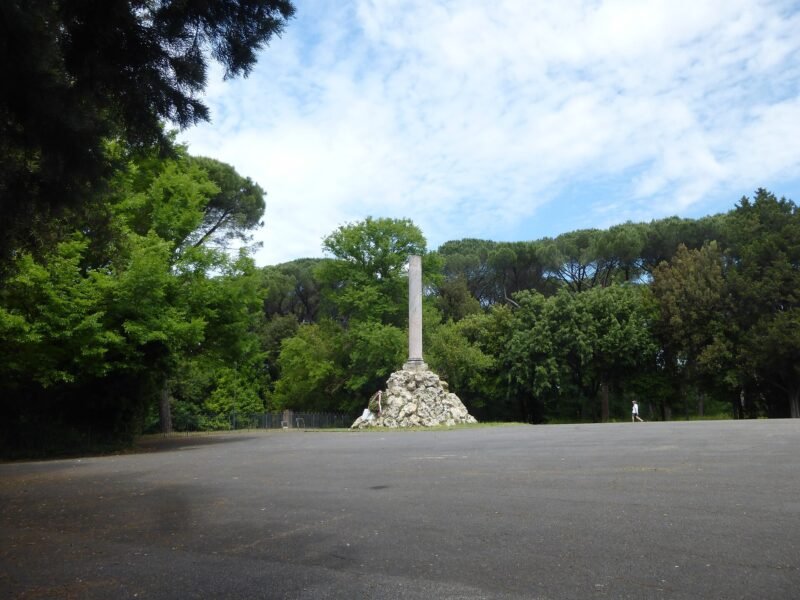
- Villa Glori500 m
- Fountain of Anna Perenna500 m
- MAXXI – National Museum of 21st Century Arts700 m
- Flaminio700 m
Upcoming events nearby
- Roma Jazz Festival 2026, November 1 to 24 at the Auditorium and Casa del Jazz100 m
- Evgeny Kissin and András Schiff at Santa Cecilia, November 9, 2026100 m
- Roma Gospel Festival 2026 at Auditorium Parco della Musica, December 13, 2026 to January 1, 2027100 m
- Santa Cecilia 2026/2027 Concert Season at Auditorium Parco della Musica, October 21, 2026 to June 5, 2027100 m



You might also like
- Paolo Jannacci, Jannacci arrenditi! La città ascolta at Auditorium Parco della Musica, November 3, 2026
- Laudato sii at Auditorium Parco della Musica, November 17, 2026
- In memory of Mauro Bortolotti and Franco Evangelisti at Teatro Studio Borgna, November 6, 2026
- Voices by Henze at Auditorium Parco della Musica, November 4, 2026
- PMCE Huellas 2: new music from Spain at Teatro Studio Borgna, Auditorium, Nov 13, 2026
- Atlantico Reunion by Enzo Favata at the Roma Jazz Festival, Auditorium Sala Petrassi, Nov 16, 2026