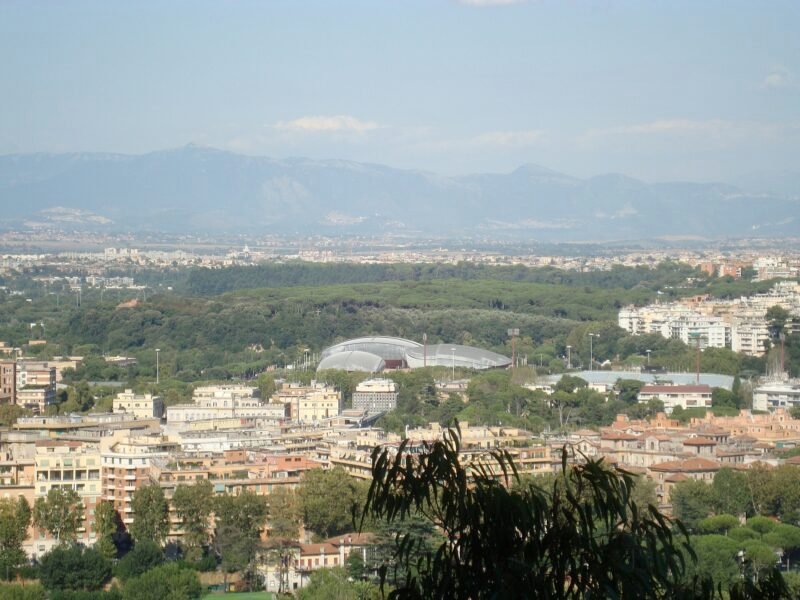
Mikhail Pletnëv at Auditorium Parco della Musica, March 3, 2027
In short. The Russian pianist Mikhail Pletnëv plays for the Accademia Nazionale di Santa Cecilia on Wednesday, March 3, 2027 at 20:00 in Sala Sinopoli of Auditorium Parco della Musica Ennio Morricone, at Viale Pietro de Coubertin 30 (00196 Rome).
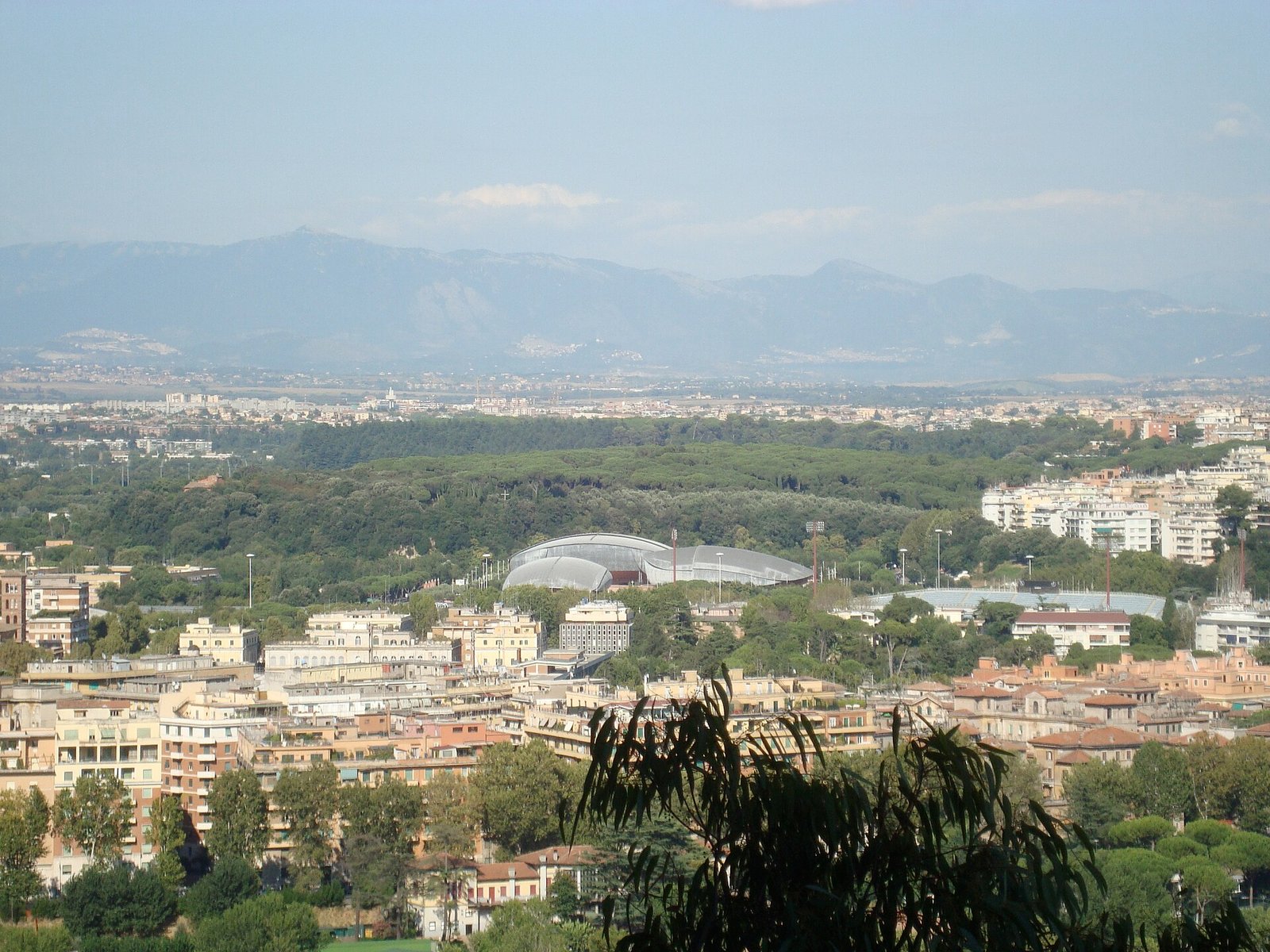
The Russian pianist Mikhail Pletnëv plays for the Accademia Nazionale di Santa Cecilia on Wednesday, March 3, 2027 at 20:00 in Sala Sinopoli of Auditorium Parco della Musica Ennio Morricone, at Viale Pietro de Coubertin 30 (00196 Rome). The program is Beethoven's Sonata No. 8, Op. 13, "Pathétique," and Sonata No. 14, Op. 27, No. 2, "Moonlight," and Tchaikovsky's The Seasons. Tickets cost €38 in the orchestra, €26 in the gallery, second section, and €18 in the gallery, third section. They have been on sale since January 12, 2027 and are bought at the box offices of Auditorium Parco della Musica and of Via Vittoria 6 and on the presale circuit authorized by the Academy, reachable from the official concert page. You get to Auditorium Parco della Musica by tram 2 from Flaminio station on metro line A, stops Flaminia/Reni or Apollodoro, and by buses 910 from Termini, 53, 982 and 168.
Winner of the gold medal at the Tchaikovsky Competition in Moscow in 1978, founder of the Russian National Orchestra, pianist, conductor and composer: Pletnëv brings to Rome a program of two famous Beethoven sonatas and Tchaikovsky's cycle of the 12 months. The recital is part of the celebrations with which the Academy marks the bicentenary of Beethoven's death, 1827-2027.
Mikhail Pletnëv at Santa Cecilia: date, time and tickets
Mikhail Pletnëv's recital is scheduled for Wednesday, March 3, 2027 at 20:00 in Sala Sinopoli of Auditorium Parco della Musica, with tickets from €18 to €38. It is a single date.
Prices
The official page lists three tiers: €38 for the orchestra, €26 for the gallery, second section, €18 for the gallery, third section. Discounts for young people are published in the dedicated section of the Academy's website.
When to buy
The Academy has split the presale for the 2026/2027 season into two periods: from September 10, 2026 for concerts up to February 27, 2027, from January 12, 2027 for those from March 3 onward. Pletnëv's recital opens the second period: tickets can be bought from January 12.
Where to buy
According to the Academy, the only authorized sellers are the points of sale of the presale circuit linked from the official page, the box office of Auditorium Parco della Musica Ennio Morricone and the one at Via Vittoria 6. The infoline answers at 06 8082058, the ticket office at biglietteria@santacecilia.it.
The program: Beethoven and Tchaikovsky
Mikhail Pletnëv's program includes two sonatas by Ludwig van Beethoven, No. 8, Op. 13, known as "Pathétique," and No. 14, Op. 27, No. 2, known as "Moonlight," and The Seasons, Op. 37a, by Pyotr Ilyich Tchaikovsky.
Two sonatas with a name
The two Beethoven sonatas are among the best known in the catalog, to the point that the general public identifies them by their nickname more than by the opus number. This very popularity makes them a delicate test for a performer: those listening know them, and every choice of tempo and sound is noticed.
The Beethoven bicentenary
The Accademia di Santa Cecilia places the recital within the celebrations for the 200th anniversary of Beethoven's death. A week earlier, from February 25 to 27, Fabio Luisi conducts the Missa Solemnis in Sala Santa Cecilia. In April Daniel Harding conducts the Ninth Symphony.
From the sonata to the cycle
After the two sonatas, the second half is occupied by a cycle of 12 short pieces. The contrast is intentional: on one side the classical sonata form, on the other a series of miniatures, one for each month of the year, written by Tchaikovsky for a magazine.
Tchaikovsky's The Seasons, month by month
The Seasons, Op. 37a, is a collection of 12 pieces for piano, one for each month of the year, composed by Tchaikovsky between 1875 and 1876 and published month by month in 1876 by the music magazine Nuvellist of Saint Petersburg. The average running time is about 43 minutes.
An editorial commission
In 1875 Nikolay Bernard, editor of the Nuvellist, asked Tchaikovsky for 12 short pieces and also proposed the subtitles. The composer, beset by money problems, accepted, and the magazine promised readers a new piece every month throughout 1876. The editor decided to introduce each piece with a few verses by Russian poets of the time, almost like epigraphs.
From January to June
January is titled At the Fireside, with verses by Pushkin. February is Carnival, with verses by Vyazemsky. March is Song of the Lark and April Snowdrop, both with verses by Maykov. May is White Nights, with verses by Fet. June is the Barcarolle, with verses by Pleshcheyev, in G minor, Andante cantabile.
From July to December
July is Song of the Reaper and August Haymaking, with verses by Koltsov. September is The Hunt, again with Pushkin. October is Autumn Song, Andante doloroso e molto cantabile, with verses by Aleksey Tolstoy. November is On the Troika, with verses by Nekrasov. December is Festivities, a waltz, with verses by Zhukovsky.
The form
Most of the pieces are in ternary form, with a first section, a contrasting central episode and the return of the first idea. They are short pages, designed for the home piano of the magazine's readers, but in the hands of a great performer they become a unified cycle.
Who is Mikhail Pletnëv
Mikhail Pletnëv is a Russian pianist, conductor and composer born in Arkhangelsk on April 14, 1957, winner of the gold medal at the 6th International Tchaikovsky Competition in Moscow in 1978 and founder of the Russian National Orchestra.
A family of musicians
He was born into a family of musicians: his father played and taught the bayan, his mother was a pianist. He studied for six years with Kira Shashkina in the special music school of the Kazan Conservatory, then at 13 he entered the Central Music School of Moscow, a student of Evgeny Timakin. In the same class was the pianist Ivo Pogorelić, with whom he formed a lasting friendship.
The Conservatory and the Tchaikovsky Competition
In 1974 he entered the Moscow Conservatory, where he studied with Yakov Flier and Lev Vlassenko. At 21, in 1978, he won the gold medal and first prize at the Tchaikovsky Competition, which gave him international fame. The following year he debuted in the United States. He also taught at the Moscow Conservatory. Among the musicians who most influenced him he has named Sergei Rachmaninoff.
The Russian National Orchestra
In 1990 he founded the Russian National Orchestra, the first Russian orchestra not supported by the State since 1917, of which he was the first principal conductor. With the orchestra he made his recording debut in 1991 with Tchaikovsky's Sixth Symphony and the Marche slave. At the end of the 1990s he left the role of principal conductor, remaining artistic director.
Pletnëv on record, the awards and the compositions
Mikhail Pletnëv recorded for a long time for Deutsche Grammophon, mostly Russian repertoire, and in 2007 recorded the complete Beethoven symphonies. In 2005 he won a Grammy for best chamber music performance with Martha Argerich.
Tchaikovsky on the podium
With the Russian National Orchestra he recorded for Pentatone the complete Tchaikovsky symphonies and the Manfred Symphony, as well as pieces such as Francesca da Rimini, Romeo and Juliet and the Capriccio italien. His recording of the First Symphony, Winter Daydreams, was received very favorably by critics.
The Russian repertoire
His first recordings as a conductor include Tchaikovsky's The Sleeping Beauty and Manfred Symphony, Rachmaninoff's Second and Third. Later came Shostakovich, Scriabin, Rimsky-Korsakov and Taneyev. In 2019 a piano recital of his came out with Bach, Scarlatti, Beethoven and Chopin.
The awards
Besides the Tchaikovsky Competition and the Grammy, he received in 1978 the Lenin Komsomol Prize, in 1982 the Glinka State Prize, an Echo Klassik in 1999 for Scriabin and several times the State Prize of the Russian Federation.
The composer and transcriber
His compositions include a Piano Quintet from 1978, a Capriccio for piano and orchestra from 1985, a Classical Symphony from 1988, a Viola Concerto from 1997 and the Variations on a Theme of Rachmaninoff from 2000. He is also known for his piano transcriptions of Tchaikovsky's The Nutcracker and The Sleeping Beauty and for the suite from Prokofiev's Cinderella for two pianos.
Pletnëv and Beethoven: from the podium to the keyboard
Mikhail Pletnëv knows Beethoven from the podium too: in 2007 he recorded the complete nine symphonies for Deutsche Grammophon, and in the 2019 recital album he paired Beethoven with Bach, Scarlatti and Chopin.
A pianist who conducts
Someone who has conducted all of a composer's symphonies comes to his sonatas with a particular ear: Beethoven's sonatas are full of writing that imitates the orchestra, full chords, sudden contrasts of dynamics, lines entrusted to the bass as to cellos and double basses. In our view this is exactly the reason to hear the Pathétique from a musician like Pletnëv: the piano conceived as an orchestra.
Two sonatas, two characters
The two sonatas on the program have opposite characters, and their pairing is not accidental. One has a dramatic nickname, the other a nocturnal and contemplative one. Placed one after the other, they draw two faces of the same composer, tension and recollection, before the second half of the recital takes the audience to Russia.
The Russian thread
Pletnëv grew up in the Moscow piano school, with Yakov Flier and Lev Vlassenko, and has named Rachmaninoff as his model. The Seasons, in this sense, is a homecoming: a cycle born for the salons of Saint Petersburg, with the verses of the great Russian poets at the head of each month, entrusted to a pianist who comes from that tradition.
A curiosity about Mikhail Pletnëv at Auditorium Parco della Musica, March 3, 2027
The most evident curiosity of the recital is a thread that ties the pianist to the second composer on the program. Pletnëv owes his international fame to the Competition that bears Tchaikovsky's name, won in Moscow in 1978. As a conductor he recorded all of the composer's symphonies. As a transcriber he brought The Nutcracker and The Sleeping Beauty to the piano. When he plays The Seasons, then, he plays an author who runs through his whole musical life.
The second curiosity concerns the birth of The Seasons. It was not a personal project of the composer, but a journalistic commission: one piece a month for the readers of a Saint Petersburg magazine, with subtitles proposed by the editor and verses by Russian poets at the head of each piece. Tchaikovsky accepted also for financial reasons. January and February were written at the end of 1875 and sent to the editor with a proposal: if they did not work out, the composer would rewrite February and adapt all the others to the magazine's taste.
The third concerns the composition. According to reconstructions, March, April and May were written separately, while the other seven pieces were composed together, in the same notebook, probably between April 22 and May 27, 1876. Later the publisher Jurgenson bought the rights and published the collection with the opus number 37 bis.
Sala Sinopoli of Auditorium Parco della Musica
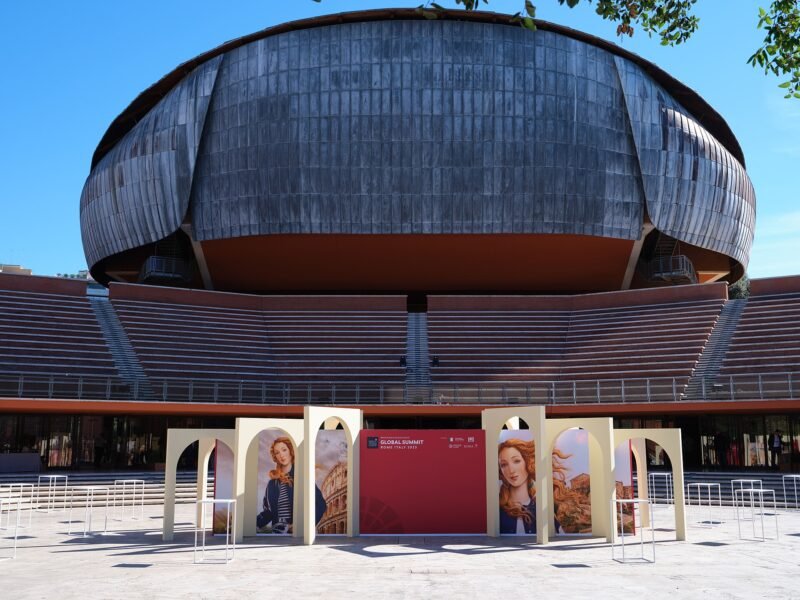
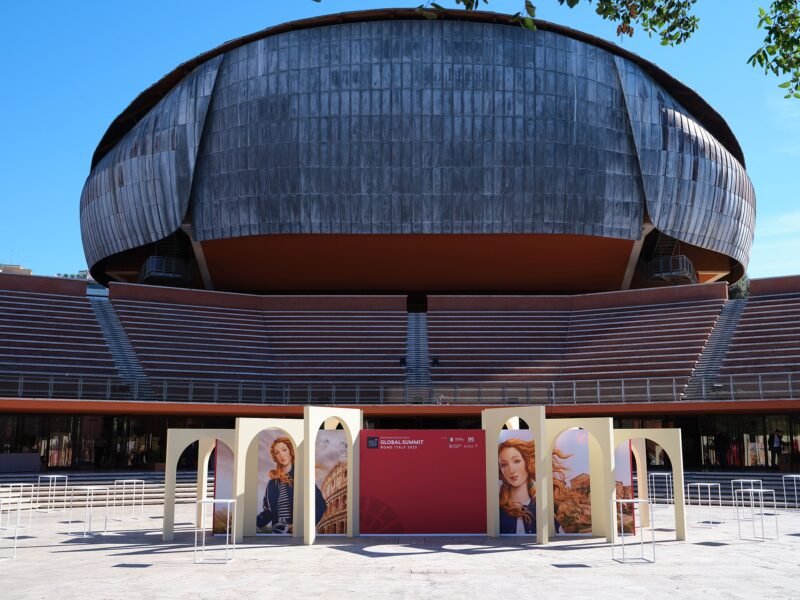
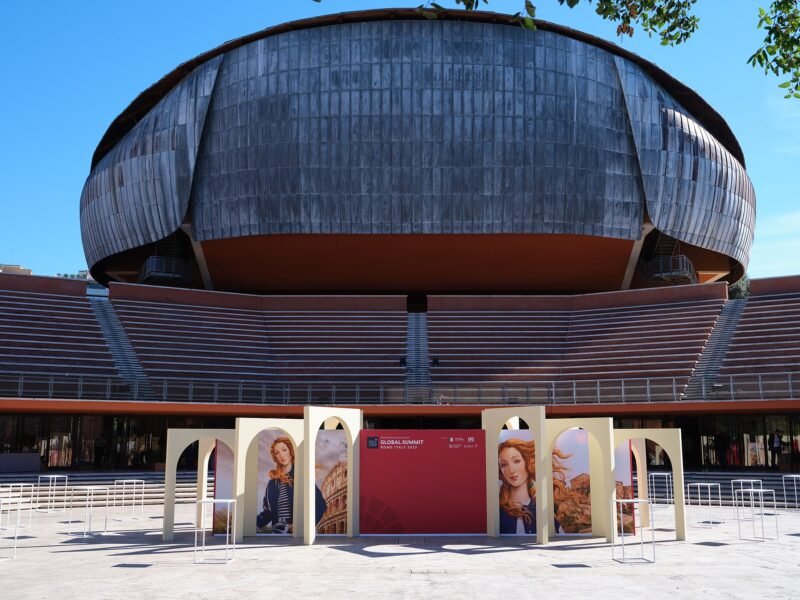
Sala Sinopoli is one of the three large halls of Auditorium Parco della Musica Ennio Morricone, the complex designed by Renzo Piano at Viale Pietro de Coubertin 30, the permanent home of the Accademia Nazionale di Santa Cecilia season since 2003.
The first hall to open
Sala Sinopoli was the first to open, on April 21, 2002, several months before the inauguration of the rest of the complex, which took place on December 21, 2002 with Sala Santa Cecilia. It is named after Giuseppe Sinopoli, one of the Academy's principal conductors.
A hall for the recital
Next to Sinopoli are Sala Santa Cecilia, the largest, and Sala Petrassi, as well as the open-air cavea and Teatro Studio. For a solo piano recital, Sinopoli offers a more intimate dimension than the large symphonic hall, in which the sound of the instrument arrives directly.
The Academy and the Auditorium
The Auditorium is the main seat of the Academy, which also keeps here the Bibliomediateca and the Museum of Musical Instruments. General information on the complex is on the page for Auditorium Parco della Musica.
A thing nobody tells you about Mikhail Pletnëv at Auditorium Parco della Musica, March 3, 2027
The first thing few people say is that Mikhail Pletnëv is, first of all, a complete musician, and that the piano is only one of his activities. Since the 1990s he has spent much of his time on the podium, with the orchestra he founded, and has written music of his own, from the Classical Symphony to the Viola Concerto. Hearing him in recital means hearing a pianist who also thinks as a conductor and a composer: the inner voices, the colors, the balances between the hands.
The second concerns the presale. Pletnëv's recital is the first concert of the second sales period of the season: tickets go on sale on January 12, 2027, four months after those for the autumn concerts. Sala Sinopoli is smaller than Santa Cecilia, and a name with this draw tends to sell out the orchestra early.
The third is practical: the Academy is inflexible about punctuality. The recital starts at 20:00 sharp, on a Wednesday, with the evening traffic on Via Flaminia. Those who arrive late do not enter the hall until the first suitable moment.
The advice I give you for visiting Mikhail Pletnëv at Auditorium Parco della Musica, March 3, 2027
The first piece of advice is to listen to The Seasons with the titles in hand. Knowing that June is a barcarolle, that November is a troika ride and that December is a holiday waltz turns a sequence of 12 pieces into a story. Those who want to go further can look up the verses of the Russian poets that the editor placed at the head of each month: Pushkin, Fet, Maykov, Nekrasov.
The second is to listen to the two Beethoven sonatas as if you did not know them. Precisely because they are famous, the risk is expecting what you already know. Pletnëv is, in our view, a performer of personal choices: it's best to listen to his tempos and colors for what they are, instead of comparing them with the record at home.
The third concerns the seat. For a piano recital the orchestra offers the fullest sound. Those who prefer the cheaper gallery still have a good view of the keyboard if they choose the right side.
The fourth is to buy early: tickets are on sale from January 12, 2027.
How to get to Auditorium Parco della Musica
Auditorium Parco della Musica Ennio Morricone is reached by tram 2, stops Flaminia/Reni or Apollodoro, and by buses 910, 982, 168 and 53. The metro does not come this far: the nearest station is Flaminio, on line A.
Metro line A and tram 2
From Flaminio station, exit onto Piazzale Flaminio and take tram 2, which runs along Via Flaminia. Get off at Flaminia/Reni or Apollodoro and walk a few minutes toward Viale Pietro de Coubertin.
Bus 910 from Termini
The 910 leaves from Piazza dei Cinquecento, in front of Termini station, and takes you to the Auditorium without any transfers.
The other lines
The 53, the 982 and the 168 complete the connections. March 3 is a regular Wednesday, so for the trip back after 22:00 it's a good idea to check the times on the ATAC route planner.
By car
The stretch of Viale Pietro de Coubertin in front of the Auditorium is closed to traffic. The complex has a paid indoor parking lot with limited spaces.
Another well-known fact, yet rarely mentioned
It's well known that Mikhail Pletnev founded the Russian National Orchestra. Less often remembered is how it came about: in 1988 the pianist was invited to play in Washington on the occasion of the summit between the two superpowers, and there he met Mikhail Gorbachev, with whom he became friends. From that relationship came the support that two years later, in 1990, allowed him to found the first Russian orchestra not funded by the State since 1917.
A second little-mentioned fact concerns his training: at the Central Music School in Moscow his classmate was Ivo Pogorelich, with whom he formed a friendship that has lasted over time.
And there's more: in Pletnev's repertoire there is a transcription work little known to the general public. Even before winning the Tchaikovsky Competition he had transcribed for piano two concert pieces from Rodion Shchedrin's Anna Karenina, and later he brought Tchaikovsky's ballets to the keyboard.
How to plan the evening
For the 20:00 recital, it's best to arrive at the Auditorium around 19:30, pick up your tickets and take your seat calmly before the doors close.
Before the concert
The Auditorium foyer has a bar and a coffee shop. If you're coming straight from work, you can eat something there, without rushing between a restaurant and the hall.
A week of music
The week of the recital is full: on March 4 the series of three concerts by Daniel Harding with Beatrice Rana begins in Sala Santa Cecilia, and the same evening the Accademia Filarmonica Romana presents the Quartetto Prometeo and cellist Claudio Pasceri at Teatro Argentina.
The right photo to take of Mikhail Pletnev at Auditorium Parco della Musica, March 3, 2027
The right photo at a recital isn't taken during the performance: a solo piano lives on pianissimos, and every noise in the hall can be heard. The moment is before the start, with the grand piano alone in the center of the Sinopoli stage and the house lights still on, or the final applause.
Outside, the photo to take is the illuminated Auditorium, with the three large lead-clad volumes that Renzo Piano arranged around the cavea. At the beginning of March, at 19:30, it's dark, and the foyer lights outline the shapes of the buildings well.
Those who arrive early can look for a less obvious detail: from the terrace between Sala Santa Cecilia and Sala Sinopoli you can see the remains of the Roman villa discovered during construction, an image that places the ancient next to the contemporary.
Some important events that happened here in history
The ground on which the Auditorium stands has a much longer history than the complex. During construction the remains of a Roman villa emerged, built in the 3rd century BC on the site of a small archaic farm from the 6th century BC. The discovery forced Renzo Piano to modify the project, moving two of the three halls. The finds are displayed in a small museum under the cavea.
Modern history begins with a demolition: in 1936 the Augusteo hall was torn down, and for over 60 years Rome remained without an auditorium built for symphonic music. In 1992 the city council chose the Olympic Village area. In 1993 Renzo Piano won the competition. On April 21, 2002 Sala Sinopoli opened, the same one as for this recital. On December 21, 2002 the rest of the complex was inaugurated.
Since 2003 the Auditorium has been the permanent home of the Accademia's season. Since 2006 it has hosted the Rome Film Festival. In 2020 it was named after Ennio Morricone. In 2027 the bicentennial of Beethoven's death is celebrated here with several concerts.
Who has passed through: Mikhail Pletnev at Auditorium Parco della Musica, March 3, 2027
Sala Sinopoli has had weighty guests since the first day. At its opening in 2002, the composer Goffredo Petrassi wanted to be present and heard the first performance in the new hall of his Concert Overture. The smallest hall of the complex now bears his name. Since then, the great names of chamber music and recitals hosted by the Accademia have appeared on the Sinopoli stage.
In the 2026/2027 season the hall welcomes, among others, Handel's Theodora with the Monteverdi Choir, the Quatuor Ebène with the complete Beethoven quartets, Sol Gabetta and Bertrand Chamayou, Jordi Savall, Allan Clayton's Winterreise and, on March 17, the piano duo of Lucas and Arthur Jussen.
And through Pletnev's career pass names that tell the story of an era: Yakov Flier and Lev Vlassenko, the teachers at the Moscow Conservatory. Ivo Pogorelich, the classmate. Martha Argerich, with whom he won a Grammy. Rachmaninoff, the declared model. On March 3 it's his turn, alone at the piano, with Beethoven and Tchaikovsky.
Pletnev in the Accademia's 2026/2027 season
Mikhail Pletnev's recital is part of the 2026/2027 season of the Accademia Nazionale di Santa Cecilia, which alongside symphonic concerts offers recitals and chamber music, largely in Sala Sinopoli.
The season's pianists
The piano has a prominent place: the recital by Evgeny Kissin and András Schiff in November, Beatrice Rana with Harding in March, the Jussen duo on March 17.
The overview
The full program is covered in the page on the 2026/2027 Santa Cecilia season.
Accessibility and kids
For accessibility needs in Sala Sinopoli, it's best to contact the Accademia's box office in advance at the infoline 06 8082058 or at biglietteria@santacecilia.it, to choose the most suitable seat and learn the access route.
People with reduced mobility
Arriving well in advance lets you ask the hall staff for the best route before the line forms at the entrance.
With kids
The Seasons, 12 short pieces with a title each, are a good way in for a kid who studies piano: they're short pieces, each with a precise image. The 20:00 start time on a Wednesday makes the evening demanding for the youngest.
The neighborhood around the Auditorium
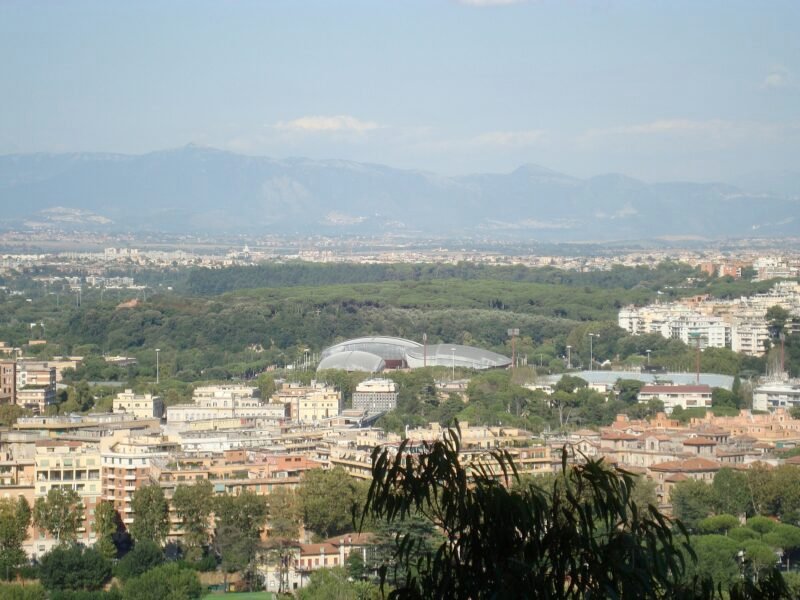
The Auditorium stands between Villa Glori, the Olympic Village, the Corso di Francia viaduct and Viale Maresciallo Pilsudski: a piece of modern Rome where contemporary architecture dialogues with greenery.
MAXXI
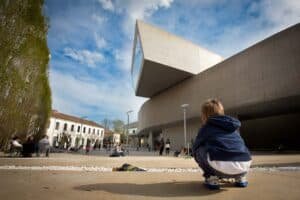
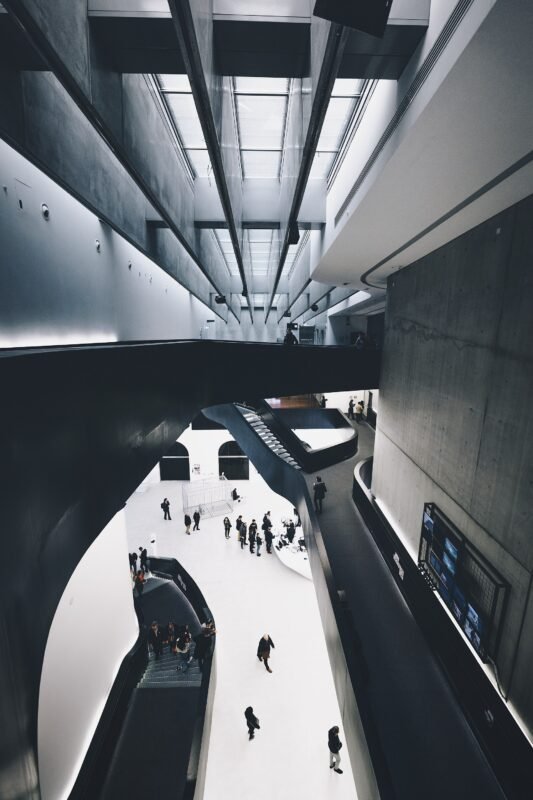
Near the Flaminia/Reni stop of tram 2 is MAXXI, the national museum of 21st-century arts.
Toward the Tiber
From the Auditorium you walk down toward the river and the Ponte della Musica, the footbridge that connects Flaminio to the Foro Italico.
Toward the center
Tram 2 takes you back to Piazzale Flaminio, where Villa Borghese begins.
Where to eat before or after the concert
Inside the Auditorium there is a bar and a coffee shop in the foyer and a bar restaurant with street access too: the most convenient solution for those coming straight from work.
In the neighborhood
Between the Olympic Village, Via Flaminia and Piazza Mancini there are pizzerias, trattorias and neighborhood bars. On a Wednesday it's best to book early and have dinner before the concert.
Milvian Bridge
If you prefer to eat afterward, you'll find the widest choice in the Ponte Milvio area, a few minutes away, where several places stay open late.
Early March in Rome
Early March is one of the best moments for a musical trip to Rome: in a few days, Pletnev on the 3rd, Harding and Beatrice Rana from the 4th to the 6th, the Quartetto Prometeo at Teatro Argentina on the 4th. The days are getting longer and the museums are still uncrowded, but the evenings stay cool: leaving the Auditorium, around 22:00, you'll need a heavy jacket.
Two weeks of piano
Piano lovers can put together a small festival of their own: Pletnev on March 3 in Sala Sinopoli, Beatrice Rana with Prokofiev's Third Concerto in Sala Santa Cecilia from the 4th to the 6th, and on March 17, again in Sala Sinopoli, the duo of brothers Lucas and Arthur Jussen with a program for two pianos that runs from Bach to Gershwin. Three different ways of understanding the instrument, under the same roof.
Frequently asked questions about Pletnev at Santa Cecilia
When does Mikhail Pletnev play in Rome?
Mikhail Pletnev plays for the Accademia di Santa Cecilia on Wednesday, March 3, 2027 at 20:00 in Sala Sinopoli of the Auditorium Parco della Musica Ennio Morricone, at Viale Pietro de Coubertin 30.
What does Pletnev play at Santa Cecilia?
Mikhail Pletnev's program at Santa Cecilia includes Beethoven's Sonata No. 8, Op. 13 "Pathétique" and Sonata No. 14, Op. 27 No. 2 "Moonlight," and Tchaikovsky's The Seasons, Op. 37a, 12 pieces dedicated to the months of the year.
How much are the tickets for Pletnev?
Tickets for Mikhail Pletnev's recital cost €38 in the orchestra, €26 in the second-section gallery and €18 in the third-section gallery. They go on sale on January 12, 2027 at the box offices of the Auditorium and of Via Vittoria 6 and through the circuit authorized by the Accademia.
Who is Mikhail Pletnev?
Mikhail Pletnev is a Russian pianist, conductor and composer born in Arkhangelsk in 1957. He won the gold medal at the Tchaikovsky Competition in 1978, founded the Russian National Orchestra in 1990 and won a Grammy in 2005 with Martha Argerich.
What is Tchaikovsky's The Seasons?
Tchaikovsky's The Seasons, on the program of Pletnev's recital, are 12 piano pieces, one for each month, published in 1876 by the St. Petersburg magazine Nuvellist, each introduced by verses from Russian poets. They last about 43 minutes.
How do you get to Auditorium Parco della Musica?
Auditorium Parco della Musica, at Viale Pietro de Coubertin 30, can be reached by tram 2 from Flaminio station on metro line A, stops Flaminia/Reni or Apollodoro, and by buses 910 from Termini, 53, 982 and 168.
Final advice on Pletnev at Santa Cecilia
A pianist who is also a conductor and composer, two Beethoven sonatas in the bicentennial year and Tchaikovsky's cycle of the months played by someone who has tied his whole career to that composer: in our opinion it's one of the most personal recitals of the Roman season. My advice is to buy your ticket as soon as presales open on January 12, listen to The Seasons with the titles of the months in mind and get to the hall well ahead of time, because at 20:00 the doors close.
Article written by the editorial team of Tour Leader Pro, contact them for Private/Corporate/V.I.P. Tours and Experiences.
Planning a trip to Rome? The English-language guides to visiting the city are on ItalyPlanner.com.
Contact Information
Nearby
 Museum of Musical Instruments (MUSA)100 m
- Auditorium Parco della Musica100 m
- Villa Glori500 m
- Fountain of Anna Perenna500 m
- MAXXI – National Museum of 21st Century Arts700 m
- Flaminio700 m
Upcoming events nearby
- Roma Jazz Festival 2026, November 1 to 24 at the Auditorium and Casa del Jazz100 m
- Evgeny Kissin and András Schiff at Santa Cecilia, November 9, 2026100 m
- Roma Gospel Festival 2026 at Auditorium Parco della Musica, December 13, 2026 to January 1, 2027100 m
- Santa Cecilia 2026/2027 Concert Season at Auditorium Parco della Musica, October 21, 2026 to June 5, 2027100 m



You might also like
- Daniel Harding Conducts Ravel and Debussy at Auditorium Parco della Musica, April 8, 9 and 10, 2027
- Argerich and Capuçon for Beethoven at Auditorium Parco della Musica, April 6, 2027
- Gustavo Gimeno and Frank Peter Zimmermann at Auditorium Parco della Musica, April 1, 2 and 3, 2027
- Manfred Honeck Conducts Beethoven at Santa Cecilia: March 25, 26 and 27, 2027
- Grigory Sokolov at Santa Cecilia, March 22, 2027
- Charles Dutoit and Martha Argerich at Auditorium Parco della Musica, March 18, 19 and 20, 2027