Il teatro dell’amore e del potere at the Teatro di Villa Torlonia, October 17 to December 20, 2026
In short. Il teatro dell'amore e del potere, the Teatro di Roma performance tour curated by Roberto Scarpetti, returns to the Teatro di Villa Torlonia from October 17 to December 20, 2026, in 12 Saturday and Sunday dates, all at 11 a.m.
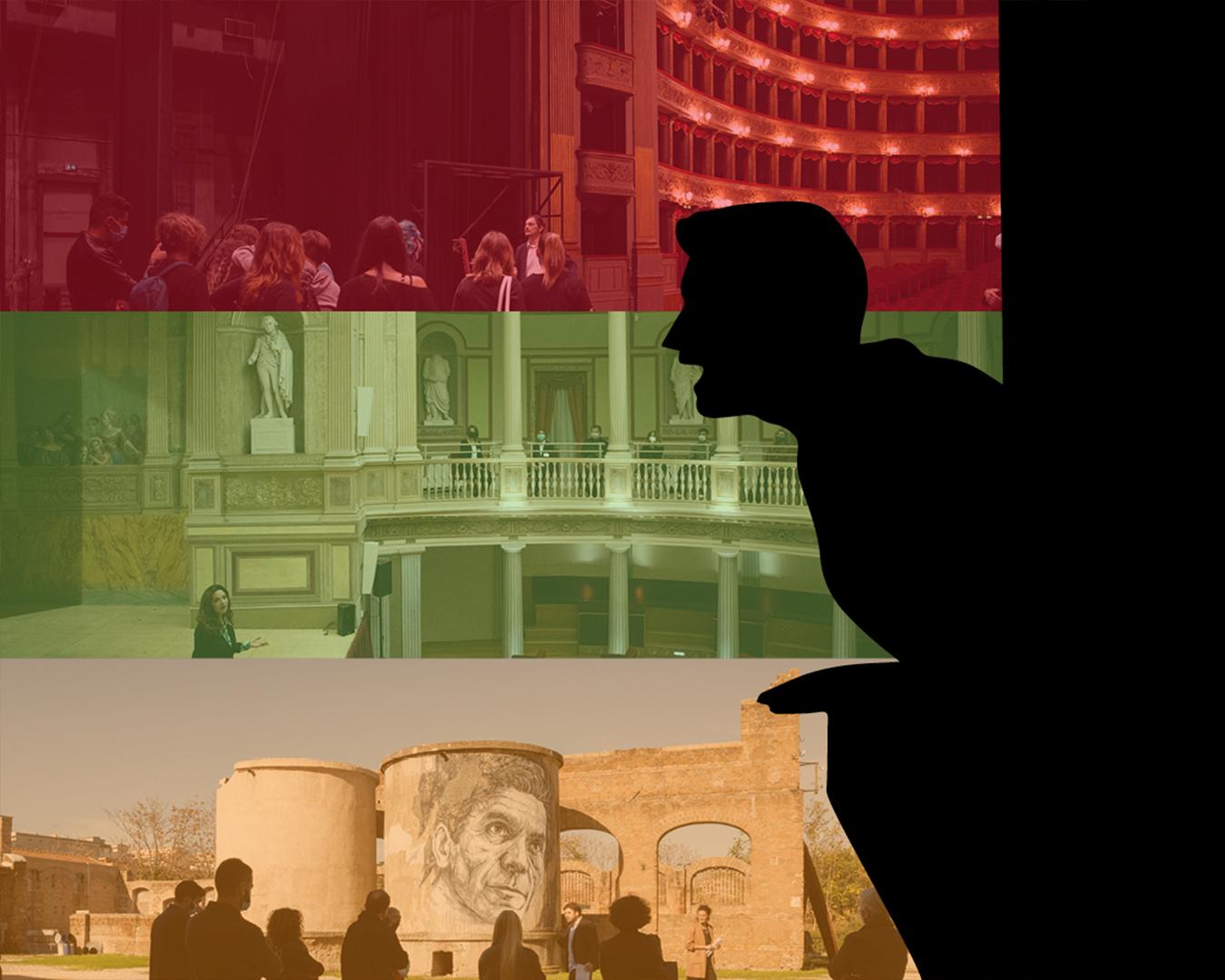
Il teatro dell'amore e del potere, the Teatro di Roma performance tour curated by Roberto Scarpetti, returns to the Teatro di Villa Torlonia from October 17 to December 20, 2026, in 12 Saturday and Sunday dates, all at 11 a.m. The theater is at via Lazzaro Spallanzani 1/A, inside the park of Villa Torlonia, in the Nomentano district, and is reached by Metro B, stops Bologna or Policlinico, by trams 3 and 19, stop viale Regina Margherita/Nomentana, and by the buses that run along via Nomentana. Prices are published on the Teatro di Roma's official website, where tickets are bought online through the presale circuit authorized by the organization, for information the Teatro di Roma gives the number 06 684000314 and the address promozione@teatrodiroma.net.
Language: performed in Italian. No English version or English surtitles are announced.
Il teatro dell'amore e del potere at a glance: dates, time, format
Il teatro dell'amore e del potere is an acted guided tour: Teatro di Roma actors lead the audience through the rooms of the Teatro di Villa Torlonia, playing the characters who lived in them. There are 12 dates, from October 17 to December 20, 2026, always at 11 in the morning.
The full calendar
The dates published by the Teatro di Roma are Saturday, October 17 and Sunday, October 18, Sunday, October 25 and Saturday, October 31, Sunday, November 15 and Sunday, November 22, Saturday, December 5 and Sunday, December 6, Saturday, December 12 and Sunday, December 13, Saturday, December 19 and Sunday, December 20. November has only two dates, December six: if you want a quiet weekend choose October, if you want to combine the visit with the holiday atmosphere choose December.
The time
All tours start at 11. It's a weekend-morning time: it leaves room to arrive calmly and, after the tour, to stay in the park for lunch or a walk to the villa's museums.
Length and groups
In past seasons' editions the Teatro di Roma presented the tour as a roving show of about 60 minutes, for groups of 25 people, with the possibility for individual spectators to join groups already formed. It's a size designed for the theater's spaces, which are not those of a large hall.
Tickets
Tickets are bought online from the Teatro di Roma's website, which links to its own sales circuit, where every date is shown as available. With 12 dates and small groups, seats per date are few: the advice is to buy a few days ahead, especially for the December Sundays.
What you see in Il teatro dell'amore e del potere
The performance tour takes the audience through all the rooms of the Teatro di Villa Torlonia, from the theater hall to the decorated private apartments, all the way to the most hidden rooms. The actors play the characters tied to the history of the theater and the villa, from the princes Alessandro Torlonia and Teresa Colonna to Benito Mussolini, to the painter Costantino Brumidi.
A theater born for a wedding
The Teatro di Roma describes the Teatro Torlonia as a building constructed in the mid-1800s by Prince Alessandro Torlonia to celebrate his marriage to Teresa Colonna. Hence the title: the love is that of a prince who builds a theater for his bride, the power is that of a family of bankers who became among the richest in Rome, and then that of the dictator who, a century later, lived in the villa.
The rooms and the apartments
The route crosses the theater hall and the finely decorated apartments, which the Teatro di Roma attributes to the hand of Costantino Brumidi. The audience enters, says the official presentation, the most recondite rooms of the palace and the private lives of those who lived in them. That's the difference between just any guided tour and this one: you don't look at the rooms, you go into them with their inhabitants.
The secrets of the construction
Previous editions promised to reveal the secrets of the building's construction as well. The Teatro Torlonia was designed by Quintiliano Raimondi, the same architect as the Limonaia, in the great building project with which Alessandro Torlonia transformed the family villa from 1832 onward.
The tone of the tour
It isn't an art history lecture and it isn't a costume play for its own sake. It's a story told in many voices, where the audience moves from room to room and meets one character after another. In our view it's the best format for a building like this: a private theater is understood only if someone lives in it again, even if only for an hour.
Roberto Scarpetti and the actors of the Teatro di Roma
The performance tour is curated by Roberto Scarpetti and performed by a rotating cast of Teatro di Roma actresses and actors: Francesca Astrei, Antonio Bannò, Gloria Gulino, Michele Lisi, Sylvia Milton, Alice Palazzi, Lorenzo Parrotto, Giulia Sucapane, Martina Tinnirello, Giulia Trippetta and Diego Valentino Venditti.
A rotating cast
The cast changes from one date to the next, and that's one of the pleasures of the format: whoever returns a second time may find different performers in the same roles. Some names, like Francesca Astrei, Antonio Bannò, Sylvia Milton, Alice Palazzi, Lorenzo Parrotto, Giulia Trippetta and Diego Valentino Venditti, were already in the cast of the 2023/2024 season: a sign of a company that knows the spaces well.
A long-running project
Il teatro dell'amore e del potere is not new. The Rome city cultural portal lists it in the Teatro di Roma's 2022/2023 and 2023/2024 seasons, and the tour was also on the program in the fall of 2024. The Teatro di Roma has also included it in the Felicittà 2026 initiative. A format that lasts several seasons is a format that works.
The Teatro di Roma performance tours
The Villa Torlonia tour is part of a broader project: the Teatro di Roma offers performance tours in all three of its theaters, the Argentina, the India and the Torlonia. Each tells the story of its own building with the company's actors. The Villa Torlonia one is the most intimate, because of the size of the hall and the theme.
Costantino Brumidi, the painter of the Teatro Torlonia
Costantino Brumidi is the painter whom the Teatro di Roma names as the author of the decorations of the theater hall and the apartments of the Teatro Torlonia. After working in Rome he emigrated to the United States, where he decorated the American Capitol, an undertaking that earned him the nickname Michelangelo of America.
One of the first brain drains
The presentation of the tour in past editions jokingly described him as one of our first "brains on the run". The formula is modern, but the destiny is ancient: an artist trained in Rome who finds across the ocean the opportunity of a lifetime and becomes a state artist in another country.
Why he is a character in the tour
Brumidi is the thread that ties a private theater in the Nomentano district to the Capitol in Washington. Meeting him in the rooms he painted, played by an actor, is the moment that gives the tour an international breadth. For those arriving from the United States, he is also the most surprising character.
The Teatro di Villa Torlonia: history of the building
The Teatro di Villa Torlonia is the 19th-century theater of the Torlonia villa, designed by Quintiliano Raimondi at the behest of Prince Alessandro Torlonia, left abandoned for a long time and reopened in 2013 after restoration. Today it is one of the three venues of the Fondazione Teatro di Roma, along with the Argentina and the India.
The bankers' villa
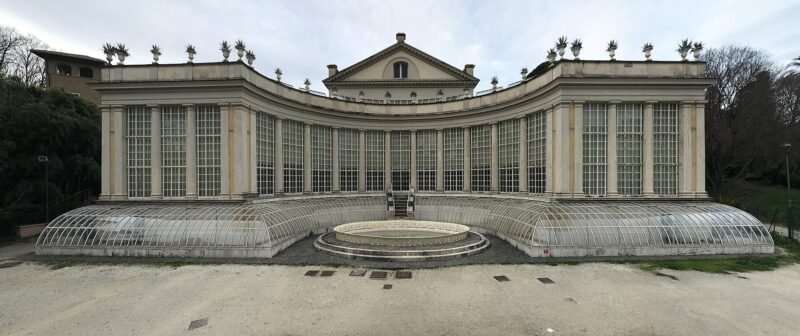
When Alessandro Torlonia, starting in 1832, turned the family villa into a grand residence for receptions, he called on several architects: Giovan Battista Caretti, Giuseppe Jappelli and Quintiliano Raimondi, who got the Theater and the Limonaia. The theater was the place for the family's parties, receptions and private shows.
The decline
After the years of Mussolini's residence and the occupation by the Allied command between 1944 and 1947, the villa fell into neglect. The theater followed its fate, and for decades it was a closed building inside a run-down park.
The restoration and reopening
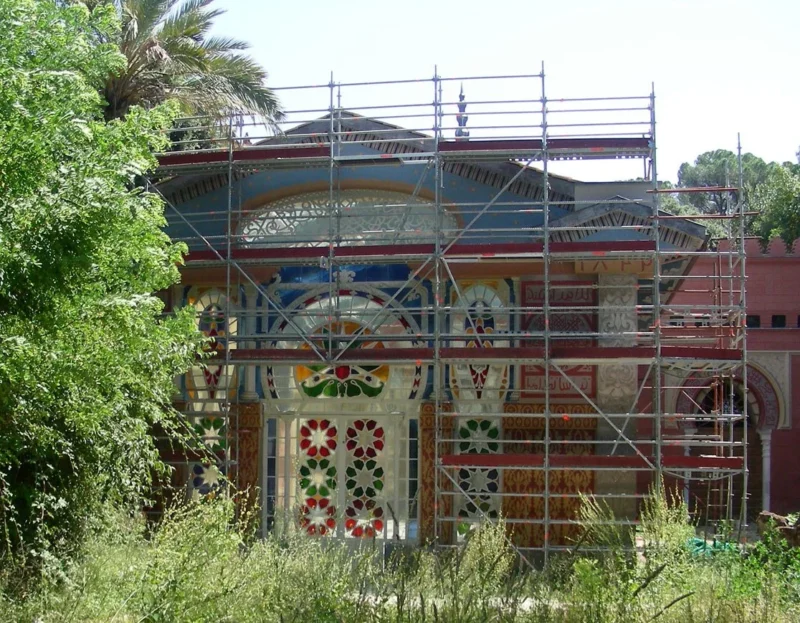
Bought by the Comune in 1977 and opened to the public in 1978, the villa has been restored since 1991, one building after another. The Theater reopened in 2013, the Serra Moresca followed in 2021. The performance tour is, in effect, the story of that rebirth.
Villa Torlonia: the park around the theater
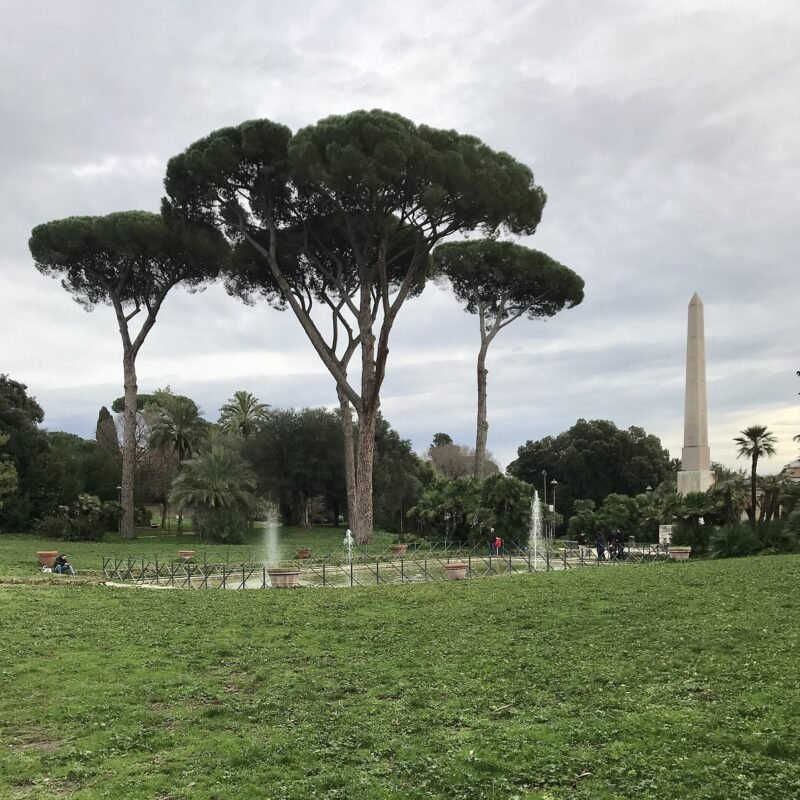
Villa Torlonia is a public park in the Nomentano district, municipally owned since 1977 and open to citizens since 1978, with its main entrance at via Nomentana 70 and other entrances on via Lazzaro Spallanzani, it is open from dawn to dusk.
From the Pamphilj to the Torlonia
Between the 1600s and the mid-1700s the estate belonged to the Pamphilj, it then passed to Cardinal Girolamo Colonna and in 1797 was bought by the banker Giovanni Raimondo Torlonia. In 1806 Giuseppe Valadier redesigned the park and transformed the existing buildings into the Casino Nobile and the Casino dei Principi.
Alessandro's architecture
With his son Alessandro, from 1832, came Caretti, Jappelli and Raimondi. Jappelli designed the Swiss Hut, later the Casina delle Civette, and the Serra Moresca. In 1842 Alessandro had the obelisks of Villa Torlonia erected in memory of his parents.
The 20th century
In 1919 Jewish catacombs were discovered in the park. From the 1920s to July 1943 the Casino Nobile was Mussolini's residence, and he paid a symbolic rent of one lira, between 1942 and 1943 the anti-aircraft bunker was built, open today on certain days, as the page on visits to the Villa Torlonia Bunker explains.
The museums, today
The Villa Torlonia Museums occupy the Casino Nobile, the Casino dei Principi and the Casina delle Civette. This same fall the Casino dei Principi hosts the exhibition described on the page on Elisa Montessori at the Villa Torlonia Museums, while the Serra Moresca hosts the show by Agnieszka Mastalerz through November 22.
Getting to the Teatro di Villa Torlonia
The Teatro di Villa Torlonia, at via Lazzaro Spallanzani 1/A, is reached by Metro B, stops Bologna or Policlinico, by trams 3 and 19 and by the bus lines on via Nomentana and via Bari.
Metro B
From Bologna you walk toward via Nomentana, from Policlinico you go up viale Regina Margherita: in both cases about 10 minutes on foot are enough. For the theater it's best to head for the via Spallanzani entrances, which lead straight to the building.
Tram
Trams 3 and 19 stop at viale Regina Margherita/Nomentana, a few steps from the villa. The 19 is convenient from San Lorenzo and from Porta Maggiore, the 3 from Trastevere and the Colosseum.
Bus
On via Nomentana run, among others, lines 60, 66, 82 and 90, on via Bari the 61, 490, 495 and 649. On Saturday and Sunday mornings frequencies are lower: better to check updated routes on the transport company's website before leaving.
By car
The Nomentano is a residential district and parking along via Nomentana on weekends is difficult. With a tour that starts punctually at 11, the risk of driving around in vain is real: public transport remains the most sensible choice.
Where to eat after the visit to Villa Torlonia
Inside Villa Torlonia the Limonaia, built by Quintiliano Raimondi like the theater, is used as a refreshment point, outside the park, along via Nomentana and between piazza Bologna and viale XXI Aprile, there are bars, pizzerias and trattorias for every price range.
In the park
With a visit ending around noon, the Limonaia is the most natural solution: you stay in the park, a few steps from the theater, in a building by the same architect. For a coffee before 11 it's just as convenient.
In the neighborhood
The Nomentano is a residential district, with places frequented mostly by those who live there. In the streets around piazza Bologna the offer is wide and prices are those of a neighborhood, not of the historic center. On Sundays it's best to book for lunch.
Practical tips for the performance tour
Il teatro dell'amore e del potere is followed standing and on the move, going from room to room with the group. A few precautions help you enjoy it.
Arrive early
A roving tour doesn't wait for latecomers: the group leaves with the actors, and whoever arrives late risks missing the beginning. It's best to be in front of the theater a quarter of an hour before 11.
Shoes and clothing
Comfortable shoes, because you walk and climb, layered clothing, because between October and December the park can be cool in the morning and the interiors of historic buildings are not always warm.
With children
The acted format works well with kids, who follow a story told by characters better than an explanation. For the youngest an hour on your feet can be long: the choice depends on age and familiarity with theater.
Accessibility
The Teatro di Villa Torlonia is a 19th-century building on several levels, and the tour crosses different rooms. For information on access for people with reduced mobility the reference is the Teatro di Roma, at 06 684000314 or promozione@teatrodiroma.net, to be contacted before buying.
A curiosity about Il teatro dell'amore e del potere at the Teatro di Villa Torlonia, October 17 to December 20, 2026
The loveliest curiosity is the one that gives the tour its title. The Teatro di Villa Torlonia was born, the Teatro di Roma says, as a wedding gift: Alessandro Torlonia had it built in the mid-1800s to celebrate his marriage to Teresa Colonna. A private theater as a marital gift says a lot about the wealth of a family that, a few decades earlier, was still a rising house of bankers.
The second curiosity concerns the painter of the rooms. Costantino Brumidi, who decorated the theater hall and the apartments, left Rome for the United States and there painted the American Capitol, earning the nickname Michelangelo of America. Few American tourists know that part of his Roman work is in a park in the Nomentano.
The third is a coincidence of fate. The same complex that celebrated a prince's love became, a century later, the home of the head of Fascism. The tour's title holds together precisely these two poles: the private feeling that builds a theater, the public power that occupies a villa. It isn't a literary device: it's the true story of the building.
Something nobody tells you about Il teatro dell'amore e del potere at the Teatro di Villa Torlonia, October 17 to December 20, 2026
What nobody says is that the Teatro di Villa Torlonia, for many Romans, is a building seen from outside and never from inside. Those who cross the park know it as a facade among the trees, the halls and apartments stay closed outside the shows. The performance tour is one of the few ways to get into the theater's private rooms, which the public doesn't see on ordinary evenings.
The second is that the format has a reduced capacity. In past editions the groups were 25 people, and there are 12 dates in all: over a good two months, that is a very small number of seats for a city like Rome. The December Sundays, with the holiday audience, are the first to fill up.
The third concerns the park. Villa Torlonia is open from dawn to dusk, and with a tour at 11 there are no timing problems, but whoever wants to add a villa museum has to consider that the Villa Torlonia Museums have their own hours and tickets, separate from those of the theater. Planning the whole morning, and not just the hour of the tour, is the key.
My advice for visiting Il teatro dell'amore e del potere at the Teatro di Villa Torlonia, October 17 to December 20, 2026
The advice is to make the tour the center of a morning at Villa Torlonia, not an isolated appointment. Enter by the via Nomentana gate around 10, walk past the obelisks and the Casino Nobile, and reach the theater with a quarter of an hour to spare. The tour begins at 11 and, in past editions, lasted about an hour.
Afterward, stay in the park. Head down toward the Casina delle Civette and the Serra Moresca, where Jappelli's architecture completes the story of the Torlonia 1800s. If you want to close the circle of history, Mussolini's bunker, when open, tells the other half of the title, power.
Choose the date by season. Late-October mornings have the best light for the park, December ones have the charm of the holidays, but are colder and more in demand.
And book ahead. 12 dates, small groups: in Rome a few days of word of mouth are enough to sell out a weekend.
Another well-known fact, yet rarely cited
It's well known that Mussolini lived at Villa Torlonia. It's less often remembered that he wasn't the owner: he lived there as a tenant, and the rent paid to the Torlonia was symbolic, one lira. The Casino Nobile was the residence of the head of government and his family from the 1920s to July 1943, and between 1942 and 1943 an anti-aircraft bunker was dug there.
Just as rarely cited is what lies under the park. In 1919 Jewish catacombs came to light, and in 2004, during restoration, an underground hall from the Etruscan era was discovered. The public crossing the avenues to reach the theater walks over centuries of buried history.
The obelisks, too, which greet those entering from via Nomentana, have a rarely told story. The blocks of Baveno granite arrived at the villa on January 4, 1840, the first obelisk was raised on June 4, 1842 in the presence of Pope Gregory XVI and Ludwig of Bavaria, the second on July 26. For a tour that speaks of power, it's a good premise: the Torlonia knew how to stage their grandeur outdoors too.
The right photo to take at Il teatro dell'amore e del potere at the Teatro di Villa Torlonia, October 17 to December 20, 2026
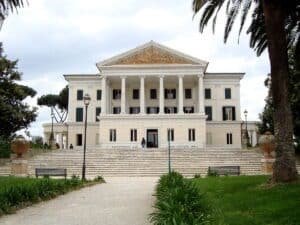
The right photo is taken outside, before going in: the facade of the Teatro di Villa Torlonia among the park's trees, in morning light. At 10:30, in autumn, the sun is still low and draws the building's forms well. It's the image that best tells a private theater inside a princely garden.
Inside, during the performance tour, the advice is to leave your phone in your pocket. The actors perform a few steps from the audience, in small rooms: the light of a screen disturbs them and the other spectators, and you lose the sense of a story built on closeness. If photos are allowed at some moment, the guides themselves will say so.
The second photo is taken at the obelisks, at the via Nomentana entrance, with the Casino Nobile in the background: it's the image of the power of the Torlonia, and then of Mussolini, that completes the day.
The third, for those who love details, is at the Serra Moresca or the Casina delle Civette, the park's most fanciful architecture, a few minutes' walk from the theater.
Some important events that happened here in history
Villa Torlonia belonged to the Pamphilj between the 1600s and the mid-1700s, then to Cardinal Girolamo Colonna. In 1797 Giovanni Raimondo Torlonia bought it, in 1806 Giuseppe Valadier redesigned the park. From 1832 his son Alessandro transformed it with Caretti, Jappelli and Raimondi, who built the Theater, according to the Teatro di Roma to celebrate the marriage to Teresa Colonna. On June 4, 1842 the first obelisk was raised, in the presence of Gregory XVI and Ludwig of Bavaria.
In 1919 the Jewish catacombs were discovered. In the 1920s Mussolini rented the Casino Nobile, where he lived until July 1943, between 1942 and 1943 the bunker was built. From 1944 to 1947 the villa hosted the Allied command, then it was abandoned.
In 1977 the Comune bought the villa, opened to the public in 1978. Restoration began in 1991, the Casina delle Civette, hit by a fire in 1991, was restored between 1992 and 1997. In 2004 the Etruscan underground hall came to light. In 2013 the Theater reopened, in 2021 the Serra Moresca. Since the 2022/2023 seasons the Teatro di Roma has brought here the performance tour Il teatro dell'amore e del potere, which returns from October 17, 2026.
Who has come through Il teatro dell'amore e del potere at the Teatro di Villa Torlonia, October 17 to December 20, 2026
Through the Teatro di Villa Torlonia have passed, first of all, its patrons: Prince Alessandro Torlonia and Teresa Colonna, for whose wedding the theater was built. With them, the architects who made the 19th-century villa, Giuseppe Valadier, Giovan Battista Caretti, Giuseppe Jappelli and Quintiliano Raimondi, and the painter Costantino Brumidi, who decorated the rooms before leaving for the United States to paint the American Capitol.
Pope Gregory XVI and Ludwig of Bavaria were guests of the villa for the raising of the first obelisk in 1842. In the 20th century the villa was the home of Benito Mussolini and his family for almost 20 years, after the war the Allied command settled in.
Since the reopening in 2013 the theater has joined the Teatro di Roma network, with its shows and companies. Through the performance tours pass the actors who give voice to all these characters: Francesca Astrei, Antonio Bannò, Gloria Gulino, Michele Lisi, Sylvia Milton, Alice Palazzi, Lorenzo Parrotto, Giulia Sucapane, Martina Tinnirello, Giulia Trippetta and Diego Valentino Venditti. The audience, for an hour, becomes the latest guest in a long series.
Fall and winter at Villa Torlonia
The performance tour accompanies the villa from mid-October to the Christmas holidays, the period when the park changes color and the Villa Torlonia Museums offer new exhibitions. It's a season suited to a slow morning, between theater and a stroll.
October and November
Late-October mornings are still mild, and the park is at its best with the first yellow leaves. November has only two dates, the 15th and the 22nd: they're the quietest of the whole calendar.
December
December concentrates six dates in three weekends. A performance tour is also a gift idea that is rarely found in Rome: an hour inside a princely theater, with actors telling who lived there. In nearby parks, like Villa Ada, the morning can continue with a longer walk.
A morning at Villa Torlonia around the performance tour
With the performance tour at 11, the morning at Villa Torlonia is organized in three parts: the park and the obelisks first, the theater at 11, the museums or the Limonaia after. It's an itinerary that holds together the villa's two souls, the princely one of the 1800s and the one of the 1900s.
Before 11
Entering from via Nomentana 70 you immediately meet the obelisks and the Casino Nobile, Valadier's palace that was Mussolini's residence. From there to the theater, toward via Spallanzani, a few minutes along the avenue are enough.
After the visit
Leaving the theater you can go down toward the southern part of the park, the one designed by Jappelli, with the Casina delle Civette and the Serra Moresca, or stop at the Limonaia. Whoever still has energy can enter one of the Villa Torlonia Museums, with a separate ticket.
The sense of the route
Done in this order, the round turns the performance tour into a key to reading the whole villa: the actors tell the characters, the park shows the places where those characters lived. This is how Villa Torlonia works best.
Frequently asked questions about Il teatro dell'amore e del potere
When does Il teatro dell'amore e del potere take place at Villa Torlonia?
Il teatro dell'amore e del potere takes place at the Teatro di Villa Torlonia from October 17 to December 20, 2026, in 12 dates: October 17, 18, 25 and 31, November 15 and 22, December 5, 6, 12, 13, 19 and 20. All tours start at 11.
What is Il teatro dell'amore e del potere?
Il teatro dell'amore e del potere is a Teatro di Roma performance tour, curated by Roberto Scarpetti: actors guide the audience through the theater hall and the apartments of the Teatro di Villa Torlonia, playing characters such as the Torlonia princes, Mussolini and the painter Costantino Brumidi.
Where is the Teatro di Villa Torlonia?
The Teatro di Villa Torlonia is at via Lazzaro Spallanzani 1/A, inside the park of Villa Torlonia, in the Nomentano district. It is reached by Metro B, stops Bologna or Policlinico, by trams 3 and 19 and by the buses on via Nomentana.
How long does the performance tour at the Teatro Torlonia last?
In previous editions the performance tour at the Teatro Torlonia lasted about 60 minutes, for groups of 25 people. It's best to arrive a quarter of an hour before 11, because the route is roving and the group leaves together.
Where do you buy tickets for Il teatro dell'amore e del potere?
Tickets for Il teatro dell'amore e del potere are bought online from the Teatro di Roma's official website, which links to its own sales circuit. For information the Teatro di Roma gives the number 06 684000314 and the address promozione@teatrodiroma.net.
Who are the actors of the Villa Torlonia performance tour?
The Villa Torlonia performance tour has a rotating cast of Teatro di Roma actors: Francesca Astrei, Antonio Bannò, Gloria Gulino, Michele Lisi, Sylvia Milton, Alice Palazzi, Lorenzo Parrotto, Giulia Sucapane, Martina Tinnirello, Giulia Trippetta and Diego Valentino Venditti.
Who was Costantino Brumidi?
Costantino Brumidi is the painter who decorated the hall and apartments of the Teatro di Villa Torlonia, according to the Teatro di Roma. Having emigrated to the United States, he decorated the American Capitol and was called the Michelangelo of America, in the performance tour he is one of the characters.
Final advice on Il teatro dell'amore e del potere
At Villa Torlonia the park alone tells half the story. The other half is inside the buildings, and the theater is the hardest to see. This performance tour is the smartest way to get in: pick a late-October morning, arrive at 10, walk around the obelisks and then let the actors guide you. When you come out, the villa will seem like another place.
Article written by the editorial team of Tour Leader Pro, contact them for Private/Corporate/V.I.P. Tours and Experiences.
Planning a trip to Rome? The English-language guides to visiting the city are on ItalyPlanner.com.
Contact Information
Nearby
 Jewish Catacombs of Villa Torlonia100 m
- Obelisks of Villa Torlonia100 m
- Casina delle Civette – Villa Torlonia Museums100 m
- Casino Nobile – Villa Torlonia Museums200 m
- Villa Torlonia200 m
- Serra Moresca200 m

Upcoming events nearby
- Quartett by Heiner Müller at Teatro di Villa Torlonia, January 21-24, 2027100 m
- Beata oscenità by Serena Sinigaglia at Teatro di Villa Torlonia, March 4 to 7, 2027100 m
- Archimede. La solitudine di un genio with Mario Incudine at Teatro di Villa Torlonia, March 18 to 21, 2027100 m
- Ritratto d’autore: Igor Stravinsky and Petrushka with Roma Tre Orchestra at Teatro Torlonia, November 12, 2026100 m

You might also like
- Fire of Georgia, Royal National Ballet of Georgia at Teatro Italia, December 10, 2026
- Il Matricomio, Non ti prometto niente
- Festival delle Favole at Teatro Italia, December 13, 2026
- Arteteca in Non tutte le suocere vengono per nuocere at Teatro Italia, April 9, 2027
- Adamo Romano in Maledizioni live a teatro at Teatro Italia, April 3, 2027
- Danza… che Passione! 23ª edizione