Elisa Montessori. Nel corso del tempo at the Casino dei Principi, from September 30, 2026 to February 28, 2027
In short. Elisa Montessori. Nel corso del tempo is the major retrospective devoted to the Genoese-born, Roman-by-adoption painter, open from September 30, 2026 to February 28, 2027 at the Casino dei Principi, one of the buildings of the Musei di…
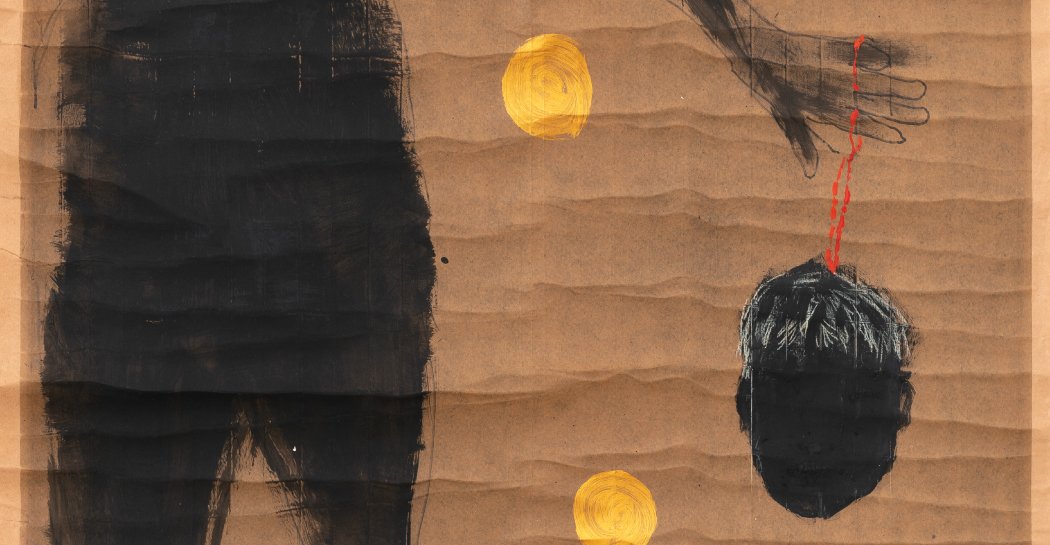
Elisa Montessori. Nel corso del tempo is the major retrospective devoted to the Genoese-born, Roman-by-adoption painter, open from September 30, 2026 to February 28, 2027 at the Casino dei Principi, one of the buildings of the Musei di Villa Torlonia, with the main entrance at Via Nomentana 70. Hours are Tuesday to Sunday from 9:00 to 19:00, with last entry at 18:00. On December 24 and 31 hours are 9:00 to 14:00, with last entry at 13:00. It is closed on Monday and on December 25. You get there by metro line B, Bologna or Policlinico stations, by trams 3 and 19 at Viale Regina Margherita/Nomentana stop, or by the buses that run along Via Nomentana, such as the 60, 66, 82 and 90. Admission is free with the MIC card. Regular rates are published on the official website of the Musei di Villa Torlonia, on the tickets page, and the contact center 060608 answers every day from 9:00 to 19:00.
More than a hundred works, 70 years of work, a route that the artist herself conceived as a self-portrait. It is one of the most interesting exhibitions of the Roman autumn, and it has a rare merit: the protagonist, born in 1931, conceived it in person. Below you'll find what you see, who Elisa Montessori is, the history of the Casino dei Principi and of the villa that surrounds it, and how to organize the visit.
Nel corso del tempo: What You See in the Elisa Montessori Exhibition
Nel corso del tempo presents more than a hundred works among oils, drawings and books, some important loans from public and private collections and site-specific interventions made by the artist for the rooms of the Casino dei Principi. It is the first survey that covers the whole arc of her work, which began in Rome in the immediate postwar period.
A Self-Portrait, Not a Chronology
The route does not follow the order of dates. The official presentation describes it as closer to autobiography, to use the words with which Montessori herself defines it, than to a chronological exhibition method: a total work that winds through reconstructions, installations and crucial passages of her life and research. Works different in technique, date and size are placed together by linguistic, artistic, scientific or poetic affinities.
Conceived by the Artist
The conception is by Elisa Montessori, with the co-curation of Alessandra Mammì and Federica Pirani. It is not often that an artist of 95 builds her own retrospective in person, and this is felt in the structure: the exhibition is a discourse in the first person, more than a critical arrangement from the outside.
Three Documentaries
Three video works are screened alongside the route. The documentary film Montessori, shot in 2004 by Francesco Vaccaro, which follows the artist's working method. The video Elisa Montessori from 2020, presented by the Monitor gallery, with the interview by Davide Ferri and direction by Mario Poeta. The video interview Gli amici di Titina Maselli. Elisa Montessori, from 2025, curated by Federica Pirani and Claudio Crescentini, made on the occasion of the major retrospective on Titina Maselli held in Rome last year.
The Catalog
The exhibition is accompanied by the first scholarly catalog devoted to Elisa Montessori, published by Silvana Editoriale: a lengthy biographical interview, essays by scholars of different disciplines, bio-bibliographical apparatus and a critical anthology. For an artist with a 70-year career, the fact that the first scholarly catalog arrives only now says a lot about how the Italian art system has treated women painters for decades.
Who Promotes It
The exhibition is promoted by Roma Capitale, Department of Culture, and by the Sovrintendenza Capitolina ai Beni Culturali, with the collaboration of Galleria Monitor and the organization of Zètema Progetto Cultura.
Who Is Elisa Montessori
Elisa Montessori is an Italian painter born in Genoa on June 18, 1931, who lives and works in Rome, in Trastevere, where she has her studio. Her work spans more than 70 years and a wide range of techniques: oil on canvas, tempera, ceramic, mosaic, engraving, every kind of paper and pigment.
Training
She cultivates drawing from childhood. She graduates in Humanities at Sapienza in 1953 and right afterward trains in the studio of Mirko Basaldella, in direct contact with the artists of the Gruppo Origine: Colla, Burri, Capogrossi. With Mirko she begins to experiment with egg tempera, ceramics, gold working and engraving. It is a workshop training, made of technique even before theory.
Mario Tchou and the Milan Years
In 1955 she wins a scholarship for Paris, but stays in Rome after meeting Mario Tchou, the Italian-Chinese engineer who led electronic research at Olivetti. The two marry the same year and have two daughters. Their Milan home on Via Cappuccio is designed by Ettore Sottsass. After Tchou's death in a car accident, Montessori marries the architect Costantino Dardi, with whom she has a third daughter, Domitilla.
The East, Literature, Science
Asian culture is a constant source of inspiration in her work, visible in the series of notebooks and in exhibitions such as the one at the Galleria Giulia in 2011. From the 1980s the relationship between image and text becomes central: works inspired by Shakespeare, Sylvia Plath, Emily Dickinson, Marianne Moore, Ingeborg Bachmann, Patrizia Valduga. The presentation of the exhibition adds the study of philosophy and scientific explorations, which are reflected in cycles devoted to botany and animals.
The Major Exhibitions
In 1982 she is at Aperto 82 at the Venice Biennale. In 1983 she has a solo show at the 17th São Paulo Biennial. In 1986 she takes part in the Quadriennale di Roma. In 1989 in the Istanbul Biennial. In 2006 the Galleria Nazionale d'Arte Moderna devotes to her the exhibition Shangai Blues. In 2010 a self-portrait of hers enters the collection of the Uffizi and is shown in the exhibition Autoritratte. In 2011 she is invited to the Italian Pavilion of the Venice Biennale.
Works in Museums
Her works are part of the collections of the MACRO, of the Galleria d'Arte Moderna di Roma Capitale and of the Farnesina, in addition to the portrait at the Uffizi. Among the awards she has received is the Leonardo Paterna Baldizzi international prize.
Elisa Montessori and Rome: The Exhibitions in the City
Rome is the city in which Elisa Montessori has worked all her life, and her exhibitions have touched many of the places of the city's art, from public institutions to private galleries.
Museums and Libraries
In 1988 she exhibits at the Biblioteca Casanatense the pastels devoted to Shakespeare's The Tempest. In 1992 she presents Le memorie del bianco in the former prison of the Holy Office. In 1993 she is at the Palazzo delle Esposizioni with a tribute to Ingeborg Bachmann. In 2002 and 2007 she exhibits at the Hendrik Christian Andersen Museum, and in 2011 at Villa Giulia.
The Galleries
Among the Roman galleries that have shown her are the Galleria Giulia, the Galleria Mazzocchi, the Arco d'Alibert and, since 2016, Monitor, which also collaborates on this exhibition. In 2016 she takes part with other women artists in Con Goethe in Italia, at the Casa di Goethe. In 2017 she exhibits at the Casa delle Letterature.
The Studio in Trastevere
Her studio is in Trastevere, and her long association with the neighborhood is part of her Roman biography. The Villa Torlonia exhibition, on the other side of the city, instead takes her to the northern sector, in a municipal museum that has made retrospectives of 20th-century Roman artists one of its lines of work.
A Curiosity About Elisa Montessori. Nel corso del tempo at the Casino dei Principi, from September 30, 2026 to February 28, 2027
The Milan home of Elisa Montessori and Mario Tchou, on Via Cappuccio, was designed by Ettore Sottsass, and in September 1963 the magazine Domus published it with a title that has remained famous, The House with the Chinese Girl. It is a detail that links the painter to one of the highest moments of Italian industrial culture: Tchou was the engineer heading research and development for electronics at Olivetti, and the family home bears the signature of one of the most influential designers of the century.
Montessori's biography thus passes through industry, Milanese design, architecture: her second husband, Costantino Dardi, was an architect. Those who enter the Casino dei Principi expecting only paintings will instead find an interweaving of applied arts, artist's books, ceramics, installations.
There is also another curiosity, tied to the beginnings. In 1955 Elisa Montessori had won a scholarship for Paris, the obligatory destination of a young postwar artist. She chose to stay in Rome. After 70 years, the city devotes to her the most complete retrospective of her career: a life choice that, at a distance, also turns out to be a choice of side.
The Casino dei Principi: The Venue of the Exhibition
The Casino dei Principi is one of the historic buildings of Villa Torlonia. It began as a rural construction of the Vigna Abati, was transformed by Giuseppe Valadier and then restored in neo-Renaissance style by Giovan Battista Caretti between 1835 and 1840, on the order of Prince Alessandro Torlonia, to serve as a reception hall.
A Gallery Under the Park
The Casino dei Principi is connected to the Casino Nobile, the main palace of the villa, by an underground gallery 57 meters long that runs under the park. The gallery, recently restored, is intended as an exhibition storeroom for stone materials.
The Decorations
Among the original decorations is the frieze with the Triumph of Alexander in Babylon. In the three rooms of the piano nobile there were frescoes with scenes from ancient Greece and ancient Rome, and in the dining room views of the Gulf of Naples painted by pupils of Caretti. The decorations of the first room, by Caretti and Filippo Bigioli, are also valuable.
The Sphinxes at the Entrance
In front of the entrance of the Casino dei Principi stands a pair of sphinxes that originally adorned the main entrance of the villa, designed by Valadier around 1828 and demolished with the widening of Via Nomentana. The other pair is today in Mentana, in the villa that belonged to Federico Zeri.
A Place for Exhibitions
Today the Casino dei Principi is an exhibition space of the Musei di Villa Torlonia, managed by the Sovrintendenza Capitolina. The rooms of modest size suit exhibitions like this one, in which the visitor has to get close to the drawings and artist's books.
Villa Torlonia: History of the Villa
Villa Torlonia is a park with a complex of buildings in the Nomentano neighborhood. Formerly the property of the Torlonia family and Mussolini's residence, it has been a public park since 1978, and its historic buildings house the Musei di Villa Torlonia.
From the Pamphilj to the Torlonia
From the 1600s to the mid-1700s the property belonged to the Pamphilj, who used it as an agricultural estate. It then passed to Cardinal Girolamo Colonna and, in 1797, was sold to the banker Giovanni Raimondo Torlonia, who in 1806 commissioned Giuseppe Valadier to turn it into a villa. Valadier redesigned the park with symmetrical avenues and transformed two existing buildings into the main palace and the present Casino dei Principi.
Prince Alessandro
From 1832 his son Alessandro entrusted the works to Giovan Battista Caretti, who added the Temple of Saturn, the Fake Ruins, the Tribuna with fountain. Giuseppe Jappelli designed the southern part with small lakes, serpentine avenues, the Swiss Hut, the Moorish Greenhouse. Quintiliano Raimondi worked on the Theater and the Limonaia. In 1842 Alessandro had two obelisks erected in memory of his parents.
The 20th Century
In the early 20th century Giovanni Torlonia transformed the Swiss Hut into the Casina delle Civette. In the 1920s he granted the Casino Nobile as a residence to Benito Mussolini, who lived there with his family until July 1943. From 1944 to 1947 the villa was occupied by the Anglo-American command, then fell into neglect until the city bought it in 1977. Since 1991 restorations have turned the buildings into museum venues.
One Thing Nobody Tells You About Elisa Montessori. Nel corso del tempo at the Casino dei Principi, from September 30, 2026 to February 28, 2027
Under the lawns between the Casino dei Principi and the Casino Nobile runs a gallery 57 meters long. Those who visit the Elisa Montessori exhibition walk over a passage designed in the 1800s so that the Torlonia princes and their guests could move between the palace and the reception hall without going outdoors. Today that gallery is restored and serves as an exhibition storeroom for the stone materials of the collection.
It is not the villa's only underground world. Under the park are the Jewish catacombs of the Roman era, discovered in 1919. Under the Casino Nobile, the air-raid bunker built for Mussolini between 1942 and 1943. And a hypogeum room decorated in the style of Etruscan tombs, found only in 2004 during restoration work, two and a half meters deep, under a block of concrete.
The link with the exhibition is deeper than it seems. Elisa Montessori built her route as a layered self-portrait, in which works from different eras touch through underground affinities. Villa Torlonia works the same way: beneath the neoclassical surface of the park there are 2,000 years of overlapping history. Visiting the exhibition and then taking a walk in the park, with this idea in mind, is the best way to read both.
The Advice I Give You for Visiting Elisa Montessori. Nel corso del tempo at the Casino dei Principi, from September 30, 2026 to February 28, 2027
It's worth devoting at least an hour and a half to the exhibition and starting with the documentaries. Francesco Vaccaro's 2004 film shows Elisa Montessori at work, with the papers, the pigments, the notebooks: seeing it before entering the rooms changes the way you look at the works, because you understand where the apparent lightness of certain sheets comes from.
Second piece of advice: look at the books. In an exhibition with more than a hundred works the public tends to stop at the oils, which are larger and more immediate. But the relationship between image and word, from the 1980s onward, is the heart of Montessori's work, and the artist's books and the drawings inspired by poets and writers are the most personal part of the route.
Third: choose a weekday morning. The rooms of the Casino dei Principi are not large, and on weekends, when the park fills with families, the villa's museums are busier too. On Tuesday or Wednesday at 10:00 you'll have the rooms almost to yourself.
Finally, always check the notices page of the official website before setting out: it is the recommendation of the Musei di Villa Torlonia themselves, and it applies to changes in hours and extraordinary closures.
Another Well-Known Fact, Yet Rarely Mentioned
Villa Torlonia was the residence of Benito Mussolini for almost 20 years, and the duce paid the Torlonia a symbolic rent of one lira a year. The fact is well known, but it is rarely cited in its precise form: Prince Giovanni Torlonia granted the Casino Nobile in the 1920s, and moved himself into the Casina delle Civette. At his death, in 1939, the heir Alessandro Gerini kept the same conditions.
The Mussolini family left the villa after July 25, 1943. In the park traces of those years remain: the air-raid bunker under the Casino Nobile, the shelter in the central room of the basement, the tournament ground where there are photographs of Mussolini playing tennis in front of the prince's medieval tents. The Limonaia, in the 1930s, was rented to the Istituto Luce and also used for private screenings.
For those going to see a contemporary art exhibition at the Casino dei Principi, this past may seem far away. It is not entirely. The City of Rome bought the villa in 1977 and opened it to the public in 1978 precisely to give back to the city a place that for decades had been private and then abandoned. That today one of its rooms hosts the retrospective of a painter who began working in the immediate postwar period is, in its own way, an answer to that history.
Hours and Tickets for the Elisa Montessori Exhibition
The exhibition Elisa Montessori. Nel corso del tempo at the Casino dei Principi is open Tuesday to Sunday from 9:00 to 19:00, with last entry at 18:00, from September 30, 2026 to February 28, 2027. It is closed on Monday and on December 25.
Holidays
On December 24 and 31 the hours are reduced: from 9:00 to 14:00, with last entry at 13:00. For other holidays and any extraordinary closures, the reference is the notices page of the Musei di Villa Torlonia website.
The Ticket
Admission is free for holders of the MIC card, the card for Rome's civic museums. Regular and reduced rates are published on the official website of the Musei di Villa Torlonia, on the tickets page. The contact center 060608 answers every day from 9:00 to 19:00.
The MIC Card
For those who live in Rome, or spend a lot of time here, the MIC card is worth it: with a single card you enter the city's civic museums, including those of Villa Torlonia. An exhibition like this, which you might want to see twice weeks apart, is a good reason to get one.
How to Get to Villa Torlonia for the Exhibition
Villa Torlonia has its main entrance at Via Nomentana 70, two other entrances on Via Lazzaro Spallanzani, and is bounded by Via Siracusa, Via di Villa Massimo and Via Alessandro Torlonia. It is reached by metro line B, trams 3 and 19 and many bus lines.
Metro B
The most convenient stations are Bologna and Policlinico, on line B. From Bologna you walk toward Via Nomentana. From Policlinico you go up Viale Regina Margherita. In both cases it is about 10 minutes on foot.
Tram
Trams 3 and 19 stop at Viale Regina Margherita/Nomentana, a few steps from the main entrance. It is the most convenient option for those arriving from San Lorenzo, Porta Maggiore or Flaminio.
Bus
Several lines run along Via Nomentana, including the 60, 66, 82 and 90. On Via Bari the 61, 490, 495 and 649.
By Car
The neighborhood is residential and parking along Via Nomentana is difficult, especially on weekends. Public transport is better.
The Right Photo to Take at Elisa Montessori. Nel corso del tempo at the Casino dei Principi, from September 30, 2026 to February 28, 2027
The right photo is taken outdoors, in front of the Casino dei Principi, with Valadier's sphinxes in the foreground. They are two sculptures that have changed place more than once: made for the main entrance of the villa around 1828, moved when Via Nomentana was widened between 1908 and 1909, today they stand guard over the building of the exhibition. Frame the sphinxes low and the neo-Renaissance facade behind, with the raking light of the morning.
The second photo is from the avenue, toward the Casino Nobile, with its neoclassical facade and the pronaos added by Caretti. Between October and November, with the tree crowns changing color, the park offers its best moment. In February, at the end of the exhibition, the light is lower and colder, but the holm oaks of the great avenues stay green.
Inside the rooms, for the rules on photography it's best to ask the staff at the entrance: with loans from public and private collections the conditions can vary. In any case no flash, especially in front of papers and drawings, which light damages. A notebook, instead, is always allowed, and in front of the work of an artist who made notebooks part of her work it is perhaps the most fitting way to take away a memory.
Some Important Events That Took Place Here in History
On January 4, 1840 the blocks of pink Baveno granite destined for the two obelisks wanted by Prince Alessandro arrived at Villa Torlonia, along Via Nomentana. They had made a very long journey: worked in Milan, taken down the Po to the sea, shipped from Venice, around the peninsula to Fiumicino, up the Tiber to the Aniene. The first obelisk was raised on June 4, 1842 in the presence of Pope Gregory XVI and Ludwig of Bavaria, dedicated to Giovanni Raimondo Torlonia. The second on July 26, the feast of Saint Anne, dedicated to his mother Anna Maria.
In 1919, in the park, an underground Jewish cemetery of the Roman era was discovered, the catacombs of Villa Torlonia. In the 1920s the villa became Mussolini's residence, and he left it after July 25, 1943. Between 1942 and 1943 the air-raid bunker was built. From 1944 to 1947 the villa was occupied by the Anglo-American command.
In 1977 the City of Rome bought the villa and in 1978 opened it as a public park. In 1991 a fire struck the Casina delle Civette, already damaged by thefts and vandalism. The restoration, from 1992 to 1997, made it the first building of the villa open to the public. In 2004, during work on the Casino Nobile, the Etruscan-style hypogeum room was found. In 2013 the Teatro Torlonia reopened, in 2021 the Moorish Greenhouse.
Who Has Passed Through Elisa Montessori. Nel corso del tempo at the Casino dei Principi, from September 30, 2026 to February 28, 2027
Through Villa Torlonia have passed architects such as Giuseppe Valadier, Giovan Battista Caretti, Giuseppe Jappelli and Enrico Gennari, artists such as Antonio Canova, who made plaster bas-reliefs for the Casino Nobile, Francesco Podesti, who frescoed the Bacchus Room, and Duilio Cambellotti, who in 1914 designed the owl stained-glass window from which the Casina takes its name.
On June 4, 1842, for the raising of the first obelisk, Pope Gregory XVI and Ludwig of Bavaria were present. In the 20th century the villa was lived in by Benito Mussolini and his family, and then by the officers of the Allied command. Rinaldo Rinaldi, a pupil of Canova, modeled the terracotta pediment with the triumph of Bacchus. Filippo Bigioli worked on the decorations of the first room of the Casino dei Principi.
In the artistic history of the villa Elisa Montessori takes her place beside these names in a different role: not the decorator of a prince, but the author of her own retrospective in a public museum. In her own biography figures of 20th-century Italy pass in turn: Mirko Basaldella, her teacher. Burri, Colla and Capogrossi, met in Mirko's studio. Mario Tchou and, through him, the world of Olivetti. Ettore Sottsass, who designed the Milan home. Titina Maselli, a friend to whom one of the exhibition's video interviews is dedicated.
The Surroundings of Villa Torlonia
Villa Torlonia is in the Nomentano neighborhood, along Via Nomentana, an axis that leaves the city northeast from the ancient Porta Pia, lined with villas, Liberty-style villini and early-20th-century apartment buildings.
The Park and the Other Museums
The ticket of the Musei di Villa Torlonia allows you to visit, according to the terms indicated on the official website, the Casino Nobile and the Casina delle Civette too. The park is open every day from dawn to dusk, and is worth a walk: the Fucino pond with the bamboo grove, Jappelli's artificial hill, the Temple of Saturn, the Fake Ruins.
Sant'Agnese and Santa Costanza
Continuing on Via Nomentana toward the north you arrive at the complex of Sant'Agnese fuori le mura and the Mausoleum of Santa Costanza, one of the best-known early Christian monuments in the city. It is the ideal combination for a morning in the area: the exhibition at 9:00, Santa Costanza in mid-morning.
Toward Porta Pia
In the opposite direction, toward the center, Via Nomentana leads to Porta Pia, one of the gates of the Aurelian Walls, with a walk of about 20 minutes along the avenue.
Where to Eat Near Villa Torlonia
Inside Villa Torlonia, after the restoration, the Limonaia has been turned into a refreshment point: it is the most convenient solution for a break without leaving the park. In the courtyard lemon trees have been planted in memory of the building's former function.
In the Neighborhood
The Nomentano is a residential neighborhood with bars, pizzerias and trattorias frequented mostly by those who live there. Along Via Nomentana and on the streets between Piazza Bologna and Viale XXI Aprile you find places for every price range, without the tourist pressure of the center.
With Children
For a family the simplest solution is a packed lunch in the park, on the lawns or on the benches of the avenues, with a break at the Limonaia for a coffee.
How to Organize the Visit, Accessibility and Children
For the Elisa Montessori exhibition at the Casino dei Principi it's best to allow an hour and a half, two if you watch the documentaries in full. With a walk in the park and a visit to the Casina delle Civette the morning fills up.
The Ideal Morning
Arrive at 9:00 by metro B or tram, exhibition until 10:30, walk in the park, Casina delle Civette, break at the Limonaia. Those who still have energy can continue toward Santa Costanza.
Accessibility
For information on access, routes and services for visitors with reduced mobility, the reference is the contact center 060608, open every day from 9:00 to 19:00. Villa Torlonia is a historic park with avenues and changes in level, and it is useful to ask beforehand which entrance is most convenient.
With Children
An exhibition of paintings, drawings and artist's books is not the most immediate visit for small children. For kids who draw, though, it can be a discovery: the variety of techniques, from ceramics to paper, shows that art is not only oil painting. The park, with its open spaces, makes up for it.
Fall and Winter in Rome: The Exhibition Period
The Elisa Montessori exhibition runs for five months, from September 30 to February 28: the whole fall and almost the whole Roman winter. It's the exhibition season, when the city goes back indoors after the summer of open-air arenas and festivals.
October and November are the best months to combine the exhibition with a walk in the park, with days that are still long and mild temperatures. December brings the holidays and the reduced hours on the 24th and the 31st. January and February are the quietest months, with fewer tourists in the city: a good time to see the exhibition at an easy pace before it closes. Villa Torlonia often hosts other exhibitions in its buildings, like those dedicated to Paolo Paschetto and Pedro Cano: it's worth checking the official website to see what is open at the same time.
Frequently Asked Questions about Elisa Montessori. Nel corso del tempo
Until when is the Elisa Montessori exhibition open at Villa Torlonia?
The exhibition Elisa Montessori. Nel corso del tempo is open at the Casino dei Principi of the Villa Torlonia Museums from September 30, 2026 to February 28, 2027, Tuesday to Sunday from 9:00 to 19:00, with last entry at 18:00. It is closed on Mondays and on December 25.
How much does the Elisa Montessori exhibition ticket cost?
Admission to the Elisa Montessori exhibition at the Casino dei Principi is free with the MIC card, the card of Rome's civic museums. The regular and reduced rates are published on the official website of the Villa Torlonia Museums, on the tickets page. For information there is the contact center at 060608.
Where is the Casino dei Principi?
The Casino dei Principi is inside Villa Torlonia, the public park with its main entrance at Via Nomentana 70, in the Nomentano neighborhood. It is connected to the Casino Nobile by a 57-meter underground gallery.
How do I get to Villa Torlonia by public transport?
You can reach Villa Torlonia by metro line B, Bologna or Policlinico stations, by trams 3 and 19 to Viale Regina Margherita/Nomentana stop, and by the buses along Via Nomentana, including the 60, the 66, the 82 and the 90.
Who is Elisa Montessori?
Elisa Montessori is a painter born in Genoa in 1931 who lives and works in Rome, in Trastevere. A student of Mirko Basaldella, she has exhibited at the Venice Biennale, the São Paulo Biennial and the Rome Quadriennale. Her works are at MACRO, at the Farnesina and at the Uffizi.
How many works are in the Nel corso del tempo exhibition?
The exhibition Nel corso del tempo at the Casino dei Principi presents more than a hundred works by Elisa Montessori among oils, drawings and books, with loans from public and private collections, site-specific interventions by the artist and three documentaries. The catalog is published by Silvana Editoriale.
Who curated the Elisa Montessori exhibition?
The exhibition Elisa Montessori. Nel corso del tempo was conceived by the artist herself, with Alessandra Mammì and Federica Pirani as co-curators. It is promoted by Roma Capitale and the Sovrintendenza Capitolina, with the collaboration of Galleria Monitor and organized by Zètema.
One last word. Retrospectives conceived by the artists themselves are rare, and Elisa Montessori's is doubly so, because it tells 70 years of Rome from a point of view that art histories have long neglected. Go in the morning, on a weekday, watch the documentaries before the rooms and stop in front of the books. Then go out into the park: the villa is waiting for you.
Article written by the editorial team of Tour Leader Pro, contact them for Private/Corporate/V.I.P. Tours and Experiences.
Planning a trip to Rome? The English guides to visiting the city are on ItalyPlanner.com.