Beata oscenità by Serena Sinigaglia at Teatro di Villa Torlonia, March 4 to 7, 2027
In short. Beata oscenità, the monologue by Massimo Sgorbani directed by Serena Sinigaglia and performed by Gianluca Ferrato, is on stage at Teatro di Villa Torlonia, at Via Lazzaro Spallanzani 1 in Rome, for four consecutive evenings, from…
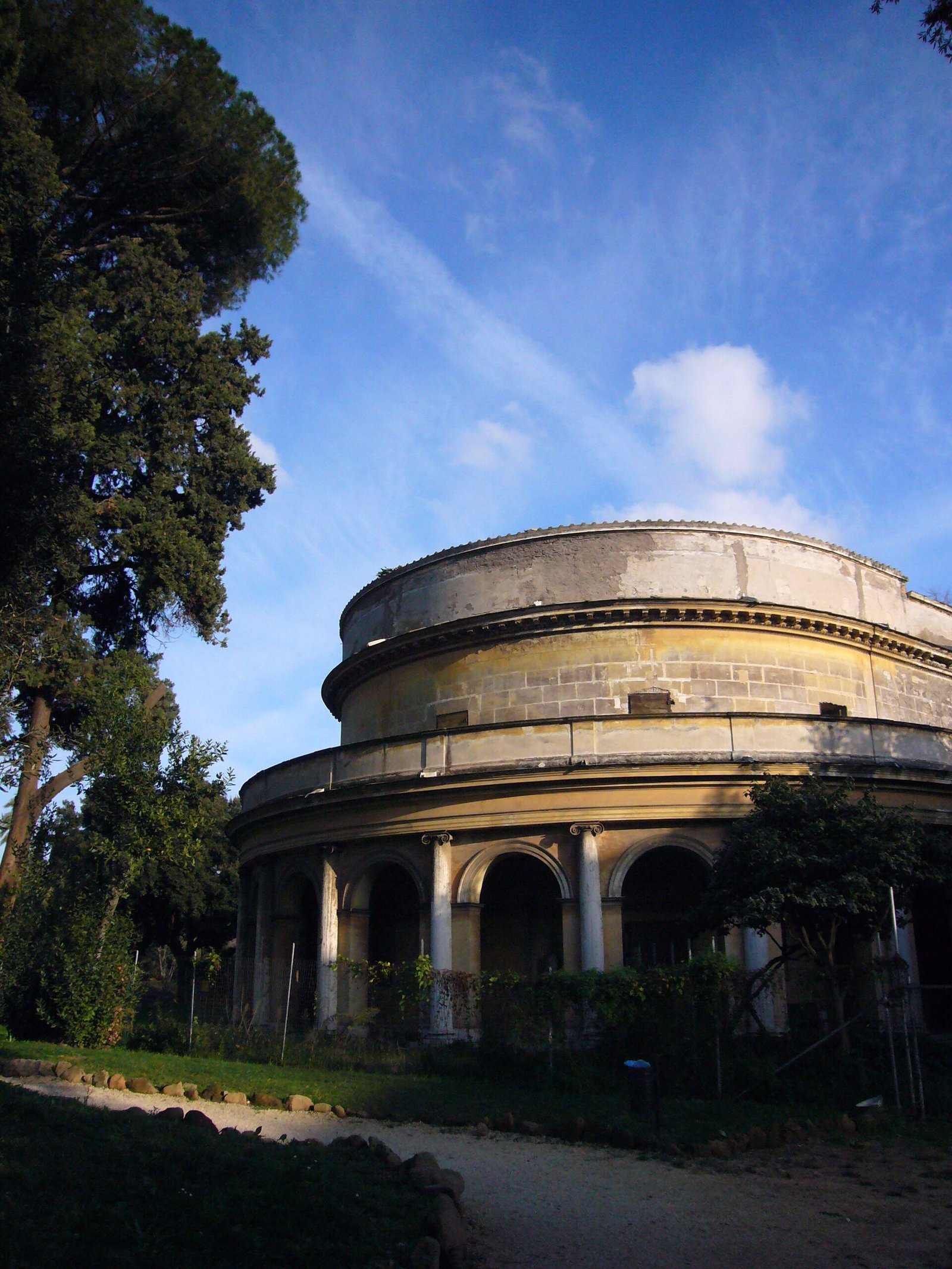
Beata oscenità, the monologue by Massimo Sgorbani directed by Serena Sinigaglia and performed by Gianluca Ferrato, is on stage at Teatro di Villa Torlonia, at Via Lazzaro Spallanzani 1 in Rome, for four consecutive evenings, from Thursday, March 4 to Sunday, March 7, 2027. The hall is inside the park of Villa Torlonia, in the Nomentano district. The most convenient metro line B stations are Bologna and Policlinico, about 10 minutes on foot, while trams 3 and 19 stop at Viale Regina Margherita, near Via Nomentana. The show, a production of Teatro Stabile di Bolzano running 75 minutes, is part of the 2026/2027 season of Teatro di Roma. Start times and prices are published by Teatro di Roma on its official website, where tickets are sold. Alternatively there are the foundation's box offices and the authorized presale network listed on the show's page. The text tells the life of Giò Stajano, grandson of the Fascist leader Achille Starace and one of the first transsexual women in Italy. The production warns that the show contains some explicit images.
Language: performed in Italian. No English version or English surtitles are announced.
Beata oscenità at Teatro di Villa Torlonia: dates, credits and key facts
Beata oscenità is on the bill at Teatro di Villa Torlonia from March 4 to 7, 2027, four performances from Thursday to Sunday, with a single performer on stage, Gianluca Ferrato.
The Rome dates
The Teatro di Roma calendar lists Thursday, March 4, Friday, March 5, Saturday, March 6 and Sunday, March 7. Rome is the second stop of the 2026/2027 tour: Teatro Stabile di Bolzano announces the show on March 2 in Riccione, at Nuovo Spazio Tondelli, then at Villa Torlonia, on March 23 and 24 in Trieste, at Politeama Rossetti, and from April 6 to 11 in Milan, at Teatro Franco Parenti.
The credits
The text is by Massimo Sgorbani, the direction by Serena Sinigaglia, the performance by Gianluca Ferrato. The sets are by Andrea Belli, lights and sound by Roberta Faiolo, the costumes by Valeria Bettella, the videos by Fabio Brusadin. The production photos are signed by Tommaso Le Pera. Teatro Stabile di Bolzano produces.
Running time, start times and prices
The show runs 75 minutes, according to the Teatro Stabile di Bolzano listing. The Teatro di Roma page gives the dates but not the start time of the individual performances, and ticket prices are not published. The reference remains the information and tickets section of the official website, which also handles the season's subscription campaign.
A notice for the audience
Teatro Stabile di Bolzano notes that the show contains some explicit images that might offend the sensibilities of spectators. It is useful information for deciding who to go with, and the section on age later on takes it into account.
What Beata oscenità is about: the life of Giò Stajano in a monologue
Beata oscenità retraces the life of Giò Stajano, a figure of postwar Italy, grandson of Achille Starace and one of the first transsexual women in the country, through a monologue that Teatro di Roma presents as a hymn to the freedom of being yourself.
A life within many lives
Born Gioacchino Stajano Starace, Giò went through, writes Teatro di Roma, multiple roles and identities: actress, journalist, writer, model, muse of the movies and finally lay nun. The Teatro Stabile di Bolzano listing adds columnist and inspiration for directors such as Federico Fellini, Steno and Dino Risi, and stresses the astonishment at the last chapter, the convent one. The monologue weaves personal memory and collective history: the story of one person becomes the portrait of an Italy that goes from Fascism to the dolce vita, from the scandals of the tabloids to television.
Lightness as a method
The Teatro Stabile di Bolzano presentation opens with a sentence by Italo Calvino from the Six Memos for the Next Millennium, on the special connection between melancholy and humor. Serena Sinigaglia explains that the monologue flows like a stream of memories, visions, sounds and images, and that its lightness is the kind Calvino recognized in the greats: you laugh and cry following the character's adventures. Teatro di Roma speaks of a life outside the mold told with a lightness able to join a smile and emotion.
Self-determination and irony
The thread of the text is self-determination. Teatro di Roma describes Giò's existence as an act of defiance of conventions, and the show as a hymn to the courage of choosing your own identity and to the strength of facing the world with irony and intelligence. In our opinion irony is precisely the way in: Giò's biography is full of sensational episodes, and a monologue that tackles them with lightness avoids both the risk of the holy card and that of caricature.
The title
The title holds together the two extremes of the story. Obscenity recalls the seized books and the reputation as a scandalous figure. Blessedness recalls the last years, spent as a lay nun with the Betania del Sacro Cuore nuns. Between the two poles lies an entire life, and the wordplay already contains the tone of the show.
Who Giò Stajano was, the protagonist of Beata oscenità
Giò Stajano was born in Sannicola, in Salento, on December 11, 1931 and died in Alezio on July 26, 2011. She was a noblewoman, writer, journalist, actress and painter, and in the 1960s she was at the center of public attention as one of the first openly gay people in Italy.
Family and studies
She was the daughter of Count Riccardo Stajano Briganti di Panico and of Fanny Starace, the only daughter of Achille Starace, secretary of the National Fascist Party. When Fascism fell, her parents separated. She studied at the Jesuit college of Villa Mondragone, in Frascati, attended the Accademia di Belle Arti in Florence and then some architecture courses at Sapienza in Rome.
Rome and the dolce vita
In 1956 she exhibited her paintings at Via Margutta art fair and met Giorgio de Chirico, Renato Guttuso and Alberto Moravia. She struck up a friendship with Novella Parigini and began to frequent the circles that Fellini would portray in La dolce vita. According to a widely told story, a night swim of hers in the Barcaccia fountain, in Piazza di Spagna, supposedly inspired Fellini's scene of Anita Ekberg bathing in the Trevi Fountain. She also had a part in the film, which after a quarrel with the director did not make it into the theatrical version and was restored in the restored editions.
The seized books
In 1959 she published Roma capovolta, an autobiographical text about gay life in the Rome of the time, seized on charges of offending public morality. Meglio l'uovo oggi and Roma erotica followed, also seized shortly after release. Between 1958 and 1961 she worked with the weekly Lo specchio. At the end of the 1960s she edited the column Il salotto di Oscar Wilde in the magazine Men, the first space in Italian publishing aimed at gay readers, and in 1971 she took over as its editor.
The transition and the last years
In 1983 she underwent sex reassignment surgery in Casablanca and took the name Maria Gioacchina, continuing to sign herself Giò Stajano. In 1992 she published the autobiography La mia vita scandalosa. In her last years she drew closer to the Catholic faith and was welcomed as a lay nun by the Betania del Sacro Cuore nuns in Vische. In 2007 Pubblici scandali e private virtù came out, written with Willy Vaira. In 2025 Feltrinelli republished Roma capovolta.
Massimo Sgorbani, the author of Beata oscenità
Massimo Sgorbani, born in Milan on July 20, 1963 and died in Castell'Arquato on February 6, 2023, was one of the most awarded Italian playwrights of his generation, author of monologues that give voice to uncomfortable and marginal figures.
Training and the Riccione Prize
With a degree in philosophy from the Università degli Studi di Milano, he earned a diploma in playwriting at the Civica Scuola d'Arte Drammatica Paolo Grassi. In 2001 Angelo della gravità (un'eresia) won the Special Jury Prize at the Premio Riccione per il Teatro, and in 2003 the same jury singled out Le cose sottili nell'aria for the continuity of his research. In 2008 he received the Premio Franco Enriquez for playwriting.
Franco Parenti and Teatro i
In 2008 Teatro Franco Parenti in Milan dedicated a monograph to him, six shows in six spaces, and Ubulibri published the volume Theater with an introduction by Franco Quadri. With Teatro i, in Milan, the trilogy Innamorate dello spavento was born: Blondi, Eva and Magda e lo spavento, female voices tied to Hitler in the last days of the Reich, with Federica Fracassi and direction by Renzo Martinelli.
An interrupted trilogy
Gianluca Ferrato says, in the Teatro Stabile di Bolzano presentation, that Beata oscenità is the second chapter of an ideal trilogy on diversity: the first was the monologue on Truman Capote, Questa cosa chiamata amore, and the third was supposed to tell the story of the singer-songwriter Umberto Bindi. Sgorbani had conceived it as three stories of as many uncomfortable figures, but his sudden death, in February 2023, closed the project. The show therefore also has the value of a tribute to the author.
Serena Sinigaglia, the director of Beata oscenità
Serena Sinigaglia, from Milan, born on March 13, 1973 and a directing graduate of the Paolo Grassi in 1996, is the founder of A.T.I.R. and since 2021 has run Teatro Carcano in Milan together with Lella Costa.
From A.T.I.R. to the Carcano
After experience as assistant director to Gabriele Vacis and Gigi Dall'Aglio, she founded A.T.I.R., Associazione Teatrale Indipendente per la Ricerca, of which she is president and artistic director. From 2007 the company ran Teatro Ringhiera, in an outlying area of Milan. In July 2026 she was named artistic director of the Fondazione Teatri di Pistoia for the 2027-2029 three-year period.
Classics and contemporaries
She has directed Shakespeare (Macbeth, Romeo and Juliet, King Lear), Euripides (The Bacchae, The Trojan Women), Fausto Paravidino and the political trilogy Incontri con epoche straordinarie. In 2009 she brought Mayakovsky's The Bedbug to the Piccolo Teatro di Milano. In 2022 she directed Johnna Adams's The Knot with Ambra Angiolini and Arianna Scommegna.
Opera and awards
She has signed opera productions at La Fenice in Venice (Tosca), at the Macerata Opera Festival (Carmen), at the Rossini Opera Festival (Adelina), at the Landestheater in Salzburg and at the Grand Théâtre de Genève. In 2015 she won the Premio Hystrio for directing, in 2017 the Premio Città della Musica.
Gianluca Ferrato, the performer of Beata oscenità
Gianluca Ferrato trained at the school of the Piccolo Teatro di Milano directed by Giorgio Strehler, where he was a student from 1981 to 1983, and made his debut at the Piccolo itself in Arlecchino servitore di due padroni, in the role of Silvio.
Training
His official biography has his path begin in 1980, at the Centro di Formazione Teatrale directed by Massimo Scaglione. After the Piccolo he was directed, among others, by Giancarlo Cobelli, Saverio Marconi, Luigi Squarzina, Filippo Crivelli, Alessandro Benvenuti and Furio Bordon, moving through the classics (Euripides, Plautus, Shakespeare) and the 20th century, from Pirandello to Neil Simon.
Musicals and operetta
Musical theater is a hallmark of his career: Al cavallino bianco, La vedova allegra, Cole Porter's Kiss me, Kate! and Kander and Ebb's Cabaret directed by Saverio Marconi. He is also a dubbing actor: he has lent his voice in films by Woody Allen, Kenneth Branagh, Ron Howard and Emir Kusturica.
Monologues on uncomfortable lives
As a soloist he has staged Dove il cielo va a finire. Una storia per Mia Martini and Quante vite avrei voluto. Una storia per Luigi Tenco, both by Piergiorgio Paterlini, as well as the first chapter of Sgorbani's trilogy on Truman Capote. Beata oscenità continues a precise line: the first-person account of artists who paid dearly for their difference.
The debut of Beata oscenità in Bolzano
Beata oscenità debuted in its national premiere on Tuesday, November 11, 2025 at Teatro Comunale di Bolzano, as announced by Teatro Stabile di Bolzano and the South Tyrolean press.
The regional tour
After Bolzano the show toured South Tyrol. The Teatro Stabile calendar lists, among others, the performances of November 12, 2025 in Vipiteno, at Teatro Comunale, of the 13th in Brunico and of the 15th in Bressanone, at the Forum. The 2026/2027 season takes the monologue outside the region, with Rome as the first major city after Riccione.
Why it matters for Rome
For Roman audiences there is an extra link. Giò Stajano lived in Rome through the years that made her famous: Via Margutta fair, the dolce vita, the books on gay Rome seized by the authorities. Bringing her story to a hall of Teatro di Roma means bringing it back to the city that made her a public figure.
Teatro di Villa Torlonia, the hall of Beata oscenità
Teatro di Villa Torlonia is the 19th-century hall built by Quintiliano Raimondi for Alessandro Torlonia, reopened in 2013 after a long restoration and today one of the halls run by Teatro di Roma along with Argentina and India.
Born for a family's parties
From 1832 Alessandro Torlonia transformed the family villa into a formal residence. Raimondi built the Theater and the Limonaia, and the hall hosted parties and shows for the guests of the house. It was a private theater: a paying public entered only after the reopening.
Neglect and restoration
From the 1920s to July 1943 the villa was Mussolini's residence. From 1944 to 1947 it housed the Allied command, then came a long period of neglect. The city bought the complex in 1977, and since 1991 restorations have recovered one building after another: the Theater in 2013, the Serra Moresca in 2021.
An intimate hall for a monologue
For a 75-minute monologue the size of the hall is an advantage. A single actor, projected images and a story that alternates laughter and emotion call for an audience close by, and Teatro di Villa Torlonia offers a distance from the stage that large halls don't allow.
Villa Torlonia: the park around Beata oscenità
Villa Torlonia is a public park in the Nomentano district, owned by the city since 1977 and open to citizens since 1978, with the main entrance on Via Nomentana and other entrances from Via Lazzaro Spallanzani, on the theater side.
The origins
Between the 1600s and the mid-1700s the estate belonged to the Pamphilj family, who ran it as a farm. It then passed to Cardinal Girolamo Colonna and in 1797 to the banker Giovanni Raimondo Torlonia. In 1806 Giuseppe Valadier redesigned the park and transformed the buildings into the Casino Nobile and the Casino dei Principi.
The 19th-century building sites
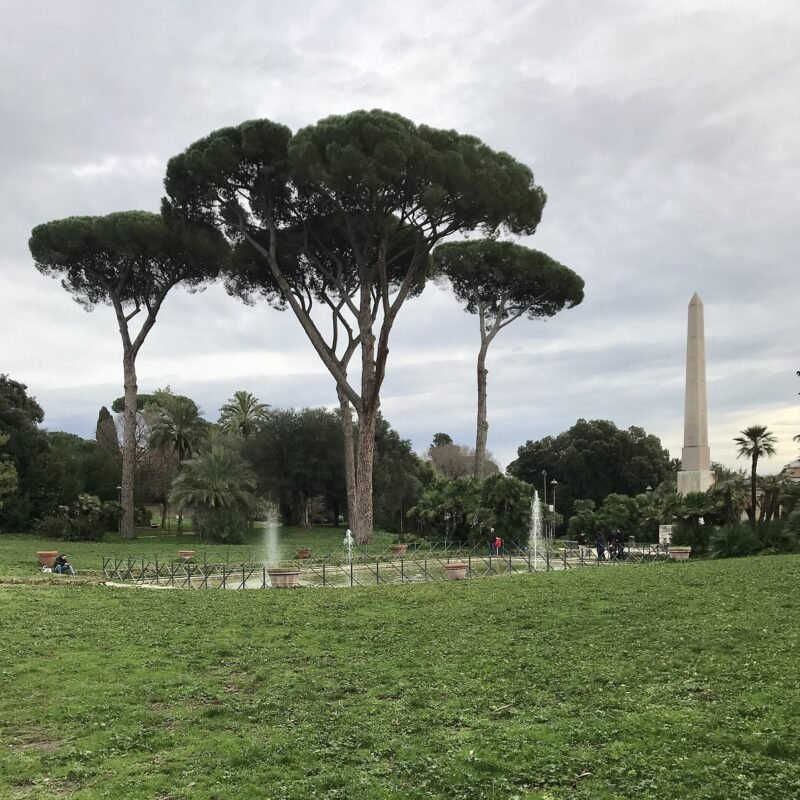
For Alessandro Torlonia worked Giovan Battista Caretti, Giuseppe Jappelli, who designed the Swiss Hut that later became the Casina delle Civette, and the Serra Moresca, and Quintiliano Raimondi. In 1842 the obelisks of Villa Torlonia were erected, in memory of the prince's parents.
The park today
Villa Torlonia is open from dawn to dusk, with the Musei di Villa Torlonia spread among Casino Nobile, Casino dei Principi and Casina delle Civette. In early March the days get longer, and an afternoon in the park before the show is a good idea.
How to get to Teatro di Villa Torlonia for Beata oscenità
Teatro di Villa Torlonia, at Via Lazzaro Spallanzani 1, can be reached by metro line B (Bologna and Policlinico stations), by trams 3 and 19 and by the buses that run along Via Nomentana and Via Bari.
By metro and tram
From Bologna station you walk toward Via Nomentana, from Policlinico you walk up Viale Regina Margherita. In both cases it takes about 10 minutes. Trams 3 and 19 stop at Viale Regina Margherita/Nomentana, a few steps from the park. For the theater it's best to aim for Via Spallanzani entrances.
By bus
Via Nomentana and Via Bari are served by several surface lines. Routes and evening frequencies change often, especially on weekends: before heading out it's best to plan the trip on ATAC's route planner, the Roman public transport company.
By car
Nomentano is a residential district and parking, in the evening, is hard. Metro and tram remain the most sensible solution, also because the theater's closing time often coincides with the evening traffic on Viale Regina Margherita.
A curiosity about Beata oscenità by Serena Sinigaglia at Teatro di Villa Torlonia, March 4 to 7, 2027
The most surprising curiosity concerns the place. From the 1920s to July 1943 the Casino Nobile of Villa Torlonia, a few dozen meters from the theater, was the residence of Benito Mussolini and his family, who according to tradition paid the Torlonia a symbolic rent of one lira a year. In those same years Giò Stajano's maternal grandfather, Achille Starace, was one of the most powerful men of the regime. And there is an anecdote Giò loved to tell: as a newborn, her grandfather put her in Mussolini's arms, and she peed on him. It's an episode reported by Stajano herself, so it should be taken with the smile she gave it, but it makes the short circuit plain: the story of the Fascist leader's granddaughter, who became a symbol of freedom and scandal, is told in a theater located in the park where the dictator had his home. The second curiosity concerns the tour. Rome comes two days after Riccione, the city of the playwriting prize that in 2001 first singled out Massimo Sgorbani at the national level. And the tour closes at Teatro Franco Parenti in Milan, the same theater that in 2008 dedicated to the author his first big monograph. It's a path that follows, perhaps unintentionally, the writer's career.
Something nobody tells you about Beata oscenità by Serena Sinigaglia at Teatro di Villa Torlonia, March 4 to 7, 2027
What the previews don't say openly is that the monologue reaches the audience with extra weight: it is one of the last texts by Massimo Sgorbani, who died suddenly in February 2023, and is part of a trilogy the author couldn't complete. Gianluca Ferrato explains it in the Teatro Stabile di Bolzano presentation: after Truman Capote and Giò Stajano, the third chapter was supposed to tell the story of Umberto Bindi. Knowing that a piece is missing changes the way you listen: behind the lightness of the story there is a company staging the work of a friend who is gone. The second thing concerns the language. The title and the protagonist's biography promise scandal, and the production warns of the presence of explicit images. But the register, as Serena Sinigaglia explains, is that of Calvino's lightness, of gravity without weight. Anyone expecting provocation for its own sake will find an affectionate and melancholy story. The third concerns collective memory: Giò Stajano was a tabloid celebrity for decades, but today her name means little to anyone under 50. It's best to arrive in the hall knowing at least the main stages of her life, because the monologue proceeds by memories and jumps, and recognizing the references makes the evening richer.
My advice for visiting Beata oscenità by Serena Sinigaglia at Teatro di Villa Torlonia, March 4 to 7, 2027
My advice is to build a small day around Giò Stajano's Rome, with the show as the final stop. In the afternoon you can start from Via Margutta, where in 1956 Giò exhibited her paintings at the art fair and met de Chirico, Guttuso and Moravia. From there, a few steps away, are Piazza di Spagna and the Barcaccia fountain, tied to the story of the night swim that supposedly inspired Fellini, and a little farther the Trevi Fountain, where Anita Ekberg shot the scene of La dolce vita. Then you take metro B to Bologna and reach Villa Torlonia with a good margin before the start. The second piece of advice concerns preparation: reading Giò Stajano's biographical entry, or the reissue of Roma capovolta published in 2025, makes the jumps of the monologue much easier to follow. The third concerns the date: in our opinion Thursday and Friday are the best evenings for those looking for an attentive and quiet audience, while Sunday is the most convenient for those coming from outside Rome. The start time should be checked on the Teatro di Roma website, which publishes it on the show's page.
Where to eat before or after Beata oscenità
Inside Villa Torlonia the restored Limonaia works as a refreshment point. Outside the park, along Via Nomentana and around Piazza Bologna, you'll find bars, pizzerias and trattorias in every price range.
In the park
The Limonaia, built by Quintiliano Raimondi like the theater, is the most convenient option for a coffee or an aperitivo without leaving the villa. It does follow the park's hours, though, and the park closes at dusk: for an evening show it's best to eat outside.
In the neighborhood
Nomentano is a district lived in mostly by residents, with places frequented by the people who live there. Around Piazza Bologna and along Viale XXI Aprile the choice is wide and prices are lower than in the center. On Friday and Saturday it's best to book, before or after the show: with a running time of 75 minutes, dinner after the performance is a convenient option.
Another well-known fact, yet rarely mentioned
It's well known that Federico Fellini drew on the nighttime Rome of the late 1950s to build La dolce vita, and Anita Ekberg's bath in the Trevi Fountain is one of the most quoted scenes in film history. It is less often remembered that, according to a widely told story, behind that scene there was supposedly a night swim by Giò Stajano in the Barcaccia fountain, in Piazza di Spagna. And even less known is that Giò had a part in the film: after a quarrel with the director, her scenes did not make it into the version released in theaters and were recovered only in the editions restored for television and home video. A second fact, rarely cited outside studies of civil rights history, concerns journalism: at the end of the 1960s Giò edited the column Il salotto di Oscar Wilde in the magazine Men, in which she answered letters from gay readers. It was the first space in Italian publishing aimed at this audience, and for many years the only one. In 1971 Giò became the magazine's editor. These are episodes that Sgorbani's monologue passes through, and they explain why a figure considered for decades only a tabloid character is today at the center of a theater work produced by a state theater and hosted by Teatro di Roma.
The right photo to take at Beata oscenità by Serena Sinigaglia at Teatro di Villa Torlonia, March 4 to 7, 2027
No photographs during the show: in a monologue built on memories, projected images and silences, the lit screen of a phone can be seen from the stage and breaks the pact with the actor. The right photo is taken outside, and the park offers at least three. The first is the facade of the Theater among the trees of the villa: in early March, arriving in the late afternoon, the low light warms the stone and draws sharp shadows on the semicircular body of the building. The second is the granite obelisks near Via Nomentana entrance, photographed from below against the sky. The third, for those who like details, is the Casina delle Civette, born as the Swiss Hut, with its eccentric taste of a 19th-century fairy tale. Anyone who follows the advice of a day in Giò's Rome can add two shots from the afternoon: the Trinità dei Monti staircase seen from the Barcaccia and a glimpse of Via Margutta, the street of artists where the young Stajano exhibited her paintings. After the show, if the performer comes out to greet the audience in the foyer, a photo with the program is the simplest keepsake. No flash, and no shots during the final applause as long as the actor is on stage.
Some important events that happened here in history
The history of Villa Torlonia begins as the Pamphilj family's farm estate, between the 1600s and the mid-1700s. With Cardinal Girolamo Colonna the first core of the villa took shape. In 1797 the property passed to the banker Giovanni Raimondo Torlonia, and in 1806 Giuseppe Valadier redesigned the park and transformed the existing buildings into the Casino Nobile and the Casino dei Principi. From 1832 his son Alessandro opened the building sites entrusted to Giovan Battista Caretti, Giuseppe Jappelli and Quintiliano Raimondi: it was in this phase that the Theater and the Limonaia were born. In 1842 the two granite obelisks dedicated to the prince's parents were raised. Later the Swiss Hut became the Casina delle Civette. In 1919 a Jewish cemetery of the Roman era was discovered underground in the park. From the 1920s to July 1943 the Casino Nobile was the residence of Benito Mussolini. Between 1942 and 1943 the air-raid shelters were built, today open on special occasions like the Villa Torlonia bunker. From 1944 to 1947 the villa housed the Anglo-American command, then went through a long period of neglect. In 1977 the City of Rome bought it and the following year opened it as a public park. Restorations began in 1991: the Casina delle Civette reopened after a fire, the Theater in 2013, the Serra Moresca in 2021. From March 4 to 7, 2027 the Theater's stage welcomes Beata oscenità.
Who has passed through Beata oscenità by Serena Sinigaglia at Teatro di Villa Torlonia, March 4 to 7, 2027
Through Villa Torlonia have passed the architects who designed 19th-century Rome: Giuseppe Valadier, Giovan Battista Caretti, Giuseppe Jappelli and Quintiliano Raimondi, the builder of the Theater. The Torlonia passed through, bankers and then princes, with the guests of their parties. At the raising of the first obelisk, on June 4, 1842, Pope Gregory XVI and Ludwig of Bavaria were present. In the 1900s the villa was for almost 20 years the home of Benito Mussolini and his family, and after the war the seat of the Allied command. Since the 2013 reopening the stage has hosted the companies invited by Teatro di Roma, from contemporary drama to shows for young audiences like Albert eD io, up to Heiner Müller's Quartett, staged in the same season in January. In March 2027 Gianluca Ferrato and Serena Sinigaglia's team pass through: Andrea Belli for the sets, Roberta Faiolo for lights and sound, Valeria Bettella for the costumes, Fabio Brusadin for the videos. And there passes, through Massimo Sgorbani's words, a gallery of figures evoked by the monologue: Achille Starace, Federico Fellini, the painters and writers of Via Margutta of the 1950s, from de Chirico to Moravia. An entire Rome, told by a single voice.
Accessibility, age and practical information
For access to Teatro di Villa Torlonia by people with reduced mobility, the reference is Teatro di Roma, which dedicates a section of its official website to the accessibility of its halls.
The park in the evening
Villa Torlonia is a historic park, with gravel paths and a few changes in level. Anyone with mobility difficulties does well to ask in advance which entrance is the most convenient for reaching the hall. In early March, on the way out in the evening, the temperature still drops: a jacket is a must.
Age
Beata oscenità is a show for adults. It tells a life marked by scandals, sexuality and gender identity, and the production warns of the presence of explicit images. It may interest students in the last years of high school and at university who are studying the history of civil rights or contemporary theater, better if prepared on Giò Stajano's biography.
March in Rome
Early March is a quiet period for visiting Rome: the days get longer, the spring crowds haven't arrived yet and museums and parks can be enjoyed without lines. For those coming from outside it's the right time to combine an evening at the theater with a visit to the Musei di Villa Torlonia or to the exhibitions under way, like the one dedicated to Paolo Paschetto, if still open.
Frequently asked questions about Beata oscenità
When is Beata oscenità at Teatro di Villa Torlonia?
Beata oscenità is on stage at Teatro di Villa Torlonia from Thursday, March 4 to Sunday, March 7, 2027, for four consecutive performances. The start time of each performance is given by Teatro di Roma on the show's official page, along with information on tickets and season subscriptions.
Who performs in Beata oscenità?
Beata oscenità is a monologue performed by Gianluca Ferrato, an actor trained at Giorgio Strehler's school of the Piccolo Teatro. The direction is by Serena Sinigaglia, the text by Massimo Sgorbani. Sets by Andrea Belli, lights and sound by Roberta Faiolo, costumes by Valeria Bettella, video by Fabio Brusadin.
What is Beata oscenità about?
Beata oscenità tells the life of Giò Stajano, granddaughter of the Fascist leader Achille Starace and one of the first Italian transsexual women: painter, writer, journalist, actress, protagonist of the Roman dolce vita and finally lay nun. The monologue weaves personal memories and the history of Italy in a light tone, between irony and emotion.
How long is Beata oscenità?
Beata oscenità runs 75 minutes, according to the listing of Teatro Stabile di Bolzano, which produces the show. It's a running time that allows a relaxed dinner after the performance, in the places on Via Nomentana and Piazza Bologna, a few minutes on foot from Teatro di Villa Torlonia.
Where is Teatro di Villa Torlonia?
Teatro di Villa Torlonia is at Via Lazzaro Spallanzani 1, inside the park of Villa Torlonia, in the Nomentano district. The nearest metro line B stations are Bologna and Policlinico. Trams 3 and 19 stop at Viale Regina Margherita, near Via Nomentana.
Where do you buy tickets for Beata oscenità?
Tickets for Beata oscenità are bought on the official Teatro di Roma website, at the foundation's box offices and through the authorized presale network listed on the show's page. The title is part of Teatro di Roma's 2026/2027 season, for which the subscription campaign is under way.
Is Beata oscenità suitable for kids?
Beata oscenità is designed for an adult audience: it deals with themes tied to sexuality and identity, and Teatro Stabile di Bolzano warns that it contains some explicit images. It may be suitable for university students and those in the last years of high school, better if prepared on the figure of Giò Stajano.
Who was Giò Stajano?
Giò Stajano, born in 1931 in Sannicola and died in 2011 in Alezio, was a writer, journalist, painter and actress, granddaughter of Achille Starace. In the 1960s she was one of the first openly gay people in Italy, in 1983 she underwent the transition and in her last years she lived as a lay nun.
Final advice on Beata oscenità
Beata oscenità puts three stories into one. There is that of Giò Stajano, a life that seems written by a novelist and is instead documented in seized books, films, tabloids and television interviews. There is that of Massimo Sgorbani, an author who dedicated his career to uncomfortable voices and who didn't live to complete his trilogy on diversity. And there is that of Gianluca Ferrato, an actor who for years has been staging alone the biographies of wounded artists, from Dove il cielo va a finire to Quante vite avrei voluto. In our opinion the combination works precisely because of the choice of tone: Serena Sinigaglia's direction bets on lightness, and a life so loaded with scandal becomes the story of a freedom won at a high price. My advice is to arrive prepared on the protagonist's biography, devote the afternoon to the Rome of Via Margutta and Piazza di Spagna, and end the day in the intimate hall of Villa Torlonia, a few steps from the house that was Mussolini's. The contrast between the history of the villa and that of Starace's granddaughter is, by itself, a good reason to choose this evening.
Article written by the editorial team of Tour Leader Pro, contact them for Private/Corporate/V.I.P. Tours and Experiences.
Planning a trip to Rome? The English guides to visiting the city are on ItalyPlanner.com.
Contact Information
Nearby
 Jewish Catacombs of Villa Torlonia100 m
- Obelisks of Villa Torlonia100 m
- Casina delle Civette – Villa Torlonia Museums100 m
- Casino Nobile – Villa Torlonia Museums200 m
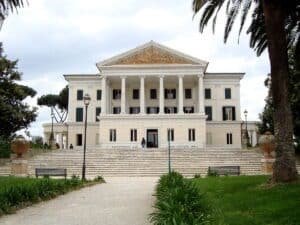
- Villa Torlonia200 m
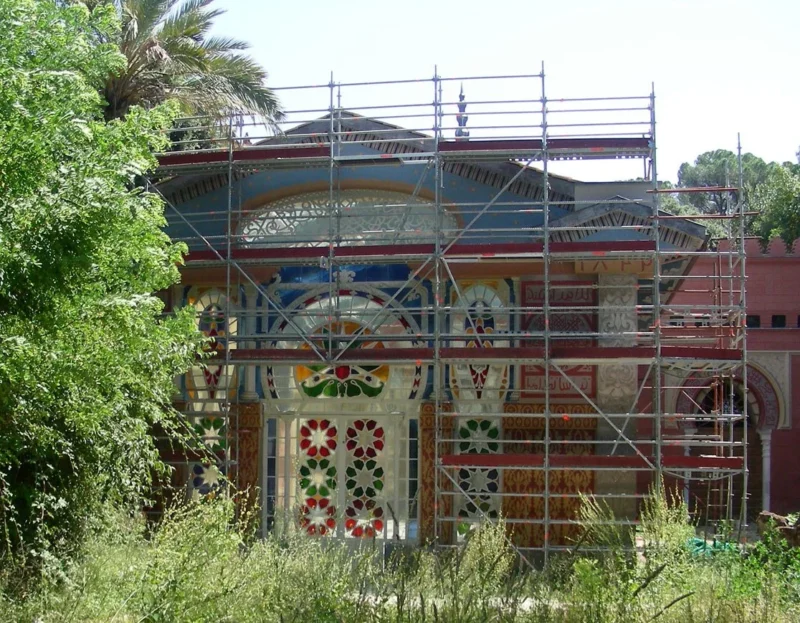
- Serra Moresca200 m

Upcoming events nearby
- Il teatro dell’amore e del potere at the Teatro di Villa Torlonia, October 17 to December 20, 2026100 m
- Quartett by Heiner Müller at Teatro di Villa Torlonia, January 21-24, 2027100 m
- Archimede. La solitudine di un genio with Mario Incudine at Teatro di Villa Torlonia, March 18 to 21, 2027100 m
- Ritratto d’autore: Igor Stravinsky and Petrushka with Roma Tre Orchestra at Teatro Torlonia, November 12, 2026100 m

You might also like
- Fire of Georgia, Royal National Ballet of Georgia at Teatro Italia, December 10, 2026
- Arteteca in Non tutte le suocere vengono per nuocere at Teatro Italia, April 9, 2027
- Adamo Romano in Maledizioni live a teatro at Teatro Italia, April 3, 2027
- Il Matricomio, Non ti prometto niente
- Una razza in estinzione, a Tribute to Giorgio Gaber at Teatro Italia, November 29, 2026
- Festival delle Favole at Teatro Italia, December 13, 2026