BIG! Premio Francesco Di Giacomo at Auditorium Parco della Musica, November 26 and 27, 2026
In short. BIG! Premio Francesco Di Giacomo, the national band competition devoted to the historic voice of Banco del Mutuo Soccorso, holds the final of its second edition at Auditorium Parco della Musica Ennio Morricone, in Teatro Studio Borgna,…
BIG! Premio Francesco Di Giacomo, the national band competition devoted to the historic voice of Banco del Mutuo Soccorso, holds the final of its second edition at Auditorium Parco della Musica Ennio Morricone, in Teatro Studio Borgna, at Viale Pietro de Coubertin 30. There are two nights: Thursday, November 26 and Friday, November 27, 2026, both starting at 20:00. The price published by the Auditorium is 20 euros for one night and 30 euros for the package of both dates. The six finalist bands chosen by the prize jury perform, with guests from the Italian music scene to be announced later. Tickets are bought from the event page on the official Auditorium website, which links to the connected sales circuit. For information Fondazione Musica per Roma gives the address info@musicaperroma.it, and the website lists for the complex, from October to March, opening hours from 11:00 to 20:00, Sundays and holidays included. The length of the nights isn't given. To get there by public transportation, it's best to plan your route with the ATAC journey planner.
What BIG! Premio Francesco Di Giacomo is
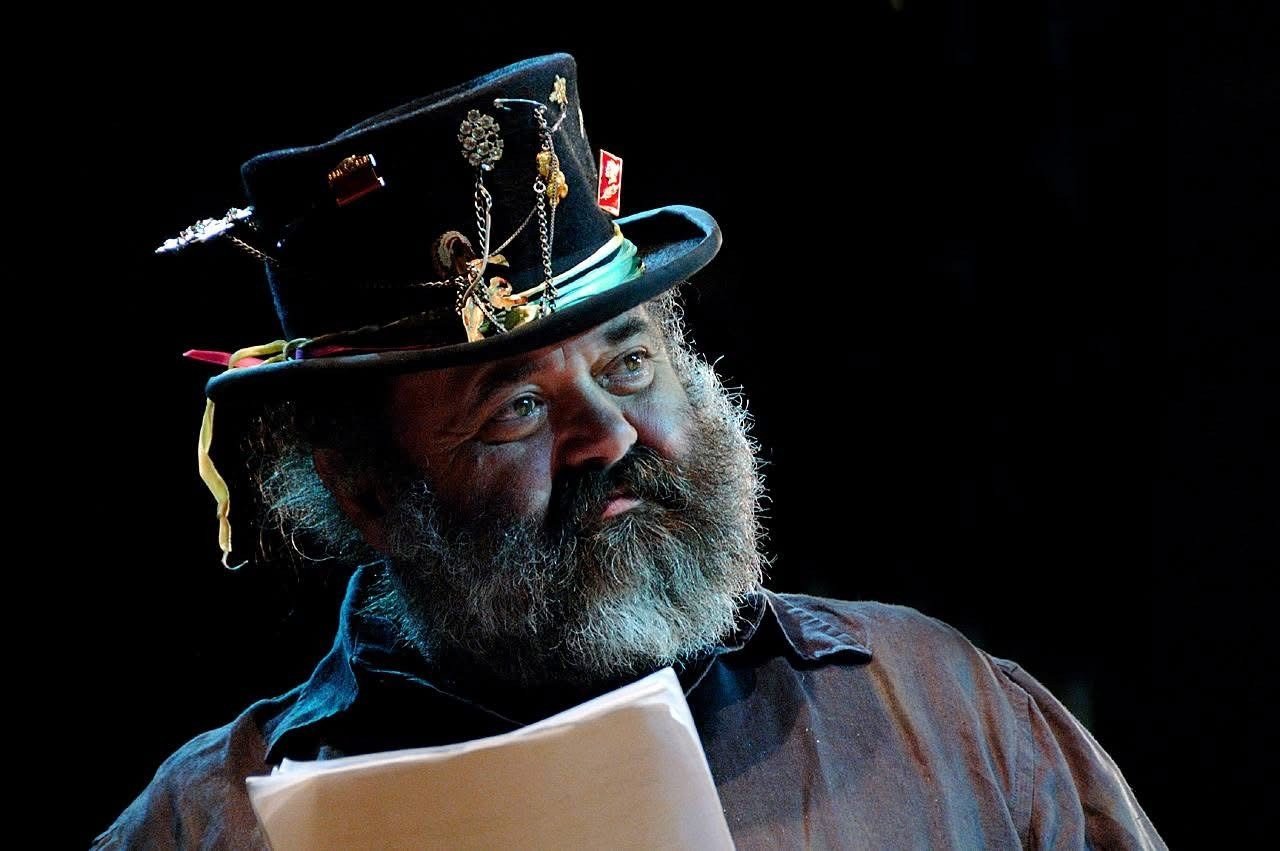
BIG! is a national competition devoted to bands, created to enhance and keep alive the work and memory of Francesco Di Giacomo, the voice of Banco del Mutuo Soccorso. The idea is by Antonella Caspoli Di Giacomo, the singer's wife. The prize is promoted with the Associazione Têtes de Bois, organized in collaboration with the record label ZdB and artistically directed by Andrea Satta.
The official description puts one word at the center: band. The prize sees the musical group as a place of meeting, writing and research, in tune with the artistic and poetic legacy of Di Giacomo, author and performer of some of the most significant pages of Italian rock. It's not a competition for soloists or a talent show: it's a space designed for those who play and write together.
A prize born in the family
The fact that its creator is Antonella Caspoli, the singer's wife, gives the prize a special character: it's a project of private memory that turns into a public occasion, open to musicians who often never knew Di Giacomo, but who grew up listening to his voice or are discovering it for the first time.
The role of ZdB
The Consorzio ZdB is listed on the prize website as main sponsor, and the ZdB label provides the prizes. For an emerging band, the chance to have an EP produced with art direction, mastering, distribution and promotion is concrete recognition, going beyond the symbolic value of a win.
The two nights
On the two evenings of November 26 and 27 the six finalist groups selected by the jury perform. Each band presents its own original repertoire and a new take on a song from Di Giacomo's output, solo or with Banco. The result, as the organizers intend it, is a dialogue between new writing and musical memory.
The guests
The two nights will be enriched by prominent guests from the Italian music scene. The names haven't been announced yet: that information isn't published, and the organizers say they'll be revealed soon.
The finalists
The names of the six finalist bands don't yet appear on the official pages of the prize and the Auditorium either. The selection is made from applications sent by September 30, 2026.
How the competition works
The 2026 call published on the prize website sets some precise rules. Bands with or without an album can take part, even with national commercial distribution, as long as they're free of contractual ties. It's an important opening, allowing groups with a career already underway to apply too.
Two original songs
Each band presents two original songs, lyrics and music: one in Italian and one in any language, including minority languages and dialects. The choice to open up to dialects and minority languages has special meaning for a prize devoted to a singer born in Sardinia.
The Di Giacomo song
Finalist bands must arrange and perform a song by Francesco Di Giacomo, solo or with Banco, preserving the integrity of the lyrics. It's the heart of the prize: taking on a historic repertoire without betraying its words, while reinventing its music.
The prizes
The prizes are provided by the ZdB label and include art direction, recording, mixing, mastering, distribution and promotion. First prize is the full production of an EP of four or five tracks, worth 5,000 euros. Second, the production of a single with a music video, worth 2,500 euros. Third, the production of a single, worth 1,000 euros. Prizes are awarded at the end of the second night.
The first edition, in Zagarolo
The first edition of BIG! took place on July 11 and 12, 2025 in the roof garden of Palazzo Rospigliosi, at Piazza della Indipendenza 18 in Zagarolo, with free admission while places lasted. The move from the provinces to the Auditorium, in the second edition, marks significant growth for the project.
The winners
First place went to Light Pole, a band from between Frosinone and Naples, who also won the prize for best performance and best arrangement with Banco's Il ragno. Second were Pillheads, from between Vercelli and Alessandria. The other finalists were Heartache, Ghost on Mars, LCD and Marana, all from Rome.
The 2025 guests
The nights were hosted by Timisoara Pinto and Duccio Pasqua. Guests included Gianni Nocenzi of Banco, Petra Magoni, Pino Marino, Andrea Rivera, Patrizio Fariselli of Area, Peppe Servillo of Avion Travel, Franz Di Cioccio and Patrick Djivas of PFM. A list that gives a measure of the esteem Di Giacomo enjoyed among Italian musicians.
Zagarolo and Di Giacomo
The link with Zagarolo isn't by chance. The prize's partners include the Town of Zagarolo and Palazzo Rospigliosi. Di Giacomo died in Zagarolo, on February 21, 2014.
Francesco Di Giacomo, the voice of Banco
Francesco Di Giacomo was born on August 22, 1947 in La Caletta, a village of Siniscola, in Sardinia. The family moved to Rome when he was five. A self-taught singer, he's considered one of the great voices of Italian progressive rock, and he wrote most of Banco's lyrics.
Joining Banco
He became the group's singer in 1971, after Vittorio Nocenzi approached him at the second Caracalla Pop Festival. From that moment his voice, powerful and versatile, became Banco's signature, and the lyrics he wrote for the group defined its imagery.
Fellini's cinema
A lesser-known chapter of his life concerns film. Di Giacomo appeared in four films by Federico Fellini: Satyricon in 1969, I clowns in 1970, Roma in 1972 and Amarcord in 1973.
The solo career
Outside Banco he released Non mettere le dita nel naso in 1989, with musicians from the group and Sam Moore, and O Fado in 2001, with Eugenio Finardi and Marco Poeta. His discography also lists La parte mancante, from 2019.
Bomba intelligente
After his death came Bomba intelligente, recorded with Elio e le Storie Tese for the album Figgatta de Blanc, which in 2016 won the Targa Tenco for best song of the year.
A cooking expert
Di Giacomo also had a lesser-known passion: he was an expert in Italian regional cooking.
His death
He died on February 21, 2014 in Zagarolo, at 66, in a car accident: while driving he lost control of the car, probably because of a sudden illness, and crashed head-on into another vehicle.
Banco del Mutuo Soccorso
Banco del Mutuo Soccorso was born in Rome in 1968, on the initiative of 17-year-old Vittorio Nocenzi, on keyboards, with his brother Gianni on piano. It's one of the fundamental groups of Italian progressive rock.
The piggy bank and Darwin!
The first album, released in 1972, has a famous cover shaped like a terracotta piggy bank. The same year came Darwin!, the group's first concept album, devoted to the theory of evolution.
Io sono nato libero
In 1973 came Io sono nato libero, considered by many fans and critics the band's best album. In 1974, at Greg Lake's suggestion, Banco left Ricordi and moved to Manticore, Emerson, Lake and Palmer's label. In 1975 Banco also came out, an English-language version of the repertoire.
A long discography
Then came, among others, Come in un'ultima cena in 1976, ...di terra in 1978, Canto di primavera in 1979, Urgentissimo in 1980 and Buone notizie in 1981. After the deaths of Di Giacomo and Rodolfo Maltese, who died on October 3, 2015, the group released Transiberiana in 2019, Orlando: le forme dell'amore in 2022 and Storie invisibili in 2025.
Today's lineup
Today Banco is still led by Vittorio Nocenzi, with Filippo Marcheggiani on guitar, Tony D'Alessio on vocals, Marco Capozi on bass, Michelangelo Nocenzi on keyboards and Andrea Bruni on drums. If you want to hear them live, you can also follow their Rome concerts, like the one at Crossroads Live Club.
Andrea Satta and Têtes de Bois
The prize's artistic direction is entrusted to Andrea Satta, the voice of Têtes de Bois, the Roman group that promotes the prize through its association. Têtes de Bois debuted on February 15, 1992 in Campo de' Fiori, on an old 1956 Fiat van.
The Targhe Tenco
The group has won the Targa Tenco for best performers three times: in 2002 with Ferré, l'amore e la rivolta, in 2007 with Avanti pop and in 2015 with Extra. In 2010 Goodbike, an album devoted to the bicycle, placed second at the Premio Tenco as best overall record.
The pedal-powered stage
Andrea Satta created the pedal-powered stage, presented as the world's first eco concert show: the energy for sound, lights and video is produced by audience members pedaling bicycles connected to the system. The project debuted in Bari in 2011.
Léo Ferré
An important part of Têtes de Bois's work is devoted to French singer-songwriter Léo Ferré, to whom the group has dedicated two albums, the fruit of long work of translation and research.
Italian progressive rock, a Roman story
Banco del Mutuo Soccorso was born in Rome, and Di Giacomo joined the group after a meeting at the Caracalla Pop Festival. Two details that recall how much the capital was one of the birthplaces of Italian progressive rock, the season when Italian groups began building concept albums, long suites, ambitious lyrics.
A generation of musicians
The guests of the first edition of BIG! tell this story well: Gianni Nocenzi, cofounder of Banco. Franz Di Cioccio and Patrick Djivas of PFM. Patrizio Fariselli of Area. These are the names of a generation that took Italian music into the international arena, and that today accompanies the passing of the baton to younger bands.
The role of the lyrics
In Italian progressive rock the lyrics carried special weight, and Di Giacomo, author of most of Banco's lyrics, was one of its finest exponents. The prize rules, which ask bands to preserve the integrity of the lyrics, recognize precisely this aspect of his legacy.
Reinventing a historic repertoire
The most interesting test of the two nights is the reinterpretation of Di Giacomo's songs. Arranging a Banco song means grappling with complex writing, full of time changes, elaborate instrumental parts, a vocal style hard to imitate. The rules don't ask for imitations, but interpretations.
The example of the 2025 winners
In the first edition Light Pole also won the prize for best performance and best arrangement with Il ragno. It's an example of how taking on the historic repertoire can become a chance to show a band's personality.
A vast repertoire
Bands can choose from Banco's output, from Darwin! to Io sono nato libero, from Come in un'ultima cena to Buone notizie, and from Di Giacomo's solo work. The variety of choices, from one band to the next, will be one of the most intriguing elements of the two nights.
Practical information
Both nights start at 20:00. If you choose the 30-euro package you attend both. If you'd rather go to just one night, you pay 20 euros. Since prizes are awarded at the end of the second night, if you want to find out the winners live you need to be in the hall on Friday, November 27.
The ticketing rules
The Auditorium website publishes ticketing rules with the general purchase conditions. It's best to read them before buying, in particular for the rules on exchanges and refunds.
The hall and timing
The length of the nights isn't given: that information isn't published. With six bands, guests and an awards ceremony, it's wise to plan for a full evening. Teatro Studio, with its 308 seats, fills up easily: better not to arrive at the last minute.
The prize website
For information on the competition, the website bigpremiofrancescodigiacomo.it gives a dedicated email address and a press office. That's where the names of the finalists and guests will presumably be published.
Why follow the two nights
BIG! offers something rare: the chance to hear emerging bands taking on a historic repertoire, in a quality hall, at a modest price. If you love Italian progressive rock you'll find new readings of songs you know by heart. If you're looking for new music, you can discover six groups selected by a jury.
The two-night package
The 30-euro package for both dates is the choice most in keeping with the nature of the prize: following both nights lets you hear all the bands, appreciate how the performances evolve and attend the announcement of the winners, scheduled at the end of the second night.
A growing prize
The move from a historic garden in Zagarolo to a hall at the Auditorium, in a single year, is the sign of a project that has quickly consolidated. Attending the second edition means seeing a prize at the moment it defines its own identity.
Teatro Studio Gianni Borgna
The nights take place in Teatro Studio, the most intimate hall of the Auditorium, named after Gianni Borgna. The hall has 308 seats, a size that encourages closeness between musicians and audience, ideal for a competition devoted to emerging bands.
The other halls of the complex
Teatro Studio is part of a system of spaces: Sala Santa Cecilia, with 2,756 seats, Sala Sinopoli with 1,133, Sala Petrassi with 673 and the outdoor Cavea, named after Luciano Berio, with about 3,000 seats.
Closeness to the stage
In a hall this size there are no seats truly far from the stage, and that's an advantage if you want to watch up close the musicians' work, the arrangements, the interplay between band members.
Auditorium Parco della Musica Ennio Morricone in brief
The Auditorium was designed by Renzo Piano, who won an invited competition in 1993. The acoustics were handled by Jürgen Reinhold of the Müller-BBM firm, the outdoor spaces by Franco Zagari. Sala Sinopoli opened on April 21, 2002, the rest of the complex, including Sala Santa Cecilia, on December 21 of the same year.
Morricone's name
In 2020 Rome's city council approved naming the Auditorium after Ennio Morricone. Today the complex is run by Fondazione Musica per Roma.
The neighborhood
The Auditorium lies between Villa Glori, the Villaggio Olimpico, the Corso di Francia viaduct and Viale Maresciallo Pilsudski. The nearest public transportation stops are Flaminia/Reni and Apollodoro.
A curious fact about Auditorium Parco della Musica Ennio Morricone
Beneath Renzo Piano's concert halls lies a Roman villa. During construction, in the 1990s, the remains of a settlement were discovered that forced changes to the original design. According to the Roma Capitale tourism portal, it's a suburban villa of over 2,000 square meters, with finds dating between the 6th century BC and the 2nd century AD.
From farm to villa
The oldest phase is a rustic farm from the Archaic period, probably inhabited by a Roman citizen and destroyed around 500 BC. On its remains a large patrician villa was later built. The finds are displayed in a small archaeological museum inside the complex.
Something nobody tells you about Auditorium Parco della Musica Ennio Morricone
Among the hypotheses about the Auditorium's Roman villa there's one that links the site to the sanctuary of the nymph Anna Perenna, worshipped on March 15. The Roma Capitale portal presents it as a hypothesis, and it's a detail few audience members know: concerts are held a short distance from a place perhaps tied to an ancient cult.
The river god on the roof tile
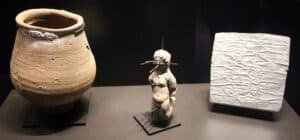
Among the museum's finds is a corner eaves tile decorated with the head of a bearded river god, identified as Achelous. From the museum terrace you can also see a wall in opus reticulatum that belonged to the villa's enclosure.
My advice for Auditorium Parco della Musica Ennio Morricone
My advice is to arrive a little early and look for the complex's archaeological museum, which keeps the wooden models of the farm and the villa and the reconstruction of an olive press, a bread oven and a pantry. Check the opening hours on the Auditorium website or at 06 80241281.
Before the music, the cavea
If you arrive early you can take a walk around the outdoor cavea, the central space around which the halls are arranged. It's the spot from which you best take in the architecture of the complex.
Another well-known fact, and yet not often mentioned
That the Auditorium is one of the most visited cultural centers in Europe is well known. The figures are mentioned less often: in 2014 it passed 2 million visitors, ranking as the leading cultural venue in Europe for attendance and second in the world after Lincoln Center in New York.
The numbers of a year
In 2016 Fondazione Musica per Roma organized 608 events and sold 287,109 tickets. Numbers that give the measure of a complex that hosts every kind of music, from classical to rock, from jazz to singer-songwriters.
The right photo to take at Auditorium Parco della Musica Ennio Morricone
The most recognizable photo is taken from the cavea, framing the roofs of the big halls facing the central space. In the evening, with the lights on and the audience moving between entrances, the image conveys the liveliness of the complex.
The museum and the ruins
For a less obvious shot you can photograph the wall in opus reticulatum visible from the terrace of the archaeological museum: a fragment of ancient Rome inside 21st-century architecture.
Some important events that happened here in history
6th century BC: the farm
A small Archaic-period farm stands in the area, destroyed around 500 BC.
3rd century BC: the villa
In place of the farm a patrician villa is built.
1993: the competition
Renzo Piano wins the invited competition for Rome's new auditorium, after the choice of site, made in 1992.
April 21, 2002: Sala Sinopoli
The first hall of the complex opens, named after conductor Giuseppe Sinopoli.
December 21, 2002: the full inauguration
The complex is completed. The inaugural concert is conducted by Chung Myung-whun with the Santa Cecilia orchestra.
2006: the Film Fest
The Auditorium becomes the home of the Rome Film Fest, which is still held there today.
2020: the naming after Morricone
The city council approves naming the Auditorium after Ennio Morricone.
Who has passed through Auditorium Parco della Musica Ennio Morricone
In over 20 years of activity the Auditorium has hosted an enormous number of artists. Some live albums were recorded here: the one by Ryuichi Sakamoto with Christian Fennesz in 2005, the one by Enrico Rava with Joe Lovano in 2014 and the one by The National in 2024.
Film
Since 2006 the Auditorium has been the home of the Rome Film Fest, which every autumn brings directors and actors here from all over the world, as in the 2026 edition, the 21st.
Now the BIG! bands
In November 2026 Teatro Studio welcomes six emerging bands called to take on Francesco Di Giacomo's legacy, in a place that has seen the great names of international music pass through.
Before or after the concert: the surroundings
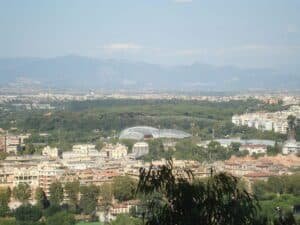
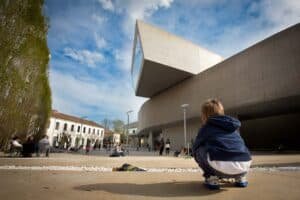
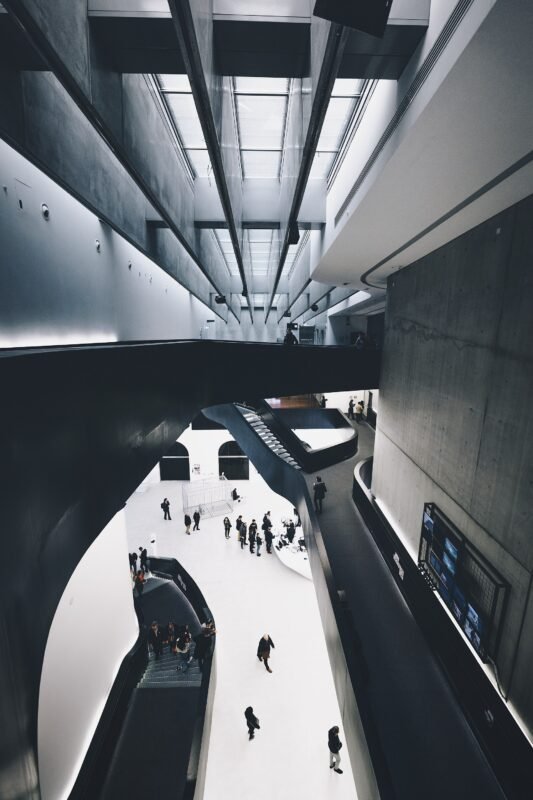
The Auditorium is in the north of the city, between Flaminio and Parioli. A short distance away are MAXXI, the national museum of 21st-century arts, and the Ponte della Musica over the Tiber.
Flaminio
To the south the Flaminio neighborhood offers 20th-century architecture, sports facilities and the great consular road leading toward Piazza del Popolo, handy if you're heading back to the center after the concert.
Villa Glori
Next to the complex opens the Villa Glori park, one of the neighborhood's green areas, pleasant for a walk before concerts, when the light allows.
Villaggio Olimpico
On the other side stretches the Villaggio Olimpico, an interesting neighborhood if you love 20th-century architecture.
Frequently asked questions about BIG! Premio Francesco Di Giacomo
When is the BIG! final in Rome?
Thursday, November 26 and Friday, November 27, 2026, both nights at 20:00, in Teatro Studio Borgna of Auditorium Parco della Musica Ennio Morricone. The six finalist bands perform over the two nights and the prizes are awarded at the end of the second, Friday, November 27.
How much is the ticket?
The price published by the Auditorium is 20 euros for a single night and 30 euros for the package including both dates. If you want to hear all the bands and attend the awards, the package is the most convenient solution.
Where do you buy tickets?
From the event page on the official Auditorium website, which links to the connected sales circuit. For information Fondazione Musica per Roma gives the address info@musicaperroma.it. The website lists, from October to March, opening hours for the complex from 11:00 to 20:00.
Who are the finalist bands?
The names of the six finalist bands haven't been published on the official pages yet: that information isn't published. Applications had to be sent by September 30, 2026, and the selection is up to the prize jury, whose makeup isn't given.
Who are the guests?
The organizers announce prominent guests from the Italian music scene, to be revealed soon. At the first edition, in Zagarolo in July 2025, the guests on stage included Gianni Nocenzi of Banco, Peppe Servillo, Patrizio Fariselli, Franz Di Cioccio and Patrick Djivas of PFM.
What do the bands play?
Each band presents its own original repertoire and a new take on a song from Francesco Di Giacomo's solo output or his work with Banco del Mutuo Soccorso. The rules ask them to arrange the music freely while preserving the integrity of the original lyrics.
What are the prizes?
First prize is the full production of an EP, worth 5,000 euros. Second, the production of a single with a music video, worth 2,500 euros. Third, the production of a single, worth 1,000 euros. The prizes are provided by the ZdB label and include recording, mixing, mastering, distribution and promotion.
Can bands still take part?
Not for the 2026 edition: the call set September 30, 2026 as the deadline for applications, and the choice of the six finalists is now up to the jury, whose makeup hasn't been announced. Bands with or without an album can apply, as long as they're free of contractual ties, with two original songs, one of them in Italian. If you're thinking about future editions, keep an eye on the prize website.
How do you get to the Auditorium?
The Auditorium is at Viale Pietro de Coubertin 30, in the north of the city. The nearest public transportation stops are Flaminia/Reni and Apollodoro. For the best route, use the ATAC journey planner.
Final advice on BIG! Premio Francesco Di Giacomo
BIG! is a tribute to one of the most loved voices of Italian rock, but above all it's a prize looking to the future: six emerging bands called to take on Francesco Di Giacomo's legacy, his lyrics, his idea of music as collective work. My advice is to get the package for both nights and arrive early to visit the Roman villa museum: between ruins from the 6th century BC and the songs of Banco runs a thin thread, that of a Rome that builds up in layers and reinvents itself. And keep your ears open, because among the finalists there might be the band people will be talking about in the years to come.
Article written by the editorial team of Tour Leader Pro, contact them for Private/Corporate/V.I.P. Tours and Experiences.
Planning a trip to Rome? The English guides for visiting the city are on ItalyPlanner.com.
Contact Information
Nearby
 Museum of Musical Instruments (MUSA)100 m
- Auditorium Parco della Musica100 m
- Villa Glori500 m
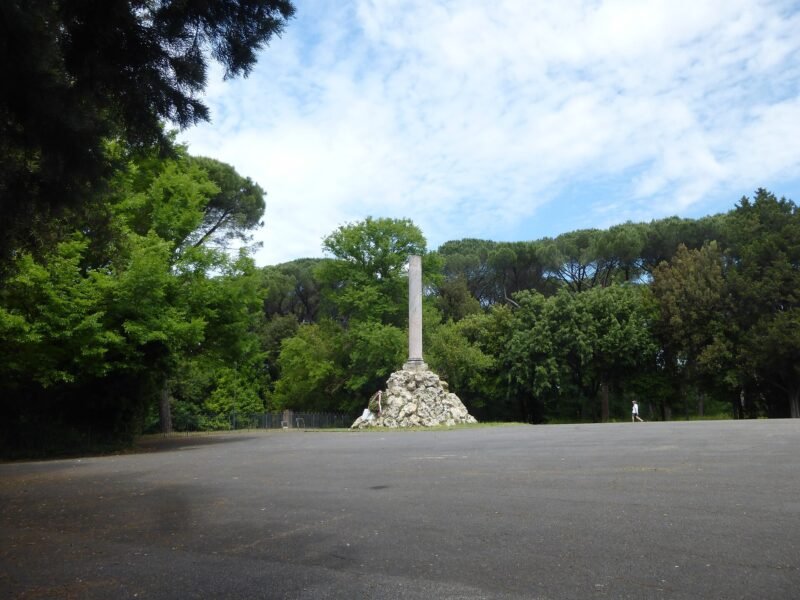
- Fountain of Anna Perenna500 m
- MAXXI – National Museum of 21st Century Arts700 m
- Flaminio700 m
Upcoming events nearby
- Roma Jazz Festival 2026, November 1 to 24 at the Auditorium and Casa del Jazz100 m
- Evgeny Kissin and András Schiff at Santa Cecilia, November 9, 2026100 m
- Roma Gospel Festival 2026 at Auditorium Parco della Musica, December 13, 2026 to January 1, 2027100 m
- Santa Cecilia 2026/2027 Concert Season at Auditorium Parco della Musica, October 21, 2026 to June 5, 2027100 m



You might also like
- Paolo Jannacci, Jannacci arrenditi! La città ascolta at Auditorium Parco della Musica, November 3, 2026
- Buenos Aires Tango with Daniel Binelli at Auditorium Parco della Musica, November 28, 2026
- Laudato sii at Auditorium Parco della Musica, November 17, 2026
- In memory of Mauro Bortolotti and Franco Evangelisti at Teatro Studio Borgna, November 6, 2026
- Voices by Henze at Auditorium Parco della Musica, November 4, 2026
- PMCE Huellas 2: new music from Spain at Teatro Studio Borgna, Auditorium, Nov 13, 2026