Bach Christmas Oratorio with Enrico Onofri at Auditorium Parco della Musica, December 10, 11 and 12, 2026
In short. The Bach Christmas Oratorio, with the Orchestra and Chorus of the Accademia Nazionale di Santa Cecilia conducted by Enrico Onofri, is scheduled for Thursday, December 10, 2026 at 19:30, Friday, December 11 at 20:00 and Saturday,…
The Bach Christmas Oratorio, with the Orchestra and Chorus of the Accademia Nazionale di Santa Cecilia conducted by Enrico Onofri, is scheduled for Thursday, December 10, 2026 at 19:30, Friday, December 11 at 20:00 and Saturday, December 12 at 18:00 at Auditorium Parco della Musica Ennio Morricone, at Viale Pietro de Coubertin 30. The first three cantatas of the cycle are performed, with the soprano Carlotta Colombo, the alto Maria Margherita Sala, the tenor Dave Monaco and the bass Fulvio Bettini. The chorus is prepared by Andrea Secchi. You get to the Auditorium on metro A to Flaminio and then tram 2, stops Flaminia/Reni or Apollodoro, or on bus 910 from Termini and lines 53, 982 and 168. Tickets cost from 23 to 54 euros depending on the section and are bought at the Auditorium box office, at the box office at Via Vittoria 6 and on the presale network authorized by the Accademia, reachable from the official concert page. Doors close at the start time.
Some pieces the calendar makes inevitable, and the Christmas Oratorio is the first of all. In Rome, two weeks before the holidays, the Accademia entrusts it to a conductor who comes from the world of historical performance practice and who makes his debut for the occasion on the Santa Cecilia podium: a choice that promises a Bach light of step, clear in the voices, far from the heaviness of certain traditional readings.
The Bach Christmas Oratorio at Santa Cecilia: the three evenings
The concert is repeated three times with the same program: Thursday, December 10 at 19:30, Friday, December 11 at 20:00, Saturday, December 12 at 18:00. You hear Cantatas I, II and III of the Christmas Oratorio, that is, the part of the cycle that tells the night of Bethlehem, from the announcement to the birth to the adoration of the shepherds.
Which evening to choose
Thursday is the evening for those who leave the office and have little margin: with the start at 19:30 and doors closing on time, it's best to set out early. Friday at 20:00 leaves half an hour more. Saturday at 18:00 is the best fit for those who want to pair the concert with dinner afterward, or who come from outside Rome and have to leave in the evening.
What the official presentation says
The Accademia presents the evening as an approach to the holidays: a masterpiece conceived to accompany the liturgical celebrations of the Christmas days, in which arias, recitatives, chorales and ensemble pieces interweave the narrative dimension of the Gospel story with the devotional one. On the podium, the presentation stresses, is one of the most esteemed interpreters and conductors of the Baroque repertoire, making his debut at Santa Cecilia.
A season concert
The Christmas Oratorio is part of the Accademia's 2026/2027 symphonic season, presented in the listing on the Santa Cecilia concert season. Presale for concerts up to February 27, 2027 has been open since September 10, 2026.
The program: the first three cantatas of the Christmas Oratorio
The Christmas Oratorio, BWV 248, is a cycle of six cantatas that Bach wrote for the Christmas season of 1734 and 1735, one for each of the feast days: the three days of Christmas, New Year's Day, the following Sunday and Epiphany. At Santa Cecilia the first three are performed, originally intended for December 25, 26 and 27.
Cantata I, Jauchzet, frohlocket
The first cantata opens with a chorus of jubilation, "Jauchzet, frohlocket", and a famous opening: the timpani alone, then the trumpets. The scoring calls for three trumpets, timpani, two flutes, two oboes, strings and basso continuo. The text tells of the time before the birth, Mary and Joseph's journey to Bethlehem for the census and finally the birth of Jesus, according to the Gospel of Luke.
Cantata II, Und es waren Hirten
The second cantata changes color: out go the trumpets and timpani, in come two oboes d'amore and two oboes da caccia alongside the flutes. It's the cantata of the shepherds: the angel who appears in the night and announces the birth, the prophecy recalled by the bass voice, the invitation to go and see the child, the songs of Mary, the angels and the shepherds. The oboes d'amore, with their dark and sweet sound, give this part its nocturnal tint.
Cantata III, Herrscher des Himmels
The third cantata concludes the tale of the Christmas night with the adoration of the shepherds in the stable. Trumpets and timpani return. Mary sings, the evangelist tells of the shepherds' return, and the cantata closes by taking up the opening chorus. It's a circular finale, which gives the listener back the celebration with which everything had begun.
The voices of the story
In the Oratorio the Gospel story is entrusted to the evangelist, a tenor, while the arias comment on the events and the chorales give voice to the community of the faithful. In Rome the tenor part is sung by Dave Monaco. With him are the soprano Carlotta Colombo, the alto Maria Margherita Sala and the bass Fulvio Bettini. The Accademia's Chorus, prepared by Andrea Secchi, carries the greatest weight: the opening choruses and the chorales are the heart of the score.
Who Enrico Onofri is, the conductor of the Christmas Oratorio
Enrico Onofri is a violinist and conductor born in Ravenna on April 1, 1967, a specialist in the Baroque and Classical repertoire performed according to historical practice. With the Christmas Oratorio he makes his debut on the podium of the Accademia di Santa Cecilia.
Ravenna and the antiques shop
Onofri grows up in his parents' antiques atelier, and from the very start of his musical studies he takes an interest in historical performance: the interpretive practices of past eras become for him a source of inspiration for new perspectives, more than an exercise in philology.
Savall and Il Giardino Armonico
His career begins while he is still a student, with Jordi Savall's invitation to take the role of concertmaster of the Capella Reial de Catalunya. Collaborations follow with the Concentus Musicus Wien, the Ensemble Mosaiques and the Concerto Italiano. Onofri is among the founders of Il Giardino Armonico, where he is first violin and soloist until 2010: decisive years for the rebirth of Italian Baroque music played on period instruments.
From violin to podium
Since 2002 he has combined conducting with the violin, leading chamber and symphonic ensembles such as the Vienna Chamber Orchestra, the Akademie für Alte Musik, the Orquesta Barroca de Sevilla, the Camerata Bern, Toronto's Tafelmusik and the Orchestra del Maggio Musicale Fiorentino. Between 2020 and 2024 he is principal conductor of the Filarmonica Toscanini.
Today's posts
Today Onofri is associate conductor of the Münchener Kammerorchester, artistic partner of the Haydn Philharmonie, associate conductor of the Orchestre National d'Auvergne, director of the Imaginarium Ensemble, which he founded, and music director of the Real Câmara of Lisbon. In the theater he has conducted at the Opéra de Lyon, the Teatro de la Maestranza in Seville, the Opernhaus in Zurich and the Staatstheater in Halle. At the start of 2025 he conducted Alessandro Scarlatti's Il trionfo dell'onore at Teatro Malibran in Venice, for the composer's tercentenary.
Records and awards
Since January 2025 he has collaborated with Harmonia Mundi on a symphonic cycle dedicated to the Classical period, opened by the all-Mozart record Serenata, with Isabelle Faust. His discography includes Vivaldi, Corelli, Telemann, Haydn, Bach's Sonatas and Partitas for solo violin and the Portuguese repertoire with the Real Câmara. He has received the Diapason d'Or de l'Année 2020, a Choc de Classica, a Gramophone Award, the Diapason d'Or 2021 and the Grand Prix des Discophiles. In 2019 he received the Premio Abbiati as best soloist of the year.
Teaching
Onofri has taught Baroque violin at the Alessandro Scarlatti Conservatory in Palermo and today teaches at the Rossini Conservatory in Pesaro. He was a guest at the Juilliard School in 2012 and a tutor of the European Union Baroque Orchestra. Since 2010 he has held in San Leo, in the Rimini area, the meetings that merged into the Accademia del Tempo Lento.
A curiosity about the Bach Christmas Oratorio with Enrico Onofri at Auditorium Parco della Musica, December 10, 11 and 12, 2026
The most surprising curiosity is that the Christmas Oratorio is largely recycled music. Bach took choruses and arias from secular works written earlier, among them the birthday cantatas for the ruling house of Saxony, BWV 213, 214 and 215, and adapted them to sacred texts. The chorus that opens the first cantata, "Jauchzet, frohlocket", comes from cantata BWV 214, which began with the words "Tönet, ihr Pauken! Erschallet, Trompeten!", sound, timpani, resound, trumpets. That's why the opening is entrusted to the timpani followed by the trumpets: the original text asked for it literally.
The chorus of the third cantata too has a secular origin, in the same cantata BWV 214. This technique, parody, was normal in Bach's day. It was Romanticism, with its idea of the genius who creates a unique work by sudden inspiration, that made it suspect. Even in the mid-20th century important musicians found an oratorio that wasn't entirely original embarrassing. The audience never cared: the Christmas Oratorio remains one of Bach's most performed works.
Then there is a second thread, entirely instrumental. In the second cantata Bach uses the oboe d'amore and the oboe da caccia, instruments that at the time were novelties, and which interested him. The first has a dark, sweet sound, the second a brighter timbre. Hearing this cantata conducted by a musician raised with period instruments is a way of feeling it close to the sound Bach had in mind.
The Auditorium hall and its acoustics
The Accademia di Santa Cecilia's symphonic season has been based since 2003 in Sala Santa Cecilia, the largest of the three concert halls designed by Renzo Piano for Auditorium Parco della Musica Ennio Morricone: 2,756 seats, inaugurated on December 21, 2002. The exact hall of each concert is indicated on the ticket.
A cherry wood case
The hall's ceiling is formed by 26 shells of American cherry, each with an average surface of about 180 square meters, and the reverberation time is 2.2 seconds. For a Baroque oratorio this means a full sound even with a reduced orchestra: the chorales arrive soft, the trumpets of the first cantata ring out without sharp edges.
Where to sit for an oratorio
People who attend the hall observe that the sound intensity seems to drop up to the 10th row and then stays constant. To hear the dialogue between chorus and soloists you don't need the orchestra right up against the stage. A farther-back central position, or the front gallery, gives a better balance. The gallery behind the stage, on the other hand, lets you see the conductor face on, and with a clear gesture like that of someone who comes from the violin it's a show in itself.
Renzo Piano's scarabs
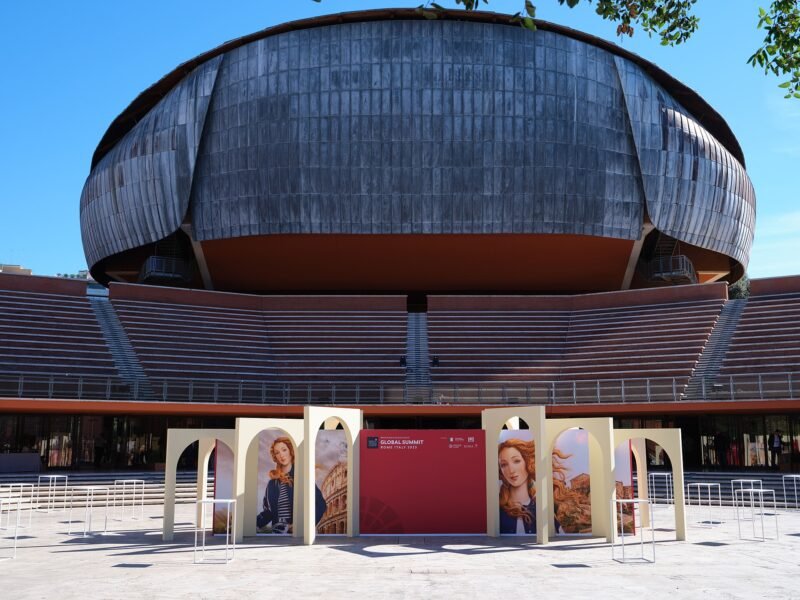
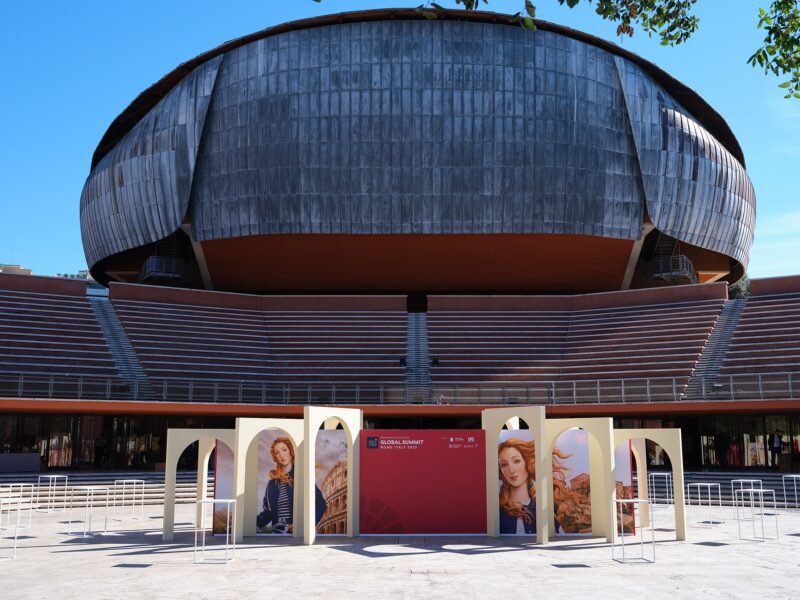
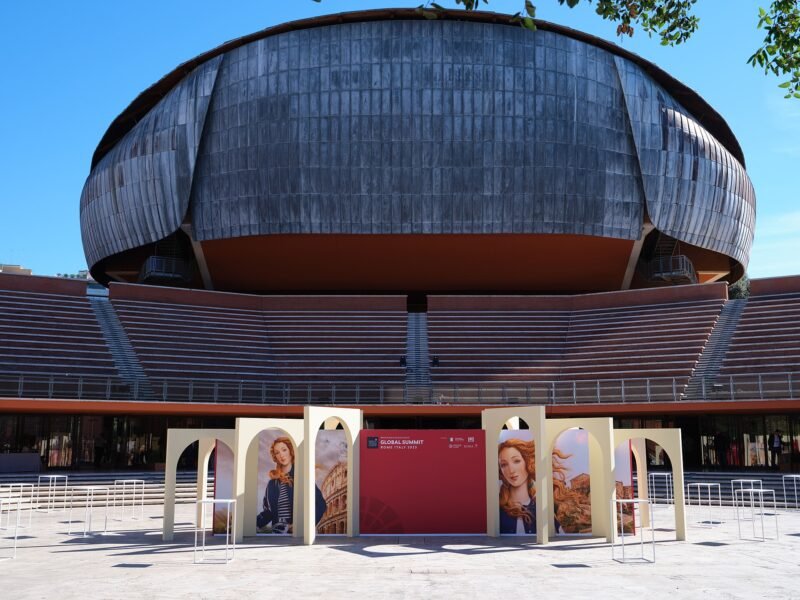
From outside, the three halls are lead-clad volumes on a brick base, arranged in a fan around the open-air cavea named after Luciano Berio. Piano won the competition in 1993 and worked with the acoustician Jürgen Reinhold of the Müller-BBM firm in Munich and with the landscape architect Franco Zagari. The complex's history is told in the listing on Auditorium Parco della Musica.
Something nobody tells you about the Bach Christmas Oratorio with Enrico Onofri at Auditorium Parco della Musica, December 10, 11 and 12, 2026
What few people say is that the Christmas Oratorio you hear in Rome is a half, and a very specific half. Bach didn't conceive a work to be performed in a single evening: six cantatas for six different days, from December 25 to January 6. The first three, the ones on the program, nevertheless form a complete arc, because they tell the whole Christmas night and close with the return of the opening chorus. You don't leave with the impression of an interrupted story.
The second thing concerns punctuality. The Accademia warns that concerts begin at the stated time and that latecomers don't enter the hall: they follow the concert in the listening rooms, until seats run out. In an oratorio that opens with timpani, arriving late means missing precisely the most awaited opening. Flaminio traffic on December evenings, with Christmas shopping, is unforgiving: half an hour of margin is the minimum.
The third is structural. Sala Santa Cecilia is built on a raised floor, because the remains of a Roman villa emerged underground and it wasn't possible to dig, and the galleries have only two elevators. Anyone with mobility difficulties and a gallery seat must arrive well ahead of time. And the hall has no pipe organ: the project was suspended in 2002, after an appeal by Italia Nostra, by the Accademia, then presided over by Luciano Berio.
The Accademia di Santa Cecilia in December
The Accademia Nazionale di Santa Cecilia, which organizes the concert, is a foundation with a symphony orchestra and chorus and an academic body. The music director is Daniel Harding. The Auditorium is its main home, where it keeps the Bibliomediateca and the Musical Instruments Museum.
A dense December
The eve of the Oratorio, Wednesday, December 9, the Accademia brings to Sala Sinopoli Jordi Savall with a Vivaldi program, at the head of the Capella Reial de Catalunya: the same ensemble in which Onofri, still a student, began his career as concertmaster. Two evenings in a row, two generations of the same school. A week after the Oratorio, from December 17 to 19, Juraj Valčuha conducts the orchestra with the cellist Ettore Pagano in a program running from Herrmann to Rachmaninoff. In the fall the season already brought to the hall Wagner's Siegfried with Daniel Harding and Kirill Petrenko at the head of the orchestra.
The patron of music
Santa Cecilia, patron saint of music and of the Accademia, is venerated in the Basilica of Santa Cecilia in Trastevere: on a Christmas concert weekend, a daytime visit to the basilica is a natural complement.
The advice I give you for visiting the Bach Christmas Oratorio with Enrico Onofri at Auditorium Parco della Musica, December 10, 11 and 12, 2026
The advice is to prepare with some targeted listening: the opening chorus of the first cantata, "Jauchzet, frohlocket", and then the start of the second, where trumpets and timpani give way to flutes and oboes. It's only a few minutes, but it lets you recognize in the hall the two worlds of the work, that of the celebration and that of the shepherds' night.
Second piece of advice: read a translation of the texts. The Oratorio is sung in German, and the chorales by Paul Gerhardt, which Bach uses several times, are the point where the community responds to the story. Understanding the words changes the way you hear the pauses, the slowdowns, the cadences.
Third: choose the seat according to what interests you. For the overall sound, central orchestra beyond the 10th row or the front gallery. To see how a Baroque-trained conductor holds chorus and orchestra together, the gallery behind the stage. It's then best to stay until the end of the applause: with the chorus lined up, the close of the third cantata in a hall of this size is one of the most beautiful images of the season.
Finally, if you can choose, Saturday at 18:00 is the most restful date, with time to have dinner afterward without hurry.
Tickets for the Christmas Oratorio: prices and discounts
Tickets for the Christmas Oratorio conducted by Enrico Onofri cost from 23 to 54 euros, divided into six sections: 54, 47, 37, 35, 30 and 23 euros. They are sold only by resellers authorized by the Accademia.
Where to buy
Tickets are bought at the box office of Auditorium Parco della Musica Ennio Morricone, at the box office at Via Vittoria 6, near Piazza del Popolo, and on the authorized presale network, reached from the purchase button under the chosen date on the official concert page. The Auditorium box office, in the greenhouse space, is open every day from 11:00 to 20:00. Via Vittoria one is open Monday to Friday from 11:00 to 19:00 and Saturday from 11:00 to 14:00, with electronic payment only.
Young people and kids
For the season's concerts, under-26s get a 30% discount and children under 14, together with an adult, enter at the symbolic price of 3 euros. Reduced rates are bought only at the box offices, while promotional seats last, and cannot be combined. The other discounts for young people are collected in the dedicated section of the Accademia's site.
Unauthorized resellers
The Accademia warns that it isn't responsible for any markups on tickets sold by unauthorized parties. For information there is the infoline 06 8082058, or the addresses info@santacecilia.it and biglietteria@santacecilia.it.
How to get to the Auditorium for the Christmas Oratorio
Auditorium Parco della Musica Ennio Morricone, at Viale Pietro de Coubertin 30, is reached by metro A to Flaminio and then tram 2, or by buses 910, 53, 982 and 168. The metro doesn't go all the way to the entrance.
Metro A and tram 2
From Piazzale Flaminio, tram 2 climbs Via Flaminia. Get off at the Flaminia/Reni or Apollodoro stops and walk a few minutes toward Viale Pietro de Coubertin, crossing the Villaggio Olimpico. From the historic center it's the simplest solution.
The 910 from Termini
The 910 leaves from Piazza dei Cinquecento, in front of Termini station, and reaches the Auditorium with no changes: the line to choose for those staying near the station or arriving by train for the Saturday concert.
The other lines
The 53 connects Piazza Mancini with the center, the 982 comes from Viale XVII Olimpiade area, the 168 from Tiburtina station. The 168 is a weekday line: for Saturday it's best to check the times on the transit company's site.
By car
The stretch of Viale Pietro de Coubertin in front of the entrance is closed to traffic. The complex's paid car parks have limited spaces, and on concert nights cars fill the streets of the Villaggio Olimpico. In December, with shopping traffic, the car makes sense only with plenty of time.
Another well-known fact, and yet rarely mentioned
It's well known that Bach wrote music for the Lutheran liturgy of Leipzig. Less often remembered is how tied the Christmas Oratorio is to the calendar: each of the six cantatas was meant for a specific day, and the Gospel story was divided accordingly. On December 25, 26 and 27 the story of the birth according to Luke. On New Year's Day the circumcision and the giving of the name. On the following Sunday and Epiphany the arrival of the Magi according to Matthew. A work conceived to be heard in installments, over almost two weeks.
The second fact, known to specialists, concerns the texts. Many chorales of the Oratorio use verses by Paul Gerhardt, a 17th-century poet, and the language of the arias, rich in images and affective accents, is traced back to Pietist spirituality. Anyone who listens with the text in front of them notices that the arias don't narrate: they meditate. It's the voice of the believer reflecting on what the evangelist has just told.
The third concerns performance history. For much of the 20th century the Oratorio was performed by large choruses and large orchestras. The historical performance movement, to which Onofri has belonged since the Giardino Armonico years, brought attention back to leaner forces and livelier tempos. Two ways of hearing the same Bach, and in Rome you hear the second, though entrusted to a modern symphony orchestra.
How to organize the evening of the Oratorio
For the Christmas Oratorio the rule is to arrive at the Auditorium at least 40 minutes before the start: ticket pickup, checks, coat check and the climb to the hall take time, and the doors don't wait.
Before the concert
The foyer shared by the halls has a bar, a café and a large bookstore with records and music books. From the terrace that runs around the buildings you see the remains of the Roman villa discovered during the works.
The running time
The concert page doesn't give the running time or say if there is an intermission. Three cantatas of the Oratorio nevertheless make an evening of average length. Anyone with a train to catch after the Saturday concert should leave plenty of margin.
After the concert
At the exit the cavea is the right place to let the crowd thin out. Anyone with a car in the Villaggio Olimpico shouldn't be in a hurry: the first exits from the side streets are always the slowest.
The right photo to take at the Bach Christmas Oratorio with Enrico Onofri at Auditorium Parco della Musica, December 10, 11 and 12, 2026
During the concert the phone stays off: in an oratorio the chorus's pianissimos are part of the music, and every lit screen is seen from all over the hall. The photo is taken before and after.
In December it gets dark early, and at 18:00 on Saturday the light is already that of evening. From the top of the cavea you frame Renzo Piano's three volumes with the lead reflecting the lights, and the audience coming in. It's the image that tells the evening better than any portrait.
In the hall, before the lights go down and if staff allow it, the right shot points upward, at the cherry shells of the ceiling, with the chorus already lined up behind the orchestra: a wall of voices that for one evening becomes the nave of a Lutheran church.
Afterward, the final applause is the only moment to take out the phone, without flash. Outside, the volumes of the halls seen from below, on Viale Pietro de Coubertin side, give an almost abstract image: the least obvious, and in our judgment the most successful.
Some important events that happened here in history
The ground on which the Auditorium stands has a much longer history than the complex. During the works, the remains of a Roman villa of the 3rd century BC emerged, built on the site of a small archaic farm of the 6th century BC. The discovery forced Renzo Piano to modify the project, moving two of the three volumes westward, almost to the Corso di Francia viaduct. The finds are displayed in a small museum under the cavea.
The modern story begins with a demolition. In 1936 the Augusteo, Rome's great concert hall, was torn down, and for over 60 years the capital was left without an auditorium built for symphonic music. In 1992 the city council chose the Villaggio Olimpico area, and in 1993 Piano won the competition.
On April 21, 2002 Sala Sinopoli opened. On December 21, 2002, 24 years before this Oratorio, came Sala Santa Cecilia, with the Academy's Orchestra conducted by Myung-Whun Chung. Since 2003 the Auditorium has been the permanent home of the Accademia's season, since 2006 it has hosted the Rome Film Festival, and in 2020 the city council approved naming it after Ennio Morricone. A December of inaugurations and Christmas, in short, is inscribed in the very history of the hall.
Who has passed through the Bach Christmas Oratorio with Enrico Onofri at Auditorium Parco della Musica, December 10, 11 and 12, 2026
Sala Santa Cecilia has had weighty guests since day one. The inaugural concert of December 21, 2002 was conducted by Myung-Whun Chung. A few months earlier, at the opening of Sala Sinopoli, Goffredo Petrassi wanted to be present to hear his Ouverture da concerto of 1931 in the new hall. One of the three big halls of the complex now bears his name. Luciano Berio, then at the head of the Accademia, gave his name to the cavea.
In the first months the hall was also criticized: Wolfgang Sawallisch said he was puzzled by the stage and the acoustics, and corrective work followed. Since then it has been the home of the Santa Cecilia Orchestra and its music directors, from Antonio Pappano to Daniel Harding. Among the house soloists is Evgeny Kissin, a guest of the Accademia since 1991.
In Onofri's path, before this debut, are Jordi Savall, who called him as a student to be concertmaster of the Capella Reial de Catalunya, the Concentus Musicus Wien, the Concerto Italiano, and then Isabelle Faust, soloist on his Mozart record. In December 2026 the violinist of Il Giardino Armonico steps onto the Accademia's podium for the first time, with the best-loved Christmas piece of the Baroque repertoire, and joins the list of those who have conducted in this hall.
Accessibility and children at the Christmas Oratorio
For people with walking disabilities who hold the Disability Card, the Accademia provides a 15% reduction on two tickets, to be bought at the box office. For wheelchair users admission costs 10 euros and the person assisting enters free, while available seats last.
Booking
For people who cannot walk, booking is mandatory, from 15 days before the concert until the day before, on 06 8082058 or at biglietteria@santacecilia.it. For the December 10 concert the window therefore opens on November 25.
Arriving early
The hall is raised above ground level and the galleries have only two elevators: arriving with an hour of margin and asking staff for the route right away avoids the crowding of the last minutes. On subscription concert days the Accademia's Courtesy Service is present from an hour before the start.
With children
The Christmas Oratorio is one of the few symphonic titles that lend themselves to a first family listen: it tells a story children know, with trumpets, timpani and choruses. With the 3-euro ticket for children under 14 and the Saturday concert at 18:00, in our judgment it's one of the best chances of the season to bring a kid to a big hall.
The neighborhood around the Auditorium
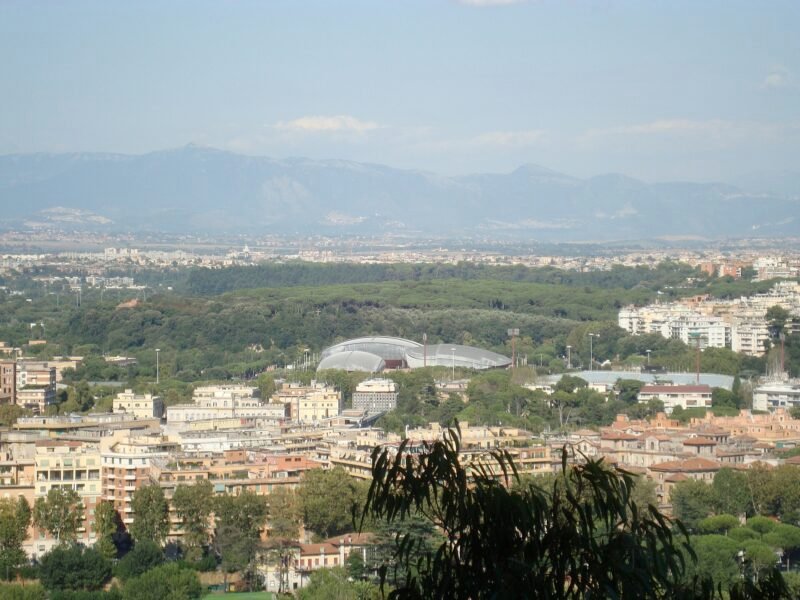
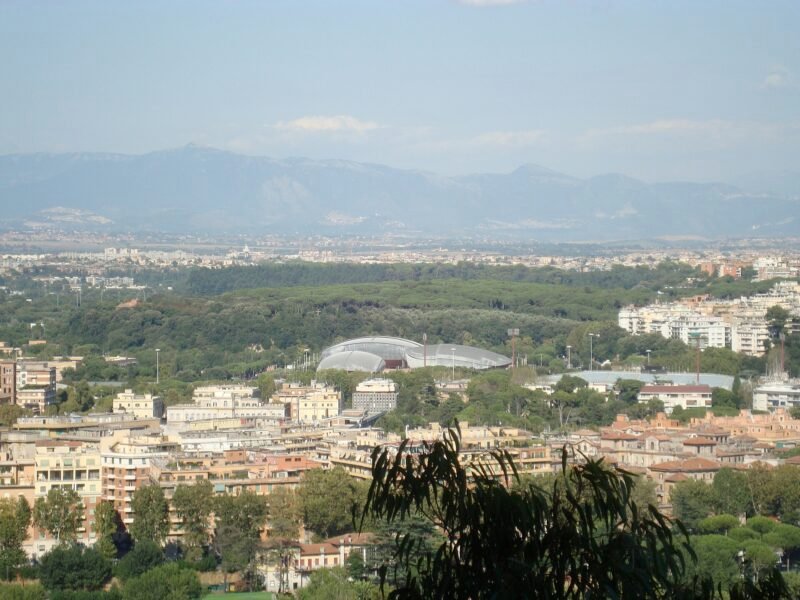
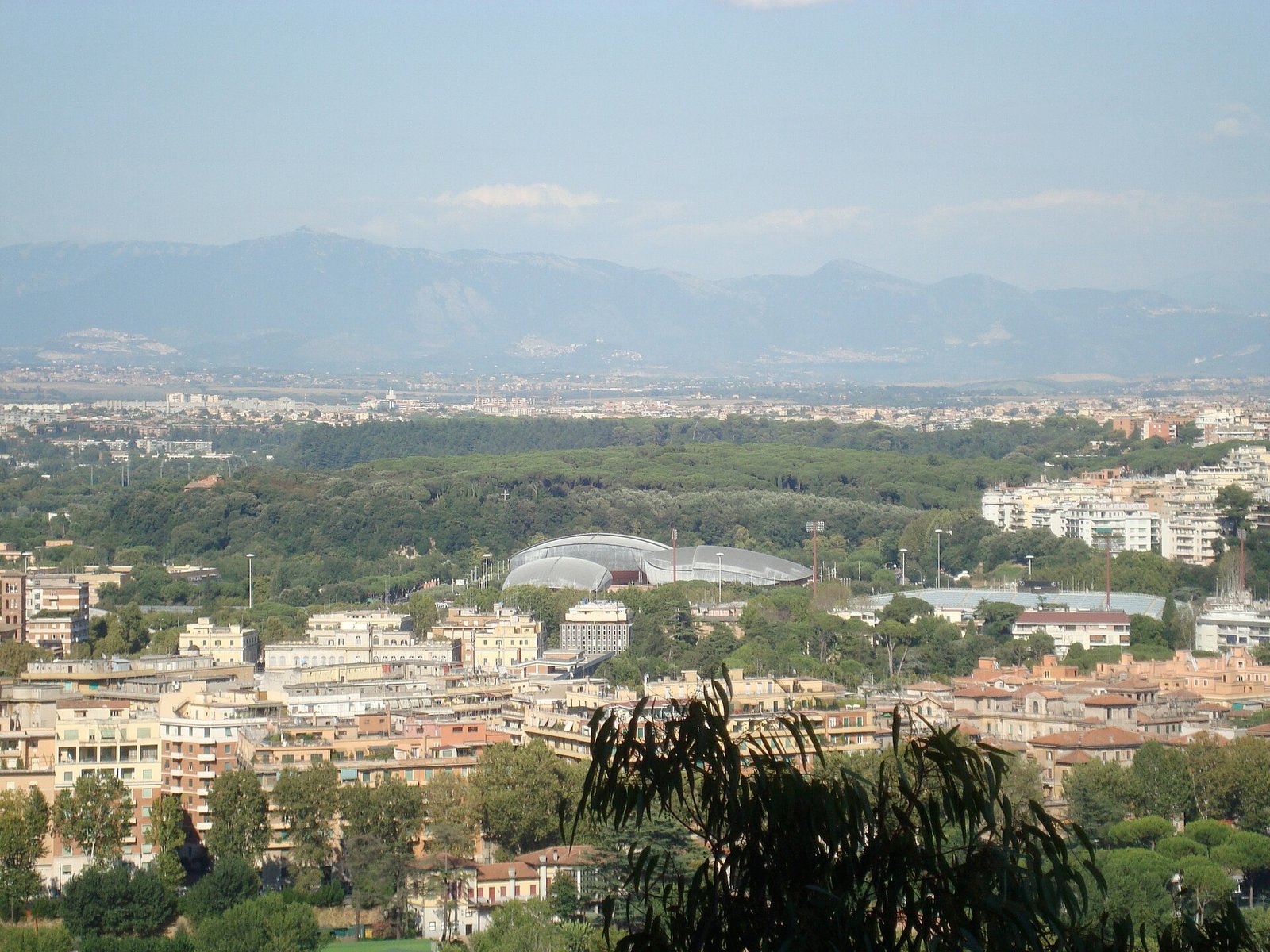
The Auditorium occupies an area of about 55,000 square meters between Villa Glori, the Villaggio Olimpico, the Corso di Francia viaduct and Viale Maresciallo Pilsudski: a piece of 20th-century Rome in which contemporary architecture coexists with greenery.
MAXXI
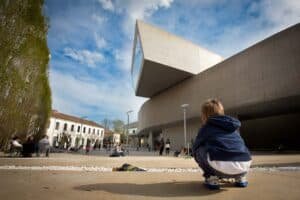
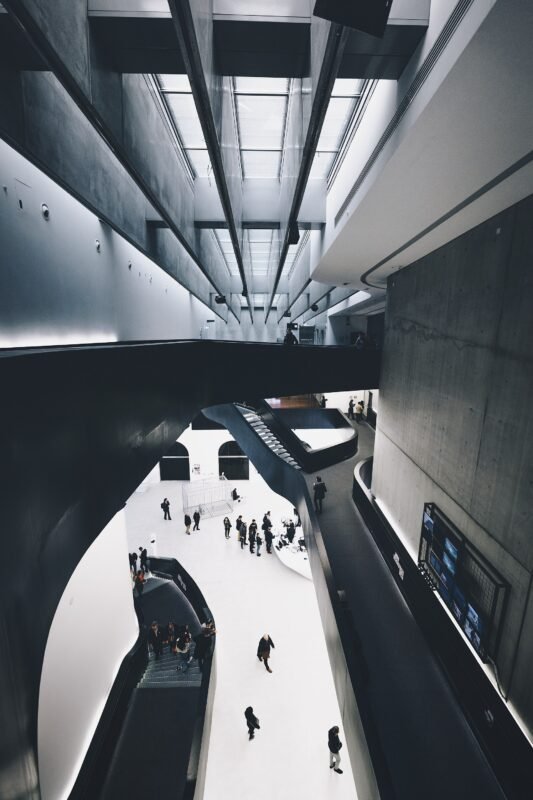
A few minutes' walk away, toward Via Guido Reni, is Zaha Hadid's MAXXI: with the Auditorium it forms the most important pair of contemporary architecture in the city. On Saturday afternoon you can visit an exhibition and walk to the hall for 18:00.
Toward the Tiber
From the Auditorium you go down to the Ponte della Musica, the footbridge that links Flaminio to the Foro Italico. Farther north is Milvian Bridge, in the evening one of the most popular meeting points in northern Rome.
Where to eat before or after the Oratorio
Inside the Auditorium there are a bar and café in the foyer and a bar restaurant with street access too: the most convenient solution for those coming from work on Thursday.
In the neighborhood
Between the Villaggio Olimpico, Via Flaminia and Piazza Mancini are pizzerias, trattorias and neighborhood bars frequented mostly by residents. In the weeks before Christmas, company dinners fill the places: it's best to book.
Ponte Milvio and the center
For dinner after the Saturday concert the widest offering is at Ponte Milvio, where places stay open late. In the opposite direction, toward Piazzale Flaminio and the Tridente, the choice is that of the historic center, with center prices.
December in Rome: the Oratorio and the holidays
Mid-December is when Rome enters the holiday mood, and a Christmas oratorio is the oldest way of celebrating it in music. What the city offers in these weeks is told in the listing on Christmas in Rome.
A week of music
Anyone staying a few days can build a small musical itinerary without changing address: the Oratorio from December 10 to 12, Valčuha and Pagano from the 17th to the 19th. The same Saturday, December 12, at 20:00 in Sala Sinopoli, the Auditorium also offers Paolo Fresu's Christmas Songs: two very different Christmases under the same roof.
The weather
December evenings can be cold and damp, and the Auditorium is an open complex, where you walk outdoors between one entrance and another. A coat to leave at the coat check and a folding umbrella avoid surprises.
Frequently asked questions about the Christmas Oratorio at Santa Cecilia
When is Bach's Christmas Oratorio performed at Santa Cecilia?
Bach's Christmas Oratorio conducted by Enrico Onofri is performed on Thursday, December 10, 2026 at 19:30, Friday, December 11 at 20:00 and Saturday, December 12 at 18:00 at Auditorium Parco della Musica Ennio Morricone, at Viale Pietro de Coubertin 30, with the same program on the three evenings.
Which parts of the Christmas Oratorio are performed?
At the Auditorium the Christmas Oratorio is performed in its first three cantatas: Jauchzet, frohlocket, Und es waren Hirten and Herrscher des Himmels. These are the cantatas Bach intended for the three days of Christmas, and they tell the birth of Jesus and the adoration of the shepherds.
How much do tickets for the Christmas Oratorio cost?
Tickets for the Christmas Oratorio at Santa Cecilia cost from 23 to 54 euros depending on the section. Under-26s get a 30% discount and children under 14, together with an adult, pay 3 euros, buying at the box offices while promotional seats last.
Who sings in the Christmas Oratorio in Rome?
In the Christmas Oratorio conducted by Enrico Onofri the singers are the soprano Carlotta Colombo, the alto Maria Margherita Sala, the tenor Dave Monaco and the bass Fulvio Bettini, with the Chorus of the Accademia Nazionale di Santa Cecilia prepared by Andrea Secchi.
Who is Enrico Onofri?
Enrico Onofri, conductor of the Christmas Oratorio at Santa Cecilia, is a violinist and conductor born in Ravenna in 1967. He was among the founders of Il Giardino Armonico, first violin until 2010, and today conducts ensembles such as the Real Câmara of Lisbon and the Imaginarium Ensemble. In Rome he makes his debut on the Accademia's podium.
How do you get to Auditorium Parco della Musica?
You get to Auditorium Parco della Musica on metro A to Flaminio and then tram 2, stops Flaminia/Reni or Apollodoro, or on buses 910 from Termini, 53, 982 and 168. The stretch of Viale Pietro de Coubertin in front of the entrance is closed to cars.
What happens if you arrive late to the concert?
At the Accademia di Santa Cecilia's concerts the doors close punctually at the start time. Anyone who arrives late to the Christmas Oratorio doesn't enter the hall and can follow the concert in the listening rooms, until seats run out. It's best to arrive at least 40 minutes early.
The final advice on the Christmas Oratorio at Santa Cecilia
A conductor raised with Savall and Il Giardino Armonico, making his debut with Rome's symphony orchestra. Three cantatas that tell the Christmas night from the announcement to the adoration. A hall that was itself inaugurated in a December. In our judgment it's the event with which to begin the holidays in the city. It's best to listen first to the opening chorus, read the texts of the chorales, choose Saturday at 18:00 if you can, and arrive early: with these doors, lateness is not forgiven.
Article written by the editorial team of Tour Leader Pro, contact them for Private/Corporate/V.I.P. Tours and Experiences.
Planning a trip to Rome? The English guides for visiting the city are on ItalyPlanner.com.
Contact Information
Nearby
 Museum of Musical Instruments (MUSA)100 m
- Auditorium Parco della Musica100 m
- Villa Glori500 m
- Fountain of Anna Perenna500 m
- MAXXI – National Museum of 21st Century Arts700 m
- Flaminio700 m
Upcoming events nearby
- Roma Jazz Festival 2026, November 1 to 24 at the Auditorium and Casa del Jazz100 m
- Evgeny Kissin and András Schiff at Santa Cecilia, November 9, 2026100 m
- Roma Gospel Festival 2026 at Auditorium Parco della Musica, December 13, 2026 to January 1, 2027100 m
- Santa Cecilia 2026/2027 Concert Season at Auditorium Parco della Musica, October 21, 2026 to June 5, 2027100 m



You might also like
- Juraj Valčuha and Ettore Pagano at the Auditorium Parco della Musica, December 17, 18 and 19, 2026
- Nubras Ensemble at Auditorium Parco della Musica, February 27, 2027
- Fabio Luisi and Beethoven’s Missa Solemnis at Auditorium Parco della Musica, February 25 to 27, 2027
- Lorenzo Viotti and Lisa Batiashvili at Auditorium Parco della Musica, February 18, 19 and 20, 2027
- Antonio Pappano and Jan Lisiecki at Auditorium Parco della Musica, February 11, 12 and 13, 2027
- Tarmo Peltokoski and Bertrand Chamayou at Auditorium Parco della Musica, February 4, 5 and 6, 2027