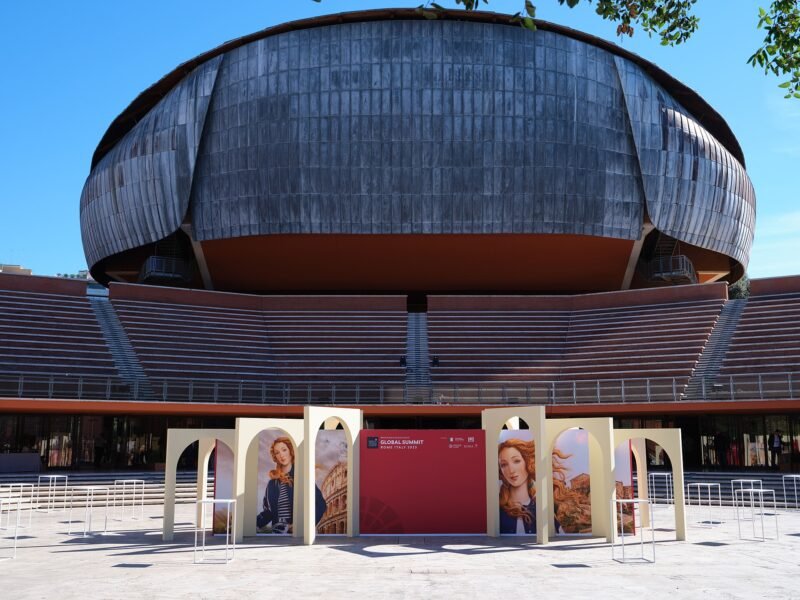
Juraj Valčuha and Ettore Pagano at the Auditorium Parco della Musica, December 17, 18 and 19, 2026
In short. Juraj Valčuha conducts the Orchestra dell'Accademia Nazionale di Santa Cecilia with cellist Ettore Pagano on Thursday, December 17, 2026 at 19:30, Friday, December 18 at 20:00 and Saturday, December 19 at 18:00, at the Auditorium Parco…
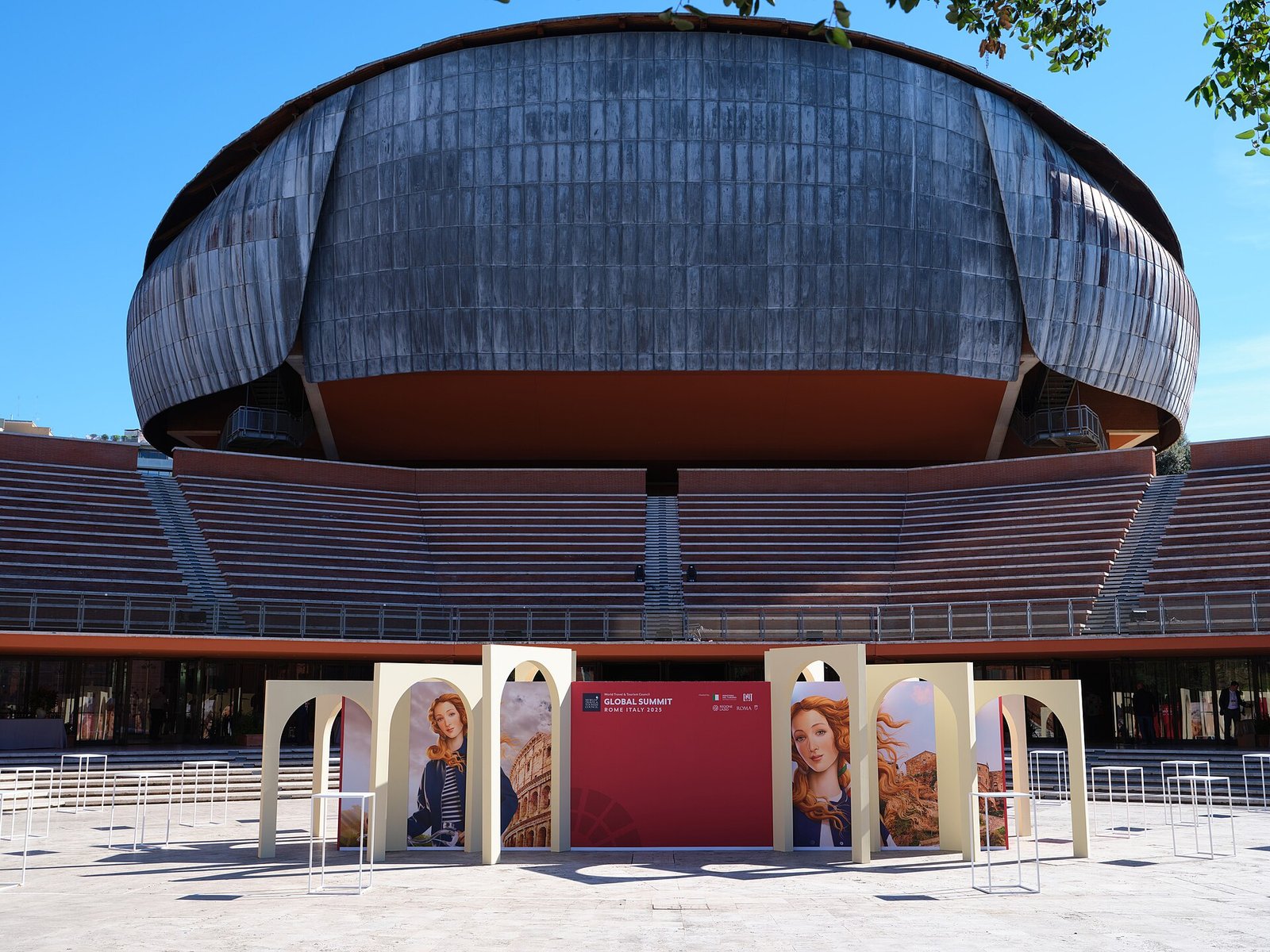
Juraj Valčuha conducts the Orchestra dell'Accademia Nazionale di Santa Cecilia with cellist Ettore Pagano on Thursday, December 17, 2026 at 19:30, Friday, December 18 at 20:00 and Saturday, December 19 at 18:00, at the Auditorium Parco della Musica Ennio Morricone, Viale Pietro de Coubertin 30. The program is the suite from Vertigo by Bernard Herrmann, Dvořák's Cello Concerto and Rachmaninoff's Symphonic Dances. To get there take Metro A to Flaminio and then tram 2 to the Flaminia/Reni or Apollodoro stops, or bus 910 from Termini or lines 53, 982 and 168. Tickets range from 23 to 54 euros depending on the sector and are bought at the Auditorium box office, at the one on Via Vittoria 6 and on the presale circuit authorized by the Accademia, to which the official concert page refers. At the start time the hall doors close.
A conductor with a long career and a 23-year-old cellist who in the spring won the most demanding competition in the world for his instrument: it's the concert in which Rome finds again, on the stage of its oldest symphonic institution, a musician born in the city who in 2026 wrote a page in the history of Italian cello. Around them, a program that starts from Hitchcock's cinema and arrives at Rachmaninoff's last great orchestral piece.
Valčuha and Pagano at Santa Cecilia: dates and times
There are three evenings, with the same program: Thursday, December 17 at 19:30, Friday, December 18 at 20:00, Saturday, December 19 at 18:00. It's the Accademia's last symphonic date before Christmas.
Choosing the date
Thursday, with the start at 19:30, means leaving work early. Friday allows half an hour more. Saturday afternoon is the most convenient repeat for those arriving from out of town or who want to have dinner after the concert. A week before Christmas, with the shopping traffic, the time margin counts more than usual.
The sense of the program
The Accademia's presentation describes a path «from cinema to the great concert tradition»: the music for Hitchcock's film, then one of the most performed cello concertos, finally the Symphonic Dances, Rachmaninoff's last orchestral composition, with what the Accademia calls an explosion of rhythmic verve and richness of timbre.
Within the season
The concert is part of the Accademia's 2026/2027 season, described in the listing on the Santa Cecilia concert season. A week earlier, from December 10 to 12, the orchestra and chorus perform Bach's Christmas Oratorio with Enrico Onofri.
The program: Herrmann, Dvořák, Rachmaninoff
Three composers, three worlds: the Hollywood soundtrack, the Romantic concerto written in New York, the Russian nostalgia composed in the United States. The thread that ties them, if you look closely, is America.
Herrmann, the suite from Vertigo
Bernard Herrmann was Alfred Hitchcock's regular collaborator, and the music for Vertigo is one of his most famous scores. The original recording was conducted by Muir Mathieson and recorded in London and Vienna, because of a musicians' strike in the United States. The score subtly recalls Wagner's Tristan und Isolde. Martin Scorsese observed that, just as the film is about obsession and about returns to the same moment, so the music is built on spirals and circles. The Accademia stresses how here the music creates tension and suspense until it becomes part of the story.
Dvořák, the Cello Concerto
The Concerto in B minor Op. 104 is Dvořák's last solo concerto. He wrote it between November 1894 and February 1895 in New York, where he directed the National Conservatory, for his friend the cellist Hanuš Wihan. The first performance, however, took place in London on March 19, 1896, with the English cellist Leo Stern. It lasts about 40 minutes, in three movements.
Rachmaninoff, the Symphonic Dances
The Symphonic Dances Op. 45, completed in October 1940, are Rachmaninoff's last great composition and the only one written entirely in the United States, largely at an estate in Centerport, on Long Island. Eugene Ormandy gave the premiere with the Philadelphia Orchestra, the dedicatee, on January 3, 1941. The orchestration includes an alto saxophone in the first dance, and the score quotes the Dies irae theme and a chant from Rachmaninoff's own All-Night Vigil.
The order of the evening
The Accademia's presentation states the order clearly: the evening opens with the suite from Vertigo, continues with Dvořák's Concerto and leaves the Symphonic Dances to the second half. In practice, the soloist plays before the intermission, and anyone coming mainly for Pagano has to be in the hall from the start. After the break the orchestra is alone, in full, for the most colorful piece of the program. It's a classic construction, overture, concerto, symphony, renewed by the choice of titles: in place of the overture there is cinema, in place of the symphony a suite of dances whose symphonic quality is above all their breadth. The overall running time is not published, but Dvořák's Concerto alone takes about 40 minutes, and the Symphonic Dances are a great orchestral triptych: it's a full evening, to be lived without the clock in front of your eyes.
Who Ettore Pagano is, the concert's cellist
Ettore Pagano is a 23-year-old cellist from Rome who on May 30, 2026 won first prize at the Queen Elisabeth Competition in Brussels, devoted that year to the cello. The Accademia presents him as the first Italian to triumph in the competition.
The Queen Elisabeth
The Queen Elisabeth Competition was founded in 1937 and is considered one of the most demanding and prestigious music competitions in the world: over the decades it has been the launching pad for performers such as David Oistrakh, Gidon Kremer and Mischa Maisky. In the 2026 edition Pagano placed ahead of the South Korean Tae-Yeon Kim, Leland Ko, the Spaniard Álvaro Lozano Cames, the Japanese Yo Kitamura and the Russian Maria Zaitseva.
Casals's cello
Besides the cash prize and a series of engagements, the victory brings a rare privilege: Pagano will be able to play for four years a cello by Matteo Goffriller, the Venetian luthier, which belonged to Pablo Casals, the Catalan cellist considered the founder of the modern technique of the instrument.
A little-celebrated victory
The Italian press recorded the victory with some delay: more than one newspaper observed that a success of this scale passed almost unnoticed in the national public debate. The December concert, in the city where Pagano was born, is also the chance to make up for that.
What to expect
Dvořák's Concerto is one of the test pieces of the repertoire: lyrical, virtuosic, built in dialogue with a full orchestra. Hearing it from a Queen Elisabeth winner, a few months after the final, means hearing a performer at the moment when a career takes its shape.
Juraj Valčuha, the conductor
Juraj Valčuha is a Slovak conductor born in Bratislava in 1976, for six seasons music director of the Teatro San Carlo in Naples and for seven years principal conductor of the Rai National Symphony Orchestra.
Training
Valčuha studied composition, conducting and cimbalom at the Bratislava Conservatory. He continued in Saint Petersburg, as a student of Ilya Musin, and from 1998 at the Paris Conservatoire with János Fürst and Jorma Panula. A training that spans two great schools of conducting, the Russian and the Nordic.
France
Between 2003 and 2005 he was assistant conductor at the Opéra Orchestre national Montpellier. He then conducted the Orchestre national de France, with which he made the world-premiere recording of Domenico Alaleona's Mirra, the Orchestre Philharmonique de Radio France, the Orchestre philharmonique de Nice and the Orchestre national du Capitole de Toulouse. In 2007 he debuted at the Teatro Comunale in Bologna with La bohème.
Turin and Naples
From 2009 to 2016 he was principal conductor of the Rai National Symphony Orchestra. From the 2016/2017 season to 2021/2022 he was music director of the Teatro San Carlo in Naples, and closed the experience conducting Verdi's Don Carlo, which opened the 2022/2023 season, before handing the role to Dan Ettinger.
Valčuha and Rome
The Roman public also knows him from the Teatro dell'Opera, where he conducted Jenůfa in 2024 and where he returns in May 2027 for Shostakovich's Lady Macbeth of the Mtsensk District, in Barrie Kosky's production.
A curiosity about Juraj Valčuha and Ettore Pagano at the Auditorium Parco della Musica, December 17, 18 and 19, 2026
The curiosity is that Dvořák's Concerto was not supposed to exist. For years the composer refused Hanuš Wihan's requests: the cello, he claimed, is an excellent orchestral instrument but entirely inadequate for a solo concerto. He complained about the high register, which he found nasal, and about the low notes, which seemed to him to mumble. In a letter to a friend Dvořák wrote that he himself was surprised by his decision.
What changed his mind was a colleague. Victor Herbert, a composer and cellist who taught at the National Conservatory in New York, presented in March 1894 his Second Cello Concerto. Dvořák listened to it at least twice and decided to grant Wihan's request. Herbert, incidentally, had been principal cellist in the orchestra that on December 16, 1893 had given the premiere of the «From the New World» Symphony. The slow movement of Herbert's concerto was in B minor, and perhaps this is what suggested to Dvořák the key of his own.
There is also a detail that links the program to the Roman audience of December: Dvořák's concerto and Rachmaninoff's Dances were both born far from the composers' homeland, in the United States. Two pieces of European nostalgia written in America, preceded by the music of an American who looked to Wagner.
Renzo Piano's great hall
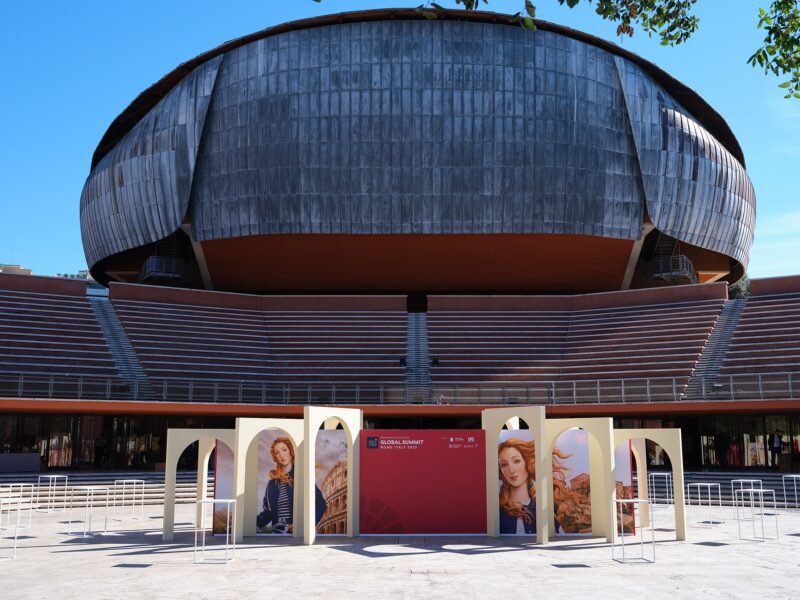
The concerts of the Accademia's symphonic season have been held, since 2003, in the Sala Santa Cecilia of the Auditorium, the largest of Renzo Piano's three halls with its 2,756 seats. The ticket shows the hall for each date.
Wood and reverberation
26 American cherry shells, each with a surface of about 180 square meters, form the ceiling. The reverberation measures 2.2 seconds. It's a hall designed for the full symphony orchestra, the one of Rachmaninoff's Dances, with brass, percussion, piano and saxophone.
The seat for a solo concerto
For a cello concerto it's best to sit in front of the soloist, in the central orchestra seats but beyond the tenth row, where according to regulars of the hall the intensity of the sound stabilizes. The rows closest to the stage give the best view of Pagano, but a less good balance with the orchestra. The gallery behind the stage, on the other hand, shows Valčuha from the front.
The complex
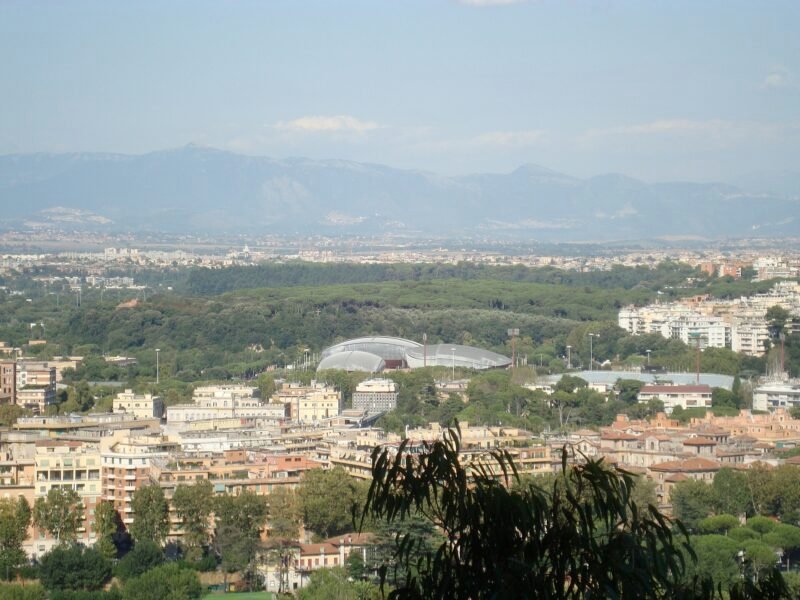
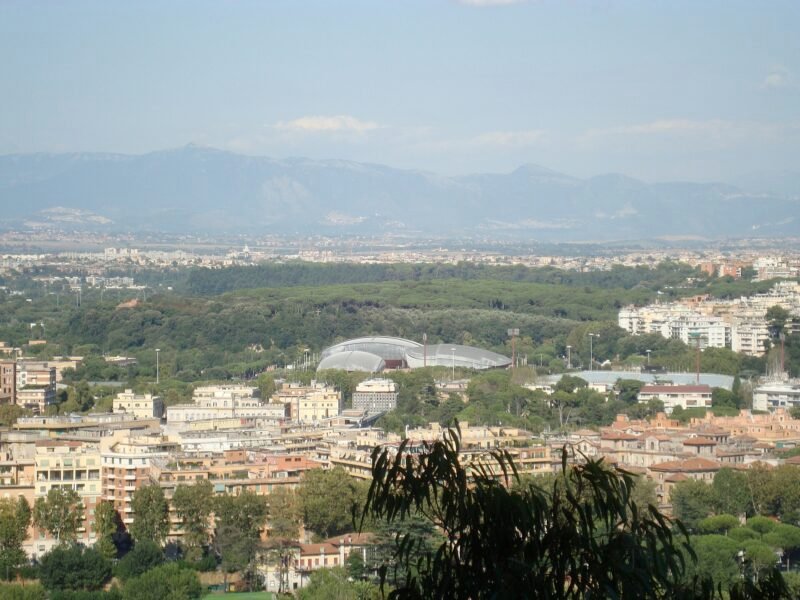
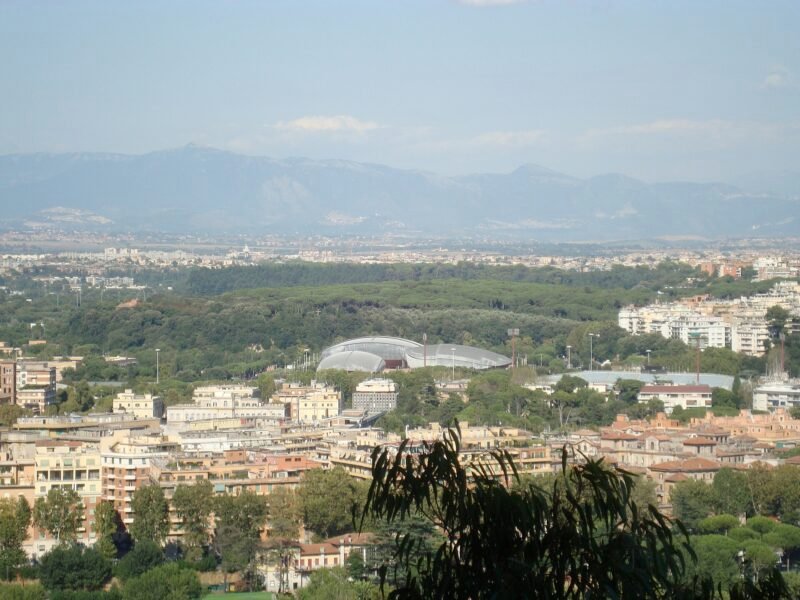
The three halls are lead-clad volumes on a brick base, arranged in a fan around the open-air amphitheater dedicated to Luciano Berio. The project, winner of the 1993 competition, was born with the acoustician Jürgen Reinhold of the Müller-BBM firm and the landscape architect Franco Zagari. The whole story is in the listing on the Auditorium Parco della Musica.
Something nobody tells you about Juraj Valčuha and Ettore Pagano at the Auditorium Parco della Musica, December 17, 18 and 19, 2026
What few people say is that the finale of Dvořák's Concerto is a small private dedication. In November 1894, while working on the concerto, the composer received a letter from his sister-in-law Josefina, informing him that she was seriously ill. In the slow, melancholy section that precedes the triumphant close, Dvořák quotes one of his own songs, «Lasst mich allein», from Op. 82, which was Josefina's favorite. She died in May 1895, and after her death the concerto was revised further.
For this reason Dvořák stubbornly defended the form of the finale. He rejected the cadenza that Wihan had written for the last movement and asked the publisher that no one, not even his friend, change the work without his permission. The finale, he wrote, had to close gradually, in diminuendo, like a breath, before the orchestra's last wave. Anyone who listens knowing this hears that close differently.
The second thing rarely said is practical: the Accademia applies to the letter the closing of the doors at the start time. Anyone who arrives late doesn't get in and follows the concert in the listening rooms, as long as there are seats. With Vertigo opening, being late costs exactly the first piece.
My advice for visiting Juraj Valčuha and Ettore Pagano at the Auditorium Parco della Musica, December 17, 18 and 19, 2026
The advice is to arrive at the concert with the finale of Dvořák's Concerto in your head: listening once to the last movement is enough, looking for the quotation of the song in the slow part before the close. In the hall you'll recognize the moment, and you'll understand why Dvořák didn't want anyone to touch it.
Second: watch Hitchcock's film again in the days before. The suite makes sense even without the images, but having them in mind makes the listening much more alive, and helps you recognize the spirals and returns Scorsese talks about. It's the best way to enter a program that begins with cinema.
Third: the seat. For a young soloist and a full orchestra, the central orchestra seats beyond the tenth row are the most balanced choice. The gallery behind the stage is for those who want to see the conductor. Finally, stay until the last chord of the Symphonic Dances: after the Dies irae, Rachmaninoff wrote «Alleluia» on the score, and the finale has the force of a liberation.
Tickets for Valčuha and Pagano: prices and sales channels
Tickets for the concert of Juraj Valčuha and Ettore Pagano cost 54, 47, 37, 35, 30 or 23 euros, depending on the sector. They are sold only by sellers authorized by the Accademia.
The box offices
The Auditorium box office, in the greenhouse space, is open every day from 11:00 to 20:00. The one on Via Vittoria 6, a few steps from Piazza del Popolo, is open Monday to Friday from 11:00 to 19:00 and Saturday from 11:00 to 14:00 and accepts only electronic payments.
Online
On the official concert page, under each date, a purchase button leads to the authorized presale circuit. The Accademia is not responsible for surcharges applied by unauthorized parties. The infoline is 06 8082058.
Discounts
For the season's concerts those under 26 get a 30% discount and children under 14, with an adult, pay 3 euros. These rates are purchased at the box offices until the promotional seats run out and cannot be combined with others. For a concert with a 23-year-old soloist, the discount for young people has a particular meaning.
How to get to the Auditorium for Pagano's concert
The Auditorium Parco della Musica Ennio Morricone is at Viale Pietro de Coubertin 30, between the Flaminio and the Parioli. The metro doesn't reach it, but tram 2 and several bus lines do.
Tram 2 from Flaminio
Get off Metro A at Flaminio and take tram 2 along Via Flaminia to the Flaminia/Reni or Apollodoro stops. From there it's a few minutes' walk through the Olympic Village.
Bus
The 910 connects Piazza dei Cinquecento, in front of Termini, directly with the Auditorium. The 53 comes from Piazza Mancini and the center, the 982 from Viale XVII Olimpiade area, the 168 from Tiburtina station, on weekdays only: for Saturday it's better to check on the transit company's website.
Car and taxi
In front of the entrance Viale Pietro de Coubertin is closed to traffic, and the complex's paid parking has few spaces. In the week before Christmas a taxi, or the tram, is the calmer choice.
Another well-known fact, yet rarely cited
It's well known that the Symphonic Dances are Rachmaninoff's last great work. Less often remembered is what they were called at the start: Fantastic Dances, with three movements titled Noon, Twilight and Midnight, like the hours of a day or of a life. The titles were dropped, but the idea of a path toward night remains in the music.
The second fact concerns the quotations. The first dance closes with a theme from the First Symphony, the 1897 work that had been badly received. Here it returns transformed into major, like a wound finally closed. The last dance pits the Dies irae, the theme that represents death, against a chant from Rachmaninoff's own All-Night Vigil, which represents the Resurrection. The second wins: on the score, at that point, the composer wrote «Alleluia».
The third is almost an anecdote: the alto saxophone of the first dance was encouraged by the American orchestrator Robert Russell Bennett. A touch of Broadway in a Russian composer's farewell, which gives the program another link with the America of Hitchcock's film.
How to organize the evening
For the Valčuha and Pagano concert it's best to be at the Auditorium at least 40 minutes early: between ticket pickup, checks, coat check and getting up to the hall, time goes by fast.
In the foyer
The foyer shared by the halls houses bars, a cafe and a large bookstore of records and music books, a good place to look for a recording of Dvořák's Concerto. From the terrace around the buildings you can see the remains of the Roman villa that emerged during construction.
Running time and intermission
The concert page doesn't give the running time, but divides the program into two parts: Herrmann and Dvořák first, Rachmaninoff after. The intermission is the moment for the foyer bar. On return, it's best to be as punctual as at the start.
On the way out
After the concert the amphitheater lets you wait for the crowd to thin out. Anyone with a car on the streets of the Olympic Village should allow for the slow exits of the first minutes.
The right photo to take at Juraj Valčuha and Ettore Pagano at the Auditorium Parco della Musica, December 17, 18 and 19, 2026
The right photo isn't taken during the concert: the phone stays off, and in a cello concerto the soloist's pianissimos are the heart of the evening. You photograph before and after.
Before, if the staff allows it, the shot to take is the empty stage with the soloist's chair at the center, in front of the podium: a simple image that tells of waiting. In December, with the dark coming early, the exterior is just as photogenic: from the top of the amphitheater the three lead volumes reflect the evening lights, and the audience going in gives the scale.
At the end, during the applause, without flash, the photo of Pagano with the cello in hand is the one many will want: the memory of having heard in Rome the Queen Elisabeth winner in his first year as a winner. Outside, the volumes seen from below on Viale Pietro de Coubertin give the least obvious image and, in our view, the most beautiful.
Some important events that happened here in history
Under the Auditorium there is a history of over 2,500 years. The excavations for the construction site brought to light a Roman villa of the 3rd century BC, built on a small archaic farm of the sixth century BC. To save it Renzo Piano modified the design, moving two of the three volumes westward, almost touching the Corso di Francia viaduct. A small museum under the amphitheater displays the finds.
The musical history of the place, instead, was born from a void. The Augusteo, Rome's great concert hall, was demolished in 1936, and for more than 60 years Rome had no hall built for symphonic music. In 1992 the City chose the Olympic Village area, and in 1993 Piano won the competition.
The Sala Sinopoli opened on April 21, 2002, the Sala Santa Cecilia on December 21, 2002 with the Accademia orchestra conducted by Myung-Whun Chung. Since 2003 the Auditorium has been the permanent home of the Accademia's season. Since 2006 it has hosted the Rome Film Festival, and in 2020 it was named for Ennio Morricone. That a concert opens in December with a film score, in a hall that bears the name of Italy's most famous film composer, is a coincidence worth noting.
Who has come through Juraj Valčuha and Ettore Pagano at the Auditorium Parco della Musica, December 17, 18 and 19, 2026
Through the Sala Santa Cecilia have passed the Accademia's music directors, from Myung-Whun Chung, who inaugurated it, to Antonio Pappano and Daniel Harding, and soloists such as Evgeny Kissin, a guest of the Accademia since 1991. In the first months Wolfgang Sawallisch criticized its stage and acoustics, and the hall was corrected. Goffredo Petrassi, present at the opening of the Sala Sinopoli, and Luciano Berio, who gives his name to the amphitheater, belong to its founding history.
In the 2026/2027 season Kirill Petrenko, Daniel Harding with Wagner's Siegfried and, a week apart, Enrico Onofri with the Christmas Oratorio pass through this stage.
In December it's the turn of two musicians who represent different generations: Juraj Valčuha, trained between Bratislava, Saint Petersburg and Paris, with years of work in Turin and Naples behind him, and Ettore Pagano, who brings home, to his city, the Queen Elisabeth and a cello that belonged to Pablo Casals.
Accessibility and young people
For ambulatory people with disabilities holding the Disability Card the Accademia provides a 15% reduction on two tickets, to be purchased at the box office. Wheelchair users enter for 10 euros and the person assisting them free, until seats run out.
When to book
For non-ambulatory people booking is mandatory, from 15 days before the concert to the day before, at 06 8082058 or at biglietteria@santacecilia.it: for December 17 it starts on December 2.
The route in the hall
The hall sits on a raised floor, because underneath there is the Roman villa, and the galleries have only two elevators. An hour's margin avoids the lines. The Accademia's Servizio Cortesia is present from one hour before the start on subscription concert days.
For young people
For a kid studying an instrument, hearing live a 23-year-old soloist fresh from winning the Queen Elisabeth is a rare formative experience, and the 3-euro ticket for those under 14 makes it accessible. The Vertigo suite, with its link to cinema, is an excellent way in.
Around the Auditorium
The Auditorium occupies an area of about 55,000 square meters between Villa Glori, the Olympic Village, the Corso di Francia viaduct and Viale Maresciallo Pilsudski, one of the quadrants of the Rome of the 20th century.
Contemporary art
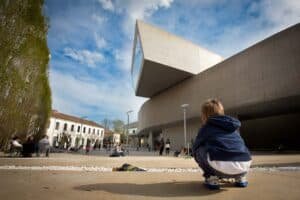
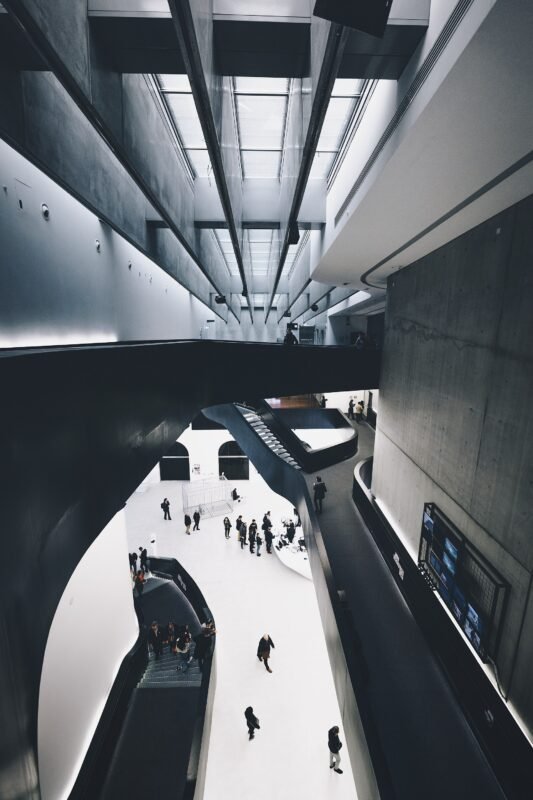
Toward Via Guido Reni, a few minutes away, is Zaha Hadid's MAXXI, which with the Auditorium forms the most important pair of contemporary architecture in the city: on Saturday afternoon you can combine an exhibition with the 18:00 concert.
The river and Ponte Milvio
Not far away the Ponte della Musica crosses the Tiber toward the Foro Italico, and farther north Milvian Bridge is the evening meeting point of northern Rome.
Eating before or after the concert
Inside the Auditorium there are bars and a cafe in the foyer and a bar-restaurant also reachable from the street. For the Thursday concert it's the safest solution.
In the neighborhood
Between the Olympic Village, Via Flaminia and Piazza Mancini you find pizzerias, trattorias and neighborhood bars. The week before Christmas is the one for year-end dinners: booking is essential.
After Saturday
After the Saturday repeat, Ponte Milvio offers the widest choice of places open late. Toward Piazzale Flaminio and the historic center the offer is that of the Tridente, pricier.
A week before Christmas
The concert falls in the week when Rome truly enters the holidays. What the city offers in this period is gathered in the listing on Christmas in Rome. For those staying near the Auditorium, from December 26 to 30 there is also Max Gazzè in concert.
The weather
December evenings are cold and often damp, and between the Auditorium's entrances you walk outdoors: a coat to leave at the coat check and a folding umbrella are useful.
Frequently asked questions about Valčuha and Pagano at Santa Cecilia
When does Ettore Pagano play at Santa Cecilia?
Ettore Pagano plays with the Orchestra dell'Accademia di Santa Cecilia conducted by Juraj Valčuha on Thursday, December 17, 2026 at 19:30, Friday, December 18 at 20:00 and Saturday, December 19 at 18:00, at the Auditorium Parco della Musica Ennio Morricone, Viale Pietro de Coubertin 30.
What do you hear at the Valčuha and Pagano concert?
The Valčuha and Pagano concert includes the suite from Vertigo by Bernard Herrmann, Dvořák's Cello Concerto in B minor Op. 104, with Pagano as soloist, and Rachmaninoff's Symphonic Dances Op. 45, the Russian musician's last great orchestral composition.
How much do tickets cost?
Tickets for Valčuha and Pagano at Santa Cecilia cost from 23 to 54 euros depending on the sector. Those under 26 get a 30% discount and children under 14 with an adult pay 3 euros, at the box offices and until the promotional seats run out.
Who is Ettore Pagano?
Ettore Pagano is a 23-year-old cellist from Rome who on May 30, 2026 won first prize at the Queen Elisabeth Competition in Brussels, the first Italian to win the competition according to the Accademia. For four years he will play a Goffriller cello that belonged to Pablo Casals.
Who is Juraj Valčuha?
Juraj Valčuha, conductor of the December concert at Santa Cecilia, was born in Bratislava in 1976. He was principal conductor of the Rai National Symphony Orchestra from 2009 to 2016 and music director of the Teatro San Carlo in Naples from 2016 to 2022.
How do you get to the Auditorium Parco della Musica?
You get to the Auditorium Parco della Musica by Metro A to Flaminio and then tram 2, stops Flaminia/Reni or Apollodoro, or by buses 910 from Termini, 53, 982 and 168. In front of the entrance Viale Pietro de Coubertin is closed to cars.
Can you enter after the concert has started?
At the Accademia di Santa Cecilia concerts the doors close at the start time: anyone arriving late to the Valčuha and Pagano concert doesn't enter the hall and can follow it in the listening rooms, until seats run out. It's best to arrive 40 minutes early.
The final advice on Valčuha and Pagano at Santa Cecilia
A cellist from Rome coming home with the Queen Elisabeth, a conductor who knows Italy from Turin to Naples, a program that goes from the spiral of Vertigo to the Alleluia of the Symphonic Dances. In our view it's the Accademia concert not to miss before Christmas. It's best to listen first to the finale of Dvořák's Concerto, watch Hitchcock's film again, choose a central seat beyond the tenth row and arrive well ahead.
Article written by the editorial team of Tour Leader Pro, contact them for Private/Corporate/V.I.P. Tours and Experiences.
Planning a trip to Rome? The English-language guides to visiting the city are on ItalyPlanner.com.
Contact Information
Nearby
 Museum of Musical Instruments (MUSA)100 m
- Auditorium Parco della Musica100 m
- Villa Glori500 m
- Fountain of Anna Perenna500 m
- MAXXI – National Museum of 21st Century Arts700 m
- Flaminio700 m
Upcoming events nearby
- Roma Jazz Festival 2026, November 1 to 24 at the Auditorium and Casa del Jazz100 m
- Evgeny Kissin and András Schiff at Santa Cecilia, November 9, 2026100 m
- Roma Gospel Festival 2026 at Auditorium Parco della Musica, December 13, 2026 to January 1, 2027100 m
- Santa Cecilia 2026/2027 Concert Season at Auditorium Parco della Musica, October 21, 2026 to June 5, 2027100 m



You might also like
- Bach Christmas Oratorio with Enrico Onofri at Auditorium Parco della Musica, December 10, 11 and 12, 2026
- Nubras Ensemble at Auditorium Parco della Musica, February 27, 2027
- Fabio Luisi and Beethoven’s Missa Solemnis at Auditorium Parco della Musica, February 25 to 27, 2027
- Lorenzo Viotti and Lisa Batiashvili at Auditorium Parco della Musica, February 18, 19 and 20, 2027
- Antonio Pappano and Jan Lisiecki at Auditorium Parco della Musica, February 11, 12 and 13, 2027
- Tarmo Peltokoski and Bertrand Chamayou at Auditorium Parco della Musica, February 4, 5 and 6, 2027