Aiello in concert in Rome at Atlantico, November 13, 2026
In short. Aiello will play in Rome on Friday, November 13, 2026 at Atlantico, the large concert hall in EUR, at Viale dell’Oceano Atlantico 271 D, in the southern part of the city.

Aiello will play in Rome on Friday, November 13, 2026 at Atlantico, the large concert hall in EUR, at Viale dell’Oceano Atlantico 271 D, in the southern part of the city. The start time given for the evening is 21:00. The singer-songwriter from Cosenza brings to a hall with a few thousand places a repertoire built almost entirely on voice and words, and this, in a converted industrial shed, is already an interesting question in itself: the two don't always go together, and it's worth understanding beforehand how the place works so you arrive with the right expectations.
What follows is preparation for the evening, written two months before the date. You'll find what to expect from this event, who the artist taking the stage is and where his music comes from, what the hall hosting him is like, how to get there without losing an hour of your life in the traffic on the Colombo, how concerts at Atlantico normally work, what to know in general about tickets and entry, how accessibility works for anyone with special needs, and what you can see in the surrounding neighborhood while you wait for the doors to open.
A note that applies to the whole text, and that I prefer to put at the top. Here you won't find the setlist, the names of guests, the band lineup, ticket prices or any information on remaining availability. That information is given only by whoever produces the date, it changes until the last week and goes out of date within a few days. I'd rather say little and say it right: a wrong prediction about a concert costs the reader an evening.
What kind of concert it will be: Aiello at Atlantico on a Friday night
The first thing to pin down is the nature of the event. A concert in a hall like Atlantico belongs to the category the industry calls a club date, even if the term club, for a space holding a few thousand people, is generous. It's an evening built around a single artist, in an open-plan hall where most of the audience stands, with the chance to get much closer to the stage than you can in a sports arena.

The practical consequence is that the distance between the singer and the listeners stays short. In the front part of the floor, those who arrive early find themselves a few meters from the edge of the stage. Halfway back the view stays good and the sound, in a hall this size, is on average better than in the very first rows, where you're too close to the side speakers to hear a proper balance. From the raised side balconies, when they're open and accessible, you see everything from above without having to fight for position.
The second thing concerns the kind of repertoire Aiello brings live, and here it's better to think in categories rather than titles, because a tour's setlist is decided by the artist and changes from night to night. Aiello's music rests on a framework of contemporary singer-songwriter music with pop production: singable melodies, electronic arrangements, constant use of falsetto and lyrics that take center stage. It's not a repertoire for distracted listening. Anyone who goes to a concert like this expecting a dance party from start to finish will be thrown, because a good part of the evening asks for attention to the words. Anyone who goes knowing that the voice is the main instrument, on the other hand, will find it just right.
The third thing is the day. Friday, November 13, 2026 is a weekend evening in the middle of the Roman fall, with everything that comes with it: heavy evening traffic along the Cristoforo Colombo, low outdoor temperatures and a high chance of rain. These are three variables that have nothing to do with the music but determine 90 percent of the quality of the evening, and they can only be managed by deciding in advance how to get there and how to get back. The rest of these lines is mainly for that.
A last observation on the format. A date announced months in advance, like this one, can be moved to another day, transferred to another hall in the city or rescheduled for another season. It happens regularly, for reasons ranging from the artist's health to tour logistics, and it isn't a sign of anything serious. The rule applies to every concert announced in advance: before setting off, especially if you're coming from outside Rome, it's worth double-checking the confirmation on the organizers' channels. The general page for Atlantico Live Club collects the stable information about the hall, the kind that doesn't change from season to season.
Who Aiello is, and why Calabria matters
Antonio Aiello was born in Cosenza on July 26, 1985 and is publicly known by his surname alone. It's a biographical detail that seems irrelevant but actually explains a lot about his music, because his relationship with Calabria and with the condition of the Italian South runs openly through his work, so much so that his second album is titled Meridionale.
His public career started to become visible in 2019. That year saw the release of the single Arsenico, which in July of the same year earned him the Premio Lunezia Stil Novo, an award that in Italy looks at the literary and musical value of lyrics rather than at sales figures. Also in 2019 came his first album, Ex voto, and the single La mia ultima storia, which was certified platinum. In 2020 the song Festa, written for the film Bangla, was nominated for the David di Donatello for best original song: that's when his name started to circulate beyond his earliest listeners. The same year the single Vienimi (a ballare) was also certified platinum, and the artist took part in the edition of the Concerto del Primo Maggio held without an audience.
In 2021 came his appearance at the Sanremo Festival, in the Campioni section, with the song Ora. His final placing in the overall ranking was 25th. It's worth being honest on this point, because in promotional biographies the placing tends to disappear: that participation was not a triumph in the rankings, but it worked as a visibility multiplier, as almost always happens at Sanremo even for those who don't finish high. In the same year, 2021, the album Meridionale came out, and in August of that year the artist received the Premio Riccio d’Argento at the Calabrian festival Fatti di Musica as the best singer-songwriter album of the year.
In 2022 the single Domani torno came out. The third album, Romantico, arrived in 2023. In October 2024 the single Tutto sbagliato was released. This is the latest release documented in the biographical sources consulted: of any later releases, which could very well exist and be the very reason for the tour, I find no verifiable trace and so I don't write about them. Anyone who wants to know what the artist is taking on the road this season will find the answer on his official channels, which remain the only reliable source on a tour in progress.
His musical signature
Aiello's recognizable trait is vocal even before it's compositional. His voice moves from full voice to falsetto within the same phrase, often on the last syllable of a line, and this produces an effect of sudden fragility that has become almost a trademark in Italian pop in recent years. The second trait is in the lyrics: the songs talk about relationships with direct vocabulary, without the metaphorical filter of classic singer-songwriter music, and with frequent use of the second person singular. The third trait is the production: the arrangements combine played instruments and synthesizers, with a preference for nocturnal atmospheres and open choruses, built for the audience to sing along with the artist.
This third element is the one that matters most for concertgoers. A repertoire of this kind works live through the collective chorus: the best moments of an evening like this aren't the ones where you listen to the artist, but the ones where 2,000 people sing the chorus and the voice from the stage drops to make room. Those who know the songs experience a completely different concert from those who arrive without ever having heard them, and the difference is much sharper than at a rock concert, where volume and riffs still carry anyone who doesn't know the material. If you're going with someone to an evening like this without knowing the repertoire, the practical advice is simple: a few listens in the preceding weeks radically change how much you get out of the evening.
A curious fact about Aiello in concert in Rome at Atlantico, November 13, 2026
The curious fact concerns the date, and for once it's not a stretch: the concert falls on Friday the 13th. In Italy Friday the 13th doesn't carry the bad luck that English-speaking countries attribute to it, where the superstition took hold under that name. In Italian tradition the unlucky number is 17, for a reason that goes back to Latin: the Roman numeral XVII, rearranged, gives VIXI, which means I have lived, that is, I am dead, a formula that appeared on tombstones. 13, on the contrary, has historically been a lucky number in Italian popular culture, so much so that in the Totocalcio betting game, getting 13 meant winning.
The result is that this date, which to a British or American audience would sound like a provocation, says absolutely nothing sinister to an Italian audience. It's the kind of detail that makes you smile, because you regularly have to explain to a worried visitor that in Italy Friday the 13th is a Friday like any other, while Friday the 17th is the day when a certain generation of Romans avoids signing contracts.
There's a second part to the curious fact, more tied to the place. November in EUR is the month when the neighborhood shows its most authentic character, which isn't the summer postcard one. The wide avenues, the long perspectives and the pale travertine of the rationalist buildings, under a low sky and with plane tree leaves on the ground, give exactly the atmosphere the designers of the 1930s had in mind when they drew up the neighborhood: geometry, silence, monumentality. Anyone who arrives an hour early and takes a stroll around the Laghetto dell’Eur on a November evening sees a Rome that almost no visitor puts on their schedule, and that looks like no other part of the city.
Atlantico as a space: what kind of hall you'll find
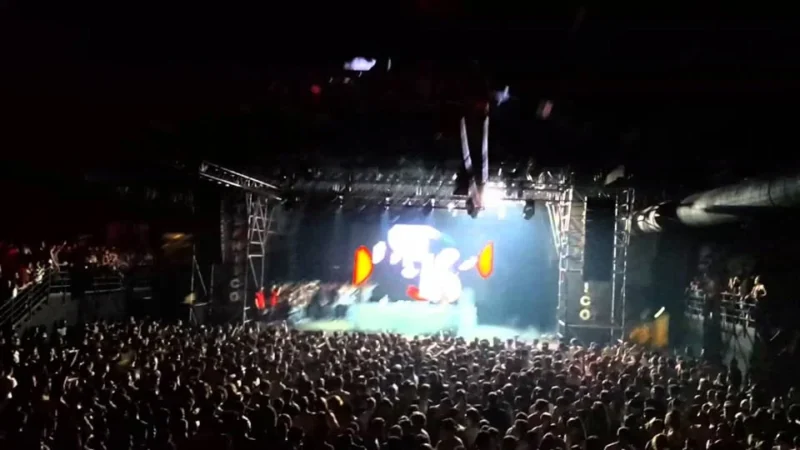
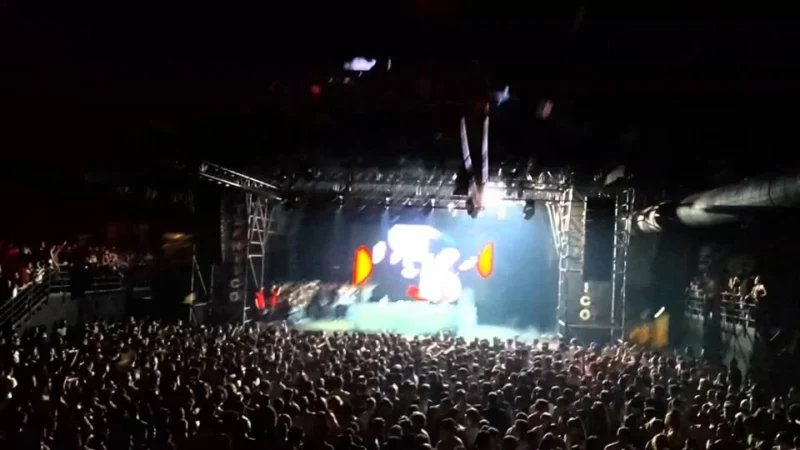
It's worth spending a few lines on the hall, because the name commonly used for it, live club, misleads those who have never been there. In the common imagination a live club is a place for a few hundred people, with the bar at the back, a low stage and the smell of beer. Atlantico belongs to another category entirely: it's a large industrial hall, with an internal open space estimated at around 1,200 square meters of usable area, a very high ceiling, an exposed load-bearing structure, raised side balconies and a professional-size front stage.
Capacity, and why the numbers don't match
The published capacity figures don't match, and it's better to explain why instead of pretending there's a single number. The venue's official website says 2,500 spectators. Some industry listings speak of 3,000 people standing and 800 seated. Others give 3,000 in total with about half in seats and two balconies of 250 seats each. Others still, including the historic description of the venue, go up to 4,000.
The explanation lies in the reconfigurable nature of the hall: the capacity of an open-plan space depends on the configuration authorized event by event, on the position of the stage, on the footprint of the technical production, on if there are seats or not and on the requirements of the safety commission. The correct number, for a specific evening, is the one given by that evening's organizer and printed on the ticket. For a pop singer-songwriter concert the most likely configuration is a standing floor with side balconies available, but that's an educated guess, not official data, and should be taken as such.
The geometry that doesn't change
The flat floor is the detail that matters most and that almost nobody considers before arriving. In a theater the orchestra seating is sloped, so whoever is behind sees over the head of whoever is in front. Not here: anyone of below-average height who stands halfway back behind a group of tall people will see little or nothing of the stage. There are two countermeasures: arrive early and take a spot in the first rows, or go up to the balcony, where the raised level solves the problem at the root. The middle way, that is, the center of the hall in the second row of spectators, is the worst position for anyone who isn't tall.
The acoustics
An industrial shed is, by construction, a reflective environment: hard walls, high ceiling, little absorbent material. When the acoustic treatment and the system tuning work, the audience can tell the singer's words apart from the bass line. When they don't, they hear an indistinct wall of sound where the lyrics get lost. For a rock concert the second condition is tolerable, because the energy gets through anyway. For a concert built on words, like a singer-songwriter's, the difference between the two conditions is the difference between a great evening and a wasted one. The reputation Atlantico has built over the years speaks of good sound, and it's one of the reasons organizers keep bringing productions here: but it's still true that the listening spot each spectator chooses makes a huge difference. The technical advice, for anyone who cares about the lyrics, is to stand halfway back, on the center line, away from the side walls and the front rows.
Something nobody tells you about Aiello in concert in Rome at Atlantico, November 13, 2026
The thing nobody writes, and that concerns specifically a singer-songwriter concert in a hall like this, is the question of chatter.
It works like this. At a rock or rap concert the volume covers everything: anyone talking to the person next to them disturbs nobody, because their voice doesn't carry two meters. At a singer-songwriter's concert, on the other hand, there are quiet moments, often the best of the evening, when the artist sings with reduced backing or even alone. In those moments, in a hall of 2,500 people with a flat floor and a reflective ceiling, the hum of conversation becomes audible everywhere. It's the phenomenon that in recent years has sparked recurring controversy all over Italy, with artists stopping mid-song to ask for silence.
The practical consequence for concertgoers is that the position you choose in the hall also determines what kind of audience you'll have around you. The area near the refreshment counters and the strip at the back of the hall are, for obvious reasons, where people talk the most: those there often didn't arrive early, don't know the whole repertoire and see the evening as a night out with friends. The central area and the one in front of the stage gather those who arrived when the doors opened and know the songs by heart. There's no moral judgment in this distinction, there are two different ways of experiencing the same evening: but anyone who bought their ticket to listen would do well to know that choosing where to stand counts as much as choosing when to arrive.
The second thing nobody tells you is about phones. At a concert of this kind the number of lit screens in front of your eyes is high, because the best-known songs get filmed en masse. Anyone stuck behind a forest of raised arms sees the concert through other people's screens. Here too the balcony solves it: from above, the raised arms of the floor become part of the scene instead of an obstacle.
Third thing, and this one is about EUR in November. Around the hall, in the evening, there's nothing. Not a bar to wait in the warm, not a pizzeria for dinner, not a square to meet in. Southern EUR after 20:00 is made of wide avenues, closed offices, empty parking lots and greenery. Anyone who arrives two hours early thinking they'll find something open discovers they have to get back in the car and head up toward Viale Europa or the area around the Palazzo dei Congressi, where places exist but close early compared to concert times. In summer you can wait comfortably outdoors. In November, in the rain, waiting outside becomes a punishment. Dinner has to be sorted out beforehand, in another neighborhood, or by settling for the refreshment counters inside.
How to get there
The address is Viale dell’Oceano Atlantico 271 D, postal code 00144, EUR neighborhood, Municipio IX. The thing to fix in your head is that the hall is in the southern part of EUR, beyond the lake, in that strip of very wide avenues named after oceans and continents where the urban fabric thins out and the greenery of Parco del Turismo begins. It's not the monumental postcard EUR: it's the functional part, built between the 1960s and 1980s around the Olympic sports facilities.
By car
From the Grande Raccordo Anulare ring road take exit 26 toward EUR and Roma Centro, then follow Via Cristoforo Colombo toward the center and turn onto the internal avenues of EUR. If you're coming on the highway from the north or south, take the Roma Sud branch and the Cristoforo Colombo exit, exactly as you would for the Palazzo dello Sport. The final stretch from the ring road to the hall's door takes a few minutes in normal conditions, because the actual distance is a couple of kilometers.
There are two classic mistakes. The first: setting the navigation app to Viale dell’Oceano Atlantico without the street number, and ending up at the other end of a very long avenue that crosses the whole southern area of EUR past sports facilities, offices and parks. Number 271 D must be entered in full. The second: arriving right around the time the doors open on a very busy evening and finding the Colombo jammed, because when Palazzo dello Sport and Atlantico both have events on the same night the area generates traffic that neither venue can absorb alone. On a Friday evening in November, on top of that, the Colombo also carries commuter traffic and traffic heading to the coast. The rule around here is simple: an hour of margin on the stated time, always, and in November an hour and a half if it rains.
By metro and bus
Metro line B serves EUR with three stations: Eur Magliana, Eur Palasport and Eur Fermi, the last one before the Laurentina terminus. The useful stop is Eur Fermi, about two kilometers from the hall: a distance you can cover on foot in just over 20 minutes along straight, lit avenues, or by city bus. The lines traditionally mentioned for this connection are the 706, which leaves from Viale America toward Rotellini, and the 705, which leaves from Eur Fermi toward Piermarini. Both run along the avenues of southern EUR and drop you a short distance from the entrance. Frequencies and routes change over time and should be checked on the day on the channels of Rome's transportation company, Atac, or on the Muoversi a Roma information service, because the surface network in this area is reorganized fairly regularly.
The 20-minute walk from Eur Fermi, which on a May evening is a pleasant stroll among the pines, is a different matter on a rainy November night. There are no porticoes, no shops to shelter under and the sidewalks are wide and uncovered. If you choose this option, bring a sturdy umbrella, because the wind swirls along those avenues, or plan to take the bus even for the short stretch.
Getting back, which is the real problem
A warning worth more than any timetable: metro line B closes at 23:30 from Sunday to Thursday and at 01:30 on Friday and Saturday. November 13, 2026 is a Friday, so the extended hours apply, and that's good news. But the good news should be used wisely: a concert that starts at 21:00 will in all likelihood end after 23:00, plus the time to get out of the hall and the two kilometers to Eur Fermi, on foot or by bus. There's a margin, but it isn't wide, and it won't survive a long encore plus a stop at the merch stand.
There are three alternatives. Your own car, which here is a rational choice as it is in very few other places in Rome, because the parking really exists and there's no limited traffic zone to cross. A taxi, which in this area at midnight doesn't come by at random and has to be booked in advance, better before going into the hall than on the way out, when a thousand people try to do the same thing at once. The night bus network, which exists along the Colombo but runs at long intervals and takes patience. Anyone coming from outside Rome and staying in the center should do these calculations before booking accommodation, not after.
From the airport and the station
FAQ about Aiello in concert in Rome, Atlantico, November 13, 2026
When is Aiello's concert in Rome?
Aiello's concert in Rome is on Friday, November 13, 2026 at Atlantico, with a stated start time of 21:00.
Where is Aiello's concert held?
The concert is held at Atlantico, Viale dell’Oceano Atlantico 271 D, 00144 Rome, in the EUR neighborhood, Municipio IX. The same address applies to the public entrance and the parking lot.
What time does the concert start?
The start time announced for November 13, 2026 is 21:00. The hall doors normally open an hour or a little more before the stated start time.
How do you get to Atlantico for Aiello's concert?
Atlantico is in the southern part of EUR, beyond the lake, in a strip of very wide avenues. If you're coming as a group you can easily use a car, because the hall has a large parking lot a few meters from the entrance, a rare thing for a performance venue in Rome.
How does ticketing work for a concert at Atlantico?
Atlantico is the venue, not the organizer, of most of the events it hosts: the ticket isn't issued by the venue but by the company producing the date, and must be bought through the ticketing platform chosen by that company.
What kind of hall is Atlantico?
Even though the common name live club suggests a small place, Atlantico is a large industrial hall, designed for a few thousand people, with most of the audience standing in an open-plan space.
Why does the concert fall on Friday the 13th?
The date falls on Friday, November 13, 2026, but in Italy Friday the 13th doesn't carry the bad luck it's given in English-speaking countries: in Italian tradition the number considered unlucky is 17, not 13.
From Fiumicino airport the distance is about 23 kilometers, from Ciampino about 17, from Termini station about 13: the EUR area can be reached from the highway system without crossing the city, something that almost never happens in Rome. For anyone staying in the center it's the other way around, and the round trip becomes the demanding part of the evening. Visitors from abroad will find a clear explanation of the Roman network in the guide to public transportation in Rome.
My tip for visiting Aiello in concert in Rome at Atlantico, November 13, 2026
The main tip is to treat this evening as an out-of-town trip inside the city, built on four decisions made in advance. I list them in order of importance.
First decision: how to get there. If there are two or three of you and you have a car, use it. It's one of the few Roman occasions where bringing the car is a clear win: a large parking lot a few meters from the entrance, no limited traffic zone, no hunting for a spot. If you don't have a car, metro line B to Eur Fermi and then a bus, with the plan for getting back decided before leaving home and not improvised at midnight in the rain.
Second decision: timing. The doors opening and the stated start time almost always differ by an hour or more, and any opening act fits in between. Anyone who wants a spot at the front has to show up when the doors open and expect a long wait on their feet. Anyone looking for comfort arrives half an hour after the stated time, walks in without a line and settles halfway back, which as I said is also the best spot acoustically. There's no absolutely right choice: there's the choice consistent with why you're going.
Third decision: the coat. In November this stops being a minor issue and becomes the variable that ruins more evenings than any other. The hall is a shed with a very high ceiling and air exchange sized for a full house: when you arrive early and the place is half empty it feels cold, then, with the hall full and the lights on, it gets so warm that your coat becomes an unbearable burden. The cloakroom, when it's open, means a line on the way in and a worse line on the way out, with a thousand people collecting their coats in the same quarter of an hour. The solution of the Romans who go there is well known: dress in layers and leave your coat in the car, which here, unlike at a concert in the center, is parked 100 meters away. Those who come by public transportation don't have this option and have to choose between the cloakroom line and the hassle of keeping their coat on for three hours.
Fourth decision: dinner. The best solution is to eat early in northern EUR, around Viale Europa and the Square Colosseum, where there are lots of places, and then drive 10 minutes. Alternatively, for anyone coming from outside Rome with the day free, the best combination is to spend the afternoon in EUR, eat early and get to the concert without rushing. A day built like this turns a concert into a neighborhood visit, and EUR is a neighborhood that deserves much more attention than it gets.
How concerts at Atlantico work
If you've never set foot in this hall, it helps to know how an evening normally unfolds, because the sequence is recurring and knowing it removes most of the surprises.
The phases of the evening
The doors normally open an hour or a little more before the stated start time. At the entrance there's the ticket check and the security check of bags and backpacks. Once inside, the first thing you meet is the refreshment counters at the back of the hall and, when provided, the merch stand and the cloakroom. From that moment the standing wait begins, which for anyone aiming at the front row can last quite a while.
The time stated on the ticket almost always indicates the start of the show as a whole, not the moment the main artist takes the stage. If there's an opening act, it usually plays for between 20 and 40 minutes, followed by a technical break of about 20 minutes while the stage setup is changed. That's the break when lines at the refreshment counters and restrooms build up, so anyone who wants to avoid them does those things earlier. The main artist then takes the stage on average between an hour and an hour and a half after the time printed on the ticket.
A concert of this size usually lasts between 70 and 110 minutes, encores included: it depends entirely on the artist and the tour, and shouldn't be taken as a promise. The figure that matters for planning the trip home is that a concert with a stated start at 21:00 rarely ends before 23:00.
Entry rules
Some practical aspects depend entirely on the individual evening and are given by the organizer in the terms of sale: the minimum age for entry and the rules for accompanied minors, if the ticket is in your name with an ID check at the entrance, any membership card required for some types of evening, the rules on backpacks, bottles and cameras, the distinction between the standing floor, balcony seats and any reserved areas. There's no single set of rules for all events at the hall, because the hall hosts productions by different companies.
Another well-known fact, yet not often mentioned
The well-known fact is that EUR is not just any Roman neighborhood, but a planned city born for an event that never took place. What is rarely mentioned is how much this origin still shapes the area's nightlife, and therefore the very existence of a hall like Atlantico.
The Esposizione Universale di Roma was designed in the 1930s for the 1942 edition, which the war canceled. The neighborhood stayed unfinished for years, then was completed between the 1950s and 1960s and converted into a business district, with the 1960 Olympics acting as an accelerator: in those years came Palazzo dello Sport by Pier Luigi Nervi and Marcello Piacentini, the Velodrome later demolished, Piscina delle Rose, the artificial lake and the whole southern sports strip that reaches as far as Viale dell’Oceano Atlantico. Anyone who wants to learn more about the neighborhood's urban history will find the full picture on the EUR page.
You feel the consequence every time you leave a concert. Southern EUR is a neighborhood with very low residential density, huge blocks, four-lane roads, very large green areas and a population that drops drastically in the evening, because most of the buildings are offices. A venue with a concert sound system, placed in a historic Roman residential neighborhood, would be unsustainable: noise ordinances, complaints from residents and time limits would strangle it within two seasons. Here the problem doesn't arise. Atlantico can play loud and finish late because the neighborhood around it is empty at night by urban design, not by chance.
There's a corollary that concerns an evening like this one. In a city where mid-size concert halls are almost all squeezed into residential neighborhoods, with the resulting time limits and volume caps, the absence of neighbors is what allows a tour to schedule a weekday or weekend date here without having to cut the setlist to respect a curfew. The price the audience pays for this privilege is the distance from the center and a complicated trip home. The advantage is an evening that can last as long as it needs to.
Tickets and entry: how it works in general
The sales mechanism of a hall like this needs to be understood once and holds forever. Atlantico is the venue, not the organizer, of most of the events it hosts. So the ticket for a concert isn't issued by the venue, but by the company producing that date, and is distributed through the ticketing platform that company has chosen. Two concerts in the same hall a week apart can be sold on different channels, with different rules on refunds, name changes and entry.
Three practical consequences follow. First: the correct sales channel for a single date is the one given in the official announcement by whoever produces that date, and there's no single platform valid for the whole program of the hall. Second: the refund conditions in case of postponement or cancellation are those of the chosen platform and should be read when buying, not afterward. Third: for events with named tickets, changing the name follows a specific procedure of the platform, often for a fee and with a deadline, and anyone buying for a group of friends would do well to check it first and not in the week of the concert.
The two options
The first option is buying online in advance, which covers almost all events. You buy on the channel given in the official announcement of the date and receive a digital ticket to show at the entrance. It's the safest way and almost always the only one for very popular events.
The second option is the box office on site on the night itself. It exists only when the organizer provides it and only if tickets are still available. Showing up without a ticket at an evening announced as sold out almost certainly means going home, and the hall is in a part of the city where turning back costs time and mood.
A warning about resale between private individuals, which applies to every concert and not just this one. In Italy the resale of tickets to entertainment events by unauthorized parties is prohibited by current law, and tickets bought outside the official channels may turn out to be invalid at the entrance check, with the total loss of the money spent. Official resale platforms, when the ticketing company provides them, are the only safe route for anyone looking for a ticket after advance sales sell out. There's no way to recover money spent on a ticket refused at the entrance.
The right photo to take at Aiello in concert in Rome at Atlantico, November 13, 2026
First the one that doesn't work, because it's the one everybody tries. The photo of the artist on stage, taken with a phone from halfway back, with moving lights and 2,000 people in front, almost always produces a bright blur on a black background. It's not the phone's fault: it's the physics of a dark hall with very intense point light sources and moving subjects. If you really care, you can try shooting when the lights hold on a solid color and the artist stays still, which at singer-songwriter concerts happens more often than at rock shows, but it's still a lottery.
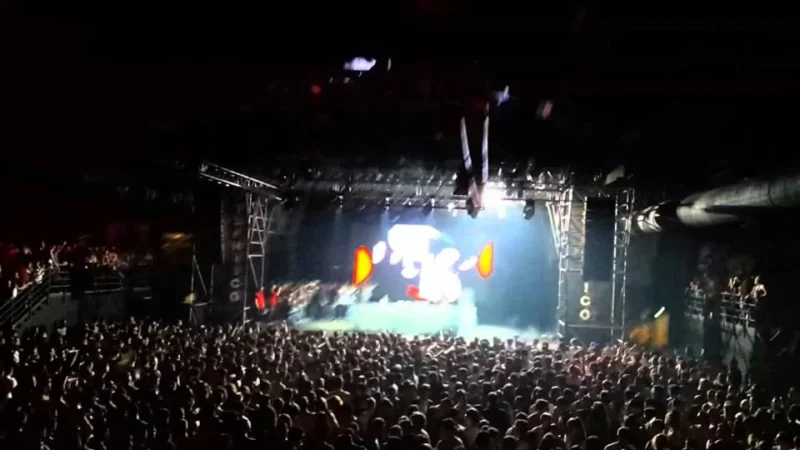
The photo that really works is a different one and is taken from the side balconies, pointing the lens not at the stage but at the hall. The high-angle perspective conveys the depth of the shed, the crowd as a continuous mass, the beams of light cutting diagonally through the air and, in the background, the industrial structure of the ceiling with the trusses loaded with lights. It's the image that tells what this place is better than any blurry close-up.
Then there's a photo specific to this kind of concert, and I point it out because it's worth more than the other two. When the audience sings the chorus and the artist lowers his voice, phone flashlights come on in the hall and the floor becomes a field of points of light. Photographed from behind, or better from up on the balcony, with the lit stage in the background, that scene captures the only thing a concert photo can really tell, that is, the relationship between the one singing on stage and those listening in the hall. Technically you need to hold the phone as still as possible, resting it on the balcony railing, and accept that the exposure time will be long.
The fourth shot is a neighborhood tip more than a hall tip, and in November it works particularly well. Five minutes away by car are some of the most photographed buildings of 20th-century Italian architecture, lit and deserted after sunset: Colosseo Quadrato with its arches turning into a grid of shadows, Palazzo dei Congressi with its front staircase, the Fuksas Cloud with its glass shell lit from inside. With the asphalt wet from November rain, reflecting the lights, those buildings look much better than in summer. Arriving an hour before the concert and spending that time in EUR is, for anyone carrying a camera, the best reason to come out this way.
Some important events that happened here in history
The history of this place has to be told in phases, because the hall you see today is the third or fourth layer of an area that has changed function several times.
The Olympic phase
The first event that matters concerns not the building but the land it stands on. When Rome was awarded the Games of the XVII Olympiad, held in 1960, the southern strip of EUR was turned into the capital's sports hub. Palazzo dello Sport, Piscina delle Rose, Velodromo Olimpico and Via Olimpica as a connecting axis were built. That planning choice created the conditions for large indoor facilities to be built and converted in this area decades later without conflicts with residents. Without 1960 there would have been no Atlantico.
The PalaCisalfa phase
The second event is the birth of the building as an indoor sports arena called PalaCisalfa, following the Italian custom of tying a venue's name to a commercial sponsor. In that phase the structure served competitions and training, and its audience was that of the hardwood court, not of concerts. The physical features that define the hall today, that is, the ceiling height, the open plan and the oversized parking lot, date back to that period.
The conversion
The third event, the most important for today's audience, is the conversion into a live music space under the name Atlantico. The operation answered a real gap in the Roman market, which had small clubs and large arenas but no mid-size hall equipped to professional standards, and it brought to the city a category of concerts that used to stop in Milan and skip Rome. To grasp the scale of it, a comparison is enough: Rome has places of two or 300 seats, like Monk or Largo Venue, where the independent scene plays, it has huge places like Palazzo dello Sport with over 10,000 seats and the Stadio Olimpico with 70,000, it has prestigious halls with a different vocation like Auditorium Parco della Musica or Teatro Brancaccio. What was missing, and what Atlantico covers, is the 2,000 to 4,000 range.
The contemporary phase
The fourth event is the transformation of the hall into a fully multipurpose space, with the growing weight of trade fairs, conferences and exhibitions alongside concerts: it's the evolution that has accompanied all the large Italian halls in the last 15 years, accelerated by the years when live performances were suspended. Today the calendar alternates concerts, theater, stand-up comedy, trade fairs and big dance nights, including the established New Year's Eve event.
A note of honesty on this reconstruction: the phases are documented by the available sources on the venue, but the exact dates of opening, conversion and change of management don't appear consistently in public sources, and for this reason you won't find a precise list of them here. Anyone who needs exact chronological references for research or publications should contact the venue's management directly.
Accessibility, parking and services
Parking
Parking is the venue's real strong point. It's a large outdoor area, which sources put at around 600 car spaces, while the hall's historic presentation spoke of a capacity of over 700 vehicles between cars and scooters. In a city where parking near a performance venue is almost always impossible, this is a substantial difference. The reference address for the parking lot is the same as the hall's.
Two warnings. First: in November, with darkness at 17:00, finding your car on the way out among identical avenues is less obvious than it seems, and it's worth taking a photo of where you parked. Second: on evenings when Palazzo dello Sport is also hosting a major event, demand for parking in the whole area rises a lot and entry and exit times get longer. It's worth checking in advance if both venues have events on the same night.
Accessibility for people with disabilities
The building is on a single ground-level floor, with no fixed tiers and no changes in level on the floor, which makes it in principle easier than a historic Roman theater, where architectural barriers are often insurmountable. The balcony, being raised by nature, does involve a change in level.
The spaces reserved for people with reduced mobility, arrangements for companions, the dedicated entrance route and booking procedures depend, however, on the configuration of the individual event and on the organizer's procedures, not on the hall. The right way is to contact the date's organizer and the venue's management in advance, at the official contacts, before buying the ticket: for an event with an all-standing floor the visibility and safety conditions are different from those of a seated show, and need to be agreed. During office hours the venue's phone number answers, +39 06 5915727.
A consideration I add from direct experience. In a hall with a standing floor and a flat surface, the issue doesn't only concern wheelchair users: it also concerns anyone who has trouble standing for three hours, anyone with balance problems, anyone accompanying an elderly person. For these situations the balcony with seats, when it's provided for the individual date, is the best solution, and it should be requested when buying, because later it gets complicated.
Who has passed through Aiello in concert in Rome at Atlantico, November 13, 2026
A warning is needed here, and I'll give it right away because it concerns the quality of the information. Lists of famous names who supposedly played in a certain hall circulate easily online, get copied from one site to another and swell over the years until they become legends that are hard to verify. You won't find one made up at a desk in these lines. What can be said with certainty concerns the category of artists this hall attracts because of its size, which is more useful information than a list.
Given its capacity and technical equipment, Atlantico regularly hosts Italian artists at the stage when they've outgrown clubs but don't yet fill arenas, cult foreign bands that stop in two or three Italian cities, established names of the Italian hip hop and rap scene, producers and DJs from the international electronic scene, rock and reggae bands, and Latin music artists. The sources describing the venue's activity explicitly list this range of genres as its usual repertoire, alongside theater shows, stand-up comedy, cabaret and musicals.
For the current season, the reliable way to know who's playing here is to check the pages devoted to the individual events announced: this same fall the hall has announced the dates of Willie Peyote and Ditonellapiaga. These pages refer to announced dates and, like every tour date, should be confirmed on the organizers' channels before setting off, because a postponement or change of venue is always possible.
What's around EUR
Anyone who comes to Rome for a concert and has a day to fill has around them a neighborhood that, read the right way, is worth a visit in its own right. EUR is the most consistent part of Rome in urban planning terms, with straight axes, long perspectives and 20th-century architecture recognized all over the world. In November, with short days, it's best to concentrate the visit between 11:00 and 16:00.
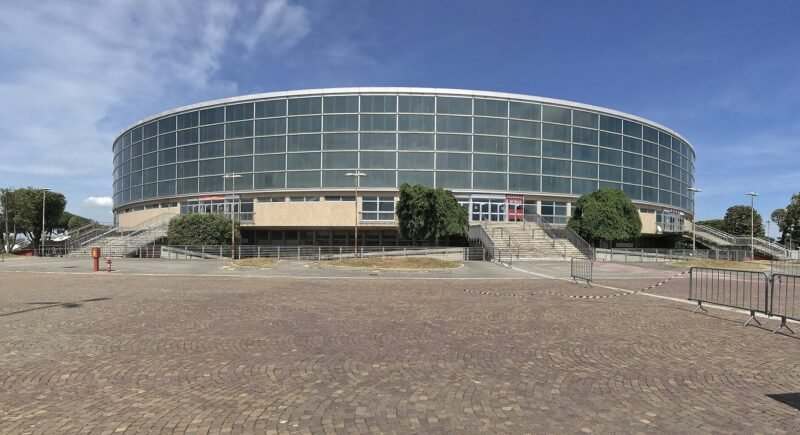
The architecture. The starting point is Colosseo Quadrato, that is, Palazzo della Civiltà Italiana, with its stacked arches that have become a visual icon. Not far away is Palazzo dei Congressi with its staircase and large glazed volume. On the axis toward the train station you come to Nuvola di Fuksas, the contemporary conference center that converses, with some controversy, with the surrounding rationalism. Palazzo dello Sport completes the picture on the southern side, a few minutes' walk from the concert hall.
Greenery and water. Laghetto dell’Eur is the neighborhood's center of gravity: an artificial lake surrounded by a public park, with Japanese cherry trees donated by the city of Tokyo that in spring turn the walk into one of the most photographed in the city. In November the cherry trees are bare, but the park with low morning fog has a charm all its own. Further south the greenery of Parco del Turismo opens up. If you're in the city in the warm months you'll find Eur Social Park and the neighborhood's outdoor series, including the events of Fiesta al Parco Rosati.
The museums. EUR is home to a museum hub that Romans themselves rarely visit: the Museum of Civilizations, which brings together the prehistoric and ethnographic collections and those of folk arts and traditions in the rationalist buildings of Piazza Guglielmo Marconi. It's a half-day visit, suited to the afternoon before an evening concert and sheltered from the rain, which in November is not a minor detail.
The rest of the city. From EUR, metro line B takes you to the center in about 20 minutes, while Via Cristoforo Colombo runs down toward the sea as far as Ostia Antica and the coast. On the route toward the center you'll find the Abbey of Tre Fontane, the Basilica of San Paolo fuori le Mura, the Pyramid of Cestius and further on the Circus Maximus. Anyone who wants a good dinner before heading back to the concert can stop around the Nuovo Mercato Testaccio, which is on this same route and offers more choice than all of EUR put together.
Quick questions
Where is Aiello's concert in Rome?
At Atlantico, Viale dell’Oceano Atlantico 271 D, 00144 Rome, EUR neighborhood. The same address applies to the public entrance and the parking lot.
What day and what time?
Friday, November 13, 2026, with a stated start time of 21:00. As for any date announced in advance, check for confirmation on the organizers' channels before setting off.
What time does the artist come on stage?
Normally between an hour and an hour and a half after the time printed on the ticket, because any opening act and the stage changeover come in between. The precise information for this date is given only by the organizers.
Does the audience stand or sit?
It depends on the configuration authorized for the individual evening. For a concert of this kind the usual configuration has a standing floor and side balconies, but the valid information is what's printed on the ticket.
How many people fit inside?
The figures published by different sources range from 2,500 to 4,000, with intermediate figures of 3,000 standing and 800 seated and two side balconies of about 250 seats each. The valid number for a specific evening is the one given by its organizer.
How do you get there without a car?
Metro line B to Eur Fermi, then about two kilometers along the avenues, on foot in just over 20 minutes or by city bus. The lines traditionally mentioned for this connection are the 706 from Viale America and the 705 from Eur Fermi.
How do you get home after the concert?
November 13, 2026 falls on a Friday, so metro line B runs on extended hours until 01:30. There's a margin but it isn't wide, considering the time to get out of the hall and the trip to the station. The alternatives are your own car, a taxi booked in advance and the night buses along the Colombo.
Is there parking?
Yes, outdoors and large, put by sources at around 600 spaces and in some presentations over 700 between cars and scooters. It's one of the reasons many people choose to come here by car.
Where do you buy tickets?
On the ticketing channel given by the company producing this date. There's no single platform valid for all events at the hall, and the terms of sale, minimum age and named-ticket rules change from event to event.
Can you buy them on the night?
Only if the organizer provides a box office on site and only if tickets are still available. For very popular events advance sales close weeks ahead.
What's the setlist?
It isn't known and isn't revealed in advance. Tour setlists change from night to night and any list published before the date should be considered guesswork.
Are there guests?
There's no verifiable announcement on this. Any guests and any opening act are announced by the organizers in the preceding weeks.
Who is Aiello?
Antonio Aiello, a singer-songwriter born in Cosenza on July 26, 1985. He released the albums Ex voto in 2019, Meridionale in 2021 and Romantico in 2023, took part in the 2021 Sanremo Festival in the Campioni section with the song Ora and won the Premio Lunezia Stil Novo in 2019 for Arsenico.
Is the hall accessible to people with disabilities?
The floor is at ground level on a single level, with no fixed tiers. Reserved spaces, the dedicated route and booking procedures depend on the configuration of the individual event and must be agreed in advance with the organizers and the venue's management, at +39 06 5915727.
Is it worth having dinner in the area?
No. There are no places around the hall, and southern EUR is deserted in the evening. Dinner should be sorted out beforehand, in northern EUR around Viale Europa or in another neighborhood, or at the refreshment counters inside.
The verdict on the hall also applies to this evening. Atlantico should be taken for what it is, without asking it for the charm of a historic theater or the warmth of a neighborhood club: it's a concert machine built inside a shed, located in the part of the city where noise bothers nobody and where parking really exists. For a repertoire built on words, like the one taking the stage on November 13, the deciding variable isn't the hall but where you choose to stand inside it, and that's a choice that depends only on whoever arrives. The neighborhood around it, for its part, rewards anyone who shows up a few hours early and wants to look around.
Article written by the editorial team of TourLeaderPro, contact them for Private, Corporate and V.I.P. Tours and Experiences. For an organized evening in Rome with a licensed tour leader, or for the logistics of groups arriving for a concert, the starting point is the TourLeaderPro contact page. Tour operators building music packages in the capital will find the consulting service in the section for tour operators.
Planning a trip to Rome? English guides to visiting the city are on ItalyPlanner.com, and anyone planning their stay around an evening event will find the overview of things to do in Rome useful.
Contact Information
Nearby
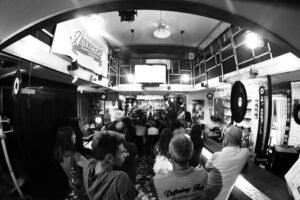
 Atlantico Live Club Roma400 m
- Palazzo dello Sport800 m
- Laghetto dell’Eur1.1 km
- Villaggio Cultura Pentatonic1.2 km
- Laurentino – Acqua Acetosa Nature Reserve1.3 km
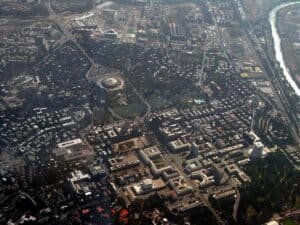
- EUR – Esposizione Universale Roma1.4 km
Upcoming events nearby
- Ditonellapiaga at Atlantico Live200 m
- Litfiba in Concert in Rome at Atlantico Live, December 2, 2026400 m
- Ariete at Atlantico Live in Rome: Club Tour 2026, November 7, 2026400 m
- Mobrici at Atlantico in Rome: 10 years of Avete ragione tutti, November 20 and 21, 2026400 m

You might also like
- Eugenio in Via Di Gioia at Atlantico Live, November 25, 2026
- Naska, Club Tour 2027 at Atlantico, April 14, 2027
- Gianna Nannini at Palazzo dello Sport in Rome: March 31, 2027
- Guè at Palazzo dello Sport in Rome, May 15, 2027
- Antonello Venditti at Palazzo dello Sport in Rome, March 8, 2027
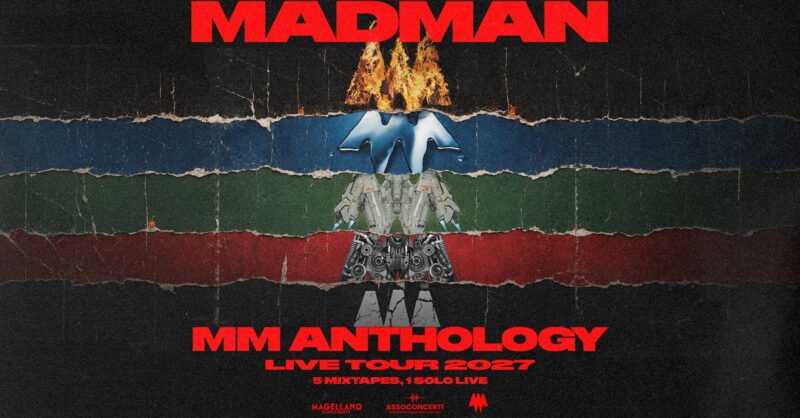
- MadMan, MM Anthology Live Tour at Atlantico, January 27, 2027