Villaggio Cultura Pentatonic
In short. The Villaggio Cultura Pentatonic is at Viale Oscar Sinigaglia 18, in the Giuliano Dalmata neighborhood, right next to the EUR-Laurentina area, in Rome's Municipio IX.
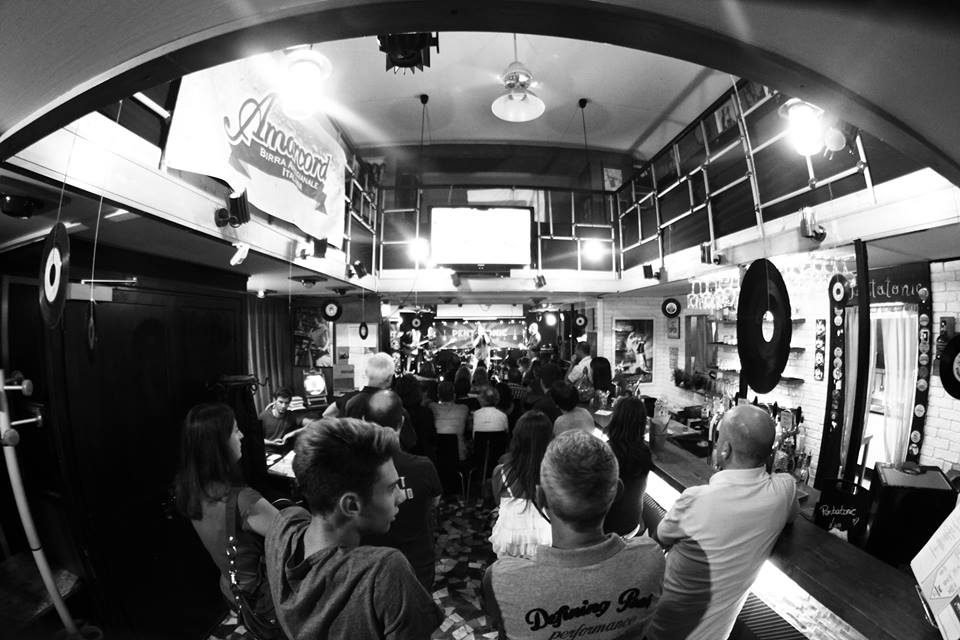
The Villaggio Cultura Pentatonic is at Viale Oscar Sinigaglia 18, in the Giuliano Dalmata neighborhood, right next to the EUR-Laurentina area, in Rome's Municipio IX. It is not a venue in the usual sense of the word: it is the home of a social promotion association, Villaggio Cultura, affiliated with FITEL, which runs at this address a live club called Pentatonic and, a short distance away on Via Byron, a music school and a recording studio. The club, opened in 2011, has hosted since then concerts, poetry nights, book presentations, exhibitions and workshops, in a room of modest size that lives more on the quality of its program than on the number of seats. It's an address that rarely appears in Rome's tourist guides and that Romans from the southern part of the city have instead frequented for years, people who come for a blues concert, a reading of verse or a guitar class and stay for the sociability of the place. If you're visiting EUR and looking for a less monumental counterpoint to the area's Rationalist buildings, it's worth knowing that it exists, what it really offers and how to get there without surprises.
The full name, Villaggio Cultura, is no accident: it evokes the idea of a small, self-sufficient cultural settlement inside the larger city, with a concert room, a music school and a recording studio spread over two addresses close to each other. It's an organizational model that differs from that of a simple venue with live music, because it brings together in a single association the production of culture, music education and recording, three functions that in most Roman cases stay separate among distinct entities, often with no link between them. Anyone who comes for the first time to a concert at the Pentatonic and then discovers the teaching site on Via Byron better grasps the overall logic of the project, which goes beyond the single evening and aims to build over time a community of musicians, listeners and reading enthusiasts around the same association core.
This continuity between training and stage is a trait that sets the Pentatonic apart from many live music venues that began purely as commercial businesses. A student of the music school on Via Byron can, over time, find in the room on Viale Oscar Sinigaglia a first stage to perform on in front of a real audience, while an already trained musician can use the recording studio to set down a repertoire that he or she then brings on stage in this very room. It's a short supply chain, to use a term more often associated with food than with music, that keeps learning, production and listening within the same association perimeter, with clear advantages especially for younger musicians or those new to playing live, who find here a less competitive setting than in the city's big clubs.
Where the Villaggio Cultura Pentatonic Is and How to Get There
The Giuliano Dalmata neighborhood was born in the early 1950s to take in families who were refugees from Istria, Fiume and Dalmatia after the peace treaties following World War II, in an area already earmarked for the never-realized 1942 Universal Exposition. It is a fairly compact residential fabric, wedged between Via Laurentina, Viale Europa and the southern edges of EUR proper, with streets named after writers and poets, like Viale Oscar Sinigaglia itself, an engineer and industrialist who was among the promoters of EUR42. The Pentatonic occupies a ground-floor space in one of these blocks, in a residential area where through traffic is low and the nightlife is not that of Rome's movida districts: anyone arriving in the evening finds a quiet neighborhood, with the venue as the area's main cultural gathering place.
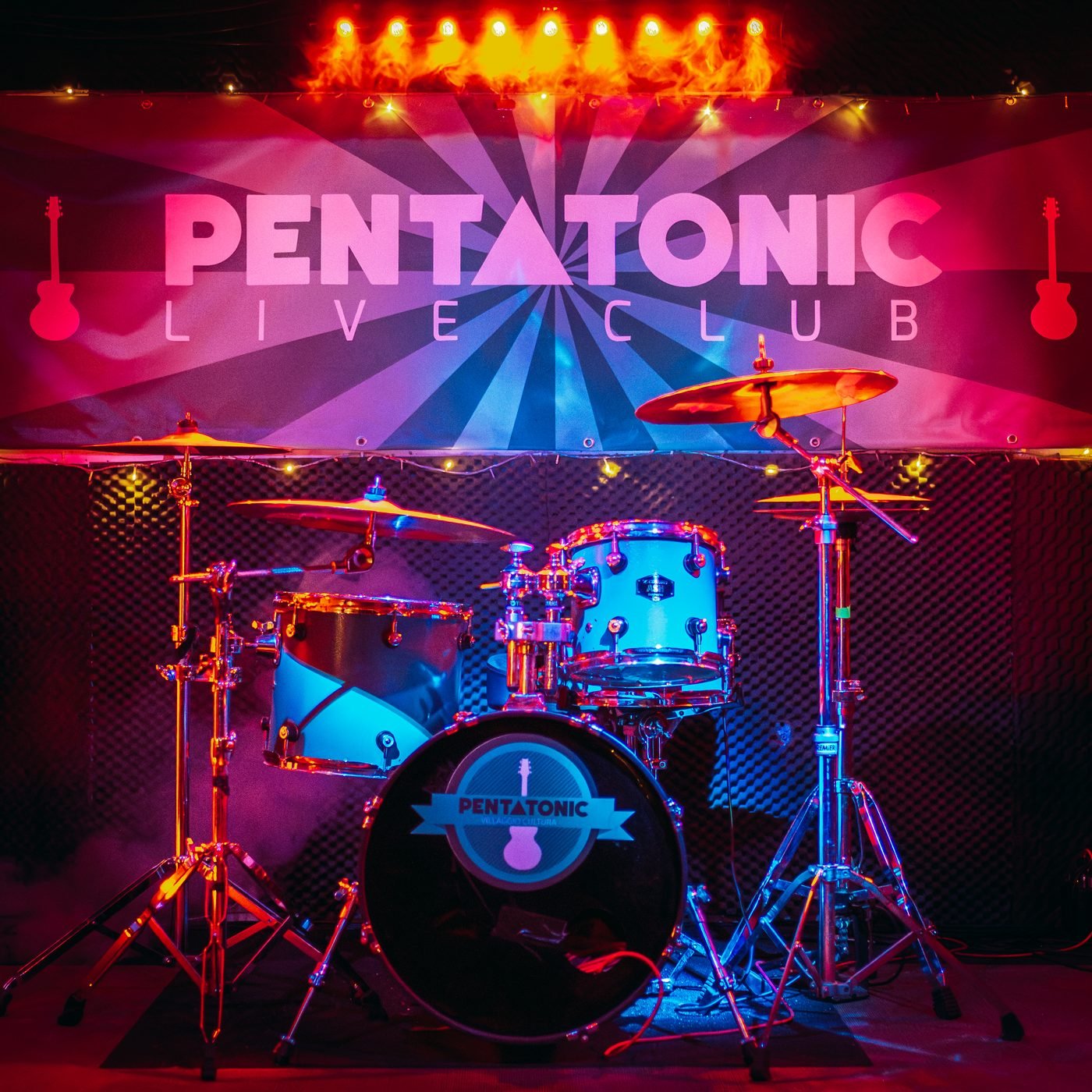
By Car to the Villaggio Cultura Pentatonic
For those coming from central Rome the most direct route is Via Cristoforo Colombo, which cuts through EUR from north to south: exit at Viale Europa or Via Laurentina and follow the internal signs of the Giuliano Dalmata neighborhood to Viale Oscar Sinigaglia. From the south, for those coming from the Grande Raccordo Anulare, the most convenient exit is the one onto Via Laurentina, followed by a short urban stretch. Parking in the area is on the street, free in the evening hours under Rome's paid parking rules, which in Municipio IX are in any case less strict than in the historic center: finding a spot a couple of blocks from the venue in the evening is generally not a problem, except on nights with very crowded events.
By Public Transport
The area is served by the terminus of Metro Line B at Laurentina, a few kilometers away, and by several Atac bus lines that connect EUR with the Giuliano Dalmata neighborhood and with Laurentina proper. The lines change periodically, and it's best to check the updated route on the Atac app or website the same day, entering Viale Oscar Sinigaglia as the destination. Anyone getting around by bicycle finds in the area bike lanes that are patchy but car traffic that is light compared to other parts of the city, which makes the trip on two wheels a reasonable choice for those living in neighboring districts like Garbatella, Ostiense or EUR itself.
For those coming from outside Rome, the most practical choice is still to first reach one of the city's main hubs, Termini or Ostiense, and from there continue by metro or bus to the EUR-Laurentina area. Anyone staying in a hotel in the historic center has to allow for a real travel time that is not negligible, on the order of 30 or 40 minutes in normal traffic conditions, a bit more in the evening rush hours when traffic on Via Cristoforo Colombo and on Via Laurentina slows noticeably. It's a detail worth considering when organizing an evening at the Pentatonic after a day of sightseeing in more central areas, because the late-night trip back, with public transport less frequent, takes a few more minutes of planning than a daytime trip.
What the Villaggio Cultura Pentatonic Is: An Association, Not Just Any Venue
The legal form matters more than it seems, because it determines how you get in and what you can expect to find. Villaggio Cultura is set up as a social promotion association, independent, pluralist, nonpartisan, and voluntary and democratic in character, according to the formula the association itself declares on its website. The stated statutory aims concern the promotion of social, cultural and educational activities, the promotion of art forms, in particular music, painting, photography and film, as well as recreational, sports and environmental protection initiatives, open regardless of political or religious affiliation, citizenship, ethnicity or profession. It is therefore not a private venue that sells tickets as a commercial club would: it is an association space, affiliated with FITEL, the Italian Leisure Time Federation, which in turn belongs to the third-sector structures tied to recreational clubs.
Membership and Entry Rules
To attend events and have food or drinks inside you need the membership card of the reference association, historically Arci, with registration possible right at the entrance on the evening of the event itself: it's the common practice at very many Italian cultural clubs, which lets them operate as a private club reserved for members instead of as a public business open to anyone. The cost of the card is modest and covers the whole association season, not the single event. For many evenings, a minimal contribution toward the costs of running the space is added, stated each time in the event announcement. Anyone organizing an evening at the Pentatonic, be it a rock concert, a poetry reading or the presentation of a novel, therefore works within this association framework, and the audience that frequents the venue knows it and accepts it as part of the place's identity.
One useful thing to know concerns the relationship between this type of membership and other Italian association cards. Anyone who already has a valid Arci card, perhaps obtained at another club in the city or in another region, can in many cases use it here too, because Arci membership is valid nationwide and gives access to all affiliated clubs across the country, not only the one where you first signed up. It's a practical detail that makes life easier for people who frequent several cultural clubs in different cities over the year, and that is worth checking at the door in any case, because the reciprocity rules among the different association networks, Arci, Endas, Aics and the like, are not always identical.
Live Club, Classes and Recording Room
Besides the concert room on Viale Oscar Sinigaglia, the association runs on Via Byron a site dedicated to music teaching and a recording studio, according to what the association's official website says. It's a model that combines enjoyment, the evening concert, with training, instrument classes, and production, recording: a fairly rare circuit in Rome's landscape of small cultural spaces, where more often these three functions stay separate among different entities. For those approaching the Pentatonic as a musician rather than as a spectator, it's worth knowing that this second hub exists, distinct by address but part of the same association.
Via Byron, like many streets in the neighborhood, is named after a poet or writer, in this case George Gordon Byron, and is also in the Fonte Ostiense-Laurentina area, a short distance from Viale Oscar Sinigaglia. The choice to keep the evening club and the teaching site physically separate has an evident practical logic: a rehearsal room and a recording studio need regular daytime hours and different soundproofing from a concert room that comes alive mainly in the evening. For those enrolling in a class or booking the studio, the right contact is therefore not the evening live club's number, but the specific one for Via Byron site, listed separately on the association's website.
The published contacts clearly distinguish the three souls of the association: a number and an email address for the live club, one for the music school and one for the recording studio, each with its own reference hours. It's a point worth keeping in mind before writing or calling, to avoid reaching the wrong contact and getting an answer a few days late, which is common when a volunteer association routes requests among different sites and activities without a centralized front office like a big company's.
A Curiosity About the Villaggio Cultura Pentatonic
The name of the venue, Pentatonic, recalls the pentatonic scale, the sequence of five notes at the base of blues, rock and much of Western popular music and beyond: it's the scale you play by pressing only the black keys of a piano, the simplest to improvise on and for that reason the most widespread in the history of music, from the Chinese tradition to the Scottish one and on to the Mississippi Delta. Choosing this name for a live club born in 2011 tells you a lot about the place's musical identity from the start: a space designed around the most deeply rooted repertoire of live music, blues, rock and revival, more than niche offerings or electronic genres. Over the years the program has widened its range to poetry, fiction and visual arts, but the musical matrix is already readable in the sign.
There is a second level of reading of the name, less immediate but just as pertinent: the pentatonic scale is by definition an accessible tool, which lets even a beginner improvise without falling into obvious dissonances, simply by avoiding the notes that would create harmonic tensions that are hard to manage. It's a choice that, perhaps not by chance, mirrors the educational and inclusive vocation the association has declared since its statute: a space designed to welcome the occasional listener and the musician in training alike, without overly high technical barriers to entry, just as the scale that gives the venue its name doesn't require years at a conservatory to be played with a minimum of satisfaction.
Something Nobody Tells You About the Villaggio Cultura Pentatonic
Anyone looking for the venue on general-purpose maps risks stopping at the first piece of information found and thinking of a simple disco or a music club like many others in the city. The reality is more layered: behind the Pentatonic sign there is an association with a social purpose much broader than live music alone, which over the years has hosted poetry meetings with readings by authors like Adam Vaccaro, evenings devoted to foreign poets like Aleksandr Blok with specialist speakers, fiction presentations with live musical accompaniment, and photography exhibitions. It's not rare for a blues concert and an evening of verse with accordion and guitar to alternate in the same week, a mix found with the same continuity in few Roman venues of similar size. Anyone expecting only a concert often finds something more composite, and it's good to arrive knowing that, so as not to be thrown off by the evening's program.
It's worth adding that this interweaving of music and literature is not an isolated episode in the venue's history, but a recurring trait of its identity since the first years of activity: the documented evenings show poets reading accompanied by a live musician, writers presenting a novel with a singer-songwriter opening, speakers exploring a foreign author in front of an audience that, the following week, comes back for a rock concert. It's a way of understanding culture as continuity rather than as watertight compartments, consistent moreover with the very broad statutory aims the association has declared since its founding.
My Advice for Visiting the Villaggio Cultura Pentatonic
Before heading to Viale Oscar Sinigaglia it's always best to check the program for the specific evening, because the space hosts very different genres within the same week and not every offering suits every taste. The most reliable channel is the association's official website or a direct phone contact, because event-aggregator portals list the venue unevenly and may show incomplete or outdated calendars. The practical suggestion: bring your card along, arrive with a 10-minute margin for registration at the entrance if you're not already a member, and don't expect the service of a big commercial venue, because the strength of the place is precisely its intimate size, not mass-club organization. Anyone looking instead for a more structured live music night, with more options on the same evening, finds larger alternatives in the same southern part of the city, like Atlantico Live a few kilometers away.
A second piece of advice concerns how to find out the program with enough notice. Small association spaces rarely invest in widespread promotion comparable to that of big commercial venues, and their communication often goes through the association's social networks rather than through general event portals. Anyone who wants to stay continuously updated on the Pentatonic program would do well to follow the association's official social channels, as well as checking the website periodically, because that's where announcements of new dates appear first, often a few weeks ahead of their appearance on third-party portals.
Another Well-Known Fact, Yet Rarely Mentioned
The Giuliano Dalmata neighborhood where the Pentatonic is located is not just any neighborhood on Rome's outskirts: it is one of the rare examples in Italy of an urban settlement designed specifically for a community of exiles, the Istrian-Dalmatian one, and the street names still tell it today, with streets named after cities and figures tied to that history. It's a detail that most people passing through EUR, perhaps headed to the Palazzo della Civiltà Italiana or the Basilica of Saints Peter and Paul, don't notice at all, because the neighborhood sits a little off to the side of the monumental axes of Fascist Rationalism that made the area famous. Going to a venue like the Pentatonic therefore also means passing through, without any sign pointing it out explicitly, one of the least-told pieces of Rome's postwar social history in the guides, that of the reception and rebuilding of a community scattered by the wartime and diplomatic events of Italy's eastern border.
There is a second, more contemporary aspect, just as rarely mentioned: the economic sustainability model of spaces like this. In an era when small live music venues are closing all over Italy under the weight of fixed costs, rents and the bureaucracy tied to serving food and drink, the association form chosen by Villaggio Cultura since 2011 is one of the few models that let a space of this size stay open for more than a decade without the backing of a big group or structured public funding. It's a theme that concerns the very survival of small live music in Italian cities, not just the single address on Viale Oscar Sinigaglia.
The Right Photo to Take at the Villaggio Cultura Pentatonic
It's not a postcard place, and anyone looking for the Roman postcard shot knows it from the start: here the right photo is not the outside of the venue, a simple residential entrance with no monumental sign, but a frame taken from inside during a concert, with the close-up stage typical of small live clubs, the equipment in the foreground and the audience at close range from the musicians, the exact opposite of the perspective of a big arena. It's the image that best conveys what the word intimacy means applied to a live concert, much more than any urban glimpse of the neighborhood. Anyone who wants instead a memento of the surroundings finds a few steps away the Rationalist architecture of EUR, with far more recognizable photographic subjects like the Palazzo della Civiltà Italiana and the Fuksas Cloud, both reachable in a few minutes by car.
A third option, less obvious but just as effective, is to photograph the street names of the Giuliano Dalmata neighborhood themselves: the street signs, with their references to the history of the Istrian-Dalmatian exodus, visually tell a page of history that no monument in the area points to as directly. It's the kind of shot that rarely appears on social profiles dedicated to tourist EUR, but that conveys more honestly the historical layer on which this neighborhood, and with it the Pentatonic, was built.
Some Important Events That Happened Here in History
In the Pentatonic's recent history a few moments can be singled out that tell well its identity as a hybrid space between music and literature. In 2014 the venue hosted the presentation of the story Esperaré by the writer Alessandro Marconetti, accompanied by live performances from the Roman singer-songwriter Orlando Andreucci and the composer Giuseppe Natale, an evening that joined fiction and music in a format that was then uncommon for a space born as a rock club. In 2017 came a meeting dedicated to the Russian poet Aleksandr Blok, with speaker Paolo Carlucci, an in-depth look at symbolism and urban expressionism in early 20th-century Russian poetry, open to members with a minimal contribution toward upkeep of the room. On another occasion the room hosted an evening of poetry and music with readings by many authors, accompanied by accordion and guitar, in support of a school project of the association Direttamente a Nairobi, in Kenya, confirming the charitable side of part of the program. On the musical front, over the years the venue has built a schedule made up mostly of groups from the Roman rock, blues and revival scene, spread across the whole week in the typical formula of small association clubs.
It must be said clearly that these documented episodes do not exhaust the venue's history, but are a representative sample gathered from public sources, trade articles and press releases from the association itself: a club active since 2011 with several events every week has hosted, over more than a decade, a far larger number of evenings than appear in online press coverage. For a fuller reconstruction of the venue's historical calendar, the most reliable source remains the association's own archive, when available, more than the general event portals, which tend to index only part of the program and often don't keep archives of past seasons.
The Scene of Small Association Live Clubs in Rome
The Pentatonic is not an isolated case: it is part of a broader network of small Roman cultural spaces born from the same association formula, spread mostly across the city's semi-peripheral neighborhoods, where commercial rents would make it hard for a traditional venue with live music every night to survive. These spaces generally share a few traits: a small capacity, often between 30 and 100 people, a program that favors local artists and the independent scene over established names, and an entry model tied to membership rather than to tickets. They are places that rarely appear in international tourist guides to Rome, which are almost always oriented toward the historic center and the big addresses of live music, but that make up a significant and vital part of the city's cultural scene, especially for those who live and work in the outer neighborhoods.
Why It's Worth Knowing Them, Not Just the Pentatonic
Anyone staying in Rome for a long period, I'm thinking of people working temporarily in the city or visiting at a slower pace than the hit-and-run tourist, finds in these spaces a different way to get to know the city, less filtered by standard tourist routes. The Pentatonic, with its history that interweaves music, poetry and the memory of a neighborhood born from the Julian-Dalmatian exodus, is a particularly dense example of this kind of experience: it doesn't replace an evening at the Colosseum or a visit to the Vatican Museums, but completes it with a piece of Rome that rarely makes it into standard itineraries.
It's also worth distinguishing this category of spaces from another far more visible one in Rome's summer: the big temporary open-air festivals, set up every year in city parks and squares, often tied to the Estate Romana program, which by definition last only a few months and change formula from season to season. The Pentatonic belongs instead to the opposite category, that of fixed spaces, open all year, with a stable address and a continuous program that doesn't depend on a public tender or seasonal funding. They are two complementary ways of experiencing live culture in Rome, and knowing both lets you build a personal calendar far richer than relying on just one of the two circuits.
Who Has Passed Through the Villaggio Cultura Pentatonic
The audience and the artists who frequent the Pentatonic belong largely to Rome's independent music and cultural scene rather than to the circuit of big names. Among the groups who appear to have played in the room are bands like Emme 60, Mare Acido, the Mac 3 Blues Band and the Creedence Revival Band, a tribute to the repertoire of Creedence Clearwater Revival, as well as many singer-songwriters and acoustic groups that are less known but steady in the program. On the literary side, poets and writers like Adam Vaccaro, a longtime figure of contemporary Roman poetry, have come through here, and scholars like Paolo Carlucci, along with storytellers like Alessandro Marconetti. It's a list that tells well the double soul of the place, that of the small rock and blues live club and that of the cultural circle with roots in poetry and fiction, held together by the same association since 2011.
This is not a list of names off the poster of a big festival, and it's good to say so clearly: anyone looking at the Pentatonic for the lineup of an arena or a summer amphitheater with nationally known artists is looking in the wrong place and would do better to look at the nearby Palazzo dello Sport, which in the same EUR area regularly hosts concerts by established singers of the Italian scene. The Pentatonic's strength lies elsewhere, in the continuity of a program made of musicians and authors who often live or work in the same southern part of Rome, and who find in this space an accessible stage to be heard by a neighborhood audience, rather than a showcase for a mass audience.
The Giuliano Dalmata Neighborhood: The History Behind the Address
Understanding where the Pentatonic stands also helps in understanding why this space exists in this association form and not as a commercial venue. The Giuliano Dalmata neighborhood arose between the late 1940s and the early 1950s on an area that had already been earmarked, in the Fascist regime's plans, to host the 1942 Universal Exposition, then never realized because of the war. After the war those spaces, partly left unbuilt and partly marked by interrupted construction sites, were converted to take in the Istrian, Fiuman and Dalmatian families who had left their lands after the 1947 peace treaties and the cession of those territories to Yugoslavia. It is one of the least-told stories of Rome's 20th-century urban history, because it intertwines with a complex page of national history that went little discussed for decades, that of the Julian-Dalmatian exodus.
Street Names That Tell an Identity
The most visible sign of this history today is in the street names: the neighborhood has streets dedicated to figures and places tied to the culture and history of those lands, along with more generic dedications like Viale Oscar Sinigaglia, named for the engineer and entrepreneur who was among the protagonists of Italy's postwar steel industry and among the promoters of the EUR project. Walking through the neighborhood with this key changes the perception of an area that, seen only from the tourist flows headed to the Palazzo della Civiltà Italiana or the Nuvola di Fuksas, would remain a simple postwar residential neighborhood like many others on Rome's outskirts. The Pentatonic, as a cultural gathering point born inside this fabric, thus fits into a community history that made neighborhood sociability, even before culture in the strict sense, a concrete necessity from its very origins.
When to Go and How the Program Works
The Pentatonic follows the typical calendar of Roman association clubs, with evenings concentrated mainly in the second part of the week and on weekends, and with a program that thins out in the central summer months, when many of the city's indoor spaces cut back activity in favor of the open-air festivals that animate Roman parks and villas. Since it is not a seasonal space tied to a single summer festival but an association site active throughout the year, the most correct way to know what is happening on a given evening is to check the updated calendar published by the association or to contact the venue directly, because the event schedules vary from week to week among concerts, presentations and literary evenings, and not all the dates appear on the city's general event portals.
Fall and Winter: The Club's Full Season
As in many small Roman association spaces, the months from October to May are those in which the program is densest, with concerts and literary evenings spread across the whole week. It's the period when it's really worth checking the calendar with some regularity, because it is in these months that the richest part of the Pentatonic's cultural offering is concentrated, with different musical groups alternating from week to week and with poetry and fiction evenings coming back more often than in summer.
Summer: Watch for the Reduced Calendar
In the summer months, as happens with many of the city's indoor venues, it's reasonable to expect a reduced program, helped along by the competition from the many open-air festivals that animate parks, villas and historic courtyards in Rome in summer, many of them tied to the Estate Romana program. Anyone planning an evening at the Pentatonic in July and August should therefore check with particular care if there are events on the calendar, without taking for granted a regular program as in the rest of the year.
How Much It Costs to Attend Events at the Pentatonic
The economic model of an association space like this is not that of an entry ticket in the strict sense: you pay for the membership card of the reference association, valid for the whole season and not for the single event, to which on many evenings a minimal contribution toward the room's running costs is added, stated each time in the announcement for the individual evening and historically on the order of a few euros for literary events, with different amounts for concerts depending on the group hosted. These amounts should always be checked on the official channel for the specific event, because they change over time and from evening to evening, and make no sense reported as a fixed rate valid for any date.
It's worth explaining why this model, membership plus contribution, is so widespread among small Roman cultural spaces with an association vocation. Italian third-sector law allows social promotion associations to serve food and drinks and to organize events for their members without having to fully comply with the rules set for commercial public businesses, provided they meet the requirements set for this legal form, among them precisely admission reserved for cardholders. It's the same principle that governs thousands of Arci and Endas clubs and those affiliated with the other leisure networks scattered across Italy, and knowing it helps avoid misreading the request for the card as an arbitrary barrier to entry, when in reality it is the legal framework that lets spaces like the Pentatonic exist with sustainable running costs.
The Villaggio Cultura Pentatonic with Kids
Among the association's statutory aims, recreational and play initiatives are explicitly listed, which suggests a program not aimed exclusively at an adult evening-concert audience. Still, the venue is known above all for its evening music and literary offering, a format that by hours and content is designed more for an adult audience than for families with small children. Anyone looking in the EUR-Laurentina area for an offering designed specifically for the little ones finds better alternatives in the area's big green spaces, starting with EUR Lake and the Piscina delle Rose, both designed for family use with large open-air spaces.
The teaching site on Via Byron, with the music classes organized by the association, is instead a better reference point for families looking for an ongoing course of instrument training for their children, separate from the actual club's evening program. Anyone considering a class for a child or a teenager should contact this site directly to learn about age ranges, instruments taught and enrollment procedures, information that changes from year to year and that it wouldn't be right to anticipate without checking directly with the association.
Where to Eat Near the Villaggio Cultura Pentatonic
The Giuliano Dalmata neighborhood has a fairly limited local dining offering, typical of a mainly residential area. The EUR area proper, a few minutes by car or bus, offers instead a much wider choice, from traditional Roman restaurants to newer venues that sprang up around the area's new commercial and convention hubs, like those clustered around the Fuksas Cloud and the Palazzo dello Sport. Anyone who prefers to stay in the southern part of the city also finds in Ostiense and nearby Garbatella a more varied offering, with historic trattorias and evening venues that pair well with an evening that starts with an aperitivo and continues with a concert or a poetry reading at the Pentatonic.
For those organizing the evening well in advance, the practical advice is to eat before the show rather than after: events at the Pentatonic, as in many association clubs, start in the evening and run until late, while most restaurants in the EUR area close their kitchens by midnight. Anyone aiming instead for an after-concert meal has more choice in the neighboring districts of Ostiense and Garbatella, where some venues stay open longer, especially on weekends.
What's Around the Villaggio Cultura Pentatonic
The area around the Pentatonic is one of the densest in Rome in terms of 20th-century architecture and big green and sports spaces. A few minutes away is the heart of EUR, the neighborhood born for the never-realized 1942 Universal Exposition and later turned into one of the business districts of postwar Rome, with its Rationalist skyline dominated by the Palazzo della Civiltà Italiana, also known as the Square Colosseum. Not far away is the Basilica of Saints Peter and Paul, one of the most imposing churches in the neighborhood, and the Tre Fontane Abbey, a monastic complex tied by tradition to the martyrdom of Saint Paul, set in a eucalyptus park that offers a green break very different from the neighborhood's Rationalist concrete.
For those looking for outdoor spaces, EUR Lake and the Piscina delle Rose remain the area's two main reference points, both frequented all year by people who walk, run or simply look for a patch of green near the business center. In summer the area's cultural program is enriched further by temporary festivals like those hosted by the EUR Social Park, which over the years has offered open-air cinema and meetings, while big live music and sports events are concentrated at the Palazzo dello Sport, EUR's historic arena that hosts concerts of national importance. For another live club of a different size in the same southern area of the city, Atlantico Live is the best-known reference. To the south, beyond Laurentina, stretches the Decima Malafede Nature Reserve, one of the largest protected areas in the municipal territory, while to the north, heading back toward Ostiense, you come to the majestic Basilica of Saint Paul Outside the Walls, one of the four major papal basilicas of Rome.
A reasonable itinerary for someone with a whole day to give the area could start with the Palazzo della Civiltà Italiana in the morning, when the raking light best brings out the building's geometric arches, continue with a walk in the shade of the eucalyptus trees at Tre Fontane Abbey, stop in the afternoon at EUR Lake or the Piscina delle Rose depending on the season, and end the day with dinner nearby followed by a concert or a literary evening at the Pentatonic. It's a route that puts together monumental EUR, the one in the tourist guides, with lived-in EUR, that of residential neighborhoods like Giuliano Dalmata, and gives a fuller picture of an area that visitors often cross only for the photo of the Square Colosseum.
Quick Questions About the Villaggio Cultura Pentatonic
Where exactly is the Villaggio Cultura Pentatonic?
At Viale Oscar Sinigaglia 18, in the Giuliano Dalmata neighborhood, in the EUR-Laurentina area, Rome's Municipio IX, postal code 00143.
Do I need a membership card to get in?
Yes. Since it is a space run by a social promotion association, access to events and to the food and drinks inside requires membership, with registration possible right at the entrance on the evening of the event.
What kind of music is played at the Pentatonic?
Mostly rock, blues and revival, with groups from Rome's independent scene, joined over the years by acoustic singer-songwriter evenings and presentations with live musical accompaniment.
Is it only music or other things too?
Other things too. Over the years the calendar has hosted poetry evenings, fiction presentations, literary discussion meetings and exhibitions, besides the concerts that remain the historic core of the program.
When was the Pentatonic founded?
The live club appears to have opened in 2011, as stated on the official website of the Villaggio Cultura association.
Is the venue still active?
The association's official website and its contact channels appear to be operating, with separate addresses for the live club and for the music school on Via Byron. To confirm a specific evening, though, you still need to check the updated calendar or contact the association directly.
Is there a recording studio connected to it?
Yes, on Via Byron, run by the same Villaggio Cultura association together with a site dedicated to music classes.
How do I get there by public transport?
By the Atac buses that connect the EUR-Laurentina area, checking the updated route on the Atac app or website. The Metro Line B terminus at Laurentina is a few kilometers away.
Can I park near the venue?
Yes, parking in the area is generally on the street and less regulated than in Rome's historic center, with greater availability in the evening hours.
Is the Pentatonic suitable for kids?
The evening program, made up of concerts and literary evenings, is designed mainly for an adult audience. For family-friendly activities the area offers better alternatives, from EUR Lake to the Piscina delle Rose.
How much does it cost to attend an evening?
The cost varies between the seasonal association card, valid for multiple events, and a minimal contribution for the individual evening, which differs depending on the event and is stated each time in the official announcement.
Who has performed at the Pentatonic?
Groups from the Roman scene like Emme 60, Mare Acido, the Mac 3 Blues Band and the Creedence Revival Band, as well as poets and writers like Adam Vaccaro, Paolo Carlucci and Alessandro Marconetti.
What is the relationship between the Pentatonic and the Giuliano Dalmata neighborhood?
The venue stands in one of the Roman neighborhoods with the most particular urban history, born in the 1950s to take in the Istrian-Dalmatian exiles, and today it is one of the few evening cultural gathering points in the area.
What is the difference between the Pentatonic and Atlantico Live?
They are two venues of very different size in the same southern part of Rome: Atlantico Live is a larger club with a program more oriented to established names in Italian and international music, while the Pentatonic is a small association space, with a program more tied to the independent music and literary scene of the area.
Can adults take music classes?
The association's teaching site on Via Byron offers instrument classes. Information on age ranges, available instruments and costs must be requested directly from the association, because it is not standardized and changes over time.
Can I rent the recording studio?
The studio run by the association on Via Byron is available to musicians on terms to be agreed directly with the site, which should be contacted using the specific contact details listed on the official website.
Is the Giuliano Dalmata neighborhood safe to visit in the evening?
It is a mainly residential neighborhood with a low level of traffic and perceived crime compared with other parts of the city, but as in any urban area the normal caution advised for evening travel applies, especially along the less lit streets.
How far is the Pentatonic from the center of Rome?
The EUR-Laurentina area is about 10 kilometers from Rome's historic center, with travel times that vary considerably depending on traffic and the means chosen, generally between 20 and 40 minutes.
Does the Pentatonic host photography or art exhibitions?
Yes, over time the venue has also hosted photography exhibitions, in line with the association's statutory aims, which explicitly list the promotion of the visual arts among its goals. The presence of an exhibition in a given period still needs to be checked on the updated calendar.
What is the difference between the Pentatonic and neighborhood Arci clubs?
In legal form they are very similar, both social promotion associations with access reserved for cardholders. The difference is in the program, more oriented to live music and literature at the Pentatonic than at a generic neighborhood club, which often favors recreational activities like cards, billiards or social parties.
The Villaggio Cultura Pentatonic is not the stop that ends up on an EUR postcard, and that is exactly why it's worth knowing: it is the point where Rationalism's monumental Rome gives way, a few streets away, to an association Rome made of guitars, verses read aloud and a membership card to show at the door. Anyone who visits EUR only for its palaces sees one city. Anyone who stops one evening at the Pentatonic sees another, smaller and less photographed, but just as alive.
One last practical warning remains, which applies to this as to any other small association space: the operating details, calendar, rates, hours, change more often than those of a big commercial venue, because they often depend on the volunteer work of a few people and not on a stable administrative structure. Anyone organizing a visit to the Pentatonic would do well to treat everything described here as a useful overall picture for getting oriented, to be confirmed in detail with the association before heading to Viale Oscar Sinigaglia.
Frequently Asked Questions About the Villaggio Cultura Pentatonic
Where is the Villaggio Cultura Pentatonic?
The Villaggio Cultura Pentatonic is at Viale Oscar Sinigaglia 18, in the Giuliano Dalmata neighborhood, in the EUR Laurentina area, Rome's Municipio IX, postal code 00143. The neighborhood was born in the early 1950s to take in families who were refugees from Istria, Fiume and Dalmatia.
What is the Villaggio Cultura Pentatonic?
The Villaggio Cultura Pentatonic is a social promotion association, independent, pluralist, nonpartisan, and voluntary and democratic in character, according to the formula declared by the association itself. It is therefore not a simple commercial venue, but a space with statutory aims of social and cultural promotion.
Do I need a membership card to get into the Villaggio Cultura Pentatonic?
Yes. Since it is a space run by a social promotion association, access to events and to the food and drinks inside the Villaggio Cultura Pentatonic requires membership, with registration possible right on site.
Where does the name Pentatonic come from?
The name Pentatonic recalls the pentatonic scale, the sequence of five notes at the base of blues, rock and much of Western popular music, the scale you play by pressing only the black keys of a piano and one of the most widespread in the history of music across different musical traditions around the world.
What kind of events does the Villaggio Cultura Pentatonic host?
The Villaggio Cultura Pentatonic hosts very different genres within the same week: live music, but also poetry meetings and other cultural offerings. Before heading out it's always best to check the program for the specific evening on the association's official website or by calling directly.
How much does it cost to attend events at the Pentatonic?
The economic model of the Villaggio Cultura Pentatonic is not that of an entry ticket in the strict sense: you pay for the membership card of the reference association, valid for the whole season, to which on many evenings a minimal contribution toward the room's running costs is added, stated each time.
Is the Villaggio Cultura Pentatonic suitable for kids?
Recreational and play initiatives are among the association's statutory aims, but the venue is known above all for its evening music and literary offering, a format that by hours and content is designed more for an adult audience than for families with small children.
Article written by the editorial team of TourLeaderPro, contact them for Private/Corporate/V.I.P. Tours and Experiences. For a day organized in the EUR-Laurentina area, with a licensed tour guide, start from the TourLeaderPro contact page. Tour operators building itineraries on 20th-century Rome will instead find the consulting service in the section dedicated to tour operators.
Planning a trip to Rome? The English guides for visiting the city are on ItalyPlanner.com. For those thinking in terms of days off the beaten path there is the guide to the best day trips from Rome, while those who want to understand how to get around the less central neighborhoods of the city will find useful information in the section dedicated to Rome's neighborhoods.
Contact Information
Viale Oscar Sinigaglia, 18
Roma Roma Città, Roma Città