Ditonellapiaga at Atlantico Live
In short. After third place at Sanremo 2026 with "Che fastidio!", Ditonellapiaga meets her audience live: on November 27, 2026 she's in concert at Atlantico Live in Rome, between soul, pop and electronics, with the voice that has made her one of…
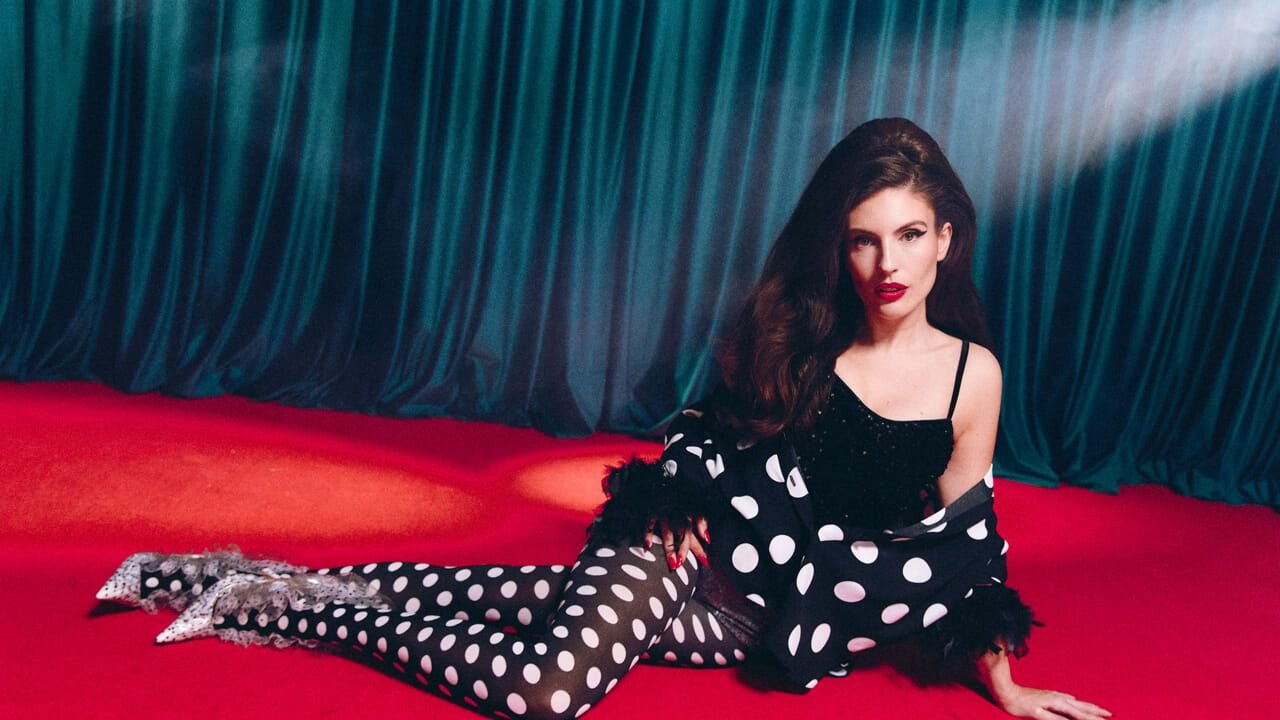
After third place at Sanremo 2026 with "Che fastidio!", Ditonellapiaga meets her audience live: on November 27, 2026 she's in concert at Atlantico Live in Rome, between soul, pop and electronics, with the voice that has made her one of the most original artists of the new Italian scene. There's only one date, a Friday, in a neighborhood that isn't the historic center and that completely changes character at night: Viale dell'Oceano Atlantico, in EUR, the southern edge of the city designed for the 1942 Exposition. If you're coming from outside Rome, you tend to imagine a Roman concert inside the walls, maybe with the dome of St. Peter's in the background. Here the landscape is different: low, wide buildings, tree-lined avenues, parking lots, a suburban silence that seems impossible at eight in the evening and that at 23:00, when the room empties, goes back to exactly how it was.
A concert in a room of about 3,000 people doesn't work like a stadium concert: tickets don't sell out in two hours, but they do sell out, and above all they sell out badly, that is in waves, leaving the worst spots for those who make their move in the last few weeks. Then there's the question of the time, which weighs more in EUR than elsewhere, and that of transportation, which after midnight in that area becomes a serious variable. All things nobody tells you when you buy your ticket, and that instead decide if you go home happy or go home angry at Rome.
Margherita Carducci, who goes by Ditonellapiaga on stage, is Roman, born on February 5, 1997. This detail matters more than it seems, because a hometown concert isn't just any concert: the audience changes, the temperature of the room changes, the things the artist feels allowed to say between songs change. The November 27 night at Atlantico is, to all intents and purposes, a Roman night by a Roman artist in the least Roman Roman neighborhood there is. The contradiction is delightful and alone is worth the metro ride.
Where Atlantico Live is and how to get there
The address and the setting
Atlantico Live looks onto Viale dell'Oceano Atlantico, the street that marks the southern border of the Europa neighborhood, the one everybody calls EUR. It's not the monumental heart of the neighborhood, the one with the Marconi obelisk and the Palazzo della Civiltà Italiana: it's the outer band, where rationalist urban planning dissolves into 1960s and 1970s buildings, converted sheds, company headquarters, very wide streets designed for cars. The venue occupies a space that was born industrial and has been adapted to live music, and it shows: high ceilings, a rectangular floor plan, few columns, a wide stage and a capacity that in standing configurations reaches about 3,000 people.
The logic of the place is that of the European multipurpose hall, not that of the Italian-style theater. There are no tiers of boxes, no orchestra pit, no orchestra with numbered rows except in the seated configurations the venue sets up for certain shows. For a pop concert like this one the natural configuration is a standing floor, with a raised section along the sides and at the back, and this radically changes how it's best to organize the night. I'll come back to this later, because it's the part that makes the difference between a great night and a night spent staring at the back of someone's head.
By public transportation
Metro B is the natural way to reach EUR from any point on the line, so from Termini, the Colosseum, Piramide, Ostiense, Garbatella. The useful stops for the southern part of the neighborhood are EUR Palasport and EUR Fermi: from either one you get out and walk, because Viale dell'Oceano Atlantico runs parallel to the southern edge and has no stop right outside. The walk is flat, lit, on wide sidewalks, and takes a good 15 minutes at a normal pace. It's not a scenic stroll, but it's safe and clear, and in November with a coat on it's even pleasant.
The tricky part isn't getting there, it's getting back. A concert that starts around 21:00 and that, with the support act and encores, ends between 23:00 and midnight, empties 3,000 people onto a half-empty avenue at a time of day when transit frequency is at its worst. Metro B in that area closes on its regular schedule around midnight on weekdays, with extended hours on Friday and Saturday nights: November 27, 2026 falls on a Friday, which works in your favor, but it's not a guarantee to build the whole night on. Decide your plan for getting home before going into the room, not after the last encore, when tiredness and euphoria make anyone optimistic.
Several surface lines serve the area and cover the routes toward Laurentina, Torrino and Ostiense. In practice, if you're coming from outside Rome and don't know the network, it's quicker to treat the metro as your main option and keep the bus as an alternative. If you live in Rome, you already know which line passes under your house and don't need directions.
By car, taxi or ride service
EUR is one of the very few areas of Rome where arriving by car makes sense. There's no limited traffic zone like in the center, the streets are wide, and around Viale dell'Oceano Atlantico there are parking areas and side streets where people park on concert nights. With 3,000 people arriving, though, the easy spot disappears fast: arriving an hour before doors open is the difference between stopping 200 meters away and circling for 20 minutes in widening loops.
Taxis and ride services work well on the way there and badly on the way back, for the simple reason that at the end of the concert demand is concentrated in a quarter of an hour at a single point of the city. The countermove: walk five or 10 minutes away, toward the interior of the neighborhood, and call the car from there. You lose a quarter hour of walking and gain 40 minutes of waiting. The same goes for getting back to your car, if you parked far away: the outflow from the lots near the venue is the slowest part of the night.
A note on perceived acoustics, for anyone who has never set foot in a room of this shape. Spaces born as industrial buildings have hard surfaces and large volumes, and reverb is the natural enemy of the voice. Serious venues correct it with acoustic treatments, curtains, panels and the placement of the speakers, and the result, when the audience fills the room, improves noticeably: 3,000 bodies absorb sound better than any panel. This means the concert almost always sounds better with a full room than during the opening set, when half the audience is inside. If the first 20 minutes sound muddy to you, it's not a verdict on the night: wait for the room to fill up.
Who Ditonellapiaga is, if you came to her through "Che fastidio!"
Her Roman beginnings
Margherita Carducci was born in Rome in 1997, the daughter of Claudio Carducci and Costanza Di Dato, both basketball coaches. She graduated in DAMS with a theater focus at Link Campus University, and you can feel that theater training on her: her stage presence isn't that of a singer who just sings well, it's that of someone who has studied how to fill an empty space. She started making music in 2019, meeting the Roman producers BBprod, with whom she released her debut single "Parli." The same year she received the Premio giovani MEI ExitWell, the kind of award that doesn't make headlines but that in the Italian independent circuit means a lot.
In October 2020 she signed with Dischi Belli, a label of the BMG Rights Management group, and released as a single a cover of Matia Bazar's "Per un'ora d'amore." In December came "Morphina." In February 2021 came "Spreco di potenziale," previewing her debut EP "Morsi," released on April 23 of the same year. The cover of "Per un'ora d'amore" ended up on the soundtrack of Fabio Mollo's film "Anni da cane." It's a fast start but not a sudden one: two packed years, a sound identity already recognizable, a stage name anyone remembers on first hearing.
Camouflage, her first Sanremo and the Targa Tenco
On January 14, 2022 her debut album, "Camouflage," came out. The following month Ditonellapiaga competed at the Sanremo Festival for the first time, with "Chimica," a duet with Donatella Rettore: she placed 16th, but the song reached ninth place on the Italian chart and was certified platinum for passing 100,000 copies, racking up 20 million streams on Spotify. It's the classic case of a song that loses the contest and wins the year: anyone who turned on a radio in spring 2022 still has it in their head.
On June 24, 2022 she released the single "Disco (I Love It)." On July 12 of the same year she was awarded the Targa Tenco for best debut work for "Camouflage," the award that really shifted the way Italian critics see her: no longer a festival curiosity, but a songwriter. Also in 2022 she received the Premio SIAE Videoclip rivelazione at the Premio Roma Videoclip for "Chimica." In February 2023 she was back at the Ariston, this time on covers night, singing "Salirò" with Colla Zio.
Flash, the collaborations, the return
From October 2023 she started releasing the singles previewing her second studio album, "Flash," out on May 10, 2024. In the same period she performed at the May Day concert at the Circus Maximus, a kind of home rite of passage for a Roman artist. In September 2024 came "Ti voglio," a new version of Ornella Vanoni's 1977 song, recorded with Vanoni herself and Elodie: a trio that on paper looks like a marketing whim and on listening is instead a lesson in how to pass a song from one generation to the next without ruining it.
On February 14, 2025 she returned to Sanremo as a guest on covers night, singing Franco Califano's "Un tempo piccolo" with Tiromancino and Willie Peyote, then in the competition. On June 30, 2025 she released digitally and on 45 rpm "Cerco un uomo" and "Febbre d'amore": the second is a cover of Marcella Bella's 1984 song, the first a reworking of Sandra Mondaini's 1977 song. It's in this taste for smart revivals that you understand what she really does: she takes Italian material from 50 years ago, treats it with respect and brings it back to a contemporary dance floor without turning it into parody.
2026: third place, the orchestra's award, Miss Italia
On January 30, 2026 the single "Sì lo so" came out. In February Ditonellapiaga competed at the Sanremo Festival for the second time with "Che fastidio!". On February 27, on covers night, she sang a duet with TonyPitony on "The Lady Is a Tramp" and won the night. The track was released as a single the following day. In the final she placed third, behind winner Sal Da Vinci, and took the "Giancarlo Bigazzi" award for best musical composition, the one given by the orchestra. On March 2, 2026 "Che fastidio!" also received RTL 102.5's Premio Radioshow as the most radio-friendly song of the Festival.
The orchestra's award deserves an extra line, because it's the honor that counts most at Sanremo among insiders and least among the public. It's voted by the orchestra players, that is the only people in that theater who read the score and know exactly how much work goes into an arrangement. Winning it means that the song, taken apart note by note, holds up. Keeping it in mind helps you hear the November 27 concert with the right ear: what you'll hear live isn't a song built in the studio and played back, it's a song written to be played.
On March 19, 2026 "Notte prima degli esami 3.0," directed by Tommaso Renzoni, came out in theaters, with her film debut in the role of Giulia. She wrote, composed and performed the original song "Le brave ragazze," nominated for the Nastro d'argento for best original song. On April 3 the single "Hollywood" came out, previewing her third studio album, "Miss Italia," released on April 10, 2026. On June 5 came "Businessman," included in the album's digital reissue. In 2026 she also appeared in Michela Andreozzi's film "Ancora più sexy." It has been, in short, a full year, and the November concert at Atlantico comes at the end of that run, not in the middle.
How the way we hear her has changed
There's something I find interesting in this artist's path, and it explains why a Rome date in November 2026 carries different weight from a Rome date in 2022. In 2022 Ditonellapiaga was, for most of the TV audience, the young voice next to a veteran: the duet with Donatella Rettore worked precisely because of that contrast, and anyone who didn't follow the independent scene filed her away as the revelation of the year. Then what rarely happens happened: instead of burning out the following year, the project grew stronger, with a Targa Tenco for best debut work, a second album, collaborations with very different heavyweight names and, finally, a return to the Sanremo competition with a much higher result than the first.
This changes the audience you'll find in the room. In 2022 a concert would have brought together the club crowd and festival curiosity-seekers. In 2026 the audience is wider and more layered: those who came through "Chimica," those who came through "Flash," those who came through "Che fastidio!", those who discovered her at the movies with "Notte prima degli esami 3.0." The repertoire has to hold all these entry points together, and the way a setlist solves this problem is, if you listen carefully, half the fun of the night.
It's also worth remembering a small thing about the stage name, which in Rome you'll hear mangled in 10 different ways in the line at the entrance. It's read all together, as a single word, and it was born almost as a joke before the project became a career. The fact that such an uncommercial name made it to the Ariston podium and onto national radio says something cheerful about the state of Italian music: you can rise high without going by a reassuring name.
A curious fact about Ditonellapiaga at Atlantico Live
The venue's name has nothing to do with the ocean, with crossings, with the sea. It comes from the street, and the street comes from a naming scheme that is one of Rome's loveliest oddities. When the neighborhood for the 1942 Universal Exposition was designed in the 1930s, it was decided to name the main avenues after geographic places outside Italy, something very rare in the Italian tradition: the avenues devoted to the continents, Europe, Asia, America, Africa, Oceania, all laid out perpendicular to Via Imperiale, which today is Via Cristoforo Colombo, and the avenues devoted to the oceans, Atlantic and Pacific, placed on the southern edge of the neighborhood.
So Ditonellapiaga's concert takes place, literally, on the southern rim of a world map drawn on the ground. Farther north are the continents, farther east the mountain ranges, Rockies, Carpathians, Caucasus, Pyrenees. In the southeast quadrant the streets devoted to African countries, Algeria, Kenya, Morocco. In the southwest quadrant those devoted to Asian and Oceanian countries, Lebanon, Indonesia, Australia, with Piazza Pakistan and the Passeggiata del Giappone next to the lake. Walking from the metro to the venue, you cross a piece of the globe without noticing.
There's more, and it's the funniest part. The avenue bears the name of an ocean because the ocean, in the logic of the Exposition that never happened, marked the border: beyond that line the world ended and the Roman countryside began. Today that line is where 3,000 people line up to hear a young woman sing who grew up a handful of kilometers away. The border of the fascist world map has become the place where people dance on Friday nights. I don't know a better metaphor for how Rome digests its own history.
I'll add a note for anyone searching online: the word Atlantico, in Rome, is annoyingly ambiguous. It refers to the avenue, to the venue, to a live album recorded in that very room, and also to other Italian records with that title that have nothing to do with either the street or the room. When you look up times, tickets and directions, always add "live" and "viale dell'Oceano Atlantico" to your search, or you'll end up reading the page for a record.
Something nobody tells you about Ditonellapiaga at Atlantico Live
What nobody writes on the presentation pages is that Atlantico is a room where the quality of your night depends almost entirely on where you stand, and that the good spot isn't the one you instinctively look for. The floor plan is rectangular and wide. The stage takes up the short side. This means the front of the stage fills up fast and that, past the first 10 or so rows of people, you find yourself in a central area where the view is mediocre and the sound, because of the room's physics, arrives a bit muddy. The best spot if you care about listening isn't the center of the floor: it's slightly off the axis, level with the sound desk or a little behind, where the technicians mix and where the sound is therefore by definition right.
Second thing nobody says: the raised areas along the sides and at the back of the room change everything if you're not very tall. They're only a few steps, but enough to see over two rows of heads. If you arrive an hour early and settle there, you see the whole stage, hear well and don't have to fight for space all night. If instead you're aiming for the barrier, expect to arrive very early, stand still for two or three hours and not be able to leave for any reason, because a lost spot can't be recovered. It's a legitimate choice, but make it knowingly.
Third thing, the most obvious and the most ignored: in November the coat check is the bottleneck of the night. A late-November concert in Rome means 3,000 people arriving with coats, scarves and maybe umbrellas. On the way in, the coat check line moves fast because it's spread over an hour. On the way out, it's concentrated into 20 minutes and it's slow. If you can, go in with the bare minimum, keep a light jacket and tie it around your waist. If you have to check your coat, factor in an extra half hour at the end, or wait inside for the line to thin out instead of joining it right away.
Fourth and last, the most concrete: the time on the ticket isn't the time Ditonellapiaga sings. It's the time doors open, or at most the show start time, which in a room like this usually includes an opening set. Between doors and the main artist's first note a good two hours can pass. If you arrive early to get a spot you know this and plan for it. If you arrive thinking the concert has already started, you may have rushed for nothing, and if you arrive very late thinking it starts later anyway, you may miss the beginning. The only way to know precisely is to check the venue's announcements in the days right before the date.
My advice for Ditonellapiaga at Atlantico Live
My main advice is just one, and it's worth more than all the others put together: treat the night as an outing to EUR, not as a dash to a venue. Arrive in the neighborhood with two or three hours to spare, in the light that's still there at five in the afternoon in late November, and use those hours. EUR at a winter sunset is one of the most photogenic and least crowded places in Rome: the EUR lake with its fountains, the cypresses, the Palazzo della Civiltà Italiana that lights up in the dark and becomes something almost metaphysical. Then you have dinner calmly and arrive at the venue relaxed instead of breathless.
Second piece of advice, on tickets. Buy early and buy from the official channels of the venue or the organizer. For a room this size the secondary market is where prices double for no reason and where invalid tickets circulate more easily than elsewhere, because there's none of the name check used for stadiums. If you have a spare ticket, resell it through the official resale channels provided by the organizer: it's slower, but it's the only way the buyer actually gets in.
Third piece of advice, on what to wear. November in Rome is deceptive: outside it's eight degrees, inside a room with 3,000 people and a lighting rig it's a good 25. The rule is layers: T-shirt, light sweatshirt, a coat you can take off. Comfortable, closed shoes, because on a standing floor someone will step on your foot, it's mathematical. If you have a heavy coat, see above under coat check.
Fourth piece of advice, and this one is personal. Don't spend the concert filming. I know it's the advice everyone gives and nobody follows, but with this artist it has a specific reason: her strength live is the modulation of her voice, the dynamic shifts, the way she goes from a whisper to full power. These are things a phone microphone compresses and destroys, and that live are exactly the reason you bought the ticket. Take two videos, one for a slow song and one for the song everyone is waiting for, and then put the phone away.
Fifth piece of advice, if you're coming from outside Rome. Sleeping in EUR for a night isn't a punishment: it's a well-connected neighborhood, with hotels designed for business travelers that have softer rates on weekends, and staying 10 minutes' walk from the venue solves the late-night trip home in one go. The next morning you take metro B and in 20 minutes you're at the Colosseum. It's logistics that rarely work this well in Rome.
Another well-known fact, and yet not often mentioned
The fact is this: Rome glaringly lacks mid-size venues, and Atlantico is one of the few rooms that fill the gap. The city has dozens of small clubs, from 200 to 800 people, and it has the big containers, the Palazzo dello Sport with over 10,000, Stadio Olimpico, the Circus Maximus for summer events. Between 800 and 10,000, a void. An artist who has outgrown the club but isn't yet big enough for the arena has very few options in Rome: and Atlantico, with its roughly 3,000, is one of those few.
This explains why on the calendar for the same autumn 2026 the room hosts very different names all at the same career stage: Willie Peyote on October 31, Aiello on November 13, Ditonellapiaga on the 27th. Three artists who sell thousands of tickets, not tens of thousands, three nights that in a city with more mid-size venues would be spread over three different places and that instead are concentrated here. It's not chance, it's real estate arithmetic.
The practical consequence, if you go to the concert, is that Atlantico works almost every night of the season and the Roman audience knows it very well. Don't expect the atmosphere of a place discovered by chance: expect a well-oiled machine, staff who know what they're doing, lines that move, and at the same time the slightly distracted habit of people who repeat the same night a hundred times a year. It's a professional venue, not a hideaway.
The second, less obvious consequence concerns the sound. A room that hosts different genres every night installs a system designed for compromise, and the touring technicians with the artists have to adapt. At concerts where the voice is the star, like this one, the result depends a great deal on who's at the desk. Once again: standing near the sound desk is the simplest and most effective trick there is to hear what the engineer is actually hearing.
The right photo to take at Ditonellapiaga at Atlantico Live
You don't take the right photo inside. Inside it's dark, the lights change every two seconds, there are heads in front of you, and any phone produces the same grainy rectangle it produces for everyone else. You take the right photo beforehand, and it's this one: the venue's billboard or sign on the avenue, shot from the opposite sidewalk, with the line starting to form and the November sky that in Rome at half past five in the afternoon turns orange above the low buildings of EUR. Horizontal, phone at chest height, no zoom. That photo tells the story of the night much better than a 30-second video where you can't hear anything.
The second recommended photo is a 15-minute walk away, and it's the reason it pays to arrive early. The Palazzo della Civiltà Italiana, the so-called Square Colosseum, with its 54 arches per facade, has a light at winter sunset that no other season gives it: the travertine turns pink, the arches make a grid of sharp shadows, and there's none of the crowd that fills the square in summer. Stand at the corner, shoot the building at three-quarters instead of head-on, and let a piece of sky into the frame. It's the least beaten Roman photo there is, in a city where everything has already been photographed a million times.
The third, if you feel like walking a bit more: the lake. The still water in the evening reflects the lights of the buildings and the street lamps, and with a phone resting on the railing, hands off, you get clean reflections that don't come out handheld. If you pass by with an hour to spare and a little patience, you'll go home with a photo nobody associates with Rome and that is as much Rome as the Colosseum.
Inside the room, if you really want to try, the only moment the photo works is the end: house lights on, the artist waving, the audience with arms raised. The light is full and steady, the subject is still, and for two or three seconds you have the conditions you never have during the concert. Keep your phone ready and shoot then, not before.
Some important events that happened here in history
The best-documented episode linked to this room concerns Fabrizio Moro. On November 19, 2010 the Roman singer-songwriter recorded at Atlantico the concert that would become his first live album, released on November 8, 2011 with the title "Atlantico Live": two CDs and a DVD, 27 tracks, almost two hours of music, plus two unreleased songs recorded in 2011. It's the clearest case of a night at this venue that entered Italian discography for good, and it also explains why, when you search for the room's name online, you invariably end up on the page for a record.
Otherwise, the history of the place is that of a contemporary concert hall: no battles, no popes, no sieges. The important events concerning the place in the broad sense are those of the neighborhood that hosts it, and those do carry weight. The area of the Roman countryside where the buildings of the 1942 Exposition stand was officially turned into a neighborhood by a resolution of September 13, 1961, with the provisional name Quartiere XXXII E.U.R., from the acronym of Esposizione Universale di Roma. With a later resolution of May 5, 1965 the neighborhood took the name Europa, which nobody has ever used, while the acronym has stayed on everyone's lips.
The urban plan was presented in 1938 under the direction of Marcello Piacentini, inspired, in line with the ideology of the time, by classical Roman urbanism and mixed with elements of Italian rationalism. Its centerpiece was Piazza Italia, today Piazza Guglielmo Marconi, with the obelisk dedicated to the inventor in the middle and four buildings meant for the exhibitions planned for the Exposition. The Palazzo della Civiltà Italiana, conceived from 1936 and designed in 1937, was begun in July 1938 and inaugurated, though incomplete, in 1940. Work stopped in 1943 and was finished after the war.
The war halted everything and the Exposition was never held. The parks and gardens were built only after the conflict, on an original 1937 design by Pagano, Rossi and Vietti later passed to Piacentini, who wanted Raffaele de Vico as supervisor of the green areas: the rigid geometry stayed with the buildings, while the greenery took freer forms, and EUR is still the Roman neighborhood with the most green space. Construction of the neighborhood was completed at the end of the 1950s for the Games of the XVII Olympiad in 1960, with the Palazzo dello Sport designed by Pier Luigi Nervi and Marcello Piacentini, the Velodrome, and the final layout of the lake, called Laghetto del Cannocchiale (the Telescope Lake) for its geometric shape.
The Palazzo dello Sport deserves a couple of lines because it's the venue's illustrious neighbor. Designed in 1956 by Piacentini with structural consulting by Nervi, built between 1958 and 1960 for the Olympics, it hosted the Olympic basketball and boxing competitions. Between 1999 and 2003 it was renovated, and for 15 years it carried a commercial name that all Romans still use out of habit. Today it continues to host sports, conferences and concerts: in the same season in which Ditonellapiaga sings at Atlantico, the arena has its own calendar of big names, and the two venues sometimes work the same week a few hundred meters apart.
The latest chapter in the neighborhood's building history is the convention center designed by Massimiliano Fuksas, the Nuvola, a very long and debated construction project that has become one of the contemporary symbols of EUR. Coming to the concert from the metro you see it on your right, lit up, and you understand in one go what kind of neighborhood this is: a place where every Italian era has left a huge, declarative building, from 1938 to today, one next to the other, without ever apologizing.
Who has played Ditonellapiaga at Atlantico Live
Fabrizio Moro, as mentioned, is the best-documented name: his November 19, 2010 night became a double CD with DVD released the following year. But the right way to answer this question is to look at the calendar, not the archive, because a mid-size room tells its story through who plays there now.
In autumn 2026 Atlantico's lineup puts in a row artists who say a lot about the state of Italian music. Willie Peyote arrives on October 31: a rapper and singer-songwriter from Turin, one of the few in Italy able to combine political writing and groove, and incidentally the very person with whom Ditonellapiaga shared the Ariston stage on 2025 covers night, together with Tiromancino, for Califano's "Un tempo piccolo." Aiello sings on November 13, exactly two weeks apart. And on the 27th it's her turn.
Three nights, one month, three audiences that only partly overlap. It's the most honest snapshot of what this room is today: the place where those who have moved past the club phase and don't yet have, or don't want, the arena come through. Within a few years some of these names will move up in size and others won't, and Atlantico's autumn 2026 calendar will become, in hindsight, a very interesting list to reread.
As for who will be on stage with Ditonellapiaga, better not to venture: tour lineups change and the only reliable source is the official announcement in the days before. What can be said with reasonable certainty, looking at how she has worked in recent years, is that the live project has never been voice and backing tracks: her productions call for a real rhythm section and a synthesizer setup, and the songs that worked best on radio are the ones that open up most live.
What to expect from the November 27 night
The possible repertoire
I don't make up setlists, and I distrust those who publish them in advance. Still, some reasoning is possible. The concert comes seven months after the release of "Miss Italia," the third album, released on April 10, 2026, and five months after the release of "Businessman," the single included in the digital reissue. It's reasonable to expect the heart of the night to come from there, and that "Che fastidio!", the Sanremo song awarded by the orchestra and voted most radio-friendly of the Festival, will take a prominent spot, presumably toward the end.
Equally reasonable is that the earlier repertoire won't disappear: "Camouflage" won a Targa Tenco for best debut work, "Flash" is from 2024 and produced several singles, and "Chimica" remains the song part of the audience knows even without knowing who sings it. How a song born as a duet is handled live is one of the small curiosities of the night: the options are many and none is a given.
The voice, which is the real reason
This artist's strong point is her timbre, and timbre is the one thing recordings always compress. Live you hear the grain, the register shifts, the breath. Those who know her only from streaming platforms and hear her live for the first time usually have the same reaction: they thought they were going to hear a song and realize they've gone to hear a singer. They're two different things, and the second is what justifies the ticket price.
The audience
The audience at a Rome date by a Roman artist is a special one. There's the part that has followed her since 2019, since the days of BBprod and "Parli," that knows the lesser songs and waits for them. There's the much larger part that arrived with Sanremo, that knows two songs and sings both. And there's, inevitably, family, high school friends, university classmates, people who recognize each other in the room and hug. This third component is what makes a hometown date different from all others, and it usually produces the best moment of the night, which is never the most famous song.
The neighborhood around, before and after the concert
What you can see in EUR on a winter afternoon
If you arrive early, and I'll say it again, you should, the neighborhood gives you three or four things within a very small radius. The lake and the park around it are the simplest walk: a loop that takes a good half hour, with cypresses, willows over the water, fountains and the Passeggiata del Giappone. The Palazzo della Civiltà Italiana, a short distance away, is the symbol building: four identical faces, 54 arches per facade, a complete travertine cladding, the nickname Square Colosseum that it earned on its own. It's a listed building of cultural interest and is restricted to exhibition and museum uses.
Then there's the Basilica of Santi Pietro e Paolo, with its dome visible from half the city, which closes the perspective of the monumental axis and from the top of its steps offers one of the least visited views of Rome. And for those who feel like walking, there's EUR Social Park, the everyday face of the neighborhood, the one residents actually use.
An honest warning: in November it gets dark early, around five, and the neighborhood's museums close in the afternoon. If you plan to visit something indoors, do it beforehand, not in the late afternoon. If instead the idea is to walk and look, the winter twilight in EUR is the best moment of the year, hands down.
What the weather is like, realistically
Late November in Rome isn't a northern winter, but it isn't a postcard either. Highs usually hover around 15 degrees and lows drop to seven or eight. The risk of rain exists and is real, and it's historically one of the months with the most rainy days in the city. For a night like this, the practical translation is simple: a light waterproof jacket is better than a heavy coat, a small umbrella that fits in your pocket, shoes that can handle a puddle. If it rains, the walk from the metro is still doable because it's all on sidewalks, but the square in front of the venue has no shelter, and the line in the rain is the least romantic part of the night.
The upside is that the neighborhood, under a low sky, becomes spectacular in a way it isn't in summer: wet travertine changes color, reflections on the asphalt multiply the lights, and the lake with low evening mist is one of the images of Rome that almost no tourist takes home. If you get a rainy night, instead of complaining, bring your camera.
Eating before the concert
I won't give you restaurant names, for a specific reason: openings and closings in an office district change quickly, and a wrong list does more harm than no list. I'll give you instead the rule, which never changes. EUR is an office district, so much of the food scene is geared to the business lunch and in the evening closes early or is empty. The exceptions cluster around the liveliest streets, toward Viale Europa and toward the lake area, where you'll find places that also work in the evening and on weekends.
Eat by eight, because after that you risk finding kitchens that are closing and because in any case you need to be at the venue when doors open. Avoid eating heavy: two or three hours standing in a hot room after a big dinner is an experience I don't recommend to anyone. And bring cash or a backup card, because at some places in the neighborhood the card reader comes and goes.
Sleeping in the area
As I said, EUR has a concentration of hotels built for business travelers and conferences. From Friday to Sunday those customers disappear and rates go down. If you're coming from outside Rome for the concert, this is one of the few occasions when Roman logistics are generous: you sleep a few minutes' walk from the venue, go back after the concert without worries, and the next morning metro B takes you to the center in 20 minutes. If you'd rather sleep in the center and go back by metro, you can, but with the warning about the line's late-night hours I mentioned earlier.
Frequently asked questions about this concert
What time it really starts
The time printed on the ticket is almost always doors. Between doors, any opening set and the start of the main show, one or two hours usually pass. The only reliable information comes from the venue's official announcements in the days right before, and it's worth checking them the night before.
Are there seats
It depends on the configuration chosen for the specific date, which for pop concerts in this room is normally a standing floor with raised sections along the sides. If you have specific seating or accessibility needs, contact the organizers in advance: venues this size almost always have a dedicated procedure, but it has to be activated beforehand and not on the night.
Can you bring a camera
The rules change from tour to tour and are announced by the organizer. The general rule in Italy is that phones are allowed and interchangeable-lens cameras aren't. If you have a real camera and care about it, check beforehand, because leaving it at the coat check isn't always possible.
How long it lasts
A concert of this kind, not counting the opening act, usually runs between an hour and a quarter and an hour and a half, encores included. With the opening set and stage changeovers, the night inside the room easily takes three hours. Plan your way home accordingly.
Is it worth arriving early even if you don't want to be in the front row
Yes, for two reasons that have nothing to do with the barrier: the coat check and the raised areas. Whoever gets in during the first half hour checks their coat in two minutes and picks a decent spot. Whoever gets in during the last half hour waits 20 minutes in line and settles wherever they can.
Why it's worth going even if you don't know her
Let me say up front: I'm not someone who recommends going to every concert. But here there are three concrete reasons, and I'll list them for the undecided. The first is the size of the room. 3,000 people is the magic number for concerts: enough to have a serious light and sound setup and a real atmosphere, few enough to see the face of the person singing without binoculars. Above that, in arenas, you watch a screen. Below, in clubs, you give up production. Here you get both.
The second reason is that it's a hometown date at the end of an important year. Hometown dates are the ones where artists take risks, invite guests, change the setlist, allow themselves the song that doesn't work on radio. Statistically they're the nights that get remembered, and it's no accident that when someone decides to record a live album, they almost always choose a date in their own city.
The third is the most obvious: at the end of November Rome's nightlife slows down, the outdoor concert season ended two months ago and the theater season hasn't hit its stride yet. A Friday night at the end of November with something good to do, in this city, is a scarce resource. Then, on the way out, you have a neighborhood designed in 1938 to look like the future, lit up and half empty: taking a walk there after a concert is an experience I recommend to anyone, even those who didn't love the concert.
If November 27 doesn't work for you
It happens, and in Rome in autumn there's no lack of alternatives. In the same room, in the preceding weeks, there are the dates mentioned above. In the neighborhood, a few hundred meters away, the Palazzo dello Sport has its winter calendar of big productions. Closer to the center, Auditorium Parco della Musica works all year on a repertoire much broader than its name suggests, and in mid-size venues like Largo Venue you'll find the nights that in two years everyone will say they were at.
If instead the problem is that you like Ditonellapiaga but not Rome, the only serious answer is to wait for the rest of the calendar. An artist who ends a year with third place at Sanremo, a new album, the orchestra's award and a film debut usually doesn't stop at a single date.
In short, before you leave home
Date and place: Friday, November 27, 2026, Atlantico Live, Viale dell'Oceano Atlantico, EUR neighborhood, Rome. Metro B, EUR Palasport or EUR Fermi stops, then a good 15 minutes' walk on flat ground. Likely standing configuration, capacity on the order of 3,000 people. Tickets only from official channels. The time on the ticket equals doors, not the start of the concert. Light coat if possible, closed shoes, recommended spot slightly off-center level with the sound desk, or on the raised areas along the sides. Plan to get home decided before going in, not after the encore. Arrive in the neighborhood a few hours early, because EUR at a winter sunset is one of the most beautiful and least visited places in Rome.
Last recommendation, which applies to any concert but here more than elsewhere: check the date confirmation in the days before. Italian tour dates move, it happens, and the neighborhood is far enough from the center that a wasted trip hurts.
Frequently asked questions about Ditonellapiaga at Atlantico Live
Where is Atlantico Live and when does Ditonellapiaga play?
Atlantico Live is on Viale dell'Oceano Atlantico, in the outer band of the EUR neighborhood, away from the monumental heart with the Marconi obelisk and the Palazzo della Civiltà Italiana. Ditonellapiaga performs there on Friday, November 27, 2026.
How do you get to Atlantico Live by public transportation?
You get to Atlantico Live by metro B, EUR Palasport or EUR Fermi stops, followed by a good 15 minutes' walk on flat ground to reach Viale dell'Oceano Atlantico.
How much is the ticket for Ditonellapiaga at Atlantico Live?
The ticket price for the Ditonellapiaga concert at Atlantico Live isn't given in the available information. Tickets should be bought only from official channels, so it's best to check availability and cost directly there before planning the night.
What time does the Ditonellapiaga concert at Atlantico Live really start?
The time printed on the ticket for the Ditonellapiaga concert at Atlantico Live is almost always doors, not the start of the show. Between doors, any opening set and the start of the main show, one or two hours usually pass, so it's best to check the venue's official announcements in the days right before.
Are there seats at Atlantico Live for the Ditonellapiaga concert?
Seating for the Ditonellapiaga concert at Atlantico Live depends on the stage configuration chosen for the night, which can vary from event to event. It's best to check this detail when you buy your ticket, because it's not the same for every date at the venue.
How big is the Atlantico Live room?
Atlantico Live has a capacity on the order of 3,000 people, a mid-size that Rome glaringly lacks: the city has many small clubs of between 200 and 800 seats and big containers like the Palazzo dello Sport or Stadio Olimpico, but very few mid-size rooms like this one.
To plan the rest of the trip
If the concert is the reason you're coming to Rome, but not the only thing you want to do, you might as well build a couple of sensible days around it. If you're looking for guided visits, tour leaders and itineraries built by people who work in the field, the go-to is Tour Leader Pro, which organizes tailor-made experiences in the city and the surrounding area, from the classic routes between the Colosseum and the Vatican to day trips out toward the Castelli and the coast. It's the simplest way not to lose half a day figuring out how a combined ticket works.
If instead you're coming from abroad, or planning an Italian itinerary broader than Rome, the go-to English guide is Italy Planner, with day-by-day itineraries, advice on how much time to give each city and all the practical side of trains and travel between regions. Between the two, the trip around the November 27 night builds itself: the concert in EUR becomes the fixed point, and everything else fits around it.