Tugan Sokhiev conducts Bach and Tchaikovsky at Auditorium Parco della Musica, January 21, 22 and 23, 2027
In short. Tugan Sokhiev conducts the Orchestra and Chorus of the Accademia Nazionale di Santa Cecilia on Thursday, January 21, 2027 at 19:30, Friday, January 22 at 20:00 and Saturday, January 23 at 18:00, in Sala Santa Cecilia of the Auditorium…
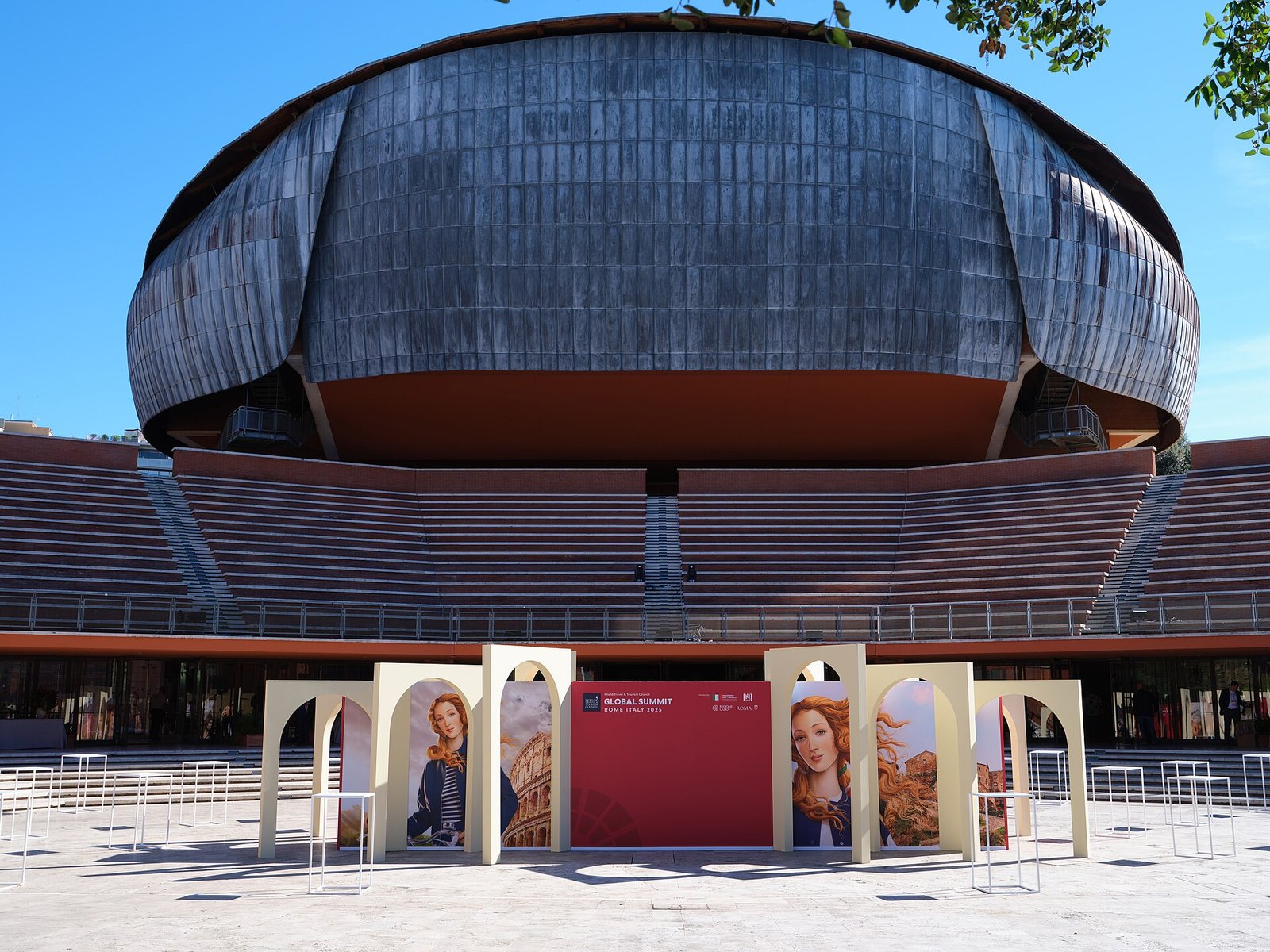
Tugan Sokhiev conducts the Orchestra and Chorus of the Accademia Nazionale di Santa Cecilia on Thursday, January 21, 2027 at 19:30, Friday, January 22 at 20:00 and Saturday, January 23 at 18:00, in Sala Santa Cecilia of the Auditorium Parco della Musica Ennio Morricone, Viale Pietro de Coubertin 30. The program pairs Bach's Toccata and Fugue in D minor in Leopold Stokowski's orchestration, Sergei Taneyev's cantata John of Damascus and Tchaikovsky's Suite No. 3. The chorus is prepared by Andrea Secchi. You get to the Auditorium by metro line A to Flaminio and then tram 2, stops Flaminia/Reni or Apollodoro, or by buses 910 from Termini, 53, 982 and 168. Tickets cost from 23 to 54 euros and are bought at the box offices of the Auditorium and Via Vittoria 6 and on the presale network authorized by the Accademia, reachable from the official concert page. Concerts start on time, and latecomers do not enter the hall.
Three weeks after conducting the Vienna Philharmonic's New Year's Concert, Tugan Sokhiev arrives in Rome with a program that brings together a celebrated symphonic coup de théâtre, a Russian rarity almost never performed in Italy and one of Tchaikovsky's most brilliant orchestral pages. It is a concert built to please a wide audience without giving up discovery.
Tugan Sokhiev at Santa Cecilia: dates and times
Tugan Sokhiev's concert is repeated three times with the same program: Thursday, January 21, 2027 at 19:30 for series G, Friday the 22nd at 20:00 for series V, Saturday the 23rd at 18:00 for series S, always in Sala Santa Cecilia.
Thursday, Friday or Saturday
The first evening has the audience of longtime subscribers and the air of a debut. Friday at 20:00 is the most practical date for those who work during the week. Saturday at 18:00 leaves dinner free and suits those coming from out of town. For a conductor fresh from the Viennese New Year, it is best not to wait until the last week to choose.
When tickets are on sale
For the 2026/2027 season the Accademia opened presale on September 10, 2026 for all concerts through February 27, 2027, January included. From January 12, 2027 the concerts from March to the end of the season go on sale too.
A chorus onstage
Alongside the orchestra, in this program the Accademia's Chorus, directed by Andrea Secchi, also takes the stage for Taneyev's cantata. It is a detail that changes the evening: Sala Santa Cecilia with orchestra and chorus at full strength is a sight for the eyes too.
The program: Bach according to Stokowski, Taneyev and Tchaikovsky
The program conducted by Tugan Sokhiev includes Bach's Toccata and Fugue in D minor BWV 565 orchestrated by Leopold Stokowski, the cantata for chorus and orchestra John of Damascus by Sergei Taneyev and Tchaikovsky's Suite No. 3.
Bach, Toccata and Fugue in Stokowski's orchestration
Stokowski's transcription became famous thanks to Disney's film Fantasia. The Accademia calls it one of the most successful examples of transposing a piece written for organ into a great orchestral fresco. In a hall like the Santa Cecilia, which has no organ, it is also a small revenge: the orchestra plays the organ.
Taneyev, John of Damascus
Sergei Taneyev, who lived from 1856 to 1915, is presented by the Accademia as the heir to Tchaikovsky's tradition and the teacher of a generation of musicians, including Rachmaninoff and Scriabin. His cantata for chorus and orchestra John of Damascus is inspired by the figure of the Byzantine saint and theologian. It is the rarity of the evening, and in our view the reason this concert deserves more attention than others.
Tchaikovsky, Suite No. 3
The program closes with the Third Suite, a page in which, according to the Accademia's presentation, the best of Tchaikovsky's writing is found: orchestral brilliance, lyricism and an overwhelming rhythmic energy, culminating in the final Theme and Variations. It is the piece that sends the audience home happy.
A Russian thread with a German prologue
The path has a clear logic: it starts from Bach filtered through a 20th-century conductor, passes through Rachmaninoff's teacher and arrives at Tchaikovsky, who was Taneyev's reference point. It is a program that tells a genealogy, and a conductor trained at the St. Petersburg Conservatory is the right person to tell it.
Who Tugan Sokhiev is
Tugan Sokhiev is a Russian conductor of Ossetian origin, born on October 21, 1977. Since the 2026/2027 season he has been principal conductor and artistic advisor of the Orchestre de la Suisse Romande in Geneva, and he is the conductor of the Vienna Philharmonic's 2027 New Year's Concert.
Beginnings
He began studying piano at seven and conducted for the first time at 17, inspired by Anatoly Briskin, conductor of the North Ossetia State Philharmonic Orchestra. He trained at the St. Petersburg Conservatory, where he was one of the last students of Ilya Musin, who died in 1999. His first opera as a conductor was a Bohème in Iceland.
Wales and Toulouse
After that production the Welsh National Opera named him music director in December 2001, effective from 2003. He left the post in August 2004. In 2005 he became principal guest conductor and musical advisor of the Orchestre national du Capitole de Toulouse, and in the same year he received from the French critics' union the title of musical revelation of the year. From September 2008 he was music director of the Toulouse orchestra.
Berlin and the Bolshoi
In 2010 he was named principal conductor and artistic director of the Deutsches Symphonie-Orchester Berlin, in post from 2012, which he left after the 2015/2016 season. From February 1, 2014 he was music director of the Bolshoi Theatre in Moscow. On March 6, 2022 he resigned from both the Bolshoi and Toulouse, citing as the reason the pressure he received to take a position on the Russian invasion of Ukraine.
Vienna and Geneva
On June 13, 2025 he conducted the Vienna Philharmonic's Sommernachtskonzert for the first time. In January 2026 the Viennese orchestra announced him as conductor of the 2026 year-end concerts and of the New Year's Concert of January 1, 2027. In June 2026 the Orchestre de la Suisse Romande named him principal conductor for three seasons.
The records
His discography includes Prokofiev's Fifth Symphony and Scythian Suite and Ivan the Terrible with the Deutsches Symphonie-Orchester for Sony Classical. With the Toulouse orchestra for Naïve, Stravinsky's The Firebird and The Rite of Spring, Rachmaninoff's Symphonic Dances, Mussorgsky's Pictures at an Exhibition with Tchaikovsky's Fourth, and Prokofiev's Peter and the Wolf.
The Orchestra and Chorus of the Accademia di Santa Cecilia
The Accademia Nazionale di Santa Cecilia is one of the oldest musical institutions in the world. Born as a congregation of musicians, it is today a foundation with a symphony orchestra and chorus and an academic body, led on the musical side by Daniel Harding.
Andrea Secchi's chorus
The Accademia's Chorus, prepared by Andrea Secchi, is the protagonist of Taneyev's cantata. In the same season the chorus also has its own space in the chamber season, with a dedicated concert in Sala Sinopoli: a sign of an ensemble the Accademia considers a voice in its own right, as well as a support to the orchestra.
A symphonic January
Sokhiev's concert comes a week after Thomas Guggeis's Beethoven with Sergey Khachatryan, from January 14 to 16. Those following the season by subscription thus pass, in a few days, from the Beethoven bicentenary to the great Russian repertoire.
A curiosity about Tugan Sokhiev conducts Bach and Tchaikovsky at Auditorium Parco della Musica, January 21, 22 and 23, 2027
The first curiosity is about the calendar. On January 1, 2027 Tugan Sokhiev conducts the Vienna Philharmonic's New Year's Concert. Three weeks later he is on the podium in Sala Santa Cecilia. Those who follow him from the sofa in Vienna on New Year's Day can see him live in Rome with a ticket from 23 euros.
The second concerns the opening piece. The Toccata and Fugue in D minor is a piece for organ, and Sala Santa Cecilia has no pipe organ: the project was suspended in 2002 after an appeal by Italia Nostra. Stokowski's orchestration, made famous by Fantasia, turns the orchestra into an imaginary organ, and it is hard to think of a more fitting way to open a concert in this hall.
Third curiosity: Taneyev was the teacher of Rachmaninoff and Scriabin, and Sokhiev has recorded Rachmaninoff's Symphonic Dances with the Toulouse orchestra. The conductor brings to Rome the teacher of a composer he knows well, in a musical genealogy the program makes evident.
Sala Santa Cecilia: acoustics and seats
With its 2,756 seats Sala Santa Cecilia is the largest hall of Auditorium Parco della Musica Ennio Morricone. Designed by Renzo Piano for the symphonic repertoire, it was inaugurated on December 21, 2002 and since 2003 has been the home of the Accademia's season.
The cherry-wood sound box
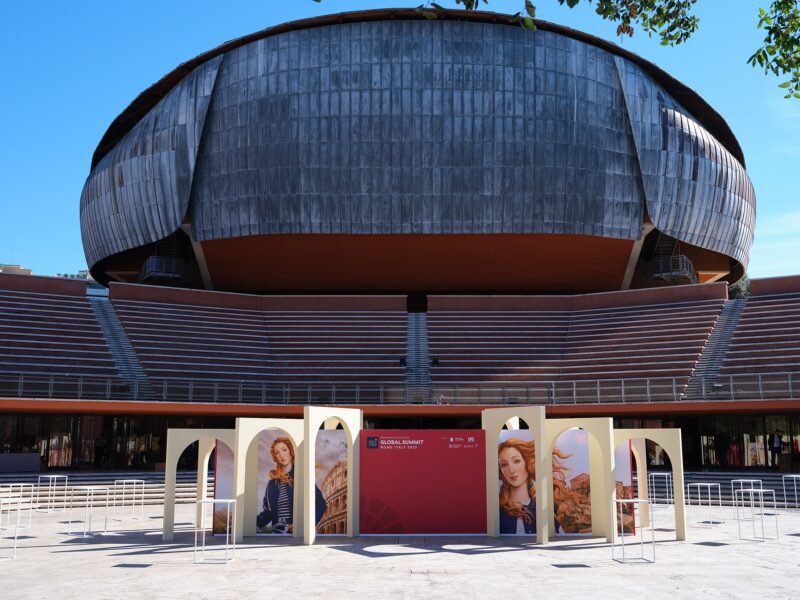
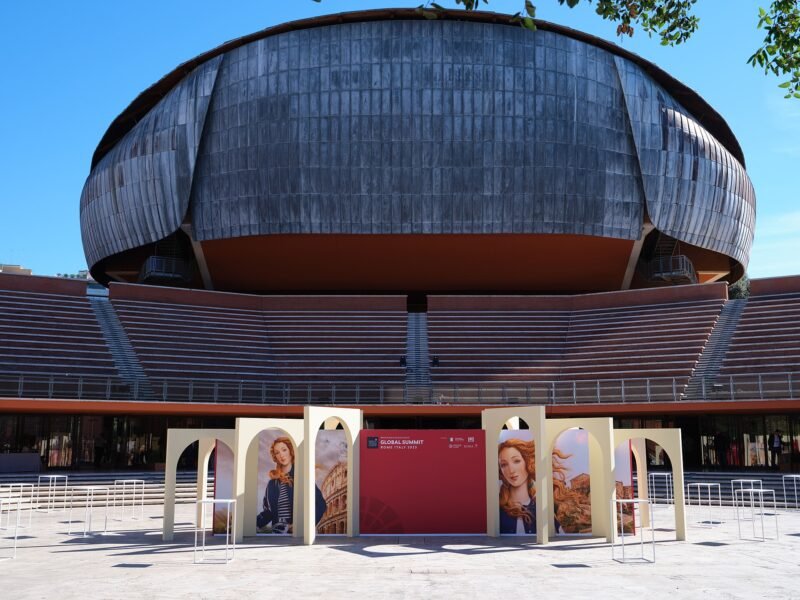
The ceiling is formed by 26 shells of American cherry wood, on average about 180 square meters each. The whole works as a sound box, with a reverberation time of 2.2 seconds. That value favors large ensembles and, with orchestra and chorus at full strength, gives fullness to the sound without muddying it.
Where to sit with the chorus onstage
The impression of those who frequent the hall is that the intensity drops until the tenth row and then stays steady, so you don't need to sit right at the stage. With the chorus onstage, the central orchestra level and the front gallery offer the best balance between voices and instruments. The gallery behind the orchestra is ideal for watching Sokhiev's gesture, less so for hearing the chorus.
Three halls around a cavea
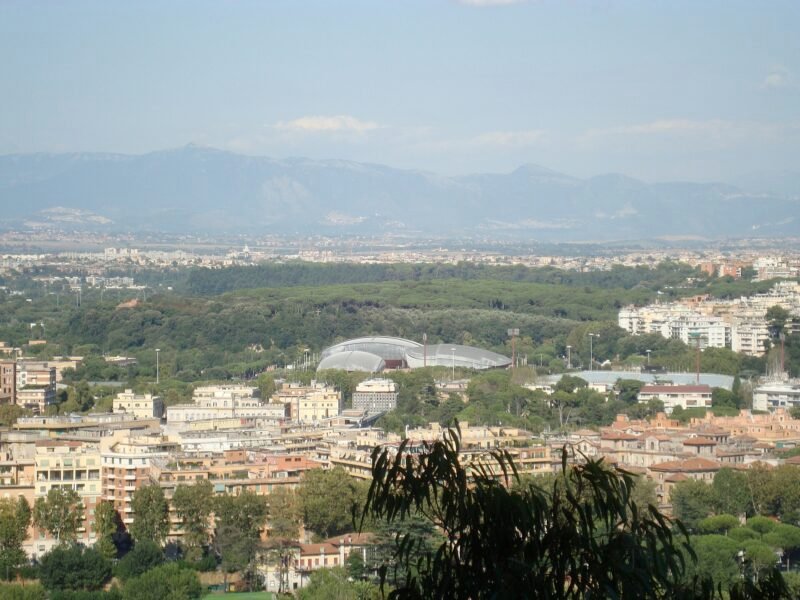
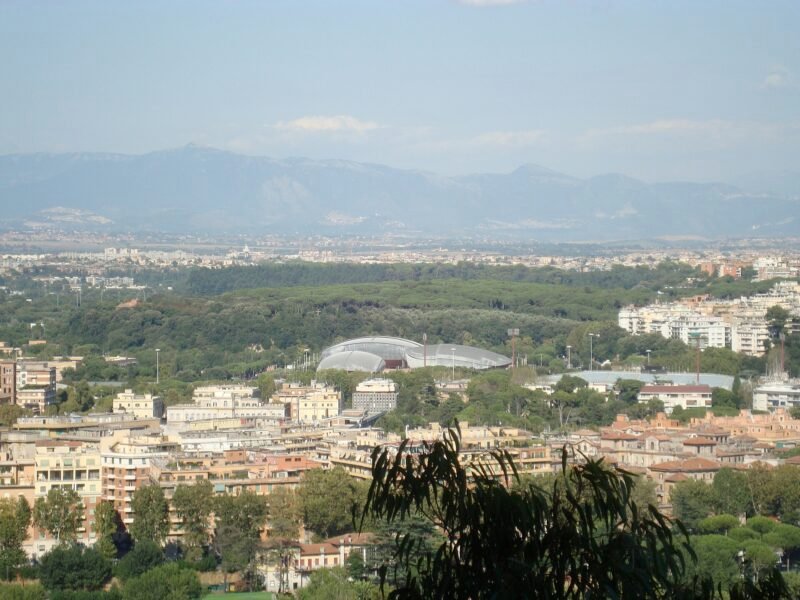
Outside, the three halls are lead-covered volumes on a brick base, arranged in a fan around the cavea named after Luciano Berio. Piano's project, winner of the 1993 competition, was developed with the acoustician Jürgen Reinhold of the Müller BBM firm and the landscape architect Franco Zagari.
Something nobody tells you about Tugan Sokhiev conducts Bach and Tchaikovsky at Auditorium Parco della Musica, January 21, 22 and 23, 2027
The Toccata and Fugue lasts a few minutes and is the first piece on the program. With the rule of closed doors at start time, applied by the Accademia without exceptions, latecomers miss precisely the most famous opening of the evening and hear it, if there is room, from a small room with loudspeakers. This is a case where the half-hour margin for Flaminio traffic is worth more than usual.
Second thing: Sala Santa Cecilia is raised above the ground because the remains of a Roman villa emerged underneath and it was not possible to dig. The galleries are served by only two elevators, and those who have difficulty with stairs and a gallery seat should arrive well ahead.
Third: Taneyev's cantata is a score rarely heard in Italy. Those who want to follow it well should look up a little about John of Damascus, the Byzantine saint and theologian who inspired it: the music is better understood knowing whom it is about.
The advice I give you for visiting Tugan Sokhiev conducts Bach and Tchaikovsky at Auditorium Parco della Musica, January 21, 22 and 23, 2027
My advice is to rewatch, before the concert, the opening sequence of Fantasia with the Toccata and Fugue. It lasts a few minutes and prepares the ear for Stokowski's orchestration. Those who know it recognize every color in the hall, and also notice how different it sounds live in a hall of this size.
The second piece of advice concerns the seat. With orchestra and chorus, the safest choice is the central orchestra level beyond the tenth row or the gallery facing the stage. Those who want to look Sokhiev in the face, as the musicians do, should choose the gallery behind the orchestra instead, knowing the chorus will be heard from behind.
Third: don't leave before the end. The Theme and Variations that closes the Third Suite is built to grow until the last bar, and in the hall the ending almost always turns into a long ovation.
And if you can choose only one evening, Friday at 20:00 is the best compromise between atmosphere and convenience.
Tickets for Tugan Sokhiev at Santa Cecilia
Tickets for Tugan Sokhiev's concert cost 54 euros in section I, 47 in II, 37 in III, 35 in IV, 30 in V and 23 in VI. The only sellers authorized by the Accademia are the box office of Auditorium Parco della Musica Ennio Morricone, the one at Via Vittoria 6 and the points of sale of the authorized presale network.
The box offices
The Auditorium box office is in the greenhouse space and is open every day from 11:00 to 20:00. The one at Via Vittoria 6, between Via del Corso and Piazza del Popolo, is open Monday to Friday from 11:00 to 19:00 and Saturday from 11:00 to 14:00, and accepts only electronic payments. To buy online, click the button under the chosen date on the official page.
Discounts for young people and kids
For subscription concerts, under-26s are entitled to a 30% discount and children under 14, together with an adult, pay 3 euros. Reductions are bought only at the box offices and while promotional seats last, and they cannot be combined. The details are on the youth page of the Accademia's website.
Information
For questions about seats and reductions there is the infoline 06 8082058, plus the addresses info@santacecilia.it and biglietteria@santacecilia.it. The Accademia is not responsible for markups applied by unauthorized resellers.
How to get to the Auditorium for Sokhiev's concert
For Sokhiev's concert at Auditorium Parco della Musica the simplest combination is metro line A to Flaminio and then tram 2 to the Flaminia/Reni or Apollodoro stops. Alternatively there are buses 910, 53, 982 and 168.
From the center by tram
Tram 2 leaves from Piazzale Flaminio and runs along Via Flaminia toward Piazza Mancini. From the Flaminia/Reni and Apollodoro stops you walk to Viale Pietro de Coubertin across the Olympic Village, in a few minutes.
From Termini on the 910
Those staying near the station or arriving by train can take the 910 at Piazza dei Cinquecento. It takes you to the Auditorium without transfers and is the most convenient line for the Saturday afternoon concert.
53, 982 and 168
The 53 passes through Piazza Mancini and connects the center. The 982 serves the area of Viale XVII Olimpiade. The 168 comes from Tiburtina station. For evening schedules and frequencies the Rome transit company's route planner is best.
By car
In front of the Auditorium Viale Pietro de Coubertin is closed to cars. The complex's paid parking has limited spaces, and on concert nights the streets of the Olympic Village fill up early: better to use public transport, or arrive very early.
Another well-known fact, yet rarely mentioned
That Bach's Toccata and Fugue became popular thanks to Fantasia is a well-known fact. Less often cited is that audiences around the world came to know it first in Stokowski's orchestral version rather than in the original for organ. For many spectators, even in Sala Santa Cecilia, it will be the reference version, and this says a lot about how an arrangement can change the history of a piece.
A second fact, known to lovers of Russian music and almost never told to the public, is Taneyev's weight in the training of the great Russian composers of the 20th century. The Accademia recalls him as the teacher of Rachmaninoff and Scriabin, two composers the Roman public hears often, while their teacher remains an unknown name. The January concert is the chance to hear where they came from.
Third fact, about the hall: in its first months of life Sala Santa Cecilia was criticized, and Wolfgang Sawallisch said he was puzzled by the stage and the acoustics. Corrections followed, and the hall where Sokhiev plays is the one resulting from those interventions.
How to plan the evening
For Tugan Sokhiev's concert it is best to be at the Auditorium at least 40 minutes early. Between ticket pickup, checks and the coat check, in a hall of over 2,700 seats the times lengthen quickly.
Before the concert
In the shared foyer there are bars, a café and a large bookstore of records and music books. From the terrace between Sala Santa Cecilia and Sala Sinopoli you can see the remains of the Roman villa that emerged during construction, and the finds are displayed in the small archaeological museum under the cavea.
Length and intermission
The official page does not give the total length or the position of the intermission. It is a full symphonic concert, with chorus. Those with a train after the Saturday concert should leave a wide margin.
On the way out
On the way out the cavea is the best place to wait for the crowd to thin. Those who parked in the Olympic Village should allow a few minutes of queuing on the side streets.
The right photo to take at Tugan Sokhiev conducts Bach and Tchaikovsky at Auditorium Parco della Musica, January 21, 22 and 23, 2027
The most beautiful photo of this evening is taken before the start, from the orchestra level or the gallery, when the chorus is already lined up onstage together with the orchestra: a wall of voices beneath the cherry shells of the ceiling. During the concert the phone stays off, as the Accademia asks.
Outside, January evenings are dark already by 17:00. From the cavea Renzo Piano's beetles, with the lead reflecting the lighting, give a crisp, almost graphic image. It is the right shot for those who arrive early for the Saturday concert.
For a less obvious image, the remains of the Roman villa seen from the terrace between Sala Santa Cecilia and Sala Sinopoli: ancient bricks and contemporary cladding in the same shot, a few meters from the entrance to the hall.
During the final applause, without flash, you can photograph Sokhiev called back onstage together with Andrea Secchi and the chorus: it is the only moment of the evening when doing so disturbs no one.
Some important events that took place here in history
Long before the Auditorium, on this ground stood a Roman villa of the 3rd century BC, built where there had been a small archaic farm of the 6th century BC. The remains emerged during construction and forced Renzo Piano to revise the project, moving two of the three halls westward, almost to the Corso di Francia viaduct. The finds are now in the museum under the cavea.
The modern story begins with the demolition of the Augusteo, in 1936, which left Rome without a symphonic hall for over 60 years. In 1992 the city council chose the Olympic Village area, and in 1993 Piano won the competition. On April 21, 2002 Sala Sinopoli opened, with Goffredo Petrassi present at the world premiere of his Ouverture da concerto of 1931. On December 21, 2002 Sala Santa Cecilia opened, with the Accademia orchestra conducted by Myung Whun Chung.
Since 2003 the Accademia's season has had its home here, since 2006 the complex has hosted the Rome Film Festival, and since 2020, by decision of the city council, it has borne the name of Ennio Morricone.
Who has passed through Tugan Sokhiev conducts Bach and Tchaikovsky at Auditorium Parco della Musica, January 21, 22 and 23, 2027
Sala Santa Cecilia was inaugurated by Myung Whun Chung on December 21, 2002. In the same year, at the opening of Sala Sinopoli, Goffredo Petrassi was present, and the smallest hall is named after him. The cavea bears instead the name of Luciano Berio, who then presided over the Accademia.
Since then the hall's podium has seen the Accademia's music directors, Antonio Pappano and Daniel Harding, who opened the 2026/2027 season with Wagner's Siegfried. In November 2026 comes Kirill Petrenko, conductor of the Berliner Philharmoniker, the protagonist of the concert with Benjamin Bernheim.
Among the soloists, Evgeny Kissin has been a guest of the Accademia since 1991 and this season plays in a duo with András Schiff, as the listing for their concert tells. In January 2027 it is Tugan Sokhiev's turn, who from the Bolshoi to Vienna has conducted some of the most celebrated orchestras and theaters in the world.
Accessibility and families
For people with disabilities who can walk, holders of the Disability Card, the Accademia offers a 15% reduction on two tickets, to be bought at the box office. People in wheelchairs pay 10 euros and the person assisting them enters free, while the dedicated seats last.
Booking in time
For people who cannot walk, booking is mandatory, from 15 days before the concert until the day before, at 06 8082058 or at biglietteria@santacecilia.it. For the January 21 concert you can book from January 6.
Elevators and arriving early
The galleries have only two elevators and the hall is raised above the ground. Arriving an hour early and asking staff for the route right away is the calmest choice. The Accademia's Courtesy Service is active on subscription concert days from one hour before the start.
With young people
For a kid who has seen Fantasia, hearing the Toccata and Fugue live with a full orchestra is an experience that stays. With the 3-euro ticket for children under 14, at the box offices, the first time in a large hall costs very little. For the youngest a full symphonic evening remains long.
What is around the Auditorium
The Auditorium extends over about 55,000 square meters between Villa Glori, the Olympic Village, the Corso di Francia viaduct and Viale Maresciallo Pilsudski, in a part of Rome marked by 20th-century architecture and greenery.
The MAXXI a few steps away
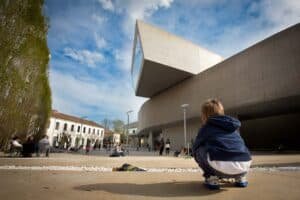
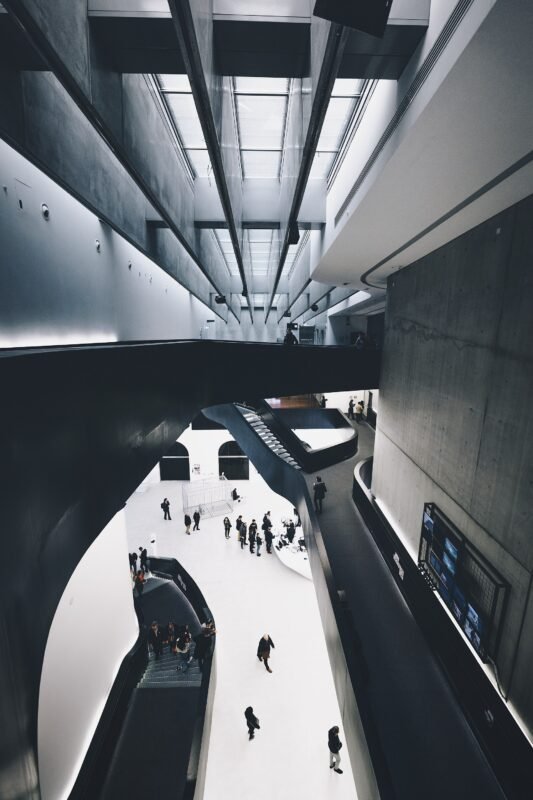
Toward Via Guido Reni, a few minutes' walk away, is the MAXXI designed by Zaha Hadid. With the Auditorium it forms the best-known pair of contemporary architecture in Rome, and for the Saturday concert you can pair it with an exhibition in the afternoon.
The river and the bridges
Going down toward the Tiber you meet the Ponte della Musica, a footbridge between Flaminio and the Foro Italico. A little farther north, Milvian Bridge is one of the liveliest places in the evening in the north zone.
The way back to the center
Tram 2 takes you back to Piazzale Flaminio, at the entrance to Villa Borghese and the Tridente. An afternoon at the Pincio and then the tram to the concert are the most relaxed combination.
Where to eat before or after the concert
Inside the Auditorium the foyer bar and café and the bar-restaurant with street access too solve the quick dinner of those coming straight from the office on Thursday.
Olympic Village and Flaminio
In the streets between the Olympic Village, Via Flaminia and Piazza Mancini you find pizzerias, trattorias and bars frequented mostly by those who live in the neighborhood. For the Thursday and Friday dates it is best to have dinner beforehand, booking ahead.
After the Saturday concert
On Saturday, once the concert is over, the widest choice is at Ponte Milvio, where venues stay open late. Toward Piazzale Flaminio and Piazza del Popolo you enter instead the historic center's offering, with prices to match.
Late January in Rome
The second half of January is one of the quietest moments for visiting Rome: no holiday crowds, lower prices, museums that are livable by day and music seasons in full swing.
A week of concerts
In the days of Sokhiev's concerts the city offers plenty: on January 19 Mario Brunello at the IUC in the Aula Magna of the Sapienza, on the 20th Die Winterreise in the Accademia's chamber season, from the 21st to the 23rd Sokhiev, and on Saturday the 23rd at 17:30 the pianist Marc-André Hamelin, again in the Aula Magna. Those who love piano can hear Hamelin in the afternoon and arrive in time for 18:00 only by choosing another date for Sokhiev.
The weather
The evenings are cold and sometimes rainy. The Auditorium is an open complex where you walk outdoors between halls. A coat for the coat check and a folding umbrella are the right equipment.
Frequently asked questions about Sokhiev at Santa Cecilia
When does Tugan Sokhiev conduct in Rome?
Tugan Sokhiev conducts the Orchestra and Chorus of Santa Cecilia on Thursday, January 21, 2027 at 19:30, Friday, January 22 at 20:00 and Saturday, January 23 at 18:00, in Sala Santa Cecilia of Auditorium Parco della Musica Ennio Morricone, Viale Pietro de Coubertin 30. The program is the same on the three evenings.
What does Sokhiev conduct at Santa Cecilia?
Sokhiev's program at Santa Cecilia includes Bach's Toccata and Fugue in D minor in Leopold Stokowski's orchestration, Sergei Taneyev's cantata John of Damascus for chorus and orchestra and Tchaikovsky's Suite No. 3. The chorus is prepared by Andrea Secchi.
How much do tickets for Sokhiev cost?
Tickets for Tugan Sokhiev's concert cost from 23 to 54 euros: 54, 47, 37, 35, 30 and 23 euros from section I to VI. For subscription concerts under-26s get a 30% discount and children under 14 pay 3 euros, only at the box offices and while promotional seats last.
Where do you buy tickets?
Tickets for Sokhiev's concert are bought at the box office of Auditorium Parco della Musica, open every day from 11:00 to 20:00, at the box office at Via Vittoria 6 and on the presale network authorized by the Accademia, to which the purchase button on the official page leads.
Is it the Toccata and Fugue from Fantasia?
The Toccata and Fugue that opens Sokhiev's concert is indeed in the orchestral transcription by Leopold Stokowski made famous by Disney's film Fantasia. The Accademia lists it as one of the most successful examples of orchestral transposition of a piece born for organ.
Who is Tugan Sokhiev?
Tugan Sokhiev is a Russian conductor born in 1977, a student of Ilya Musin in St. Petersburg and a former music director of the Bolshoi Theatre and the Toulouse Capitole orchestra. Since 2026/2027 he has led the Orchestre de la Suisse Romande and is the conductor of the Vienna Philharmonic's 2027 New Year's Concert.
How do you get to Auditorium Parco della Musica?
Auditorium Parco della Musica is reached by metro line A to Flaminio and tram 2 to the Flaminia/Reni or Apollodoro stops, or by buses 910 from Termini, 53, 982 and 168. In front of the entrance Viale Pietro de Coubertin is closed to cars.
The final advice on Sokhiev at Santa Cecilia
A conductor fresh from the Vienna New Year, a chorus onstage, a piece famous from film and a Russian rarity that is unlikely to be heard again in Rome soon: in our view it is the January concert with the best balance of pleasure and discovery. The advice is to choose the central orchestra level or the front gallery, rewatch the Fantasia sequence before leaving the house and arrive with half an hour to spare, because the Toccata is the first piece and the doors do not wait.
Article written by the editorial team of Tour Leader Pro, contact them for Private/Corporate/V.I.P. Tours and Experiences.
Planning a trip to Rome? The English-language guides to visiting the city are on ItalyPlanner.com.
Contact Information
Nearby
 Museum of Musical Instruments (MUSA)100 m
- Auditorium Parco della Musica100 m
- Villa Glori500 m
- Fountain of Anna Perenna500 m
- MAXXI – National Museum of 21st Century Arts700 m
- Flaminio700 m
Upcoming events nearby
- Roma Jazz Festival 2026, November 1 to 24 at the Auditorium and Casa del Jazz100 m
- Evgeny Kissin and András Schiff at Santa Cecilia, November 9, 2026100 m
- Roma Gospel Festival 2026 at Auditorium Parco della Musica, December 13, 2026 to January 1, 2027100 m
- Santa Cecilia 2026/2027 Concert Season at Auditorium Parco della Musica, October 21, 2026 to June 5, 2027100 m



You might also like
- Nubras Ensemble at Auditorium Parco della Musica, February 27, 2027
- Fabio Luisi and Beethoven’s Missa Solemnis at Auditorium Parco della Musica, February 25 to 27, 2027
- Lorenzo Viotti and Lisa Batiashvili at Auditorium Parco della Musica, February 18, 19 and 20, 2027
- Antonio Pappano and Jan Lisiecki at Auditorium Parco della Musica, February 11, 12 and 13, 2027
- Tarmo Peltokoski and Bertrand Chamayou at Auditorium Parco della Musica, February 4, 5 and 6, 2027
- Riccardo Minasi conducts the Eroica at Auditorium Parco della Musica, January 7, 8 and 9, 2027