Tommaso Primo at Auditorium Parco della Musica, March 31, 2027
In short. Tommaso Primo sings at Auditorium Parco della Musica Ennio Morricone on Wednesday, March 31, 2027 at 20:00, in Teatro Studio Borgna, Viale Pietro de Coubertin 30 (00196 Rome), with the concert Canzone 'e nnammurate.
Tommaso Primo sings at Auditorium Parco della Musica Ennio Morricone on Wednesday, March 31, 2027 at 20:00, in Teatro Studio Borgna, Viale Pietro de Coubertin 30 (00196 Rome), with the concert Canzone 'e nnammurate. The Neapolitan singer-songwriter presents his new album in Rome, nine love ballads in Italian and in the Neapolitan language. You get there by Metro A to Flaminio and then Tram 2, or by Bus 910 from Termini, with no changes. The complex has a paid parking lot. Tickets start at €20 according to the official Auditorium page and are bought on the venue's official website, which links to the authorized presale circuit, or at the box office.
After records crossed by social, political and existential themes, the Auditorium writes, Tommaso Primo arrives at love as a universal language, able to speak to everyone without filters, affiliations or generations. Teatro Studio, the most intimate hall in the complex, is the right size for a concert of intimate songs, with the audience a few meters from the stage.
Tommaso Primo's concert at Teatro Studio Borgna
The March 31, 2027 concert is the Rome presentation of the album Canzone 'e nnammurate, which the Auditorium calls one of the most mature and personal works of the Neapolitan artist.
Lightness
According to the presentation, the record grows out of the awareness that lightness is perhaps the most difficult and necessary value to win, the only real salvation for heavy minds and hearts. An unexpected destination for a writer who for years told the story of Naples' outskirts and contradictions.
Nine ballads
The album is built on nine ballads that explore every shade of feeling: strength and fragility, absence and desire, the fall and the rise. Small gestures, overwhelming passions, the loves that mark a life.
The sound
The Mediterranean sound, the singer-songwriter tradition, Italian and Neapolitan intertwine in a poetic universe that the presentation calls recognizable and deeply personal.
The setlist
The setlist and the lineup on stage are not published. The album's repertoire includes the singles that preceded it in 2026, Felici per due ore, Nun ce capimme io e te and Claudia, a duet with Andrea Sannino.
Date, time and tickets
There is only one concert: Wednesday, March 31, 2027 at 20:00, in Teatro Studio Borgna, with tickets starting at €20.
Where to buy
Tickets are bought from the button on the event page on the official Auditorium website, which links to the authorized presale circuit, or at the complex's box office. From October to March the box office, according to the website, is open from 11:00 to 20:00, Sundays and holidays included.
The price
The page lists prices starting at €20. The fare for each seat appears on the hall's seating plan when you choose.
A Wednesday evening
The 20:00 start on a weekday leaves time to leave work, cross the city and arrive in Flaminio, and to have dinner after the concert without getting too late.
Canzone 'e nnammurate: the record and the collaborators
Canzone 'e nnammurate is an album of nine tracks in Italian and Neapolitan, released on June 30, 2026, produced by Gianmarco Dottori, Lele Esposito and Mario Spenillo, with guitars by Gianluigi Capasso.
Love that transforms
At the center of the project, the Auditorium writes, is a simple conviction: love is the experience that transforms those who live it more than any other, it can hurt or save but never leaves you the same. An intimate and sincere record, according to the presentation, that speaks to everyone without filters, affiliations or generations.
The guest voices
On the record, Andrea Sannino, Roberto Colella, Mavi and Giovanna Perna sing with Tommaso Primo. Perna is a singer and pianist known for her career alongside Massimo Ranieri.
The producers
The Auditorium presents the team as some of the most authoritative professionals on the Italian scene: Gianmarco Dottori, a collaborator of Tommaso Paradiso. Lele Esposito, author and producer for Annalisa and Emma. Mario Spenillo, who has worked with Andrea Sannino and Raffaella Carrà.
The guitar
The guitars are by Gianluigi Capasso, longtime composer and artistic collaborator of Tommaso Primo: the thread that ties the new record to the earlier ones, and the guarantee that, under the pop production, the singer-songwriter's sound remains recognizable.
One title, two spellings
The Auditorium page writes Canzone 'e nnammurate, in the singular. Other sources report Canzoni 'e nnammurate. In Neapolitan the difference between singular and plural is barely heard: the concert title follows the venue's spelling.
Tommaso Primo: the biography
Tommaso Primo is a singer-songwriter born in Naples on June 17, 1990. His music uses the Neapolitan language and draws on the urban and social reality of the city, with characters and events from everyday life.
The beginnings
In 2011 he released his first single, Canzone a Carmela, produced by Luciano Liguori, voice and bass of Giardino dei Semplici. In 2013 came the EP Posillipo Interno 3. In 2015 the debut album, Fate, sirene e samurai, for Full Heads and AreaLive.
3103 and Warner
In 2018 came the second album, 3103, distributed by Warner Music Italy. The same year the single La leggenda del Superman napoletano came out. In 2019 Cassiopea and Hola Madre Natura followed.
Favola nera
In 2021 Favola nera came out, arranged by the guitarist Giuseppe Spinelli: a concept album of nine tracks on the theme of sexuality, set between the historic center and the forgotten outskirts of Naples, with guests such as Denise Capezza, Peppe Barra, Il Cile, Dario Sansone of Foja, Massimo Jovine of 99 Posse and Roberto Colella of La Maschera.
Cinema and awards
In 2023 the single Cavalleggeri è New York nella testa di Laura, from Favola nera, entered the film Come può uno scoglio by Gennaro Nunziante, with Pio and Amedeo. The same year he received the Premio San Gennaro World, awarded every year on the square in front of the Naples Cathedral to figures of culture and entertainment.
Vangelo secondo Primo
In December 2024 he released Vangelo secondo Primo, preceded by Jesus Christ Super Saiyan. In 2025 Blue Angel and Fiori nel Sahara came out. In 2026 he is among the artists of the 11th edition of the Memorial dedicated to Pino Daniele, with Pietra Montecorvino and Eugenio Bennato.
Tommaso Primo's discography
Tommaso Primo's discography counts five studio albums, one EP and about 15 singles, from 2011 to 2026.
The albums
Fate, sirene e samurai (2015, Full Heads and AreaLive). 3103 (2018, Warner Music Italy). Favola nera (2021, Full Heads and AreaLive). Vangelo secondo Primo (2024, Warner Music Italy). The 2026 love album, released by AreaLive, which arrives at the Auditorium.
The EP
Posillipo Interno 3, from 2013, is the EP that precedes the full-length debut: the title is already an address in Naples, like many of his later songs.
The singles
After Canzone a Carmela (2011) come Gioia, with Ismael, and Posillipo Interno 3. Then Viola and Prayer for Kumbaya in 2016, La leggenda del Superman napoletano in 2018, Cassiopea and Hola Madre Natura in 2019, Cavalleggeri è New York nella testa di Laura and Madonna Nera, with La Maschera, in 2021, Jesus Christ Super Saiyan in 2024, Blue Angel and Fiori nel Sahara in 2025, Felici per due ore and Claudia in 2026.
Where to start
For anyone who doesn't know Tommaso Primo, in our view, the most useful path before the concert is to start from the new record, move on to Cavalleggeri è New York nella testa di Laura and finish with Posillipo Interno 3: three moments of the same voice.
Tommaso Primo and the new Neapolitan song
Tommaso Primo belongs to the generation of singer-songwriters who use Neapolitan as a living language, not as a relic: his work tells the story of the city today, from the neighborhoods to the outskirts.
A city told in song
Posillipo, Cavalleggeri, the historic center: the titles of his songs are often places in Naples. In our view this is the most recognizable trait of his work, a sentimental geography that the Neapolitan audience recognizes and the Roman one discovers.
From the outskirts to love
The leap of Canzone 'e nnammurate is evident: after a concept album on sexuality and an album with an almost biblical title, Primo chooses the most classic form of Neapolitan song, the love song. It's a return to the roots made with the means of today's pop production.
The collaborations
Peppe Barra, 99 Posse, Foja, La Maschera, Andrea Sannino: the list of Tommaso Primo's companions on the road is a map of the Neapolitan scene of recent years, between tradition and rock.
A curiosity about Tommaso Primo at Auditorium Parco della Musica, March 31, 2027
The most surprising curiosity concerns cinema. A track from a concept album on sexuality, set in the outskirts of Naples, Cavalleggeri è New York nella testa di Laura, ended up in 2023 on the soundtrack of Come può uno scoglio, a comedy by Gennaro Nunziante with Pio and Amedeo. The audience of a national comedy film heard, perhaps without knowing it, a song born to tell the story of a neighborhood in Naples.
The second curiosity concerns the first single. Canzone a Carmela, in 2011, was produced by Luciano Liguori, voice and bass of Giardino dei Semplici. The debut of a singer-songwriter born in 1990 goes through the hands of a musician of another generation, and the latest record, full of love ballads, seems to close the circle.
The third concerns the titles. Jesus Christ Super Saiyan, a single from 2024, previews an album called Vangelo secondo Primo. In 2019 Hola Madre Natura had come out, in 2018 La leggenda del Superman napoletano. The taste for mixed pop and religious references, in our view, makes even just Tommaso Primo's titles recognizable.
How to organize the evening
A 20:00 concert on a Wednesday in Flaminio lends itself to a compact evening: out of work, tram or bus, concert, dinner afterward.
For those coming from outside Rome
If you arrive by car you can leave it in the Auditorium parking lot and not move it until you head home. If you arrive by train at Termini you have Bus 910, which takes you to the complex with no changes.
For those staying in the center
Tram 2 from Piazzale Flaminio is the simplest solution, going and coming back. On the way out, a taxi booked in advance avoids the wait.
When to buy
A hall of about 300 seats and an artist with a devoted audience, including among Neapolitans living in Rome: in our view it's best to buy as soon as you decide, to get a center seat.
The end of March in Rome
On March 31 Rome is in full spring: the days get longer, the parks fill up, and Flaminio is pleasant even on foot.
The weather
At the end of March the evenings are still cool: a light jacket is enough for the stretch between the tram and the entrance, which is done outdoors across the cavea.
A day in Flaminio
Morning at MAXXI, afternoon between Piazza del Popolo and Villa Borghese, evening at Teatro Studio: a day entirely north of the center, never taking the car.
Teatro Studio Borgna, the concert hall
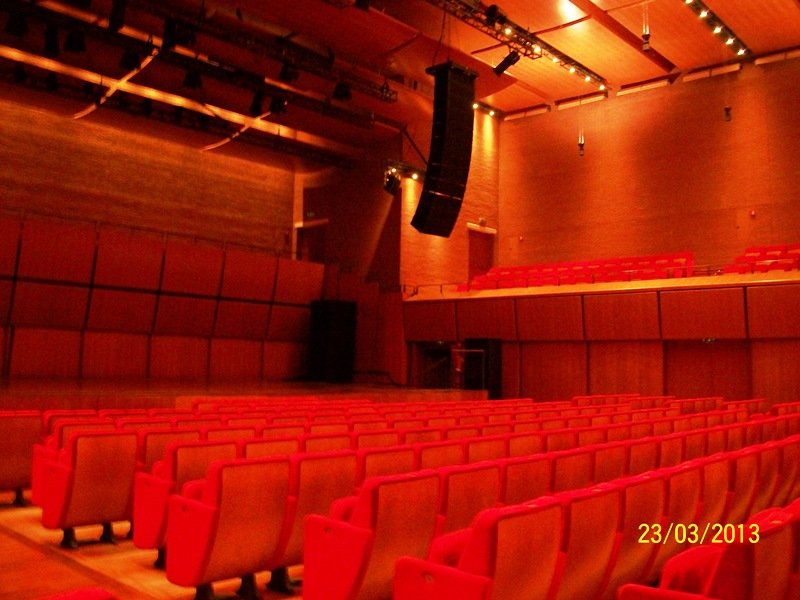
Teatro Studio Borgna is the smallest hall of Auditorium Parco della Musica, about 300 seats, dedicated to Gianni Borgna, longtime city councilor for cultural policy of the Comune di Roma and president of the Fondazione Musica per Roma.
How it's built
It's a hall of regular shape, entirely lined with cherry wood, with movable acoustic panels and curtains. The stage is at the same level as the orchestra and there is no curtain: the audience is a few meters from the singer.
The right hall
For a concert of ballads, voice and guitars, Teatro Studio is the ideal choice: big enough for a real audience, intimate enough to hear every word. In Neapolitan, where the word matters, it's an advantage.
The same program
In the same hall the Auditorium programs throughout the year singer-songwriter music and the more intimate pop: in the 2026/27 season, among others, Gaia Banfi, Davide Boosta Dileo and Radici nel Cemento.
One thing nobody tells you about Tommaso Primo at Auditorium Parco della Musica, March 31, 2027
What is rarely said is how much the new record is a team effort with chart-level names. Gianmarco Dottori works with Tommaso Paradiso, Lele Esposito writes and produces for Annalisa and Emma, Mario Spenillo has worked with Raffaella Carrà. Behind an album of Neapolitan love songs is the same workshop that packages the most-listened-to Italian pop: in our view it's the key to understanding the sound of Canzone 'e nnammurate, traditional in language and contemporary in production.
The second thing concerns Andrea Sannino. The duet Claudia, released in May 2026, previewed the album, and Sannino is also among the artists one of the producers, Mario Spenillo, has worked with. Anyone who knows Sannino, a voice of today's Neapolitan song, will find a familiar environment on Primo's record.
The third is practical: Teatro Studio has no curtain and the stage is at the same height as the orchestra. The front rows are truly a few steps from the singer: for anyone who wants direct contact, it's best to buy early.
The Auditorium's other halls
Besides Teatro Studio Borgna, Auditorium Parco della Musica has three large halls: Sala Santa Cecilia, the largest, Sala Sinopoli with 1,133 seats and Sala Petrassi with 673.
Sala Petrassi
Sala Petrassi, inaugurated on April 21, 2002 together with Sinopoli, has walls lined with cherry wood like Teatro Studio and carries the name of Goffredo Petrassi, who wanted to be present at the opening.
Sala Sinopoli
Named after the conductor Giuseppe Sinopoli, it's the mid-size hall of the complex, used for pop and jazz concerts with a larger audience.
Why Teatro Studio
For a concert of ballads in Neapolitan, choosing the smallest hall is not a fallback: it's the size in which the voice arrives without excessive amplification and the audience hears the breath of the songs. In our view it's the best hall in the complex for a singer-songwriter.
How to get to the Auditorium
The Auditorium is at Viale Pietro de Coubertin 30: from the center take Metro A to Flaminio and then Tram 2 to the Flaminia/Reni or Apollodoro stops.
By bus
From Termini, Bus 910 arrives with no changes. The 53, the 168 and the 982 also pass nearby. For evening times the Atac route planner is useful.
By train
The Roma-Nord railway stops at Piazza Euclide, from which the Auditorium is reached on foot or with a short bus ride.
By car
The complex has paid parking lots, open-air and multi-level, with spaces reserved for people with disabilities. On a Wednesday evening arriving by car is generally easier than on the weekend.
My advice for visiting Tommaso Primo at Auditorium Parco della Musica, March 31, 2027
My advice is to listen to the album first, at least two or three times. Canzone 'e nnammurate is a record of ballads, and at a concert of ballads knowing the songs changes the experience: you follow the lyrics, you recognize the arrangement, you understand where the live show departs from the record. For those who don't speak Neapolitan, reading the lyrics helps to catch the nuances.
Second piece of advice: catch up on Favola nera too. The 2021 record is the opposite of the new one, a concept on Naples and sexuality, with guests such as Peppe Barra and 99 Posse. Listening to it first lets you measure how far Tommaso Primo has come, and understand why lightness, for him, is a conquest.
Third: choose the center rows. In Teatro Studio the distance from the stage is short everywhere, but in the center the balance between voice and guitars is better.
Finally, in our view, it's worth staying after the concert: a Wednesday at the end of March, with the cavea still cool, is a good evening for a pizza in Flaminio and a walk toward Ponte della Musica.
Another well-known fact, yet rarely mentioned
It's well known that Tommaso Primo sings in Neapolitan. It's mentioned less often that his recording career has passed through a major: the second album, 3103, in 2018, and Vangelo secondo Primo, in 2024, came out with Warner Music Italy. The singer-songwriter of the Neapolitan outskirts is not a niche phenomenon, but an artist who alternates independent labels, such as AreaLive and Full Heads, and major distribution.
The second little-cited fact concerns recognition. In 2023 Tommaso Primo received the Premio San Gennaro World, awarded on the square in front of the Naples Cathedral. In the same edition Angela Luce and Vittorio Sgarbi were honored. A prize from the city to its youngest voice, alongside names from very different generations.
The third concerns Pino Daniele. In March 2026 Tommaso Primo was among the artists of the Memorial dedicated to the Neapolitan singer-songwriter, 11th edition, sold out, together with Pietra Montecorvino and Eugenio Bennato: a sign of how his generation recognizes itself in the line that runs from Pino Daniele to today.
Auditorium Parco della Musica Ennio Morricone
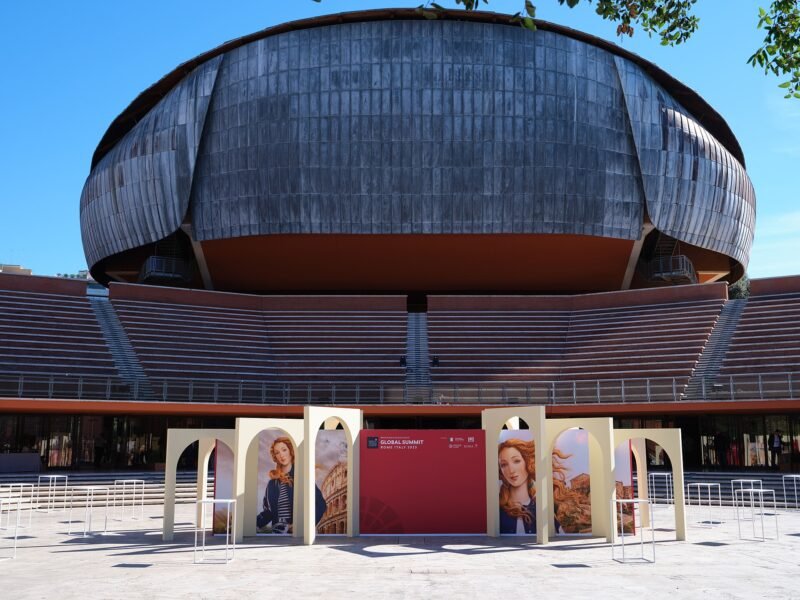
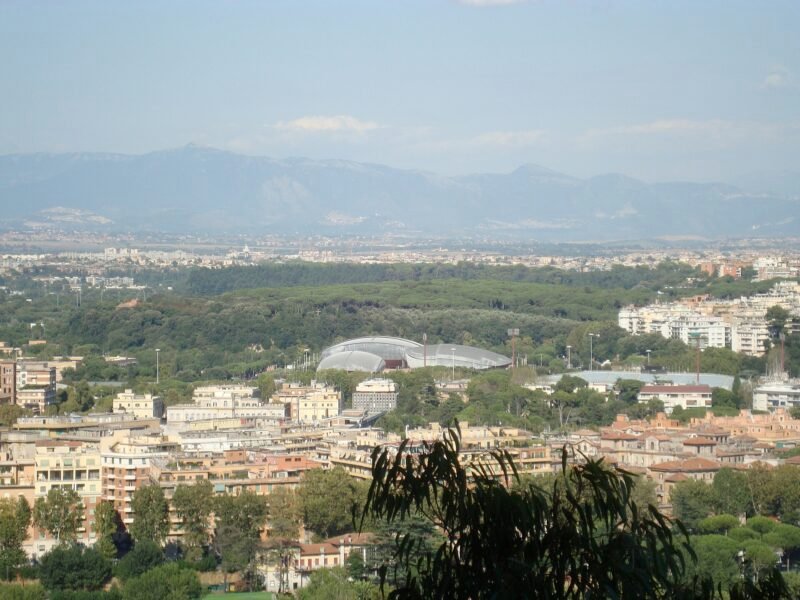
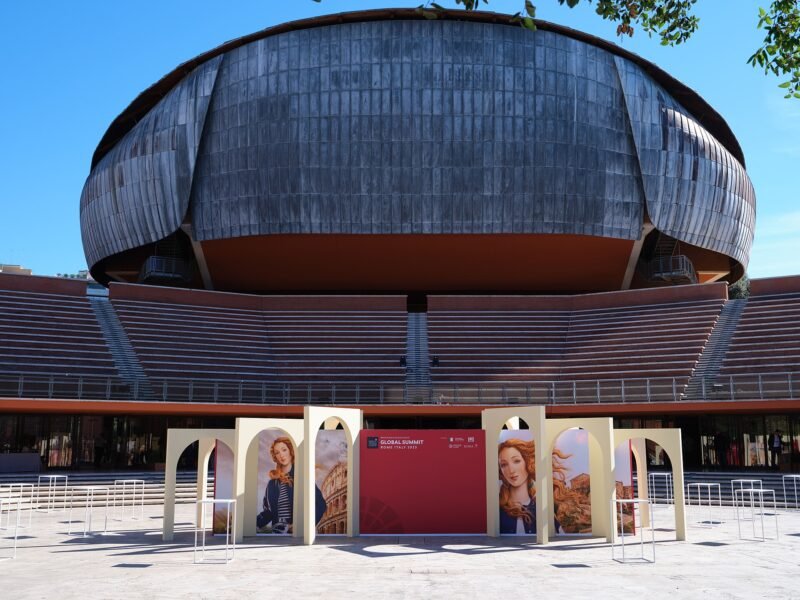
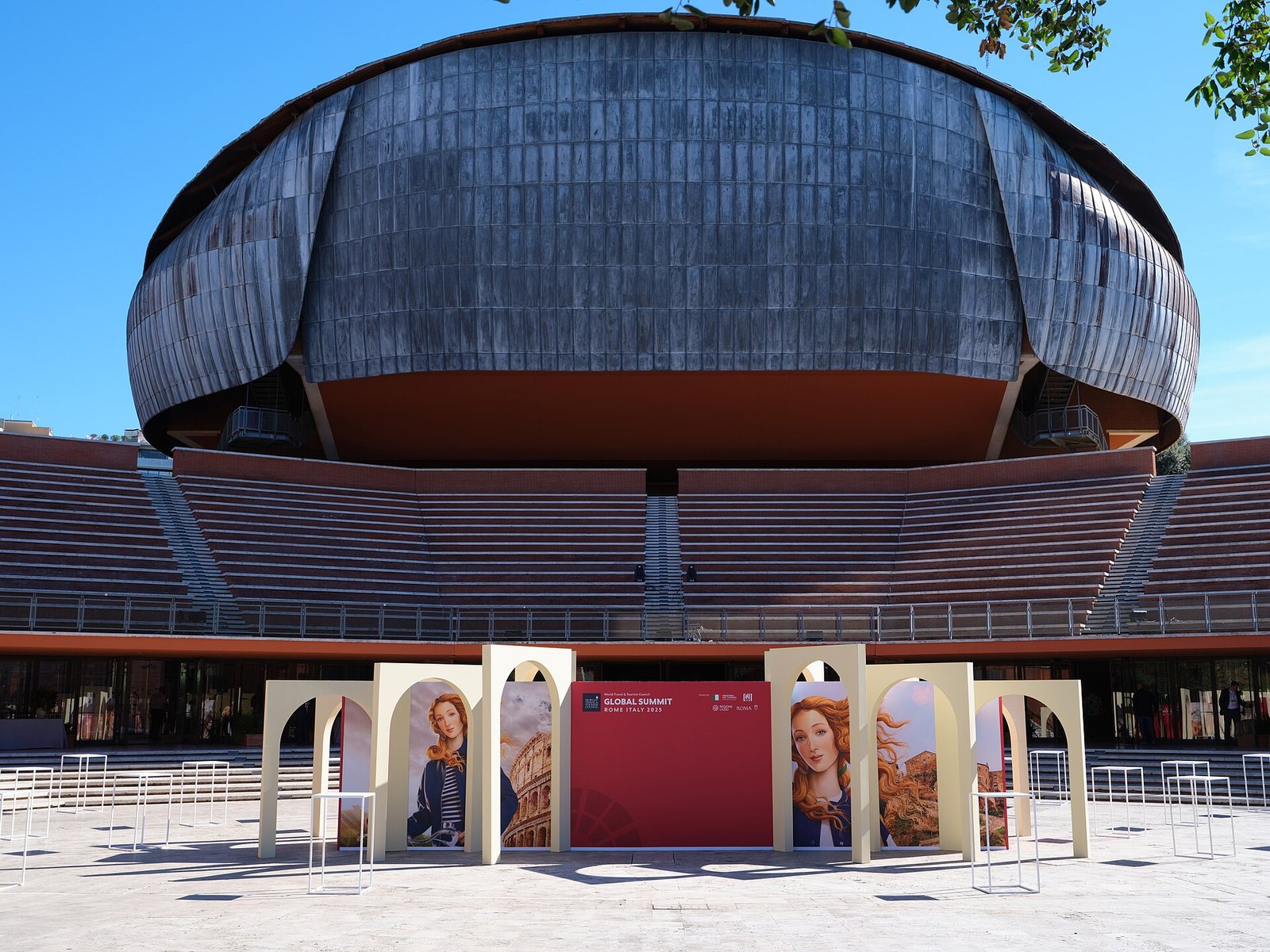
Auditorium Parco della Musica Ennio Morricone is Renzo Piano's complex in Flaminio, opened in 2002: Sala Santa Cecilia, Sala Sinopoli, Sala Petrassi, Teatro Studio Borgna, the open-air cavea.
A city of music
Around the halls are the cavea named after Luciano Berio, the roof gardens dedicated to Claudio Abbado, the Museum of Musical Instruments of the Accademia di Santa Cecilia and a small archaeological museum with the finds of a Roman villa discovered during construction.
Music of every kind
The Fondazione Musica per Roma, which runs the complex, pairs the Santa Cecilia symphonic season with jazz, singer-songwriter music, pop and rock: Tommaso Primo's concert is in the Pop/Rock section of the program.
The right photo to take at Tommaso Primo at Auditorium Parco della Musica, March 31, 2027
During the concert you don't take photos or film: in a hall of 300 seats a raised phone is seen by the whole audience and takes attention from songs that ask for listening. Photos should be taken before and after.
The finest one is the cavea at sunset. At the end of March, with daylight saving time just arrived, the sky above Renzo Piano's three big halls is still bright around 19:30: from the top of the stone steps you frame the roofs of the halls against the sky, with the foyer's glass walls lighting up.
Inside Teatro Studio, before the lights go down, it's worth photographing the cherry wood walls and the stage at the same level as the orchestra, with the instruments waiting: an image that conveys the intimate size of the concert well.
On the way out, a wide photo of the cavea lit at night closes the story of the evening.
Some important events that happened here in history
For over 60 years Rome remained without a hall built for music: the Augusteo had been demolished in 1936. In 1993 the Comune announced the competition for the new complex between the Villaggio Olimpico and the Flaminio stadium, won by Renzo Piano. The excavations brought to light a Roman villa from the 3rd century BC, built on an archaic farm from the 6th century: the project was modified and the finds are now displayed under the cavea.
On April 21, 2002, the day of Rome's birthday, Sala Petrassi and Sala Sinopoli were inaugurated. On December 21 of the same year Sala Santa Cecilia opened, with the Accademia orchestra conducted by Myung-whun Chung. Since 2003 the Auditorium has hosted the Santa Cecilia season, since 2006 the Festa del Cinema di Roma. In 2020 it was named after Ennio Morricone.
The smallest hall, Teatro Studio, carries the name of Gianni Borgna, longtime city councilor for cultural policy of the Comune di Roma and president of the Fondazione Musica per Roma. On March 31, 2027 Tommaso Primo's Neapolitan song arrives there.
Who has played here: Tommaso Primo at Auditorium Parco della Musica, March 31, 2027
In more than 20 years the Auditorium's halls have hosted the conductors of the Santa Cecilia season, the jazz players of the Roma Jazz Festival, the protagonists of Italian and international song. At the opening of Sala Petrassi, in 2002, Goffredo Petrassi was present. The inaugural concert of Sala Santa Cecilia was conducted by Myung-whun Chung. Luciano Berio, who led the Accademia in those years, gave his name to the cavea.
Neapolitan song is at home: in the same season Eugenio Bennato also comes to the Auditorium, Tommaso Primo's companion at the 2026 Memorial for Pino Daniele, along with other writers who work on the tradition of the South. In Primo's career there are companions on the road such as Peppe Barra, Il Cile, Dario Sansone of Foja, Massimo Jovine of 99 Posse, Roberto Colella of La Maschera and Andrea Sannino.
On March 31, 2027 Tommaso Primo passes through Teatro Studio Borgna, with the musicians who accompany him on the tour presenting the record: nine love ballads in Neapolitan and Italian, in a cherry wood hall designed by Renzo Piano. In our view it's the most fitting setting to hear a singer-songwriter who has chosen, this time, to speak softly.
What's around the Auditorium
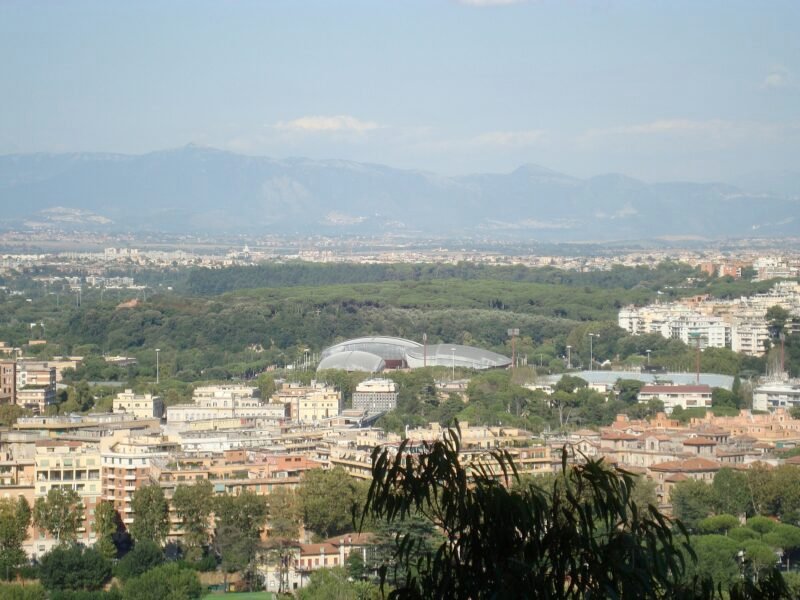
The Auditorium is between Villa Glori, the Villaggio Olimpico and the Corso di Francia viaduct. A few minutes away are MAXXI and Teatro Olimpico.
Toward the river
Heading down toward the Tiber you cross Ponte della Musica and arrive at the Foro Italico. Farther north, Milvian Bridge is the neighborhood's evening hangout.
Toward the center
Tram 2 takes you in a few minutes to Piazzale Flaminio, where Piazza del Popolo and Villa Borghese begin.
Where to eat before or after the concert
In the Auditorium there is a bar and a coffee shop in the foyer and a restaurant bar with access also from the street. Between Via Flaminia, the Villaggio Olimpico and Piazza Mancini you find trattorias, pizzerias and bars.
Before 20:00
To eat dinner first you need to sit down around 18:30: on Wednesdays the places in the area are less crowded than on the weekend, but it's still best to book.
After the concert
After the concert the widest choice is at Ponte Milvio, reachable in a few minutes by taxi or with a walk along the river. After an evening of Neapolitan song, a pizza is the most coherent way to close.
Inside the complex
Anyone short on time can stay at the Auditorium: the foyer bar and the restaurant bar allow a snack before entering the hall, without leaving the complex and without the risk of arriving late.
Accessibility, age and practical information
For the accessibility of Teatro Studio Borgna it's best to write in advance to the Fondazione Musica per Roma, info@musicaperroma.it, to find out which entrance to use and which seats to choose.
With kids
A concert of love ballads is suitable for all ages. The entry rules for minors are those indicated by the Auditorium at the time of purchase.
Arriving on time
It's best to be in the complex at least 20 minutes early: the halls are reached by crossing the cavea, and in a hall with no curtain, walking in after the concert has started disturbs more than elsewhere.
Frequently asked questions about Tommaso Primo at the Auditorium
When does Tommaso Primo play in Rome in 2027?
Tommaso Primo plays at Auditorium Parco della Musica Ennio Morricone on Wednesday, March 31, 2027 at 20:00, in Teatro Studio Borgna, with the concert Canzone 'e nnammurate. It's a single date in Rome in the Auditorium's calendar.
How much do tickets for Tommaso Primo at the Auditorium cost?
Tickets for Tommaso Primo at the Auditorium start at €20 according to the official page. They are bought online from the Auditorium website, which links to the authorized presale circuit, or at the complex's box office.
Who is Tommaso Primo?
Tommaso Primo is a Neapolitan singer-songwriter born in 1990, who sings in Neapolitan and in Italian. He has released Fate, sirene e samurai, 3103, Favola nera, Vangelo secondo Primo and, in 2026, the album of love ballads presented at the Auditorium.
Which record is Tommaso Primo presenting at the Auditorium?
At the Auditorium Tommaso Primo presents Canzone 'e nnammurate, nine love ballads in Italian and in Neapolitan, with Andrea Sannino, Roberto Colella, Mavi and Giovanna Perna, and production by Gianmarco Dottori, Lele Esposito and Mario Spenillo.
How many seats does Teatro Studio Borgna have?
Teatro Studio Borgna is the smallest hall of Auditorium Parco della Musica, with about 300 seats, cherry wood walls, a stage at the level of the orchestra and no curtain.
How do you get to Auditorium Parco della Musica?
Auditorium Parco della Musica is at Viale Pietro de Coubertin 30. You get there by Metro A to Flaminio and then Tram 2, or by Bus 910 from Termini. The 53, 168 and 982 also pass nearby. There is a paid parking lot.
Final advice on Tommaso Primo at the Auditorium
Tommaso Primo's concert is the right evening for anyone who loves today's Neapolitan song: nine love ballads, a singer-songwriter who for years told the story of the outskirts of Naples and now chooses lightness, a hall of 300 seats where you hear every word. In our view it's best to buy a center seat early, listen to the record in the days before, catch up on Favola nera to measure the distance traveled, arrive with the cavea still in daylight and end the evening with a pizza at Ponte Milvio.
Article written by the editorial team of Tour Leader Pro, contact them for Private/Corporate/V.I.P. Tours and Experiences.
Planning a trip to Rome? The English guides to visiting the city are on ItalyPlanner.com.
Contact Information
Nearby
 Museum of Musical Instruments (MUSA)100 m
- Auditorium Parco della Musica100 m
- Villa Glori500 m
- Fountain of Anna Perenna500 m
- MAXXI – National Museum of 21st Century Arts700 m
- Flaminio700 m
Upcoming events nearby
- Roma Jazz Festival 2026, November 1 to 24 at the Auditorium and Casa del Jazz100 m
- Evgeny Kissin and András Schiff at Santa Cecilia, November 9, 2026100 m
- Roma Gospel Festival 2026 at Auditorium Parco della Musica, December 13, 2026 to January 1, 2027100 m
- Santa Cecilia 2026/2027 Concert Season at Auditorium Parco della Musica, October 21, 2026 to June 5, 2027100 m



You might also like
- Primavera Unplugged at Auditorium Parco della Musica, April 9, 2027
- Sergio Caputo, Effetti personali at Auditorium Parco della Musica, April 1, 2027
- Rodrigo y Gabriela in Rome: Auditorium Parco della Musica, April 27, 2027
- Simone Avincola canta Carella at Auditorium Parco della Musica, February 26, 2027
- Mauro Di Maggio at Auditorium Parco della Musica, December 10, 2026
- Daniel Harding Conducts Ravel and Debussy at Auditorium Parco della Musica, April 8, 9 and 10, 2027