Teatro Tirso de Molina
In short. Teatro Tirso de Molina is at Via Tirso 89, a short walk from Piazza Buenos Aires, in the neighborhood of the rivers between Salario and Trieste: a single hall with 214 seats carved out of the basement of the Mercede parish complex,…

Teatro Tirso de Molina is at Via Tirso 89, a short walk from Piazza Buenos Aires, in the neighborhood of the rivers between Salario and Trieste: a single hall with 214 seats carved out of the basement of the Mercede parish complex, telephone 06 8411827, WhatsApp 351 9642774, email tirsodemolina.teatro@gmail.com, box office open Monday to Friday from 15:00 to 20:00. The prices listed by the theater for evening plays are €25 full price and €22 reduced from Tuesday to Thursday, €27 and €24 from Friday to Sunday, with the reduced rate reserved for over-65s and students under 26. Shows for families cost €15 per person regardless of age. The usual showtimes are 21:00 on weekdays, 17:00 and 21:00 on Saturday, 17:00 on Sunday, while the children's titles are staged on Sunday at 11:15 and 15:00. You reserve by phone or on WhatsApp and pick up at the cash desk. Anyone who prefers to pay online will find the authorized reseller on the theater's official website. Reservations are not mandatory, but with 214 seats Saturday night fills up: calling three or four days ahead is the simplest way to avoid ending up in the second row off to the side.
If you are still choosing the evening's program, the city's other venues are gathered on the page of tourist attractions in Rome, and nearby there are Coppedè and Villa Borghese.

Where Teatro Tirso de Molina is and how to get there
The geography of this theater needs to be told precisely, because for years a wrong version has been going around. Via Tirso does not belong to Parioli: it belongs to the Salario neighborhood, in that grid of streets that early 20th-century urban planners named after Italian rivers, Po, Tevere, Arno, Adige, Simeto, Tirso of course, the largest watercourse in Sardinia. Number 89 is halfway along the street, between Viale Regina Margherita and Via Po, in front of the boundary wall of Villa Albani. Parioli begins beyond Viale Regina Margherita and the bridge of Corso Trieste. The Coppedè neighborhood, with its wrought-iron spiders and its masks, is barely 500 meters away, toward Piazza Mincio.
This detail is not pedantry. Whoever looks for Teatro Tirso de Molina by setting the navigator on Parioli ends up on the other side of the Muro Torto and arrives late. The right reference is Piazza Buenos Aires, with the Argentine church of Nostra Signora del Santissimo Sacramento: from there, turning into Via Tirso, it is a three-minute walk.
By tram and subway to Teatro Tirso de Molina
Trams 3 and 19 run along Viale Regina Margherita and stop at Piazza Buenos Aires, which is the most convenient way to arrive from Flaminio, San Lorenzo or the Policlinico. The 19 in particular connects Piazza Risorgimento and the Vatican with this stretch of Regina Margherita, and for those coming from the other side of the Tiber it remains the most direct solution even late in the evening. The nearest subway is line B with the Policlinico stop: it is about 20 minutes on foot along Viale Regina Margherita, or two tram stops. Line B1, with Sant'Agnese/Annibaliano, serves the area farther north and is only convenient for those coming from Conca d'Oro or Bufalotta.
A professional warning: at the end of an evening show that brings the curtain down around 23:00 the tram still runs, but with long intervals. If there are four of you, the taxi from the square costs less than you think and saves you 20 minutes in the cold.
By bus and by car: the parking knot near Teatro Tirso de Molina
The surface lines serving the axis of Via Po and Piazza Buenos Aires are historically the 63, the 83 and the 92, with stops a few dozen meters from the theater door. The routes of Roman surface lines are, however, redrawn fairly often: it is better to check the right stop on the transport company's app on the same day, instead of trusting a printed map.
By car the matter is less cheerful. Via Tirso and the river streets are a paid parking zone with blue lines, with spaces taken from late afternoon by residents and by the offices of Via Po. It is better to leave the car along Viale Regina Margherita toward the Policlinico, where turnover is higher, and do the last 500 meters on foot. Those coming from outside Rome can park at Tiburtina station and take tram 19, which is a solution of half an hour overall but without the anxiety of a fine.
How much a ticket for Teatro Tirso de Molina costs
The price list of Teatro Tirso de Molina is one of the lowest among Roman comedy theaters, and this is the first argument for anyone looking for where to take four people without spending a fortune. The official website lists €25 full price and €22 reduced for performances from Tuesday to Thursday, €27 and €24 for those from Friday to Sunday. The reduced rate is valid for those over 65 and for students under 26. Shows in the series dedicated to families cost €15, the same for adults and children. The productions of the resident comic duo have a single price of €27.
To understand the size of the saving a comparison is enough: in downtown theaters, for a comedy with a TV name on the bill, the orchestra seats often start at €40 and go up. Here, for the same formula, you spend little more than half, and the distance from the stage is half of the half. Check the price of the individual title on the official website before booking anyway, because special evenings are an exception.
Season tickets at Teatro Tirso de Molina
The season ticket is the real opportunity, and I say so after doing the math. The formula offered covers eight shows. The midweek one, valid for performances on Tuesday, Wednesday and Thursday at 21:00 and for Saturday at 17:00, costs €140 full price and €130 reduced for over-65s and students, with a family rate of €50 for under-15s. The open season ticket, usable at any time from Tuesday to Sunday, costs €160 full price, €150 reduced and €70 in the family formula. For €20 more the new production of the resident comic duo is added to the booklet.
Eight shows at €140 come to €17.50 a night against the €25 of the single midweek ticket: 30 percent less. If you live in the area and go to the theater even only once a month from October to May, the season ticket pays for itself by the fifth show. The family season ticket for under-15s, at €50 for eight shows, is the best deal that exists today in Rome for bringing a kid to the theater with some regularity.
Discounts, agreements and gift cards at Teatro Tirso de Molina
Besides the age-based reduced rate, the theater has worked for years with corporate and university agreements. La Sapienza, through its center for recreational and cultural activities, has signed agreements that reserve lower rates than the list price for students and staff, with booking by phone and showing the ID card at the cash desk. Whoever studies or works at the university, or belongs to a company club, should make a phone call before paying in full: the agreement often exists without the person knowing it.
The theater also sells gift cards, which remain the smartest way to give an evening without imposing the date. It is a solution I often recommend to those who need to give a gift to older people in the neighborhood: the card is used when you want, and a box office with a human voice on the phone makes booking easy even for those who don't like buying online.

The hall of Teatro Tirso de Molina: 214 seats and a 10 percent slope
The orchestra of Teatro Tirso de Molina has 214 latest-generation seats, all on the same stage level, with no boxes, no upper gallery, no balconies. It is a hall that develops in width more than in depth, and this is its decisive technical characteristic: the last row is closer to the proscenium than the 10th row of a medium-sized Italian-style theater. Whoever comes from a historic hall with boxes takes two minutes to understand that the geometry here is different.
The floor has a 10 percent slope. Translated into practice: each row is raised relative to the one in front just enough that the head of the spectator ahead doesn't block the stage. It is the feature that separates a designed hall from an adapted venue, and in a space carved out beneath an existing building it was not at all a given to achieve it.
The stage and closeness to the audience at Teatro Tirso de Molina
The stage is wide horizontally and not very deep, as is natural in a hall of these proportions. The aesthetic consequence is strong: the productions that work best here are those with a fixed set, with a domestic interior built from wall to wall, because the scenic picture can be read all at once. Productions that demand quick changes and complex machinery suffer, and it shows.
The closeness between actor and spectator is the real capital of Teatro Tirso de Molina. From the front row you see facial expressions without binoculars, and those who perform know it: comedy here is played on minimal timing and on glances, not on shouting. It happens that actors used to big stages lower the volume by two notches within the first quarter of an hour, correcting their aim to the room. Whoever loves theater as a shared physical act finds in this closeness a sufficient reason to come back.
The acoustics of Teatro Tirso de Molina
The acoustics are dry and clean, with a short reverb that favors the spoken word and penalizes badly amplified singing. For a comedy of words, which is after all the house repertoire, it is an ideal condition: the lines arrive whole even from the last row, and the pauses really work as pauses instead of fraying into echo. For an acoustic concert the result is good. For a musical show with powerful backing tracks the hall tends to saturate.
A clear opinion, formed after many evenings: the best seats at Teatro Tirso de Molina are the central rows from the fourth to the seventh, not the first. In the front row you look at the actor from below and lose the composition of the whole, which in a wide hall is half of the show.
Accessibility and services at Teatro Tirso de Molina
The theater declares access for people with disabilities. Since it is an underground hall, the recommendation is to mention it when booking by phone: the staff arranges the seat appropriately and points out the right entrance, which solves in 30 seconds a problem that you would otherwise discover on the sidewalk. It also applies to those who have difficulty with stairs or use a cane.
The services are the essential ones of a neighborhood hall: box office, a small coat check, a contained foyer. There is no in-house cafe with big-theater service, and frankly there's no need: Via Po and Piazza Buenos Aires offer bars and pastry shops 100 meters away, open until the evening, and the local habit before the show is to have coffee there.
What is above Teatro Tirso de Molina: the church of Santa Bonosa
Teatro Tirso de Molina occupies the basement of the religious complex of the Mercedarian fathers on Via Tirso, and the building over its head is a church with a history worth the ticket by itself. The parish was established by Pius XI on February 2, 1932, with a temporary seat at the church of Santa Maria Addolorata. In 1934 it moved to the small conventual church on Via Tirso, which the people of the neighborhood called, and still call, Santa Bonosa.
The name comes from far away. Santa Bonosa was a martyr venerated in Trastevere, invoked against smallpox, and the shoemakers' confraternity had dedicated a church to her in the medieval period on what was called Via dei Calzolai, built according to tradition on the site of her house. That church was demolished at the end of the 19th century, in 1888, during the demolitions for the Tiber embankment walls. Relics and bells were saved and taken to the conventual church on Via Tirso, and from there, in 1958, to the new parish church.
From the church in Trastevere to the neighborhood of the rivers
The passage of the cult of Santa Bonosa from Trastevere to Via Tirso is one of those transfers of memory that post-unification Rome carried out dozens of times, moving altars, relics and titles from the gutted districts to the new neighborhoods. It is the reason why, in a big 1930s building in Salario, the memory of a medieval Trastevere saint is preserved. The theater that occupies the basements of that complex is therefore sitting on a stratigraphy of urban moves, not on a simple basement.
In 1958 the Mercedarians completed the new parish church, designed by the architect Marco Piloni, on Viale Regina Margherita, dedicated to Santa Maria della Mercede and Sant'Adriano. Since 1967 it has been the seat of a cardinal title. Inside, a basilica plan with three naves, an apse fresco by Luigi Montanarini with the glorification of the Virgin, angel-shaped holy water fonts of the Bernini school and a Sacred Heart attributed to Carlo Maratta, all works that come from the vanished church of Sant'Adriano al Foro Romano. The stained glass windows are by Jonás Hajnal and the organ is a Tamburini from 1968. 10 minutes on foot from the theater, and worth the detour before an afternoon performance.
From parish cinema to Teatro Tirso de Molina
When the parish moved to the new church, the premises on Via Tirso stayed with the religious complex and the underground hall continued its career as a parish cinema. It was the classic formula of postwar Rome: screen, wooden chairs, Sunday afternoon screenings and prices kept low. From that neighborhood hall, through successive transformations, today's theater was born, with its padded seats, the slope and the proscenium.
The continuity of purpose is the part I find most interesting. The same space has entertained three different generations of the same piece of the city: first with film, then with variety, today with comedy. Few Roman halls can tell such a straight line between the oratory and the professional bill.

A curiosity about Teatro Tirso de Molina
The curiosity concerns the name, and it is odder than it seems. The comic theater of Roman culture, the hall where people laugh in dialect with the timing of Trastevere and Garbatella, bears the name of a 17th-century Spanish friar. It is not an aesthetic tribute or an exotic whim: it is a question of ownership. The hall belongs to the complex of the Mercedarian fathers, the Order of Santa Maria della Mercede, founded in the 13th century for the ransom of captive Christians. And Tirso de Molina, born Gabriel Téllez, was a Mercedarian and for years the official chronicler of the Order. Giving his name to the theater meant choosing, among all possible religious men, the only one who had written for the stage.
The coincidence becomes almost comic if you add a detail: an ecclesiastical tribunal formally ordered Tirso de Molina to stop writing for the theater. He did not stop. In 1627 he published the first of the five collections of his dramatic works and went on composing. The result is that a hall owned by a religious order in the Salario neighborhood is named after a playwright friar whom his own hierarchy had tried to silence, and that in that hall for decades popular comedies have been performed with a few jokes not exactly suited to the sacristy.
Then there is the short circuit of place names. The street is called Tirso because the early 20th-century city plan dedicated those streets to Italian rivers, and the Tirso is the largest river in Sardinia: nothing to do with the Spanish playwright. The theater, opened on that street and belonging to the Mercedarians, joined the two Tirsos in a single name. A perfect homonymy, and entirely accidental.
The Roman comedy at home at Teatro Tirso de Molina
Teatro Tirso de Molina presents itself as the only comic theater in the Roman tradition in the city, and the definition, for once, holds. It is not a generalist hall that now and then hosts a comedy: it is a hall that has built an entire bill around a genre, the light comedy of the Roman school, with its language, its human types and its timing.
The names that made the audience of Teatro Tirso de Molina
The list of actors who have alternated on this stage is a catalog of the capital's comedy of recent decades: Gianfranco D'Angelo, Dado, Rodolfo Laganà, Pippo Franco, Enrico Montesano, Maurizio Mattioli. These are names the Roman audience recognizes before even reading the title of the show, and that have one thing in common: they all come from revue theater or cabaret and bring to the stage a craft of controlled improvisation that has little to do with television.
Seeing one of them in a hall of 214 seats is a different experience from seeing them in a theater of 1,000. The laughter machine works like a mirror: the actor hears the audience row by row and adjusts the timing in real time. The house repertoire is never vulgar: light yes, heavy no, and this choice of measure is the reason why many families of the neighborhood have been coming to the hall for years with the same trust.
Why Roman comedy is not cabaret
It is worth clearing up a misunderstanding. The comedy you see at Teatro Tirso de Molina has a classic dramaturgical structure: three acts or two, unity of place, a driving misunderstanding, an ending that puts everything back together. It is the line that descends from 19th-century farce and dialect theater, passed through variety. Cabaret, on the other hand, is a succession of closed numbers. Whoever arrives expecting a lineup of monologues is thrown off, usually in a good way.
Our opinion is that the light repertoire is systematically underrated by critics and systematically rewarded by the public. In a hall like this the disproportion is visible to the naked eye: few reviews, full houses.
Something nobody tells you about Teatro Tirso de Molina
What nobody says is that Teatro Tirso de Molina does not live on evenings. It lives on courses. The house's theater workshop, open to adults, occupies the stage every week from October to June for 27 lessons of two hours, on Monday from 20:00 to 22:00 or on Tuesday from 19:00 to 21:00, with groups of at most 20 students and an age range from 20 to 70. Each lesson has a teacher and an assistant. The program covers diction, acting, use of the voice, body expression, improvisation and staging, and over the nine months the students prepare two pieces: a shorter presentation in January and a real show in June.
The detail that changes the perspective is that the lessons are held directly on the stage of the hall, not in a classroom. It means that the 50-year-old beginner who has always wanted to try treads the same boards on which the previous Saturday an actor seen on television performed, with the same proscenium and the same lights. It is an enormous pedagogical difference: the body learns the stage, not the theory of the stage. There is a free trial lesson, and it must be requested by phone or by email.
The second thing almost nobody knows is that the hall can be rented for events, presentations and shoots, and that the theater has worked on projects to reduce energy consumption and to update the technology of its systems. For an amateur company or for an organization looking in Rome for a space of just over 200 seats with a real stage and a working system, this hall is one of the most sensible options in the northern quadrant, and it costs a fraction of what a downtown hall would.
The season of Teatro Tirso de Molina, show by show
The bill of Teatro Tirso de Molina runs on three parallel tracks: evening comic plays, the Sunday series for families and the special productions of the resident company. Bills and dates change every year and also during the season: the updated picture is always the one published on the theater's official website, and that is where you should check before heading out.
The evening shows of Teatro Tirso de Molina
The typical structure includes eight or nine titles spread from October to April, each kept on the bill for a full week, generally from Tuesday to Sunday. It is a formula that favors the audience: if the Saturday date is sold out, you can still see the same show the following Tuesday at a lower price. Each title brings to the stage companies of Roman comedy, often with actors the audience has already seen on television and now meets again four meters away.
A practical tip that you don't read anywhere: the Tuesday and Wednesday performances, the ones opening the week, are the liveliest. The company arrives fresh, the rhythm is not yet stiffened by repetition, and the hall is less crowded. Whoever cares about the quality of the evening more than the Saturday ritual should book the start of the week.
Teatro Tirso de Molina for families and children
The series for families is one of the reasons this hall has entered the habits of the neighborhood. The shows are staged on Sunday in two performances, at 11:15 and 15:00, with a single price of €15 valid for everyone, adults included. The repertoire draws on the heritage of fairy tales and children's classics, readapted in musical form, with titles ranging from Sleeping Beauty to Peter Pan, from The Little Prince to Cinderella.
The contained length and the closeness to the stage make this formula suitable even for small children, who in a big hall get distracted after 20 minutes. The advice: take the 11:15 performance and not the afternoon one. The children are rested, the hall is less warm and lunch becomes the natural continuation of the morning, with the places on Via Po a short walk away.
New Year's Eve, birthdays and masterclasses at Teatro Tirso de Molina
The theater has offered for years a special end-of-year evening, with a show and a toast, which is one of the Roman alternatives to the New Year's Eve dinner and must be booked well in advance because there are just over 200 seats. There is also a birthday party formula at the theater, designed for children, which combines the Sunday show with the celebration. Completing the picture are the masterclasses, training sessions that are shorter and more intensive than the annual course.
Here too, prices and availability must be asked directly at the box office: these are formulas that change from year to year and sell out fast, especially the one at the end of December.

My advice for visiting Teatro Tirso de Molina
There is only one piece of advice and it is worth more than all the others: call. Teatro Tirso de Molina is a hall that still works with the voice, and the number 06 8411827 answers Monday to Friday between 15:00 and 20:00, with the possibility of writing on WhatsApp too at 351 9642774. In two minutes of conversation you get three things that no automatic procedure will give you: the seat chosen and not assigned by the computer, the confirmation of the exact time of that performance, and the information about any agreements that apply to you. Add, if needed, a mention of an accessibility need: it gets solved right away.
Second piece of advice, on choosing your seat. Ask for the fourth, fifth or sixth row in the center. The front row, in a wide and shallow hall with a raised stage, forces you to look upward for two hours and cuts the overall view. The central rows make the best use of the 10 percent slope and the width of the stage. The side seats in the last rows are the only ones I recommend avoiding: the perspective angle on the back of the stage makes itself felt.
Third: arrive half an hour early and use that time on the street. Via Tirso, Via Po and Piazza Buenos Aires at eight in the evening are a piece of bourgeois Rome worth the stroll, with the Argentine church lit up and the 1930s buildings. 200 meters farther on begins the Coppedè neighborhood, and 10 minutes is enough to go see the arch of Palazzo del Ragno and the Fountain of the Frogs before going into the hall. It is the right way to turn a night at the theater into a Roman night.
The courses and workshop at Teatro Tirso de Molina
The adult workshop at Teatro Tirso de Molina deserves a chapter of its own, because it is one of the few Roman schools that really works in the hall. 27 lessons of two hours, one a week, from October to June, with two shifts to choose from: Monday from 20:00 to 22:00 or Tuesday from 19:00 to 21:00. The group does not exceed 20 participants and mixes very different ages, from 20 to 70, which is exactly the condition in which a theater workshop does its best.
What you learn in the course at Teatro Tirso de Molina
The program is organized on six fronts: diction, acting, voice work, body expression, improvisation and staging techniques. It is not a professionalizing path and does not promise auditions: it promises to put an adult on a real stage, with a teacher and an assistant in the hall at every lesson. In January a short piece is staged, in June the end-of-course show.
There are also courses for children and teenagers starting at age three, with groups divided by age range. Whoever wants to try without commitment can ask for a free lesson by writing to tirsodemolina.teatro@gmail.com or calling 06 8411827.
Another well-known fact, yet rarely mentioned
The well-known fact is that Tirso de Molina wrote the first Don Juan in literature. You read it in every handbook and it is repeated in every program booklet. What almost nobody adds is that the attribution is anything but certain, and that for decades scholars have debated if that text is really his.
The work is El burlador de Sevilla y convidado de piedra, in Italian L'ingannatore di Siviglia e il convitato di pietra, the drama that stages for the first time the unrepentant seducer punished by the statue of the Commendatore. Everything descends from that text: the Spanish and Italian rewritings, Molière's Dom Juan, the libretto by Lorenzo Da Ponte for Mozart's Don Giovanni, and in cascade the whole modern fortune of the character. An enormous cultural heritage resting on an uncertain authorship.
Philological research has cast doubt on the attribution since the 20th century, putting forward among others the hypothesis that behind the text there is a minor playwright, Andrés de Claramonte, and that the association with the name of Tirso de Molina was an editorial operation to give weight to a successful drama. None of the hypotheses is definitively proven, and the question remains open. The correct way to tell it is therefore with due caution: Don Juan is traditionally attributed to Tirso de Molina, and it is precisely this traditional attribution that made his name famous in Europe and, by indirect routes, brought it to the sign of a Roman comic theater in the Salario neighborhood.
Who was Tirso de Molina, the friar who gave the theater its name
Gabriel Téllez was born in Madrid in 1579, into a modest family in the service of the counts of Molina de Herrera, and died in Almazán in 1648. He studied at Alcalá and in 1601 entered the Order of Santa Maria della Mercede, the Mercedarians. Under the pseudonym of Tirso de Molina he became one of the three great names of Spanish theater of the siglo de oro, alongside Lope de Vega and Calderón de la Barca.
From the Mercedarians to the Americas
Between 1616 and 1618 the Order sent him to Santo Domingo as a visitor, a post that also included teaching. Even before leaving he was already known as a playwright in the literary academies and at court. He was a declared follower of Lope de Vega, with whom he shares technical freedom with respect to the Aristotelian unities and a capacity for dramatic invention that gave Spanish theater European hegemony for about a century. His specialty was female characters, built with a psychological complexity rare for the time.
The works and the career in the Order
Despite the order of an ecclesiastical tribunal to stop writing for the theater, in 1627 he published the first of the five Partes in which his comedies are collected. The other four came out under the care of his nephew Francisco Lucas de Ávila. In 1634 he was appointed chronicler of the Order of the Mercede, for which he wrote the Historia general de la Orden de la Merced. He composed biblical dramas like La venganza de Tamar, from 1634, sacred dramas like La santa Juana, love comedies and comedies on legendary subjects. He also left two prose works: Los cigarrales de Toledo, from 1621, where fantasy and autobiographical memory intertwine, and the collection of stories Deleitar aprovechando, from 1635, of a moralizing tone. In 1645 he obtained the appointment as superior of the convent of Soria, where he spent his last years.

The right photo to take at Teatro Tirso de Molina
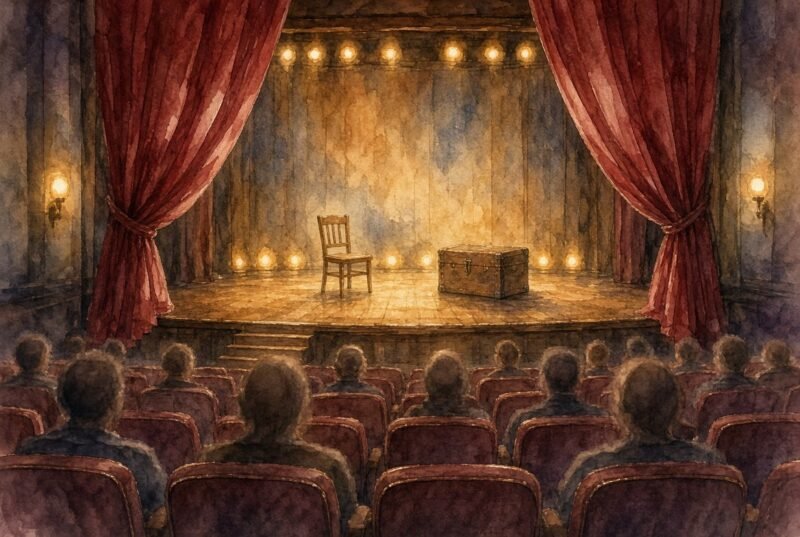
The photograph to take home is not the one of the show, which by the way you can't shoot: during performances photographs and videos are forbidden, for copyright and out of respect for those performing four meters from you. The right photo is the closed curtain, framed from the fifth central row, 10 minutes before the start, with the hall still partly empty and the house lights on. The width of the proscenium and the red of the drape fill the frame without the need for a wide-angle lens, and the slope of the orchestra gives a diagonal line of seats that adds depth to the image.
Technically, the light is low and warm. If you use your phone, turn off the flash, which would flatten the velvet and bother your neighbors, and rest your elbows on the seatback in front to stabilize. A slightly longer exposure time renders the grain of the fabric better. If you have a camera, open the aperture and keep the sensitivity under control: the saturated red tends to clog.
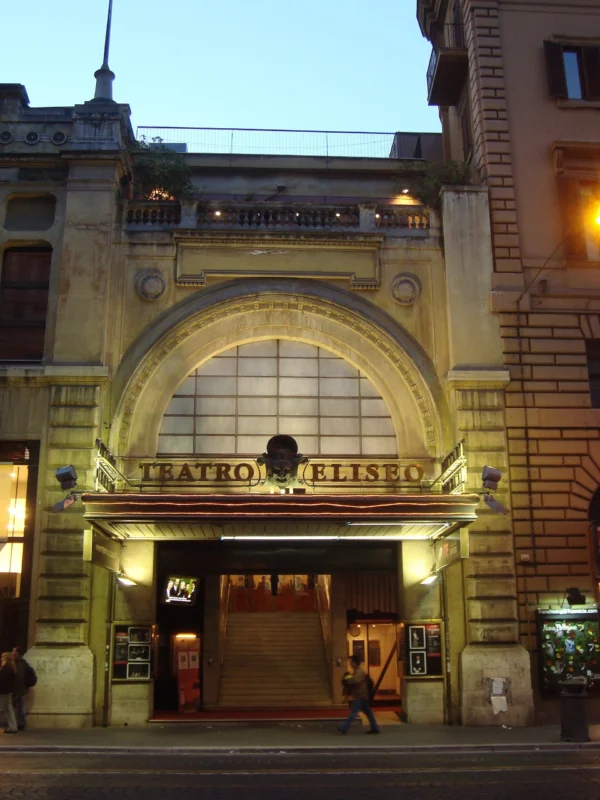
The second photograph to take is outside, and it is probably the best. The entrance on Via Tirso at dusk, with the line of people on the sidewalk and the 1930s buildings of the neighborhood of the rivers behind, tells this theater better than any interior: a neighborhood hall that fills up with the people of the neighborhood. Stand on the opposite side of the street, frame vertically including two floors of facade, and wait for someone to open the door: the warm light that spills from the lobby onto the dark sidewalk is the exact image of what Teatro Tirso de Molina is.
Some important events that took place here in history
The history of this address begins with a distant demolition. In 1888, during the demolitions in Trastevere for the construction of the Tiber embankment walls, the medieval church of Santa Bonosa was torn down, built by the shoemakers' confraternity and tied to the cult of a martyr whom Romans invoked against smallpox. Relics and bells were left without a home, and their fate became intertwined with that of this piece of the city.
On February 2, 1932 Pius XI established a new parish in this area, entrusted to the Mercedarian fathers, with a temporary seat in the church of Santa Maria Addolorata. In 1934 the parish moved to the small conventual church on Via Tirso, where the relics and bells saved from Trastevere were placed: from that moment Romans called that place Santa Bonosa. In the conventual building, in the underground rooms, the hall that today houses the theater was born.
In 1958 the new parish church of Santa Maria della Mercede and Sant'Adriano was completed, designed by the architect Marco Piloni on Viale Regina Margherita, and the works of art recovered from the vanished church of Sant'Adriano al Foro Romano flowed into it, among them the holy water fonts of the Bernini school and the Sacred Heart attributed to Carlo Maratta. In 1967 the church became the seat of a cardinal title. The move freed the premises on Via Tirso for good, which continued their life as a parish cinema and then, through successive renovations, as a theater with padded seats, a 10 percent slope and a professional proscenium.
The last chapter is recent and concerns the hall itself: the redoing of the seating, today 214 latest-generation seats, and work on the systems, with projects declared by the theater on reducing environmental impact and technological updating. A hall born as an oratory that in the span of three generations has become a theater with a professional bill: in the Rome of closed theaters, it is an event that deserves to be told.
Who has passed through Teatro Tirso de Molina
A large part of Roman comedy of recent decades has alternated on this stage. Gianfranco D'Angelo, who from television variety had returned to the stage drama bringing along a craft from the old avanspettacolo that is now rare. Enrico Montesano, whose career was born precisely in revue theater and in the tradition of the Roman mask. Pippo Franco, with 40 years of Bagaglino behind him. Maurizio Mattioli, the Roman character actor par excellence, able to carry a whole act on the comic timing of a single line. Rodolfo Laganà, who brings to the stage a more bitter and theatrical Romanness. Dado, who belongs to the next generation, the one raised among cabaret clubs and television.
The contemporary bill continues the line with companies and performers of the same school: Francesca Nunzi, Marco Simeoli, Matteo Vacca with his company, Marco Cavallaro, Attilio Fontana, Claudia Ferri, Giancarlo Fares, Loredana Piedimonte, besides the resident comic duo that the theater has adopted as its own stable production. These are names that have rotated for years among Roman halls of light drama and that here find a devoted audience.
Then there is another kind of passage, less showy and perhaps more important. Dozens of ordinary people have passed through this stage: the students of the workshops, adults between 20 and 70 who in January and June perform in front of relatives and friends on the same boards trodden by professionals, and the children of the courses from age three up. In a city where theater schools almost always rehearse in anonymous basements, this passage from the school desk to the real stage is the most generous thing Teatro Tirso de Molina does.
Frequently asked questions about Teatro Tirso de Molina
Where exactly is Teatro Tirso de Molina?
Teatro Tirso de Molina is at Via Tirso 89, postal code 00198, in the Salario neighborhood in Rome, between Viale Regina Margherita and Via Po, a three-minute walk from Piazza Buenos Aires. It does not belong to the Parioli neighborhood, as you often read: Parioli begins beyond Viale Regina Margherita.
How much does a ticket for Teatro Tirso de Molina cost?
The price list of Teatro Tirso de Molina shows, according to the official website, €25 full price and €22 reduced for performances from Tuesday to Thursday, €27 and €24 for those from Friday to Sunday. The reduced rate is valid for those over 65 and for students, and it is one of the lowest price lists among Roman comic theater halls.
How many seats does the hall of Teatro Tirso de Molina have?
The orchestra of Teatro Tirso de Molina has 214 latest-generation seats, all on the same stage level, with no boxes, no upper gallery and no balconies. The hall develops in width more than in depth, and the last row is closer to the proscenium than the 10th row of a medium-sized Italian-style theater.
Can you take photos during shows at Teatro Tirso de Molina?
No, during performances at Teatro Tirso de Molina photographs and videos are forbidden, for copyright and out of respect for those performing a few meters from the audience. The right photo to take, before the show starts, is the closed curtain framed from the fifth central row, with the hall still partly empty and the house lights on.
What is near Teatro Tirso de Molina?
Near Teatro Tirso de Molina, about 500 meters toward Piazza Mincio, begins the Coppedè neighborhood, the fantastic block designed by Gino Coppedè between 1913 and 1927, with the arch of Palazzo del Ragno and the Fountain of the Frogs. In the evening, lit up, the neighborhood is even more scenic than by day.
When is the season of Teatro Tirso de Molina open?
The season of Teatro Tirso de Molina runs from October to well into April, with the series for families spread over the Sundays of the same period. In summer the hall stays closed, like much of Roman drama, while the best period to see a show is between November and February, when the bill is in full swing.
Does Teatro Tirso de Molina also offer theater courses?
Yes, Teatro Tirso de Molina hosts an adult theater workshop that occupies the stage every week from October to June, for 27 lessons of two hours. The shifts are Monday from 20:00 to 22:00 or Tuesday from 19:00 to 21:00, with groups of at most 20 students and an age range between 20 and 70.
How do you contact Teatro Tirso de Molina for information or reservations?
Teatro Tirso de Molina answers at 06 8411827 Monday to Friday between 15:00 and 20:00, with the possibility of writing on WhatsApp too at 351 9642774. Calling lets you choose your seat in the hall and get confirmations that an automatic procedure does not guarantee.
What is around Teatro Tirso de Molina within a 10-minute walk
The surroundings are among the richest in 20th-century Rome and deserve to be used before or after the show. At 500 meters, toward Piazza Mincio, begins the Coppedè neighborhood, the fantastic block designed by Gino Coppedè between 1913 and 1927, with the arch of Palazzo del Ragno, Palazzo degli Ambasciatori and the Fountain of the Frogs. In the evening, lit up, it is even more theatrical than by day.
Going down Via Po in the opposite direction you reach in about 10 minutes the entrance of Villa Borghese at Porta Pinciana and the avenue that leads to the Galleria Borghese, while toward the north you reach the Bioparco and the Museo Carlo Bilotti in the Aranciera. On the opposite side, beyond the Nomentana, are Villa Torlonia with the Casina delle Civette, and farther north Villa Ada and the Catacombs of Priscilla.
For eating, the axis of Via Po and Corso Trieste offers neighborhood trattorie and pizza by the slice: booking for after the show is advisable, because at 23:00 kitchens close early in this residential area. Whoever is organizing a full day in the city, with professional guiding and custom tours, will find the services of TourLeaderPro in Rome designed precisely for groups and companies.
Teatro Tirso de Molina and the other Roman halls
To place this hall in the city's landscape an honest comparison is needed. The Teatro Brancaccio in Esquilino and the Teatro Sistina on Via Sistina are the big machines of the Roman musical, with houses of over 1,000 seats and imposing productions. The Teatro Sala Umberto, a short walk from Via del Corso, and the Ambra Jovinelli, historic temple of avanspettacolo, work on a light repertoire of intermediate size. The Teatro Olimpico at Flaminio and the Teatro Centrale complete the picture of the mid-capacity halls.
Teatro Tirso de Molina plays in another league, and plays well. With 214 seats it offers a ratio between price and closeness to the stage that the big halls cannot come near, and a single-genre bill that generalist halls do not have. Whoever is looking for a big musical production should go elsewhere. Whoever is looking for a well-acted Roman comedy at €25, with the actor four meters away, finds here the best available in the city. For opera and symphonic repertoire there remain the Teatro dell'Opera and the Auditorium Parco della Musica.
When to go to Teatro Tirso de Molina and when to avoid it
The season of Teatro Tirso de Molina runs from October to well into April, with the series for families spread over the Sundays of the same period. In summer the hall rests, like almost all Roman drama, and the city's theater life moves outdoors. The best period, if I had to name one, is between November and February: the bill is in full swing, the neighborhood is alive and a warm underground hall is the right place to be on a rainy evening.
The time to avoid, for those who care about the quality of the evening, is Saturday at 21:00 in a week of great appeal: full house, side seats, audience coming in at the last minute. Better Tuesday or Wednesday, which also cost €2 less. Also avoid Sunday afternoon if you don't have children with you: the family performances completely change the atmosphere of the hall, and it is not what someone who wants to see an adult comedy is looking for.
Quick questions about Teatro Tirso de Molina
Where exactly is Teatro Tirso de Molina?
At Via Tirso 89, postal code 00198, in the Salario neighborhood, between Viale Regina Margherita and Via Po, a three-minute walk from Piazza Buenos Aires. It is not in Parioli, as you often read: Parioli begins beyond Viale Regina Margherita.
How many seats does Teatro Tirso de Molina have?
The orchestra has 214 latest-generation seats, arranged on a floor with a 10 percent slope. There are no boxes or galleries: it is a single hall, wide and shallow.
How much does a ticket for Teatro Tirso de Molina cost?
The price list given by the theater provides for €25 full price and €22 reduced from Tuesday to Thursday, €27 and €24 from Friday to Sunday. Shows for families cost €15 for everyone. Check the price of the individual title on the official website before booking.
Who is entitled to the reduced ticket?
The reduced rate is reserved for those over 65 and for students under 26, with a document to show at the cash desk. There are also university and corporate agreements that reserve even lower rates.
How much does a season ticket for Teatro Tirso de Molina cost?
The eight-show season ticket in the midweek formula costs €140 full price and €130 reduced, with a family rate of €50 for under-15s. The open one, valid at all times, costs €160 full price, €150 reduced and €70 in the family formula.
How do you buy tickets for Teatro Tirso de Molina?
You reserve by calling 06 8411827 or writing on WhatsApp at 351 9642774, and pick up at the cash desk. The box office is open Monday to Friday from 15:00 to 20:00. Those who prefer buying online will find the authorized reseller listed on the theater's official website.
What time do the shows start at Teatro Tirso de Molina?
Evening performances start at 21:00 on weekdays, on Saturday at 17:00 and 21:00, on Sunday at 17:00. Children's shows are staged on Sunday at 11:15 and 15:00.
Do you need to book at Teatro Tirso de Molina?
It is not mandatory, but with 214 seats Saturday night often sells out. Three or four days' notice is enough to choose your seat instead of settling for what is left.
How long does a show last?
The comedies on the bill generally last between an hour and a half and two hours, with or without an intermission depending on the title. Family shows are shorter, around an hour, a length suited to small children.
Can you take photos at Teatro Tirso de Molina?
During the performance photographs and filming are forbidden. In the hall, before the start or on the way out, a photograph of the closed curtain is perfectly fine, as long as it is without flash.
Is Teatro Tirso de Molina wheelchair accessible?
The theater declares access for people with disabilities. Since it is an underground hall, it is best to mention the need when booking by phone: the staff points out the correct entrance and reserves the appropriate seating.
Is Teatro Tirso de Molina suitable for children?
Yes, and specifically so: there is a Sunday series dedicated to families, with titles drawn from classic fairy tales, a single price of €15 and two performances, morning and afternoon. The closeness to the stage keeps the attention of the little ones high.
What are the best seats in the hall?
The rows from the fourth to the seventh in the center. The front row forces you to look upward all evening and cuts the overall view, while the side seats in the last rows suffer a perspective angle on the back of the stage.
How do you get to Teatro Tirso de Molina by public transport?
With trams 3 and 19 to Piazza Buenos Aires, then three minutes on foot. The nearest subway is line B, Policlinico stop, about 20 minutes on foot. The surface lines of Via Po and Piazza Buenos Aires are historically the 63, the 83 and the 92: check the updated route on the transport app.
Is it easy to park near Teatro Tirso de Molina?
No. Via Tirso and the surrounding streets are paid parking and spaces are scarce from late afternoon. It is best to look along Viale Regina Margherita toward the Policlinico, or leave the car at Tiburtina and take tram 19.
What kind of shows can you see at Teatro Tirso de Molina?
Light comedy in the Roman tradition, with companies and performers of the capital's comic school, plus a series for families and the productions of the resident company. The theater calls itself the only comic theater in the Roman tradition in the city.
Why does a Roman comic theater bear the name of a Spanish playwright?
Because the hall belongs to the complex of the Mercedarian fathers, and Tirso de Molina, born Gabriel Téllez, was a Mercedarian religious as well as a playwright of the siglo de oro. The street, for its part, takes its name from the Sardinian river: the homonymy is accidental.
Is Teatro Tirso de Molina really under a church?
The hall occupies the underground rooms of the religious complex on Via Tirso, the one that Romans call Santa Bonosa, where the parish had its seat from 1934 to 1958. Originally those rooms hosted a parish cinema.
Are there theater courses at Teatro Tirso de Molina?
Yes. The adult workshop runs from October to June, 27 lessons of two hours, on Monday from 20:00 to 22:00 or Tuesday from 19:00 to 21:00, with groups of at most 20 people from 20 to 70 years old. There are also courses for children and teenagers from age three. The trial lesson is free and must be requested from the theater.
Can you rent the hall of Teatro Tirso de Molina?
Yes, the theater rents the space for shows, presentations and events. It is one of the few halls in the northern quadrant with just over 200 seats, a real stage and updated systems.
What is the difference between Teatro Tirso de Molina and the big halls downtown?
Size and repertoire. Halls of 1,000 seats host musicals and big productions. Here you see comedy of words four meters away, spending a little more than half. They are two different experiences, and this one is unbeatable on the ratio between price and closeness.
Is Teatro Tirso de Molina open in summer?
The season runs from October to well into April. In summer the hall rests and Roman theater life moves outdoors, among arenas, villas and festivals.
Can you eat near Teatro Tirso de Molina?
Via Po, Piazza Buenos Aires and Corso Trieste offer bars, pastry shops, pizza by the slice and neighborhood trattorie. After 23:00 kitchens close early: if you want to have dinner after the show, book before going into the hall.
How do you find the updated program of Teatro Tirso de Molina?
Bills, dates and prices change every season and sometimes during the year: the reliable picture is the one published on the theater's official website, or the one the box office confirms to you by phone.
Is it worth coming as a tourist and not as a Roman?
If you understand Italian spoken fast, yes: it is one of the few places where you see Roman comedy in its natural environment, with the right audience. Those planning their trip to the city can start from the English guide Best things to do in Rome and from the three-day itinerary by ItalyPlanner, and for professional guiding contact TourLeaderPro.
The final advice on Teatro Tirso de Molina
If I had to choose a single night at the theater to recommend to someone who knows Rome only for its monuments, I would choose a Tuesday in January at Teatro Tirso de Molina, fifth row in the center, a comedy with a Roman company on the bill. €25, the actor four meters away, 200 people from the neighborhood laughing at the same points. It is a Rome that doesn't appear in photographs and that wears out fast, because neighborhood halls close one after another. This one is still open, has redone its seats and fills the orchestra. Go while it's there.
Article written by the editorial team of TourLeaderPro, contact them for Private/Corporate/V.I.P. Tours and Experiences.
Planning a trip to Rome? The English guides for visiting the city are on ItalyPlanner.com.
Contact Information
Nearby
 Villa Albani Torlonia100 m
- Coppedè200 m
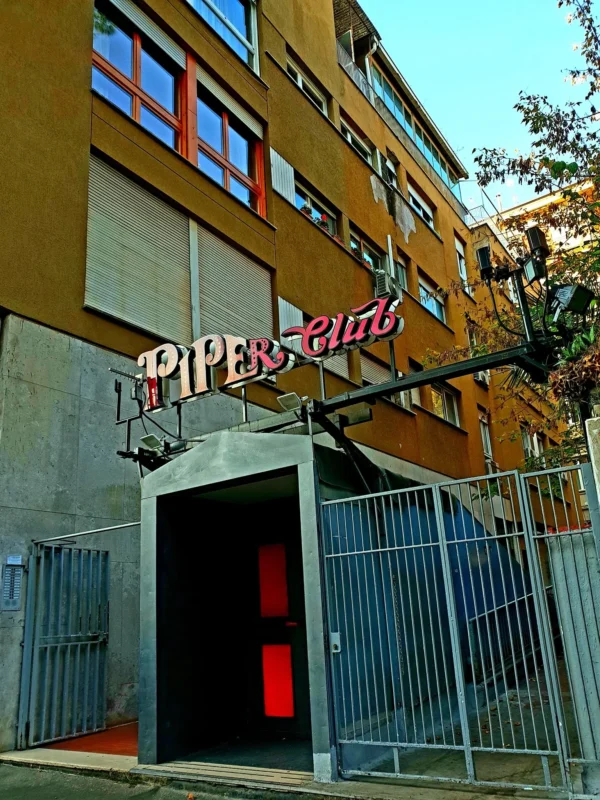
- Piper Club300 m
- Mausoleum of Lucilius Paetus400 m
- MACRO – Rome Museum of Contemporary Art400 m
- Museums in Rome: The Complete List500 m


Upcoming events nearby
- Room for strangers by Elena Pizzichelli at the Hox Gallery of The Hoxton Rome, September 17 to December 4, 2026300 m
- Like a Man by Davide Cocozza at the Rome Office of CBA Studio Legale, Through June 4, 2027500 m
- 2026 Exhibition Season at MACRO: Marialba Russo and the Shows until January 31, 2027500 m
- Macro. Museum of the Everyday at MACRO, September 24 to November 8, 2026500 m