2026 Exhibition Season at the MACRO: Marialba Russo and the Shows until January 31, 2027
In short. The 2026 exhibition season of the MACRO, the Museo d'Arte Contemporanea di Roma at Via Nizza 138 (second entrance at Via Reggio Emilia 54), in the Salario neighborhood, continues until January 31, 2027 with the autumn season.
The 2026 exhibition season of the MACRO, the Museo d'Arte Contemporanea di Roma at Via Nizza 138 (second entrance at Via Reggio Emilia 54), in the Salario neighborhood, continues until January 31, 2027 with the autumn season. At the center is Sguardo rovescio, the first major Italian museum exhibition dedicated to the photographer Marialba Russo, open from September 24, 2026 to January 31, 2027. It is joined by Maria's Dream by Gaia De Megni and 52 Spaces by Robin Rimbaud, known as Scanner, until November 8, by the video installation Mechanical Kurds by Hito Steyerl until November 1, and by the solo show of Miriam Cahn until November 15. The museum is open Tuesday to Friday from 12:00 to 19:00 and Saturday and Sunday from 10:00 to 19:00, with entry until half an hour before closing. On Monday it is closed. The ticket for the exhibitions costs €6 full price and €4 reduced, with free entry for children up to 6 years old and for people with disabilities and their companion. It is bought at the museum box office or through the presale network authorized and indicated by the official website. The MACRO is reached by bus 38, stop Nizza/Regina Margherita, by 80, stop Dalmazia, or by lines 60, 62, 82, 89 and 90, stop Nomentana/Regina Margherita. The nearest metro stations are Castro Pretorio on line B and Termini.
The MACRO is the museum to recommend to anyone who wants to understand contemporary Rome outside the circuit of the big names. This autumn the reason is precise: the first major exhibition by an Italian museum on Marialba Russo, a Neapolitan photographer who in the 1970s turned the male gaze around on masculinity, photographing festivals, rites and disguises of southern Italy. Alongside it, two works linked to Monica Vitti and Antonioni's cinema, and two major exhibitions about to close. Below you'll find everything: what you can see, who the artists are, the October events, hours, tickets, buses and tips.
The 2026 Exhibition Season at the MACRO: The Autumn Program
The MACRO's autumn season interweaves photography, moving image and sound research: Marialba Russo's exhibition in the Galleria, Maria's Dream by Gaia De Megni in the Sala Video, 52 Spaces by Scanner in the Sala Audio, and a public program of masterclasses, performances and conversations.
Exhibitions Now On
Marialba Russo, Sguardo rovescio: from September 24, 2026 to January 31, 2027. Gaia De Megni, Maria's Dream, and Robin Rimbaud (Scanner), 52 Spaces: from September 24 to November 8, 2026. Hito Steyerl, Mechanical Kurds: until November 1, 2026. Miriam Cahn, Ciò che mi guarda: until November 15, 2026.
Exhibitions Already Closed
On September 20, after an extension, the video art program She Devil 14, the sound exhibition Amelia Rosselli, un canto nel suo spazio and Uno, cinque, dodici, dedicated to the 80th anniversary of the Strega Prize, closed. Anyone looking for them will not find them anymore.
Who Promotes It
The MACRO's 2026 program is promoted by the Culture Department of Roma Capitale and the Azienda Speciale Palaexpo, produced and organized by Palaexpo and conceived by artistic director Cristiana Perrella, in office since May 2025. The museum warns that the program may be subject to changes.
Marialba Russo, Sguardo rovescio: The Exhibition at the MACRO
Sguardo rovescio, curated by Cristiana Perrella and Elena Magini, is the first major exhibition an Italian museum has dedicated to Marialba Russo. Set up in the MACRO's Galleria, it brings together seven fundamental groups of her work from the 1970s.
The Title
The title alludes to the reversal the photographer carried out of the canonical point of view of a still patriarchal Italy: "another experience of the gaze," in Russo's own words. Instead of the male eye fixing on the female body, here it is a woman author who looks at masculinity, and shows it as a multiple cultural construction, not as a natural fact. The museum links the idea to the notion of the male gaze developed by the feminist film critic Laura Mulvey, simply reversed in direction.
Men Out of Control
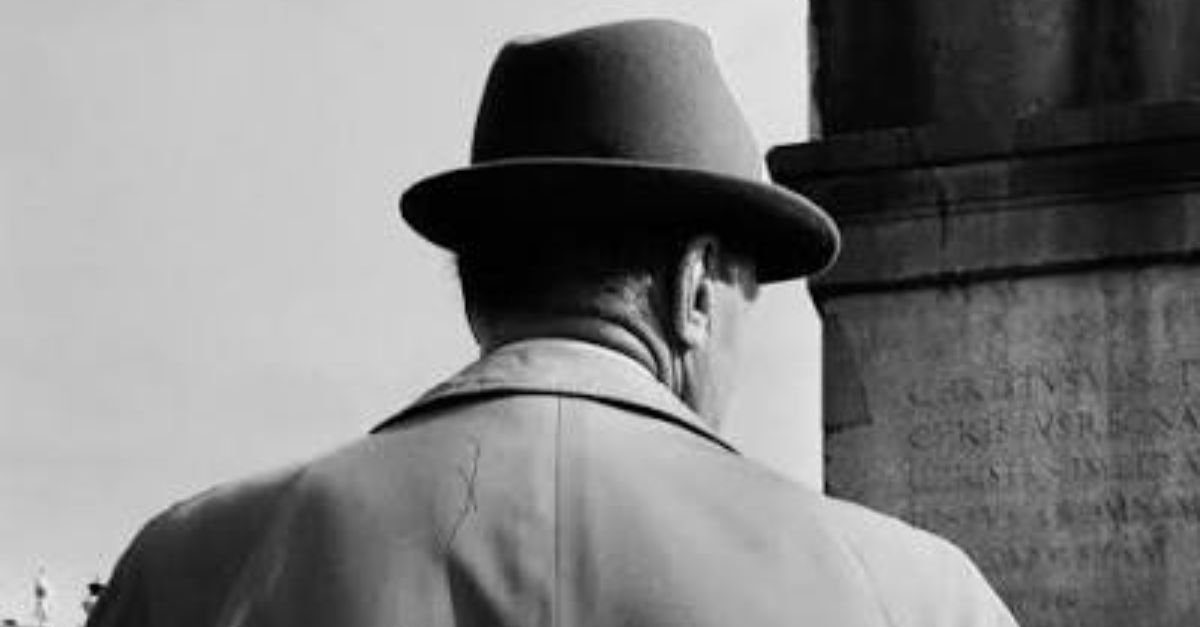
The men photographed by Russo contradict the stereotype of virility: they give themselves over to the event, lose control and measure, put on disguises, shed their individualism. The exhibition distinguishes two ways of photographing: one taxonomic and repetitive, close to street photography and portraiture, the other narrative, made of sequences that catch eccentric moments of extraordinary vitality.
Two Venues
The project at the MACRO includes a display of Archivio Personale and is in dialogue with a second venue at the MUCIV, the Museo delle Civiltà, where the exhibition Immagini della Madonna dell'Arco (After) is dedicated to the fieldwork Russo carried out in 1971. From it came a collaboration, between 1972 and 1977, with what was then the Museo Nazionale delle Arti e Tradizioni Popolari, in the research campaigns on popular cultures coordinated by the anthropologist Annabella Rossi.
The Seven Series by Marialba Russo on Show
The exhibition presents the following seven series, made from 1974 to 1981: Al ristorante, il September 29, 1974, Travestimento, Il Passaggio, l'incanata, Il Parto, Della serie delle centotrenta figure di spalle, Cult Fiction and L'espulsione del male.
Al ristorante, il September 29, 1974
One sequence tells of an improvised dance in a restaurant between two young men coming back from the Sanctuary of the Madonna di Monteverde, in the park of the Murgia Materana: a dance with an erotic flavor, made of abandon and closeness. The series opened the collection I Quaderni dello Sguardo, a self-produced book printed clandestinely in Torre Annunziata with a machine for preserve labels, to escape the censorship of publishers.
Travestimento, 1975-80
34 photographs taken in Campania, between Avellino, Benevento, Naples and Salerno, portray men dressed and made up as women at the Carnival festivals of the South. The feminine here is built through closeness: the subjects imitate sisters, wives, mothers. A rite that for one day overturns roles.
Il Passaggio, l'incanata, 1979
On a mountain in the Avellino area, on the border with Basilicata, Russo photographs the incanata, a healing rite of the southern tradition used to cure infant hernias: the child passes through a split tree, then put back together, among officiants who simulate with their shouts the exit from the mother's womb.
Il Parto, 1978
12 photographs, in black and white and in color, of a man in disguise who simulates a childbirth during a Carnival festival, amid convulsions and gestures from a sceneggiata. With this sequence, in 1979, Russo represented Italy at Venezia '79. La fotografia, in the section Fotografia Europea Contemporanea.
Figures from Behind, Cult Fiction, The Expulsion of Evil
In 1981, 130 men photographed from behind, anonymous and at the same time recognizable. The posters of red-light films on the walls of Naples and Aversa between 1978 and 1980, when the first cinemas of the genre were opening. And four photographs taken in 1974 in Galatina, a place of tarantism, where Russo portrays a man on the ground at the climactic moment of the rite, while tradition wants almost only women as protagonists.
Who Is Marialba Russo: The Photographer of the Reversed Gaze
Marialba Russo was born in Giugliano, in the province of Naples, in 1947 and is one of the women authors who, since the late 1960s, have redefined the photographic language in Italy, interweaving artistic practice, visual anthropology and observation of society.
Between Art and Anthropology
Her work is born in the field, in the festivals and rites of the South, and is in dialogue with the anthropological research of the time, in particular that of Annabella Rossi on popular and subaltern cultures. But Russo does not do reportage: the museum underlines that her series sit on the ridge between observation of the rite and artistic project.
Themes That Anticipate the Present
According to the curators her research anticipated themes that are now central in contemporary debate: the body, gender, rite, the cultural construction of identity. Looking at the series of the 1970s you often have the impression of photographs taken yesterday.
The Verdict
It is an exhibition that arrives late, and for that very reason it is important. That the first major Italian museum exhibition on a photographer of this caliber arrives when the author is almost 80 says a lot about how Italy has looked at its women photographers. The MACRO does well to make amends.
Gaia De Megni and Scanner: Monica Vitti and Antonioni at the MACRO
In the Sala Video and the Sala Audio, from September 24 to November 8, the MACRO presents Maria's Dream by Gaia De Megni and 52 Spaces by Robin Rimbaud, known as Scanner, both curated by Maria Lodovica Ferrari and linked by the figure of Monica Vitti and the cinema of Michelangelo Antonioni.
Maria's Dream by Gaia De Megni
Gaia De Megni was born in Santa Margherita Ligure in 1993. Maria's Dream, produced by Careof of Milan and winner of ArteVisione 2024, is presented for the first time in a museum space. The video, shot on 16 millimeter film, is a personal search in which family memory is in dialogue with the imagery of Italian cinema. The common thread is Monica Vitti, the anti-diva who escaped the codes of stardom with a restless, ironic and modern presence.
52 Spaces by Scanner
Robin Rimbaud, born in London in 1964, known as Scanner, made 52 Spaces in 2002, for the 90th anniversary of Antonioni's birth. The sound work is inspired by L'eclisse from 1962, with Monica Vitti: dialogues, noises, urban landscapes and musical fragments of the film are taken apart and reassembled together with ambient recordings collected by the artist in the streets of Rome. The real city and the filmed one overlap in a single acoustic fabric.
Rome as Inner Landscape
The museum presents the two works as a vision of Rome that is first of all an inner landscape: a suspended city, made of memories, waiting and returns. For those who love L'eclisse, hearing Antonioni's film taken apart and put back together in an audio room in Salario is a curious and successful experience.
The October Public Program at the MACRO
The MACRO's autumn public program includes, on October 1, a masterclass by Didier Fiúza Faustino, on October 7 a live performance by Scanner on L'eclisse, and on October 22 a meeting on Mechanical Kurds by Hito Steyerl with the theologian Paolo Benanti.
October 1: Didier Fiúza Faustino
A conceptual artist and French-Portuguese architect, author with his studio Bureau des Mésarchitectures of the design of Miriam Cahn's exhibition, Faustino gives a masterclass on the relationship between architecture, the body and exhibition space.
October 7: Scanner Live
Robin Rimbaud presents a live performance that rereads Antonioni's L'eclisse, extending the work of 52 Spaces. For those who listen to the installation in the Sala Audio, it is the chance to see sound being built live.
October 22: Steyerl and Benanti
A meeting dedicated to Mechanical Kurds puts the work of Hito Steyerl in dialogue with the thinking of Paolo Benanti, a theologian, a Franciscan of the Third Order Regular and one of the leading Italian voices on the relationship between artificial intelligence, innovation and ethics. For hours and access arrangements the reference is the museum's website.
Steyerl and Cahn: The Two Big Exhibitions about to Close
Until November 1 you can still see the video installation Mechanical Kurds by Hito Steyerl, curated by Alice Labor. Until November 15 there is the large solo show by Miriam Cahn, Ciò che mi guarda, curated by Cristiana Perrella, opened in June.
Two Close Deadlines
Anyone who hasn't yet seen these two exhibitions has a little over a month. The advice is to combine them with Marialba Russo in a single visit: the ticket is the same. The dedicated pages are Hito Steyerl, Mechanical Kurds and Miriam Cahn, Ciò che mi guarda.
The Other Events
In October the MACRO also hosts Essere e tempo, a meeting between art and psychoanalysis on October 11, and takes part in the Giornata del Contemporaneo on October 10.
The MACRO: From the Peroni Factory to the Contemporary Art Museum
The MACRO occupies part of the former Peroni beer plants, built between 1902 and 1922 to a design by Gustavo Giovannoni and Alfredo Panopoli near Porta Pia. The factory was closed in 1971, and the name Società Birra Peroni Ghiaccia can still be read on one side of the building, on Via Cagliari.
From the City Collection to the MACRO
The city's modern art collection has a long and itinerant history: from the purchases of 1883 at Palazzo Caffarelli, then at Palazzo Braschi, at the Palazzo delle Esposizioni, up to the Peroni area handed over to the city in the 1980s. The name MACRO comes in 2002.
Odile Decq's Wing
In 2000 an international competition for the expansion was won by the French architect Odile Decq. The new wing, with its reds, blacks and whites, the iron, the concrete and the mirrored glass, the fire-red auditorium and the terrace, changed the image of the complex. The exhibition rooms exceed 4,000 square meters.
Recent Directors
Since 2018 the museum has been run by the Azienda Speciale Palaexpo. After the Macro Asilo of Giorgio de Finis and the Museo per l'Immaginazione Preventiva of Luca Lo Pinto, the artistic direction today is Cristiana Perrella's, who also signs the curation of the Russo and Cahn exhibitions.
Services
The museum has a bookshop, a restaurant with a terrace, study rooms and a research and documentation center on the visual arts. The MACRO reports air-conditioning works for autumn 2026 and a two-for-one promotion: it's best to check the website before the visit.
A Curiosity About the 2026 Exhibition Season at the MACRO: Marialba Russo and the Shows until January 31, 2027
The best curiosity is about a book printed in secret. The series Al ristorante, il September 29, 1974 opened the collection I Quaderni dello Sguardo, conceived by Marialba Russo: a self-produced book, printed clandestinely in Torre Annunziata with a machine for printing preserve labels, to escape the censorship of the publishers of the time. Two young men dancing together in a restaurant were, in 1974, an image that no publisher wanted to publish. The photographer found an industrial print shop and did it herself.
The second curiosity is about the date in the title: September 29, 1974. Anyone who visits the exhibition in these late September days visits it almost on the anniversary of the shot, 52 years later. It is one of those coincidences that make a visit memorable.
The third is about Antonioni. 52 Spaces by Scanner was born in 2002 for the 90th anniversary of the director's birth, and re-edits L'eclisse with sounds recorded in the streets of Rome. The sound that results, mixed with the recordings Scanner made in the streets of Rome, ends up in a room on Via Nizza, in the building of a beer factory. The filmed Rome and the real one are heard together.
One Thing Nobody Tells You About the 2026 Exhibition Season at the MACRO: Marialba Russo and the Shows until January 31, 2027
What almost nobody says is that the MACRO, on weekdays, opens at noon. From Tuesday to Friday the hours are 12:00 to 19:00. Only on Saturday and Sunday do you get in at 10:00. Anyone who arrives on a Tuesday morning at 10:00, maybe from Porta Pia, finds the doors closed. It's easy to organize around: lunch at the museum at 12:30 and the visit right after, or a morning at Villa Torlonia and the MACRO in the afternoon.
The second thing is that the museum has two entrances: Via Nizza 138, the address everyone knows, and Via Reggio Emilia 54, on the other side of the block. For those arriving by the Nomentana buses, Via Reggio Emilia side can be more convenient.
The third is about the deadlines. Right now at the MACRO five exhibitions overlap with four different closing dates: November 1 for Steyerl, November 8 for De Megni and Scanner, November 15 for Cahn, January 31 for Russo. Anyone who comes in December will find only Russo. The right month to see everything with a single ticket is October.
The Advice I Give You for Visiting the 2026 Exhibition Season at the MACRO: Marialba Russo and the Shows until January 31, 2027
The best time is a Saturday in October, at the 10:00 opening. Start with Marialba Russo in the Galleria, which takes time: seven series, many in sequence, to be read like stories. Follow the order of the dates, from 1974 to 1981, and stop in front of Il Parto, the series that represented Italy at Venice in 1979. Then move on to the Sala Video and the Sala Audio: Maria's Dream and 52 Spaces are short and should be seen one after the other, because they answer each other.
At midday, lunch at the museum restaurant or in the neighborhood. In the afternoon, Miriam Cahn and Hito Steyerl, which close in November. It is a whole day of contemporary art with a single €6 ticket, and few European cities offer so much at this price.
If instead you can choose one precise evening, come on October 7 for Scanner's performance on L'eclisse: hearing live how an artist takes apart and puts back together an Antonioni film, after listening to the installation, is the most original experience of the whole season. Check hours and bookings on the museum's website.
Another Well-Known Fact, Yet Rarely Mentioned
It is well known that the MACRO was born in the former Peroni plants. Less often cited is that this factory also had a story of Resistance: in April 1944 a partisan cell operated there. The complex was built between 1902 and 1922, with a Liberty-style chalet in Piazza Alessandria and, in 1908, the brewhouse designed by Gustavo Giovannoni, at the corner with Via Bergamo. Production moved in 1971 to the area of Via Renato Birolli, toward Tor Sapienza, and the area passed to the city with an agreement of 1983.
A second rarely cited fact is about the collection. The modern art collection of the City of Rome existed from 1883, and in 1913 Auguste Rodin donated a Busto di signora to it. In the 1930s it was suppressed and merged into the Galleria Nazionale, then it was reconstituted after the war and changed location several times before landing here. The MACRO, in short, is the arrival point of a museum that moved for over a century. That today it hosts a photographer who spent her life documenting rites of passage is perfectly coherent.
The Right Photo to Take at the 2026 Exhibition Season at the MACRO: Marialba Russo and the Shows until January 31, 2027
The right photo is taken outside, on Via Cagliari, on the side where the inscription Società Birra Peroni Ghiaccia can still be read. It is the image that tells the MACRO better than any room: an industrial inscription of the early 20th century on a contemporary art museum. Shoot from the opposite sidewalk, with the side light of the morning, to keep the whole inscription in the frame.
The second is inside, in Odile Decq's wing: the balconies offer views from above onto the spaces, and the red, black and white produce strong shots. The red auditorium is the museum's best-known sight.
In Marialba Russo's rooms, before photographing, ask the staff: in some exhibitions photographs may be restricted. And anyway, in front of fine-art photographs, the advice is to look instead of shooting. If you want a memento, look in the bookshop for the catalog or a book by the photographer: for an exhibition also born from a secretly printed book, it is the most fitting souvenir.
Some Important Events That Happened Here in History
1883: the City of Rome begins its modern art collection with purchases from the Esposizione di Belle Arti. 1901: Peroni, born in Vigevano in 1846 and in Rome since 1864, settles near Porta Pia.
1902-1922: the buildings of the factory are constructed, to a design by Gustavo Giovannoni and Alfredo Panopoli. In 1908 the brewhouse at the corner with Via Bergamo. 1913: Rodin donates a Busto di signora to the city collection.
April 1944: a partisan cell operates in the factory. 1971: Peroni leaves the neighborhood. 1983: the agreement with the city opens the way to the restoration.
1999: the city gallery reopens in the new venue after the first works. 2000: Odile Decq wins the competition for the expansion. 2002: the museum takes the name MACRO.
2018: management passes to the Azienda Speciale Palaexpo. May 2025: Cristiana Perrella becomes artistic director. September 24, 2026: Sguardo rovescio opens, the first major Italian museum exhibition on Marialba Russo.
Who Has Passed Through the 2026 Exhibition Season at the MACRO: Marialba Russo and the Shows until January 31, 2027
Through Via Nizza complex have passed first of all the architects: Gustavo Giovannoni, who designed the Peroni factory, and Odile Decq, who won the expansion competition in 2000 and signed the wing with the red auditorium. Then the directors who since 2018 have given the museum an identity: Giorgio de Finis, Luca Lo Pinto, and today Cristiana Perrella.
In 2026 Hito Steyerl, Miriam Cahn, Amelia Rosselli through her voice, the 80 years of the Strega Prize, and the artists of the She Devil program have passed through here with their works. In autumn Marialba Russo, Gaia De Megni and Robin Rimbaud arrive, with Didier Fiúza Faustino and Paolo Benanti for the public program.
And through the works pass figures who have never set foot in the MACRO: Monica Vitti, protagonist of Maria's Dream and voice of the Eclisse re-edited by Scanner. Michelangelo Antonioni. Laura Mulvey, evoked for her concept of the male gaze. Annabella Rossi, the anthropologist with whom Russo worked in the 1970s. A season that, looked at closely, is a small history of 20th-century Italian culture told through women's eyes.
MACRO Hours and Tickets
The MACRO is open Tuesday to Friday from 12:00 to 19:00 and Saturday and Sunday from 10:00 to 19:00, with entry until half an hour before closing. On Monday it is closed. The ticket for the exhibitions costs €6 full price and €4 reduced.
Free Entry
Entry is free for children up to 6 years old, for people with disabilities and their companion, for national tour guides and for holders of ICOM and ICROM cards, in addition to the other categories indicated by the museum.
Guided Tours and Workshops
On Saturdays, Sundays and holidays the museum offers an individual guided tour for €4. For groups there is a dedicated rate with booking. For children there are workshops for the age groups 3 to 6 and 7 to 11, with the calendar published on the website.
Where to Buy
Tickets are bought at the museum box office or through the authorized presale network indicated on the information and tickets page of the official website.
How to Get to the MACRO
The MACRO is at Via Nizza 138, with a second entrance at Via Reggio Emilia 54, in the Salario neighborhood, near Porta Pia. It is reached by bus 38, 80 and lines 60, 62, 82, 89 and 90, and by metro line B at Castro Pretorio or line A at Termini.
From Termini
The museum indicates two routes from Piazza dei Cinquecento: bus 90 toward Libia for three stops, getting off at Nomentana/Regina Margherita, or the 38 toward Porta di Roma for six stops, getting off at Nizza/Regina Margherita.
By Bus
The 38 stops at Nizza/Regina Margherita, a few steps from the entrance. Lines 60, 62, 82, 89 and 90 stop at Nomentana/Regina Margherita, the 80 at Dalmazia.
By Metro
From Castro Pretorio, on line B, you continue on foot or by bus toward Porta Pia and the Nomentana. From Termini it's best to take one of the two buses indicated by the museum.
Around the MACRO: Porta Pia, Villa Torlonia, Coppedè
The MACRO is between Via Nizza and Via Reggio Emilia, a short distance from Via Nomentana and from Porta Pia, in a neighborhood of early 20th-century small apartment buildings.
Villa Torlonia
Going up the Nomentana you arrive at Villa Torlonia, with the park and its museums. It is the ideal walk after the visit, especially on an autumn day.
The Coppedè Quarter and Villa Ada
Toward Piazza Buenos Aires you enter the Coppedè quarter, with its fantastic architecture of the 1920s. Farther north, beyond the Salaria, there is Villa Ada for a long walk in the green.
The MUCIV
The second venue of Marialba Russo's exhibition is at the Museum of Civilizations, with the exhibition Immagini della Madonna dell'Arco (After). Anyone who wants to complete the project must plan for a second visit. The page for Via Nizza museum is MACRO, Museo di arte contemporanea di Roma.
Where to Eat near the MACRO
The MACRO has a restaurant with a terrace and a cafeteria inside, the most convenient option for anyone who wants to stay at the museum. In the Salario neighborhood and along the Nomentana there are neighborhood bars, trattorias and pizzerias, frequented mostly by residents.
On Weekdays
With the museum opening at noon, lunch at the inside restaurant before the visit is a natural solution. In the neighborhood places, frequented by people who work in the area, the peak hour is between 13:00 and 14:00.
On Weekends
On Saturday and Sunday at lunch the places on the Nomentana fill up with families: it's best to book.
Accessibility and Children at the MACRO
The MACRO is accessible to visitors with disabilities: according to Turismo Roma the entrance, the restrooms and the wheelchair route are accessible, and there is reserved parking. The spaces of the new wing are connected by elevators.
With Children
This season's exhibitions deal with adult themes, and Marialba Russo's series Cult Fiction documents posters of red-light films: with small children it's best to consider beforehand. For them the museum organizes dedicated workshops, and entry up to 6 years old is free.
With Teenagers
For a teenager, Russo's series on disguise and rites can be a starting point to talk about gender and identity, and 52 Spaces an unexpected way to discover Antonioni.
Frequently Asked Questions about the MACRO's 2026 Season
Which exhibitions are at the MACRO in autumn 2026?
At Rome's MACRO in autumn 2026 there are Marialba Russo, Sguardo rovescio, until January 31, 2027. Maria's Dream by Gaia De Megni and 52 Spaces by Scanner until November 8. Mechanical Kurds by Hito Steyerl until November 1. The solo show by Miriam Cahn until November 15.
Until when is Marialba Russo's exhibition at the MACRO open?
Marialba Russo's exhibition Sguardo rovescio at the MACRO is open from September 24, 2026 to January 31, 2027. It is curated by Cristiana Perrella and Elena Magini and presents seven photographic series from the 1970s, with a second venue at the Museo delle Civiltà.
How much does the MACRO ticket cost?
The ticket for the MACRO exhibitions costs €6 full price and €4 reduced, and includes all the exhibitions on view. Entry is free for children up to 6 years old and for people with disabilities with a companion. For autumn 2026 the museum reports a two-for-one promotion.
What are the MACRO's hours?
The MACRO is open Tuesday to Friday from 12:00 to 19:00 and Saturday and Sunday from 10:00 to 19:00, with entry allowed until half an hour before closing. On Monday the museum is closed.
How do you get to the MACRO from Termini?
From Termini station the MACRO is reached by bus 90 toward Libia, three stops to Nomentana/Regina Margherita, or by the 38 toward Porta di Roma, six stops to Nizza/Regina Margherita. The entrance is at Via Nizza 138.
Who is Marialba Russo?
Marialba Russo, the protagonist of the MACRO's autumn exhibition, is a photographer born in Giugliano, in the province of Naples, in 1947. Since the late 1960s she has redefined Italian photography between art, visual anthropology and social observation, photographing rites and festivals of the South.
Which meetings does the MACRO offer in October?
The MACRO's public program offers, on October 1, a masterclass by the architect Didier Fiúza Faustino, on October 7 a live performance by Scanner on Antonioni's L'eclisse and on October 22 a meeting on Hito Steyerl with Paolo Benanti. Hours and arrangements are on the museum's website.
Final Advice on the MACRO Season
A clear opinion: October is the right month for the MACRO, because with a single €6 ticket you see five exhibitions, and in November three of them close. Go on a Saturday morning, give Marialba Russo the time she deserves, listen to Scanner, and walk out toward Villa Torlonia. It is one of the richest days of contemporary art that Rome offers this autumn.
Article written by the editorial team of Tour Leader Pro, contact them for Tours and Private/Corporate/V.I.P. Experiences.
Planning a trip to Rome? The English-language guides for visiting the city are on ItalyPlanner.com.