Non sono cento volte by Emiliano De Martino at Teatro Belli, January 15 to 17, 2027
In short. Non sono cento volte (literally "It's not 100 times"), the comedy written and directed by Emiliano De Martino, plays at Teatro Belli in Rome from January 15 to 17, 2027, at Piazza di Sant'Apollonia 11/a, in Trastevere.
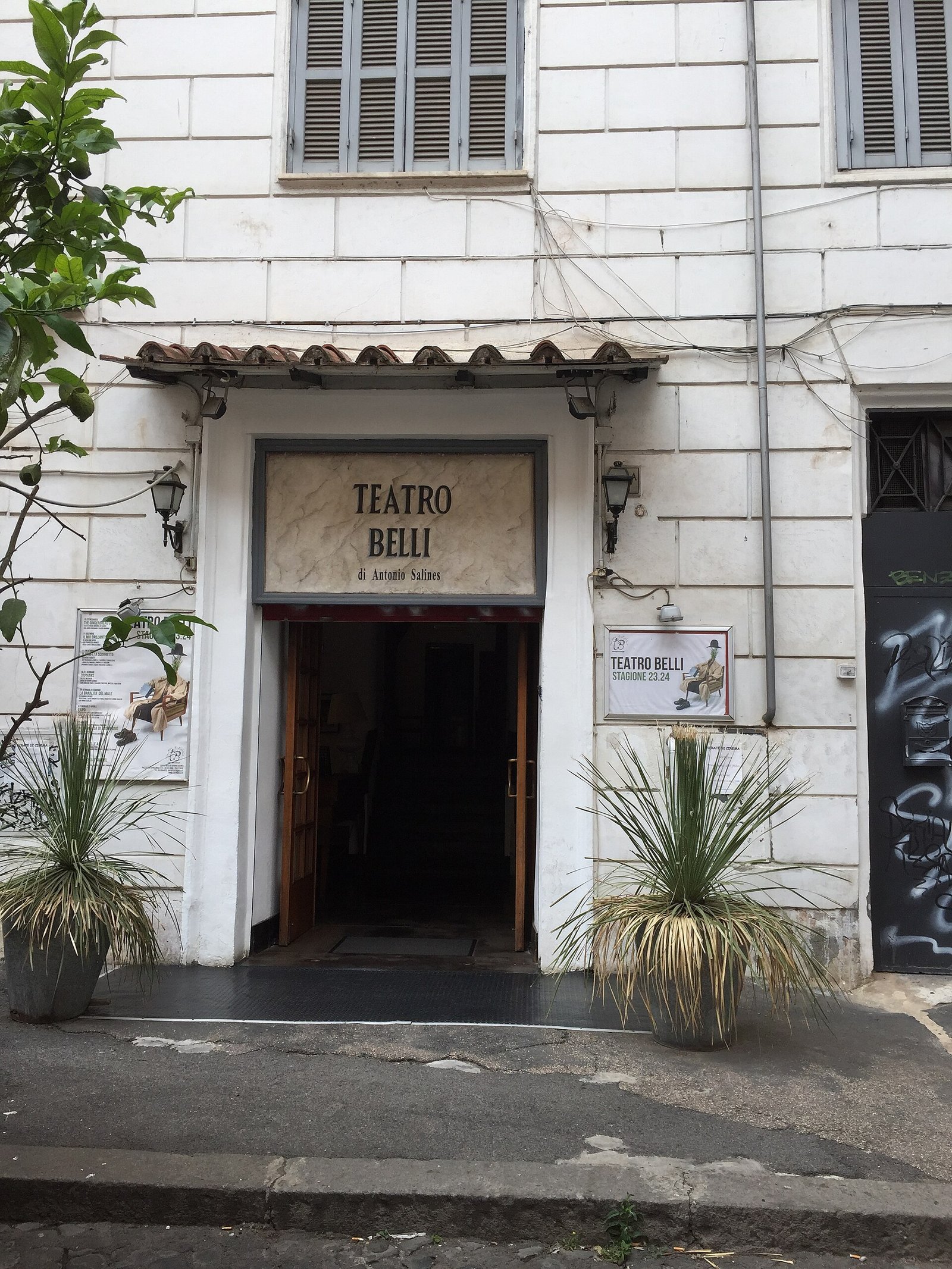
Non sono cento volte (literally "It's not 100 times"), the comedy written and directed by Emiliano De Martino, plays at Teatro Belli in Rome from January 15 to 17, 2027, at Piazza di Sant'Apollonia 11/a, in Trastevere. There are three performances: Friday, January 15 and Saturday, January 16 at 21:00, Sunday the 17th at 17:30. The cast is Lucrezia Calzoni, Domiziano Toniolo, Roberta Pinto, Alfonso Brescia and Vincenzo Longobardi, with a special appearance by Marina Vitolo. The production is by EDM Factory. The official prices listed by the theater are 20 euros full price and 15 euros reduced. The Belli is in the pedestrian part of the district, a few steps from Piazza di Santa Maria in Trastevere and from Viale di Trastevere, which is served by trams and buses. The updated route can be worked out on the ATAC website. Tickets are bought from the official website of Teatro Belli, which links to the authorized presale network, or at the box office, open Tuesday to Sunday before the performances, at 06 5894875.
Language: performed in Italian. No English version or English surtitles are announced.
A young psychiatrist obsessed with a very rare syndrome, two patients who both seem to have it, a 19th-century doctor living the same story in parallel: Non sono cento volte is a comedy that sets out to educate while making people laugh and feel moved. Below you will find the dates, the plot, Ganser syndrome, the company, Teatro Belli, how to get there and how to organize the evening in Trastevere.
Non sono cento volte at Teatro Belli: dates, times and prices
Non sono cento volte plays at Teatro Belli for three performances, from January 15 to 17, 2027: Friday and Saturday at 21:00, Sunday at 17:30.
The calendar
Friday, January 15 at 21:00. Saturday, January 16 at 21:00. Sunday, January 17 at 17:30, the last performance. A single weekend: anyone interested has to decide in good time.
The prices
Teatro Belli lists as official rates 20 euros for the full price and 15 euros for the reduced. For the conditions of the reduction it is best to ask the box office.
The production
The show is produced by EDM Factory, written and directed by Emiliano De Martino. It is an independent production, like many of those that fill the Belli's program.
The plot: Melania Flores and her two patients
The protagonist of Non sono cento volte is Melania Flores, a young psychiatrist obsessed with Ganser syndrome, who at the start of her career finds not one but two cases among her patients.
Camilla and Susanna
Camilla Nappi is a 45-year-old woman, cynical and depressed, accompanied, according to the doctor, by her sister Susanna, who has the opposite temperament: dynamic and sunny.
Cesare and Piero
The second patient, Cesare Proietti, is a young man of 25, gloomy and impulsive, with an obvious obsession with writing and the texts of Harold Pinter. On his criminal missions he is accompanied by his brother Piero, who is exactly his opposite.
Doctor Ganser and the 19th century
Melania and Doctor Ganser live in parallel a distortion of space and time: their stories alternate and merge between 1898 and the present. Without knowing it, the psychiatrist uses with her patients the same unusual approaches that Ganser used in his day, when he had to contend with the skepticism of Sigmund Freud.
The researcher's loneliness
Flores seeks the attention of the medical community and of her mentor, Doctor Mizzi: she asks him for a hearing and for a conference devoted to the study of her data, but is left alone. Will her choices be right or wrong? Does instinct win over protocols, or must room be left for brilliant and ambitious minds? The comedy leaves the questions open.
Ganser syndrome: the theme of the show
According to the official presentation, the primary aim of Non sono cento volte is scientific outreach and awareness of a real and rare psychiatric syndrome, Ganser syndrome.
A discovery from 1898
The syndrome takes its name from the physician Sigbert Josef Maria Ganser, who described it in 1898. The theater's text recalls that from its discovery to today the officially confirmed cases are about 100.
The title
The title comes from here: non sono cento volte, that is, not 100 cases, yet the protagonist finds two at once. It is a title that plays on the number and on rarity, and that already contains the paradox of the plot.
Rare does not mean invisible
The author's stated aim is summed up in a concept that the presentation writes in capital letters: what is rare is not invisible. The show wants to open our gaze toward others, especially when the other is far from our narrow circle.
A comedy, not a lecture
The presentation insists on the register: the text develops in a dynamic and light way, without ever detaching from reflection, and promises to surprise, amuse and move. The outreach comes through comedy, not through a lecture onstage.
The Harold Pinter model
The theater presents Non sono cento volte as a true comedy founded on the tight rhythms of Pinter's writing, whose dramaturgical patterns and explicit homages it recalls.
The rhythm
The reference to Pinter points to dialogue made of short lines, pauses, implied threats, everyday situations that slide into the absurd. It is an unusual model for a comedy meant to inform, and that is exactly what makes it interesting.
A character obsessed with Pinter
The homage is declared in the plot too: Cesare Proietti, the second patient, has an obvious obsession with Pinter's writing and texts. The author thus puts his own model inside a character's head.
Two pairs of opposites
The structure of the characters is built on contrasts: Camilla, cynical, and her sister Susanna, sunny. Cesare, gloomy, and his brother Piero, his opposite. The comic rhythm and the play of misunderstandings rest on these pairs.
Emiliano De Martino and the company
Non sono cento volte is written and directed by Emiliano De Martino and produced by EDM Factory.
The performers
Onstage are Lucrezia Calzoni, Domiziano Toniolo, Roberta Pinto and Alfonso Brescia, and with them Vincenzo Longobardi. Which characters are assigned to each actor is not indicated in the official listing.
The special appearance
The poster notes the special appearance of Marina Vitolo, listed separately from the rest of the cast.
Seven characters and six performers
The plot published by the theater names seven figures: Melania Flores, Camilla and Susanna, Cesare and Piero, Doctor Ganser and Doctor Mizzi, besides the evoked presence of Freud. The performers listed are six, counting the special appearance: a play of double roles is likely, consistent with a story built on pairs of opposites and on two parallel eras, but the casting of the characters is not published.
Writing by an author-director
The fact that text and direction are signed by the same person gives the show a precise coherence: the intentions declared in the presentation, from the scientific theme to the homage to Pinter, are those of the author directing the actors.
A curiosity about Non sono cento volte by Emiliano De Martino at Teatro Belli, January 15-17, 2027
The most singular curiosity of Non sono cento volte is its time structure. The official presentation says that Melania Flores and Doctor Ganser live in parallel a distortion of space and time, and that their stories alternate and merge between 1898 and today. Two eras therefore coexist onstage: the end of the 19th century, in which Ganser describes for the first time the syndrome that bears his name and has to deal with the skepticism of Sigmund Freud, and the present of a young psychiatrist who unknowingly repeats the same strange approaches as her predecessor. It is an old theatrical device, the doubling of time, put at the service of a scientific theme. A second curiosity is in the title. The presentation puts the officially confirmed cases of the syndrome, from 1898 to today, at 100: the title turns that number into a negation, and at the same time makes it memorable. A third curiosity concerns Freud. In the show's story the father of psychoanalysis is not the protagonist but the skeptic, the voice of authority that doubts. A century later Melania too finds in front of her a mentor, Doctor Mizzi, who leaves her alone: history repeats itself, and the comedy makes it its engine. A fourth curiosity concerns the hall: the Belli, which in the 19th century was a theater and in the 20th a cinema, is a place where eras truly overlap.
Teatro Belli on Piazza di Sant'Apollonia
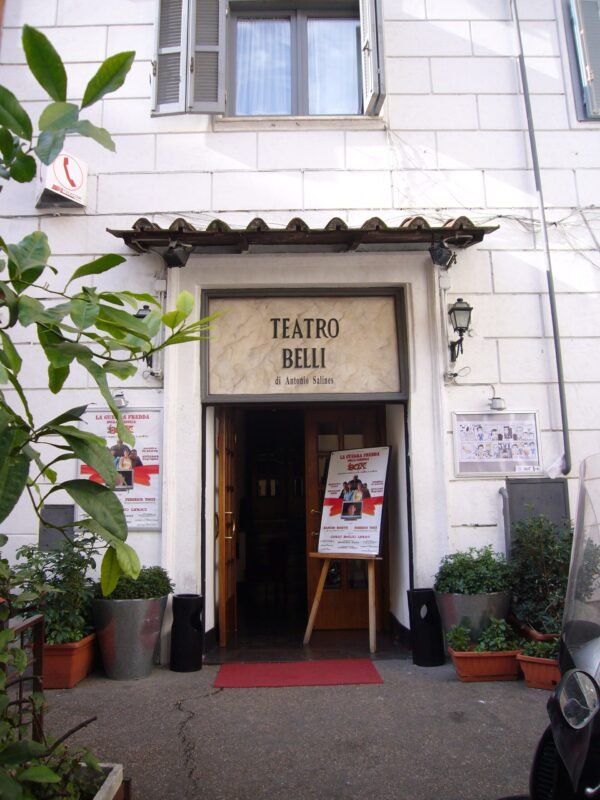
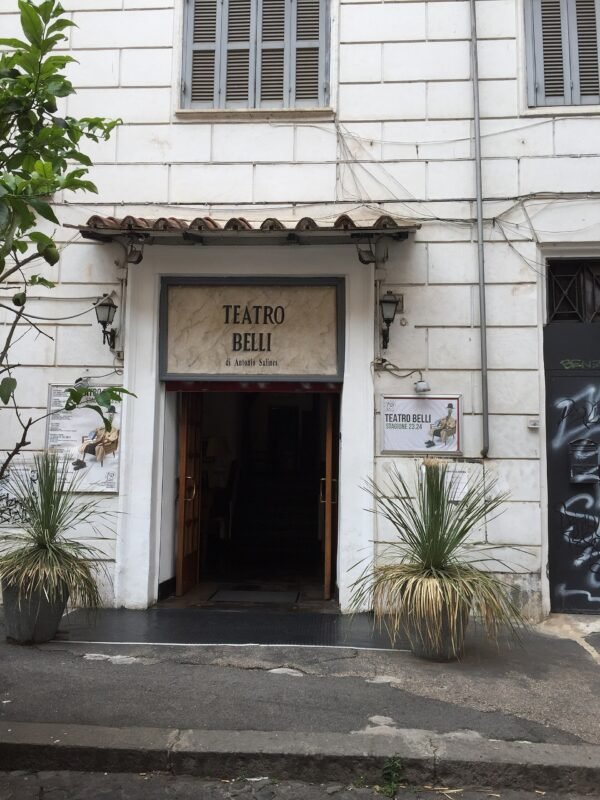
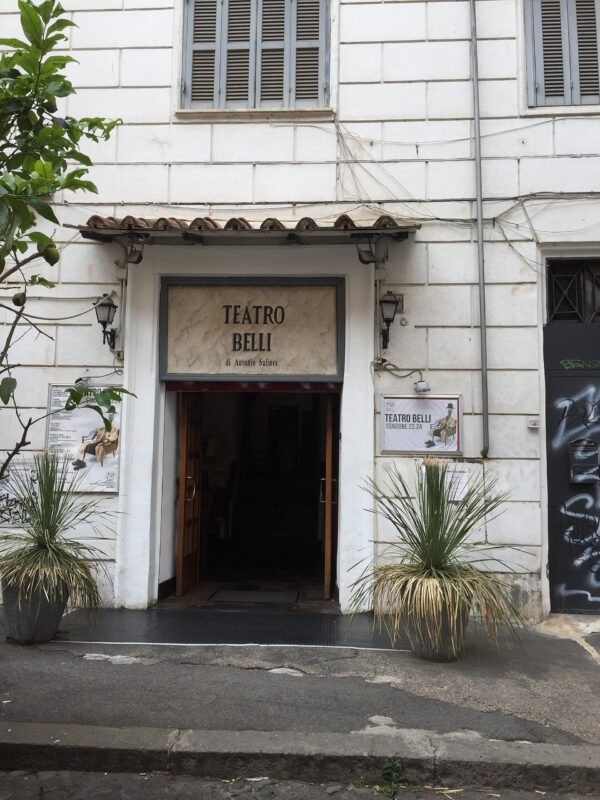
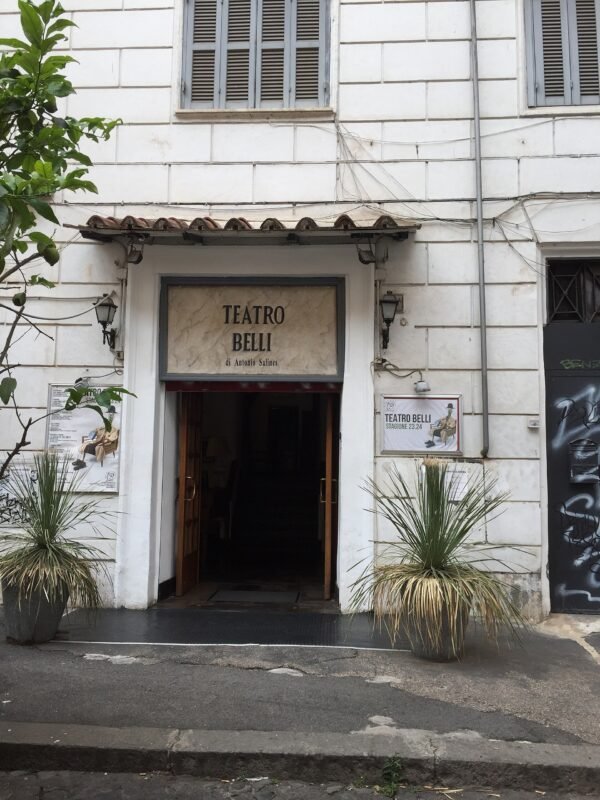
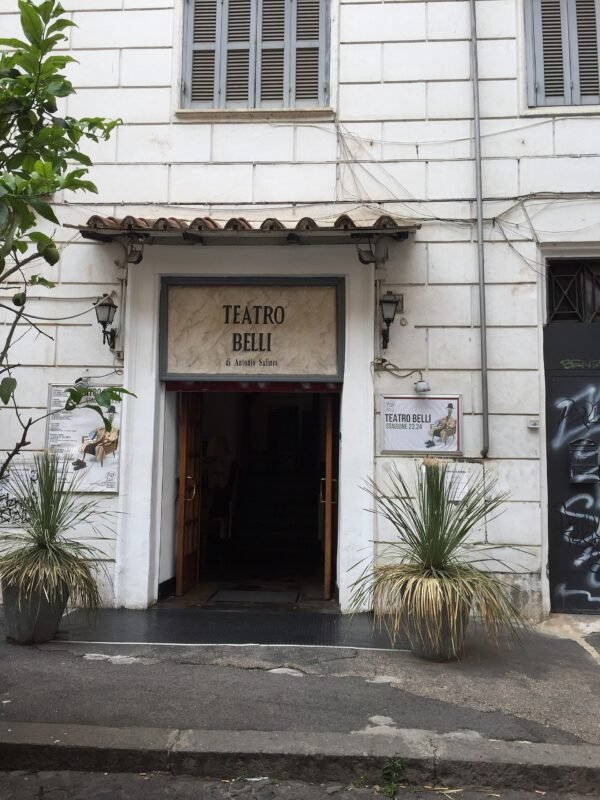
Teatro Belli is one of the historic halls of Roman experimental theater, at Piazza di Sant'Apollonia 11/a. Its official name today is Teatro Belli di Antonio Salines, in homage to the actor and director who reopened it in 1972.
A church, a theater, a cinema
According to the history published by the theater, the hall occupies what was the church of the monastery of Sant'Apollonia, from which the square takes its name, and it was already active as a theater in the second half of the 19th century. In the 1910s it became a cinema with the sign AMOR. In the 1950s and early 1960s it hosted nightclubs.
Antonio Salines
In 1969 Antonio Salines took over the Belli, closed and reduced to rubble, when there was talk of turning it into a restaurant. He restored it and reopened it in January 1972, remaining its artistic director for more than 40 years.
The hall
The technical sheet describes a stage 9.25 meters wide and 5 deep, with a proscenium opening of 6 meters by 4:30 and a manual curtain. The website stresses that every seat is in close contact with the stage: for a comedy of tight dialogue, built on Pinter's rhythms, it is the ideal dimension.
Something nobody tells you about Non sono cento volte by Emiliano De Martino at Teatro Belli, January 15-17, 2027
What is rarely said about a show like Non sono cento volte is that the theme of mental illness, in the theater, can be treated lightly without becoming superficial. The presentation declares it: a true comedy that makes people laugh and feel moved, and at the same time wants to make a real and very rare syndrome known. Anyone who goes in expecting a lecture in costume is wrong, and anyone who expects a farce about madmen is just as wrong. The register is that of intelligent comedy, with a young, ambitious and lonely professional at its center. The second thing nobody mentions concerns the hall. The Belli is small and intimate, and the website claims it: every seat is in close contact with the stage. In a show inspired by Pinter, made of pauses and glances, closeness makes the difference: from here you see every hesitation, and the acting has nowhere to hide. The third thing is practical. Trastevere on Friday and Saturday nights is one of the most crowded areas of Rome, and reaching Piazza di Sant'Apollonia a few minutes before 21:00 can be complicated. It is best to arrive well ahead, perhaps by having dinner first, or to choose Sunday at 17:30, when the district is quieter and you come out with time for an unhurried dinner.
Tickets for Non sono cento volte
Tickets for Non sono cento volte are bought from the official website of Teatro Belli, which links to the authorized presale network, or at the box office at Piazza di Sant'Apollonia 11/a.
The rates
Full price 20 euros, reduced 15 euros, according to the official rates published by the theater.
The box office
The box office is open Tuesday to Sunday before the start of the performances. You can contact it at 06 5894875 or at botteghino@teatrobelli.it.
Which performance
With only three dates and a small hall, seats are few: it is best to buy in advance, especially for Saturday.
The advice I give you for visiting Non sono cento volte by Emiliano De Martino at Teatro Belli, January 15-17, 2027
My advice is to choose the Sunday performance at 17:30. Trastevere on a January Sunday afternoon is more livable than on weekend evenings, you find seats in the restaurants, and after the show the whole evening is left for a quiet dinner in the district. Those who prefer the evening should choose Friday, less crowded than Saturday. On preparation: you don't need to read up on Ganser syndrome before going in, because the show is built precisely to make it known. It is better to arrive curious and willing to follow two time layers that alternate, the 1898 of Doctor Ganser and the present of Melania Flores. Fans of Harold Pinter's theater will enjoy spotting the declared homages: the pauses, the short dialogues, the everyday situations that slide into the unsettling. In our view it is also a show suited to those who work in health care, psychology or research: the loneliness of the young psychiatrist before a wary scientific community is a theme that people in that line of work recognize. On site: at the Belli every seat is close to the stage, so the choice matters less than elsewhere. The center rows remain the best for catching the dialogue. Finally, arriving a quarter of an hour early lets you pick up your tickets without anxiety and enter a hall with more than a century of history.
How to get to Teatro Belli
Teatro Belli is at Piazza di Sant'Apollonia 11/a, in the pedestrian part of Trastevere, between Piazza di Santa Maria in Trastevere and Viale di Trastevere.
By public transport
Viale di Trastevere is served by trams and buses that connect it with the historic center. From the nearest stop you continue on foot through the alleys to the square. Updated lines and schedules, also for the evening return, can be checked on the ATAC route planner.
On foot from the center
From Campo de' Fiori you cross Ponte Sisto and enter Trastevere. From there Piazza di Sant'Apollonia is a few minutes away. It is often the fastest solution, especially on Saturday night.
By car and taxi
Trastevere is largely a limited traffic zone in the evening hours, and parking in the alleys is almost impossible. It is better to leave the car outside the district and finish on foot, or have the taxi drop you at the edge of the pedestrian zone.
Another well-known fact, yet rarely mentioned
That Trastevere is the district of small theaters and independent companies is well known to those who follow the Roman scene. Less often cited is how much the history of the Belli tells, on its own, a century and a half of transformations of entertainment in the city. The hall was born from a church, that of the monastery of Sant'Apollonia. In the second half of the 19th century it was already a theater, and on its stage passed Gustavo Modena, Ermete Novelli, Leopoldo Fregoli, Lina Cavalieri and Ettore Petrolini. In the 1910s it became a cinema, the AMOR cinema, as happened to many small halls when silent film won over the popular audience. In the 1950s and early 1960s it hosted nightclubs, until closure and abandonment. Then, in 1969, Antonio Salines took it over reduced to rubble, while there was talk of making it a restaurant, and in January 1972 he reopened it as an experimental theater. A second fact, tied to the show: Ganser syndrome was described in 1898, in the very years when the Belli was a 19th-century theater with great actors on its stage. The two timelines of Non sono cento volte, 1898 and today, thus find a curious correspondence with the history of the hall. A third fact: the official name today, Teatro Belli di Antonio Salines, pays homage to the man who saved the hall from becoming a restaurant.
Trastevere around Teatro Belli
Piazza di Sant'Apollonia is a few steps from Piazza di Santa Maria in Trastevere, in the fabric of alleys and small squares of the district.
Santa Maria in Trastevere
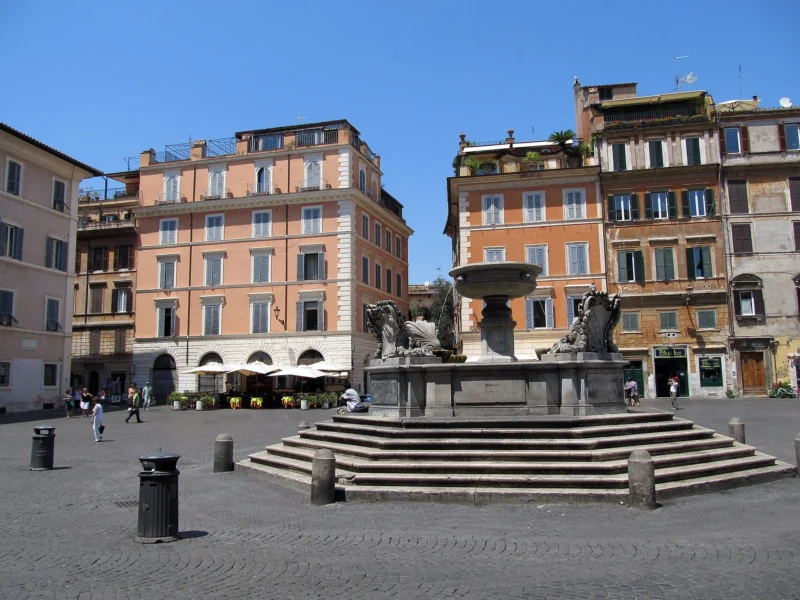
The Basilica of Santa Maria in Trastevere is the most natural stop before the show, with the square and the fountain lit in the evening.
The district
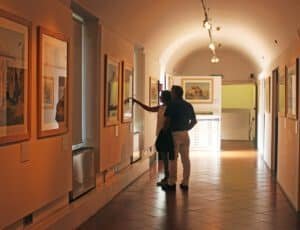
For those with a few hours, Trastevere offers the Basilica of Santa Cecilia and the Museo di Roma in Trastevere, devoted to the popular life of the city.
The Janiculum and the Tiber Island
Going up you reach the Janiculum. Going down toward the Tiber, the Tiber Island. Two short walks for Sunday afternoon, before the 17:30 performance.
Organizing the evening in Trastevere
With performances on Friday and Saturday at 21:00 and on Sunday at 17:30, Non sono cento volte lends itself to two different kinds of outing, one in the evening and one in the afternoon.
Friday and Saturday
Arrive in Trastevere around 19:00, stroll between Piazza di Santa Maria in Trastevere and Piazza di San Cosimato, eat an early dinner and then enter the hall at 21:00. On the way out the district is still lively, for a drink and a discussion about who was right, Melania or her mentors.
Sunday
A walk on the Janiculum or the Tiber Island in the early afternoon, the show at 17:30, then an unhurried dinner. It is the most relaxed formula, and the best suited to those coming from outside Rome.
After the show
Two weeks later, from January 29 to 31, the Belli presents La banalità del male by Paola Bigatto and Anna Gualdo, based on the work of Hannah Arendt, with Anna Gualdo and produced by Società per Attori: Friday at 21:00, Saturday at 19:00, Sunday at 17:30, with the same rates of 20 and 15 euros. Fans of spoken-word theater can note both dates.
The right photo to take at Non sono cento volte by Emiliano De Martino at Teatro Belli, January 15-17, 2027
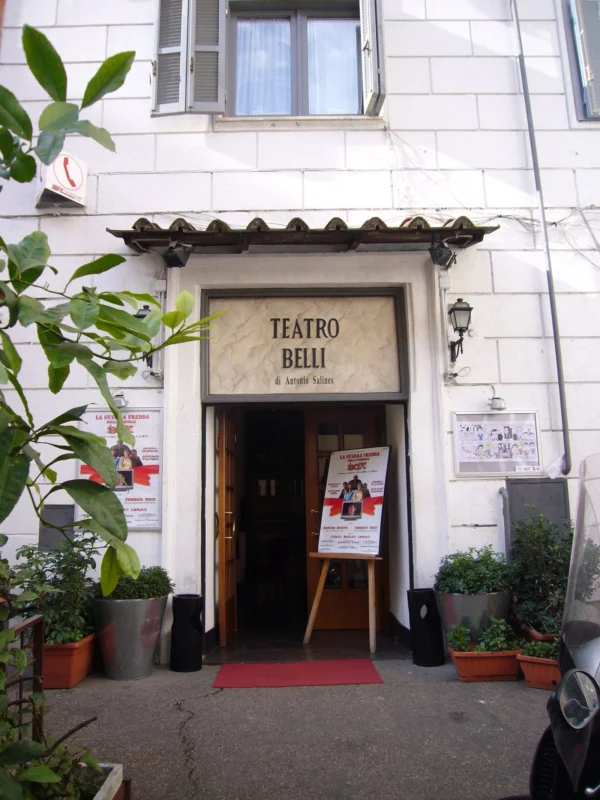
No photos during the show: in a hall where every seat is close to the stage, a lit screen is visible from the stage and disturbs the actors, and in a comedy of pauses and tight dialogue a moment is enough to lose the thread. The first right photo is the entrance of the Belli on Piazza di Sant'Apollonia, with its sign and the poster of Non sono cento volte: the intimate facade, in a small square of Trastevere, is one of the most recognizable theater images of the district. The second is taken in the evening, before or after the performance, in Piazza di Santa Maria in Trastevere, with the facade of the basilica lit. The third is a detail: the sentence that sums up the show, what is rare is not invisible, written on the program sheet or the poster, photographed next to the ticket. It is a good reminder of what you saw and why. Those who love the stories of places should remember, as they shoot, that the hall occupies what was the church of the monastery of Sant'Apollonia. No flash and no video during the applause, unless the theater says otherwise.
Where to eat before or after the show
Trastevere has one of the highest concentrations of trattorias, pizzerias and osterias in Rome, and around Piazza di Sant'Apollonia you find them at every corner.
Before the 21:00 performance
An early dinner in a trattoria toward Viale di Trastevere or Piazza di San Cosimato, with fairer prices than the main squares, or a supplì and a slice of pizza.
After Sunday afternoon
When the 17:30 performance lets out the district is quiet: it is the right moment for an unhurried dinner, booking at the most popular places.
Some important events that took place here in history
The history of Teatro Belli is read in layers, like that of Trastevere. The first layer is religious: the hall occupies what was the church of the monastery of Sant'Apollonia, from which the square also took its name. The second is from the 19th century: in the second half of the century the building was already an active theater, and on its stage passed some of the great names of the Italian scene, from the great Risorgimento actor Gustavo Modena to Ettore Petrolini. The third layer is cinema: in the 1910s the hall became a movie house with the sign AMOR. The fourth is nocturnal: in the 1950s and early 1960s nightclubs followed one another there, until the closure of the last one after a bloody incident at the entrance, and then abandonment. The fifth layer begins in 1969, when Antonio Salines took over the ruined building, destined to become a restaurant, and restored it. The reopening of January 1972 made the Belli one of the places of Roman experimental theater, and Salines remained artistic director for more than 40 years. The sixth layer is the present: the 2026/2027 season, with independent productions, the Théâtre Français de Rome, contemporary circus shows and English-language fairy tales for young people, continues the vocation of a hall open to companies seeking an attentive audience. Non sono cento volte, in mid-January, and La banalità del male by Paola Bigatto and Anna Gualdo, from January 29 to 31, are the events with which the Belli opens the new year.
Accessibility, young people and practical information
For information on access for people with disabilities at Teatro Belli, it is best to contact the box office at 06 5894875 or by email before buying.
With young people
Non sono cento volte is suitable for high school students and university students, in particular in medicine, psychology and health disciplines: the theme of research and rarity is treated in the form of comedy. It is not designed for small children.
The period
Mid-January in Rome is a quiet period after the holidays. Trastevere remains lively on weekends, but without the crowds of summer evenings.
Who has passed through Non sono cento volte by Emiliano De Martino at Teatro Belli, January 15-17, 2027
The stage on Piazza di Sant'Apollonia has seen pass, between the 19th and early 20th centuries, some of the biggest names of Italian theater. The history published by the theater cites Gustavo Modena, the great Risorgimento actor, Ermete Novelli, among the leading showmen of the stage at the turn of the century, Leopoldo Fregoli, the inventor of theatrical quick-change, Lina Cavalieri, soprano and diva of the Belle Époque, and Ettore Petrolini, the Roman comedian who marked 20th-century variety. After the rebirth of 1972, for more than 40 years the hall hosted actors, directors and authors of Italian experimental theater under the direction of Antonio Salines. The 2026/2027 season program has brought to the Belli, among others, Massimo Odierna with La figlia di Kioto Zhang, Marianna Adamo with Le statue di sale, Moisé Curia and Manuela Zero, the Théâtre Français de Rome, Lia Grieco, Claudia Coli and Francesco Bonomo. From January 15 to 17, 2027 it is the turn of Emiliano De Martino and his company: Lucrezia Calzoni, Domiziano Toniolo, Roberta Pinto, Alfonso Brescia, Vincenzo Longobardi and Marina Vitolo. And with them, ideally, two historical figures: Sigbert Ganser, the physician who in 1898 described the syndrome at the center of the comedy, and Sigmund Freud, in the role of the skeptic. After them, at the end of January, Anna Gualdo will arrive with La banalità del male, based on Hannah Arendt.
Frequently asked questions about Non sono cento volte at Teatro Belli
When does Non sono cento volte play at Teatro Belli?
Non sono cento volte plays at Teatro Belli in Rome from January 15 to 17, 2027: Friday 15 and Saturday 16 at 21:00, Sunday 17 at 17:30. The theater is at Piazza di Sant'Apollonia 11/a, in Trastevere.
How much do tickets for Non sono cento volte cost?
For Non sono cento volte Teatro Belli lists as official rates 20 euros full price and 15 euros reduced. Tickets are bought from the theater's website, which links to the authorized network, or at the box office.
What is Non sono cento volte about?
Non sono cento volte tells the story of Melania Flores, a young psychiatrist obsessed with Ganser syndrome, who finds two cases among her patients. Her story intertwines with that of Doctor Ganser in 1898, in a comedy that aims to make a real and rare syndrome known.
Who is in the cast of Non sono cento volte?
The cast of Non sono cento volte is Lucrezia Calzoni, Domiziano Toniolo, Roberta Pinto, Alfonso Brescia and Vincenzo Longobardi, with the special appearance of Marina Vitolo. Text and direction are by Emiliano De Martino, production by EDM Factory.
What is Ganser syndrome?
Ganser syndrome is a rare psychiatric syndrome, described in 1898 by the physician Sigbert Ganser. According to the presentation by Teatro Belli, about 100 officially confirmed cases are counted from its discovery to today: hence the title of the show.
How do you get to Teatro Belli?
Teatro Belli is at Piazza di Sant'Apollonia 11/a, a few steps from Piazza di Santa Maria in Trastevere. You get there on foot from Campo de' Fiori across Ponte Sisto, or by the lines that run along Viale di Trastevere. Schedules can be checked on the ATAC website.
Is Non sono cento volte suitable for young people?
Non sono cento volte is suitable for high school students and university students, especially in health and psychology subjects. It is a comedy that treats a scientific theme lightly. It is not designed for small children.
The final advice on Non sono cento volte at Teatro Belli
A comedy about a very rare syndrome, inspired by Pinter, with two eras intertwined: Non sono cento volte is one of those titles that only small halls like the Belli can afford to program. In our view it is worth the curiosity, especially for those who love spoken-word theater and for those who work in the world of care. The advice is to choose Sunday at 17:30, arrive early in Trastevere and stay for dinner after the show: only three performances, in a small hall, call for booking in good time.
Article written by the editorial team of Tour Leader Pro, contact them for Private/Corporate/V.I.P. Tours and Experiences.
Planning a trip to Rome? The English-language guides to visiting the city are on ItalyPlanner.com.
Contact Information
Nearby
 Teatro Belli100 m
- Piazza di Santa Maria in Trastevere100 m
- Basilica of Santa Maria in Trastevere100 m
- Museo di Roma in Trastevere200 m
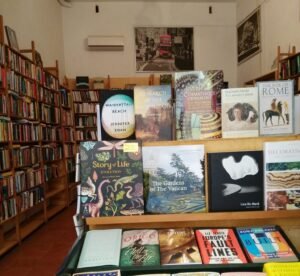
- Almost Corner Bookshop200 m
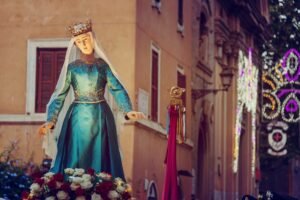
- Church of Sant’Agata in Trastevere200 m
Upcoming events nearby
- RE_Mare at Teatro Belli, December 1 to 6, 2026100 m
- Vite da strada at Teatro Belli, from November 5 to 8, 2026100 m
- Luci rotte at Teatro Belli, December 8 to 11, 2026100 m
- Il Calamaro at Teatro Belli, November 17 to 19, 2026100 m
You might also like
- The Banality of Evil at Teatro Belli, January 29-31, 2027
- Maledetto Stanislavskij at Teatro Trastevere, December 8 to 13, 2026
- Riflussi by Igor Maltagliati at Teatro Trastevere, November 20 to 22, 2026
- Shake it out at Teatro Trastevere, from November 5 to 8, 2026
- Anche quando puoi at Teatro Trastevere, December 4 to 6, 2026
- Le Parole delle Scrittrici at Museo di Roma in Trastevere, October 15, 2026 to May 27, 2027