The Banality of Evil at Teatro Belli, January 29-31, 2027
In short. The Banality of Evil (La banalità del male), a show drawn from the work of Hannah Arendt, written and directed by Paola Bigatto and Anna Gualdo and performed by Anna Gualdo, is staged at Teatro Belli, at Piazza di Sant'Apollonia 11/a in…
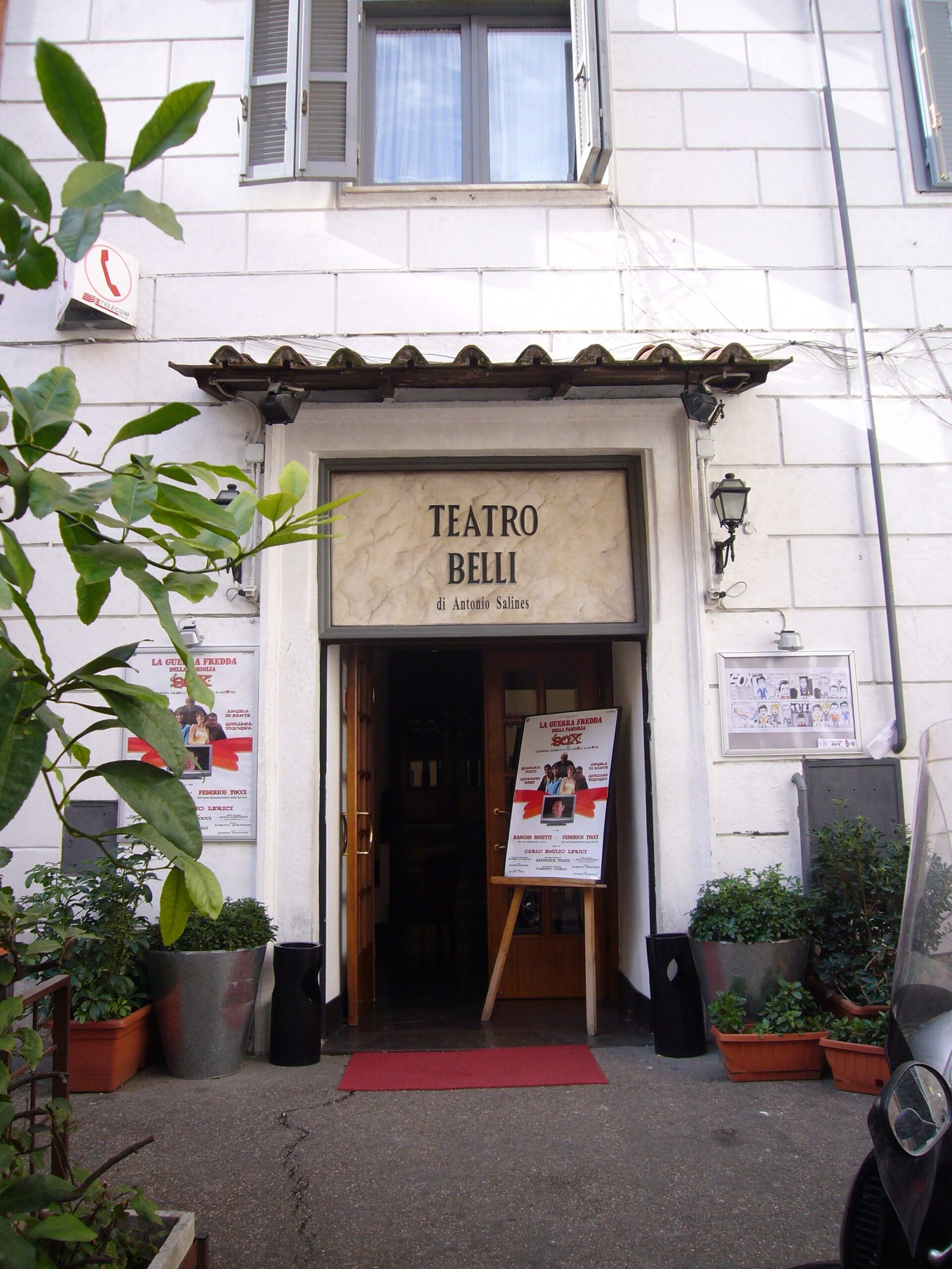
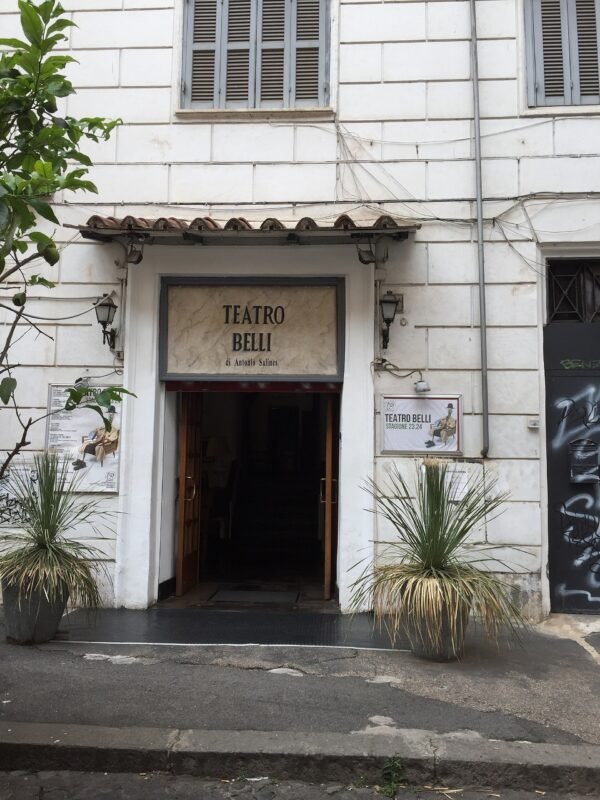
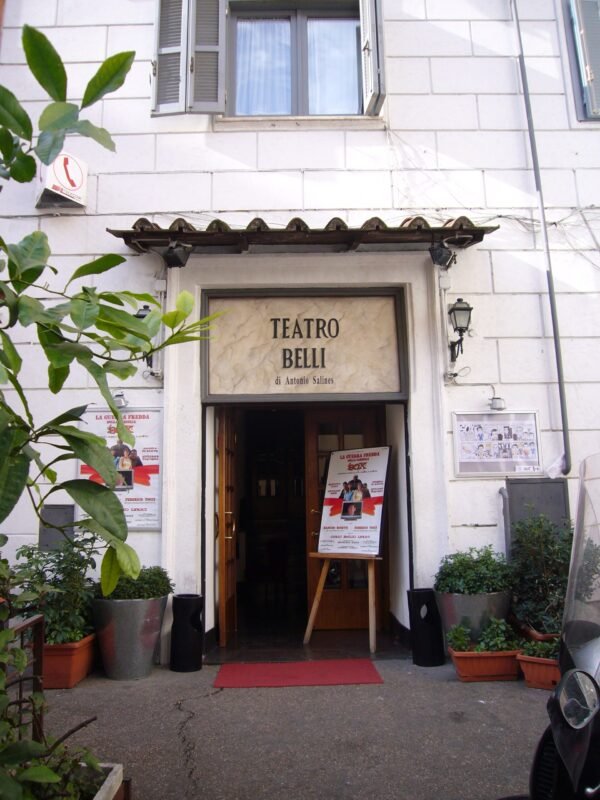
The Banality of Evil (La banalità del male), a show drawn from the work of Hannah Arendt, written and directed by Paola Bigatto and Anna Gualdo and performed by Anna Gualdo, is staged at Teatro Belli, at Piazza di Sant'Apollonia 11/a in Trastevere, from Friday, January 29 to Sunday, January 31, 2027. Performances are Friday at 21:00, Saturday at 19:00 and Sunday at 17:30, the official prices published by the theater are 20 euros full price and 15 euros reduced. Tickets are bought at the box office on Piazza Sant'Apollonia, open Tuesday to Sunday before performances begin (06 5894875, botteghino@teatrobelli.it), or on the authorized presale circuit indicated on the show's page on the Belli website. The theater is reached by tram 8, getting off at the Belli stop in Piazza Belli on Viale di Trastevere, or on foot from the center across Ponte Sisto. The production is by Società per Attori, with Elisa Menchicchi as assistant director and Ania Rizzi Bogdan as stage manager.
Language: performed in Italian. No English version or English surtitles are announced.
The Banality of Evil at Teatro Belli: dates, times and prices
The Banality of Evil runs at Teatro Belli for three performances, January 29-31, 2027, with tickets at 20 euros full price and 15 euros reduced.
The three performances
The theater lists three different times: Friday, January 29 at 21:00, Saturday 30 at 19:00, Sunday 31 at 17:30. The Saturday performance lets you have dinner after the show without staying late, the Sunday afternoon one is best for those coming from outside Rome or for bringing high school kids to the theater.
The prices
The Belli's official rates for The Banality of Evil are 20 euros for a full-price ticket and 15 euros for a reduced one. These are prices for a small research theater, in keeping with the theater's history.
The box office
The Belli box office opens Tuesday to Sunday before performances begin, the number is 06 5894875, the email botteghino@teatrobelli.it. For a hall of this size a phone call remains the quickest way to find out how many seats are left.
The show: Hannah Arendt at the Eichmann trial
The Banality of Evil stages the account Hannah Arendt wrote on the trial of Adolf Eichmann, held in Jerusalem in 1961, which appeared in 1963 first in The New Yorker and then as a book.
The text
The show is drawn from Hannah Arendt's work, written and directed by Paola Bigatto and Anna Gualdo and entrusted to the voice and body of Anna Gualdo, the sole performer. It is a form of civic theater that starts from a book, and a book of thought, not a novel: the dramaturgy must turn a philosophical reportage into a theatrical action.
Arendt's gaze
The Teatro Belli's presentation recalls that Arendt observes the machinery of Israeli justice with an implacably critical eye. She does not hesitate, as a Jew, to investigate the moral responsibilities of the Jewish people in the tragedy of the Holocaust, nor to attribute to the whole German people heavy responsibilities during Nazism and hypocritical feelings of guilt during the reconstruction. It is this freedom of judgment, uncomfortable for everyone, that the show restores.
The production
The show is a production of Società per Attori. On stage is only Anna Gualdo, assistant direction is by Elisa Menchicchi, stage management by Ania Rizzi Bogdan. An essential team for a compact hall like the Belli, where the word arrives unfiltered.
Hannah Arendt, the author
Hannah Arendt, born Johanna Arendt in Linden, today part of Hannover, on October 14, 1906 and died in New York on December 4, 1975, was a German-born historian, philosopher and political theorist, naturalized American, one of the most influential political theorists of the twentieth century.
The training
She grew up in Königsberg, Kant's city, in a secular and progressive Jewish family. She studied philosophy at Marburg, where she was a student of Martin Heidegger, and then at Heidelberg, where she earned her degree in 1929 with a thesis on the concept of love in Saint Augustine. The Belli's presentation recalls that she was a student of Heidegger and Jaspers.
The exile
Because of racial persecution she emigrated in 1933 from Germany to France, and from there in 1940 to the United States. From 1941, the theater recalls, she taught at the most prestigious American universities, though refusing permanent posts, and published some of the most important texts of the twentieth century on the relationship between ethics and politics.
The works
Arendt established herself as a political theorist with The Origins of Totalitarianism, in 1951. The Human Condition followed in 1958, Eichmann in Jerusalem in 1963, Men in Dark Times in 1968. She died suddenly in 1975, leaving her last work, The Life of the Mind, unfinished.
The Banality of Evil: the book and the controversy
Eichmann in Jerusalem. A Report on the Banality of Evil is the diary of Hannah Arendt, sent as a correspondent of the weekly The New Yorker, on the sessions of the Adolf Eichmann trial: five articles published between February and March 1963 and collected in a volume in May of the same year.
The trial
Adolf Eichmann, born in Solingen in 1906, was the man who in the organizational machine of Hitler's Germany had the task of logistically carrying out the final solution. Having escaped the Nuremberg trial, he had taken refuge in Argentina, in 1960 he was captured by the Israeli secret service, tried in Jerusalem in 1961 for genocide and sentenced to death. The sentence was carried out on May 31, 1962.
A mediocre man
From the proceedings Arendt drew the idea that the evil committed by Eichmann did not stem from a malignant nature, but from a complete unawareness of the meaning of his own actions. The portrait that emerges is not that of a ferocious criminal, but of a simple man, lacking initiative and cultural and moral depth, who lived by inertia, guided by circumstances. This is where the formula of the title is born.
The controversy
The book provoked, as the Belli recalls, a great wave of protest and a heated controversy, above all from the international Jewish community, over the reading that Arendt, a Jew and a German, gave of the Holocaust and of anti-Semitism in Germany. Arendt also criticized the way the trial was conducted and the opening speech of the prosecutor Gideon Hausner.
Why the title changed
The original title is Eichmann in Jerusalem. A Report on the Banality of Evil, the Italian publisher chose to invert the order, putting the banality of evil in the foreground. Today that formula has entered everyday language, often used even by those who have never read the book.
Why see The Banality of Evil today
The Banality of Evil remains relevant because it describes a mechanism that does not concern only the past: ordinary people, not necessarily fanatical or cruel, who collaborate in evil by obeying, conforming and ceasing to think for themselves.
A lesson on thought
It is the core of the book: totalitarian regimes work because they find zealous executors among ordinary people. The show offers no easy answers, but forces the spectator to ask where the line falls between obedience and responsibility.
The theater as a tribunal
Staging a trial means turning the audience into a courtroom. In the compact hall of the Belli, with the audience a few meters from the actress, this dimension becomes concrete: in our opinion it is the ideal condition for a text that asks to judge and to be judged. That there is a single actress on stage, giving voice to the German philosopher's account before an audience a few meters away, makes it even clearer that the real proceedings take place in the spectator's head, and that the last word is theirs.
Teatro Belli: the hall on Piazza Sant'Apollonia
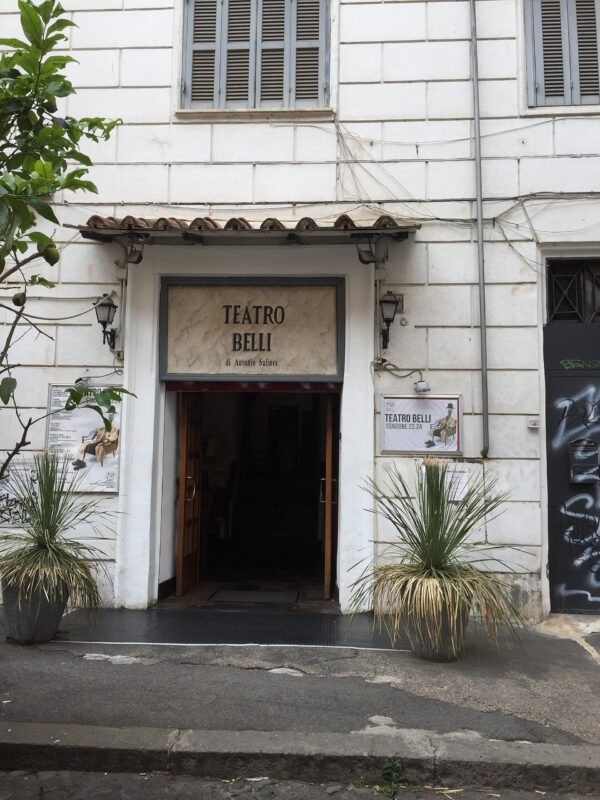
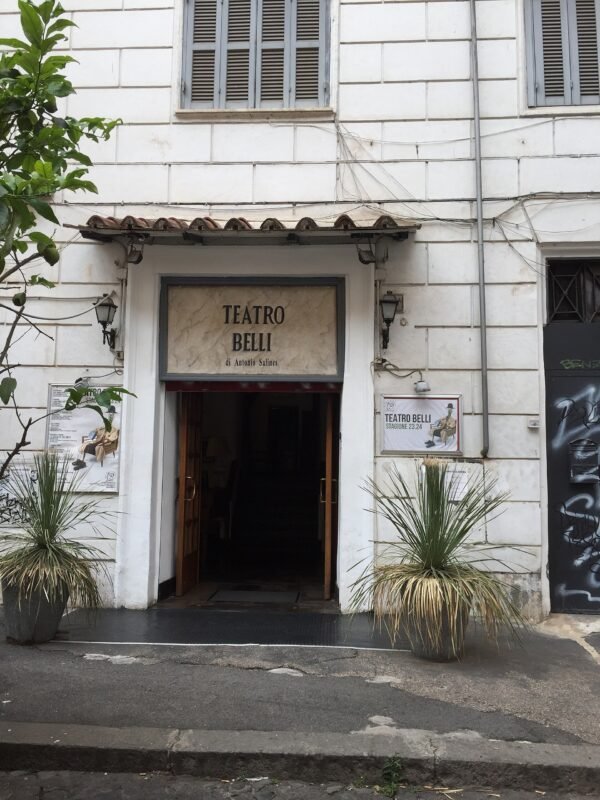
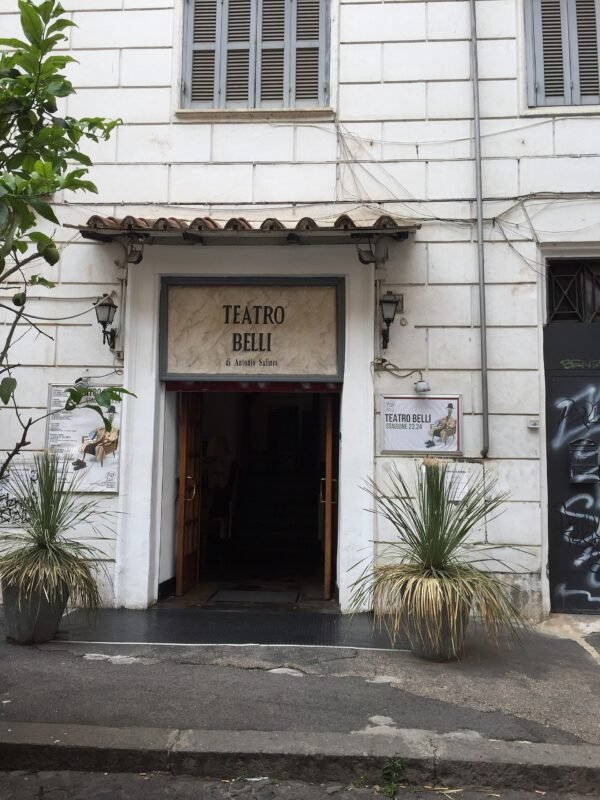
The Teatro Belli is one of the historic halls of Roman research theater, at Piazza di Sant'Apollonia 11/a, in Trastevere, its official name today is Teatro Belli di Antonio Salines, in homage to the actor and director who reopened it in 1972.
A church turned stage
According to the history published by the theater, the hall occupies what was the church of the Monastery of Sant'Apollonia, from which the piazza takes its name, and was already active as a theater in the second half of the nineteenth century. In the 1910s it became a cinema called AMOR, in the 1950s and early 1960s it housed nightclubs.
Antonio Salines
In 1969 Antonio Salines took over the Belli, closed for some time and in ruins, when its conversion into a restaurant seemed decided. He restored it and reopened it in January 1972, remaining its artistic director for over 40 years.
What the hall is like
The technical sheet describes a stage 9.25 meters wide and 5 deep, with a proscenium opening of 6 by 4.30 meters and a manual curtain. For the spectator it means a small stage box, with the audience almost in contact with the performer: for a spoken monologue like The Banality of Evil it is the right scale.
Trastevere around Teatro Belli
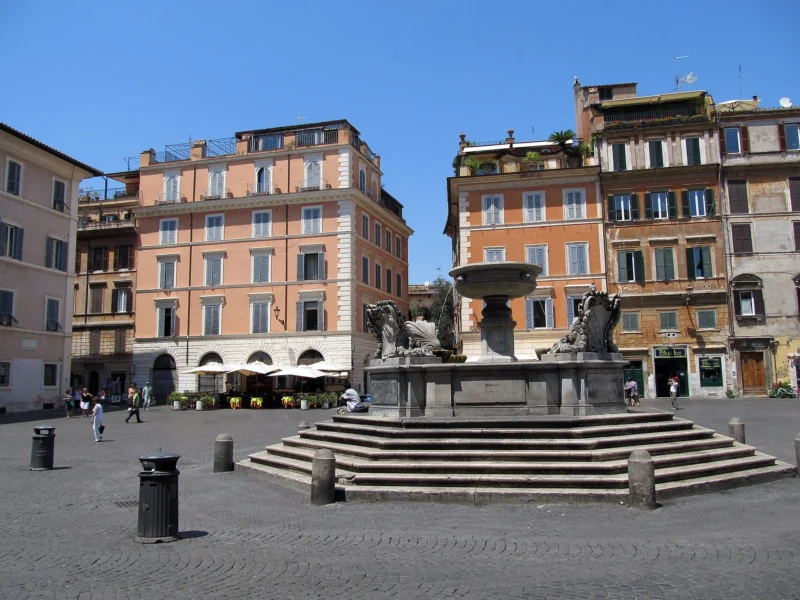
Piazza di Sant'Apollonia is a widening among the lanes of Trastevere, a short step from Piazza di Santa Maria in Trastevere, the square of the basilica and the fountain.
Santa Maria in Trastevere
The basilica of Santa Maria in Trastevere is the most natural destination before the show: the facade with its mosaics lit in the evening is the image many associate with the district.
Toward the Tiber
Going down toward the river you meet the basilica of Santa Cecilia and, beyond the Lungotevere, the Tiber Island. Toward the north Ponte Sisto connects the district with Via Giulia and Campo de' Fiori.
Museums and hills
The Museo di Roma in Trastevere, on Piazza di Sant'Egidio, is a few minutes on foot. For those with Sunday free before the 17:30 performance, the climb to the Janiculum Hill is the best walk in the area.
How to get to Teatro Belli for The Banality of Evil
Teatro Belli is reached by tram 8, which runs along Viale di Trastevere, getting off at the Belli stop in Piazza Belli and continuing on foot toward Piazza di Sant'Apollonia in a few minutes.
By tram and bus
Tram 8 connects Piazza Venezia and Largo di Torre Argentina with Viale di Trastevere and Monteverde: from the historic center it is the simplest way, as long as you first check that the line is running regular service. Several bus lines run along Viale di Trastevere and the Lungotevere, the up-to-date route is checked on Rome's official public transport channels.
On foot from the center
From Campo de' Fiori you cross Ponte Sisto and in about 10 minutes reach Piazza di Santa Maria in Trastevere, from there Piazza di Sant'Apollonia is a step away. It is often the quickest solution, because evening traffic on Viale di Trastevere can be heavy.
By car and taxi
Trastevere is largely a limited traffic zone in the evening hours and parking in the lanes is nearly impossible. It is best to leave the car outside the district, by taxi, have yourself dropped on Viale di Trastevere or at Piazza Trilussa.
A curiosity about The Banality of Evil at Teatro Belli, January 29-31, 2027
The most significant curiosity concerns the calendar. The three performances at Teatro Belli fall on January 29-31, 2027, a few days after January 27, Holocaust Remembrance Day (Giorno della Memoria), the international observance designated by the United Nations General Assembly in 2005 to commemorate the victims of the Holocaust. In those days Rome fills with meetings, readings and shows devoted to the Shoah, and The Banality of Evil arrives as a different voice: not a testimony of the victims, but an inquiry into the perpetrator and the mechanisms that made him possible. It is a perspective that caused a scandal in 1963 and still throws people today. The second curiosity concerns the title itself. In the English original the book is called Eichmann in Jerusalem, and the banality of evil appears only in the subtitle, it was the Italian publisher who chose to invert the order. So, at least in Italy, Arendt's formula became the title, and then a figure of speech. The third curiosity is biographical: Eichmann and Arendt were born in the same year, 1906. The defendant and the philosopher watching him as a correspondent belonged to the same German generation, and had made opposite choices.
One thing nobody tells you about The Banality of Evil at Teatro Belli, January 29-31, 2027
What the presentations do not say is that The Banality of Evil is a much more ironic book than its fame suggests. Arendt describes Eichmann with almost comic precision: the unremarkable student, the traveling salesman, the man who joins the SS almost by chance, on a friend's suggestion, and who enrolls in the security service mistaking it for the one escorting the party's high officials. This very mediocrity, recounted with detachment, is what makes the book so disturbing. Those who go to the theater expecting only a painful tale will also discover a grotesque portrait, in which horror is born from normality. The second thing concerns preparation: you do not need to have read the book to follow the show, but knowing in broad terms who Eichmann was and what the Jerusalem trial was helps catch the densest passages. The third concerns the audience. In a small hall like the Belli, a show of this kind creates a very concentrated atmosphere, at times charged with emotion, at the end of the performance it is natural to feel the need to talk about it. It is a good sign: it means Arendt's question, how one becomes complicit, has landed.
The advice I give you for visiting The Banality of Evil at Teatro Belli, January 29-31, 2027
The advice is to build an afternoon of remembrance before the show, taking advantage of Trastevere's closeness to some of the most important places in Rome's Jewish history. From Teatro Belli you can walk, crossing the Tiber Island, to the Jewish Ghetto of Rome and the Jewish Museum: before planning the visit, check opening days and hours on the museum's website. For those who want to widen the view, the page on the places of memory in Rome collects the main stops, from the stumbling stones to the sites of the Resistance. The second piece of advice concerns the performance: in our opinion Sunday at 17:30 is best, because it leaves time for a morning visit and a relaxed dinner afterward, Friday at 21:00 is the most intimate. The third piece of advice is reading: even a single chapter of Arendt's book, the one devoted to the portrait of the defendant, prepares you well for the evening.
Another well-known fact, yet rarely mentioned
It is well known that Hannah Arendt was a student of Martin Heidegger at Marburg, it is remembered less often that her doctoral thesis, defended at Heidelberg in 1929, was devoted to the concept of love in Saint Augustine. The philosopher who would describe totalitarianism and the banality of evil began her career by studying love in a Church Father. It is a detail that helps understand her method: Arendt never starts from evil in the abstract, but from relations between people, from what unites them and from what makes them indifferent to one another. A second little-cited fact concerns her way of working. Arendt taught at several American universities but always refused permanent posts: she preferred to stay free. The New Yorker reportage too was born of this freedom, and the controversy that followed the book, recalled by Teatro Belli itself, was the price of that independence. A show that stages that text today also pays homage to the courage of those who write what they think, knowing it will please no one.
The right photo to take at The Banality of Evil at Teatro Belli, January 29-31, 2027
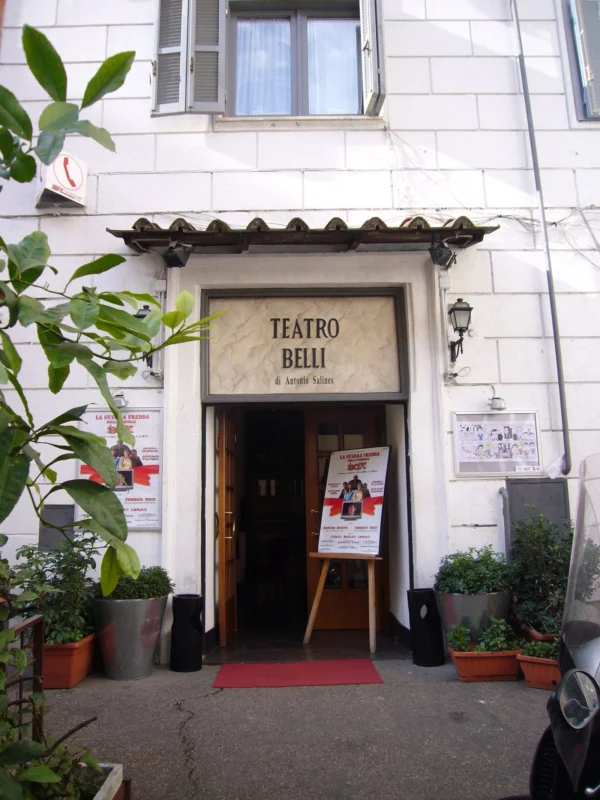
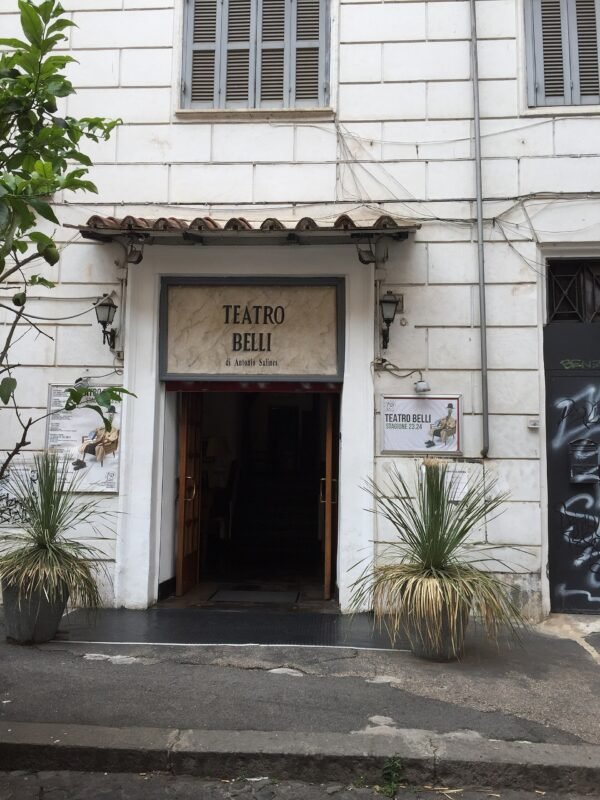
No photographs during the show. It is a rule of respect toward the performer, and in so small a hall the glow of a phone is seen from the stage and breaks the concentration of a text that asks for silence. The right photo is taken outside. The first is the theater entrance in Piazza di Sant'Apollonia at nightfall, with the sign and the poster of The Banality of Evil, the one with the oranges on a gray background: the little square is compact, the light of the street lamps falls raking on the facades, and the frame conveys the idea of a neighborhood theater. The second is the facade of Santa Maria in Trastevere seen from the fountain, a few steps away: the mosaics lit in the darkness of late January are one of the most recognizable images of Rome. The third, for those who did the remembrance route in the afternoon, is the Tiber seen from the Tiber Island, between Trastevere and the Ghetto: two districts that look at each other from one bank to the other. After the performance, if the actress comes out to greet the audience in the foyer, a photo with the program is a common and welcome gesture.
Some important events that took place here in history
The history of Teatro Belli reads in layers, like Trastevere's. The first layer is religious: the hall occupies what was the church of the Monastery of Sant'Apollonia, from which the piazza also took its name. The second is nineteenth-century: in the second half of the century the building was already an active theater, and on its stage passed some of the great names of the Italian scene. The third is cinema: in the 1910s the hall became a movie house with the sign AMOR, as happened to many small theaters when silent film won over the popular audience. The fourth is nocturnal: in the 1950s and early 1960s a succession of nightclubs followed, until the last one closed and the building was abandoned. The fifth layer begins in 1969, when Antonio Salines takes over the building in ruins, destined to become a restaurant, and restores it. The reopening of January 1972 makes the Belli one of the places of Roman research theater. Since then the hall has welcomed companies, authors and directors for decades, the 2026/2027 bill, with independent productions, the Théâtre Français de Rome and civic theater shows like The Banality of Evil, carries on that vocation.
Who has played at The Banality of Evil at Teatro Belli, January 29-31, 2027
The stage of Piazza di Sant'Apollonia saw pass, between the nineteenth and early twentieth centuries, some of the greatest names of Italian theater. The history published by the theater cites Gustavo Modena, the great Risorgimento actor, Ermete Novelli, among the stage stars of the turn of the century, Leopoldo Fregoli, the inventor of theatrical quick-change, Lina Cavalieri, soprano and diva of the Belle Époque, Ettore Petrolini, the Roman comedian who marked twentieth-century variety. After the rebirth of 1972, for over 40 years the hall hosted actors, directors and authors of Italian research theater under Antonio Salines's direction. In the 2026/2027 season, among others, Massimo Odierna has passed through the Belli with La figlia di Kioto Zhang, Marianna Adamo with Le statue di sale, Claudia Coli with Sarfatti. From January 29 to 31, 2027 it is the turn of Anna Gualdo and Paola Bigatto, with their team, and with them pass, ideally, Hannah Arendt, sent to Jerusalem, and the question she left to the twentieth century: how ordinary people can become instruments of evil.
Planning your evening of The Banality of Evil in Trastevere
The three performances of The Banality of Evil at Teatro Belli have different times, and each suggests a different way of experiencing Trastevere at the end of January.
Friday at 21:00
It is the full-evening performance. It is best to arrive in the district around 19:30, grab something quick on the streets toward Piazza di San Cosimato and reach Piazza di Sant'Apollonia 15 minutes early. On the way out Trastevere is still lively, and a glass in the lanes toward Piazza Trilussa closes the evening.
Saturday at 19:00
It is the most convenient performance for those who want dinner after the show without staying late. On Saturday night the district fills up early and the best places should be booked: better to fix the table before entering the hall.
Sunday at 17:30
It is the ideal performance for those coming from outside Rome, for families with kids and for those who want to devote the day to a remembrance route between Trastevere and the Ghetto. You get out at dinnertime, with darkness already fallen over the mosaics of Santa Maria in Trastevere.
Seats and visibility
In a compact hall like the Belli almost all seats have good visibility. The front rows are very close to the performer and make the experience more intense, those who prefer an overall view choose the central rows.
Teatro Belli's January bill
The Banality of Evil closes a January in which Teatro Belli alternates contemporary comedy and civic theater, with official rates of 20 euros full price and 15 reduced for the other titles too.
Two weeks earlier
From January 15 to 17 the Belli hosts Non sono cento volte, written and directed by Emiliano De Martino for EDM Factory, with Lucrezia Calzoni, Domiziano Toniolo, Roberta Pinto, Alfonso Brescia, Vincenzo Longobardi and the participation of Marina Vitolo. The theater's presentation describes it as a true comedy founded on the tight rhythms of Pinteresque writing.
Two ways of being in the hall
Those following the bill can see in the same month two faces of the small hall on Piazza Sant'Apollonia: the choral comedy and the monologue of thought. It is a variety that has belonged to the Belli's history since Antonio Salines's reopening.
Where to eat before or after The Banality of Evil
Trastevere is the area of Rome with the highest density of trattorias, pizzerias and osterias, and around Piazza di Sant'Apollonia you find them at every corner, the point is to avoid those that live off passing tourists.
Trattorias and pizzerias
On the streets toward Viale di Trastevere and toward Piazza di San Cosimato you find places frequented by Romans, with fairer prices than on the main square. A slice of pizza or a supplì before the 21:00 performance is the quickest solution.
After the theater
After the evening performances the lanes between Piazza Trilussa and Santa Maria in Trastevere stay lively until late: for a glass and a discussion of what you have seen, it is the right area.
Accessibility, age and practical information
Teatro Belli is a historic hall carved out of an old building among the lanes of Trastevere: those with reduced mobility do well to phone the box office before buying to arrange access.
The district's paving
Trastevere's sampietrini are uneven and, after rain, slippery. At the end of January comfortable shoes and a folding umbrella are the most practical advice.
With kids
The Banality of Evil is a show suited to high school students, especially those studying twentieth-century history or philosophy: the show offers direct access to a fundamental text. For younger kids the theme is too demanding, and it is best to postpone the encounter with this text to the high school years.
Frequently asked questions about The Banality of Evil
When is The Banality of Evil staged at Teatro Belli?
The Banality of Evil is staged at Teatro Belli in Rome from January 29 to 31, 2027: Friday at 21:00, Saturday at 19:00 and Sunday at 17:30.
How much do tickets for The Banality of Evil cost?
For The Banality of Evil Teatro Belli publishes official rates of 20 euros full price and 15 euros reduced. Tickets are bought at the box office on Piazza Sant'Apollonia or on the authorized presale circuit indicated by the theater.
Who wrote and who performs the show?
The show The Banality of Evil is written and directed by Paola Bigatto and Anna Gualdo, drawn from the work of Hannah Arendt, Anna Gualdo is on stage. The production is by Società per Attori.
What is Hannah Arendt's The Banality of Evil about?
Hannah Arendt's The Banality of Evil is the account of the trial of Adolf Eichmann, held in Jerusalem in 1961, written for The New Yorker and published as a book in 1963. In it Arendt argues that Eichmann's evil stemmed from an inability to think, more than from a malevolent nature.
Where is Teatro Belli?
Teatro Belli is at Piazza di Sant'Apollonia 11/a, in Trastevere, a few steps from Piazza di Santa Maria in Trastevere. It is reached by tram 8, Piazza Belli stop, or on foot from the center across Ponte Sisto.
Is the show suitable for students?
The Banality of Evil is suited to high school and university students, in particular those studying twentieth-century history and philosophy. The Sunday 17:30 performance is the most convenient for families and for those coming from outside Rome.
Why is the show staged at the end of January?
The dates of The Banality of Evil at Teatro Belli, January 29-31, 2027, fall a few days after January 27, Holocaust Remembrance Day (Giorno della Memoria), dedicated to the victims of the Holocaust. The theater does not explicitly link the two, but the closeness makes the show particularly timely.
The final advice on The Banality of Evil
Few books of the twentieth century have been so often cited and so little read as The Banality of Evil. A show that stages it, in a compact hall like the Belli and in the week of Remembrance Day, is a chance to discover what Hannah Arendt really wrote, beyond the formula. In our opinion it is an evening suited to lovers of spoken-word and civic theater, and above all to kids who study the twentieth century: only three performances, modest prices, a single performer before the audience. The advice is to pair the show with a visit to the Ghetto and the Jewish Museum, across the Tiber, to choose the Sunday afternoon performance if you come with kids and to stay afterward, in Trastevere, to talk it over. It is what Arendt asked of her readers: to think, and not to stop doing so.
Article written by the editorial team of Tour Leader Pro, contact them for Private/Corporate/V.I.P. Tours and Experiences.
Planning a trip to Rome? The English guides to visiting the city are on ItalyPlanner.com.
Contact Information
Nearby
 Teatro Belli100 m
- Piazza di Santa Maria in Trastevere100 m
- Basilica of Santa Maria in Trastevere100 m
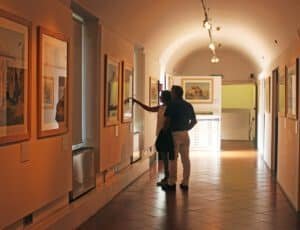
- Museo di Roma in Trastevere200 m
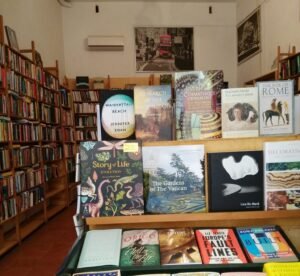
- Almost Corner Bookshop200 m
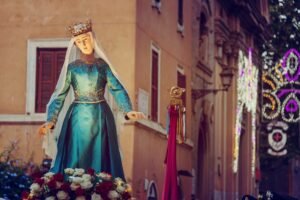
- Church of Sant’Agata in Trastevere200 m
Upcoming events nearby
- RE_Mare at Teatro Belli, December 1 to 6, 2026100 m
- Vite da strada at Teatro Belli, from November 5 to 8, 2026100 m
- Luci rotte at Teatro Belli, December 8 to 11, 2026100 m
- Il Calamaro at Teatro Belli, November 17 to 19, 2026100 m
You might also like
- Non sono cento volte by Emiliano De Martino at Teatro Belli, January 15 to 17, 2027
- Maledetto Stanislavskij at Teatro Trastevere, December 8 to 13, 2026
- Anche quando puoi at Teatro Trastevere, December 4 to 6, 2026
- Le Parole delle Scrittrici at Museo di Roma in Trastevere, October 15, 2026 to May 27, 2027
- Riflussi by Igor Maltagliati at Teatro Trastevere, November 20 to 22, 2026
- DansCirque at Teatro Belli, November 21 and 22, 2026