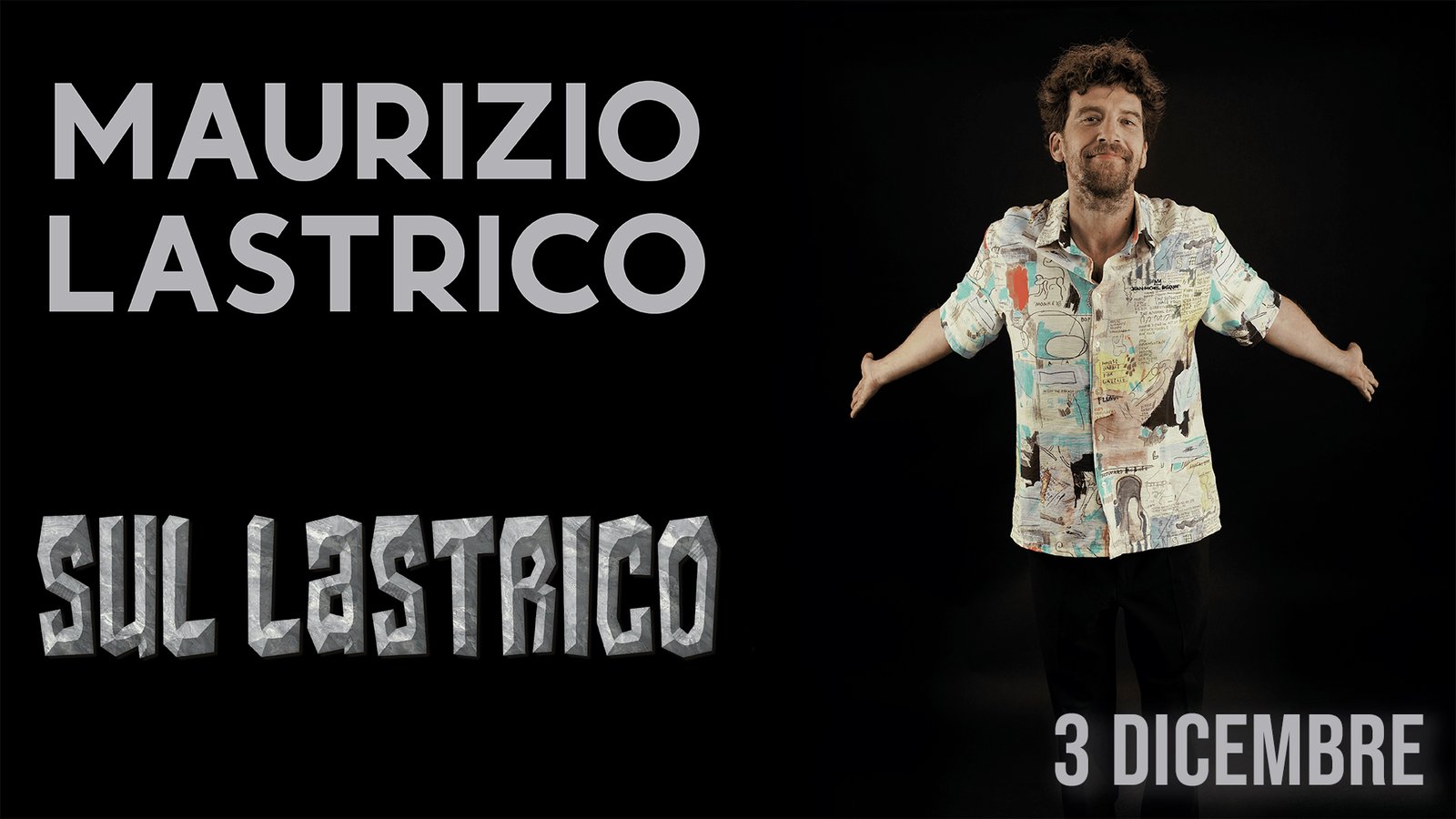
Maurizio Lastrico, Sul lastrico at Teatro Olimpico, December 3, 2026
In short. On Thursday, December 3, 2026 at 20:30 Maurizio Lastrico brings Sul lastrico, his live show between stand-up, theater and comedy in hendecasyllables, to Teatro Olimpico in Rome, at Piazza Gentile da Fabriano 17 (00196 Rome).
On Thursday, December 3, 2026 at 20:30 Maurizio Lastrico brings Sul lastrico, his live show between stand-up, theater and comedy in hendecasyllables, to Teatro Olimpico in Rome, at Piazza Gentile da Fabriano 17 (00196 Rome). The theater's calendar puts the end at around 22:00. You get there on metro line A to Flaminio and then tram 2 to Piazza Mancini terminus, from which it's about 500 meters on foot along Viale del Pinturicchio. Alternatively, take bus 910 from Termini to the Pannini stop. The prices published by the theater range from 25 to 43.50 euros, plus the presale fee (from 3.80 to 6.50 euros) and an online fee of 1.50 euros per ticket. Tickets are sold on the official Teatro Olimpico website or at the box office on Piazza Gentile da Fabriano.
Language: performed in Italian. No English version or English surtitles are announced.
For many people Lastrico is the public prosecutor Marco Nardi in Don Matteo. For Zelig viewers he's the comedian who tells everyday life in Dante's tercets. For theatergoers he's an actor from the school of the Teatro Stabile di Genova who performed Shakespeare, Goldoni and Brecht before making people laugh on TV. Sul lastrico brings the three together. Our verdict is clear: among the Italian comedians of his generation he's the one with the most solid stage training, and it shows.
Maurizio Lastrico at Teatro Olimpico: date, time, prices
Maurizio Lastrico's Sul lastrico plays Teatro Olimpico on Thursday, December 3, 2026 at 20:30, for one night only, with tickets from 25 to 43.50 euros plus presale fee, as the theater's official website states.
Date and time
There's only one Rome date: Thursday, December 3, starting at 20:30, with the end expected around 22:00. An hour and a half of show, with no intermission listed.
Prices by section
The theater lists seven sections. Poltronissima gold: 43.50 euros plus 6.50 presale fee. Side poltronissima: 40 euros plus 6. Poltrona: 35 euros plus 5.30. Balcony: 33 euros plus 5. Balcony with balustrade: 31 euros plus 4.70. Side balcony: 29 euros plus 4.40. Side balcony with balustrade: 25 euros plus 3.80. The presale fee always applies when the ticket is issued, and online there's an extra fee of 1.50 euros per ticket.
Where to buy tickets
Tickets are sold on the official Teatro Olimpico website, from the show page, or at the box office. For information the theater gives the address biglietti@teatroolimpico.it.
On the program
The evening is part of the Olimpico's 2026/2027 season. The night before, on the same stage, Umberto Galimberti gives his lecture Il Bene e il Male. After Lastrico the program continues with Fratello Sole, Sorella Luna.
Sul lastrico: what kind of show it is
In the words of the Teatro Olimpico presentation, Sul lastrico is the new show by Maurizio Lastrico, actor, stand-up, comedian and cabaret performer: a mix of stage training, exercises in style and physical comedy to tell, simply, what it means to be human.
Telling his own story
The material is his life: the joys and the bad luck, as the presentation puts it, in which anyone can recognize themselves. It's the stand-up formula, but Lastrico handles it with an actor's craft that stand-up usually lacks: the body, the voice, the changes of rhythm.
Built on meter
The show, the theater says, is built on poetic meter. Lastrico became famous on Zelig by telling everyday episodes in rhyming tercets of hendecasyllables, on the model of the Divine Comedy. In Sul lastrico that signature returns, alongside the exercises in style that make up the other half of his repertoire.
High and low
The presentation stresses a meeting of high and low: Dante and the line at the post office, poetic meter and physical comedy. It's exactly the tension that makes Lastrico recognizable. The audience laughs at the distance between the solemn form and the everyday content, and meanwhile hears the verse.
Talking with the audience
The official text points out that, even in a carefully balanced show, there's room for a dialogue with the audience. Live performance, the theater says, is Lastrico's natural habitat. If you're sitting in the front rows, keep that in mind.
A title that's a name
The wordplay in the title is obvious: in Italian, being «sul lastrico» means being flat broke, and the Lastrico on stage is him. The show has been touring since 2024, so the Rome date comes after two seasons of fine-tuning, when a comedy show is at its best.
Who Maurizio Lastrico is
Maurizio Lastrico was born in Genoa on March 31, 1979: actor, comedian and cabaret performer, a graduate of the school of the Teatro Stabile di Genova, known for his Dante tercets on Zelig and for the role of public prosecutor Marco Nardi in Don Matteo.
Growing up in Manesseno
He grew up in Manesseno, a hamlet of Sant'Olcese in the hills behind Genoa, raised by his mother alone. He spent time at the village youth center, where he would later work as an educator. In 1998 he earned a diploma in tourism and that same year won the award for best screenplay for the short film Molto piacere, sono io at the City of Genoa's Cine in Città competition.
The Stabile school
In 2006 he graduated from the school of the Teatro Stabile di Genova and worked in its productions. The list is that of a stage actor: Shakespeare's Henry V, Romeo and Juliet and King Lear, Plautus's Mercator, Sophocles's Antigone, Molière's Amphitryon, Brecht's The Exception and the Rule, Goldoni's The Coffee House, Tolstoy's Svet. Among the directors he worked with is Marco Sciaccaluga.
The catatonic guy and Zelig
In 2007 he made his TV debut in the fourth season of Camera Café, as the catatonic guy. In 2009 he landed on Zelig Off, introduced as the show's hundredth comedian, with his take on the Divine Comedy. In January 2010 he debuted in prime time on Zelig, and the tercets became his trademark.
The first shows
In summer 2010 he toured Quando fai qualcosa in giro dimmelo. In 2012 he acted in A Midsummer Night's Dream directed by Gioele Dix, who the following year directed his show Facciamo che io ero io. In 2014 he was in Goldoni's The Liar directed by Valerio Binasco. Then came Nel mezzo del casin di nostra vita in 2019 and Lasciate ogni menata voi che entrate from 2022: titles that make it obvious who his favorite poet is.
Television
Since 2015 he has played Elia in Tutto può succedere. On January 10, 2017 he stood in for Maurizio Crozza on diMartedì on La7. From 2018 to 2024 he was in the main cast of Don Matteo as Marco Nardi, and in the same years he closed episodes of Le Iene with the monologue Pregiudizio Universale. Then came Made in Italy, Io sono Mia, Call My Agent Italia, Sei donne, Mameli, where he plays Giuseppe Garibaldi, Miss Fallaci, Maschi veri and, in early 2026, the Rai series Prima di noi.
Sanremo and Prime Video
In 2021 and 2023 he was the face of the Sanremo Festival commercials directed by Fausto Brizzi, and on February 4, 2022 he was a guest at the Ariston with Maria Chiara Giannetta, his Don Matteo co-star. On August 8, 2022 Prime Video released Il metodo StanisLastrico, a special recorded at the Teatro Sociale in Camogli. In 2024 he took part in LOL.
Film
On the big screen he has a cameo in Checco Zalone's Sole a catinelle, then La felicità è un sistema complesso by Gianni Zanasi, America Latina by the D'Innocenzo brothers, FolleMente by Paolo Genovese and Tutta colpa del rock in 2025, and Benvenuti in campagna in 2026.
Genoa, always
Lastrico has never cut his roots. At the Politeama Genovese he has staged Back to Zena, A casa per le feste with Andrea Possa and Come un regalo, between December and January every year. The Olimpico presentation describes him, among many adjectives, as Ligurian: it's the most accurate one.
Lastrico and Dante: why the tercets work
Maurizio Lastrico's tercets are hendecasyllables in interlocking rhyme, the scheme of the Divine Comedy, applied to everyday life: it's the idea that made him known on Zelig in 2009 and that returns, verse after verse, in Sul lastrico.
An actor's training
Reciting hendecasyllables from memory, in rhythm, without losing the rhyme and making people laugh at the same time is a technical exercise for a stage actor. Anyone who went through the school of a Stabile spent months on the verses of Shakespeare and Sophocles: Lastrico's tercets come from there.
The comic paradox
The comedy comes from the mismatch: the solemnity of Dante's verse applied to a traffic jam, a family quarrel, a dinner gone wrong. It's an ancient device, the same as mock-heroic parody, but from the mouth of a modern Genoese it sounds new.
Beyond Dante
The presentation also speaks of exercises in style: the implicit reference is to Queneau and his story told in 99 ways. Lastrico loves to change the form of a single situation. It's the mark of a comedian who has fun with language.
Il metodo StanisLastrico
The title of the special released on Prime Video in 2022, Il metodo StanisLastrico, sums up the character best: the Stanislavski method, the foundation of modern acting, bent to fit his own surname. It's an actor's joke, the kind that makes people who studied theater laugh and still amuses those who didn't. The special was recorded at the Teatro Sociale in Camogli, on his home Riviera.
The tercets and the Roman audience
Rome has a special relationship with comedy in verse: the city of Belli and Trilussa has always loved those who get a laugh through rhyme. The Olimpico audience, used to the great comedians of the Roman tradition, immediately recognizes when there's a well-built line behind a joke. For a Genoese it's a demanding and generous crowd at once, and the evening of December 3 promises to put it to the test.
Teatro Olimpico, the venue for Sul lastrico
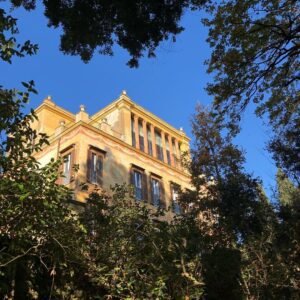
Teatro Olimpico on Piazza Gentile da Fabriano has been active as a cinema-theater since 1936 and as a theater since 1981: 1,410 seats, 966 in the stalls and 444 in the gallery, home to most of the Accademia Filarmonica Romana's performances. The venue page is Teatro Olimpico.
From cinema to stage
The block was built in 1935 and 1936 for the Società Generale Immobiliare, in the years of the Flaminio district and the Foro Italico. Until the 1950s the hall worked mainly as a cinema, with variety acts during the intermissions: an origin that suits a comedy night.
The amphitheater stalls
The 966 seats in the stalls rise on a slope, amphitheater style, and from the back rows you can see well over people's heads. For a show that lives on facial expression and physical comedy, that's crucial. The gallery, that is the balcony, is horseshoe-shaped.
The stage
The stage is about 10 meters deep and 12 wide. For a solo actor it's a big space to fill, and for one who uses his body like Lastrico it's a playing field.
The architecture
The building is reinforced concrete with a travertine base and cornices, returned to their original look by a recent restoration, and inside there's a round foyer. The theater recalls a remark attributed to Orson Welles, who supposedly called the Olimpico the only place in Rome that could evoke Broadway.
Where to sit to see Lastrico
For Sul lastrico the best seats are in the central stalls: the poltrona, at 35 euros plus presale fee, combines a good view and a reasonable price thanks to the slope of the hall.
The front rows
The poltronissima gold, at 43.50 euros, brings you close to the stage. In a show that includes a dialogue with the audience, though, the front rows are also the ones the comedian talks to. If you'd rather stay a spectator, choose the middle rows.
The balcony
The central balcony costs 33 euros plus presale fee and gives you an overall view, useful for physical comedy. The sections with balustrade and the side balconies, from 25 to 31 euros, are the cheapest options.
In a group
For a group of friends or a company night out, it's best to book a block in the balcony: you sit together and laugh together, which matters on a comedy night.
How to get to Teatro Olimpico for Sul lastrico
You reach Teatro Olimpico on metro line A to Flaminio and tram 2 to Piazza Mancini, then walk about 500 meters: it's the route the theater recommends.
Metro A and tram 2
From Flaminio station, tram 2 runs to Piazza Mancini terminus, and from there Viale del Pinturicchio takes you to Piazza Gentile da Fabriano in five minutes.
Bus
Lines 220, 232, 233, 280, 301, 446, 48, 910 and 911 stop near the theater. The 910 from Termini stops at Pannini, about 300 meters away. Lines 200, 201, 53 and the n24 night bus also pass through Piazza Mancini.
By car
From the center, follow Viale del Muro Torto toward Piazzale Flaminio, then the riverside roads to Lungotevere Flaminio. From the north, cross Ponte Duca d'Aosta. On a Thursday evening parking in the area is hard but not impossible: get there early.
Roma Nord railway
On the Roma Viterbo railway, get off at Flaminio and take tram 2.
The Flaminio district around the theater
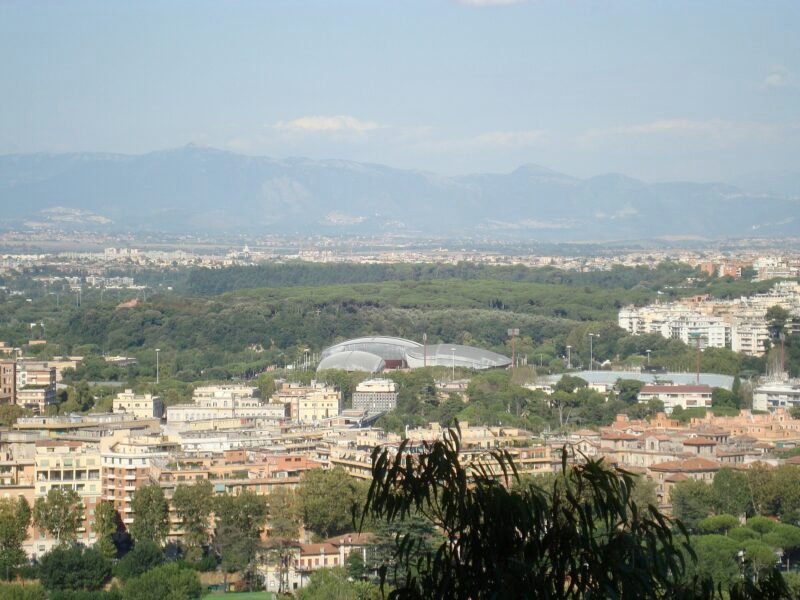
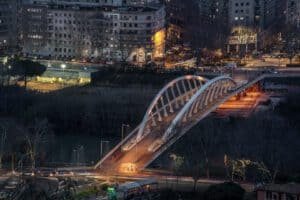
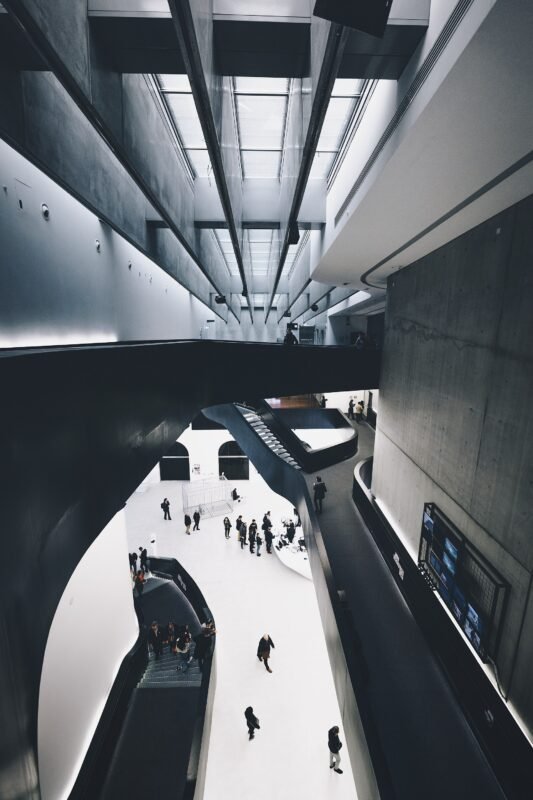
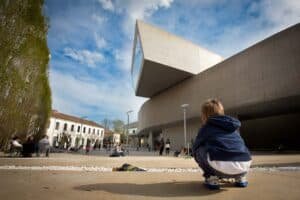
Teatro Olimpico is in the Flaminio district, by the river near Ponte della Musica, close to the Auditorium Parco della Musica and MAXXI.
Foro Italico
Ponte della Musica leads to the Foro Italico, built in the same years as the Olimpico: a 20-minute walk before the show.
Milvian Bridge
Heading upriver you reach Milvian Bridge, which on a Thursday evening is already as lively as a Saturday. For after the show it's the easiest choice.
Toward Piazza del Popolo
Along Via Flaminia you pass the National Etruscan Museum of Villa Giulia, Villa Borghese and finally Piazza del Popolo.
Where to eat before or after the show
Around Teatro Olimpico, between Piazza Mancini, Via Flaminia and Piazza Gentile da Fabriano, there are pizzerias, trattorias and bars popular with the theater and Auditorium crowds.
Before
With the show starting at 20:30, a quick dinner around 19:00 is the most practical option. Get to the hall with a quarter of an hour to spare: the round foyer fills up fast.
After
At 22:00 you come out wanting to talk. In Ponte Milvio and along Via Flaminia you can still find food, and with a group it's best to book.
Accessibility and families
If you have reduced mobility and want to see Sul lastrico, contact the Teatro Olimpico box office before buying, at biglietti@teatroolimpico.it or at 349 2378200.
The hall
The stalls are sloped and the gallery is on the upper floor: useful information when choosing a section.
With teens
The theater lists no age limits. Lastrico is a familiar face thanks to Don Matteo and the Sanremo commercials, and his shows suit families with teenage kids. For small children, an evening start on a weekday is demanding.
Early December in Rome
December 3 is a Thursday in the first week of Advent: Rome switches on the lights along Via del Corso, Christmas markets start filling the squares, and the theater season is in full swing.
The weather
Evenings are cool and sometimes rainy, and the riverside is windy when you come out. Bring a warm jacket.
Two nights at the Olimpico
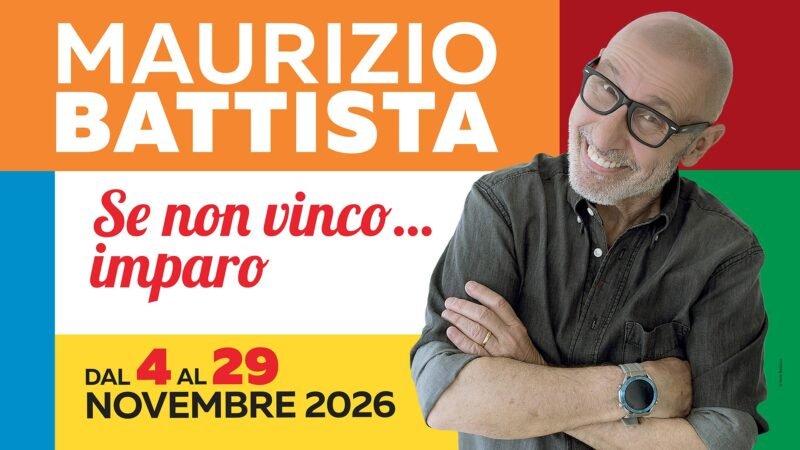
If you like, you can pair the evening with the one the day before, Umberto Galimberti's lecture. In the following weeks the hall hosts many other comedians: in January Angelo Pintus with Loro non sanno niente arrives, and in November the stage belongs to Maurizio Battista with Se non vinco... imparo.
A curious fact about Maurizio Lastrico, Sul lastrico at Teatro Olimpico, December 3, 2026
When he landed on Zelig Off in 2009, Maurizio Lastrico was introduced as the show's hundredth comedian. A round number for a newcomer offering something never seen on a cabaret program: everyday life told in Dante's tercets. A few months later, in January 2010, he was in prime time.
The second curious fact concerns his writing. Before he even became an actor, in 1998, Lastrico won the award for best screenplay for the short film Molto piacere, sono io, at the City of Genoa's Cine in Città competition. He was 19 and had just earned his diploma in tourism. His calling to write, then, came before his calling to act.
The third concerns his roles. The actor who speaks in hendecasyllables on Zelig has played Giuseppe Garibaldi on TV, in the 2024 miniseries Mameli, and a public prosecutor for six years in Don Matteo. On January 10, 2017 he debuted on diMartedì in place of Maurizio Crozza. It's a rare range of registers, and Sul lastrico sums it up.
Something nobody tells you about Maurizio Lastrico, Sul lastrico at Teatro Olimpico, December 3, 2026
If you go to see Lastrico for the tercets, you might expect an hour and a half of Zelig. That's not what you'll get. The theater's presentation talks about stage training, exercises in style and physical comedy, and his biography confirms it: before making people laugh, Lastrico performed King Lear, Antigone and Goldoni. On the Olimpico stage you'll see an actor, and the tercets will be one of his tools, not the whole show.
The second thing is the dialogue with the audience. The show, the theater says, leaves room for an exchange with the hall. In a theater with 1,410 seats this means that whoever sits in the front rows may become, for a moment, part of the show. No cruelty, judging by the tone of the presentation, but it helps to know.
Finally, the personal story. In interviews Lastrico has talked about a childhood without a father, in Manesseno, and a village youth center he later went back to as an educator. The bad luck the presentation mentions isn't a gimmick: it comes from a real life, and the irony he tells it with is that of someone who's been through it.
My advice for seeing Maurizio Lastrico, Sul lastrico at Teatro Olimpico, December 3, 2026
Get a poltrona in the central stalls, at 35 euros plus presale fee: it's the section with the best balance of price and view, and the slope of the hall guarantees a clear sightline. The poltronissima gold costs 8.50 euros more and puts you on the front line for the dialogue with the audience: choose it only if you like being involved.
Second tip: before you go, watch one of his Dante pieces. Having the rhythm of Lastrico's hendecasyllables in your ear helps you enjoy the variations he'll do live, and catch the rhymes that land a moment before the laugh.
Third tip: it's a one-night date, on a Thursday, and comedians with such a well-known TV face fill the Olimpico fast. Buy as soon as you can. The rule: tickets first, restaurant later.
Last one: if you're in Rome on December 2 too, pair the evening with Galimberti's lecture. Philosophy and comedy on two consecutive nights, on the same stage: a small festival of your own.
Another well-known fact, yet rarely mentioned
Teatro Olimpico, which today hosts the shows of Italy's best-known comedians, is owned by a joint-stock company created in 1980 through a subscription by citizens. Many people know it, few mention it.
At the end of the 1970s the hall risked disappearing: the company that owned it and the body that ran it had gone bankrupt, and the building was for sale. Adriana Panni, president of the Accademia Filarmonica Romana, raised capital among professionals, entrepreneurs, intellectuals and enthusiasts, and Teatro Olimpico spa bought the building from the Società Generale Immobiliare. Panni was its president until 1994.
You can see the result in the program. A private theater that supports itself needs full houses, and since 1981 the Olimpico has opened up to big-draw comedy, international dance and pop music, alongside the Filarmonica's concerts. It's this choice that made the Olimpico a home for Italian comedians: in the 2009/2010 season, according to the Agis rankings, it was the second theater in Rome and the seventh in Italy by attendance. When Lastrico takes the stage, he'll be the guest of a hall saved by citizens and kept alive, in good part, by laughter.
The right photo to take at Maurizio Lastrico, Sul lastrico at Teatro Olimpico, December 3, 2026
The right photo is taken outside, on Piazza Gentile da Fabriano, with the Olimpico facade lit up and Lastrico's name on the billboard. The 1930s building, with the travertine base brought back by the restoration, has rationalist lines that at night, with the signs on, give a clean, recognizable image.
The second shot is from Ponte della Musica, a few steps away: the Tiber at night, Lungotevere Flaminio on one side and the Foro Italico on the other. In December the cold air makes the lights on the water sharper.
Inside, before the start, photograph the stalls from the back, with the amphitheater slope running down toward the stage and the house lights on: it conveys the size of the hall better than any description. During the show your phone stays in your pocket. In a show that talks with the audience, a lit screen in the front row could become material for a joke.
Some important events that happened here
Before becoming the home of Roman comedy, the Olimpico was a central venue for 20th-century music. On March 4, 1965 Pierre Boulez conducted here the Italian premiere of Igor Stravinsky's Abraham and Isaac and the European premiere of his Elegy for J.F.K.
In the following years the hall hosted shows where art and music met: Stravinsky's L'Histoire du soldat in October 1966, with a backdrop by Giacomo Manzù, Niccolò Castiglioni's Tre misteri in 1968, with a sculpture by Mirko, and Stravinsky's Mass in 1975, with the golden shapes of Corrado Cagli.
In 1980 Teatro Olimpico spa was founded, and from 1981 the hall changed its calling. Moses Pendleton's Momix debuted in April 1982, the Lindsay Kemp Company brought A Midsummer Night's Dream in February 1989, the same Shakespeare play Lastrico would perform in 2012 under Gioele Dix's direction. Baryshnikov came with the White Oak Dance Project in 1995, the Bolshoi in 1996, the Béjart Ballet Lausanne in 2004. In May 1996 Gigi Proietti brought A me gli occhi here, and since then the Olimpico has been a must-play venue for anyone doing comedy in the theater.
Who has passed through Teatro Olimpico before Maurizio Lastrico, December 3, 2026
Almost all of Italian comedy has passed through this hall. The theater recalls Gigi Proietti with A me gli occhi in May 1996, Enrico Brignano, Vincenzo Salemme, Aldo, Giovanni e Giacomo, Neri Marcorè, Ale e Franz, Cinzia Leone, Lillo e Greg, Max Giusti, Maurizio Battista. There's also Gioele Dix, who matters more than the others for Lastrico: he's the director who directed him in A Midsummer Night's Dream in 2012 and in Facciamo che io ero io in 2013.
Among the names in the hall's history, the theater mentions Dario Fo and Giorgio Gaber, who in January 1998 brought Un'idiozia conquistata a fatica here. They're the two greats of Italian comic and political theater, and a show that mixes high and low, verse and laughter, is clearly related to them.
From music came Arturo Benedetti Michelangeli, Jessye Norman, Zubin Mehta, Pierre Boulez, Marillion, Lucio Dalla, Pooh, and from dance Baryshnikov, Béjart, Antonio Gades, Joaquín Cortés. In this company a Genoese comedian who performs in hendecasyllables holds his own: mixing genres has been the rule in this hall for four decades.
Frequently asked questions about Maurizio Lastrico at Teatro Olimpico
When is Maurizio Lastrico at Teatro Olimpico in Rome?
Maurizio Lastrico is at Teatro Olimpico in Rome on Thursday, December 3, 2026 at 20:30, with Sul lastrico. It's the only Rome date and, according to the theater's calendar, the show ends around 22:00.
How much are tickets for Sul lastrico?
Tickets for Sul lastrico at Teatro Olimpico range from 25 euros in the side balcony with balustrade to 43.50 euros in the poltronissima gold, plus a presale fee from 3.80 to 6.50 euros. The poltrona costs 35 euros plus 5.30. Online there's an extra 1.50 euro fee.
Where can I buy tickets for Maurizio Lastrico in Rome?
Tickets for Maurizio Lastrico at Teatro Olimpico are sold on the theater's official website, from the show page, or at the box office on Piazza Gentile da Fabriano. For information the theater gives the address biglietti@teatroolimpico.it.
What kind of show is Sul lastrico?
Sul lastrico is Maurizio Lastrico's live show that combines stage training, exercises in style, physical comedy and the Dante tercets born on Zelig, to tell his life, its joys and its bad luck, with room for a dialogue with the audience.
How do you get to Teatro Olimpico?
Teatro Olimpico, at Piazza Gentile da Fabriano 17, is reached on metro line A to Flaminio and tram 2 to Piazza Mancini, then 500 meters on foot along Viale del Pinturicchio. Alternatively, take bus 910 from Termini to the Pannini stop.
Is Sul lastrico suitable for teens?
The theater lists no age limits for Sul lastrico at Teatro Olimpico, and Maurizio Lastrico is a familiar face for families thanks to Don Matteo. It's a good fit for teenagers, while for small children the evening start on a Thursday is demanding.
Who is Maurizio Lastrico?
Maurizio Lastrico, born in Genoa in 1979, is an actor, comedian and cabaret performer who graduated from the school of the Teatro Stabile di Genova. He's known for his Dante tercets on Zelig, for the role of Marco Nardi in Don Matteo and for series such as Call My Agent Italia.
Final advice on Maurizio Lastrico at Teatro Olimpico
Buy a poltrona in the central stalls, have an early dinner in the Flaminio district and go to the Olimpico knowing you'll see an actor before a comedian. Maurizio Lastrico has the rare ability to get laughs from poetic meter without making it feel like work, and Sul lastrico, after two seasons on the road, is well honed. December 3 is one of the smartest comedy nights of the Roman season.
Article written by the editorial team of Tour Leader Pro, contact them for Private/Corporate/V.I.P. Tours and Experiences.
Planning a trip to Rome? The English-language guides to visiting the city are on ItalyPlanner.com.
Contact Information
Nearby
 Teatro Olimpico100 m
- Ponte della Musica – Armando Trovajoli200 m
- Flaminio400 m
- MAXXI – National Museum of 21st Century Arts500 m
- Alberto Moravia House Museum700 m
- Villa Mazzanti700 m

Upcoming events nearby
- Maurizio Battista at Teatro Olimpico, Se non vinco… imparo, November 4 to 29, 2026100 m
- Angelo Pintus at Teatro Olimpico, Loro non sanno niente, January 14 to February 14, 2027100 m
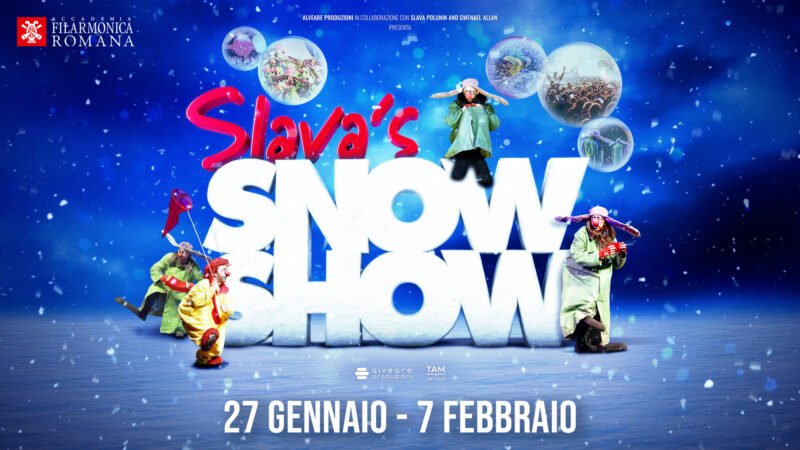
- Slava’s SnowShow at Teatro Olimpico, January 27 to February 7, 2027100 m
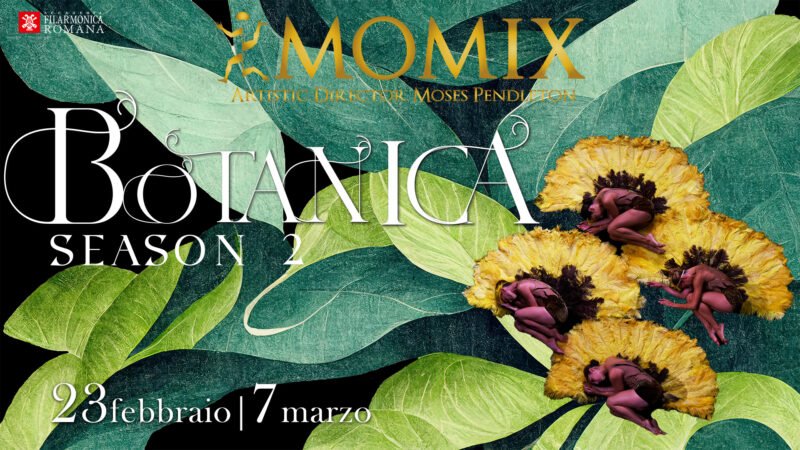
- MOMIX Botanica at Teatro Olimpico, February 23 to March 7, 2027100 m

You might also like
- Ghemon in La prima volta, l’ultima volta, l’unica volta at Auditorium Parco della Musica, April 19, 2027
- Alessandro Bergonzoni Arrivano i Dunque at Teatro Olimpico, February 20 and 21, 2027
- Raul Cremona Bravissssssimo! at Teatro Olimpico, February 9, 2027
- Maccio Capatonda, Spettacolo Teatrale at the Teatro Olimpico, December 21 and 22, 2026
- Riccardo Rossi, Non ho l’età! at Teatro Olimpico in Rome, January 19-24, 2027
- Edoardo Leo, Ti racconto una storia at Auditorium Parco della Musica, December 31, 2026