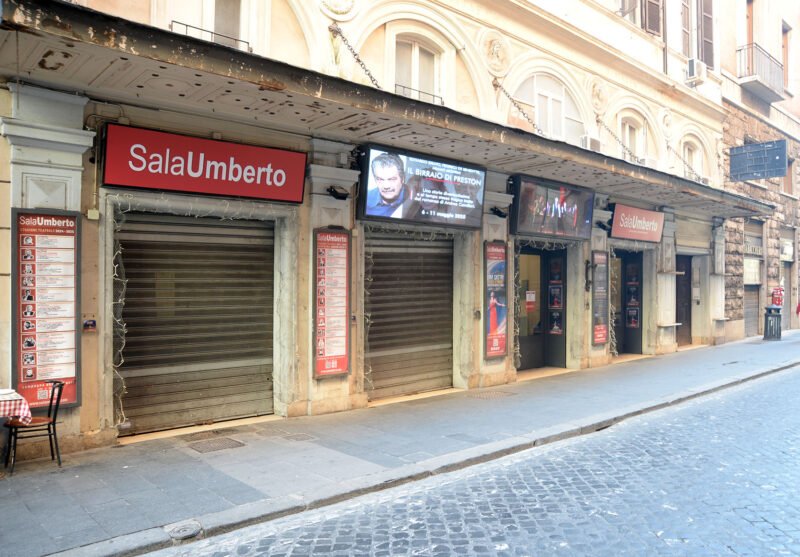
Lunga vita agli alberi with Giovanni Storti and Stefano Mancuso at Teatro Sistina, January 19, 2027
In short. Lunga vita agli alberi (literally "Long Live the Trees"), the show by and with Giovanni Storti and Stefano Mancuso, directed by Arturo Brachetti, comes to Teatro Sistina, at Via Sistina 129 (00187 Rome), on Tuesday, January 19, 2027 at…
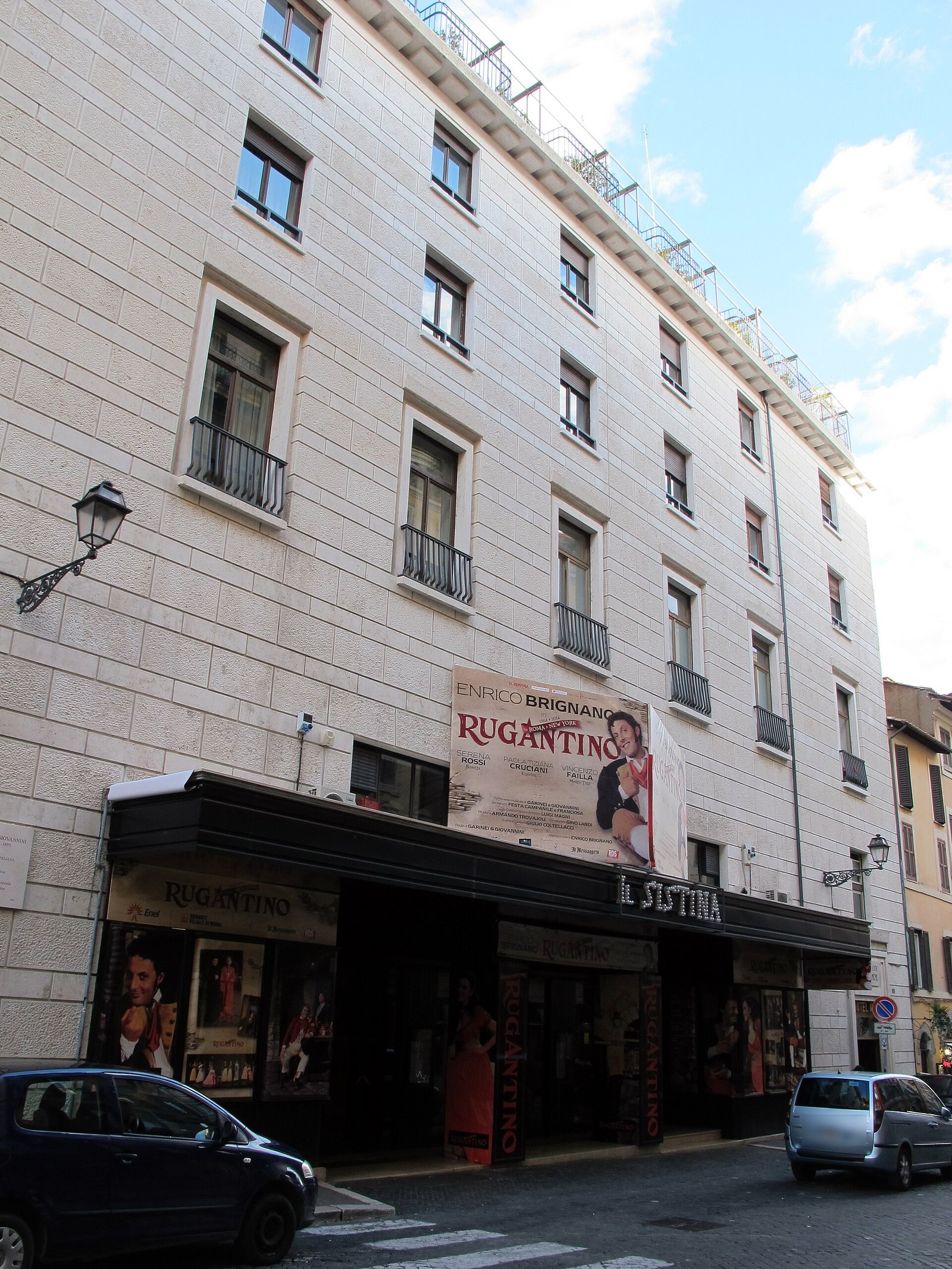
Lunga vita agli alberi (literally "Long Live the Trees"), the show by and with Giovanni Storti and Stefano Mancuso, directed by Arturo Brachetti, comes to Teatro Sistina, at Via Sistina 129 (00187 Rome), on Tuesday, January 19, 2027 at 20:30, for one night only. It is presented by AGIDI in collaboration with Elastica. The Sistina is reached by metro line A, Barberini stop, walking up Via Sistina. The prices published by the theater range from 38 euros in the third gallery to 50 euros in poltronissima. Tickets are bought on the official website of Teatro Sistina, from the online purchase button on the show's page, or at the theater's box office.
Language: performed in Italian. No English version or English surtitles are announced.
Lunga vita agli alberi at the Sistina: date, time and prices
Lunga vita agli alberi plays at Teatro Sistina in Rome on Tuesday, January 19, 2027 at 20:30, a single date, with tickets from 38 to 50 euros.
The price list
The Sistina publishes five bands: poltronissima 50 euros, poltrona 46 euros, first gallery 43 euros, second gallery 42 euros, third gallery 38 euros. The difference between the orchestra level and the gallery is small, and in a hall without columns even the high seats see the whole stage.
Where to buy
Tickets are bought from the online purchase button on the official show page on the Sistina website, linked to the theater's box office, or at the box office at Via Sistina 129.
The production
The show is presented by AGIDI in collaboration with Elastica. The director is Arturo Brachetti, the quick-change artist who for more than 20 years has signed the theater shows of the trio Storti belongs to.
One night only
The Rome date is a single one, on a Tuesday. For a title with two such well-known names, one from comedy and one from science outreach, it is best not to wait for the last weeks. The show has been on tour since the 2025/2026 season, so the Rome stop arrives when the staging is already well run in.
What you will see in Lunga vita agli alberi
Lunga vita agli alberi is a theater show that aims to unveil the mysteries of the plant world: Giovanni Storti is a curious traveler, Professor Stefano Mancuso the expert who reveals to him the secrets of plants, and Arturo Brachetti turns their journey into a staging of magic and poetry.
A journey in three stages
The Sistina presentation describes the show as an ideal journey in three stages between nature, comedy and knowledge, discovering the three fundamental parts of a plant: roots, trunk and crown. For each it tells its importance for human life and for the ecosystem.
The roots
It begins underground. The roots, the presentation explains, are the place where plants fight for resources and survival, forming an underground network made of communication, collaboration and competition. It is the field of research in which Mancuso has worked longest: his studies on the root apex, sensitive to pressure, temperature, sounds and humidity, are among the best known from his laboratory.
The trunk
The second stage is the trunk, a place of resistance and growth. Here the show addresses plants' adaptation to climate change and adversity. The trunk becomes the bridge between earth and sky, a symbol of transformation and hope.
The crown
The last stage is the green crown, which celebrates the beauty, harmony and revolutionary potential of plants. It is the theme of Mancuso's best-known book, Plant revolution, in which plants are presented as organisms that have already solved many of the problems humanity has to face.
Between comedy and reflection
Along the journey Storti explores with wonder and irony while Mancuso reveals the secrets of the plant world. The show alternates comedy and moments of reflection with a declared aim: to raise the public's awareness of the importance of plants for life on Earth and to show that art and science can talk to each other.
Who Giovanni Storti is: the biography
Giovanni Storti, born in Milan on February 20, 1957, is a comedian, actor, screenwriter and director, a member since 1991 of the trio Aldo, Giovanni e Giacomo, one of the best loved in Italian comic cinema and theater.
Mime and acrobatics
In 1977 he graduated from the mime drama school of Teatro Arsenale in Milan, where he attended the mime dance courses with Aldo Baglio. Between 1982 and 1984 he taught theatrical acrobatics at the Civica Scuola d'Arte Drammatica in Milan. From 1982 he performed with Aldo at the Derby Club. In 1985 he handled the movements of the show Pugacev directed by Franco Branciaroli.
The trio
In the second half of the 1980s, while working at a holiday village in Sardinia, Storti and Baglio met Giacomo Poretti. The trio was born, called in its early years Galline Vecchie Fan Buon Brothers. After television, with Mai dire Gol between 1994 and 1997, came cinema: Tre uomini e una gamba in 1997, Così è la vita in 1998, Chiedimi se sono felice in 2000 and La leggenda di Al, John e Jack in 2002, all written and directed by the trio with Massimo Venier.
Recent cinema
After Il ricco, il povero e il maggiordomo in 2014 and Fuga da Reuma Park in 2016, the trio returned with Odio l'estate in 2020 and Il grande giorno in 2022, both directed by Massimo Venier. On his own, Storti has acted in films such as Tutti a bordo by Luca Miniero, I peggiori giorni by Edoardo Leo and Massimiliano Bruno, Santocielo by Francesco Amato and Zamora by Neri Marcorè.
Awards
In 1998 Storti was nominated for the David di Donatello as best new director for Tre uomini e una gamba, which also earned the trio a special Nastro d'argento. In 2001 he was nominated for the Nastro d'argento as lead actor for Chiedimi se sono felice. In 2020 he received the Premio Flaiano for lifetime achievement.
Nature and running
Besides comedy, Storti has cultivated for years two passions that lead to the show. Since 2021 he has hosted on the trio's official channel the series Giova loves nature, in which he tells curiosities about plants and animals. In 2025 he starred in the documentary film Tra natura e quota, on the Apuan Alps. He is a marathoner, has even run in the Sahara desert, and has told about running in three books written with Franz Rossi for Mondadori. The first of them, Corro perché mia mamma mi picchia, won the Premio Bancarella Sport in 2014.
Who Stefano Mancuso is: the biography
Stefano Mancuso, born in Catanzaro on May 9, 1965, is a scientist and essayist who teaches general arboriculture and plant ethology at the University of Florence and directs the International Laboratory of Plant Neurobiology, which he founded in 2005.
Plant neurobiology
A professor in Florence since 2001, Mancuso studies the behavior of plants: their ability to perceive the environment, communicate, learn and remember. He is a member of the Accademia dei Georgofili and among the founders of the international society for the study of plant signaling and behavior. In 2012 he worked on the Plantoïd project, a robot inspired by roots.
The books
The general public knows him for his essays: Verde brillante, written with Alessandra Viola in 2013, Uomini che amano le piante, Biodiversi with Carlo Petrini, Botanica, Plant revolution, L'incredibile viaggio delle piante, La nazione delle piante, La pianta del mondo, La tribù degli alberi, published by Einaudi in 2022, and Fitopolis, la città vivente, from 2023.
Honors
Among the prizes he has received are the Premio nazionale di divulgazione scientifica in 2013, the Premio Galileo for science outreach in 2018 for Plant revolution, the Premio Hemingway in 2021 and the Fiorino d'oro of the city of Florence in 2022. An asteroid has been named for him, 131767 Stefanomancuso.
Television
In 2026 he hosts on Rai 3, with Lillo, the in-depth program La pelle del mondo, and collaborates with Chora Media. Lunga vita agli alberi brings the same idea to the theater: the science of plants told together with a comedian.
Plants according to Mancuso: three ideas to bring to the theater
To follow Lunga vita agli alberi with a few more tools, it is worth knowing three ideas that Stefano Mancuso has developed in his research and books, and that the show takes up in the three stages of the journey.
Roots as a network
Mancuso has long studied the root system, and in particular the root apex, very sensitive to stimuli such as pressure, temperature, certain sounds, humidity and injuries. Roots explore the soil to find water and nutrients, establish symbioses with other species and communicate with other plants: it is the underground network of communication, collaboration and competition that the show's first stage talks about.
A body without central organs
Plants cannot move, and over the course of evolution they have found solutions different from those of animals: instead of concentrating the senses in a few organs, they have receptors spread throughout the body. That is why a plant can lose a part of itself and keep living, and it is one of the concepts that make the plant world so far from human intuition.
Plants have already invented the future
In the book Plant revolution, awarded the Premio Galileo in 2018, Mancuso describes plants as organisms that for hundreds of millions of years have found solutions to problems humanity has to face today: clean energy production with photosynthesis, biodegradability, a form of circular economy. It is the revolutionary potential the show celebrates in the last stage, the crown.
Arturo Brachetti, the director
Arturo Brachetti, born in Turin on October 13, 1957, is a quick-change artist, actor, illusionist and director, considered the most important performer of theatrical quick-change in the world, the art invented by Leopoldo Fregoli.
From Paris to the Guinness record
In 1978, at 20, he left Turin for Paris with six costumes and a single number, and began at the Paradis Latin cabaret. With L'uomo dai 1000 volti he won the Molière award in 2000. Since 2002 he has been in the Guinness World Records as the fastest quick-change artist in the world, with 81 characters in two hours. In 2011 he was named Chevalier des Arts et des Lettres.
The trio's director
Brachetti has directed the theater shows of Aldo, Giovanni e Giacomo: Tel chi el telùn in 1999, Anplagghed in 2006, later brought to the cinema, Ammutta muddica in 2012, The Best of in 2016. Lunga vita agli alberi continues that partnership with Storti, moving it from pure comedy to scientific storytelling.
Magic at the service of science
The Sistina presentation speaks of a visionary and poetic direction that turns narration into magic. For a director who built his career on transformations, the plant world, made of seeds that become trees and leaves that change color, is a natural subject.
A curiosity about Lunga vita agli alberi with Giovanni Storti and Stefano Mancuso at Teatro Sistina, January 19, 2027
The nicest curiosity concerns Giovanni Storti's path. He is known as the comedian of the films with Aldo and Giacomo, but for years he has built a second public identity as a nature enthusiast: since 2021 he has told about plants and animals in the series Giova loves nature, published on the trio's official channel, and in 2025 he starred in a documentary on the Apuan Alps. Lunga vita agli alberi is therefore not a sudden conversion of a comedian to science outreach, but the arrival point of an interest cultivated in public for years.
The second curiosity is about the director. Arturo Brachetti has directed all the trio's theater shows, from Tel chi el telùn to Anplagghed. He has worked with Storti for more than a quarter of a century. Putting a quick-change artist in charge of a show about plants is a consistent choice: plants are, by definition, organisms in continuous transformation.
Third curiosity: in the sky there is an asteroid that bears the name of Stefano Mancuso, 131767 Stefanomancuso. A scientist who studies roots, the most hidden part of plants, has his name on the thing farthest from the ground you can imagine. It is the kind of paradox a show like this can turn into a punchline.
Teatro Sistina, a hall born for entertainment
Teatro Sistina is a semicircular hall without columns, 28 meters wide and 30 deep, with 1,015 seats on the orchestra level and 566 in the gallery. It was inaugurated on December 28, 1949 to a design by Marcello Piacentini.
A stage for wonder
The Sistina is the historic home of Italian musical comedy, that of Garinei and Giovannini, and has an orchestra pit and a stage designed for scenic effects. For a direction that bets on theatrical magic, like Brachetti's, it is a suitable hall: the unobstructed frontal view lets you enjoy the transformations from every seat.
Where a church once stood
The theater stands on the site of the church of Santa Francesca Romana, along what was called Strada Felice, and was built between 1946 and 1949. The magazine Variety called it the Italian answer to Broadway.
Today's direction
Since 2013 the artistic direction has been Massimo Romeo Piparo's, who alternates self-produced musicals, comedies and guest productions like this one. The listing for the venue is on the page for Teatro Sistina.
Something nobody tells you about Lunga vita agli alberi with Giovanni Storti and Stefano Mancuso at Teatro Sistina, January 19, 2027
What goes unsaid is that Lunga vita agli alberi is not a lecture with a few jokes, nor a comedy show with some scientific data. The presentation insists on the balance between the two registers, comedy and reflection, and on the presence of real theatrical direction, entrusted to a master of wonder. Those expecting the trio's catchphrases will be surprised. Those expecting a university lecture will be too.
The second thing concerns the audience. It is a show that works for families with curious kids, for nature enthusiasts, for those who have read Mancuso's books and for those who grew up with the films of Aldo, Giovanni e Giacomo. Rarely does a hall in the center of Rome bring such different spectators together on the same evening.
Third thing: the date is a winter Tuesday, with a 20:30 start. For those bringing school-age kids the return will be late. The Sistina is a few steps from the Barberini stop of metro line A, so the return by public transport is simple, but it is best to plan it before going out, checking the time of the last run on the Atac website.
How to get to Teatro Sistina
Teatro Sistina, at Via Sistina 129, is reached by metro line A, Barberini stop: from Piazza Barberini you walk up Via Sistina in a few minutes.
The metro
Barberini is two stops from Termini on line A. It is the simplest solution for the return after the show as well.
From the steps
Those already in the center can come from Piazza di Spagna: you climb the steps to the Trinità dei Monti and take Via Sistina, which continues level to the theater.
Car and taxi
The theater is inside the limited traffic zone of the historic center, and a car is not recommended. For the evening a taxi is convenient: Piazza Barberini is the pickup point that is simplest to name. For buses use the Atac route planner.
The advice I give you for visiting Lunga vita agli alberi with Giovanni Storti and Stefano Mancuso at Teatro Sistina, January 19, 2027
My advice is to arrive at the show after a day spent among trees. Rome offers more of them than you might imagine: in the morning you can climb to the Pincio and cross Villa Borghese, a few minutes' walk from the Sistina, or visit the Botanical Garden in Trastevere, with its plant collections. In mid-January many trees are bare, and their structure, trunks and branches, is seen better than in any other season. In the evening, in the hall, Mancuso's account of the three parts of the plant will have a concrete image to attach to.
The second piece of advice concerns the seat. For a show that bets on the magic of the direction, in our view the first gallery, at 43 euros, is the best choice: you see the whole stage, with the light and stage effects, at a price lower than the orchestra level. Those who want to catch Storti's comic expressions up close should choose the poltronissima.
Third piece of advice: read a Mancuso book beforehand, even a short one. La nazione delle piante or L'incredibile viaggio delle piante are a good introduction. With a few ideas in your head, Storti's jokes and the professor's answers become a dialogue to follow, not a sequence of information.
Another well-known fact, yet rarely mentioned
It is well known that plants are essential to life on Earth, thanks to photosynthesis. Much less often cited is what Stefano Mancuso has told in his books: that plants, though without nerves or brain, have a social life and a form of sensitivity, and that their receptors are distributed throughout the body, while animals concentrate the senses in specific organs such as eyes and ears. In 2012 Mancuso and his colleagues Monica Gagliano and Daniel Robert showed that roots have mechanoreceptors that make them sensitive to sound and its direction.
Another known and little-remembered fact is that Storti's trio was born thanks to movement, before words. Storti and Aldo Baglio met at the mime dance courses of the Teatro Arsenale school. Storti taught theatrical acrobatics at the Civica Scuola d'Arte Drammatica in Milan. The trio's comedy is physical even before it is verbal, and in a show directed by a quick-change artist that training comes in handy.
Finally, on the director: quick-change, the art of rapid costume changes, had almost disappeared after the death of Leopoldo Fregoli, in 1936. It was Brachetti who brought it back to the Italian and European stage, including with a musical devoted to Fregoli himself, produced in 1994 with the Compagnia della Rancia.
The right photo to take at Lunga vita agli alberi with Giovanni Storti and Stefano Mancuso at Teatro Sistina, January 19, 2027
The first photo is taken in front of the Sistina, from the other side of Via Sistina, with the theater's sign and the show's poster in the frame. On a January Tuesday evening the street is less crowded than on weekends, and the lit entrance can be photographed at leisure.
The second photo, to stay on theme, is of a tree. A few minutes from the theater, on the terrace of the Pincio, the crowns of the pines draw an unmistakable silhouette against the Roman sky. At sunset, before the show, it is an image that speaks to the theme of the evening: the crown, the third stage of Storti and Mancuso's journey.
In the hall, during the show, no photos or filming: a direction built on light and transformation effects loses everything if a lit screen turns on in the orchestra. The right moment, if staff allow it, is the final bow, with Storti and Mancuso at the front of the stage.
For one more photo, the idea is the Trinità dei Monti, at the end of Via Sistina, with the steps lit after the show.
The trees of Rome near the Sistina
Lunga vita agli alberi is a show that invites you to look at plants: around the Sistina are some of the most beautiful green places in the center of Rome.
The Pincio and Villa Borghese
At the end of Via Sistina you reach the Trinità dei Monti and, continuing, the Pincio and Villa Borghese, the city's great historic park, with tree-lined avenues and gardens.
The Botanical Garden
Those who want to see plants from around the world can devote a morning to the Botanical Garden of Rome, in Trastevere. It is the most natural complement to the show.
Palazzo Barberini
At the foot of Via Sistina, Palazzo Barberini houses the Galleria Nazionale d'Arte Antica: a convenient visit for those with a free afternoon before the show.
Piazza di Spagna and Trevi
For those short on time, the classic walk remains the one between Piazza di Spagna and the Trevi Fountain, 10 minutes from the theater.
Some important events that took place here in history
Teatro Sistina opened on December 28, 1949 as a cinema and theater, built between 1946 and 1949 on the site of the church of Santa Francesca Romana. The first film shown was Le mura di Malapaga, and the first revue was Bada che ti mangio, produced by Remigio Paone, with Totò and Isa Barzizza. The final scene of the film Totò cerca moglie was shot in the theater.
In October 1950 La Bisarca by Garinei and Giovannini went on stage, with sets by Giulio Coltellacci. On December 15, 1952 Attanasio cavallo vanesio with Renato Rascel debuted, before Alvaro piuttosto corsaro and Tobia la candida spia: this was the birth of Italian musical comedy. After the Cinerama parenthesis, with a screen 27 meters by 11 that had no success, from 1960 the theater was run by Garinei and Giovannini until 2006, the years of Rugantino and Aggiungi un posto a tavola.
Since 2013 the artistic direction has been Massimo Romeo Piparo's, with musicals such as Jesus Christ Superstar, Billy Elliot, School of Rock, Cats and West Side Story. In the same years the Sistina has hosted comedians and showmen such as Fiorello. In January 2027 the stage welcomes another kind of show, in which a comedian and a scientist tell about plants: the revue theater opens itself to science outreach.
Who has passed through Lunga vita agli alberi with Giovanni Storti and Stefano Mancuso at Teatro Sistina, January 19, 2027
The great names of Italian comedy have passed through the Sistina stage: Totò, Renato Rascel, Carlo Dapporto, Aldo Fabrizi, Walter Chiari, Gino Bramieri, Paolo Panelli, Bice Valori, Enrico Montesano, Gigi Proietti, and in recent years Fiorello and Renzo Arbore. It is a history that a comedian raised on the stages of Milanese cabaret, like Giovanni Storti, enters naturally.
The great names of quick-change and theatrical fantasy have passed through the Sistina too: the tradition of Garinei and Giovannini, with Rascel's musical fairy tales and Coltellacci's sets, is that of wonder in the theater. Arturo Brachetti, who revived the art of Fregoli and whom the Guinness World Records lists as the fastest quick-change artist in the world, belongs to that same family.
With Lunga vita agli alberi a scientist also passes through the Sistina. Stefano Mancuso, a professor at the University of Florence, author of science outreach essays and the dedicatee of an asteroid, brings plant neurobiology to a theater born for musical comedy. Beside him, for one evening, onstage are the plants: roots, trunk and crown, silent protagonists of a journey told by a comedian.
Accessibility, young people and practical information
For accessibility needs, seats for people in wheelchairs and for those assisting them, the reference is the Teatro Sistina box office, to be contacted before buying.
With young people
The theater indicates no age limits. In our view Lunga vita agli alberi suits ages eight or nine and up: Storti's comedy is for everyone, and the scientific themes are presented for a wide audience. The 20:30 time on a Tuesday should be considered for the youngest.
Arriving on time
At the Sistina latecomers enter only at set moments: 20 minutes early is the minimum in a theater of over 1,500 seats.
Where to eat
Around Piazza Barberini and toward Via del Tritone there are bars and venues for a quick meal before 20:30. After the show, going down toward Trevi and the Pantheon, the choice grows.
Frequently asked questions about Lunga vita agli alberi at the Sistina
When does Lunga vita agli alberi play in Rome?
Lunga vita agli alberi with Giovanni Storti and Stefano Mancuso plays at Teatro Sistina in Rome on Tuesday, January 19, 2027 at 20:30, a single date. The show is presented by AGIDI in collaboration with Elastica.
How much do tickets for Lunga vita agli alberi cost?
Tickets for Lunga vita agli alberi at Teatro Sistina cost 50 euros in poltronissima, 46 in poltrona, 43 in the first gallery, 42 in the second gallery and 38 in the third gallery, according to the price list published by the theater.
What is the show about?
Lunga vita agli alberi is a three-stage journey through the plant world, devoted to the roots, trunk and crown of plants. Giovanni Storti explores with irony, and Stefano Mancuso explains the secrets of plants, between comedy and reflection on the importance of greenery for life on Earth.
Who directs it?
Lunga vita agli alberi is directed by Arturo Brachetti, the Turin quick-change artist who has also directed the theater shows of Aldo, Giovanni e Giacomo, from Tel chi el telùn to Anplagghed. The presentation speaks of a visionary and poetic direction.
Who is Stefano Mancuso?
Stefano Mancuso, who stars in Lunga vita agli alberi with Storti, is a professor of arboriculture and plant ethology at the University of Florence, founder of the International Laboratory of Plant Neurobiology and author of essays such as Plant revolution and La nazione delle piante.
Is the show suitable for children?
Teatro Sistina indicates no age limits for Lunga vita agli alberi. In our view it suits ages eight or nine and up, because it combines comedy and science outreach. The 20:30 start on a Tuesday should, however, be considered for the youngest.
How do you get to Teatro Sistina?
Teatro Sistina, at Via Sistina 129, is reached by metro line A, Barberini stop, walking up Via Sistina. A car is not recommended because the theater is in the limited traffic zone of the historic center.
The final advice on Lunga vita agli alberi
A comedian who has told about nature for years, a scientist who has shown how much more sensitive plants are than people believe, a director who has made transformation his art: for one night only, in the theater of Italian musical comedy. The advice is to spend the day among the trees of the Pincio or the Botanical Garden, choose the first gallery to enjoy the direction and bring along a curious kid. You go home looking at the plane trees along the Tiber with different eyes.
Article written by the editorial team of Tour Leader Pro, contact them for Private/Corporate/V.I.P. Tours and Experiences.
Planning a trip to Rome? The English-language guides to visiting the city are on ItalyPlanner.com.
Contact Information
Nearby
 La Sciantosa with Serena Autieri at Teatro Sistina, from April 21, 2027100 m
- E fuori nevica with Vincenzo Salemme at Teatro Sistina, from May 4, 2027100 m
- Teatro Sistina100 m
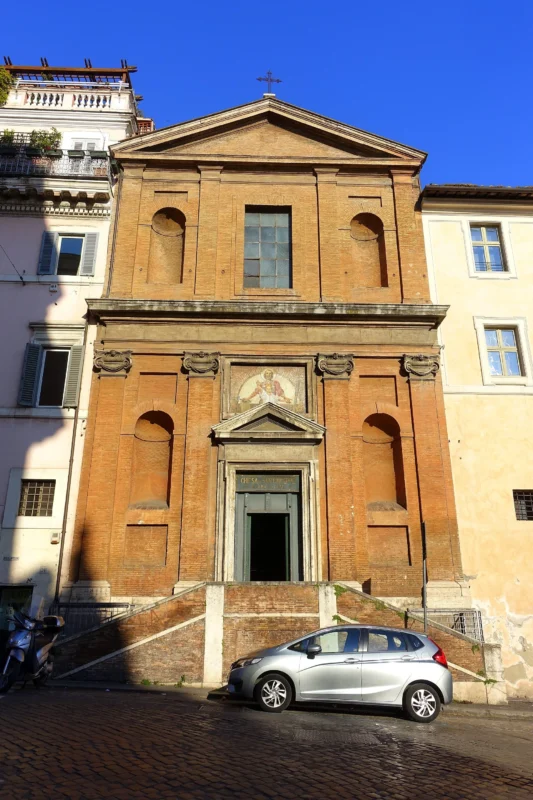
- San Giuseppe a Capo le Case100 m
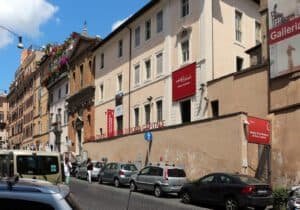
- Galleria d’Arte Moderna di Roma (GAM)100 m
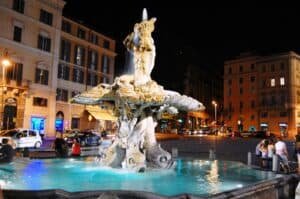
- Triton Fountain100 m


Upcoming events nearby
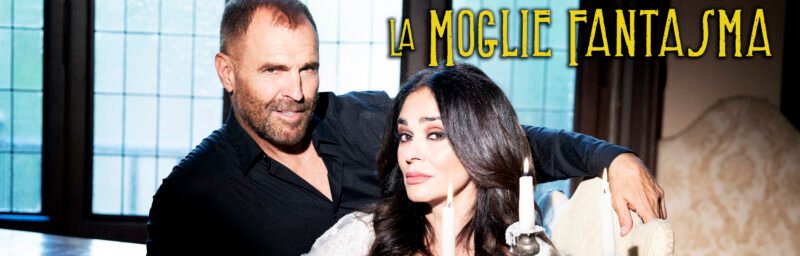
- La moglie fantasma at Teatro Sistina, November 11 to 15, 2026100 m
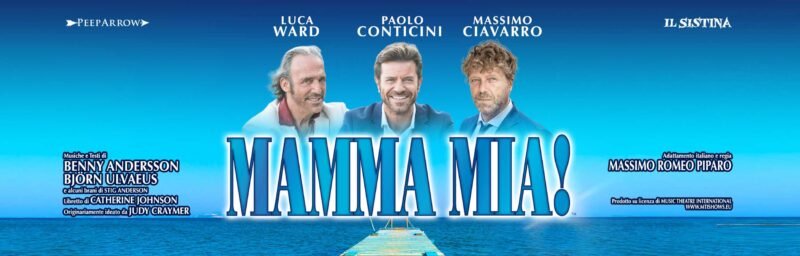
- Mamma Mia! the Musical at Teatro Sistina, December 17 to 31, 2026100 m
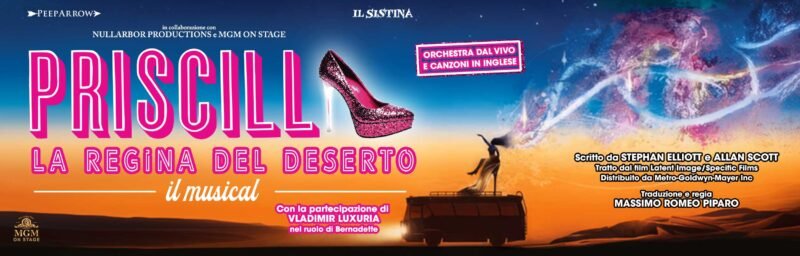
- Priscilla, La regina del deserto, the musical at Teatro Sistina, from February 10, 2027100 m
- Belle Ripiene at Teatro Sistina in Rome, from April 8, 2027100 m

You might also like
- Il commissario Montalbano with Vincenzo Pirrotta at Teatro Quirino, February 16 to 28, 2027
- Il giuoco delle parti with Pippo Pattavina at Teatro Quirino, February 9 to 14, 2027
- Rosso Malpelo with Enrico Guarneri at Teatro Quirino, February 2 to 7, 2027
- L’inconveniente with Milena Vukotic at Teatro Quirino, January 19 to 31, 2027
- Figli maschi by Centouno at Teatro Sala Umberto, February 16 to 28, 2027
- Don Giovanni with Simone Toni and Enzo Paci at Teatro Sala Umberto, February 2 to 14, 2027