L’ultima domenica di agosto at Teatro Sala Umberto, April 6 to 11, 2027
In short. L'ultima domenica di agosto, written and directed by Fulvio Pepe after Leo Tolstoy's The Power of Darkness, is on stage at Teatro Sala Umberto, Via della Mercede 50, from Tuesday, April 6 to Sunday, April 11, 2027: Tuesday to Friday at…
L'ultima domenica di agosto, written and directed by Fulvio Pepe after Leo Tolstoy's The Power of Darkness, is on stage at Teatro Sala Umberto, Via della Mercede 50, from Tuesday, April 6 to Sunday, April 11, 2027: Tuesday to Friday at 20:30, Saturday and Sunday at 16:00. On stage are Denis Fasolo, Gianluca Gobbi, Riccardo Livermore, Federica Sandrini, Beatrice Schiros, Leone Tarchiani and Debora Zuin, with two actors still to be announced. The production is by Teatro Stabile del Veneto, Teatro Nazionale. The show runs 150 minutes with an interval. Sala Umberto, inside the historic center's limited traffic zone, is reached by Metro A, Spagna or Barberini stops, and a 10-minute walk. Full-price tickets cost €34 in the Poltronissima, €28 in Poltrona A and €22 in Poltrona B, and are sold on the official Sala Umberto website, which links to the authorized presale network, or at the box office.
Language: performed in Italian. No English version or English surtitles are announced.
A late 19th-century Russian drama, based on a true crime, moved to a farm in the Po Valley in the 1950s and reread in the tones of commedia all'italiana. That's Fulvio Pepe's bet, as author and director, on a play rarely seen in Italy.
L'ultima domenica di agosto in Rome: dates, times and tickets
L'ultima domenica di agosto has six performances at Sala Umberto, from April 6 to 11, 2027, according to the theater's official page.
Evenings
On Tuesday the 6th, Wednesday the 7th, Thursday the 8th and Friday, April 9 the show starts at 20:30. With a running time of 150 minutes, interval included, you get out around 23:00.
Afternoons
On Saturday the 10th and Sunday, April 11 the performances are matinees, at 16:00. You get out around 18:30, with the whole evening free for dinner in the center. These are the most convenient performances if you're coming from outside Rome or don't like getting home late.
Prices
The table on the official page lists three sections: Poltronissima at €34, Poltrona A at €28 and Poltrona B at €22, full price.
Where to buy them
Tickets are sold on the official Sala Umberto website, with the Buy and Book buttons on the show page, which link to the authorized presale network, or at the box office. For bookings and information the theater gives the phone number 06 6794753. Sala Umberto accepts the Italian teachers' culture card (carta del docente).
What L'ultima domenica di agosto is about
L'ultima domenica di agosto puts a great female role on stage, powerful and fragile at once: a vital, unscrupulous woman, infatuated with a younger man and ready to do anything to save that unexpected, overwhelming dream of love.
The plot
A mature woman, unhappily married to a rich landowner, falls madly in love with a young man her husband has rashly hired as farm manager. In that relationship she discovers a passion she didn't think she could feel, to the point of considering it the most important relationship of her life, and the last one possible.
The young man
So she begins to nurture the idea of a lasting relationship with her beloved, to be achieved at any cost. But she doesn't realize she has given her love to an empty, shallow young man, with no wish to take on responsibility, unable to give that feeling any meaning.
The drama
It's precisely these traits of the lover and the woman in love that spark the drama, bringing the couple and the whole world of characters around them face to face with a completely unexpected reality.
From Tolstoy to Fulvio Pepe: the rewrite
L'ultima domenica di agosto is an original play by Fulvio Pepe, inspired by Leo Tolstoy's The Power of Darkness. The new version keeps all the events Tolstoy spreads across the five acts of the original, but frees the story from its original structure.
New characters
Pepe introduces different characters, who overturn genders and perspectives, and above all lightens the dark, gloomy atmosphere of the original with the pastel tones of commedia all'italiana.
The 1950s, between Emilia and Veneto
The action is moved to the mid-1950s, on a farm, somewhere between Emilia-Romagna and Veneto. The regional setting, the presentation explains, is not a pretext: it places the story in a specific working-class world, and a few dialect elements give rhythm and music to the dialogue.
Director's notes
In the director's notes published by the theater, Pepe explains that he read Tolstoy's play on a friend's suggestion, found it too heavy and dusty at the time, and rediscovered it years later, transformed in his memory, as a new story suited to actors he knows well. He writes that he enjoys tailoring characters to the performers he works with most often.
The Power of Darkness: Tolstoy's drama
The Power of Darkness is a five-act drama by Leo Tolstoy, set among the peasants of a Russian village and inspired by a real crime.
The original plot
Pyotr, an old, rich landowner, is ill. The farm is in fact run by Nikita, a young laborer and the lover of Pyotr's second wife, Anisya. Pyotr is poisoned by his wife, at the urging of Matryona, Nikita's mother. Anisya marries Nikita, who also seduces Akulina, Pyotr's daughter. Their relationship produces a baby, whom Nikita kills. During Akulina's wedding, overcome by remorse, Nikita confesses his crimes in front of everyone.
The true crime
Tolstoy drew on the case of Efrem Koloskov, a peasant who had killed the baby born of his relationship with his stepdaughter and who, repentant, had publicly confessed the crime at the girl's wedding. The writer was so struck that he visited him, after his conviction, in the Tula penitentiary.
A disputed date
Sources disagree on the year it was written: the Sala Umberto presentation gives 1883, while other sources place the writing between late October and November 25, 1886. Performance was banned in Russia by the censors, but the text was translated almost immediately into several European languages.
The Power of Darkness in Italy
The Power of Darkness reached Italy a few years after it was written: in 1893 the first Italian translation, by Paolo Rindler and Enrico Minneci, came out in Milan, and the same year the drama premiered on stage.
The first companies
After the premiere at Teatro Valle in Rome on October 11, 1893, with the Novelli, Zoppetti and Nepoti company, on October 16 the drama was staged at Teatro Gerbino in Turin by Giovan Battista Marini's company: Ermete Zacconi was Nikita, Vittorio Pieri was Pyotr, Oreste Calabresi Akim, Libero Pilotto Mitrich and Emilia Aliprandi Pieri Anisya.
Translations
Over the 20th century the text was translated several times: in Naples in 1905, in Florence in 1925 and 1948, in Milan in 1961 in the Biblioteca Universale Rizzoli, and again in Florence in 1962. Some editions carry in the title a Russian proverb about the bird that, caught by just one claw, is lost.
Film
The drama also had two silent film versions: a 1909 Russian film directed by Pyotr Chardynin and a 1924 German film directed by Conrad Wiene. A stage history spanning more than a century, to which L'ultima domenica di agosto adds a contemporary Italian chapter.
Fulvio Pepe, author and director
Fulvio Pepe wrote and directed L'ultima domenica di agosto: a piece of playwriting he himself describes as handcrafted, almost domestic work, built with the actors he works with most often in mind.
Theater made to measure
In his director's notes Pepe explains that, while rewriting Tolstoy, he felt that deep in that text there were roles suited to actors dear to him. It's a view of playwriting that puts the company at the center: the characters are born from the expressive abilities of the people who will play them.
The theme of hedonism
In the same notes the director identifies the heart of his reading in the presence, in Tolstoy's play, of a mysterious hedonistic energy, concentrated in a very young character: the pursuit of pleasure for its own sake, which turns into the refusal of all responsibility and becomes, in the end, inhuman. It's the portrait of the young man the protagonist falls in love with.
The team
Working with Pepe are Alberto Nonnato on sets, Aurora Damanti on costumes, Oscar Frosio on lighting with the advice of Pasquale Mari, and Aleph Viola on music. The assistant director is Leonardo Tosini.
Cast and production
On stage are Denis Fasolo, Gianluca Gobbi, Riccardo Livermore, Federica Sandrini, Beatrice Schiros, Leone Tarchiani and Debora Zuin, with two actors listed as still to be confirmed.
A company
That's seven performers plus two, a large number for a contemporary drama production: the sign of an ensemble play, in which a whole world of characters revolves around the central couple, as in Tolstoy's original.
Teatro Stabile del Veneto
The production is by Teatro Stabile del Veneto, Teatro Nazionale. The setting between Emilia and Veneto and the use of a few dialect elements make the producer a particularly fitting choice for the project.
A curious fact about L'ultima domenica di agosto at Teatro Sala Umberto, April 6 to 11, 2027
The curious fact concerns Rome. The Power of Darkness had its first Italian performance in this very city: on October 11, 1893 at Teatro Valle, with the Novelli, Zoppetti and Nepoti company. A few days later, on October 16, it was also staged at Teatro Gerbino in Turin by Giovan Battista Marini's company, with Ermete Zacconi as Nikita.
More than 130 years later, the story returns to Rome in a form Tolstoy couldn't have imagined: no longer a Russian village, but a farm between Emilia and Veneto, in the 1950s, in the tones of commedia all'italiana. Teatro Valle and Sala Umberto are both theaters of the historic center: a coincidence that gives the Roman staging a special flavor.
The second curious fact concerns the drama's world premiere, which didn't happen in Russia. André Antoine staged it for the first time, on February 10, 1888, in French, with his Théâtre Libre, with Émile Zola in the audience, who was enthusiastic. In the original language the drama only arrived on December 5, 1902, at the Moscow Art Theatre.
Finally, Italian television. On January 28 and 29, 1965 Rai broadcast The Power of Darkness over two evenings, directed by Vittorio Cottafavi, with a cast including Aldo Giuffré, Arnoldo Foà, Didi Perego and Evi Maltagliati.
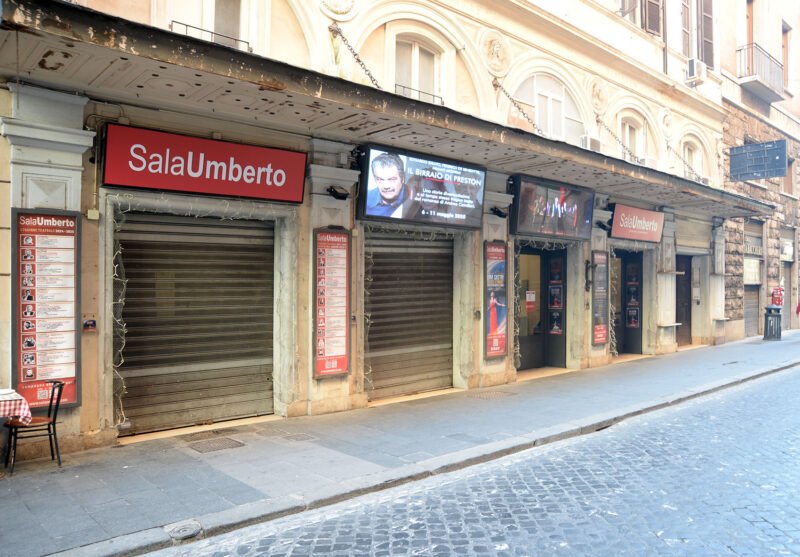
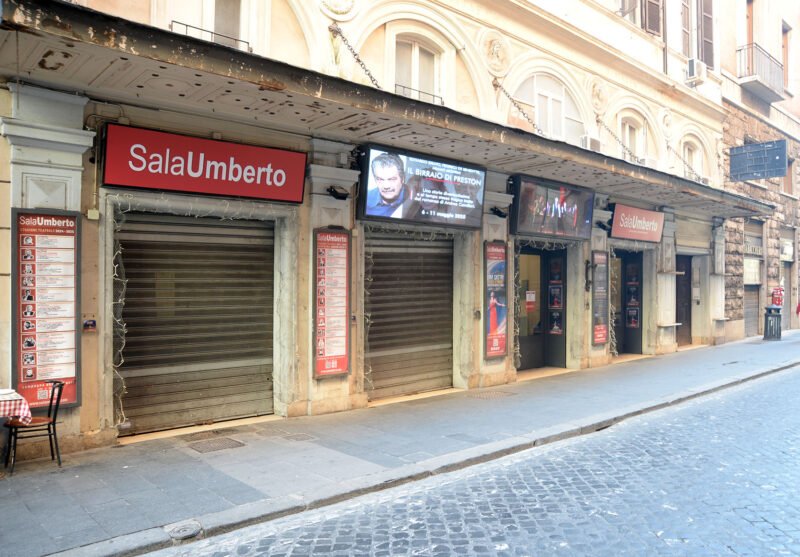
Sala Umberto, the theater on Via della Mercede
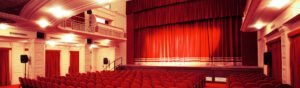
Teatro Sala Umberto has 485 seats in a rectangular hall with a sloping orchestra and a balcony. Founded in 1882 on the ground floor of a building on Via della Mercede, it has been under the artistic direction of Alessandro Longobardi since 2002.
From 1882 to variety
The hall was commissioned by Andrea Busiri Vici and decorated by Alessandro Bazzani, and it hosted concerts, operettas and comedies. In 1890 the architect Giulio Podesti enlarged it to 650 seats, and in 1913 it became a cinema. In 1928 the Marino brothers, owners of the Salone Margherita, brought it back to variety and named it after the king.
From cinema to drama
Around 1930 cinema returned. In 1981 the hall reopened as a theater with the Ente Teatrale Italiano, in 1991 it went back to being a cinema, and since 2002 it has been a theater for good, with drama, comedy, music and shows for young audiences.
A hall for drama
Sala Umberto's size suits an ensemble play: voices carry easily to the balcony, and the details of the acting read well from the orchestra. For a show with nine actors on stage and dialogue that uses dialect, closeness is an advantage.
Something nobody tells you about L'ultima domenica di agosto at Teatro Sala Umberto, April 6 to 11, 2027
What few people consider is that the title of the rewrite hides a choice of tone. The Power of Darkness is one of Tolstoy's darkest dramas: poisoning, infanticide, public confession. L'ultima domenica di agosto, "the last Sunday in August," evokes instead a summer day, the end of the holidays, a village festival on the plain. The title already announces the shift from Russian tragedy to the pastel tones of commedia all'italiana.
That doesn't mean the story becomes light. The presentation keeps all the stage events of Tolstoy's five acts, and the drama remains: a woman ready to do anything for the wrong love, a young man who takes no responsibility, an unforeseen reality that overwhelms everyone. But the gaze changes, and laughter becomes a way of looking at the darkness without being crushed by it.
The second thing concerns the running time. Two and a half hours with an interval is a substantial length for a contemporary drama: the evening performances, at 20:30, end around 23:00. If you'd rather not get home late, choose the Saturday and Sunday afternoons.
Third: the source. Tolstoy's inspiration was a true crime, the story of Efrem Koloskov. Knowing there's a real crime behind the comedy changes how you watch the show.
How to get to Sala Umberto
Sala Umberto is inside the historic center's limited traffic zone: you get there by Metro A, getting off at Spagna or Barberini and walking for about 10 minutes.
From Spagna or Barberini
From Spagna, cross the square and take Via di Propaganda toward Sant'Andrea delle Fratte. From Barberini, walk down Via del Tritone and turn toward Via della Mercede.
By bus
Many bus lines run along Via del Tritone and Via del Corso: for the exact route, use the Rome public transport route planner, which takes detours in the center into account.
By car and taxi
Leave the car outside the limited traffic zone, in a parking garage. If you're going to the theater with older people, a taxi to Piazza San Silvestro, a few steps from the entrance, is the most convenient option, there and back.
My tip for seeing L'ultima domenica di agosto at Teatro Sala Umberto, April 6 to 11, 2027
My tip is to read the plot of The Power of Darkness before the show. You don't need the whole text: knowing the story of Nikita, Anisya and Akulina is enough to recognize, in Pepe's rewrite, the events the author kept and the characters he turned around. The comparison between Russian tragedy and Po Valley comedy is half the pleasure of the evening.
As for which performance: the Tuesday to Friday evenings have the charm of an evening at the theater in the historic center, but with a 150-minute running time you get out around 23:00. The Saturday and Sunday performances at 16:00 are the most convenient if you're coming from outside Rome or going with older people.
As for seats: the Poltronissima, at €34, guarantees closeness to the actors, which matters in a play with dialect elements. Poltrona A, at €28, is the best compromise. Poltrona B, at €22, is still a good choice in a 485-seat hall where voices carry everywhere.
Finally, make use of the interval. It's the right moment to reread the program, if available, and pick up the threads of the story for the second half.
Another well-known fact, yet one rarely mentioned
It's well known that Tolstoy is one of the great Russian novelists. Less often mentioned is that he also wrote for the theater, and that The Power of Darkness was banned by the censors in Russia: for years Russian audiences couldn't see it, while in France, Italy and other European countries it was already being staged.
The world premiere was in Paris in 1888, at André Antoine's Théâtre Libre, with Émile Zola in the audience. The Italian premiere was in Rome in 1893, at Teatro Valle. The premiere in the original language came only in 1902, at the Moscow Art Theatre. A Russian author's drama thus had its stage life abroad before it had one at home.
The second rarely mentioned fact concerns the full title. Some Italian editions carry a proverbial subtitle, tied to the image of the bird that, caught by just one claw, is lost: an image of how a small fault drags a whole life into evil. It's exactly the mechanism Pepe transfers to his protagonist, who is ready to do anything for the wrong love.
The right photo to take at L'ultima domenica di agosto at Teatro Sala Umberto, April 6 to 11, 2027
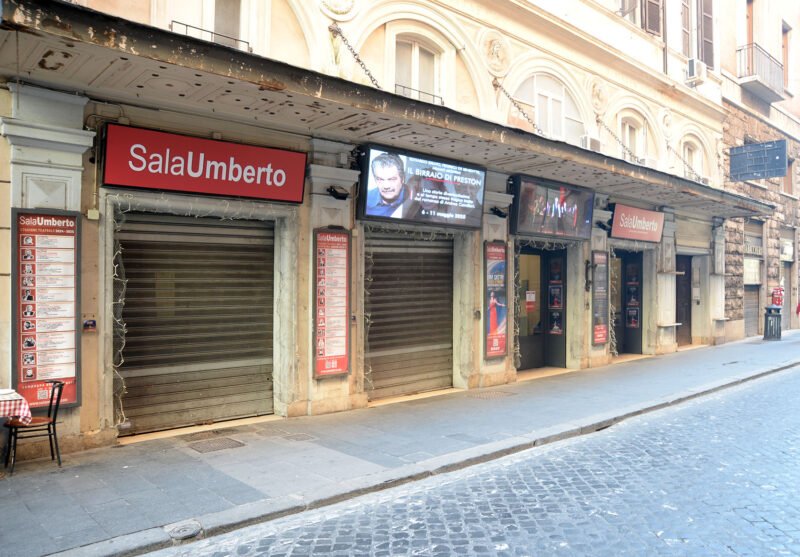
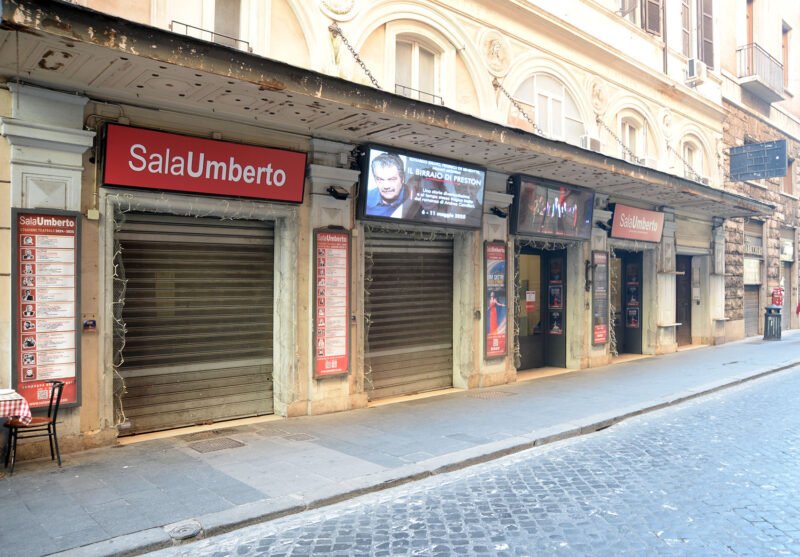
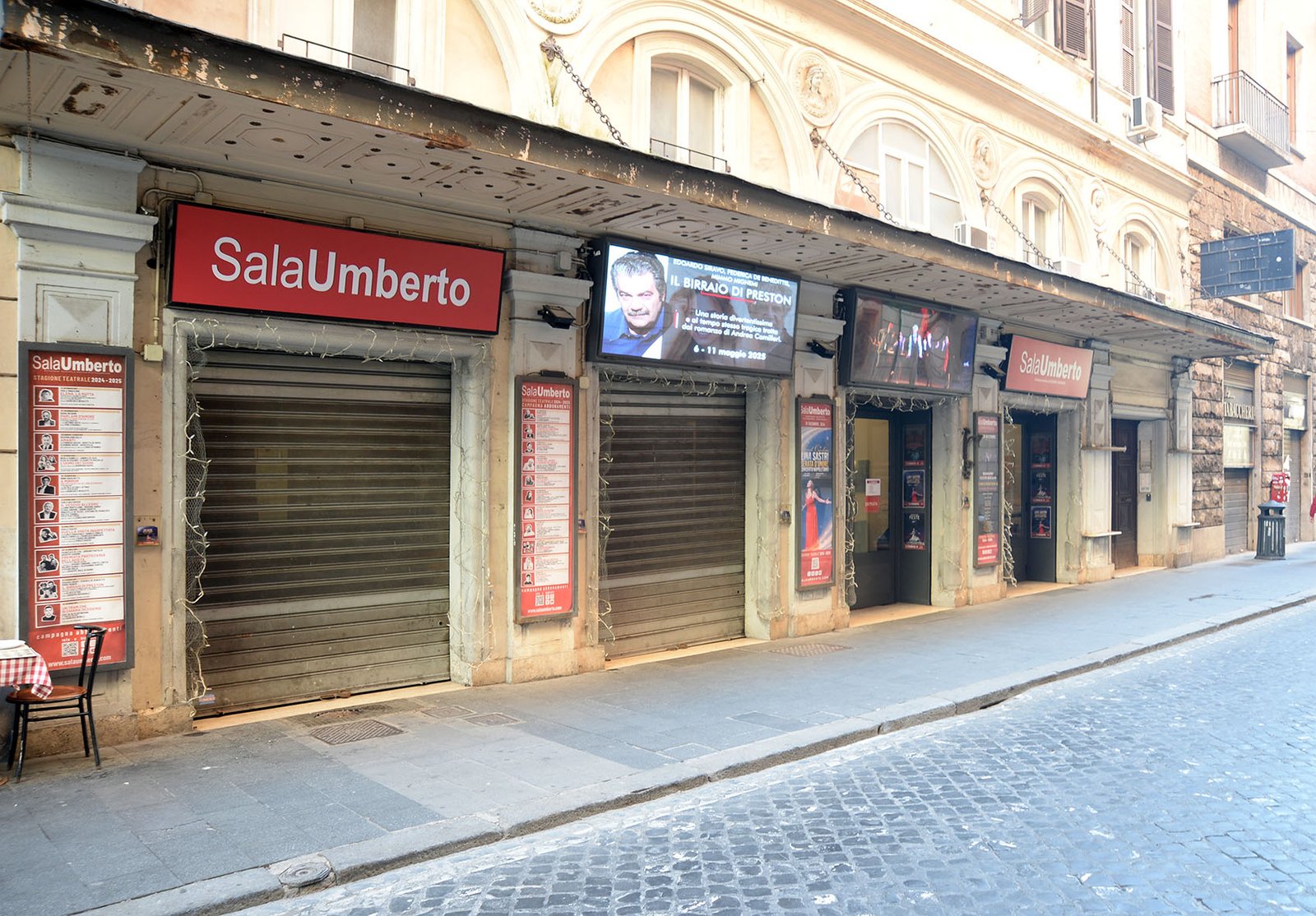
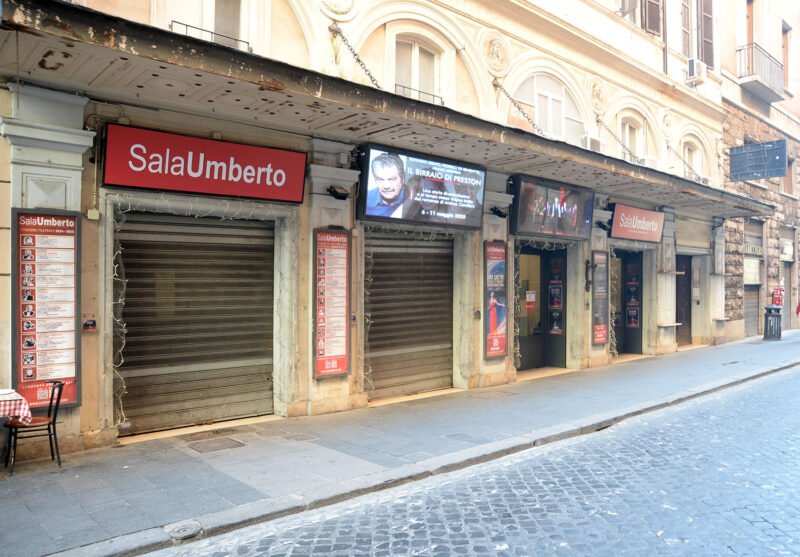
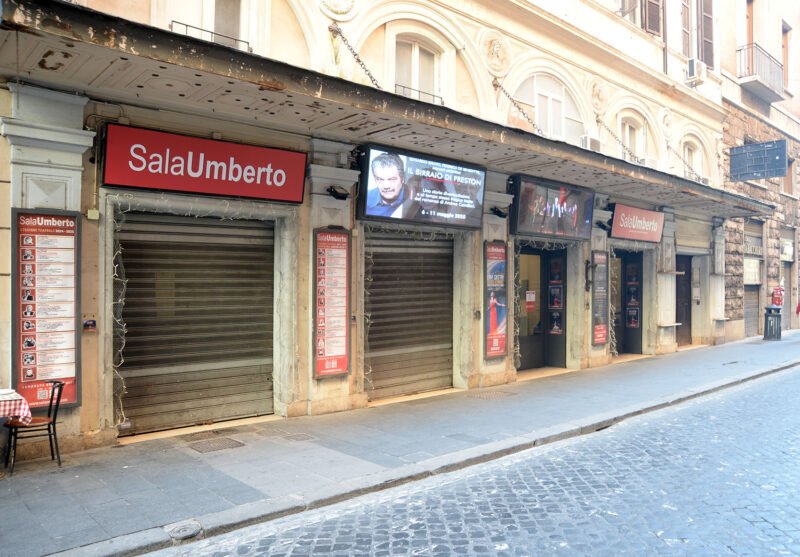
The right photo is taken at Via della Mercede entrance, with the show poster and the Sala Umberto sign: a theater founded in 1882, on a narrow street in the Colonna district, a few steps from Piazza San Silvestro.
During the show it's good manners not to take photos or film: in a drama theater a lit screen disturbs the actors and the people nearby, and in an intimate hall like Sala Umberto it stands out even more.
If you choose a Saturday or Sunday matinee, the best photo is taken on the way out, around 18:30: the late afternoon April light on Piazza di Spagna and the Trinità dei Monti steps, a few minutes' walk away, ends the day with one of the most classic images of Rome.
Around Sala Umberto: the Colonna district
Via della Mercede is in the Colonna district, between the Trevi Fountain and Piazza di Spagna, a short walk from Via del Corso.
Nearby churches
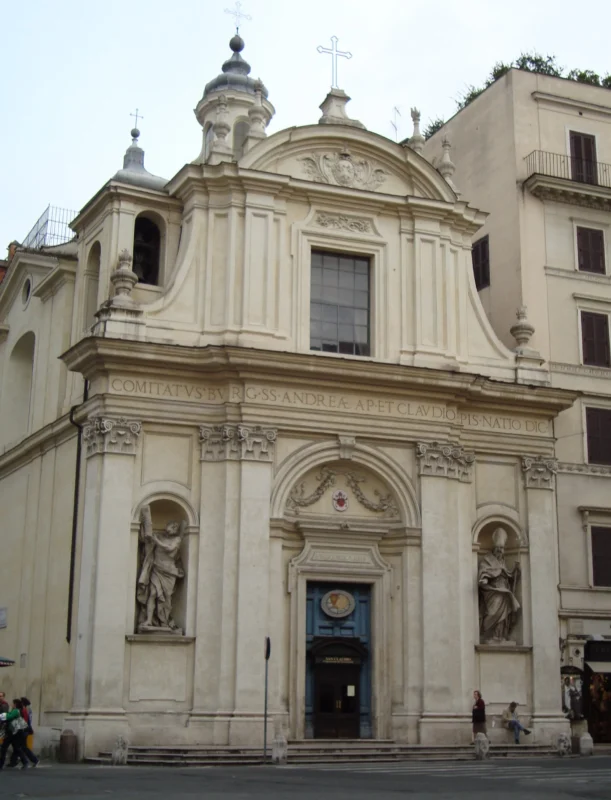
A few meters away is Piazza San Silvestro, with San Silvestro in Capite. A little further up, on Via di Capo le Case, is Sant'Andrea delle Fratte, with Borromini's dome and bell tower and Bernini's angels.
Piazza Colonna and the Galleria
Along Via del Corso you reach Piazza Colonna, with the Column of Marcus Aurelius and Palazzo Chigi, and the Galleria Alberto Sordi, handy on rainy evenings.
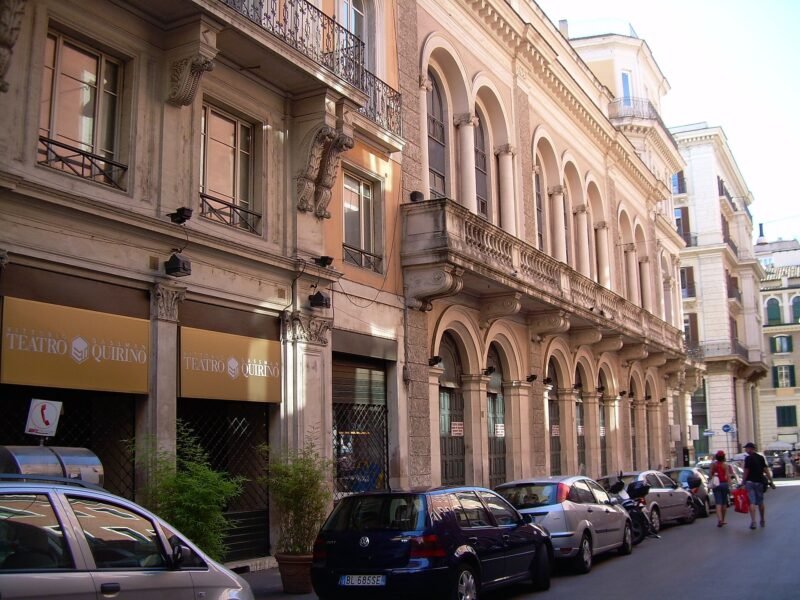
Teatro Quirino
A 10-minute walk away is Teatro Quirino: if you're staying in Rome for a few days you can alternate two evenings of drama without taking any transport.
Some important events that happened here in history
Sala Umberto was born in 1882, on the ground floor of a building on Via della Mercede, at the wish of Andrea Busiri Vici, with interiors decorated by Alessandro Bazzani: concerts, operettas, comedies. In 1890 the architect Giulio Podesti enlarged it to 650 seats, and perhaps in that period it was known as Sala della Piccola Borsa. In 1913 it became a cinema.
In 1928 the Marino brothers, owners of the Salone Margherita, brought it back to the stage with variety and named it after the king: Sala Umberto. For a couple of years comedians, chanteuses and showgirls performed here. Around 1930 cinema returned, and it would stay for half a century.
In 1981 the hall reopened as a theater after renovation, run by the Ente Teatrale Italiano with a drama program. In 1991 it went back to cinema. Since 2002, under Alessandro Longobardi's artistic direction, it has been a theater for good. A few years after Sala Umberto was born, in 1893, another theater in the center, Teatro Valle, hosted the Italian premiere of The Power of Darkness: the story that returns to Via della Mercede in April 2027.
Who has passed through L'ultima domenica di agosto at Teatro Sala Umberto, April 6 to 11, 2027
Between the two world wars, Sala Umberto saw the variety artists hired by the Marino brothers: comedians, chanteuses and showgirls, the same world that brought the Salone Margherita to life. From 1981, with the Ente Teatrale Italiano, and then from 2002, drama, comedy and music returned.
In the 2026-2027 season its stage hosts, among others, Francesco De Gregori, Francesco Montanari in Storia di un cinghiale, and Giulio Corso and Federica De Benedittis in Cime Tempestose.
The history of The Power of Darkness includes names that shaped European theater: André Antoine, Émile Zola, the Moscow Art Theatre, Ermete Zacconi, and on television Vittorio Cottafavi, Aldo Giuffré and Arnoldo Foà. From April 6 to 11, 2027 Fulvio Pepe and the Teatro Stabile del Veneto company join them. In our view this is the strongest reason to go: seeing how a play that has crossed 140 years of stages is reread today, with a light touch, without betraying its dark heart.
How to plan the evening or afternoon
With six performances across evenings and afternoons, L'ultima domenica di agosto fits different plans: a weeknight in the center or a weekend afternoon.
Evenings
For the Tuesday to Friday performances, aim to reach Via della Mercede around 20:10, after a quick dinner in the Colonna district. With 150 minutes of show you get out around 23:00. For the trip back, Metro A at Spagna or Barberini is a 10-minute walk.
Afternoons
On Saturday and Sunday, with a 16:00 start, you can have an unhurried lunch, stroll between the Trevi Fountain and Piazza di Spagna and reach the theater around 15:40. When you come out, around 18:30, there's still light for a walk in the center.
With older people
If you're going with older people, the afternoons are the most convenient choice, and a taxi to Piazza San Silvestro avoids the ups and downs of the center.
Where to eat before or after the show
The Colonna district has food of every kind, from trattorias to bars, in the streets between Via della Mercede, Via del Pozzetto and Via della Vite.
For the evening performances
With a 20:30 start and an end around 23:00, have dinner beforehand, around 19:00, or put it off until after the show. At that hour many kitchens in the center close: if you want to eat afterward, book.
For the matinees
On Saturday and Sunday, with a 16:00 start, you have lunch without rushing and come out at aperitivo time, with the evening free for dinner in the historic center.
Accessibility and practical information
For Sala Umberto's accessibility for people with reduced mobility and for access to the balcony, contact the theater box office at 06 6794753 before buying.
Age
The organizers give no age limit. The themes of the play, a wrong love, a lack of responsibility, a crime in the original drama, and the two-and-a-half-hour running time make the show better suited to adults and high school students.
April in Rome
In early April the historic center is very busy with visitors, and evenings can still be cool. If you're coming from outside Rome for the show, book your accommodation early. If you want to build a tailor-made stay around the evening, you can contact Tour Leader Pro, which organizes private tours and experiences.
Frequently asked questions about L'ultima domenica di agosto
When is L'ultima domenica di agosto on at Sala Umberto?
L'ultima domenica di agosto is on at Teatro Sala Umberto, Via della Mercede 50, from April 6 to 11, 2027: from Tuesday the 6th to Friday the 9th at 20:30, Saturday the 10th and Sunday the 11th at 16:00. The show runs 150 minutes with an interval.
How much are tickets for L'ultima domenica di agosto?
Tickets for L'ultima domenica di agosto at Sala Umberto cost €34 in the Poltronissima, €28 in Poltrona A and €22 in Poltrona B, full price. They're sold on the official Sala Umberto website or at the box office, and the theater accepts the carta del docente.
Who is in the cast of L'ultima domenica di agosto?
The cast of L'ultima domenica di agosto includes Denis Fasolo, Gianluca Gobbi, Riccardo Livermore, Federica Sandrini, Beatrice Schiros, Leone Tarchiani and Debora Zuin, plus two actors to be announced. Fulvio Pepe wrote and directed it, and the production is by Teatro Stabile del Veneto.
What is L'ultima domenica di agosto about?
L'ultima domenica di agosto tells of a mature woman, unhappily married to a rich landowner, who falls in love with an empty, irresponsible young farm manager. It's set in the 1950s between Emilia and Veneto, in the tones of commedia all'italiana.
How is it connected to Tolstoy's The Power of Darkness?
L'ultima domenica di agosto is an original play by Fulvio Pepe inspired by Leo Tolstoy's The Power of Darkness: it keeps the events of the original five acts, but changes the setting, introduces new characters and lightens the gloomy atmosphere of the Russian drama.
How do you get to Teatro Sala Umberto?
Teatro Sala Umberto, at Via della Mercede 50, is inside the historic center's limited traffic zone: you get there by Metro A, Spagna or Barberini stops, and a 10-minute walk. By taxi you can get as far as Piazza San Silvestro, a few steps from the entrance.
How long is L'ultima domenica di agosto?
L'ultima domenica di agosto runs 150 minutes with an interval, according to Sala Umberto's official page. The evening performances, at 20:30, therefore end around 23:00, and the Saturday and Sunday matinees, at 16:00, around 18:30.
My final tip on L'ultima domenica di agosto
A Tolstoy drama inspired by a real crime, whose Italian premiere was staged in Rome in 1893, rewritten as a commedia all'italiana set on the plain in the 1950s, with nine actors on stage and a great female lead. In our view L'ultima domenica di agosto is one of the most interesting drama offerings of the spring at Sala Umberto, for anyone who loves classics reread freely. Learn Tolstoy's plot first, choose Poltrona A as the best compromise and go for a weekend afternoon if you don't like getting home late.
Article written by the editorial team of Tour Leader Pro, contact them for Private/Corporate/V.I.P. Tours and Experiences.
Planning a trip to Rome? The English-language guides for visiting the city are on ItalyPlanner.com.
Contact Information
Nearby
 Teatro Sala Umberto100 m
- San Claudio dei Borgognoni100 m
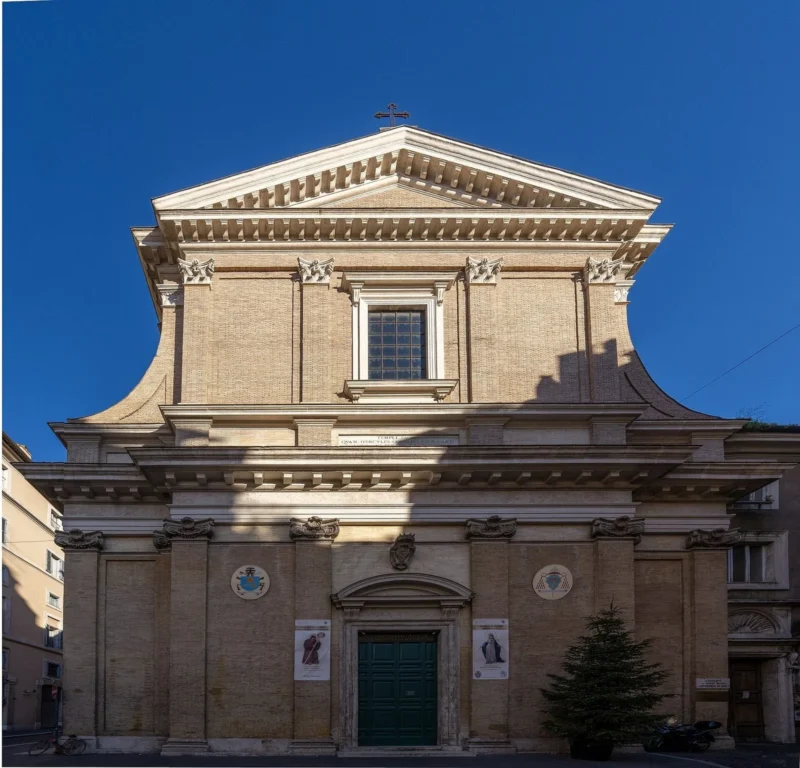
- San Silvestro in Capite100 m
- Sant’Andrea delle Fratte200 m
- Accademia Nazionale di San Luca200 m
- Istituto Centrale per la Grafica – Palazzo Poli200 m
Upcoming events nearby
- Captivo by Gianfranco Gallo at Teatro Sala Umberto, January 13-24, 2027100 m
- Federico Mecozzi, Traiettorie impercettibili at Teatro Sala Umberto, January 11, 2027100 m
- Piccole donne il musical with Antonella Morea at Teatro Sala Umberto, March 16 to 21, 2027100 m
- Don Giovanni with Simone Toni and Enzo Paci at Teatro Sala Umberto, February 2 to 14, 2027100 m
You might also like
- Carlotta Spallino in Io me lo merito at Teatro Sala Umberto, from March 6 to May 16, 2027
- Le dieu du carnage with Antonio Zavatteri at Teatro Quirino, March 30 to April 4, 2027
- L’uomo, la bestia e la virtù with Vanessa Gravina at Teatro Quirino, March 16 to 21, 2027
- Ispettore in casa Birling with Ettore Bassi and Galatea Ranzi at Teatro Quirino, March 2 to 7, 2027
- Belle Ripiene at Teatro Sistina in Rome, from April 8, 2027
- Sfidati di me, Paolo Kessisoglu at Teatro Sala Umberto, April 1 to 4, 2027