Kay McCarthy, La voce dell’Irlanda at Auditorium Parco della Musica, January 16, 2027
In short. Kay McCarthy brings La voce dell'Irlanda to Auditorium Parco della Musica Ennio Morricone on Saturday, January 16, 2027 at 20:00, in Teatro Studio Borgna, Viale Pietro de Coubertin 30 (00196 Rome).
Kay McCarthy brings La voce dell'Irlanda to Auditorium Parco della Musica Ennio Morricone on Saturday, January 16, 2027 at 20:00, in Teatro Studio Borgna, Viale Pietro de Coubertin 30 (00196 Rome). It is a concert of traditional Irish music, with old ballads, folk songs and dances, with the Dublin-born singer joined by six musicians. You get there by metro line A to Flaminio and then tram 2, or by bus 910 from Termini. The complex has paid parking. Tickets start at 20 euros according to the official Auditorium page and are bought on the venue's official website, which links to the authorized presale network, or at the box office.
The Auditorium page presents her as the most authoritative interpreter of traditional Irish music in Italy, and for more than 40 years Kay McCarthy has brought the island's Gaelic culture to European stages. Teatro Studio, the most intimate hall in the complex, is the right scale for a voice that tells a story even before it sings.
La voce dell'Irlanda: the Kay McCarthy concert
La voce dell'Irlanda is a journey through Irish musical tradition built by Kay McCarthy as a story: old ballads, folk songs and dances, performed with long-experienced musicians.
Ballads, songs and dances
The official presentation describes a repertoire that runs through the island's history, its emotions and its traditions. Slow ballads, often in Gaelic, alternate with faster pieces where the violin, the flutes and the percussion come into play. The rhythm of the Irish dances, with the bodhrán in the foreground, is the part that carries along even those who arrive without knowing the genre.
A singing and narrating voice
In the musicians' listing, Kay McCarthy appears as singing and narrating voice. It is the signature of her concerts: between one piece and the next she talks about the Irish and their centuries-long history, with informed and often ironic comments. The concert thus becomes a small history lesson too, without the tone of a lesson.
The setlist
The evening's setlist is not published. Judging by her discography, Kay McCarthy's repertoire runs from nocturnal ballads to the best-known traditional pieces to the songs in Italian from her latest record.
The ensemble: six musicians for Kay McCarthy
Playing with Kay McCarthy, according to the Auditorium page, are Susanna Valloni on recorder, flute, Irish whistles and piccolo, Cristiano Brunella on violin, Fabio De Portu on guitars, Stefano Diotallevi on piano and keyboard, Piero Ricciardi on bodhrán and cnámha, Christopher O'Rourke on bodhrán and snare drum.
The traditional instruments
The bodhrán is the Irish frame drum, played with a stick. The cnámha are bones used as a percussion instrument, a dry and ancient sound rarely heard live in Italy. The whistles, small straight flutes, give the melodies the high color typical of the dances.
Two percussionists
The presence of two percussionists, Piero Ricciardi and Christopher O'Rourke, says a lot about the weight of the dances in the program. Piero Ricciardi is also the singer's husband and her longtime partner in duo recitals.
Piano and guitars
Stefano Diotallevi's piano and Fabio De Portu's guitars build the harmony on which voice, violin and flutes draw the melodies. It is a large ensemble for Irish folk, designed for a theater more than for a pub.
Date, time and tickets for the concert
There is only one concert: Saturday, January 16, 2027 at 20:00, in Teatro Studio Borgna, with tickets starting at 20 euros.
Where to buy
Tickets are bought from the button on the event page of the Auditorium's official website, which links to the authorized presale network, or at the complex's box office, open according to the site from 11:00 to 20:00 in the winter months, Sundays and holidays included.
A small hall
Teatro Studio has about 300 seats. For a concert with a devoted audience like Kay McCarthy's, the best seats can sell out weeks in advance.
The same evening, in the next hall
On January 16 at 20:00 in Sala Petrassi, Eugenio Bennato plays. Two concerts of folk music in the same complex, at the same hour: the Irish tradition and that of southern Italy a few dozen meters apart.
Kay McCarthy: biography
Catherine McCarthy, known as Kay, was born in Dublin on January 24, 1947. A singer, musician and writer, she is considered the ambassador of Irish folk in Italy.
From Dublin to Rome
Born and raised in Dublin, she moved to Rome, where she married the musician Piero Ricciardi. She earned degrees in modern history and Italian language and literature in Ireland and in modern languages and literatures in Italy: a scholar's training that can be heard in the way she tells the history of her country between one song and the next.
The Folkstudio
In the 1970s she began presenting her Ireland in music and Gaelic culture to the audience of the Folkstudio in Rome. From there she moved on to the stages of every Italian region. Her first LP, Roisin Dubh, came out in 1978 on Folkstudio and Fonit Cetra.
With the Chieftains
In 1982 she released her second album, Stormy Lullaby, on RCA Italiana, and went on tour as support for the Chieftains, one of the most celebrated groups in traditional Irish music.
Awards in Ireland
Before her Italian career, Kay McCarthy had won at home the first prize as solo singer at the Oireachtas, the festival of Gaelic culture, and a first prize for counter-singing as a contralto. At the Feis Cheoil, Dublin's music competition, she won a bronze medal.
Today
She lives in Montefiascone, in the province of Viterbo, and keeps touring with The Kay McCarthy Ensemble and with duo recitals with Piero Ricciardi.
The Kay McCarthy discography
Kay McCarthy's discography counts two LPs and seven CDs between 1978 and 2013, plus a compilation: from the debut with Roisin Dubh to the first record in Italian, L'amore tace.
The vinyl years
Roisin Dubh (1978) and Stormy Lullaby (1982) are the two vinyl albums. The first takes the title of a song from the Irish tradition, the second that of a lullaby in a storm: two images that already tell the tone of the repertoire.
The success of Níl Sé 'na Lá
After Arís (1995), her fourth album, Níl Sé 'na Lá, Ballate notturne (1996), was included with the weekly Avvenimenti and sold over 100,000 copies, a very rare result for a traditional music record in Italy. Fadò fadò (1999) and Am (2000), for Helikonia, followed.
The 2000s
With the move to the label Storie di note came Rianta (2004) and her first live album, Kay McCarthy live in Rome, Villa Ada (2005), recorded at one of Rome's summer festivals. In 2006 Helikonia published the compilation Quintessence.
L'amore tace
In 2013, for the first time, Kay McCarthy sang in Italian. L'amore tace is the record of an artist who, after 40 years in Italy, chooses to tell her story in the language of the country that welcomed her.
What to listen to before the Kay McCarthy concert
To arrive prepared, one record is enough: Kay McCarthy's discography offers three different entry points, depending on what you are looking for in the evening of January 16.
For the ballads
Níl Sé 'na Lá, Ballate notturne (1996) is the record that made the singer known to the wider Italian public, with over 100,000 copies sold as a supplement to Avvenimenti. It is the right choice for those who love the slow, melancholy part of the tradition, the part you listen to in silence in an intimate theater.
For the live sound
Kay McCarthy live in Rome, Villa Ada (2005) gives back the atmosphere of the concerts: the dances, the dialogue with the audience, the stories between one piece and the next. It is the record closest to what you will see at Teatro Studio, even if today's lineup is different.
For the voice in Italian
L'amore tace (2013) is the first album sung in Italian. Those who want to understand the relationship between the singer and the country where she has lived for decades will find the key here: Ireland told in the words of someone who listens.
Teatro Studio Borgna
Teatro Studio Gianni Borgna is the smallest hall of Auditorium Parco della Musica: about 300 seats, no curtain and the stage at the level of the audience.
A hall without distance
With no raised stage, the front rows are a few steps from the musicians. For a concert where the singer talks to the audience, tells stories and jokes, it is the ideal situation: you listen almost as in a living room, or in the back room of a Dublin pub with the acoustics of a theater.
Auditorium Parco della Musica Ennio Morricone
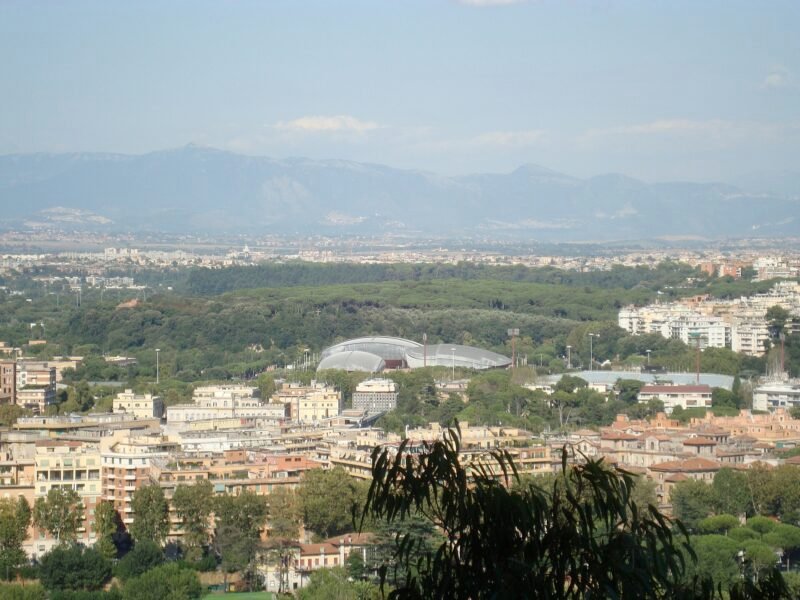
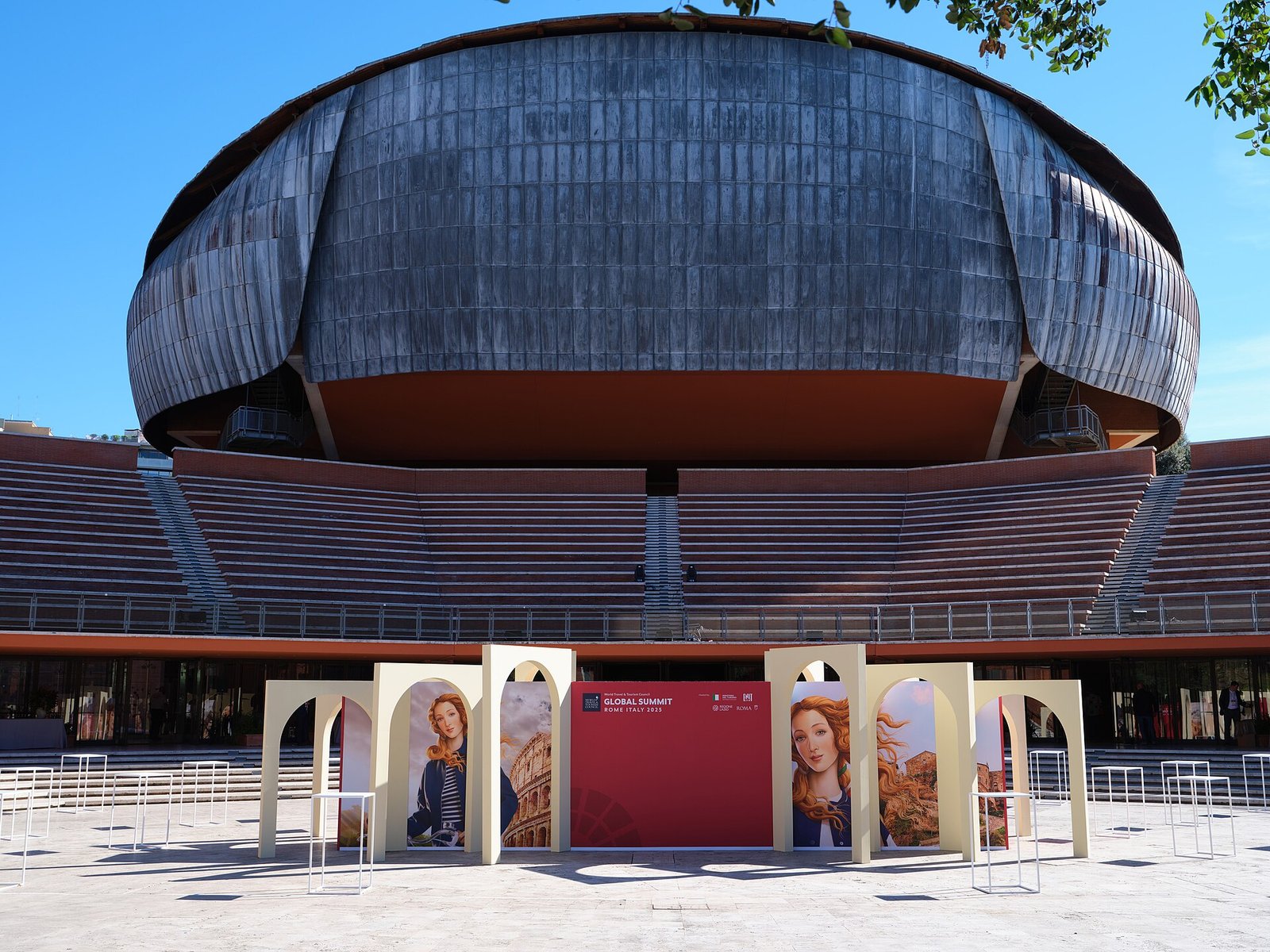
The Auditorium Parco della Musica Ennio Morricone, designed by Renzo Piano, has been open since 2002 in Flaminio: three large halls, Teatro Studio and the open-air cavea.
The halls
Sala Santa Cecilia, the largest, is home to the Accademia's symphony orchestra. Sala Sinopoli has 1,133 seats, Petrassi 673, Teatro Studio about 300. Around them are the cavea named after Luciano Berio, the hanging gardens dedicated to Claudio Abbado and the Museum of Musical Instruments of the Accademia di Santa Cecilia.
Music of every genre
The Fondazione Musica per Roma programs jazz, singer-songwriters and world music alongside classical. The Kay McCarthy concert is part of the world section of the program, together with that of Eugenio Bennato the same evening.
How to get to Teatro Studio
The Auditorium is at Viale Pietro de Coubertin 30. From the center you take metro line A to Flaminio and then tram 2 to the Flaminia/Reni or Apollodoro stops.
By bus
From Termini, bus 910 arrives with no transfers. Lines 53, 168 and 982 also pass nearby. For updated Saturday-night schedules it is best to consult the ATAC planner.
By car
The complex has paid parking, surface and multi-level, with spaces for people with disabilities. On Saturday evening, with two concerts at once, it is best to arrive early.
The return
After the concert, tram 2 takes you back to Piazzale Flaminio and metro line A. Alternatively, a taxi booked in advance avoids the wait at the hour when two halls empty together.
Around the Auditorium
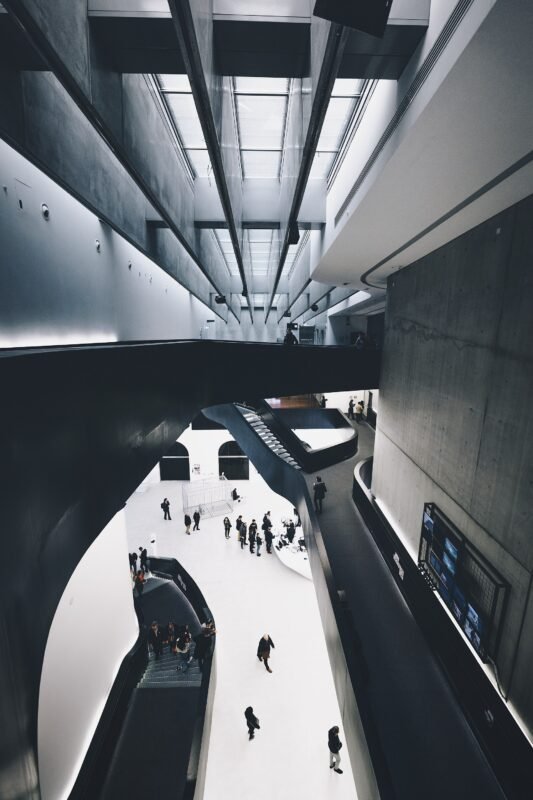
Around the Auditorium are the Olympic Village, Villa Glori and, a few minutes away, the MAXXI, the national museum of 21st-century arts.
Toward the Tiber
From the Auditorium you walk down toward the river and the Ponte della Musica, which leads to the Foro Italico. Farther north is Milvian Bridge, the evening gathering spot of north Rome.
Teatro Olimpico
Not far away is also the Teatro Olimpico, a historic hall of the Flaminio district.
Where to eat before or after the concert
Inside the Auditorium are a bar and a café in the foyer and a bar-restaurant with access from the street as well. Outside, between Via Flaminia, the Olympic Village and Piazza Mancini, there are trattorias, pizzerias and bars.
Before 20:00
To have dinner before the concert you need to sit down around 18:30 and book: on Saturday evening the nearby places are full.
After the concert
Those who prefer to eat afterward find the widest choice in Ponte Milvio, where on Saturdays the places stay open late. A dark beer, to stay on theme, is not hard to find.
Accessibility, age and practical information
For accessibility needs at Teatro Studio, it is best to contact the Fondazione Musica per Roma in advance at info@musicaperroma.it, to find out which entrance to use and which seats to choose.
With children
The Kay McCarthy concert is suitable for families too: the Irish dances engage the youngest, and seeing instruments like the bodhrán, the whistles and the bones up close is a discovery. The access rules for minors are those indicated by the Auditorium at the time of purchase.
Arriving on time
Teatro Studio is reached by crossing the complex: it is best to arrive at least 20 minutes before 20:00.
Mid-January in Rome
On January 16 the holidays are over, the city goes back to its normal life and the museums are less crowded: it is a good moment for a Roman weekend.
The weather
In January the evenings are cold and often damp. A coat, to leave at the coat check, and a folding umbrella are enough.
A full Saturday
Morning at the MAXXI, afternoon at Villa Borghese and Piazza del Popolo, evening tram 2 to the Auditorium: a Saturday entirely north of the center, without ever taking the car.
January 16 at the Auditorium: Ireland and southern Italy on the same evening
On Saturday, January 16, 2027 at 20:00 the Auditorium programs two folk concerts at once: Kay McCarthy in Teatro Studio Borgna, Eugenio Bennato in Sala Petrassi.
Two traditions compared
On one side, Irish ballads and dances, with the bodhrán and the whistles. On the other, the tarantella and the rhythms of the Mediterranean, with the chitarra battente and the tammorra. Two distant worlds that share the same idea: folk music as the memory of a people, passed on from voice to voice, and put back into circulation by performers who have studied it.
Who Eugenio Bennato is
Eugenio Bennato, born in Naples in 1948, was among the founders of the Nuova Compagnia di Canto Popolare in 1967 and of Musicanova. In 1998 he created the Taranta Power movement. The Auditorium page presents him as the great master of Italian folk music, now close to 50 years of career.
How to choose
Those who love intimate voices and stories will choose Teatro Studio. Those looking for rhythm and celebration, the Petrassi. The two concerts start at the same hour: you can't see both, but you can arrive together, eat together and meet again in the cavea on the way out to compare impressions.
How to plan the evening
A concert at 20:00 on a Saturday lends itself to a complete evening in Flaminio: an aperitivo in the neighborhood, the concert, then dinner or a drink afterward in Ponte Milvio.
For those from out of town
For those arriving for the day from outside Rome, the most convenient solution is to leave the car in the Auditorium's parking lot and not move it until the return. Those arriving by train at Termini have the 910, which leaves from the station and reaches the complex with no transfers.
For those staying in town
Those staying in the center can return by tram 2 to Piazzale Flaminio and then on foot toward the Tridente. Those sleeping north of the city have Ponte Milvio a few minutes away: on Saturday night it is the right place to end the evening.
When to buy
A concert with a devoted audience, in a hall of 300 seats, on a Saturday night: in our view it is worth buying as soon as you decide. Putting it off means risking the side rows or a sellout.
A curiosity about Kay McCarthy, La voce dell'Irlanda at Auditorium Parco della Musica, January 16, 2027
The nicest curiosity concerns a record bundled with a newspaper. In 1996 Níl Sé 'na Lá, Ballate notturne, Kay McCarthy's fourth album, came out as a supplement to the weekly Avvenimenti and sold over 100,000 copies. A record of Irish ballads, largely in Gaelic, that entered 100,000 Italian homes through the newsstand: it is proof of how much this singer has built, in Italy, an audience that goes well beyond folk enthusiasts.
The second curiosity concerns her Roman story. Kay McCarthy began in the 1970s at the Folkstudio in Rome, and her first record, Roisin Dubh, came out in 1978 with the Folkstudio label itself. Almost 50 years later, the same artist plays in an auditorium designed by Renzo Piano: the distance between the basement club and the concert hall measures well the road traveled.
The third is a detail of her training: before becoming a performer, Kay McCarthy studied modern history and Italian literature. Her comments between one piece and the next come from there. With a degree in modern history and in Italian language and literature in Ireland, then in modern languages and literatures in Italy, she knows the history she sings and the language in which she explains it to the Roman audience.
Something nobody tells you about Kay McCarthy, La voce dell'Irlanda at Auditorium Parco della Musica, January 16, 2027
What goes unsaid is that a Kay McCarthy concert is also a show of words. The poster speaks of ballads and dances, but in the musicians' listing the singer is indicated as singing and narrating voice, and her biography notes that she accompanies her concerts with shrewd, informed and often ironic comments on the Irish and their controversial centuries-long history. Anyone arriving expecting only music will find they have also heard a history of Ireland, told by someone who knows it as a scholar.
The second thing concerns the language. Many ballads are in Gaelic, and the Italian audience does not understand them word for word. It is not a limit: the singer explains the meaning of each song beforehand, and the melody does the rest. In our view, listening to a language you don't know focuses attention on the sound of the voice, which is the real instrument of this concert.
The third thing is practical: the same evening, at the same hour, Eugenio Bennato plays in Sala Petrassi. Two audiences come out almost together. If you can, don't be in a hurry on the way out and don't book the taxi to the minute.
The advice I give you for visiting Kay McCarthy, La voce dell'Irlanda at Auditorium Parco della Musica, January 16, 2027
My advice is to buy early and choose the front rows of Teatro Studio. In a hall without a raised stage, closeness makes the difference: you see the hands on the bodhrán, the strike of the bones, the whistles passing from one musician to another. These are instruments you understand by watching them, and from the back rows you lose the mechanics.
Second piece of advice: listen first to Níl Sé 'na Lá or L'amore tace. The first will give you the sound of the nocturnal ballads, the second Kay McCarthy's voice in Italian. You will arrive with some melodies already in your head and the concert will feel more like a return than a discovery.
Third: don't be afraid to beat the time. Irish dances are made to be followed with the foot and the hands, and in an intimate hall the audience becomes part of the rhythm. A theater is not a pub, but it is not a church either.
Finally, if you love folk music, consider also buying tickets for Eugenio Bennato on another Roman date: you can't see both the same evening, but the comparison between the two traditions, in our view, is worth a second concert.
Another well-known fact, yet rarely mentioned
It is well known that Irish music has an enormous audience across Europe, and that the Chieftains were for decades its ambassadors in the world. It is less often remembered that, in 1982, Kay McCarthy was chosen to open their concerts on tour: the singer who represented the Irish tradition in Italy, in front of the audience of the most celebrated group of that tradition. A recognition that weighs more than many prizes.
A second fact known to enthusiasts but rarely cited concerns the competitions. Before moving to Italy, Kay McCarthy had won the first prize as solo singer at the Oireachtas, the great festival of Gaelic culture, and a first prize for counter-singing as a contralto. At the Feis Cheoil in Dublin she had won a bronze medal. Her voice, in short, was formed and judged within the tradition, before becoming its interpreter abroad.
The third fact concerns her home: today Kay McCarthy lives in Montefiascone, in the province of Viterbo. An Irishwoman in the Tuscia, who from there keeps touring Italy with her ensemble and with duo recitals with Piero Ricciardi, the percussionist who has been beside her forever and who on January 16 will be on stage on bodhrán and bones.
The right photo to take at Kay McCarthy, La voce dell'Irlanda at Auditorium Parco della Musica, January 16, 2027
You don't take photos during the concert: in a hall of 300 seats, with the stage at audience level, a raised phone is in everyone's field of view and disturbs the musicians. Photos are taken before and after.
The nicest is taken from the cavea, before going in. At 19:30 in mid-January it is fully dark: Renzo Piano's three large halls are lit from below, the foyer windows come on and the empty steps of the cavea become a great space of stone and light. Position yourself high on the steps and frame the halls against the dark sky. It is the photo that tells the Auditorium in winter.
A second photo can be taken in the foyer of Teatro Studio, in front of the concert poster, for those who want a keepsake of the evening.
On the way out, with two concerts ending together, the cavea fills with people for a few minutes. It is the moment when the Auditorium most resembles the square that Piano wanted to build. A wide photo, from the edge of the steps, captures the audiences of two musical traditions mixing before going home.
Some important events that took place here in history
In 1936 the Augusteo, Rome's great concert hall, was demolished, and for more than 60 years Rome remained without an auditorium designed for music. The choice of the Olympic Village area came in 1992, the competition won by Renzo Piano in 1993. During the excavations the remains of a Roman villa of the 3rd century BC emerged, built on an archaic farm of the 6th century. The project was modified and the finds are displayed in a small museum under the cavea.
On April 21, 2002, Rome's birthday, Sala Sinopoli and Sala Petrassi opened. On December 21 of the same year, Sala Santa Cecilia. Since 2003 the Auditorium has been the home of the Accademia Nazionale di Santa Cecilia's season, since 2006 it has hosted the Rome Film Festival, and in 2020 it was named after Ennio Morricone.
World music has always had a place in this history. The Fondazione Musica per Roma has paired jazz, singer-songwriters and the folk traditions of the world with classical, and Teatro Studio has become the hall of acoustic and intimate concerts. The evening of January 16, 2027, with Ireland in one hall and southern Italy in the next, is a small summary of this vocation.
Who has passed through Kay McCarthy, La voce dell'Irlanda at Auditorium Parco della Musica, January 16, 2027
Over more than 20 years the great conductors of the Santa Cecilia season, the jazz players of the Roma Jazz Festival, Italian singer-songwriters and the international stars of the summer cavea have passed through the Auditorium's halls. Teatro Studio, in particular, is the concert hall where the artist is a few meters from the audience. This fall, among others, Carlo Molinari with his band, Davide Boosta Dileo with Pianorama, Gaia Banfi on piano and voice and Giovanni Tommaso with the Orchestra Nazionale Jazz Giovani Talenti played there.
In Kay McCarthy's long career there are moments that explain her presence here: the Folkstudio in Rome in the 1970s, the tour with the Chieftains in 1982, the live concert at Villa Ada released in 2005, a place of the Roman summer where her audience grew for years.
On January 16, 2027, Kay McCarthy, Susanna Valloni, Cristiano Brunella, Fabio De Portu, Stefano Diotallevi, Piero Ricciardi and Christopher O'Rourke pass through Teatro Studio. In the next hall, at the same hour, Eugenio Bennato. And, in the ballads, the whole history of an island told by someone who left it for Rome more than 50 years ago.
Frequently asked questions about Kay McCarthy at the Auditorium
When does Kay McCarthy play in Rome in 2027?
Kay McCarthy plays at Auditorium Parco della Musica Ennio Morricone on Saturday, January 16, 2027 at 20:00, in Teatro Studio Borgna, with the concert La voce dell'Irlanda. It is a single date in Rome.
How much do tickets for Kay McCarthy at the Auditorium cost?
Tickets for the Kay McCarthy concert at the Auditorium start at 20 euros according to the official event page. You buy them online from the Auditorium website, which links to the authorized presale network, or at the complex's box office.
Who plays with Kay McCarthy?
Playing with Kay McCarthy are Susanna Valloni on flutes and whistles, Cristiano Brunella on violin, Fabio De Portu on guitars, Stefano Diotallevi on piano and keyboard, Piero Ricciardi on bodhrán and cnámha and Christopher O'Rourke on bodhrán and snare drum.
Who is Kay McCarthy?
Kay McCarthy is a singer, musician and writer born in Dublin in 1947 and moved to Rome, considered the ambassador of Irish folk in Italy. She began at the Folkstudio in the 1970s and released records from 1978 to 2013.
How many seats does Teatro Studio Borgna have?
Teatro Studio Borgna at Auditorium Parco della Musica has about 300 seats, with no curtain and the stage at audience level. It is the smallest hall in the complex and the best suited to acoustic concerts.
How do you get to Teatro Studio at the Auditorium?
Teatro Studio is inside Auditorium Parco della Musica, at Viale Pietro de Coubertin 30. You get there by metro line A to Flaminio and then tram 2, or by bus 910 from Termini. There is also paid parking.
Is the concert suitable for children?
The Kay McCarthy concert is suitable for families: the Irish dances and the traditional instruments seen up close intrigue children. The access rules for minors are indicated by the Auditorium at the time of purchase.
The final advice on Kay McCarthy at the Auditorium
La voce dell'Irlanda is the right evening for those who want a warm concert in the middle of winter: ballads and dances, a singer who tells stories, six musicians in a small hall. In our view it is worth buying early a seat in the front rows of Teatro Studio, listening first to a record like Níl Sé 'na Lá, arriving with the cavea already lit and, on the way out, looking for a dark beer in Ponte Milvio. And those who love folk music should keep an eye on Eugenio Bennato too, in the next hall the same evening.
Article written by the editorial team of Tour Leader Pro, contact them for Private/Corporate/V.I.P. Tours and Experiences.
Planning a trip to Rome? The English-language guides to visiting the city are on ItalyPlanner.com.
Contact Information
Nearby
 Museum of Musical Instruments (MUSA)100 m
- Auditorium Parco della Musica100 m
- Villa Glori500 m
- Fountain of Anna Perenna500 m
- MAXXI – National Museum of 21st Century Arts700 m
- Flaminio700 m
Upcoming events nearby
- Roma Jazz Festival 2026, November 1 to 24 at the Auditorium and Casa del Jazz100 m
- Evgeny Kissin and András Schiff at Santa Cecilia, November 9, 2026100 m
- Roma Gospel Festival 2026 at Auditorium Parco della Musica, December 13, 2026 to January 1, 2027100 m
- Santa Cecilia 2026/2027 Concert Season at Auditorium Parco della Musica, October 21, 2026 to June 5, 2027100 m



You might also like
- Nubras Ensemble at Auditorium Parco della Musica, February 27, 2027
- Simone Avincola canta Carella at Auditorium Parco della Musica, February 26, 2027
- Mauro Di Maggio at Auditorium Parco della Musica, December 10, 2026
- Giovanni Tommaso, My Four Seasons at Auditorium Parco della Musica, December 11, 2026
- Pink Floyd Legend and Guy Pratt at Teatro Olimpico, February 18 and 19, 2027
- Raffaella! Sognando la Carrà at Teatro Olimpico, February 10, 2027