Giovanni Tommaso, My Four Seasons at Auditorium Parco della Musica, December 11, 2026
In short. Giovanni Tommaso presents My Four Seasons with the ONJGT, the Orchestra Nazionale Jazz Giovani Talenti conducted by Paolo Damiani, on Friday, December 11, 2026 at 20:00 at Teatro Studio Borgna in Auditorium Parco della Musica Ennio…
Giovanni Tommaso presents My Four Seasons with the ONJGT, the Orchestra Nazionale Jazz Giovani Talenti conducted by Paolo Damiani, on Friday, December 11, 2026 at 20:00 at Teatro Studio Borgna in Auditorium Parco della Musica Ennio Morricone, at Viale Pietro de Coubertin 30 (00196 Rome). You get there on metro line A to Flaminio and then tram 2 (stops Flaminia/Reni or Apollodoro), or on bus 910 from Termini. Tickets start at 20 euros, according to the official event page, and are bought from the Auditorium's website, which links to the presale network authorized by the organizers, or at the complex's ticket office.
The project comes from a proposal by the Fondazione Musica per Roma: the compositions and arrangements written by Giovanni Tommaso over a career of almost 70 years, reread by an orchestra of young musicians. The double bass player from Lucca, founder of Perigeo and a protagonist of Roman jazz since the sixties, takes the stage with 11 musicians: a generation the age of his grandchildren, playing his music in orchestrations signed by five of them.
My Four Seasons in Rome: date, time and tickets
The concert by Giovanni Tommaso and the ONJGT is scheduled for Friday, December 11, 2026 at 20:00 at Teatro Studio Borgna, according to the official page of Auditorium Parco della Musica Ennio Morricone. It's a single date, produced by the Fondazione Musica per Roma.
The price
The event page lists tickets starting at 20 euros. The seat map and any higher price tiers appear at the time of purchase. In a hall of about 300 seats the differences in view are minimal.
Where to buy
The Auditorium's official site links, from the purchase button, to the authorized presale network. The complex's ticket office is at Viale Pietro de Coubertin 30. From October to March the site lists hours from 11:00 to 20:00, including Sundays and holidays. Tickets bought on unauthorized secondary platforms may not be valid.
A compact hall for an orchestra
12 musicians in a hall of 300 seats is an unusual density: the sound of a jazz orchestra arrives full, with the winds very close. It's one more reason not to put off buying, because the Roman jazz audience knows Tommaso's name well.
My Four Seasons: the project
My Four Seasons is the reinterpretation, by the Orchestra Nazionale Jazz Giovani Talenti, of pieces composed and arranged by Giovanni Tommaso over the course of his career, with orchestrations signed by five musicians of the orchestra: Stefano Proietti, Aldo Di Caterino, Thomas Lasca, Jacopo Teolis and Andrea Elisei.
Tommaso's words
In the official presentation Tommaso says that a new project, for him, doesn't come from planning but from an idea that arrives, in his words, "without knocking". He explains that My Four Seasons is a demanding project, proposed by the Fondazione Musica per Roma, and that hearing the orchestra live thrilled him. He thanks the Foundation and Paolo Damiani for their trust.
The four seasons
The title evokes, by assonance, the seasons of a musical life: Damiani speaks of four seasons as a rereading of pieces written over a career that, according to his presentation, has few equals in the world. Each season thus becomes a chapter of Tommaso's repertoire, from the jazz rock years to the most recent compositions.
After Rava, Rea, Fresu and Trovesi
For the ONJGT the project comes after a series of tributes to the greats of Italian jazz: Enrico Rava, Danilo Rea, Paolo Fresu, Gianluigi Trovesi. Damiani calls this new adventure a formidable experience. The difference, this time, is that the honored master takes the stage with the orchestra, on double bass.
The lineup on stage
The lineup announced for My Four Seasons includes Giovanni Tommaso on double bass, original compositions and arrangements, Paolo Damiani as conductor and orchestrator, and 11 musicians of the Orchestra Nazionale Jazz Giovani Talenti.
The voice and the winds
Ada Flocco is the voice. The winds are Aldo Di Caterino on flute and alto flute, Jacopo Teolis on trumpet and flugelhorn, Giulio Tullio on trombone, Lorenzo Simoni on alto sax, Federico D'Angelo on baritone sax and bass clarinet. It's a lineup that allows different colors, from the flute to the bass clarinet, far from the classic big band.
The rhythm and harmony section
Thomas Lasca plays electric guitar, Stefano Proietti piano and keyboards, with the role of deputy conductor, Giulio Barsotti double bass, Andrea Elisei drums. Two double basses on the same stage, the young Barsotti's and Tommaso's, are the most curious detail of the lineup.
Five orchestrators
The orchestrations are signed by Proietti, Di Caterino, Lasca, Teolis and Elisei, as well as by Damiani. So this isn't an orchestra performing arrangements written by others, but young musicians who put their hands into the master's scores and rewrote them for their own ensemble.
Paolo Damiani and the Orchestra Nazionale Jazz Giovani Talenti
The ONJGT, Orchestra Nazionale Jazz Giovani Talenti, is conducted by Paolo Damiani, who also signs its orchestrations together with the musicians. In the December 11 concert he conducts a lineup of 10 young instrumentalists and a voice.
An orchestra for the young
As the name says, the orchestra brings together young talents of Italian jazz. Its repertoire, so far, has been built around tributes to the greats of Italian jazz: Rava, Rea, Fresu, Trovesi. It's a way of handing down a heritage between generations through practice, playing the masters' music and rewriting it.
Tommaso's verdict
Tommaso writes that he was thrilled after hearing the orchestra live, recognizing Damiani's excellent work and appreciating the young artists. For a musician who has played with Chet Baker and Sonny Rollins, it's an endorsement that says a lot about the level of the project.
Who Giovanni Tommaso is: the biography
Giovanni Tommaso is an Italian bassist and double bass player, born in Lucca on January 20, 1941. He was the founder of Perigeo, one of the most important European jazz rock bands of the seventies, and one of the protagonists of Italian jazz for over 60 years.
Lucca, Bologna and the Quintet
He studies at the Bologna conservatory in the fifties and frequents the city's jam sessions, one of the reference points of jazz in Italy. In 1957 he forms a quintet in Lucca with his brother Vito on piano, his brother-in-law Gaetano Mariani on guitar, Giampiero Giusti on drums and Antonello Vannucchi on vibraphone. In 1958 he records an EP and wins the Coppa del jazz, a Rai radio tournament.
The ships and New York
At 18 he begins playing in cruise ship orchestras, and between 1959 and 1960 he frequents the jazz clubs of New York, where he meets double bass players such as Paul Chambers, Ray Brown and Charles Mingus. Back in Italy he forms a trio with Amedeo Tommasi on piano and Gegè Munari on drums, and plays with Chet Baker, with Tommasi and Franco Mondini.
Rome and RCA
In 1967 he moves to Rome to work at RCA Italiana as an instrumentalist, arranger and producer. He takes part in recordings by Riccardo Cocciante, A mano a mano and Cervo a primavera, by Mina, by Gianni Morandi, by Rino Gaetano, E io ci sto, by Ivan Graziani, by Anna Oxa, and in the European Tour of Sammy Davis Jr. At Rai he plays with Sonny Rollins in an episode of Studio Uno.
The Music Inn
With Pepito Pignatelli he opens the Music Inn in Rome, which becomes one of the city's reference venues for jazz. On its stage he plays with musicians such as Dexter Gordon, Johnny Griffin, Art Farmer and Kenny Drew. In those years he also spends time with Steve Lacy, the New York saxophonist who settled in Rome and was a reference point of the avant-garde.
Perigeo
In 1971 he forms Perigeo, a jazz rock quintet with Claudio Fasoli on sax, Tony Sidney on guitar, Franco D'Andrea on keyboards and Bruno Biriaco on drums, on the road opened in those years by Miles Davis and Weather Report. The band remains active until 1977 and records eight albums.
After Perigeo
In the following years he plays in different formations, including the GT Quintet and the trio with Stefano Bollani and Roberto Gatto, and also records the bass parts of several cartoon theme songs written by his brother Vito. In 2007, 30 years after the end of Perigeo, he founds Apogeo with Daniele Scannapieco on sax, Bebo Ferra on guitar, Claudio Filippini on piano and Anthony Pinciotti on drums.
Teaching
He holds the chair of jazz music at the Perugia Conservatory and has directed the Umbria Jazz Clinics seminars since 1986. In 2003 he received an honorary degree in music from the Berklee College of Music, during Umbria Jazz. He also teaches at CEMM in Bussero, near Milan.
Giovanni Tommaso records to listen to before the concert
Giovanni Tommaso's discography runs through Italian jazz from the fifties to today: the Quartetto di Lucca and Perigeo for RCA Italiana, the Giovanni Tommaso Quintet records for Red Records and BMG, the trios with Franco D'Andrea and Roberto Gatto.
Perigeo
Perigeo's eight albums, recorded between 1971 and 1977, are the obligatory starting point: the electric sound, D'Andrea's keyboards, Tommaso's themes. It's the season in which Tommaso the composer became known outside Italy too.
The Quintet and the trios
With the Giovanni Tommaso Quintet came Via G.T., To Chet, Over the ocean and Strane stelle strane. With D'Andrea and Gatto, Kick off and Airegin. It's the acoustic side of the composer, the one that lends itself most to writing for orchestra.
A curiosity about Giovanni Tommaso, My Four Seasons at Auditorium Parco della Musica, December 11, 2026
The most surprising curiosity concerns the meeting with Chet Baker. Giovanni Tommaso, while still attending the Bologna conservatory, played with the American trumpeter in the period after his detention in Lucca, Tommaso's hometown, with Amedeo Tommasi on piano and Franco Mondini on drums. A provincial kid who finds himself on stage with a legend of American jazz, a few kilometers from home: it's the beginning of a career that will lead him to share the stage with Sonny Rollins, Lee Konitz, Dexter Gordon and Johnny Griffin. Among the records under his own name, with the Giovanni Tommaso Quintet, there is also To Chet.
The second curiosity concerns the music that many Italians have listened to without knowing it. At RCA Tommaso played on records by Cocciante, Mina, Morandi, Rino Gaetano, Ivan Graziani and Anna Oxa, and recorded the bass parts of several cartoon theme songs written by his brother Vito. The double bass player of Perigeo is also the bassist of a part of the pop memory of entire generations.
The third is in the names. Perigeo, in 1971. Apogeo, in 2007: the two extreme points of a celestial body's orbit, the nearest and the farthest. 30 years after the breakup of the historic band, Tommaso named the new group with the opposite name, closing an astronomical and musical circle.
Teatro Studio Borgna, the concert hall
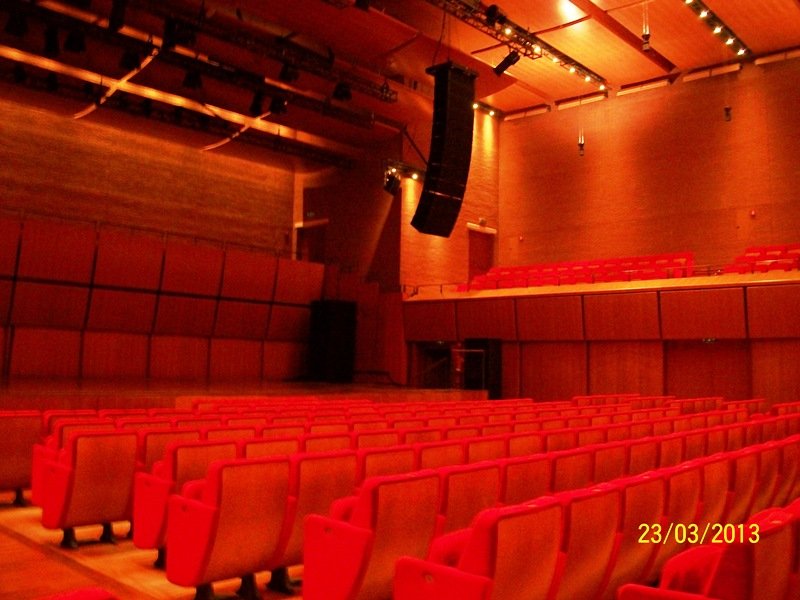
Teatro Studio Borgna is the smallest hall of Auditorium Parco della Musica Ennio Morricone: about 300 seats, no curtain, with the stage at the same level as the audience.
Wood and movable panels
The walls are clad in wood and movable acoustic panels let the hall be adapted to the type of show. For a 12-piece jazz orchestra it means being able to calibrate the hall's response to winds, rhythm section and voice.
Close to the stage
At Teatro Studio even the last rows are close to the musicians. In a concert with many soloists taking turns, the closeness lets you follow who takes the floor, who answers, who gives the cue.
The name of the hall
Teatro Studio is named after Gianni Borgna, longtime Rome councilor for cultural policy and president of the Fondazione Musica per Roma, the same foundation that proposed the My Four Seasons project to Tommaso. The complex's general listing is on the Auditorium Parco della Musica page.
Something nobody tells you about Giovanni Tommaso, My Four Seasons at Auditorium Parco della Musica, December 11, 2026
What few people point out is the age gap on stage. Giovanni Tommaso turned 85 in January 2026. The ONJGT musicians are young talents, as the orchestra's name says. Between the double bass player who frequented New York clubs at the end of the fifties and the kids who today orchestrate his music there are two or three generations. A concert like this is rare: usually tributes are held when the master is no longer around.
Second thing rarely said: there are two double basses on stage. One is Giulio Barsotti's, the orchestra's double bass player. The other is Tommaso's. Anyone who knows jazz knows how delicate the balance is between two instruments in the same register: the dialogue between the master and the young colleague is one of the moments to look forward to.
Third point, a practical one: at the Auditorium the halls are separate volumes, and Teatro Studio doesn't have the entrance of Sala Santa Cecilia. Anyone who arrives at the last minute and takes the wrong path between the cavea and the foyers easily loses five minutes. On the same evening, in the other halls, there may be other shows, and the bar gets crowded in the half hour before the start.
The advice I give you for visiting Giovanni Tommaso, My Four Seasons at Auditorium Parco della Musica, December 11, 2026
The advice is to come to the concert with some listening behind you. A Perigeo record, to understand where Tommaso the composer comes from, and one by the Giovanni Tommaso Quintet, like To Chet or Via G.T., for the more acoustic side. Recognizing an original theme under the young musicians' orchestration makes the evening much richer.
The second piece of advice concerns the seat. In a hall of 300 seats, for an orchestra the center is best, not too close: from the first rows you mostly hear the winds in front, while from the center of the hall the sound of the 12 instruments arrives balanced. Anyone who wants to see Tommaso's hands on the double bass up close should sit in front instead, on his side.
The third concerns the evening. The concert is on a Friday at 20:00: it's best to arrive at the Auditorium around 19:15, get something at the foyer bar and go into the hall without hurry. After the concert, on a Friday night, Ponte Milvio is a few minutes away for those who want to have dinner.
How to get to the Auditorium for Giovanni Tommaso
Auditorium Parco della Musica Ennio Morricone is reached by tram 2, stops Flaminia/Reni or Apollodoro, and by buses 910, 982, 168 and 53. The nearest metro station is Flaminio, on line A.
Metro A and tram 2
From Flaminio station you exit onto Piazzale Flaminio and take tram 2 along Via Flaminia. Get off at Flaminia/Reni or at Apollodoro and walk a few minutes through the Villaggio Olimpico to Viale Pietro de Coubertin.
Bus 910 from Termini
The 910 leaves from Piazza dei Cinquecento, in front of Termini station, and takes you to the Auditorium without changes. The 53 connects Piazza Mancini with the center, the 982 comes from Quattro Venti station, the 168 from Tiburtina station. For evening times it's best to consult the Atac route planner.
By car and the return
The complex has a paid internal car park, with limited spaces, and on Friday nights the streets of the Villaggio Olimpico fill up early. After the concert tram 2 takes you back to Piazzale Flaminio. Alternatively, a taxi booked a few minutes before the end.
Another well-known fact, and yet rarely mentioned
It's well known that Perigeo was one of the most important Italian bands of the seventies, capable of an international success that Paolo Damiani's presentation explicitly recalls. Less often remembered is who was in it: alongside Tommaso were Claudio Fasoli on sax, Tony Sidney on guitar, Bruno Biriaco on drums and Franco D'Andrea on keyboards. D'Andrea is today one of the deans of Italian jazz piano, and his name also returns on this season's Roman bills, as in the solo piano concert at Casa del Jazz.
The second little-cited fact concerns Rome. Tommaso isn't Roman, but a decisive part of the history of jazz in the city runs through him: the Music Inn, opened with Pepito Pignatelli, was for years the place where the great American soloists passed through Rome, and his work at RCA Italiana tied his name to Italian song. The trio with Stefano Bollani and Roberto Gatto is another thread that connects him to today's Roman scene.
The third concerns teaching. Since 1986 Tommaso has directed the Umbria Jazz Clinics seminars, and in 2003 the Berklee College of Music conferred an honorary degree on him. Playing with an orchestra of young people isn't an exception for him: it's the consequence of 40 years spent training musicians.
The right photo to take at Giovanni Tommaso, My Four Seasons at Auditorium Parco della Musica, December 11, 2026
In a hall of 300 seats, with the stage at audience level, the glow of a screen is visible from every point and bothers the players. The right photo, if you really want one, is a single one, without flash, at the start or at the moment of the applause: the full orchestra and, at the center, Tommaso with the double bass. It's the image that tells the project, the master among the young.
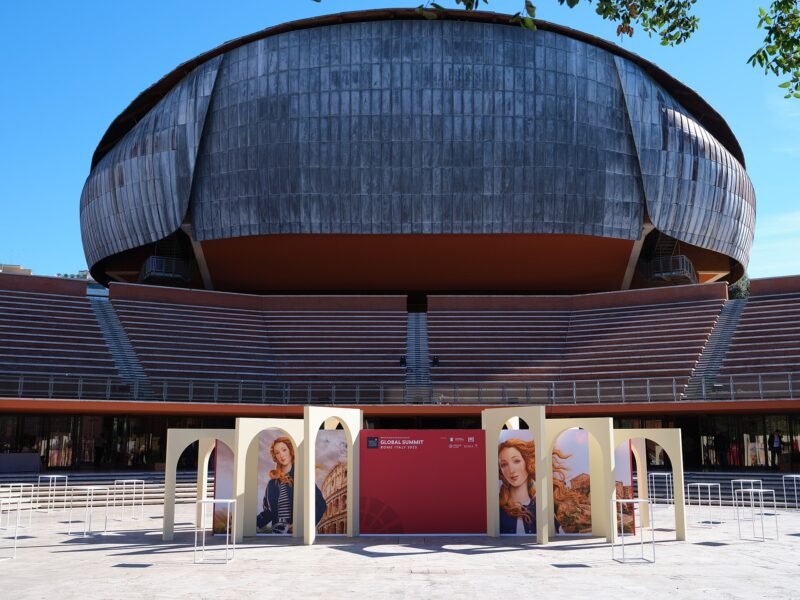
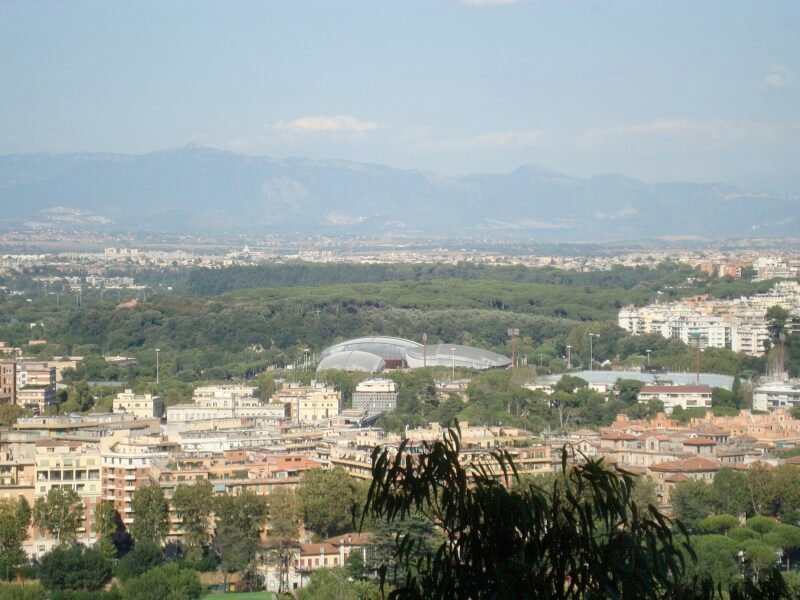
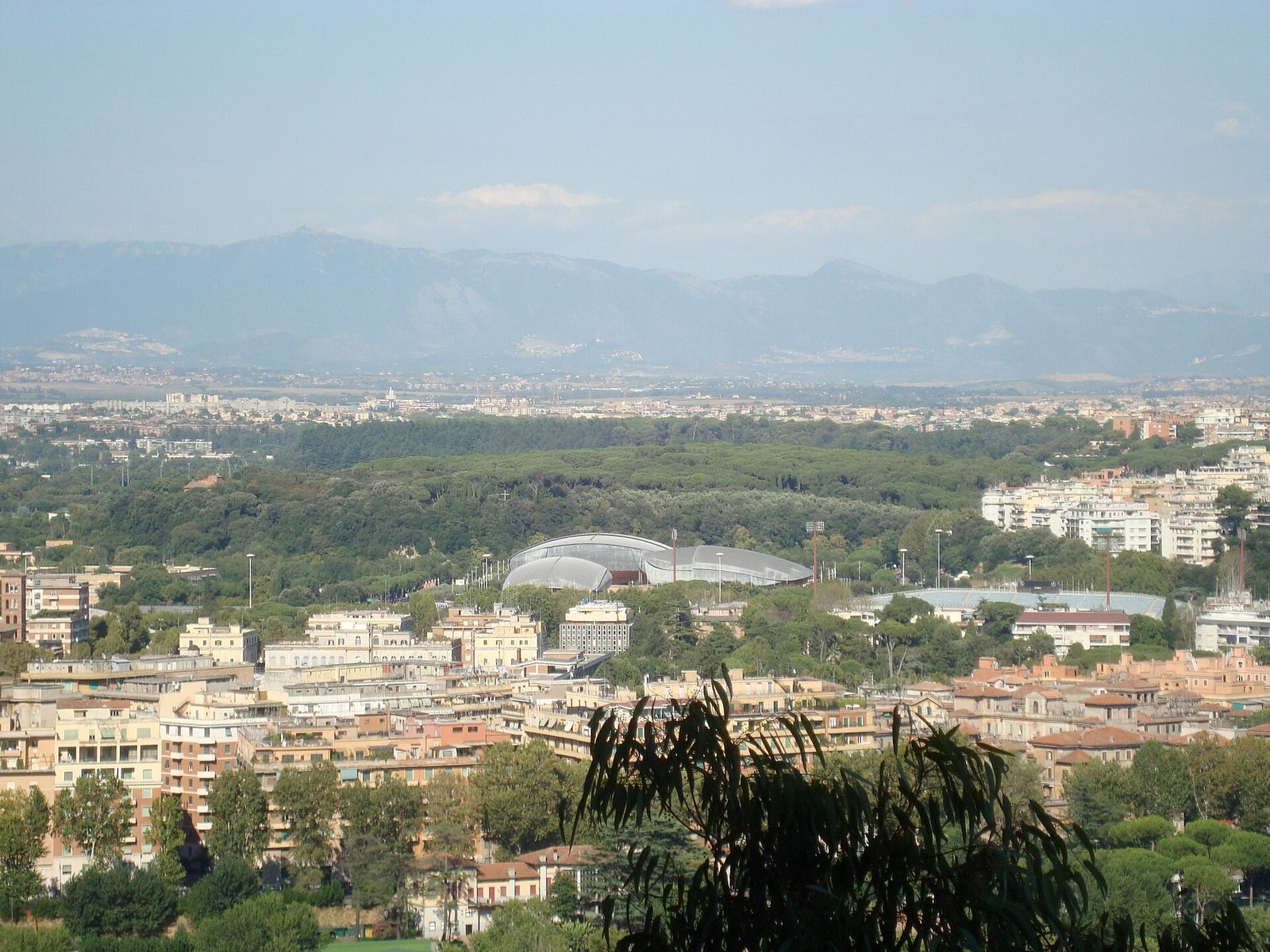
The second photo is taken outside, before going in. The subject is Renzo Piano's Auditorium, with the lead-clad shells of the halls around the cavea. In December at 19:00 it's already dark, and the lit halls against the dark sky are the best background.
The third is a detail: the stage before the start, with the music stands, the two double basses leaning, the drums and the piano. In an orchestral jazz concert the empty stage is already a portrait of the lineup. Then the phone goes off.
Some important events that happened here in history
The ground on which the Auditorium stands has a much longer history than the complex. During the works, the remains of a Roman villa of the 3rd century BC emerged, built on the site of a small archaic farm of the 6th century BC. The discovery forced Renzo Piano to modify the project. The finds are displayed in a small museum under the cavea.
The modern story begins with a demolition. In 1936 the Augusteo, Rome's great concert hall, was torn down, and for over 60 years the city was left without an auditorium built for music. Only in 1992 did the city council choose the Villaggio Olimpico area, and in 1993 Piano won the competition.
On April 21, 2002 the first halls opened, on December 21, 2002 Sala Santa Cecilia. Since 2003 the Auditorium has been home to the Accademia di Santa Cecilia season, since 2006 it has hosted the Rome Film Festival, and in 2020 it was named after Ennio Morricone. In the meantime the Fondazione Musica per Roma has also made the complex a home of jazz, with an autumn festival, the Roma Jazz Festival, and its own productions such as My Four Seasons.
Who has passed through Giovanni Tommaso, My Four Seasons at Auditorium Parco della Musica, December 11, 2026
Since day one the Auditorium has seen the big names of classical music: the inaugural concert of Sala Santa Cecilia was conducted by Myung-Whun Chung, Goffredo Petrassi wanted to be present at the opening of the hall that bears his name, Luciano Berio gave his name to the cavea. Alongside classical music, the Fondazione Musica per Roma has brought Italian and international jazz here. Paolo Fresu himself, to whom the ONJGT dedicated a tribute, plays in Sala Sinopoli the next day, Saturday, December 12.
Some of the biggest names in jazz have passed through Giovanni Tommaso's career: Chet Baker, Sonny Rollins, Lee Konitz, Dexter Gordon, Johnny Griffin, Art Farmer, Kenny Drew, Steve Lacy. Paul Chambers, Ray Brown and Charles Mingus, met in New York. Enrico Rava, Franco D'Andrea and Gegè Munari, with whom he recorded Stereokonitz together with Konitz. Stefano Bollani and Roberto Gatto in trio. And, in song, Riccardo Cocciante, Mina, Gianni Morandi, Rino Gaetano, Ivan Graziani, Anna Oxa and Sammy Davis Jr.
On the evening of December 11, Paolo Damiani, Ada Flocco, Aldo Di Caterino, Jacopo Teolis, Giulio Tullio, Lorenzo Simoni, Federico D'Angelo, Thomas Lasca, Stefano Proietti, Giulio Barsotti and Andrea Elisei pass through Teatro Studio: names to note down, because in a few years they could be the protagonists of the bills.
The neighborhood around the Auditorium
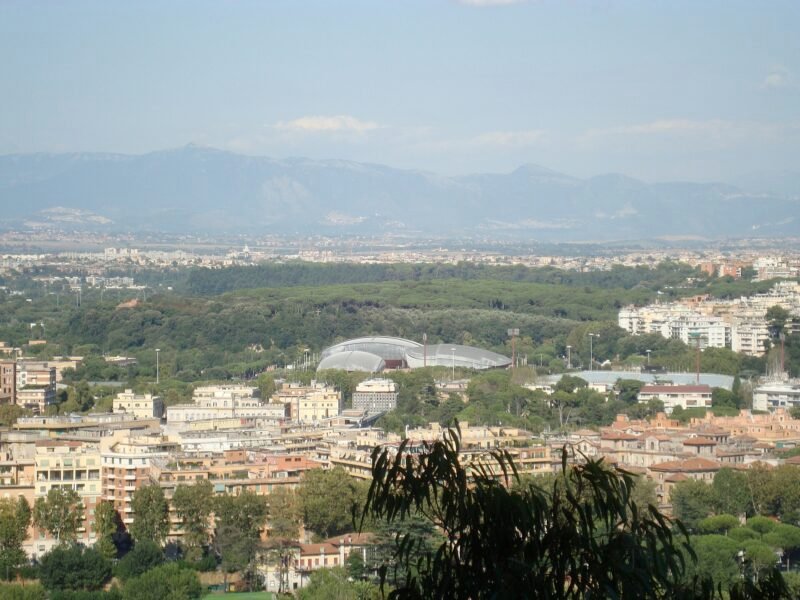
The Auditorium occupies an area of about 55,000 square meters between Villa Glori, the Villaggio Olimpico, the Corso di Francia viaduct and Viale Maresciallo Pilsudski.
The Villaggio Olimpico and MAXXI
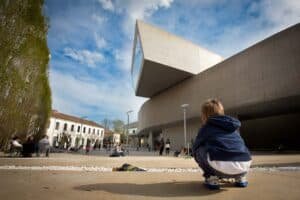
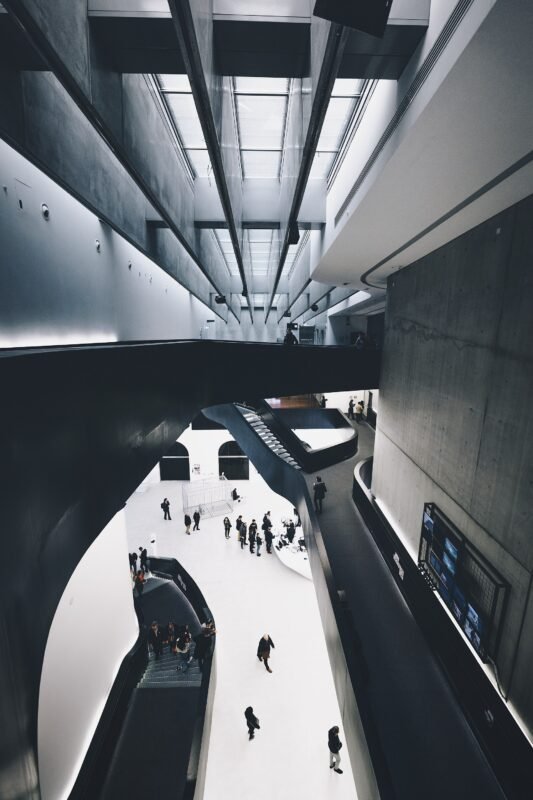
Near the Flaminia/Reni stop is MAXXI, the national museum of 21st-century arts. A short distance away is Teatro Olimpico.
Toward the Tiber and Ponte Milvio
From the Auditorium you go down toward the river and the Ponte della Musica, the footbridge that leads to the Foro Italico. Farther north, beyond Piazza Mancini, is Milvian Bridge, one of the evening meeting points of northern Rome.
The other home of jazz
Anyone who follows jazz in Rome has a second reference address, Casa del Jazz, which appears among the venues linked on the Auditorium's website.
Accessibility and practical information
The Auditorium is a modern complex with paths between the halls that also run outdoors, on the terrace and around the cavea. For accessibility needs at Teatro Studio it's best to contact the Fondazione Musica per Roma in advance at info@musicaperroma.it, to know which entrance to use and which seats to choose.
Parking
The Auditorium's paid car parks, at street level and multi-story, have spaces reserved for people with disabilities.
With kids
For a kid who studies an instrument, a concert in which musicians only slightly older than he is play alongside a master of 85 is a live lesson, and concrete proof that jazz is learned by playing together.
Where to eat before or after the concert
Inside Auditorium Parco della Musica there are a bar and a café in the foyer and a bar restaurant with street access as well. Between the Villaggio Olimpico, Via Flaminia and Piazza Mancini you'll find pizzerias, trattorias and neighborhood bars. For a concert at 20:00 dinner beforehand is only possible by sitting down early, around 18:30. Anyone who prefers to eat afterward finds the widest offering at Ponte Milvio, a few minutes away, where on Friday nights the places stay open late: it's best to book.
A December Friday at the Auditorium
December 11 falls in the middle of a rich week for the Auditorium: on the 9th Jordi Savall conducts Vivaldi in Sala Sinopoli for Santa Cecilia, on the 10th Mauro Di Maggio celebrates 30 years of career at Teatro Studio, on the 12th Paolo Fresu brings his Christmas concert to Sala Sinopoli. Jazz lovers can build a weekend around two consecutive evenings, Friday with Tommaso and Saturday with Fresu.
Weather and clothing
In December Roman evenings are cool and often damp, and the walk from the tram to the Auditorium is outdoors. A coat to leave at the coat check and a folding umbrella are a good idea.
Frequently asked questions about Giovanni Tommaso and the ONJGT
When does Giovanni Tommaso play at Auditorium Parco della Musica?
Giovanni Tommaso plays with the ONJGT at Auditorium Parco della Musica Ennio Morricone on Friday, December 11, 2026 at 20:00, at Teatro Studio Borgna, with the My Four Seasons project conducted by Paolo Damiani. It's a single date, produced by the Fondazione Musica per Roma.
How much do tickets for Giovanni Tommaso in Rome cost?
Tickets for Giovanni Tommaso's My Four Seasons at the Auditorium start at 20 euros, according to the official event page. They are bought from the Auditorium's website, which links to the authorized presale network, or at the complex's ticket office at Viale Pietro de Coubertin 30.
What is Giovanni Tommaso's My Four Seasons?
My Four Seasons is the reinterpretation of pieces composed and arranged by Giovanni Tommaso, performed by the Orchestra Nazionale Jazz Giovani Talenti conducted by Paolo Damiani, with orchestrations signed by five musicians of the orchestra. The project was proposed by the Fondazione Musica per Roma.
What is the ONJGT?
The ONJGT is the Orchestra Nazionale Jazz Giovani Talenti, conducted by Paolo Damiani. Before My Four Seasons it dedicated tribute projects to Enrico Rava, Danilo Rea, Paolo Fresu and Gianluigi Trovesi. At the Auditorium it plays with 10 instrumentalists and a voice, Ada Flocco.
Who is Giovanni Tommaso?
Giovanni Tommaso is a double bass player born in Lucca in 1941, founder of Perigeo, the jazz rock band active from 1971 to 1977. He has played with Chet Baker, Sonny Rollins and Lee Konitz, worked at RCA as an arranger and producer, and directs the Umbria Jazz Clinics seminars.
How many seats does Teatro Studio Borgna have?
Teatro Studio Borgna is the smallest hall of Auditorium Parco della Musica, with about 300 seats, no curtain and the stage at audience level. It's named after Gianni Borgna, former culture councilor of Rome and president of the Fondazione Musica per Roma.
How do you get to Auditorium Parco della Musica by public transport?
Auditorium Parco della Musica is reached by metro A to Flaminio and then tram 2, stops Flaminia/Reni or Apollodoro. From Termini there is bus 910, without changes. Lines 53, 982 and 168 also pass nearby.
The final advice on Giovanni Tommaso and My Four Seasons
A double bass player who has played with Chet Baker and Sonny Rollins, founded Perigeo and opened the Music Inn, who at 85 takes the stage with an orchestra of young people who have rewritten his music: in our judgment My Four Seasons is one of the most significant jazz events of the Roman winter, for what you hear and for what it represents. The advice is to listen to a Perigeo record in the days before, buy the ticket in time, sit in the center of the hall and note down the names of the orchestra's musicians: the concert is also a passing of the baton.
Article written by the editorial team of Tour Leader Pro, contact them for Private/Corporate/V.I.P. Tours and Experiences.
Planning a trip to Rome? The English guides for visiting the city are on ItalyPlanner.com.
Contact Information
Nearby
 Museum of Musical Instruments (MUSA)100 m
- Auditorium Parco della Musica100 m
- Villa Glori500 m
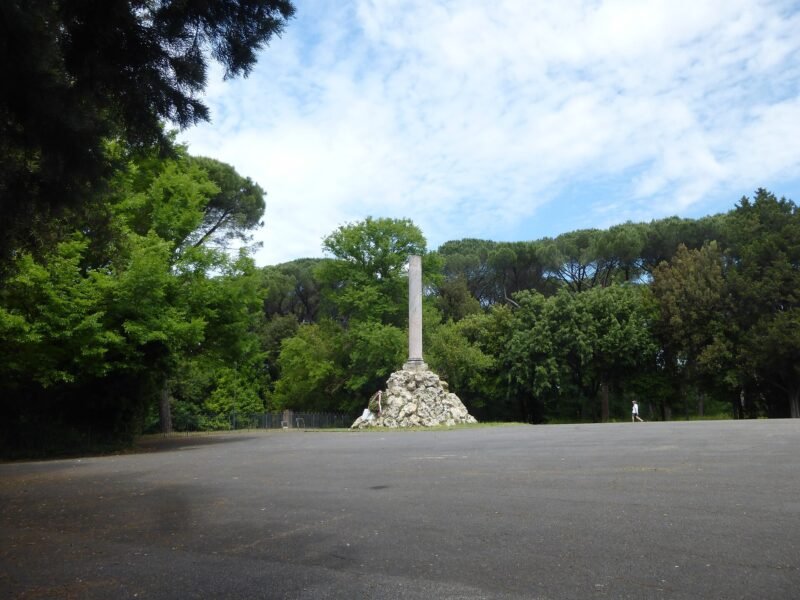
- Fountain of Anna Perenna500 m
- MAXXI – National Museum of 21st Century Arts700 m
- Flaminio700 m
Upcoming events nearby
- Roma Jazz Festival 2026, November 1 to 24 at the Auditorium and Casa del Jazz100 m
- Evgeny Kissin and András Schiff at Santa Cecilia, November 9, 2026100 m
- Roma Gospel Festival 2026 at Auditorium Parco della Musica, December 13, 2026 to January 1, 2027100 m
- Santa Cecilia 2026/2027 Concert Season at Auditorium Parco della Musica, October 21, 2026 to June 5, 2027100 m



You might also like
- Nubras Ensemble at Auditorium Parco della Musica, February 27, 2027
- Indaco, Indigo Tracks at the Auditorium Parco della Musica, December 23, 2026
- Stefano Bollani and Enrico Rava at the Auditorium Parco della Musica, December 23, 2026
- Fabio Concato at Auditorium Parco della Musica, December 27, 2026
- Fabrizio Bosso Quartet, Routes at Auditorium Parco della Musica, January 2, 2027
- Simone Avincola canta Carella at Auditorium Parco della Musica, February 26, 2027