Ciakpolska Film Festival 2026 at Casa del Cinema, November 19 to 22, 2026
In short. The Ciakpolska Film Festival 2026, the 14th edition of the series devoted to contemporary Polish cinema, brings its films to Casa del Cinema from Thursday, November 19 to Sunday, November 22, 2026, in Sala Cinecittà.
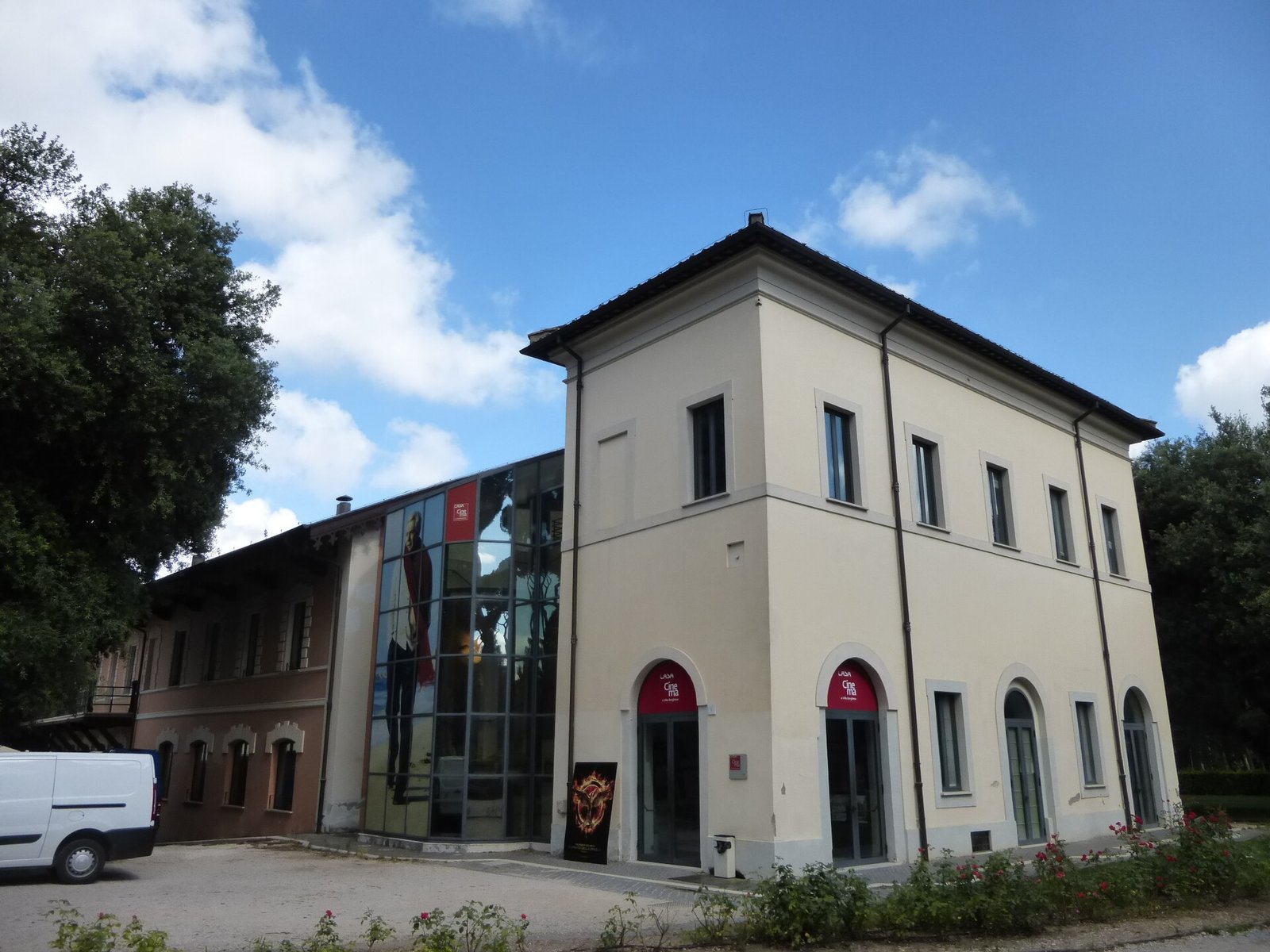
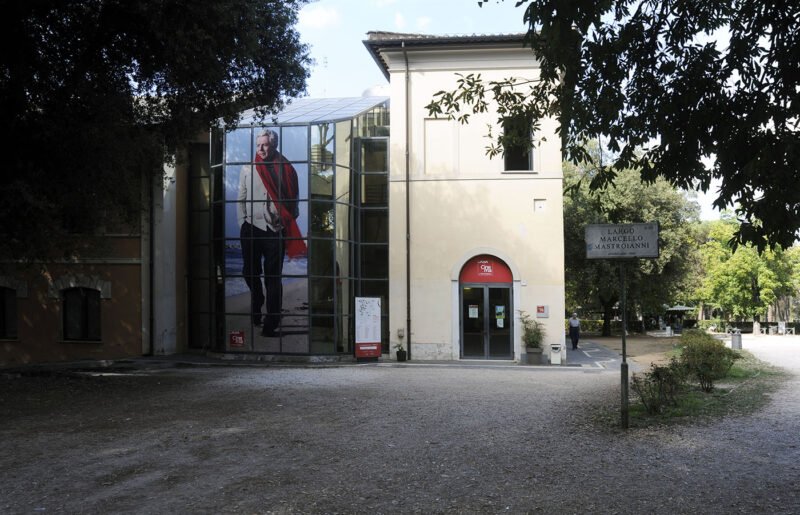
The Ciakpolska Film Festival 2026, the 14th edition of the series devoted to contemporary Polish cinema, brings its films to Casa del Cinema from Thursday, November 19 to Sunday, November 22, 2026, in Sala Cinecittà. Casa del Cinema is at Largo Marcello Mastroianni 1, inside Villa Borghese, a short walk from Porta Pinciana and Via Veneto. The most convenient station is Spagna on metro line A, which has an entrance next to the park. Admission is free while seats last, so there are no tickets to buy: it's best to arrive a bit ahead of the screenings. Films are shown in the original language with Italian subtitles. The festival is organized by the Polish Institute in Rome and curated by Lorenzo Costantino. Times and titles of individual screenings are published on the websites of Casa del Cinema and the Polish Institute.
Language: a performance based on dance, music or visual acts; no English version is announced, any spoken parts are in Italian.
The Ciakpolska Film Festival 2026 at a glance
The Ciakpolska Film Festival is, according to the Polish Institute in Rome that created it, Italy's main event devoted to Polish cinema, and it has returned to Rome every November since 2013. The 2026 edition is the 14th.
Four days at Casa del Cinema
Casa del Cinema presents the festival as a series that explores contemporary Polish filmmaking through screenings of new productions and meetings with their makers. There are four days, from Thursday the 19th to Sunday, November 22, and the hall given is Sala Cinecittà. The format is that of a compact festival, lining up over a long weekend the most interesting recent titles from Poland.
A festival longer than its Rome days
The Polish Institute gives a wider span of dates for the 14th edition, from November 10 to 22, 2026. The two things don't contradict each other: the festival has always been organized in several sections and venues, and the four days at Casa del Cinema correspond to the part devoted to recent productions. For the other sections, dates and places are announced by the Polish Institute on its website.
Free admission, subtitled films
Admission to all festival screenings is free, as the Polish Institute confirms, and at Casa del Cinema it applies while seats last. All films are in the original language with Italian subtitles: those who don't speak Polish can follow easily, and those who do hear the actors' voices without dubbing.
What you'll see at Ciakpolska 2026
At Ciakpolska 2026, Casa del Cinema offers new Polish productions and meetings with their makers: directors, screenwriters, actors and scholars who present the films in the hall.
New Polish Cinema
From its first edition the festival has had two souls. The first is called Nuovo Cinema Polacco (New Polish Cinema), is hosted by Casa del Cinema in Rome and is devoted to the most recent productions. It's the section that fills the days at Villa Borghese: fiction features, documentaries, experimental works and animated films recently released in Poland, often after passing through the big international festivals and not always distributed in Italian theaters.
Meetings with the filmmakers
Alongside the screenings the festival organizes talks and in-depth sessions with directors, screenwriters, actors and scholars. It's the part that turns a series into a festival: after the film, in the hall, you can listen to the people who made it. The names of the 2026 guests are announced with the detailed program.
The program film by film
The calendar of individual screenings, with titles, times and guests, hasn't been published yet. It's released by the Polish Institute and Casa del Cinema close to the festival: before setting out, check the event page on the Casa del Cinema website, which also reports any changes.
Cineteca Classic and the great restorations
The festival's second soul is Cineteca Classic, the retrospective look: journeys among the masterpieces of Polish cinema, recognized as fundamental works of the European and world film heritage. After years at Cinema Trevi, since 2022 the section has been based at Palazzo delle Esposizioni, and since 2023 it has hosted the series Grandi Classici del Cinema Polacco, devoted to films restored in collaboration with the WFDiF studios in Warsaw.
Who organizes the Ciakpolska Film Festival
The Ciakpolska Film Festival is created and organized by the Polish Institute in Rome, based at Palazzo Blumenstihl, Via Vittoria Colonna 1, and is curated by Lorenzo Costantino.
The Polish Institute in Rome
The Polish Institute is the body that promotes Polish culture in Rome: film, music, literature, visual arts. Its website hosts the section devoted to the festival, with the history of the editions and practical information. Its home at Palazzo Blumenstihl is on Via Vittoria Colonna, in the Prati neighborhood, a short distance from the Tiber.
The curator Lorenzo Costantino
The festival is curated by Lorenzo Costantino, named as curator by Casa del Cinema in its presentation of the 2026 edition. The curator's work, at a festival like this, is selection: choosing from a year's output the titles that best tell a national cinema to an audience that knows it little.
A network of Italian partners
CiakPolska also presents itself as a space for dialogue built over the years with Italian film scholars, critics and experts. Partners who have supported the festival include the Centro Sperimentale di Cinematografia with the Cineteca Nazionale, the Trieste Film Festival, the Bergamo Film Meeting, Rai Cultura, Fuori orario, Roma Capitale, Palazzo Esposizioni Roma, UnArchive Found Footage Fest, the Festival dei Popoli, RUFA, Sapienza and Roma Tre University.
The Polish partners
From Poland the festival is supported by film and cultural institutions: the Wytwórnia Filmów Dokumentalnych i Fabularnych, that is, the WFDiF studios in Warsaw, the Instytut Adama Mickiewicza, the Filmoteka Narodowa, Instytut Audiowizualny, and the Polski Instytut Sztuki Filmowej, the Polish Film Institute.
The history of Ciakpolska, from 2013 to today
Ciakpolska was born in 2013 under the name CiakPolonia and since then has brought to Rome every November a selection of classic and contemporary Polish films.
From CiakPolonia to CiakPolska
The first name was CiakPolonia. Then the festival took its current name, which combines the ciak (clapperboard) of the film set with the Polish adjective for Poland. The name changed, the structure didn't: from the first edition the program set new films alongside journeys devoted to great directors or specific themes.
From Cinema Trevi to Palazzo delle Esposizioni
For years the classic section was hosted by Cinema Trevi, the Rome theater of the Cineteca Nazionale. Since 2022 it has moved to Palazzo delle Esposizioni on Via Nazionale, while the section devoted to recent cinema has stayed tied to Casa del Cinema. Two venues, two partly different audiences, one underlying idea.
The WFDiF restorations
Since 2023 the classic section has hosted the series Grandi Classici del Cinema Polacco, with films restored in collaboration with the WFDiF studios in Warsaw. For Roman audiences it's a chance to see in restored prints titles that for decades circulated only in worn copies or home editions.
The great names of Polish cinema who have come to the festival
Over the years Ciakpolska has hosted, among others, Jerzy Skolimowski, Agnieszka Holland, Krzysztof Zanussi, Jan Komasa, Małgorzata Szumowska, Andrzej Żuławski, Jerzy Stuhr, Lech Majewski, Paweł Łoziński and Mariusz Wilczyński.
Agnieszka Holland
Born in Warsaw in 1948, Agnieszka Holland is a director and screenwriter. Her first success was Provincial Actors, shot in 1978, which won the critics' prize at the Cannes Film Festival in 1980. She has received three Oscar nominations: for Angry Harvest (1985) and In Darkness (2011) for best foreign film and for Europa Europa (1990) for adapted screenplay. In 1995 she directed Leonardo DiCaprio and David Thewlis in Total Eclipse, and for television she has directed episodes of The Wire, House of Cards, Cold Case, Treme and The Killing.
Jerzy Skolimowski
Born in Łódź in 1938, Jerzy Skolimowski is a director, screenwriter and actor. As a young man he published collections of poems and stories, became friends with Andrzej Wajda, graduated in directing from the Łódź film school and worked with Roman Polański on the dialogue of Knife in the Water. In 1967 his film Le Départ won the Golden Bear at the Berlin Film Festival. In 1982 he made Moonlighting.
Krzysztof Zanussi
Born in Warsaw in 1939, Krzysztof Zanussi is a director, screenwriter and producer. He descends from an engineer who left Friuli to build railways in Poland, a link with Italy that Roman audiences appreciate. He studied physics and philosophy before graduating in 1966 from the Łódź film school, where he later taught. In 1984 he won the Venice Film Festival with The Year of the Quiet Sun.
Andrzej Żuławski and Jerzy Stuhr
Andrzej Żuławski (1940-2016) grew up in Paris, was Wajda's assistant and made his feature debut with The Third Part of the Night (1971). After the censorship of his The Devil he settled in France, where he made That Most Important Thing: Love with Romy Schneider. Jerzy Stuhr (1947-2024), an actor and director from Kraków, worked with Wajda, Zanussi and above all Krzysztof Kieślowski, and had a long relationship with Italy, which began in 1980 with the Atelier di Formia.
Małgorzata Szumowska and Jan Komasa
Małgorzata Szumowska, born in Kraków in 1973, won the Silver Bear for best director in Berlin in 2015 with Ciało (Body) and in 2018 the Grand Jury Prize with Mug. Jan Komasa, born in Poznań in 1981, saw his Corpus Christi nominated for the Oscar for best foreign film in 2020. At 22 he had already won a Cinéfondation prize at Cannes with his graduation short.
Lech Majewski
Born in Katowice in 1953, Lech Majewski is a director, writer and painter. He studied at the Academy of Fine Arts in Warsaw and then directing in Łódź with Wojciech Has. In 2006 the Museum of Modern Art in New York devoted a complete retrospective to him, and in 2011 he won the Terni Film Festival with The Mill and the Cross, with Rutger Hauer and Charlotte Rampling.
Casa del Cinema, the festival venue
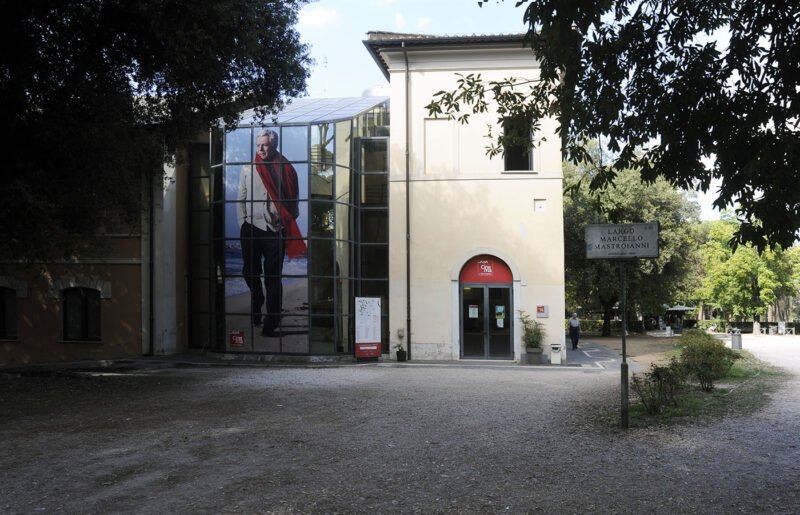
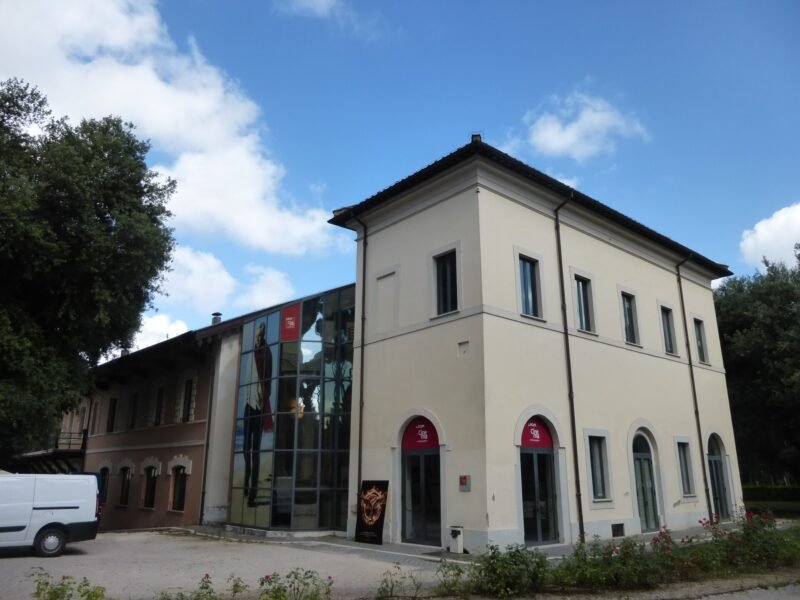
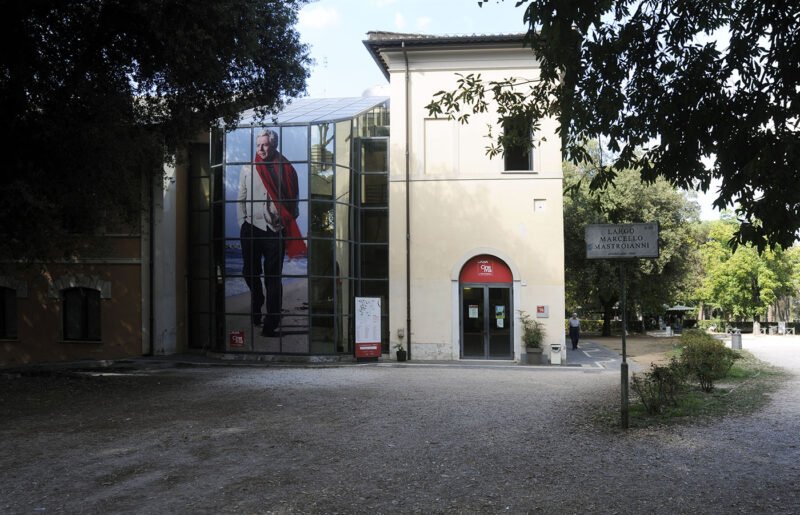
Casa del Cinema is at Largo Marcello Mastroianni 1, inside Villa Borghese and near Via Veneto: it occupies the Casina delle Rose and was inaugurated by Mayor Walter Veltroni on September 18, 2004. Its whole program is described on the page on Casa del Cinema in Villa Borghese.
Felice Laudadio's idea
The proposal for a house of cinema for Rome came from Felice Laudadio, a journalist and cultural organizer. In September 2001 the choice fell on the Casina delle Rose, which had been abandoned for 25 years. The City, which owns the building, funded its complete restoration with 7 million euros. Since then the Casina has been the meeting point between cinema and the busiest park in the center.
Directors and management
Laudadio directed the Casa until 2011, followed by Caterina D'Amico until 2014 and Giorgio Gosetti until 2022. Management passed in February 2011 from the Azienda Speciale Palaexpo to Zètema Progetto Cultura, and in February 2023 to the Fondazione Cinema per Roma, the body that produces the Rome Film Fest. After a makeover the Casa reopened on May 5, 2023, with its editorial line entrusted to the Foundation's artistic director, Paola Malanga.
The halls and Sala Cinecittà
The Casa has three halls for screenings and talks, an open-air theater, two exhibition rooms, a networking space, a café and a restaurant. Ciakpolska is scheduled in Sala Cinecittà. In summer the open-air arena becomes Teatro Ettore Scola. In November the life of the Casa moves entirely indoors, into the halls.
A venue for national film series
During the year Casa del Cinema hosts many series devoted to foreign cinemas, often organized by the cultural institutes of the countries represented in Rome. Ciakpolska is one of the longest-running: the section on recent cinema has been tied to the Casa since the first edition.
Villa Borghese around Casa del Cinema
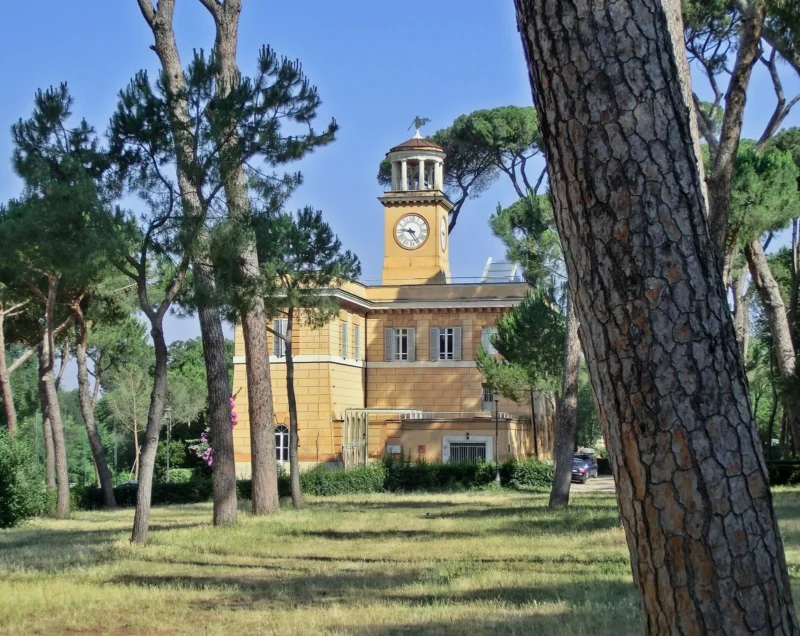
Villa Borghese is a public park of about 80 hectares between the Pinciano neighborhood and the Campo Marzio district, open to the public since 1903. Casa del Cinema occupies its corner near Porta Pinciana. The whole park is described on the page on Villa Borghese.
Cardinal Scipione's villa
By 1580 the Borghese already owned the first core of the estate, in the area of the ancient Gardens of Lucullus. Cardinal Scipione Borghese, nephew of Pope Paul V and patron of the young Bernini, enlarged it with the ambition of creating the largest garden built in Rome since antiquity. Work began in 1606 with Flaminio Ponzio, continued with Giovanni Vasanzio and the gardener Domenico Savini da Montepulciano, and was completed in 1633.
From Italian garden to English park
From 1766 Prince Marcantonio IV Borghese renovated the Casino nobile, today the Galleria Borghese, and had the Giardino del Lago created by the architects Antonio and Mario Asprucci. In the early 19th century Camillo Borghese extended the villa toward Porta del Popolo and Porta Pinciana with Luigi Canina, and a large part of the Italian garden became an English-style park.
A villa that was saved
Among Rome's great aristocratic villas, Villa Borghese is one of the very few that escaped being carved up for development: the State bought it in 1901 for 3 million lire and handed it to the City in 1903, in the same years when the nearby Villa Ludovisi was disappearing under new buildings. The official name became Villa comunale Umberto I, but for Romans it has remained Villa Borghese.
The museums a few steps away
From Casa del Cinema you can walk to the Galleria Borghese, the Pietro Canonica Museum, the Carlo Bilotti Museum, the Casina di Raffaello and the Bioparco. On a festival day, a museum in the morning and a film in the afternoon go well together.
A curious fact about the Ciakpolska Film Festival 2026 at Casa del Cinema, November 19 to 22, 2026
The most unusual curious fact concerns the building that hosts the festival. The Casina delle Rose already appears on Giovan Battista Nolli's 1748 map of Rome, as part of Villa Manfroni: an estate outside Porta del Popolo made of vineyards, fruit trees, a casino nobile, a hayloft, a grotto, an icehouse and a well. The Borghese bought it in 1833, and the following year the Casina was adapted as a trattoria, so much so that it appears in the verses of Giuseppe Gioachino Belli. Hit by the bombardments of 1849, it was restored in 1854 and turned into a dairy, with the rustic part rebuilt on the model of Alpine chalets. Later it was a dance hall and then a refreshment stop, before the long years of abandonment.
A trattoria, a cowshed, a dance hall, a ruin and finally a house of cinema: the Casina delle Rose has changed jobs more times than almost any other building in the park. There's a thread linking this story to Ciakpolska. The festival too has changed its name, from CiakPolonia to CiakPolska, and changed venues for the classic section, from Cinema Trevi to Palazzo delle Esposizioni, while staying faithful to the Casa for recent cinema. A second curious fact is a few meters away: next to Casa del Cinema is the Cinema dei Piccoli, described as the smallest movie theater in the world.
Something nobody tells you about the Ciakpolska Film Festival 2026 at Casa del Cinema, November 19 to 22, 2026
What's rarely said about free festivals is that the real price is time. At Ciakpolska you don't pay, but entry is while seats last, and screenings with the director in the hall or titles already awarded at the big festivals are the ones that fill up first. The advice is to arrive at least half an hour early for the most awaited events, especially on Saturday and Sunday, when casual visitors to the park join the fans.
The second thing concerns the season. In late November Villa Borghese gets dark early, and the stretch of park between Porta Pinciana and Casa del Cinema, beautiful by day, is less busy at night. If you're coming out of an evening screening, head back toward Via Veneto and Porta Pinciana, along the most direct, well-lit route, rather than crossing the park toward the Pincio or Piazza del Popolo. The third: Ciakpolska doesn't end at Casa del Cinema. The Polish Institute gives dates for the 2026 edition from November 10 to 22, and the section of restored classics has been based in recent years at Palazzo delle Esposizioni. If you get hooked during the Villa Borghese days, you'll find the rest of the program on the Institute's website.
My advice for attending the Ciakpolska Film Festival 2026 at Casa del Cinema, November 19 to 22, 2026
My advice is to choose at least one screening with a talk: that's where Ciakpolska is at its best. Watching a subtitled Polish film and then listening to the director or screenwriter talk about it, with questions from the audience, is an experience commercial theaters don't offer, and here it costs only the time of arriving early. When the program is published, mark the meetings with guests first and build the rest of the day around them.
The second piece of advice concerns the day. A late November Sunday at Villa Borghese works well like this: in the morning a museum in the park, the Galleria Borghese by reservation or the Canonica Museum or the Bilotti Museum, easier to visit without planning, at lunch the café or restaurant at Casa del Cinema, or a trattoria outside the park toward Via Veneto, and in the afternoon one or two screenings. If you have more time you can follow the festival for all four days: the selection is designed to give a picture of the past year of Polish cinema, and seen in full it works better than in bits. In our view, for lovers of European auteur cinema, it's one of the most valuable free events of the Roman autumn.
Getting to Casa del Cinema for Ciakpolska
Casa del Cinema, at Largo Marcello Mastroianni 1, can be reached on metro line A at Spagna station, which has an entrance next to Villa Borghese. The area is also served by Flaminio station and trams 2, 3 and 19.
By metro line A
From Spagna station, through the corridors that lead toward the park, exit in the direction of Villa Borghese and Porta Pinciana: from there Casa del Cinema is close. Flaminio station instead takes you to Piazzale Flaminio, to the monumental entrance with Luigi Canina's propylaea, from which Casa del Cinema is farther away: better to use it if you want to walk across the park during the day.
By tram
Tram 2 reaches the Flaminio terminus. Trams 3 and 19 run along the northern side of the park with the Galleria Arte Moderna, Aldrovandi and Bioparco stops, convenient if you're coming from San Lorenzo, the Policlinico or Parioli. For updated routes and times, use the ATAC journey planner.
On foot
From Via Veneto, past Porta Pinciana, Casa del Cinema is a few steps away. From Piazza di Spagna you climb the steps of Trinità dei Monti and continue into the park. From Piazza del Popolo you climb to the Pincio and cross Villa Borghese. In the evening, as mentioned, the route from Via Veneto is the simplest.
By car
Parking around the park is scarce and fills up early on weekends. For an evening festival in the center of Rome, public transportation remains the most relaxed choice.
Another well-known fact, yet one that is rarely mentioned
It's well known that Polish cinema has given the world some of the most important directors of the 20th century. It's less often remembered how old it is. The first films were shown in Warsaw, Lviv and Kraków with Edison's and the Lumière brothers' equipment, when Poland was still divided. So Polish cinema was born in a country that, as a state, didn't exist: the Polish lands were partitioned among the neighboring powers. The history of Polish cinema is as long as the history of cinema itself, and for a large part it has unfolded under difficult political conditions, from partition to war, to postwar censorship.
The biographies of guests who have come to Ciakpolska tell this too. Andrzej Żuławski saw his The Devil blocked by censorship for 16 years and worked for a long time in France. Jerzy Skolimowski won the Golden Bear with Le Départ in 1967 and then made much of his career abroad. Agnieszka Holland earned two of her Oscar nominations with films shot outside Poland. Polish cinema has always been a cinema that travels, and a festival like Ciakpolska is one of the ways that journey continues, bringing to Rome every November films that would hardly reach Italian theaters.
The right photo to take at the Ciakpolska Film Festival 2026 at Casa del Cinema, November 19 to 22, 2026
The right photo is of the Casina delle Rose in the late November afternoon, when the building's lights come on and the park around it starts to darken. The rustic part rebuilt in the 19th century on the model of Alpine chalets, with its volumes and roofs, makes a curious effect in the middle of a Roman park, and with the warm light of the windows it really looks like a mountain house. Frame it from some distance, keeping the park's trees around it in the picture.
The second photo is in front of the Largo Marcello Mastroianni sign: the name of the star of La Dolce Vita on the address of a house of cinema, a few meters from Via Veneto, is already a little story. The third is in the hall, before the start: the Sala Cinecittà screen with the Polish film's title and Italian subtitles, or the moment of the talk with the director, if the organizers allow it. During screenings, of course, your phone stays off. If you arrive by day, you can complete the series with the park's pines and avenues covered in leaves: in late November Villa Borghese has colors it doesn't have in summer.
Some important events that happened here in history
The history of this corner of Rome begins in 1580, when the core of the estate already belonged to the Borghese. In 1606 Cardinal Scipione entrusted Flaminio Ponzio with building the villa's buildings, completed in 1633 by Giovanni Vasanzio. From 1766 Marcantonio IV Borghese transformed the Casino nobile and had the Giardino del Lago created by the Asprucci. In 1748 Nolli's map recorded Villa Manfroni, with the future Casina delle Rose. In 1833 the Borghese bought it and in 1834 the Casina became a trattoria. In 1849, during the French siege of Rome, bombardments hit the villa and the Casina. In 1854 the building was restored and turned into a dairy.
In 1901 the State bought Villa Borghese, and in 1903 it handed it to the City, which opened it to the public. In 2001 the Casina delle Rose, abandoned for 25 years, was chosen as the home of the future Casa del Cinema. The restoration cost 7 million euros. On September 18, 2004 Walter Veltroni inaugurated Casa del Cinema. In 2011 management passed to Zètema, in 2023 to the Fondazione Cinema per Roma, and on May 5, 2023 the Casa reopened after a makeover. In 2013 the festival now called Ciakpolska was born, with the recent cinema section at Casa del Cinema. In 2022 the classic section moved to Palazzo delle Esposizioni. From November 19 to 22, 2026 the Casa hosts the 14th edition.
Who has passed through the Ciakpolska Film Festival 2026 at Casa del Cinema, November 19 to 22, 2026
Some of the most important names in Polish cinema have come to Ciakpolska. Agnieszka Holland, three times nominated for the Oscar, Jerzy Skolimowski, Golden Bear in Berlin with Le Départ, Krzysztof Zanussi, winner in Venice with The Year of the Quiet Sun, Andrzej Żuławski, the director of That Most Important Thing: Love, Jerzy Stuhr, Kieślowski's actor who had a long relationship with Italy, Małgorzata Szumowska, twice awarded the Silver Bear, Jan Komasa, Oscar nominee with Corpus Christi, Lech Majewski, painter and director celebrated by MoMA, and also Paweł Łoziński and Mariusz Wilczyński. These are the names the Polish Institute lists among the guests of past editions.
Casa del Cinema, for its part, has its own gallery of protagonists: Felice Laudadio who conceived it, Walter Veltroni who inaugurated it in 2004, the directors Caterina D'Amico and Giorgio Gosetti, and today Paola Malanga with the Fondazione Cinema per Roma. Further back in time, this corner of Villa Borghese saw Cardinal Scipione Borghese and Gian Lorenzo Bernini, the architects Ponzio, Vasanzio, the Asprucci and Canina, and Giuseppe Gioachino Belli, who recalled the Casina's trattoria in his verses. The square in front of the entrance bears the name of Marcello Mastroianni. In late November 2026 curator Lorenzo Costantino, the edition's Polish guests and the Roman audience that has followed the festival for 14 years pass through here.
Where to eat during Ciakpolska
Casa del Cinema has an in-house café and restaurant, the most convenient option between one screening and the next during the Ciakpolska days.
Inside the park
In the Giardino del Lago is the Casina del Lago, a small 1920s chalet housing the Carlo Bilotti Museum café. At the Pincio there are kiosks and bars, with hours that get shorter in autumn.
Outside the park
Past Porta Pinciana, toward Via Veneto and the Ludovisi neighborhood, there are bars, trattorias and restaurants in every price range. It's also the most convenient direction for dinner after the last evening screening, without having to cross the park in the dark.
Ciakpolska with children
Ciakpolska films are in the original language with subtitles, so they're best suited to kids who read fluently. Among the categories offered by the festival are animated films too.
Choosing the right film
When the program is published, look for the animated titles or documentaries best suited to your kids' age. Polish auteur features often deal with adult themes: read each film's description before bringing younger children.
A day in the park
Villa Borghese offers children many alternatives a few minutes' walk from Casa del Cinema: the Bioparco, the Casina di Raffaello with its activities, the lake and the Cinema dei Piccoli. A well-organized Sunday combines one of these stops with a festival screening.
Villa Borghese in late November
The second half of November is a quiet time for Villa Borghese: the avenues are covered in leaves, there are fewer tourists and the park goes back to the Romans. The days are short and the evenings cool, and indoor cinema becomes the most natural way to spend them. In the city it's also film festival season: in Rome the Rome Film Fest opens the autumn, and the national film series at Casa del Cinema extend its mood into winter.
Frequently asked questions about Ciakpolska 2026
When does the Ciakpolska Film Festival 2026 take place at Casa del Cinema?
The Ciakpolska Film Festival 2026 takes place at Casa del Cinema from Thursday, November 19 to Sunday, November 22, 2026, in Sala Cinecittà. The Polish Institute in Rome, which organizes the festival, gives an overall span for the 14th edition from November 10 to 22, with several sections. Times and titles are published on the websites of Casa del Cinema and the Institute.
How much does it cost to attend Ciakpolska?
The Ciakpolska Film Festival has free admission: the Polish Institute specifies that entry to all screenings is free, and Casa del Cinema adds that this applies while seats last. No tickets are needed, but for the most awaited screenings it's best to arrive early, especially on the weekend.
Are Ciakpolska films subtitled in Italian?
Yes, at Ciakpolska all films are shown in the original language with Italian subtitles. So you can follow them without knowing Polish, and you hear the actors' original voices, without dubbing.
Where is Casa del Cinema?
Casa del Cinema, the venue of Ciakpolska 2026, is at Largo Marcello Mastroianni 1, inside Villa Borghese, near Porta Pinciana and Via Veneto. The most convenient metro line A station is Spagna, which has an entrance next to the park. Trams 2, 3 and 19 also serve the area.
Who organizes the Ciakpolska Film Festival?
The Ciakpolska Film Festival is created and organized by the Polish Institute in Rome, based at Palazzo Blumenstihl, Via Vittoria Colonna 1, and is curated by Lorenzo Costantino. The festival was born in 2013 under the name CiakPolonia and takes place every November.
Which directors have been guests at Ciakpolska?
Over the years Ciakpolska guests have included, among others, Jerzy Skolimowski, Agnieszka Holland, Krzysztof Zanussi, Jan Komasa, Małgorzata Szumowska, Andrzej Żuławski, Jerzy Stuhr, Lech Majewski, Paweł Łoziński and Mariusz Wilczyński. The 2026 guests are announced with the detailed program.
What is screened at Ciakpolska at Casa del Cinema?
At Casa del Cinema, Ciakpolska offers the Nuovo Cinema Polacco section, devoted to the most recent productions: fiction films, documentaries, experimental works and animation, with talks with directors, screenwriters and actors. The great restored classics are part of the Cineteca Classic section, hosted in recent years by Palazzo delle Esposizioni.
Final advice on the Ciakpolska Film Festival 2026
Ciakpolska is one of those festivals you find in Rome almost by chance and then never leave. Four days of recent Polish cinema, free, subtitled, in a hall inside Villa Borghese, with the chance to hear the people who made the films: it's hard to ask more of an autumn film series. The advice is to watch for the program's publication, pick the screenings with guests first, arrive early and stay for the next film. In our view, Polish cinema is one of the liveliest in Europe, and this is the easiest way to discover it in Rome.
Article written by the editorial team of Tour Leader Pro, contact them for Private/Corporate/V.I.P. Tours and Experiences.
Planning a trip to Rome? The English guides for visiting the city are on ItalyPlanner.com.
Contact Information
Nearby
 Casa del Cinema at Villa Borghese100 m
- Casina di Raffaello200 m
- Villa Borghese200 m
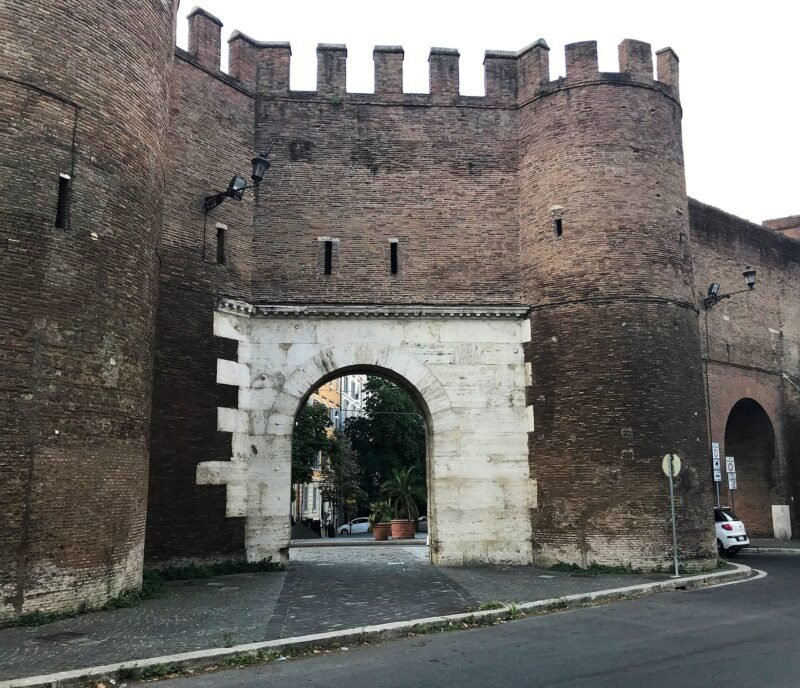
- Porta Pinciana200 m
- Piazza di Siena300 m
- Gigi Proietti Globe Theatre in Rome400 m

Upcoming events nearby
- Euro Balkan Film Festival 2026 at Casa del Cinema, October 31 to November 7, 2026100 m
- VII Muestra de Cine Mexicano at Casa del Cinema, from November 6 to 8, 2026100 m
- As Film Festival 2026 at Casa del Cinema, November 14 and 15, 2026100 m
- Un chien andalou and L’âge d’or by Luis Buñuel at Casa del Cinema, November 1 and 9, 2026100 m
You might also like
- Scoprir, 14th Ibero-American Film Showcase at Casa del Cinema, November 26 to 28, 2026
- Basta poco with Cornacchione, Quartullo and Faiella at Teatro Parioli Costanzo, March 3 to 7, 2027
- Sex Roulette at Teatro Parioli Costanzo, January 31, 2027
- El bruto (The Brute) by Luis Buñuel at Casa del Cinema, November 9 and 13, 2026
- Lezioni di musica: the piano, the 20th century at Sala Casella, November 15, 2026
- Con il tuo amore documentary on Giovanni Scambia at Casa del Cinema, November 4, 2026