Euro Balkan Film Festival 2026 at Casa del Cinema, October 31 to November 7, 2026
In short. Euro Balkan Film Festival 2026, the ninth edition, runs in Rome from Saturday, October 31 to Saturday, November 7, 2026: the main venue is Casa del Cinema in Villa Borghese, Largo Marcello Mastroianni 1 (00197 Rome), with its Cinecittà…
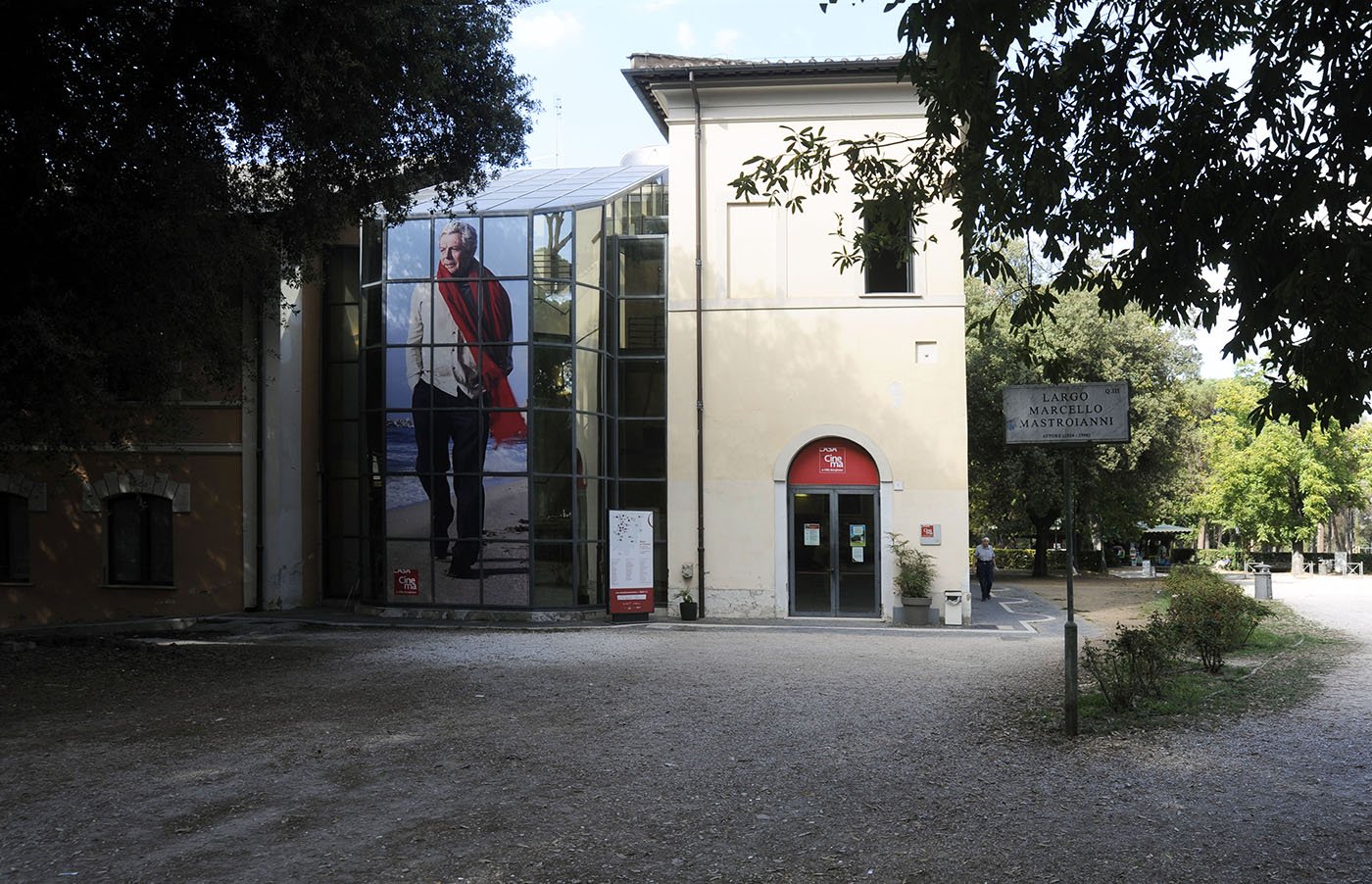
Euro Balkan Film Festival 2026, the ninth edition, runs in Rome from Saturday, October 31 to Saturday, November 7, 2026: the main venue is Casa del Cinema in Villa Borghese, Largo Marcello Mastroianni 1 (00197 Rome), with its Cinecittà and Fellini rooms, and the program extends to Cinema Troisi, Cinema Farnese and Palazzo San Lorenzo. At Casa del Cinema admission is free while seats last, with coupons handed out from 30 minutes before each screening. The pedestrian entrance to Casa del Cinema is from Piazzale del Brasile. Metro A stops at Spagna, Barberini and Flaminio, and buses 61, 89, 160, 490, 495, 590 and C3 serve the area. The festival is organized by the Associazione Occhio Blu Anna Cenerini Bova. The full program for the ninth edition is announced on the association's official website, occhiobluannacenerinibova.com, and on the Casa del Cinema event page.
Language: a performance based on dance, music or visual acts; no English version is announced, any spoken parts are in Italian.
A whole week of screenings, previews, meetings and conversations with filmmakers and figures from European cinema, with an eye on the Balkans. In just a few years the Euro Balkan Film Festival has become a regular fixture of Rome's fall film season, and in 2026 it adds an important new feature: the first pitch competition for young filmmakers, with €7,000 in prizes. In our view it's the right festival for anyone who wants to understand what stories are being told today in Sarajevo, Tirana, Belgrade or Pristina, without waiting for those films to maybe reach Italian theaters.
Euro Balkan Film Festival 2026 in brief
Euro Balkan Film Festival 2026 is the ninth edition of the festival devoted to Balkan cinema and its dialogue with Europe, and it lasts eight days, from October 31 to November 7, 2026, across four Rome venues.
Four venues
The organizing association's website lists Casa del Cinema, Cinema Troisi, Cinema Farnese and Palazzo San Lorenzo for the ninth edition. Casa del Cinema, which lists the Sala Cinecittà and Sala Fellini in its program, is the heart of the event, while the other venues take screenings to other neighborhoods. How the films are divided among the venues will become clear when the program is published.
Screenings, previews, meetings
Casa del Cinema presents the festival as a week of screenings, previews, meetings and talks with leading filmmakers and figures from European cinema. It's the formula of past editions: a feature film competition, out-of-competition films, tributes and meetings with directors.
Free admission
At Casa del Cinema admission is free while seats last. The venue's rules for free events require collecting a coupon from 30 minutes before the start, and once the screening has begun you can't go in. For the other venues, check the conditions in the official program.
Contacts
For information, the organizers give the address segretariatoeurobalkan@gmail.com. The association's official website says the full program will be published soon.
Euro Balkan Short Pitch 2026, the new feature of the ninth edition
The ninth Euro Balkan Film Festival launches the first Euro Balkan Short Pitch, a competition for young filmmakers with short film projects and total prize money of €7,000.
Who it's for
The competition is open to filmmakers under 35 who haven't yet directed a feature film, citizens of the European Union, of countries that have started the European integration process and of the Balkan region. Eligible projects are fiction shorts in development, expected to run between 5 and 20 minutes, on the theme of Euro-Balkan cultural dialogue: identity, relationships, memory, the present and social change.
How it works
Entries were open from June 22 to September 30, 2026. Up to 15 projects go through to the pitch and mentoring stages: during the festival each filmmaker has 10 minutes to present their project to the jury and get feedback from experts and producers. Taking part gives accreditation to all screenings, the ninth edition's events and the Industry section.
The prizes
The top prize, the Best Euro Balkan Short Project Award, is worth €1,500 and is given by the professional jury, as are the €1,000 Artistic Vision Award and the €500 Euro Balkan Story Award. The Industry jury gives the €1,500 Production Potential Award, the artistic direction gives the €1,000 Euro Balkan Film Festival Development Award, and three partners give development awards of €500 each.
The criteria
The jury assesses originality and authorial vision, Euro-Balkan cultural dialogue, cultural and social relevance, aesthetic research and cinematic language. The rules are dated June 10, 2026.
The Short Pitch jury: three names from Southeast European cinema
The Euro Balkan Short Pitch 2026 jury is made up of Elma Tataragić, Ylljet Aliçka and Gregor Božič, three figures representing Sarajevo, Tirana and Ljubljana.
Elma Tataragić
A screenwriter, producer and teacher at the Academy of Performing Arts in Sarajevo, Elma Tataragić is one of the founders of the Sarajevo Film Festival, where since 1995 she has helped discover new talent. As a screenwriter she has written films awarded at major festivals, including Snow, winner of the Grand Prix at Cannes Critics' Week in 2008.
Ylljet Aliçka
A writer, screenwriter, professor and diplomat, Ylljet Aliçka has seen many of his literary works turned into films. His screenplay for Slogans, based on his novel The Stone Slogans, was selected at the Cannes Film Festival in 2001, where the film received the Young Critics Award. His work stands out for its ironic, critical look at Albania's recent history.
Gregor Božič
A director, screenwriter and cinematographer, Gregor Božič trained in Ljubljana, Rome, Berlin and Le Fresnoy. His debut, Stories from the Chestnut Woods, was presented at the Toronto International Film Festival, and as cinematographer he worked on The Man Who Could Not Remain Silent, winner of the Palme d'Or for best short film at Cannes in 2024.
The other juries
For the ninth edition the association also opened two public calls, one for a jury of young university students and one for young film critics, and presented the official competition jury. Names and roles are on the festival's official channels.
Associazione Occhio Blu Anna Cenerini Bova, the festival's organizer
The Euro Balkan Film Festival is organized by the Associazione Occhio Blu Anna Cenerini Bova, an Italian-Balkan cultural association founded in Rome in October 2000 to make Albanian culture known in Italy, and later that of the whole Balkans.
The origins
The association was founded on the initiative of Anna Cenerini Bova, together with Giovanna Coletto Petta, Serena Luciani, Luciana Nardelli and Eugenio Scalambrino. The goal was to spread Albanian culture in Italy at a time when, after the fall of the communist regime, Albania's image was loaded with prejudice. From 2000 to 2022 dozens of Italian and Albanian volunteers organized more than 50 events, from literature to cinema, from painting to music and archaeology.
The name and the dragon
The name comes from a spring in southern Albania, Syri i Kaltër, meaning Blue Eye, famous for its depth and the intense color of its water. According to the legend told by the association, the lake formed from the tears of repentance of a dragon. The logo, designed by Albanian painter Klement Zoraqi, depicts the dragon's eye. After the founder's death in spring 2011, the members added her name to the association's.
From Albania to the Balkans
Since 2021 the association has broadened its field to the whole of Balkan culture, with a view to the full European integration of the region's countries. Its greatest success came with cinema, through the founding of the Balkan Film Festival, which reached its fifth edition in 2022. The association works with its twin Syri Blu in Tirana, the Ministry of Foreign Affairs, the Ministry of Culture, several Italian universities, Balkan film centers and the Osservatorio Balcani Caucaso Transeuropa.
Past editions: what to expect
In the 2024 edition, from November 6 to 12, the festival brought to Rome films including Lost Country, Phantom Youth, Hesitation Wound and Excursion, with free screenings at Casa del Cinema, Nuovo Cinema Aquila and MAXXI.
The 2024 competition films
The 2024 competition included Excursion, Hesitation Wound, Lost Country, Phantom Youth, Blaga's Lessons, Forever Hold Your Peace, Do Not Expect Too Much from the End of the World, M, Animal and Only When I Laugh. Lost Country is set in Serbia in 1996, during the student protests against the Milošević regime, with Jasna Đuričić, already the lead in Quo Vadis, Aida?. Phantom Youth is the second feature by young actress and director Luàna Bajrami, set in Kosovo in 2007.
The filmmakers
Directors presented by the festival in 2024 include Una Gunjak, Stephan Komandarev, Selman Nacar, Ivan Marinović, Kumjana Novakova, Vladimir Perišić, Vardan Tozija, Vanja Juranić and Luàna Bajrami, alongside two Italians, Mario Martone and Francesco Rosi, with Teatro di guerra and Uomini contro out of competition.
The award to Ismail Kadare
On November 10, 2024 the Associazione Occhio Blu gave its lifetime achievement award to Albanian writer Ismail Kadare, who had died shortly before. The awards ceremony of the seventh edition, meanwhile, took place at Casa del Cinema on the evening of November 12, 2024.
2025
The 2025 edition published its catalog in Italian and English on the association's website. The ninth edition in 2026 thus comes after three years of steady presence at Casa del Cinema.
Casa del Cinema, the heart of the festival
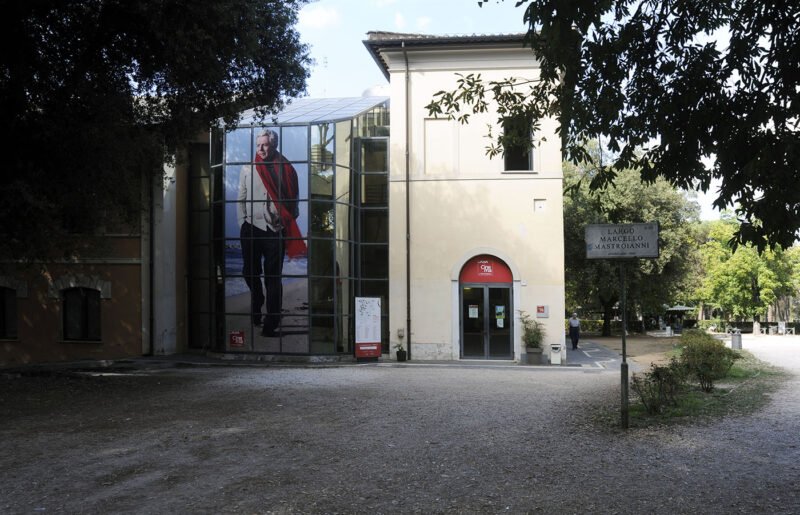
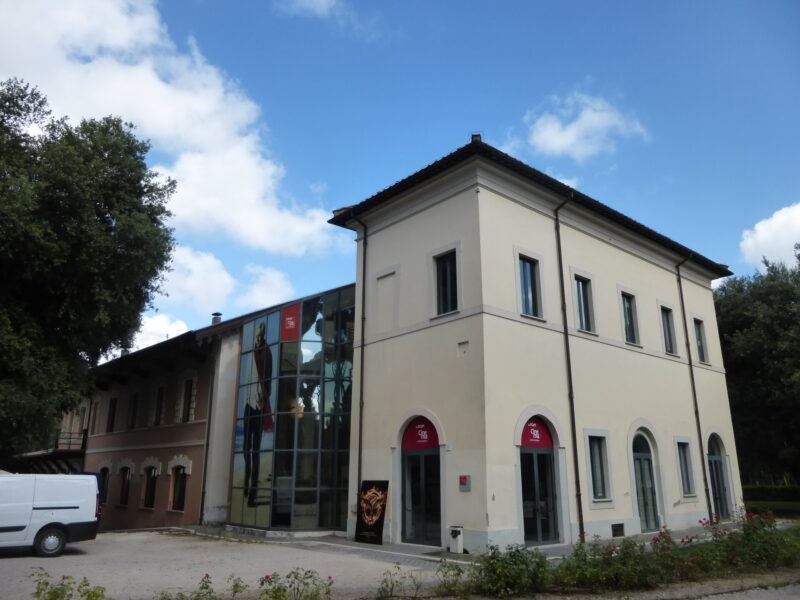
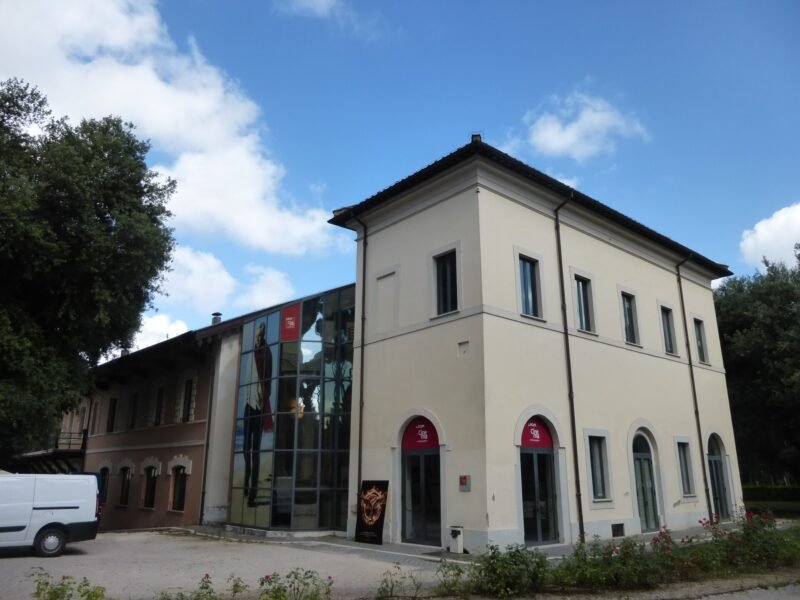
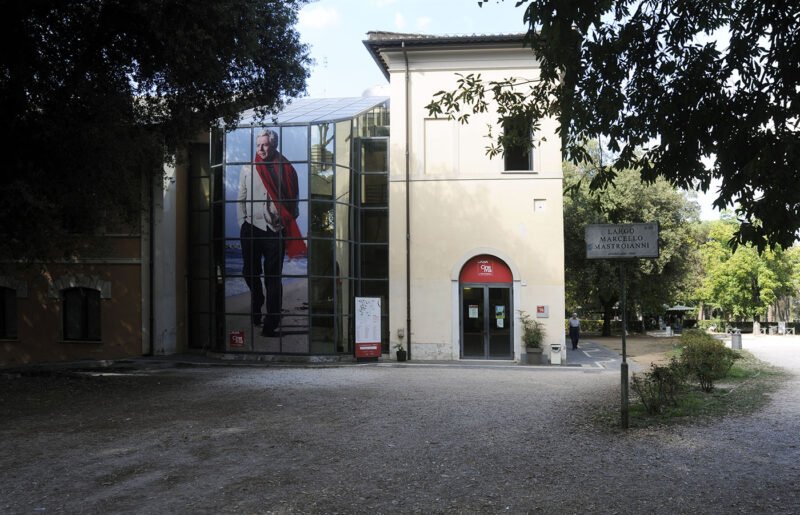
Casa del Cinema occupies the old Casina delle Rose in Villa Borghese, at Largo Marcello Mastroianni 1, and opened as a film venue on September 18, 2004. Our page on Casa del Cinema in Villa Borghese describes its program.
The rooms
Across 2,500 square meters, Casa del Cinema has three rooms with more than 220 seats in all: Sala Cinecittà with 118 seats, Sala Fellini with 64 and Sala Gian Maria Volonté with 46. In summer there's also the open-air arena of Teatro Ettore Scola, with 300 seats. The Euro Balkan uses the two larger rooms.
Spaces for meetings
For talks and meetings the building has the Salotto Suso, used for networking, the Sergio Amidei and Cesare Zavattini exhibition spaces and the Terrazza Anna Magnani. There's also a study room and a bar and restaurant area.
Management
Since 2023 Casa del Cinema has been run by Fondazione Cinema per Roma, the body behind the Rome Film Fest, with programming led by artistic director Paola Malanga. The idea for the Casa came from Felice Laudadio, who ran it until 2011, followed by Caterina D'Amico until 2014 and Giorgio Gosetti until 2022.
The other venues
Cinema Troisi and Cinema Farnese are two central movie theaters, and Palazzo San Lorenzo is the former Cinema Palazzo on Piazza dei Sanniti, opened in 1931 and reopened in April 2026 as a multipurpose space for cinema, theater and concerts. How the films are divided among the venues will be given in the official program.
From Villa Manfroni to the La Lucciola dance hall
Before becoming Casa del Cinema, the building was a villa, restaurant, cowshed, dairy, luxury restaurant and dance hall: a series of lives that begins in 1833.
The Borghese purchase
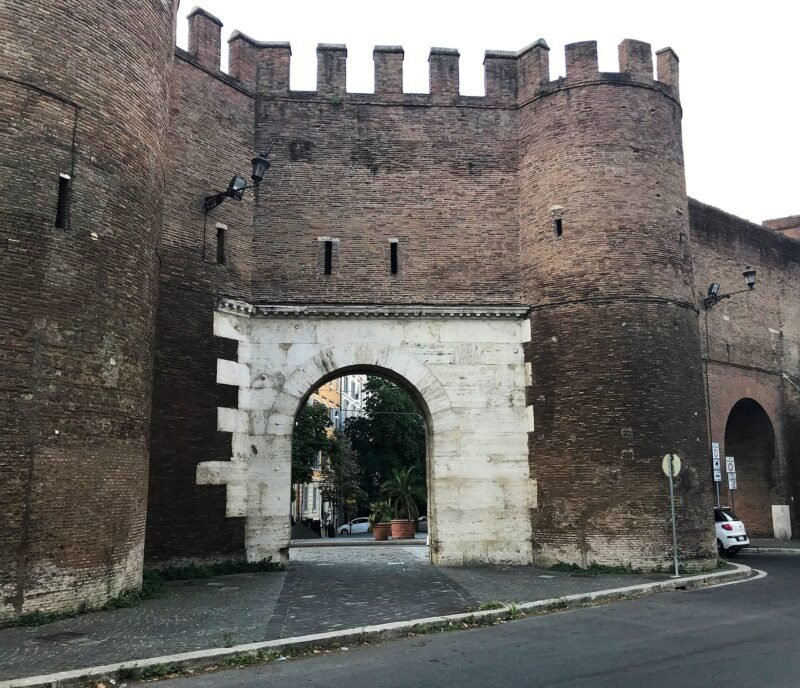
In 1833 the Borghese princes enlarged their villa by buying some neighboring vineyards and villas, including Villa Manfroni Bernini, just inside the Aurelian Walls near Porta Pinciana. Architect Luigi Canina restored it and turned it into a restaurant.
After 1849
Damaged during the 1849 battle between the defenders of the Roman Republic and the French, the building housed cowsheds and a shop selling milk and dairy products, which stayed open even after 1903, when the villa passed to the city.
Casina delle Rose and La Lucciola
In the 1930s it became a luxury restaurant called Casina delle Rose, as a 1932 postcard shows, and in the Dolce Vita years it was the La Lucciola dance hall. From 1976, after unauthorized work on a listed building, it was abandoned.
The revival
Restoration began in 2001, with technical and scientific support from the city's heritage office, and brought the building back to how it was documented in the early 20th century. In 2023 Fondazione Cinema per Roma renovated the facade, rooms and interior spaces.
A curious fact about Euro Balkan Film Festival 2026 at Casa del Cinema, October 31 to November 7, 2026
The nicest curiosity concerns the name of the association that organizes the festival. Occhio Blu translates Syri i Kaltër, a spring in southern Albania that is deep and full of water, with a color so intense that it gave rise to a legend: according to the story told by the association, the lake formed from the tears of repentance of a dragon that had slaughtered young victims. The logo, designed by Albanian painter Klement Zoraqi, depicts that dragon's eye. A film festival born from an association named after a repentant dragon: it's hard to find a better image for a festival that wants to overcome prejudice.
The second curiosity is in its origins. The association was founded in 2000 to tell Italians about Albania, at a time when the country's image was dominated by prejudice. Only in 2021 did it widen its view to the whole Balkans. In 2026 the festival reached its ninth edition and added a competition for young filmmakers with €7,000 in prizes. Third curiosity: before all this, the Casa del Cinema that hosts it was a dairy and a Dolce Vita-era dance hall. Balkan cinema and the history of Villa Borghese meet in a building that has changed lives at least six times.
Something nobody tells you about Euro Balkan Film Festival 2026 at Casa del Cinema, October 31 to November 7, 2026
What few people know is that the Euro Balkan doesn't stop at Casa del Cinema. The association's website lists four venues for 2026: besides Villa Borghese, Cinema Troisi, Cinema Farnese and Palazzo San Lorenzo. If you follow the festival over several days, check the program carefully, because a film may be screened on the other side of the city. A wrong venue, in a November week with Rome traffic, can easily cost you the screening. My advice is to note the room and address next to each title, and plan the route with the ATAC service.
Second thing: Casa del Cinema's free series work with a coupon, handed out at the box office from 30 minutes before the start while seats last. For evenings with directors in the room, the most popular, arrive when distribution opens. Third, for filmmakers: Short Pitch accreditation gives access to all screenings and to the Industry section events. If you have a project to develop and apply for 2027, besides the chance to win you get a week of meetings with producers and filmmakers.
My tip for the Euro Balkan Film Festival 2026 at Casa del Cinema, October 31 to November 7, 2026
My advice is to choose the evenings when a director presents their film. The festival exists to bring Italian audiences together with Balkan filmmakers, and the post-screening conversation is the part no streaming platform can replicate. Past editions have brought directors from across the region to Rome, and talking in the room with someone who shot a film in Skopje or Sarajevo changes the way you see it. The program flags the evenings with guests: pick those first.
Second tip: devote at least one evening to the competition and one to the out-of-competition films or tributes. In 2024, alongside the Balkan titles, the festival screened Mario Martone's Teatro di guerra and Francesco Rosi's Uomini contro. Alternating competition and tributes lets you see the region through two lenses, from inside and from outside. Third, in our view: if you only have time for one day, choose the awards day. In 2024 it was held at Casa del Cinema, and those are the evenings when you feel what the festival is about.
How to get to Casa del Cinema for the Euro Balkan
Casa del Cinema, the main venue of the Euro Balkan Film Festival, is reached on Metro A at Spagna, Barberini and Flaminio stations and on buses 61, 89, 160, 490, 495, 590 and C3. The pedestrian entrance is from Piazzale del Brasile.
By metro
From Spagna station, head up toward Porta Pinciana and Villa Borghese: it's the shortest route. From Barberini, walk up Via Veneto to the walls. From Flaminio, enter the park from Piazzale Flaminio and cross it, a pleasant walk by day.
By bus
Besides the daytime lines listed by Casa del Cinema, the 120F and 150F run on holidays, and at night lines N1 and N25 are useful for getting home after the last screenings. Lines may change: check the ATAC route planner before you leave.
Between venues
To reach the festival's other venues, use the ATAC route planner with the theater's address. Palazzo San Lorenzo is at Piazza dei Sanniti 9/a, in the San Lorenzo neighborhood, and the addresses of Cinema Troisi and Cinema Farnese are given in the official program.
By car
Parking around Villa Borghese is difficult. In a November week, with possible rain and evening traffic, public transport and taxis are the most sensible choice.
Tickets and admission
At Euro Balkan Film Festival 2026 at Casa del Cinema admission is free while seats last, with coupons to collect at the box office from 30 minutes before each screening.
The Casa del Cinema box office
The box office and info point is open every day from 10:00 to 22:00. The phone number given by Casa del Cinema is 06 40401604, answered from 12:00 to 22:00, and the email is casadelcinema@romacinemafest.org.
House rules
Films are usually screened in the original language with subtitles. You can't go in once the screening has started, suitcases and bulky bags aren't allowed in the room, phones must be off and filming is forbidden.
The other theaters
Admission conditions at Cinema Troisi, Cinema Farnese and Palazzo San Lorenzo will be given in the festival's official program. In past editions all screenings were free.
Villa Borghese and the surrounding area
Casa del Cinema is inside Villa Borghese, the 80-hectare park the state bought in 1901 and the city opened to the public in 1903. The page on Villa Borghese tells its story.
What to see in the park
A few minutes' walk away are the Galleria Borghese, booking required, Museo Carlo Bilotti in the Aranciera and Museo Pietro Canonica. In a festival week there's time to fit in at least one.
Via Veneto
Just outside Porta Pinciana begins Via Veneto, which Casa del Cinema recalls as one of the world-famous symbols of Italian cinema. For dinner or a coffee before the screening it's the most natural direction.
The Pincio
At the other end of the park, the Pincio overlooks Piazza del Popolo. A festival afternoon can start with the view from the terrace and end in the theater.
Where to eat during the festival
Inside Casa del Cinema, the Cast bar and restaurant, Cine Bistrot, offers a 20% discount on aperitivo every day from 18:30 to 21:30 to anyone showing a screening ticket.
The Cine Bistrot
Run by Food Service, the bistro has renovated rooms and a new menu. University students get 20% off with their student card, and MIC Card holders 10%. If you're seeing two screenings in a row, it's the most practical option.
Outside the park
Leaving through Porta Pinciana you head down toward Via Veneto and Ludovisi, with bars and restaurants in every price range. If you're attending screenings at Palazzo San Lorenzo, the San Lorenzo neighborhood has places and trattorias a few steps from the theater.
Accessibility
Casa del Cinema states that it guarantees accessibility for people with disabilities. For paid screenings, tickets for people with disabilities are sold only at the box office, with the certification required by Law 104.
The venue's concessions
For paid programming there's a free ticket for anyone accompanying a person with a mobility disability and a 20% discount for the person with a disability. For the festival's free screenings the coupon rule applies, with coupons collected at the box office.
The other venues
For accessibility at the festival's other theaters, write to the organizers before choosing your screenings, so you can focus on those at Casa del Cinema if needed.
Another well-known fact that rarely gets mentioned
If you follow European cinema, you know the Balkans have produced award-winning films at major festivals in recent years. Less often mentioned is how much that cinema is tied to a few places of training and meeting, and to people who move from one country to another. The Short Pitch jury shows this well: Elma Tataragić is one of the founders of the Sarajevo Film Festival, where new talent has been discovered since 1995, and she wrote Snow, Grand Prix at Cannes Critics' Week in 2008. Gregor Božič trained in Ljubljana, Rome, Berlin and Le Fresnoy. Ylljet Aliçka took Albania to Cannes in 2001 with Slogans. Balkan cinema lives on these crossings between countries.
There's a second well-known and rarely remembered fact. In 2024, alongside the Balkan titles, the festival screened two films by Italian directors out of competition, Mario Martone's Teatro di guerra and Francesco Rosi's Uomini contro, together with Silence of Reason, and also made room for Italianesi and I ponti di Sarajevo. The Euro Balkan looks not only at the region's cinema, but also at how Italy has told the story of those lands and their history. And there's a fact about the association: before being a film festival, Occhio Blu was for 20 years a workshop of Albanian culture in Italy, with more than 50 events covering literature, painting, music, archaeology, cultural tourism and history.
The right photo to take at Euro Balkan Film Festival 2026 at Casa del Cinema, October 31 to November 7, 2026
The right photo is of the Casa del Cinema foyer before an evening with guests, with the official Euro Balkan poster in view and the audience waiting for coupons. It's the image that tells the festival's story better than any other: a Rome film venue that for a week speaks the languages of the Balkans. If the director is present, the post-screening conversation, with the room lit, is the moment to capture, always within the venue's rules.
The second photo is outside, on the pale facade of the old Casina delle Rose, with the Largo Marcello Mastroianni plaque. In early November the sun sets early and the holm oaks cast long shadows: the best time is early afternoon. In the room, during screenings, filming is forbidden and anti-piracy checks are active: keep your phone off. The third photo, if you also attend screenings in San Lorenzo, is the facade of Palazzo San Lorenzo, the former 1931 Cinema Palazzo reopened in 2026: another Rome movie theater that has changed lives several times.
Some important events that happened here
The history of the building at the heart of the festival begins in 1833, when the Borghese princes bought Villa Manfroni Bernini. Luigi Canina restored it and turned it into a restaurant. In 1849, during the defense of the Roman Republic against French troops, the building was damaged and became a cowshed and dairy. In 1901 the state bought Villa Borghese for 3 million lire, and in 1903 it handed it over to the city. In the 1930s Casina delle Rose was a luxury restaurant, and in the Dolce Vita years the La Lucciola dance hall. From 1976 it was abandoned, and for 25 years the building fell into ruin.
In September 2001 Felice Laudadio identified the Casina as the home for a Casa del Cinema, and on September 18, 2004 Walter Veltroni opened it. In 2011 management passed to Zètema, and in 2023 to Fondazione Cinema per Roma, which renovated the building. For the festival, the key years are others: in October 2000 the Occhio Blu association was founded in Rome, in 2021 it opened up to the Balkans, and in 2022 the festival reached its fifth edition. On November 12, 2024 Casa del Cinema hosted the awards of the seventh edition, and from October 31 to November 7, 2026 it hosts the ninth, with the first Euro Balkan Short Pitch.
Who has passed through the Euro Balkan Film Festival
In recent editions, directors from across the region have passed through the Euro Balkan Film Festival. Among the 2024 filmmakers the festival names Una Gunjak, Stephan Komandarev, Selman Nacar, Ivan Marinović, Kumjana Novakova, Vladimir Perišić, Vardan Tozija, Vanja Juranić and Luàna Bajrami, alongside the films of Mario Martone and Francesco Rosi. Jasna Đuričić, star of Lost Country, appeared on the Casa del Cinema screen. In November 2024 the association honored Ismail Kadare with its lifetime achievement award, and former ambassador Mario Bova described the festival's mission in an interview with the magazine Taxi Drivers.
Casa del Cinema, for its part, has seen those who created and ran it: Felice Laudadio, Walter Veltroni who opened it, Caterina D'Amico, Giorgio Gosetti and today Paola Malanga. Its spaces bear the names of Fellini, Gian Maria Volonté, Ettore Scola, Sergio Amidei, Cesare Zavattini and Anna Magnani, and the square in front of the entrance is named after Marcello Mastroianni. In the 19th century architect Luigi Canina worked here for the Borghese. In 2026, before the Euro Balkan, it hosted the Rom-E conference and the Ukrainian-Polish film festival, and from October 31 Elma Tataragić, Ylljet Aliçka and Gregor Božič arrive for the Short Pitch jury.
Early November in Rome: the festival period
Euro Balkan Film Festival 2026 runs through the first week of November, when the city moves from mild fall weather to the first rains.
The All Saints' weekend
The festival starts on Saturday, October 31, the eve of All Saints' Day, and November 1 falls on a Sunday. The festival's first weekend is also a long weekend of sightseeing in the city: expect bigger crowds.
The weather
Early November evenings can be cool and rainy. If you walk to Casa del Cinema through the park, an umbrella and comfortable shoes are useful.
Other film series
In the same days Casa del Cinema is preparing the 7th Muestra de Cine Mexicano, from November 6 to 8, and shortly after the As Film Festival, on November 14 and 15. Fall at Casa del Cinema is a sequence of international film series.
Frequently asked questions about the Euro Balkan Film Festival
When is Euro Balkan Film Festival 2026?
Euro Balkan Film Festival 2026, the ninth edition, runs in Rome from Saturday, October 31 to Saturday, November 7, 2026. The main venue is Casa del Cinema in Villa Borghese, and the program extends to Cinema Troisi, Cinema Farnese and Palazzo San Lorenzo.
Is admission to the Euro Balkan Film Festival free?
At Casa del Cinema admission to the Euro Balkan Film Festival is free while seats last, with coupons to collect at the box office from 30 minutes before each screening. For the other venues, conditions are given in the festival's official program.
Where is Casa del Cinema?
Casa del Cinema, the main venue of the Euro Balkan Film Festival, is at Largo Marcello Mastroianni 1, 00197 Rome, inside Villa Borghese near Via Veneto. The pedestrian entrance is from Piazzale del Brasile, and Metro A stops at Spagna, Barberini and Flaminio.
Who organizes the Euro Balkan Film Festival?
The Euro Balkan Film Festival is organized by the Associazione Occhio Blu Anna Cenerini Bova, an Italian-Balkan cultural association founded in Rome in 2000 to spread Albanian culture and, since 2021, that of the whole Balkans. The official website is occhiobluannacenerinibova.com.
What is the Euro Balkan Short Pitch?
The Euro Balkan Short Pitch is the short film pitch competition launched by the Euro Balkan Film Festival in 2026, open to filmmakers under 35 who haven't made a feature. Up to 15 projects are presented to the jury during the festival, with €7,000 in total prizes.
Are the films subtitled?
At Casa del Cinema films are usually screened in the original language with subtitles. For each Euro Balkan Film Festival title, the subtitle language is given in the official program, which the association publishes on its website.
When is the Euro Balkan 2026 program out?
The full program of Euro Balkan Film Festival 2026 is announced as imminent on the website of the Associazione Occhio Blu Anna Cenerini Bova. Casa del Cinema publishes the screenings at its own venue on the event page.
Final advice on the Euro Balkan Film Festival
The Euro Balkan Film Festival is a generous festival: free at Casa del Cinema, a week long, full of meetings with filmmakers. My advice is to wait for the program, mark the evenings with directors in the room and check the venue for each film. In our view, in a Roman fall dominated by big events, it's one of the most concrete chances to understand what Balkan cinema is saying today, and to do it in the old Casina delle Rose in Villa Borghese.
Article written by the editorial team of Tour Leader Pro, contact them for Private/Corporate/V.I.P. Tours and Experiences.
Planning a trip to Rome? The English-language guides for visiting the city are on ItalyPlanner.com.
Contact Information
Nearby
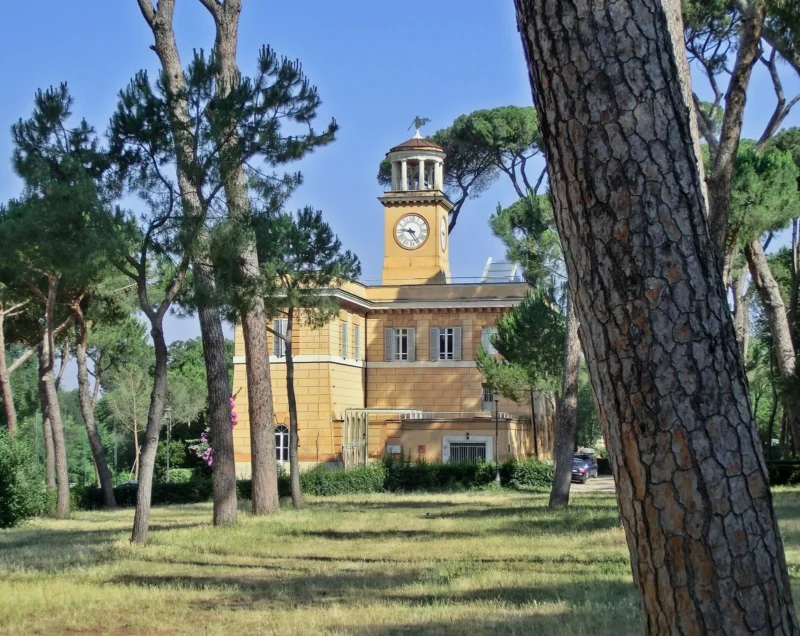
 Casa del Cinema at Villa Borghese100 m
- Casina di Raffaello200 m
- Villa Borghese200 m
- Porta Pinciana200 m
- Piazza di Siena300 m
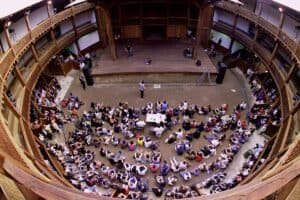
- Gigi Proietti Globe Theatre in Rome400 m

Upcoming events nearby
- Ciakpolska Film Festival 2026 at Casa del Cinema, November 19 to 22, 2026100 m
- VII Muestra de Cine Mexicano at Casa del Cinema, from November 6 to 8, 2026100 m
- As Film Festival 2026 at Casa del Cinema, November 14 and 15, 2026100 m
- Un chien andalou and L’âge d’or by Luis Buñuel at Casa del Cinema, November 1 and 9, 2026100 m
You might also like
- Scoprir, 14th Ibero-American Film Showcase at Casa del Cinema, November 26 to 28, 2026
- Basta poco with Cornacchione, Quartullo and Faiella at Teatro Parioli Costanzo, March 3 to 7, 2027
- Sex Roulette at Teatro Parioli Costanzo, January 31, 2027
- El bruto (The Brute) by Luis Buñuel at Casa del Cinema, November 9 and 13, 2026
- Lezioni di musica: the piano, the 20th century at Sala Casella, November 15, 2026
- Con il tuo amore documentary on Giovanni Scambia at Casa del Cinema, November 4, 2026