Vanessa Wagner, Philip Glass: The Complete Piano Etudes at Auditorium Parco della Musica, November 15, 2026
In short. Vanessa Wagner: practical file. The French pianist Vanessa Wagner performs the complete set of Philip Glass's 20 Etudes for piano, "The Complete Piano Etudes", on Sunday, November 15, 2026 at 15:00 in Sala Petrassi at Auditorium Parco…
Vanessa Wagner: practical file. The French pianist Vanessa Wagner performs the complete set of Philip Glass's 20 Etudes for piano, "The Complete Piano Etudes", on Sunday, November 15, 2026 at 15:00 in Sala Petrassi at Auditorium Parco della Musica Ennio Morricone, Viale Pietro de Coubertin 30. The concert opens the "Philip Glass Afternoon Sessions" with which Romaeuropa Festival 2026 closes its edition and looks ahead to the celebrations for the composer's 90th birthday. The running time given by the festival is 180 minutes, about three hours. Tickets cost from 20 to 25 euros and fall under the festival's Passepartout 2 category. You can buy them online through the channel indicated on the concert page on romaeuropa.net or through the Romaeuropa box office, by phone at 06 4555 3050 or on WhatsApp at +39 334 348 8894, on Monday from 14:00 to 18:00 and Tuesday to Sunday from 10:00 to 13:00 and from 14:00 to 18:00. To get there the Auditorium suggests metro line A to Flaminio and then tram 2, or buses 910, 53, 982 and 168, and for the route it's best to use the ATAC journey planner.
A whole afternoon inside Philip Glass's Etudes
Three hours of solo piano, 20 pieces, a single composer. Vanessa Wagner's concert is an endurance test for the performer and an immersive experience for the listener. The Romaeuropa presentation describes it exactly this way: a crossing of about three hours that is at once listening, endurance and immersion, in which the pianist approaches the cycle not as a simple test of virtuosity but as a constantly changing landscape.
Repetition, variation, suspension and shifting are, according to the festival, the elements that build in these pages a real dramaturgy of time, with a hypnotic effect. The Etudes condense one of the most intimate and at the same time most architectural forms of Glass's writing, and present his musical thought in its barest and most essential dimension.
The Philip Glass Afternoon Sessions
Philip Glass will turn 90 on January 31, 2027. Romaeuropa chose to anticipate the anniversary with a whole afternoon devoted to him on the festival's closing day: at 15:00 the complete Etudes with Vanessa Wagner, at 18:00 "Aguas da Amazonia" with the quartet Third Coast Percussion, also in Sala Petrassi. The festival speaks of a marathon concert that is both tribute and revival, a way to return to the heart of a body of work that keeps changing the way we listen.
A link between the two concerts
There is a direct thread between the two events. On the album "Aguas da Amazonia", recorded in 1999 by the Brazilian group Uakti, the piece named after the Amazon River is a version of Etude no. 2 from the first piano book. If you attend both concerts you'll hear the same music in two completely different guises.
The Piano Etudes: 20 years of writing
Glass composed the 20 Etudes over about 20 years, between 1991 and 2012. The original core, six pieces, was written in 1994 for the 50th birthday of the conductor and pianist Dennis Russell Davies, and those pieces were later renumbered and today correspond to Etudes 2, 3, 4, 5, 9 and 10. This is the account given by the program notes published by the Krannert Center at the University of Illinois for a complete performance in February 2026.
A map of commissions
The other Etudes came from different occasions. Etude no. 6 was commissioned in 1994 by the New York radio station WNYC for John Schaefer's program, with the original title "Now So Long After That Time", no. 7 by the Sydney Festival in 1996, nos. 12 and 13 by the pianist Bruce Levingston in 2007, premiered at Alice Tully Hall at Lincoln Center, no. 17 for the 25th anniversary of the Menil Collection in Houston, in 2012. The last three, nos. 18, 19 and 20, were commissioned by the Perth Festival for the composer's 75th birthday and premiered on February 16, 2013.
Two books
The first book, Etudes 1 to 10, had two goals: to explore different tempos, textures and piano techniques, and to serve Glass himself as a tool to improve his own playing. Glass recorded the first 10 in 2003. After a break of a few years, the second book opened, in the composer's words reported by the Krannert Center, a series of new adventures in harmony and structure. The complete edition of the 20 Etudes in a single volume was published in 2012 by the publisher Dunvagen.
The Amazon River and Etude no. 2
One of the Etudes had a second life. "Aguas da Amazonia", written between 1993 and 1999 as a score for Grupo Corpo, a dance company from Belo Horizonte, was first recorded by the Brazilian group Uakti, whom Glass had met through Paul Simon. The piece devoted to the Amazon River is a version of Etude no. 2 from the first book: the same material Vanessa Wagner will play at 15:00 will return, transformed, in the 18:00 concert.
The most personal work
Glass has called the Etudes his most personal body of work. The publisher points out that they have become part of the daily practice of many pianists, professionals and amateurs, as the composer wanted from the start: they are meant for those who listen and above all for those who want to learn and play them.
Philip Glass, the composer
Philip Glass was born in Baltimore on January 31, 1937, the son of Jewish immigrants from Lithuania. His father had a record store full of modern and classical music, often unsold, which the boy got to know very early. As a child he studied flute at the Peabody Conservatory, at 16 he enrolled at the University of Chicago, where he studied mathematics and philosophy, then attended the Juilliard School with Vincent Persichetti and William Bergsma. In the summer of 1960 he studied with Darius Milhaud.
Paris, Nadia Boulanger and Ravi Shankar
From 1963 to 1965 Glass studied composition in Paris with Nadia Boulanger, analyzing Bach, Mozart and Beethoven. Also in France he worked with Ravi Shankar on the score of the film "Chappaqua", and in 1966 he traveled to northern India. His style grew out of the hypnotic qualities of Indian rhythms: back home, he disowned his earlier works and began to compose austere pieces based on repeated rhythms.
New York, taxis and moving jobs
In the late 1960s, ignored by traditional concert halls, Glass played with his fellow students, including Steve Reich, in New York art galleries. To make a living he drove a taxi, ran a small moving company with Reich and worked as an assistant to the sculptor Richard Serra. He founded the Philip Glass Ensemble, with keyboards, winds and voice, and in 1971-1974 composed "Music in 12 Parts", a four-hour work that is the peak of his most rigorous minimalist phase.
The operas and film
With Robert Wilson he created "Einstein on the Beach", first performed in 1976, the first of a trilogy of portraits completed by "Satyagraha" on Gandhi, from 1980, and "Akhnaten", from 1983-84. For film he has written, among others, the scores for Godfrey Reggio's "Koyaanisqatsi", Paul Schrader's "Mishima", Martin Scorsese's "Kundun" and Stephen Daldry's "The Hours", nominated for an Oscar, and he made a brief appearance in "The Truman Show". In 2015 he published his autobiography "Words Without Music".
Glass and Italy
The composer's bond with Italy has a Roman date. In the "Akhnaten" years Glass worked again with Robert Wilson on "the CIVIL warS", an opera that premiered at Teatro dell'Opera di Roma. Years later he also toured Italy with the concerts in which his ensemble plays live the music of the Qatsi trilogy over the images of the films, and the first complete performance of those film concerts was held in Turin, at the Lingotto, in September 2005, for Settembre Musica.
One of the most listened-to composers
In 2007 the British daily The Telegraph placed Glass ninth in a ranking of the 100 greatest living geniuses. Rankings aside, his music has entered common language through film and dance, which is why a three-hour marathon devoted to his Etudes can draw an audience that goes well beyond contemporary music specialists.
Minimalism and beyond
Glass is considered one of the leaders of musical minimalism with Steve Reich, La Monte Young, Terry Riley and John Adams. Since the 1980s he has distanced himself from that label, keeping a style based on repetition but opening up to tonality, the symphonic tradition and non-European music. The Piano Etudes belong to this freer and more lyrical phase.
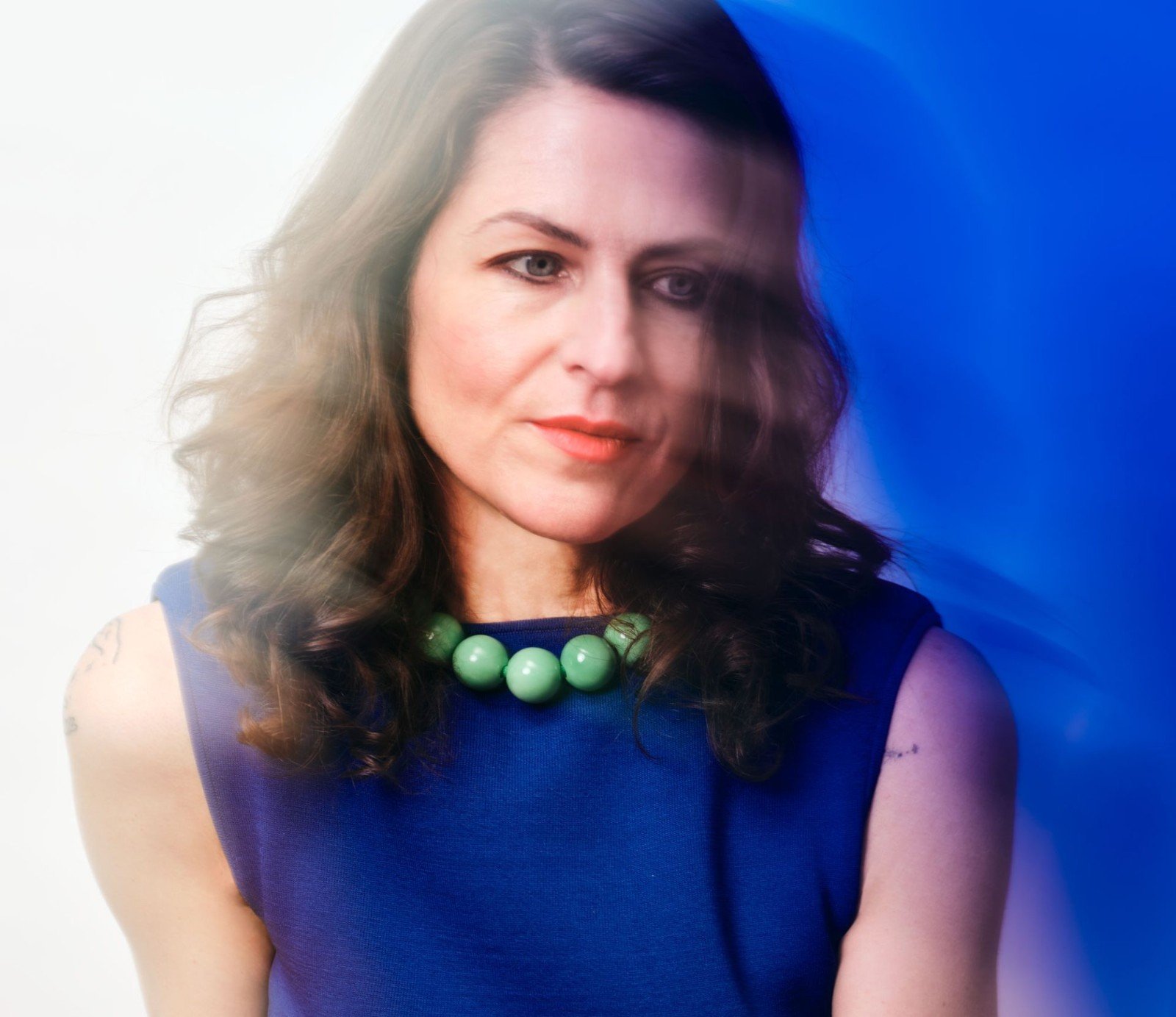
Vanessa Wagner, the pianist
Vanessa Wagner was born in Rennes on June 11, 1973. She studied at the Paris Conservatoire in the class of Dominique Merlet, winning first prize at 17, and then continued her training with Jean-François Heisser. On the recommendation of Leon Fleisher she entered the academy of Cadenabbia, on Lake Como, where she studied with Fleisher himself, Fou Ts'ong, Karl Ulrich Schnabel, Murray Perahia and Alexis Weissenberg.
The Victoire de la Musique
In 1999 she received the Victoire de la Musique, considered the French equivalent of the Grammys, as revelation among instrumental soloists. The Romaeuropa page presents her as one of the most original and authoritative pianists on the contemporary French scene, able to move naturally between the classical repertoire and today's music.
Between Debussy and electronic music
Her discography includes Rachmaninoff, Scriabin, Mozart, Schumann, Debussy, Ravel and Schubert, but also a tribute to Aphex Twin. In 2014 she began a dialogue with the Mexican electronic music composer Murcof, which started at a series at the Théâtre des Bouffes du Nord in Paris and continued with the 2016 album "Statea" for the InFiné label. The festival also mentions her collaboration with the electronic musician Rone and her role directing the festivals of Chambord and Giverny.
Why her
For InFiné Wagner has recorded music by Glass's contemporaries and by younger composers. Her double training, in the great European piano school and in electronic experimentation, makes her a particularly suitable performer for music that lives in the space between the classical tradition and contemporary sound culture.
Her approach, in the festival's words, rejects the idea of the Etudes as a simple technical workout: repetition and variation become the tools of a story that unfolds over time, and the complete cycle becomes its most fully realized form, because it lets you follow the cycle's development from the first piece to the last.
How to approach a three-hour concert
A complete performance of Glass's Etudes is not a traditional recital. The music moves by small shifts, and the listener's attention changes as time passes: after the first half hour, if you let yourself go with the repetition you discover details that escape you at first. It's an experience closer to a long walk than to a show.
A few practical tips
The festival gives a running time of 180 minutes but doesn't say if there are intermissions. It's best to arrive rested, having had lunch, and to choose, if possible, a seat that lets you stay comfortable for a long time. A seat near the aisle is useful if you're worried you may need to get up.
Listen first or arrive fresh
If you don't know the Etudes you can listen to some of them in Glass's own 2003 recording, devoted to the first 10. But there's also an argument for arriving without preparation: the live complete performance is designed precisely to let you discover the cycle as a single journey.
Glass and solo piano
Solo piano came relatively late in Glass's catalog. From the late 1980s the composer wrote more and more often for this instrument, starting with a cycle of five pieces from 1988 for a stage adaptation of Kafka's "The Metamorphosis", and continuing with the first book of Etudes. The Etudes are therefore the end point of a path in which the piano, the instrument Glass had performed on since the Ensemble years, becomes a personal workshop.
The transcriptions
Alongside the original compositions, the catalog includes piano transcriptions of other works: the "Trilogy Sonata", which brings together themes from "Einstein on the Beach", "Satyagraha" and "Akhnaten" in Paul Barnes's 2001 arrangement, and the music of "The Hours" transcribed for piano by Michael Riesman and Nico Muhly in 2003. Many listeners know Glass's piano music precisely through these pieces.
Glass, Beckett and theater
Glass's piano is also a theatrical piano. In 1970 the composer was among the founders of the company Mabou Mines, for which he wrote music for Samuel Beckett adaptations such as "The Lost Ones", "Cascando" and "Mercier and Camier". Writing for the stage, made of cycles and waiting, can be recognized in the Etudes too.
Romaeuropa Festival 2026
Romaeuropa Festival was born in 1986 on the initiative of the Associazione degli Amici di Villa Medici, which became the Fondazione Romaeuropa in 1990. The 2026 edition, the 41st, opened on September 8 and closes on November 15, with more than a hundred events including shows, concerts, talks and workshops in places such as Auditorium Conciliazione, Mattatoio, Teatro Argentina, Teatro Valle, Villa Medici and MAXXI. Contemporary music has always been one of its mainstays, alongside dance and theater.
Who supports the festival
The concert is produced with the contribution of the Ministry of Culture, the Lazio Region, the City of Rome, the Rome Chamber of Commerce and Fondazione Roma, with the support of Dance Reflections, and the main media partner is Rai.
Practical information
Tickets cost from 20 to 25 euros. The concert page gives the Passepartout 2 category, without explaining what it includes: to find out if the passepartout also lets you attend the 18:00 concert it's best to ask the festival box office. The Auditorium FAQ point out that you usually enter the hall from 30 minutes before until five minutes before the start, and that entry is not allowed once the concert has begun.
How to get there
From Flaminio station on metro line A take tram 2 toward Piazza Mancini, or the Roma-Nord train to Piazza Euclide. Buses 910, 53, 982 and 168 stop in front of the entrance, and the 168 is a weekday line, to be checked on Sunday. The Auditorium has two paid parking lots, accessible from Viale Pietro de Coubertin and Viale Maresciallo Pilsudski.
Accessibility
Bookings for wheelchair users are made at 06 8024 1281, every day from 11:00 to 18:00. The FAQ provide, subject to availability, discounts for people with disabilities and free entry for a companion when needed.
The day of November 15 at the Auditorium
Vanessa Wagner's concert is the second of the four events with which Romaeuropa closes its 2026 edition at the Auditorium. At 11:30, in Sala Santa Cecilia, there are the 100 Cellos of Giovanni Sollima and Enrico Melozzi, at 18:00, in Sala Petrassi, the Chicago quartet Third Coast Percussion with Glass's "Aguas da Amazonia", and at 20:00, in Sala Santa Cecilia, Melozzi's Classical Rave Party with the Orchestra Notturna Clandestina.
Glass the day before
The Glass afternoon is not the only chance to hear Third Coast Percussion in Rome: on November 14 the same quartet presents the show Vernacular with the producer Jlin.
A curious fact about Sala Petrassi
The hall was not born with Petrassi's name. When the Auditorium opened it was generically called Sala Settecento, from the approximate number of its seats. It was named after Goffredo Petrassi after his death, in his Roman home on March 3, 2003, at the age of 98. The intention to dedicate one of the halls to him was probably already in the minds of the city administrators: despite his age, the maestro had wanted to attend the opening of the complex, and in Sala Sinopoli he had heard the world premiere of his Ouverture da concerto from 1931.
How many seats?
The sources disagree on the exact number of seats: one source gives 673 seats, while the Renzo Piano Building Workshop speaks of 750 and some project drawings show 700. The old name Sala Settecento sits halfway.
Something nobody tells you about Sala Petrassi
Sala Petrassi is the most adaptable of the three. According to Renzo Piano's studio, it has a movable floor and ceiling and adjustable walls, a solution inspired by the hall at IRCAM in Paris, the famous music research center. For theatrical needs an orchestra pit was also built, and the side walls of the stage can move forward to reduce its size and create spaces for actors' entrances. For a solo piano, the hall can close in around the performer.
A link with Berio
The reference to IRCAM is no accident for an Auditorium that bears the mark of Luciano Berio as superintendent of the Accademia di Santa Cecilia at the time of the opening: between 1974 and 1980 Berio had directed IRCAM's electroacoustic department at Boulez's invitation.
My tip for visiting Sala Petrassi
My tip is to get to the Auditorium at least an hour early and have lunch in the complex, where there are a bar, a café and a bar-restaurant. Three hours of music call for energy. Then, before going in, it's worth taking a walk on the terrace that surrounds the halls: from the part between Santa Cecilia and Sinopoli you can see the remains of the Roman villa discovered during construction.
The right seat
In a hall of this size, for a solo piano, the central seats in the middle rows offer the best balance between closeness to the performer and acoustics. If you want to see the pianist's hands, choose a seat on the left side of the hall, facing the stage.
Another well-known fact, yet rarely mentioned
It's well known that the Auditorium has borne the name of Ennio Morricone since 2020. Less often remembered is that Morricone was a pupil of Goffredo Petrassi himself: he earned his composition diploma at the Conservatorio di Santa Cecilia with him on July 6, 1954. Morricone died in Rome on July 6, 2020, exactly 66 years after that diploma. So, inside a complex named after the pupil, a hall bears the name of the teacher. Petrassi's other pupils include Aldo Clementi, Peter Maxwell Davies and Cornelius Cardew.
A teacher of many generations
Petrassi taught composition at the Conservatorio di Santa Cecilia from 1939 and held the Accademia's advanced courses from 1960 to 1978, personally choosing Franco Donatoni as his successor.
The right photo to take at Sala Petrassi
Before the start, with the house lights still on, the most evocative photograph is of the concert grand alone in the middle of the stage, waiting. For a three-hour concert devoted to a single instrument, it's the image that sums up the day.
On the way out
At the end of the concert, around 18:00, in mid-November it's already dark: from the cavea, the large open-air space around which the halls are arranged, you can frame the three hall volumes. The Fondazione Renzo Piano compares them to upturned mandolins.
Some important events that happened here in history
The history of Sala Petrassi is short but intertwined with that of the great names of 20th-century Roman music.
2002: Sala Settecento
With the opening of the Auditorium the hall came into use under the provisional name tied to its capacity. The complex had been built between 1996 and 2002, according to the Fondazione Renzo Piano.
2003: the name of Petrassi
After the composer's death, on March 3, 2003, the hall was named after him. That same year the Accademia di Santa Cecilia moved the permanent home of its season to the Auditorium.
2020: Auditorium Ennio Morricone
In 2020 the city council approved naming the whole complex after Morricone, Petrassi's most famous pupil, who died in July.
Who has passed through Sala Petrassi
The repertoire Sala Petrassi is devoted to consists mainly of opera, jazz, theater and dance performances and film screenings. It's a hall used to the most varied genres, and a contemporary piano concert finds an intimate space there. The first name in its history remains Goffredo Petrassi, composer of the eight Concertos for orchestra written between 1934 and 1972, of the operas "Il Cordovano", on a text by Cervantes translated by Eugenio Montale, and "Morte dell'aria", on a libretto by the painter Toti Scialoja, and of the ballets created with the choreographer Aurel Milloss.
Petrassi, from Zagarolo to Santa Cecilia
Born in Zagarolo on July 16, 1904, Petrassi moved to Rome young, where he was a boy chorister at San Salvatore in Lauro. At 15 he worked as a sales clerk in a music store, and that's where his passion was born. He graduated in organ and composition at the Conservatorio di Santa Cecilia, and in 1934 Alfredo Casella conducted his "Partita" in Amsterdam, and his international career began.
Honors and passions
Over his life Petrassi was a member of academies such as the Akademie der Künste in Berlin and the American Academy of Arts and Sciences in Boston, received honorary degrees in Bologna and at La Sapienza and the Antonio Feltrinelli International Prize of the Accademia dei Lincei. He was also a great connoisseur of the visual arts and a collector of 20th-century works.
Frequently asked questions about Vanessa Wagner and Philip Glass's Etudes
When does Vanessa Wagner play in Rome?
On Sunday, November 15, 2026 at 15:00, in Sala Petrassi at Auditorium Parco della Musica Ennio Morricone, Viale Pietro de Coubertin 30. The concert is part of the Philip Glass Afternoon Sessions, the afternoon with which Romaeuropa Festival 2026 closes its edition and anticipates the composer's 90th birthday, which falls on January 31, 2027.
How long is the concert?
The festival gives a running time of 180 minutes, that is, about three hours, for the complete performance of Philip Glass's 20 Etudes for piano. The page doesn't say if there are intermissions. Given the 15:00 start, the concert should end around 18:00, the start time of the next event with Third Coast Percussion.
How much is a ticket?
Tickets cost from 20 to 25 euros depending on the section and fall under the festival's Passepartout 2 category. You can buy them online through the Romaeuropa website or through the box office, by phone at 06 4555 3050 or on WhatsApp at +39 334 348 8894, during the hours given by the festival.
What are Glass's Piano Etudes?
They are 20 pieces for solo piano composed between 1991 and 2012, divided into two books of 10. The first were written in 1994 for the 50th birthday of Dennis Russell Davies, the last three for the Perth Festival in 2013. Glass called them his most personal work and also conceived them as a study tool for himself.
Who is Vanessa Wagner?
She is a French pianist born in Rennes in 1973, trained at the Paris Conservatoire and at the Cadenabbia academy with teachers such as Leon Fleisher and Murray Perahia. She won the Victoire de la Musique in 1999, alternates the classical repertoire with contemporary music and has worked with electronic musicians such as Murcof and Rone.
Can you also attend the 18:00 concert?
Yes, it's a separate event, with its own ticket from 20 to 25 euros. At 18:00, in the same Sala Petrassi, Third Coast Percussion performs Glass's "Aguas da Amazonia" to close the afternoon. To find out if the festival passepartout covers both concerts it's best to ask the Romaeuropa box office.
Is it a concert for people who don't know contemporary music?
Yes, as long as you accept its length. Glass's music is tonal, built on repetition and small variations, and lends itself to immersive listening even without technical preparation. If you loved his film scores, from The Hours to The Truman Show, you'll find the same language in a more intimate form in the Etudes.
How do you get to the Auditorium?
By metro line A to Flaminio and then tram 2 toward Piazza Mancini, or by the Roma-Nord train to Piazza Euclide. Buses 910, 53 and 982 stop in front of the entrance. If you arrive by car you can use the two paid parking lots accessible from Viale Pietro de Coubertin and Viale Maresciallo Pilsudski.
The final tip on Vanessa Wagner and Philip Glass's Etudes
A live complete performance of Glass's Etudes is a rare event, and hearing it on a day entirely devoted to the composer, with the Third Coast Percussion concert right after, adds to its value. Vanessa Wagner, with her training between great European pianism and electronic experimentation, is an ideal performer for a cycle that asks for both rigor and abandon. My suggestion is to take the whole afternoon: lunch at the Auditorium, a walk on the terrace, three hours of piano and then the Chicago percussionists. To explore the neighborhood there are our pages on Flaminio, MAXXI and Villa Glori. In the same complex the Museo Aristaios is worth a stop, and for symphonic music there's the Accademia di Santa Cecilia season. The rest of the program is on our page on Auditorium Parco della Musica. If you prefer a shorter listen you can still choose just one of the two afternoon concerts: both make sense on their own, and together they show two ways of understanding the same music.
Article written by the editorial team of Tour Leader Pro, contact them for Private/Corporate/V.I.P. Tours and Experiences.
Planning a trip to Rome? The English guides for visiting the city are on ItalyPlanner.com.
Contact Information
Nearby
 Museum of Musical Instruments (MUSA)100 m
- Auditorium Parco della Musica100 m
- Villa Glori500 m
- Fountain of Anna Perenna500 m
- MAXXI – National Museum of 21st Century Arts700 m
- Flaminio700 m
Upcoming events nearby
- Roma Jazz Festival 2026, November 1 to 24 at the Auditorium and Casa del Jazz100 m
- Evgeny Kissin and András Schiff at Santa Cecilia, November 9, 2026100 m
- Roma Gospel Festival 2026 at Auditorium Parco della Musica, December 13, 2026 to January 1, 2027100 m
- Santa Cecilia 2026/2027 Concert Season at Auditorium Parco della Musica, October 21, 2026 to June 5, 2027100 m



You might also like
- Paolo Jannacci, Jannacci arrenditi! La città ascolta at Auditorium Parco della Musica, November 3, 2026
- Buenos Aires Tango with Daniel Binelli at Auditorium Parco della Musica, November 28, 2026
- Laudato sii at Auditorium Parco della Musica, November 17, 2026
- In memory of Mauro Bortolotti and Franco Evangelisti at Teatro Studio Borgna, November 6, 2026
- Third Coast Percussion, Philip Glass: Aguas da Amazonia at Auditorium Parco della Musica, November 15, 2026
- Voices by Henze at Auditorium Parco della Musica, November 4, 2026