Sarfatti at Teatro Belli, November 24 to 29, 2026
In short. Sarfatti, Angela Dematté's monologue with Claudia Coli directed by Andrea Chiodi, is on stage at Teatro Belli in Trastevere from Tuesday, November 24 to Sunday, November 29, 2026: Tuesday to Friday at 21:00, Saturday at 19:00, Sunday at 17:30.
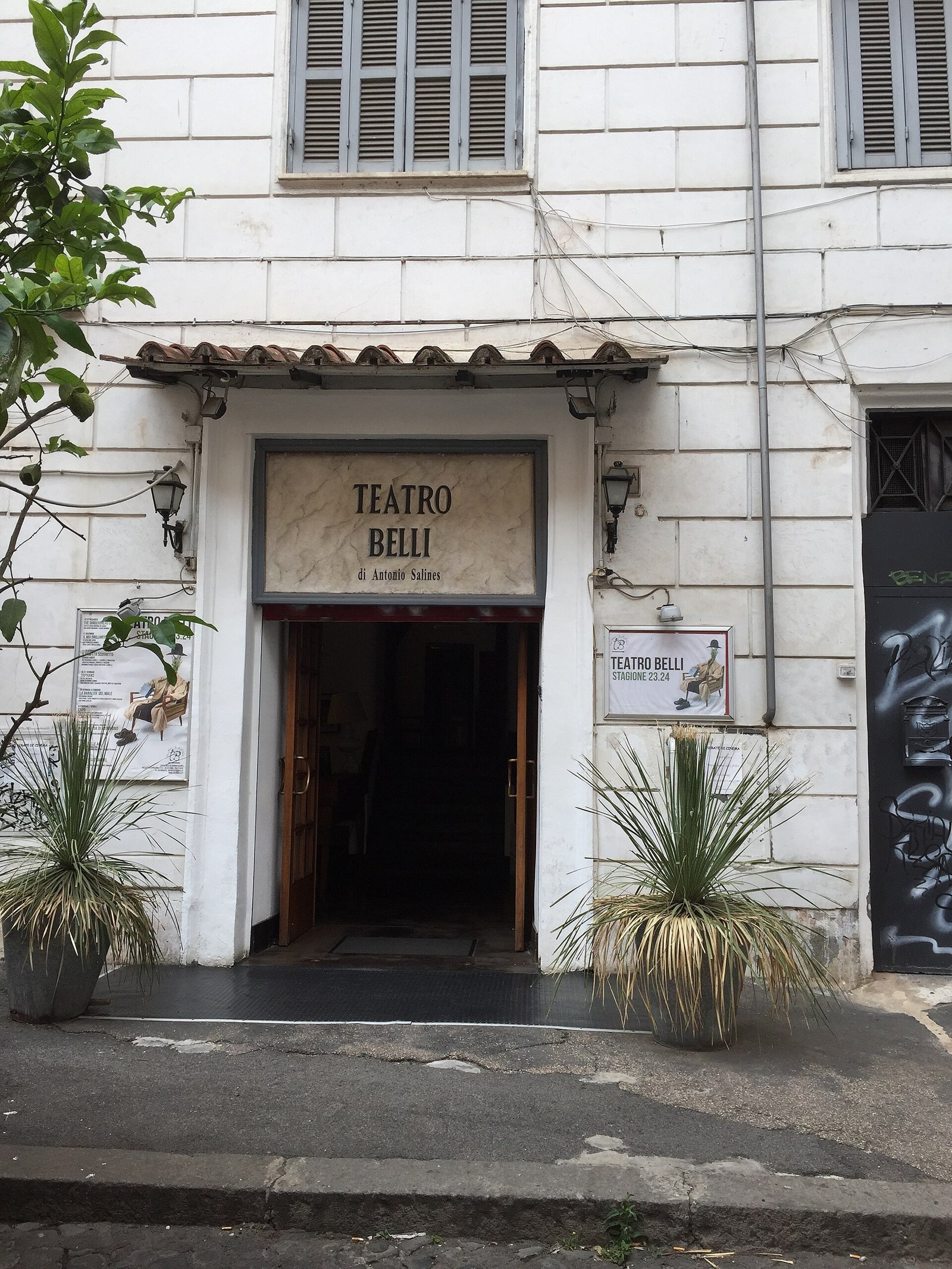
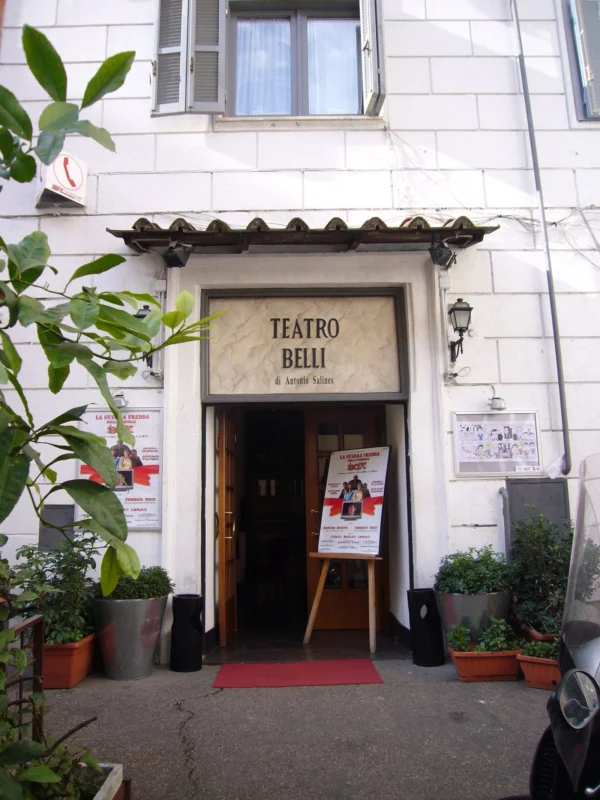
Sarfatti, Angela Dematté's monologue with Claudia Coli directed by Andrea Chiodi, is on stage at Teatro Belli in Trastevere from Tuesday, November 24 to Sunday, November 29, 2026: Tuesday to Friday at 21:00, Saturday at 19:00, Sunday at 17:30. The theater is at Piazza di Sant'Apollonia 11/a, 00153 Rome, in the lanes between Piazza di Santa Maria in Trastevere and Viale di Trastevere, where tram 8 runs. The ATAC journey planner shows up-to-date bus and tram connections. Tickets cost 20 euros full price and 15 euros reduced, according to the theater's official website, and can be bought from the show page on the Teatro Belli website, which links to the authorized presale circuit, or at the box office (06 5894875, botteghino@teatrobelli.it), open Tuesday to Sunday before performances. Produced by Golden Art.
Language: performed in Italian. No English version or English surtitles are announced.
Sarfatti at Teatro Belli at a glance
Sarfatti is a one-woman show about the life of Margherita Sarfatti, art critic, founder of the Novecento group and Benito Mussolini's partner for 20 years, and it runs at Teatro Belli for six consecutive days, with six performances.
Dates and times
Tuesday 24, Wednesday 25, Thursday 26 and Friday November 27 at 21:00. Saturday, November 28 at 19:00. Sunday, November 29 at 17:30. It's Belli's usual pattern: evenings on weekdays, an earlier show on Saturday, an afternoon show on Sunday. The running time isn't given on the theater's website.
Price
Teatro Belli lists a full-price ticket at 20 euros and a reduced one at 15 euros. Ask at the box office about the conditions for the reduced ticket.
Credits
The text is by Angela Dematté, from an idea by Massimo Mattioli and Claudia Coli, who is also its only performer. Direction is by Andrea Chiodi, sets by Guido Buganza, costumes by Ilaria Ariemme, music by Daniele D'Angelo, lighting by Orlando Cainelli. The production is by Golden Art.
Sarfatti by Angela Dematté: what the show is about
Sarfatti begins with a woman walking into the newsroom of Il Popolo d'Italia, the daily Mussolini founded after being forced out of Avanti!, and from that threshold she retraces an entire life.
The Popolo d'Italia newsroom
The official presentation describes the protagonist as a cultured, well-off intellectual, collector, art critic, founder of the Novecento group and patron of artists such as Boccioni, Sironi and Funi, and of Mussolini himself, whom she helped turn into the Dux. Opening in a newsroom isn't a random narrative choice: the newspaper is the place where her intelligence and his political career intertwine, and where, years later, that same intelligence will be shown the door.
Art and power
According to the theater, the play explores the relationship between art and power under Fascism. It tells of a woman who, trying to give meaning to her artistic, maternal and romantic life, goes through the crucial moments of Italian history. Three dimensions that the show doesn't separate: a mother's grief, a passion for modern art, love for a man who becomes a dictator.
The author's words
Angela Dematté explains the origin of the text in the presentation published by Teatro Belli: «That a woman contributed decisively, but also disturbingly, to building the myth of the Duce and of the art of the 20th century is what pushed me to tell this story.» That pair of adverbs, decisively and disturbingly, holds the whole show: no rehabilitation, no hasty condemnation.
The director's view
Andrea Chiodi, again according to the presentation, offers a complex and human portrait: not only the Duce's lover, but a visionary figure able to influence culture and politics, later shut out of the power she had helped create. On stage Sarfatti confronts her own memory and a destiny that weaves together art, ideology and feeling.
One actress
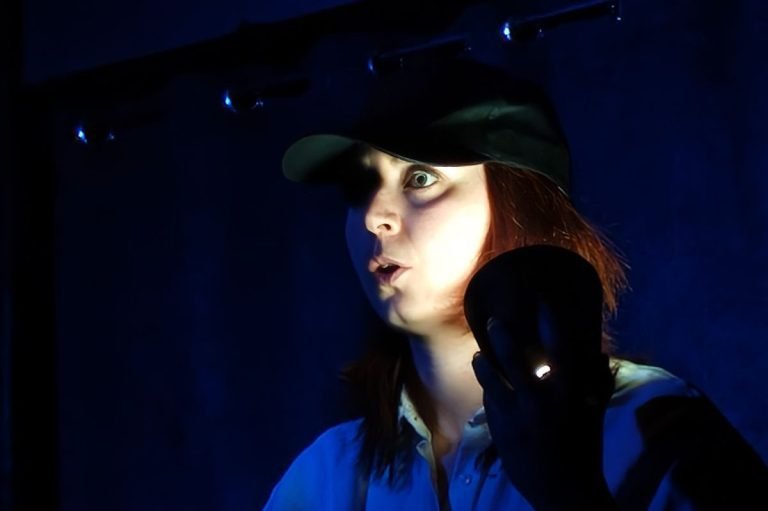
The format is the monologue. The whole story passes through Claudia Coli's body and voice, supported by Guido Buganza's sets and Daniele D'Angelo's music. In an intimate hall like the Belli, the monologue finds its ideal scale: the actress speaks to an audience that is almost at her own level.
Who was Margherita Sarfatti
Margherita Sarfatti, born Grassini in Venice on April 8, 1880 and died in Cavallasca, in the province of Como, on October 30, 1961, is considered the first woman in Italy to make art criticism a profession practiced with expertise.
Venice and a prominent family
The youngest of four children, she was born into a wealthy Venetian Jewish family. Her father, Amedeo Grassini, was a lawyer and businessman: he founded Venice's first vaporetto company and took part in turning the Lido into a resort. In 1894 the family left the Ghetto for Palazzo Bembo on the Grand Canal. Her mother, Emma Levi, was a cousin of the scientist Giuseppe Levi, father of Natalia Ginzburg. Margherita was educated at home, became fluent in four languages and met writers such as Gabriele D'Annunzio and Antonio Fogazzaro when she was very young. She was shaped by the writings of John Ruskin.
Milan and socialism
In 1898, against her parents' wishes, she married the socialist lawyer Cesare Sarfatti and took his surname. In 1902 she moved to Milan and began writing for the Sunday edition of Avanti!. In 1909 she became head of art criticism at Avanti!, the Socialist Party newspaper. She contributed to the periodical Unione femminile and, from 1912, to Anna Kuliscioff's La difesa delle lavoratrici. In that same year, 1912, she met Mussolini, not yet 30, a socialist leader about to take over as editor of Avanti!. In 1918 she joined Il Popolo d'Italia as an editor.
The loss of 1918
On January 28, 1918 her son Roberto, a volunteer and corporal in the Alpini, was killed on Col d'Echele, on the Asiago plateau, before turning 18. He was awarded the gold medal for military valor. On the spot where he died his mother had a funerary monument built, designed by Giuseppe Terragni. It's the maternal wound that the show places alongside art and politics.
The salon and the Novecento
In the 1920s her Milan salon, at number 93 Corso Venezia, was among the most exclusive in the city: Futurists, Massimo Bontempelli, Ada Negri, the sculptors Medardo Rosso and Arturo Martini, and sometimes Mussolini himself passed through it. In 1922, with the gallery owner Lino Pesaro and the painters Anselmo Bucci, Leonardo Dudreville, Achille Funi, Gian Emilio Malerba, Pietro Marussig, Ubaldo Oppi and Mario Sironi, she founded the Novecento group, which first exhibited in 1923 at the Pesaro gallery in Milan. In 1925 she signed the Manifesto of Fascist Intellectuals, and some artists distanced themselves from her.
Dux
Widowed in 1924, she wrote the first authorized biography of Mussolini, revised by Mussolini himself. It came out in 1925 in England as The Life of Benito Mussolini and in 1926 in Italy under the title Dux. It was a huge success: a million and a half copies sold in Italy, 17 editions, translations into 18 languages, including Turkish and Japanese.
The break and exile
In 1932 she was pushed out of Il Popolo d'Italia and moved to La Stampa in Turin. In 1934 she traveled to the United States and was received at the White House by Eleanor Roosevelt. Opposed to the colonial venture and to the alliance with Hitler, in 1936 she realized she would no longer be received at Palazzo Venezia. With the racial laws of 1938 she left Italy: Paris, then six years between Uruguay and Argentina, where she wrote the memoir finally titled My Fault. Her sister Nella, who stayed in Italy, died in Auschwitz with her husband. Margherita returned in 1947, published Acqua passata in 1955 and lived in seclusion in Cavallasca until her death. Her archive is kept at the Mart in Rovereto.
Claudia Coli, the star of Sarfatti
Claudia Coli, born in Milan on May 4, 1976, is a theater, film and television actress who has worked with directors such as Luca Ronconi, Patrice Chéreau, Massimo Castri and Francesca Comencini.
Training
She graduated in 2001 from the school of Teatro Stabile di Genova and completed her training in France at Studio Pygmalion and in Italy at the Centro Teatrale Santa Cristina run by Luca Ronconi. She made her debut in 2000 at Teatro di Genova in Mrożek's I reverendi directed by Jerzy Stuhr, then moved to Rome, dividing her time between theater and film.
Film
Her debut was in a leading role, in Le parole di mio padre by Francesca Comencini, selected at Cannes in the Un Certain Regard section. Then came Il fuggiasco by Andrea Manni, Gabrielle by Patrice Chéreau, in which she acts in French alongside Isabelle Huppert, La prima linea by Renato De Maria, Cosa voglio di più by Silvio Soldini, Io e lei by Maria Sole Tognazzi, Nome di donna by Marco Tullio Giordana and Eravamo bambini by Marco Martani.
Theater
With Valerio Binasco she was Nina in Chekhov's The Seagull and the lead in Cara professoressa. In 2003 she was nominated for the Premio Ubu as best new actress under 30. She has worked with Nikita Mikhalkov in Mastroianni e Čechov, with Ronconi in La mente da sola, and with Massimo Castri in Three Sisters, where she played Natasha. With Elio De Capitani and Ferdinando Bruni she acted in Frost/Nixon and Afghanistan: The Great Game, productions of Teatro dell'Elfo. With the musician Arturo Annecchino she created La signorina Else... e di alcuni piccoli valzer, from Schnitzler.
Television
On television she was Liliana Ungari in Amanti e segreti, and she acted in Medicina generale, in the film about Carla Fracci Carla, in Mimmo Calopresti's Romanzo radicale and in Marco Pontecorvo's series Una finestra vista lago.
The path to Sarfatti
Sarfatti has been in the actress's repertoire since 2024: the show was presented at the opening of an exhibition at the Mart in Rovereto, the very museum that holds Sarfatti's archive, then at Teatro Franco Parenti in Milan and, in 2026, in Rome at Teatro Torlonia for Teatro di Roma. Its return to the city at the Belli, in a hall in another neighborhood and on another scale, gives a second chance to anyone who missed it.
Angela Dematté and Andrea Chiodi, a partnership
Sarfatti is the latest stage of a long collaboration between the playwright Angela Dematté and the director Andrea Chiodi, who together have created rewritings of classics and original texts.
Andrea Chiodi
Born in Varese in 1979, a student of Piera Degli Esposti, with a law degree and a thesis on Greek tragedy supervised by Eva Cantarella, Chiodi was assistant director to Gabriele Lavia at Teatro Argentina in Rome in 2006. He won the Alfonso Marietti prize of the Accademia dei Filodrammatici, the Golden Graal as emerging director in 2012 and the Premio Mario Mieli in 2019. With La bisbetica domata he was a finalist for the Ubu and Hystrio awards. Since 2023 he has run Teatro Giuditta Pasta, since 2018 the drama season of the Varese theater, and since 2010 the Tra Sacro e Sacro Monte festival.
His productions
His work includes: Giovanna d'Arco by Maria Luisa Spaziani, Medea, Aeschylus's The Persians with Elisabetta Pozzi, Goldoni's La locandiera, Lucy Kirkwood's The Children, Goldoni's Innamorati, The Merry Wives of Windsor at the Roman Theater in Verona, The Imaginary Invalid with Lucia Lavia and Tindaro Granata, and Richard III with Maria Paiato, also coproduced by Teatro di Roma. In Rome in 2010 he directed Cara beltà at Teatro Eliseo, with Leo Gullotta, Paolo Poli, Maria Paiato and others.
Dematté's texts for Chiodi
The collaboration with Angela Dematté goes back at least to 2011, with Stragiudamento presented in the Tra Sacro e Sacro Monte season, and continues with the adaptation of The Taming of the Shrew for LuganoInScena in 2017 and the translation and adaptation of Euripides's The Trojan Women in 2020, with Elisabetta Pozzi and Federica Fracassi. Sarfatti brings this way of working, rigorous rewriting and close attention to the performer, to a historical figure of the 20th century.
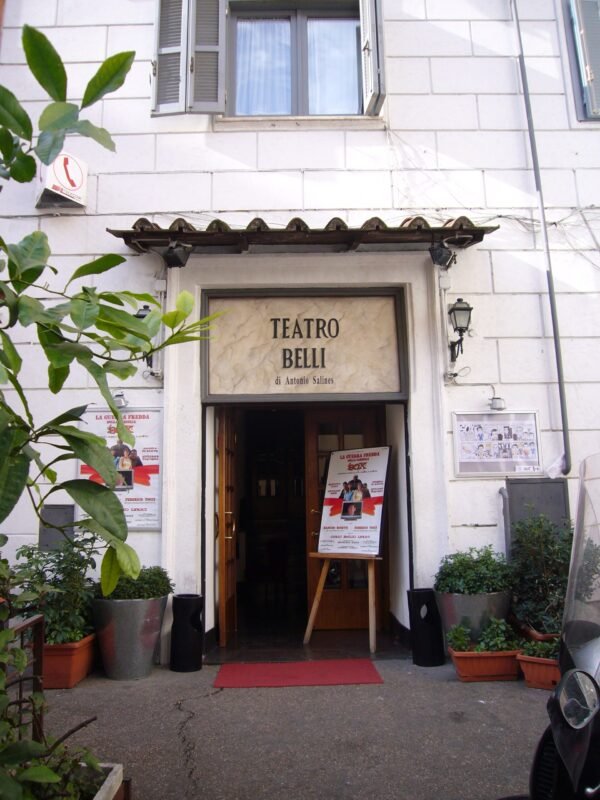
Teatro Belli: the hall on Piazza di Sant'Apollonia
Teatro Belli is one of the historic venues of Roman experimental theater. Its official name today is Teatro Belli di Antonio Salines, in tribute to the actor and director who reopened it in 1972.
A former convent church
According to the history published by the theater, the hall occupies what was the church of the monastery of Sant'Apollonia, which gives the square its name, and it was already in use as a theater in the second half of the 19th century. In the 1910s it became a cinema called AMOR. In the 1950s and early 1960s it housed nightclubs, the last of which closed after a violent incident at the entrance.
Antonio Salines
In 1969 Antonio Salines took over the hall, reduced to a heap of rubble when its conversion into a restaurant seemed settled, restored it and reopened it in January 1972. For more than 40 years he was its artistic director.
The size of the hall
The technical sheet describes a stage 9.25 meters wide and 5 deep, with a usable space of 8 meters by 4:54, a proscenium opening of 6 meters by 4:30 and a manual curtain. The theater itself points out that every seat is in close contact with the stage: for a monologue like Sarfatti it's the ideal setting.
Trastevere around Teatro Belli
Piazza di Sant'Apollonia is a small opening in the lanes of Trastevere a short walk from Piazza di Santa Maria in Trastevere, and before an evening performance the area offers a short, packed walk.
Santa Maria in Trastevere
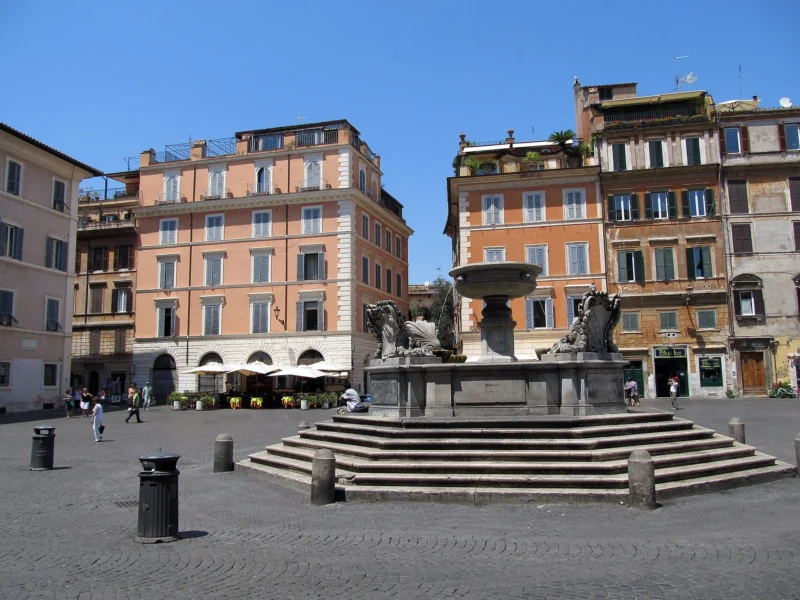
The Basilica of Santa Maria in Trastevere is the most natural destination: the facade with its mosaics is lit up in the evening and the square, with its fountain, has been the neighborhood's living room for centuries.
Toward the Tiber
Heading down toward the river you reach Ponte Sisto, which links Trastevere with Via Giulia and Campo de' Fiori, and the Museo di Roma in Trastevere in Piazza di Sant'Egidio, a few minutes from the theater.
The Janiculum
If you're going to the Sunday afternoon show, the climb up the Janiculum is the right walk: from the top you see the domes and roofs of the historic center, the city where Margherita Sarfatti lived from 1929.
How to get to Teatro Belli for Sarfatti
You reach Teatro Belli by tram 8, which runs along Viale di Trastevere, and then a short walk through the lanes. For the best connection from your starting point, use the ATAC journey planner.
Tram and bus
Viale di Trastevere is served by tram 8 and by several bus lines. From the avenue to Piazza di Sant'Apollonia it's a few minutes on foot through Piazza di Santa Maria in Trastevere. On Saturday and Sunday evenings the frequencies change: better to check them first.
On foot from the center
From Campo de' Fiori you cross Ponte Sisto and in about 10 minutes you're in Piazza di Santa Maria in Trastevere. It's often the fastest option, because evening traffic on the Lungotevere can be heavy.
By car and taxi
Trastevere is largely a limited traffic zone in the evening hours and parking in the lanes is almost impossible. It's best to leave the car outside the neighborhood and finish on foot, or have the taxi drop you on Viale di Trastevere.
Planning your Sarfatti evening
With six performances in six days and three different start times, Sarfatti at Teatro Belli fits almost any schedule: the choice depends on how you want to have dinner.
Tuesday to Friday at 21:00
With a 21:00 start it's best to eat early, or go for an aperitivo and save dinner for after the show. Trastevere stays lively until late even on weekdays in late November.
Saturday at 19:00
The Saturday time lets you leave the hall in time for dinner at Roman hours. On Saturday night the neighborhood is very crowded: book your table.
Sunday at 17:30
The Sunday afternoon show lends itself to a full day: a museum in the morning, a walk on the Janiculum, the show and an early dinner.
Tickets for Sarfatti at Teatro Belli
A ticket for Sarfatti costs 20 euros full price and 15 euros reduced, according to the official Teatro Belli listing.
Where to buy them
The show page on the Teatro Belli website links to the authorized presale circuit. Alternatively you can buy at the box office, open Tuesday to Sunday before performances, or ask for information at 06 5894875.
When to book
In a hall of this size the weekend performances fill up before the weekday ones. If you only have one date available, buy in advance.
Accessibility and practical information
Teatro Belli is a historic hall set in an old building: if you have reduced mobility, call the box office before buying to arrange access.
With teenagers
Sarfatti talks about Fascism, power, the racial laws and an adulterous love affair: it's a show for adults and for high school students studying the 20th century. For them it's a concrete way to put a person inside a chapter of history.
The paving
Trastevere's sampietrini cobblestones are uneven and, after the November rain, slippery. Comfortable shoes and a few minutes to spare.
Where to eat before or after the show
Trastevere is the area of Rome with the highest density of trattorias, pizzerias and osterias, and around Piazza di Sant'Apollonia there's no shortage of choice.
Where Romans eat
In the streets toward Viale di Trastevere and toward Piazza di San Cosimato you'll find the places most frequented by people who live in the neighborhood, with fairer prices than on the main squares.
After the theater
After the 21:00 performances, the lanes between Piazza Trilussa and Santa Maria in Trastevere stay lively: it's the right area for a glass and a discussion of the show, which offers plenty to talk about.
A curious fact about Sarfatti at Teatro Belli, November 24 to 29, 2026
The most surprising curious fact concerns publishing timelines. The memoir Margherita Sarfatti wrote in South America, titled first Mea culpa and then, in English, My Fault, was published in Italy only in 2026, under the title È colpa mia. Mussolini come l'ho conosciuto, edited by Pierfrancesco De Robertis for Paesi Edizioni. In the same year Mondadori republished Dux in its Oscar series, with an introduction by Rachele Ferrario. The show reaches the Belli, then, just as Italian readers can read for the first time the version of events Sarfatti gave after the break, next to the book that had built that story. It's a rare opportunity: Dematté's text engages with two books by the same author that contradict each other 20 years apart. A second curious fact: the first edition of Dux did not come out in Italy but in London, in September 1925, translated by Frederic Whyte and with a preface by Mussolini. The myth of the Duce was packaged for foreign readers too, and by a woman who spoke four languages. The third concerns the performer: Claudia Coli has acted in French alongside Isabelle Huppert, and she has an ease with languages that recalls the woman she brings to the stage.
Something nobody tells you about Sarfatti at Teatro Belli, November 24 to 29, 2026
Nobody says it, but Margherita Sarfatti has a specific link with Roman painting. In 1927, within the 93rd Exhibition of the Amatori e Cultori di Belle Arti in Rome, she organized the show Dieci artisti del Novecento italiano, in which she exhibited the leading Roman painters of the moment, among them Amerigo Bartoli, Gisberto Ceracchini, Virgilio Guidi, Carlo Socrate, Francesco Trombadori and Luigi Trifoglio. Anyone who thinks of the Novecento as a purely Milanese phenomenon forgets this chapter. Carlo Socrate, among other things, painted a portrait of Margherita Sarfatti with her daughter Fiammetta around 1929. And in 1929 Sarfatti moved to Rome with her children: the city of the show is also one of the cities of her life, the one where she lived the years of her greatest power and of her first removal. A second thing that's rarely said: the 20-euro full-price ticket for a work that debuted at the Mart and then went through Franco Parenti and Teatro di Roma is one of the best deals of Roman drama in November. Third: in the front rows of the Belli the distance from the actress is minimal. In a monologue that lives on looks and pauses, it's best to choose the center of the stalls, where you see the face clearly without feeling put on the spot.
My advice for Sarfatti at Teatro Belli, November 24 to 29, 2026
My advice is to arrive with a few names in mind. You don't need to read an entire biography: 10 minutes on three figures the show evokes without explaining them is enough, namely Mario Sironi, Achille Funi and Umberto Boccioni, the painters Sarfatti supported. If you have time, in the days before you can look for their works in the 20th-century collections of Roman museums, checking on each museum's website what's on display: seeing the painting of those years changes the way you hear the words of a woman who defended and promoted it. As for the performance, in our view the best is Saturday at 19:00: you come out with time to have dinner and talk about it, and Sarfatti is a show that asks to be discussed. If you prefer the quiet of weekday evenings, choose Tuesday or Wednesday. Before going in, a 10-minute detour along Viale di Trastevere and back through the lanes lets you reach Piazza di Sant'Apollonia without rushing. Finally, it's best to enter the hall a few minutes before the start: in small halls latecomers get noticed, and in a monologue the opening silence is part of the show. If you'd like to pair the show with a tailor-made day around 20th-century art in Rome, you can contact Tour Leader Pro, which organizes tailor-made private experiences.
Another well-known fact, yet rarely mentioned
It's well known that Margherita Sarfatti was Mussolini's lover. It's much less often mentioned that for years she was a socialist journalist committed to women's emancipation. Between 1902 and 1905 she contributed to the periodical Unione femminile, the organ of the association of the same name. In 1912 she supported with articles and with money the magazine La difesa delle lavoratrici founded by Anna Kuliscioff, to which Italian socialist women contributed. She studied Pareto, Sorel, Bergson and Péguy, and was convinced that people had to be educated through art, literature and philanthropic initiatives. Ada Negri dedicated her first collection of prose, Le solitarie, to her. The path that led her to Fascism starts from the left, then, like that of Mussolini himself, and this explains why her figure is so uncomfortable: she can't be filed away either as a mere courtier of the regime or as a victim. A second rarely mentioned fact: Sarfatti opposed the colonial venture and the alliance with Hitler, and was gradually sidelined while Clara Petacci took her place. The racial laws of 1938 forced her into exile, and her sister Nella died in Auschwitz. The woman who had helped create the myth of the Duce suffered its most extreme consequences.
The right photo to take at Sarfatti at Teatro Belli, November 24 to 29, 2026
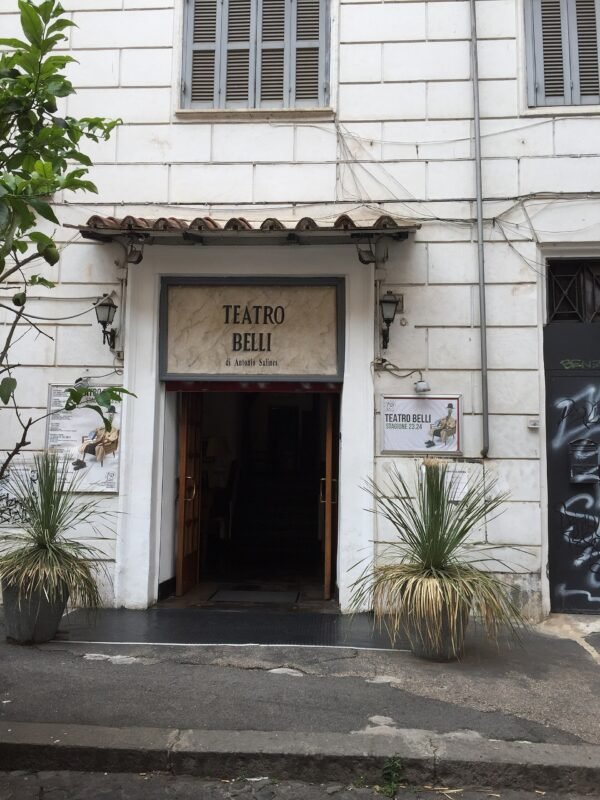
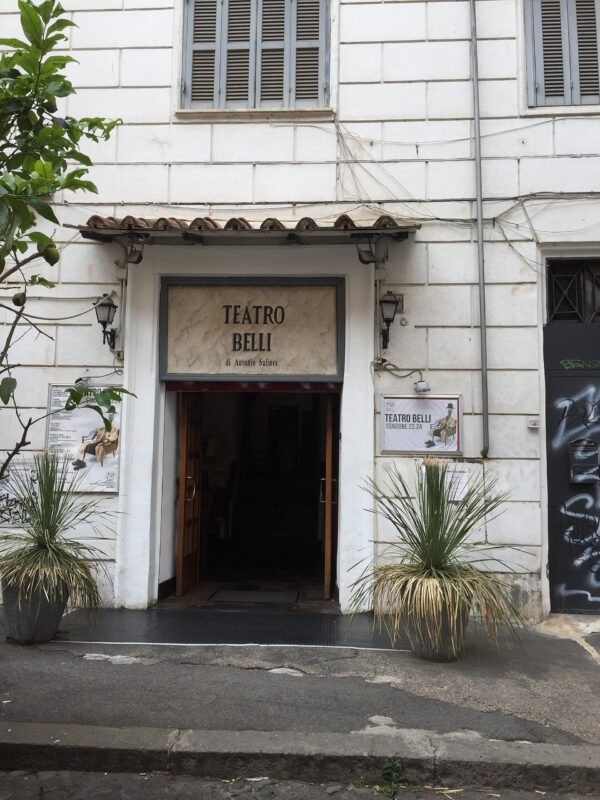
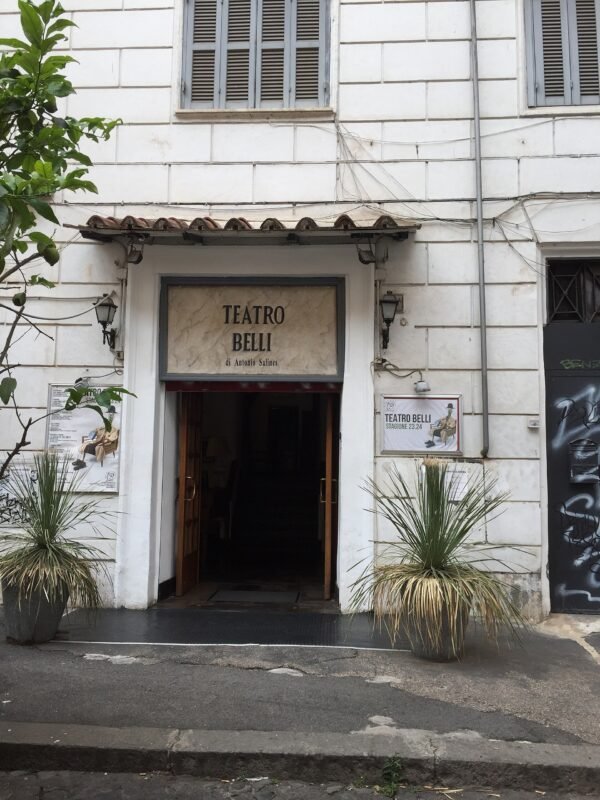
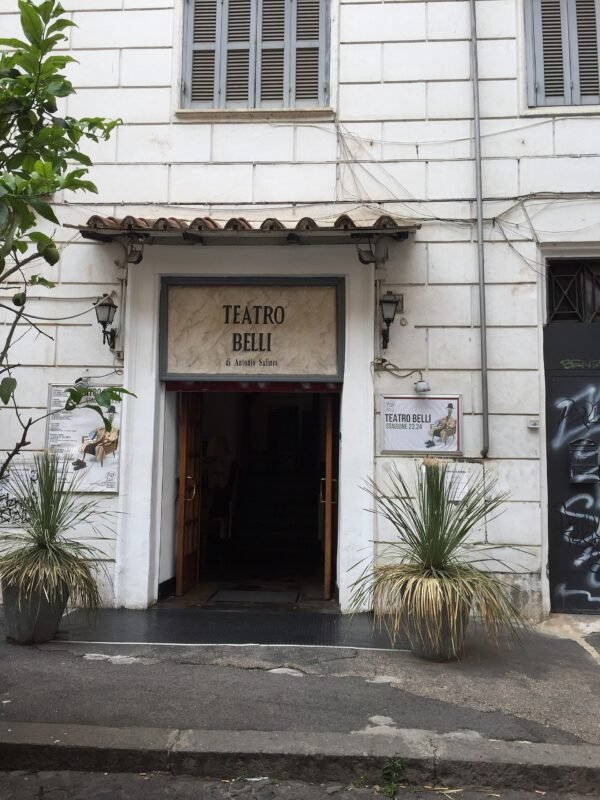
No photos during the show: in an intimate hall the glow of a phone can be seen from the stage, and in a monologue it breaks the actress's concentration. The right photo is taken outside. The first is the theater entrance on Piazza di Sant'Apollonia, with the Sarfatti poster, at dusk: the little square is small and the streetlight falls at a low angle on the facades. It's best to shoot horizontally, including a bit of paving, which tells the story of the neighborhood better than any caption. The second is the facade of Santa Maria in Trastevere from the fountain, with the mosaics lit up. The third photo has a particular meaning with this show: if you pass through Piazza Venezia the next day, you can photograph the facade of Palazzo Venezia, the palace where Sarfatti met Mussolini and where, in 1936, she realized she was no longer received. It's a photo that closes the story. For a more personal memento, at the end of the performance you can ask the actress for a photo in the foyer, if she's available: in halls of this size it's a common and welcome gesture.
Some important events that happened here
The history of Teatro Belli reads in layers. The first is religious: the hall occupies the church of the monastery of Sant'Apollonia, which gives the square its name. The second is from the 19th century: in the second half of the century the building was already a theater, and some of the most important names of the Italian stage passed across it. The third is that of cinema: in the 1910s the hall became a movie theater called AMOR, in the same years in which Sarfatti was writing art criticism for Avanti!. The fourth is nocturnal: in the 1950s and early 1960s a succession of nightclubs operated here, until the last one closed after a violent incident at the entrance. Abandonment followed. The fifth layer begins in 1969, when Antonio Salines took over the ruined building, already destined to become a restaurant, and restored it. The reopening in January 1972 made the Belli one of the venues of Roman experimental theater. For more than 40 years Salines was its artistic director. Today the program hosts productions like those of Golden Art, contemporary dance and circus companies, and the Théâtre Français de Rome: a vocation for hosting that Sarfatti confirms, bringing to a neighborhood theater a show born in a museum.
Who has passed through Sarfatti at Teatro Belli, November 24 to 29, 2026
The history published by the theater mentions, among the names who appeared on the stage of Piazza di Sant'Apollonia between the 19th and 20th centuries, Gustavo Modena, the great actor of the Risorgimento, Ermete Novelli, one of the star actors at the turn of the century, Leopoldo Fregoli, inventor of quick-change theater, Lina Cavalieri, soprano and diva of the Belle Époque, and Ettore Petrolini, the Roman comedian who shaped 20th-century variety theater. There's a chronological coincidence worth noting: Petrolini and Margherita Sarfatti belong to the same Italian season, when theater, painting and politics competed for the public in the same cities. After 1972, under Antonio Salines's direction, the hall hosted actors, directors and authors of Italian experimental theater for decades. In the 2026 and 2027 season the program brings very different names and companies, from the Golden Art productions to Caterina Mochi Sismondi's company blucinQue, on stage with DansCirque just before Sarfatti. From November 24 to 29, Claudia Coli, Angela Dematté, Andrea Chiodi and the show's creative team pass through the Belli. And with them, on stage, a gallery of evoked presences: Mussolini, Sironi, Funi, Boccioni, her son Roberto, her sister Nella.
Margherita Sarfatti and Rome
Rome enters Margherita Sarfatti's life in two ways: as the city of 20th-century painting and as the city of power.
The 1927 exhibition
In 1927 she organized in Rome the show Dieci artisti del Novecento italiano, as part of the 93rd Exhibition of the Amatori e Cultori di Belle Arti, with the Roman painters of the moment. It was one of the ways in which she tried to give the Novecento a national dimension.
The 1929 move
In 1929 she moved to Rome with her children. These are the years of the meetings at Palazzo Venezia, of the Storia della pittura moderna published in Rome in 1930, but also the years in which, in 1932, Mussolini pushed her out of Il Popolo d'Italia.
Today
Seeing Sarfatti in Rome means hearing this story a few kilometers from the places where it happened. If you want to go deeper, the 20th-century collections of Roman museums are the natural complement to the show.
The Teatro Belli program around Sarfatti
Sarfatti closes the month of November at Teatro Belli, which in the previous weeks hosts very different titles.
Before Sarfatti
On November 21 and 22 DansCirque by the blucinQue company is on stage, three movements of contemporary dance and circus. At the end of October the program opened with Le statue di sale.
After Sarfatti
For December the theater announces Re_Mare, Luci rotte and, just before Christmas, Extrateatro's fairy tales in English for the little ones. The full program is on the theater's website.
Late November in Rome
The last week of November is a good time for Rome: the city is less crowded, the days are short and the evenings invite you to stay indoors, at the theater or at the table.
The weather
Evening temperatures are cool and rain is frequent: an umbrella and a light coat are enough. The sun sets early, and by five in the afternoon it's already dark.
A week of theater
If you're coming from out of town, you can build a week around the theaters: late November is full of premieres and revivals. In Trastevere, between the Belli and the neighborhood's other halls, there's something on almost every day.
Frequently asked questions about Sarfatti at Teatro Belli
When is Sarfatti on at Teatro Belli?
Sarfatti is on at Teatro Belli in Rome from Tuesday, November 24 to Sunday, November 29, 2026. Tuesday to Friday the show starts at 21:00, Saturday at 19:00 and Sunday at 17:30. There are six performances, one a day.
How much is a ticket for Sarfatti?
A ticket for Sarfatti at Teatro Belli costs 20 euros full price and 15 euros reduced, according to the theater's official website. You buy it online from the show page, which links to the authorized presale circuit, or at the box office before performances.
Who is the actress in Sarfatti?
Sarfatti at Teatro Belli is performed by Claudia Coli, a Milanese actress trained at the school of Teatro Stabile di Genova, who has worked with Ronconi, Chéreau and Castri. The show is a monologue and the idea came from Massimo Mattioli and Coli herself.
Who wrote and directed Sarfatti?
The text of Sarfatti is by Angela Dematté and the direction by Andrea Chiodi, who have already worked together on The Taming of the Shrew and on The Trojan Women from Euripides. Sets by Guido Buganza, costumes by Ilaria Ariemme, music by Daniele D'Angelo, lighting by Orlando Cainelli.
Who was Margherita Sarfatti?
Margherita Sarfatti, the protagonist of the Teatro Belli show, was a Venetian art critic, founder of the Novecento group in 1922 and author of Dux, the 1926 biography of Mussolini. The Duce's partner for 20 years, she was pushed out of power and left Italy with the racial laws of 1938.
Where is Teatro Belli?
Teatro Belli is at Piazza di Sant'Apollonia 11/a, in Trastevere, a short walk from Piazza di Santa Maria in Trastevere. Tram 8 runs along nearby Viale di Trastevere, and from the historic center you can walk there across Ponte Sisto.
Is Sarfatti suitable for teenagers?
Sarfatti at Teatro Belli is meant for an adult audience, but it's also suitable for high school students interested in 20th-century history. It talks about Fascism, art, power and the racial laws through the life of a woman, with no explicit scenes flagged by the production.
Final advice on Sarfatti
Sarfatti at Teatro Belli is, in our view, one of the most worthwhile shows of late November in Rome: it tells the story of a figure that official history long left on the margins, and it does so without shortcuts, with a single actress and a text that doesn't seek absolution. Our advice is to choose it as an evening of real theater, not as a historical curiosity: sit in the center of the stalls, listen, and come out with a few questions about the relationship between art and power that still matter today. Saturday at 19:00 is the most convenient performance, Tuesday the most intimate. Then, if possible, go and see a painting by Sironi.
Article written by the editorial team of Tour Leader Pro, contact them for Private/Corporate/V.I.P. Tours and Experiences.
Planning a trip to Rome? The English-language guides to visiting the city are on ItalyPlanner.com.
Contact Information
Nearby
 Teatro Belli100 m
- Piazza di Santa Maria in Trastevere100 m
- Basilica of Santa Maria in Trastevere100 m
- Museo di Roma in Trastevere200 m
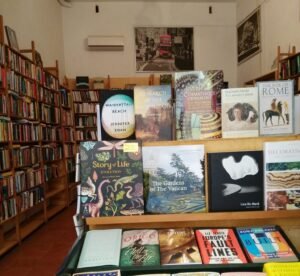
- Almost Corner Bookshop200 m
- Church of Sant’Agata in Trastevere200 m
Upcoming events nearby
- RE_Mare at Teatro Belli, December 1 to 6, 2026100 m
- Vite da strada at Teatro Belli, from November 5 to 8, 2026100 m
- Luci rotte at Teatro Belli, December 8 to 11, 2026100 m
- Il Calamaro at Teatro Belli, November 17 to 19, 2026100 m
You might also like
- Riflussi by Igor Maltagliati at Teatro Trastevere, November 20 to 22, 2026
- DansCirque at Teatro Belli, November 21 and 22, 2026
- Je te donnerai une voix at Teatro Belli, November 10 to 15, 2026
- Shake it out at Teatro Trastevere, from November 5 to 8, 2026
- One more kiss, dear at Teatro Trastevere, November 13 to 15, 2026
- The Banality of Evil at Teatro Belli, January 29-31, 2027