Roberto Saviano, What Remains of Me at Auditorium Parco della Musica, February 1, 2027
In short. Roberto Saviano stages "Quel che resta di me. Storia di un'infiltrata" (What Remains of Me: Story of an Infiltrator) on Monday, February 1, 2027 at 20:00 in Sala Santa Cecilia at Auditorium Parco della Musica Ennio Morricone, at Viale…
Roberto Saviano stages "Quel che resta di me. Storia di un'infiltrata" (What Remains of Me: Story of an Infiltrator) on Monday, February 1, 2027 at 20:00 in Sala Santa Cecilia at Auditorium Parco della Musica Ennio Morricone, at Viale Pietro de Coubertin 30 (00196 Rome), in Flaminio. From the center you get there on Metro A to Flaminio and then tram 2 along Via Flaminia, from Termini there is bus 910. The Auditorium's official website lists tickets starting from 34.50 euros, the rates by section published by the authorized reseller run from 34.50 euros in the second gallery to 51.75 euros in the first orchestra section, plus service fees. Tickets are bought from the purchase button on the event page of the Auditorium's official website, which links to the authorized presale circuit, or at the box office, open from October to March from 11:00 to 20:00.
Language: performed in Italian. No English version or English surtitles are announced.
Roberto Saviano at the Auditorium: date, time and tickets
"What Remains of Me" has a single date in Rome: Monday, February 1, 2027 at 20:00, in Sala Santa Cecilia, the largest hall at Auditorium Parco della Musica.
A Monday evening
The Auditorium classes the event in its theater section. It is a one-time evening, with no repeats: Monday night, usually a day off for many theaters, becomes here the night of an event.
The prices
The Auditorium's website lists a price starting from 34.50 euros. In the plan published by the sales circuit the rates are: orchestra first section 51.75 euros, orchestra second section 46 euros, first gallery 40.25 euros, balustrade too, second gallery 34.50 euros, balustrade too. Service fees are added, the side galleries show as unavailable.
How to buy
The event page on the Auditorium's official website has a purchase button that links to the authorized presale circuit. The alternative is the box office at Viale Pietro de Coubertin 30. For information the Fondazione Musica per Roma answers at info@musicaperroma.it.
Written and performed by Saviano
The official wording is precise: text written and performed by Roberto Saviano, directed by Enrico Zaccheo. Saviano is therefore the author and the only name on the bill as performer: the evening takes the form of storytelling from the stage, the genre the writer has practiced for years in theater and on television.
"What Remains of Me": the story of Dalia Nigro
The show tells the true story of Dalia Nigro, a police officer, the first in Italy to infiltrate a trap bank built to intercept the money flows of organized crime.
Two women in the same body
The Auditorium's presentation opens with a paradox: there is a woman who does not exist, or rather there are two, in the same body and the same life. To enter the bank Dalia must disappear and become Maria Monti, an identity built to deceive those who launder money.
When the mask stops being a mask
The question running through the tale is what happens when the false name begins to think, to feel, to answer before the real name. It is the theme of every infiltration story, brought here inside an unusual place: not an alley or a drug-dealing square, but a bank.
Other stories of infiltration
With Dalia Nigro's story, according to the presentation, other stories intertwine: men and women who chose to disappear from themselves to enter crime and bring the truth out of it. Each story is different, but the common question is the one Maria Monti asks herself every day undercover: what are you willing to lose of yourself to bring to light what others want to hide.
The title
The title, "What Remains of Me," should be read in light of this question. It is not the balance sheet of a career, but the question of someone who, after years under another identity, must work out what is left of the person she was.
Money at the center: an indictment
Saviano presents the show as an indictment of the financial system, and the Auditorium's website reports his explanation: behind Dalia's story is an account of how money laundering has become part of the very functioning of global finance.
From guns to wire transfers
In the presentation Saviano argues that banks have devastated the world "not with guns, but with wire transfers." It is a thesis the author has developed for years: organized crime no longer lives only in territories, but in financial flows.
Spreads and offshore funds
Today's organized crime, according to the writer, no longer hides in the alleys but in spreads, offshore funds, triangulations that nobody really controls. The story of Dalia and her double life thus becomes the mirror of a system that, in his words, feeds on double identities.
Continuity with the books
Those who have read ZeroZeroZero, the 2013 novel on cocaine trafficking, will recognize the same line: follow the money to understand power. "What Remains of Me" brings it to the stage through a female figure and an experience of infiltration, which gives the theme a personal dimension.
Infiltration stories: a genre Saviano knows
The figure of the infiltrator has always run through crime narratives, and "What Remains of Me" chooses it as the key for talking about finance and money laundering.
A police officer, not a collaborator
The presentation insists on one point: Dalia Nigro is a police officer, that is, a servant of the State who enters the criminal system on behalf of the institutions. It is a different perspective from that of the justice collaborator, who leaves crime to tell about it: here the path is the opposite, and the price is paid in identity.
A woman at the center
In his latest books Saviano has devoted growing attention to private lives and feelings inside the criminal world, up to Noi due ci apparteniamo, from 2024, on love and violence in the lives of bosses. Putting a woman, and her double, at the center of the show continues this line from another side: that of someone who fights crime from the inside.
The scene of the crime
The strongest detail is the place: a trap bank. Not a hideout, not a territory, but a financial institution built on purpose to observe dirty money. It is the heart of the show's thesis, and the point where Dalia's personal story meets the account of the system.
Who Roberto Saviano is: the biography
Roberto Saviano is a writer, journalist, screenwriter and television host born in Naples on September 22, 1979, known around the world for Gomorrah (Gomorra), his 2006 debut book.
The training
Born in the Chiaia district and raised in Caserta, he graduated from the Armando Diaz scientific high school and earned a degree in Philosophy at the Federico II University of Naples, a student of the historian Francesco Barbagallo. He began writing about the camorra in 2002, for magazines and newspapers such as Pulp, Diario, il manifesto, the website Nazione Indiana and the Corriere del Mezzogiorno's observatory on the camorra.
Gomorrah
In March 2006 Mondadori published Gomorrah, which the author himself defines as a non-fiction novel: a journey into the business and criminal world of the camorra, between Naples, Casal di Principe and the Aversa countryside. The same year the book won the Premio Viareggio for a first work. It has been translated into over 50 languages and has passed 10 million copies worldwide.
Life under escort
After the book's success and a rally for legality in Casal di Principe, in September 2006, in which he publicly denounced the leaders of the Casalesi clan, Saviano received threats. Since October 13, 2006 he has lived under police protection. In 2008 six Nobel laureates, among them Dario Fo, Günter Grass, Rita Levi-Montalcini and Orhan Pamuk, signed an appeal for the Italian state to protect him.
The other books
After Gomorrah came ZeroZeroZero, in 2013, La paranza dei bambini, in 2016, and Bacio feroce, in 2017. In 2022 he published Solo è il coraggio, a novel devoted to Giovanni Falcone, and Cuore puro, in 2024 Noi due ci apparteniamo, on love and violence in the lives of bosses, in 2025 L'amore mio non muore, for Einaudi. Among his essays are La bellezza e l'inferno, Vieni via con me, Gridalo.
Saviano between film, television and theater
Roberto Saviano has brought his stories to every kind of screen and stage: film, television series, in-depth programs and theater.
Film
His novel gave rise to Matteo Garrone's film Gomorrah, Grand Prix of the Jury at the Cannes Film Festival, Saviano was a screenwriter on it and won the 2009 David di Donatello for best screenplay. In 2019 Claudio Giovannesi's La paranza dei bambini (Piranhas) won the Silver Bear for screenplay at the Berlin Festival.
The series
Gomorrah, the series, created under his supervision and directed among others by Stefano Sollima, Francesca Comencini, Claudio Cupellini, Claudio Giovannesi and Marco D'Amore, has aired since 2014 for five seasons. His novel ZeroZeroZero gave rise to the 2020 series of the same name, and in 2026 Gomorra, le origini arrived.
Television
In November 2010 he hosted with Fabio Fazio Vieni via con me on Rai 3, reaching nearly 10 million viewers, in 2012 Quello che (non) ho on LA7. He hosted Kings of Crime on Nove and, on Rai 3, Insider, faccia a faccia con il crimine.
Theater
His book gave rise to the show Gomorra, written with Mario Gelardi, which earned him in 2008 the Olimpici del Teatro prize as author of new Italian work. In 2015 he collaborated with the playwright Mimmo Borrelli on Sanghenapule, vita straordinaria di San Gennaro, at the Piccolo Teatro in Milan.
The prizes and honors
Roberto Saviano has received literary, film and civic prizes in Italy and abroad.
The literary prizes
For Gomorrah the Premio Viareggio opera prima, the Premio Siani and the Premio Lo Straniero in 2006, the Premio Tropea in 2007. In 2009 the Geschwister-Scholl-Preis for Il contrario della morte, in 2016 the Raymond Chandler Prize at Noir in Festival.
The civic prizes
In 2011 he received the Olof Palme Prize for his commitment to the defense of human rights and freedom of expression, in 2016 the M100 Sanssouci Colloquium prize, presented by Chancellor Angela Merkel to journalists and writers who stand out for their courage.
The asteroid
The most unusual honor is astronomical: the International Astronomical Union gave his name to the asteroid 278447 Saviano.
A curiosity about Roberto Saviano, What Remains of Me at Auditorium Parco della Musica, February 1, 2027
The curiosity concerns the place and a precedent. In October 2008, when six Nobel laureates launched the appeal for Saviano's protection, in Rome the Casa della Memoria e della Storia hosted for eight hours a choral reading of Gomorrah, and Radio 3 organized a reading marathon in which figures from culture, the media and entertainment took part. For a few weeks the book became a text spoken aloud, passed from mouth to mouth.
18 years later Saviano climbs alone onto the stage of the Auditorium's largest hall to tell a new story in his own voice. The passage from collective reading to personal storytelling sums up the writer's path well: from the page that others read for him, to the theater where he himself gives body to the stories.
There is a second detail. Sala Santa Cecilia is a hall built for symphonic music, and hosts the Accademia's orchestra for much of the year. The evening before, Sunday, January 31, a flamenco gala is staged on the same stage: within 24 hours the same hall goes from Andalusian song to civic storytelling. In our opinion it is one of the clearest signs of the broad vocation that Renzo Piano's complex has taken on over the years.
Sala Santa Cecilia, the show's hall
Sala Santa Cecilia is the largest at Auditorium Parco della Musica Ennio Morricone, with 2,756 seats, and was inaugurated on December 21, 2002 with the Accademia's orchestra conducted by Myung-whun Chung.
A hall for the word
Born for symphonic music, the hall increasingly hosts spoken-word theater. In the same season, on December 21, 2026, Antonio Scurati is scheduled with "Democrazia: storie di donne e uomini," and on December 31 Edoardo Leo with "Ti racconto una storia." Saviano's civic storytelling fits into this line.
Choosing the seat
For a show of words rather than images, the difference between orchestra and gallery concerns above all closeness to the narrator. From the orchestra you catch the expression, from the galleries you listen: the hall's acoustics, designed for the orchestra, carry the amplified voice well even up high.
Arriving in time
In a hall of more than 2,700 seats, ticket pickup, checks, coat check and the climb to the galleries take time. It is best to be at the entrance at least half an hour before 20:00.
Auditorium Parco della Musica Ennio Morricone
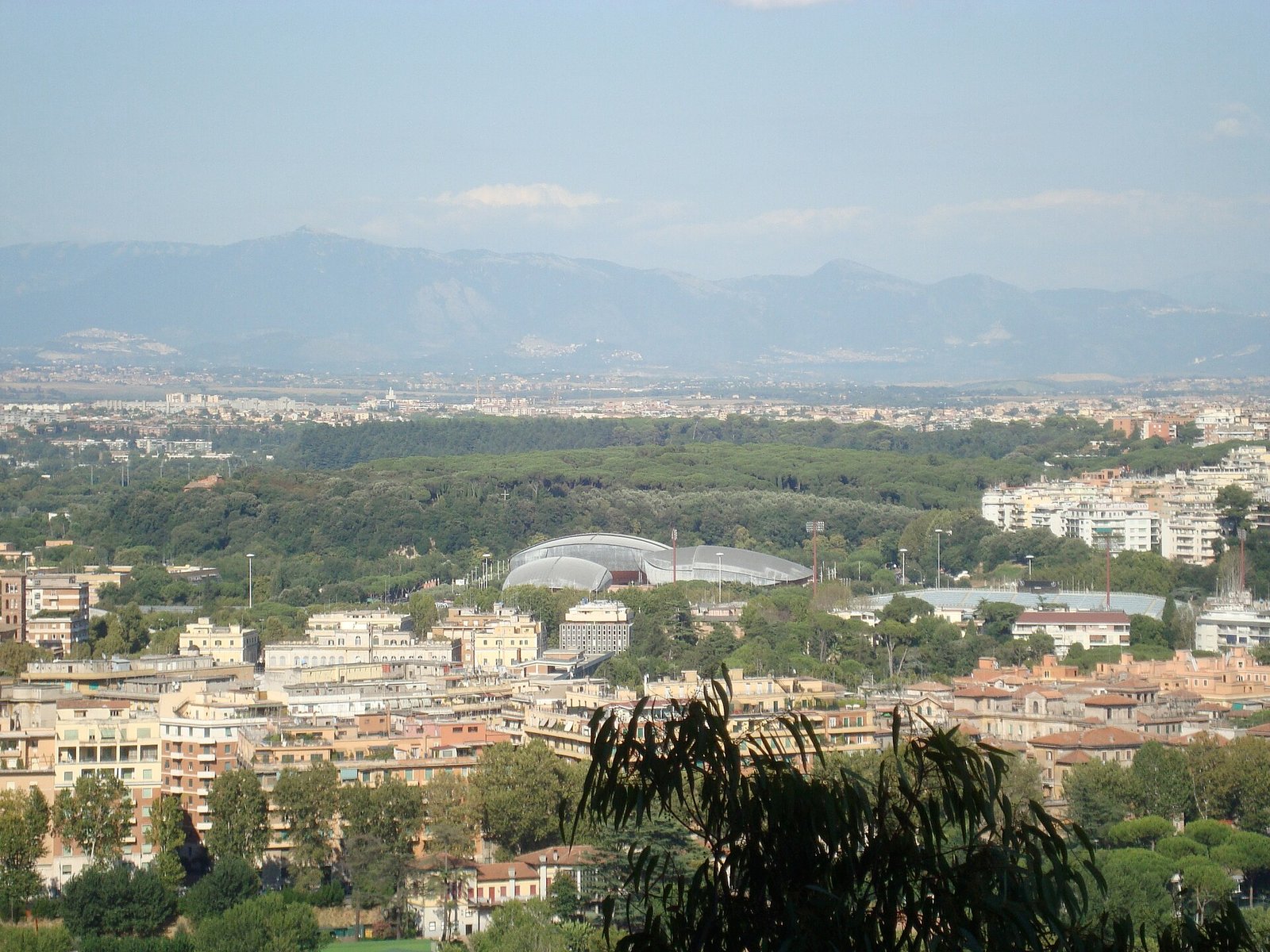
The Auditorium Parco della Musica Ennio Morricone is the complex designed by Renzo Piano in Flaminio, opened in 2002: three large halls, the Teatro Studio Borgna and the open-air cavea.
The halls
The three main halls, Santa Cecilia, Sinopoli and Petrassi, are arranged around the cavea like three large sound boxes. The complex is completed by the Teatro Studio Gianni Borgna, the Museum of Musical Instruments of the Accademia di Santa Cecilia and the hanging gardens.
The Roman villa
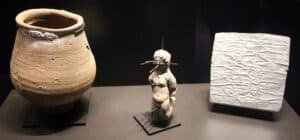
During excavation for the foundations the remains of a Roman villa of the 3rd century BC emerged. Renzo Piano modified the project, the remains can be seen from the terrace between Sala Santa Cecilia and Sala Sinopoli, and the finds are displayed in a small museum under the cavea.
The name
In 2020 the Auditorium was named for Ennio Morricone. Since 2006 it has hosted the Rome Film Festival: a tie to cinema that, for the author of Gomorrah, has a precise meaning.
One thing nobody tells you about Roberto Saviano, What Remains of Me at Auditorium Parco della Musica, February 1, 2027
One thing rarely said, when talking about Saviano, concerns the logistics of one of his evenings. The writer has lived under police protection since October 13, 2006, and since 2008 the security arrangement has been reinforced. For theatergoers this involves nothing extraordinary, but it is reasonable to expect careful checks at the entrance. The practical advice is to arrive well ahead, bring small bags and not count on getting in at the last minute.
The second thing concerns the genre of the show. The Auditorium classes it as theater, and the official wording speaks of a text written and performed by Saviano with direction by Enrico Zaccheo. Those expecting a book presentation or a lecture will find something else: a form of theatrical storytelling, constructed and directed, in which the narrator is also the character questioning the stories.
The third concerns the other stories. The presentation announces that other infiltration stories intertwine with Dalia Nigro's, without saying which. Those who know Saviano's work know that his evenings often alternate a main thread with digressions on well-known and lesser-known figures: it is worth arriving without seeking spoilers and letting the names surprise you.
The advice I give you for visiting Roberto Saviano, What Remains of Me at Auditorium Parco della Musica, February 1, 2027
The advice is to prepare with a reading, not a summary. Those who have never read Saviano can start with Gomorrah, which remains the key book, those who already know him will find in ZeroZeroZero the precedent closest to the evening's theme, namely money as the language of crime. You do not need to arrive an expert in finance: the strength of Saviano's storytelling has always been making complex mechanisms understandable through people.
The second piece of advice concerns the seat. For a tale from the stage the orchestra, even the second section, guarantees more direct contact with the narrator, the second gallery is the cheapest solution and, with good amplification, lets you follow everything. In our opinion the central first gallery is the best compromise among price, view and listening.
Finally, the timing. A show that starts at 20:00 on a Monday, in Flaminio, ends at a time when public transport thins out. It is best to check beforehand the last runs of tram 2 and Metro A, or arrange the ride home by taxi.
How to get to the Auditorium for Roberto Saviano
The Auditorium is at Viale Pietro de Coubertin 30, in Flaminio: from the center the simplest connection is Metro A to Flaminio and then tram 2 along Via Flaminia.
Tram and metro
From Piazzale Flaminio tram 2 stops at Flaminia/Reni and Apollodoro, a few minutes on foot from the complex entrance.
By bus
From Termini bus 910 arrives without changes. Lines 53, 168 and 982 also pass nearby. For the up-to-date route use the ATAC planner.
By car
The complex has paid parking, surface and multistory, with spaces reserved for people with disabilities. With the large hall full, the neighborhood's streets fill up early: public transport remains the calmer choice.
Another well-known fact, yet rarely mentioned
It is well known that Gomorrah was enormously successful. Less is said about how it came about. According to his biography, Saviano began by sending a story, written in imitation of Tommaso Landolfi, to the critic Goffredo Fofi, who answered frankly that he wrote well for his age but not about things of his own, and advised him to write about his own part of the world. It is advice that changed Italian literature of the last 20 years: Gomorrah was born from there, from the decision to tell about one's own territory instead of imitating a master.
A second little-cited fact concerns academic honors. In 2009 the Accademia di Brera conferred on him the title of honorary member and an honorary diploma in Communication and Art Education, in the presence of Dario Fo, in 2011 the University of Genoa conferred an honorary degree in Law for his contribution to the fight against crime and the defense of legality. In 2011 he taught at New York University and in 2014 gave a course at Princeton on the relationship among mafia, politics and business.
The third concerns film. Besides the prizes for Gomorrah, in 2009 the film won the Tonino Guerra Prize for best story at the Bif&st in Bari: an honor named for one of the great screenwriters of Italian cinema, awarded to the writer who had supplied the film's material.
The right photo to take at Roberto Saviano, What Remains of Me at Auditorium Parco della Musica, February 1, 2027
During the show you do not photograph or record: the hall's rules require it and, for a spoken-word show, so does respect for the rhythm of the telling. A lit phone in the orchestra disturbs both listener and storyteller.
The right photo is taken before the start, in the cavea in the dark with the three halls lit up: at the beginning of February, at 19:30, it is already night, and Renzo Piano's roofs lit against the sky are the complex's most recognizable image. Those who arrive early can frame the remains of the Roman villa from the terrace between Sala Santa Cecilia and Sala Sinopoli: an image of stratification, fitting for an evening about overlapping identities.
The simplest souvenir remains the show's poster at the entrance, with Saviano's face in the official photo by Sara Sabatino and the title of the evening.
Some important events that took place here in history
The history of the Auditorium begins with an absence. In 1936 the Augusteo, Rome's great concert hall, was demolished, and for over 60 years the city remained without a place built for symphonic music. In 1992 the city council chose the Olympic Village area, in 1993 Renzo Piano won the invitation-only competition. The works brought to light the Roman villa of the 3rd century BC that forced a revision of the project.
On April 21, 2002, Rome's birthday, Sala Sinopoli and Sala Petrassi were inaugurated, on December 21 of the same year Sala Santa Cecilia opened, with the orchestra conducted by Myung-whun Chung. Since 2003 the complex has been home to the season of the Accademia Nazionale di Santa Cecilia, since 2006 it has hosted the Rome Film Festival, and in 2020 it was named for Ennio Morricone.
In recent years the large hall has also become the place for spoken-word theater and civic storytelling: writers, journalists and actors who bring stories and reflections to the stage before thousands of people. On February 1, 2027 the Rome premiere of "What Remains of Me" joins this history, with a story of infiltration and money told in the hall built for the orchestra.
Who has played at Roberto Saviano, What Remains of Me at Auditorium Parco della Musica, February 1, 2027
Through Sala Santa Cecilia have passed, in over 20 years, the great conductors of the Accademia's seasons, beginning with Myung-whun Chung, who inaugurated it in 2002, the soloists of the symphonic seasons, the singer-songwriters and international stars of the off-season dates. In the 2026-27 season the voices of spoken-word theater also pass through: Antonio Scurati in December, Edoardo Leo at New Year's, and, on December 12 in Sala Petrassi, Ghemon with his show.
Through Saviano's life, across the show, pass figures who marked his path: Goffredo Fofi, who advised him to write about his own part of the world, Francesco Barbagallo, his professor at university, Matteo Garrone, who brought Gomorrah to film, Mario Gelardi, with whom he brought it to the theater, Fabio Fazio, with whom he hosted Vieni via con me.
On February 1, 2027 Roberto Saviano and Enrico Zaccheo, who signs the direction, pass through Sala Santa Cecilia. And passing through the tale are Dalia Nigro and Maria Monti, the police officer and her cover identity, with the other men and women who chose to disappear from themselves to enter crime and bring the truth out of it.
What is around the Auditorium
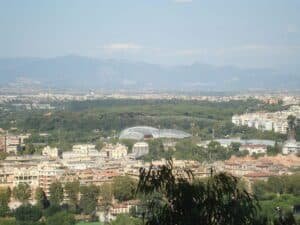
The Auditorium sits between the Olympic Village, Villa Glori and the Corso di Francia viaduct, in a neighborhood that combines twentieth-century architecture and contemporary art.
The MAXXI
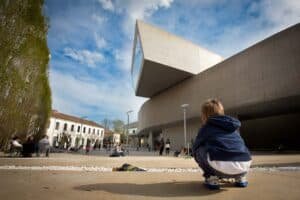
Along Via Guido Reni is the MAXXI, the national museum of 21st-century arts. Check opening hours before planning a visit on the same day.
Ponte della Musica and Foro Italico
Going down toward the Tiber you meet the Ponte della Musica, the footbridge leading to the Foro Italico. Farther north is Milvian Bridge.
The Teatro Olimpico
Not far away is the Teatro Olimpico, another historic hall in the neighborhood.
Accessibility, age and practical information
The Auditorium spreads over multiple levels among terraces, foyers and halls: for accessibility needs it is best to write ahead to the Fondazione Musica per Roma, info@musicaperroma.it, to learn which entrance to use and which seats to choose.
With kids
Saviano's tale suits high school kids interested in current affairs, civic education and legality: the themes are organized crime, money laundering, identity. For younger kids the length of an evening tale can be demanding.
Checks and timing
It is best to arrive early, with small bags, and to factor in the coat check time on the way out.
Where to eat before or after the show
Inside the Auditorium there are a bar and coffee shop in the foyer and a bar-restaurant with access from the street too, outside, between the Olympic Village, Via Flaminia and Piazza Mancini, pizzerias, trattorias and neighborhood bars.
Before 20:00
A long aperitivo or a light dinner around 18:30 is the most convenient solution. Those who arrive early can stroll on the terraces and among the remains of the Roman villa.
After the show
On Monday night many kitchens close early. The widest choice is at Ponte Milvio, a few minutes away, booking is prudent.
Frequently asked questions about Roberto Saviano at the Auditorium
When is Roberto Saviano's show staged in Rome?
Roberto Saviano's show, "Quel che resta di me. Storia di un'infiltrata," is staged at Auditorium Parco della Musica on Monday, February 1, 2027 at 20:00, in Sala Santa Cecilia. It is the only Rome date.
How much do tickets for Saviano at the Auditorium cost?
Tickets for Roberto Saviano at the Auditorium start at 34.50 euros in the second gallery, the first gallery costs 40.25 euros, the orchestra 46 or 51.75 euros depending on the section. The sales circuit's service fees are added.
What is "What Remains of Me" about?
Roberto Saviano's show tells the true story of Dalia Nigro, the first Italian police officer infiltrated into a trap bank built to intercept the money of organized crime, under the name Maria Monti. Other infiltration stories intertwine.
Who directs the show?
The direction of "What Remains of Me," the show written and performed by Roberto Saviano, is by Enrico Zaccheo, according to the official page of Auditorium Parco della Musica.
How do I get to Auditorium Parco della Musica?
Auditorium Parco della Musica, at Viale Pietro de Coubertin 30, is reached on Metro A to Flaminio and tram 2 along Via Flaminia, or by bus 910 from Termini. There is paid parking.
Is the show suitable for students?
Roberto Saviano's tale at the Auditorium suits high school students interested in legality and civic education. The themes are organized crime, money laundering and identity, told through a true story.
Where do I buy tickets?
Tickets for Roberto Saviano are bought from the purchase button on the event page of the Auditorium Parco della Musica official website, which links to the authorized presale circuit, or at the box office at Viale Pietro de Coubertin 30.
The final advice on Roberto Saviano at the Auditorium
A true story, a police officer who for years was someone else, a bank built to catch dirty money, and a writer who for 20 years has followed money to tell about power. The advice is to go with a question, the same one Saviano puts at the center: what are you willing to lose of yourself to bring to light what others want to hide. In our opinion it is one of those evenings in which theater serves to understand the present, and the Auditorium's largest hall is the right place to hear it.
Article written by the editorial team of Tour Leader Pro, contact them for Private/Corporate/V.I.P. Tours and Experiences.
Planning a trip to Rome? The English guides to visiting the city are on ItalyPlanner.com.
Contact Information
Nearby
 Museum of Musical Instruments (MUSA)100 m
- Auditorium Parco della Musica100 m
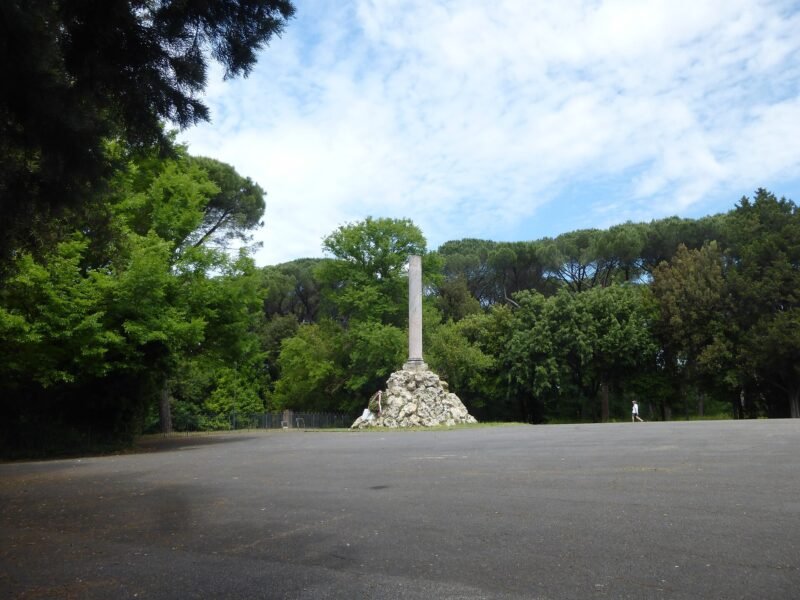
- Villa Glori500 m
- Fountain of Anna Perenna500 m
- MAXXI – National Museum of 21st Century Arts700 m
- Flaminio700 m
Upcoming events nearby
- Roma Jazz Festival 2026, November 1 to 24 at the Auditorium and Casa del Jazz100 m
- Roma Gospel Festival 2026 at Auditorium Parco della Musica, December 13, 2026 to January 1, 2027100 m
- Santa Cecilia 2026/2027 Concert Season at Auditorium Parco della Musica, October 21, 2026 to June 5, 2027100 m
- ANOHNI, Wilderness at Auditorium Parco della Musica, November 29, 2026100 m



You might also like
- Ghemon in La prima volta, l’ultima volta, l’unica volta at Auditorium Parco della Musica, April 19, 2027
- Alessandro Bergonzoni Arrivano i Dunque at Teatro Olimpico, February 20 and 21, 2027
- Back To Hawkins at Teatro Olimpico, February 17, 2027
- Selene Calloni Williams: Tu sei la Foresta at Teatro Olimpico in Rome, February 16, 2027
- Raul Cremona Bravissssssimo! at Teatro Olimpico, February 9, 2027
- Gianrico Carofiglio, Il mistero della stupidità at Teatro Olimpico, February 8, 2027