Quando anche il lavoro è guerra at Teatro di Villa Lazzaroni, September 14 to December 3, 2026
In short. Quando anche il lavoro è guerra. Una scena aperta per gli ultimi is the Teatro di Villa Lazzaroni series devoted to Bertolt Brecht on the 70th anniversary of his death, running from September 14 to December 3, 2026 inside the park of…
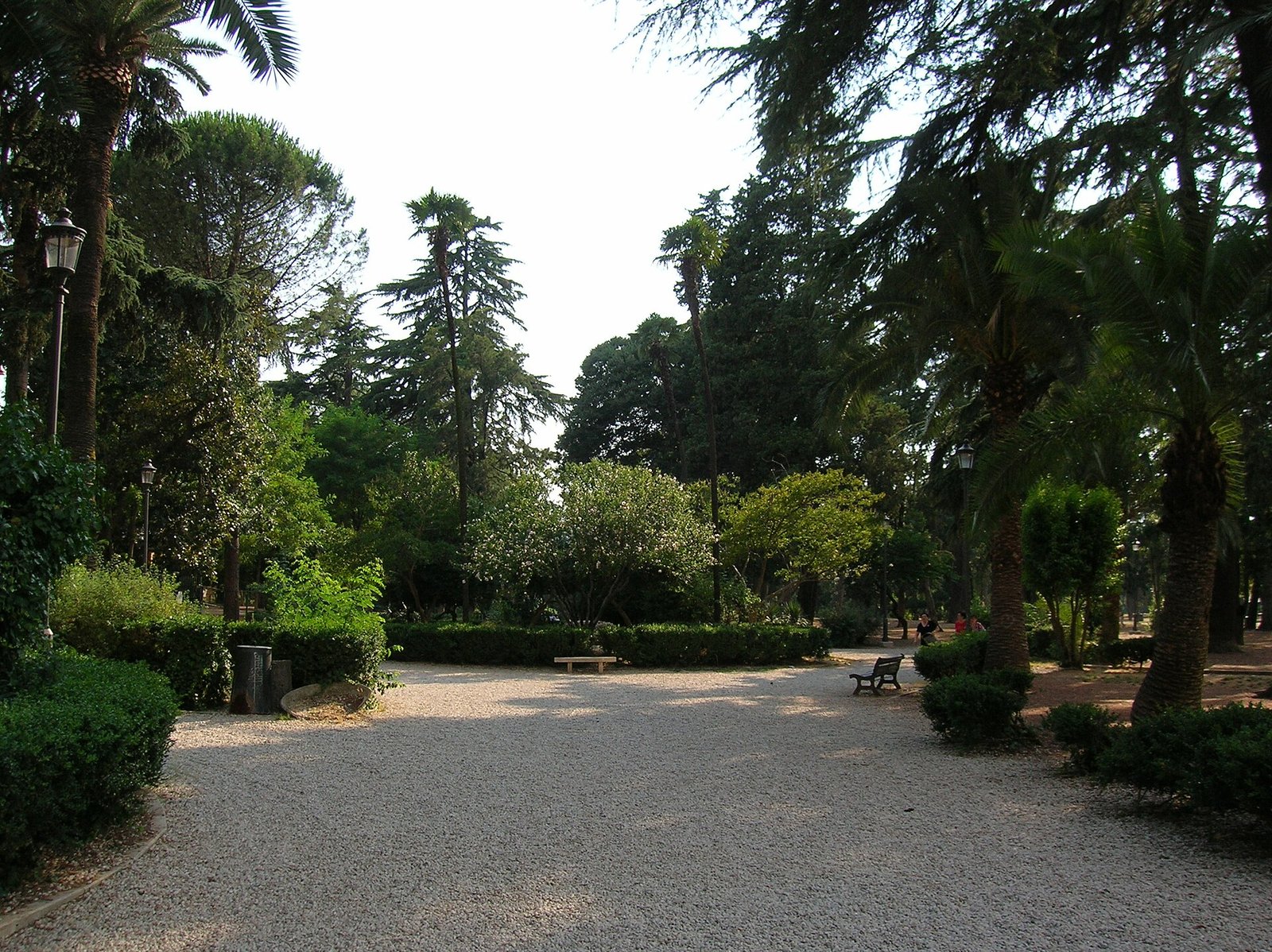
Quando anche il lavoro è guerra. Una scena aperta per gli ultimi is the Teatro di Villa Lazzaroni series devoted to Bertolt Brecht on the 70th anniversary of his death, running from September 14 to December 3, 2026 inside the park of Villa Lazzaroni, with entrances at Via Appia Nuova 522 and Via Tommaso Fortifiocca 71, where there's free parking. The events are almost all on Tuesdays at 18:00: the program started on October 13 with the talk La classe operaia è andata all'inferno, continued with the play from October 17 to 21 and goes on with the staged readings and the readings until December 1. You reach the theater on metro line A, Furio Camillo or Colli Albani stops, on buses 85, 87, 590, 628, 664 and 671, and on commuter trains to Tuscolana station. Admission is free, walk-in or by booking at 392 4406597 or at the email address published on the theater's official website, and the events, except the workshop, are also streamed on the theater's Facebook page.
Language: performed in Italian. No English version or English surtitles are announced.
Quando anche il lavoro è guerra: the essentials
The series weaves together different forms, an artist residency, a play, onstage talks, readings, workshops and staged readings, about work and its exploitation, about war and its cruelty, drawing on Brecht's world and work and on the art forms, film, literature, poetry, that have told the stories of the least among us.
Dates and times
The official period runs from September 14 to December 3, 2026. The public calendar published by Roma Capitale's culture portal includes 10 events between October 13 and December 1, almost all at 18:00: a time designed for people leaving work, which fits the theme.
Admission
All events are free, walk-in or by booking. To book, call 392 4406597 or write to the theater. At the end of each activity, except the workshop, there's a meeting with the artists, so the audience can ask questions and suggest topics to explore.
Who supports it
The project is backed by the Ministry of Culture, Directorate General for Performing Arts, and won the 2026 public call Lo spettacolo dal vivo fuori dal Centro, promoted by Roma Capitale's Department of Culture in collaboration with SIAE. It's one of the projects the city uses to bring live performance to neighborhoods outside the historic center.
Streaming
The events, except the workshop, are also streamed on the Teatro di Villa Lazzaroni Facebook page. It's handy if you can't make it, but being in the room is something else.
The Quando anche il lavoro è guerra calendar
The calendar below is the one published by Roma Capitale's culture portal, and the organizers warn that the program may change.
October 13: a talk on work in film, La classe operaia è andata all'inferno
Tuesday, October 13 at 18:00, an onstage talk by Francesco Crispino, film critic and lecturer, on work as told by cinema. It was the event that opened the fall part of the series, and the page La classe operaia è andata all'inferno covers it in detail.
October 14 to 31: Di nulla sia detto: è naturale
A stage expression workshop on speaking plainly to make the obvious exceptional, from October 14 to 31, with a public showing on Saturday, October 31 at 12:00. The official subtitle makes the aim clear: learning to speak plainly to make what seems obvious exceptional.
October 17 to 21: Commedia molto nera sul tempo e sul denaro
The series' play, on stage from October 17 to 21, born from the September artist residency.
October 27: Malaparte
Tuesday, October 27 at 18:00, the staged reading Quando la povertà diventa miseria, quando non resta che vendere se stessi, from Curzio Malaparte's Kaputt and The Skin.
November 3: Poems of exile
Tuesday, November 3 at 18:00, the reading Poesie dell'esilio by Bertolt Brecht. For those in exile in their own country.
November 10: Quando non c'è altra scelta
Tuesday, November 10 at 18:00, an onstage talk.
November 17: Ulderico Pesce
Tuesday, November 17 at 18:00, the reading Africa. Il triangolo degli schiavi by Ulderico Pesce.
November 24: Padrone e sotto
Tuesday, November 24 at 18:00, the staged reading Padrone e sotto, from Bertolt Brecht's The Exception and the Rule.
December 1: who and what is war for?
Tuesday, December 1 at 18:00, the series closes with A che, a chi serve la guerra? Che sanno i bambini di guerra?, from Brecht's The Children's Crusade, The Book of the Three Soldiers and the Book of Changes.
Bertolt Brecht, 70 years later
Bertolt Brecht was born in Augsburg on February 10, 1898 and died in East Berlin on August 14, 1956: the series falls exactly on the 70th anniversary of his death. Playwright, poet, director, writer and essayist, he's the founder of epic theater and one of the most influential playwrights of the 20th century.
War seen up close
In 1918 Brecht was called up in Augsburg as a military medical orderly. It was there that his youthful nationalism lost all hold on him, faced with the condition of the wounded. From that came The Legend of the Dead Soldier, the poem in which the Kaiser has a fallen soldier brought back to life to enlist him again. The series' theme, war and its cruelty, is rooted in the author's own life.
From Berlin to the world
In 1928 The Threepenny Opera, with music by Kurt Weill, became the biggest stage hit of the Weimar Republic. In the following years Brecht wrote teaching plays such as The Measures Taken and The Exception and the Rule, the text behind the November 24 staged reading, and Saint Joan of the Stockyards, where work takes center stage.
The beginnings
In Munich, in the early 1920s, Brecht spent time with the circle of cabaret artist Karl Valentin and took Frank Wedekind as his great model. In 1922 he won the Kleist Prize with Drums in the Night. In 1924 he moved to Berlin for good, where he worked at the Deutsches Theater.
The burial
Brecht died on August 14, 1956 and, as he wished, was buried without ceremony in the Dorotheenstadt cemetery in Berlin, under a stone engraved only with the letters of his name. Beside him lie Helene Weigel and some of his lifelong collaborators.
Exile
The day after the Reichstag fire, in February 1933, Brecht left Berlin: Prague, Vienna, Zurich, Paris, then Denmark, in Svendborg, Sweden, Finland, Moscow and finally California. In 1935 he was stripped of his German citizenship. Exile was very hard, but those years produced his best-known works: Mother Courage and Her Children, Life of Galileo, The Good Person of Szechwan, The Resistible Rise of Arturo Ui. And the Svendborg Poems: the poems of exile behind the November 3 reading.
The return and the Berliner Ensemble
In 1947 he was questioned by the House Un-American Activities Committee, and the next day he left the United States for Zurich. In 1948 he returned with Helene Weigel to East Berlin, where the following year he founded the Berliner Ensemble, one of the most important theater companies in Europe. His works also include the Book of Changes, a sign of his interest in the Far East and China, from which one of the texts of the last event is drawn.
The people behind the series
Roma Capitale's culture portal lists among those involved the theater's artistic director Giancarlo Sammartano, Andrea Collavino, Ulderico Pesce, Giuseppe Manfridi, Maria Letizia Gorga, Francesco Crispino, Paola Maffioletti, Valentino Orfeo, Alessia Oteri and Alessandro De Feo.
Giancarlo Sammartano
A theater director since 1973, he graduated in Modern Literature from Sapienza in 1971 with a thesis on the anthropological figure of the actor, and was assistant to Vito Pandolfi, Sergio Tofano, Mario Ferrero, Franco Enriquez, Luigi Squarzina and Giusto Monaco. He worked for the Istituto Nazionale del Dramma Antico in Syracuse, where from 1984 to 1997 he ran the Giusto Monaco School of Classical Theater. From 1996 to 2003 he led the company La Bottega del Pane, staging, among others, texts by Brecht. This year's series continues a long loyalty.
Classical theater
For the Istituto Nazionale del Dramma Antico, Sammartano staged Aristophanes's The Clouds, Euripides's Cyclops, and Plautus's Curculio and Truculentus. From 1994 to 1996 he was artistic coordinator of the classical performance cycles at the Greek Theater of Syracuse, and from 1988 to 1990 he ran the Accademia d'Arte Drammatica della Calabria in Palmi. He has also worked with Teatro Biondo in Palermo, the Stabile di Catania, Teatro Carcano in Milan and the Festival dei Due Mondi in Spoleto. He's one of the founders of the Centro Culturale Il Politecnico in Rome.
Fondamenta
The theater is run by Fondamenta, a research and production center recognized by the Ministry as a theater production company, with an Actors' School active since 2007. The project is curated by Fondamenta Srl, backed by the Ministry of Culture, Directorate General for Performing Arts, and winner of Roma Capitale's 2026 public call Lo spettacolo dal vivo fuori dal Centro, in collaboration with SIAE.
The theme: work as everyday war
The series' official presentation describes a world crossed by unending wars, where the bosses are anonymous corporations and anonymous too are the people who work for them, and where living comes down to fighting for bread. This too, it concludes, is war: daily, total, perpetual.
From Aristophanes to Brecht
Theater, literature and poetry, the organizers write, have looked at this world of conflict and exploitation from Aristophanes to Brecht, raising their voices. The reference to Aristophanes isn't random: Sammartano staged The Clouds for the Istituto Nazionale del Dramma Antico, and the series holds together ancient political theater and that of the 20th century.
Passing on doubt
The finest line in the presentation is about method: an art that doesn't want to teach, but to pass on doubt, the power of reason tempered by the rhythm of composition. And a utopia, that of changing the world by the power of words alone, described as a horizon that always moves away but never stops urging you to walk. It's an openly civic program, without the rhetoric of commitment.
A curious fact about the Brecht series at Teatro di Villa Lazzaroni, fall 2026
The curious fact lies in the building. According to the Sovrintendenza Capitolina, in 1960 and 1961, when the villa belonged to the Franciscan Missionaries of Mary, an orphanage, later a nursery school, and a church were built in the park. That church is now the theater. A series on Brecht, who was shaped by the writings of Hegel and Marx, inside a former church of missionary nuns: it's the kind of short circuit that happens often in Rome, and that Brecht himself would have found instructive.
The second curious fact concerns the title of the workshop, Di nulla sia detto: è naturale («Let nothing be called natural»). Put like that it sounds like a commandment, and in fact it is one: don't accept what happens as natural, but look at it as something open to debate. A workshop that teaches you to speak plainly to make the obvious exceptional is its practical translation, and it may be the most Brechtian event in the series.
Third curious fact: in 1908 Villa Lazzaroni took in the orphans of the Messina earthquake. A series that closes with a question about what children know of war finds in this park a precise memory of children uprooted by a disaster.
Teatro di Villa Lazzaroni
Teatro di Villa Lazzaroni stands in the park of the villa of the same name, in the Appio-Latino neighborhood, in the Alberone area, Municipio VII. It reopened after many years of closure and several restorations, thanks to a concession promoted by the Municipio.
A small theater
The theater's motto is «a small theater, as big as its city». It calls itself a cultural outpost and a community theater, with a program of authors', directors' and actors' theater. Next to the hall is the Sala Marco Aurelio, devoted to children's activities and to training educators, run by the association Il Flauto Magico.
Highbrow and popular
The theater's program promises shows that are highbrow without being exclusive and popular without being crude. It's a line the Brecht series follows to the letter: canonical authors, light formats like readings and staged readings, free admission and a time slot designed for working people.
Two entrances
Via Appia Nuova 522 is the handy entrance if you come by metro, and Via Tommaso Fortifiocca 71 the one if you come by car, with free parking inside.
Something nobody tells you about the Brecht series at Teatro di Villa Lazzaroni, fall 2026
What nobody says is that this is one of the most coherent series of the Roman fall, and it's entirely free. 10 events, almost all on Tuesdays at 18:00, in the same place, on a precise theme, with a meeting with the artists at the end of each: it's a short course on Brecht and civic theater, open to all, outside the center.
The second thing is that the park of Villa Lazzaroni closes at sunset, and in the fall sunset comes early. The 18:00 events end in the dark: when you arrive, ask the theater which entrance stays open for leaving.
Third thing: the parking lot inside, off Via Fortifiocca, is free. In Rome, for a theater, that's almost a privilege.
My advice for Quando anche il lavoro è guerra at Teatro di Villa Lazzaroni, September 14 to December 3, 2026
My advice is to pick two events and see both: one on Brecht, one on the context. For example the Poesie dell'esilio reading on November 3 and Ulderico Pesce's reading Africa. Il triangolo degli schiavi on November 17. They're two different ways of telling the story of people torn from their land: the poems of an author forced into exile and the story of the slave trade.
If you only have time for one, go on November 24 to Padrone e sotto, from The Exception and the Rule: it's the Brecht text that speaks most directly about the relationship between those who give orders and those who work, and a staged reading lets you hear it without the machinery of a full production.
In any case, stay for the closing discussion. That's where the series keeps its promise to pass on doubt rather than a lesson.
Villa Lazzaroni: the history of the park
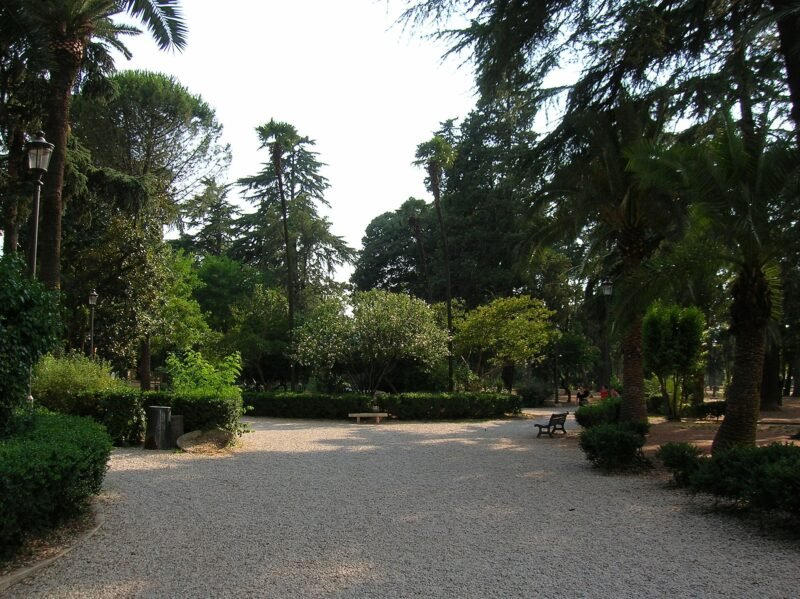
Villa Lazzaroni is a park of about 54,000 square meters, open from 7:00 to sunset. The Sovrintendenza Capitolina cites it as an example of how, at the end of the 19th century, a farm settlement on the city's outskirts became a manor residence.
The Lazzaroni barons
The Lazzaroni were a family of new money, made barons by motu proprio of Umberto I in April 1879, owners of Palazzo Grimaldi on Largo dei Lucchesi and of estates in the Roman countryside including Tor di Quinto and Leprignana. In their vineyard on Via Appia Nuova they enlarged the existing farmhouse and added a hall for balls and receptions.
The garden
The park was an original creation, in the eclectic taste of the late 19th century, with four rustic fountains in tufa rockwork that are still recognizable. The plants reflect the gardening skills of Baron Michele: olive trees, laurels, an almond tree about 130 years old, pines, firs, yews, and exotic species such as paulownia, araucaria, Judas tree and ginkgo.
From the 20th century to today
After the war the villa passed to the Franciscan Missionaries of Mary. In 1979 the city acquired the whole area and turned the main building into the seat of the IX Circoscrizione, today the seat of Municipio VII.
Another well-known fact, yet rarely mentioned
Everyone knows Brecht wrote The Threepenny Opera and Mother Courage. It's mentioned less often that he wrote most of his masterpieces in exile, in 15 years spent between Denmark, Sweden, Finland and the United States, and that in 1935 Nazi Germany stripped him of his citizenship. The November 3 reading, Poesie dell'esilio, subtitled Per chi è esule in patria, plays on exactly this experience and turns it around: exile isn't only for those who leave their country, but also for those who stay without recognizing themselves in it.
It's also rarely mentioned that Brecht was questioned in 1947 by the House Un-American Activities Committee, and that he left the United States the next day. It's an episode that shows how uncomfortable his theater was for every power, not just one.
Finally, it's little known that in 1953, during the workers' uprising in East Germany, Brecht wrote a letter that essentially criticized the repression of the workers' movement, though only the passages of loyalty to the party were published. A series called Quando anche il lavoro è guerra couldn't have found a better author.
The right photo to take at Quando anche il lavoro è guerra at Teatro di Villa Lazzaroni, September 14 to December 3, 2026
No photos during the events: they're readings and talks, and the click of a phone is distracting. The right photo is taken before, arriving a little early, while it's still light.
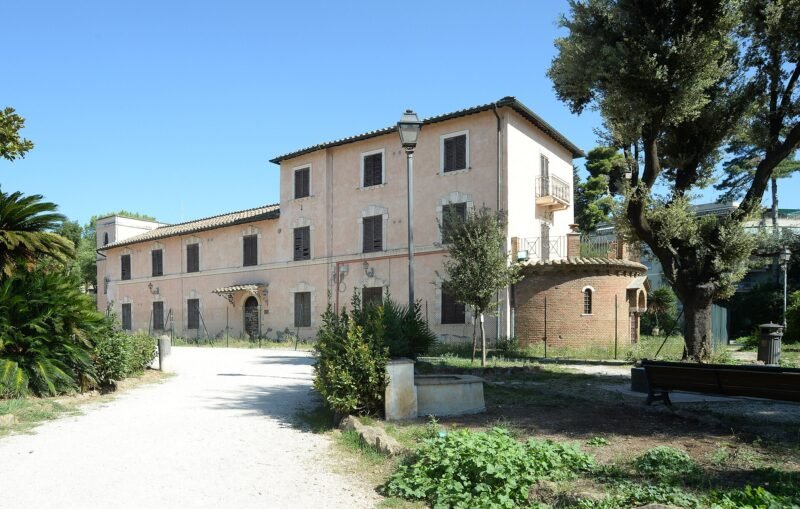
The subject is the park: the rustic tufa rockwork fountains, the old almond tree, the manor building that now houses the Municipio. It's the image of a late 19th-century Roman bourgeois villa that became public space.
The second photo is of the theater entrance, the nuns' former church. Frame it with the series poster, if there is one: Brecht on a facade built for worship is an image worth more than many words.
How to get to Teatro di Villa Lazzaroni
The theater has two entrances: Via Appia Nuova 522, handy if you come by metro, and Via Tommaso Fortifiocca 71, with free parking inside.
By metro
The nearest stop is Furio Camillo, on line A, and Colli Albani is also listed among the useful stations. From Via Appia Nuova 522 you enter the park, keep to the left side of the villa past the fountain and the school, and turn left to the theater.
By bus and train
The listed lines are 85, 87, 590, 628, 664 and 671. By train, get off at Tuscolana station, served by the FL1, FL3 and FL5 lines and by regional trains.
By car
From Via Tommaso Fortifiocca 71 entrance you drive into the free parking lot inside. Walk up to the middle of the lot and the theater entrance is on the right.
Some important events that happened here
April 1879: the Lazzaroni are made barons by motu proprio of Umberto I. In the following years they turn the vineyard on Via Appia Nuova into a manor villa, with the park and the tufa fountains.
1908: the villa takes in the orphans of the Messina earthquake.
1930: a plan to divide the land into building lots, which would have wiped out the park, is averted.
Postwar years: the property passes to the Franciscan Missionaries of Mary, and in 1960 and 1961 an orphanage and the church that is now the theater are built.
1979: the City of Rome acquires the whole area and makes it the seat of the IX Circoscrizione, today Municipio VII.
Recent years: the theater, closed for a long time, reopens after restoration under a concession promoted by Municipio VII.
August 14, 1956: Bertolt Brecht dies in East Berlin. 70 years later, from September 14 to December 3, 2026, Teatro di Villa Lazzaroni devotes Quando anche il lavoro è guerra to him.
Who has passed through Teatro di Villa Lazzaroni, the home of Quando anche il lavoro è guerra
The first name tied to the place is Baron Michele Lazzaroni, to whom the Sovrintendenza credits the choice of the park's plants. After the barons, the villa was home to the Messina orphans in 1908 and to the Franciscan Missionaries of Mary after the war, who built the orphanage and the church. Then, from 1979, the offices of the Circoscrizione and today of the Municipio, and the neighborhood families who use the park every day.
In this series the hall welcomes Giancarlo Sammartano, a director who worked at the Greek Theater of Syracuse and ran its school of classical theater, and with him Andrea Collavino, Ulderico Pesce, Giuseppe Manfridi, Maria Letizia Gorga, Francesco Crispino, Paola Maffioletti, Valentino Orfeo, Alessia Oteri and Alessandro De Feo.
And the authors pass through too, on the page and on stage: Brecht with The Exception and the Rule, The Children's Crusade, The Book of the Three Soldiers, the Book of Changes and the poems of exile, Curzio Malaparte with Kaputt and The Skin. In a former church on the city's edge, for three months, a small pantheon of 20th-century civic literature.
Alberone and Furio Camillo: around the theater
Villa Lazzaroni is in the Alberone area, between Appio-Latino and Tuscolano, along the city stretch of Via Appia Nuova: a residential neighborhood, with the shops of Via Appia Nuova and a few green lungs.
Green spaces
Heading south there are the Caffarella Park and the Appia Antica Park. Along metro line A, toward Anagnina, the Park of the Aqueducts.
Toward San Giovanni
A few metro stops toward the center take you to San Giovanni, with the Basilica of San Giovanni in Laterano.
Where to eat after the event
Appio-Latino and Tuscolano are residential neighborhoods, with places aimed at the people who live there: pizzerias, neighborhood trattorias, bars and bakeries, without tourist-area prices. The stretch of Via Appia Nuova around Furio Camillo has spots for every budget. When you come out of the 18:00 events, it's the right time for a pizza or a trattoria dinner. If you'd rather move on, take metro line A toward San Giovanni, where the choice widens.
Accessibility, kids and practical information
Accessibility
The official sources don't publish detailed information on the hall's accessibility. The parking lot inside, off Via Fortifiocca, cuts down the walk, and for specific needs it's best to call 392 4406597.
With kids
The series is aimed at adults, but high school students studying Brecht or 20th-century history can get a lot out of it, especially from the last event, devoted to what children know of war. The park has a playground, while there's daylight.
How to plan your evening at Villa Lazzaroni
Booking
Admission is walk-in or by booking: to be sure of a seat, call 392 4406597 a few days ahead, giving the date.
Arrive while it's light
Events start at 18:00. In October and November it's best to arrive a little early, to find the theater entrance in the park while it's still light and to ask which gate stays open for leaving.
After the event
Each event, except the workshop, closes with a meeting with the artists. Allow an hour and a half in all, then dinner nearby.
Rome in the fall: the season of the series
The series fills the heart of the fall, from mid-October to early December, when the days get shorter and Roman cultural life moves indoors. A Tuesday afternoon at Villa Lazzaroni is a different way to experience the city in those weeks: far from the big programs, in a residential neighborhood, with a theme that speaks to the present.
Frequently asked questions about Quando anche il lavoro è guerra
When does the Quando anche il lavoro è guerra series take place?
Quando anche il lavoro è guerra takes place at Teatro di Villa Lazzaroni from September 14 to December 3, 2026. The public events run from October 13 to December 1, almost all on Tuesdays at 18:00.
How much does it cost to attend the Brecht series at Villa Lazzaroni?
All events of Quando anche il lavoro è guerra at Teatro di Villa Lazzaroni are free, walk-in or by booking at 392 4406597. The events, except the workshop, are also streamed on the theater's Facebook page.
Where is Teatro di Villa Lazzaroni?
Teatro di Villa Lazzaroni is in the park of Villa Lazzaroni, with entrances at Via Appia Nuova 522 and Via Tommaso Fortifiocca 71, where there's free parking. The nearest metro stop is Furio Camillo, on line A.
Why is the series devoted to Bertolt Brecht?
Quando anche il lavoro è guerra is devoted to Bertolt Brecht on the 70th anniversary of his death in East Berlin on August 14, 1956. Artistic director Giancarlo Sammartano has staged Brecht before with the company La Bottega del Pane.
What's on at Villa Lazzaroni in fall 2026?
At Teatro di Villa Lazzaroni the series presented the play Commedia molto nera sul tempo e sul denaro from October 17 to 21 and the Malaparte staged reading on October 27, and it offers the Brecht staged reading on November 24, readings on November 3 and 17, and the grand finale on December 1.
Is there a workshop in the Quando anche il lavoro è guerra series?
The Teatro di Villa Lazzaroni series includes the stage expression workshop Di nulla sia detto: è naturale, from October 14 to 31, 2026, with a public showing on Saturday, October 31 at 12:00. It's free.
Final advice on Quando anche il lavoro è guerra
My advice is to mark two Tuesdays in your calendar and go. Quando anche il lavoro è guerra is the kind of series you rarely find in Rome: free, coherent, away from the center, with artists who stay to talk with the audience. Brecht wanted a theater that made people think, not one that consoled them. In a former church in Alberone, 70 years later, someone is still trying.
Article written by the editorial team of Tour Leader Pro, contact them for Private/Corporate/V.I.P. Tours and Experiences.
Planning a trip to Rome? The English-language guides to visiting the city are on ItalyPlanner.com.
Contact Information
Nearby
 Appian Way Park600 m
- Villa Lais700 m
- Hypogeum of Via Dino Compagni700 m
- Piscina Le Mura800 m
- Santa Libbirata-La Carretteria1.1 km
- Snodo Mandrione1.1 km

Upcoming events nearby
- Poesie dell’esilio by Brecht at Teatro di Villa Lazzaroni, November 3, 2026100 m
- Blade Runner: back to the future? A talk with Aresu and Niola at Libreria Feltrinelli, November 6, 2026200 m
- Agnes Cecile. Spirits at Chroma Mandrione, from September 26 to November 14, 20261.0 km
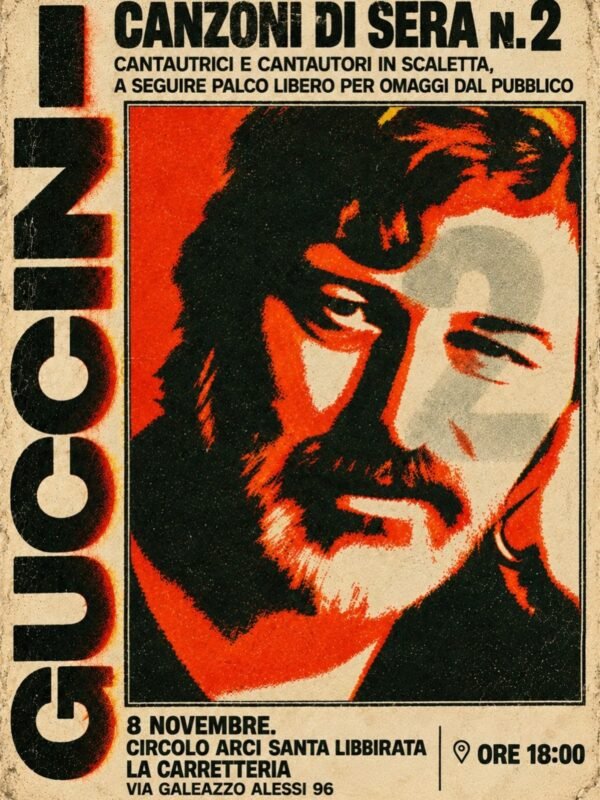
- Second evening for Guccini at Santa Libbirata la Carretteria, November 8, 20261.2 km
You might also like
- Teatro Marconi 2026-2027 Season, September 28 to December 31, 2026
- Scappati di casa, il ritorno dei casalinghi disperati at Teatro Nino Manfredi, from February 25 to March 7, 2027
- I cattivi pensieri at Teatro Elsa Morante, performances from October 24 to November 6, 2026
- Uno scherzo del genere with Emanuela Grimalda and Gianluca Ramazzotti at Teatro Nino Manfredi, March 11 to 21, 2027
- Conigli by Salvo Di Paola at Hacienda Roma, November 30, 2026
- Martina Catuzzi, UOMA at Hacienda Roma, April 19, 2027