Poesie dell’esilio by Brecht at Teatro di Villa Lazzaroni, November 3, 2026
In short. Poesie dell'esilio by Brecht, Bertolt Brecht's poems of exile, are read at Teatro di Villa Lazzaroni on Tuesday, November 3, 2026, at 18:00.
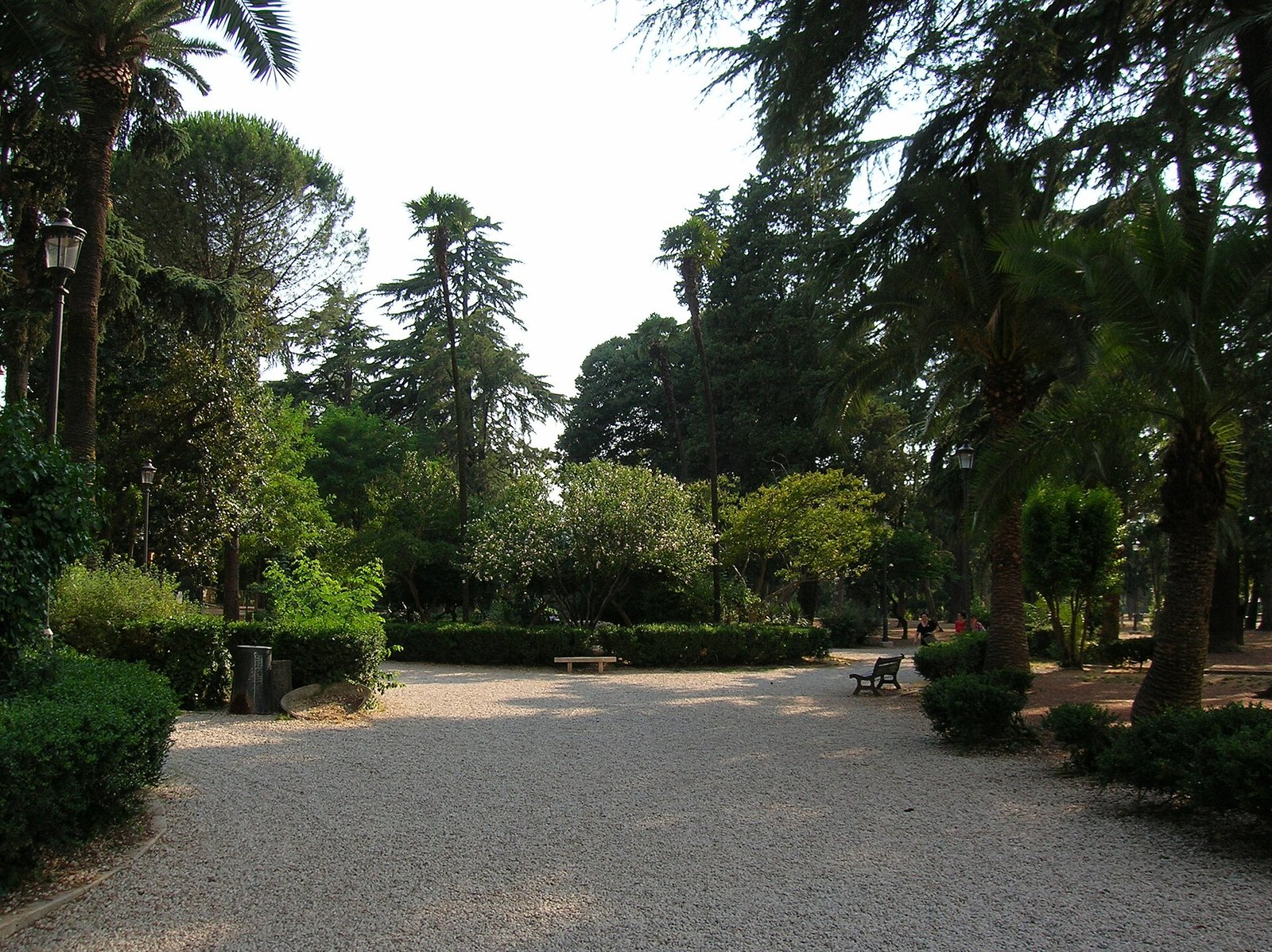
Poesie dell'esilio by Brecht, Bertolt Brecht's poems of exile, are read at Teatro di Villa Lazzaroni on Tuesday, November 3, 2026, at 18:00. Per chi è esule in Patria, «for those in exile in their own homeland», is a staged reading for several voices with Maria Letizia Gorga, Francesco Patanè and Carolina Sisto. The theater is inside the park of Villa Lazzaroni, in the Appio Latino neighborhood, Municipio VII, with two entrances: Via Appia Nuova 522, a short walk from the Furio Camillo stop on Metro A, and Via Tommaso Fortifiocca 71, with free parking inside. Buses 85, 87, 590, 628, 664 and 671 serve the area, and the nearest train station is Tuscolana. Entry is free, according to Roma Capitale's culture portal. For information and bookings the theater answers at 392 4406597 and info@teatrovillalazzaroni.com. The evening is part of the series Quando anche il lavoro è guerra, devoted to Brecht on the 70th anniversary of his death.
Language: performed in Italian. No English version or English surtitles are announced.
Poesie dell'esilio by Brecht: date, time and entry
The reading of Bertolt Brecht's Poesie dell'esilio is scheduled for Tuesday, November 3, 2026 at 18:00 at Teatro di Villa Lazzaroni. Roma Capitale's culture portal classifies it as a reading and lists it among the free events.
Time
It starts at 18:00, a late afternoon slot that lets you arrive after work or school. The running time isn't published. The portal's calendar gives a slot until 20:00, a useful guide for planning dinner.
Entry and booking
Entry is free. The hall is small, and for the series the theater invites you to book: the number given is 392 4406597, the email info@teatrovillalazzaroni.com. A phone call a few days before keeps you from being left outside.
Who organizes it
The reading is by Fondamenta Srl, the company that runs the theater. The project is supported by the Ministry of Culture, Directorate General for Performing Arts, and won Roma Capitale's 2026 public call Lo spettacolo dal vivo fuori dal Centro, promoted by the Department of Culture in collaboration with SIAE. The program, the portal warns, may change.
Per chi è esule in Patria: what you'll hear
The official presentation describes a staged reading for several voices, built on the poems that mark the stages of Bertolt Brecht's long exile: from Nazi Germany to the Soviet Union, then the United States, and finally back to a Berlin divided by the Cold War.
A reading, not a recital
Staged reading means the texts aren't just spoken: they're shared among several voices, set in dialogue and performed with the tools of theater. There are three voices, a very experienced actress and two performers under 35. It's a form that suits Brecht's poetry well, which is often already written as a speech addressed to someone.
The theme
The subtitle, Per chi è esule in Patria, shifts the focus from geographic exile to inner exile. The presentation speaks of a remembrance of many painful migrations from one's land, language and loved ones. It's a theme running through the series, which is devoted to the least among us, and it speaks to the present without needing to be updated.
The texts
The list of poems chosen hasn't been published. The material a reading on exile can draw on is vast: Brecht wrote verse at every stage of his flight, and one of his best-known collections, the Svendborg Poems, takes its name from the Danish town where he lived for five years. The final section of that collection includes poems devoted precisely to the exile's condition, among them Über die Bezeichnung Emigranten, Gedanken über die Dauer des Exils and An die Nachgeborenen.
Quando anche il lavoro è guerra: the Villa Lazzaroni series
Poesie dell'esilio is part of Quando anche il lavoro è guerra. Una scena aperta per gli ultimi, «when even work is war, an open stage for the least», the Teatro di Villa Lazzaroni series running from September 14 to December 3, 2026.
Brecht, 70 years on
The series draws on Bertolt Brecht's work on the 70th anniversary of his death. Different forms of stage writing weave together the story of work and its exploitation with that of war and its brutality: the two threads that, in the official presentation, hold together shows, talks, readings and workshops.
The other events
In the same series, on October 13, critic Francesco Crispino led the onstage conversation La classe operaia è andata all'inferno, devoted to work in film. The November 3 reading shifts attention from the factory to exile, two sides of the same idea of the least among us.
The people involved
The series involves, among others, Giancarlo Sammartano, the theater's artistic director, Andrea Collavino, Ulderico Pesce, Giuseppe Manfridi, Maria Letizia Gorga, Paola Maffioletti, Valentino Orfeo, Alessia Oteri and Alessandro De Feo.
Bertolt Brecht and exile: the story behind the poems
Bertolt Brecht was born in Augsburg on February 10, 1898 and died in East Berlin on August 14, 1956. Playwright, poet, director and essayist, founder of epic theater, he's remembered for The Threepenny Opera, Mother Courage and Her Children, The Good Person of Szechwan, Life of Galileo and The Resistible Rise of Arturo Ui. Almost all of these works were written far from Germany.
The 1933 escape
On February 28, 1933, the day after the Reichstag fire, Brecht left Berlin with his wife Helene Weigel, his son Stefan and some friends. He passed through Prague, Vienna, Zurich and Paris. In May of that year his books were burned in Germany.
Svendborg
At the invitation of the writer Karin Michaëlis the family settled in Skovsbostrand, near Svendborg, in Denmark, where they stayed for five years. From there Brecht traveled to Paris, London and New York, wrote for refugee newspapers and worked with Margarete Steffin. In 1935, after his speech at the International Congress of Writers for the Defense of Culture in Paris, he was stripped of his German citizenship.
Sweden, Finland, Moscow
In 1939 he left Denmark for Sweden, settling on a farm on the island of Lidingö, near Stockholm, and in that period Mother Courage and Life of Galileo were written. In 1940 he moved to Finland, where he wrote The Resistible Rise of Arturo Ui. In 1941 he reached Moscow, where Margarete Steffin died on May 30. Then he crossed Russia and sailed from Vladivostok for California.
The United States
For five years he lived in Santa Monica, near Hollywood, without managing to break into the film world. On October 30, 1947 he was questioned by the House Un-American Activities Committee, and the next day he left the United States for Zurich, where he stayed a year, still barred from entering Germany.
Back to Berlin
In 1948 he returned with Helene Weigel to East Berlin and founded the Berliner Ensemble, which became one of the most important companies in Europe. Three years after returning to Europe he obtained Austrian citizenship. The Berlin he returned to was a divided city: it's the last stage of the journey the November 3 reading retraces in verse.
Maria Letizia Gorga and the voices of the reading
The voices of Poesie dell'esilio are Maria Letizia Gorga, Francesco Patanè and Carolina Sisto. The last two are presented by the theater as an actor and actress under 35, in line with the series' focus on younger generations.
Maria Letizia Gorga's training
Maria Letizia Gorga is a Roman actress, born in 1966. She graduated in 1990 from Alessandro Fersen's International Actors' School and earned a degree with honors in Modern Literature from Sapienza. She studied the performing arts in Moscow with Anatoly Vasiliev and taught acting and diction at Artès, the school run by Enrico Brignano.
Theater
On stage she has worked with Vasiliev in Pirandello's Each in His Own Way, with Roberto De Simone in La Gatta Cenerentola, with Maurizio Scaparro in Don Giovanni and Memoirs of Hadrian, with Peppe Barra in La Cantata dei pastori, with Pino Micol in Camus's Caligula, and with Ulderico Pesce in Contadini del Sud and Il folle volo, devoted to Amelia Rosselli. The detail that matters for this evening: she was in the cast of Brecht's Threepenny Opera directed by Tato Russo.
Film, television and music
On screen she has appeared in Paolo Sorrentino's Youth (2015), Francesco Laudadio's Signora, Sergio Colabona's Passannante and Marco Martani's Eravamo bambini (2024). On television she has worked in series such as Il bello delle donne, Provaci ancora prof!, Furore and Màkari. She recorded an album devoted to Mercedes Sosa, Viaggio intimo con Mercedes Sosa, and is on the soundtrack of Youth.
A curious fact about Poesie dell'esilio by Bertolt Brecht at Teatro di Villa Lazzaroni, November 3, 2026
The most interesting curious fact concerns the title of a collection. The poems written in Denmark, now known as the Svendborg Poems, originally had another name: Brecht had thought of Poems in Exile, Gedichte im Exil. It was after the success of the Paris staging of Fear and Misery of the Third Reich, in May 1938, that he urged his publisher, Wieland Herzfelde, to publish the two works together. In a letter that month he wrote that this would give him a decisive position in émigré literature. The title of the Villa Lazzaroni reading, in a way, gives those poems back the name their author chose first.
The second curious fact concerns music. During the Svendborg years the composer Hanns Eisler also stayed there several times, and set a large part of those poems to music with Brecht. Many of the exile poems were born to be sung as well as read.
The third is Roman: one of the evening's three voices, Maria Letizia Gorga, has performed Brecht on stage, in The Threepenny Opera directed by Tato Russo. The title that in 1928 became the Weimar Republic's biggest theater hit thus returns, indirectly, to a neighborhood hall in Appio Latino.
Teatro di Villa Lazzaroni, the venue of the reading
Teatro di Villa Lazzaroni is a small hall inside the park of the villa of the same name, in Appio Latino. It reopened after many years of closure and several restorations, thanks to a concession promoted by Municipio VII.
A neighborhood anchor
The theater presents itself as a cultural anchor and community theater, in dialogue with local associations. The motto chosen by the management is clear: a small theater, as big as its city. The program focuses on author-driven, director-driven and actor-driven theater, aiming to be cultured without becoming exclusive.
Fondamenta and the Actors' School
The theater is run by Fondamenta Teatro e Teatri, a research and production center recognized by the Ministry of Culture as a theater production company, which has also had an Actors' School since 2007. The artistic director is Giancarlo Sammartano. Next to the hall is the Sala Marco Aurelio, devoted to children's activities and educator training, run by the Associazione Culturale Il Flauto Magico.
A church turned into a theater
According to the Sovrintendenza Capitolina, in 1960 and 1961, when the villa belonged to the Franciscan Missionary Sisters of Mary, an orphanage, later a nursery school, and a church, now turned into the theater, were built. On November 3 the verses of a poet shaped by the study of Marx are read in a building born as a place of worship.
Something nobody tells you about Poesie dell'esilio by Bertolt Brecht at Teatro di Villa Lazzaroni, November 3, 2026
What few people say is that Brecht, in his years of exile, never stopped working for the theater, quite the opposite: he wrote almost all the works he's remembered for today far from Germany. Mother Courage and Life of Galileo are tied to the Swedish years, The Resistible Rise of Arturo Ui to Finland. Exile was for him a very harsh condition and at the same time his most fertile period. Listening to the poems of those years means entering the workshop where the masterpieces came from.
The second thing concerns the park. Villa Lazzaroni is open from 7:00 to sunset, and in early November it's already dark at 18:00. If you enter from Via Appia Nuova 522 you cross the park in the last light, but on the way out, around 20:00, the garden is closed or dark. Ask the theater staff when you arrive which exit to use: Via Tommaso Fortifiocca 71 parking lot is the route intended for the evening audience.
The third concerns booking. Free entry makes it seem enough just to turn up, but the hall is small and the series' events draw a loyal audience. A call to 392 4406597 is the simplest way not to be left outside.
My tip for Poesie dell'esilio by Bertolt Brecht at Teatro di Villa Lazzaroni, November 3, 2026
My tip is to arrive with a few lines in your head. You don't need to know all of Brecht: just read a handful of the exile poems the night before in any anthology, perhaps the one addressed to those born later, An die Nachgeborenen, which closes the Svendborg Poems. If you recognize a line when you hear it spoken on stage, you listen differently, and you catch the interpretive choices of the three voices.
The second tip is practical: book, even though entry is free, and arrive 20 minutes early. If you're driving, use Via Tommaso Fortifiocca 71 entrance, with free parking inside. If you're coming by public transport, get off at Furio Camillo on Metro A and enter from Via Appia Nuova 522, following the left side of the villa past the fountain and the school, until the left turn that leads to the theater.
The third concerns the evening. A poetry reading asks for silence, and a small hall amplifies it: switch your phone off, not just to silent. Afterward, in our view, it's worth staying in the neighborhood for dinner along Via Appia Nuova and talking about it: the best way not to let the words you heard evaporate right away.
How to get to Teatro di Villa Lazzaroni
Teatro di Villa Lazzaroni has two entrances: Via Appia Nuova 522 and Via Tommaso Fortifiocca 71. The first is the most convenient if you're coming by metro, the second if you're driving.
By metro
The nearest stop is Furio Camillo, on Line A, and Colli Albani is also listed among the useful stations. From Via Appia Nuova 522 entrance you go into the park, continue along the left side of the villa past the fountain and the school, and turn left to the theater.
By bus and train
The bus lines listed are 85, 87, 590, 628, 664 and 671. By train, get off at Tuscolana station, served by lines FL1, FL3, FL5 and regional trains.
By car
Via Tommaso Fortifiocca 71 entrance leads to the free parking lot inside: go up through the middle of the lot and continue to the theater entrance, on the right. In a dense neighborhood like Appio Latino, free parking a few meters from the hall makes the evening much easier.
On the way out
The park closes at sunset. For the way out after the reading, follow the theater's directions and ask when you arrive which entrance stays open in the evening.
Another well-known fact, yet one rarely mentioned
It's well known that Brecht had to leave the United States after being questioned by the House Un-American Activities Committee. Less often recalled is the theatrical coincidence of that departure. The hearing took place on October 30, 1947, and the next day, while Life of Galileo premiered in New York, its author left for Zurich. The play about the scientist forced to recant his discoveries before a tribunal opened in the city the playwright was leaving after being questioned about his own ideas.
The second rarely mentioned fact concerns citizenship. Stripped of his German citizenship in 1935 for his anti-Nazi speech in Paris, Brecht, back in Europe from the United States, couldn't enter Germany right away and stayed a year in Zurich. He later obtained Austrian citizenship. The author the November 3 reading describes as an exile in his own homeland was, for a long stretch of his life, an exile whose homeland had taken away even his passport.
The third concerns his burial. Brecht asked to be buried without ceremony in the Dorotheenstadt cemetery, visible from the windows of his Berlin home. The stone bears only the letters of his name, and stands opposite the graves of Hegel and Fichte. Beside him lie Helene Weigel, Elisabeth Hauptmann, Ruth Berlau and Caspar Neher.
The right photo to take at Poesie dell'esilio by Bertolt Brecht at Teatro di Villa Lazzaroni, November 3, 2026
The right photo is taken before the reading, in the last afternoon light, and it's worth arriving a little early for it. Entering from Via Appia Nuova 522 you get a good view of the facade of the main villa, now the seat of Municipio VII: it's the building the Lazzaroni family enlarged at the end of the 19th century, adding a hall for balls and receptions on the west side.
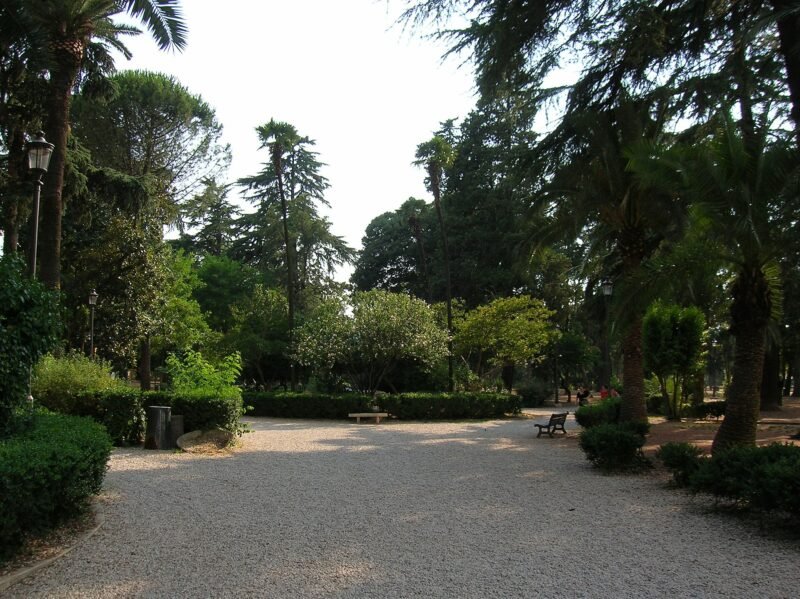
The second subject is the rustic tufa rock fountains, four in all, the most recognizable features of the original garden. The third is the trees: the roughly 130-year-old almond tree, the old olive trees that recall the vineyard, and the exotic species chosen, according to the Sovrintendenza, by Baron Michele, a keen gardener.
During the reading, on the other hand, no photos. At a poetry evening the voice is what counts, and in such a small hall you hear even the click of a phone. The best souvenir is a note: the title of the poem that struck you most, to look up and reread at home.
Villa Lazzaroni: the story of the park
Villa Lazzaroni is a park of about 54,000 square meters in Appio Latino, in the Alberone area, open from 7:00 to sunset. The Sovrintendenza Capitolina cites it as an example of the late 19th-century transformation of a suburban farm into a manor residence.
The Lazzaroni family
The Lazzaroni were a family of new wealth, made barons by a motu proprio of Umberto I in April 1879. They owned Palazzo Grimaldi on Largo dei Lucchesi and the estates of Tor di Quinto and Leprignana in the Roman countryside. The villa outside the walls completed the image of a family seeking ties with the great Roman nobility.
The eclectic park
Work on the vineyard on Via Appia Nuova enlarged the existing farmhouse, decorated its north facade and added the hall. The garden, instead, was an original creation in the eclectic taste of the late 19th century, with laurels, stone and Aleppo pines, firs, yews, and exotic species such as paulownia, araucaria, the Judas tree and ginkgo.
From the nuns to the city
After the war the villa passed to the Franciscan Missionary Sisters of Mary. An exchange gave the city two hectares to the north, separated by a wall. In 1979 the city acquired the whole area, knocked down the wall and made the main building the seat of the IX Circoscrizione, now Municipio VII.
Some important events that happened here in history
The history of Villa Lazzaroni, reconstructed by the Sovrintendenza Capitolina, spans more than a century of Rome. In the last decades of the 19th century the Lazzaroni, barons since 1879, turned a vineyard along Via Appia Nuova into a manor villa, enlarging the farmhouse and creating the park with its tufa fountains and the trees chosen by Baron Michele.
In 1908 the villa became a shelter for orphans of the Messina earthquake. In 1930 a plan to divide it into building plots, which would have wiped out the park, was averted. After World War II the property passed to the Franciscan Missionary Sisters of Mary, who enlarged the building and, in 1960 and 1961, built an orphanage and the church that is now the theater.
In 1979 the city acquired the whole area and made it a public park, with the seat of the IX Circoscrizione in the main building. More recently the theater, long closed, was restored and reopened thanks to a concession from Municipio VII. In 2026 it hosts the series devoted to Brecht on the 70th anniversary of his death. A villa that for decades took in children without families, evacuees and orphans hosts an evening devoted to those who lost their land: the coherence between place and theme is hard to ignore.
Who has passed through Poesie dell'esilio by Bertolt Brecht at Teatro di Villa Lazzaroni, November 3, 2026
On November 3 Maria Letizia Gorga, Francesco Patanè and Carolina Sisto, the three voices of the reading, take the stage. Behind them is the series team: Giancarlo Sammartano, a director since 1973, head of the INDA School of Classical Theater in Syracuse from 1984 to 1997 and author of Brecht stagings with the company La Bottega del Pane, and then Andrea Collavino, Ulderico Pesce, Giuseppe Manfridi, Paola Maffioletti, Valentino Orfeo, Alessia Oteri and Alessandro De Feo.
And through the verses pass the people who shared Brecht's exile: Helene Weigel, actress and wife, with whom he returned to East Berlin and founded the Berliner Ensemble, Margarete Steffin, his collaborator, who died in Moscow in 1941, Ruth Berlau, a Danish actress, Karin Michaëlis, who offered refuge at Svendborg, Hanns Eisler, who set those poems to music, and Wieland Herzfelde, the publisher.
In the history of the place pass the Lazzaroni barons, the orphans of the Messina earthquake, the Franciscan nuns and the administrators of the IX Circoscrizione. And, in the same series, the critic Francesco Crispino, who spoke about work and film in the same hall in October.
The Alberone and the area around Villa Lazzaroni
Villa Lazzaroni is in the Alberone area, between Appio Latino and Tuscolano, along the urban stretch of Via Appia Nuova. It's a lively residential neighborhood, with local markets, shops and some green spaces.
Green spaces to the south
Heading south you reach the Caffarella Park and the Appia Antica Park, and further away, along Metro A, the Aqueducts Park. In early November these are walks for the morning or early afternoon.
Toward San Giovanni
A few metro stops toward the center bring you to San Giovanni, with the Basilica of San Giovanni in Laterano: a possible visit before heading to Furio Camillo for the reading.
Where to eat after the reading
Appio Latino and Tuscolano are residential neighborhoods, with food aimed at the people who live there: pizzerias, trattorias, bars and bakeries, at prices far from those in tourist areas. The stretch of Via Appia Nuova between Furio Camillo and Re di Roma is full of places for every budget, and when the reading ends, around 20:00, it's the right time to sit down to dinner. Tuesday evening is quiet: booking is rarely needed, but a phone call doesn't hurt. If you'd rather move on, take Metro A toward San Giovanni, where the choice widens.
Accessibility, young people and practical information
The official sources don't publish detailed information on the hall's accessibility. The inner parking lot on Via Tommaso Fortifiocca shortens the walk. For specific needs, call 392 4406597 before going.
With young people
The reading is designed for adults, but high school students studying 20th-century Germany, the history of Nazism or civic poetry can get a lot out of it. Brecht is studied at school, and hearing him performed by three actors is a good complement to the textbook.
The park for the youngest
The Villa Lazzaroni park has a playground and equipped areas, but in November, with an 18:00 start, there's little light: arrive in the early afternoon if you want to make use of it.
A reading in early November
November 3 is an autumn Tuesday, with short evenings by now. It's a good time for an indoor poetry reading in a small hall, on a theme of loss and distance. The series continues until December 3, and if you discover Teatro di Villa Lazzaroni with this evening you still have a month of events to come back for.
Frequently asked questions about Poesie dell'esilio by Brecht
When is Poesie dell'esilio by Bertolt Brecht at Villa Lazzaroni?
Poesie dell'esilio di Bertolt Brecht. Per chi è esule in Patria takes place on Tuesday, November 3, 2026 at 18:00 at Teatro di Villa Lazzaroni. It's a staged reading for several voices, part of the series Quando anche il lavoro è guerra, which runs until December 3.
How much is entry to the Brecht reading?
Entry to Poesie dell'esilio by Bertolt Brecht is free, according to Roma Capitale's culture portal. The Teatro di Villa Lazzaroni hall is small, so book at 392 4406597 or by writing to info@teatrovillalazzaroni.com.
Who reads Brecht's poems at Villa Lazzaroni?
The voices of Poesie dell'esilio at Villa Lazzaroni are Maria Letizia Gorga, a Roman actress trained at Alessandro Fersen's school, and two performers under 35, Francesco Patanè and Carolina Sisto. The reading is by Fondamenta Srl.
Where is Teatro di Villa Lazzaroni?
Teatro di Villa Lazzaroni is inside the park of Villa Lazzaroni, in Appio Latino, Municipio VII. The entrances are at Via Appia Nuova 522, near the Furio Camillo stop on Metro A, and Via Tommaso Fortifiocca 71, with free parking inside.
How do you get to Villa Lazzaroni by public transport?
For Teatro di Villa Lazzaroni the most convenient stop is Furio Camillo, Metro A, and Colli Albani is also listed. Buses 85, 87, 590, 628, 664 and 671 pass nearby, and Tuscolana station is served by lines FL1, FL3, FL5 and regional trains.
What are Brecht's exile poems about?
Bertolt Brecht's exile poems follow the poet's flight from Nazi Germany in 1933: Denmark, Sweden, Finland, Moscow, the United States and the return to East Berlin in 1948. They speak of migration, the loss of language and loved ones, war and resistance.
What is the series Quando anche il lavoro è guerra?
Quando anche il lavoro è guerra. Una scena aperta per gli ultimi is the Teatro di Villa Lazzaroni series from September 14 to December 3, 2026, inspired by Brecht on the 70th anniversary of his death. It includes shows, readings, talks and workshops on work and war.
My final tip on Poesie dell'esilio by Bertolt Brecht
A poet on the run for 15 years, three voices, a 1960s church turned theater in a barons' villa turned public park, an autumn Tuesday evening with free entry: in our view it's one of the most sensible opportunities of the week for anyone who wants to hear Brecht without the distance of the big theaters. Book with a phone call, read a few lines the night before, arrive while it's still light and stay in the neighborhood for dinner. 70 years after its author's death, that poetry about exiles needs no updating.
Article written by the editorial team of Tour Leader Pro, contact them for Private/Corporate/V.I.P. Tours and Experiences.
Planning a trip to Rome? The English-language guides for visiting the city are on ItalyPlanner.com.
Contact Information
Nearby
 Appian Way Park600 m
- Villa Lais700 m
- Hypogeum of Via Dino Compagni700 m
- Piscina Le Mura800 m
- Santa Libbirata-La Carretteria1.1 km
- Snodo Mandrione1.1 km

Upcoming events nearby
- Quando anche il lavoro è guerra at Teatro di Villa Lazzaroni, September 14 to December 3, 2026100 m
- Blade Runner: back to the future? A talk with Aresu and Niola at Libreria Feltrinelli, November 6, 2026200 m
- Agnes Cecile. Spirits at Chroma Mandrione, from September 26 to November 14, 20261.0 km
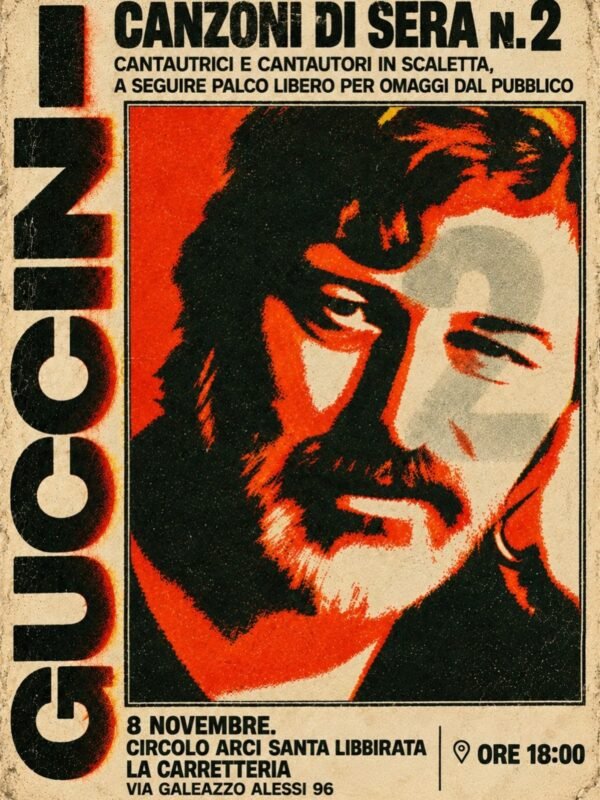
- Second evening for Guccini at Santa Libbirata la Carretteria, November 8, 20261.2 km
You might also like
- Conigli by Salvo Di Paola at Hacienda Roma, November 30, 2026
- Il medico dei pazzi by Eduardo Scarpetta with Gianfelice Imparato at Teatro Tor Bella Monaca
- Teatro Marconi 2026-2027 Season, September 28 to December 31, 2026
- I cattivi pensieri at Teatro Elsa Morante, performances from October 24 to November 6, 2026
- Martina Catuzzi, UOMA at Hacienda Roma, April 19, 2027
- Uno scherzo del genere with Emanuela Grimalda and Gianluca Ramazzotti at Teatro Nino Manfredi, March 11 to 21, 2027