Orestea by Carmelo Rifici at Teatro Vascello, February 3 to 14, 2027
In short. Orestea by Carmelo Rifici at Teatro Vascello in Rome, from February 3 to 14, 2027, is Aeschylus' Orestea in the dramaturgy and direction of Carmelo Rifici, at Via Giacinto Carini 78, in Monteverde Vecchio.
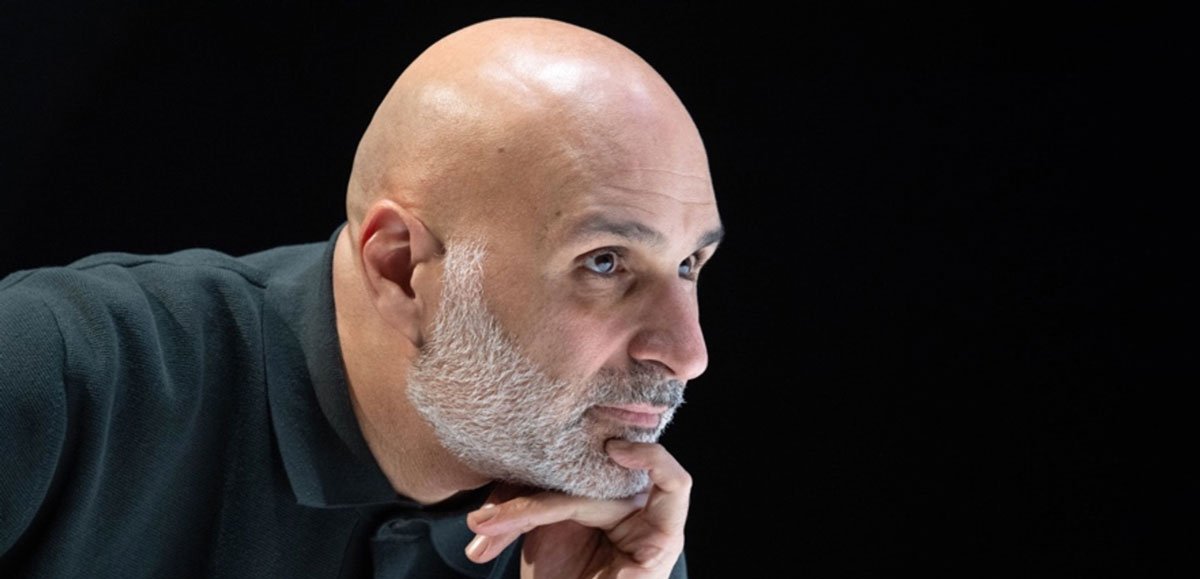
Orestea by Carmelo Rifici at Teatro Vascello in Rome, from February 3 to 14, 2027, is Aeschylus' Orestea in the dramaturgy and direction of Carmelo Rifici, at Via Giacinto Carini 78, in Monteverde Vecchio. The show is divided into two parts that can also be seen separately: Part I Mithos on Wednesday, February 3, Thursday, February 4 and Friday, February 5 at 21:00, and Part II Logos from Tuesday, February 9 to Friday, February 12 at 21:00. Each lasts an hour and a half. The full Orestea, with the two parts on the same day, plays on Saturday, February 6 and Saturday, February 13 at 19:00, and on Sunday, February 7 and Sunday, February 14 at 17:00. On stage are 11 performers, including Fausto Cabra, Giusi Merli, Monica Piseddu and Valentina Picello. The production is by LAC Lugano Arte e Cultura. You reach Vascello by bus 75, which stops in front of the entrance, or by lines 44, 710, 870 and 871. By train, from Ostiense station you get off at Quattro Venti, a few steps away. Tickets are bought from the official page of the show on the Teatro Vascello website, which links to the authorized presale circuit, or at the theater's box office. Prices are published on the venue's official channels.
Language: performed in Italian. No English version or English surtitles are announced.
The Orestea is the only trilogy of Greek tragedy to have come down to us in full: Agamemnon, Libation Bearers, Eumenides. Rifici reads it as the story of a founding trauma, the passage from vengeance to the courtroom, from myth to the city. Below you'll find the performance calendar and how to choose between the parts and the full version, what the show is about, the company, the director's biography, the history of Teatro Vascello, how to get there, where to eat and the most frequently asked questions.
Orestea at Teatro Vascello: dates, times and formats
Orestea by Carmelo Rifici has 12 performances at Teatro Vascello between February 3 and 14, 2027, divided among Part I, Part II and the full version. The schedule published by the theater lets you choose between two separate evenings or a single long day of theater.
Part I Mithos
Wednesday, February 3, Thursday, February 4 and Friday, February 5 at 21:00. Running time an hour and a half. It begins with Agamemnon and closes with the first lament of the chorus of the Libation Bearers.
Part II Logos
Tuesday, February 9, Wednesday, February 10, Thursday, February 11 and Friday, February 12 at 21:00. Running time an hour and a half. It opens with the matricide and runs up to the court of Athens and the acquittal of Orestes.
Full Orestea
Saturday, February 6 and Saturday, February 13 at 19:00, Sunday, February 7 and Sunday, February 14 at 17:00. The two parts are seen one after the other, on the same evening or the same afternoon. The total running time, with the possible intermission, is not given by the theater: plan for at least three hours.
Three different tickets
On Vascello's website each format has its own purchase button: one for Mithos, one for Logos, one for the full version. It's a practical detail not to overlook: whoever buys Mithos for a weekday then has to buy Logos separately for the following week.
Separate parts or the full version: which format to choose for Orestea
My advice is the full version on Saturday or Sunday for those who want to live the trilogy as a single arc, and the two weeknight evenings for those who prefer to absorb each part calmly.
The full version
The choice closest to the spirit of the trilogy, which Aeschylus conceived as a single story in three episodes. Seeing the passage from Mithos to Logos without a break makes the heart of the show evident, that is the leap from the world of vengeance to that of the courtroom.
The two evenings
Mithos on February 3, 4 or 5 and Logos from the 9th to the 12th: two evenings a few days apart, an hour and a half each. It's the format best suited to those who work, to those who reach Vascello by bus after the office, and to those who want to read or reread Aeschylus between one part and the other.
Only one part
Each part has a beginning and an end, and the theater sells it on its own. In our view, however, Rifici's Orestea is built as a diptych: seeing only Mithos means stopping before the question that gives the work its meaning.
What Carmelo Rifici's Orestea is about
Rifici's Orestea investigates the origins of Western democracy starting from the hypothesis that the city is born not from peace but from the need to regulate a violence that cannot be eliminated. This is the key that the official Vascello presentation gives for reading the show.
Mithos: the justice of vengeance
The first part tells of the killing of Agamemnon and Cassandra at the hands of Clytemnestra and Aegisthus and the recognition between Electra and her brother Orestes, the only possible avenger. It is a world of gods of the underworld, in which the dead do not die until they are avenged: violence is regulated only by vengeance, and on this certainty the first pillar of society rests.
Logos: the court of Athens
The second part begins with Orestes and Pylades and with the killing of Clytemnestra, and closes in Athens, where the trial against Orestes ends in acquittal thanks to the intervention of Apollo and above all to Athena's strategy. We leave the shore of myth to enter the history of men.
Two worlds face to face
On stage the archaic forces confront each other, the polytheistic wisdom that carries with it the memory of sacrifice, and the abstraction of the logos, which tries to contain rather than overcome the idea of vengeance. In Rifici's reading the acquittal of Orestes marks the birth of democracy, but on a fragile base: the murder of a Great Mother.
A melancholy light
The theater's presentation speaks of a melancholy light cast on our concept of democracy: modern man as the result of a fragile and always threatened compromise, not as the fruit of a wisdom won once and for all. It is a point of view that makes the Orestea surprisingly current.
Aeschylus' Orestea: the trilogy that won in 458 BC
With the Orestea Aeschylus won the Great Dionysia of Athens in 458 BC. Of the trilogies of classical Greek theater it is the only one to survive in full.
Agamemnon
Clytemnestra kills her husband on his return from the Trojan War to avenge the sacrifice of her daughter Iphigenia, whom Agamemnon had immolated to obtain favorable winds. Her accomplice and lover is Aegisthus, the king's cousin.
Libation Bearers
Orestes returns from exile and, on Apollo's orders, avenges his father by killing Aegisthus and his mother.
Eumenides
The Erinyes, goddesses of vengeance, pursue the matricide to the court of the Areopagus. The Erinyes accuse, Apollo defends, Athena presides, and her vote decides the acquittal. In the end the Erinyes become Eumenides, the kindly ones.
The lost drama
The tetralogy closed with a satyr play, the Proteus, which has been lost. It was Aeschylus' last performance in Athens before his move to Gela, where he died two years later.
The performers and the team of the Orestea
On stage are 11 performers: Fausto Cabra, Alfonso De Vreese, Igor Horvat, Stefano Iagulli, Giusi Merli, Valeria Milillo, Francesca Osso, Valentina Picello, Monica Piseddu, Roberta Ricciardi and Anahì Traversi.
The translation
The translation is by Riccardo Favaro. Dramaturgy, adaptation and direction are by Carmelo Rifici, with Ugo Fiore as assistant director.
Sets, costumes and lighting
The sets are by Daniele Spanò, the costumes by Margherita Baldoni, the lighting design by Marzio Picchetti. Sets and props were made by the Bruno Colombo and Leonardo Richelli workshop of Piccolo Teatro di Milano, the costumes in Piccolo's own tailor shop. Stage objects and special effects are by Valeria Desa.
The music
The music is by Federica Furlani and Zeno Gabaglio, the sound design by Andrea Gianessi, who on tour is also the show's sound engineer.
The production
It is produced by LAC Lugano Arte e Cultura, the Swiss cultural center of which Rifici is artistic director, with Gruppo Ospedaliero Moncucco as production partner.
Who is Carmelo Rifici: biography of the director
Carmelo Rifici is a director and, since 2020, artistic director of LAC Lugano Arte e Cultura. From 2015 to 2024 he ran the Luca Ronconi Theater School of Piccolo Teatro di Milano. His official biography, published by Civica Scuola di Teatro Paolo Grassi in Milan, where he teaches, reconstructs his career.
Training with Ronconi
With a degree in literature, he graduated from the school of Teatro Stabile di Torino and became a collaborating director to Luca Ronconi in Progetto Domani, the theatrical event of the Turin 2006 Winter Olympic Games, and in other productions by the master.
Productions in Italy
He has directed dozens of shows for Napoli Teatro Festival, Piccolo Teatro di Milano, INDA in Syracuse, Teatro Due in Parma, Ponchielli in Cremona and Circuito Lirico Lombardo.
LuganoInScena and the LAC
Since 2014 he has directed LuganoInScena, where he has staged Gabbiano by Chekhov, Ifigenia, liberata, written with Angela Dematté, Purgatorio by Ariel Dorfman, The Barber of Seville by Rossini and I Cenci by Giorgio Battistelli, later in the program of the Venice Biennale Music in 2020. Since 2020 at the LAC he has directed Macbeth, le cose nascoste, Le relazioni pericolose, La traviata conducted by Markus Poschner, Processo Galileo with Andrea De Rosa, Ulisse Artico, Anna Bolena conducted by Diego Fasolis and La pulce nell'orecchio, adapted with Tindaro Granata. In 2024 he directed De Gasperi: l'Europa brucia, and in 2025 the Dittico della bufera with Tre sorelle and Il gabbiano.
Opera
In 2019 he directed Puccini's Gianni Schicchi and Ravel's L'heure espagnole at Teatro Grande in Brescia: opera is a permanent part of his work.
The prizes
Critics' Prize as emerging director in 2005. In 2009, Premio ETI Olimpici del Teatro as director of the year, Critics' Prize, Golden Graal and nominations for the Ubu awards. Then came the Premio Enriquez for LuganoInScena and for Ifigenia, liberata, the title of Maestro of the Premio Radicondoli in 2021, the Premio Hystrio Digital Stage and the special Ubu prize for the project Lingua Madre. Capsule per il futuro, conceived with Paola Tripoli. In September 2024 he received the Premio Hystrio for directing.
Rifici and Greek tragedy: a long path
The Orestea comes after years of Rifici's work on the Greek classics, between INDA in Syracuse and Ifigenia, liberata.
Ifigenia, liberata
The show written with Angela Dematté, awarded the Enriquez in 2017, already returned to the story of the Atreidae from the point of view of the sacrificed daughter: the same Iphigenia whose death unleashes Clytemnestra's vengeance in Agamemnon.
The theme of violence
From Macbeth, le cose nascoste to Processo Galileo, many of Rifici's productions revolve around the relationship between power, guilt and justice. The Orestea, with its passage from blood to the trial, is the natural endpoint of this path.
Teatro Vascello, a research hall in Monteverde
Teatro Vascello was inaugurated on May 4, 1989 on Via Giacinto Carini by Giancarlo Nanni and Manuela Kustermann, with the company La Fabbrica dell'Attore. It is one of the Roman halls most tied to contemporary theater and the international scene.
The roots at Teatro La Fede
Before Vascello there was Teatro La Fede, at Via Portuense 78, where in the 1970s Nanni and Kustermann staged shows such as A come Alice and Risveglio di primavera, within what came to be called the Roman school, a theater that gave priority to image over word.
Teatro Stabile d'Innovazione
In 1998 the Ministry recognized La Fabbrica dell'Attore as a Teatro Stabile d'Innovazione. In 2004 the Sala Studio opened, on the basement level. After Nanni's death, in January 2010, the artistic direction passed to Manuela Kustermann.
February 2027 at Vascello
In the 2026/2027 season the Orestea opens the month of February. In the following weeks the theater's program continues with Ma a che serve la luce? by Virgilio Sieni and with Testori's Edipus in the version by Federico Tiezzi and Sandro Lombardi: a month in which ancient tragedy returns to the stage in very different forms.
A curiosity about Orestea by Carmelo Rifici at Teatro Vascello, February 3 to 14, 2027
The most interesting curiosity concerns the links between this show and another title playing in Rome in the same weeks. From February 9 to 14, 2027, while at Vascello Part II Logos and the full version of the second weekend are performed, Tindaro Granata's Vorrei una voce plays at Teatro India. The two productions come from the same house, LAC Lugano Arte e Cultura, and have the same production partner. And Granata is not just any name for Rifici: according to his biography the Sicilian actor and playwright acted in several of Rifici's productions, from Il nemico by Julien Green in 2007 to La testa del profeta by Elena Bono in 2009, from Buio by Sonia Antinori in 2010 to Sanguinare inchiostro in 2014, and with him he created the adaptation of Feydeau's La pulce nell'orecchio. In the same week, then, in Rome you can see two works born in the same artistic environment: a Greek trilogy with 11 performers and a monologue with Mina's songs. A second curiosity concerns how the show was built: sets and costumes were made in the workshops of Piccolo Teatro di Milano, the same institution where Rifici ran for almost 10 years the school named after Luca Ronconi, the master with whom he trained. A Swiss production, then, built by the hands of a great Italian theater.
Tickets for Orestea at Vascello
Tickets for Orestea are bought from the official Teatro Vascello website, which for each of the three formats links to the authorized presale circuit, or at the theater's box office at Via Giacinto Carini 78.
Online
From the show's page you go to the separate purchase of Part I, Part II and the full version. Vascello's website explains that by buying online you can have tickets, subscriptions and cards directly on your phone.
Cards and subscriptions
The theater offers cards for the 2026/2027 season, to be bought at least 24 hours before first use. If you plan to also see Sieni and the Edipus in February, it's worth considering them.
Prices
The prices of each format are published on Vascello's official channels and on the authorized circuit: check them before choosing between two evenings and the full version.
One thing nobody tells you about Orestea by Carmelo Rifici at Teatro Vascello, February 3 to 14, 2027
What you don't read in the presentations is that Rifici's Orestea is not meant only for those who know Aeschylus. The two parts have titles that are already a key to reading, Mithos and Logos, and each has a recognizable beginning and end. Anyone who doesn't remember who Aegisthus is or why the Erinyes pursue Orestes can follow the show without effort, as long as they arrive with a minimal idea of the plot. My advice is to read a summary of the three tragedies first, 10 minutes is enough, and maybe the ending of the Eumenides, with Athena's vote. The second thing nobody says concerns the dates. Vascello's page, at the top, gives a different period, at the end of January, while the detailed performance calendar says February 3 to 14. The latter holds, as it lists day by day the performances of Mithos, Logos and the full version, but check the day you choose when you buy. The third concerns tiredness. The Saturday full version starts at 19:00: about three hours of tragedy after a week of work is a lot, and Sunday afternoon at 17:00 is the more restful choice.
My advice for visiting Orestea by Carmelo Rifici at Teatro Vascello, February 3 to 14, 2027
My advice is to see the full version, and to see it on a Sunday. Sunday, February 7 or Sunday, February 14 at 17:00: you arrive in Monteverde in the early afternoon, in daylight, take a short walk on the Janiculum or at Villa Sciarra, go into the hall rested and come out at dinner time. The passage from Mithos to Logos, which is the heart of Rifici's work, is really grasped only by seeing the two parts in a row: vengeance and then the trial, blood and then the vote, the Great Mother killed and then the city that is born. If the full version isn't possible, the best format is an evening of Mithos at the beginning of the week and one of Logos the week after, leaving time in between to reread the Eumenides. For those coming from outside Rome, the weekend of February 13 and 14 lets you combine the Saturday full version with Tindaro Granata's Vorrei una voce at Teatro India on Sunday, two productions from the same house. One last practical tip: book a few days ahead, because the full performances are only four and Vascello is not a huge hall, and arrive with 20 minutes to spare if you take bus 75 in the evening.
How to get to Teatro Vascello for Orestea
Teatro Vascello is at Via Giacinto Carini 78, in Monteverde Vecchio, and the most direct way to get there is bus 75, which stops in front of the entrance.
By bus
The 75 is the most direct line for those coming from the center. The theater also lists lines 44, 710, 870 and 871 as useful, which connect Monteverde to Trastevere and the neighborhoods to the west. For evening times, use the Atac route planner.
By train
From Ostiense station the metropolitan train goes to Quattro Venti station, on Viale dei Quattro Venti, a few steps from the theater. It's the quickest solution for those arriving by metro line B, connected to Ostiense via the Piramide stop.
By car
The theater suggests parking along Via delle Mura Gianicolensi, about a hundred meters away. There are paid parking lots at Via Giacinto Carini 43, at Via Maurizio Quadrio 22, which has an agreement with the theater if you show your ticket, and at Via Raffaello Giovagnoli 20.
On foot
From Trastevere you climb toward Monteverde through the streets of the Janiculum: an uphill walk, pleasant even in winter if the weather is dry, to do in comfortable shoes and with time to spare.
Another well-known fact, yet rarely cited
That the Orestea is a trilogy, everyone who went to a classical high school knows. Less often cited is that it is the only Greek trilogy to have come down whole: of all the tetralogies presented at the contests of Athens, Agamemnon, Libation Bearers and Eumenides are the only three linked tragedies we can read one after the other, as they were conceived. The fourth element, the satyr play Proteus, which was meant to lift the spirits of the spectators after so much blood, is lost. A second fact known to scholars and little told: with the Orestea Aeschylus won the Great Dionysia of 458 BC, and it was his last performance in Athens before moving to Gela, in Sicily, where he died two years later. The greatest text on the birth of the democratic city is therefore also its author's farewell to the city. A third fact, closer to us. In the Eumenides the trial is held on the Areopagus, and what decides the acquittal is Athena's favorable vote. It is on exactly this point, justice as compromise and not as truth, that Rifici builds the second part of his show.
The neighborhood around Teatro Vascello: Monteverde Vecchio
Monteverde Vecchio is the high, residential part of Monteverde, above Trastevere, between the Janiculum and the great historic villas. A neighborhood of apartment buildings and villinos, quiet in the evening, a few minutes from the center.
The Janiculum
The Janiculum is very close: before a Sunday matinee, the panorama over the city in the February light is the best way to prepare for the day.
The villas
Villa Sciarra, secluded and full of fountains, and Villa Doria Pamphilj, the big park to the west of the neighborhood, are the two green stops in the area. In winter the gates close early: check the hours.
The Fontanone and San Pancrazio
Going up toward the hill you reach the Acqua Paola Fountain and, a little farther on, the Basilica of San Pancrazio: two easy stops before the full version.
Trastevere
At the foot of Monteverde opens Trastevere, with the Basilica of Santa Maria in Trastevere: the area to go down to for dinner after the show.
The right photo to take at Orestea by Carmelo Rifici at Teatro Vascello, February 3 to 14, 2027
No photos during the show: in a tragedy built on light, sound and the presence of the chorus, a lit screen breaks the dark for the whole row and disturbs the performers. The right photo is taken before and after. The first is the facade of Vascello on Via Giacinto Carini with the Orestea poster: it says where and when, and it's the simplest keepsake. The second is taken if you choose the Sunday full version: on the Janiculum, before 17:00, with Rome below and the low February light coming in sideways on the domes. It has a precise meaning with this show, which is about the birth of the city: the polis seen from above, with its squares and its palaces of power. The third is for those who love details: the program sheet with the names of the 11 performers and the Mithos and Logos division, photographed next to the tickets for the two parts. If you see the show on two different evenings, the two tickets together tell the structure of the work well. A rule that always applies: no flash, no video, no shots during the final applause while the performers are on stage, unless the theater says otherwise.
Where to eat before or after Orestea
Teatro Vascello has an in-house bistro, Coffee Plant Bistrot, useful for a coffee or a snack before the show and, for the full version, in the possible break between the two parts.
In Monteverde
The neighborhood has trattorias and pizzerias frequented mostly by residents, with fairer prices than those of Trastevere: the right choice after the weeknight 21:00 performances, which end around 22:30.
In Trastevere
After the Saturday full version, which ends late, it's best to go down to Trastevere, where osterias and trattorias stay open until night. On Saturday night the district fills up early: book.
On Sunday
The Sunday full version at 17:00 ends at dinner time: the restaurant booked in Monteverde or in Trastevere is the most natural conclusion to an afternoon of tragedy.
Some important events that happened here in history
The history of Teatro Vascello is told by dates. On May 4, 1989 the hall opens with Qui non ci torno più by Tadeusz Kantor and the Cricot Theater of Warsaw: a statement of intent, because Kantor was one of the most radical names of the European scene. In the early 1990s Raul Ruiz, the Pontedera research center and American and French contemporary dance come through. In May 1996 the festival Extraordinario presents 16 young companies from all over Italy. In 1998 the Ministry recognizes La Fabbrica dell'Attore as a Teatro Stabile d'Innovazione, and in the same year Vascello co-produces a show with the Berliner Ensemble, the theater founded by Brecht. In the spring of 2001 the co-founder Giancarlo Nanni is the first Italian invited to work and teach at the Actors Studio in New York. In 2003 the Premio Valentino Zeichen, dedicated to poetry, is born, and in 2004 the Sala Studio opens. In January 2010 Nanni dies and the direction passes to Manuela Kustermann. For more than 20 years, every autumn, Fondazione Romaeuropa has brought a part of its festival to Vascello, and this season the hall opened with Tragudia, Il canto di Edipo by Alessandro Serra. In February 2027 the myth of the Atreidae enters this history with Aeschylus' trilogy in Rifici's reading.
Accessibility, students and practical information
Teatro Vascello publishes a section on accessibility on its website, to consult before buying to learn about access, reserved seats and services.
With students
The Orestea is an ideal show for those who study Greek, history or political philosophy: each part lasts an hour and a half, and the key to reading it, the birth of democracy out of violence, lends itself to classroom discussion. It is not meant for small children.
Punctuality
In a tragedy, coming in late disturbs everyone. Leave with time to spare, especially if you take the bus in the evening.
February in Rome
February is one of the quietest months to visit Rome: fewer tourists, more livable museums, days getting longer. The evenings are cool and sometimes rainy: an umbrella in your bag and a coat that's easy to take off in the hall are the most sensible choice.
Who has come through Orestea by Carmelo Rifici at Teatro Vascello, February 3 to 14, 2027
On the stage of Vascello and, even earlier, in the history of the company that founded it, some of the most important names in contemporary theater have passed through. At Teatro La Fede, the first venue of the 1970s, came the saxophonist Steve Lacy, the composer John Cage, the French director Gérard Gelas and the Living Theatre, and Memè Perlini and Giuliano Vasilicò came out of the group. At Vascello, since 1989, have come Tadeusz Kantor with the Cricot, Raul Ruiz, the Pontedera Center, Teatri Uniti, Moni Ovadia, Carlo Cecchi, Giorgio Barberio Corsetti, Societas Raffaello Sanzio, Teatro Valdoca and Pippo Delbono, and for dance Enzo Cosimi, Sosta Palmizi, Virgilio Sieni and Wim Vandekeybus. Among the international masters, Bob Wilson and Peter Brook, who presented Beckett's Happy Days here with Natasha Parry. Manuela Kustermann, actress and artistic director, is the constant presence of this history. From February 3 to 14, 2027 come Carmelo Rifici, a student of Luca Ronconi and artistic director of the LAC, the translator Riccardo Favaro, the set designer Daniele Spanò, the musicians Federica Furlani and Zeno Gabaglio and 11 performers, including Fausto Cabra, Giusi Merli, Monica Piseddu and Valentina Picello. And with them, ideally, Aeschylus, Clytemnestra, Orestes, the Erinyes and Athena, the goddess who invented the court.
Frequently asked questions about Orestea at Teatro Vascello
When is Orestea on at Teatro Vascello?
Orestea by Carmelo Rifici is at Teatro Vascello from February 3 to 14, 2027. Part I Mithos on February 3, 4 and 5 at 21:00. Part II Logos from February 9 to 12 at 21:00. The full version on Saturday the 6th and 13th at 19:00, Sunday the 7th and 14th at 17:00.
How long is Rifici's Orestea?
Each part of Rifici's Orestea, Mithos and Logos, lasts an hour and a half according to Teatro Vascello. The total running time of the full version, with the possible break, is not given: plan for at least three hours.
Can you see the two parts separately?
Yes, at Teatro Vascello Mithos and Logos are sold separately and have different dates, in addition to the four full performances. In our view it's best to see both, on two evenings or in the full version, because the show is built as a diptych.
Who is in Carmelo Rifici's Orestea?
The cast of Rifici's Orestea is Fausto Cabra, Alfonso De Vreese, Igor Horvat, Stefano Iagulli, Giusi Merli, Valeria Milillo, Francesca Osso, Valentina Picello, Monica Piseddu, Roberta Ricciardi and Anahì Traversi. Translation by Riccardo Favaro, production by LAC Lugano Arte e Cultura.
Where do you buy tickets for Orestea?
Tickets for Orestea are bought from the show's page on the Teatro Vascello website, with a separate purchase for Part I, Part II and the full version, or at the box office at Via Giacinto Carini 78. Prices are on the theater's official channels.
How do you get to Teatro Vascello?
Teatro Vascello, at Via Giacinto Carini 78, is reached by bus 75, which stops in front of the entrance, by lines 44, 710, 870 and 871, or by train from Ostiense to Quattro Venti station, a few steps from the theater.
Is Orestea suitable for students?
Rifici's Orestea suits high school and university students: each part lasts an hour and a half, and the theme, the birth of democracy from the overcoming of vengeance, lends itself to study. It is not meant for children.
Who is Carmelo Rifici?
Carmelo Rifici is a director trained with Luca Ronconi, artistic director of LAC Lugano Arte e Cultura since 2020 and, until 2024, director of the Luca Ronconi Theater School of Piccolo Teatro di Milano. In 2024 he received the Premio Hystrio for directing.
Final advice on Orestea
Rifici's Orestea is one of those shows that justify a trip to Rome in February. In our view the right format is the Sunday full version: the afternoon on the Janiculum, the two parts in a row, dinner in Monteverde. Those short on time choose the two weeknights, but don't stop at Mithos: the question that interests Rifici, that is what remains of vengeance when the court is born, arrives only with Logos. Read a summary of Aeschylus first, book in time, arrive with time to spare: the theater does the rest.
Article written by the editorial team of Tour Leader Pro, contact them for Private/Corporate/V.I.P. Tours and Experiences.
Planning a trip to Rome? The English guides to visiting the city are on ItalyPlanner.com.
Contact Information
Nearby
 Teatro Vascello100 m
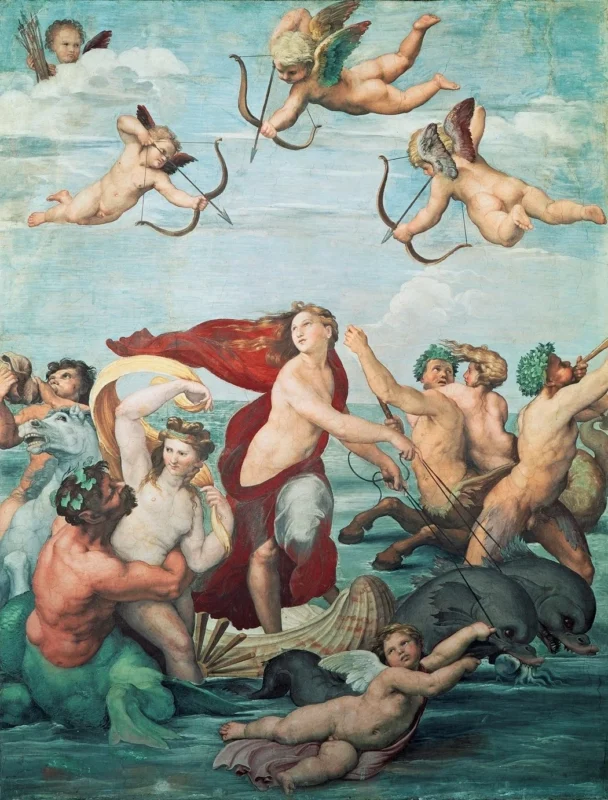
- Raphael in Rome: Where to See His Works100 m
- Museum of Mathematics300 m
- Villa Sciarra400 m
- Monteverde400 m
- Teatro dei Contrari, theater in Monteverde500 m
Upcoming events nearby
- Il giorno della civetta, reading concert at Teatro Vascello, November 11, 2026100 m
- C’era una volta, Korean contemporary dance at Teatro Vascello, November 10, 2026100 m
- Riccardo III by Antonio Latella with Vinicio Marchioni at Teatro Vascello, March 30 to April 4, 2027100 m
- The Sleeping Queen by Mauro Astolfi at Teatro Vascello, December 1 to 6, 2026100 m
You might also like
- Edipus by Tiezzi and Lombardi at Teatro Vascello, February 23 to 28, 2027
- Ma a che serve la luce? by Virgilio Sieni at Teatro Vascello, February 18 to 21, 2027
- Il viale del tramonto by Muta Imago with Iaia Forte at Teatro Vascello, January 19-24, 2027
- Metadietro by Antonio Rezza and Flavia Mastrella at Teatro Vascello, January 5-17, 2027
- 7-14-21-28 by Rezza and Mastrella at Teatro Vascello, December 22, 2026 to January 3, 2027
- Hospitality Suite at the Teatro Vascello, December 10 to 20, 2026