Il viale del tramonto by Muta Imago with Iaia Forte at Teatro Vascello, January 19-24, 2027
In short. Il viale del tramonto (Sunset Boulevard), the Muta Imago project with Iaia Forte, Massimo Verdastro and Giovanni Onorato, is on at Teatro Vascello in Rome from January 19 to 24, 2027, at Via Giacinto Carini 78, in Monteverde Vecchio.
Il viale del tramonto (Sunset Boulevard), the Muta Imago project with Iaia Forte, Massimo Verdastro and Giovanni Onorato, is on at Teatro Vascello in Rome from January 19 to 24, 2027, at Via Giacinto Carini 78, in Monteverde Vecchio. There are six performances: Tuesday, January 19 to Friday, January 22 at 9 p.m., Saturday the 23rd at 7 p.m., Sunday the 24th at 5 p.m. Direction and sets are by Claudia Sorace, dramaturgy and sound by Riccardo Fazi, original music by Lorenzo Tomio. The show is a free adaptation of Billy Wilder's 1950 film. You get to the Vascello by bus 75, which starts at Termini, passes the Colosseum and Piramide and stops in front of the entrance, or by lines 44, 710, 870 and 871, by train, from Ostiense station you get off at Quattro Venti, a few steps away. Tickets are bought from the Teatro Vascello's official website, which links to the authorized presale network, or at the theater's box office, prices are published on the Vascello's official channels.
Language: opera sung in its original language; no English surtitles are announced, so check with the theater.
Norma, the forgotten diva, Max, the butler who was a great director, Joe, the penniless young screenwriter. The characters of Wilder's film meet the biographies of three actors of different generations, in a game of mirrors between fiction and reality. Below you will find the calendar, the show, the performers, the story of the film, Teatro Vascello, how to get there and how to plan the evening.
Il viale del tramonto at Teatro Vascello: dates and times
Il viale del tramonto is on at Teatro Vascello for six performances, from January 19 to 24, 2027. It arrives right after the two Rezza and Mastrella shows that occupied the theater between December and mid-January.
The calendar
Tuesday the 19th, Wednesday the 20th, Thursday the 21st and Friday, January 22 at 9 p.m. Saturday, January 23 at 7 p.m. Sunday, January 24 at 5 p.m., last performance. It is the Vascello's usual pattern, with the earlier start on Saturday and the Sunday matinee.
The production
The show is an Argot Produzioni production, co-produced with INDEX, La Fabbrica dell'Attore Teatro Vascello and Solares Fondazione delle Arti, in collaboration with Pierfrancesco Pisani and Isabella Borettini for Infinito. Distribution by Arianna Terzoni, press office by Maddalena Peluso.
One week only
Six performances are few for a show with three performers of this caliber. Those interested do well to choose the date ahead of time.
What you see in Muta Imago's Il viale del tramonto
The Vascello's presentation text describes Il viale del tramonto as a dialogue with the history of Italian theater, starting from a free adaptation of the 1950 cult film. The plot and the story of the protagonists mix with the lived experience of the three actors onstage.
Norma, Max and Joe
The director's notes sum up the characters: Norma is a forgotten diva, Max her butler and a great director of the past. Their suspended life is interrupted by the arrival of Joe, a penniless young screenwriter who, as in the best dark fairy tales, is slowly caught in the net of the rich diva.
An original treatment
Claudia Sorace defines the show as an original treatment inspired by the film's screenplay, which makes the figures of the protagonists dialogue with the questions, dreams, desires and memories of the actors. This opens, she writes, a gap between the present and the history of Italian theater.
The theme of the sunset
The presentation speaks of an inevitable challenge between a blocked present without ideals and a past from which noisy, demanding ghosts surface. The sunset of the title is personal and collective: the sunset of a world, the relentless revolution of time and the desperate attempt to resist it.
Norma as a ghost
In the director's notes Norma is a ghost that keeps haunting the present, a figure that resists time, aesthetics, changing tastes. Her charm is that of someone who stubbornly remains herself in a world that is transforming.
How the show was born: a dinner by the fireplace
Claudia Sorace's notes recount that the project was born after a performance of Muta Imago's Tre sorelle (Three Sisters), which Iaia Forte attended, proposing on her way out to make a show together.
The invitation
A month later the actress invited the two artists to dinner at her Roman home, described in the notes as a tower full of signs and voices. In front of the lit fireplace came the idea of Viale del tramonto.
The fear and the answer
The director recalls the fear of proposing to an actress of that stature the story of a forgotten diva. Forte's reaction was the opposite: the idea thrilled her. Other meetings followed, among life stories and reflections on theater.
As in the film
The final decision, according to the notes, was to do it like the film, if it made sense to do it. It is a choice of fidelity to the spirit of the screenplay, not of copying: the film remains the structure onto which the actors' biographies are grafted.
Who Muta Imago are
Muta Imago is the duo formed by Claudia Sorace, director and set designer, and Riccardo Fazi, playwright and sound author. The Vascello describes their style as dreamlike and powerful.
Claudia Sorace
In Il viale del tramonto Sorace signs direction and sets. In the notes she recalls the relationship with Iaia Forte and builds the show as a game of mirrors, in which the actors' bodies and biographies become dramaturgical material.
Riccardo Fazi
Fazi handles dramaturgy and sound: in the duo's work the soundscape is part of the writing, not a mere background. The original music is by Lorenzo Tomio, the lighting and technical direction by Maria Elena Fusacchia.
The team
Costumes are by Fiamma Benvignati, while Iaia Forte is dressed by Maria Grazia Chiuri. Assistant director Francesco Di Stefano, the sets are built by Roma Scenotecnica. Stagehand Raffaele Basile, electrician Marco Fasciana, sound engineer Andrea Lepri.
Iaia Forte: biography
Iaia Forte, stage name of Maria Rosaria Forte, is an actress born in Naples on March 16, 1962, active in theater, film and television. She graduated from the Centro sperimentale di cinematografia.
Theater
She debuted in the theater with Toni Servillo and won the Critics' Prize as best actress for Molière's Il misantropo (The Misanthrope). She collaborated for a long time with Teatri Uniti and worked with Leo de Berardinis, Mario Martone, Carlo Cecchi, Federico Tiezzi, Emma Dante. She took part in Luca Ronconi's Progetto Domani for the Turin 2006 Cultural Olympics, in Troilo e Cressida (Troilus and Cressida) and in Lo specchio del diavolo (The Devil's Mirror). She staged Paolo Sorrentino's book Hanno tutti ragione (They're All Right) and the later shows devoted to Tony Pagoda.
Film
In film she is the lead of Pappi Corsicato's Libera, with whom she also works in I buchi neri (Black Holes), I vesuviani (The Vesuvians) and Chimera. She works with Maurizio Nichetti, Marco Ferreri, Mario Martone, Marco Risi. In 2013 she is Trumeau in Paolo Sorrentino's La grande bellezza (The Great Beauty), in the following years she is in Martone's Il giovane favoloso and Qui rido io (Here I Laugh), in Valeria Golino's Miele (Honey) and Euforia (Euphoria).
Awards
For Maurizio Nichetti's Luna e l'altra (Luna and the Other) she won the Globo d'oro in 1996 and, in 1997, the Nastro d'argento and the Ciak d'oro as best lead actress, she has had two David di Donatello nominations, for the same film and for Paz!.
Massimo Verdastro and Giovanni Onorato
Massimo Verdastro is an actor and director born in Rome on September 9, 1957, winner of the 2002 Ubu Prize as best supporting actor for Giovanni Testori's L'Ambleto.
Training
His first approach to theater dates to 1975, in an Odin Teatret workshop at the Teatro Alberico in Rome. He graduated from the Teatès school in Palermo led by Michele Perriera. He has been directed by Peter Stein, Luca Ronconi, Federico Tiezzi, Giancarlo Nanni, Roberto Andò, Sylvano Bussotti, Serena Sinigaglia.
Ronconi and Tiezzi
In 1990 he took part in Karl Kraus's Gli ultimi giorni dell'umanità (The Last Days of Mankind), directed by Ronconi, at the Lingotto in Turin. Since 1995 he has worked with the Lombardi Tiezzi company, in 2007 he won the Olimpici del Teatro prize for the Hoopoe in Aristophanes's Uccelli (The Birds). In film he is in Nanni Moretti's Habemus Papam.
Giovanni Onorato
The third performer is Giovanni Onorato, whom the Vascello's presentation identifies as the youth of the company: with him Forte and Verdastro, among the most representative artists of their generation, test themselves and measure up. In the show's game it is natural to think of him as Wilder's Joe, the screenwriter who enters the diva's villa.
A curiosity about Muta Imago's Il viale del tramonto with Iaia Forte at Teatro Vascello, January 19-24, 2027
The most fascinating curiosity concerns the starting film, which already in 1950 was a game of mirrors between fiction and reality, exactly like Muta Imago's show. Billy Wilder looked for the lead among real silent-film divas: Mae West, Mary Pickford, Pola Negri, Greta Garbo declined or were passed over. In the end the part went to Gloria Swanson, who in the previous 15 years had made only one film, and whose situation closely resembled Norma Desmond's. The butler Max was given to Erich von Stroheim, who had truly been one of the great silent directors and had directed Swanson herself in Queen Kelly, an unfinished film: the images Norma screens in the villa come from precisely there. The photographs on the house's walls came from Swanson's personal collection. Put simply, Wilder had already built the film on the biographies of his actors. Muta Imago does the same with Iaia Forte, Massimo Verdastro and Giovanni Onorato, and declares in the notes that the performers' bodies and biographies become dramaturgical material. A second curiosity concerns the costumes: Iaia Forte is dressed by Maria Grazia Chiuri, one of the best-known designers in Italian fashion. For a diva, even a forgotten one, it is a perfectly coherent choice.
Sunset Boulevard, Billy Wilder's film
Viale del tramonto, original title Sunset Boulevard, is a 1950 film noir directed by Billy Wilder with William Holden, Gloria Swanson and Erich von Stroheim. It was released in the United States on August 4, 1950.
The original plot
Joe Gillis, a penniless screenwriter fleeing creditors, takes refuge by chance in the villa of Norma Desmond, a former silent-film diva who dreams of a comeback. She asks him to revise a script about Salome, keeps him there, falls in love with him. The story is narrated by Gillis himself, already dead, in a long flashback that starts from his body in the pool.
The Oscars
The film earned 11 Oscar nominations and won three statuettes: original screenplay, art direction and Franz Waxman's score. At the Golden Globes it won, among others, best drama film and, with Gloria Swanson, best actress.
The line
Norma's final line, as she descends the stairs convinced she is on a set, entered in 2005 the American Film Institute's list of the 100 best quotes of American cinema, at number seven.
The Italian dubbing
In the Italian version Norma Desmond had the voice of Andreina Pagnani, Joe Gillis that of Emilio Cigoli, Max that of Aldo Silvani. A generation of Italian viewers got to know the film through these voices of theater and dubbing.
Teatro Vascello and its January program
Teatro Vascello, opened on May 4, 1989 by Giancarlo Nanni and Manuela Kustermann, is the home of the company La Fabbrica dell'Attore, co-producer of Il viale del tramonto.
A research hall
Before Monteverde the company worked at the Teatro La Fede on Via Portuense, where in the 1970s the group Space Re(v)action practiced a theater of images. The Vascello has gathered its legacy: since 1998 La Fabbrica dell'Attore has been a Teatro Stabile d'Innovazione, since 2004 there has also been the Sala Studio, and since 2010 the artistic direction has been Manuela Kustermann's.
January at the Vascello
The month opens with Metadietro by Antonio Rezza and Flavia Mastrella, from the 5th to the 17th, and continues with Il viale del tramonto. Earlier, in autumn, the theater had hosted titles such as Elio De Capitani's The American Clock and Alessandro Serra's Tragudia, The Song of Oedipus.
Something nobody tells you about Muta Imago's Il viale del tramonto with Iaia Forte at Teatro Vascello, January 19-24, 2027
What is rarely said is that to truly appreciate this show it helps to know the actors' biographies, not only the film. The presentation text is explicit: the film's plot mixes with the lived experience of the three performers. Iaia Forte comes from the Neapolitan theater of Servillo and Martone, from the cinema of Corsicato and Sorrentino, Massimo Verdastro from the Roman research scene, from Ronconi and Tiezzi, Giovanni Onorato represents the young generation. When Norma talks about a glorious past and a present that has forgotten her, the spectator who knows who Forte and Verdastro are listens to two levels of discourse at once. The second thing concerns Verdastro and the Vascello: the actor already acted in this theater in 1993, directed by Giancarlo Nanni, the hall's founder, in Hedda Gabler and in Come vi piace (As You Like It). In Wilder's film Max is a director of the past who watches over the diva, on the Vascello stage Verdastro brings with him the memory of a director who made the history of those same boards. It is an echo the notes do not declare but the place makes evident. The third thing is that Wilder's film, seen today, is much more ironic than its melodrama reputation suggests: Wilder rejected the label of black comedy, but the corpse telling its own story from the pool is an invention of the blackest humor. Those who go to the theater expecting only melancholy will find a smile too.
Tickets for Il viale del tramonto
Tickets for Il viale del tramonto are bought from the Teatro Vascello's official website, which links to the authorized presale network, or at the theater's box office at Via Giacinto Carini 78.
Online
From the Vascello's site you buy tickets, subscriptions and cards, received directly on your phone. The 2026/2027 season cards are booked on the same network.
The cards
Cards must be bought at least 24 hours before first use, the theater recommends booking the seat and checking availability. Those who plan to see Metadietro too in January have one more reason to consider them.
Prices
Prices and discounts are listed by the theater on its official channels and on the sales network linked to the show's page.
The advice I give you for visiting Muta Imago's Il viale del tramonto with Iaia Forte at Teatro Vascello, January 19-24, 2027
The advice is to rewatch Wilder's film in the days before the show. Not to compare scene by scene, but to have in mind the images that Muta Imago evokes and overturns: the decaying villa, the pool, the private screening with the young diva on the screen, the final descent of the stairs. The show is an original treatment and not a transcription, and for this very reason it works better if the spectator knows the original and can catch the differences. The second suggestion concerns the performance. With only six dates, in our view the evening of Wednesday the 20th or Thursday the 21st is best: the hall is more intimate, the audience is made up of enthusiasts, the show has already passed the tension of the opening. Those who prefer the afternoon have Sunday the 24th at 5 p.m., the last performance: you come out just as dark has fallen and there is time to go down to Trastevere. As for the seat, a central row at medium distance is best: in a show where direction and sets are signed by the same person, the overall image counts as much as the detail of faces. Finally, a word on sound: in Muta Imago's work Riccardo Fazi's sound dramaturgy is an integral part of the writing, and deserves careful listening, without distractions.
How to get to Teatro Vascello
Teatro Vascello is at Via Giacinto Carini 78, in Monteverde Vecchio, reachable by bus 75, which stops in front of the entrance.
Bus
The 75 starts at Termini, crosses the center passing the Colosseum and Piramide and climbs to Monteverde. The theater also lists lines 44, 710, 870 and 871. The ATAC route calculator gives updated times, useful above all for the way back after the 9 p.m. performances.
Train
From Ostiense station, connected to metro line B at Piramide, the train takes you to Quattro Venti, on Viale dei Quattro Venti, a few steps from the Vascello.
Car and parking
The theater recommends parking on Via delle Mura Gianicolensi, about 100 meters away. Paid parking: Via Giacinto Carini 43, Via Maurizio Quadrio 22, partnered with the theater when you show your ticket, Via Raffaello Giovagnoli 20.
Another well-known fact, yet rarely mentioned
That Sunset Boulevard is one of Hollywood's masterpieces everyone knows. Less often cited is how much the film was built with the materials of old Hollywood, as if Wilder wanted to stage it before burying it. In the card game scene, Norma's friends are played by three real silent-film stars: Buster Keaton, Anna Q. Nilsson and H.B. Warner. Cecil B. DeMille plays himself, and the sequence of the visit to the Paramount studios was shot on the real set of the film DeMille was directing, Samson and Delilah. The very name of Norma Desmond, according to sources on the production, comes from the merging of the names of Mabel Normand and William Desmond Taylor, protagonists of a 1920s Hollywood scandal. Even Norma's car has an Italian story: it is a 1929 Isotta Fraschini Tipo 8A, with bodywork by Castagna, today kept at the Museo dell'automobile in Turin. A second fact known to insiders concerns the screenplay: when shooting began only a third of it had been written, because Wilder wanted to see the chemistry between the actors before deciding the development. It is exactly the method Muta Imago declares for its show, born from meetings and stories before a script. A third fact: the film has also had a musical life, with Andrew Lloyd Webber's 1993 musical, in which Norma was played, among others, by Patti LuPone and Glenn Close.
Monteverde and surroundings
Monteverde Vecchio, the Vascello's district, is a quiet residential area between Trastevere, the Janiculum and the big villas.
The Janiculum
The Janiculum is a few minutes away: for a show named after the sunset, climbing to the viewpoint in the late afternoon of a January day, before the Sunday matinee, is a natural prelude.
The villas
Villa Sciarra and Villa Doria Pamphilj are the two big green areas of the district, with reduced winter hours.
Toward Trastevere
Going down you meet the Acqua Paola Fountain and San Pietro in Montorio, then the streets of Trastevere, where to have dinner after the show.
The right photo to take at Muta Imago's Il viale del tramonto with Iaia Forte at Teatro Vascello, January 19-24, 2027
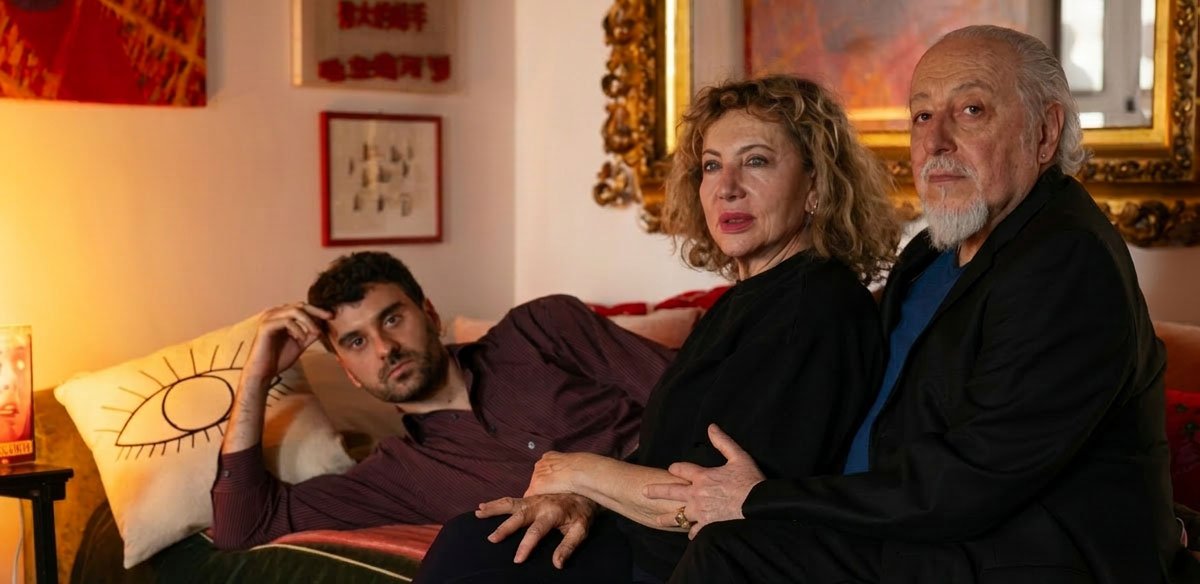
During the show no photos: Muta Imago's work is built on precise lights, sound and stage images, and a lit phone breaks the atmosphere for the whole row. The first right photo is taken at the Janiculum: the sunset over Rome on a January evening, with the sky changing color above the domes, is the most direct way into the theme. Those who choose the Sunday 24th matinee have the right light before climbing to Monteverde. The second photo is in front of the Vascello, with the show's poster: the official photos distributed by the theater show the three actors seated on a sofa, in a domestic interior full of paintings: a house that recalls Norma's villa and, together, the Roman tower where the show was born. The third is for film buffs. At home, before or after, you can photograph a frame of Wilder's film paused on the screen, the staircase scene, and set it beside your ticket: the same story seen 77 years apart. Those lucky enough to find the official stage photos in the theater's lobby can photograph them, to remember how Claudia Sorace translated the Sunset Boulevard villa into a theatrical space. No flash and no video during the applause, unless the theater says otherwise.
Where to eat before or after the show
Teatro Vascello has the Coffee Plant Bistrot inside, for a coffee or a snack before going into the hall.
In Monteverde
Neighborhood trattorias and pizzerias, frequented by residents, are the most convenient solution after the 9 p.m. performances.
In Trastevere
After the Saturday 7 p.m. or the Sunday 5 p.m., you go down to Trastevere, where osterias and trattorias stay open late, on Saturday it is wise to book.
Some important events that took place here in history
The history of the Vascello begins on May 4, 1989, when the hall opens with Qui non ci torno più (I Shall Never Return) by Tadeusz Kantor and the Cricot Theatre of Warsaw. It is the start of a path that brings to Monteverde Raul Ruiz, the Pontedera research center, American and French contemporary dance. In 1993 Giancarlo Nanni directs here Ibsen's Hedda Gabler and Shakespeare's As You Like It, with Massimo Verdastro among the performers, in 1994 Verdastro signs with Marcello Cava the direction of Nino Gennaro's Una divina di Palermo (A Diva from Palermo). In May 1996 the Extraordinario series presents 16 young Italian companies. In 1998 comes the ministerial recognition as Teatro Stabile d'Innovazione, together with a co-production with the Berliner Ensemble. In spring 2001 Nanni is the first Italian invited to work and teach at the Actors Studio in New York: a link with the American film world that curiously resonates with this show. In 2003 the Premio Valentino Zeichen is born, in 2004 the Sala Studio opens. In January 2010 Nanni dies and the direction passes to Manuela Kustermann. In 2012 Verdastro presents at the Vascello his Satyricon, in 2013 Il padiglione delle meraviglie (The Pavilion of Wonders) from Petrolini and, as director, Saffo o il volo dell'acrobata (Sappho, or the Acrobat's Flight) with Manuela Kustermann. Every autumn, for over 20 years, the Romaeuropa Festival has brought a part of its program here.
Accessibility, kids and practical information
The Teatro Vascello website has a section devoted to accessibility, with information on entrances, reserved seats and services, to consult before buying.
With kids
Il viale del tramonto suits high-school kids and students of film and theater: it is a concrete way to discover a Hollywood classic and the work of actors of three generations. It is not designed for small children.
The period
The second half of January is a quiet period for Rome, with theaters frequented mostly by the city's own audience. Those coming from outside can pair the show with a visit to the Janiculum and Trastevere.
Who has passed through Muta Imago's Il viale del tramonto with Iaia Forte at Teatro Vascello, January 19-24, 2027
The Vascello's stage has a history dense with presences. In the company's first home, the Teatro La Fede, in the 1970s came Steve Lacy, John Cage, Gérard Gelas and the Living Theatre, and Memè Perlini and Giuliano Vasilicò were formed. From 1989 through the Vascello have passed Tadeusz Kantor, Raul Ruiz, the Pontedera Center, Teatri Uniti, Moni Ovadia, Carlo Cecchi, Giorgio Barberio Corsetti, the Societas Raffaello Sanzio, the Teatro Valdoca, Pippo Delbono, for dance Enzo Cosimi, Sosta Palmizi, Virgilio Sieni, Wim Vandekeybus, among the international masters Bob Wilson and Peter Brook, who brought here Beckett's Happy Days with Natasha Parry. Several of these names cross the biographies of January's performers: Teatri Uniti is the company with which Iaia Forte worked for a long time, Carlo Cecchi directed her in Amleto (Hamlet), A Midsummer Night's Dream, Measure for Measure and Tartufo. Massimo Verdastro is a house presence: an actor for Nanni in 1993, director and performer of his own projects in 1994, 2012 and 2013. Manuela Kustermann, cofounder and artistic director, is the continuity of this history. From January 19 to 24, 2027 through the Vascello pass Claudia Sorace and Riccardo Fazi of Muta Imago, Iaia Forte, Massimo Verdastro, Giovanni Onorato and with them, ideally, Norma Desmond, Max von Mayerling and Joe Gillis.
Frequently asked questions about Il viale del tramonto at Teatro Vascello
When is Il viale del tramonto on at Teatro Vascello?
Il viale del tramonto is on at Teatro Vascello from January 19 to 24, 2027: Tuesday to Friday at 9 p.m., Saturday the 23rd at 7 p.m., Sunday the 24th at 5 p.m. The theater is at Via Giacinto Carini 78, in Monteverde Vecchio.
Who acts in Muta Imago's Il viale del tramonto?
In Muta Imago's Il viale del tramonto the actors are Iaia Forte, Massimo Verdastro and Giovanni Onorato. Direction and sets are by Claudia Sorace, dramaturgy and sound by Riccardo Fazi, original music by Lorenzo Tomio.
Is the show based on Billy Wilder's film?
Muta Imago's Il viale del tramonto is an original treatment inspired by the screenplay of Billy Wilder's 1950 film. The plot of Norma, Max and Joe intertwines with the biographies and memories of the three actors onstage.
Where do you buy tickets?
Tickets for Il viale del tramonto are bought from the Teatro Vascello's official website, which links to the authorized presale network, or at the theater's box office at Via Giacinto Carini 78. Prices and season cards are listed on the official channels.
How do you get to Teatro Vascello?
Teatro Vascello is reached by bus 75 from Termini, the Colosseum and Piramide, which stops in front of the theater, or by lines 44, 710, 870 and 871. By train, from Ostiense you get off at Quattro Venti station, a few steps from the entrance.
Who is Iaia Forte?
Iaia Forte is a Neapolitan actress born in 1962, a graduate of the Centro sperimentale di cinematografia. She has worked with Servillo, Martone, Cecchi, Ronconi and Sorrentino, and was Trumeau in La grande bellezza, in 1997 she won the Nastro d'argento for Luna e l'altra.
Who produces the show?
Il viale del tramonto is an Argot Produzioni production, co-produced with INDEX, La Fabbrica dell'Attore Teatro Vascello and Solares Fondazione delle Arti, in collaboration with Infinito.
The final advice on Il viale del tramonto at Teatro Vascello
Few films lend themselves like Sunset Boulevard to a theatrical operation on time and the memory of actors, because the film itself was already built on the lives of its performers. Muta Imago had the right intuition, and entrusted it to two actors of great experience and a young one. In our view it is one of the most interesting appointments of the Roman theater January. The advice is to rewatch the film, choose a weeknight performance and climb to the Janiculum before the show: the sunset, in this case, is part of the ticket.
Article written by the editorial team of Tour Leader Pro, contact them for Private/Corporate/V.I.P. Tours and Experiences.
Planning a trip to Rome? The English-language guides to visiting the city are on ItalyPlanner.com.
Contact Information
Nearby
 Teatro Vascello100 m
- Raphael in Rome: Where to See His Works100 m
- Museum of Mathematics300 m
- Villa Sciarra400 m
- Monteverde400 m
- Teatro dei Contrari, theater in Monteverde500 m
Upcoming events nearby
- Il giorno della civetta, reading concert at Teatro Vascello, November 11, 2026100 m
- C’era una volta, Korean contemporary dance at Teatro Vascello, November 10, 2026100 m
- Riccardo III by Antonio Latella with Vinicio Marchioni at Teatro Vascello, March 30 to April 4, 2027100 m
- The Sleeping Queen by Mauro Astolfi at Teatro Vascello, December 1 to 6, 2026100 m
You might also like
- Edipus by Tiezzi and Lombardi at Teatro Vascello, February 23 to 28, 2027
- Ma a che serve la luce? by Virgilio Sieni at Teatro Vascello, February 18 to 21, 2027
- Orestea by Carmelo Rifici at Teatro Vascello, February 3 to 14, 2027
- Metadietro by Antonio Rezza and Flavia Mastrella at Teatro Vascello, January 5-17, 2027
- 7-14-21-28 by Rezza and Mastrella at Teatro Vascello, December 22, 2026 to January 3, 2027
- Hospitality Suite at the Teatro Vascello, December 10 to 20, 2026