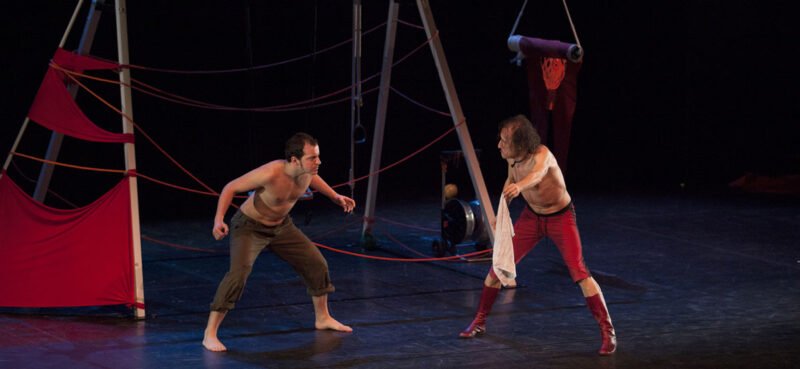
C’era una volta, Korean contemporary dance at Teatro Vascello, November 10, 2026
In short. C'era una volta (Once Upon a Time), a Korean contemporary dance show, is on at Teatro Vascello in Rome on Tuesday, November 10, 2026, at 21:00, for one night only.
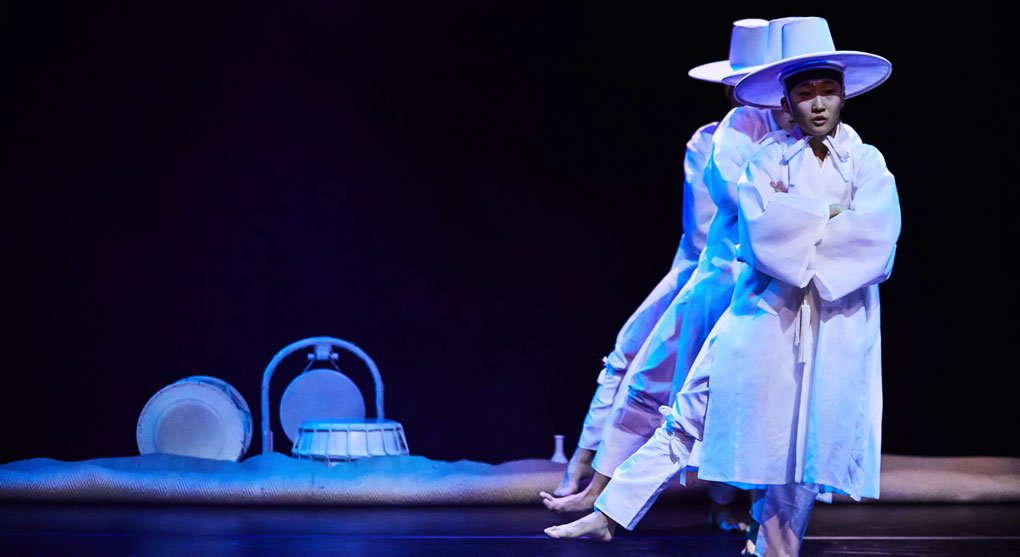
C'era una volta (Once Upon a Time), a Korean contemporary dance show, is on at Teatro Vascello in Rome on Tuesday, November 10, 2026, at 21:00, for one night only. Choreography and dance are by LIM Jinho, JI Kyung Min and LEE Kyunggu, with KIM Minjeog playing the gayageum, the traditional Korean zither, live. The show lasts 60 minutes. The theater is at Via Giacinto Carini 78, in Monteverde Vecchio: bus 75 stops in front of the entrance, and lines 44, 710, 870 and 871 are also useful. With the urban train from Ostiense station you get off at Quattro Venti, a few steps away. Prices are published on the official website of Teatro Vascello, where tickets are sold through the presale network authorized by the theater, as well as at the theater's box office.
Language: performed in Italian. No English version or English surtitles are announced.
C'era una volta at Teatro Vascello: the show in brief
C'era una volta is a movement-based Korean contemporary dance work that uses traditional objects and costumes to give new meanings to historical figures and reinterpret events of the past. It's on the program at the Vascello for a single date, Tuesday, November 10, at 21:00.
Who is on stage
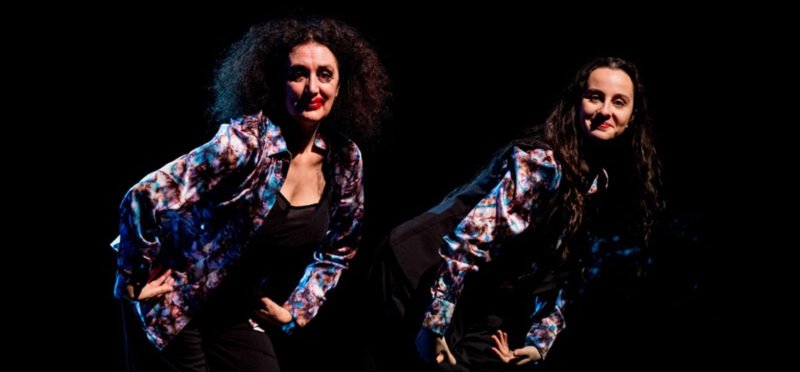
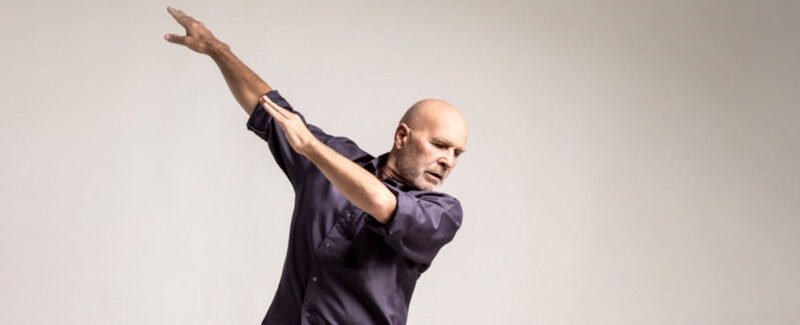
The three dancers, LIM Jinho, JI Kyung Min and LEE Kyunggu, also sign the choreography. With them on stage, KIM Minjeog plays the gayageum. Lighting is by LEE Seungho, stage management by KWAK Yongmin, production by LEE Yeong Chan.
An hour-long show
The running time given by the theater is 60 minutes. It's a compact show that lets you get to the theater after work on a weekday and leave with time for dinner in Monteverde or Trastevere.
The Korean names
The theater writes the artists' names according to Korean usage, with the surname first and in capitals: LIM, JI, LEE, KIM, KWAK are the surnames. It's a useful detail for anyone who wants to look up the performers after the show.
What you see in C'era una volta
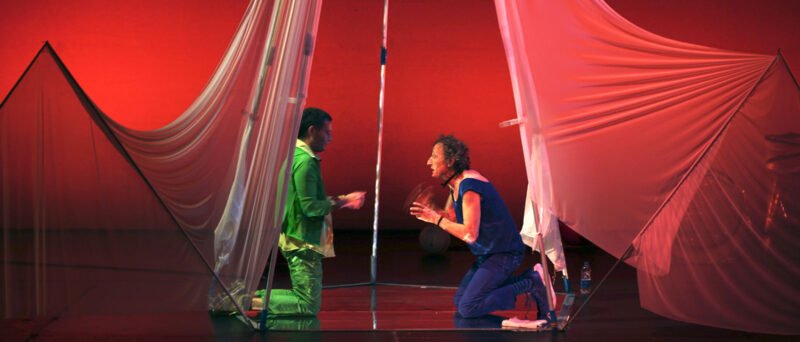
In C'era una volta the dancers use the hanbok, the traditional Korean dress, the fan, the Korean pipe and the traditional hat made of bamboo and horsehair: objects from traditional Korean performances that become tools of a new story.
Objects of the past, a present-day gaze
The official presentation explains that the show brings to the stage elements of the Korean past handed down over time: hanbok costumes, pansori, that is, traditional narrative singing, the image of the yangban aristocrats and ancient tales. On stage these elements are taken apart and reassembled with imagination, to build a story aimed at today's audience.
Dance, singing, acting
The dancers' expressive tools aren't limited to movement: dance, singing and acting alternate to reinterpret past eras, people of other times and ancient objects. The result, according to the presentation, is like visiting a scene from the past that might perhaps be real.
A rite for the ancestors
The show can also be read as a contemporary dance rite dedicated to the ancestors who left this heritage. The theater presents it at the same time as a reflection on how young contemporary artists can carry tradition forward.
Lightness
There's laughter too. The presentation stresses that the imagination able to rediscover tradition and the lively, witty talent of the performers give the audience laughter and lightness. The official program even includes the line of one of the protagonists, angry at the traditional instruments he always sees mistreated and determined, then, to take them out to see the world.
The Goblin Party company
The contemporary dance company Goblin Party, according to the presentation published by the Vascello, is a party formed by dokkaebi, the goblins of ancient Korean tales: creatures able to charm with extraordinary abilities, but with a mischievous, impish look.
A company without a boss
Goblin Party has no single representative: all its members are choreographers and create the story together. In the goblin party there are, according to the same presentation, those who propose the direction of the works, the co-creators, and also the audience, who share the journey of the show.
The relationship with the audience
The company works from a contemporary dance base and puts communication with the audience at the center. It commits to study and research to create works able to broaden the audience's point of view: a dance theater that doesn't ask to be decoded, but to be shared.
A note on the names
Some presentation pages for the show list the company under the name LIM, from the surname of one of the dancers, while the Vascello publishes the biography of the Goblin Party company. The sources disagree on the name under which the group is listed, but the performers are the same.
The awards of the company and of C'era una volta
The Goblin Party company has received many awards in Korea and abroad, and C'era una volta itself was selected in 2016 among the five best shows of the year by the Korean Dance Critics Association.
C'era una volta, 2016
In 2016 C'era una volta entered the Best 5 of the year of the Korean Dance Critics Association, the association of Korean dance critics. In December of the same year it was selected as a final outstanding work of the dance creation platform, the creation support program organized by the Korea Arts Council.
From Spain to Seoul
In 2017 the company won the jury prize at the 22nd Masdanza competition, in Spain, with Natgarim, and received the young artist of the year award from the Korean Ministry of Culture, Sports and Tourism. In 2018 came the best dancer award from the Korean Contemporary Dance Promotion Association. In 2020, the special jury prize at the Seoul Dance Film Festival with Eunjangdo.
Recent years
In 2021 Noritho won the work award of the Changmu Dance Art Award, from the Changmu Art Center, and entered the six best of the year for the Korean Dance Critics Association. In 2023 the same recognition went to Kkokdugaksi. In 2025 the company received the Sangnoksu award from ASSITEJ Korea, the Korean branch of the international association of theater for young audiences.
Teatro Vascello: an experimental hall in Monteverde
Teatro Vascello was inaugurated on May 4, 1989, by Giancarlo Nanni and Manuela Kustermann with their company, La Fabbrica dell'Attore, and opened with a show by Tadeusz Kantor and his Cricot Theatre of Warsaw. Since then it has been one of the Roman halls most closely tied to experimentation.
The roots
The story begins in the 1970s with the Space Re[v]action collective, which created its first permanent home at Teatro La Fede, at Via Portuense 78. Around Nanni and Kustermann a company formed that ranged across theater, film, dance, music and visual arts, and that put the image before the word: a movement known as the Roman school.
Dance at the Vascello
In the 1990s American and French contemporary dance arrived at the Vascello, and the theater has hosted a contemporary dance series for years. In fall 2026 the hall hosted, among others, Marco D'Agostin's Catalogo and the shows of Romaeuropa Festival, which for more than 20 years has presented part of its program here.
The direction
Since 1998 the Ministry has recognized La Fabbrica dell'Attore as a Teatro Stabile d'Innovazione. In 2004 the Sala Studio opened, in the basement. Giancarlo Nanni died in January 2010: since then Manuela Kustermann has been the sole artistic director of the theater and the company.
A curious fact about C'era una volta, Korean contemporary dance at Teatro Vascello, November 10, 2026
The nicest curiosity is in the company's name. Goblin Party, the presentation explains, is a party of dokkaebi: the goblins of Korean fairy tales, creatures that enchant with extraordinary powers but have a mischievous look and love pranks. A contemporary dance company that defines itself this way is declaring its method: not the solemnity of heritage, but play, pranks, wonder. It's the key to C'era una volta, a show that handles ancient costumes and objects without reverential awe, as an imp might after sneaking into a museum.
The second curiosity concerns the Italian title. C'era una volta is the opening formula of fairy tales, and the Italian audience recognizes it right away: the theater chose it for a work that rereads ancient tales and figures of Korean history. Those who walk into the hall expect a fairy tale, and in part they find one. But it's a dismantled fairy tale, in which the pieces of tradition are picked up, turned over, used for something else.
The third curiosity is a historical coincidence. The Vascello was born from a company that in the 1970s put the image before the word, and that was called the Roman school. A Korean show that tells history through the body, objects and sound, with no need for translation, thus arrives in the right hall: the one that in Rome made the image a language.
The objects of Korean tradition on stage
In C'era una volta the dancers use four objects of Korean tradition, listed by the theater: the hanbok, the fan, the pipe and the hat of bamboo and horsehair.
The hanbok
The hanbok is the traditional Korean dress, which the theater cites as the first element of the show. On stage it isn't a museum costume: it's material to take apart and put back together, part of the movement.
The fan and the pipe
The fan and the Korean pipe are objects from traditional performances. In the dancers' hands they become extensions of the body, signals, storytelling tools.
The bamboo and horsehair hat
The traditional hat made of bamboo and horsehair evokes the image of the yangban aristocrats, which the presentation lists among the elements of the past reinterpreted on stage.
The gayageum
The music is entrusted to KIM Minjeog, a gayageum player, performing live. It's the sound that supports and comments on the dance, and gives the show its atmosphere.
Something nobody tells you about C'era una volta, Korean contemporary dance at Teatro Vascello, November 10, 2026
What few people say is that C'era una volta isn't a new show, and that this is a strength. The Vascello presents a work that in 2016 had already entered the five best shows of the year for the Korean Dance Critics Association and that, in the same year, was selected by the Korea Arts Council as an outstanding work. The Roman audience is therefore seeing a well-tested work, honed through years of performances and awards, and not a world premiere to discover blind. In the meantime the company has kept winning awards, up to the Sangnoksu from ASSITEJ Korea in 2025.
The second thing concerns young audiences. The company's most recent award comes from ASSITEJ Korea, the Korean branch of the international association of theater for children and young people. And the presentation insists on lightness and laughter. C'era una volta, with its 60 minutes and its language made of body, objects and music, is a contemporary dance show suitable for teenagers too: a way to bring them closer to a genre often imagined as difficult.
The third thing is practical: it's a Tuesday. A single date, on a weekday, means a hall that fills with a devoted audience but also the risk, for those who put it off, of finding the seats sold out. If you're interested, book in time.
My advice for seeing C'era una volta, Korean contemporary dance at Teatro Vascello, November 10, 2026
My advice is to come to C'era una volta without trying to understand everything. Korean contemporary dance uses codes the Italian audience doesn't know: pansori, the yangban, ancient tales, ritual objects. You don't need to know them to enjoy the show, which the company builds precisely to communicate with the audience. You need to let yourself be carried by the images and the sound of the gayageum, and accept laughing when the dancers play with the solemnity of the objects.
It's also worth doing a little preparation, five minutes. Read the presentation on the Vascello website, look at the published production photos, know that the hanbok is the traditional dress and that the dokkaebi are mischievous imps: that's enough to walk into the hall with the right eyes.
Third, your seat. In a dance show the objects and costume details matter. The central rows of the orchestra, not too close to the stage, let you see the movements as a whole and the details at the same time.
Finally, the evening. With an hour-long show and a 21:00 start, in our opinion the best combination is an aperitivo at the theater's bistro before and dinner after, heading down to Trastevere: the downhill walk from Monteverde in the evening is the right way to end a Tuesday unlike the others.
How to get to Teatro Vascello
Teatro Vascello is at Via Giacinto Carini 78, in Monteverde Vecchio, above Trastevere and near the Janiculum.
By bus
Bus 75 stops in front of the theater and can be taken from Termini, the Colosseum or Piramide. Alternatively there are lines 44, 710, 870 and 871, all listed by the theater as useful for getting there.
By train
From Ostiense station, on the urban train, get off at Quattro Venti station, on Viale dei Quattro Venti, a short walk from the theater.
By car and parking
The theater suggests parking along Via delle Mura Gianicolensi, about 100 meters away. There are also paid parking lots at Via Giacinto Carini 43, at Via Maurizio Quadrio 22, which has an agreement with the theater for a discount when you show your ticket, and at Via Raffaello Giovagnoli 20.
On foot from Trastevere
From Trastevere you can walk up to Monteverde, along the streets leading toward the Janiculum: an uphill walk, to be done in comfortable shoes and with plenty of time to spare.
Another well-known fact, yet seldom mentioned
It's well known that the Vascello is one of Rome's experimental theaters. It's less often remembered how far back its international openness goes. The theater was inaugurated in 1989 with Tadeusz Kantor, the Polish director who was then one of the most radical names on the European stage. In the early 1990s came Raul Ruiz, American and French contemporary dance with Elizabeth Streb and L'Esquisse, and, among the international masters, Bob Wilson and Peter Brook, who presented Beckett's Happy Days here with Natasha Parry. In 1998 the Vascello coproduced a show with the Berliner Ensemble. And even earlier, at Teatro La Fede in the 1970s, John Cage, Steve Lacy and the Living Theatre had come through.
Dance has a special place in this story. Among the choreographers and companies that have come through the Vascello are Enzo Cosimi, Sosta Palmizi, Virgilio Sieni, Cesc Gelabert, Wim Vandekeybus, and the theater has hosted a contemporary dance series for years. A Korean company, with a show awarded at home, therefore fits into a precise line: that of a theater that for 37 years has brought the international scene to Monteverde, often before it's known elsewhere in the city.
The neighborhood around Teatro Vascello: Monteverde Vecchio
Monteverde Vecchio is the upper, residential part of Monteverde, above Trastevere, between the Janiculum and the great historic villas, with apartment buildings and small villas from the early decades of the 20th century.
The Janiculum
The Janiculum is close to the theater: a walk on the hill, with the view over the city, is a good way to prepare for the evening, even though in November the sun sets early.
Villa Sciarra and Villa Pamphilj
A few minutes away are Villa Sciarra, small and intimate, and Villa Doria Pamphilj, the great park west of the neighborhood. Check the gate closing times.
The Fontanone and San Pancrazio
Toward the Janiculum you reach the Acqua Paola Fountain and, farther on, the basilica of San Pancrazio.
Trastevere
Below Monteverde lies Trastevere, with the basilica of Santa Maria in Trastevere: the area to head down to for dinner after the show.
How to plan your Tuesday at the theater
An hour-long show, at 21:00 on a weekday, is easy to fit in even after a day of work or sightseeing in the city.
From the center
From the center you can take bus 75 from Termini or the Colosseum, which stops in front of the theater. It's best to leave around 20:00, to have time to pick up your tickets and have a coffee at the theater's bistro before the start.
From Trastevere
If you spend the afternoon in Trastevere, maybe between the basilica of Santa Maria and the Museo di Roma in Trastevere, you can walk up toward Monteverde: an uphill walk, to be taken slowly and in comfortable shoes.
After the show
You come out around 22:00. It's the right time for a late dinner in Monteverde or Trastevere, or to head back on bus 75 or the urban train from Quattro Venti. If you come by car, you can use the partner parking lot on Via Maurizio Quadrio, with the discount when you show your ticket.
For those who want to go deeper
The Vascello website publishes the full presentation of the show and the company, with the list of awards: reading it after the evening helps you find the references you only glimpse on stage, from the yangban to pansori.
The right photo to take at C'era una volta, Korean contemporary dance at Teatro Vascello, November 10, 2026
You don't take photos during the show: in a dance show the light of a screen disturbs the dancers and the audience, and LEE Seungho's lighting is part of the dramaturgy. The right photo is taken before and after. The nicest subject, when you come out, is the Vascello foyer with the season's posters, or the theater sign on Via Giacinto Carini, with the quiet Monteverde street around it: an image that tells the story of an experimental hall in a residential neighborhood.
If you arrive early you can go up to the Janiculum before the show. In November, around 17:00, the sunset over the city is the classic shot of Rome, and the theater is a few minutes away. A photo of the view and one of the theater entrance, an hour apart, tell the story of the evening well.
And for detail lovers: if the theater displays production photos of the show in the foyer, they're the best way to remember the hanbok, fans and bamboo hats seen on stage, without having disturbed anyone during the performance.
Where to eat before or after the show
Teatro Vascello has an in-house bistro, handy for a coffee or a snack before the show. For dinner there are two options: stay in Monteverde or head down to Trastevere.
In Monteverde
The neighborhood has trattorias and pizzerias frequented mostly by residents, with more honest prices than in Trastevere. With an hour-long show you come out around 22:00, still a good time for dinner.
In Trastevere
Heading down to Trastevere, the choice of trattorias, osterias and bars is huge and open late, even on Tuesdays.
Some important events that happened here
The history of Teatro Vascello is short if measured in years, dense if measured in events. On May 4, 1989, the hall opened with a show by Tadeusz Kantor and the Cricot Theatre of Warsaw. In the early 1990s came Raul Ruiz, the Centro di Pontedera, American and French contemporary dance, Italian experimental groups. In May 1996 the Extraordinario series presented 16 young experimental companies from all over Italy. In 1998 the Ministry recognized La Fabbrica dell'Attore as a Teatro Stabile d'Innovazione, and the Vascello coproduced a show with the Berliner Ensemble.
In 2002 and 2004, with the local Municipio, the theater ran an integrated workshop with people with disabilities, whose final show was on the program for three weeks in the 2003/2004 season. In 2003 the Premio Valentino Zeichen was born, in 2004 the Sala Studio opened, in 2008 a philosophical counseling desk was launched with the Café Philo. In January 2010 Giancarlo Nanni died and the direction passed entirely to Manuela Kustermann.
The 2026/2027 season continues this story with titles such as Tragudia, Il canto di Edipo by Alessandro Serra and No Yogurt for the Dead by Tiago Rodrigues. On November 10 the Korean dance of C'era una volta joins them: one of the rare chances in Rome to see a contemporary company from Seoul in a drama theater.
Accessibility, age and practical information
Teatro Vascello publishes a section on accessibility on its website, to be checked before buying to find out about entrances, reserved seats and services.
With teenagers
With a 60-minute running time, a language made of body, objects and music and a company awarded by ASSITEJ Korea, C'era una volta is a dance show suitable for teenagers too, especially those curious about Korean culture. The theater doesn't give any age limits.
Arriving on time
In a dance show where light and darkness are part of the scene, arriving late disturbs everyone. In the evening the bus can take a long time: leave with some margin.
November
In November the evening in Monteverde is cool and often damp. A heavy jacket and an umbrella are enough for the walk toward Trastevere after the show.
Who has passed through C'era una volta, Korean contemporary dance at Teatro Vascello, November 10, 2026
On the Vascello stage and, even earlier, in the history of the company that founded it, some of the most important names of the contemporary scene have come through. At Teatro La Fede, the first home in the 1970s, came saxophonist Steve Lacy, composer John Cage, French director Gérard Gelas and the Living Theatre. At the Vascello, since 1989, Tadeusz Kantor with the Cricot, Raul Ruiz, the Centro di Pontedera, Teatri Uniti, Moni Ovadia, Carlo Cecchi, Giorgio Barberio Corsetti, Societas Raffaello Sanzio, Teatro Valdoca, Pippo Delbono, and among the international masters Bob Wilson and Peter Brook.
For dance the list is just as rich: Elizabeth Streb, L'Esquisse, Enzo Cosimi, Sosta Palmizi, Virgilio Sieni, Cesc Gelabert, Wim Vandekeybus. The long collaboration with Fondazione Romaeuropa has brought part of the festival here for more than 20 years, and with it companies from all over the world. Manuela Kustermann, actress and artistic director, is the constant presence in this story.
On November 10, 2026, LIM Jinho, JI Kyung Min and LEE Kyunggu join the list, with KIM Minjeog's gayageum, LEE Seungho's lighting, KWAK Yongmin's stage management and LEE Yeong Chan's production. A company that calls itself a party of imps brings to Monteverde the costumes, objects and tales of ancient Korea: a new guest for a hall that has made the encounter with foreign stages its identity.
Frequently asked questions about C'era una volta at Teatro Vascello
When is C'era una volta on at Teatro Vascello?
C'era una volta, a Korean contemporary dance show, is on at Teatro Vascello in Rome on Tuesday, November 10, 2026, at 21:00, for a single date. The show lasts 60 minutes.
Who are the performers of C'era una volta?
The performers of C'era una volta are LIM Jinho, JI Kyung Min and LEE Kyunggu, who also sign the choreography. On stage there's also KIM Minjeog, who plays the gayageum live. Lighting is by LEE Seungho.
What is C'era una volta about?
C'era una volta is a movement-based dance work that uses the hanbok, the fan, the Korean pipe and the traditional bamboo and horsehair hat to give new meanings to historical figures and reinterpret events of Korean history, with dance, singing, acting and moments of comedy.
Where is Teatro Vascello?
Teatro Vascello is at Via Giacinto Carini 78, in Monteverde Vecchio. Bus 75 stops in front of the theater. Lines 44, 710, 870 and 871 and the urban train from Ostiense station to Quattro Venti are also useful.
Is the Korean dance show suitable for teenagers?
C'era una volta lasts an hour and tells its story through body, objects and music, with no need for translation: it's suitable for teenagers too. In 2025 the company received the Sangnoksu award from ASSITEJ Korea, the association of theater for children and young people.
What is the Goblin Party company?
Goblin Party is the Korean contemporary dance company presented by Teatro Vascello for C'era una volta: it takes its name from the dokkaebi, the mischievous imps of Korean tales, it has no single representative and all its members are choreographers. In 2017 it won the jury prize at the Masdanza competition in Spain.
How much are tickets for C'era una volta?
Ticket prices for C'era una volta are published on the official website of Teatro Vascello, whose show page gives access to online purchase. Tickets are also available at the theater's box office.
Final advice on C'era una volta
C'era una volta is, in our opinion, one of the most unusual evenings of the Roman theater fall: an hour of Korean contemporary dance, awarded at home, with the costumes and objects of tradition turned into play by a company that calls itself a party of imps. My advice is to book right away, because it's a single date, choose a central seat in the orchestra, arrive with time for an aperitivo at the theater's bistro and let the sound of the gayageum do the rest. When you come out, the walk down to Trastevere for dinner is the best way to end a Tuesday spent between Monteverde and Seoul.
Article written by the editorial team of Tour Leader Pro, contact them for Private/Corporate/V.I.P. Tours and Experiences.
Planning a trip to Rome? The English-language guides for visiting the city are on ItalyPlanner.com.
Contact Information
Nearby
 Teatro Vascello100 m
- Raphael in Rome: Where to See His Works100 m
- Museum of Mathematics300 m
- Villa Sciarra400 m
- Monteverde400 m
- Teatro dei Contrari, theater in Monteverde500 m
Upcoming events nearby
- Il giorno della civetta, reading concert at Teatro Vascello, November 11, 2026100 m
- Riccardo III by Antonio Latella with Vinicio Marchioni at Teatro Vascello, March 30 to April 4, 2027100 m
- The Sleeping Queen by Mauro Astolfi at Teatro Vascello, December 1 to 6, 2026100 m
- Orestea by Carmelo Rifici at Teatro Vascello, February 3 to 14, 2027100 m
You might also like
- The Forest at Teatro Vascello: Cristiana Morganti and Claudio Tolcachir, April 20 to 25, 2027
- Quinto: non uccidere by Massimiliano Civica at Teatro Vascello, November 24 to 29, 2026
- Edipus by Tiezzi and Lombardi at Teatro Vascello, February 23 to 28, 2027
- Ma a che serve la luce? by Virgilio Sieni at Teatro Vascello, February 18 to 21, 2027
- Metadietro by Antonio Rezza and Flavia Mastrella at Teatro Vascello, January 5-17, 2027
- 7-14-21-28 by Rezza and Mastrella at Teatro Vascello, December 22, 2026 to January 3, 2027