Museo delle Cere
In short. The Museo delle Cere of Rome is at Piazza dei Santi Apostoli 68/A, on the side of the Palazzo Colonna block, a little over 100 meters from Piazza Venezia: you walk out the door, look left and the Vittoriano is right there.
The Museo delle Cere of Rome is at Piazza dei Santi Apostoli 68/A, on the side of the Palazzo Colonna block, a little over 100 meters from Piazza Venezia: you walk out the door, look left and the Vittoriano is right there. It opens every day from 9:00 to 21:00, with no weekly closing day, and it is one of the very few museum doors in Rome that stays open at dinnertime. The full-price ticket is listed at 9.50 euros. Children under one meter in height don't pay and up to 1.40 meters get in at the reduced rate, while the group rate starts at four people. Booking isn't necessary: you buy at the ticket desk, or online from the official site museodellecere.com, which redirects to the reseller authorized by the museum. Phone (+39) 06 6796482, email info@museodellecereroma.com. It's worth rechecking the exact fares and any discounts on the official site before leaving home. The nearest metro stop is Colosseo, line B, a 10-minute walk along Via dei Fori Imperiali. Among others, the 40 and the 64 from Termini, the 63, the 70 and the 170 reach Piazza Venezia. Watch out for a detail that throws even Romans off: the construction site of the Venezia station on line C has redrawn the traffic in the square, several surface lines go through Via del Plebiscito and Piazza d'Aracoeli, and temporary stops have been set up on Via IV Novembre, 50 meters from the museum's door.
If you're building a Roman day around this address, the page on the tourist attractions of Rome collects everything within a 10-minute walk from here, and there's quite a lot.

What the Museo delle Cere of Rome Really Is
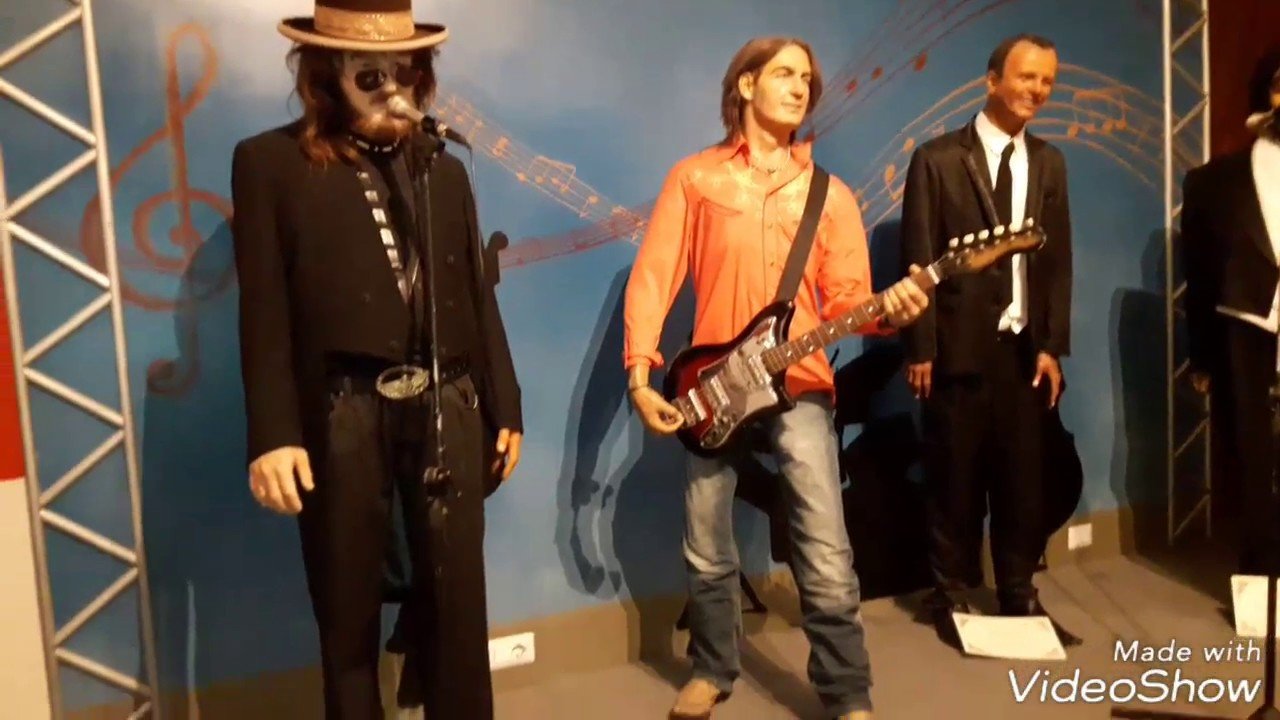
A point no guide likes to admit: the Museo delle Cere is a divisive museum. There are Romans who consider it the most eccentric place in the center and tourists who come out annoyed because they expected the Italian equivalent of an international chain of wax figures, with TV studio lighting and the statue of the pop star of the moment. It's not that. It is a private museum, founded in 1958, grown by accumulation over seven decades, which keeps the display taste of its own time and has never fully abandoned it. Anyone who goes in expecting a theme park is disappointed. Anyone who goes in knowing they are about to cross a piece of Italian social history, with all the dust and all the strangeness that implies, comes out happy.
The numbers help frame it. The museum today declares more than 100 life-size figures and presents itself as the only collection of its kind in Italy and the third in Europe by importance and number of characters, after Madame Tussauds in London and the Grévin in Paris. It is a ranking the museum has repeated for decades and it should be taken for what it is, a historical placement: in 1958, when it opened, Italy had nothing comparable, and for almost half a century the claim stayed true without dispute. The initial collection had 38 figures. The rest arrived over the years, statue after statue, following current events, politics, cinema and sport, with that additive logic that is the signature of wax museums all over the world.
A clear verdict, to give right away so the rest of the page makes more sense: the Museo delle Cere is worth the hour you give it if you look at it the way you'd look at a family photo archive, meaning looking for the people and the eras instead of the perfect likeness. If you look at it hoping for the hyperrealistic portrait, you get angry. If you look at it for the way Italy in 1958, in 1970, in 1990 and in 2010 decided who deserved to be put in wax, you have fun and learn something.
A Curiosity About the Museo delle Cere
The best curiosity about this place isn't about its statues, but the fact that the idea of preserving the faces of important people in wax was born right here in Rome, almost 2,000 years before the museum in Piazza dei Santi Apostoli opened. Roman aristocratic families kept in the atrium of the house the so-called imagines maiorum: portraits of ancestors made from wax masks pressed directly onto the face of the deceased, kept in wooden cabinets and arranged like a three-dimensional family tree. They weren't decorative objects. They were titles of nobility on display: the right to keep them, which modern sources call the ius imaginum, belonged to those who had had curule magistrates in the family, and the row of masks in the atrium told the visitor, before a single word, who they were dealing with.
The moment those wax faces left the house was the funeral. In the funeral procession of an aristocrat, actors chosen for their build wore the masks of the ancestors and wore their insignia too, parading on carts and then sitting on the curule chairs in front of the Rostra: for the length of the ceremony the dead visibly returned among the living. Cassius Dio describes the use of wax portraits in imperial processions, from Augustus to Pertinax. Anyone who has read those pages and then walks into any wax museum, in any city of Europe, recognizes the very same impulse: to fix a face so it doesn't vanish, and to line it up with the other faces that matter.
That is why I find the wrinkled nose of certain cultured visitors at the door of the Museo delle Cere senseless. The wax portrait is a Roman invention before it is a London or Paris one, and this museum, however modest and homespun, is the last link in a chain that starts from the atria of the Republican domus. The difference is that in ancient Rome the admission criterion was the cursus honorum, and in the museum of Piazza dei Santi Apostoli it has been, from time to time, fame. The mental mechanism is the same.
There's a detail to know at the door: wax is a material that, unlike marble, ages the way skin ages. It goes dull, turns gray, gives way under its own weight if the temperature rises. A neglected wax statue doesn't break, it sags. That is why these museums need constant maintenance and an in-house workshop, and why, worldwide, almost no 19th century wax figure has reached us intact.
Wax Modeling Before Wax Museums: A Serious Technique, Not a Game
To understand what you're looking at in the Museo delle Cere you need to know where the technique comes from. Ceroplastics is sculpture in wax, and for four centuries it was one of the most refined arts in Europe, practiced by workshops that worked for courts, for churches and for medical schools. That today it is associated above all with statues of soccer players is an accident of recent history, not its natural destiny.
Wax as a Material: Why It Works and Why It Betrays
Wax is soft, plastic, can be shaped and reshaped, melted down again, made shinier or duller, duller or more translucent. It accepts pigments mixed into the paste or applied to the surface when the work is finished, and it accepts grafts of foreign materials: real hair, body hair, teeth, glass eyes. It is this ability to combine with the organic that makes it unsettling: no other sculptural material imitates skin with the same impudence. Benvenuto Cellini left in writing how the paste was prepared in his workshop, pure white wax mixed with well-ground white lead and a little very clear turpentine, measured out according to the season, because a wax too soft in summer deforms and one too hard in winter cracks.
The flip side is fragility. Wax fears heat, direct light, dust that sticks to the slightly greasy surface and never comes off. A wax museum is, from the conservation point of view, one of the hardest places to manage that exist: the figures have to be touched up, cleaned, sometimes recast. When in a room of this museum you notice a dull complexion or a fold that doesn't look right, what you're seeing is time working on the material, not the sloppiness of whoever made the statue.
The Florentine Boti and Orsino Benintendi
In the 15th century the European capital of wax was Florence. The faithful brought to the Santissima Annunziata the so-called boti, wax ex-votos that reproduced healed parts of the body or, in the most solemn cases, the whole donor at life size, dressed in his own clothes. The naves and cloisters were literally lined with them, hung from beams and chains, to the point that the total weight became a structural problem. The chronicler Benedetto Dei claimed that there were no masters of wax images in the world equal to those then working in Florence, and for once Florentine local pride was right.
The name that matters is Orsino Benintendi, a wax maker active in the circle of Andrea del Verrocchio. For Lorenzo the Magnificent he made three life-size effigies, placed in as many churches as thanks for the narrow escape from the Pazzi conspiracy. Vasari relates that from the time of Verrocchio the custom arose of cheaply forming the heads of those who died, and that therefore in many Florentine homes wax portraits of the owners were seen above the fireplaces. Almost nothing remains of the great Florentine season: most of those works were destroyed at the end of the 18th century, and that says it all about the resistance of the material.
Gaetano Giulio Zumbo, the Syracusan Who Sculpted Putrefaction
The greatest and darkest Italian wax modeler was born in Syracuse in 1656 and died in Paris on December 22, 1701. Gaetano Giulio Zumbo worked in Florence between 1691 and 1695, then in Genoa, then in Marseille, finally in Paris, where Louis XIV granted him the privilege of anatomical preparations. His works are not portraits: they are little theaters, dark boxes a few dozen centimeters deep, inside which decomposing bodies crowd together. The Triumph of Time, The Plague, Vanity of Human Glory, The French Disease: they can still be seen today at La Specola in Florence, and anyone who has never looked at them in person has no idea how far wax can go in reproducing flesh that falls apart.
In 1700 Zumbo collaborated with the French surgeon Guillaume Desnoues on making anatomical preparations, and ended up quarreling badly with him, as often happened with geniuses of his type. His Paris tomb was destroyed during the Revolution. I tell Zumbo's story inside a page on the Museo delle Cere for a precise reason: wax modeling is born from death, from the cast taken on the corpse, from the desire to hold on to what decays. The museum of Piazza dei Santi Apostoli, with its section devoted to capital punishment, is much more faithful to this origin than it admits.
Bologna, Ercole Lelli and Anna Morandi Manzolini
In the 18th century wax became a scientific instrument. In Bologna, where the anatomical school had been active for over a century and a half, Ercole Lelli designed in 1742 the Anatomy Room of the Institute of Sciences, founded in 1711 by Luigi Ferdinando Marsigli. There he placed life-size statues built on real skeletons, covered with superficial and deep muscle bundles modeled in a mixture that was not pure wax but tallow and mastic worked with turpentine and turpentine spirit, colored with natural substances. He also made models of healthy and malformed kidneys, among the first plastic representations of a pathology.
Working beside him were Giovanni Manzolini and his wife Anna Morandi, who after her husband's death carried on alone and became one of the few women of 18th century Europe to teach anatomy. The Luigi Cattaneo Museum of Anatomical Waxes in Bologna preserves part of that heritage. It's worth knowing before you enter a wax museum: the same technique that models an actor's face modeled, 250 years ago, the tables on which generations of doctors studied.
Clemente Susini and La Specola in Florence
In 1771 Grand Duke Peter Leopold established in Florence the wax workshop of the Museum of Physics and Natural History, under the direction of Felice Fontana, who lived between 1730 and 1805. The modeler who made its fortune was Clemente Susini, born in 1754 and died in 1814, who entered the laboratory at 19 and stayed there all his life, up to directing it. His anatomical waxes, built on the dissections of Paolo Mascagni and Filippo Uccelli, are still today the absolute peak of the genre. The famous Anatomical Venuses, reclining female bodies that open to show the viscera, belong to this season: works in which the artistic component took over from the teaching one, and for that very reason became icons.
A considerable part of that work ended up in Cagliari, where the University holds the Susini collection, and other series went to Vienna. These are the museums I recommend to anyone who, coming out of the Museo delle Cere of Rome, wants to understand what wax can do when you take it seriously all the way.
Madame Tussaud and the Grévin: The Two Models of the Museo delle Cere
The Roman museum was born openly following the footsteps of two foreign institutions, and knowing them helps you read the rooms of Piazza dei Santi Apostoli with a more precise eye.
Marie Tussaud, From Guillotined Heads to Baker Street
Anna Maria Grosholtz was born in Strasbourg on December 1, 1761 and died in London on April 15, 1850. She learned the trade from Philippe Curtius, a doctor very skilled at modeling anatomical parts in wax for lectures, who then moved to portraiture and in 1765 opened a figure workshop in Paris. Marie called him uncle. During the Terror she was arrested on charges of royalist sympathies and was saved because her skill was too useful: she was ordered to take death masks from the heads of the executed, and the faces of Marie Antoinette, of Marat, of Robespierre passed through those hands.
In 1802 she left France for London with her son Joseph, then four years old, and for 30 years toured the British Isles with a traveling show before opening, in 1835, the first permanent exhibition on Baker Street. The chamber of horrors has a precise ancestor: the Caverne des Grands Voleurs set up by Curtius on the Boulevard du Temple in 1782. That is why every wax museum in the world, the Roman one included, has a dark room with crimes and gallows: it's not a tasteless addition, it's the original gene of the genre.
The Grévin in Paris, 1882
The second model is Parisian and younger: the Musée Grévin opened in 1882 in the 9th arrondissement and today displays more than 200 figures. It was born as an illustrated offshoot of the daily press, in an era when newspapers could not yet publish photographs: you went to the Grévin to see what the people you read about looked like. It is a detail that also explains a lot about the Rome museum, opened in 1958, when Italian television was four years old and millions of people had never seen the faces of the protagonists of politics and entertainment, except in a grainy photograph. A wax museum, back then, was an information service.
The Birth of the Museo delle Cere: From the Baths of Diocletian to Piazza dei Santi Apostoli
The story of this museum begins with a circus man. Fernando Canini was an entrepreneur in traveling shows, one of those who really knew the public, and on trips abroad he had seen Madame Tussauds in London and the Grévin in Paris. Back in Rome he decided the city deserved something similar.
1958 and the 38 Figures of the Baths of Diocletian
The first exhibition opened in 1958 and had 38 characters. The temporary venue was at the Terme di Diocleziano, inside the brick colossus that Maximian had built straddling the 3rd and 4th centuries and that today houses one of the four venues of the Museo Nazionale Romano. I try to imagine the effect: wax figures of the protagonists of the 20th century lined up inside the halls of an imperial bath complex, a stone's throw from Termini station, in the Rome of the boom that was discovering mass tourism. No contemporary installation could produce the same short circuit.
The public responded, and the collection grew. But the Baths couldn't stay a permanent home: they were, and are, a monument of the State. Between 1969 and 1970 the museum moved to where it still is today, in the ground-floor rooms of the Palazzo Colonna complex facing Piazza dei Santi Apostoli. Since then more than 50 years have passed at the same address, which for a private Roman museum is a rare longevity.
How the Collection Grew
The growth criterion is the classic one of wax museums: whoever enters the collective imagination is added, and almost never removed. The chronicles record the arrival of the figures of Padre Pio and Barack Obama on December 8, 2008, and that of Alberto Sordi in March 2009, six years after the actor's death. They are dates that tell of a method: the museum chases popular sentiment with a physiological delay of a few months or a few years, the time needed to understand whether a character is destined to stay.
From 38 initial figures it has grown to more than 100 life-size ones, according to the count the museum itself declares. Higher figures circulate, and they are not necessarily wrong if you also count the extras, the busts and the secondary figures of the reconstructed scenes. The number of main figures, however, stays the same. I prefer to report the museum's figure rather than the more impressionable word of mouth of travel sites.
The In-House Workshop
A wax museum without a workshop doesn't survive. Here the workshop exists, and it is the place where the figures are modeled, assembled and above all maintained. The process, in all the workshops of the world, is essentially this: you study the subject from photographs and measurements, you model the head in clay, you take a plaster cast, you pour the pigmented wax, you finish the complexion with a brush, you fit the glass eyes, you implant the hair strand by strand with a hot iron, you dress the figure in real clothes. A well-made head takes weeks. A badly made head is recognizable from three meters away, and that is why in every wax museum on the planet some statues work beautifully and others look like distant relatives of the character they are supposed to represent.
Recent Additions
In recent years the management has added to the route QR codes linked to animated video content generated with artificial intelligence tools, and on this the museum claims a world first. It is the most visible update to a display that otherwise has stayed true to itself. The verdict is lukewarm: a phone in your hand in front of a wax statue takes away more than it adds, and the best thing you can do in these rooms is look, not frame. But for a bored kid it can be the hook that saves the visit, and in that case, welcome.
Something Nobody Tells You About the Museo delle Cere
Plenty of people write that the museum is open every day from 9:00 to 21:00. What almost nobody explains is what that means, in practice, in a city like Rome. It means this is one of the very rare museum doors in the historic center that you can walk through at half past eight in the evening, when the Capitoline Museums closed a long time ago, when the churches are barred, when the only cultural alternative left is looking at the lights of the Vittoriano from the square. For anyone arriving in Rome late in the afternoon, for anyone with a flight the next morning, for anyone with two empty hours between dinner and the walk back to the hotel, the Museo delle Cere is literally the only thing open within a five-minute walk.
I'll take the chance to give a recommendation worth its weight in gold that you won't find in the standard advice: in the evening this place is better to visit. Not for the atmosphere, which doesn't change because the light is artificial anyway, but because the flow of visitors thins out. At the Museo delle Cere the rooms are tight and the figures are within reach: with 10 people inside at once you see well, with 40 you see badly. The two worst time slots are mid-morning and early afternoon on weekends, when families and school groups arrive together. After 19:00 the museum becomes a different place.
The second thing nobody tells you concerns the address. Many pages online, including sources that have been copying each other for years, give number 67 of Piazza dei Santi Apostoli. The correct address is 68/A, with the postal code 00187. This isn't pedantry: the square is long, the doorways are big, the street numbers are hard to see, and anyone looking for 67 ends up in front of the wrong entrance with a suitcase in hand. The museum's door is the one with the sign on the side facing Via IV Novembre, and the ticket desk is right inside.
Third thing: at the Museo delle Cere you can touch, get close, stand next to the figures. There are no ropes everywhere, no guards blowing whistles. It is a relationship with the displayed object that hasn't existed in public museums for decades, and for children it makes an enormous difference. It goes without saying that touching means brushing lightly and with respect: wax holds fingerprints and skin oils, and every hand left on a cheek is extra work for the workshop.
Where the Museo delle Cere Is: Piazza dei Santi Apostoli and Palazzo Colonna
The museum's address is no accident: it is one of the densest corners of history in the city, and most of the people who walk in don't notice.
Piazza dei Santi Apostoli
Piazza dei Santi Apostoli is an elongated rectangle that runs down from Via IV Novembre toward Via del Corso, closed on one side by the bulk of Palazzo Colonna, on the other by Palazzo Odescalchi and Palazzo Balestra, and at the end by the facade of the basilica of Santi XII Apostoli. It is a square of passage and palaces, rarely photographed, almost always crossed in a hurry by people going from Piazza Venezia to the Trevi Fountain. Anyone who stops finds an intact urban layout, of the kind that survives in Rome only where noble ownership held the blocks together for centuries.
Palazzo Colonna, Eight Centuries of the Same Family
The Museo delle Cere occupies rooms that belong to the large block of Palazzo Colonna, one of the largest and oldest private palaces in Rome. The area was already occupied before the year 1000 by buildings of the Counts of Tusculum, from whom the Colonna family descends. The main body was demolished at the wish of Boniface VIII and soon rebuilt. From the 14th century on the palace hosted leading figures, among them Emperor Louis the Bavarian and Francesco Petrarca. In the 15th century Cardinal Oddone Colonna lived there, who rose to the papal throne as Martin V and brought the papal seat back to Rome after the schism. In 1527, during the Sack of Rome, Isabella d'Este found refuge there and her presence spared the palace from looting.
The great building season is 17th century: from 1649 Cardinal Girolamo Colonna started the renovation, entrusted first to Antonio Del Grande, who died in 1671, then continued by Girolamo Fontana. In the 18th century Nicola Michetti stepped in and, between 1757 and 1764, Paolo Posi for the second gallery. The Galleria Colonna, begun in 1654 and inaugurated in 1703, holds one of the most important private collections in the city, with works by Raphael, Titian, Correggio and Guercino, under a vault frescoed by Giovanni Coli and Filippo Gherardi. The family still owns the palace, and eight centuries have passed.
Here is the advice almost nobody takes: if you come to the Museo delle Cere on a Friday or Saturday morning, you can see in the same block two opposite extremes of the idea of a collection. The Galleria Colonna opens to the public precisely on Friday and Saturday mornings, with entrance from the book shop at Via della Pilotta 17 and offices at Piazza dei Santi Apostoli 66. On one side of the block, the aristocratic picture gallery with the masterpieces and the cannonball lodged in the grand staircase. On the other, the wax figures of the stars of the 20th century. Two ways of saying who matters, 50 meters apart. I don't know a more instructive comparison in the whole center of Rome.
The Basilica of Santi XII Apostoli
At the end of the square is the basilica of Santi XII Apostoli, founded in the early Christian period, remodeled several times and in the 19th century given the neoclassical facade of Giuseppe Valadier, above the 15th century portico. Inside rests the funeral monument of Clement XIV, an early work by Antonio Canova that marked the sculptor's success in Rome. It is 30 seconds' walk from the museum's door, admission is free, and most visitors to the Museo delle Cere never set foot in it. They're wrong.
Why a Wax Museum Right Here
The choice of venue, in the late 1960s, followed a clear commercial logic: Piazza Venezia was and remains the most heavily trodden pedestrian crossroads in Rome, the point where the flows coming from the Colosseum, the Trevi Fountain, Via del Corso and the Capitoline converge. Opening there meant intercepting everyone. The paradox is that today that same central position works against the museum: within 300 meters there are the Forums, the Vittoriano, the Capitoline and Palazzo Venezia, and the average visitor, having to choose, sacrifices the wax. Those who go in almost always do so for a precise reason: the kids, the rain, the late hour, or a genuine curiosity about an out-of-fashion type of exhibit.
Touring the Museo delle Cere Room by Room
The route runs through around 10 rooms in sequence, of modest size, connected by narrow corridors. There are no monumental staircases or multimedia stagings: you walk, you turn the corner, you find a group of figures. I describe the visit following the thematic order the museum proposes, warning that the display is periodically reshuffled and that some characters may change rooms from one year to the next.
The Atrium of the Museo delle Cere and the Italian Comedians
You walk in and the first faces are the ones no Italian gets wrong: Totò, Eduardo De Filippo, Nino Manfredi. It is a very smart opening choice, and I defend it. Putting three faces of Italian comedy at the entrance tells the visitor right away that you don't tiptoe in here, that the museum isn't in awe of itself and that the first feeling required is affection. Antonio De Curtis, prince of Byzantium by conviction and Totò to the public, died in Naples in 1967. Eduardo, a playwright before an actor, was named senator for life in 1981. Manfredi was from Castro dei Volsci but a Roman by adoption, and his slightly melancholy Roman face is the one that comes off best at the Museo delle Cere of the three.
A technical observation that helps in looking at everything else: in comic figures the likeness is easier, because the public recognizes the pose and the characteristic expression before the exact features. That is why the statues of actors almost always work and those of politicians almost never do.
The Grand Council Room: The Night of July 24, 1943
It is the museum's centerpiece, and I'd argue the most serious one too. The museum reconstructs the last session of the Grand Council of Fascism, with Mussolini in his seat and the hierarchs around the table. The original scene took place 200 meters from here, in the Sala del Pappagallo of Palazzo Venezia: the meeting opened at 18:15 on July 24, 1943, with 28 members in black uniform, and went on all night. The agenda item presented by Dino Grandi, which asked for the return of command of the armed forces to the King, was put to a vote at 2:30 on July 25 and approved with 19 votes in favor, eight against and one abstention. The session closed at 2:40.
The names deserve to be read, because that vote was the first formal act of the fall of the regime. Among those in favor were De Bono, De Vecchi, Grandi, De Marsico, Acerbo, Pareschi, Cianetti, Bastianini, Albini, Federzoni, Balella, Gottardi, Bignardi, De Stefani, Rossoni, Bottai, Marinelli, Alfieri and Galeazzo Ciano, Mussolini's son-in-law. Among those against were Scorza, Biggini, Polverelli, Tringali Casanuova, Frattari, Galbiati, Farinacci and Buffarini Guidi. The only abstention was Suardo. On the afternoon of July 25 Mussolini presented himself at Villa Savoia at 17:00, Victor Emmanuel III told him he was being replaced by Badoglio, and 20 minutes later the carabinieri arrested him, taking him first to the Podgora barracks and then to the carabinieri cadet school on Via Legnano. At 22:45 the radio announced the new head of government.
In front of this reconstruction one rule holds: the value of the scene isn't the likeness of the faces, which is what it is, but the geography. You are in the only place in Rome where you can see that room reconstructed and then walk out, walk three minutes and find yourself under the real window. No multimedia projection produces the same effect. The Grand Council room is, by itself, the reason the Museo delle Cere doesn't deserve the contempt some hurried visitors reserve for it.
The Political 20th Century at the Museo delle Cere
The museum continues with the protagonists of the short century, and here the juxtaposition is the typical one of old-school wax museums, disorienting and without moral hierarchies: Hitler and Alcide De Gasperi, Lenin and Winston Churchill, Franklin Delano Roosevelt and Mao Tse Tung, Nelson Mandela and Barack Obama. It is a togetherness that no academic curator would propose today, and that instead tells precisely how 20th century public opinion filed away its protagonists: all together, the good and the monsters, because the reference category was celebrity and not historical judgment.
A few handholds for looking at them with more profit. De Gasperi, from Trentino, had been a member of the Vienna Parliament before becoming the first prime minister of the Italian Republic: his statue here works as a reminder of a biography that crosses two States. Churchill received the Nobel Prize in literature in 1953, which visitors regularly forget. Lenin died in 1924 and his body was embalmed and put on display. In the wax museum of Rome the statue of Lenin is, if you think about it, the wax copy of a man who is already exhibited as a preserved body, and it's a vertigo I recommend savoring in silence. The Obama figure arrived on December 8, 2008, a month after the election: it was the most timely acquisition in the recent history of the museum, and you can tell it was done in a rush.
The Popes and Religious Figures
One section is devoted to ecclesiastical representation: popes and cardinals, with the figures of John Paul II and Benedict XVI and that of Padre Pio of Pietrelcina, which entered the collection on December 8, 2008. It is not a bizarre choice in a city whose longest-lived institution is the papacy, and it also has a solid iconographic basis: the wax portrait of the pontiff is an ancient genre, practiced for centuries, and papal effigies in wax were for a long time very widespread devotional objects in Roman homes.
Karol Wojtyla, elected in 1978 and dead in 2005, is the pope whose face Italian visitors over 40 remember in every phase, and that makes the statue a merciless test: collective memory is too precise for the wax to stand up to the comparison. Joseph Ratzinger, elected in 2005 and resigned in 2013, has features that are harder to render, angular and mobile. Padre Pio, who died in 1968 and was canonized in 2002, is probably the most reproduced religious figure in Italy in any material, and his presence here measures the temperature of popular feeling better than any poll.
The Italian Risorgimento at the Museo delle Cere
Garibaldi, Cavour, Mazzini: the school triangle of unification, the one every Italian learned in fifth grade and almost nobody has reopened since. In front of these figures it's worth recovering a few dates. Giuseppe Mazzini, from Genoa, founded Young Italy in 1831 and died in Pisa in 1872 under a false name, still formally wanted. Camillo Benso, Count of Cavour, died in June 1861, three months after the proclamation of the Kingdom of Italy, without seeing Rome as capital. Giuseppe Garibaldi defended the Roman Republic in 1849 and then came back twice to try to take Rome, stopped at Aspromonte in 1862 and at Mentana in 1867.
The link with the place is closer than it seems. In 1849, during the French siege of the Roman Republic, cannon fire hit this part of the city too, and in the grand staircase of Palazzo Colonna the cannonball that penetrated it is still kept. You are in the same square: looking at the statue of Garibaldi here, and not in a school classroom, has a different weight.
Scientists and Inventors
The section devoted to science is the most endearing and the one the museum should promote most. There are Galileo Galilei, Evangelista Torricelli, Alessandro Volta, Guglielmo Marconi, Enrico Fermi. It is a list that lines up four centuries of Italian firsts, and in a wax museum it takes on an unintentionally moving meaning: these are the men who showed how little appearance is worth compared with measurement, portrayed in a material that lives exclusively on appearance.
A few facts to look at them better. Galileo, from Pisa, was tried in Rome in 1633 and recanted in the Dominican convent of Santa Maria sopra Minerva, 1,000 meters from here. Torricelli, Galileo's student, formulated in 1644 the principle of the mercury barometer. Volta presented the battery to Napoleon in 1801, and the volt bears his name. Marconi, from Bologna, won the Nobel Prize in physics in 1909 and lived for a long time in Rome, where he died in 1937. Fermi led Via Panisperna boys in Rome, won the Nobel in 1938 and from Stockholm did not return to Italy, going directly to the United States to get his wife Laura Capon away from the racial laws. Five statues, five stories that are worth the ticket by themselves if someone tells them to you.
Poets and Men of Letters
Dante Alighieri and Giacomo Leopardi guard the literary section. Dante in wax is an almost impossible exercise, because the face we all have in mind is not a portrait from life but a later iconographic construction, fixed by the aquiline profile, the headdress and the laurel crown. What you see here is the copy of a convention, and I find it an excellent topic of conversation to raise with kids: how do you make the statue of a person of whom no contemporary left a reliable portrait.
Leopardi, on the other hand, left precise and merciless physical descriptions, his own and other people's, and his figure comes off better. A native of Recanati, dead in Naples in 1837 at 38, he passed through Rome in 1822 and left it disgusted: the city struck him as noisy, empty, full of people who talked without saying anything. Finding his statue 200 meters from Piazza Venezia is a small posthumous revenge of the city on the poet.
Music, Art and Entertainment
Giuseppe Verdi and Leonardo da Vinci open the section devoted to the arts, flanked by the faces of 20th century entertainment: Charlie Chaplin, Alberto Sordi, Luciano Pavarotti, Elvis Presley, and then international cinema with George Clooney and Brad Pitt. Verdi, born at Roncole in 1813 and dead in Milan in 1901, was the author of two Roman world premieres, Il trovatore at the Teatro Apollo in 1853 and Un ballo in maschera in 1859: Rome owes him more than it remembers. Leonardo is, like Dante, a conventional portrait built on a presumed late self-portrait.
Sordi deserves a paragraph of his own because he is the absolute Roman and because his figure entered the collection in March 2009, six years after his death. Born in Trastevere in 1920, he was the Italian voice of Oliver Hardy before becoming Albertone, and his funeral in San Giovanni in Laterano, in February 2003, gathered a crowd the city had not seen in decades. The statue of Sordi at the Museo delle Cere is, for Roman visitors, the one in front of which people stop longest. Chaplin is the international counterpart: bowler hat, cane, big shoes, the costume that makes the figure instantly recognizable even when the face doesn't convince. Pavarotti, from Modena, who died in 2007, is portrayed in the concert pose with the white handkerchief, and here too the outward sign does the job that wax alone couldn't do.
Sports
The collection also includes soccer players, with Francesco Totti and Alessandro Nesta. They are the figures that set off the most amused and most ferocious reactions: the Roman public knows those faces better than it knows its own, and every inaccuracy jumps out. I defend them anyway, because a wax museum has the duty to record who really occupies a city's imagination, and in Rome the captain of the yellow-and-red team occupies it more than quite a few ministers. Nesta, also a Roman, raised in the sky-blue-and-white team, completes the picture with a symmetry I imagine is no coincidence.
The Dinosaurs and Sleeping Beauty
At a certain point, without warning, the route changes register: you enter a room with life-size prehistoric animals, tyrannosaurus, brontosaurus, triceratops, and a little farther on the reconstruction of Sleeping Beauty. It is the moment when the adult visitor looks around wondering if they took the wrong door, and it is also the moment when the children wake up for good.
I don't consider it a lapse. It is the direct inheritance of the circus: Fernando Canini came from there, and in traveling shows putting the historical number next to the comic number and the marvelous number was the norm. The Museo delle Cere never claimed to be a scientific museum ordered by sections: it is a collection of wonders, in the old and honest sense of the term, and the dinosaurs next to the popes and the hierarchs belong to the same logic as the 17th century Wunderkammern. If it makes you turn up your nose, you are carrying the wrong expectations.
The Chamber of Horrors and the Instruments of Punishment
There is, as in every wax museum since 1782, the dark section: instruments of capital execution, among them the electric chair and the garrote. It is the room that raises the most questions, and the advice is one: if you have small children, think about rushing through it. There is nothing gratuitously splatter, but the subject is what it is.
It's worth framing the theme, because in Rome capital punishment has a very well documented history. Giovanni Battista Bugatti, born in Senigallia on March 6, 1779 and dead in Rome on June 18, 1869, was the executioner of the Papal State for almost 70 years: the Romans called him Mastro Titta. He lived inside the Vatican walls, at Vicolo del Campanile 4, in the Borgo district, and crossed Ponte Sant'Angelo only on execution days, so that the phrase Mastro Titta passes the bridge meant to Romans that someone was being executed that day. His notebooks, found and published by Alessandro Ademollo in 1886, record 516 names. The scarlet cloak he wore is kept at the Museo Criminologico di Roma, on Via del Gonfalone.
Mastro Titta moves the discussion from the thrill to the history of the city. The wax electric chair is an American object that has nothing to do with Rome, whereas the blade that worked 200 meters from Piazza Navona has a great deal to do with it.
The Rest of the Collection
The route is completed by figures from different eras that don't fit into the main sections: Napoleon Bonaparte, Christopher Columbus, Roman emperors, characters from European history. It is the most heterogeneous part and the one that suffers most from growth by accumulation: you go from one century to another with no mediation, and the visitor looking for a narrative thread doesn't find one. I prefer to say so frankly rather than sell an order that isn't there. Napoleon, by the way, has a whole museum in Rome devoted to his family, the Museo Napoleonico at Piazza di Ponte Umberto I, and it is one of the least visited and most elegant collections in the city.
The Advice I Give You for Visiting the Museo delle Cere
The main advice is to reverse the order in which most visitors approach this place. Almost everyone goes in looking for the likeness: they plant themselves in front of the statue, compare it mentally with the photograph they have in their head, issue a verdict and move on. In 20 minutes they're done, and they've left dissatisfied. The right way is different: look at the scene first, then the character. Ask yourself why that figure is in that room, next to those others, in that outfit and that pose. The Museo delle Cere is a museum of choices, not of portraits, and the choices are documents.
Second piece of advice, a practical one: give it an hour, not 20 minutes. The museum is small and can be crossed quickly, but rushing is exactly the reason so many people speak badly of it. If you take an hour and read the labels, if you stop in front of the Grand Council reconstruction and try to connect it with Palazzo Venezia that you saw 10 minutes ago, the visit changes nature.
Third: come with someone who can tell the stories, or prepare yourself. This is a museum without mediation. There is no strong narrative route, no rich teaching apparatus, no voice explaining why Fermi and Marconi are in the same room. You bring the value yourself. It works if you arrive with the stories in your pocket. Whoever walks in with nothing in hand risks seeing only mannequins.
Fourth: choose the time. The two best time slots are opening, around 9:00, and the evening from 19:00 on. The evening is the best slot because the museum is almost empty and because walking out at 20:30 into Piazza dei Santi Apostoli, with the Vittoriano lit up at the end of the street, is a way to close the day that is worth the effort.
Fifth, and I'll be brutal: if you have two days in Rome and have never spent them here, the Museo delle Cere is not the right choice. Go to the Capitoline, go to the Forums, go to San Clemente. This is a museum for a third or fourth visit, or for a rainy day, or for an evening with tired kids. Anyone who sells it to you as an absolute priority is kidding you. Anyone who advises you against it altogether, though, hasn't understood what it contains.
Another Well-Known Fact, Yet Rarely Cited
The well-known fact is that the Museo delle Cere of Rome is the third in Europe. Everyone writes it, the museum repeats it, the guides copy it. What almost nobody adds is the context that makes the sentence understandable, and without context the sentence sounds like bragging.
The ranking has to be read in chronological order and not as a ranking by size. Madame Tussauds comes from the Paris workshop of Philippe Curtius, active from 1765, and became a permanent exhibition in London in 1835: it has almost two centuries of continuity and an industrial machine behind it, with venues all over the world. The Grévin opens in Paris in 1882 with a quasi-journalistic function, and today has more than 200 figures. The Rome museum opens in 1958 with 38 figures and remains the only one of its kind in Italy for decades. Third, therefore, means third in seniority and in substance in a continental Europe that had very few structured wax museums, not third in a contest of special effects with the contemporary chains.
There is a second, little-cited element, and it is more interesting. The difference between the Roman museum and the international chains is not only one of budget: it is one of function. The chains work on current events and replace figures when a character falls out of circulation, with a continuous rotation that keeps the display aligned with the present. The museum in Piazza dei Santi Apostoli, by contrast, has almost never taken anything away. The result is that here the notion of celebrity of six different decades has settled in layers: the hierarch, the pope, the physicist, the comedian, the soccer player, the American president. What looks like a lack of updating is, in fact, an involuntary archive of Italian taste. A museum that erases the past serves today's public. A museum that accumulates it serves tomorrow's historian.
The third element concerns the material, and it is the most honest thing one can say to those who are disappointed by the rendering of some statues. Wax ages. It loses its shine, turns gray under the dust, gives in to temperature changes. None of the figures you see looks the way it did the day it left the workshop, and keeping 100 of them going means continuous work that a private museum with no public funding supports out of its own takings. When you mentally compare these statues with those of an international chain, you are comparing two economies, before you compare two aesthetics.
The Right Photo to Take at the Museo delle Cere
Photographs are allowed, and this is one of the main reasons people come. But the photo almost everyone takes is the worst possible one: the frontal selfie, stuck to the statue, with the flash. Flash on wax is a technical disaster, because the surface is slightly translucent and reflective at once: the flash flattens it, erases the shadows that gave volume to the face and produces that corpse-like coloring that everyone then blames on the sculpture instead of on their own camera. Turn the flash off. Always.
The right photo, the first one, is the Grand Council reconstruction framed from the side, not head-on. Stand on one side of the table, lower the phone to the eye level of the seated figures and include in the frame at least three or four hierarchs in a row. What you get is a perspective that conveys the depth of the scene and the tension of the room, and that looks much more like a historical photograph than a tourist snapshot. It is the only image from this museum that, shown to someone, produces a question instead of a giggle.
The second photo I recommend is a detail, not a full figure: the hands. In wax statues the hands are the part where the craft work shows best, because they don't have the help of glass eyes or real hair, and have to stand on their own. Frame the hands of Totò, or those of Pavarotti, with side light and no flash. You will see the veins, the nails, the folds. That is where you can tell if a wax modeler knew the trade.
The third is the one nobody takes and that tells the story of the place better than any: the wide shot of a whole room, taken from the entrance, with the visitors in it. The still figures and the moving people, in the same image. If you shoot with a slightly long exposure, resting the phone on a doorjamb, the visitors come out blurred and the statues sharp, and you get exactly the theme of this museum: the living pass through, the wax ones stay.
Outside, the last one. Walk out the door, walk 50 meters toward Via IV Novembre and turn around: you have Piazza dei Santi Apostoli in foreshortening, the bulk of Palazzo Colonna on the right and, in the background, the white of the Vittoriano. It is the photograph that places the museum in the city and explains, without any need for captions, why it is open right there.
Some Important Events That Happened Here in History
The museum is barely 70 years old, but the address is 1,000. The events that tell the story of this corner of Rome belong to three different layers, and it's worth keeping them distinct.
The Return of the Papacy and Martin V
In the 15th century Cardinal Oddone Colonna lived in this block. Elected pope in 1417 with the name of Martin V, he closed the long crisis that had kept the papal seat away from Rome and brought the pontificate back to the city. It was he who financed the restoration of the basilica of Santi XII Apostoli, destroyed by the earthquake of 1348, and had the 15th century portico erected that still stands in front of the facade today. In the apse Melozzo da Forlì painted an Ascension that was one of the most admired achievements of the Roman 15th century. In short: the square where you buy the ticket to see Totò in wax is the square from which the very idea of Rome as capital of Christendom started again.
The Sack of Rome in 1527
When the imperial troops put the city to fire and sword, in May 1527, Palazzo Colonna was one of the very few buildings spared. Isabella d'Este, Marchioness of Mantua, had taken refuge there, and her presence guaranteed protection for those inside: the chronicles tell of hundreds of people crammed into the palace. Within a few weeks Rome lost an enormous part of its population and almost all the movable treasures of its churches. This block is one of the few points in the center where it can be said, with documentation in hand, that the Sack did not enter.
The Stuarts in Exile
In the 18th century, a few steps from here, in the Trevi district, the palace now called Balestra and then known as Palazzo Muti became the Roman residence of the Stuarts, the dynasty driven from the throne of England and Scotland. From 1719 the Apostolic Camera rented its rooms to James Stuart, the Old Pretender, and to his wife Maria Clementina Sobieska. There Charles Edward was born in 1720, the one the Scots still call Bonnie Prince Charlie, and in 1725 his brother Henry Benedict, future cardinal. James died there in 1766, Charles Edward in 1788. For almost a century this area of Rome was, in effect, the court in exile of a lost kingdom, and the Romans built on top of it an imaginary that has come all the way down to the street names.
1849 and the Roman Republic
During the French siege of 1849 cannon fire reached this block too: in the grand staircase of Palazzo Colonna the cannonball that lodged there is still kept, left in its place as a deliberate scar. It is one of the most eloquent objects in the center of Rome, and it is about 40 meters from the museum's window.
The Night of July 24, 1943
The event the museum reconstructs in its main room took place 200 meters away, in the Sala del Pappagallo of Palazzo Venezia. The session of the Grand Council of Fascism began at 18:15 on July 24, 1943 and ended at 2:40 the following morning. The Grandi agenda item passed with 19 votes against eight and one abstention. 24 hours later Mussolini was under arrest and Badoglio was head of government. Anyone who visits the Museo delle Cere and then looks out onto Piazza Venezia is looking at the same windows from which, that night, the hierarchs came out one at a time.
The Founding of the Museum and Its Moves
Finally, the events of the museum itself: the 1958 opening at the Baths of Diocletian with 38 figures, the move between 1969 and 1970 to the current venue, the entry into the collection of the figures of Padre Pio and Barack Obama on December 8, 2008 and of Alberto Sordi in March 2009. They are micro-stories, but for a private institution that has crossed seven decades without ever closing they are the dates that count.
Who Has Passed Through the Museo delle Cere
The question has two answers, and both deserve to be told.
Who Passed Through This Address Before the Museum Existed
The block of Palazzo Colonna has hosted, from the 14th century on, a sequence of figures that is found concentrated like this in no other place in Rome. Emperor Louis the Bavarian passed through, come down into Italy to be crowned against the pope's will. Francesco Petrarca passed through, a guest of the Colonna, with whom he had a long and personal tie: he was in the service of Cardinal Giovanni Colonna and dedicated verses and letters to the family. Oddone Colonna lived here before becoming Martin V. Isabella d'Este found shelter here in 1527. Generations of cardinals and princes lived here, up to the current owners, who are the same ones as eight centuries ago. Few European families can say as much and none, in Italy, can say it with this continuity of address.
On the square, a few steps away, passed the Stuarts in exile with their retinue of Scottish and Irish Jacobites, who formed a recognizable community in Rome for decades. And in the basilica at the end of the square are buried Cardinal Basilios Bessarion, the great Byzantine humanist who brought the Greek codices to the West, the composer Girolamo Frescobaldi, organist of St. Peter's and one of the highest names of 17th century music, and Cardinal Agostino Casaroli, Secretary of State under John Paul II and architect of Vatican policy toward Eastern Europe.
Who Passed Through the Museo delle Cere
The museum, since 1958, has seen millions of visitors pass, and its social history is that of Italian school trips. For three generations of students from Rome and Lazio the Museo delle Cere was the first educational outing, the one done in second or third grade, with the notebook and the teacher counting heads at the entrance. If you stop a Roman between 40 and 70 and mention this place, nine times out of 10 you get a school memory in reply, and almost always the memory of the room of the instruments of punishment, which is the only thing you don't forget at age eight.
Then there are the people portrayed, who in a wax museum are a category apart: they pass through the collection without ever setting foot in it. From Totò to Mandela, from Galileo to Obama, from Dante to Totti, in 65 years the museum has built a kind of census of Italian and world fame, updated by successive additions. The list of those present says who counted in that decade. The list of those absent says just as much. I'll suggest a game that always works with kids: walk through the rooms and ask yourself who's missing. The answers tell the story of Italy better than many essays.
The Museo delle Cere with Children
This is the audience this museum works best for, and I say it without reservation. A child between five and 12 has fun at the Museo delle Cere, because they have in front of them life-size figures they can look at up close, because the route is short and varied, because the dinosaurs arrive just when attention is flagging and because nobody tells them to stay a meter away from the works. Compare it with the average child's experience in a picture gallery and you understand why families come back here.
Which Age Works Best
Under four the visit can be unsettling: wax figures have a fixed stare and the very youngest audience reacts badly, especially in the dimmer rooms. Between five and 10 is the golden age. Over 12 the opposite risk begins, namely teenage disdain, and then it pays to play the history card: the Grand Council room, the scientists, the characters they have just studied at school. A 13-year-old who has done the Risorgimento in class reacts differently in front of Mazzini if someone explains that the man died a fugitive, under a false name, in his own homeland.
The Section to Think About
The section devoted to instruments of capital execution contains the electric chair and the garrote. With small children it needs to be weighed: it is not a room built to frighten, but the theme is what it is. With children the rule is simple: you announce beforehand what you are about to see, you cross without lingering and you don't turn it into a mystery, because the mystery is exactly what then produces the nighttime nightmare. A 10-year-old informed in advance gets through without problems.
Schools and Workshops
The museum works a lot with schools, from preschool to high school, and offers activities and workshops designed for both classes and families, with an approach aimed at making otherwise abstract historical subjects concrete. It is the ground on which a wax museum has a structural advantage over others: in front of a life-size figure a child understands that the characters in books were people 1.70 meters tall, with hands, a receding hairline and a jacket. It seems obvious, it isn't. For school trips it remains one of the most practical addresses in the center, also because the continuous schedule allows fitting it in before or after another visit without rushing.
Practical Advice for Families
Don't come mid-morning on Saturday. That's when the rooms fill up and the kids, squeezed among adults, see only backs. Come at opening or after 18:00. And give the youngsters a task before going in: find three characters whose names they know, or count how many figures are wearing a uniform. With a task in their pocket the visit lasts twice as long and is worth three times as much.
How Long the Visit to the Museo delle Cere Takes
40 minutes if you just walk. An hour if you stop to read. An hour and a half if you come with someone who tells the stories or if you have kids who want to go back and see the dinosaurs again. You won't get past an hour and a half, because the exhibition space is what it is, and anyone who promises a three-hour visit has never been inside.
This brevity is a virtue, not a flaw, and it should be used. The Museo delle Cere is the ideal piece to fill the hole that appears in every well-planned Roman day: the one between 13:00 and 15:00, when the state museums are crowded and the restaurants full, or the evening one, when everything has closed. Slotted in there, it works very well. Put at the center of a morning, it steals time from bigger things.
What Works and What Doesn't at the Museo delle Cere
I have to be honest all the way, because on this museum the literature online swings between advertising enthusiasm and mockery, and neither position helps someone deciding if they should buy the ticket.
What Works
The Grand Council reconstruction works, for its historical value and its proximity to the real place. The Italian comedians work, because the pose does the job that likeness alone wouldn't. The science section works, if someone tells its story. The close relationship with the figures works, which no public museum can offer anymore. The opening hours work, with no equal in the center. The price works: under 10 euros, for an hour's visit, in a historic center where a coffee at a table costs as much as a bus ticket, it's not expensive. And the layering works, for those with an eye for it: 65 years of display choices accumulated without revision, which are a cultural document in themselves.
What Doesn't Work
The rendering of some figures doesn't work, especially those of the most recent and most photographed characters, where the comparison with the public's visual memory is merciless. The labeling doesn't work, sparse and uneven: many figures deserve two lines of context and don't have them. The lighting doesn't work in a couple of rooms, where flat light kills the volume of the faces just as a flash would. The narrative sequence doesn't work: the dinosaurs between the popes and the hierarchs have a historical explanation, but to a visitor who doesn't know it they look like a leap into the void. And the uniform maintenance doesn't work: some statues are in excellent shape, others show their age, and the difference between the two is noticeable.
The Verdict
The position is clear: the Museo delle Cere shouldn't be defended with enthusiasm and shouldn't be dismissed with snobbery. It is a private, family-run museum of a popular kind, which preserves a historic collection in a prestigious building and has survived since 1958 without public funding. If you demand from it what an international chain offers, you'll be disappointed. If you take it for what it is, an archive of Italian taste inside a Colonna palace, you come out with something in hand. Whoever calls it the most bizarre place in Rome is right. Whoever calls it useless is not.
How to Get to the Museo delle Cere
On Foot
From Piazza Venezia it's two minutes: you take Via IV Novembre and go down immediately on the right into Piazza dei Santi Apostoli. From the Trevi Fountain it's six minutes downhill. From the Pantheon 10, from the Colosseum 15 along Via dei Fori Imperiali, from the Capitoline seven. It is one of the best connected addresses on foot in the whole center, and in Rome walking remains the fastest way to get around within a radius of one kilometer.
By Metro
The nearest station is Colosseo, on line B, a little over 10 minutes' walk along Via dei Fori Imperiali. Alternatively Cavour, also line B, with a route of similar length. From line A you get off at Spagna and walk along Via Condotti and Via del Corso, or at Barberini going down by the Trevi Fountain. The line C station in Piazza Venezia is under construction and is not yet in service.
By Bus
Piazza Venezia is the best served surface hub in the historic center. Among the lines passing through are the 40 and the 64, both from Termini, and then the 63, the 70, the 170 and others. The metro construction site, however, has changed routes and stops: several lines, among them 51, 63, 80, 83, 85, 119 and 160, now go through Via del Plebiscito, Piazza del Gesù and Via d'Aracoeli, and temporary stops have been set up on Via IV Novembre and in Piazza d'Aracoeli. Before leaving it's worth checking the updated route of the line you want to take.
By Car and Taxi
Driving is not recommended: you are inside the limited traffic zone of the historic center, and surface parking doesn't exist. The taxi drops you in Piazza Venezia or at the start of Via IV Novembre. Anyone arriving by car from outside should use the park-and-ride lot most convenient to their direction and finish by metro.
Accessibility and Services at the Museo delle Cere
The route runs on a single level of connected rooms, with narrow passages in some places. For anyone with mobility problems or using a wheelchair it's best to phone the museum's number beforehand and ask for confirmation of access conditions, because in a historic building of this kind entrances and level changes aren't standardized. The number is (+39) 06 6796482.
On ancillary services the same recommendation holds: coat check, luggage storage, restrooms and availability of visit aids are details that in a private museum of this size change over time, and the definitive answer comes from the staff at the ticket desk. What I can say with certainty is that it is a small museum, where the staff is reachable and questions get an immediate answer, which is not a given elsewhere.
What to See Around the Museo delle Cere
This is the part where the museum does its best, because it sits in one of the densest spots in Europe. I list by increasing distance, counting the real walking minutes and not the optimistic ones on maps.
Less Than Five Minutes
The basilica of Santi XII Apostoli is at the end of the same square, with the 15th century portico and the monument to Clement XIV by Antonio Canova, a work of 1787. The Galleria Colonna opens Friday and Saturday mornings, entrance from the book shop at Via della Pilotta 17: it is the most beautiful private picture gallery in the city and most tourists don't know it exists. The Altare della Patria and its Ala Brasini are two minutes away, with the panoramic elevator that takes you to the terrace. The National Museum of Palazzo Venezia is across the square, and contains the very room from which Mussolini spoke from the balcony.
Five to 10 Minutes
The Trevi Fountain is six minutes uphill, and at 20:30 it is less impossible than at noon. The Galleria Sciarra, a frescoed Liberty-style courtyard you meet on the way between here and Trevi, is free and almost always empty. Palazzo Doria Pamphilj, with Velazquez's portrait of Innocent X, is five minutes along Via del Corso. The Trajan's Markets and the Imperial Forums Museum are uphill on Via IV Novembre, four minutes away. The Capitoline Hill and the Capitoline Museums are seven, with Michelangelo's piazza worth the climb by itself. The Mamertine Prison, at the foot of the Capitoline, is the state prison of Republican Rome.
10 to 15 Minutes
The Pantheon is 10 minutes away, Largo Argentina with its visitable sacred area eight, the Colosseum 15 along Via dei Fori Imperiali. Piazza Colonna, with the column of Marcus Aurelius, is six minutes away and has nothing to do with Palazzo Colonna despite the name: it takes its name from the ancient monument. Santa Maria in Aracoeli, at the top of the staircase of 124 steps next to the Vittoriano, is one of the best preserved medieval churches in the city.
A Combination I Recommend
If you have a whole afternoon, the best combination is this: Museo delle Cere at 17:00, Vittoriano and terrace at sunset, dinner in the Pantheon area, and back in the evening. If instead you have a morning, then Galleria Colonna at 9:30 on Saturday, Museo delle Cere right after and the Capitoline next. The contrast between the princes' picture gallery and the wax figures of the stars is the best way I know to make a visitor understand what collecting really means.
When to Go to the Museo delle Cere
The museum is open every day from 9:00 to 21:00, so the problem isn't the when in the strict sense: it's the when that makes sense.
The Seasons
In summer this is one of the few indoor places in the center where you can take refuge during the worst hours: between 13:00 and 17:00 in July, with 40 degrees on the asphalt of Piazza Venezia, an hour indoors is a blessing. In winter the opposite reasoning applies: the short days switch the city off at five in the afternoon and here instead you can go in until 21:00. In the shoulder seasons it makes no difference.
Rainy Days
It is the number one reason people end up here, and there is nothing wrong with that. In the rain the Forums get slippery, the outdoor lines unbearable, the Vittoriano a bad idea. The Museo delle Cere, covered, short and close to everything, solves an hour and a half of a compromised day.
Hours
Opening and evening, as already said. The time slots to avoid are mid-morning on weekends and holidays, and the afternoons of bridge days, when groups add to the Roman families. On any weekday, early in the morning, you may find the rooms practically to yourself.
A Warning About Holidays
On holidays and on particular dates the hours may vary from the general rule. If the museum is the only thing planned for that day, a phone call to the ticket office removes any doubt.
Quick Questions About the Museo delle Cere
How much is a ticket to the Museo delle Cere
The full-price ticket is listed at 9.50 euros. Children under one meter in height don't pay, those up to 1.40 meters get in at the reduced rate, and the group rate applies from four people up. Some university and company agreements reduce the price further. Current fares can be read on the museum's official website before the visit.
What are the opening hours of the Museo delle Cere
Open every day from 9:00 to 21:00, weekends included. It is one of the very few museums in the historic center that has no weekly closing day and that stays open until evening. On holidays the hours may vary.
Where exactly is the Museo delle Cere
At Piazza dei Santi Apostoli 68/A, postal code 00187, Trevi district, in the rooms of the Palazzo Colonna block facing the square. From Piazza Venezia you take Via IV Novembre and go down immediately on the right. Many pages online still give number 67: the correct one is 68/A.
Do you need to book for the Museo delle Cere
No. You buy at the ticket desk with no appointment and no time slot. Online booking is possible from the museum's official website and is useful above all for groups and school classes, who in this way avoid waiting at the ticket office.
How long does a visit to the Museo delle Cere take
Between 40 minutes and an hour and a half. 40 minutes if you only walk, an hour if you stop to read, an hour and a half with children or with someone who tells the stories. It's not a museum you can stretch any further.
Can you take photographs at the Museo delle Cere
Yes, and it's one of the reasons people come. One technical tip: turn off the flash. Wax is translucent and the flash flattens it, returning that grayish coloring that everyone then blames on the statue instead of on their own camera.
Is the Museo delle Cere suitable for children
Very, especially between five and 10. The figures are life size and at eye level, the route is short, there are dinosaurs and the Sleeping Beauty scene. Under four it can be unsettling. The section with the instruments of capital execution should be judged case by case.
How many statues are there at the Museo delle Cere
The museum declares more than 100 life-size figures. In 1958, at opening, there were 38. Some popular sources give higher numbers, probably also counting the secondary figures of the reconstructed scenes.
Who founded the Museo delle Cere
Fernando Canini, a traveling-show entrepreneur, in 1958, after visiting Madame Tussauds in London and the Grévin in Paris. The first exhibition, with 38 figures, was set up at the Baths of Diocletian.
Why is the Museo delle Cere at Palazzo Colonna
Because between 1969 and 1970 the museum left the Baths of Diocletian and took out a lease on ground-floor rooms in the large block of Palazzo Colonna facing Piazza dei Santi Apostoli, a stone's throw from Piazza Venezia. The collection is housed in the building, it does not belong to the family that owns the palace.
Is the Museo delle Cere the same as Madame Tussauds
No. Madame Tussauds is an international chain descended from the workshop of Marie Tussaud, a permanent exhibition in London since 1835. The Roman museum is a private, independent Italian institution, born in 1958. The confusion is frequent and fuels the wrong expectations: the displays, the budgets and the rotation of figures are not comparable.
What is the difference between the Museo delle Cere and the Museo delle Cere of San Marino
They are two different institutions with no corporate relationship between them. The Roman one is the oldest in Italy and the largest by number of characters. The similar name misleads more than you would think.
Which characters can you see at the Museo delle Cere
Italian comedians and actors such as Totò, Eduardo De Filippo, Nino Manfredi and Alberto Sordi. Protagonists of the political 20th century such as Mussolini, Hitler, Lenin, Churchill, Roosevelt, De Gasperi, Mao, Mandela and Obama. Popes and religious figures such as John Paul II, Benedict XVI and Padre Pio. The Risorgimento with Garibaldi, Cavour and Mazzini. Scientists such as Galileo, Torricelli, Volta, Marconi and Fermi. Men of letters such as Dante and Leopardi. Artists and musicians such as Leonardo and Verdi. International entertainment with Chaplin, Presley, Pavarotti, Clooney and Pitt. Sports with Totti and Nesta.
Is there a chamber of horrors at the Museo delle Cere
There is a section devoted to instruments of capital execution, with the electric chair and the garrote. It is the direct heir of the Chamber of Horrors that the genre has carried with it since the late 18th century, when Philippe Curtius set up the Caverne des Grands Voleurs in Paris in 1782.
Can you touch the statues at the Museo delle Cere
You can get very close, and this is one of the distinctive traits of the place. Touching, though, means leaving oil and fingerprints on the wax that the workshop then has to remove: better to limit yourself to looking up close and having your picture taken next to the figure.
Is the Museo delle Cere wheelchair accessible
The rooms are on a single level but with narrow passages in some places, and it is a historic building. It's best to call the museum at (+39) 06 6796482 and ask for confirmation of the access conditions before showing up.
How long is the wait in line at the Museo delle Cere
Almost never. It's not a museum with lines: the flow is continuous and the ticket office clears people quickly. The only waits are when a school group arrives, and in that case 10 minutes of patience is enough.
Is the Museo delle Cere free on the first Sunday of the month
No. The free first Sunday applies to state museums and, with its own rules, to the civic ones of the City of Rome. This is a private museum and always charges its own fare.
Can you visit the Museo delle Cere with a guide
There is no continuous guided tour service for individual visitors. QR codes linked to video content have been placed along the route. Groups and schools can arrange educational activities with the museum.
How much time do you need to see the Museo delle Cere and the Vittoriano together
A good three hours. One hour at the Museo delle Cere, two at the Vittoriano counting the panoramic terrace and the Ala Brasini, plus the five minutes of transfer. It is one of the most efficient pairings in the center.
What to see near the Museo delle Cere
The basilica of Santi XII Apostoli at the end of the square, the Galleria Colonna on Friday and Saturday mornings, the Vittoriano and the Museo Nazionale del Palazzo Venezia two minutes away, the Mercati di Traiano four, the Campidoglio and the Musei Capitolini seven, the Trevi Fountain six, the Pantheon 10, the Colosseum 15.
Is the Museo delle Cere open on Sunday
Yes, with the same hours as the other days, from 9:00 to 21:00. It is also open on Monday, the day when a good part of the Roman museums close.
Is it worth buying the Museo delle Cere ticket online
Only if you travel in a group or want to lock in the purchase in advance. For a single person or a couple there is no advantage: there is no line at the ticket desk and the price is the same.
Is the Museo delle Cere worth the price of the ticket
Under 10 euros for an hour's visit in the heart of the historic center, yes, as long as you know what you are going to see. It's worth it for those with historical curiosity, for those with children, for those with a rainy day or two free hours in the evening. It's not worth it for those who have two days in the city and haven't yet seen the Colosseum.
Is there a coat check at the Museo delle Cere
The availability of a coat check and luggage storage in a private museum of this size has to be verified at the time with the ticket office staff. Anyone arriving with suitcases should expect to have to keep them with them, and in that case it's best to plan the visit for a different moment.
Is the Museo delle Cere really the third in Europe
It is the formula the museum has used for decades and it should be read historically: third in seniority and substance after Madame Tussauds in London, whose permanent exhibition dates to 1835, and the Grévin in Paris, opened in 1882. It doesn't mean third in a ranking of special effects with contemporary attractions.
Why do some statues at the Museo delle Cere not look like the characters
For three overlapping reasons: the technical difficulty of the wax portrait, which is greatest on much-photographed faces and smallest on those characterized by a pose or a costume. The aging of the material, which goes dull and gives way over time. And the maintenance limits of a private museum that lives on its own takings. The comic figures and those in uniform hold up better than the others.
Let's close with something to keep in mind as you step out into the square. Rome is full of museums that explain who the Romans were. This one, without meaning to, explains who we have been over the last 70 years: which faces we decided to preserve, in what order, and which ones we left out. It is a minor museum and it knows it. But it is also the only place in the city where you can look Galileo, Totò and a Fascist hierarch in the face in the same quarter hour, and walk out with the precise feeling of having crossed a piece of the history of Italian taste. If you come with this attitude, you won't regret it. If you come looking for the perfect portrait, you'd have done better to climb the Capitoline.
Article written by the editorial team of TourLeaderPro, contact them for Private/Corporate/V.I.P. Tours and Experiences.
Planning a trip to Rome? The English guides for visiting the city are on ItalyPlanner.com.