Maschi, si salvi chi può by Marco Bonini at Teatro Ghione, November 20, 2026
In short. Maschi, si salvi chi può, the monologue written, directed and performed by Marco Bonini, is on at Teatro Ghione on Friday, November 20, 2026, at 20:30, for one night only, running 90 minutes.
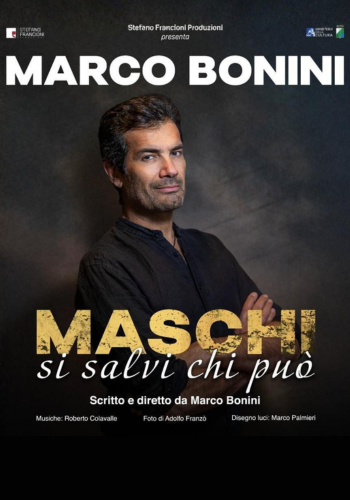
Maschi, si salvi chi può, the monologue written, directed and performed by Marco Bonini, is on at Teatro Ghione on Friday, November 20, 2026, at 20:30, for one night only, running 90 minutes. The theater is at Via delle Fornaci 37, 00165 Rome, between St. Peter's Square and the slopes of the Janiculum. The nearest train station is Roma San Pietro, served by the FL3 and FL5 regional trains, and for buses and up-to-date connections use the ATAC journey planner. The ticket costs 25 euros in the orchestra and the balcony, according to the theater's official website, and is sold on the show page on the Teatro Ghione website, which links to the authorized presale circuit, or by calling 06 6372294.
Language: performed in Italian. No English version or English surtitles are announced.
Maschi, si salvi chi può at Teatro Ghione at a glance
Maschi, si salvi chi può (roughly, Men, every man for himself) is a satire on masculinity in the form of a monologue, based on Marco Bonini's book of the same name, which Teatro Ghione presents with the subtitle La commedia di una vita.
Date and time
Friday, November 20, 2026, at 20:30. It's a single date: no further performances are planned at the Ghione. With 90 minutes of show you'll be out around 22:00, in time for a late dinner or the last regional train from San Pietro, to be checked first on the official timetable.
Length and price
The show runs 90 minutes. The ticket costs 25 euros, the same price for the orchestra and the balcony.
The credits
Text, direction and performance by Marco Bonini. Music by Roberto Colavalle.
What Maschi, si salvi chi può is about
Maschi, si salvi chi può is, according to Teatro Ghione's presentation, an ironic reflection on masculinity and the role of men, which takes apart the classic patriarchal narrative.
Paradox and irony
The show uses paradox and irony to analyze the origins and biological limits of the male. Not a rally speech or a self-accusation, but a comedy that makes the audience laugh at the weaknesses it recognizes.
Roles and stratagems
The heart of the argument, the theater says, is the male need to invent roles and stratagems to hide one's insecurities. The head of the family, the seducer, the tough guy, the winner: masks the monologue mocks one by one.
A biting satire
The presentation speaks of a biting satire that lays bare the fragilities of the male universe, tackled with intelligence and lightness. The tone is that of auteur comedy, where laughter serves to get an idea across.
From book to stage
The text comes from Bonini's own book of the same name. Bringing a humorous essay to the stage means turning arguments into characters and situations: the theatrical monologue, with a single actor and Roberto Colavalle's music, is the most direct form for doing so.
Marco Bonini: actor, screenwriter, writer, director
Marco Bonini, born in Rome on August 20, 1972, is a film, television and stage actor, screenwriter and producer, who in 2026 also made his debut as a film director.
Training
He started out studying classical and modern dance, then in 1991 moved to acting. He briefly attended the Accademia nazionale d'arte drammatica and then the Centro sperimentale di cinematografia, earning a philosophy degree from Sapienza University of Rome in the meantime.
Theater
He made his stage debut as an actor in the 1990s, with directors like Giancarlo Cobelli in Marguerite Yourcenar's Dialogo nella palude and Luca Ronconi in Gadda's Quer pasticciaccio brutto de via Merulana. He has performed in Shakespeare's Troilus and Cressida, Camus' Caligula, Pirandello's Enrico IV, Angelo Longoni's Ospiti and Paolo Genovese's Perfetti sconosciuti. With Joe Bologna he wrote Mr. Dago Show, which he also directed.
Television
TV audiences know him from many of the series and dramas he has been in: Perlasca, Imperium: Nerone, Don Matteo, Carabinieri, Un posto al sole, Tutti pazzi per amore, Un medico in famiglia, Il paradiso delle signore, La dottoressa Giò, Cuori and Tutto quello che ho.
Film
His films include Classe mista 3ª A by Federico Moccia, Under the Tuscan Sun by Audrey Wells, Billo, Il grand Dakhaar, which he also wrote and produced, Diciotto anni dopo by Edoardo Leo, All Roads Lead to Rome, and the two 2017 Smetto quando voglio films by Sydney Sibilia.
The screenwriter
Since 2000 he has also worked as a producer and screenwriter. With Edoardo Leo he wrote and acted in Lasciarsi un giorno a Roma, I migliori giorni and I peggiori giorni. In 2005 he drew up with Eros Puglielli and others The Coproducers manifesto, according to which everyone taking part in a film owns a share of the rights.
The writer and director
In 2019 Longanesi published his first novel, Se ami qualcuno dillo, a family story centered on the relationship between fathers and sons and on a critique of sexism. In 2026 he made it into his first film as director, with Edoardo Leo, Claudia Gerini and Giovanna Mezzogiorno. In summer 2020 he had debuted as coauthor of the shows La bimba col megafono, performed by Anna Foglietta, and Lo zingaro, performed by Marco Bocci.
A theme that runs through all of Bonini's work
Maschi, si salvi chi può isn't a one-off: the theme of masculinity and fatherhood has run through Marco Bonini's writing for years.
Fathers and sons
The novel Se ami qualcuno dillo tells of the relationship between fathers and sons and contains a critique of sexism. Maschi, si salvi chi può continues that discussion in a different tone, that of satire.
From novel to monologue
While the novel and the film work on family drama, the monologue works on laughter: two ways of tackling the same question, what it means to be a man today.
Writing for others
As a coauthor Bonini has already written monologues and shows for the stage built on a single performer, like La bimba col megafono for Anna Foglietta. In Maschi, si salvi chi può the performer is himself.
Marco Bonini on screen, decade by decade
Marco Bonini's career spans over 30 years of Italian film and television, with forays into international productions.
The 1990s
His TV debut came in 1993 with the series Estasi, followed by L'ispettore Sarti, I guardiani del cielo by Alberto Negrin, Le ragazze di Piazza di Spagna, La vera madre by Gianfranco Albano. In film, in 1996, Classe mista 3ª A by Federico Moccia and Dentro il cuore by Memè Perlini.
The 2000s
These are the years of the big RAI and Mediaset dramas: Il terzo segreto di Fatima, Perlasca, Commesse 2, Imperium: Nerone, 48 ore by Eros Puglielli, Ho sposato uno sbirro. In film, Under the Tuscan Sun, an American production shot in Italy, and the French film Ma femme... s'appelle Maurice. In 2007 Billo, Il grand Dakhaar, in which he's actor, screenwriter and producer.
The 2010s
On television came Un posto al sole, Tutti pazzi per amore, Il restauratore and above all Il paradiso delle signore, from 2015 to 2017. In film, Diciotto anni dopo by Edoardo Leo, Pane e burlesque, All Roads Lead to Rome and the two 2017 chapters of Smetto quando voglio.
The 2020s
Since 2021 he has been in the cast of Cuori. With Edoardo Leo he wrote and acted in Lasciarsi un giorno a Roma, I migliori giorni and I peggiori giorni. In 2026 his directing debut with Se ami qualcuno dillo.
Teatro Ghione, the hall on Via delle Fornaci
Teatro Ghione has about 500 seats and is the hall the actress Ileana Ghione bought and refitted on December 9, 1980, giving it her own name.
An actress's theater
Ileana Ghione, born in Cortemilia in 1931, had trained at the Accademia d'arte drammatica with Sergio Tofano and had been one of the faces of TV dramas, from Jane Eyre to I Buddenbrook. With the purchase on Via delle Fornaci she became her own producer, and she ran the hall for 25 years.
A broad program
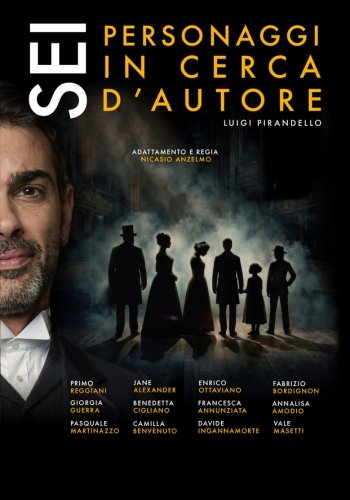
The Ghione has a long tradition of classic repertoire, from Wilde to Pirandello, from Shakespeare to Goldoni, but it also hosts concerts, comedy and auteur monologues like Bonini's. The following week, from November 26, the hall offers Six Characters in Search of an Author in a new version directed by Nicasio Anzelmo.
An ending on stage
Ileana Ghione died on December 3, 2005, after being taken ill on the stage of her theater while performing Euripides' Hecuba. Her lying in state was held in the hall.
Services
The tourism portal of Roma Capitale lists the theater as accessible to people with disabilities and mentions a dog sitting service. For information: 06 6372294, info@teatroghione.it.
Around Teatro Ghione
Teatro Ghione is between the Vatican and the Janiculum, in the area of Rome busiest with visitors by day and quietest in the evening.
St. Peter's
St. Peter's Square is a few minutes' walk away: before 20:30 you can cross the lit colonnade, with the square much less crowded than during the day.
Borgo and Castel Sant'Angelo
Toward the Tiber lies the Borgo district, with its narrow streets all the way to Castel Sant'Angelo. It's the most convenient area for an aperitivo before the show.
The Janiculum
Behind the theater rises the Janiculum: if you have the afternoon free, you can climb to the terrace and then come down toward Via delle Fornaci.
A day between the Vatican and the theater
Teatro Ghione lets you end a day devoted to the Vatican area with a show, without taking any transportation.
Morning at the Museums
The Vatican Museums can be reached on foot on the other side of the walls. Book your visit and check the Friday hours.
The afternoon in the basilica
St. Peter's Basilica is visited with security checks at the entrance. Check opening hours beforehand.
The Passetto
Between the Vatican and Castel Sant'Angelo runs the Passetto di Borgo, the elevated walkway you can follow with your eyes as you stroll the district's streets.
A green break
If you prefer greenery, you can go as far as Villa Doria Pamphilj, beyond the Janiculum, bearing in mind that in November the gates close early.
The evening in the square
Between the end of your visits and the start of the show there's usually an hour left: time to cross the colonnade, sit down for a coffee in Borgo and walk down toward Porta Cavalleggeri, from which the theater is a few minutes away. It's the simplest way to move from the Rome of visitors to the Rome of those who live there, without changing neighborhoods.
How to get to Teatro Ghione for Maschi, si salvi chi può
To reach Teatro Ghione by public transportation, the simplest option is the regional train to Roma San Pietro station, on lines FL3 and FL5, a few minutes' walk from the theater.
San Pietro station
Opened in 1894 with the line to Viterbo, the station has a bus stop and a taxi stand: useful on the way back, when after 22:00 runs are less frequent.
Buses
Several lines serve San Pietro and Porta Cavalleggeri, at the start of Via delle Fornaci. On Friday evening, check the runs on the ATAC journey planner.
Parking
The Teatro Ghione website lists among the nearby options a free open-air lot, the San Pietro parking garage and the Bonifacio garage. On Friday evening the area is less busy than on the weekend.
Planning the Friday evening
With a single date at 20:30 and 90 minutes of show, the Maschi, si salvi chi può evening is easy to plan: you're out around 22:00.
Before
An aperitivo in Borgo or a quick pizza on the streets toward Via Gregorio VII, and you reach the theater with half an hour to spare to pick up your tickets.
After
At 22:00 on a Friday the night is still young: Borgo, Prati and Trastevere are a few minutes away if you want to stretch the evening.
With company
A satire on masculinity is the ideal show to see as a couple or with friends, men and women, and to talk over afterward.
Tickets for Maschi, si salvi chi può
A ticket for Maschi, si salvi chi può at Teatro Ghione costs 25 euros, in the orchestra as in the balcony, according to the official website.
Where to buy it
Online on the show page of the theater's website, which links to the authorized presale circuit, or by calling 06 6372294 or writing to info@teatroghione.it.
One night only
With a single date, the best seats go first. At the same price, your choice of seat matters: the orchestra to see the actor up close, the center balcony for the overall view.
Accessibility and practical information
Teatro Ghione is listed as accessible to people with disabilities: if you have particular needs, call ahead to arrange entry and seating.
With teens
A satirical comedy about male roles is suitable for older teens, who often catch its points better than adults. For young children the length and the evening time are a limit.
Your dog
The dog sitting service listed by the official tourism portal lets you come with your dog: ask the theater how it works.
Where to eat before or after the show
The area around Teatro Ghione alternates places designed for Vatican visitors and neighborhood trattorias on the residential streets.
On the neighborhood streets
Between Via delle Fornaci, Via Gregorio VII and the slopes of the Janiculum there are pizzerias, trattorias and bars frequented by locals: the best choice for dinner before 20:30.
After the theater
After 22:00, head to Borgo, toward Prati or to Trastevere, where on Friday night places stay open until late.
A curious fact about Maschi, si salvi chi può by Marco Bonini at Teatro Ghione, November 20, 2026
The curious fact is that Marco Bonini started out in dance. Before acting, before philosophy at Sapienza, before film, he studied classical and modern dance, and only in 1991 did he move to acting studies. For an actor who brings to the stage a satire on the body and the biological limits of the male, it's a detail that makes you smile: the first language he learned was that of the body. The second curious fact concerns film. In 2005 Bonini signed with Eros Puglielli and others The Coproducers manifesto, according to which everyone taking part in a film owns a share of the economic exploitation rights. An actor who thinks about the distribution of power on a set is no surprise when he then thinks, in the theater, about the distribution of power within a couple or a family. The third curious fact is Roman. Bonini was born in Rome, graduated from Sapienza and acted in Gadda's Pasticciaccio directed by Luca Ronconi, Via Merulana novel: the city is a constant presence in his biography, all the way to Lasciarsi un giorno a Roma, written and performed with Edoardo Leo.
Something nobody tells you about Maschi, si salvi chi può by Marco Bonini at Teatro Ghione, November 20, 2026
Nobody says it, but the title should be read as a warning to the male audience. Maschi, si salvi chi può promises to lay bare the fragilities of the male universe, and if you walk into the hall convinced you're about to watch other men being mocked, you'll soon find you're in the target too. That's the mechanism of well-made satire: you laugh at the person in the next seat, then at yourself. A second thing: the subtitle the Ghione gives the show, La commedia di una vita, suggests a biographical structure. A man going through the ages and roles, from son to husband to father, and finding in each a script already written to perform. If you know Bonini's novel about fatherhood, you'll recognize the same sensibility, transposed into a comic key. A third, practical thing: with a single date and a single price of 25 euros for orchestra and balcony, the difference is made by when you buy. If you buy early, you choose your seat. If you wait, you take what's left. In a monologue, having the actor's face clearly in view matters.
My advice for attending Maschi, si salvi chi può by Marco Bonini at Teatro Ghione, November 20, 2026
My advice is to go in a mixed group of men and women and choose seats together. A satire on masculinity experienced side by side by men and women becomes a two-level evening: the show on stage and the reactions in the audience, which don't always match. In our opinion it's also the right show to give a friend who takes himself too seriously. As for seating: with a single price, the center orchestra is best, at a distance from which you can see the actor's face well. In a 90-minute monologue expression is half the text. Before the show, if time allows, it's worth crossing St. Peter's Square lit up: on a November Friday evening the square is almost empty and the light on the colonnade is very different from daytime. You reach the theater in a few minutes via Porta Cavalleggeri. If you're coming from out of town and want to build a tailor-made Roman weekend around the show, between the Vatican and less traveled neighborhoods, you can contact Tour Leader Pro, which organizes tailor-made private experiences.
Another well-known fact, yet rarely mentioned
It's well known that Teatro Ghione bears the name of its founder. It's mentioned less that Ileana Ghione died, in December 2005, after being taken ill on stage, in her own theater, while performing Euripides' Hecuba, and that her lying in state was held in the same hall. Few Roman theaters have a history so tied to a single person, from founding to the end. A second rarely mentioned fact concerns the neighborhood. Roma San Pietro station, which serves the theater, opened in 1894 with the line to Viterbo and for decades was a set for Italian cinema: Totò, Alberto Sordi and Virna Lisi shot scenes there. The railway that enters Vatican City also starts from there. Marco Bonini, a film actor before a stage actor, arrives in an area cinema knows well. A third fact: in 1996 Bonini acted in Quer pasticciaccio brutto de via Merulana directed by Luca Ronconi, a large ensemble production based on Gadda. The monologue at the Ghione goes in the opposite direction: a single actor, one score, a text of his own.
The right photo to take at Maschi, si salvi chi può by Marco Bonini at Teatro Ghione, November 20, 2026
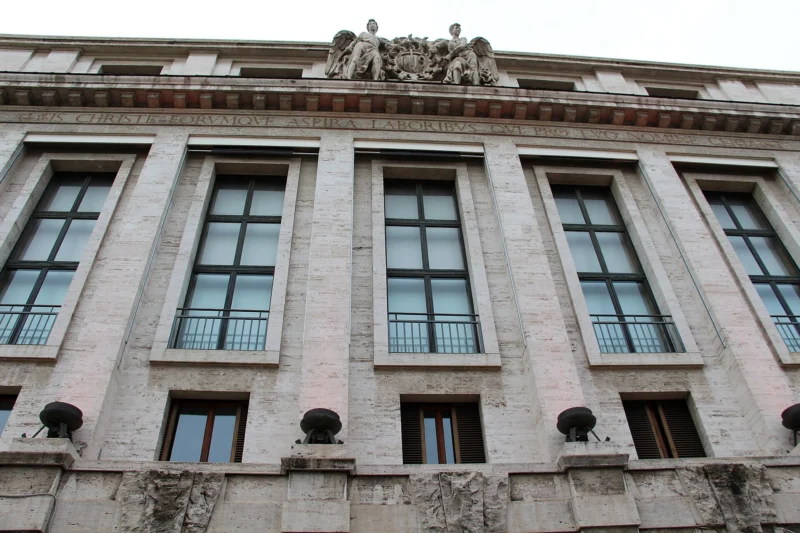
The right photo is taken before the show, at Porta Cavalleggeri: the gate in the Leonine Walls with the coats of arms of the Borgia family, placed there by Pope Alexander VI, and the dome of St. Peter's glimpsed behind it. At eight in the evening in late November it's dark, and the gate lit by streetlamps has a theatrical air that suits the evening. The second photo is the colonnade of St. Peter's Square at night, with the square almost empty: an image very different from the crowded postcards. The third is the Ghione's facade with Marco Bonini's poster: the souvenir of a single date. No photos or videos in the hall: in a comic monologue the timing of the jokes is everything, and the glow of a phone in the dark distracts the actor and the audience. At the end, during the applause, a shot is usually tolerated. If the actor stops in the foyer, asking for a photo is the simplest way to take home a personal souvenir of the evening.
Some important events that happened here in history
Via delle Fornaci area has a history running from the Middle Ages to the 20th century. Porta Cavalleggeri, at the start of the street, is one of the gates of the Leonine Walls and keeps the Borgia coats of arms ordered by Alexander VI. On April 30, 1849, the first French attack against the Roman Republic was fought at Porta Cavalleggeri and driven back by the defenders. Among them was a young actor, Tommaso Salvini. An actor on the barricades, a few meters from where a theater stands today. In 1894 San Pietro station opened, on the line to Viterbo, and in the 20th century it would become a set for Italian cinema. On December 9, 1980, Ileana Ghione bought the old theater on Via delle Fornaci and reopened it under her name. On November 25, 1986, Candida by George Bernard Shaw was staged there, directed by Silverio Blasi. In 2001 the founder was named Grand Officer of the Order of Merit of the Republic. On December 3, 2005, she died after being taken ill on stage during Euripides' Hecuba. On November 20, 2026, the hall hosts a contemporary monologue, written and performed by a Roman actor: a line running from the founder's actor's theater to today.
Who has passed through Maschi, si salvi chi può by Marco Bonini at Teatro Ghione, November 20, 2026
The figure who shaped this theater is Ileana Ghione: a student of Sergio Tofano, a face of RAI dramas from Jane Eyre to Madame Curie, performer in Giacosa's Come le foglie alongside Tino Carraro, founder and director of the hall for 25 years. Her stage has seen the classics, from Shaw directed by Silverio Blasi to the Greek tragedies. The surrounding neighborhood has seen the popes who built and restored the Leonine Walls, the defenders of the Roman Republic of 1849, among them Tommaso Salvini, and the Italian film crews who shot with Totò, Alberto Sordi and Virna Lisi at San Pietro station. In the current season the Ghione hosts, among others, Six Characters in Search of an Author with Primo Reggiani and Jane Alexander. On November 20, 2026, it's the turn of Marco Bonini, a Roman actor who has worked with Luca Ronconi and Giancarlo Cobelli, written films with Edoardo Leo and novels for Longanesi, and who for one evening is author, director and sole performer, with music by Roberto Colavalle.
Who Maschi, si salvi chi può is for
Maschi, si salvi chi può speaks to a wide audience, but some people will get more out of it than others: a small map helps you decide.
For couples
A satire on male roles watched as a couple inevitably becomes a mirror. The trip home after the show will probably be full of comments: it's part of the fun.
For fathers
The theme of fatherhood runs through Bonini's writing, from the novel Se ami qualcuno dillo to the film he made from it. If you're a father, or about to become one, you'll find more than one recognizable situation in the monologue.
For fans of the actor
The audience that knows Bonini from television, from Il paradiso delle signore to Cuori, has the chance to see him in a different register: alone on stage, author of every word, without the mediation of the camera.
For lovers of spoken theater
The monologue is an old and difficult form: 90 minutes in which a single performer holds the stage with the text and the body. If you appreciate this kind of challenge, you'll have plenty to judge.
For those looking for a light evening
If you just want to laugh, you'll find a comedy. If you also want to think, you'll find a discussion of masculinity to take home. The two, in this case, go together.
A November Friday in Rome
November 20 falls in a quiet period for Rome, between the end of autumn and the start of the holidays.
The weather
Evenings are cool and often damp: a light coat and an umbrella are enough. At 20:30 it has long been dark, and the lit city has a different charm from summer.
The weekend
If you're coming to Rome for the weekend, you can start with Bonini's monologue on Friday and devote Saturday and Sunday to the Vatican, Borgo and the Janiculum, all a short walk from the theater.
Frequently asked questions about Maschi, si salvi chi può at Teatro Ghione
When is Maschi, si salvi chi può on at Teatro Ghione?
Maschi, si salvi chi può is on at Teatro Ghione in Rome on Friday, November 20, 2026, at 20:30, for one date only. Marco Bonini's show runs 90 minutes.
How much is a ticket?
A ticket for Maschi, si salvi chi può at Teatro Ghione costs 25 euros, in the orchestra and the balcony. It's sold on the show page of the theater's website or by calling 06 6372294.
What is the show about?
Maschi, si salvi chi può is a satirical monologue by Marco Bonini on masculinity and the role of men, based on his book of the same name. With paradox and irony it tells of the male need to invent roles and stratagems to hide one's insecurities.
Who is Marco Bonini?
Marco Bonini, star of Maschi, si salvi chi può, is a Roman actor born in 1972, known for Il paradiso delle signore, Cuori and the films written with Edoardo Leo. He's the author of the novel Se ami qualcuno dillo and in 2026 made his debut as a film director.
Where is Teatro Ghione?
Teatro Ghione is at Via delle Fornaci 37, between St. Peter's Square and the Janiculum. The nearest station is Roma San Pietro, served by the FL3 and FL5 regional lines. The theater also lists some parking options nearby.
Is the show suitable for teens?
Maschi, si salvi chi può at Teatro Ghione is a satirical comedy suitable for older teens and adults. The evening time and the 90-minute length make it not very suitable for young children.
Final advice on Maschi, si salvi chi può
Maschi, si salvi chi può at Teatro Ghione is, in our opinion, a light evening with a thought inside it: an actor who knows the trade from every side, a topical theme and the courage to laugh at himself. Our advice is to buy early, since it's a single date, sit in the center of the orchestra and go in a mixed group, to enjoy the reactions of the people next to you too. Then, on the way out, a walk to St. Peter's Square lit up.
Article written by the editorial team of Tour Leader Pro, contact them for Private/Corporate/V.I.P. Tours and Experiences.
Planning a trip to Rome? English guides to visiting the city are on ItalyPlanner.com.
Contact Information
Nearby
 Teatro Ghione100 m
- Camposanto Teutonico300 m
- Santi Michele e Magno400 m
- Passeggiata del Gelsomino400 m
- Piazza San Pietro400 m
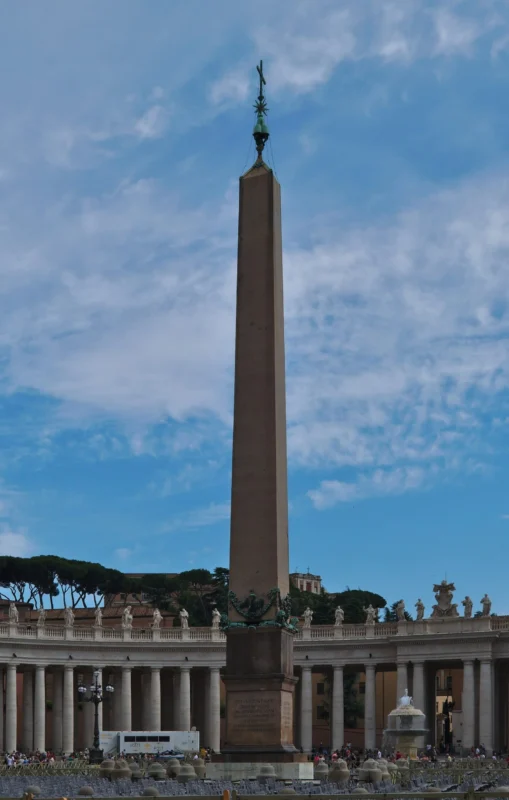
- Obelisco Vaticano400 m

Upcoming events nearby
- Peter Hammill at Teatro Ghione, November 10, 2026100 m
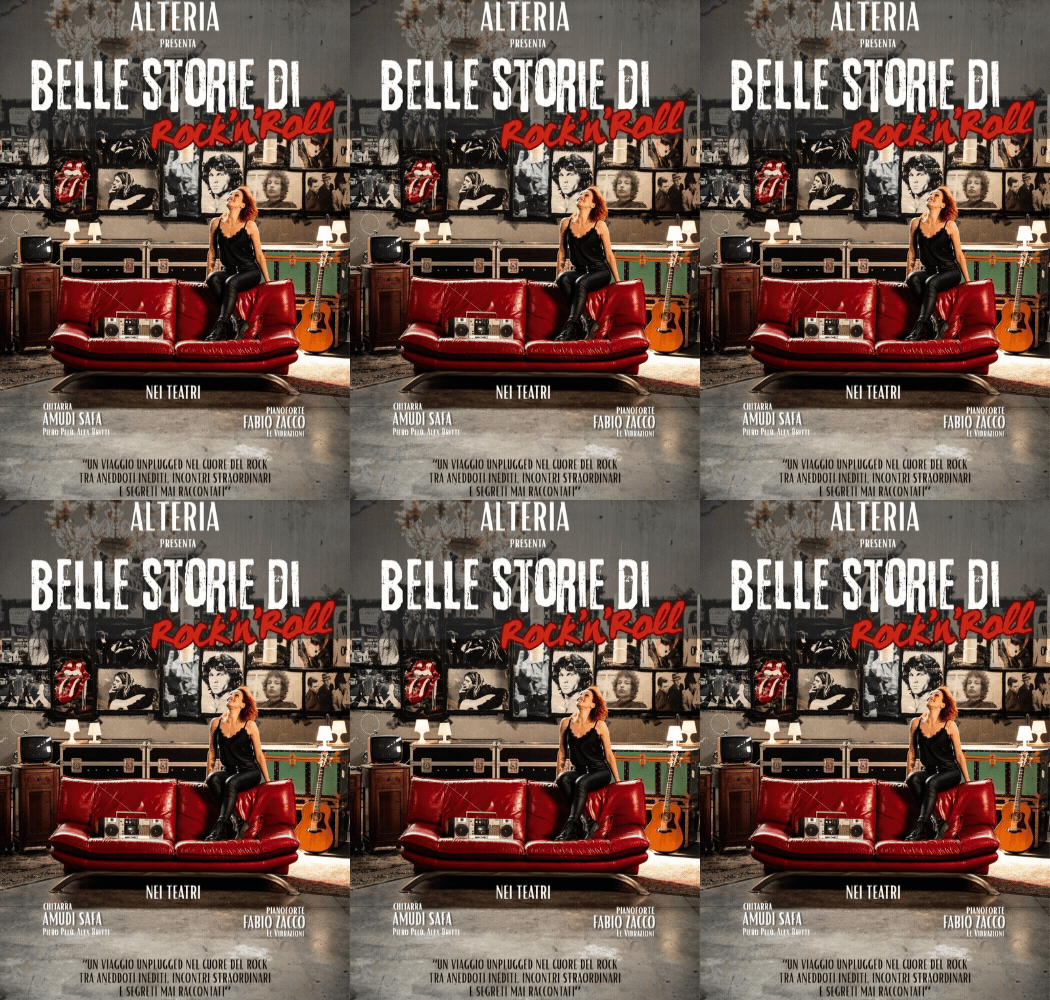
- Alteria, Belle storie di Rock’n Roll at Teatro Ghione, November 14, 2026100 m
- Le Stelle di Lucio at Teatro Ghione, November 11, 2026100 m
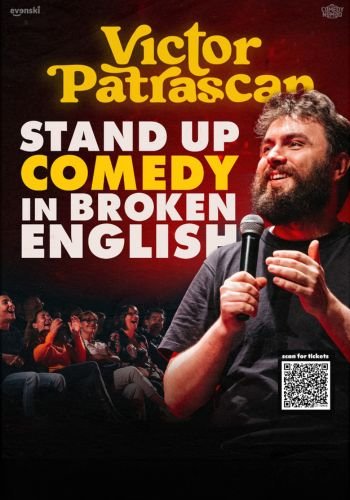
- Victor Patrascan, stand up comedy in broken English at Teatro Ghione, November 18, 2026100 m


You might also like
- Six Characters in Search of an Author at Teatro Ghione, November 26 to 29, 2026
- Non aprite quel teatro at Auditorium Conciliazione, November 16, 2026
- Sugo finto at Teatro Manzoni with Francesca Reggiani, April 8 to 25, 2027
- Il gufo e la gattina with Giobbe Covatta and Patrizia Pellegrino at Teatro Manzoni, May 6 to 23, 2027
- Gemetflix by Gemelli di Guidonia at Teatro Ghione, February 27 and 28, 2027
- A Midsummer Night’s Dream by Daniele Salvo at Teatro Manzoni, February 11 to 28, 2027