Le Stelle di Lucio at Teatro Ghione, November 11, 2026
In short. On Wednesday, November 11, 2026, at 20:30, Teatro Ghione in Rome hosts Le Stelle di Lucio (Lucio's Stars), a tribute concert to Lucio Dalla with a band of six musicians and two backing singers and Antonio Nasca on piano and vocals.

On Wednesday, November 11, 2026, at 20:30, Teatro Ghione in Rome hosts Le Stelle di Lucio (Lucio's Stars), a tribute concert to Lucio Dalla with a band of six musicians and two backing singers and Antonio Nasca on piano and vocals. Nasca is also the producer and artistic director. The show lasts 90 minutes. The Ghione is at Via delle Fornaci 37, a few minutes' walk from St. Peter's Square. The nearest station is Roma San Pietro, served by the FL3 and FL5 regional trains. According to the theater's website tickets cost 33 euros in the orchestra and 28 euros in the gallery. They're sold on the Ghione's official website, which links to the authorized presale network, and at the theater's box office. The Ghione accepts the carta cultura.
The theater presents the evening as a journey through Lucio Dalla's most loved songs, from poetry to lightness, from irony to depth. In our opinion it's a good chance to hear live again, in an intimate hall, the repertoire of one of Italy's greatest singer-songwriters, almost 15 years after his death.
Le Stelle di Lucio: the November 11 concert
Le Stelle di Lucio is a concert dedicated to Lucio Dalla's poetic and musical universe, on stage at Teatro Ghione on Wednesday, November 11, 2026, at 20:30, with a running time of 90 minutes.
The presentation
According to the theater's presentation, the show goes through the most loved songs and the atmospheres that made Dalla's music unique, with elegant arrangements and a narrative that leads the audience into the songwriter's world. On stage, a band of musicians retraces melodies and stories that have made whole generations dream.
The title
The title plays with the image of stars, and the official poster turns it into a drawing: a night sky in which the stars, joined by thin lines, draw the songwriter's round glasses and hat. The presentation closes with the same image: Dalla's music that keeps shining, like his stars.
A single date
The Ghione lists a single performance, Wednesday, November 11, at 20:30. If you want to be there, there's no alternative on the calendar.
The musicians of Le Stelle di Lucio
The lineup of Le Stelle di Lucio, according to the theater's page and the official poster, includes six musicians and two backing vocalists, with Antonio Nasca on piano and vocals.
Piano and vocals
Antonio Nasca is on piano and vocals, and is the show's producer and artistic director. Dalla played piano throughout his career, along with saxophone and clarinet: giving the lead vocals to a pianist is a choice consistent with the repertoire.
The band
Stefano Profazi is on guitars, Paolo Grillo on bass and musical direction, Fabrizio Boffi on keyboards, Gian Piero Lo Piccolo on saxophone and clarinet, Marco Tardioli on drums, as listed on the poster. On backing vocals are Marilicia Piccaluga and Giorgia Cardone.
Saxophone and clarinet
The presence of a wind player, with saxophone and clarinet, is a detail Dalla fans will appreciate: these are exactly the two instruments the songwriter played from his youth, along with the piano, and they shaped his style.
The direction
The optimization and direction of the show are by Alessandra Casale. Having a director suggests an evening built as a show, with a narrative linking the songs together.
Who Lucio Dalla was
Lucio Dalla, born in Bologna on March 4, 1943, and died in Montreux on March 1, 2012, was a singer-songwriter, composer, multi-instrumentalist, record producer and actor, considered one of Italy's greatest singer-songwriters.
Jazz
A jazz-trained musician, Dalla taught himself to play the clarinet he received as a present for his 10th birthday. As a teenager he joined Bologna's Rheno Dixieland Band, which also included future film director Pupi Avati, and he played several times with Chet Baker, who was then living in the city.
Antibes and Rome
In 1960 he took part with the Rheno in the first European jazz festival in Antibes, placing first among the traditional bands. Shortly afterward he caught the attention of an orchestra of Roman professionals, the Seconda Roman New Orleans Jazz Band, with which in 1961 he had his first recording studio experience, playing clarinet on a cover of Telstar.
The Flippers and Sanremo
At the end of 1962 he joined the Flippers. In the 1960s he took part in the Sanremo Festival several times, and in 1971 he placed third with 4/3/1943, with lyrics by Paola Pallottino, a song that had to get past censorship before being admitted to the festival.
The first songs
In his jazz years Dalla also began writing his first songs, with ironic titles such as Il prode invertito and Avevo un cane... adesso non ce l'ho più. It's the sign of a sense of humor that would never leave him, and that coexists, in his repertoire, with his most melancholy songs.
A legacy
Initially the author of the music only, Dalla later established himself as a lyricist too, becoming, according to critics, one of the most influential and innovative artists of 20th-century Italy. His legacy is considered one of the richest in the country's music, and his songs continue to be played by musicians of different generations, like those who take the stage at the Ghione.
The seasons of Lucio Dalla, from Roversi to Caruso
Lucio Dalla's musical activity falls into four main periods: his jazz origins and festivals between 1962 and 1972, the collaboration with poet Roberto Roversi between 1973 and 1976, his artistic maturity between 1977 and 1996, and the pop phase of his last years.
Roversi
In the years with Roversi, Dalla wrote the music for the Bologna poet's lyrics. From that experience a different songwriter emerged: although a pure musician, according to critics he showed solid literary command from the very start of his work as a lyricist.
The lyricist
In 1977 he released Com'è profondo il mare, his first album with lyrics entirely his own, which with the title track takes aim at power and freedom of thought. In 1979 came the album Lucio Dalla, with Anna e Marco, L'ultima luna, Stella di mare, Cosa sarà and L'anno che verrà.
Dalla
In 1980 the album Dalla contained songs hailed as classics: Futura, Cara, Balla balla ballerino and La sera dei miracoli, which the sources note is dedicated to Rome.
Caruso and the last years
Caruso became one of the most famous Italian songs in the world, with about 38 million copies sold according to estimates. In the 1990s came Cambio, with Attenti al lupo. In 2003 Dalla staged his own Tosca, Amore disperato, based on Puccini, with a song sung together with Mina.
Lucio Dalla and Rome
Lucio Dalla was from Bologna, but Rome had an important place in his story: from his first recording with a band of Roman jazz musicians to the song he dedicated to the city, all the way to the concert at Stadio Flaminio that launched Banana Republic.
The song La sera dei miracoli
La sera dei miracoli, from the 1980 album Dalla, is the song the songwriter dedicated to Rome. Hearing it in a theater a short walk from St. Peter's has a special flavor.
Stadio Flaminio
In 1979 the Banana Republic tour with Francesco De Gregori filled stadiums all over Italy, with a record that sold 500,000 copies. The tour had been launched by a concert at Rome's Stadio Flaminio, with 40,000 spectators.
His fellow travelers
During his career Dalla worked and sang duets with Francesco De Gregori, Mina, Gianni Morandi, Luciano Pavarotti, Zucchero and Sting.
Lucio Dalla songs to listen to again
The set list of Le Stelle di Lucio isn't published, but the theater announces a journey through the songwriter's most loved songs: the repertoire to choose from is vast.
The 1970s
From the 1970s: 4/3/1943, Com'è profondo il mare, Anna e Marco, L'anno che verrà, Cosa sarà, Stella di mare: the songs that made Dalla a complete songwriter.
The 1980s and 1990s
From the 1980s and 1990s: Futura, Cara, La sera dei miracoli, Balla balla ballerino, Caruso, Attenti al lupo: the period of maturity and big popular hits.
A listening tip
If you want to arrive prepared, listen again to the 1980 album Dalla, with Futura and La sera dei miracoli: eight tracks that critics consider true classics of the repertoire.
The tribute concert, a genre of its own
The tribute concert is a form of show that brings to the stage the repertoire of a great songwriter with musicians other than the original ones, and in Rome it has a loyal audience, especially when the songwriter is no longer with us.
Neither imitation nor covers
A good tribute doesn't imitate the songwriter's voice and doesn't just remake the records: it chooses a thread, builds its own arrangements, tells the story of the songs. The presentation of Le Stelle di Lucio insists on this point, speaking of elegant arrangements and a narrative, and the presence of a director confirms it.
Dalla's repertoire live
Dalla's songs lend themselves particularly well to this work. They come from a musician who came from jazz, with rich harmonies and melodies that hold up to very different arrangements, from solo piano to a full band with horns. That's why they continue to be played by musicians of every kind.
An audience of several generations
At a tribute to a songwriter like Dalla you meet those who listened to him in the 1970s, those who discovered him with Caruso and Attenti al lupo, and younger people, who know him through their parents. It's an evening you can share as a family.
Tickets for Le Stelle di Lucio at Teatro Ghione
Tickets for Le Stelle di Lucio at Teatro Ghione cost 33 euros in the orchestra and 28 euros in the gallery, according to the show page on the theater's website.
Orchestra or gallery
From the orchestra the stage is close and you see the piano from a few meters away. The gallery offers an overall view for five euros less. For a concert of songs the difference in sound is minimal: personal preference matters more.
Where to buy
Tickets can be bought on Teatro Ghione's website, which links to the authorized presale network, or by contacting the theater at 06 6372294 or info@teatroghione.it. The website notes that you can get into the Ghione with the carta cultura.
Teatro Ghione, Ileana Ghione's hall
Teatro Ghione is a hall of about 500 seats at Via delle Fornaci 37, between the Vatican and the slopes of the Janiculum, founded and run for 25 years by actress Ileana Ghione.
Drama and concerts
For decades the program has alternated classic drama, with Wilde, Pirandello, Shakespeare and Goldoni, and concerts. In the same week as Le Stelle di Lucio, on November 10, the Ghione hosts Peter Hammill, founder of Van der Graaf Generator. In October the theater hosted FlaMENcos and Giovanni Cacioppo.
Ileana Ghione
Born in Cortemilia, in Piedmont, on January 15, 1931, Ileana Ghione trained in the 1950s at the Accademia d'arte drammatica, with Sergio Tofano among her teachers. She was a face of Italian TV drama, from Jane Eyre to David Copperfield, and performed Giacosa's Come le foglie with Tino Carraro. On December 9, 1980, she bought and refitted the old theater on Via delle Fornaci, which has carried her name ever since. The general page on the hall is the one on Teatro Ghione.
How to get to Teatro Ghione
The most convenient way to reach Teatro Ghione is the regional train to Roma San Pietro station, served by the FL3 and FL5 lines, a few minutes' walk from Via delle Fornaci.
By train
From San Pietro station, which also has a bus stop and a taxi stand, you walk up Via delle Fornaci to the theater.
By bus and metro
The buses in the area serve San Pietro station and Largo di Porta Cavalleggeri. Check lines and evening times on the ATAC planner. The nearest metro A stops are in Prati, about a 20-minute walk through Borgo and St. Peter's Square.
By car
The Ghione website lists three parking options nearby: a free open-air parking lot, the San Pietro parking garage and the Bonifacio garage.
What to see around Teatro Ghione
Teatro Ghione is between St. Peter's, Borgo and the Janiculum, and before an evening concert the afternoon offers plenty of options.
St. Peter's and Borgo
St. Peter's Square is a few minutes' walk away. Between the square and the Tiber lies the Borgo district, with the Passetto reaching Castel Sant'Angelo.
The Janiculum and Villa Pamphilj
Behind the theater rises the Janiculum, with its terrace over the city. Farther south is Villa Doria Pamphilj.
Where to eat before or after Le Stelle di Lucio
Around Teatro Ghione there are pizzerias, trattorias and bars in the streets between Via delle Fornaci, Via Gregorio VII and the slopes of the Janiculum, frequented mostly by people who live in the neighborhood.
Before
With a 20:30 start, an early dinner, around 19:00, or an aperitivo in the neighborhood are the most convenient solutions. The places facing Via della Conciliazione and the square are designed mainly for tourists.
After
The concert ends around 22:00: there's time for dinner after the show in Borgo, Prati or Trastevere. On Wednesday evenings kitchens close earlier than on the weekend, and a reservation made in the afternoon avoids surprises. If you'd rather have something simple, you'll find pizzerias open later in the residential streets around Via Gregorio VII.
Accessibility, children and families
Teatro Ghione is listed as accessible to people with disabilities by the tourism portal of Roma Capitale, which also mentions a dog-sitting service.
People with disabilities
If you use a wheelchair or need assistance, it's useful to call the theater before the evening, at 06 6372294, to find out how access is organized and where the reserved seats are.
With kids
90 minutes of well-known songs are a good way to introduce younger people to Lucio Dalla. The 20:30 time, with the end around 22:00, also works on a school night.
How to plan the Le Stelle di Lucio evening
The Le Stelle di Lucio evening at the Ghione starts at 20:30 and ends around 22:00: a Wednesday evening that's easy to put together even for those coming from far away.
The afternoon
If you come to Rome for the concert, you can spend the afternoon at St. Peter's or on the Janiculum, both a few minutes from the theater, and have an early dinner in the neighborhood.
Arriving
Arriving around 20:15 lets you find your seat without rushing. If you come by car, it's best to leave earlier, to choose among the parking options listed by the theater.
Getting back
At 22:00 regional trains from San Pietro are still running, but check the last useful train before going out. Alternatively, Roma Capitale's radio taxi answers at 060609.
Rome in mid-November
In mid-November Rome often has mild days and cool, damp evenings: the right weather for an afternoon on foot and an evening at the theater.
The weather
By day it's pleasant to walk between St. Peter's and the Janiculum. In the evening you'll need a jacket for the walk up from the station and for leaving the theater, where you'll happily leave it at the coat check, if available.
A week of music at the Ghione
The week of November 11 is a rich one for the Ghione: Peter Hammill on November 10, Le Stelle di Lucio on the 11th. Two evenings of singer-songwriter music, one English and one Italian, in the same hall, a day apart.
A curious fact about Le Stelle di Lucio at Teatro Ghione, November 11, 2026
The nicest curiosity linked to this evening concerns the first record Lucio Dalla played on. Before becoming the songwriter of Caruso and Futura, the young Bologna clarinetist caught the attention of an orchestra of Roman professionals, the Seconda Roman New Orleans Jazz Band, made up of Maurizio Majorana, Mario Cantini, Peppino De Luca, Roberto Podio and Piero Saraceni. With them, in 1961, he went into a recording studio for the first time, playing clarinet on an instrumental cover of Telstar released by RCA as a 45. Dalla's first step on record, then, was Roman, and it was jazz.
The second curiosity concerns the clarinet. Dalla received it as a present for his 10th birthday from Walter Fantuzzi, the husband of his mother's partner in the family tailoring business, and taught himself to play it. As a young man he played with Chet Baker, who was then living in Bologna. On the Ghione stage, on November 11, the clarinet is back in the hands of Gian Piero Lo Piccolo: a tribute, perhaps unintentional, to the instrument where it all began.
Something nobody tells you about Le Stelle di Lucio at Teatro Ghione, November 11, 2026
What few people say is that Lucio Dalla, in the first years of his career, didn't write the lyrics of his songs. He was a pure musician, and the words were written by others: 4/3/1943, third at the 1971 Sanremo Festival, has lyrics by Paola Pallottino, who later became an art historian, and in the years between 1973 and 1976 the lyrics were by poet Roberto Roversi. Only in 1977, with Com'è profondo il mare, did Dalla become his own lyricist. Many of the songs you'll hear at the Ghione belong to this second life, which began at 34.
The second thing concerns the running time: the theater's page gives 90 minutes. In an hour and a half there isn't room for the whole repertoire of a songwriter who wrote for 50 years, and the choice of songs will say a lot about how Antonio Nasca and the band read Dalla. The third is practical: the Ghione accepts the carta cultura, a useful detail for young people who are entitled to it.
My advice for seeing Le Stelle di Lucio at Teatro Ghione, November 11, 2026
My advice is to listen again, in the days before the evening, to the two albums that mark Lucio Dalla's maturity: Lucio Dalla, from 1979, with Anna e Marco and L'anno che verrà, and Dalla, from 1980, with Futura, Cara and La sera dei miracoli. These are the records from which an important part of the set list will most likely come, and arriving at the Ghione with those songs in your ear lets you appreciate the band's arrangements.
The second piece of advice concerns your seat. The orchestra costs five euros more than the gallery and puts you a few meters from the piano and the winds: for those who love the sound of the clarinet and saxophone, which have a special role in Dalla, it's worth the difference. The third concerns timing: with a 20:30 start, an early dinner in the neighborhood and arriving at 20:15 let you sit down without rushing. The fourth: if you have time, you can stay in the area the evening before too, for Peter Hammill, and make the Ghione your theater for two evenings of singer-songwriter music.
Another well-known fact, yet seldom mentioned
It's well known that Caruso is one of the most famous Italian songs in the world, with about 38 million copies sold according to estimates. Less often mentioned is Dalla's relationship with opera, which runs through his whole career and doesn't stop at Caruso. In 2003 the songwriter decided to try his hand at opera, writing and staging his own Tosca, Amore disperato, based on Giacomo Puccini's masterpiece. From the show he also took the song Amore disperato, which he performed with Mina: her voice sings much of the lyrics, alternating with the Bologna songwriter's.
A second seldom cited fact concerns the South. As a boy Dalla spent his holidays in Puglia, in Manfredonia, where he finished middle school in the 1955-56 school year. On the Tremiti Islands, where his mother was given a house, he then spent every summer and opened a recording studio. In Manfredonia, after his death, the town theater was named after him. The quintessential Bologna songwriter had, by his own admission, two souls: a northern one and a southern one.
The right photo to take at Le Stelle di Lucio at Teatro Ghione, November 11, 2026
The right photo at Le Stelle di Lucio is taken before the start: the Ghione stage with the piano, the instruments waiting and, if the theater displays it, the poster with the stars drawing Dalla's glasses and hat. During the concert my advice is not to take any: in a dark theater a lit screen disturbs the people around you, and Dalla's songs deserve to be listened to.
The second photo is taken on the way out, around 22:00. Walking down Via delle Fornaci toward Largo di Porta Cavalleggeri you come to the Leonine Walls, with the dome of St. Peter's close by: a nighttime image of Rome that at that hour, on a Wednesday, you have almost all to yourself.
The third is a tribute. La sera dei miracoli is the song Dalla dedicated to Rome: a photo of the city at night, taken on your way home after the concert, is the simplest way to end the evening in the songwriter's name.
Some important events that happened here
The area of Teatro Ghione has an ancient history. The Leonine Walls ran here, and Porta Cavalleggeri preserves the Borgia coats of arms of Pope Alexander VI. On April 30, 1849, the first attack of French troops against the Roman Republic was fought at Porta Cavalleggeri, and it was driven back by the defenders, among whom was the young actor Tommaso Salvini.
In 1894 San Pietro station opened, on the line to Viterbo. The Vatican railway also starts here, and film has used the station as a set, with Totò, Alberto Sordi and Virna Lisi. On December 9, 1980, Ileana Ghione bought the old theater on Via delle Fornaci and reopened it with her name, and on November 25, 1986, Shaw's Candida was staged there, directed by Silverio Blasi.
In December 2005 Ileana Ghione, while performing Euripides' Hecuba on her own stage, was taken ill and died shortly afterward. Her body lay in state in the theater. On November 11, 2026, the same hall welcomes the songs of Lucio Dalla, who died in 2012.
Who has passed through Le Stelle di Lucio at Teatro Ghione, November 11, 2026
Some of the biggest names in Italian and international music passed through Lucio Dalla's life. Chet Baker, with whom he played as a young man in Bologna, Pupi Avati, his bandmate in the Rheno Dixieland Band, the Roman jazz musicians of the Seconda Roman New Orleans Jazz Band, Paola Pallottino and Roberto Roversi, authors of his lyrics, Francesco De Gregori, his partner in Banana Republic, Mina, the voice of Amore disperato, Gianni Morandi, Luciano Pavarotti, Zucchero, Sting. The sources also recall his duets with Bud Powell, Charles Mingus and Eric Dolphy.
On the Le Stelle di Lucio stage are Antonio Nasca, Paolo Grillo, Stefano Profazi, Fabrizio Boffi, Gian Piero Lo Piccolo, Marco Tardioli, Marilicia Piccaluga and Giorgia Cardone, directed by Alessandra Casale.
The Ghione has seen the classics of drama and the face of Ileana Ghione, a student of Sergio Tofano. The surrounding neighborhood has seen popes and soldiers, the Borgias and Tommaso Salvini. Those who love Dalla's songs will also find another tribute in Rome, La Sera dei Miracoli at Teatro Olimpico, in December.
Frequently asked questions about Le Stelle di Lucio at Teatro Ghione
When is Le Stelle di Lucio on in Rome?
Le Stelle di Lucio, a tribute concert to Lucio Dalla, is on at Teatro Ghione in Rome on Wednesday, November 11, 2026, at 20:30. It's the only performance listed by the theater, and the show lasts 90 minutes.
How much are tickets for Le Stelle di Lucio?
Tickets for Le Stelle di Lucio at Teatro Ghione cost 33 euros in the orchestra and 28 euros in the gallery, according to the theater's website. They're sold online from the Ghione's website, and the theater accepts the carta cultura.
Who plays in Le Stelle di Lucio?
Le Stelle di Lucio features Antonio Nasca on piano and vocals, Stefano Profazi on guitars, Paolo Grillo on bass, Fabrizio Boffi on keyboards, Gian Piero Lo Piccolo on sax and clarinet and Marco Tardioli on drums, with Marilicia Piccaluga and Giorgia Cardone on backing vocals.
Which Lucio Dalla songs will you hear?
The set list of Le Stelle di Lucio isn't published: Teatro Ghione announces a journey through Lucio Dalla's most loved songs, with elegant arrangements and a narrative linking the songs.
Where is Teatro Ghione?
Teatro Ghione is at Via delle Fornaci 37, a few minutes' walk from St. Peter's Square. The nearest station is Roma San Pietro, served by the FL3 and FL5 trains, and the theater also lists parking nearby.
How long is Le Stelle di Lucio?
Le Stelle di Lucio lasts 90 minutes, according to Teatro Ghione's page. With a 20:30 start, the evening ends around 22:00.
Final advice on Le Stelle di Lucio at Teatro Ghione
Le Stelle di Lucio at Teatro Ghione is an evening for those who love Lucio Dalla's songs and want to hear them live again in an intimate hall, with a full band with winds and backing vocals. My advice is to choose the orchestra, listen again to the 1979 and 1980 albums in the days before, have an early dinner in the neighborhood and arrive at 20:15. On the way out, a walk to Porta Cavalleggeri ends the evening the right way, with La sera dei miracoli in your head. Those who really love Dalla can make the Ghione the theater of a small singer-songwriter week, with Peter Hammill the evening before, and also mark on their calendar the December tribute at Teatro Olimpico.
Article written by the editorial team of Tour Leader Pro, contact them for Private/Corporate/V.I.P. Tours and Experiences.
Planning a trip to Rome? The English-language guides for visiting the city are on ItalyPlanner.com.
Contact Information
Nearby
 Teatro Ghione100 m
- Camposanto Teutonico300 m
- Santi Michele e Magno400 m
- Passeggiata del Gelsomino400 m
- Piazza San Pietro400 m
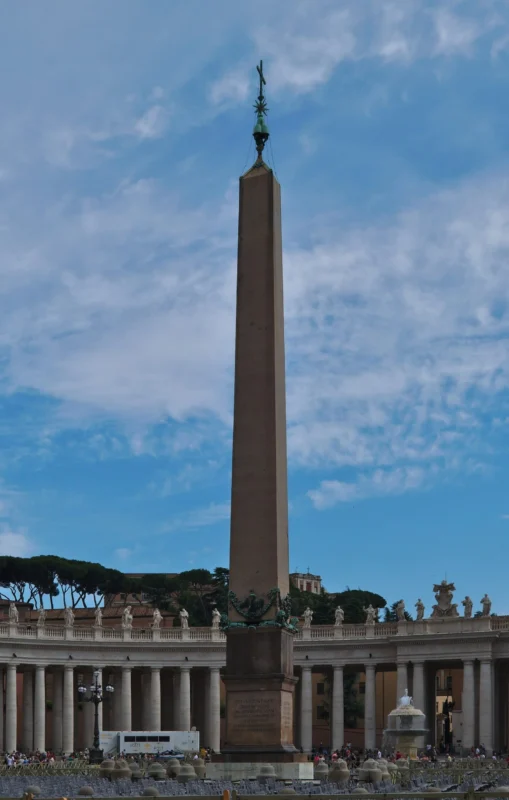
- Obelisco Vaticano400 m

Upcoming events nearby
- Peter Hammill at Teatro Ghione, November 10, 2026100 m
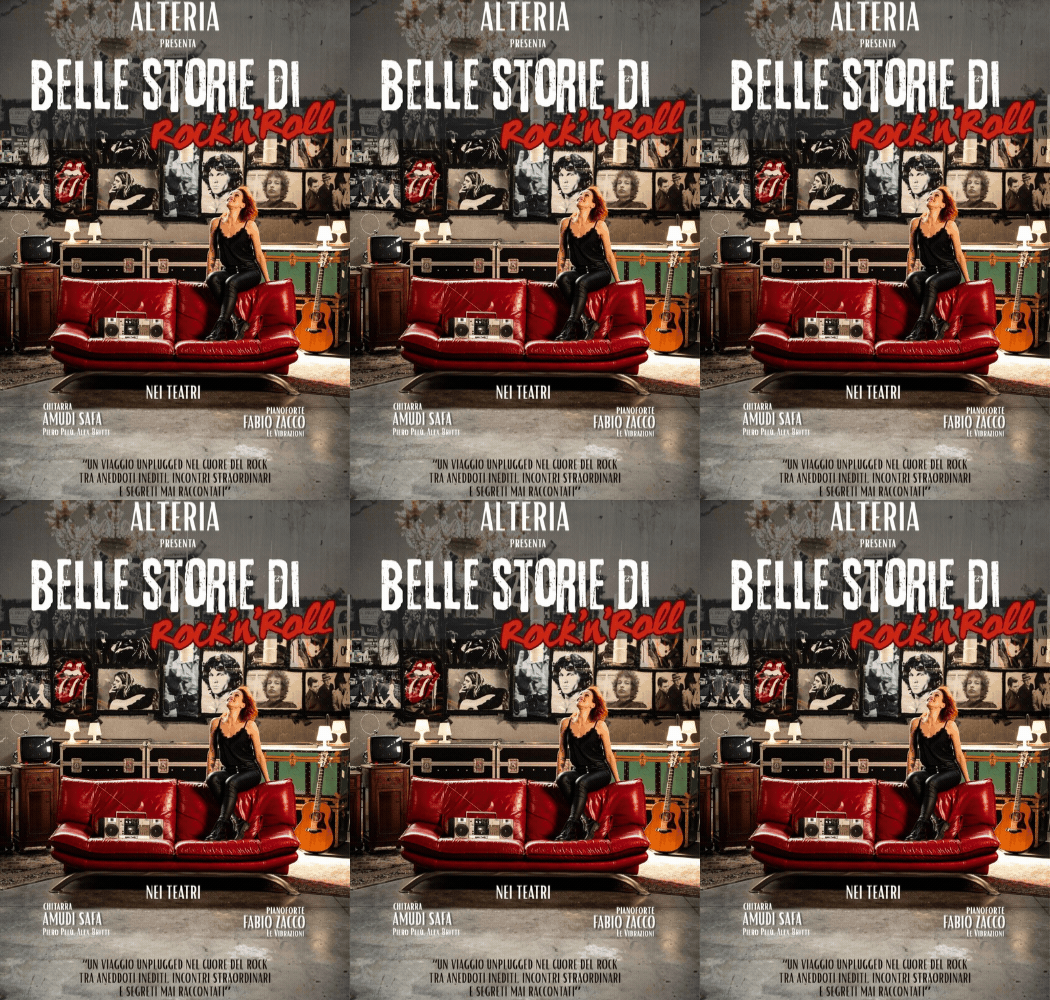
- Alteria, Belle storie di Rock’n Roll at Teatro Ghione, November 14, 2026100 m
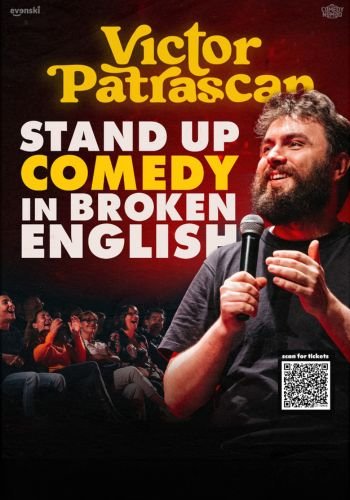
- Victor Patrascan, stand up comedy in broken English at Teatro Ghione, November 18, 2026100 m
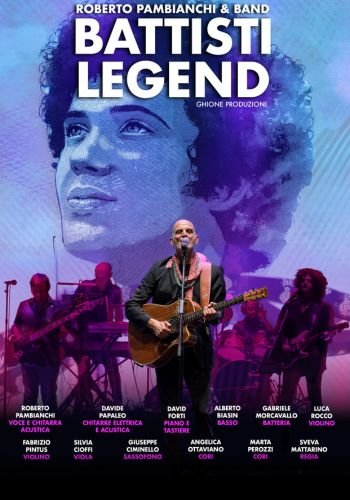
- Battisti Legend at Teatro Ghione, November 19, 2026100 m

You might also like
- Brunori Sas at Auditorium Conciliazione in Rome, November 5 to 7, 2026
- Donatella Pandimiglio in Nata libera at Teatro Ghione, November 13, 2026
- Impulso by Leandro Murat, piano concert at Teatro Ghione, November 12, 2026
- Blood Brothers at Teatro Ghione: The Bruce Springsteen Show, April 29, 2027
- C’era una volta Morricone at Teatro Ghione, April 10, 2027
- Omaggio a Morricone, Musiche da Oscar at Auditorium Conciliazione, April 20, 2027