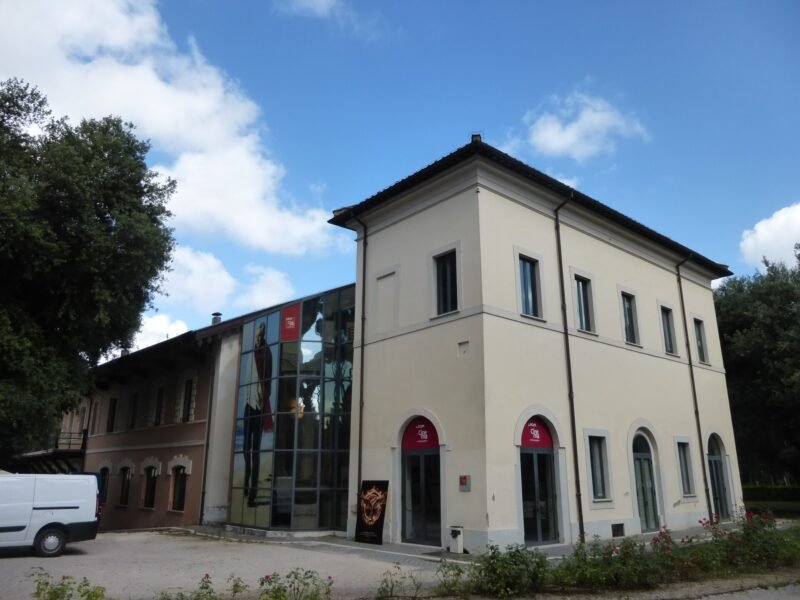
Marinella Senatore at the Galleria Nazionale d’Arte Moderna: Artist at GNAMC until December 31, 2026
In short. Artist at GNAMC. Marinella Senatore: Protagonist 2026 is open until December 31, 2026 at the Galleria Nazionale d'Arte Moderna e Contemporanea (GNAMC), at Viale delle Belle Arti 131, 00197 Rome, on the edge of Villa Borghese.
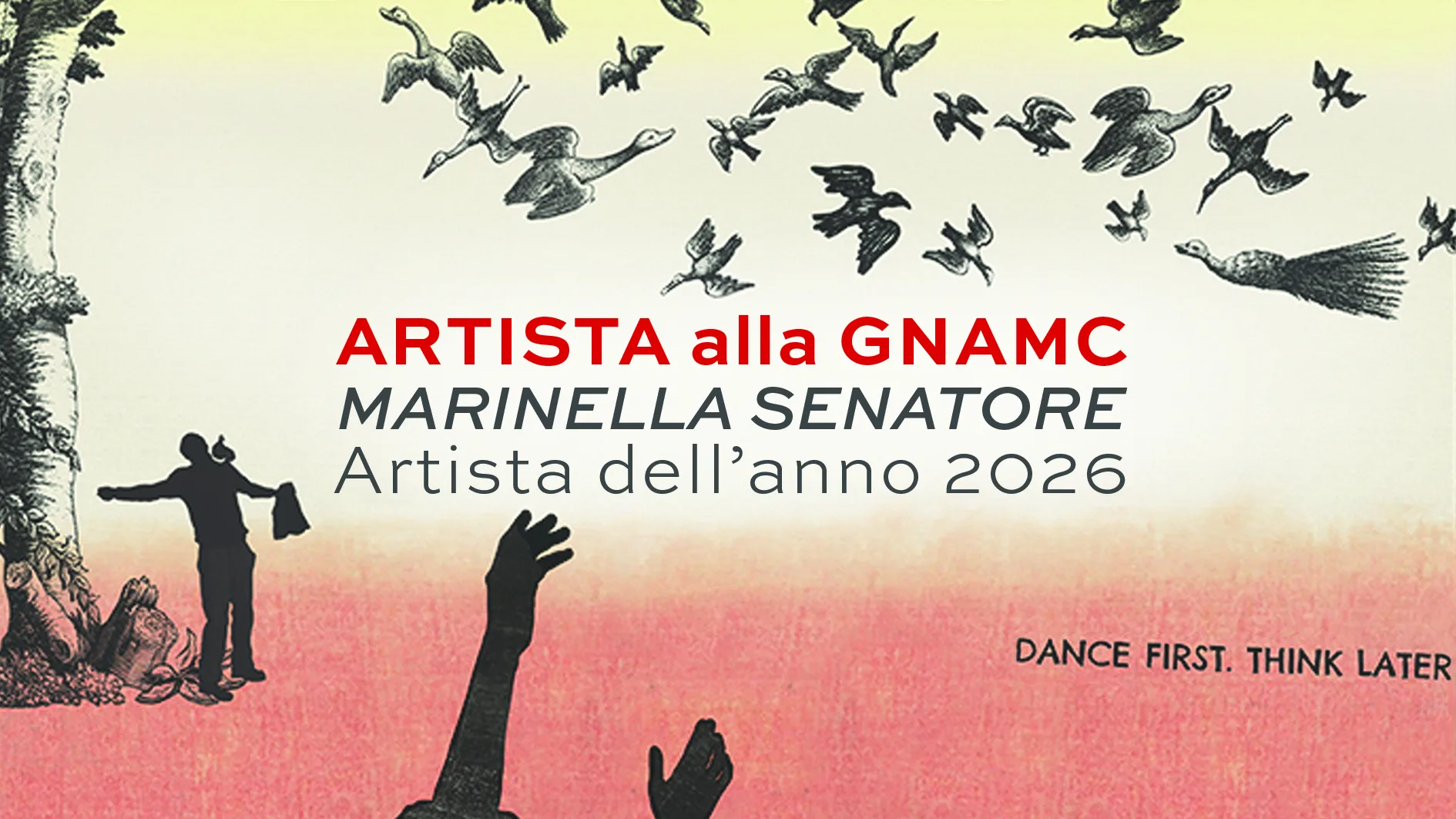
Artist at GNAMC. Marinella Senatore: Protagonist 2026 is open until December 31, 2026 at the Galleria Nazionale d'Arte Moderna e Contemporanea (GNAMC), at Viale delle Belle Arti 131, 00197 Rome, on the edge of Villa Borghese. The room dedicated to the artist is at the start of the visit route and is included in the museum ticket, which costs €17 full price and €2 reduced for European Union citizens between 18 and 25 years old. Under 18, admission is free. The museum is open Tuesday to Sunday from 9:00 to 19:00, with last entry at 18:15, and until December 17 it also stays open on Thursday evenings, from 19:00 to 23:00, with a €10 ticket. The tram stops a few steps from the entrance, at the Galleria Arte Moderna stop. The Flaminio station on metro line A is a little over half a kilometer as the crow flies. Tickets are bought at the museum box office or through the presale network authorized by the organization, reachable from the venue's official website.
The Galleria Nazionale is the right stop for anyone who thinks contemporary art is only provocation. Marinella Senatore's room is the best answer to that prejudice: drawings, collages, large embroidered tapestries, a light sculpture, and behind it all a precise idea, that of an art born from the participation of thousands of people. It is the annual project in which the GNAMC chooses a protagonist of Italian art and gives them the first room of the museum for 12 months. Three months remain to see it. Below you'll find what is on show, who the artist is, the museum, hours, tickets, tram and tips.
Marinella Senatore at the GNAMC: The Exhibition in Brief
Artist at GNAMC is the initiative promoted and organized by Renata Cristina Mazzantini, director of the Galleria Nazionale d'Arte Moderna e Contemporanea, who chose Marinella Senatore for 2026 and dedicated to her the room at the start of the visit route, from April 28 to December 31, 2026.
Not Just Any Temporary Exhibition
The Galleria presents the project as a dynamic space of works, activities, learning and exchange, designed to develop over a whole year. So it is not an exhibition to see once and file away: it is a room that lives, and for 12 months the museum becomes the center of a program of lectures, workshops and meetings that the artist considers an integral part of her own practice.
More than 40 Works
The room brings together more than 40 works, including drawings, collages and tapestries. According to the Galleria, the project marks a significant evolution in the artist's research, because it introduces landscape and weaving for the first time as central axes of her language.
The Supporters
The project is supported by the Galleria's institutional sponsors: Autostrade per l'Italia, Banca Ifis, Enel, Fondazione Roma, Gruppo Ferrovie dello Stato Italiane, Intesa Sanpaolo, Maire and Webuild.
Marinella Senatore's Works on Show at the Galleria Nazionale
The route includes the series of 32 drawings It's Time to Go Back to the Street, five drawings dedicated to the Divine Comedy, two previously unseen collages titled The Creation of a Context, four previously unseen monumental tapestries from the series The Theatre of Commons and the light sculpture Remember The First Time You Saw Your Name.
It's Time to Go Back to the Street
The series of 32 drawings translates the idea of the embodied landscape into visual form: conscious movement, parkour and collective choreography draw a dynamic topography, traced through action. It is the core where the link between Senatore's workshops and the works on paper is best understood: the drawing records the body moving in space.
The Divine Comedy
In the same section there are five drawings from the series dedicated to the Divine Comedy, made in graphite and charcoal on acid-free paper. It is the quietest part of the room, and the most classical: it's worth getting close, because the technique is meticulous.
The Creation of a Context
The two previously unseen collages interweave word and image: texts developed during workshops with different communities emerge as distilled expressions of experience, on layered surfaces. Here you see the participants' words become the material of the work.
The Theatre of Commons
At the center of the installation are four monumental, previously unseen tapestries, made in 2026 in collaboration with the Chanakya School of Craft in Mumbai, founded by Karishma Swali. Each one measures 300 by 200 centimeters. The Galleria explains that in weaving every thread records a passage and every layer comes from a negotiation between the individual gesture and the collective dimension: the work becomes the place where tradition and contemporaneity, individual and collective, meet.
Remember The First Time You Saw Your Name
The route closes with the light sculpture Remember The First Time You Saw Your Name, which the Galleria identifies as a distinctive element of the artist's practice. Illuminated texts are a recognizable signature of Senatore: phrases that speak directly to the viewer.
Who Is Marinella Senatore: The Artist's Biography
Marinella Senatore was born in Cava de' Tirreni in 1977 and is a multidisciplinary artist considered one of the most authoritative international voices of participatory art. She works with installations, tapestries, collages, films and collective performances.
The School of Narrative Dance
In 2012 she founded The School of Narrative Dance, a free, nomadic educational platform that, according to the Galleria, has so far involved more than 8 million participants in over 23 countries. In her workshops participation is a structural element: they become spaces of self-managed learning, in which the body, through movement, voice and presence, works as a tool of knowledge.
Aesthetics, Pedagogy, Community
The Galleria describes her practice as an intersection of aesthetics, pedagogy and community building: a device capable of generating forms, relationships and possibilities of experience together. Knowledge, in this model, is not handed down from above but born from shared experience. It is an idea that can be debated, but in the room it becomes concrete.
The Museums
Her work has been presented in major international institutions: the Centre Pompidou and the Palais de Tokyo in Paris, the Kunsthaus in Zurich, the High Line in New York, the Museum of Contemporary Art in Chicago, the Berlinische Galerie in Berlin, the UCCA Center for Contemporary Art, the Castello di Rivoli, the MAXXI in Rome, the Moderna Museet in Stockholm, the Hayward Gallery in London and the BOZAR in Brussels.
Biennials and Prizes
She has taken part in many international biennials, including the Venice Biennale, the São Paulo Biennial, Manifesta 12 and the Chengdu Biennale. Her awards include the New York Prize, the MAXXI Prize, the Italian Council Award and the ACACIA Prize. The MAXXI Prize and the exhibition at the MAXXI have long tied her name to Rome.
A Year-Long Program: Lectures, Workshops, Meetings
Throughout 2026 the GNAMC is, according to the Galleria, the center of a program of lectures, workshops and meetings that Senatore conceives as an integral part of her own practice, aimed in particular at communities traditionally on the margins of cultural institutions.
The Museum as a Place of Processes
The Galleria writes that it wants to become a space capable of activating processes and extending them to the social fabric, redefining the relationship between art, community and the production of meaning. It is an ambitious statement for a state museum with almost 150 years of history.
How to Follow It
The dates of the individual events are published on the Galleria's official website, in the events section. Anyone who wants to take part in a workshop with the artist needs to keep an eye on the calendar: those are the occasions when Senatore's work is really seen at work.
The Verdict
I find the artist-of-the-year format one of the Galleria's smartest choices. 12 months allow a relationship with the public that a three-month exhibition doesn't. And opening the museum with a living artist, instead of a 19th-century masterpiece, changes the tone of the whole visit.
The Galleria Nazionale d'Arte Moderna e Contemporanea: The Venue
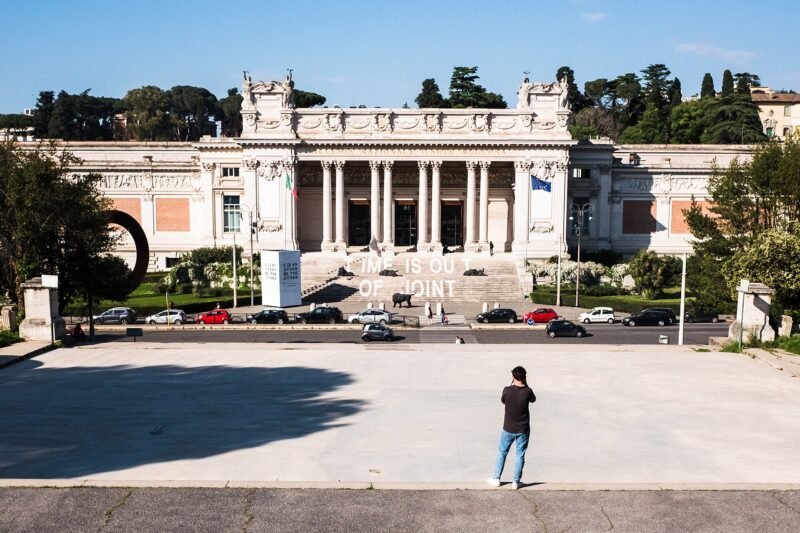
The Galleria Nazionale d'Arte Moderna e Contemporanea is at Viale delle Belle Arti 131, in a building designed by Cesare Bazzani between 1908 and 1911 for the International Art Exhibition for the Fiftieth Anniversary of Unification. The museum, established in 1883, moved there in 1915.
A Museum Older Than Its Building
The Galleria was established by royal decree on July 26, 1883 to collect the artworks of the new unified state and opened to the public in 1885. For 30 years it was housed in the Palazzo delle Esposizioni on Via Nazionale. In 1939 it took the name Galleria Nazionale d'Arte Moderna e Arte Contemporanea, confirming its vocation as a museum of the present.
The Expansions
Bazzani oversaw a first expansion between 1933 and 1934. A second, designed by Luigi Cosenza, was only partly completed. The Cosenza Wing is now the subject of works designed by Mario Botta to turn it into a hub for training and research, with a library and archives. About 15,000 square meters are dedicated to exhibition spaces and services.
The Collection
The collection counts about 20,000 works including paintings, drawings, sculptures, installations, design, films and photographs. Among the masterpieces the museum points out are Gustav Klimt's The Three Ages of Woman, Van Gogh's The Gardener, Modigliani's Portrait of Hanka Zborowska, Degas's After the Bath, Vittorio Corcos's Dreams, de Chirico's Hector and Andromache, Balla's Dynamic Expansion plus Velocity, Calder's Mobile and Arp's Chimerical Cup. The ticket that opens Senatore's room opens all of this too.
Design in the Rooms
Since April 2026 the collection rooms have hosted seating and design objects from companies such as Cassina, Kartell, Poltrona Frau and Molteni, to make the museum more comfortable and invite visitors to inhabit it. For a room dedicated to participatory art, it is a coherent setting.
A Curiosity About Marinella Senatore at the Galleria Nazionale d'Arte Moderna: Artist at GNAMC until December 31, 2026
The best curiosity is about a number: 8 million. It is the number of people who, according to the Galleria, have taken part since 2012 in the workshops of the School of Narrative Dance founded by Marinella Senatore, in more than 23 countries. Probably no living Italian artist can claim an active audience of this size. Yet the Rome room is intimate, made of paper, thread and light: the multitude is inside the works, not in front of them.
The second curiosity comes from Mumbai. The four tapestries of The Theatre of Commons were made with the Chanakya School of Craft, founded by Karishma Swali. They were embroidered in 2026 and each measures 3 meters by 2. An artist born in Cava de' Tirreni, an Indian embroidery school and a museum born for the art of the Kingdom of Italy: the room is a small manual on how contemporary art crosses borders.
The third curiosity is in the title of the light sculpture: Remember The First Time You Saw Your Name, recalls the first time you saw your name. It is a phrase about childhood, literacy and identity, and in a state museum, where the names of artists are written everywhere, it takes on a further meaning. Read it slowly before you leave.
One Thing Nobody Tells You About Marinella Senatore at the Galleria Nazionale d'Arte Moderna: Artist at GNAMC until December 31, 2026
What almost nobody says is that Senatore's room is at the start of the route, and for that very reason many walk through it quickly, heading for the Klimts and the Van Goghs. That's a mistake. The Galleria put it there on purpose: it is the door of the museum, and it should be looked at with the same time you give the masterpieces. It's worth stopping for at least 20 minutes, and coming back to look again on your way out, when your eye has changed.
The second thing is about the ticket, which is valid for three hours. The Galleria explains this as controlling the number of visitors present, and asks you to enter in the time slot chosen at purchase. Within those three hours you can also step out to the Caffè delle Arti and come back in. With Senatore's room, the collection and, from October 13, the Luigi & Iango exhibition, the three hours pass quickly.
The third: in the rooms you can only carry bags smaller than 25 by 30 by 12 centimeters. Backpacks, large bags, umbrellas and helmets go to the cloakroom, which is free. In front of four tapestries of six square meters each, space matters: arrive light.
The Advice I Give You for Visiting Marinella Senatore at the Galleria Nazionale d'Arte Moderna: Artist at GNAMC until December 31, 2026
The best time is a Thursday evening. Until December 17 the Galleria stays open from 19:00 to 23:00 with a €10 ticket, and there are still many useful evenings, starting from October 1. Senatore's light sculpture, with the museum dark outside the windows, looks better. And the tapestries, with fewer people, can be looked at up close, thread by thread.
Second tip: follow the order of the room. First the 32 drawings of It's Time to Go Back to the Street, which explain where the work comes from, that is, from the moving bodies of the workshops. Then the drawings of the Divine Comedy, then the collages with the participants' words, and finally the tapestries, where everything converges. Only then the light sculpture. Done this way, the route has the shape of a story.
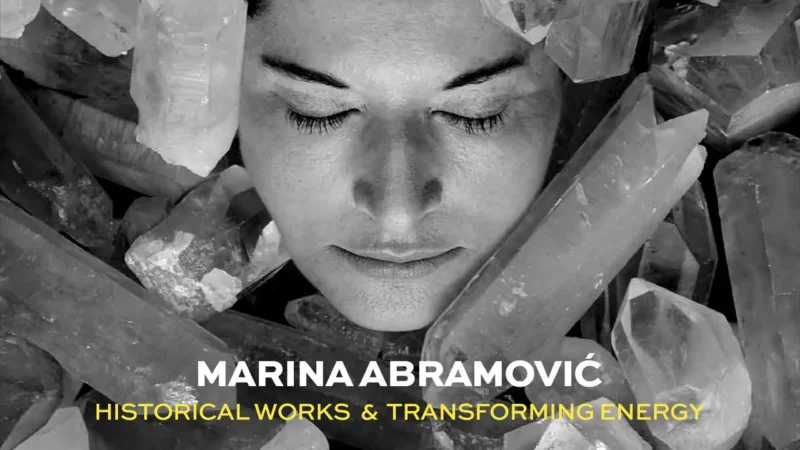
Third tip: if you can, come twice. Once for the room, once for a workshop or a meeting of the annual program. Seeing Senatore work with a group of people completely changes the way you look at the works on the wall. And if you come in late November or in December, in the same Galleria you'll also find Marina Abramović: two very different ways of putting the body at the center of art, a few meters apart.
Another Well-Known Fact, Yet Rarely Mentioned
Many people know it, and almost nobody says it: the Galleria Nazionale d'Arte Moderna was among the first Italian museums to open its doors to fashion. On October 5, 1985 it inaugurated the exhibition Karl Lagerfeld wanted for the first 20 years of his collaboration with FENDI, Un percorso di lavoro, dedicated to the steps from conception to production of a garment. 40 years later, from July 10 to October 25, 2026, the museum and FENDI presented it again as After Un percorso di lavoro. Fendi / Karl Lagerfeld 1985.
Why recall it when talking about Senatore? Because it explains the vocation of the place. Director Renata Cristina Mazzantini has called the Galleria a pioneer in hosting fashion, with a multidisciplinary curatorial vision. Fashion in 1985, design in the rooms since 2026, tapestries embroidered in Mumbai and participatory workshops in the same year: the Galleria has a habit of welcoming languages that other museums keep out. And embroidery, which for centuries was considered a minor art, comes in here through the main door, in the first room. Anyone who imagines the Galleria as a dusty museum of 19th-century paintings has an idea stuck many decades back, and Senatore's room is enough to correct it.
The Right Photo to Take at Marinella Senatore at the Galleria Nazionale d'Arte Moderna: Artist at GNAMC until December 31, 2026
Before photographing in the room, ask the staff if it's allowed. If it is, the right photo is the one that gives the scale of the tapestries of The Theatre of Commons: stand in the middle of the room, far enough away to fit two whole tapestries in the frame, and let a person walk in front. Three meters of height can only be understood with a human body beside it, and it fits an artist who puts people at the center.
The second photo is a detail: get close to one of the tapestries and frame a few centimeters of embroidery, where you can see the individual threads. That's where you read the Galleria's idea, every thread records a passage. With the room's light and no flash, the phone does fine.
The third is outside, and applies to every visit to the Galleria: Cesare Bazzani's facade seen from the end of Viale delle Belle Arti, with the staircase and the columns. On Thursday evenings, with the lighting, it is the most elegant photo in the neighborhood.
Some Important Events That Happened Here in History
July 26, 1883: a royal decree establishes the Galleria Nazionale d'Arte Moderna to collect the works of the new unified state. 1885: opening to the public, in the Palazzo delle Esposizioni on Via Nazionale.
1908-1911: Cesare Bazzani designs and builds the building on Viale delle Belle Arti for the International Art Exhibition for the Fiftieth Anniversary of Unification. 1912: the reform of the statute allows the acquisition of works from the first half of the 19th century.
1915: the Galleria moves into Bazzani's building. 1933-1934: first expansion. 1939: Law No. 823 gives the museum the name Galleria Nazionale d'Arte Moderna e Arte Contemporanea.
October 5, 1985: the Karl Lagerfeld exhibition for 20 years with FENDI opens. 1989-1998: the Cosenza Wing remains open to the public. 1995-1999: restoration of the two wings. 2014: the regulation grants the museum special autonomy.
April 2026: design enters the collection rooms. April 28, 2026: Marinella Senatore's room, artist of the year, opens. July-October 2026: the FENDI and Lagerfeld exhibition returns. November 2026: Marina Abramović arrives.
Who Has Passed Through Marinella Senatore at the Galleria Nazionale d'Arte Moderna: Artist at GNAMC until December 31, 2026
Through the Galleria Nazionale have passed, with their works, the protagonists of two centuries of art: Van Gogh, Klimt, Modigliani, Degas, Monet, Courbet, Canova, Balla, de Chirico, Fontana, Burri, Duchamp, Pollock, Warhol, Twombly, Calder, up to Cattelan and Stingel. The building itself is the work of Cesare Bazzani, with the interventions of Luigi Cosenza and, today, Mario Botta.
In 1985 Karl Lagerfeld passed through, with the exhibition for 20 years of work with FENDI. In 2026 his story returned to the rooms with the exhibition conceived by Maria Grazia Chiuri and curated by Maria Luisa Frisa. In November Marina Abramović will arrive, for her 80th birthday.
And in 2026 Marinella Senatore and the people she works with are passing through. The works in the room carry the traces of the workshops of the School of Narrative Dance, of the communities that wrote the texts of the collages, of the embroiderers of the Chanakya School of Craft in Mumbai. In this sense Senatore's room is the most crowded in the museum even when it is empty: inside every sheet and every one of the tapestries there is a group of people.
Hours and Tickets for Marinella Senatore's Room
Marinella Senatore's room follows the museum's hours: Tuesday to Sunday from 9:00 to 19:00, with last entry at 18:15. On Monday the Galleria is closed. It is included in the admission ticket, €17 full price and €2 reduced.
Thursday Evenings
From September 10 to December 17, 2026 the Galleria also opens every Thursday evening, from 19:00 to 23:00, with last entry at 22:00 and a €10 ticket, subject to legal exemptions. It is the best solution for people who work and for anyone who wants a quieter museum.
Reductions and Free Entry
The €2 reduced ticket is for European Union citizens between 18 and 25 years old. Entry is free under 18, and free entry also goes, among others, to people with disabilities and one companion. Every first Sunday of the month admission is free with mandatory booking: before the room closes, the remaining ones are Sunday, October 4, November 1 and December 6, 2026.
Where to Buy
Tickets are bought at the box office in the museum atrium or online through the presale network authorized by the organization, reachable from the Galleria's official website. The ticket is valid for one entry in the three-hour slot chosen at purchase.
How to Get to the Galleria Nazionale d'Arte Moderna
The Galleria Nazionale d'Arte Moderna e Contemporanea is at Viale delle Belle Arti 131, on the edge of Villa Borghese. The tram stops a few steps from the entrance, at the Galleria Arte Moderna stop, and the Flaminio station on metro line A is a little over half a kilometer as the crow flies.
By Tram
The Galleria Arte Moderna stop is a few meters from the entrance. The lines in service and the schedules change with roadworks and seasons: before leaving, it's best to check them on the ATAC website. In the rain the tram remains the most practical option.
By Metro and on Foot
From Flaminio station, next to Piazza del Popolo, you continue on foot. The route is a bit longer than the distance as the crow flies. Alternatively you cross Villa Borghese: from the Galleria Borghese the museum is a little less than a kilometer away.
By Car
The Galleria does not indicate a parking lot of its own. On Viale delle Belle Arti there is a car sharing station run by the city. The advice is to arrive by public transport, especially on Thursday evenings.
Around the Galleria Nazionale: What to See on the Same Day
The Galleria Nazionale is in Valle Giulia, between Villa Borghese and the Parioli district. A few minutes' walk away are the Museo Nazionale Etrusco di Villa Giulia and the Galleria Borghese.
Other Exhibitions at the GNAMC
From October 13 to November 29 the Galleria hosts Luigi & Iango. Corpi speciali, and from November 18 Marina Abramović. Anyone who visits Senatore's room in late November or in December finds three exhibitions with a single ticket.
Villa Giulia
Not far away is the National Etruscan Museum of Villa Giulia, with the photography exhibition Dayanita Singh. Archivio. Two museums, two centuries apart, one walk.
The Museum's Own Page
For the full history and the collections there is the page dedicated to the National Gallery of Modern and Contemporary Art.
Where to Eat near the Galleria Nazionale
Inside the museum there is the Caffè delle Arti, which you can also reach by stepping out and back in within the three-hour slot of the ticket: for a break between Senatore's room and the collection it is the most convenient option.
Outside the Museum
Going up toward the Parioli the offer becomes more refined and more expensive. Going down toward Flaminio you find neighborhood trattorias, pizza-by-the-slice places and bars with hot food counters, with residential-neighborhood prices. Toward Piazza del Popolo the offer is the widest, with city-center prices.
On Thursday Evenings
Anyone who visits the museum on Thursday evening comes out after 22:00. It's best to have dinner beforehand, or choose an area that stays lively at that hour, like Flaminio or the city center.
Accessibility and Children at the Galleria Nazionale
The Galleria Nazionale d'Arte Moderna e Contemporanea declares full accessibility for people with disabilities, with an external ramp, elevators and internal platform lifts. The accessible entrance is on Via Gramsci. There are restrooms for people with disabilities and a changing table, and people with disabilities enter free with one companion.
With Children
Senatore's room is one of the best suited to children in the whole museum: the drawings of moving bodies, the large colorful tapestries, the illuminated text. Tell them that inside those works there are thousands of people who danced, talked and wrote together. Under 18, admission is free.
How Much Time You Need
For the room, 20 to 40 minutes is enough. With the collection, at least two hours. The ticket is valid for three hours: plan accordingly.
Rome in Autumn: The Last Three Months of Senatore's Room
The room closes on December 31, 2026, a Thursday, after the end of the evening openings. October and November are the quietest months for a visit. December, with the holidays and the arrival of Marina Abramović, will be more crowded.
Useful Dates
Thursday evenings until December 17. Free first Sundays on October 4, November 1 and December 6, with booking. Luigi & Iango exhibition from October 13. Abramović from November 18. Anyone who wants to see everything in a single visit should pick a Thursday evening between November 19 and 26.
Frequently Asked Questions about Marinella Senatore at the GNAMC
Until when is Marinella Senatore's exhibition at the Galleria Nazionale open?
Marinella Senatore's room, Artist at GNAMC 2026, is open at the Galleria Nazionale d'Arte Moderna e Contemporanea in Rome until December 31, 2026. It has been open since April 28, at the start of the museum's visit route, and follows the Galleria's hours.
How much does it cost to see Marinella Senatore at the GNAMC?
Marinella Senatore's room is included in the ticket of the Galleria Nazionale d'Arte Moderna e Contemporanea: €17 full price, €2 reduced for EU citizens between 18 and 25, free under 18. On Thursday evenings, until December 17, the ticket costs €10.
Which works by Marinella Senatore are on show?
At the GNAMC Marinella Senatore shows more than 40 works: the 32 drawings of It's Time to Go Back to the Street, five drawings on the Divine Comedy, the collages The Creation of a Context, the four tapestries The Theatre of Commons and the light sculpture Remember The First Time You Saw Your Name.
Who is Marinella Senatore?
Marinella Senatore is a multidisciplinary artist born in Cava de' Tirreni in 1977, one of the international voices of participatory art. In 2012 she founded The School of Narrative Dance, which has involved over 8 million people in more than 23 countries, and she has won, among other awards, the MAXXI Prize.
What are the hours of the Galleria Nazionale d'Arte Moderna?
The Galleria Nazionale d'Arte Moderna e Contemporanea is open Tuesday to Sunday from 9:00 to 19:00, with last entry at 18:15, and is closed on Monday. Until December 17, 2026 it also opens every Thursday evening, from 19:00 to 23:00.
How do you get to the GNAMC by public transport?
The Galleria Nazionale d'Arte Moderna e Contemporanea, at Viale delle Belle Arti 131, is reached by tram to the Galleria Arte Moderna stop, a few steps from the entrance, or by metro line A to Flaminio, a little over half a kilometer as the crow flies.
What is the Artist at GNAMC project?
Artist at GNAMC is the initiative of director Renata Cristina Mazzantini that each year dedicates a room of the Galleria Nazionale d'Arte Moderna to a protagonist of Italian art, with works and a program of lectures, workshops and meetings. For 2026 the protagonist is Marinella Senatore.
Final Advice on Marinella Senatore at the GNAMC
A clear opinion: an entrance room dedicated to a living artist, with tapestries embroidered in Mumbai and drawings born from collective choreography, is the best way to begin a visit to the Galleria Nazionale. Go on a Thursday evening before December 17, give the room the time you'll give Klimt, and leave with the illuminated phrase in your head. It stays on view until December 31.
Article written by the editorial team of Tour Leader Pro, contact them for Tours and Private/Corporate/V.I.P. Experiences.
Planning a trip to Rome? The English-language guides for visiting the city are on ItalyPlanner.com.
Contact Information
Nearby
 National Gallery of Modern and Contemporary Art100 m
- British School at Rome200 m
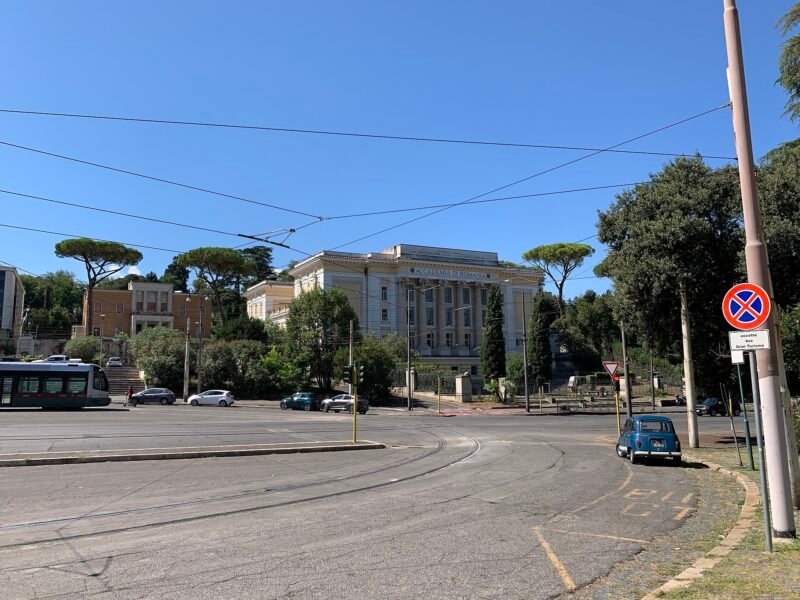
- Romanian Academy in Rome300 m
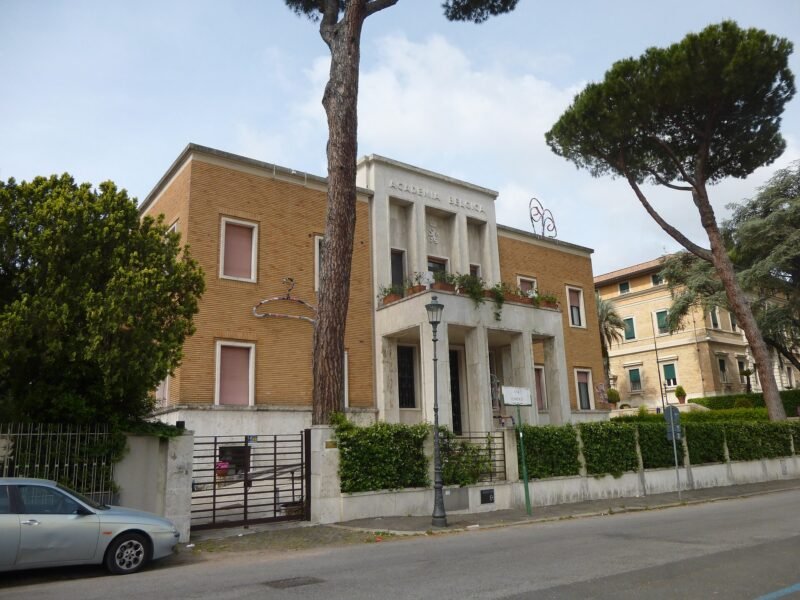
- Academia Belgica300 m
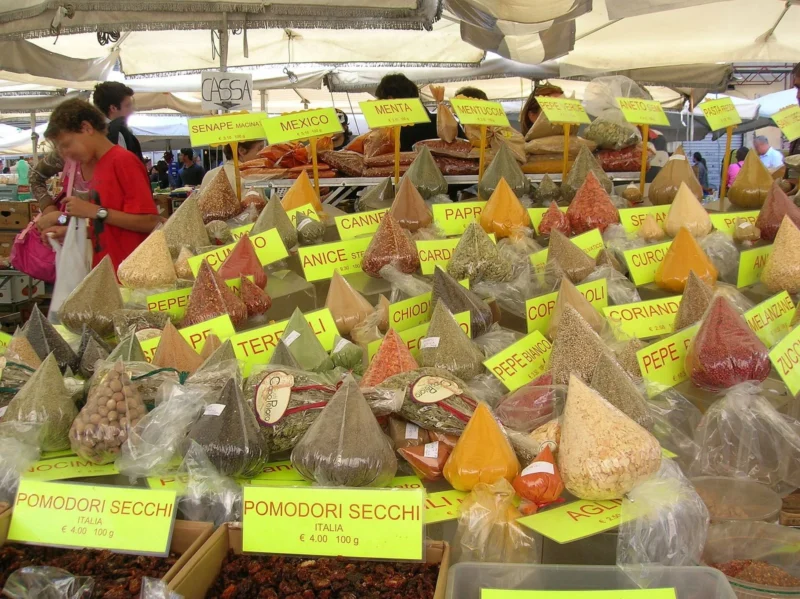
- Rome’s Markets: Neighborhood, Historic and Secondhand300 m
- Japanese Cultural Institute in Rome300 m
Upcoming events nearby
- Marina Abramović at Galleria Nazionale d’Arte Moderna, November 18, 2026 to April 4, 2027100 m
- Luigi & Iango. Corpi speciali at Galleria Nazionale, from October 13 to November 29, 2026100 m
- Thursdays at the GNAMC, evening openings at the Galleria Nazionale d’Arte Moderna, from September 10 to December 17, 2026100 m
- Cent’anni a Roma: The Abbey Awards at the British School at Rome, November 4 to December 18, 2026200 m


You might also like
- Scoprir, 14th Ibero-American Film Showcase at Casa del Cinema, November 26 to 28, 2026
- Biodiversità Ritratta (Biodiversity Portrayed), the Nabokov exhibition at Museo Civico di Zoologia, Oct 15 to Nov 15, 2026
- States of Uncertain Domesticities at Museo Carlo Bilotti, September 19 to November 8, 2026
- Marina Bindella. Cosmografie at Museo Carlo Bilotti, September 26 to November 15, 2026
- Sex Roulette at Teatro Parioli Costanzo, January 31, 2027
- VII Muestra de Cine Mexicano at Casa del Cinema, from November 6 to 8, 2026