States of Uncertain Domesticities at Museo Carlo Bilotti, September 19 to November 8, 2026
In short. States of Uncertain Domesticities is at Museo Carlo Bilotti, in the Aranciera of Villa Borghese, from September 19 to November 8, 2026, with the entrance at Viale Fiorello La Guardia 6, 00197 Rome.
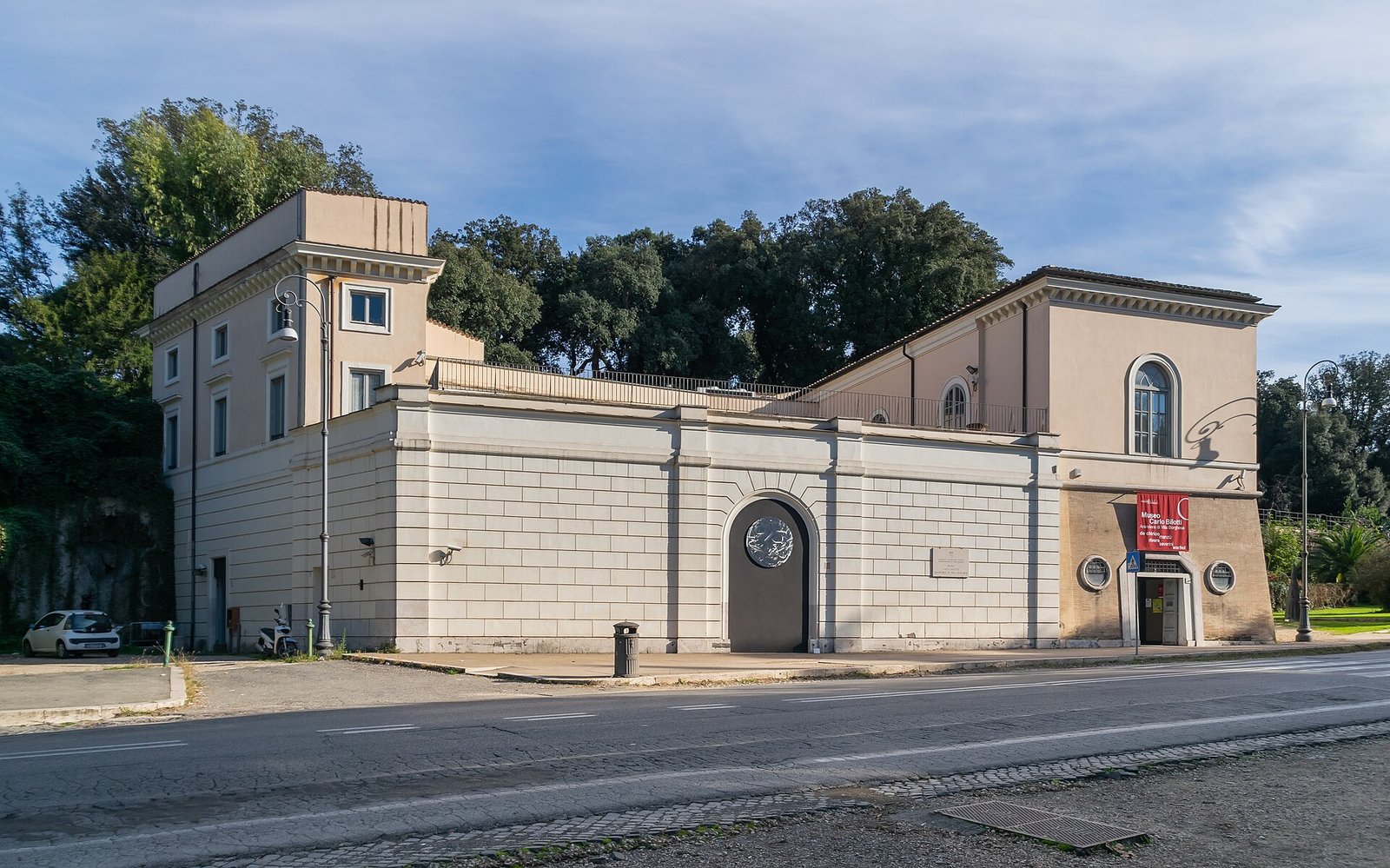
States of Uncertain Domesticities is at Museo Carlo Bilotti, in the Aranciera of Villa Borghese, from September 19 to November 8, 2026, with the entrance at Viale Fiorello La Guardia 6, 00197 Rome. The museum is open Tuesday to Friday from 10:00 to 16:00, Saturday and Sunday from 10:00 to 19:00. It is closed on Monday and the last entry is allowed 45 minutes before closing. The ticket for the museum and current shows, according to the museum's official website, costs €7.50 full price and €6 reduced at the ticket office for same-day entry. A combined ticket with Museo Pietro Canonica costs €11 full price and €7.50 reduced. Admission is free for residents of Rome and the metropolitan area, with a document proving residency, and for MIC card holders. Advance purchase is on the museum's official website or through the call center 060608, with a €1 presale fee. To get there by public transport, the ATAC route planner is the best option, allowing for the last stretch on foot inside the villa.
What does it mean to feel at home, today? It is the question that starts an international, traveling show, which has been through Berlin and Brno and in Rome finds a perfectly on-theme venue: a building of Villa Borghese that in its history has been a pleasure pavilion, a ruin, a greenhouse, a dwelling, a religious institute, an office and finally a museum. A house, in short, that has changed identity several times. 30 works by 25 artists to reflect on living, care, loss and belonging.
States of Uncertain Domesticities: the theme of the show
States of Uncertain Domesticities is a show dedicated to the home and to dwelling, approached from a feminist, political and social perspective, with about 30 works at Museo Carlo Bilotti until November 8, 2026.
The starting question
The project starts from a question: in an age marked by migration, environmental crises, social transformations and precariousness, is it still possible to consider the domestic dimension as a place of protection, identity and belonging? The show offers no consoling answers. It lines up different experiences of the home, from the one that protects to the one that hurts, from the one that is lost to the one that is hard to pay for.
Bachelard, Coccia and dwelling
The project is inspired by the reflections of Gaston Bachelard and Emanuele Coccia. The home there is understood as a physical, emotional, cultural and political experience: not only an architectural space, but a place of memory, relationships, care and the construction of identity.
Womanhouse, the precedent
An important reference for the project is Womanhouse, the 1972 show conceived by Judy Chicago and Miriam Schapiro, which for the first time approached the theme of the home from a feminist perspective, relating it to the social role of women, to domestic work and to care work. More than half a century later, States of Uncertain Domesticities picks up that thread and brings it into the present.
From the microcosm to the big questions
Through poetic, critical and sometimes ironic languages, the works accompany the visitor from the microcosm of the home to the big social and political questions of the present. It is a show that knows how to be light, and that for this very reason goes far.
The themes of States of Uncertain Domesticities, room by room
The works of States of Uncertain Domesticities explore the home as refuge and as body, motherhood and care work, domestic violence, the loss of home, gentrification and the sustainability of dwelling.
The home as refuge and as body
The first thematic core looks at the home as shelter and at the same time as an extension of the body. It is the most intimate part of the show, the one in which dwelling coincides with the skin, with everyday gestures, with the memory of objects.
Motherhood and care work
The relationship with motherhood and care work is one of the cornerstones of the project, in direct descent from Womanhouse. Here the home is the place of invisible, unpaid work, often taken for granted.
Domestic violence
The show does not avoid the darkest side of dwelling: domestic violence. It is the point where the home stops protecting and becomes the place of danger. A theme that those visiting with teenagers must take into account.
Wars, migrations, disasters
Some works address the loss of home caused by wars, migrations and environmental disasters. It is the uncertain domesticity of the title in its most radical form: no longer knowing where you live.
Gentrification and sustainability
The route arrives at the themes of gentrification and the sustainability of dwelling, and widens the gaze to the Earth as a common home and to collective responsibility toward the planet. A closing that leads from the room to the world.
The Rome edition: the horti and the domus
The Rome edition of States of Uncertain Domesticities widens the reflection through two archetypes tied to the history of the city: nature as humanity's first dwelling and the Roman domus.
The horti of the villas
The horti of the Roman villas, places of otium and philosophical contemplation, are read as a privileged refuge from public life. They become the starting point for questioning the relationship between human beings and the environment. Seeing this section inside Villa Borghese, a park that began as a cardinal's pleasure villa, gives the theme a rare concreteness.
The domus as a space of identity
The domus is reread as a space of identity, memory and relationships. These themes find expression in the works of the Roman artists in the show, who create a dialogue between contemporary research and the cultural heritage of the city.
A show in more than one venue
The Rome project also has a section at the Emmeotto gallery, on Via di San Pantaleo, with a group of artists who live and work in Rome: the show at Galleria Emmeotto opens on October 3 and closes on November 27. Seeing both makes it possible to read the project as a whole.
The journey of States of Uncertain Domesticities: Berlin, Brno, Rome
States of Uncertain Domesticities is a traveling show: before reaching Rome it went through Berlin and Brno, and at Museo Bilotti it appears with a new installation.
A show that changes at every stop
The fact that each city has a different installation is consistent with the theme. A show about uncertain dwelling couldn't stay identical to itself: in Rome it added the horti and the domus, and a group of artists who live in the city. Anyone who had seen it in Berlin or Brno would find a different show here.
The institutions of the European network
The European route explains the network of partners. In Berlin the reference is Haus Kunst Mitte, in Brno the House of Arts, in Germany the Institut für Auslandsbeziehungen, which collaborates on the project with the Comitato Roma Radici. In Rome the project relies on the Academy of Fine Arts and Casa Internazionale delle Donne: two institutions that bring to the show, respectively, the training of artists and the history of the women's movement in the city.
The artists of States of Uncertain Domesticities
States of Uncertain Domesticities brings together international artists of different generations and backgrounds, with videos, paintings, sculptures, photographs and installations.
The German and Central European presences
From Germany come Tina Bara, as a pair with Alba D'Urbano, Ina Bierstedt, Frauke Boggasch, Cornelia Friederike Müller, Anna Witt and Andreas Grahl, also as a pair with Alba D'Urbano. From the Czech Republic Maud Kotasová and Jakub Šimčik, from Croatia Nika Radić, from Bosnia and Herzegovina Selma Selman.
The Italian and Roman artists
Among the Italians are Primarosa Cesarini Sforza, Loredana Longo, Stefania Migliorati, Daniela Monaci and Luana Perilli, as well as Inés Fontenla, Argentine and Italian, Thorsten Kirchhoff, Danish and Italian, and Suzanne Santoro, American and Italian. Alba D'Urbano, curator of the show, is Italian and German.
From the Americas and beyond
From the United States comes Kathryn Cornelius, from Puerto Rico Molly Soda, from Argentina and Mexico Maria Ezcurra. Libia Castro, Spanish, works as a pair with the Icelander Ólafur Ólafsson. Gluklya is Russian, Anguezomo Nze Mba Bikoro Gabonese and French.
Why this variety matters
The variety of origins is not a catalog detail. A show about the uncertain home, made by artists who come from countries crossed by wars, migrations and political transformations, has a credibility that no curatorial statement can give. Those who live precariousness know how to tell it better.
Who curated and organized the show
States of Uncertain Domesticities is curated by Alba D'Urbano and Ada Lombardi, promoted by Roma Capitale and the Sovrintendenza Capitolina and organized by the Comitato Roma Radici.
The institutions involved
The show is promoted by Roma Capitale, Department of Culture, and by the Sovrintendenza Capitolina ai Beni Culturali. The organization is by the Comitato Roma Radici, in collaboration with the Institut für Auslandsbeziehungen of Germany, the Academy of Fine Arts of Rome, Casa Internazionale delle Donne of Rome and the House of Arts of Brno. The museum services are run by Zètema Progetto Cultura.
Supporters and patronages
The show has the support of Galleria Emmeotto of Rome, of Haus Kunst Mitte of Berlin and of the Residenze di Artisti Qwatz of Rome, with the patronage of the Embassy of the Federal Republic of Germany and of Altritalia Ambiente. It is accompanied by a bilingual catalog published by Roma Radici Edizioni.
The link with Casa Internazionale delle Donne
The collaboration with Casa Internazionale delle Donne of Rome gives the show a precise anchor in the city. Whoever wants to continue the conversation will find in October La Cassetta degli Attrezzi Femminista at Casa Internazionale delle Donne.
Museo Carlo Bilotti: the venue of the show
The Museo Carlo Bilotti is the contemporary art museum of Roma Capitale in the Aranciera of Villa Borghese, established in 2006, with the collection donated by the Italian-American entrepreneur and collector Carlo Bilotti.
The permanent collection
The core of the collection is made up of 18 works by Giorgio de Chirico, among them the sculpture Hector and Andromache placed outside, in a 2006 cast from a 1966 original. Next to de Chirico are Summer by Gino Severini, from 1951, the portrait Mother and Daughter: Tina and Lisa Bilotti by Andy Warhol, from 1981, a portrait of Carlo Bilotti signed by Larry Rivers in 1994 and, outside, the bronze Grande cardinale by Giacomo Manzù. The ticket for the show also gives access to the collection.
The Aranciera before the Borghese
A building already existed before the 1600s works of Cardinal Scipione Borghese. In 1650 it was described as a two-story construction with a small tower, covered loggias, a courtyard painted in sgraffito and a boat-shaped fountain.
The Casino dei giuochi d'acqua
In the late 1700s Marcantonio IV Borghese enlarged it together with the arrangement of Giardino del Lago: the building was known as the Casino dei giuochi d'acqua, for the fountains and nymphaea. From 1776 artists such as Cristoforo Unterperger and Giuseppe Cades frescoed it.
Ruin, greenhouse, offices, museum
In 1849 the building was destroyed during the defense of the Roman Republic. Rebuilt in simpler forms, it was used to shelter citrus plants in winter, hence the name Aranciera. In 1903, when Villa Borghese passed to the City of Rome, it was used for offices and dwellings. Until 1982 it housed a religious institute and then municipal offices. Restored, with its exterior painted red, it has become a museum.
Tickets and hours for States of Uncertain Domesticities
The ticket for Museo Carlo Bilotti and the current shows costs €7.50 full price and €6 reduced at the ticket office for same-day entry, according to the museum's official website. With advance purchase, a €1 presale fee is added.
Free admission
Admission is free for residents of Rome and the metropolitan area, showing a document that proves residency, for MIC card holders and for the categories provided by the current fee schedule. Those entitled can request the admission ticket at 060608. For people who live in Rome, then, the show costs nothing.
The combined ticket with Museo Canonica
The combined ticket for Museo Carlo Bilotti and the Museo Pietro Canonica costs €11 full price and €7.50 reduced. Both museums are inside Villa Borghese: it is the most sensible combination for a morning in the park.
Hours
Tuesday to Friday the museum opens from 10:00 to 16:00, Saturday and Sunday from 10:00 to 19:00. It is closed on Monday. Last entry is 45 minutes before closing: on weekdays that means getting in by 15:15. The museum recommends checking the notices page before the visit.
How to get to Museo Bilotti
Museo Carlo Bilotti has two addresses, Viale Fiorello La Guardia 6 and Viale dell'Aranciera 4, both inside Villa Borghese, in Municipio II.
By public transport
For the best combination from your starting point, the ATAC route planner is the right tool. The museum does not face a traffic street: from the last stop you walk in the green.
On foot in the villa
Crossing Villa Borghese on foot to the Aranciera is part of the experience. On an autumn morning the walk from the avenues to the museum is good preparation for a show that speaks of horti and of nature as the first dwelling.
By car
The museum is inside the park. For this visit the car is not the best choice: public transport and a stretch on foot are better.
How to plan the visit to States of Uncertain Domesticities
States of Uncertain Domesticities takes an hour to visit, an hour and a half with the permanent collection. A few pointers for planning the morning or the afternoon.
When to go
On weekdays the museum closes at 16:00: it is a morning show. On Saturday and Sunday the opening until 19:00 allows you to combine the visit with an afternoon walk in the park.
With children and teenagers
The show also addresses domestic violence and the loss of home through wars and migrations. With small children it is best to choose beforehand which rooms to see. With teenagers it can open important conversations. The park around offers space to play before or after.
Accessibility
For access needs to the museum's spaces it is best to ask the call center 060608, active every day from 9:00 to 19:00, before the visit.
Where to eat
Inside Villa Borghese the food offer is limited. For lunch it is best to go out toward the neighborhoods surrounding the park, where trattorias, bars and restaurants are not lacking, or to bring something to eat on a lawn.
What to see around Museo Bilotti
Museo Bilotti is part of the system of museums of Villa Borghese and is near Giardino del Lago, the sector of the park with the small lake and the temple.
The Temple of Aesculapius
The Temple of Aesculapius on the small lake is the most natural walk before or after the show. The Aranciera was enlarged in the 1700s precisely together with Giardino del Lago.
Piazza di Siena and the Pincio
A little further on open Piazza di Siena and, toward the city, the terrace of the Pincio.
Galleria Borghese and Casa del Cinema
The Galleria Borghese calls for dedicated time. The Casa del Cinema is a lighter stop, also inside the park.
A curiosity about States of Uncertain Domesticities at Museo Carlo Bilotti, September 19 to November 8, 2026
The best curiosity concerns the coincidence between the theme of the show and the history of the building. States of Uncertain Domesticities asks if the home can still be a stable place. The Aranciera, in four centuries, never was. First a two-story construction with a small tower and loggias, then the Casino dei giuochi d'acqua for the parties of Marcantonio IV Borghese, then a ruin after the battle of 1849, then a greenhouse for citrus, then dwellings and offices, then a religious institute, finally a museum.
Few Roman venues embody the idea of uncertain domesticity so well. Someone, at the start of the 1900s, really lived there: when the villa passed to the City in 1903, the building was also used for dwellings. It is a detail the show doesn't tell, but that the attentive visitor can feel in the walls.
There is also a second, subtler link. The Rome edition of the project chooses the horti of the villas as an archetype of nature as the first dwelling. The Aranciera was born to shelter citrus plants in winter: a house, literally, built to protect living things from the cold. It is hard to imagine a better metaphor for a show about dwelling.
One thing nobody tells you about States of Uncertain Domesticities at Museo Carlo Bilotti, September 19 to November 8, 2026
What isn't said enough is that for people who live in Rome the show is free. The museum's website says it clearly: free admission for residents of Rome and the metropolitan area, with a document that proves residency, and for MIC card holders. Many Romans don't know it and give up on museums like the Bilotti thinking of the ticket.
The second thing is about weekday hours. Tuesday to Friday the museum closes at 16:00 and last entry is at 15:15. Whoever arrives in the afternoon, maybe after work, finds the doors closed. On the weekend, instead, you can stay until 19:00.
The third is about the show itself: the section at the Bilotti is one part of the Rome project. The group of artists who live and work in Rome also finds space at the Emmeotto gallery, from October 3. Whoever sees only the Aranciera sees half the discussion. My advice is to go to Villa Borghese first and then, on another day, to Via di San Pantaleo.
My advice for visiting States of Uncertain Domesticities at Museo Carlo Bilotti, September 19 to November 8, 2026
My advice is to choose a weekend morning, go in around 10:00 and spend the first hour on the show and the second on the permanent collection. The passage from the videos and installations on contemporary dwelling to de Chirico's metaphysical paintings, with their furniture in the room and their empty houses, is more coherent than it seems.
Before going in, read two lines on Womanhouse by Judy Chicago and Miriam Schapiro, from 1972: the show owes it a lot, and knowing where it comes from helps you understand where it is going.
On your way out, stop in front of de Chirico's Hector and Andromache, in the garden: two embracing mannequins, a couple before separation. After a show that speaks of lost homes, that sculpture changes meaning. It is the kind of short circuit that a small museum can offer better than a big one.
Another well-known fact, yet rarely mentioned
It is well known that Museo Bilotti holds a collection of Giorgio de Chirico. It is less often remembered that the collection was born from a private gift: Carlo Bilotti, an Italian-American entrepreneur, left the city works by de Chirico, Severini, Warhol, Rivers and Manzù. Among them is a family portrait signed by Andy Warhol, Mother and Daughter: Tina and Lisa Bilotti, from 1981.
In a show about the home and domestic bonds, that Warhol takes on a particular meaning. It is a portrait of a mother and daughter, that is, of a relationship of care, commissioned by a collector for his own family and then donated to the city. A private home that becomes public heritage: the opposite path from the one that many works of States of Uncertain Domesticities tell.
And there is a third fact, about the venue. The museum was established in 2006, the same year as the cast of Hector and Andromache seen in the garden, taken from a 1966 original. A young museum, in an ancient building, with a collection born from a gesture of generosity.
The right photo to take at States of Uncertain Domesticities at Museo Carlo Bilotti, September 19 to November 8, 2026
The right photo is taken outside, before going in. The Aranciera has its exterior painted red and is one of the most recognizable facades of Villa Borghese: photographed among the trees, with the green around, it tells by itself the theme of the horti as the first dwelling that the Rome edition of the show puts at the center.
The second photo is for the outdoor sculptures: de Chirico's Hector and Andromache and Manzù's Grande cardinale. The embracing mannequins, with the raking light of an autumn morning, are a perfect subject. Look for a frame that relates the figures to the red facade: the couple and the house.
Inside, before photographing the works, ask the staff if it is allowed. Some works, especially those that speak of domestic violence, deserve more silence than shots. If you want a souvenir of the show, the official visual, with the work Resolve by Kathryn Cornelius, from 2005, is already a strong image.
Some important events that happened here in history
The history of the Aranciera spans four centuries of Villa Borghese. In the 1600s an already existing building was absorbed into the works of Cardinal Scipione Borghese. In 1650 it was described with a small tower, loggias and a painted courtyard with a boat-shaped fountain.
In the late 1700s Marcantonio IV Borghese enlarged and decorated it at the same time as the arrangement of Giardino del Lago. From 1776 Cristoforo Unterperger and Giuseppe Cades frescoed it. It was the Casino dei giuochi d'acqua, a place of parties and receptions.
In 1849 the defense of the Roman Republic reduced it to ruin. The reconstruction turned it into a greenhouse for citrus. In 1903 Villa Borghese passed to the City of Rome, and the building became offices and dwellings. Until 1982 it housed a religious institute and then municipal offices.
Then the restoration and the birth of the museum dedicated to the collection of Carlo Bilotti, established in 2006, today in the Musei in Comune system. With States of Uncertain Domesticities the Aranciera hosts, after Berlin and Brno, the Rome stop of a European show: a new international chapter in the life of a building that has known wars and reconstructions.
Who has passed through States of Uncertain Domesticities at Museo Carlo Bilotti, September 19 to November 8, 2026
The Borghese passed through the Aranciera: Cardinal Scipione in the 1600s, Marcantonio IV in the late 1700s. And the painters who frescoed its rooms, Cristoforo Unterperger and Giuseppe Cades, whose work was erased in 1849 during the defense of the Roman Republic.
Then the collector Carlo Bilotti, with the works he wanted to donate to the city: Giorgio de Chirico, Gino Severini, Andy Warhol, Larry Rivers, Giacomo Manzù. Warhol is present there with the portrait of the collector's wife and daughter, Rivers with a portrait of Bilotti himself.
This fall, passing through the Aranciera are 25 artists and pairs of artists from half the world: from Tina Bara and Alba D'Urbano to Selma Selman, from Suzanne Santoro to Molly Soda, from Gluklya to Libia Castro and Ólafur Ólafsson. With them the curators Alba D'Urbano and Ada Lombardi and the Comitato Roma Radici, which brought to Rome a show born between Berlin and Brno.
Frequently asked questions about States of Uncertain Domesticities
Until when is States of Uncertain Domesticities open?
States of Uncertain Domesticities is open at Museo Carlo Bilotti, in the Aranciera of Villa Borghese, from September 19 to November 8, 2026. The museum opens Tuesday to Friday from 10:00 to 16:00, Saturday and Sunday from 10:00 to 19:00. It is closed on Monday.
How much is the ticket for Museo Bilotti?
Museo Carlo Bilotti ticket for the museum and current shows costs €7.50 full price and €6 reduced at the ticket office for same-day entry. Advance purchase has a €1 presale fee. The combined ticket with Museo Pietro Canonica costs €11 full price and €7.50 reduced.
Is the show free for Romans?
Yes, admission to Museo Carlo Bilotti, and therefore to States of Uncertain Domesticities, is free for residents of Rome and the metropolitan area, showing a document that proves residency. It is also free for MIC card holders and for the categories provided by the current fee schedule.
Where is Museo Carlo Bilotti?
Museo Carlo Bilotti is in the Aranciera of Villa Borghese, with addresses at Viale Fiorello La Guardia 6 and Viale dell'Aranciera 4, in Municipio II. To get there by public transport it is best to use the ATAC planner and allow for a stretch on foot inside the villa.
Who are the artists in the show?
States of Uncertain Domesticities brings together, among others, Tina Bara, Alba D'Urbano, Ina Bierstedt, Libia Castro and Ólafur Ólafsson, Primarosa Cesarini Sforza, Kathryn Cornelius, Gluklya, Loredana Longo, Luana Perilli, Suzanne Santoro, Selma Selman, Molly Soda and Anna Witt, for about 30 works.
Who curated States of Uncertain Domesticities?
States of Uncertain Domesticities is curated by Alba D'Urbano and Ada Lombardi. It is promoted by Roma Capitale and the Sovrintendenza Capitolina and organized by the Comitato Roma Radici with the Institut für Auslandsbeziehungen, the Academy of Fine Arts of Rome, Casa Internazionale delle Donne and the House of Arts of Brno.
Is there a catalog of the show?
Yes, States of Uncertain Domesticities is accompanied by a bilingual catalog published by Roma Radici Edizioni. To find out where to buy it, it is best to ask at the ticket office of Museo Carlo Bilotti or at the call center 060608.
The final advice on States of Uncertain Domesticities
Many visitors to Villa Borghese walk past the Aranciera without going in. It is a mistake that this show lets you correct. States of Uncertain Domesticities is serious without being heavy, international without losing sight of Rome, and for people who live in the city it costs nothing. Go on a Saturday morning, come out of the show, look at the de Chiricos and take a few steps to the small lake: a morning like that is worth more than many crowded visits.
Article written by the editorial team of Tour Leader Pro, contact them for Private/Corporate/V.I.P. Tours and Experiences.
Planning a trip to Rome? The English guides to visiting the city are on ItalyPlanner.com.