Luigi & Iango. Corpi speciali at the Galleria Nazionale, from October 13 to November 29, 2026
In short. Luigi & Iango. Corpi speciali is open from October 13 to November 29, 2026 at the Galleria Nazionale d'Arte Moderna e Contemporanea (GNAMC), at Viale delle Belle Arti 131, 00197 Rome, on the edge of Villa Borghese.
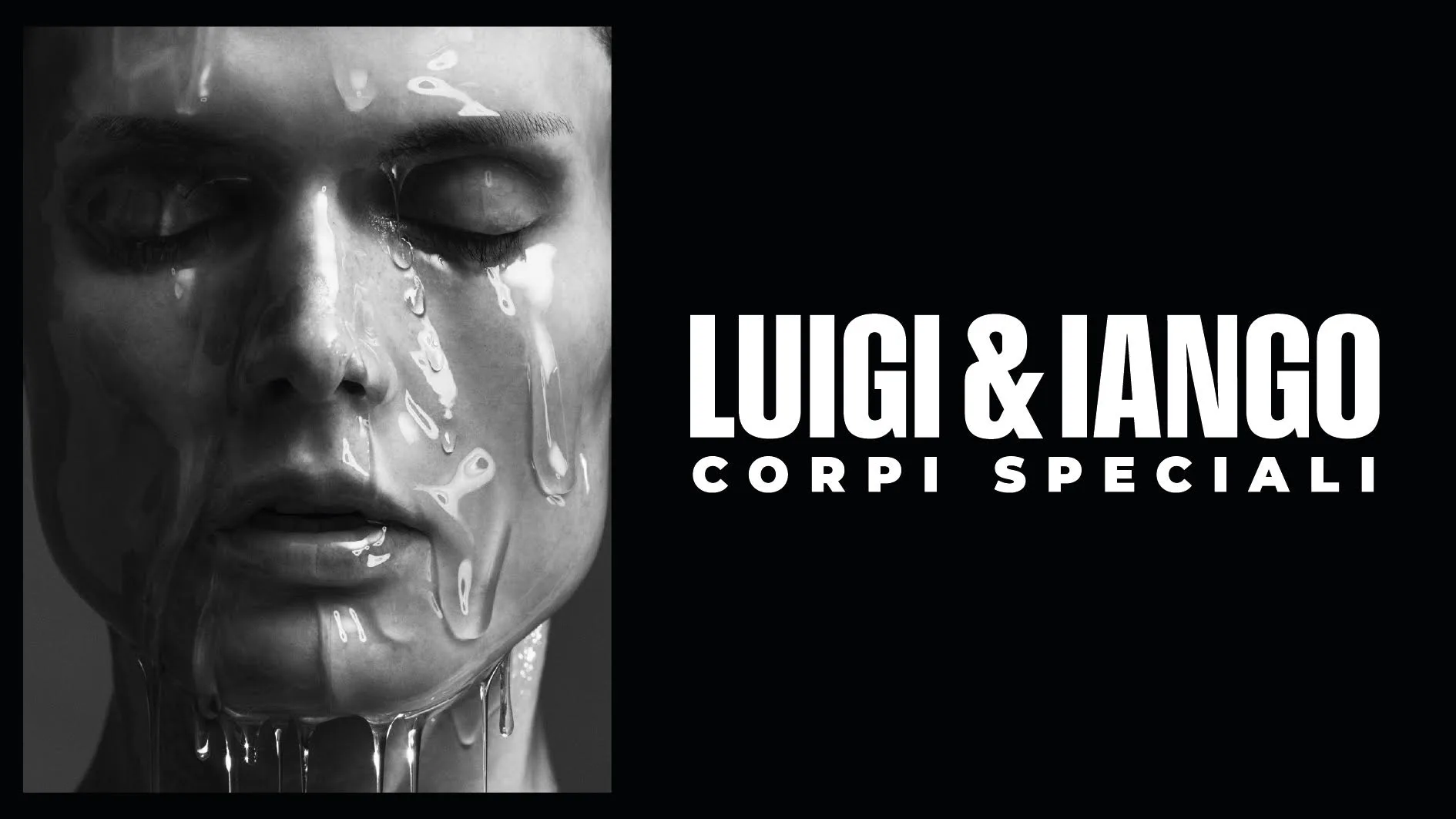
Luigi & Iango. Corpi speciali is open from October 13 to November 29, 2026 at the Galleria Nazionale d'Arte Moderna e Contemporanea (GNAMC), at Viale delle Belle Arti 131, 00197 Rome, on the edge of Villa Borghese. The exhibition, curated by Francesca Alfano Miglietti and produced and organized by Tenderstories, brings together over 200 photographs by the duo of Luigi Murenu and Iango Henzi, among unseen images and iconic works. It follows the museum's hours: Tuesday to Sunday from 9:00 to 19:00, last entry at 18:15, closed Monday. Every Thursday until December 17 the Galleria also stays open in the evening, from 19:00 to 23:00, with a €10 ticket. The tram stops a few steps from the entrance, at the Galleria Arte Moderna stop. The Flaminio metro station is a little more than half a kilometer as the crow flies. The exhibition is included in the Galleria's admission ticket, which costs €17 full price and €2 reduced for European Union citizens between 18 and 25. Under 18 you get in free. Tickets are bought at the museum's box office or on the presale network authorized by the organization, reachable from the official website of the Galleria.
The Galleria Nazionale has changed its skin several times: a museum of the 1800s, then of the 1900s, today a place where fashion, design and performance enter the rooms next to Klimt and Balla. Corpi speciali belongs to this line. It is a photography exhibition that comes out of fashion and tries to leave it, and the question it puts to the visitor is simple and uncomfortable: what do we show of our body, and what do we keep hidden. Below you'll find everything you need: what you see, who Luigi & Iango are, the curator, Bazzani's building, hours, tickets, tram, accessibility, children, where to eat and how to combine the visit with Villa Borghese.
Luigi & Iango at the Galleria Nazionale: what you see in Corpi speciali
Corpi speciali presents over 200 photographs by Luigi & Iango, among unseen images and iconic works, in a route that puts the body at the center as a place of identity, transformation and symbolic construction of the present. It is the broadest chance in Rome to see the duo's work in a public museum.
The body as a surface
According to the Galleria's official presentation, in Luigi & Iango's photographs the body is a surface on which desires, conflicts, vulnerabilities and possibilities of transformation are inscribed. It is the place through which the individual builds, changes and questions their own identity. The human figure thus becomes an observatory on the transformations of the present, and identity appears as something mobile, continually negotiable.
Beyond fashion photography
The starting point is fashion. From their experience in fashion photography, the two artists developed a language that goes beyond its codes and takes the portrait toward a poetic and critical dimension. It's the most interesting part of the exhibition, in our view: seeing how a gaze formed on magazine covers moves toward the museum without disowning its origins.
A theatrical construction
The construction of the image is described as rigorous and strongly theatrical, but crossed by a constant ambiguity: the body can appear monumental and fragile at the same time, recognizable and yet removed from a single definition. Fragments, poses, gestures, light contrasts and fields of shadow interrupt the continuity of the figure. The viewer is attracted and questioned at once.
The registers of the exhibition
Alongside the constructed and sophisticated portrait, the exhibition leaves room for a direct relationship with reality and with the stories of the people photographed. The registers named by the Galleria range from reportage to a more intimate poetry, to a dimension tied to compassion. Every image, according to the presentation, keeps its link with a concrete experience. It's an ambitious promise for an exhibition of this format, and you can only check it by walking through the rooms.
The catalog
A catalog is announced for the exhibition, with reproductions of the works on view, an essay by Francesca Alfano Miglietti, a conversation between the curator and Luigi & Iango and further in-depth contributions. For anyone who wants to go back over the images calmly, the conversation with the artists is the part I recommend reading first.
Luigi & Iango's Corpi speciali: the body as a political and poetic space
The theme of Corpi speciali is declared clearly by the curator: at the center of Luigi & Iango's work is a reflection on the body as a political, poetic and symbolic space. It's a formula to keep in mind when entering the room, because it gives an order to the 200 images.
A genealogy of the 1900s
Francesca Alfano Miglietti places the duo's research in a broad horizon, that of the artistic and cultural practices that, especially from the second half of the 1900s, have called into question the idea of the body as a stable given and of identity as a definitive category. Performance, post-identity practices and new forms of self-representation run through these photographs without becoming explicit quotation.
Revelation and unease
From this comes, according to the curator, a grammar of fragments, suspensions and discontinuities, in which the portrait becomes a place of revelation and at the same time of unease. The portrait is the space where what we choose to show and what remains hidden, individual identity and the collective gaze, confront each other.
An escape from spectacle
Moreno Zani, founder of Tenderstories, tells of the birth of the exhibition as the search for a poetic escape from spectacle. It's an interesting statement for two photographers who come from the most spectacular world of all, that of covers: the aim is to give the body back the possibility of being a tool for reading its own time, as well as an object of the gaze.
Our judgment
Exhibitions by fashion photographers in public museums carry an obvious risk, that of becoming a glossy showcase. The choice of a curator like Alfano Miglietti, who has worked for years on the body in contemporary art, and the venue, the same one that in 2026 hosts the historical works of Marina Abramović, move the center of gravity where it should be: on art. It's worth the visit.
Who Luigi & Iango are: biography of the duo
Luigi & Iango are an Italian-Swiss artistic duo made up of Luigi Murenu and Iango Henzi, who develop a visual research between photography, fashion and contemporary art. Over the course of their career they have shot over 300 covers for the leading international fashion magazines.
The covers
300 covers is a figure that very few photographers in the world can claim. According to the Galleria's biographical note, the duo's language was built right there, through images marked by strong aesthetic intensity and by particular attention to the representation of the body, identity and the human figure. It's the work the general public knows, often without knowing who signs it.
Thierry Mugler in museums
In 2019 Luigi & Iango took part in the large traveling exhibition devoted to Thierry Mugler at the Musée des Beaux Arts de Montréal. The exhibition then traveled to the Kunsthal in Rotterdam and the Hypo Kunsthalle in Munich in 2020, the Musée des Arts Décoratifs in Paris in 2021 and the Brooklyn Museum in 2022. Four years in five museums: it's the path that made their work known to the museum public.
Dubai and Milan
Alongside group exhibitions, the duo has presented important solo projects: the exhibition at the French Pavilion of the Dubai Universal Exposition in 2020 and the solo show at Palazzo Reale in Milan in 2023. Rome, with the Galleria Nazionale, completes a sequence of leading institutional venues.
Publications and exhibitions
Luigi & Iango's work has been presented in many art publications, exhibition catalogs and international museum shows. The official note sums up their path as a research that, moving between photography, fashion and art, investigates the power of the image and the multiple forms in which body and identity can be represented.
The curator and the production: Francesca Alfano Miglietti and Tenderstories
The exhibition is curated by Francesca Alfano Miglietti and is produced and organized by Tenderstories, founded by Moreno Zani. It has the patronage of Roma Capitale and Cinecittà.
Francesca Alfano Miglietti
Alfano Miglietti signs the catalog essay and the conversation with the artists. Her reading, reported in the official presentation, links the duo's photographs to the history of performance and of the practices that put the idea of a stable identity in crisis. It's a learned key that gives depth to images born in a commercial context.
Tenderstories
Tenderstories produces and organizes the exhibition. Its founder Moreno Zani describes the intent as a poetic escape from spectacle. For the visitor this means expecting a layout designed for reading the images more than for effect.
A curiosity about Luigi & Iango. Corpi speciali at the Galleria Nazionale, from October 13 to November 29, 2026
The most interesting curiosity concerns the company Corpi speciali finds in the rooms. From November 18, 2026 the Galleria Nazionale opens Marina Abramović: Historical Works and Transforming Energy, devoted to the historical works of the artist who more than any other has made the body her own material. The curator of Corpi speciali names performance, and the practices that since the second half of the 1900s have called into question the body as a stable given, as the horizon of Luigi & Iango's research. For 12 days, from November 18 to 29, the two exhibitions coexist in the same museum, and with them the room devoted to Marinella Senatore, artist of the year 2026, who works on participatory art and on the body as a tool of knowledge. Three ways of thinking about the body under the same roof: the duo's constructed and theatrical photography, Abramović's radical physical presence, Senatore's collective dimension. There is then a second thread, linking fashion to the venue. In 1985 the Galleria hosted the Karl Lagerfeld exhibition for FENDI, among the first in Italy to bring fashion into a museum, and in July 2026 the Fendi Couture show passed through the 20th-century rooms. Two photographers born on magazine covers thus find at Valle Giulia a museum that has had 40 years of familiarity with fashion.
The Galleria Nazionale d'Arte Moderna e Contemporanea, venue of Corpi speciali
The Galleria Nazionale d'Arte Moderna e Contemporanea is at Viale delle Belle Arti 131, in the Valle delle Accademie on the edge of Villa Borghese, in a building by Cesare Bazzani completed in 1911. It is a Ministry of Culture museum with special autonomy since 2014. The museum's full entry is at La Galleria Nazionale d'Arte Moderna e Contemporanea.
Bazzani's building
About 15,000 square meters of the building are given over to exhibition spaces and services, and the rooms occupy about 10,000 square meters, all air-conditioned. It's a big museum, where you walk a lot: anyone coming for Corpi speciali has to decide beforehand how much time to give to the rest.
The expansions
Bazzani himself signed a first expansion between 1933 and 1934. A second expansion, designed by the engineer Luigi Cosenza, was only partly completed and stayed open from 1989 to 1998. The two historic wings were restored between 1995 and 1999. Today the Cosenza Wing is under restoration to a design by Mario Botta and will become a hub of over 2,000 square meters for library, archives, education and research.
A museum born in 1883
The Galleria was born in 1883 to collect the best of the contemporary artistic production of the new unified State, and from 1912 it began to acquire works from the first half of the 1800s as well. Today it holds, according to the Carta dei servizi, the largest collection in Italy of Italian and international art from the 19th to the 21st century.
Beyond Luigi & Iango: the permanent collection of the Galleria Nazionale
The Corpi speciali ticket also opens the permanent collection, about 20,000 works among paintings, sculptures, installations, design, films and photographs, with names like Van Gogh, Klimt, Modigliani, Balla, de Chirico, Burri, Fontana, Pollock and Twombly. Leaving without having seen part of it would be a mistake.
The masterpieces not to skip
The selection proposed by the museum is a good thread for a short visit: Sogni by Vittorio Corcos, The Three Ages of Woman by Gustav Klimt, After the Bath by Edgar Degas, Modigliani's Portrait of Hanka Zborowska, Calder's Mobile, Van Gogh's The Gardener, Balla's Dynamic Expansion + Speed, de Chirico's Hector and Andromache. After 200 photographs of bodies built by light, Klimt's The Three Ages of Woman, with the old naked body next to that of the young mother, is a comparison that makes you think.
Design in the rooms
Since April 2026 the collection route has featured seating and design objects made with major Italian companies, to make the rooms more livable. You can sit in front of the paintings: take advantage of it.
Marinella Senatore
Until December 31 the Galleria devotes a room to Marinella Senatore, artist of the year 2026, with more than 40 works among drawings, collages and tapestries. For the whole run of Corpi speciali the room can be visited with the same ticket.
One thing nobody tells you about Luigi & Iango. Corpi speciali at the Galleria Nazionale, from October 13 to November 29, 2026
What is rarely said is that Corpi speciali is a short exhibition by the standards of the big museums: seven weeks, from Tuesday, October 13 to Sunday, November 29. Photography exhibitions that arrive with over 200 images usually stay for months. This one doesn't, and anyone who puts it off risks finding it closed. The second thing concerns the ticket. There is no separate ticket for the exhibition: Corpi speciali is included in museum admission, with the result that the cost is the same as for the collection alone and that under 18 you get in free. For an exhibition of this level it's a price few European cities offer. The third is practical and concerns Thursday evenings. From September 10 to December 17 the Galleria opens every Thursday from 19:00 to 23:00 with a €10 ticket, and during the exhibition the useful evenings are seven: October 15, 22 and 29, November 5, 12, 19 and 26. Photographs built on light contrasts and fields of shadow look good in the artificial light of the rooms and with the quieter museum of the evening. Finally, the ticket is valid for a three-hour slot chosen at purchase: 200 photographs plus the collection call for not arriving at the last moment.
Hours of Corpi speciali at the Galleria Nazionale
Corpi speciali follows the hours of the Galleria Nazionale: Tuesday to Sunday from 9:00 to 19:00, with last entry at 18:15. On Monday the museum is closed.
Regular hours
The ticket office, according to the Carta dei servizi, is open from 9:00 to 18:15 and accepts cards and debit cards. The ticket is valid for three hours: anyone entering at 17:00 will have little time to see everything.
Thursday evenings
Every Thursday until December 17, 2026 the Galleria also opens from 19:00 to 23:00, with last entry at 22:00 and a €10 ticket. During Corpi speciali there are seven evenings, from October 15 to November 26. The evening opening program may change: it's best to check the Galleria's website before leaving.
The first Sunday of the month
On the first Sunday of every month admission to state museums is free with mandatory reservation. During the exhibition the useful date is Sunday, November 1: a crowded day, great for the wallet, less so for looking at photographs calmly.
Tickets for Corpi speciali: prices, discounts and free admission
Corpi speciali is included in the admission ticket to the Galleria Nazionale d'Arte Moderna e Contemporanea: full price is €17, reduced is €2 for European Union citizens between 18 and 25, and under 18 you get in free.
Where to buy them
Tickets are bought at the box office in the museum's atrium on the day of the visit or online on the presale network authorized by the organization, reachable from the Galleria's official website. On free days online reservation is mandatory.
Discounts and free admission
Among others, people with disabilities and one companion, tour guides, ICOM members and journalists with a valid card get in free. Those who visited the Galleria Borghese the same day get in with a €10 reduced ticket, the formula the museum calls “da Canova a Canova.”
Memberships and groups
The individual annual membership costs €50. The 1+1 formula costs €80. Groups that buy 10 full-price tickets in a single transaction pay €150 in total. For those who live in Rome and want to see Corpi speciali and then Abramović, the membership pays for itself quickly.
The advice I give you for visiting Luigi & Iango. Corpi speciali at the Galleria Nazionale, from October 13 to November 29, 2026
It's better to go on a Thursday evening. Arrive around 19:00, when the fare changes and the museum empties of the day's public: the ticket costs €10, the rooms are quiet and the artificial light renders the photographs built on light and shadow well, which are the duo's signature. Give the first hour and a half to Corpi speciali, without rushing, stopping on the images where the body is fragmented or in half-light: those are the ones the curator names as the heart of the research. Then choose three or four masterpieces from the collection, Klimt, Balla, de Chirico, and leave by 22:30. If you can choose the week, aim for the last Thursdays of November, the 19th or the 26th: on those days the Marina Abramović exhibition is open too, and with the same admission you'll see two opposite ways of putting the body at the center of art. One tip: don't photograph the photographs, look at them, and buy the catalog if you want to take them home. One last note: the entrance on Viale delle Belle Arti is monumental, but Bazzani's staircase is better appreciated on the way out, in the dark, with the avenue lit up.
How to get to the Galleria Nazionale for Corpi speciali
The Galleria Nazionale is at Viale delle Belle Arti 131, in the Pinciano neighborhood, on the edge of Villa Borghese. The most convenient way is the tram, with the Galleria Arte Moderna stop a few steps from the entrance. Alternatively, get off at the Flaminio metro station and continue on foot.
By tram
The Galleria Arte Moderna stop is in front of the museum. A little farther west, on Piazzale delle Belle Arti, is the Belle Arti stop, served by trams and buses. Lines and times change with roadworks and seasons: check them on the Rome public transport company's website before heading out, especially for the Thursday evening return.
By metro
The Flaminio station, also labeled Piazza del Popolo, is a little more than half a kilometer as the crow flies from the museum. On foot the route is a bit longer. Next to it is the regional railway station at Piazzale Flaminio.
On foot
From Piazza del Popolo the museum is less than a kilometer as the crow flies, and from the Galleria Borghese a little less, through the greenery of Villa Borghese. In mid-October the walk is pleasant. In late November, after sunset, the tram is better.
By car
On Viale delle Belle Arti there is a municipal car sharing station. The Galleria does not point to a parking lot of its own: the advice remains to arrive by public transport.
Another well-known fact, yet one rarely mentioned
Everyone knows the Galleria Nazionale is the museum of Klimt and Van Gogh in Rome. It's less often remembered that its first home was not Valle Giulia. Established by a royal decree of July 26, 1883, the Galleria opened to the public in 1885 inside the Palazzo delle Esposizioni on Via Nazionale, and only in 1915 moved into the building that Cesare Bazzani had built between 1908 and 1911 for the International Art Exhibition of the Fiftieth Anniversary of Unification. The building that today hosts Corpi speciali was thus born as an exhibition pavilion for a big temporary show, and it has never lost that vocation: its rooms were designed to welcome works that arrive and leave again. The other well-known and rarely mentioned fact concerns fashion. The Karl Lagerfeld exhibition for FENDI, inaugurated here on October 5, 1985, is remembered as one of the first cases in Italy of fashion shown in a public museum. 40 years later, two photographers who built their career on fashion magazine covers enter the same museum with an exhibition that uses the tools of fashion to talk about something else. The Galleria anticipated by decades a debate that elsewhere arrived much later.
Accessibility of the Galleria Nazionale for Corpi speciali
The Galleria Nazionale declares full accessibility for people with disabilities, thanks to an exterior ramp, elevators and interior platform lifts. Dedicated restrooms and a changing table are available. People with disabilities and one companion get in free.
The entrance from Via Gramsci
The entrance with the ramp is on Via Gramsci. The museum provides wheelchairs for independent use: ask for them at the ticket office.
Tactile visits and inclusive routes
For tactile visits the Galleria gives a dedicated contact on the visit information page. For a photography exhibition it's best to write in advance to find out which mediation tools are planned.
Room rules
You enter the rooms with small bags. Backpacks, umbrellas and large bags go to the free coat check. Photos are allowed without flash and without tripods or selfie sticks. Food and drinks are not allowed.
The right photo to take at Luigi & Iango. Corpi speciali at the Galleria Nazionale, from October 13 to November 29, 2026
In a photography exhibition the temptation is to photograph the photographs. The museum allows it without flash, but the result is almost always a worse copy of the original, with the reflections of the room lights on the glass. The right photo at Corpi speciali is another one: a person in front of a portrait, from behind, with their own body entering into dialogue with the photographed one. It's the image that best sums up the theme of the exhibition, the confrontation between what we show and the gaze of the one looking. Ask permission of whoever is with you, never of strangers. The second shot is outside: Cesare Bazzani's façade taken from the foot of the staircase on Viale delle Belle Arti, with the columns and statues against the sky. In mid-October, around 18:30, the raking evening light warms the stone. In late November, on Thursday evenings, the lit-up façade on the dark avenue is even more dramatic. The third is for those who enter the collection: one of the design seats set in front of the paintings, with a person sitting and a masterpiece behind them. Three photos, one story: the body that looks, the museum that welcomes it, the art that questions it.
Corpi speciali with children and teenagers
At the Galleria Nazionale people under 18 get in free, and the museum organizes tours and workshops for families published in the Education and inclusion section of the website.
An exhibition for teenagers?
Corpi speciali is about identity, transformation, the body: themes that teenagers live on their own skin every day, including through social media images. With kids aged 14 and older the exhibition is an excellent chance to talk about how an image is built. For younger ones, a short visit to the collection is better.
The Bioparco a stone's throw away
The Bioparco di Roma (Rome Zoo) is about 350 meters as the crow flies. For families with children the combination saves the day, one adult at the exhibition and the other with the little ones.
Some important events that happened here in history
The history of the Galleria Nazionale can be read in a series of precise dates. On July 26, 1883 Royal Decree no. 1526 establishes the museum, with the task of collecting the works of the new unified State. In 1885 the Galleria opens to the public, housed in the Palazzo delle Esposizioni. Between 1908 and 1911 Cesare Bazzani builds at Valle Giulia the building for the International Art Exhibition of the Fiftieth Anniversary of Unification, and in 1915 the Galleria moves into it. In 1912 the reform of the statute opens acquisitions to works from the first half of the 1800s as well. Between 1933 and 1934 Bazzani signs the first expansion. In 1939 a law changes the museum's name to Galleria Nazionale d'Arte Moderna e Arte Contemporanea. On October 5, 1985 the Karl Lagerfeld exhibition for FENDI opens. From 1989 to 1998 the wing designed by Luigi Cosenza, only partly completed, stays open to the public. Between 1995 and 1999 the two historic wings are restored. In 2014 the museum becomes an institute with special autonomy of the Ministry of Culture. 2026 is a full year: in April design enters the rooms, Marinella Senatore is artist of the year, in July the Fendi Couture show passes through the 20th-century rooms, on October 13 Luigi & Iango's Corpi speciali opens and on November 18 Marina Abramović's historical works. A year in which the Galleria has talked above all about the body.
Around the Galleria Nazionale: Valle Giulia and Villa Borghese
The Galleria Nazionale is in the Valle delle Accademie, on the edge of Villa Borghese. Within a kilometer are some of the most important museums in Rome. It's best to give Corpi speciali half a day and build a walk around it.
Villa Giulia and the Bioparco
The National Etruscan Museum of Villa Giulia is less than 400 meters as the crow flies. Going from the bodies photographed by Luigi & Iango to the reclining bodies of the Etruscan married couple is a leap of 25 centuries worth making.
Galleria Borghese and Museo Bilotti
The Galleria Borghese is less than 900 meters through the park, and with its ticket you get into the Galleria Nazionale with the €10 reduced rate. A little more than 400 meters away is the Museo Carlo Bilotti, in the Aranciera of Villa Borghese.
Toward the Pincio and the Flaminio
Going down you reach the terrace of the Pincio and Piazza del Popolo. To the north, almost two kilometers away, is the MAXXI, the other big state museum of the contemporary. For a day devoted to today's art the two visits complement each other. And the Palazzo delle Esposizioni, the Galleria's first home from 1885 to 1915, closes the circle of the museum's history.
Where to eat near the Galleria Nazionale
Inside the Galleria Nazionale is the Caffè delle Arti, a café and restaurant open Tuesday to Sunday from 8:00 to 20:00, also reachable from outside at Via Gramsci 73. In the atrium there is a refreshment point.
The museum café
Within the ticket's three-hour slot you can leave the rooms and come back in for a break at the café. Between the exhibition and the collection it's the most convenient solution. Note: the café closes at 20:00, and on Thursday evenings you have to plan differently.
Outside the museum
Around Valle Giulia the offer is concentrated toward the Flaminio and the Parioli, with neighborhood bars, trattorias and pizzerias. After a Thursday evening the simplest choice is to head down toward Piazzale Flaminio and the center.
Rome between October and November: when to visit Corpi speciali
Corpi speciali covers the heart of the Roman fall, from October 13 to November 29. October still has warm, bright days, suited to a walk in Villa Borghese. November brings the first rains and early sunsets.
October
The first weeks are the quietest: the exhibition has just opened and the weekend public hasn't discovered it yet. A midweek morning in mid-October, with a walk in the park before or after, is the ideal visit for anyone with time.
November
From November 18 the Galleria also hosts Marina Abramović, and the rooms will be busier. Anyone who wants to see both exhibitions chooses the last 10 days. Anyone who wants calm for the photographs goes earlier. The last days, until Sunday the 29th, will probably be the most crowded.
Who has passed through Luigi & Iango. Corpi speciali at the Galleria Nazionale, from October 13 to November 29, 2026
The first name is Cesare Bazzani, the architect who designed the building for the International Art Exhibition between 1908 and 1911 and came back between 1933 and 1934 for the first expansion. After him came the engineer Luigi Cosenza, author of the second expansion, which opened from 1989 to 1998, and today the architect Mario Botta, who signs the restoration of the Cosenza Wing. In 1985 Karl Lagerfeld passed through, with the exhibition celebrating the first 20 years of collaboration with FENDI. In 2026 his work has returned to the same rooms. That same 2026 brought the sculptor Pablo Atchugarry to Valle Giulia, with 55 sculptures, and Marinella Senatore, artist of the year. Klimt, Van Gogh, Modigliani, Degas, Balla, de Chirico and Burri have been on display in the rooms for more than a century. From October 13, 2026 come Luigi Murenu and Iango Henzi, the Italian-Swiss duo who have signed more than 300 fashion covers and who, before Rome, passed through the Musée des Beaux Arts in Montréal, the Kunsthal in Rotterdam, the Musée des Arts Décoratifs in Paris, the Brooklyn Museum, the French Pavilion at Expo Dubai and Palazzo Reale in Milan. With them are the curator Francesca Alfano Miglietti and Moreno Zani of Tenderstories. And from November 18, in the same museum, Marina Abramović: an autumn in which the body is at home at Valle Giulia.
How to Plan Your Visit to Corpi speciali: Three Plans
You can see Corpi speciali well in an hour and a half. With the collection you need at least three hours, which is how long the ticket slot lasts.
Thursday Evening
Arrive at 19:00, exhibition until 20:30, collection until 22:00, dinner in Flaminio. A €10 ticket, quiet rooms, artificial light that shows off the photographs.
The Morning with Villa Borghese
Entry at 9:30, exhibition and collection until 12:30, lunch at the museum café, afternoon on foot between the Pincio and Villa Borghese. This is the recommended plan for October.
Two Museums in One Day
Galleria Borghese in the morning, with a reservation, and Galleria Nazionale in the afternoon with the €10 reduced ticket. From Bernini's marble to the photographed bodies of Luigi & Iango: a whole day on the body in art, less than a kilometer apart.
Frequently Asked Questions About Luigi & Iango. Corpi speciali
When Is the Luigi & Iango Exhibition Open in Rome?
Luigi & Iango. Corpi speciali is open at the Galleria Nazionale d'Arte Moderna e Contemporanea from October 13 to November 29, 2026. It follows the museum's hours, Tuesday to Sunday from 9:00 to 19:00 with last entry at 18:15, and on Thursday also in the evening from 19:00 to 23:00. It is closed on Monday.
How Much Does a Ticket to Corpi speciali Cost?
Corpi speciali is included in the admission ticket to the Galleria Nazionale: €17 full price, €2 reduced for European Union citizens between 18 and 25, free under 18. On Thursday evening, from 19:00 to 23:00, the ticket costs €10.
Where Is the Galleria Nazionale d'Arte Moderna?
The Galleria Nazionale d'Arte Moderna e Contemporanea is at Viale delle Belle Arti 131, on the edge of Villa Borghese. The tram stops in front of the museum, at the Galleria Arte Moderna stop. The Flaminio metro station is a little more than half a kilometer away as the crow flies.
Who Are Luigi & Iango?
Luigi & Iango are an Italian-Swiss artist duo made up of Luigi Murenu and Iango Henzi, combining photography, fashion and contemporary art. They have signed more than 300 covers for international fashion magazines and have exhibited, among other places, at the Brooklyn Museum, the French Pavilion at Expo Dubai and Palazzo Reale in Milan.
How Many Photographs Are in Corpi speciali?
Corpi speciali brings together more than 200 photographs by Luigi & Iango, including unpublished images and iconic works. The exhibition is curated by Francesca Alfano Miglietti and produced by Tenderstories. It comes with a catalog with an essay by the curator and a conversation with the artists.
Can You Take Photos in the Exhibition?
At the Galleria Nazionale photos are allowed without flash and without tripods or selfie sticks. For professional shooting you need written authorization from the museum. Any specific instructions for Corpi speciali are communicated by the room attendants.
How Much Time Do You Need to See Corpi speciali?
An hour, an hour and a half is enough for Corpi speciali at the Galleria Nazionale. The ticket is valid for three hours and includes the permanent collection and Marinella Senatore's room. With the collection, you use all the time.
Is the Galleria Nazionale Accessible?
The Galleria Nazionale d'Arte Moderna e Contemporanea declares full accessibility, with an outdoor ramp on Via Gramsci, elevators, platform lifts and dedicated restrooms. People with disabilities and one companion enter free and can ask for a wheelchair at the ticket office.
Final Advice on Corpi speciali
Photography exhibitions that come from fashion are judged in the room, not from the posters. Corpi speciali has on its side a serious curator, a venue with a long familiarity with fashion and the body, and a ticket that includes one of the most beautiful collections in Italy. Go on a Thursday evening, before it closes on November 29, and stay in front of the darker images: that is where the work of Luigi & Iango stops being a cover.
Article written by the editorial team of Tour Leader Pro, contact them for Private/Corporate/V.I.P. Tours and Experiences.
Planning a trip to Rome? The English guides for visiting the city are on ItalyPlanner.com.